Attributes of Art mosaic – Opera House – Chișinău – Moldova

Chișinău Opera

Chișinău Opera

More on Moldova – on the Post-Socialist Countries – Eastern Europe and Asia page

Soviet-era mosaics in Cahul – Gagauzia

Soviet Mosaics – Bălți – Moldova

VI Lenin and Palace of Culture Mosaic – Ribniţa – Pridnestrovie

Attributes of Art mosaic – Opera House – Chișinău – Moldova

‘The Mosaic ‘Attributes of Art’ can be admired again! Restoration work completed

20 December 2022

Successfully completed the restoration of the mosaic panel ‘Art’ by the famous artist Michael Burya. The opening of the panel took place on Friday, December 16, [2022] on the territory of the Maria Bieshu Opera and Ballet Theatre.

The event was attended by the Minister of Culture Sergey Prodan, the artist Valery Yabinski and his team and the architect Sergei Garkonitsa. The mosaic panel was dismantled in 2018 from the former building of the Palace of the Trade Unions, in the capital sector of Ryshkanovka ….. The cost of the project is 8 million lei and is fully covered by Kaufland Moldova [a supermarket chain]. ‘For Kaufland, this is a unique project not only at the level of the Republic of Moldova, but also at the level of the international group of which we are a part. It is a great honour for us that we had the opportunity to become a part of history, defending and exchanging national cultural heritage. Work on moving the mosaic panel was carried out in several stages in compliance with all the requirements, which was a real test for architects and artists’, said Dona Rapchuga, executive director of Kaufland Moldova.

The colour scheme of the big mosaics ‘Attributes of Art’ is combined with taste: red-black gold, with inclusions of yellow, grey and white colours, represented by comedic and tragic masks, musical instruments, and on the other hand resembles the Moldavian carpet. Valery Zhabinsky, head of the department of wall painting of the Academy of Music, Theatre and Fine Arts, led a team of artists who performed the process of restoration of mosaic.

‘They worked hard for nine months. That is how much time it took to restore 218 square meters of mosaics – from early morning until it got dark. We also had moments when we doubted that we would succeed, but together with the beautiful team of artists, we managed to finish this work of art’, said the artist Valery Zhabinsky.

Architect Sergei Garkonitsa, who has more than 20 years of experience in the restoration of monuments, noted that this project of disassembly and subsequent reconstruction of the mosaic is a complex work that requires not only talent, but also passion. ‘I would like to thank the investor who made such an unusual gift not only to the Chisinau municipality, but also to the whole country. This work can be admired by generations, and it will go down in history as the first project of this kind’, said Garkonitsa.

The mosaic panel ‘Attributes of Art’ is located on the territory of the Maria Bieshu Opera and Ballet Theatre. Residents and guests of the capital can already admire them. Kaufland Moldova is also going to transfer this work of art to the Ministry of Culture of the Republic of Moldova.’

The above from; Mosaic ‘Attributes of Art’ can be admired again! Restoration work completed – original in Russian and machine translated.

Attributes of Art - in its original location

Attributes of Art – in its original location

This is a bit of a success story. Not only was the art work protected there was a determined effort to preserve it when the original location was to be demolished. As the article above indicates the removal and repositioning of a mosaic is far from an easy task. Unfortunately, this happened three or four years ago. I don’t think the political climate is such, at least at the moment, for such effort and expense to be available to some of the other ‘under threat’ mosaics in other parts of Chișinău or even Moldova.

About the mosaic

It was originally installed at the side of the main entrance of the Trade Unions’ Palace of Culture in the Râșcani district of Chișinău. It measures 23 meters wide by 6.5 meters high, has a colour palette of red, black, gold, yellow, grey, and white and uses a traditional Moldovan carpet as its template.

The title takes its name from the symbols, musical and theatrical, that are included in the image. These include; a trumpet, a guitar, a violin, harp and two masks (representing comedy and tragedy)

Artist;

Mikhail Burya

Created;

1974 (at it’s original location, that building now demolished)

Location;

Mitropolit Dosoftei St 53, Chișinău,

GPS;

47.02874 N

28.83001 E

How to get there;

The Opera House is a short walk from the Triumphal Arch, going north-west along Boulevard Stefan cel Mare. The mosaic is at the side of the building, opposite the entrance to a secondary school.

More on Moldova – on the Post-Socialist Countries – Eastern Europe and Asia page

Soviet-era mosaics in Cahul – Gagauzia

Soviet Mosaics – Bălți – Moldova

VI Lenin and Palace of Culture Mosaic – Ribniţa – Pridnestrovie

Spa Resort, Tskaltubo, Georgia

Spa Resort, Tskaltubo - 06

Spa Resort, Tskaltubo – 06

More on the Republic of Georgia

Spa Resort, Tskaltubo, Georgia

Tskaltubo’s a strange place. The village itself is, to say the least, nondescript and if it had any purpose at all in the past it was to serve the resort hotels and spa complexes which were built on top of the hot springs and the (foul-smelling) curative mud.

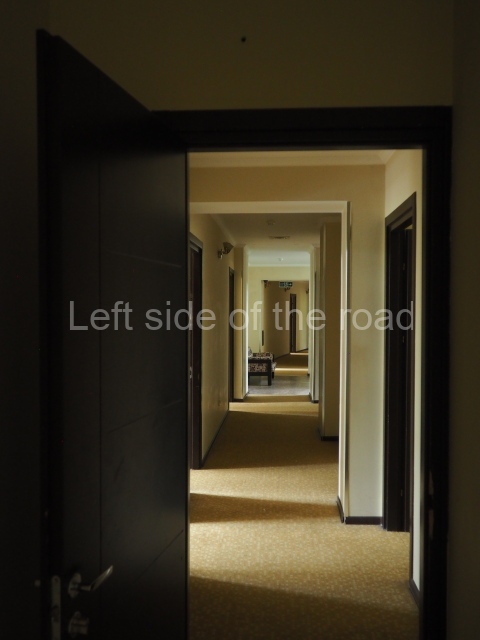
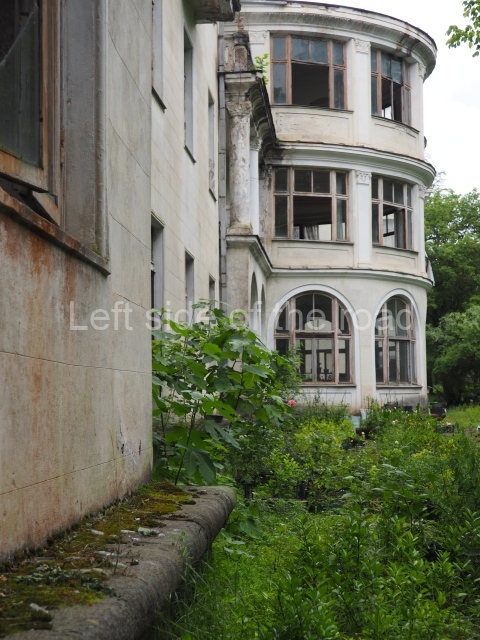
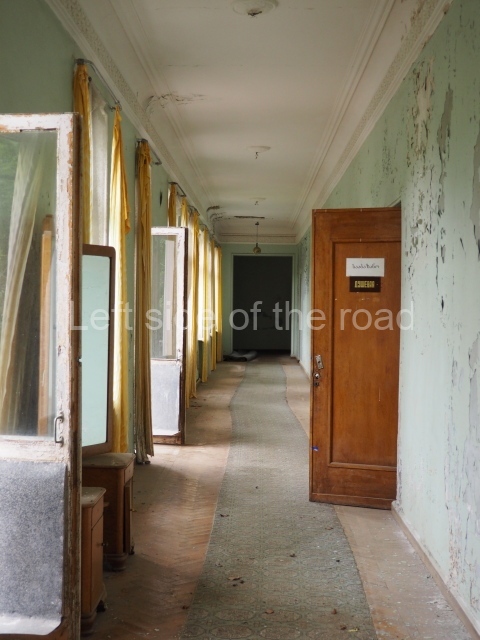
All the hotels and spas are either close to or inside a huge park that is (very roughly) 2 kilometres long and about 500 metres wide (at it’s greatest) with a north-south orientation. When this place was at its busiest there must have been thousands of people here and would have resembled the holiday resorts on the Costas in Spain. Walking around the, now mostly abandoned, hotels you come across corridors going off corridors with rooms on either side. Although all of them have large restaurants they would have been unable to cope with all the residents at the same time so there must have been a very strict and organised rota at meal times.

In a previous post, Tskaltubo’s abandoned Spas, Springs and Sanatoria, I attempted to give the background of this area and a feeling of the abandoned faculties which would have had many happy memories, I’m sure, for thousands of Soviet citizens.

Information is somewhat contradictory but what is almost certain is that the heyday of the area would have been from the 1960s to the end of the 1980s – and I imagine the crash would have been as sudden as the collapse of the Soviet Union at the end of 1991. The whole infrastructure which would have moved so many people back and forth from the Soviet Union to Georgia would have fallen apart; the people had too much of an uncertain future to consider going on holiday; money quickly became scarce; and Georgian nationalists would not have been that welcoming when they saw the weakness of the once powerful Socialist entity.

Spa Resort, Tskaltubo - 01

Spa Resort, Tskaltubo – 01

But if citizens from the rest of the Soviet Union lost a favoured holiday destination the Georgians didn’t benefit. Many of them would have lost their jobs overnight. And this wouldn’t have been just those who worked directly in contact with the visitors in the hotels and the spa complexes. A whole host of ancillary jobs would have gone as well in the greater Kutaisi area.

For example, there used to be a railway station (close to which is now the Tourist Information Office) and at the bottom of the park, on the exit road leading to Kutaisi, there was a not insignificant hospital. The latter would have served not only the visitors (with so many statistically there would have been a number of accidents and emergencies) but those locals who worked in the resort, many of whom I imagine lived in the apartment blocks and houses to the east of the main road to Kutaisi.

Recently there’s been renovation of some of the spas (especially Spring No. 6, which houses Stalin’s ‘private bath house’) but many of the accommodation blocks have been (partly) taken over by refugees from Abkhazia, who are living in disgusting slums. Although I’m sure that few in the Georgian government care about these refugees they will probably be ‘safe’ in their squatter status as there’s no way that the area will ever return to it’s illustrious past and there will never be enough money to return all the resort hotels to their former glory.

Spa Resort, Tskaltubo - 02

Spa Resort, Tskaltubo – 02

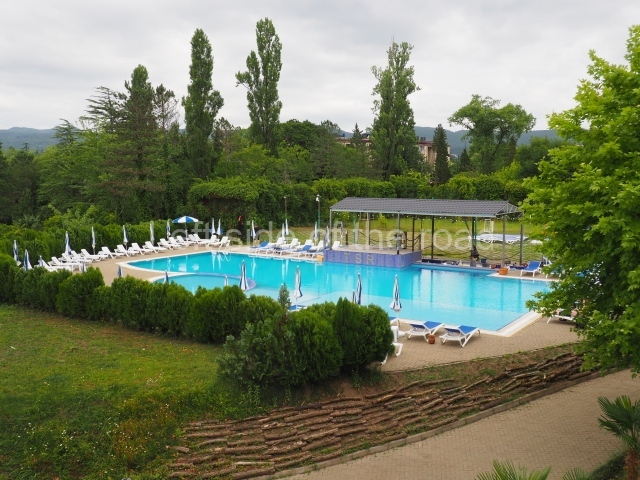
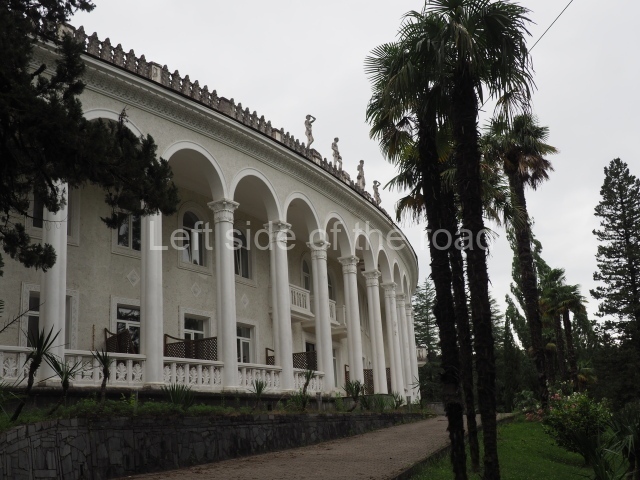
However, there has been major investment to restore (at least in part) probably one of the biggest hotels, if not in the number of bedrooms at least with its surrounding grounds. This is now called the Legends Spa Resort and is located to the east of the park, half way from the entrance to the resort area on the way to the village of Tskaltubo.

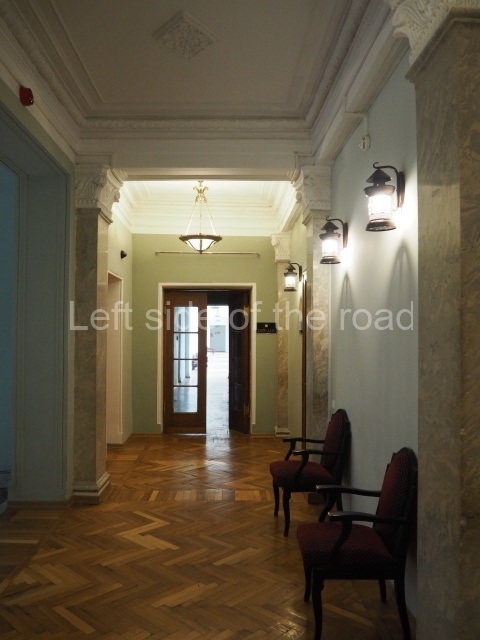
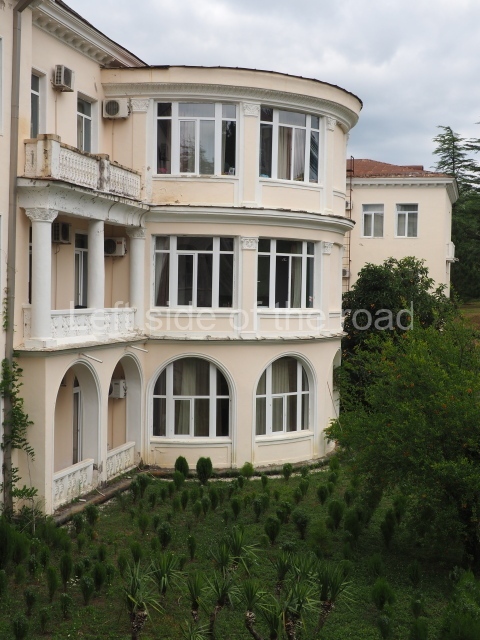
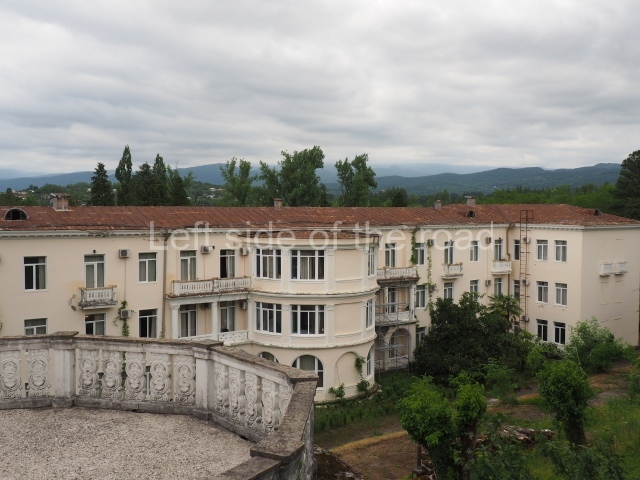
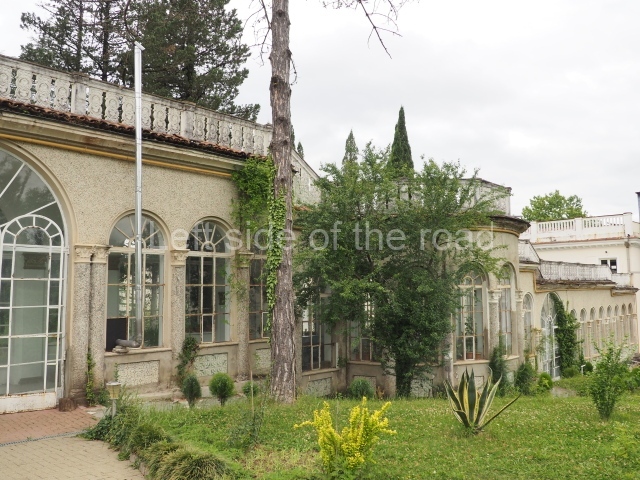
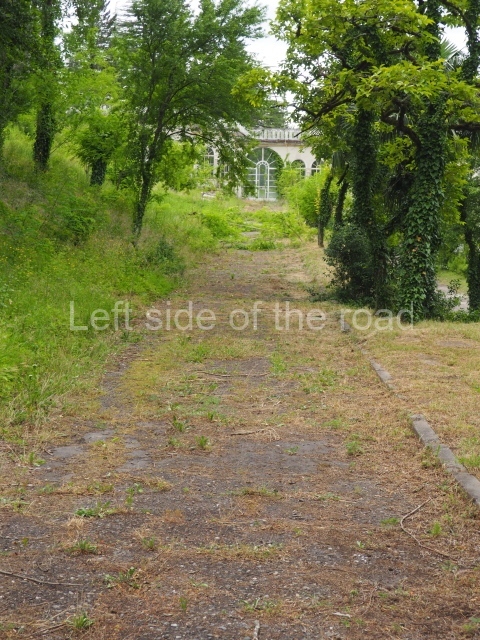
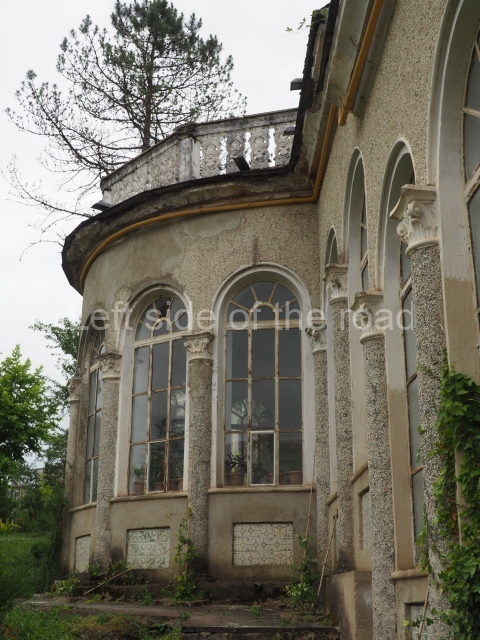
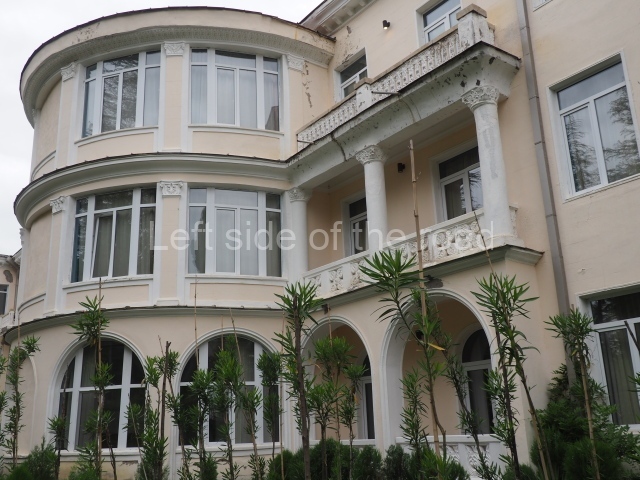
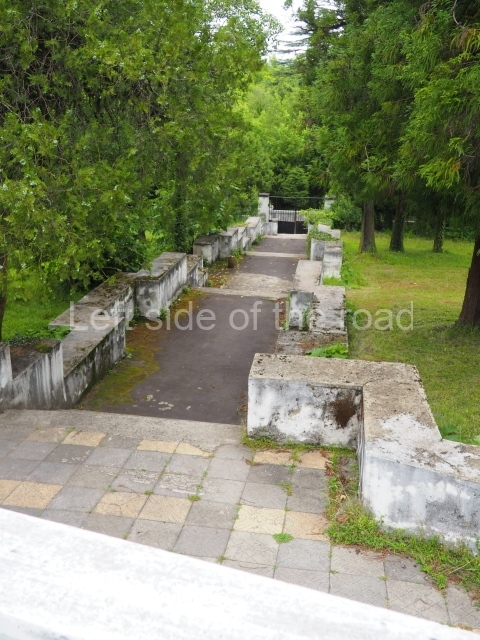
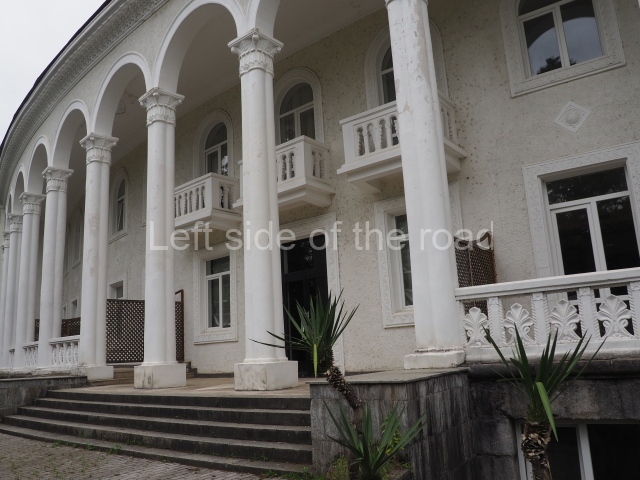
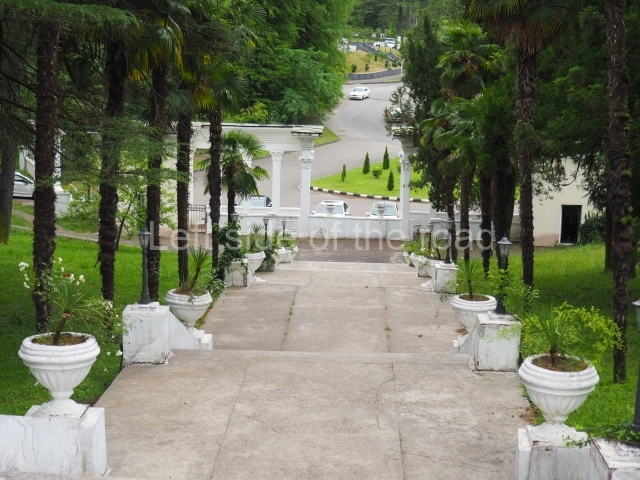
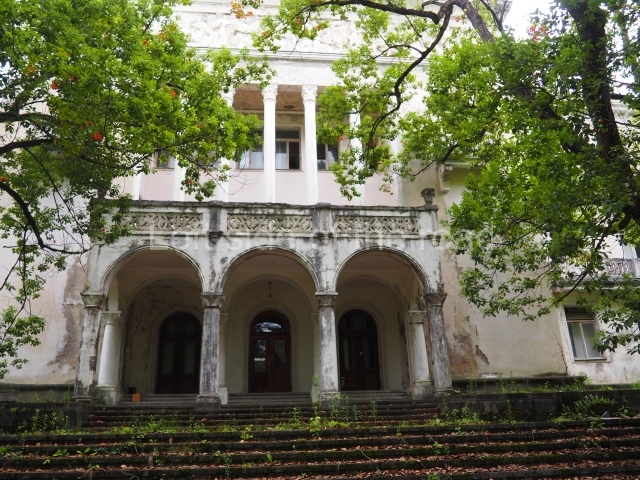
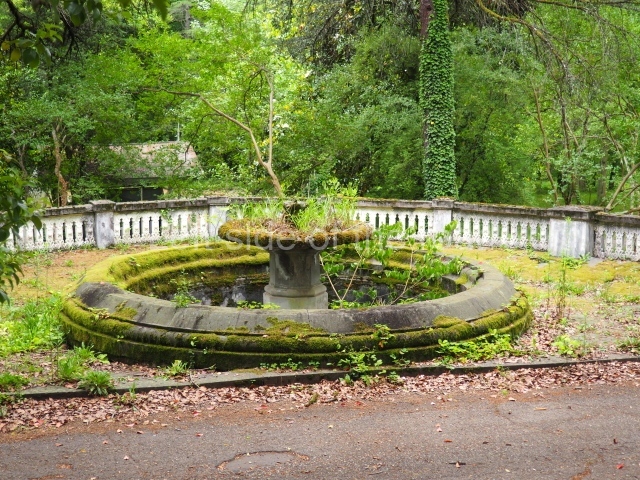
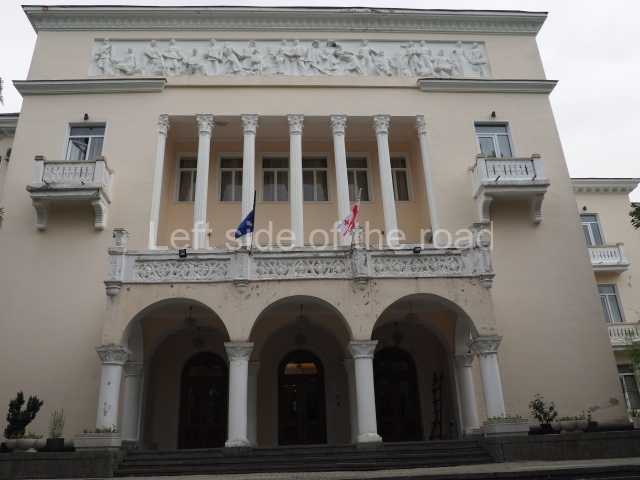
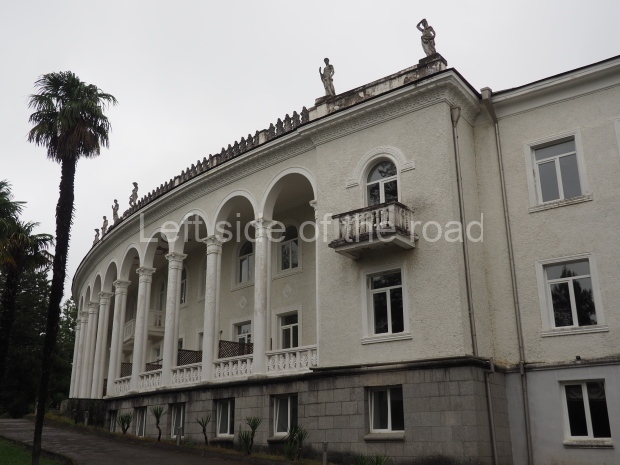
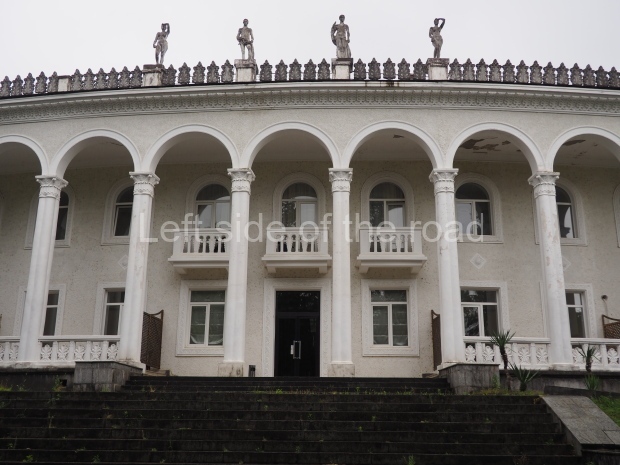
At the height of its popularity this must have been one of the most impressive complexes in the area. The three accommodation buildings of the complex are set along its own private road, quite high above the public road that passes on the way to the village of Tskaltubo, and is reached via two portico entrances from which wide steps lead up to a viewpoint. The trees here are now very much established but forty or so years ago, from these vantage points, the visitors would have been able to look across to the park and a walk from the hotel to the park, or even the spas, would have been a common activity for the visitors.

Although in its prime there would have been on site spa/health facilities these have still yet to be completed (if ever) and those present day visitors on an accommodation and health package get bussed to one of the restored spas in the area of the park, a few minutes away.

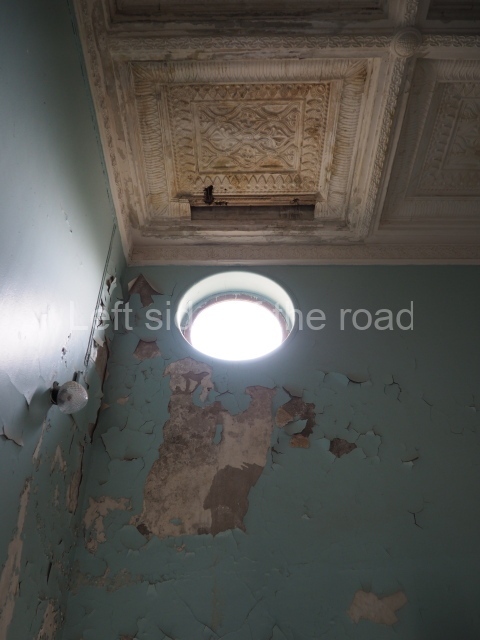
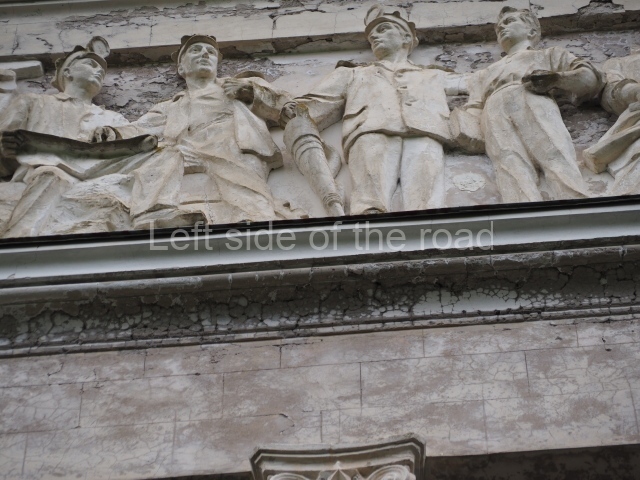
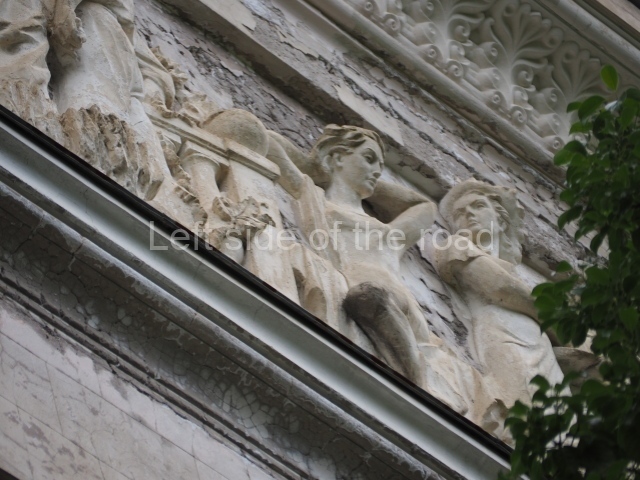
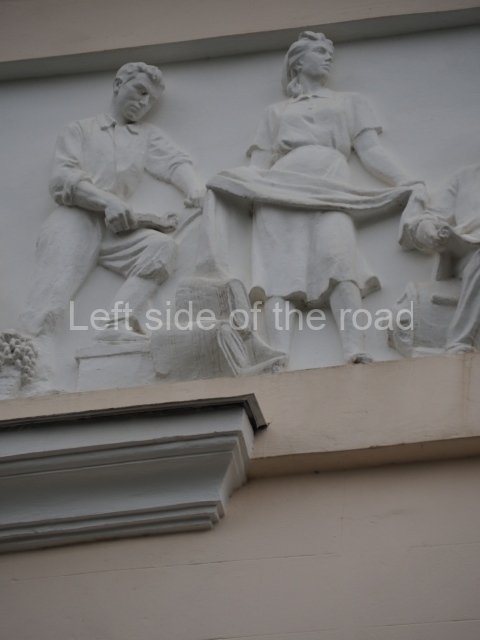
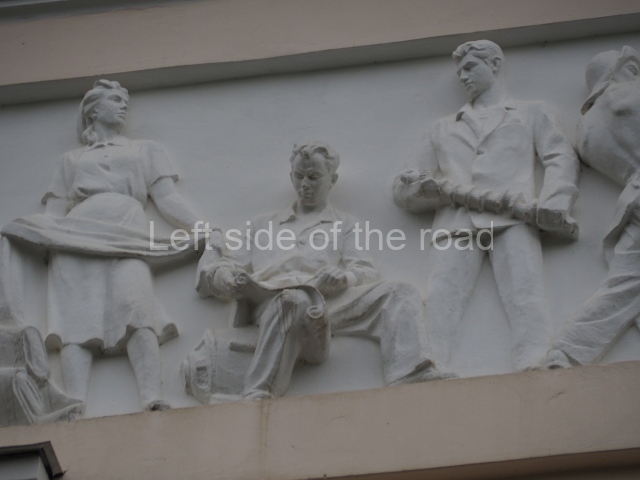
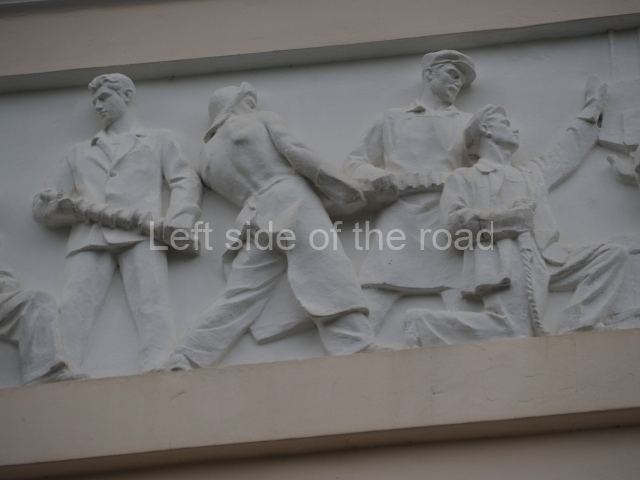
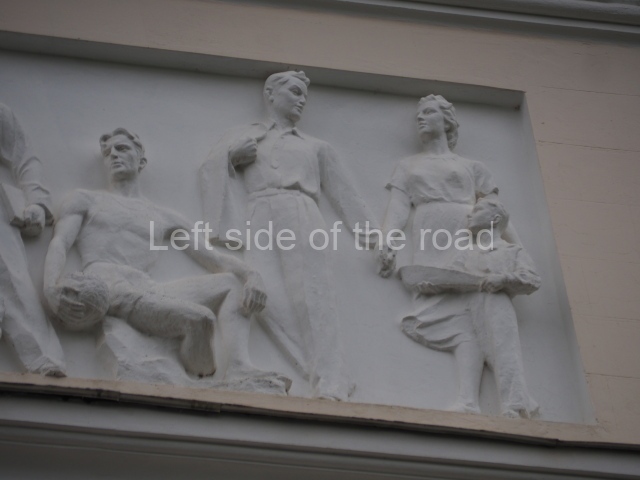
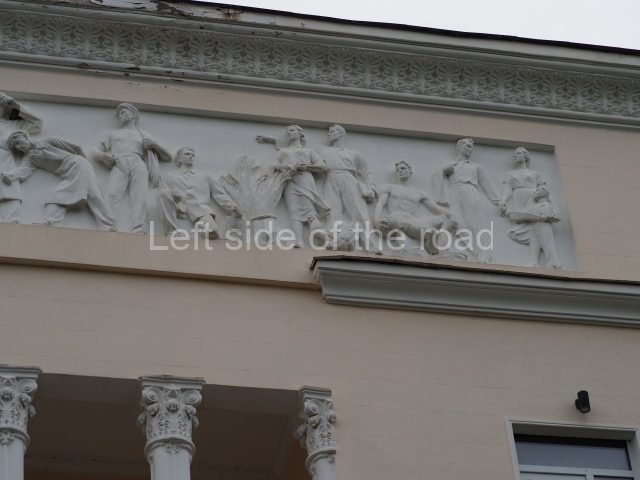
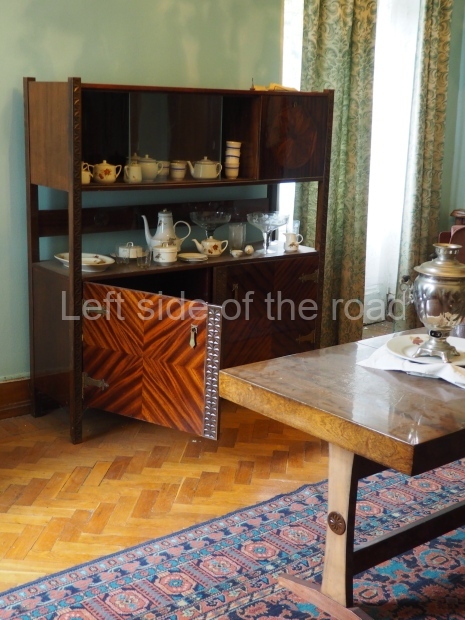
Of the three buildings only one has had any substantial work carried out to bring it up to present day standards (and expectations) to open as a hotel – and that only partially – and is the only building currently in use. This is the northern most of the three which has an interesting Socialist Realist bas relief frieze above the front door. I’ve read various articles suggesting that the renovation of the rest of this building is some time in the distant future.

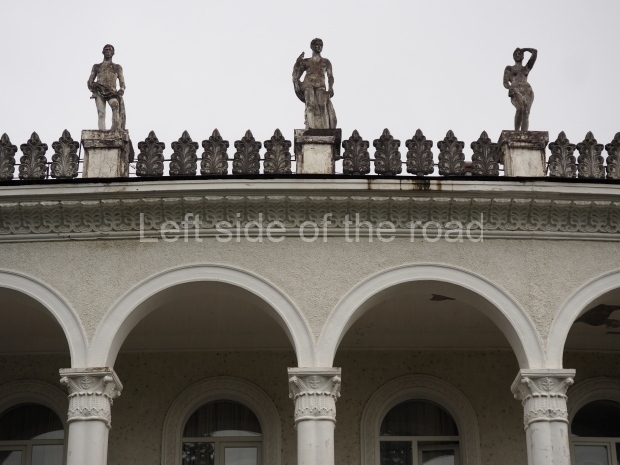
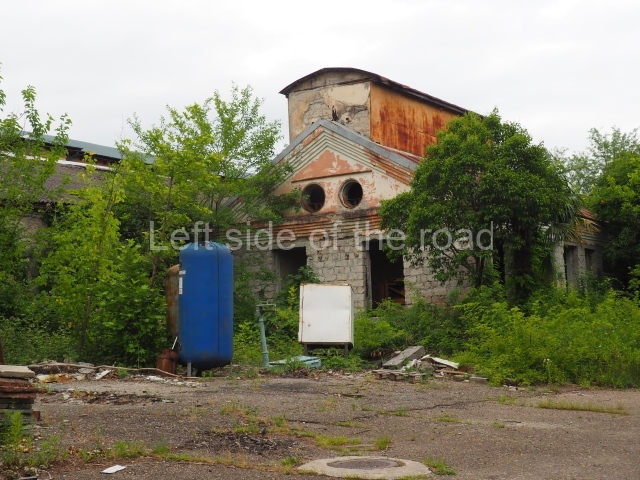
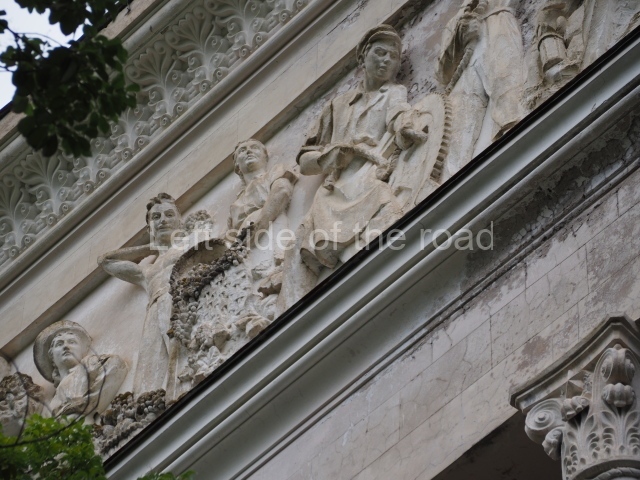
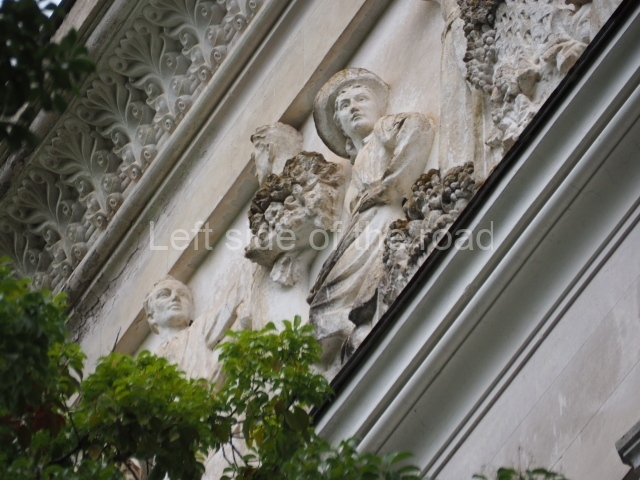
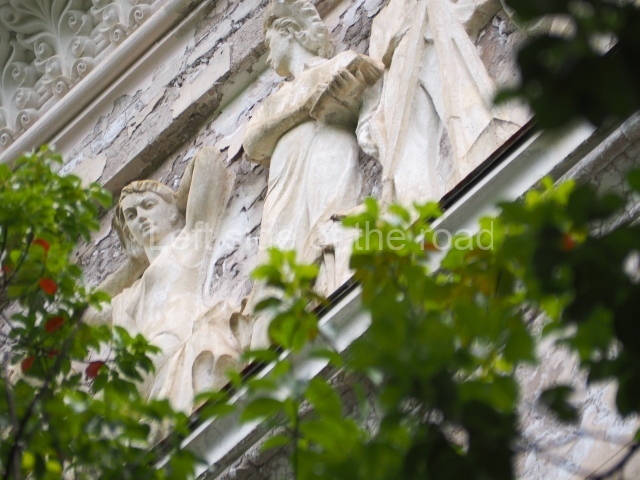
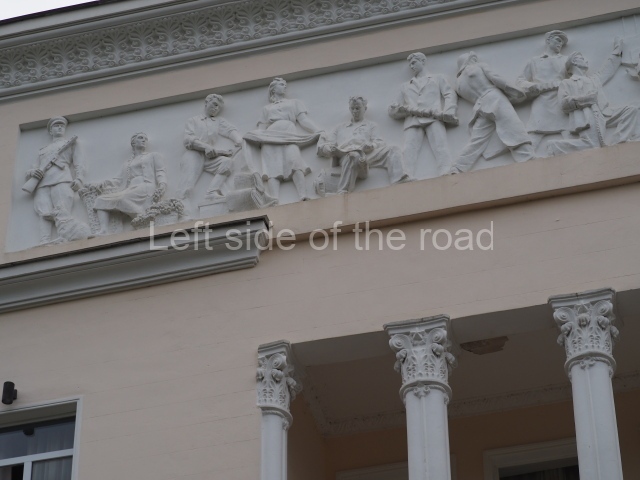
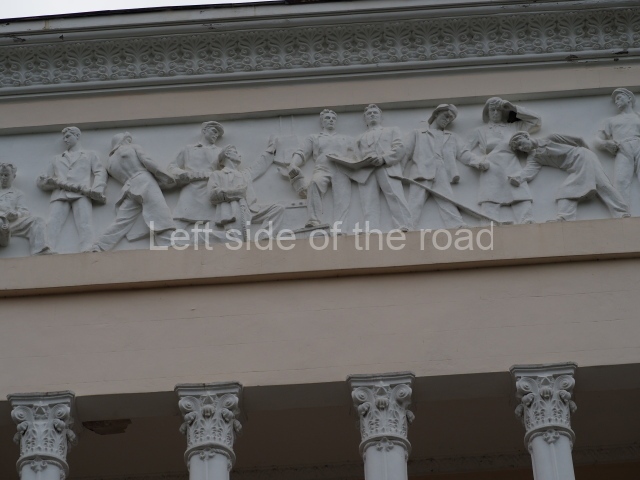
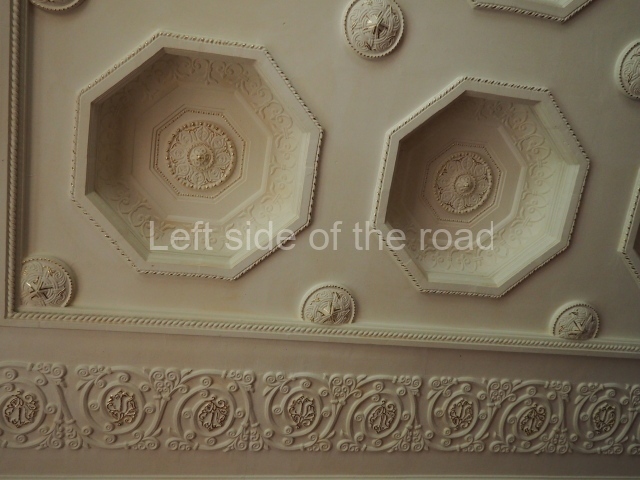
One of the other two buildings (the one with statues above the main entrance) appears to have had some work carried out in the relatively recent past, although it definitely looked like a budget option – but this looks as if it hasn’t been used for some time. The third looked as if it had not been touched at all since the last Soviet visitor left and although not in the best of condition – and difficult to see clearly due to the sprawling vegetation – it also has a Socialist Realist frieze on the façade.

Spa Resort, Tskaltubo - 05

Spa Resort, Tskaltubo – 05

Only very few people were staying there when I visited at the very beginning of June 2024 but I got the impression that large groups would arrive from time to time so perhaps my stay wasn’t indicative of the occupation levels – and anyway it was still relatively early in the summer season.

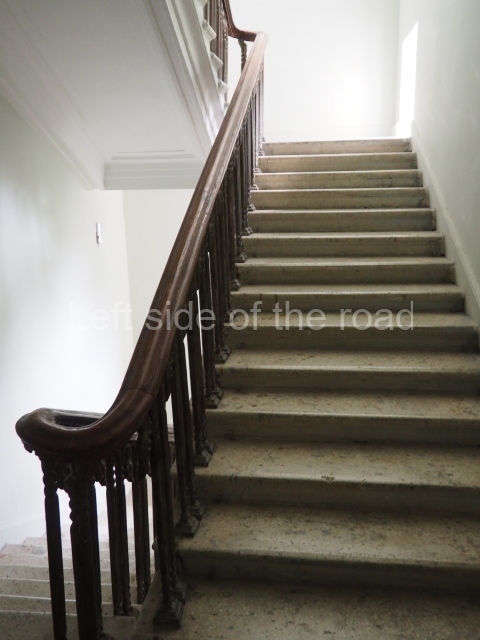
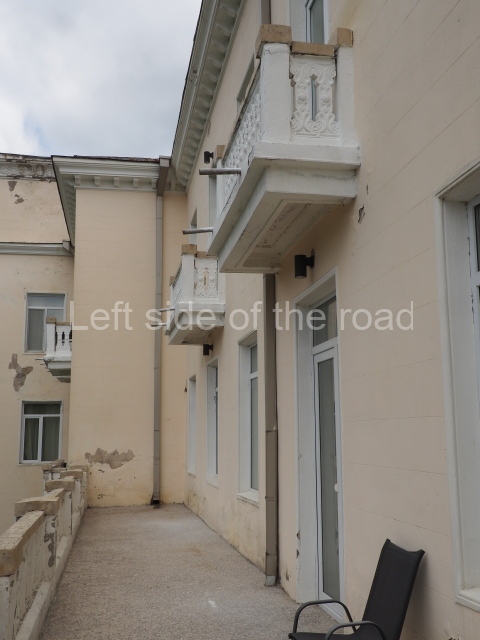
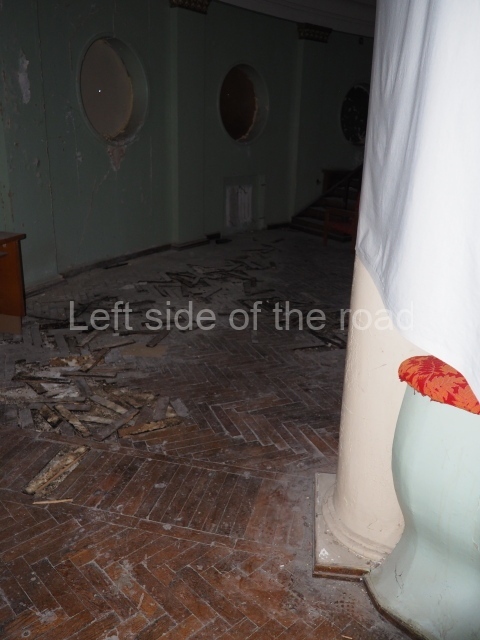
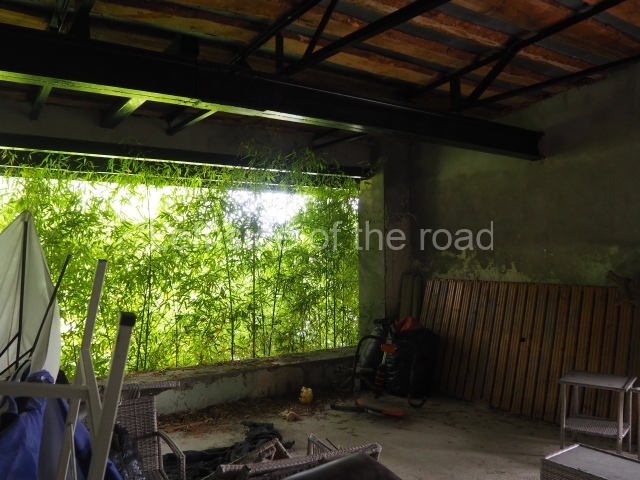
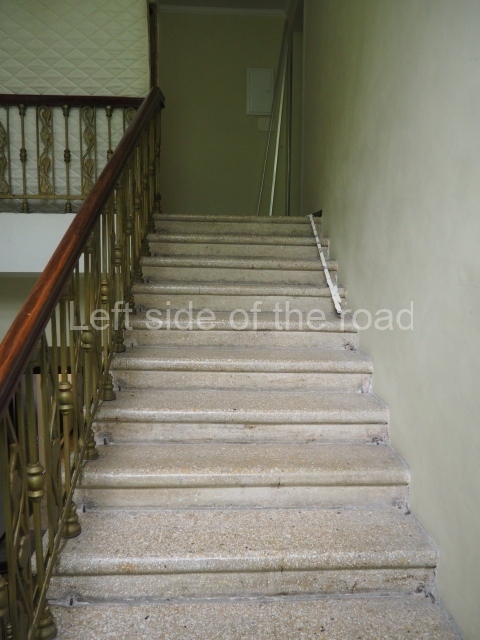
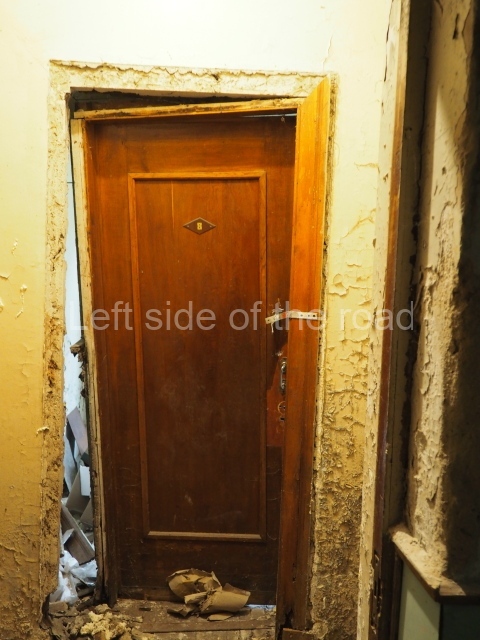
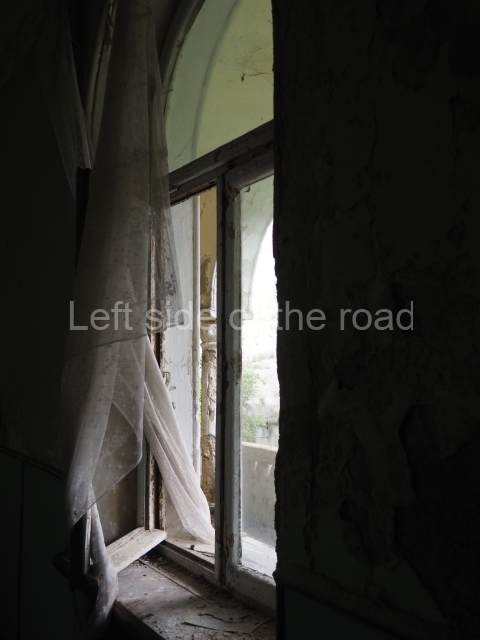
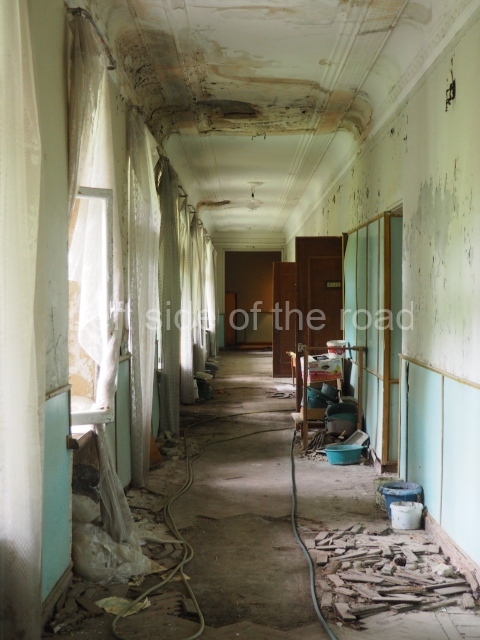
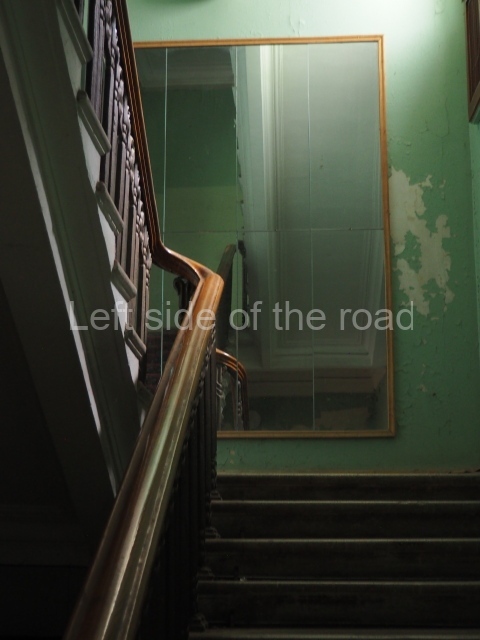
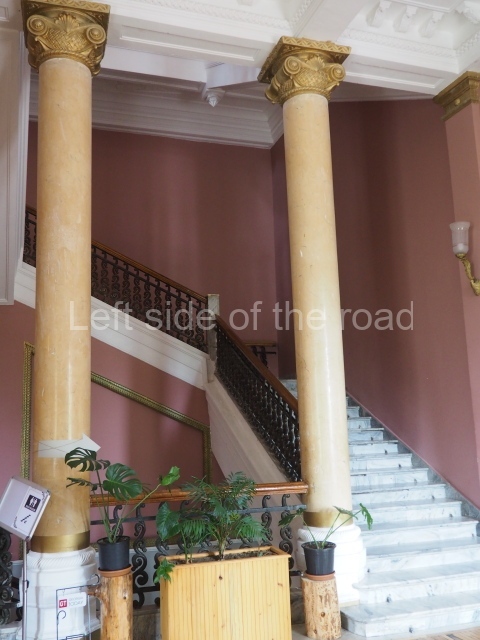
Having walked around derelict and completely uninhabitable (although some people are forced to live there as they have nowhere else) ex-hotel buildings in other parts of Tskaltubo it was interesting to see what these places were like when they were such a popular destination for Soviet workers. But, as stated above, not all of this particular hotel has been fully restored – so dereliction was only just (literally) around the corner. Go up one staircase and everything is what you would expect in such a hotel but go up another and you see what a lot of work is needed to bring the whole building up to scratch.

A picture paints a thousand words so it is hoped that the slide show will provide a better idea of the whole of the complex. Here I just want to point out a few aspects which stuck out in my mind as I explored all the (sometimes) dark and dusty corridors. For someone who wants to get an idea of the place the fact that there was no restriction on where you could go was quite refreshing, so-called ‘health and safety’ – often used as an excuse to prohibit access – gone mad certainly in the UK (if not other countries in Western Europe).

Spa Resort, Tskaltubo - 04

Spa Resort, Tskaltubo – 04

In no particular order;

  • the many rooms which had been renovated but not kept immediately ready for guests but would be sorted very rapidly if a big group was to book in;
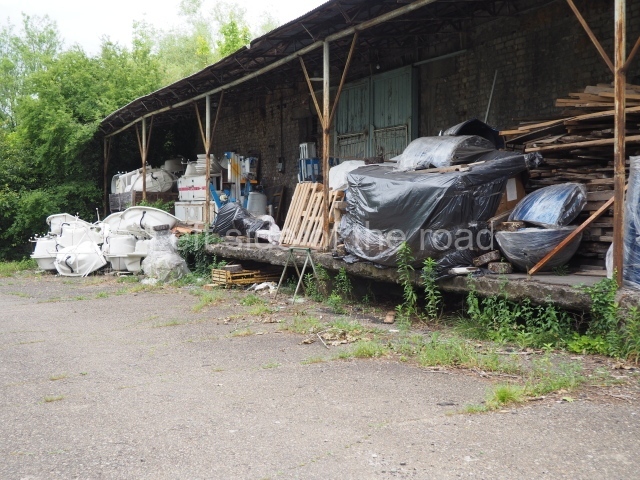
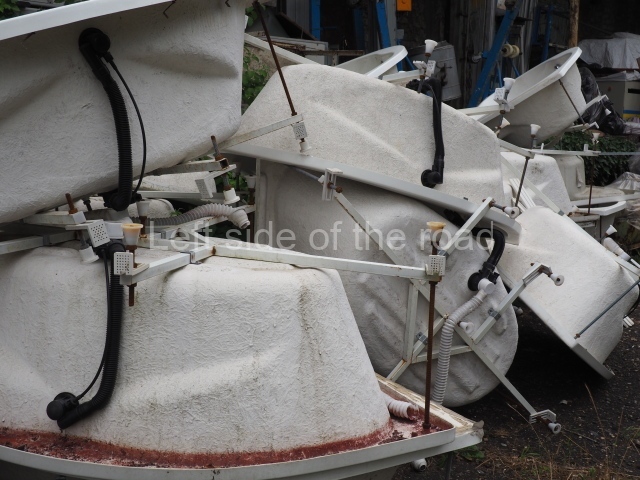
  • the stacks of old spa baths, very dated in their design, which had been taken out of the hotel’s own spa area but the new baths had not yet (in the summer of 2024) been fully plumbed in and the work to do so seemingly frozen for whatever reason;
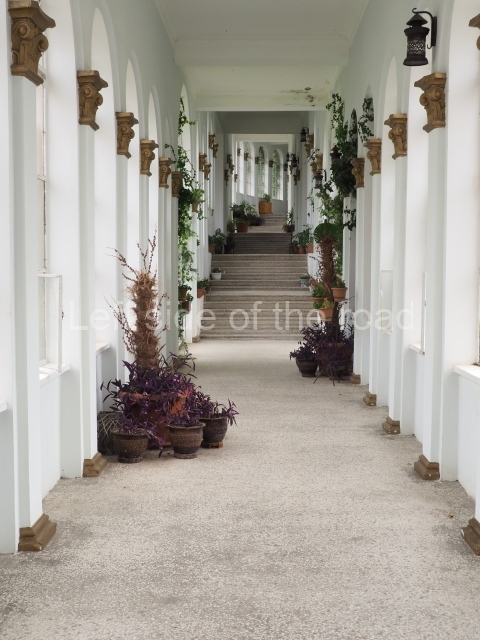
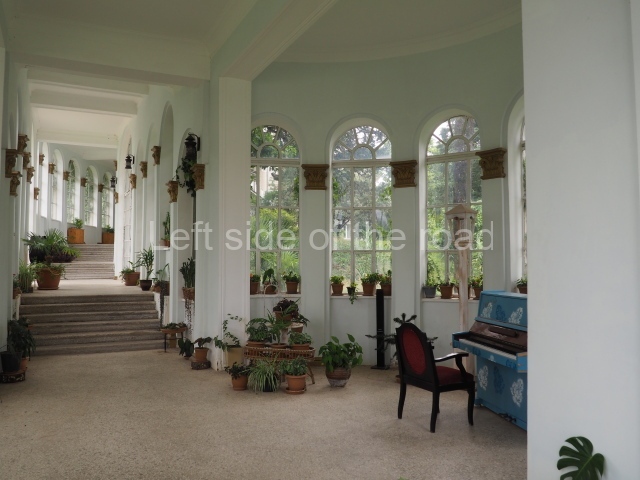
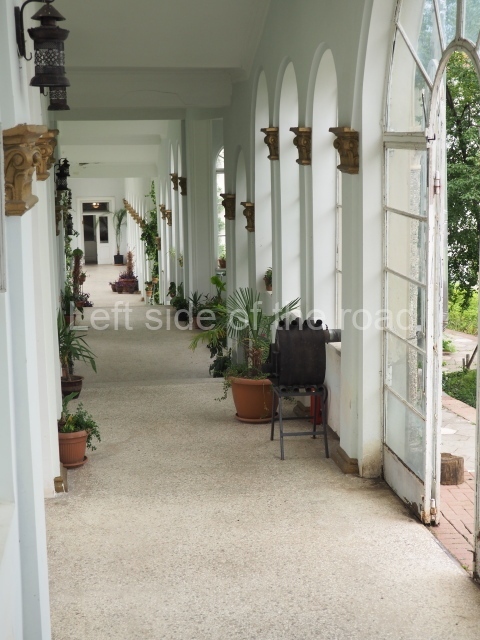
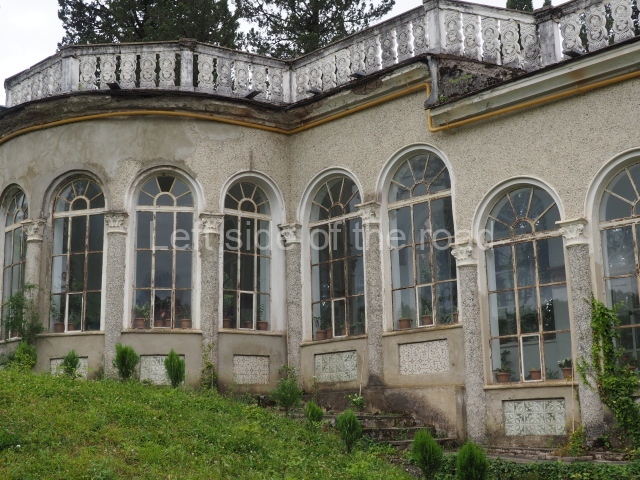
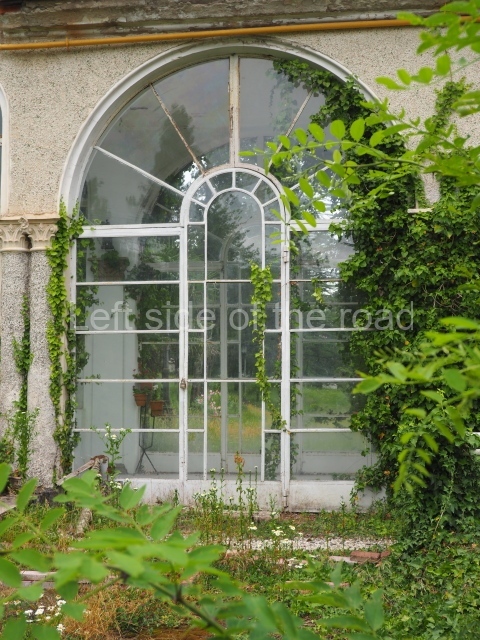
  • the covered walkway, with metal-framed windows on either side, now (and probably originally) lines with potted plants that joined the accommodation area with the dining and entertainment area of the complex;
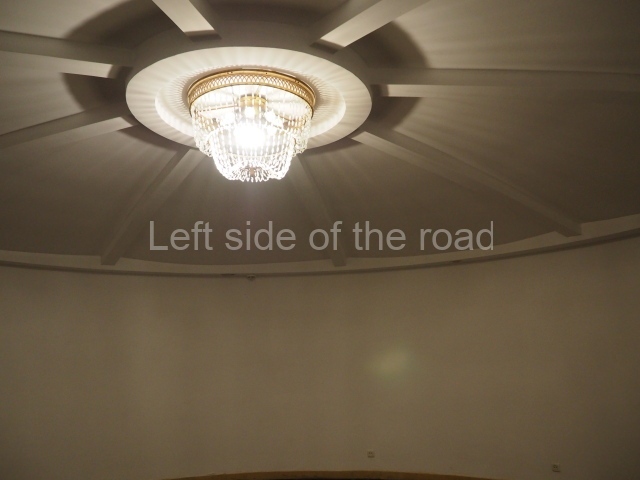
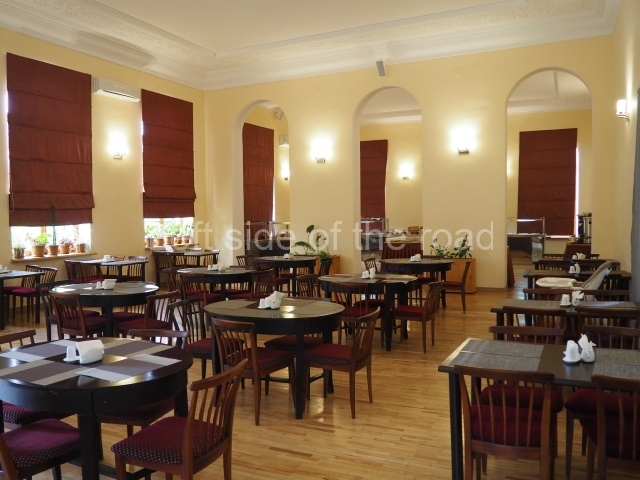
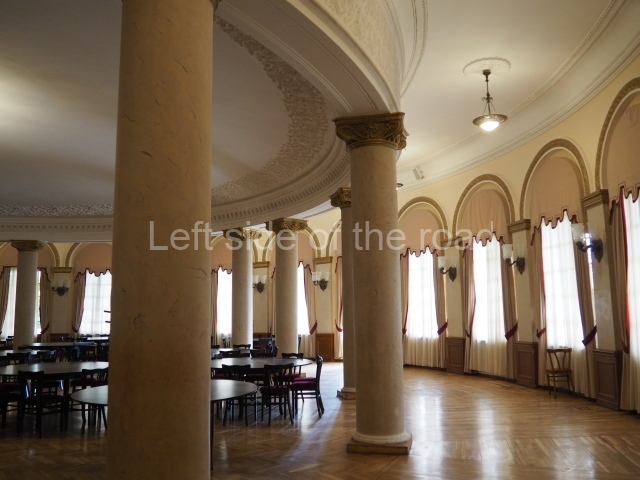
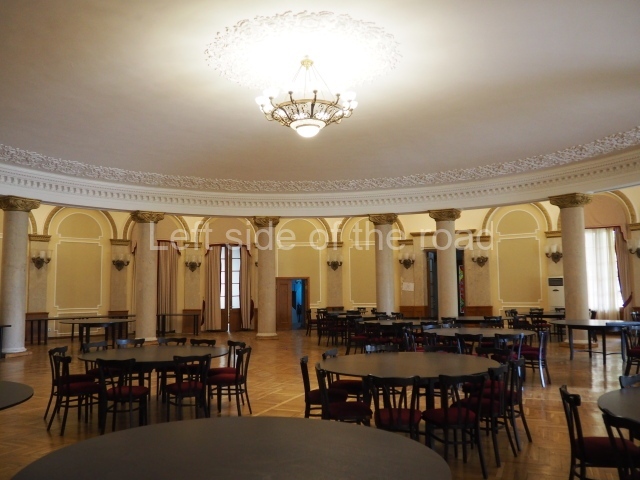
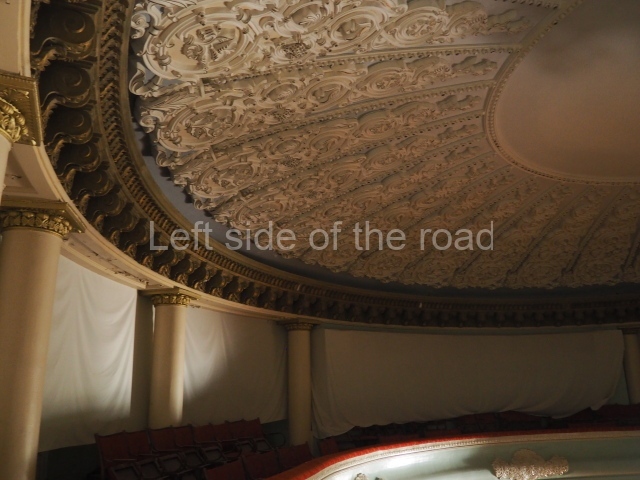
  • the large circular dining room which wasn’t in use when I was there but looking as if it wouldn’t take too much to get it ready;
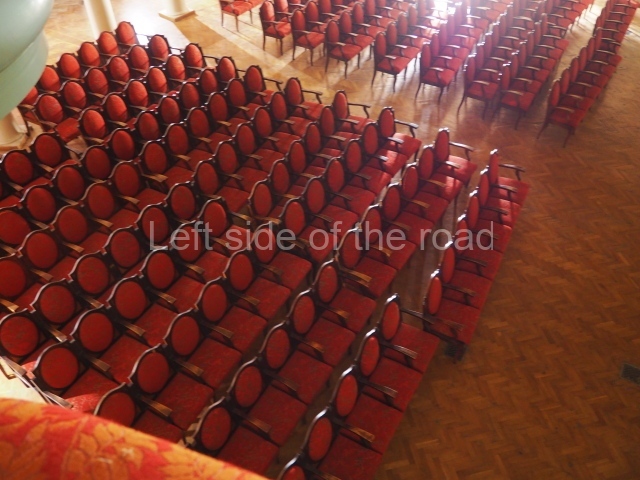
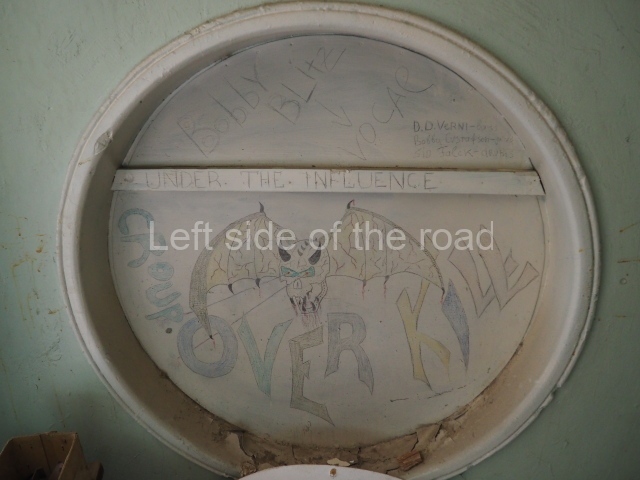
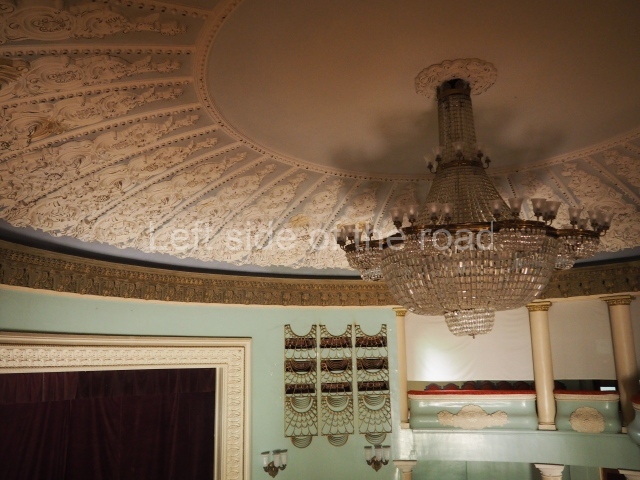
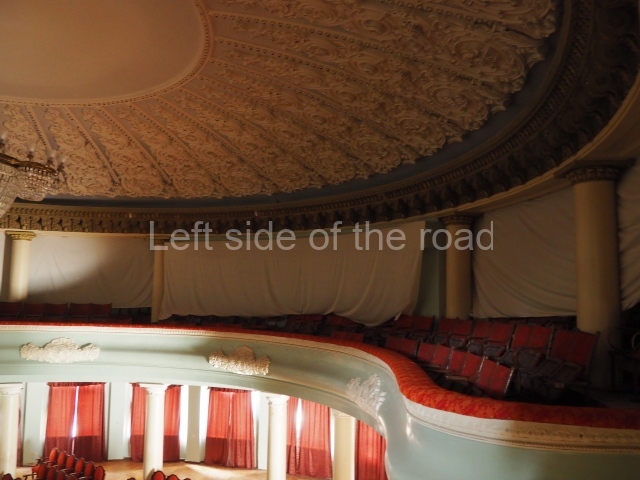
  • the circular cinema/theatre which downstairs looked as if it could be ready for a performance at any time but in the balcony the chairs were dirty and many of them broken or missing with the walls flaking;
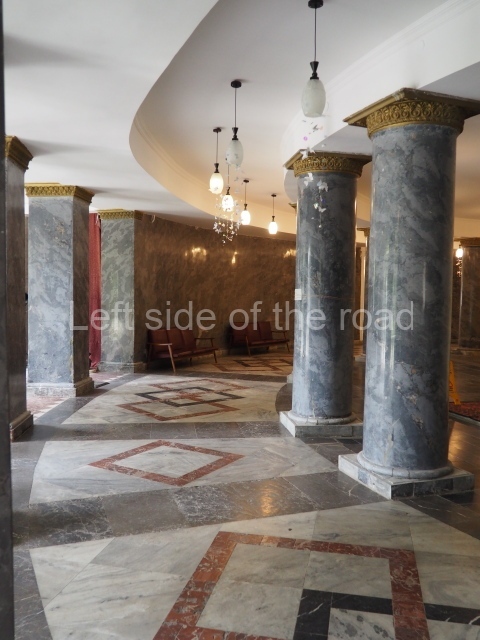
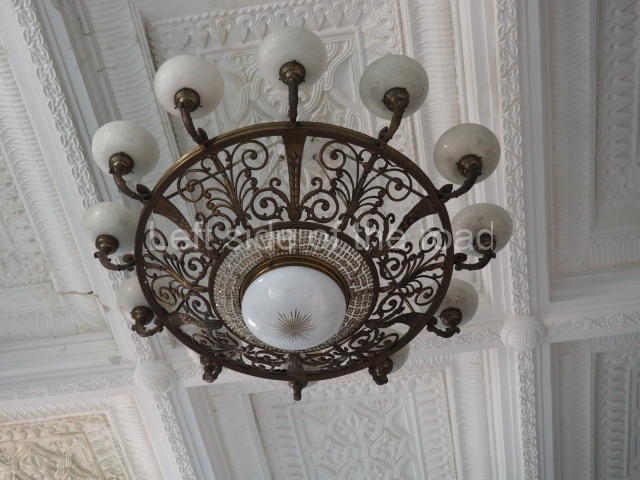
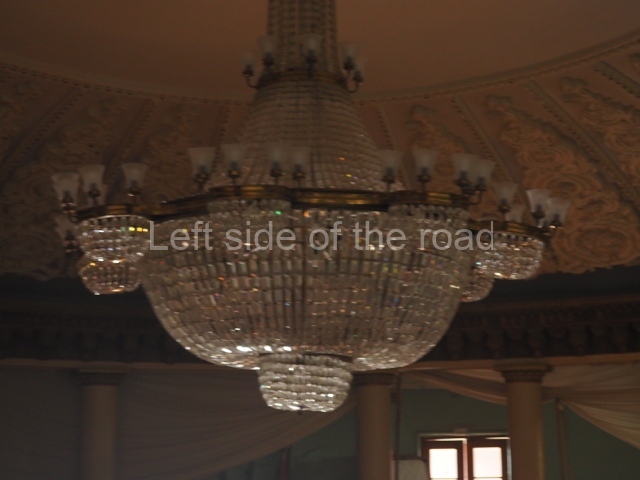
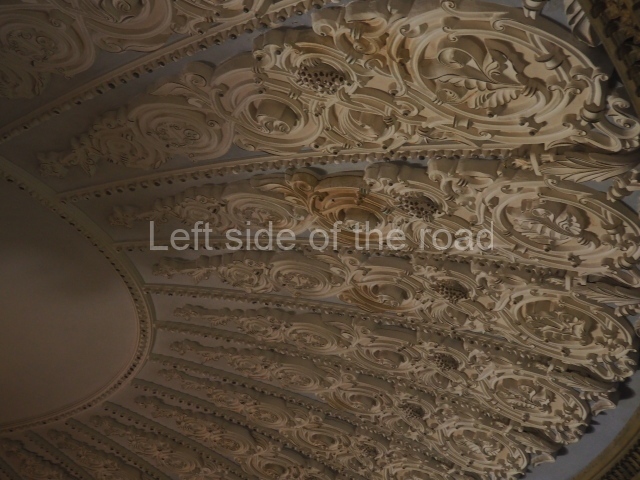
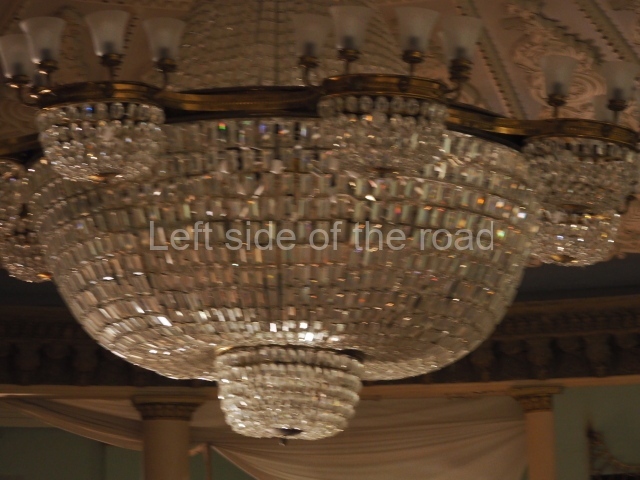
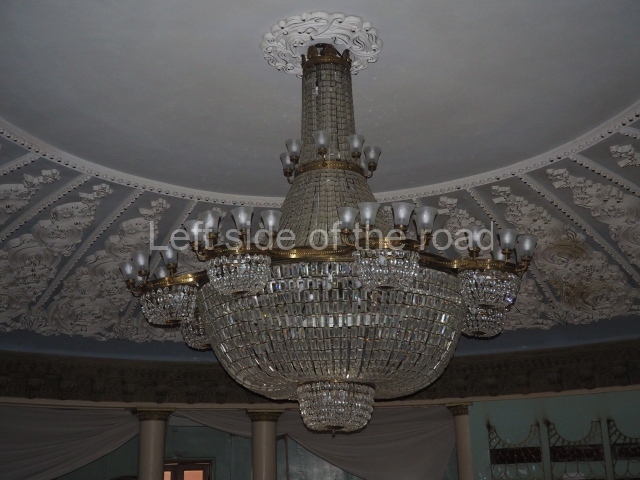
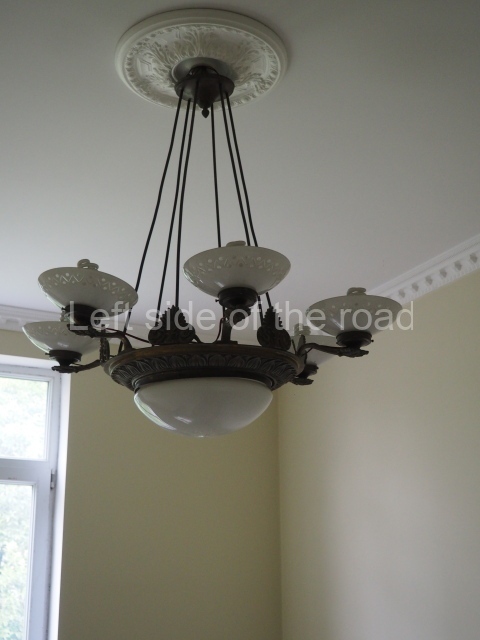
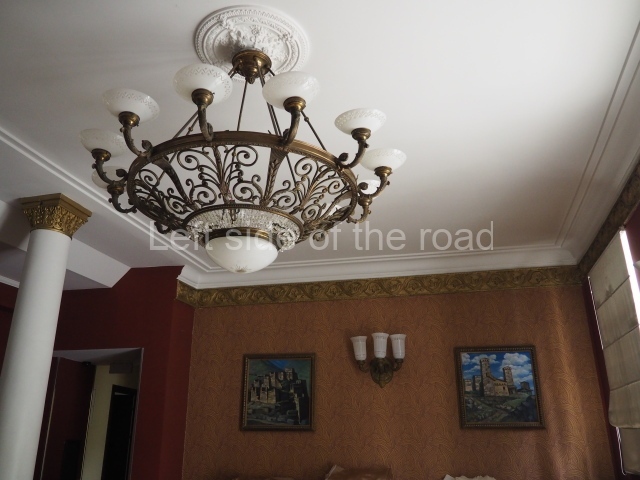
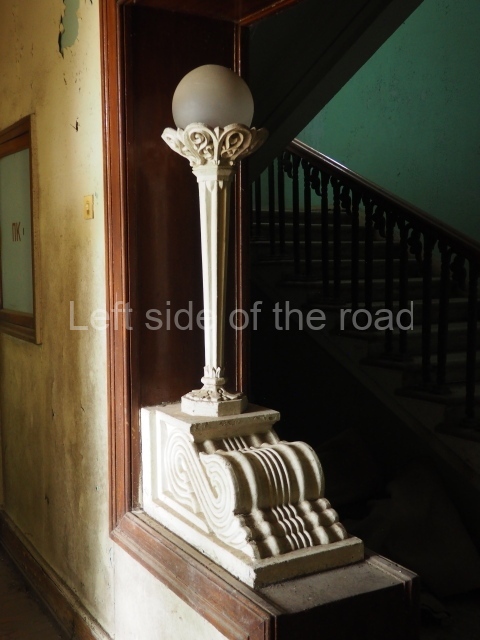
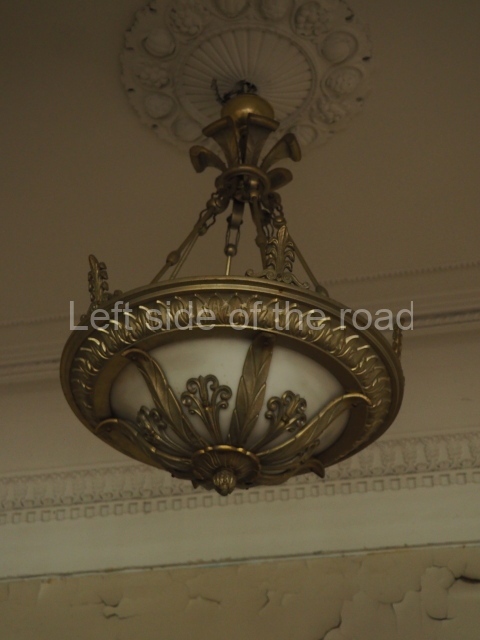
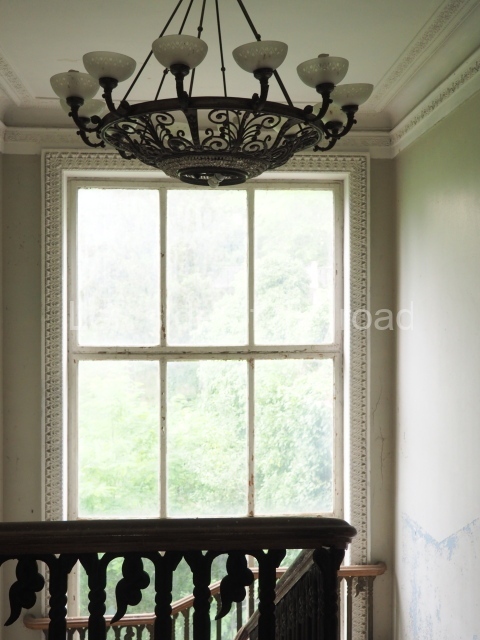
  • the light fittings that were very reminiscent of the Moscow Metro. Whereas western metros and underground systems are industrial spaces that of the Soviet transport system was ‘domestic’, there being light fittings that you would find in other public buildings in the country, which included chandeliers, all which provides a softer lighting as opposed to the harsh, functional fluorescent strips which are the norm in the west;
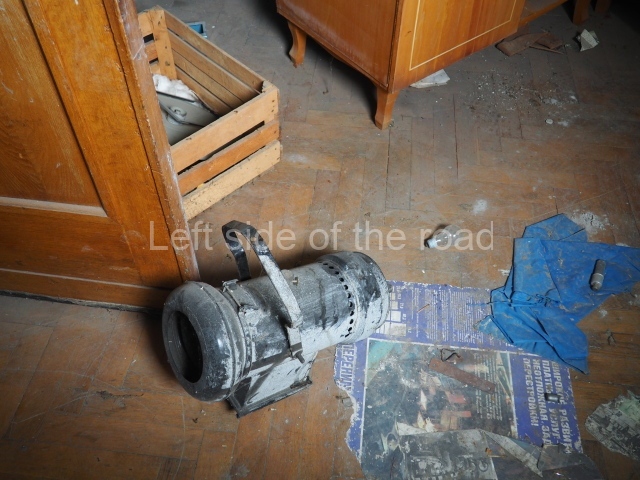
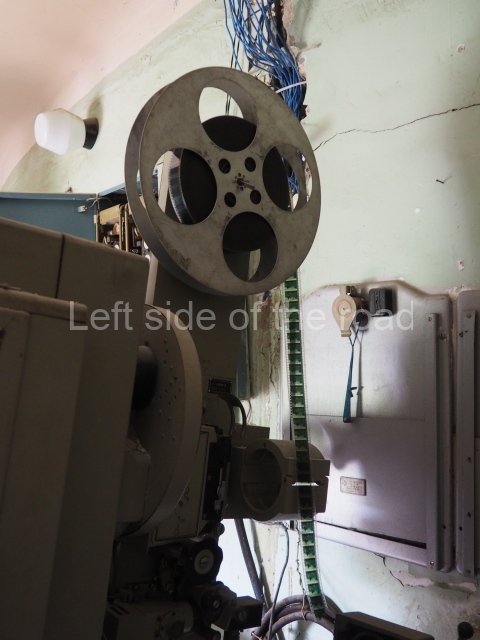
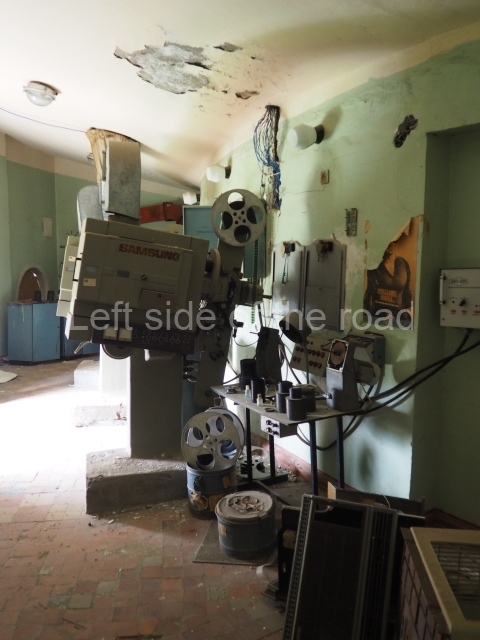
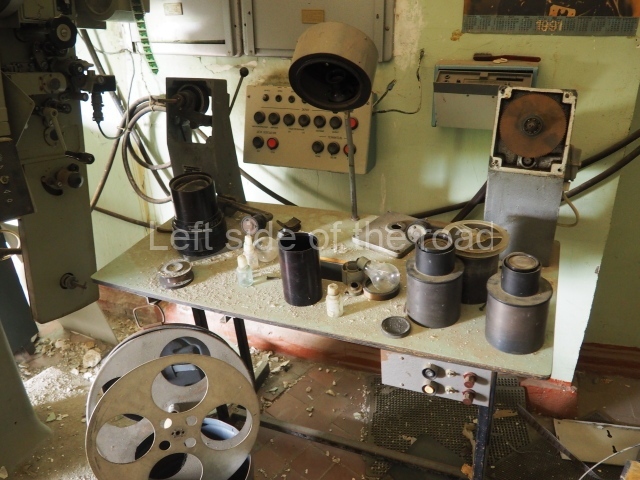
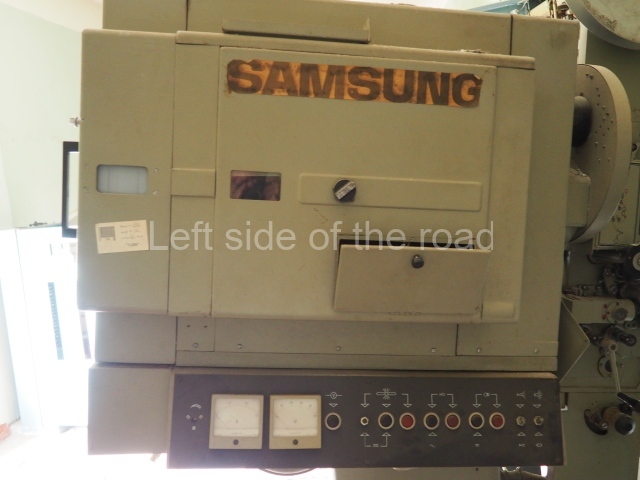
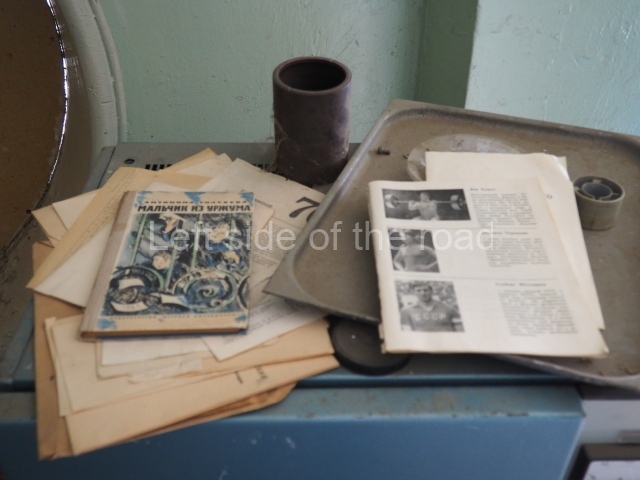
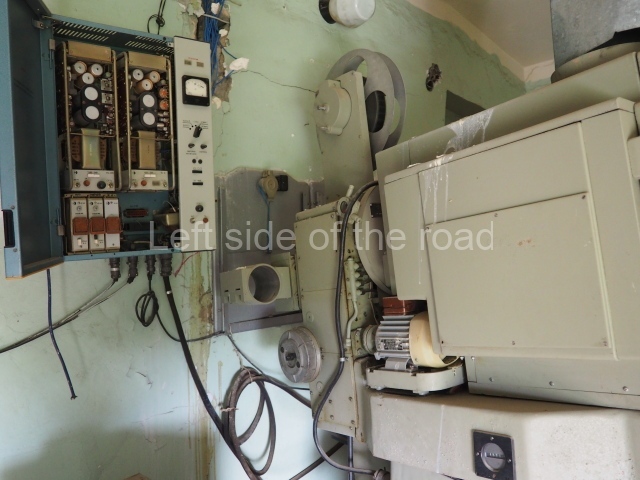
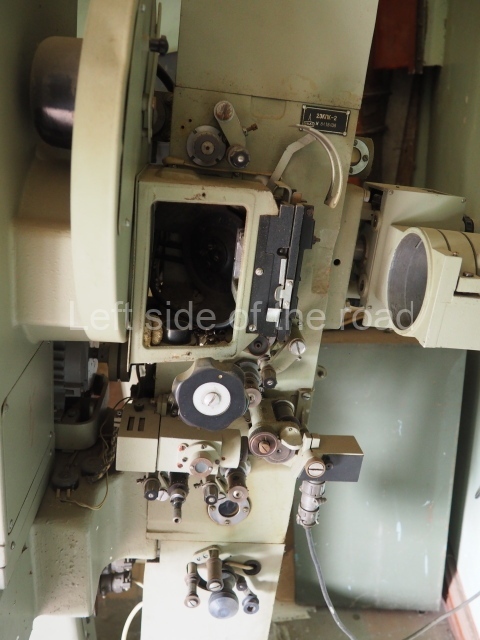
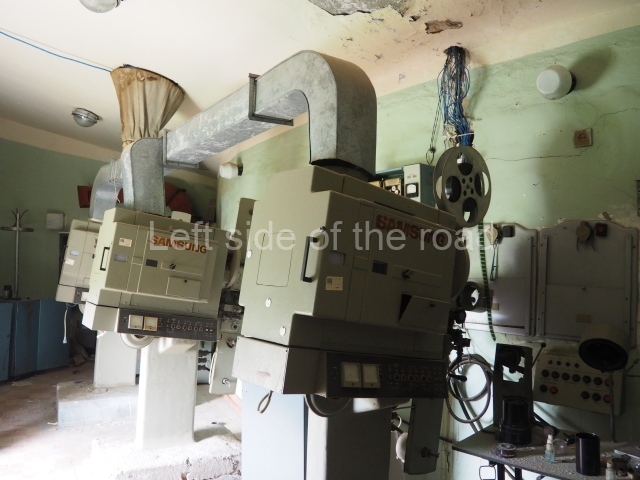
  • the cinema projection room which still houses two, late 20th century 35mm projectors, one of which still had a reel of film in place. Although not very tidy and with a few things having been taken for use elsewhere you could still imagine (with a fair stretch of the imagination) that a film could be shown tonight;
Spa Resort, Tskaltubo - 03

Spa Resort, Tskaltubo – 03

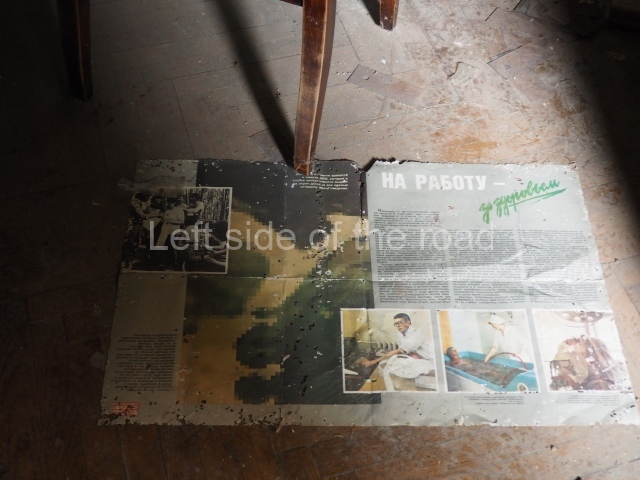
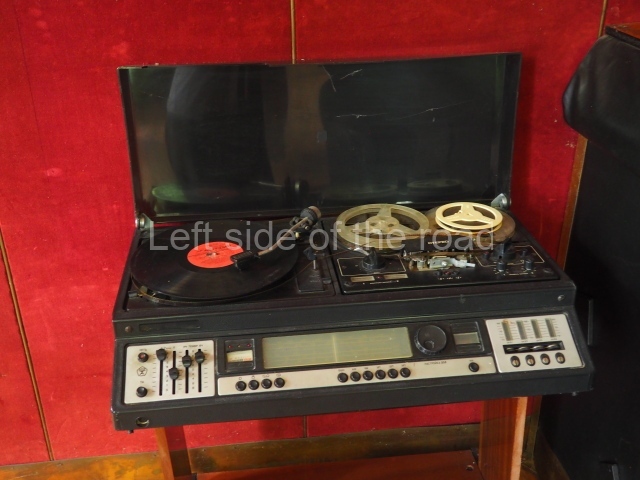
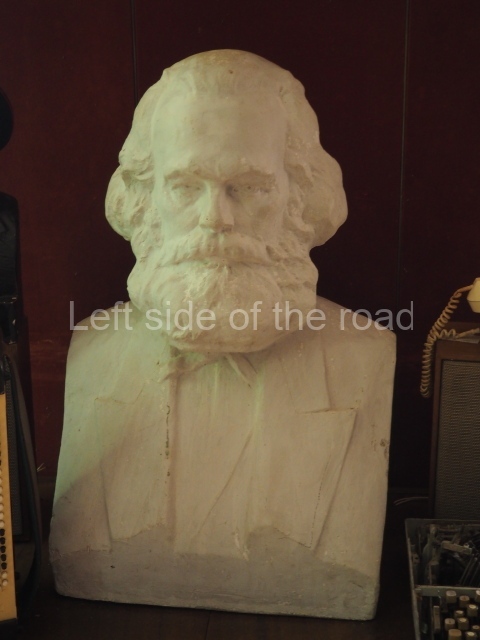
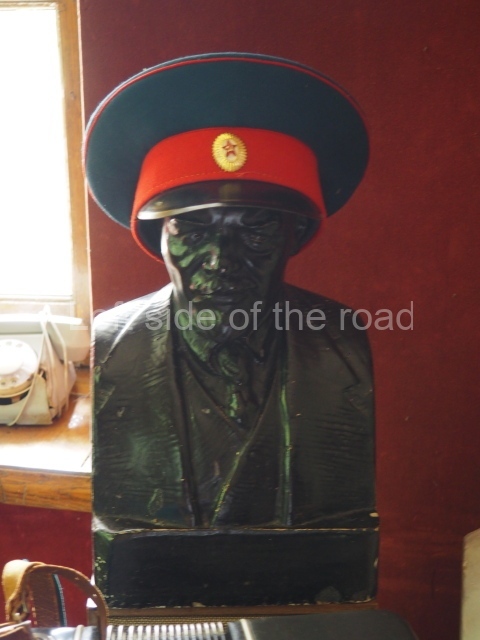
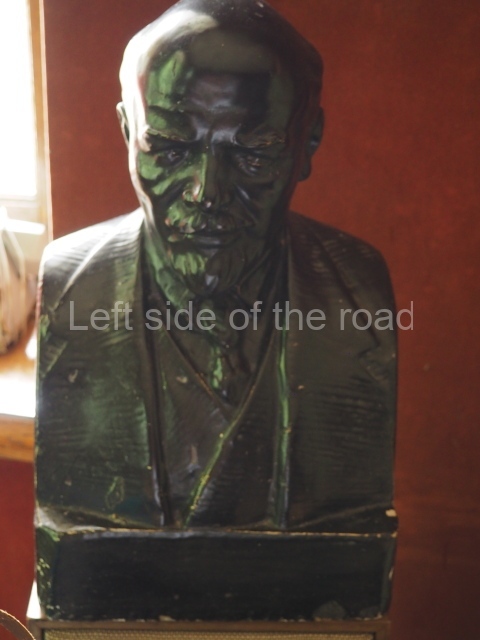
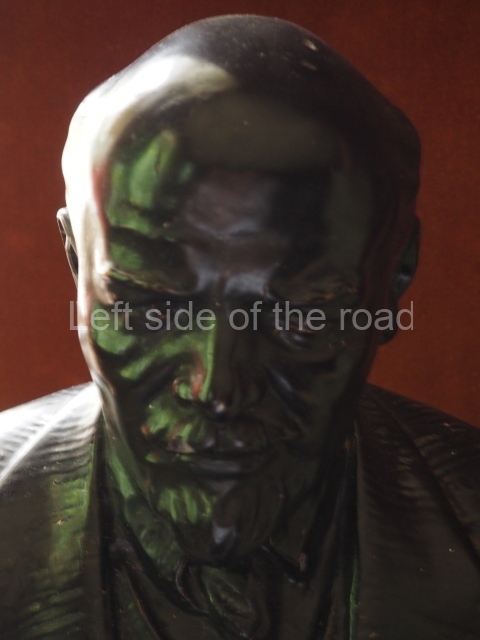
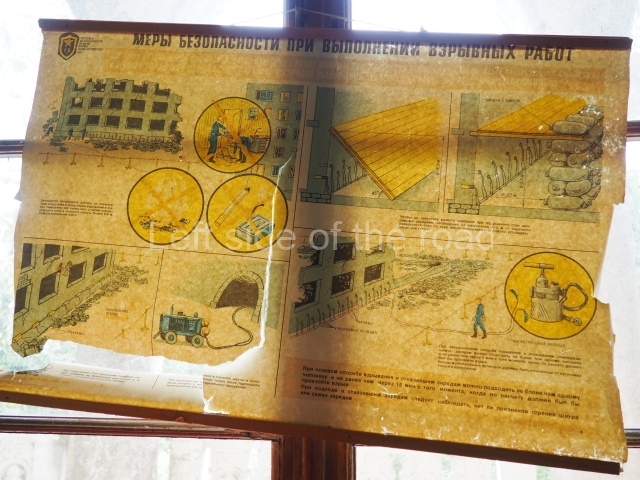
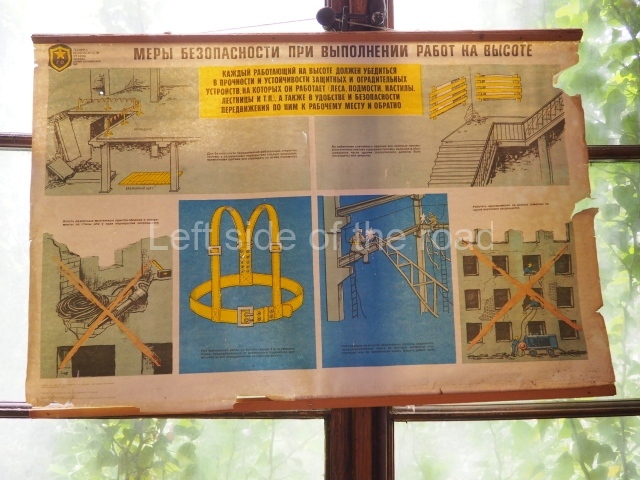
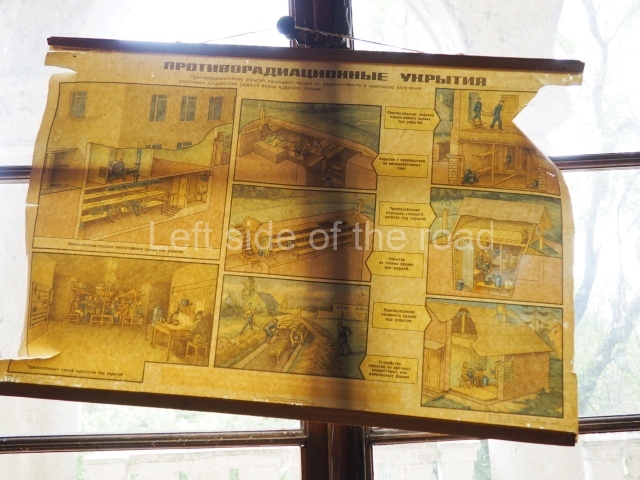
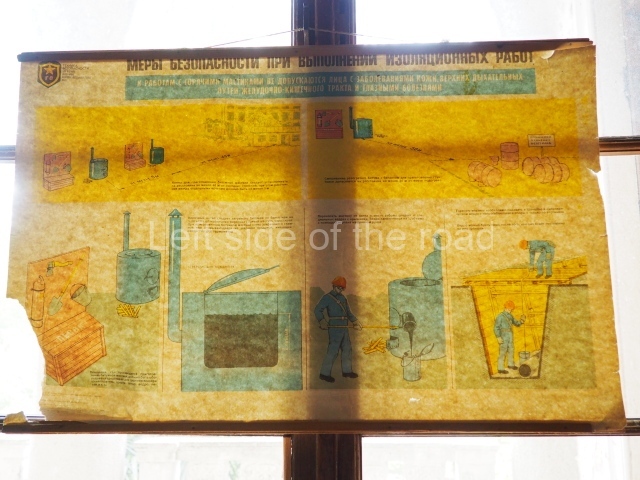
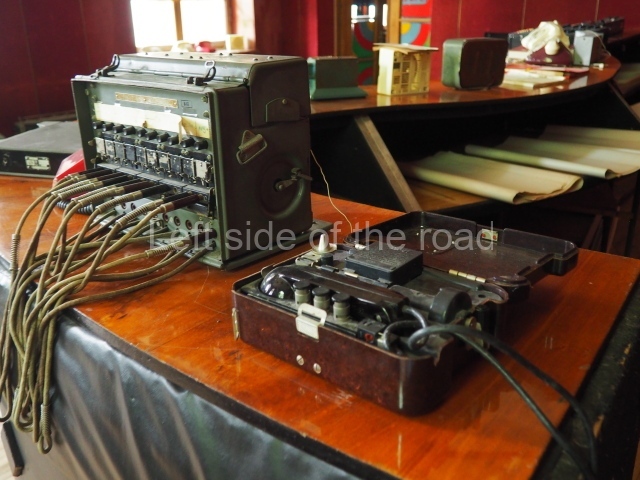
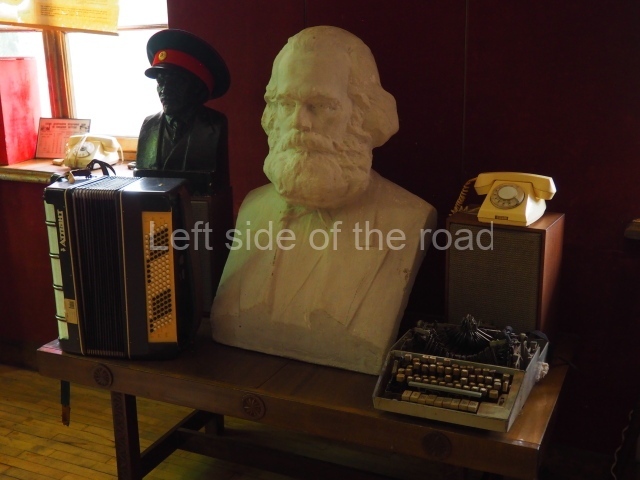
  • the ‘museum’ – which is really only a higgledy-piggledy collection of items which no one could find a present day use for but didn’t want to throw them in the skip. This includes a bust of Karl Marx and one of VI Lenin, as well as some old health awareness posters and a 1980s ‘sound system’ amongst other nick-knacks. This all in what was a small café/bar in the latter days of the Soviet resort;
Spa Resort, Tskaltubo - 07

Spa Resort, Tskaltubo – 07

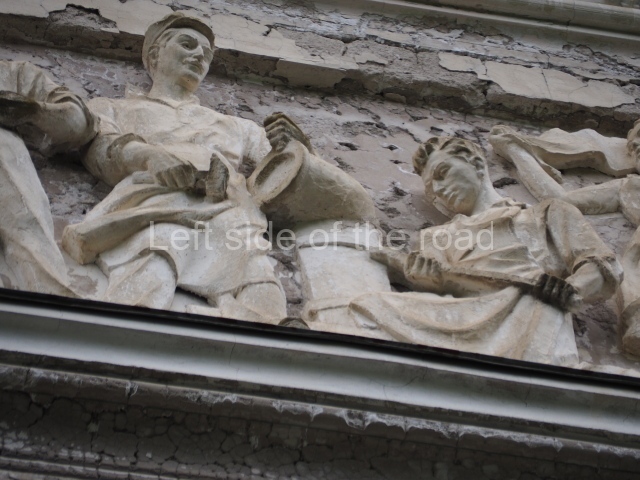
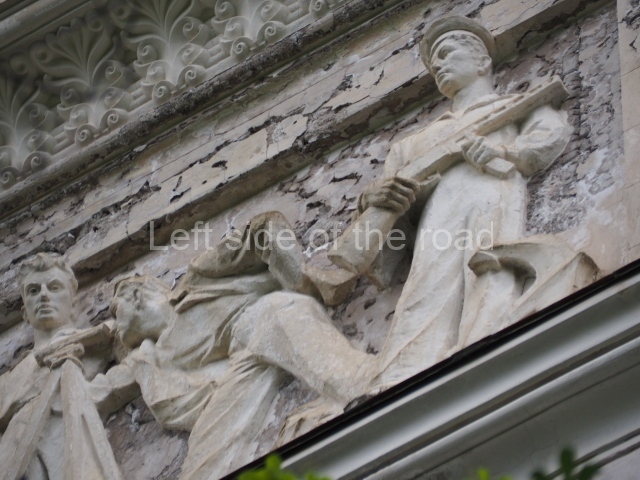
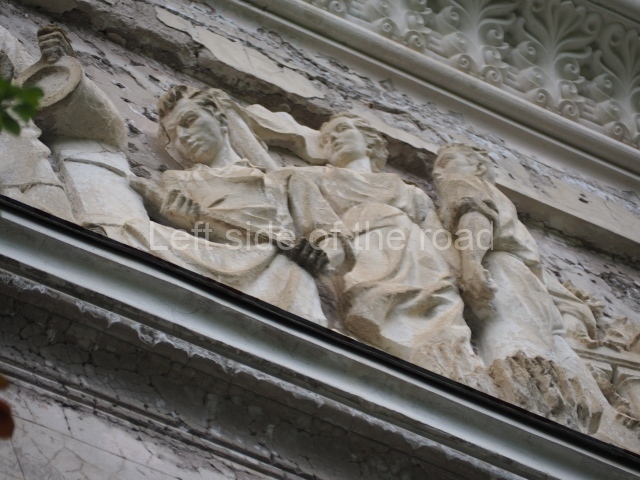
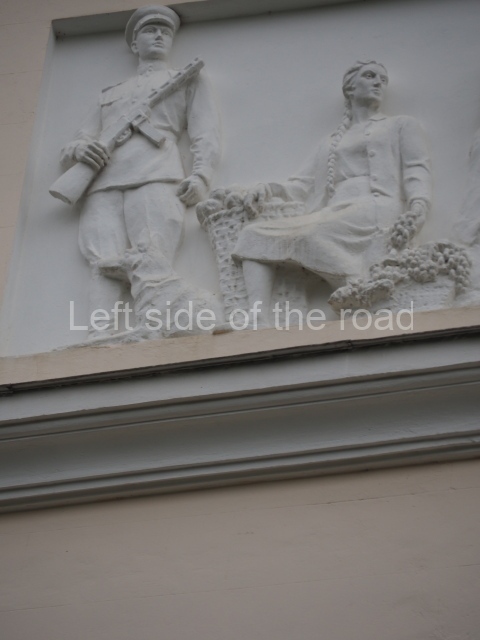
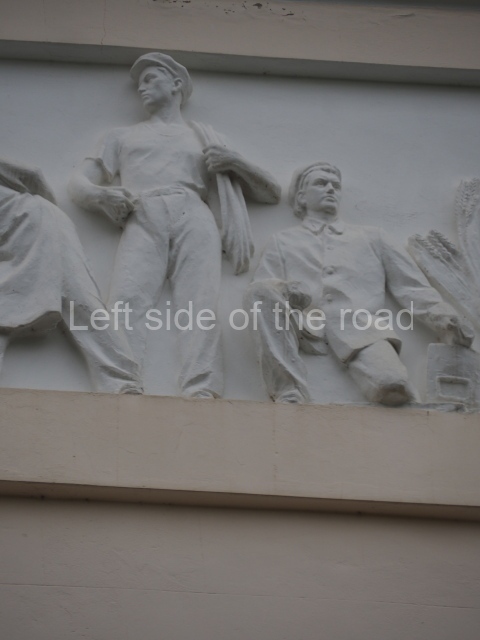
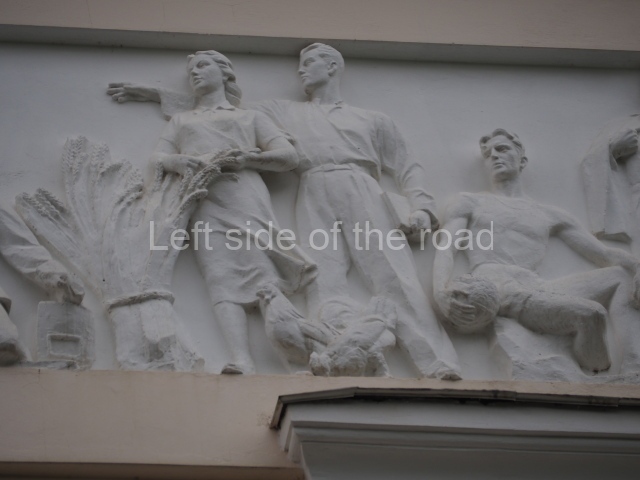
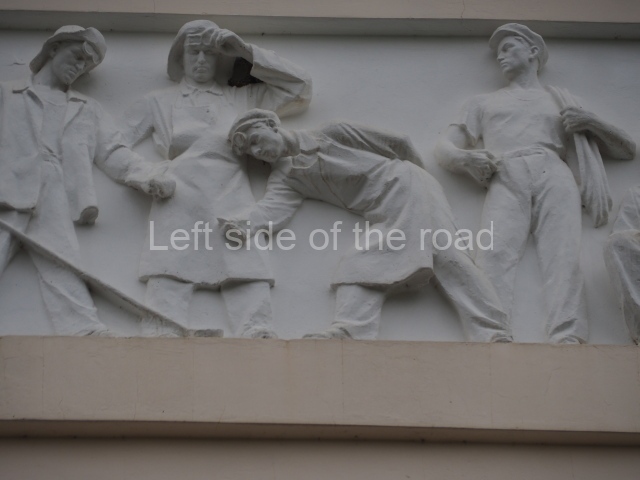
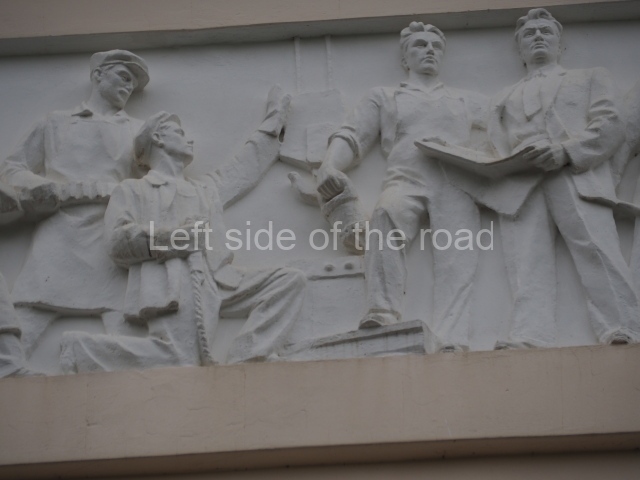
  • a frieze depicting industrial workers and those in working in the countryside, as well as ‘intellectuals’ necessary for the construction of Socialism – the workers of hand and brain. The frieze above the entrance of the first building – that which is in constant use – in a very good, and restored, condition. The one over building three – the building that doesn’t seemed to have received any renovation of any kind since the building was closed – needing a bit of loving care but still in a good enough condition that you can make out the story;
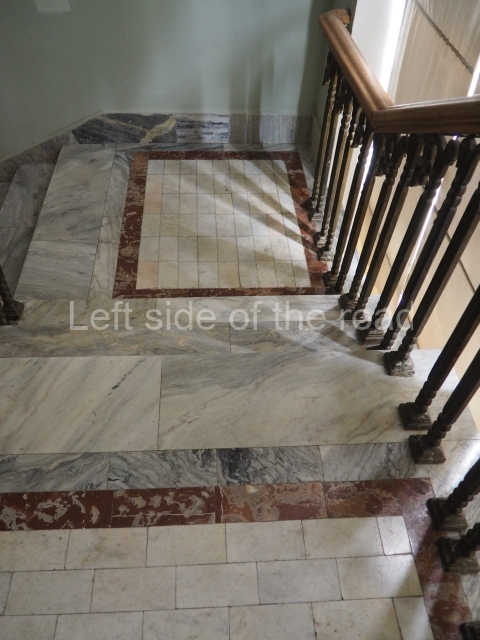
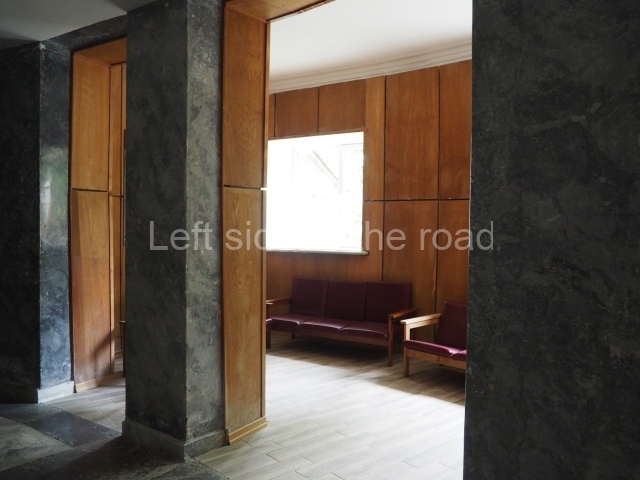
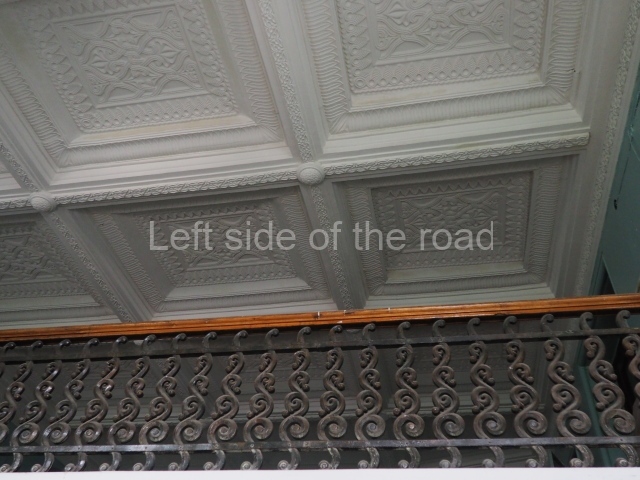
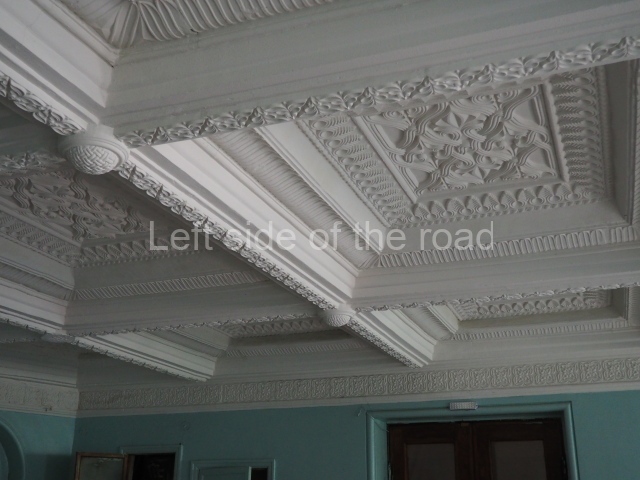
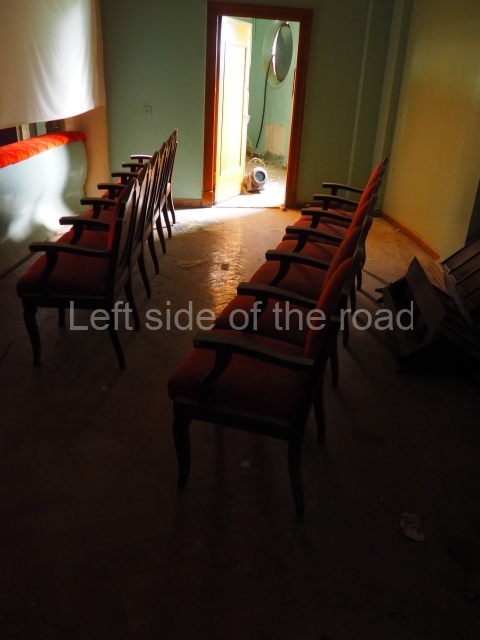
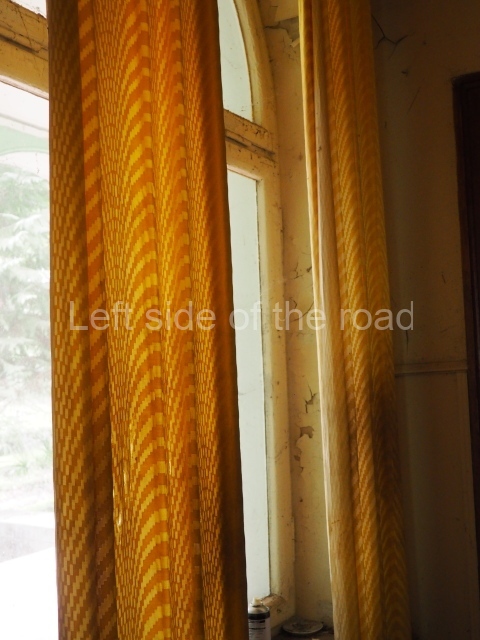
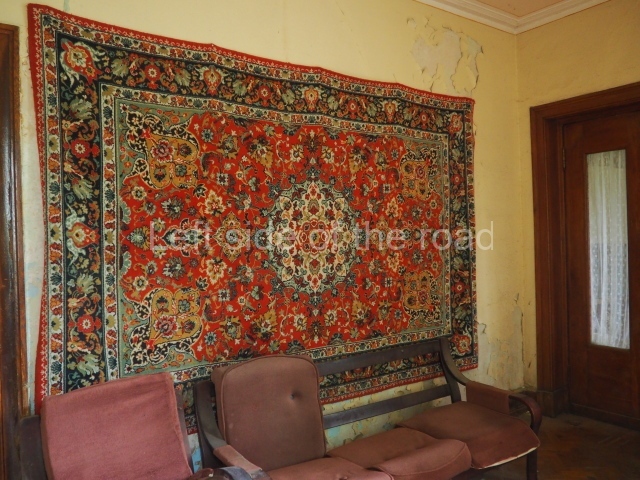
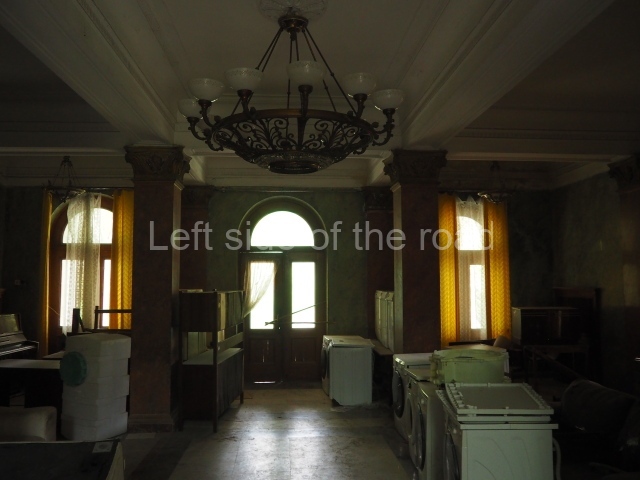
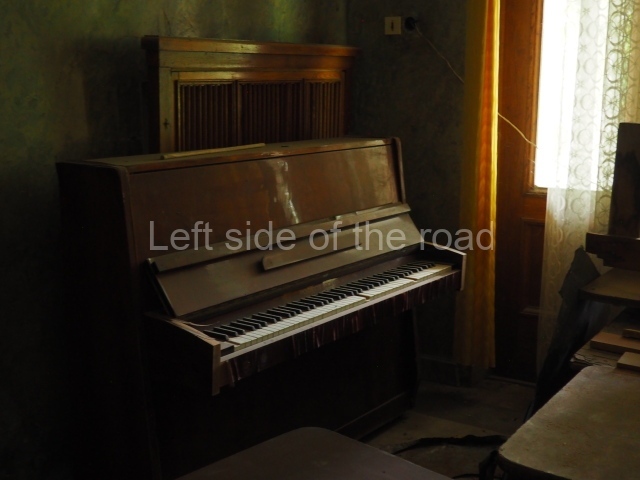
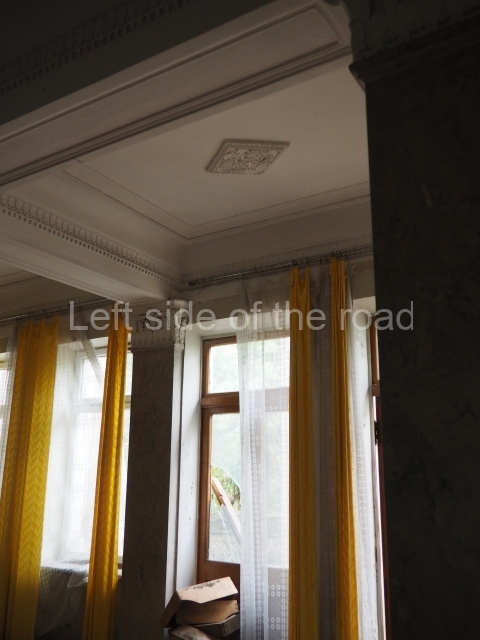
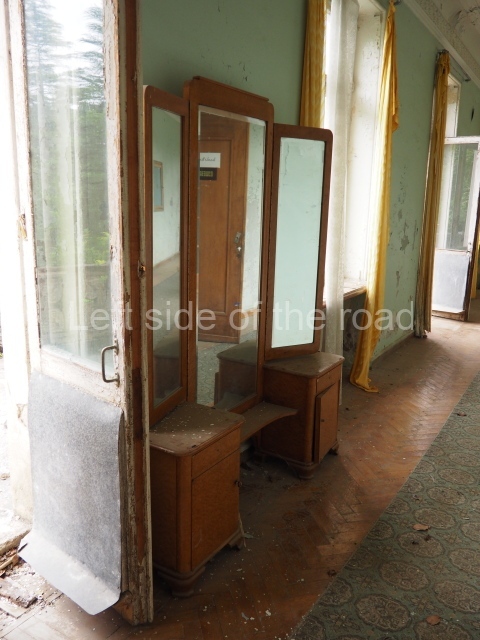
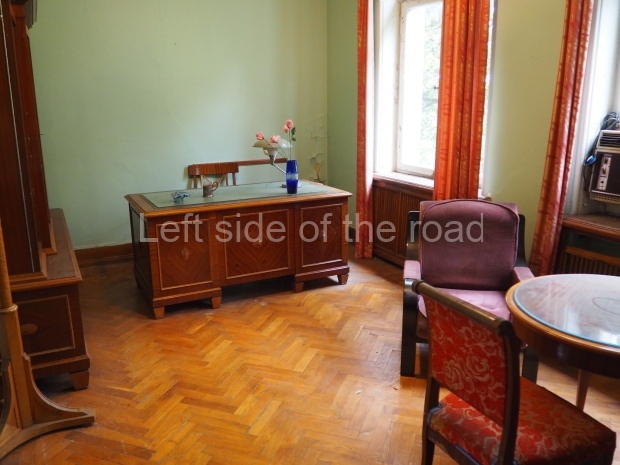
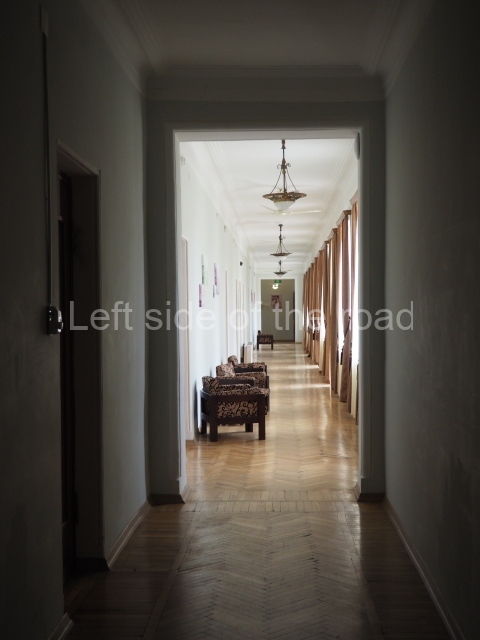
  • remnants of the 1980s in terms of furniture, curtains, pianos, light fittings, etc. All the renovation seems to have attempted to recreate the ambiance of the past where possible;
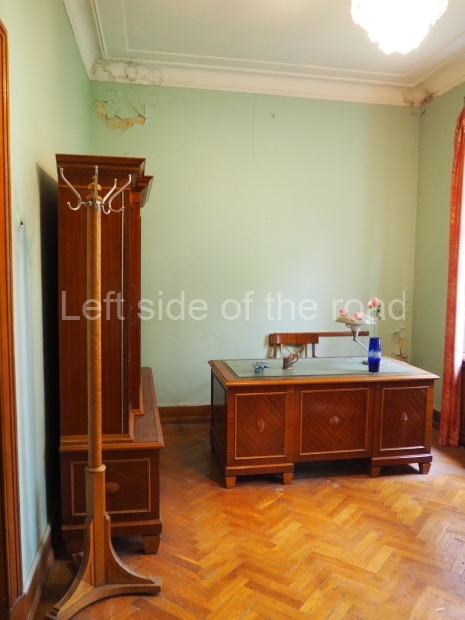
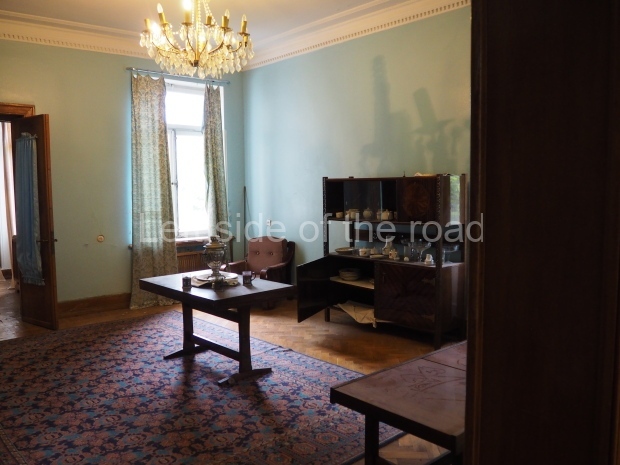
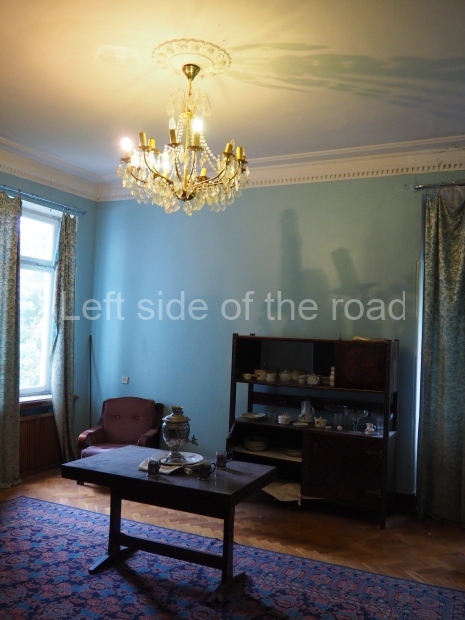
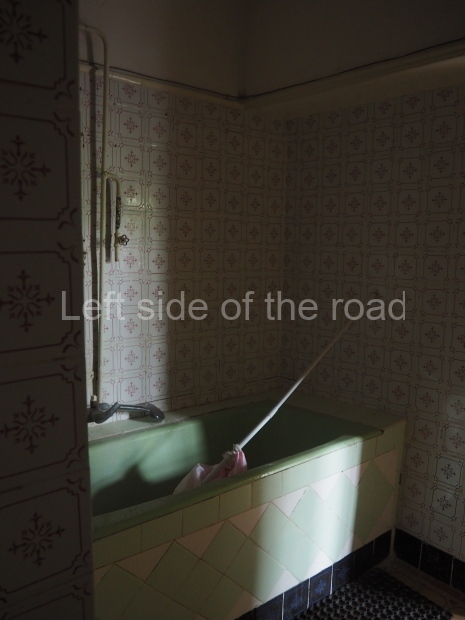
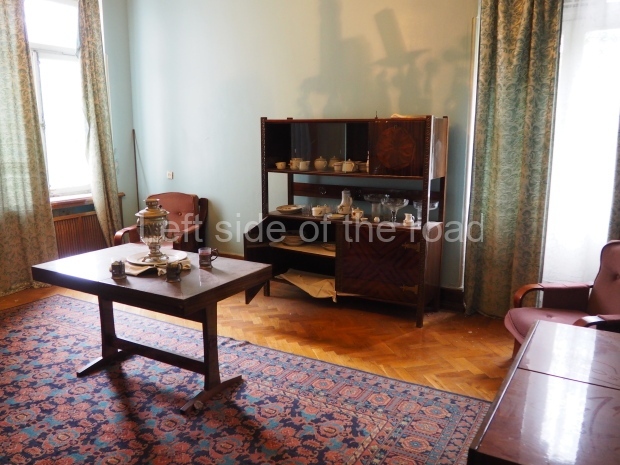
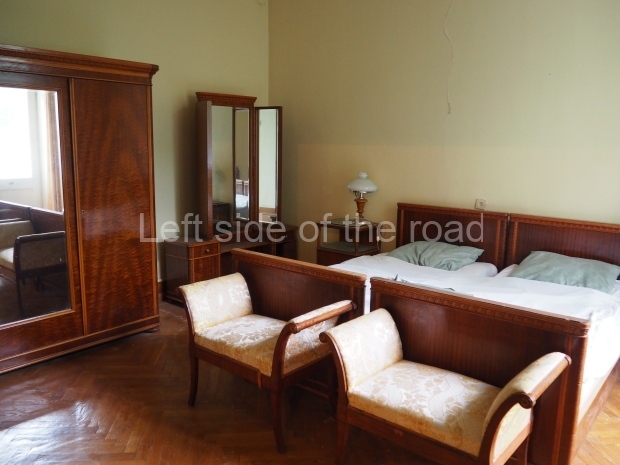
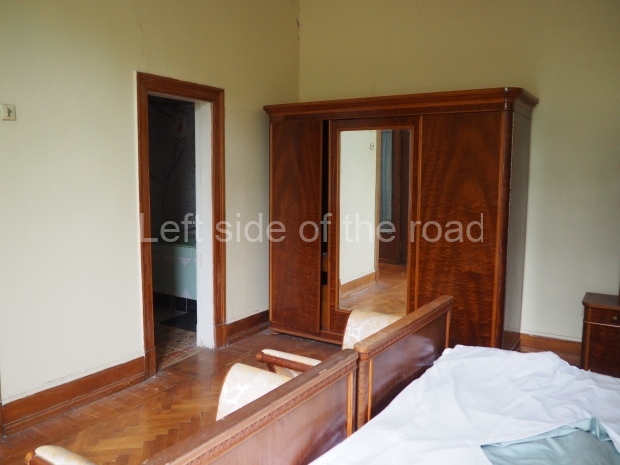
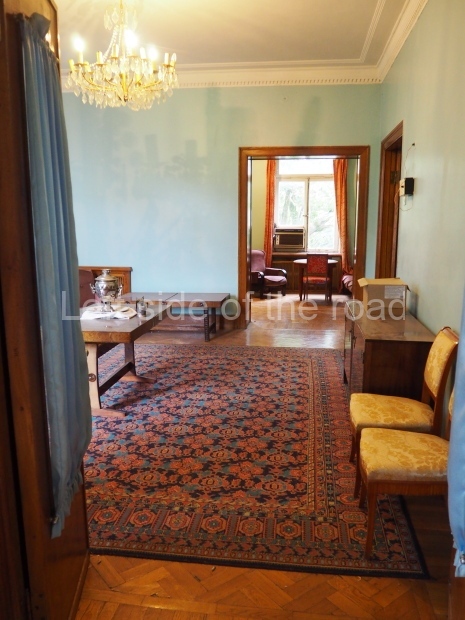
  • ‘Stalin’s suite’ – which is located on the first floor of the third (the least ‘luxurious’) building. As stated above there doesn’t seem to have been any work carried out in this building and for that reason is the most derelict. That is, apart from a small area on the first floor on the west side of the building. This is a small suite comprising of; a sitting room; a bedroom; a small office and a bathroom. Obviously Uncle Joe wasn’t into cooking as there are no facilities for such. This is said to have been Stalin’s residence of choice. Now whether this is true or not I cannot say. I’ve also read about a villa on the other side of the park that Stalin was supposed to have used when visiting Tskaltubo. But if we assume that it is true then what this demonstrates is how humble and undemanding a personage Comrade Stalin was. NO capitalist leader at the same time that he was the leader of the Soviet Union would have stayed in such humble circumstances – even less so now. And as with his ‘private bath house’ in Spring No. 6 it just goes to show what an unassuming man he was – a true leader of the working class.
Spa Resort, Tskaltubo - 08

Spa Resort, Tskaltubo – 08

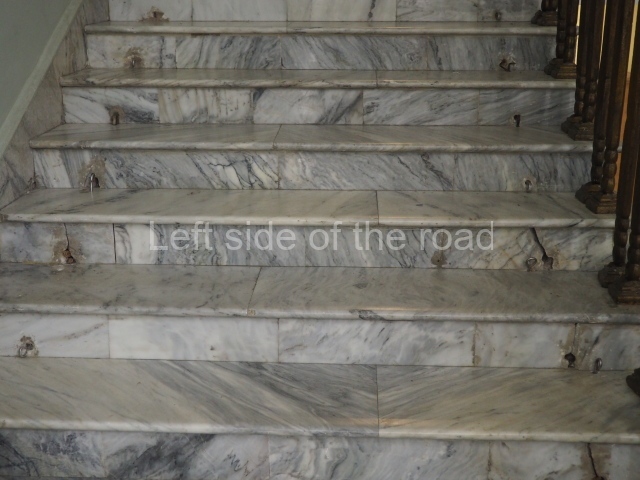
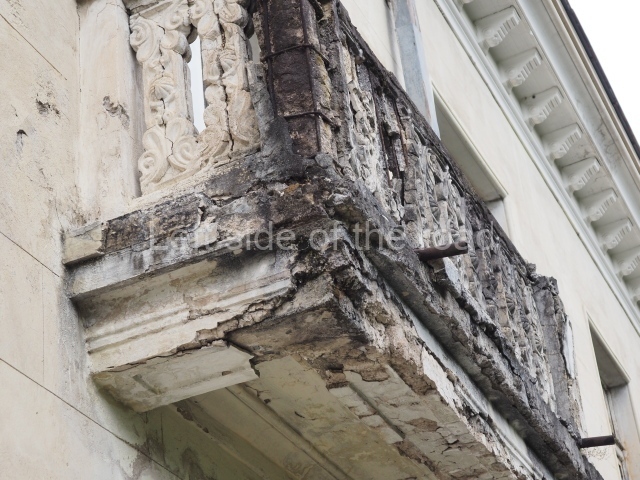
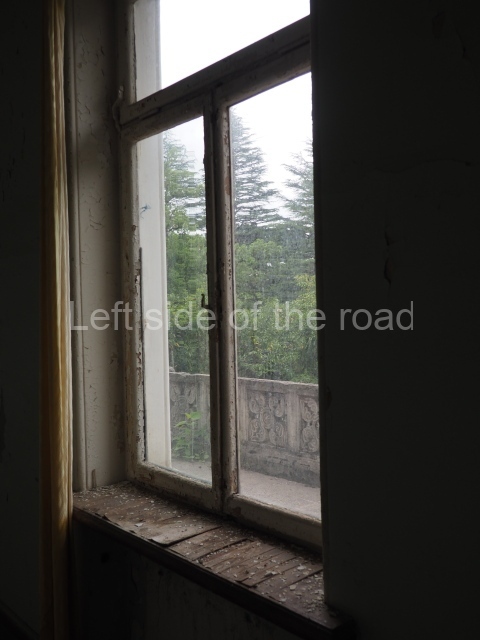
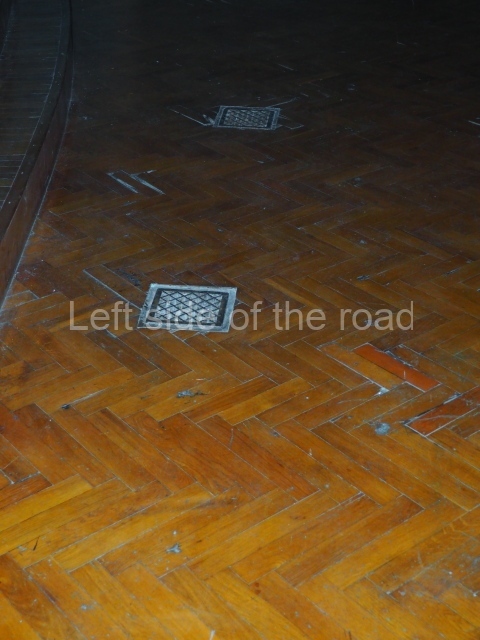
Another thought I had when walking around this complex just reinforced what I was thinking when I first visited Tskaltubo. Yes, many of the buildings, both the hotels and hot springs/spas are ruins but that was due to neglect and not mindless vandalism. In various parts of this complex you get the impression that one day everyone just up and left – some being careless and not shutting the doors or windows. Come the winter or the rainy season the elements stared to make an impact and some of the wooden parquet floors were damaged. As there was no regular maintenance being carried out that meant that, over time, water started to get in through breaks in gutters or leaks in roofs thereby causing damage to ceilings and walls and wooden window frames started to rot. Lack of regular maintenance also meant that the exterior stonework started to stain and crumble.

Although there must have been some element of looting it wasn’t complete and although it might have caused long lasting damage in some circumstances it certainly wasn’t general. This was very different from what happened when things fell apart in Albania. In that country there was wholesale destruction and whereas, at least, some of the buildings in Tskaltubo could be brought back into use you can say that about remarkably few in Albania.

Whether by commission or omission I still feel that the people’s of the once Socialist Republics ended up throwing out the baby with the bath water.

Location;

Rustaveli St 23, Tskaltubo

GPS;

42.321194º N

42.604205º E

Website;

Legends Tskaltubo Spa Resort

More on the Republic of Georgia

Art, Literature, Music and Culture in Socialist China

Workers' Meeting

Workers’ Meeting

More on China …..
Art, Literature, Music and Culture in Socialist China

Culture and Education in New China, includes Report on Cultural and Educational Work by Kuo Mo-jo and six other reports, 110 pages. (Peking: FLP, n.d. [but either late 1950 or early 1951]).
China’s New Literature and Art, Chou Yang, FLP, Peking, 1954, 162 pages. (Later on, during the GPCR, Chou Yang himself became a target of the revolution.)

Folk arts of New China, FLP, Peking, 1954, 93 pages.

To Trumpet Bourgeois Literature and Art is to Restore Capitalism — A Repudiation of Chou Yang’s Reactionary Fallacy Adulating the ‘Renaissance’, the ‘Enlightenment’ and ‘Critical Realism’ of the Bourgeoisie, by the Shanghai Writing Group for Revolutionary Mass Criticism, (Peking: FLP, 1971), 53 pages.

Chinese for beginners, FLP, Peking, 1976, 201 pages.

A Glance at China’s Culture, by Chai Pien, 106 pages. (Peking: FLP, 1975).

Painting

Selection of Artistic Works by Shanghai Workers, Shanghai People’s Publishing House, 1974, 91 pages. A wonderful collection of paintings, with captions in Chinese.

Shanghai workers’ art selection, a collection of a couple hundred wonderful Chinese political paintings from the later stage of the Cultural Revolution. (Peking: 1975), 110 pages.

Peasant Paintings from Huhsien County, compiled by the Fine Arts Collection Section of the Cultural Group under the State Council of the People’s Republic of China, as exhibited in Peking in 1973. (Peking: People’s Fine Arts Publishing House, 1976), 85 pages.

Graphic Art by Workers in Shanghai, Yangchuan and Luta, FLP, Peking, 1976, 83 pages.

An article about these paintings appeared in China Reconstructs magazine, Jan. 1974, pp. 17-20

Wood Cuts and Paper Cuts

Chinese paper cuts, supplement to China Reconstructs, No. 12, 1955, 24 pages.

The East is Red: Paper Cuts of the Chinese Revolution, with text by Lincoln Bergman and paper cuts by members of a People’s Commune in Fatshan, 56 pages. (San Francisco: People’s Press, 1972)

Papercuts – Tigers, n.d. (probably from the 1970s), in color, 7 pages.

Papercuts – Karst Landscape, n.d. (probably from the 1970s), in color, 4 pages.

Papercuts – A Cock Crows at Midnight, n.d. (probably from the 1970s), in black, 8 pages.

Papercuts – Table Tennis, n.d. (probably from the 1970s), in red, 8 pages.

Papercuts – Collective Farm, n.d. (probably from the 1970s), in red, 8 pages.

Papercuts – Sword Training, n.d. (probably from the 1970s), in red, 10 pages.

Bookmarks – with fish and bird images, n.d. (probably from the 1970s), in colour, 9 pages.

Sculpture

Rent Collection Courtyard: Sculptures of Oppression and Revolt, probably the most famous set of works of art in China in the Maoist era. This is a great collection of photographs of these wonderful and emotionally powerful sculptures. (Peking: FLP, 1968), 88 pages.

Introduction to Rent Collection Courtyard, a small pamphlet that accompanied the ‘strip’ version of the sculptures. (Peking: FLP, 1968) 19 pages.

Wrath of the Serfs: A Group of Life-sized Clay Sculptures, powerful scenes of figures showing the pre-revolutionary Tibetan system of exploitation. (Peking: FLP, 1976), 88 pages. (Partial scanner distortion on sheet 17.)

A discussion of this exhibit appeared in Chinese Literature magazine, February 1976, pp. 109-117.

Graphic Histories and Literature (Picture-Stories)

The Old Messenger, by Chun Ching, drawings by Ting Pin-tseng. (Peking: FLP, 1956), 72 pages.

Immortal Hero Yang Ken-sze, story by Wang Hao about a real-life hero in the Chinese People’s Volunteers in the Korean War. Drawings by Ho Yu-chih. (Peking: FLP, 1965), 3rd ed., 140 pages.

Red Women’s Detachment, picture-story by Liang Hsin about the slave girl Chiung-hua on Hainan Island in 1930 who escapes and joins the Red Army. Drawings by Li Tzu-shun. (Peking: FLP, 1966), 148 pages.

Tunnel Warfare, picture-story adapted by Che Mei and Pi Lei about the clever tactics of the masses and people’s militia in Hopei Province during China’s War of Resistance Against Japan (1937-1945). (Peking: FLP, 1972), 164 pages.

Norman Bethune in China, a wonderful, inspiring work featuring fine ink drawings on every page. The adaptation is by Chung Chih-cheng, and the illustrations are by Hsu Jung-chu, Hsu Yung, Ku Lien-tang and Wang Yi-sheng. (Peking: FLP, 1975), 124 pages.

Storms on the Chinkiang Docks, a story of a struggle on the docks during the revolutionary war. Illustrations by Hu Po-tsung and Wang Meng-chi. (Peking: FLP, 1975), 88 pages.

Flying Eagle Cliff, adapted by the Kwangtung People’s Publishing House, drawings by Kuang Ming-yin, Tso Yi, Liu Wei-hsiung and Chung Hsien-chang. It is not clear if there is a historical basis to this story, or if it is just literature. Either way, it is a fine and moving story which is especially good at bringing out that the Communists can’t do what the masses must do themselves; to arrest the class enemies before the masses are aroused would be useless. (Peking: FLP, 1975), 164 pages.

Selections of Afro-Asian People’s Anti-Imperialist Caricatures, Afro-Asian Journalists’ Association, Peking, 1967, 196 pages.

Literature

The sun shines over the Sankgan River, Ting Ling, Stalin Prize 1951, FLP, Peking, 1954, 346 pages.

The Hurricane, Chou Li-po, Stalin Prize 1951, FLP, Peking, 1955, 409 pages.

A Brief History of Chinese Fiction, by Lu Hsun. (Peking: FLP, 1964), 2nd edition, 524 pages.

Lu Hsun – Great Revolutionary, Thinker and Writer, a loose-leaf collection of color paintings, (FLP: 1975), 36 pages. English:

Selected Works of Lu Hsun, Vol. 1, (Peking: FLP, 1956), 488 pages.

Selected Works of Lu Hsun, Vol. 2, (Peking: FLP, 1957), 378 pages.

Selected Works of Lu Hsun, Vol. 3, (Peking: FLP, 1964), 358 pages.

Selected Works of Lu Hsun, Vol. 4, (Peking: FLP, 1960), 326 pages.

Selected Stories of Lu Hsun, by Lu Hsun. (Peking: FLP, 1972), 282 pages.

Old Tales Retold, by Lu Hsun. A collection of 8 tales from 1922-1935. (Peking: FLP, 1972), 150 pages.

The True Story of Ah Q, by Lu Hsun. Probably his most famous work. (Peking: FLP, 1972), 5th edition, 82 pages.

Dawn Blossoms Plucked At Dusk, by Lu Hsun, a collection of essays written in 1926 and first published in 1928. (Peking: FLP, 1976), 138 pages.

Wall of Bronze, by Liu Ching, a novel of the War of Liberation. (Peking: FLP, 1954), 300 pages.

The Unquenchable Spark, FLP, Peking, 1963, 153 pages. The stories in this volume are selected and translated from the fourth volume of ‘The spark that started the prairie fire’, a collection of reminiscences of the Chinese Revolution, published in June 1961by the People’s Literature Publishing Houses, Peking.

The Builders, by Liu Ching, a novel about the struggles over mutual aid, co-operatives, and socialist collectivization in the Chinese countryside. (Peking: FLP, 1964), 588 pages.

Wild Bull Village, Chinese short stories, Ai Wu and others. FLP, Peking, 1965, 108 pages.

The Man Who Sold a Ghost: Chinese Tales of the 3rd-6th Centuries. (Peking: FLP, 1958), 190 pages.

The Battle of Sangkumryung, by Lu Chu-kuo. Novel about a major battle won by Chinese People’s Volunteers in Korea. (Peking: FLP, 1961), 176 pages.

The Seeds and Other Stories, 14 stories by mostly young writers written during the Cultural Revolution. (Peking: FLP, 1972), 204 pages.

City Cousin and Other Stories, 8 stories, mostly by amateurs, about life in China at this time. (Peking: FLP, 1972), 204 pages. [3,685 KB]

Bright Clouds, by Hao Jan, 8 short stories. (Peking: FLP, 1974), 162 pages.

Yenan Seeds and Other Stories, 6 short stories by various writers. (Peking: FLP, 1976), 156 pages.

The Making of a Peasant Doctor, by Yang Hsiao, a novel. (Peking: FLP, 1976), 228 pages.

The Golden Road, Hao Ran, a story of one village in the uncertain days after land reform, first published in Chinese in 1972, (Beijing: FLP, 1981), 408 pages.

Poetry

Mao Tse-tung Poems, by Mao Tse-tung. (Peking: FLP, 1976), 1st edition, 72 pages.

Wild Grass, all 23 prose poems of Lu Xun which were written in 1924-26. (Peking: FLP, 1974), 82 pages.

Mountains Crimsoned with Flowers, by Li Ying, 16 poems. (Peking: FLP, 1974), 44 pages.

Battle of the Hsisha Archipelago (Reportage in Verse), by Chang Yung-mei (Peking: FLP, 1975), 50 pages.

Music

Songs and Dances of the Chinese Youth, (Peking: FLP, 1959), 62 pages.

Historical Revolutionary Songs, (Peking: FLP, 1971), 28 pages.

Theatre and Film

On Stanislavsky’s ‘System’, by the Shanghai Revolutionary Mass Criticism Writing Group, (Peking: FLP, 1969), small pamphlet format, 47 pages.

A Vicious Motive, Despicable Tricks – A Criticism of M. Antonioni’s Anti-China Film China, by Renmin Ribao Commentator, Jan. 30, 1974. (Peking: FLP, 1974), 23 pages.

Opera

On the Revolution of Peking Opera, by Chiang Ching [Jiang Qing] and others, (Peking: FLP, 1968), 76 pages. Chiang Ching’s speech only (7 pages).

Red Detachment of Women. This is the most famous of all the model revolutionary Peking Operas created during the Mao era in China. It depicts the liberation of a peasant girl in Hainan Island and her role in the Chinese Communist Party. It is adapted from the original novel based on the true stories of the all-female Special Company of the 2nd Independent Division of the Chinese Red Army, first formed in May 1931.

Video: (in Chinese) Part 1 [54:51 minutes]; Part 2 [45:29 minutes];

The Red Lantern, a model Peking Opera on a contemporary revolutionary theme.

The Red Lantern: May 1970 Script, Hsinhua News Service, Aug. 6, 1970, 18 double pages in teletype font.

Shachiapang, a model Peking Opera on a contemporary revolutionary theme.

The Story of the Modern Peking Opera Shachiapang, illustrated with drawings, 52 pages. (Peking: FLP, 1972).

Shachiapang – Model Peking Opera on Contemporary Revolutionary Theme, screen play with photographs. (Colombo, Ceylon: Afro-Asian Writers’ Bureau, 1967), 86 pages.

Taking Tiger Mountain by Strategy. This is one of the 8 model works of revolutionary Peking Opera created during the Mao era. It is based on an actual event that took place in 1946 during the Chinese Civil War. A young communist reconnaissance team soldier, Yang Zirong, disguised himself as a bandit to infiltrate a local gang, eventually helping the main revolutionary force to destroy the band.

Video: (in Chinese) Taking Tiger Mountain by Strategy [1 hour, 58 minutes]

Libretto [Script] in English, October 1969, issued by Hsinhua News Agency (June 20, 1970), 22 double pages.

Miscellaneous Arts

Suzhou Embroidery, a fine hard-cover volume in Chinese with some beautiful examples of art from the Cultural Revolution era. (Shanghai: 1976), 78 pages.

Bookmarks in the shape of leaves with frog designs, non-political but artistically appealing bookmarks from China, probably from the 1970s, 7 pages.

Acrobatics and Sports

Chinese Acrobatics, photo book with introduction and captions in English, French and Swahili, (Peking: FLP, 1974), 126 pages.

Tourism

The West Lake Companion, about the famous tourist area in Hangzhou [Hangchow], 104 pages. (Peking: FLP, 1958).

Mount Omei, about Mount Omei (or Emei) in Sichuan Province. This is a collection of black and white photographs prepared by the Szechwan Provincial Art Gallery, with captions in Chinese, Russian and English, Szechwan People’s Publishing House, 1959, 30 pages.

More on China …..