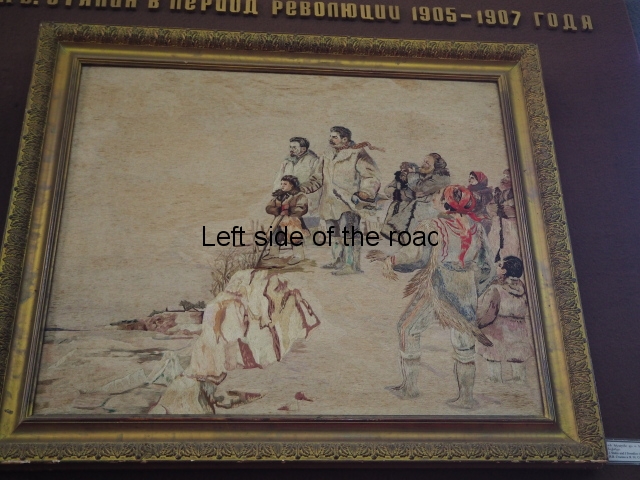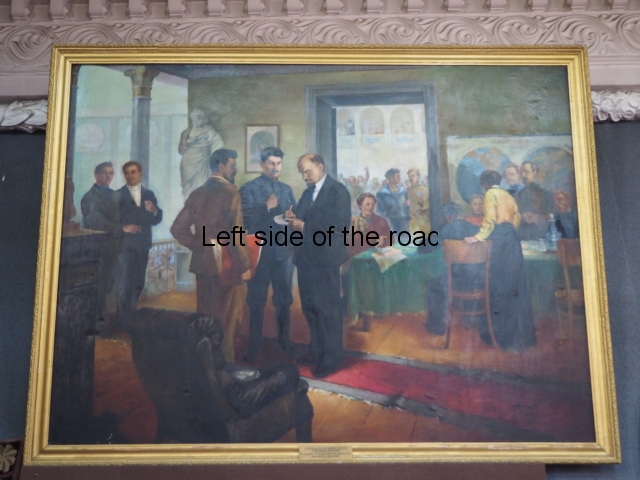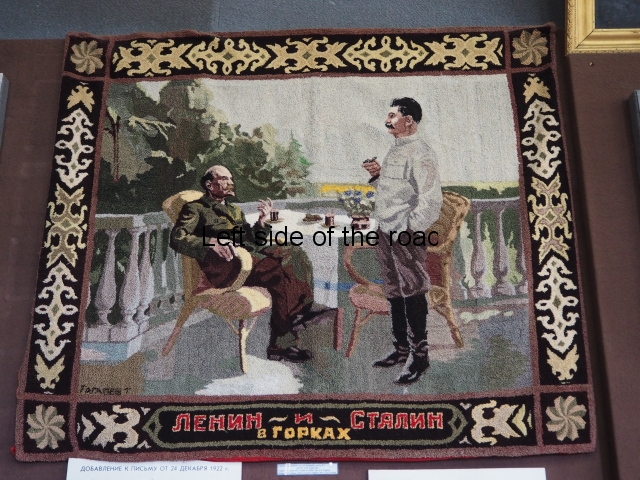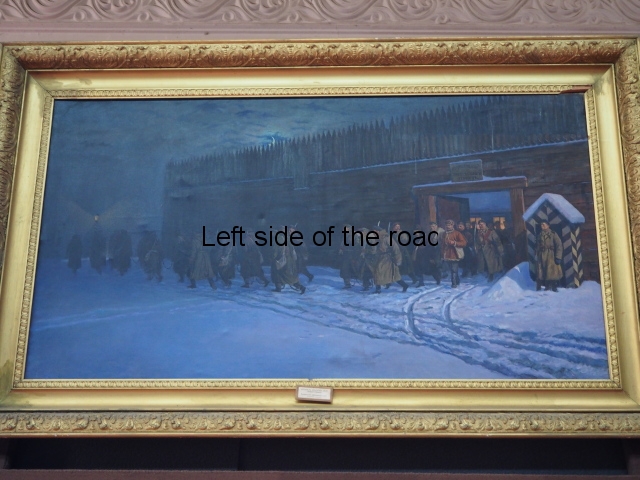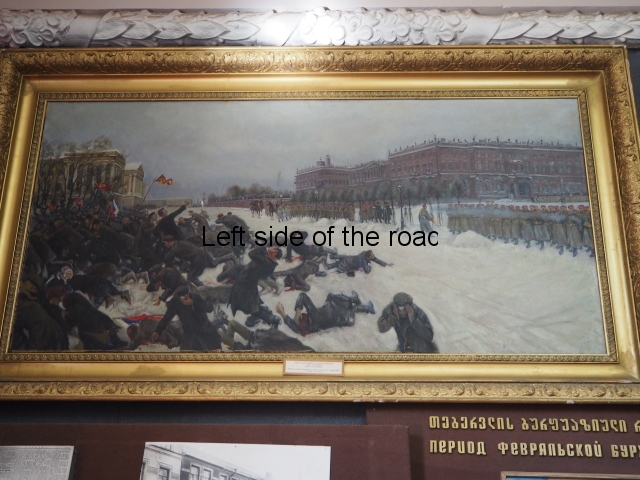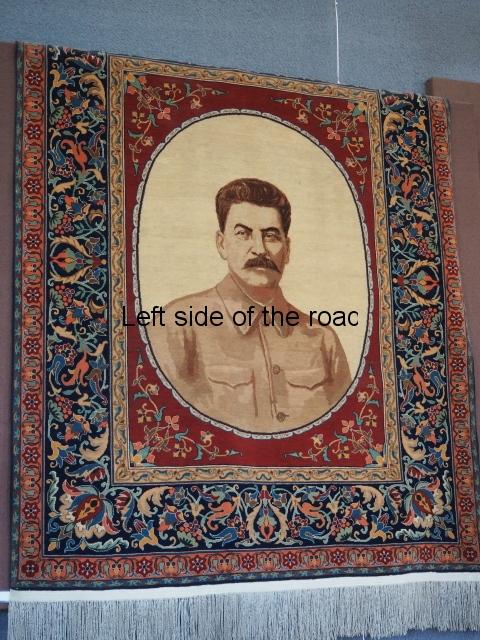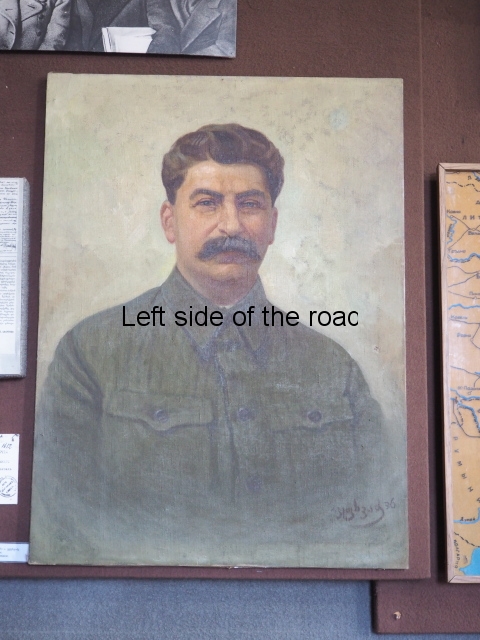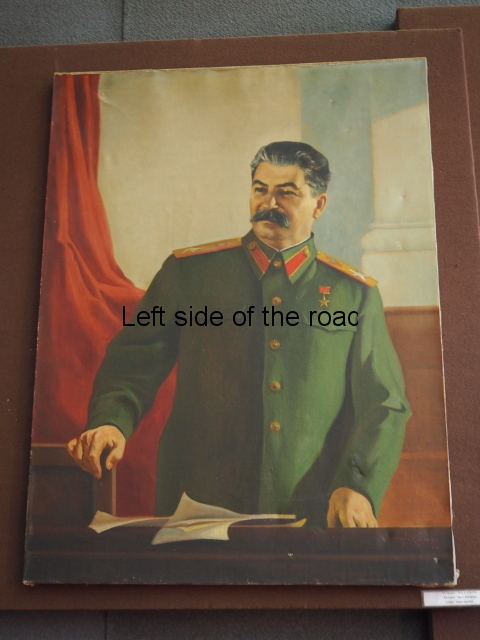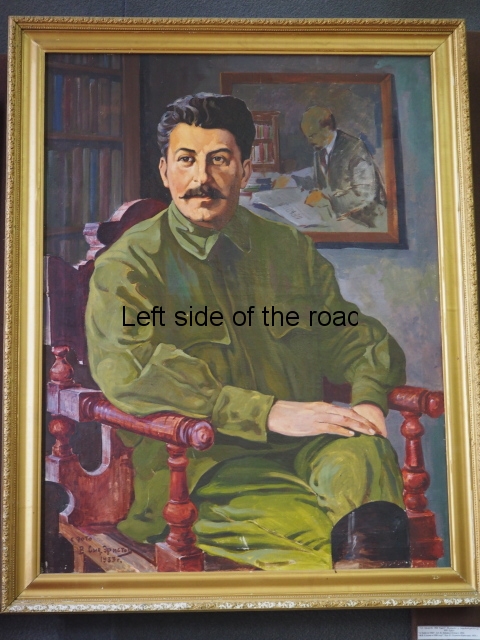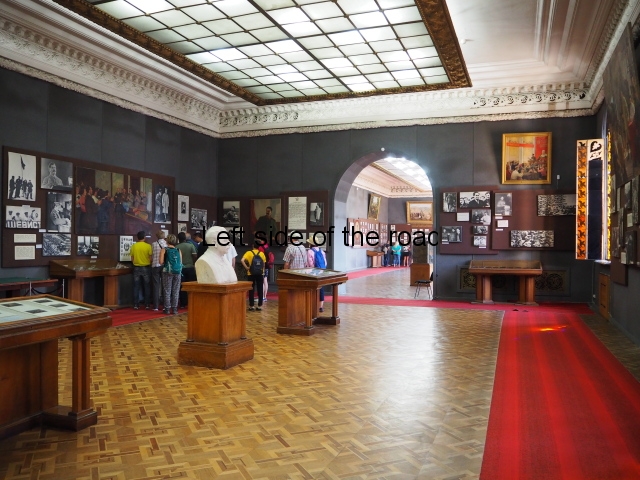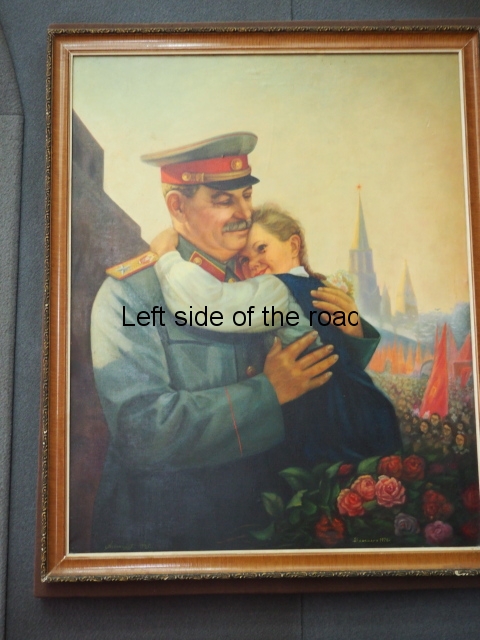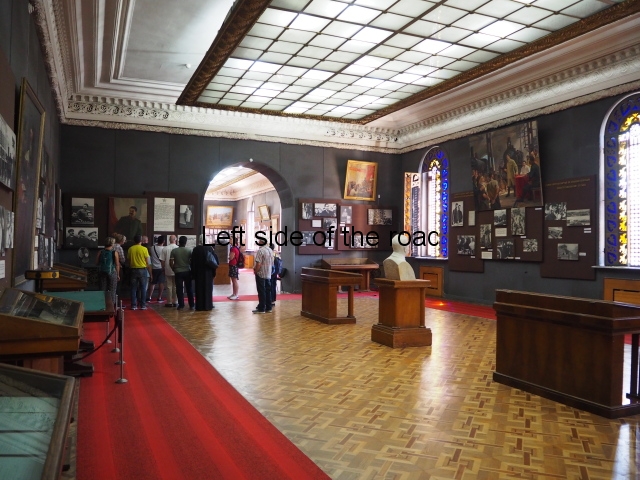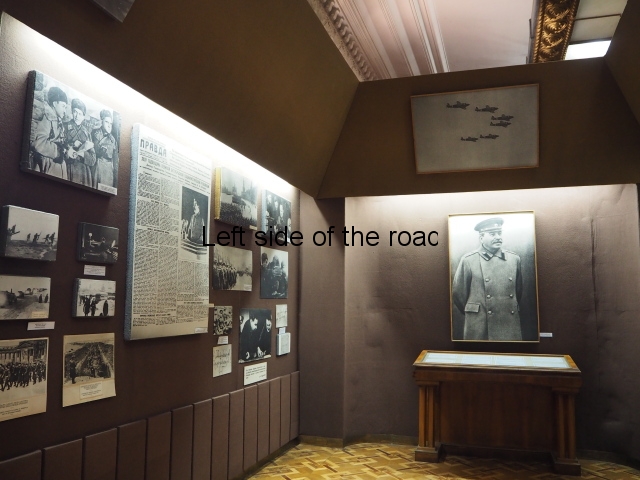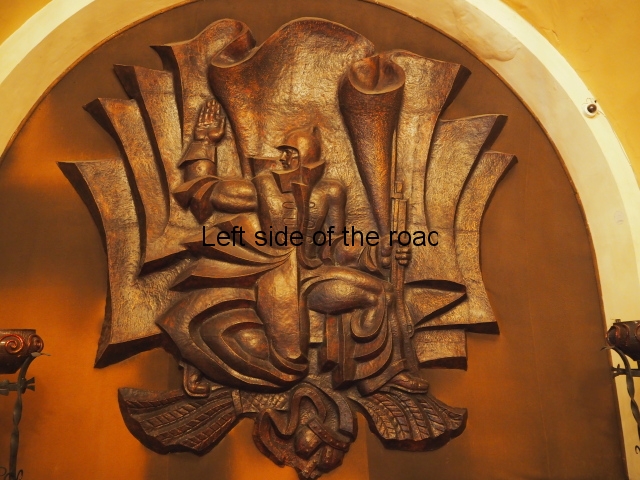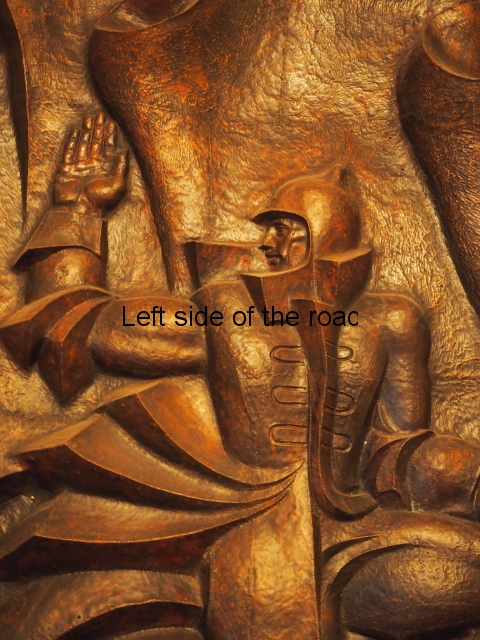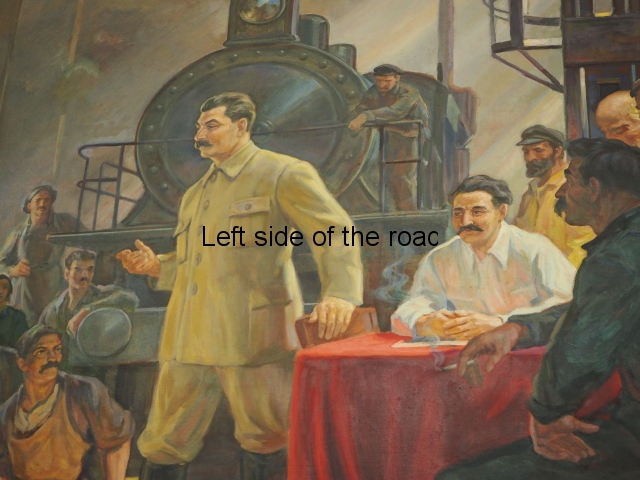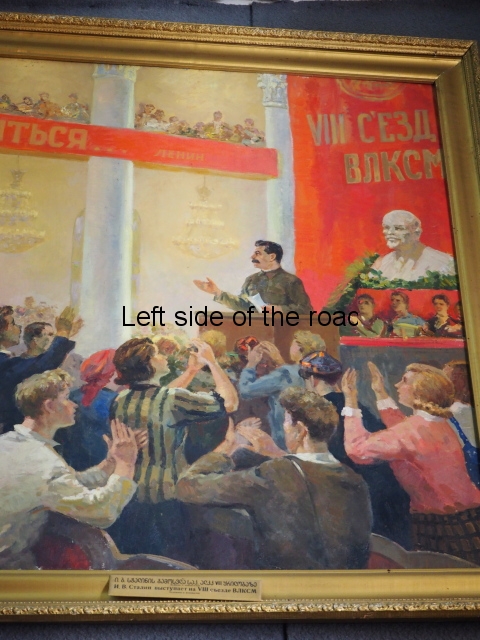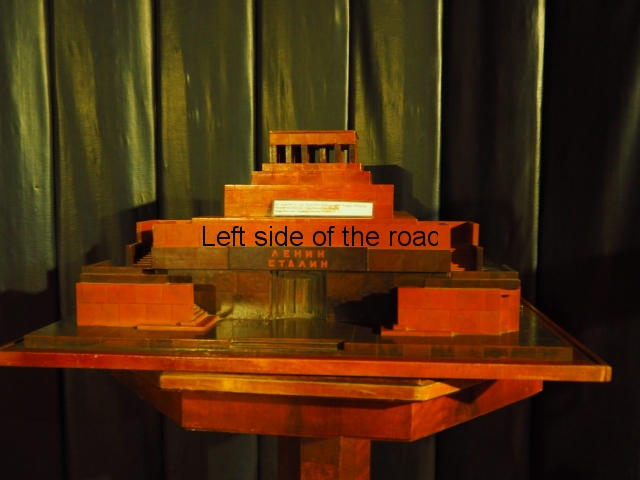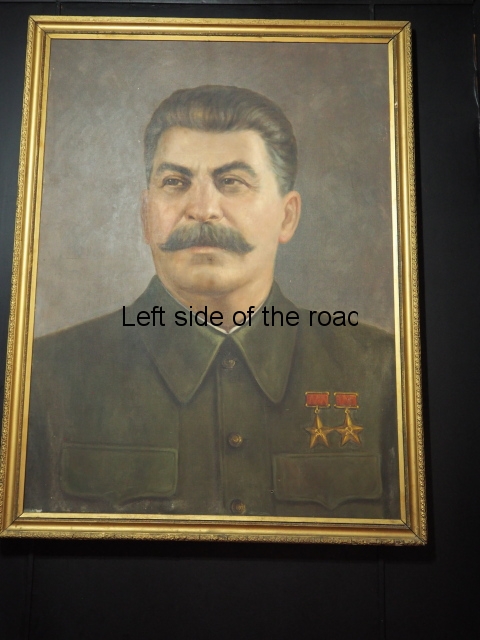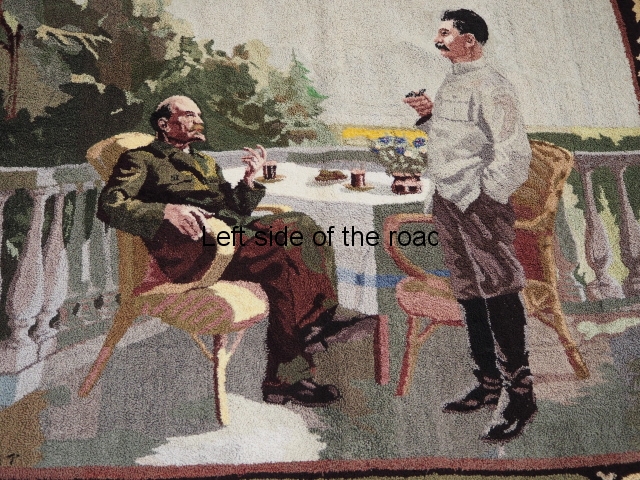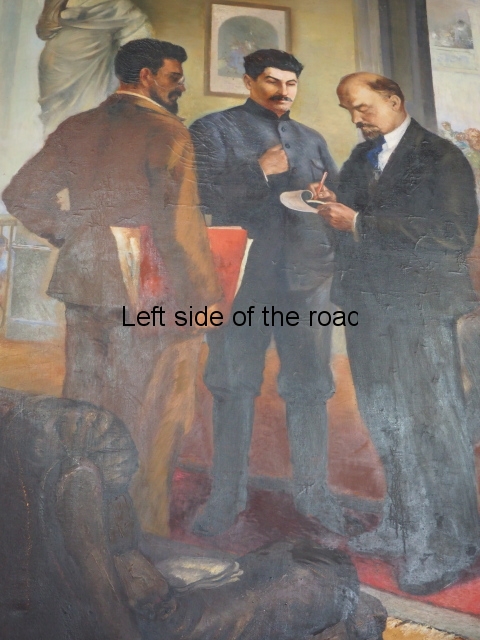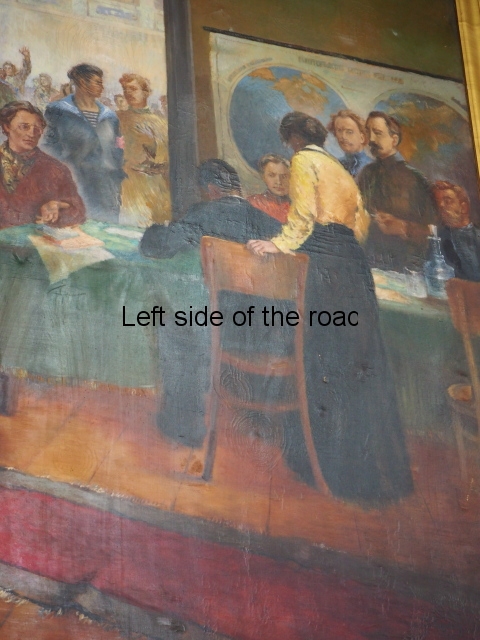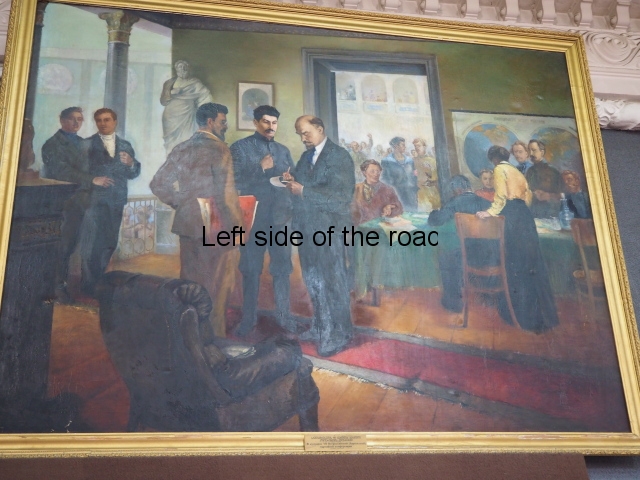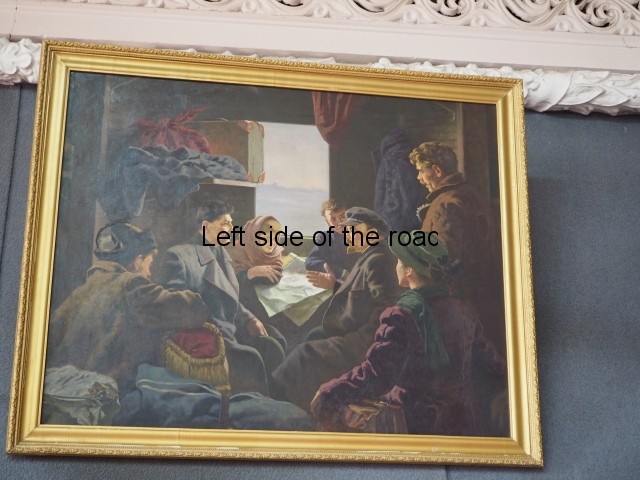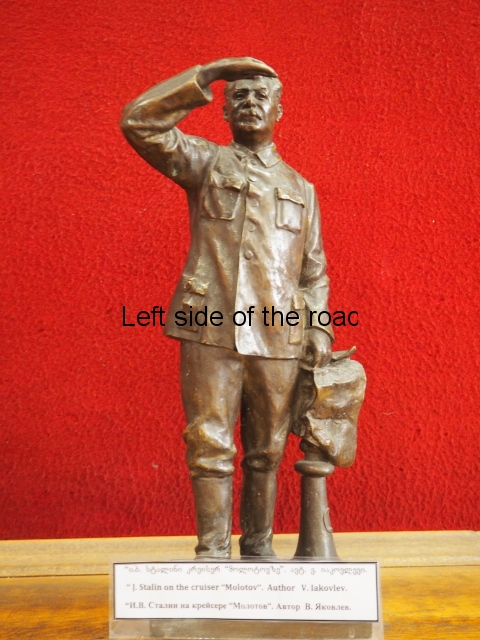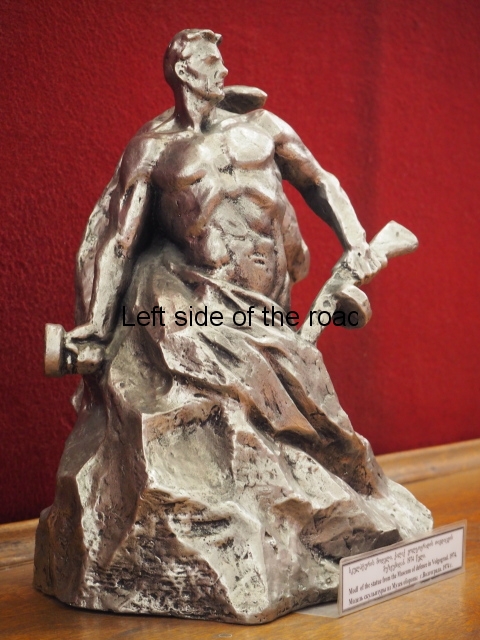

- The defence of Petrograd

Ukraine – what you’re not told
History of the USSR
The history of the Soviet Union is one of constant struggle. It was born out of violence with the October Revolution in 1917 and then was immediately thrust into a life and death struggle for its existence against the capitalist and imperialist forces that could not countenance the existence of a state outside of their control.
Once the civil war was won the Communists in the Soviet Union then had the struggle to convince the population that a new world was possible whilst at the same time providing them with the lifestyle that was a radical improvement upon what they had lived under during the dark centuries of Czarism, a long period of feudalism and serfdom for the majority whilst the very few lived in luxury.
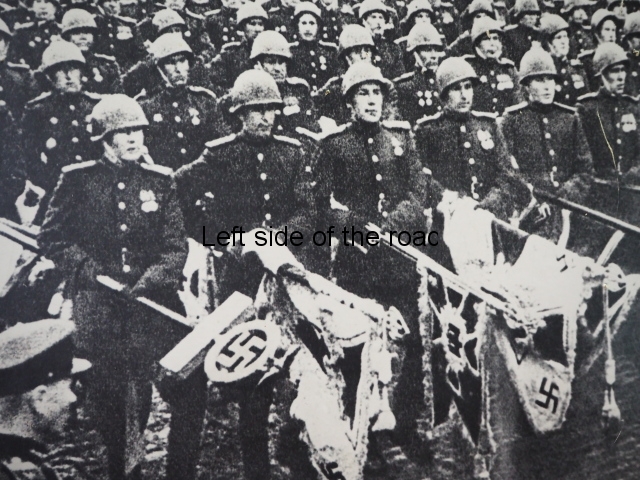
But even after wining the war against the foreign, imperialist invaders (supporting the moribund forces of reaction) the threat of external attack was never far away and the country always had to be aware of a potential foreign intervention, socially, economically and militarily. That ultimately led to the Hitlerite invasion of the country and the start of the Great Patriotic War – which ended when the Red Army chased the Nazi beast back to its lair.
The items on this page attempt to provide a background to this tumultuous period in history.
Ten Days that Shook the World, by John Reed, a stirring account of the proletarian seizure of power in November 1917, first published in 1919, ebook format 2017, 399 pages.
Six Red Months in Russia, an observers account of Russia before and during the proletarian dictatorship, Louise Bryant, first published 1919, Slavia Publishers, Blooming, 2017, 187 pages.
Dictatorship of the Proletariat, L Kamenev, The Toiler, Cleaveland, 1920, 14 pages.
Recent economic developments in Russia, K. Leites, ed. Harald Westergaard, Oxford, London, 1922, 248 pages.
A Short Course of Economic Science, A Bogdanoff, CPGB, London, 1925, 391 pages.
An illustrated history of the Russian Revolution, Volume 1, edited by W. Astrov, A. Slepkov and J. Thomas, contributors include V. I. Lenin, N. Bukharin, J. Stalin and A. N. Rykov, translated by Freda Utley, International, New York, March 1928, 204 pages. Volume 2 is not yet available.
An Outline of Political Economy, Political Economy and Soviet Economics, I Lapidus and K Ostrovityanov, Martin Lawrence, London, 1929, 546 pages.
Civil War in the Taiga: a story of guerrilla warfare in the forests of Easter Siberia, Ivan Yakovlevich Strod, Moscow/Leningrad: Co-operative Publishing Society of Foreign Workers in the USSR, 1933, 162 pages.
Dialectical Materialism, Collective of the Institute of Philosophy of the Communist Academy under the leadership of MB Mitin, np., 1934, 219 pages.
Last days of the Tsar, PM Bykov, International Publishers, New York, 1934, 90 pages.
Dictatorship and Democracy, Anna Louise Strong, International Publishers, New York, 1934, 23 pages.
The Iron Flood, Alexander Serafimovich, International, New York, 1935, 248 pages. This is a novel set during the Russian Civil War following the October Revolution, and based on a real incident in which the Red Taman Army escaped encirclement by the Whites.
A History of the Civil War in the U.S.S.R. – Volume 1 – The Prelude to the Great Proletarian Revolution, edited by M. Gorky, S. Kirov, K. Voroshilov, A. Zhdanov, and J. Stalin, FLPH, Moscow, 1936, 573 pages.
Is Soviet Communism a new civilisation?, Sidney and Beatrice Webb, The Left Review, London, 1936, 30 pages.
Our country, Co-operative Publishing Society of Foreign Workers in the USSR, Moscow, 1937, 79 pages.
Moscow 1937, Lion Feuchtwanger, Viking Press, New York, 1937, 151 pages.
The story of Soviet Progress, Corliss Lamont, Soviet Russia Today, New York?, 1938, 36 pages.
A Short History of the USSR, Textbook for 3rd and 4th Classes, edited by Professor AV Shestakov, Cooperative Publishing Company of Foreign Workers in the USSR, Moscow, 1938, 257 pages.
First Session of the 1st Supreme Soviet of the USSR, Moscow, January 12-19 1938, Cooperative Publishing Company of Foreign Workers in the USSR, Moscow, 1938, 142 pages.
Second Session of the Supreme Soviet of the USSR, August 10-20 1938, verbatim report, FLPH, Moscow, 1938, 685 pages.
The World Hails 20th Anniversary of the Soviet Union, Cooperative Publishing Company of Foreign Workers in the USSR, Moscow, 1938, 247 pages.
The USSR and the capitalist countries, edited by L Mekhlis, Y Varga and V Karpinsky, FLPH, Moscow, 1938, 94 pages.
World affairs and the USSR, WP and Zelda Coates, Lawrence and Wishart, London, 1939, 251 pages.
Two Systems, Socialist economy and capitalist economy, Eugene Varga, Lawrence and Wishart, London, 1939, 268 pages.
The USSR and Finland, Outstanding Facts and Documents, FLPH, Moscow, 1939, 46 pages.
A history of Soviet foreign policy, M Ross, Workers’ Library, New York, 1940, 80 pages.
October 1917 in Russia, this vivid account of the actual seizure of power is based on historic documents in the archives of the Revolution, I Mintz, Lawrence and Wishart, London, 1940, 84 pages.
Russia, Finland and the Baltic, WP and ZK Coates, Lawrence and Wishart, London, 1940, 144 pages.
War on the USSR, University Socialist Club, Cambridge, University Labour Federation, London, 1940, 16 pages.
History of Anarchism in Russia, E Yarolavsky, Lawrence and Wishart, London, nd., early 1940’s?, 127 pages.
America’s Siberian Adventure, General William S. Graves, Peter Smith, New York, 1931, reprint 1941, 402 pages.
Soviet Russia – A Syllabus for study courses, Joan Thompson, Russia Today Society, London, 1941?, 23 pages.
Our ally Russia – the Truth, Jennie Lee, WH Allen, London, 1942, 64 pages.
Russian Cavalcade, EH Carter, Thomas Nelson and Sons, London, 1944, 152 pages.
Political Economy in the Soviet Union, the full text of the Soviet article which provoked wide discussion and speculation in the American press, previously published only in parts, International Publishers, New York, 1944, 48 pages.
Soviet women, Rose Maurer, National Council of American-Soviet Friendship, New York, 1944, 56 pages.
Soviet Russia and the Baltic Republics, Philip Farr, Russia Today Society, London?, (originally) 1944, digital version, 38 pages.
From the Russian Revolution to Yalta, a review of Soviet Foreign Policy, Pat Sloan, Russia Today, London, 1945, 28 pages.
History of Anglo-Soviet Relations, 1917-1942, Volume 1, Lawrence and Wishart, London, 1945, 816 pages.
The A to Z of the Soviet Union, compiled by Alex Page, facts and figures on every aspect of Soviet Life, Russia Today Society, London, 1945, 42 pages.
A History of the Civil War in the U.S.S.R. – Volume 2 – The Great Proletarian Revolution (October-November 1917), edited by M. Gorky, V. Molotov, K. Voroshilov, S. Kirov, A. Zhdanov, and J. Stalin, FLPH, Moscow, 1946, 680 pages.
USSR Embassy in the USA, Informational Bulletin, Special on Religion, October 9, 1946, 24 pages.
Soviet Foreign Policy 1917-1947, John Quinn, British Soviet Society, London, 1947, 32 pages.
Stalin must have peace, Edgar Snow, Random House, New York, 1947, 176 pages.
An engineer looks at Russia, Wal Hannington, British-Soviet Society, London, 1947, 38 pages.
Man and plan in Soviet Society, Andrew Rothstein, (originally published in London in 1948), Stalin Society of India, n.d., 146 pages.
Moscow Correspondent, Ralph Parker, Frederick Muller, London, 1949, 304 pages.
Soviet Democracy and bourgeois democracy, Mitin, FLPH, Moscow, 1949, 31 pages.
A History of the USSR, Andrew Rothstein, first published Penguin Books, London, 1950, reprinted version Red Star Press, New York, 2013, 398 pages.
Mission to Moscow, Joseph E Davies, United States Ambassador to the Soviet Union, 1936-1938, a record of confidential dispatches to the State Department, official and personal correspondence, current diary and journal entries, including notes and comment up to October 1941, Victor Gollanz, London, 1945, 472 pages.
The Soviet Transition from Socialism to Communism, Emile Burns, The Communist Party, London, 1950, 16 pages.
The social and state structure of the USSR, V Karpinsky, FLPH, Moscow, 1950, 239 pages.
Russia is for Peace, DN Pritt, Lawrence and Wishart, London, 1951, 106 pages.
The Myth of Soviet Imperialism, LG Churchward, Melbourne, 1951, 52 pages.
We saw for ourselves, Report of the 19 Americans on their visit to the USSR, New World Review, New York, 1951, digital version by Red Star Publishers, 2018, 126 pages.
The USSR – a hundred questions answered, Soviet News, London, 1952, 158 pages.
The Great October Socialist Revolution and its significance, II Mints and GN Golikov, n.p., Moscow, 1955, 99 pages.
History of Anglo-Soviet Relations, 1943-1950, Volume 2, Lawrence and Wishart, London, 1958, 463 pages.
The Tehran, Yalta and Potsdam Conferences, Progress, Moscow, 1969, 341 pages.
First decrees of Soviet Power, compiled, with introductory notes and explanatory notes by Yuri Akhapkin, Lawrence and Wishart, London, 1970, 186 pages.
On the transition to Socialism, Paul M Sweezy and Charles Bettleheim, Monthly Review, New York, 1971, 122 pages.
The USSR and the Middle East, problems of peace and security 1947-1971, Novosti, Moscow, 1972, 295 pages.
The October storm and after, stories and reminiscences, Progress, Moscow, 1974, 354 pages.
The Great October Revolution and the Intelligentsia, S Fedyukin, Progress, Moscow, 1975, 229 pages.
Soviet foreign policy, Volume 1, 1917-1945, Progress, Moscow, 1981, 501 pages.
Soviet foreign policy, Volume 2, 1945-1980, Progress, Moscow, 1981, 728 pages.
Ten Days that Shook the World, John Reed, Progress, Moscow, 1987, 336 pages.
Soldiers in the Proletarian Dictatorship, the Red Army and the Soviet State 1917-1930, Mark Van Hagen, Cornell University, New York, 1993, 397 pages.
Lies concerning the history of the Soviet Union, from Hitler to Hearst, from Conquest to Solzhenitsyn: the history of the millions of people who, allegedly, were incarcerated and died in the labour camps of the Soviet Union and as a result of starvation in Stalin’s time, Mario Sousa, KPML(r), Sweden, 1999, 17 pages.
Ten days that shock the world, John Reed, Blackmask Online, 2000, 228 pages.
The Bolsheviks and the Chinese Revolution, 1919-1927, Alexander Pantsov, University of Hawaii Press, 2000, 324 pages.
CIA’s Analysis of the Soviet Union 1947-1991, edited by Gerald K. Haines and Robert E. Leggett, Center for the Study of Intelligence, CIA, Washington, 2001, 323 pages. Some interesting documents, especially those related to the early ‘Cold War’ and the establishment of NATO.
Stalin and the Struggle for Democratic Reform (Part One), Grover Furr, 2005, 31 pages.
Stalin and the Struggle for Democratic Reform (Part Two), Grover Furr, 2005, 17 pages.
The 1929 Sino-Soviet War: the war nobody knew, Michael M. Walker, University Press of Kansas, 2017, 319 pages.
A short outline of the history of the Mongolian People’s Revolution, K. Choibalsan, November 8th Publishing House, Ottawa 2022, 99 pages.
The Bolshevik Revolution – its impact on American Radicals, Liberals and Labor, A documentary study, Philip Foner, International Publishers, New York, 2017, 304 pages.
Soviet Light on the Colonies, Leonard Barnes, Maps and Diagrams by J. F. Horrabin, first published by Penguin Books, London, 1944, 192 pages.
Land of the Soviets – a handbook of the USSR, Nicholas Mikhailov, Lee Furman, New York, 1939, 351 pages.
This is Russia, Hubert Griffith, Hammond, London, 1943, 98 pages.
The Economic Problem of the Peace, Walter Padley, Left Book Club, Gollanz, London, 1944, 164 pages.
Problems of Economics, a monthly journal, No. 3, March 1952, Academy of Sciences of USSR Institute of Economics, Pravda Publishing House, digital version 2011, 202 pages.
The Soviets – a pictorial history of Communist Russia, Robert Goldston, Bantam, New York, 1967, 255 pages.
Report on the Russians, WL White, Eyre and Spottiswoode, London, 1946, 250 pages.
Comrades and Citizens – Soviet People, Seema Rynin Allan, Left Book Club, Gollanz, London, 1938, 392 pages.
Videos and podcasts
Why did the USSR Collapse? — Grover Furr. ICSS Marxist. 14 September 2025.
Our speaker today is researcher, historian, and author, Prof. Grover Furr of Montclair State University in New Jersey. He teaches Medieval English Literature and has a Ph.D. from Princeton University. However, his subject of research has been the Soviet history of the Stalin period, on which he has written many articles and 17 books, starting with ‘Khrushchev Lied’ in 2011, and his last published book is titled ‘Trotsky’s Comintern Conspiracy – The Case of Osip Pyatnitsky’ published in 2024. His present research is on the Gorbachev period, which culminated in the fall of the USSR in 1991. [From ICSS Marxist introduction.]
Transcript of the above presentation on the collapse of the Soviet Union by Grover Furr in the ICSS Marxist video.
E. H. Carr — A History of Soviet Russia (Socialist Era)
The Bolshevik Revolution, Vol. 1, (1950), 436 pages.
The Bolshevik Revolution, Vol. 2, (1952), 405 pages.
The Bolshevik Revolution, Vol. 3, (1953), 626 pages.
The Interregnum-1923-1924, (1954), 400 pages.
Socialism In One Country – 1924-1926, Vol. 1, 565 pages, (1958).
Socialism In One Country – 1924-1926, Vol. 2, 565 pages, (1959).
Socialism In One Country – 1924-1926, Vol. 3, Part 1, 609 pages, (1964).
Socialism In One Country – 1924-1926, Vol. 3, Part 2, 449 pages, (1964).
Foundations of a Planned Economy, 1926-1929, Vol. 1, Part 1, 467 pages, (1969), co-authored by R. W. Davies.
Foundations of a Planned Economy, 1926-1929, Vol. 1, Part 2, 575 pages, (1969), co-authored by R. W. Davies.
Foundations of a Planned Economy, 1926-1929, Vol. 2, 526 pages, (1971).
Foundations of a Planned Economy, 1926-1929, Vol. 3, Part 1, 323 pages, (1976).
Foundations of a Planned Economy, 1926-1929, Vol. 3, Part 2, 335 pages, (1976).
Foundations of a Planned Economy, 1926-1929, Vol. 3, Part 3, 462 pages, (1978).
Twilight of the Comintern – 1930-1935, Pantheon Books, New York, 1982, 473 pages.
Charles Bettelheim on the Union of Soviet Socialist Republics
Class Struggles in the USSR, First Period, 1917-1923, Charles Bettleheim, Monthly Review Press, New York, 1976, 567 pages.
Class Struggles in the USSR, Second Period, 1923-1930, Charles Bettleheim, Monthly Review Press, New York, 1978, 640 pages.
Class Struggles in the USSR, Third Period, 1930-1941, Part1 – the Dominated, Charles Bettelheim, TR Publications, Madras, 1994, 301 pages.
Class Struggles in the USSR, Third Period, 1930-1941, Part 2 – the Dominators, Charles Bettelheim, TR Publications, Madras, 1996, 345 pages.
Economic Calculation and forms of property, an essay on the transition from capitalism to Socialism, Charles Bettleheim, Monthly Review Press, New York, 1975, 168 pages.
Marxism and Mr Bettelheim, Sunil Sen, revolutionarydemocracry.org, 1999, 13 pages.