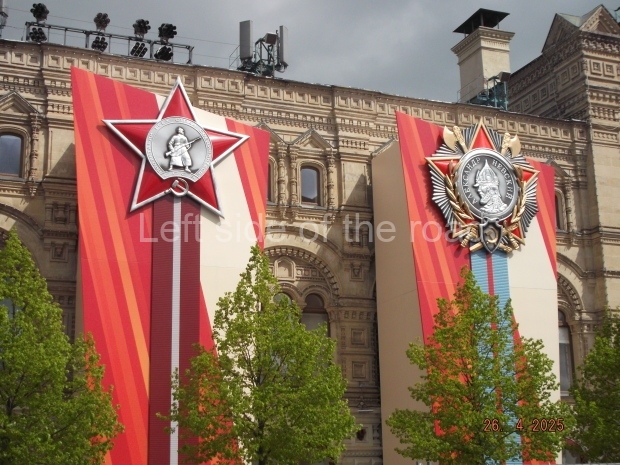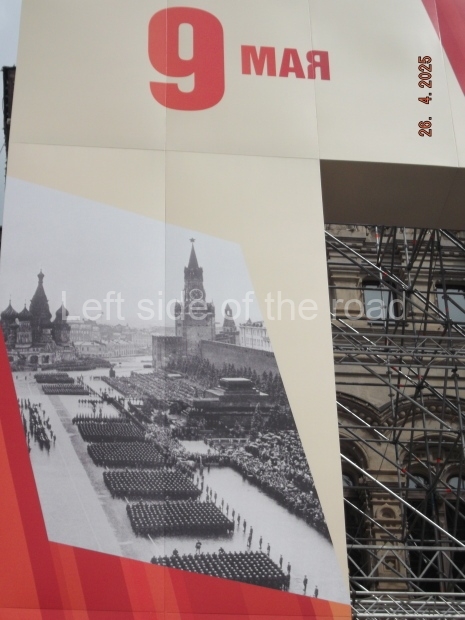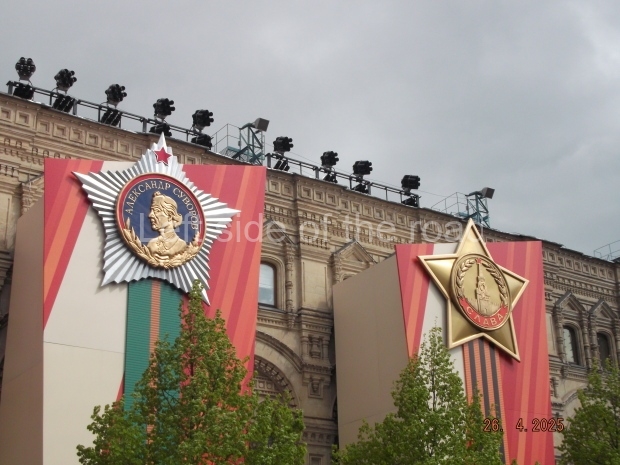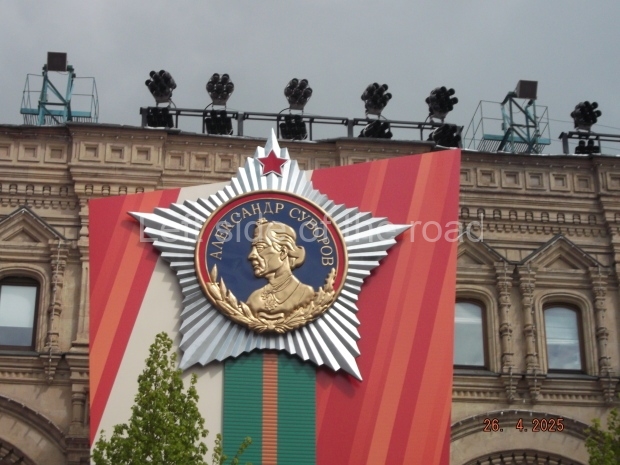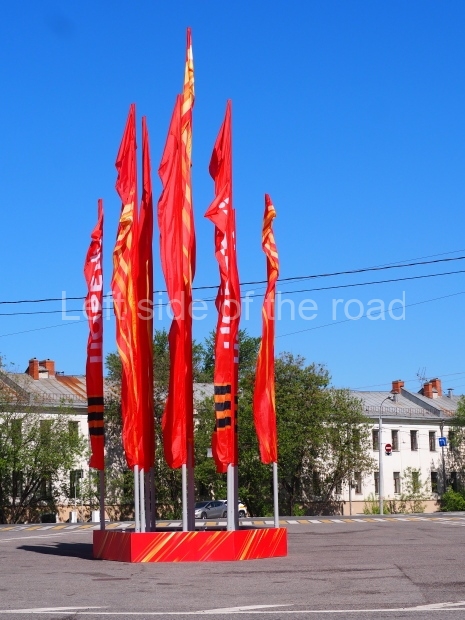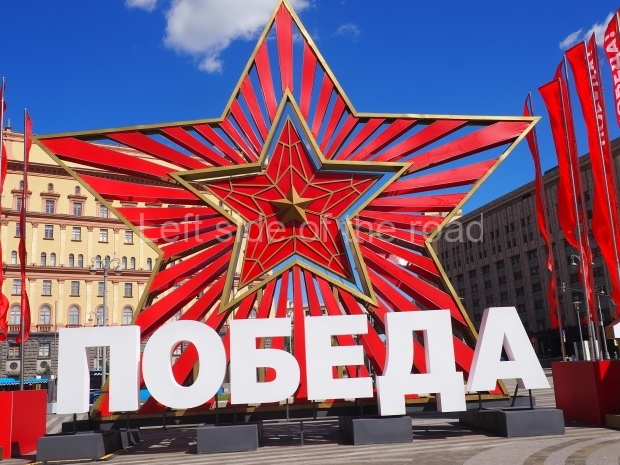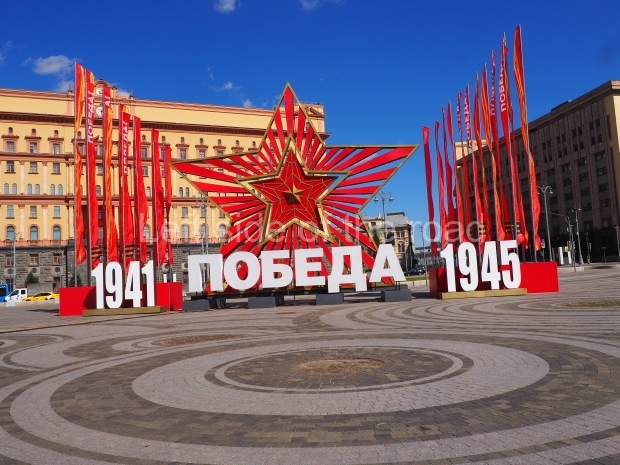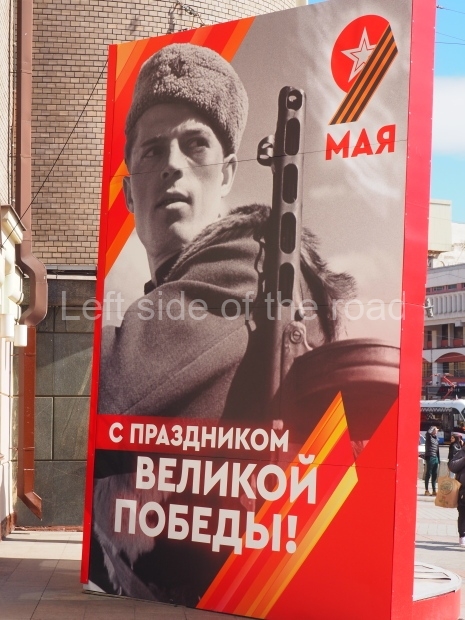
May 9th 1945 – Victory Day in the Soviet Union (Russia)

The triumph of the Conquering People - Mikhail Khmelko

The triumph of the Conquering People

More on the ‘Revolutionary Year’

More on the USSR

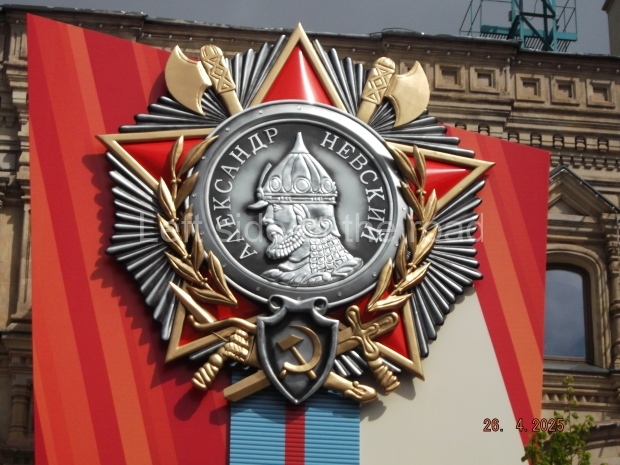
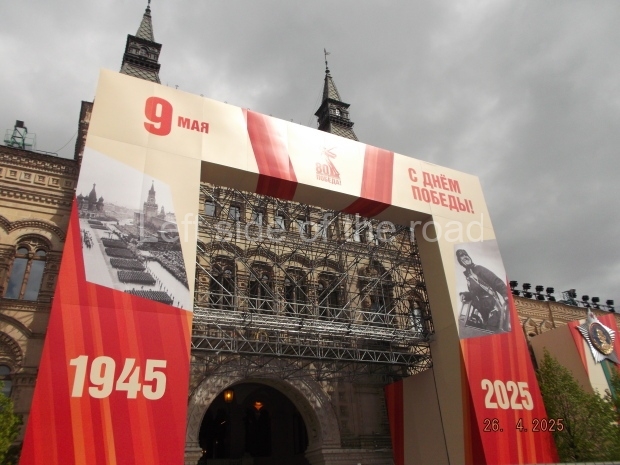
May 9th – Victory Day in the Soviet Union (Russia)

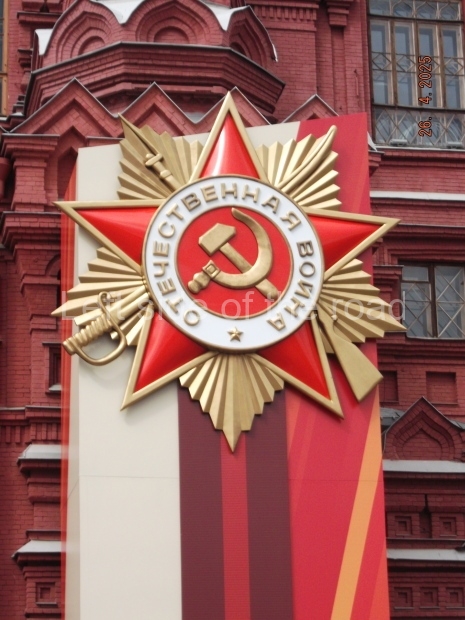
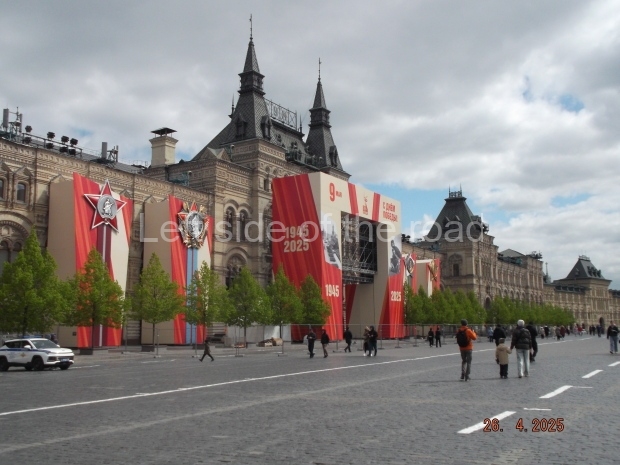
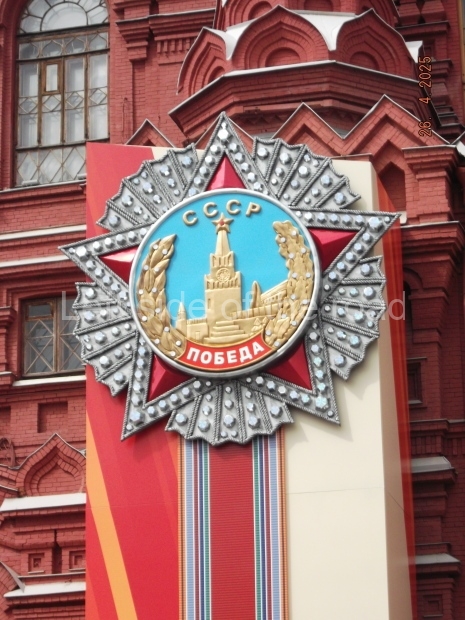
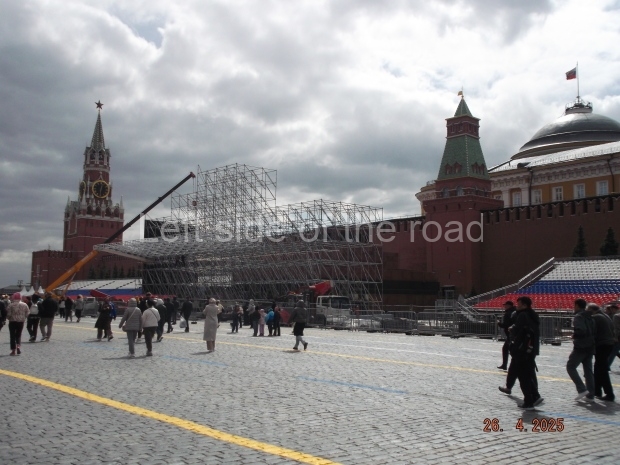
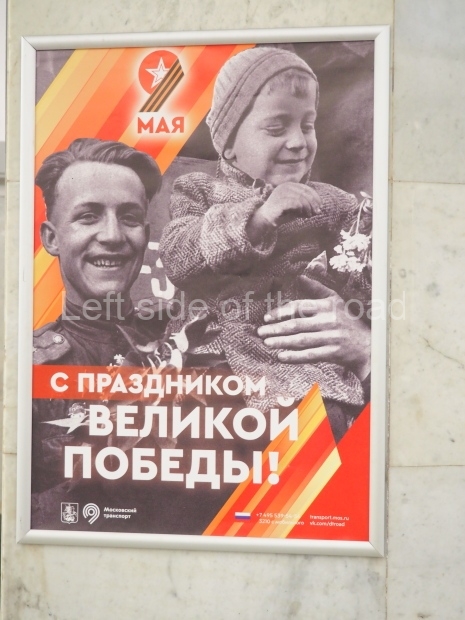
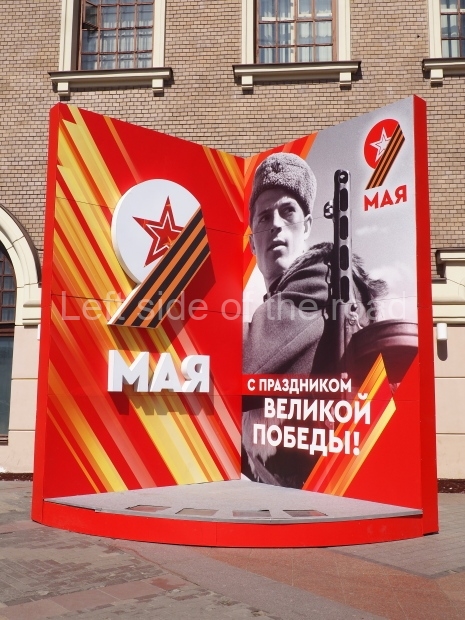
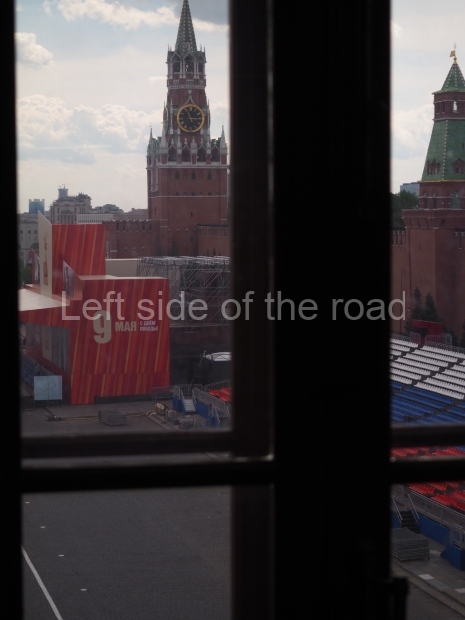
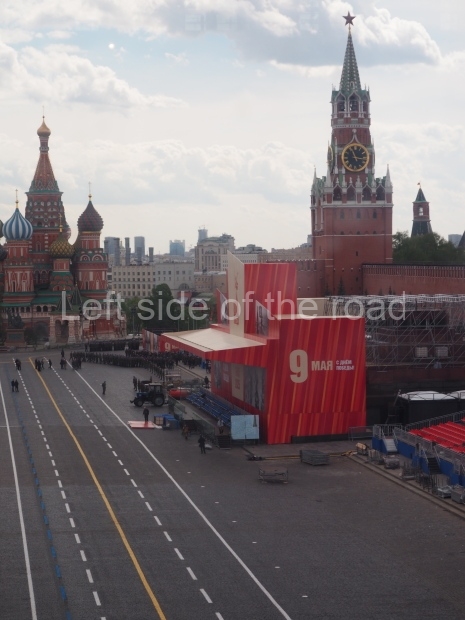
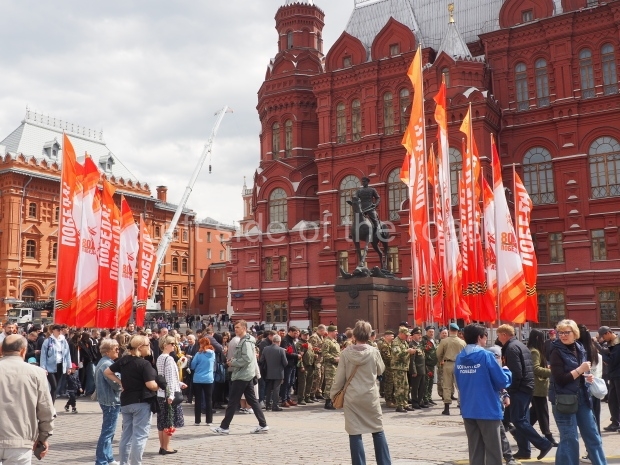
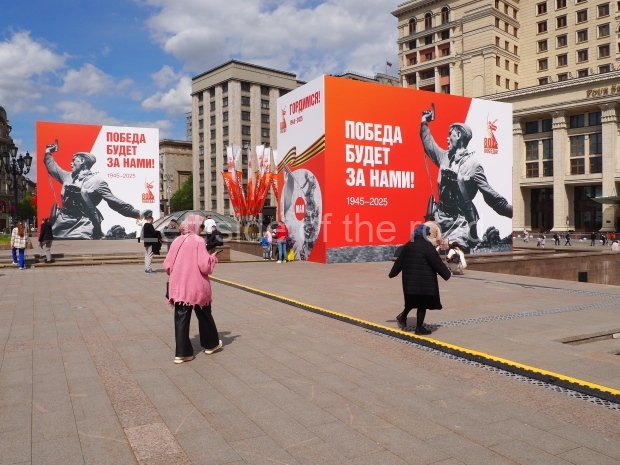
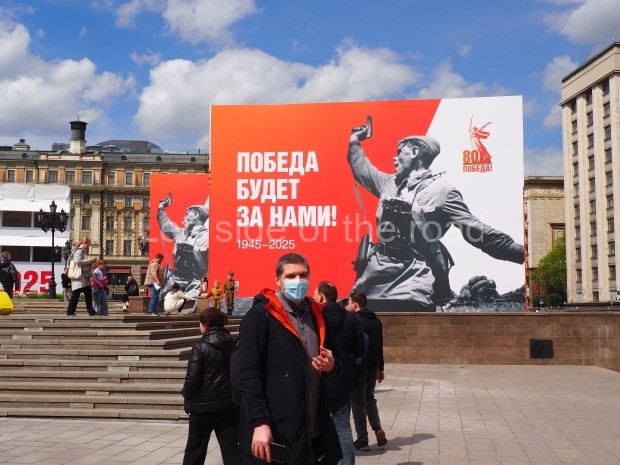
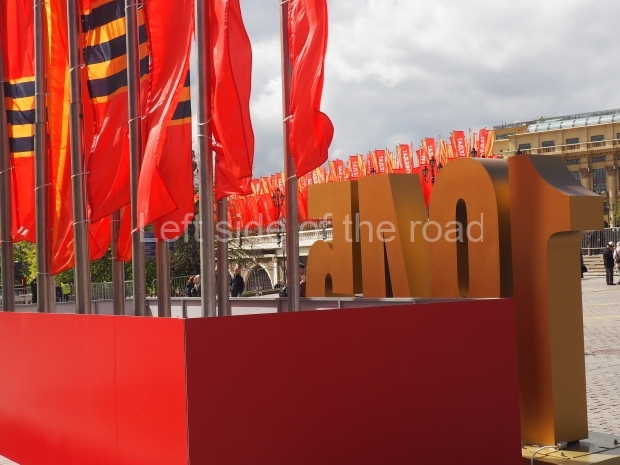
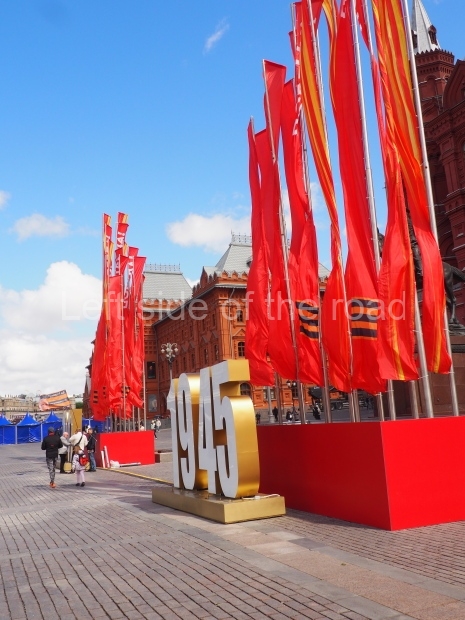
Whilst much of western Europe commemorate May 8th as the official end of the Second World War in the Soviet Union the date for the end of the Great Patriotic War was, and has been since 1945, May 9th. After the collapse of the Soviet Union at the end of 1991 the celebrations have been sporadic but in recent years Putin has realised there’s political capital to be made out of the event and it has now become a major affair, especially in Moscow, and under normal circumstances there would have been hundreds of thousands of Moscovites, covering four generations, on the streets today. It was only in the middle of April, when the covid-19 outbreak started to really take hold in Russia, that the planned parade was cancelled.

Soviet Troops - Berlin - 9th May 1945

Soviet Troops – Berlin – 9th May 1945

Why the difference in the end of the same war?

When the defeat of the Nazi forces was only a matter of time the Fascist leadership after the death of Hitler started to play a bit of a game – deadly for those needlessly killed in the last 6 or 7 days of the conflict.

The Red Army was coming from the east like a steamroller, destroying everything in its path. The British/American et al were making equally fast progress from the west. By the beginning of May it wasn’t a matter of when the Fascists had to surrender it became to whom – and when. The Fascists knew they would be able to get the best deal for themselves if they negotiated with the allies coming from the west – after all British and American capitalism wasn’t that far removed from German Fascism. They knew they would get short shrift from the Soviets.

The Soviet flag flies above the Brandenberg Gate, Berlin

The Soviet flag flies above the Brandenberg Gate, Berlin

Somehow (and I don’t know if anyone ever discovered exactly how this was allowed to happen – the documents coming into German hands during the Ardennes Offensive – also called the Battle of the Bulge which came to an end in January 1945) the Fascists got hold of a map that had been drawn up which showed how Germany would be divided between the allies. With that knowledge Karl Dönitz’s, Hitler’s ‘appointed successor’, main task was to let the war drag on for as long as possible so as many Fascists as possible could escape into those sectors that would be under the control of the British, American or French forces.

To get an idea of Dönitz’s ideology a couple of quotes from national radio broadcasts in the early part of May 1945.

On 1st May, just after the broadcast of the news of Hitler’s death, Dönitz added the following;

‘My first task is to save Germany from destruction by the advancing Bolshevik enemy. It is to serve this purpose alone that the military struggle continues.’

For ‘Germany’ read as many as possible Nazis and Hitlerites.

A public broadcast, so these words and intentions would have been known by all the Allies’ commanders. Added to this Dönitz had never made a secret of his sympathies, being a staunch supporter of Hitler (so much so that even the normally paranoid and suspicious ‘Führer’ had designated him ‘heir apparent’), anti-Communist and anti-Semite.

(To show how correct the new Fascist leader was in his approach to surrender he was only given a 10 year prison sentence at the Nuremberg Trials (arguing the ‘just obeying orders’ defence) – then surviving till 1980 – whilst of those sent to negotiate with the western allies one (von Friedeburg) committed suicide and two (Jodl and Keitel) were hung.)

Soviet flag flies over the Reichstag, Berlin, May 1945

Soviet flag flies over the Reichstag, Berlin, May 1945

After the end of hostilities he wasn’t arrested in Flensburg (almost in Denmark), by British forces, until 23rd May. Why it took so long demonstrates the attitude of the western allies to the Nazis especially as, on the day the unconditional surrender was signed, he had made the following broadcast.

‘Comrades, we have been set back as thousand years in our history. Land that was German for a thousand years has now fallen into Russian hands … [but] despite today’s military breakdown, our people are unlike the Germany of 1918. They have not been split asunder. Whether we want to create another form of National Socialism or whether we conform to the life imposed upon us by the enemy, we should make sure that the unity given to us by National Socialism is maintained under all circumstances.’

But back to the machinations of the Nazis, in efforts to save as many of their kind as possible, and the collaboration in this by the top commanders of both the British and American armed forces. By Montgomery sticking to protocol (and sending the Fascist envoys to Eisenhower – the Allied Supreme Commander) and then Eisenhower giving the Nazis an extra 48 hours before borders were closed) an untold number of war criminals were allowed to escape to and then later prosper in the parts of the country controlled by the western allies. Although not breaking the letter of the agreement with the Soviets it certainly went against the spirit of those agreements. But then what do you expect?

After all the time wasting, game playing and vacillation the first unconditional surrender was signed in Rheims on 7th May. However, there was a very large and angry Red Army coming in from the east and on Stalin‘s insistence any final capitulation had to be signed in the presence of the Commander of the Red Army in Germany, Marshal Zhukov.

That unconditional surrender was signed just before midnight Central European Time on 8th May – which was already 9th May in Moscow – hence the difference in dates.

Celebrations in Moscow

News of the surrender was broadcast over the radio at around 02.00 Soviet time and people congregated in Red Square soon after. Although you rarely see pictures of the reaction to news of the end of the Great Patriotic War by the citizens of the Soviet Union Red Square was as full that day as Trafalgar Square in London or Time Square in New York.

For Motherland, for Stalin - 9th May 1945

For Motherland, for Stalin – 9th May 1945

Red Square - 9th May 1945

Red Square – 9th May 1945

Red Square - 9th May 1945

Red Square – 9th May 1945

I have read reference to, but haven’t been able to confirm it or seen photographic proof, that there was a simple ceremony later in the day of the 9th when captured standards of the Nazi army were thrown down on to the ground in front of the Lenin Mausoleum with Soviet leaders on the podium. This did happen, but the only time I know for certain when it did was during the Victory Parade which took place on 24th June 1945.

Early on the day of the 9th May, Comrade Stalin issued the following Order of the Day;

ORDER OF THE DAY, No. 369, OF MAY 9, 1945,

Addressed to the Red Army and Navy

ON May 8, 1945, in Berlin, representatives of the German High Command signed the instrument of unconditional surrender of the German armed forces.

The Great Patriotic War which the Soviet people waged against the German-fascist invaders is victoriously concluded. Germany is utterly routed.

Comrades, Red Army men, Red Navy men, sergeants, petty officers, officers of the army and navy, generals, admirals and marshals, I congratulate you upon the victorious termination of the Great Patriotic War.

To mark complete victory over Germany, to-day, May 9, the day of victory, at 22.00 hours (Moscow time), the capital of our Motherland, Moscow, on behalf of the Motherland, shall salute the gallant troops of the Red Army, the ships and units of the Navy, which have won this brilliant victory, by firing thirty artillery salvoes from one thousand guns.

Eternal glory to the heroes who fell in the fighting for the freedom and independence of our Motherland!

Long live the victorious Red Army and Navy!

J. STALIN

Supreme Commander-in-Chief, Marshal of the Soviet Union

Moscow

[30 salvoes from a thousand guns – that’s quite a firework display!]

The end of the Great Patriotic War celebrated in Moscow's Red Square, May 9, 1945

The end of the Great Patriotic War celebrated in Moscow’s Red Square, May 9, 1945

Joseph Stalin’s Victory Speech

Broadcast from Moscow at 20.00 hours (Moscow time) on May 9, 1945

COMRADES! Men and women compatriots!

The great day of victory over Germany has come. Fascist Germany, forced to her knees by the Red Army and the troops of our Allies, has acknowledged herself defeated and declared unconditional surrender.

On May 7 the preliminary protocol on surrender was signed in the city of Rheims. On May 8 representatives of the German High Command, in the presence of representatives of the Supreme Command of the Allied troops and the Supreme Command of the Soviet Troops, signed in Berlin the final act of surrender, the execution of which began at 24.00 hours on May 8.

Being aware of the wolfish habits of the German ringleaders, who regard treaties and agreements as empty scraps of paper, we have no reason to trust their words. However, this morning, in pursuance of the act of surrender, the German troops began to lay down their arms and surrender to our troops en masse. This is no longer an empty scrap of paper. This is actual surrender of Germany’s armed forces. True, one group of German troops in the area of Czechoslovakia is still evading surrender. But I trust that the Red Army will be able to bring it to its senses.

Now we can state with full justification that the historic day of the final defeat of Germany, the day of the great victory of our people over German imperialism has come.

The great sacrifices we made in the name of the freedom and independence of our Motherland, the incalculable privations and sufferings experienced by our people in the course of the war, the intense work in the rear and at the front, placed on the altar of the Motherland, have not been in vain, and have been crowned by complete victory over the enemy. The age-long struggle of the Slav peoples for their existence and their independence has ended in victory over the German invaders and German tyranny.

Henceforth the great banner of the freedom of the peoples and peace among peoples will fly over Europe.

Three years ago Hitler declared for all to hear that his aims included the dismemberment of the Soviet Union and the wresting from it of the Caucasus, the Ukraine, Byelorussia, the Baltic lands and other areas. He declared bluntly; ‘We will destroy Russia so that she will never be able to rise again.’ This was three years ago. However, Hitler’s crazy ideas were not fated to come true-the progress of the war scattered them to the winds. In actual fact the direct opposite of the Hitlerites’ ravings has taken place. Germany is utterly defeated. The German troops are surrendering. The Soviet Union is celebrating Victory, although it does not intend either to dismember or to destroy Germany.

Comrades! The Great Patriotic War has ended in our complete victory. The period of war in Europe is over. The period of peaceful development has begun.

I congratulate you upon victory, my dear men and women compatriots!

Glory to our heroic Red Army, which upheld the independence of our Motherland and won victory over the enemy!

Glory to our great people, the people victorious!

Eternal glory to the heroes who fell in the struggle against the enemy and gave their lives for the freedom and happiness of our people!

[Personally I would have liked Comrade Stalin to have added;

Long Live Socialism,

Long Live Marxism-Leninism.]

Soviet Victory Parade

Soviet Victory Parade

Victory Parade, 24th June 1945

The Moscow Victory Parade of 1945 was a held by the Soviet army (with a small squad from the Polish army) after the defeat of Nazi Germany in the Great Patriotic War. It took place in the Soviet capital, mostly centring around a military parade through Red Square. The parade took place on a rainy June 24, 1945, and it was during this parade that the Nazi standards were definitely thrown on the ground in front of the Lenin Mausoleum, with Stalin and other Soviet leaders of the podium.

The fate of Nazism

The fate of Nazism

Some of these standards were, for many years, inside a huge glass case on the floor of one of the rooms of the Revolution Museum in Moscow, close to the then Pravda offices and the Mayakovsky Metro station.

After 1991 this museum went through a number of changes and has little to merit a visit today (or at least it didn’t at the end of 2017). I understand that some (or all) of these standards are currently in the Central Armed Forces Museum in Moscow. If or how they are displayed would be interesting. When I saw them in the early 1970s I liked the idea they were in a jumble (thought well organsiaed jumble) on the floor – as they were at the Victory Parade in 1945. ‘Trophies of war’ are often displayed in the way they would have been when in the hands of their original producers – that was not the fate for the Nazi symbols in the Soviet Union.

More on the ‘Revolutionary Year’
More on the USSR

15th May – Nabka Day – a day of shame for the world

Deir Yassin 1948

Deir Yassin 1948

More on the ‘Revolutionary Year’
More on Palestine

15th May – Nabka Day – a day of shame for the world

The 15th May in Palestine, and for Palestinians in the diaspora, is Nabka Day, the day following the unilateral declaration of independence by the State of Israel (on 14th May 1948) and the start of, now, 72 years of; persecution; murder; imprisonment; repression; theft of their land; denigration of their dignity; subjection to racist laws; ethnic cleansing; military occupation; and now, especially in Gaza, starvation.

The word ‘nabka’ can be translated as ‘disaster’, ‘catastrophe’ or ‘cataclysm’ – in the sense of 15 May all of them.

In fact, if you take all the sufferings of various peoples throughout the world, all the assaults that have been condemned by international bodies – principally the United Nations Organisation (UNO) – in those 72 years the cause of which, in the main, has been the attempts of the various imperialist powers to maintain or regain control in various parts of the world, and dump them on one nation, one group of people, then those people are the Palestinians.

This struggle between the imperialist powers didn’t start in 1948. In the modern era this issue was being played out before the fighting in the First World War was over and the guns on the Western Front went quiet. To keep the various Arab tribes on side in the war against the Ottoman Empire (an ally of Germany in the war and on the periphery initially but an important aspect of the main war nonetheless) promises were made but never kept.

Whilst to their faces the Arab forces were being told one thing behind their backs the British were making the promise of a Jewish State, with undefined borders, in the area which was known as Palestine and where the vast majority of the population were Arabs (90%). Although the British Government had been talking to Zionist representatives during much of the course of the war there was no consultation whatsoever with the Arab people’s who already lived in a thriving community on the land being given away.

In the same way the land that later became known as the United States of America wasn’t empty of people before the arrival of the European immigrants neither was the land of Palestine.

The Balfour Declaration

It might be worthwhile to briefly have a look at the wording of this short document, a mere 67 words but which has caused so much suffering and injustice to so many people for so many years.

His Majesty’s government view with favour the establishment in Palestine of a national home for the Jewish people, and will use their best endeavours to facilitate the achievement of this object, it being clearly understood that nothing shall be done which may prejudice the civil and religious rights of existing non-Jewish communities in Palestine, or the rights and political status enjoyed by Jews in any other country.

The main question to ask is; what right did the British have to assign someone’s land to another group of people – even if it was for the short term interests of the imperialist power – that is, Zionist/Jewish support and encouragement for United States involvement on the Western Front. Obviously the question is rhetorical – the British did because they could and as was their wont, the consequences of their decision on the local populace were not even considered.

For the Zionists then, and the State of Israel now, there’s nothing in the Declaration of any import after the second comma. They had achieved what they were after, the capitulation of a major imperialist power which various Zionist groups and organisations were able to play with in the years between 1917 and 1948.

Throughout the 1920s and 1930s (and into the 1940s) there were constant conflicts between the Jewish ‘settlers’ and the indigenous population – from the very beginning the settlers assuming they had all the rights. At times the morally weak British forces were in the middle but after 1945 they also became the target of Zionist terrorist attacks, especially those organised by the Irgun and the Stern Gang – both organisations providing future Prime Ministers to the State of Israel.

On 29th November 1947 the plan for the partition of Palestine was taken to a vote in the General Assembly of the United Nations (which had been formed two and a half years earlier with the UN Charter, which includes fine words such as peace, security and human rights) and passed by 33 votes to 13 (with 10 abstentions and one member absent). To give a flavour of the ‘new world order’ after the defeat of Fascism the people most effected by this partition, the Palestinians, weren’t even consulted – let alone invited to argue their case.

For reasons I have been unable to discover the Soviet Union both voted for the partition and two days after Israel declared independence recognised the new ‘state’.

Immediately following the vote in favour of the State of Israel the armed Zionist gangs began to make sure circumstances were the most favourable for themselves in the event of an uprising of the Palestinians that would certainly follow the proposed declaration on 14th May – this included a systematic recording of any military material the British would leave behind and identifying those points of conflict which would be most crucial in the coming battle.

This included the process of ‘ethnic cleansing’ even before the term was even coined. One notorious example was the expulsion and massacre of the inhabitants of the village of Deir Yassin, a small Palestinian village a few kilometres to the west of Jerusalem, on 9th April 1948. The Zionist terrorist organisation, Irgun, boasted they had killed, in cold blood, 256 villagers, and far from being ashamed of this broadcast the fact far and wide and in so doing helped create the climate of fear that resulted in a mass exodus of Palestinians from their homes and land.

By March 1949 more than 750,000 Palestinians, who had once had reasonably secure livelihoods were made refugees by the Jewish settlers and invaders. Most of those who were forced to leave never returned home as has been the fate of the 3 generations (to date) of their descendants.

Deir Yassin wasn’t the only village to suffer massacre and destruction in 1948-49 or later, as at the time of the so-called ‘Six Day War’, of 1967, the villages of Zeita, Beit Nuba and Yalu suffered a similar fate.

This activity of the Jewish terrorist groups is reminiscent of the activities of the Nazis during the Second World War. There are examples where activities of Partisan groups fighting the fascist invaders led to retaliations, massacres and the razing of villages such as Lidice, in Czechoslovakia; Oradour-sur-Glane in France; Borovë in Albania and the hundreds of villages the SS wiped out in the eastern Soviet Union when they invaded in 1942.

It also reminds us of the destruction of the villages of My Lai, in Vietnam, on 16th March 1968, by the Americans. Coincidentally the numbers massacred in Deir Yassin and My Lai are very similar, 250 dead, including 30-50 babies.

It could be said the Zionists were even worse than the Nazis (and the American imperialists in Vietnam) as the Germans and the Americans carried out their slaughter as retaliation and revenge, the Zionists did it because they could and enjoyed it.

If it talks like a Fascist, if it acts like a Fascist, if it kills like a Fascist – then it’s a Fascist.

But it has to be said the Zionists have played it well in the intervening years since the establishment of their illegal state. In 1967 they were able to convince many they were the victim in the war against the neighbouring Arab countries. By being a willing tool of American imperialism they have proven their worth by destabilising the region and being a force which benefits the major oil companies and their various state sponsors. Whereas the Apartheid state of South Africa (with which Israel was on friendly military and trading terms prior to 1992) became an international pariah Israel gets away with following exactly the same policies. They’ve also been able to use the rantings of Holocaust deniers to use anti-Semitism to their own advantage and now criticism of the State of Israel has been classified as an act of anti-Semitism – the only state in the world which has been able to equate race to statehood.

Events subsequent to the Nabka of 1948-49, have only gone to prove that what the Zionist State of Israel learnt from the Hitlerite Nazis is to kill and oppress anyone you see as an enemy, that racism is the way forward, that ethnic cleansing is progress, that war is peace.

It is a stain upon the reputation of the world’s working class, and especially the International Communist Movement, the situation the Palestinians live under was allowed to last 72 days let alone 72 years.

Marx once said the British working class would never achieve freedom if the Irish remained enslaved. The same can be said about the Palestinians.

More on Palestine

More on the ‘Revolutionary Year’
5th May – Anniversary of the birth of Karl Marx

Karl Marx

Karl Marx

The Great ‘Marxist-Leninist’ Theoreticians

More on the ‘Revolutionary Year’
View of the world

Ukraine – what you’re not told

5th May – Anniversary of the birth of Karl Marx

Karl Marx was born on 5th May 1818 in the German town of Trier. In his twenties he started to develop the political theory which is now known as Marxism, very soon developing his ideas with his life time companion, friend and collaborator Frederick Engels.

Within a hundred years of his birth the Russian Bolsheviks, under the leadership of VI Lenin and JV Stalin, succeeded in establishing the first socialist state, in what became known as the Union of Soviet Socialist Republics (USSR) following the October Revolution of 7th November 1917.

Revolutionary Marxist ideas were also fundamental in the establishment of the People’s Republic of China, under the leadership of the Communist Party of China and it’s Chairman, Mao Tse-tung, and the People’s Socialist Republic of Albania, under the leadership of the Party of Labour of Albania and it’s General Secretary, Enver Hoxha.

‘The philosophers have only interpreted the world, in various ways. The point, however, is to change it.’ (Karl Marx, Theses on Feuerbach, No. XI, in Frederick Engels,  Ludwig Feuerbach and the end of Classical German Philosophy, p61)

These two, simple sentences are the very essence of Marxism. And since the early 1840s, when Marx started to develop his ideas, there has been a continual struggle to keep that issue at the forefront of workers’ movements throughout the world.

In the 19th century workers who attempted to change the world were far in advance of some of the so-called ‘leaders’, intellectuals and demagogues who spoke well but were found to be wanting when it came to action. The Paris Commune of 1871 was the prime example of this where workers knew instinctively what had to be done.

VI Lenin, the great Marxist theoretician, who was the first leader to be able to lead a successful proletarian revolution, learnt – and implemented – the lessons, both positive and negative, from the Commune and ensured that the Russian workers, peasants and soldiers had a better chance of success against an even more powerful reactionary force. However, Lenin’s ideas were based on the solid bedrock of Marxism, which philosophy he developed into what is now known as Marxism-Leninism.

The significance of Marx’s ideas have never been underestimated by capitalist, imperialist and reactionary forces. In the, now, 173 years since the publication of The Manifesto of the Communist Party (in Marx and Engels, Collected Works, Volume 6, pp477-519.) there have been countless occasions when those movements who have used Marxism as their ideological base have been attacked and vilified as being inappropriate to the circumstances or as being a ‘foreign import’. The danger that these ideas pose to the ruling classes in most countries of the world demonstrate the value they have for those who are oppressed and exploited – the majority of the population of the world.

But from its inception Marxism has not only had to contend with the attacks from capitalism and imperialism. Within the working class itself there have been those revisionists who have sought to emasculate Marxism of its revolutionary content and these cowards, traitors and renegades have caused incalculable damage to any advances in the conditions of the world’s workers and peasants.

However, those attacks only serve to make Marxism relevant in the present circumstances, where the people of the world are suffering during a health pandemic which has been made worse – and longer lasting – due to the fact that capitalism has no real interest in effectively dealing with such a situation that benefits the majority of people.

So far there’s been no indication that this crisis – caused by the political and economic situation under which all in the world live – has caused workers to rethink the old certainties (even if they did exist pre-2019). The negative effects of covid-19 will last for a long time and there’s no chance that the world will just change, taking into consideration the situation of the majority of the population, without them taking action to change their condition themselves.

Those ‘crumbs’ which capitalism have thrown to avoid the destruction of its rotten and moribund system are becoming harder to find and are getting scattered more widely.

Implementing the ideas of Marx – and how they have been developed by Lenin and Mao – is the only way there will be a long-term and sustainable future for the workers and peasants of the world.

Marxism is far from being dead.

Long Live Marxism!

As part of the commemoration of Marx’s birth we reproduce the interview below (first published on the 200th Anniversary) with David Harvey who has produced a series of video lectures which seek to make Marx’s most important work, Capital, (Marx and Engels, Collected Works, Capital Volunme 1, Capital Volume 2 and Capital Volume 3)   understandable and more accessible to those who might find the three, large volumes too daunting.

Why Marx Still Matters

An interview with David Harvey

This article originally appeared as an interview on Daniel Denvir’s podcast, The Dig, in 2018

On the second centenary of Karl Marx’s birth, global capitalism is stumbling from crisis to crisis. In the wake of the financial crash, interest in Marx’s ideas has blossomed once again. This should come as no surprise: they remain vital to understanding not only the dynamics of capitalism itself but the manner in which it structures our modern world.

David Harvey is one of the world’s leading scholars of Marx. His course on the three volumes of Capital became synonymous with Marx’s re-emergence in recent years, and has been viewed by millions online. This course has been condensed into the recently-published Marx, Capital and the Madness of Economic Reason, a companion to Marx’s magnum opus, which addresses its relevance today.

In this interview, David Harvey speaks with journalist Daniel Denvir about Marx’s work, his understanding of capitalism’s contradictions, and why his ideas endure so long after his time.

You’ve been teaching Capital for quite a long time. Can you lay out a brief overview of each of the three volumes?

Marx is very much into detail, and it’s sometimes hard to get a sense of exactly what the whole conception of Capital is about. But really, it’s simple. Capitalists start the day with a certain amount of money, take the money into the marketplace and buy commodities like means of production and labour power, and put them to work in a labour process that produces a new commodity. That commodity is sold for money, plus a profit. Then the profit is redistributed in various ways, in the form of rents and interest, which circulates back into money, which starts the production cycle again.

It’s a circulation process. And the three volumes of Capital deal with different aspects. The first deals with production. The second deals with circulation and what we call ‘realisation’ — the way the commodity is converted back into money. And the third deals with distribution — how much goes to the landlord, how much goes to the financier, how much goes to the merchant, before it is all turned around and sent back into the circulation process.

That’s what I try to teach, so that people understand the relationships between the three volumes of Capital and don’t get lost entirely in any one volume or parts of them.

You differ with other Marx scholars in that you pay a lot of attention to volumes two and three, in addition to volume one. Why is that?

It’s clear that in Marx’s mind, he had an idea of the totality of the circulation of capital. His plan was to break it down into these three component parts in the three volumes. So I just follow what Marx says he’s doing. Now, the problem of course, is that volumes two and three were never completed, and they aren’t as satisfactory as volume one, which is a literary masterpiece. So I can understand why, if people want to read Marx with a certain sense of joy and fun, that they would stick with volume one. But I’m saying, ‘No, if you really want to understand what his conception of capital is, then you can’t understand it as just being about production. It’s about circulation. It’s about getting it to market and selling it, then it’s about distributing the profits.’

One reason that it’s important is that we need it to understand this dynamic of constant expansion that drives capitalism.

You get this idea of a ‘bad infinity’ in volume one. The system has to expand because it’s always about profit, creating what Marx called a ‘surplus value’, and the surplus value then gets reinvested in the creation of more surplus value. So capital is about constant expansion.

And what that does is this: if you grow at 3 percent a year, forever, then you get to the point where the amount of expansion required is absolutely huge. In Marx’s time, there’s plenty of space in the world to expand into, whereas right now we’re talking about 3 percent compound rate of growth on everything that’s happening in China and South Asia and Latin America. The problem arises: where are you going to expand into? That’s the bad infinity coming into being.

In volume three, Marx says maybe the only way it can expand is by monetary expansion. Because with money there’s no limit. If we’re talking about using cement or something like that, there’s a physical limit to how much you can produce. But with money, you can just add zeros to the global money supply.

If you look at what we did after the 2008 crisis, we added zeros to the money supply by something called ‘quantitative easing’. That money then flowed back into stock markets, and then asset bubbles, especially in property markets. We’ve now got a strange situation where, in every metropolitan area of the world that I’ve visited, there’s a huge boom in construction and in property asset prices – all of which is being fuelled by the fact that money is being created and it doesn’t know where to go, except into speculation and asset values.

You’re trained as a geographer, and for you Marx’s account of capitalism is fundamentally about dealing with problems of space and time. Why are these two axes of space and time are so critical?

For instance, the interest rate is about discounting into the future. And borrowing is about foreclosing on the future. Debt is a claim on future production. So the future is foreclosed on, because we’ve got to pay our debts. Ask any student who owes $200,000: their future is foreclosed, because they’ve got to pay off that debt. This foreclosure of the future is a terribly important part of what Capital is about.

The space stuff comes in because as you start to expand, there’s always the possibility that if you can’t expand in a given space, you take your capital and go into another space. For instance, Britain was producing a lot of surplus capital in the nineteenth century, so a lot of it was flowing to North America, some through Latin America, some to South Africa. So there’s a geographical aspect to this.

The expansion of the system is about getting what I call ‘spatial fixes’. You’ve got a problem: you’ve got excess capital. What are you going to do with it? Well, you have a spatial fix, which means you go out and build something somewhere else in the world. If you have an ‘unsettled’ continent like North America in the nineteenth century, then there’s vast amounts of space you can expand into. But now North America has been pretty much covered.

The spatial reorganisation is not simply about expansion. It’s also about reconstruction. We get deindustrialisation in the United States and Europe, and then the reconfiguration of an area through urban redevelopment, so that cotton mills in Massachusetts get turned into condominiums.

We’re running out of both space and time right now. That’s one of the big problems of contemporary capitalism.

What do mainstream economists miss about all of this?

They hate contradictions. It doesn’t fit with their world view. The economists love to confront what they call problems, and problems have solutions. Contradictions don’t. They exist with you all the time, and therefore you have to manage them.

They get heightened into what Marx called ‘absolute contradictions’. How do economists deal with the fact that in the crisis of the 1930s or the 1970s or more recently, surplus capital and surplus labour sit side by side, and nobody seems to have a clue as to how to put them back together so that they can work for socially productive purposes?

Keynes tried to do something about this. But by and large, economists have no idea how to deal with these contradictions. Whereas Marx is saying that this contradiction is in the nature of capital accumulation. And this contradiction then produces these crises periodically, which claim lives and create misery.

In terms of that contradiction, you describe in your book ‘surplus capital and surplus labour existing side by side with seemingly no way to put them back together.’ How has capitalism attempted to resolve this?

The response to the 2007–8 crisis was to, in most of the world – except China – double down into a neoliberal austerity politics. Which made things worse. Since then, we’ve had more cuts. It hasn’t worked very well. Slowly, unemployment has come down in the United States, but of course it’s gone shooting up in places like Brazil and Argentina.

The neoliberal argument had a lot of legitimacy in the 1980s and 1990s as being liberatory in some way. But nobody believes that anymore. Everybody realises it’s a con job in which the rich get richer and the poor get poorer.

But now we’re seeing the emergence of an ethno-nationalist protectionism-autarky, which is a different model. That doesn’t sit very well with neoliberal ideals. We could be headed into something which is much less pleasant than neoliberalism, the division of the world into warring and protectionist factions who are fighting each other over trade and everything else.

The argument of somebody like Steve Bannon is that we need to protect the working people of America from competition in the job market by limiting immigration. Instead of blaming capital, you blame the immigrants. The second thing is to say, we can also get support from that population by putting up tariffs and blaming Chinese competition. In effect, you’ve got a right-wing politics that is gathering a great deal of support by being anti-immigrant and anti-offshoring.

You’re well known for your scholarly work, but you’re perhaps known better as a teacher of Marx. Why do you think it’s important for leftists outside of the academy to engage with Marx’s work?

When you’re involved in political action and activism, you’ve usually got some very specific target. Let’s say, lead paint poisoning in the inner city. You’re organising around what to do about the fact that 20 percent of the kids in inner-city Baltimore suffer from lead paint poisoning. You’re involved in a legal battle, and in fighting with landlord lobbies and with all kinds of opponents. Most people I know who are involved in activist forms of that kind are so consumed with the details of what they’re doing that they often forget where they are in the overall picture – of the struggles in a city, let alone in the world.

Often you find that people need assistance from outside. That lead paint thing is much easier to handle if you’ve got all of the people who are involved in the educational system, who see kids in schools with problems with lead paint poisoning. You start to build alliances. And the more alliances you can build, the more powerful your movement could be.

I try not to lecture people about what they should think, but try to create a framework of thinking, so that people can see where they are in the totality of complicated relationships that make up contemporary society. Then people can form alliances around the issues they’re concerned with, and, at the same time, mobilise their own powers to help other people in their alliances.

I’m into building alliances. In order to build alliances, you have to have a picture of the totality of a capitalist society. To the degree that you can get some of that from studying Marx, I think that it’s helpful.

The Great ‘Marxist-Leninist’ Theoreticians

More on the ‘Revolutionary Year’
View of the world

Ukraine – what you’re not told