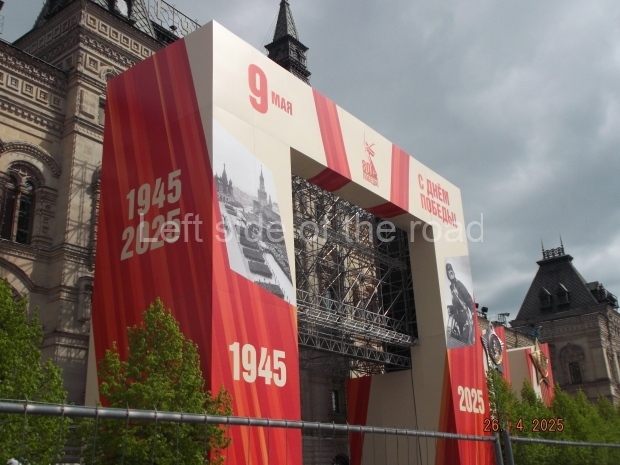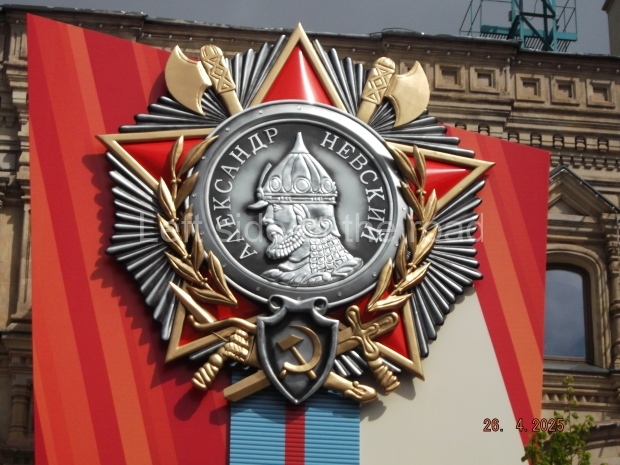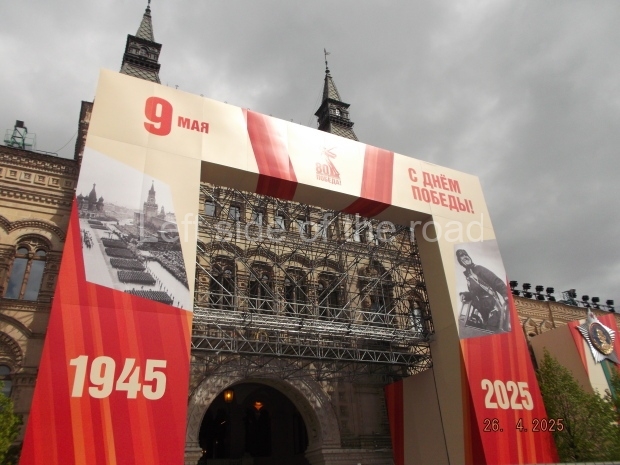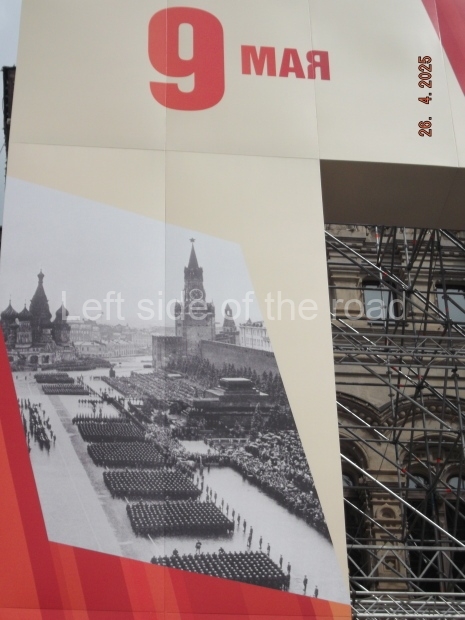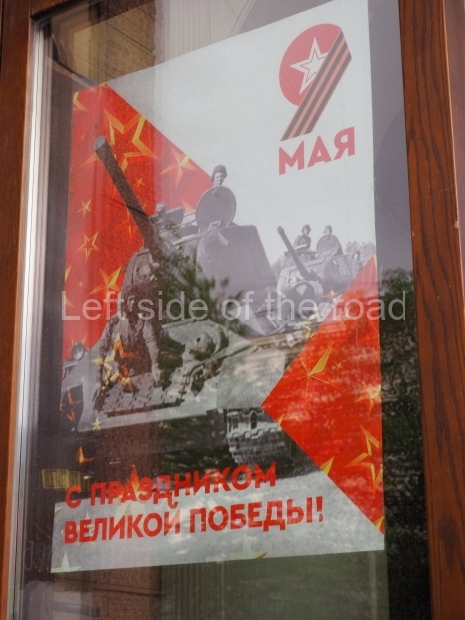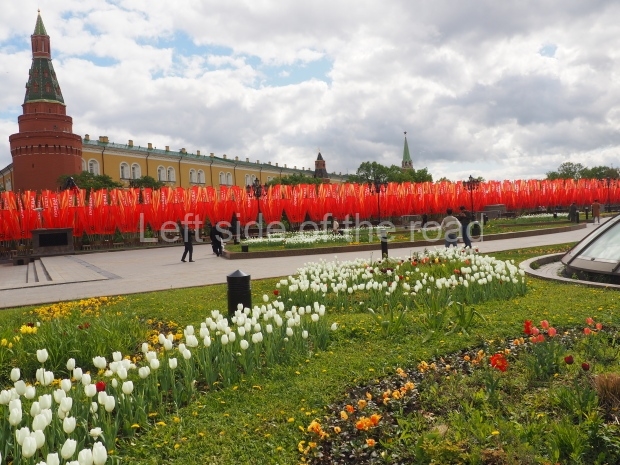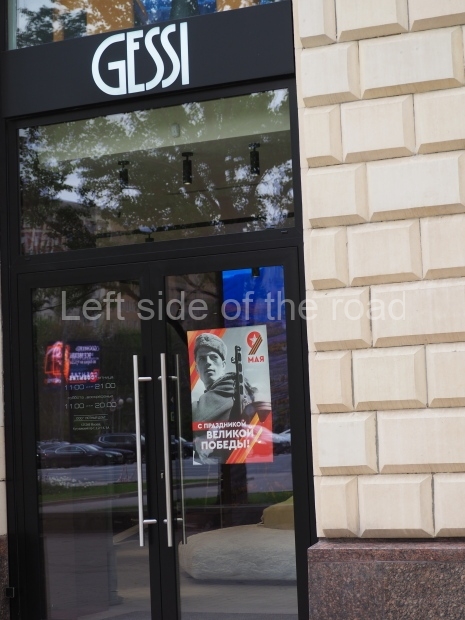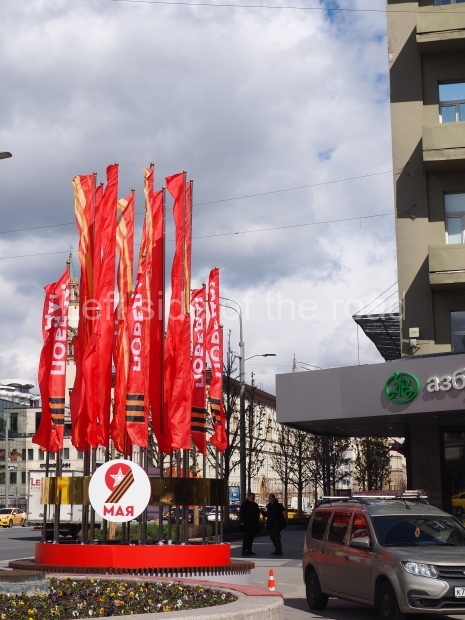
May 9th 1945 – Victory Day in the Soviet Union (Russia)

The triumph of the Conquering People - Mikhail Khmelko

The triumph of the Conquering People

More on the ‘Revolutionary Year’

More on the USSR

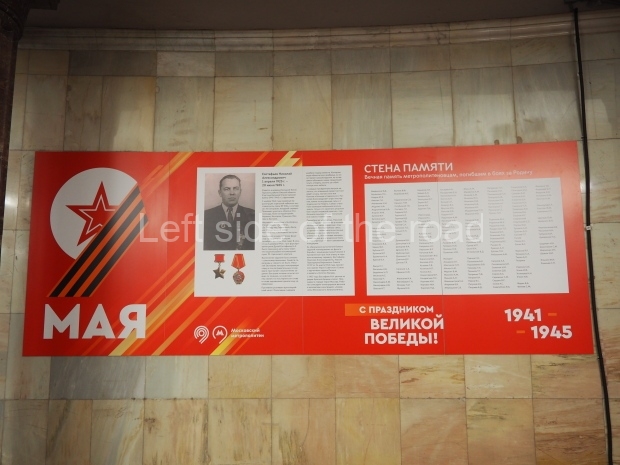
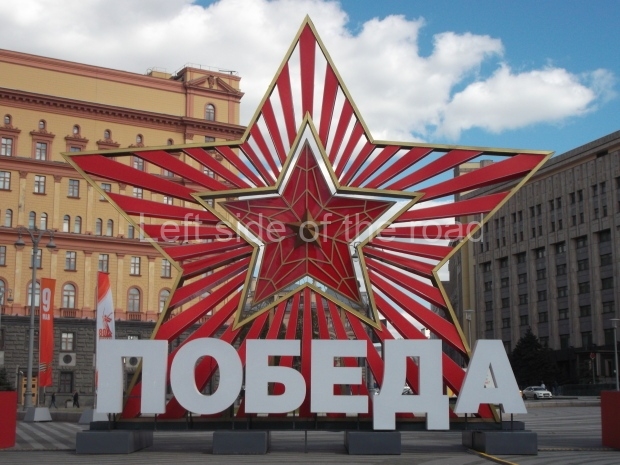
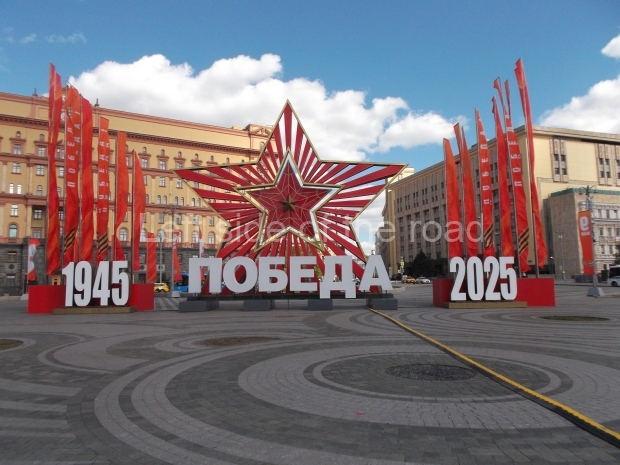
May 9th – Victory Day in the Soviet Union (Russia)

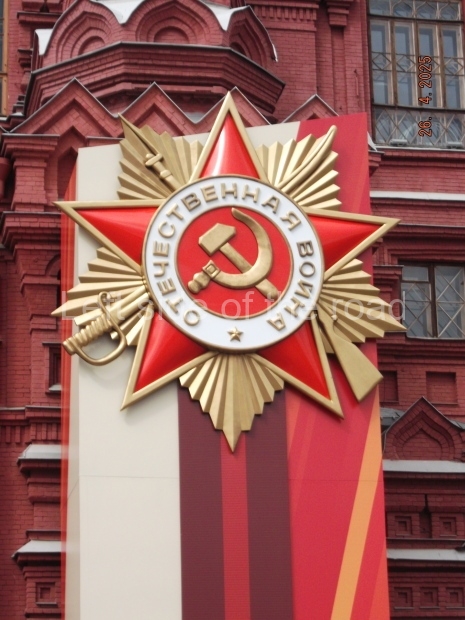
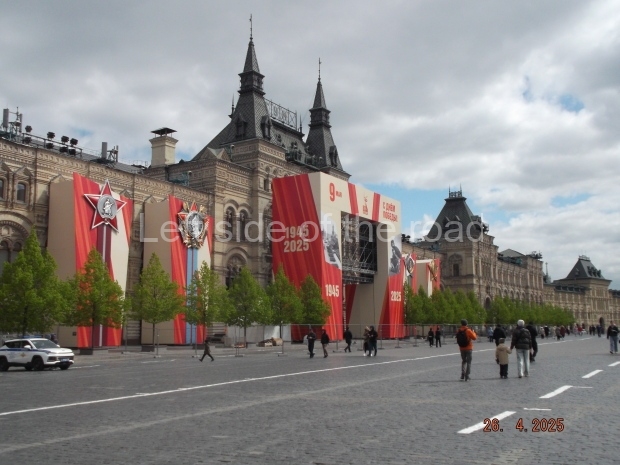
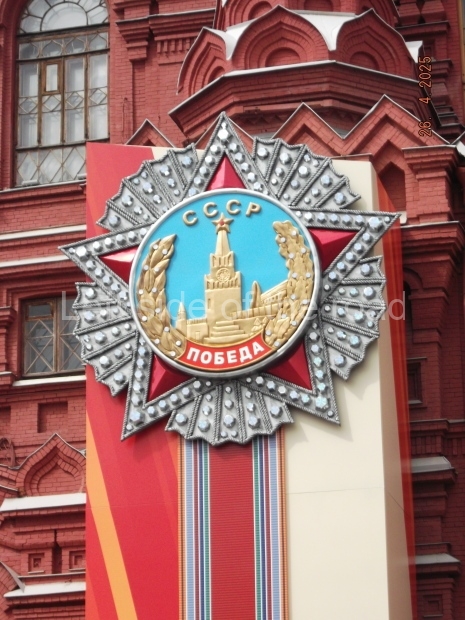
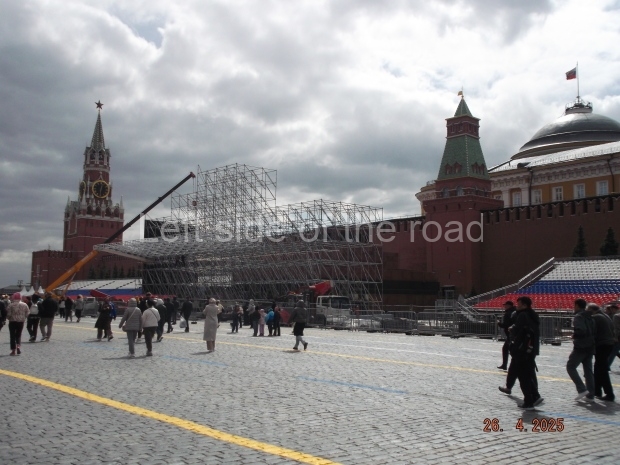
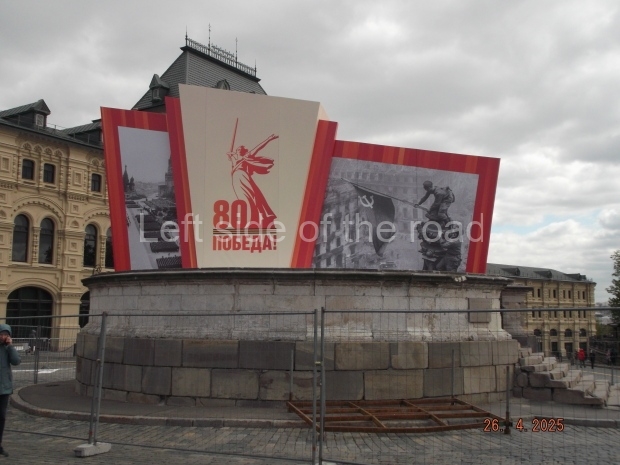
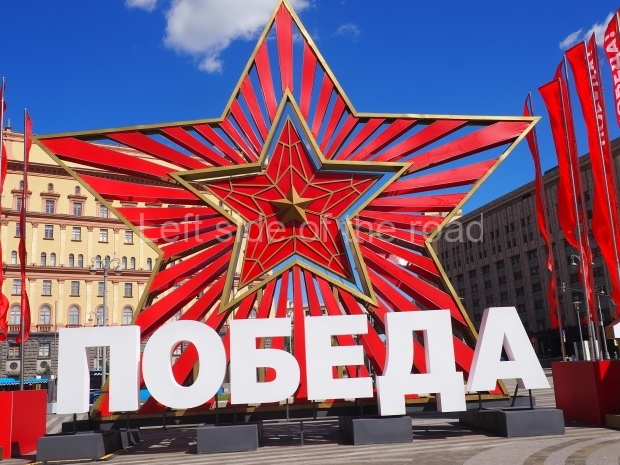
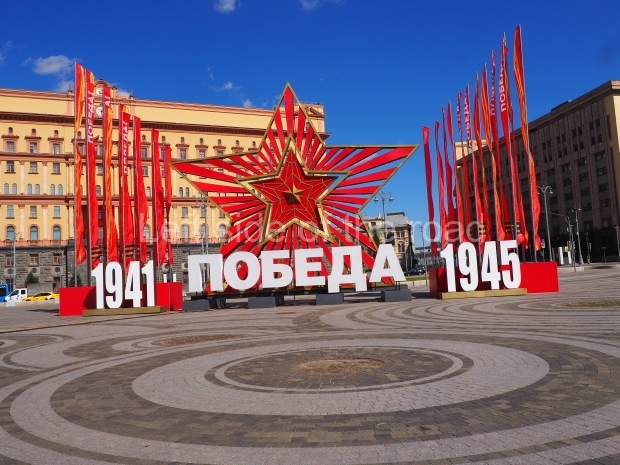
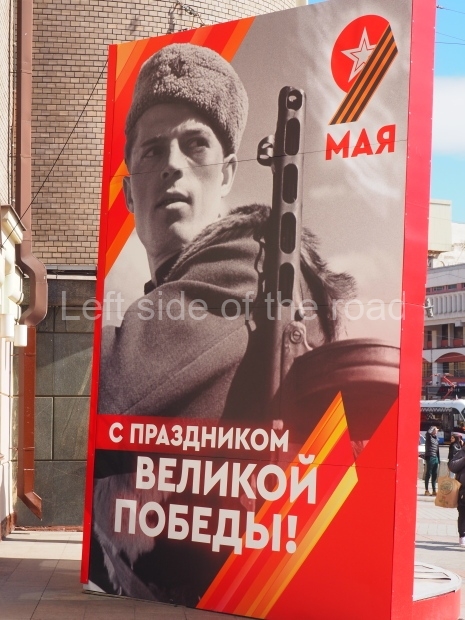
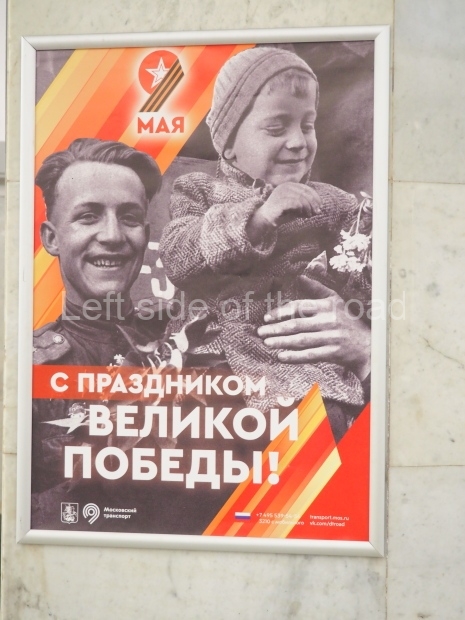
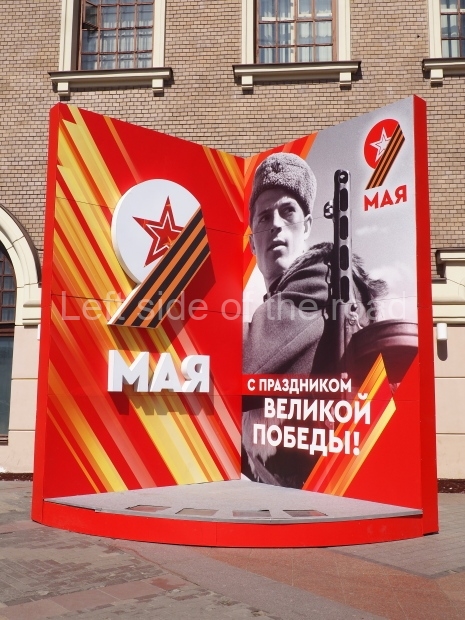
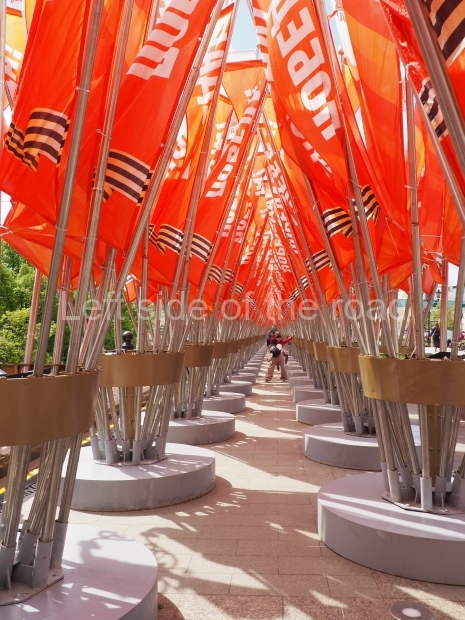
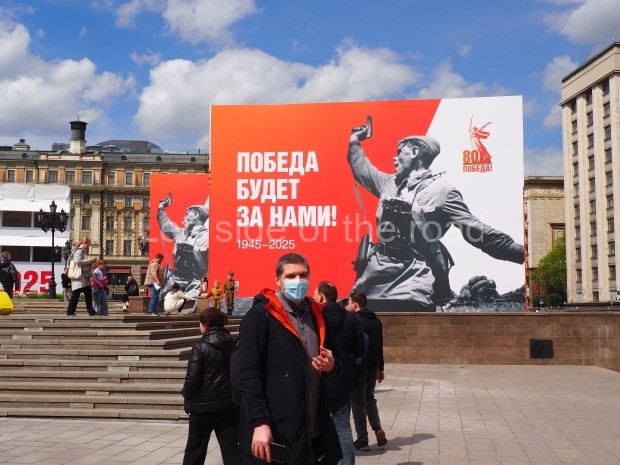
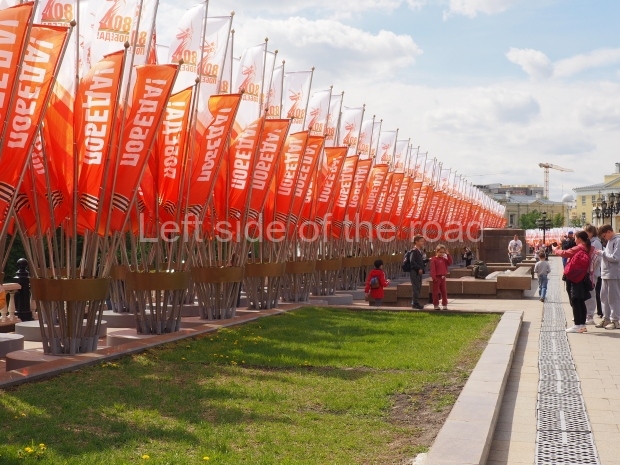
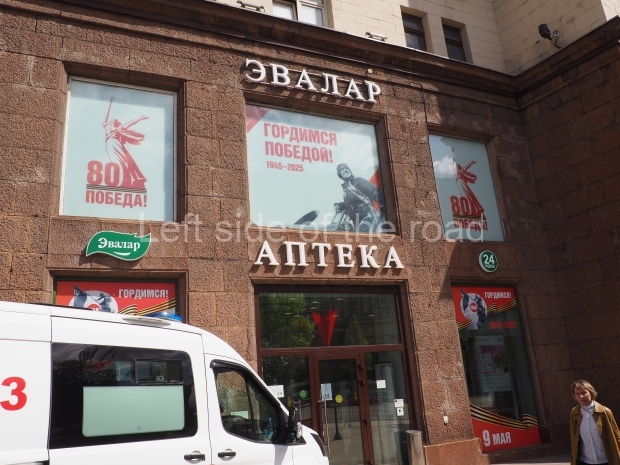
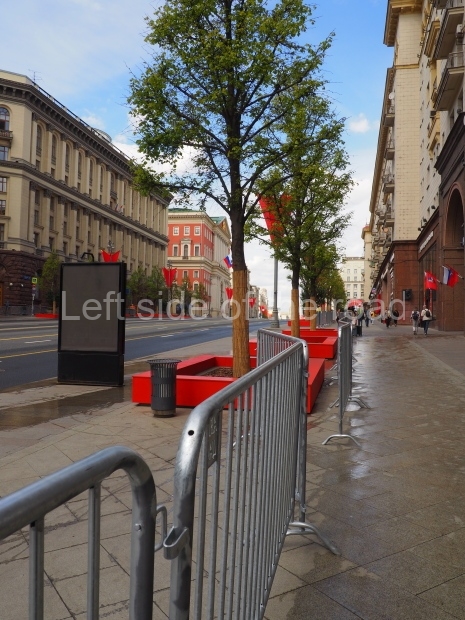
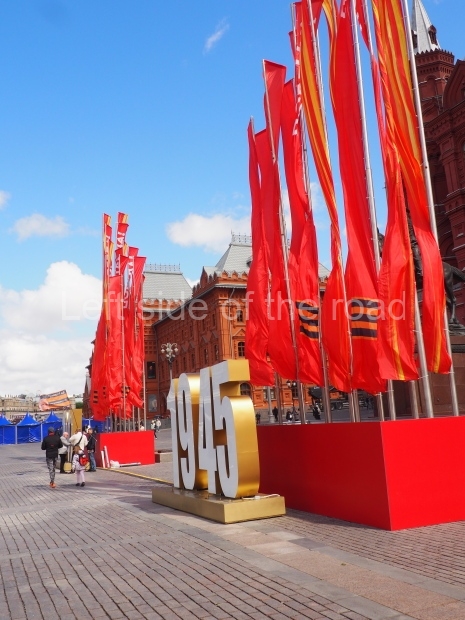
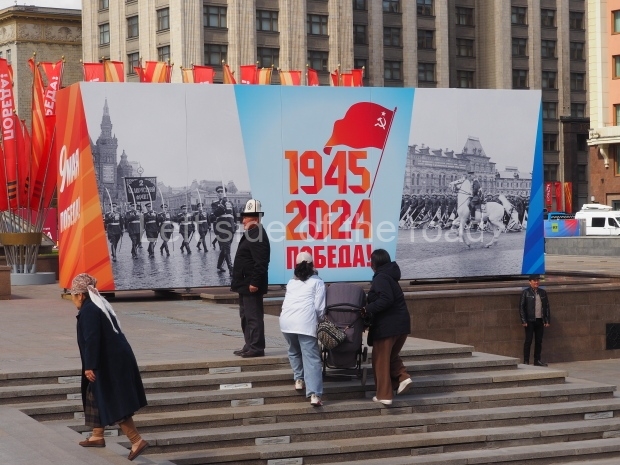
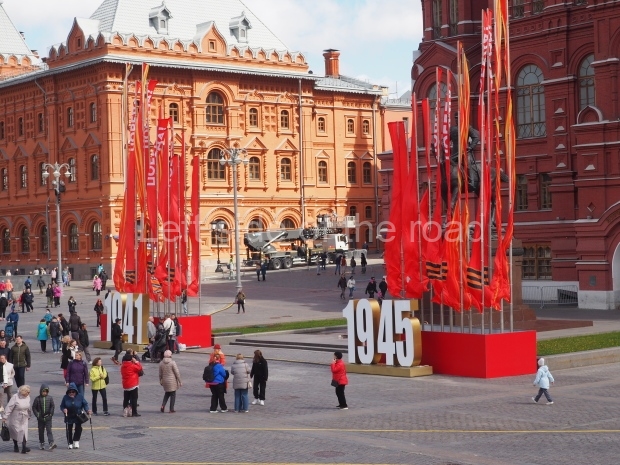
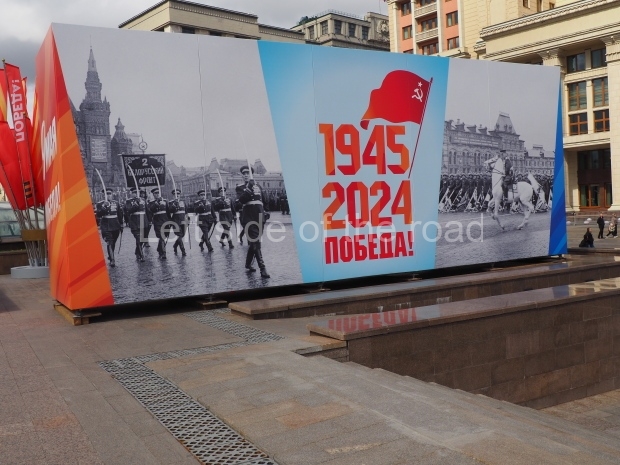
Whilst much of western Europe commemorate May 8th as the official end of the Second World War in the Soviet Union the date for the end of the Great Patriotic War was, and has been since 1945, May 9th. After the collapse of the Soviet Union at the end of 1991 the celebrations have been sporadic but in recent years Putin has realised there’s political capital to be made out of the event and it has now become a major affair, especially in Moscow, and under normal circumstances there would have been hundreds of thousands of Moscovites, covering four generations, on the streets today. It was only in the middle of April, when the covid-19 outbreak started to really take hold in Russia, that the planned parade was cancelled.

Soviet Troops - Berlin - 9th May 1945

Soviet Troops – Berlin – 9th May 1945

Why the difference in the end of the same war?

When the defeat of the Nazi forces was only a matter of time the Fascist leadership after the death of Hitler started to play a bit of a game – deadly for those needlessly killed in the last 6 or 7 days of the conflict.

The Red Army was coming from the east like a steamroller, destroying everything in its path. The British/American et al were making equally fast progress from the west. By the beginning of May it wasn’t a matter of when the Fascists had to surrender it became to whom – and when. The Fascists knew they would be able to get the best deal for themselves if they negotiated with the allies coming from the west – after all British and American capitalism wasn’t that far removed from German Fascism. They knew they would get short shrift from the Soviets.

The Soviet flag flies above the Brandenberg Gate, Berlin

The Soviet flag flies above the Brandenberg Gate, Berlin

Somehow (and I don’t know if anyone ever discovered exactly how this was allowed to happen – the documents coming into German hands during the Ardennes Offensive – also called the Battle of the Bulge which came to an end in January 1945) the Fascists got hold of a map that had been drawn up which showed how Germany would be divided between the allies. With that knowledge Karl Dönitz’s, Hitler’s ‘appointed successor’, main task was to let the war drag on for as long as possible so as many Fascists as possible could escape into those sectors that would be under the control of the British, American or French forces.

To get an idea of Dönitz’s ideology a couple of quotes from national radio broadcasts in the early part of May 1945.

On 1st May, just after the broadcast of the news of Hitler’s death, Dönitz added the following;

‘My first task is to save Germany from destruction by the advancing Bolshevik enemy. It is to serve this purpose alone that the military struggle continues.’

For ‘Germany’ read as many as possible Nazis and Hitlerites.

A public broadcast, so these words and intentions would have been known by all the Allies’ commanders. Added to this Dönitz had never made a secret of his sympathies, being a staunch supporter of Hitler (so much so that even the normally paranoid and suspicious ‘Führer’ had designated him ‘heir apparent’), anti-Communist and anti-Semite.

(To show how correct the new Fascist leader was in his approach to surrender he was only given a 10 year prison sentence at the Nuremberg Trials (arguing the ‘just obeying orders’ defence) – then surviving till 1980 – whilst of those sent to negotiate with the western allies one (von Friedeburg) committed suicide and two (Jodl and Keitel) were hung.)

Soviet flag flies over the Reichstag, Berlin, May 1945

Soviet flag flies over the Reichstag, Berlin, May 1945

After the end of hostilities he wasn’t arrested in Flensburg (almost in Denmark), by British forces, until 23rd May. Why it took so long demonstrates the attitude of the western allies to the Nazis especially as, on the day the unconditional surrender was signed, he had made the following broadcast.

‘Comrades, we have been set back as thousand years in our history. Land that was German for a thousand years has now fallen into Russian hands … [but] despite today’s military breakdown, our people are unlike the Germany of 1918. They have not been split asunder. Whether we want to create another form of National Socialism or whether we conform to the life imposed upon us by the enemy, we should make sure that the unity given to us by National Socialism is maintained under all circumstances.’

But back to the machinations of the Nazis, in efforts to save as many of their kind as possible, and the collaboration in this by the top commanders of both the British and American armed forces. By Montgomery sticking to protocol (and sending the Fascist envoys to Eisenhower – the Allied Supreme Commander) and then Eisenhower giving the Nazis an extra 48 hours before borders were closed) an untold number of war criminals were allowed to escape to and then later prosper in the parts of the country controlled by the western allies. Although not breaking the letter of the agreement with the Soviets it certainly went against the spirit of those agreements. But then what do you expect?

After all the time wasting, game playing and vacillation the first unconditional surrender was signed in Rheims on 7th May. However, there was a very large and angry Red Army coming in from the east and on Stalin‘s insistence any final capitulation had to be signed in the presence of the Commander of the Red Army in Germany, Marshal Zhukov.

That unconditional surrender was signed just before midnight Central European Time on 8th May – which was already 9th May in Moscow – hence the difference in dates.

Celebrations in Moscow

News of the surrender was broadcast over the radio at around 02.00 Soviet time and people congregated in Red Square soon after. Although you rarely see pictures of the reaction to news of the end of the Great Patriotic War by the citizens of the Soviet Union Red Square was as full that day as Trafalgar Square in London or Time Square in New York.

For Motherland, for Stalin - 9th May 1945

For Motherland, for Stalin – 9th May 1945

Red Square - 9th May 1945

Red Square – 9th May 1945

Red Square - 9th May 1945

Red Square – 9th May 1945

I have read reference to, but haven’t been able to confirm it or seen photographic proof, that there was a simple ceremony later in the day of the 9th when captured standards of the Nazi army were thrown down on to the ground in front of the Lenin Mausoleum with Soviet leaders on the podium. This did happen, but the only time I know for certain when it did was during the Victory Parade which took place on 24th June 1945.

Early on the day of the 9th May, Comrade Stalin issued the following Order of the Day;

ORDER OF THE DAY, No. 369, OF MAY 9, 1945,

Addressed to the Red Army and Navy

ON May 8, 1945, in Berlin, representatives of the German High Command signed the instrument of unconditional surrender of the German armed forces.

The Great Patriotic War which the Soviet people waged against the German-fascist invaders is victoriously concluded. Germany is utterly routed.

Comrades, Red Army men, Red Navy men, sergeants, petty officers, officers of the army and navy, generals, admirals and marshals, I congratulate you upon the victorious termination of the Great Patriotic War.

To mark complete victory over Germany, to-day, May 9, the day of victory, at 22.00 hours (Moscow time), the capital of our Motherland, Moscow, on behalf of the Motherland, shall salute the gallant troops of the Red Army, the ships and units of the Navy, which have won this brilliant victory, by firing thirty artillery salvoes from one thousand guns.

Eternal glory to the heroes who fell in the fighting for the freedom and independence of our Motherland!

Long live the victorious Red Army and Navy!

J. STALIN

Supreme Commander-in-Chief, Marshal of the Soviet Union

Moscow

[30 salvoes from a thousand guns – that’s quite a firework display!]

The end of the Great Patriotic War celebrated in Moscow's Red Square, May 9, 1945

The end of the Great Patriotic War celebrated in Moscow’s Red Square, May 9, 1945

Joseph Stalin’s Victory Speech

Broadcast from Moscow at 20.00 hours (Moscow time) on May 9, 1945

COMRADES! Men and women compatriots!

The great day of victory over Germany has come. Fascist Germany, forced to her knees by the Red Army and the troops of our Allies, has acknowledged herself defeated and declared unconditional surrender.

On May 7 the preliminary protocol on surrender was signed in the city of Rheims. On May 8 representatives of the German High Command, in the presence of representatives of the Supreme Command of the Allied troops and the Supreme Command of the Soviet Troops, signed in Berlin the final act of surrender, the execution of which began at 24.00 hours on May 8.

Being aware of the wolfish habits of the German ringleaders, who regard treaties and agreements as empty scraps of paper, we have no reason to trust their words. However, this morning, in pursuance of the act of surrender, the German troops began to lay down their arms and surrender to our troops en masse. This is no longer an empty scrap of paper. This is actual surrender of Germany’s armed forces. True, one group of German troops in the area of Czechoslovakia is still evading surrender. But I trust that the Red Army will be able to bring it to its senses.

Now we can state with full justification that the historic day of the final defeat of Germany, the day of the great victory of our people over German imperialism has come.

The great sacrifices we made in the name of the freedom and independence of our Motherland, the incalculable privations and sufferings experienced by our people in the course of the war, the intense work in the rear and at the front, placed on the altar of the Motherland, have not been in vain, and have been crowned by complete victory over the enemy. The age-long struggle of the Slav peoples for their existence and their independence has ended in victory over the German invaders and German tyranny.

Henceforth the great banner of the freedom of the peoples and peace among peoples will fly over Europe.

Three years ago Hitler declared for all to hear that his aims included the dismemberment of the Soviet Union and the wresting from it of the Caucasus, the Ukraine, Byelorussia, the Baltic lands and other areas. He declared bluntly; ‘We will destroy Russia so that she will never be able to rise again.’ This was three years ago. However, Hitler’s crazy ideas were not fated to come true-the progress of the war scattered them to the winds. In actual fact the direct opposite of the Hitlerites’ ravings has taken place. Germany is utterly defeated. The German troops are surrendering. The Soviet Union is celebrating Victory, although it does not intend either to dismember or to destroy Germany.

Comrades! The Great Patriotic War has ended in our complete victory. The period of war in Europe is over. The period of peaceful development has begun.

I congratulate you upon victory, my dear men and women compatriots!

Glory to our heroic Red Army, which upheld the independence of our Motherland and won victory over the enemy!

Glory to our great people, the people victorious!

Eternal glory to the heroes who fell in the struggle against the enemy and gave their lives for the freedom and happiness of our people!

[Personally I would have liked Comrade Stalin to have added;

Long Live Socialism,

Long Live Marxism-Leninism.]

Soviet Victory Parade

Soviet Victory Parade

Victory Parade, 24th June 1945

The Moscow Victory Parade of 1945 was a held by the Soviet army (with a small squad from the Polish army) after the defeat of Nazi Germany in the Great Patriotic War. It took place in the Soviet capital, mostly centring around a military parade through Red Square. The parade took place on a rainy June 24, 1945, and it was during this parade that the Nazi standards were definitely thrown on the ground in front of the Lenin Mausoleum, with Stalin and other Soviet leaders of the podium.

The fate of Nazism

The fate of Nazism

Some of these standards were, for many years, inside a huge glass case on the floor of one of the rooms of the Revolution Museum in Moscow, close to the then Pravda offices and the Mayakovsky Metro station.

After 1991 this museum went through a number of changes and has little to merit a visit today (or at least it didn’t at the end of 2017). I understand that some (or all) of these standards are currently in the Central Armed Forces Museum in Moscow. If or how they are displayed would be interesting. When I saw them in the early 1970s I liked the idea they were in a jumble (thought well organsiaed jumble) on the floor – as they were at the Victory Parade in 1945. ‘Trophies of war’ are often displayed in the way they would have been when in the hands of their original producers – that was not the fate for the Nazi symbols in the Soviet Union.

More on the ‘Revolutionary Year’
More on the USSR

16th March 1968 – My Lai Massacre

My Lai Monument

My Lai Monument

More on the ‘Revolutionary Year’

View of the world

Ukraine – what you’re not told

16th March 1968 – My Lai Massacre

Just after dawn on the morning of 16th March 1968, when the peasants were starting off to tend their paddies and the children were starting to have their breakfast, the quiet of the spring morning was broken by the arrival of US helicopters firing into people’s homes. This was soon followed by the arrival of troop carrying helicopters who also started to fire indiscriminately at anything that moved. Four hours later, by the end of this ‘military action’ 504 Vietnamese civilians were killed and soon after a village structure that had existed for hundreds of years was wiped out. The Vietnamese knew this group of villages as Song My, the rest of the world, when the news finally broke 18 months later, were to know the site of this massacre as My Lai.

My Lai Massacre

My Lai Massacre

Earlier that year the US invading forces and their South Vietnamese lackeys had been taken by surprise by the Tet Offensive. This began on the night of the 29/30th January when units of the Vietnamese People’s Army (from the North Vietnam) and guerrilla units of the National Liberation Front (the NLF from the South) simultaneously attacked numerous military bases and cities in the south of the country, even coming out of the ground in the middle of Da Nang, the principal close to the border with the People’s Republic of the North.

The action didn’t achieve any lasting military objectives but the very fact that it could have been organised on such a scale in the first place started to create the realisation amongst the American imperialists that they wouldn’t be able to win the war. It would be another seven years before the panic-stricken Yankees and their hangers-on (literally as the last helicopters took off) fought tooth and nail against each other to get on the last helicopters from the roof of the American Embassy in Saigon as North Vietnamese tanks crashed through the compound gates.

But like a wounded animal, knowing it is about to die, the Americans lashed out with the aim of causing as much damage and suffering as possible. The cost of defeating the most powerful military nation on the earth would have to be paid for at a high price.

The area which encompassed Song My was considered to be more than just sympathetic to the NLF and was known by the Americans as ‘Pinkville’. The guerrilla units in the south followed the military principals of People’s War, developed by Mao Tse-tung in China in the war, first, against the Japanese Fascist invaders and then the reactionary, Western Imperialist supported, Nationalist Kuomintang.

Mao coined the phrase of the guerrilla army ‘swimming like fish amongst the people’ and the Vietnamese followed this lesson well. However, not only do revolutionaries learn from the experience of those who have gone before them. Reactionaries also learnt and decided that if the revolutionaries were swimming amongst the people then they would deny them the water. The fact that many innocent people would bear the cost of this approach wasn’t (and still isn’t – witness what has happened in the last 14 years with the imperialist wars of intervention in Afghanistan, Iraq and other countries of the Middle East) of concern to the American commanders in Vietnam nor their political masters in Washington. As far as they were concerned ALL the ‘gooks’ (their racist term for the Vietnamese) were guilty, if not for crimes of commission then for crimes of omission, even babies only a matter of a few weeks old or those yet to be born.

My Lai Massacre

My Lai Massacre

It’s difficult to imagine what went through the minds of those soldiers who carried out the massacre that covered three separate hamlets in Song My. There were no reports whatsoever that these brave troops came under any sort of enemy fire. In fact there was only one casualty amongst the G.I.s – and his wound was self-inflicted in an effort not to indulge in the blood lust.

My Lai Massacre

My Lai Massacre

Most of the troops involved were relatively new to the country and therefore couldn’t really argue that they were battle weary and bitter from what they had seen happen to their fellow conscripts – although I have heard one soldier argue that case. Neither could they use the excuse given in Northern Ireland by the British Paratroopers after the murder of Irish Republican demonstrators on ‘Bloody Sunday’ in 1972 when one reason given for them opening fire was that these ‘elite’ troops were frightened by being shot at.

My Lai Massacre

My Lai Massacre

The majority of US troops in Vietnam by this time of the war were conscripts. The majority of them were in their late teens or early twenties. The majority of them were from poor, working class backgrounds. A disproportionate number of them were poor working class black Americans (in a tableau in the My Lai museum they are given equal status to the whites in killing women and children), living in a society that was even more racist and segregationist than it is now. Yet these working class boys, under the orders of officers with little more stake in US society than the soldiers under their command, just went wild.

My Lai Massacre Museum

My Lai Massacre Museum

Shooting at everything that moved, regardless of age or gender; burning of buildings, sometimes with people inside alive; destroying all foodstuffs including domesticated animals; trapping people in confined spaces and then throwing in fragmentation grenades; gang raping of the women regardless of age and even those in late stages of pregnancy; killing babies only a few weeks old; mutilating the bodies of their victims including cutting out tongues, cutting off hands, disembowelment and taking scalps; pulling out unborn foetuses from pregnant women; shooting the wounded if they made the mistake of lettering their murderers know they were still alive; this orgy of death and destruction went on for hours until they had killed all that they thought was alive.

My Lai Massacre

My Lai Massacre

There was little evidence of any of the soldiers making any effort to put a stop to all this or to try to bring some element of civilisation back into their mission – although a few are said to have ‘not participated’ (but that begs questions about crimes of commission or omission). Apart from one exception. The three-man crew of one of the support helicopters put their machine between a group of G.I.’s and their intended victims. Whilst the gunner held his heavy machine gun on soldiers from his own side a handful of villagers were able to be escape the mayhem. One of the helicopter crew was killed soon after (in combat) but the two that survived were invited to the thirtieth anniversary commemoration at the Quang Ngai General Museum in 1998.

Even though the trials at Nuremberg (after World War Two) had, supposedly, rejected the argument of ‘just obeying orders’ as being no excuse or vindication for committing such atrocities this was the case put by many of those who attended (many didn’t) the Peers Commission that was set up more than 18 months after the event. Whatever orders might have been given that doesn’t excuse what these teenagers did, many of them going way above and beyond the ‘call of duty’, their obvious enjoyment of the opportunity to kill and maim with impunity being proof of that.

My Lai Massacre

My Lai Massacre

(This wasn’t the first time American soldiers had been given orders by their officers and then executing them with a gusto that bordered on fanaticism. On November 29th 1864 the American army carried out a similar massacre against, mainly, unarmed Cheyenne and Arapaho at Sand Creek in Colorado. The film ‘Soldier Blue’, released in 1970, making a clear parallel between the two events separated by just under a hundred years.)

My Lai Massacre

My Lai Massacre

So those who actually did the killing have no excuse (and shouldn’t be excused) but what were their orders? The same that had been given to other units before them, that is to go out and ‘search and destroy’ in what was designated as a ‘free fire zone’. This gave a virtual carte blanche for the soldiers to do whatever they wished and they would not be held responsible. This had been happening throughout the country for a number of years causing widespread devastation, through acts of the military on the ground, artillery bombardments, the widespread use of napalm and defoliation with chemicals such as Agent Orange. Therefore the idea of a ‘free fire zone’ was basically part of the philosophy of the American military and this would have been known by even such rookie troops as those that were sent into the Song My area.

My Lai Massacre

My Lai Massacre

At the same time the military did not act totally under their own volition and were under the control of the politicians in Washington. Even if the rest of the world wasn’t aware of what was happening in Vietnam those in the White House and the Pentagon certainly did. And the fact that the very villages were bulldozed soon after the massacre indicates that the commanders in the field knew that things had gone slightly to far.

My Lai Massacre

My Lai Massacre

So what made the My Lai Massacre different? It seems that news of what had happened was circulating very soon after the event. Although the murder of civilians and the destruction of their homes wasn’t new at Song My the Americans had taken their task of murder into a new league and it would have been impossible to have completely suppressed the news. At the same time the military would have wanted this news to have spread throughout the south of Vietnam as a warning, threat and promise to those Vietnamese who supported the NLF and the North Vietnamese.

My Lai Massacre

My Lai Massacre

The reports and letters that went around, both the military structure in Vietnam and the offices of politicians and newspapers in the United States were only words. By 1968 it was images that were to make the difference. Anyone who was of an age to watch and understand the TV images being shown everyday throughout the world in the late 60s and early 70’s will understand the importance of images. TV news programmes showed, daily, American wounded and dead being collected from the battlefield as well as the scenes played out on the streets of Saigon (such the summary execution by a bullet to the head of a Vietnamese guerrilla or the self-immolation of a Buddhist monk). The power of those images is the reason why, ever since, photographers and journalists are ’embedded’ – read controlled – by the US, UK or NATO armies.

My Lai Massacre

My Lai Massacre

Ron Haeberle, an army photographer, had only just started his tour of duty when he was sent to Song My. Although not believing what he saw he continued to take photos during the morning. After the massacre he handed in 40 black and white pictures to the military but kept 18 in colour. It was those pictures which were to make the written reports even more potent.

Wisely, for self-preservation reasons, Haeberle didn’t release those pictures until he had returned from Vietnam – war zones are very easy places to get yourself killed. Even though the extent of the furore after the release of his photographs was worldwide, to the best of my knowledge none of the other pictures he took that spring morning have ever been made public. However, it’s difficult to believe that any other pictures would tell us much more about what happened. The suppression, or destruction of his other pictures only goes to demonstrate the lack of openness of governments when caught out doing the direct opposite to what they say. (Most of the pictures on this page are from among those Haeberle kept to himself for the best part of 18 months.)

The Report of the Peers investigation set up when the news of the massacre was too widespread to be ignored seemed to give the impression that this was a ‘one off’, an aberration and not a matter of policy. However, the widespread deployment of ‘search and destroy’ missions, the ‘Strategic Hamlet Programme’ – whereby villagers were gathered together in virtual concentration camps in order to make contact between the ordinary peasants and the guerrillas that much more difficult – and the designation of huge swathes of the country as being ‘free fire zones’ meant that the lives of the Vietnamese people held no value in the minds of the occupation forces.

Atrocities carried out by the Americans and the South Vietnamese Army were not new, only the scale was different. Eighteen months before My Lai the Democratic Republic of Vietnam had produced a pamphlet, with photographs, of examples of war crimes committed by US troops and at about the time of the My Lai Massacre they produced evidence (presented to Bertrand Russell International Tribunal) claiming genocide on the part of the Americans. There’s no significant difference between the pictures in these pamphlets from those of Haeberle taken in March 1968.

After all the fuss, all the publicity, all the demonstrations on the streets throughout the world, all the words spoken, all the investigations carried out, all the crocodile tears of politicians, no one was held accountable for what happened at Song My/My Lai. A junior officer (Calley) was chosen as a scapegoat (which doesn’t mean him any less culpable) and found guilty but later given a Presidential pardon by Richard Nixon. The Peers investigation report was even told not to refer to it as a massacre and described it as an ‘incident’. Ultimately no one was held responsible.

And nothing has really changed in the policies of the American nor any other country that considers it has the right to enter in the internal affairs of another country. My Lai wasn’t the first of such massacres, neither was it the last.

For a period after defeat in Vietnam the US ‘sub-contracted’ the killing of innocent villagers, although really the concept of ‘innocence’ seems now to have been lost. In Latin America the fascist, right-wing murder squads ran amok throughout the 70s and 80s from Mexico down to the Tierra del Fuego. If these killers needed training they received that at the ‘anti-communist insurgency’ School of the Americas at Fort Benning. To keep their eye in the US invaded Granada and Panama, on both occasions civilians got in the way.

In the Middle East surrogates kept their populations quiet with the use of terror. Some of these lost the support of the US and have fallen. Others still carry out the will of the US although they would maintain they are independent nations. Sometimes things don’t need to be said for them to happen. Israel continues to murder Palestinians and destroy their homes. Indeed Israel was in the game of massacres before it was even established as a state, killing indiscriminately Palestinians in the village of Deir Yassin on 9th April 1948. The Zionists then sub-contracted the killing to the Christian militia in Lebanon and over two days in September 1982 they murdered thousands in the refugee camps of Sabra and Shatila.

Since the beginning of the 21st century the US has again got more directly involved and thousands have been killed in Afghanistan, Iraq and other countries of the Middle East following western government attempts at ‘regime change’. The Americans, and their allies, got around the embarrassment of large numbers of civilians being killed by not actually counting them, as they did in Fallujah.

And presently in India, the present and previous governments, since 2009, have been pursuing what they call ‘Operation Green Hunt’ against the dalits and adivasis (the ethnic and tribal groups) who in some of the most mineral rich areas of the country. However, in India the people are not just accepting this and are fighting back under the leadership of the Communist Party of India (Maoist).

If people thought that the massacre at My Lai was an aberration they should think again.

The voices of those who killed

On the occasion of the 40th anniversary of the massacre in 2008 the BBC’s Radio Four broadcast a programme in its Archive Hour slot which includes interviews with some of those involved in the murderous attack. Personally, I don’t have any sympathy whatsoever for those young soldiers who have subsequently suffered from Post-traumatic Stress Disorder for what they did that day so long ago.

Here is a recording of that programme, entitled The My Lai Tapes is presented in two parts, Part 1, Part 2.

See also:

The last child of My Lai. First published in March 2023 but still relevant.

Pamphlet and booklets issues by the Quang Ngai general Museum, the name given to the memorial garden on the obliterated site of the village;

Pamphlet

A look back upon Son My, (English), Quang Ngai General Museum, 1998, 63 pages.

Nhin Lai Son My, (Vietnamese), Quang Ngai General Museum, 1998, 63 pages.

More on the ‘Revolutionary Year’
An alternative view of the world

Ukraine – what you’re not told

7th November – The October Revolution

Attack on the Winter Palace

Attack on the Winter Palace

More on the ‘Revolutionary Year’
7th November – The October Revolution

Today is probably the most important day in the history of the international working class. Ninety seven years ago workers, sailors and soldiers under the organisation of the Russian Social Democrat Workers Party (Bolshevik) stormed the Winter Palace, the symbolic centre of Tsarism and latterly the headquarters of the ineffectual Provisional Government. That action took place on, and became known as, the 7th November – The October Revolution.

Some people are confused that the October Revolution in Russia took place in November. The simple answer is that the backwardness of the Russian society under the Tsars, an autocratic and theocratic state, was demonstrated not only by its almost feudal relations with the peasantry but also by the fact that the country was still using the Julian calendar which had been dropped by most other countries hundreds of years before. This meant that the day that saw the cruiser The Aurora fire the shot to signal the beginning of the attack on the palace was reckoned as the 25th October in Russia but the 7th November elsewhere. As soon as was practically possible the new Bolshevik government brought the country into the 20th century, at the end of January 1918, by adopting the more accurate Gregorian calendar.

Although this revolution was to change the course of history, as no other had done in the past, it was relatively bloodless on that chaotic morning. There used to be a ‘joke’ in revolutionary circles that there were more people injured in the making of Sergei Eisenstein’s 1928 film ‘October’ (recreating the events of just over a decade earlier) than the real event.
If reaction and oppression couldn’t stop the revolution at the time it did all it could in the next 4 to 5 years to strangle the nascent workers’ and peasants’ state. Those imperialist powers that had been slaughtering each other (or more exactly had convinced their own workers to kill fellow workers of different countries) for almost four years – the start of which is now being cynically and hypocritically commemorated at this moment – banded together against a common enemy, the working class.
But under the leadership of the party that was to become the Communist Party of the Soviet Union (Bolshevik) and its great leaders, Vladimir Ilyich Lenin and Joseph Vissarionovich Stalin, the workers and peasants prevailed and started along the difficult and uncharted road towards Socialism.

The reason that the Party, having to surmount unimaginable obstacles and at a great human cost, was due to the Bolsheviks keeping their promise to the Russian people, downtrodden in both the countryside and the cities and tired of the slaughter that was the First World War. The very day after the revolution (26th October) a decree giving land to the peasants was passed and the following day (27th October) the Bolsheviks declared that they were not prepared to continue with the crime of worker killing worker.

Revolutions are not the same as dinner parties, as Chairman Mao said, and however well they are organised they rarely go to plan, there being too many variables and this happened to the intention to cease military action on the eastern front. Foolishly Lenin gave the task of the negotiations with the German High Command at the city of Brest-Litovsk to the recent ‘convert’ to Bolshevism Leon Trotsky.

Playing a role that his followers have played in the intervening years Trotsky went against the instructions of the Central Committee of the Party and dragged out the negotiations, thereby acting as the tool for those nations fighting against the German alliance (who wanted Russians to die and keep a large percentage of German troops away from the western front), causing the needless death of thousands of Russian workers and peasants and finally making an agreement that was more disadvantageous to the new Soviet State than it would have been if he had followed orders. (The erroneous ‘theories’ of Trotskyism, demonstrated by this approach, having failed to lead a successful revolution anywhere in the world in the last, almost, hundred years.)

Attempts at revolution in Hungary and German came to nought and the other capitalist nations went through crises and economic depression without the workers following the lead of the Soviets, thereby weakening themselves and the first socialist state.

Being the first is always difficult. Mistakes, as well as many successes, were made but capitalism never tires in its aim to maintain the system of oppression and exploitation. Whilst it had failed in the intervention with the 14 nations in the Civil War it hoped that the Fascists in Europe would finish the job. Unfortunately for imperialism the dogs of war decided to go for the easy touch first and France, Belgium and the Netherlands capitulated at the first opportunity and the British had to scuttle back across the English Channel, a disorderly retreat which is now depicted as a victory.

But the megalomania of the Nazis knew no bounds and it was inevitable that they would seek to destroy socialism in the Soviet Union. However, at a huge sacrifice in terms of human life and the material advances that had been made since the end of the Civil War (with industrialisation and collectivisation) the ‘Thousand Year Reich’ was utterly destroyed. The men and women of the Soviet Union had saved the world from Fascism.

Although defeated on the battlefield Fascism did have the effect of weakening the Soviet Union, the best and most committed communists being prepared to make the supreme sacrifice in order to save their revolutionary gains. This meant that when the revolution was attacked this time from the inside, following the death of Joseph Stalin in 1953, those revisionist elements within the Communist Party of the Soviet Union were able to move the country off the road of socialism.

The Soviet Union as an entity ceased to exist in 1991 but it ceased to be a socialist country long before that, the date being accepted by most Marxist-Leninist is that of the time of the 20th Congress of the CPSU in February 1956, when Khrushchev made his attack upon Stalin – but really on the whole concept of revolutionary socialism.

But in the same way that the October Revolution was made by the people so the defeat of that same revolution less that 40 years later was also the responsibility of the Soviet people. If they are treated as nothing more than pawns by their rulers then they have accepted that situation. If the working class is the class to move society to a higher level they can’t then cry that they are victims of forces beyond their control.

The slogan ‘ye are many, they are few’ is as valid today as it was when Shelley wrote the line almost 200 years ago.

Notwithstanding the fact that the Russian people have seen virtually all the advances made in those 40 years of socialism destroyed completely in the last 20 or so years, with gangsters and thieves using the natural wealth and the labour of the workers to buy football teams, huge yachts, a myriad of palaces and countless whores no one can take away from their grandfathers and grandmothers the achievements they made in the first half of the 20th century.

The men and women who make revolutions are rare and if a country can produce such a generation once in a millennium they are doing well. Despite the arrogance that oozes out of the capitalist propaganda machine that socialism is dead what those men and women started on 7th November 1917, the October Revolution, will forever be a beacon to the oppressed and exploited of the world.

More on the ‘Revolutionary Year’