Celebrate the 104th Anniversary of the Great October Socialist Revolution

Aurora

Aurora

More on the ‘Revolutionary Year’

More on the USSR

View of the world

Ukraine – what you’re not told

Celebrate the 104th Anniversary of the Great October Socialist Revolution

Today is the 104th Anniversary of the Great October Socialist Revolution that started in the early hours of 7th November (25th October – old style) 1917, when the battleship Aurora, anchored on the Neva River in Petrograd, fired its guns to signal the attack on the Winter Palace and to begin the destruction of the failed Tsarist State of Russia.

The actual revolution was relatively painless and easy – maintaining it in the early days and then the years from 1918 to 1922 when White reaction tried to turn back the tide of history was much more difficult. Even with the full and active support of the world’s imperialist and capitalist powers (who had spent the previous 4 years trying to physically destroy each other) they failed. The glorious Red Army of the workers and peasants, of what was to become the Union of Soviet Socialist Republics (the Soviet Union), displayed their mettle, courage and determination against all comers in order to attempt – for the first time in the world – the momentous and glorious task of the construction of Socialism (leading to Communism) the only way for the oppressed and exploited of the world to finally liberate themselves from the shackles of thousands of years.

Through the trials and tribulations of the 1920s and 1930s the young Socialist state was able to achieve many successes and as well as making mistakes (although this doesn’t include the purging of the Party of opportunist elements) – both from which future generations will have to learn. Mistakes are to be expected. The first to make their way to their goal along an uncharted course will always face difficulties that for the weak are insurmountable. The Soviet people, under the leadership of the Marxist-Leninist Communist Party of the Soviet Union (Bolshevik) (CPSU(B)) of Comrades Vladimir Ilyich Lenin and Joseph Stalin, showed themselves up for the task.

This was never more so than during some of the darkest days in Europe where it was the Red Army of the Socialist Republic which defeated the Nazi Beast and chased it down to its lair to make the victory final. The debt that the people of Europe, and the world, owe to those courageous Soviet men and women is incalculable.

But the road to a new future is tortuous and difficult. Traitors within ally with the forces of reaction without and undermine the achievements of the past with false promises of plenty in the world of capitalist dominance. In these times of the victory of reaction, ignorance and opportunism there are some (a very few) who benefit from the theft of the public wealth but for the majority of the population such changes are a disaster, in economic, political and cultural terms.

Capitalism never has, doesn’t now and never will offer any long term future for the benefit of the majority of the population of the world.

The victory of Revisionism (and ultimately capitalism) in the Soviet Union in the 1950s was later followed by the collapse of the Socialist systems in the other major revolutionary societies of the People’s Republic of China, the People’s Socialist Republic of Albania and the Socialist Republic of Vietnam. Other societies in Eastern Europe which also attempted to build a new society were to later fall lacking the substance to remain independent (for reasons that are too complex to go into here).

This means that 104 years after the momentous events in what was to become (and still is) Leningrad the world is yet again totally dominated by the moribund system of capitalism and imperialism.

People continue to fight – they always will – but without the leadership, the strategy and the perspective that can lead them to a bright future. Issue politics dominate and even in those national liberation movements that are nascent in certain countries the movement is fractured, divided and weak.

Comrade Mao Tse-tung, said that ‘either revolution will prevent a world war or a world war will lead to revolution’. That insightful analysis is as pertinent now as it was many years ago – at a time when the tide of revolution was on the rise.

For the world is becoming a dangerous place once more – with various capitalist/imperialist states jockeying for position of dominance.

The leaders of the erstwhile Socialist states of China and Russia no longer have the social conscience of the revisionists of the past. Even the arch-renegade Khrushchev recognised that when faced with the belligerent and bellicose attitude of the warmonger Kennedy in 1961 in Cuba. The American imperialists were prepared to destroy the world in order to determine what should happen in ‘their back yard’ but it was Khrushchev who made the moral decision to withdraw and prevent a potential nuclear holocaust – even against the wishes of the Cuban people themselves.

Now the contending forces no longer have that social conscience ‘brake’ on their ambitions.

However, the future does not belong to the old order. It constantly demonstrates, even in its homelands, that the sufferings of working people are of no concern and that their lives are expendable if they produce no profit for their system.

Yes, the weapons at the disposal of these warmongers are vastly superior and more destructive than those available just a few decades ago. If the world falls into another international conflict (different from the surrogate wars that have dominated the last 70 or more years) then the destruction will be immense and there are doubts whether society would be able to recover from such devastation.

That makes learning the lessons of the Great October Socialist Revolution, the strategy and tactics, the importance of leadership, the embedding of the Party amongst the population even more of an urgent task.

The people will win, ultimately. What they have to do is to decide if they want to build a new society free from exploitation when conditions are more or less stable or whether they want to do so from the ashes and in a poisonous atmosphere of a world destroyed at the whim of capitalism, whether it be through the destruction of the ecosystem due to the constant thirst for profit or the result of a nuclear or biological holocaust.

Long live the Great October Socialist Revolution!

Long live Marxism-Leninism-Maoism!

Forward to a future free of exploitation and oppression!

More on the ‘Revolutionary Year’

More on the USSR

View of the world

Ukraine – what you’re not told

The Centenary of the October Revolution of 1917

Lenin, Stalin and Dzerzhinsky at the Smolny

Lenin, Stalin and Dzerzhinsky at the Smolny

More on the ‘Revolutionary Year’

More on the USSR

The Centenary of the October Revolution of 1917

The centenary of the most important event in the history of the world occurs on the 7th November 2017. On that day a hundred years ago the working class and peasantry of Russia took power into their own hands and attempted to build a new world order.

I have already looked at that event in another, earlier post, but as we live in a world that is obsessed with anniversaries (and I’m falling into that trap, being in Leningrad at the time of the centenary) perhaps it’s time to re-address the issues that were brought up by that tremendous, earth shattering event.

We can gauge the magnitude of the events in that year by the way capitalism did it’s best to destroy the nascent Soviet state.

Lenin – the leader of the Bolsheviks – together with James Connolly of the Irish Republican Army, were the only socialist leaders to condemn the slaughter of the First World War as soon as it started. Social democratic apologists for capitalism (such as the British Labour Party) reneged on their declarations against war (made at Stuttgart and Basel in 1907 and 1912 respectively) as soon as they were put to the test. Only the true Communists had kept to their principles and the imperialist countries knew they were dealing with a dangerous proletarian force when Lenin was at the head of the revolutionary party.

The capitalist countries saw red and realised that the Bolshevik Revolution was like no other that had preceded it. What the Parisian workers had attempted to achieve, in the Paris Commune of 1871, had been suppressed with the wholesale slaughter of tens of thousands of men, women and children. Capitalism would go to the same extremes to achieve a similar result in Russia. As the tools for this they used their pathetic, confused and ignorant workers (who had spent more four years killing each other for the benefit of their own oppressors) who were told to attack the first workers’ state. Like the sheep they had become they fed the resulting ‘Civil War’ when more people were killed than in the imperialist war itself.

The Revolution was celebrated by revolutionary workers all over the world as the harbinger of a new society, free from exploitation and oppression. A revolution ‘is not a dinner party’, as Chairman Mao said, and the ignorant, pusillanimous and forelock tugging workers and their collaborationist ‘Labour/Socialist’ parties have attacked and condemned the October Revolution for the necessary measures taken to defend, promote and develop the workers state on the road to build Socialism – and eventually Communism.

The road followed by the Soviet Union, alone, until joined by the People’s Republic of Albania in 1944, the People’s Republic of China in 1949, and much later, after an heroic battle against American Imperialism, the People’s Republic of Vietnam in 1975, was tortuous, long and hard.

Massive achievements were made – as well as mistakes. If a revolution is predictable it’s not a revolution. But what was achieved by the Soviet people, in the field of industrial production, the collectivisation of agriculture and the fearless, heroic and self-sacrifice that led to the defeat of the Nazi beast, was of immeasurable benefit to the people’s of the world – and a lesson which those exploited and oppressed of the world need to understand and emulate.

But those that inherit a revolution are not those who made it. They benefit from the achievements but want more – those ‘benefits’ of capitalism with which no socialist state can compete. And that’s things. Things like consumer goods, the fickle trinkets of mass production, that entice stupid people away from what is truly meaningful for a full and fruitful life – those necessities, like health, education and the ability to contribute to society through productive activity.

The revolution in the Soviet Union was lost in 1956 at the 20th Congress of the Communist Party of the Soviet Union (CPSU) where Nikita Khrushchev denounced Comrade Joseph Stalin and all the achievements of the previous 29 years and the period of Socialist construction in a sixth of the world’s land mass ended.

For a further 24 years the ‘Revisionist’ version of Communism promoted by the CPSU spread like a virus throughout the world, creating confusion and division within the working class. This was the task that had been taken on board by Social Democracy, after it’s betrayal of the working class in 1914 (by calling upon the workers in their respective countries to kill each other for the benefit of capitalism) but the Soviet renegades sowed more confusion by continuing to call themselves Communists and claiming to follow the revolutionary ideology of Marxism-Leninism. Their pathetic demise in 1991 was too long in coming.

A hundred years after the magnificent event (the images of which are more influenced by those who have seen the film’ October’ by the revolutionary Soviet director Sergei Eisenstein than what actually happened) the situation is very different.

Capitalism has been re-introduce in tooth and claw. Instead of free health, education, secure employment, pensions and an infrastructure that benefits the majority everything has now been privatised. The collective wealth created by Socialist workers has been stolen by opportunist thieves. One of these scumbag ‘oligarchs’ has a boat sitting of the coast of Turkey which is bigger than the Cruiser ‘Aurora’ that signalled the start of the attack on the Winter Palace and the virtual beginning of the Socialist Revolution.

(Perhaps it’s a sign of our times that a grand, ancient name has been given to a bunch of opportunist thugs and common thieves.)

But that’s the problem for the people of Russia of today. They are not the brave and courageous innovators of the past. Revolution is not passed down through the genes. They are the submissive, afraid and confused that populate most countries, especially those in the ‘so-called’ civilized ‘west’, Europe, North America and certain parts of the South-eastern Asia.

Putin plays the nationalist card, courts the church – of whatever denomination – in an attempt to maintain his power. After Khrushchev, Brezhnev, Andropov, Gobshite, and the Vodka Soaked Drunk Yeltsin, Putin is just a greedy opportunist who prays on civil society. After this bunch of cretins how can anyone, with a modicum of sense, criticise Uncle Joe’s policy of purging the Party of opportunist elements?

So no real celebration of the most important event in the history of the world in the place where it occurred.

That’s good.

Leningrad (it will always have that name to me), the cradle of the revolution, has been renamed St Petersburg (the Germanic name that was used before the First World War, and not even the Russified version of Petrograd) was where it all started 100 years ago. If there’s any ‘official’ attempt to recognise the event this is manifested in museum gallery exhibitions that seek to denigrate the success of the Bolsheviks rather than celebrate it.

Re-writing of history is the name of the game.

Denigration of the Socialist past is almost at a fascist level. Having had to suffer the ‘impartiality’ of the British media for so long, it’s quite refreshing to see a total ideological war against the past.

The Russian state has not decided to ignore the past – that would be impossible even in the present circumstances – rather they have chosen to re-interpret it.

Exhibitions in both Moscow and Leningrad at the end of 2017 that relate to the events of 1917 are a propaganda attempt to undermine the Revolution. In an effort to denigrate the importance of both Lenin and Stalin (as well as other truly revolutionary leaders) they promote Trotsky – if anyone was unsure of his counter-revolutionary nature the adoption of him as a ‘revolutionary icon’ by Putin’s state should clarify matters. (There was even an advert on Russian TV about a mini series around Trotsky’s life. He was considered a capitalist agent in the times of Socialism and he is becoming a ‘revolutionary’ icon by those who have been restoring total capitalist control of the country.)

For some reason, which I don’t really understand, Voroshilov has been added to the ‘devils’ of the past alongside JV Stalin. There’s obviously an agenda there but I’m not sure what. As with the so-called ‘rehabilitation’ of the traitors and foreign agents of the 1930s those who have been chosen by the present, capitalist regime are chosen for a reason – they are symbols of their aspirations.

This has been taken to bizarre extremes at times. At an exhibition in Leningrad, for example, in a section about propaganda (I don’t see this word as necessarily having a negative connotation) during the building of Socialism the information cards declare that the Soviet State only sought to eliminate illiteracy because this would make more people susceptible to brain washing Soviet propaganda.

The perfidious Communists were trying to out-do the obsfucators of the past, in Britain for example, who used Latin in the church and the courts so that the ordinary people wouldn’t be able to understand what was being said. By actually teaching them to read and write the Soviet ‘propaganda machine’ could be more easily absorbed by the basically ignorant workers and peasants. The double thinking here is remarkable.

Socialism goes contrary to all previous social systems based on class, exploitation and oppression. The most important aspect of the creation of a new kind of man and woman is the changing of the selfish mindset that is a close partner of class systems. This is the cultural revolution that all socialist societies have instituted in one form or another. Socialist values of collectivity and respect for all is an anathema to capitalism. Only an intellectually adept people are capable of building a society free from all the evils of the past.

Those in power in Russia today are quite happy to feed their population with the garbage that capitalism has to offer, from the likes of McDonald’s, KFC and Coca-Cola to the cheap, nasty and moronic TV shows copied from western Europe, the only difference being the language. Shit in,shit out.

If you placed these cretinous curators of exhibitions in a novel nobody would believe them credible.

But that’s not really an issue. The country has betrayed its revolutionary past. It has no right to claim the Revolution as its property as it’s people have rejected that revolution for a capitalist lifestyle – together with all the consequences of a capitalist society. If they complain about their present reality then they only have themselves to blame.

The present ‘Communist Party of the Russian Federation’ is more akin to the revisionist party that betrayed the Revolution than the Bolshevik Party of Lenin and Stalin. I wouldn’t trust them to change a light bulb let alone a country. They make token gestures to the event of a hundred years ago but chose to hold a meeting in Moscow at the exact time of the centenary. If nothing else they display no concept of history – something important for a revolutionary. If you don’t know, care or understand where you come from how can you know where to go in the future?

The people of St Petersburg walk the same streets as the revolutionaries but they don’t walk in their footsteps. The chances of them reversing the changes of the last 60 years are nil – unless the country has to confront another major crisis such as WWI. (But then they are no different from the workers of any other country where revolutions are only made when people are weak and in crisis rather than from positions of strength and stability.) If the lesson of the October Revolution is anything else it’s that we haven’t learnt the lessons of the October Revolution.

If the workers, peasants and poor of the world made a revolution when they wanted rather than waiting until it was a necessity then their future would be easier. They wait until the last moment and build the new from the literal ruins of the old rather than using the old as a foundation for the new.

Whether the centenary of the October Revolution will prompt the exploited and oppressed to look at their own situation anew is doubtful. But one thing is certain, for those who want to exert their own dignity the Great October Proletarian Revolution will remain a beacon which lights the future.

Long Live the Revolution of the 7th November 1917!

More on the ‘Revolutionary Year’

More on the USSR

15th May – Nabka Day – a day of shame for the world

Deir Yassin 1948

Deir Yassin 1948

More on the ‘Revolutionary Year’

More on Palestine

15th May – Nabka Day – a day of shame for the world

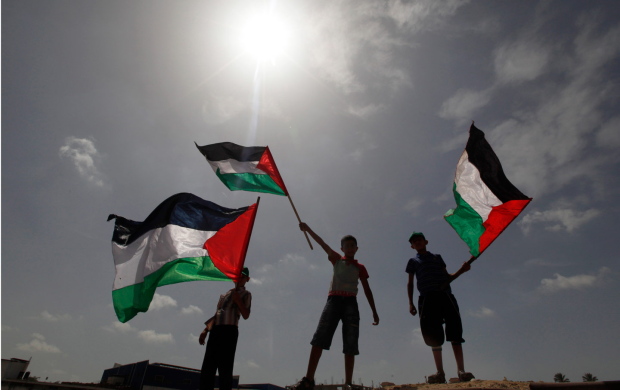
The 15th May in Palestine, and for Palestinians in the diaspora, is Nabka Day, the day following the unilateral declaration of independence by the State of Israel (on 14th May 1948) and the start of, now, 72 years of; persecution; murder; imprisonment; repression; theft of their land; denigration of their dignity; subjection to racist laws; ethnic cleansing; military occupation; and now, especially in Gaza, starvation.

The word ‘nabka’ can be translated as ‘disaster’, ‘catastrophe’ or ‘cataclysm’ – in the sense of 15 May all of them.

In fact, if you take all the sufferings of various peoples throughout the world, all the assaults that have been condemned by international bodies – principally the United Nations Organisation (UNO) – in those 72 years the cause of which, in the main, has been the attempts of the various imperialist powers to maintain or regain control in various parts of the world, and dump them on one nation, one group of people, then those people are the Palestinians.

This struggle between the imperialist powers didn’t start in 1948. In the modern era this issue was being played out before the fighting in the First World War was over and the guns on the Western Front went quiet. To keep the various Arab tribes on side in the war against the Ottoman Empire (an ally of Germany in the war and on the periphery initially but an important aspect of the main war nonetheless) promises were made but never kept.

Whilst to their faces the Arab forces were being told one thing behind their backs the British were making the promise of a Jewish State, with undefined borders, in the area which was known as Palestine and where the vast majority of the population were Arabs (90%). Although the British Government had been talking to Zionist representatives during much of the course of the war there was no consultation whatsoever with the Arab people’s who already lived in a thriving community on the land being given away.

In the same way the land that later became known as the United States of America wasn’t empty of people before the arrival of the European immigrants neither was the land of Palestine.

The Balfour Declaration

It might be worthwhile to briefly have a look at the wording of this short document, a mere 67 words but which has caused so much suffering and injustice to so many people for so many years.

His Majesty’s government view with favour the establishment in Palestine of a national home for the Jewish people, and will use their best endeavours to facilitate the achievement of this object, it being clearly understood that nothing shall be done which may prejudice the civil and religious rights of existing non-Jewish communities in Palestine, or the rights and political status enjoyed by Jews in any other country.

The main question to ask is; what right did the British have to assign someone’s land to another group of people – even if it was for the short term interests of the imperialist power – that is, Zionist/Jewish support and encouragement for United States involvement on the Western Front. Obviously the question is rhetorical – the British did because they could and as was their wont, the consequences of their decision on the local populace were not even considered.

For the Zionists then, and the State of Israel now, there’s nothing in the Declaration of any import after the second comma. They had achieved what they were after, the capitulation of a major imperialist power which various Zionist groups and organisations were able to play with in the years between 1917 and 1948.

Throughout the 1920s and 1930s (and into the 1940s) there were constant conflicts between the Jewish ‘settlers’ and the indigenous population – from the very beginning the settlers assuming they had all the rights. At times the morally weak British forces were in the middle but after 1945 they also became the target of Zionist terrorist attacks, especially those organised by the Irgun and the Stern Gang – both organisations providing future Prime Ministers to the State of Israel.

On 29th November 1947 the plan for the partition of Palestine was taken to a vote in the General Assembly of the United Nations (which had been formed two and a half years earlier with the UN Charter, which includes fine words such as peace, security and human rights) and passed by 33 votes to 13 (with 10 abstentions and one member absent). To give a flavour of the ‘new world order’ after the defeat of Fascism the people most effected by this partition, the Palestinians, weren’t even consulted – let alone invited to argue their case.

For reasons I have been unable to discover the Soviet Union both voted for the partition and two days after Israel declared independence recognised the new ‘state’.

Immediately following the vote in favour of the State of Israel the armed Zionist gangs began to make sure circumstances were the most favourable for themselves in the event of an uprising of the Palestinians that would certainly follow the proposed declaration on 14th May – this included a systematic recording of any military material the British would leave behind and identifying those points of conflict which would be most crucial in the coming battle.

This included the process of ‘ethnic cleansing’ even before the term was even coined. One notorious example was the expulsion and massacre of the inhabitants of the village of Deir Yassin, a small Palestinian village a few kilometres to the west of Jerusalem, on 9th April 1948. The Zionist terrorist organisation, Irgun, boasted they had killed, in cold blood, 256 villagers, and far from being ashamed of this broadcast the fact far and wide and in so doing helped create the climate of fear that resulted in a mass exodus of Palestinians from their homes and land.

By March 1949 more than 750,000 Palestinians, who had once had reasonably secure livelihoods were made refugees by the Jewish settlers and invaders. Most of those who were forced to leave never returned home as has been the fate of the 3 generations (to date) of their descendants.

Deir Yassin wasn’t the only village to suffer massacre and destruction in 1948-49 or later, as at the time of the so-called ‘Six Day War’, of 1967, the villages of Zeita, Beit Nuba and Yalu suffered a similar fate.

This activity of the Jewish terrorist groups is reminiscent of the activities of the Nazis during the Second World War. There are examples where activities of Partisan groups fighting the fascist invaders led to retaliations, massacres and the razing of villages such as Lidice, in Czechoslovakia; Oradour-sur-Glane in France; Borovë in Albania and the hundreds of villages the SS wiped out in the eastern Soviet Union when they invaded in 1942.

It also reminds us of the destruction of the villages of My Lai, in Vietnam, on 16th March 1968, by the Americans. Coincidentally the numbers massacred in Deir Yassin and My Lai are very similar, 250 dead, including 30-50 babies.

It could be said the Zionists were even worse than the Nazis (and the American imperialists in Vietnam) as the Germans and the Americans carried out their slaughter as retaliation and revenge, the Zionists did it because they could and enjoyed it.

If it talks like a Fascist, if it acts like a Fascist, if it kills like a Fascist – then it’s a Fascist.

But it has to be said the Zionists have played it well in the intervening years since the establishment of their illegal state. In 1967 they were able to convince many they were the victim in the war against the neighbouring Arab countries. By being a willing tool of American imperialism they have proven their worth by destabilising the region and being a force which benefits the major oil companies and their various state sponsors. Whereas the Apartheid state of South Africa (with which Israel was on friendly military and trading terms prior to 1992) became an international pariah Israel gets away with following exactly the same policies. They’ve also been able to use the rantings of Holocaust deniers to use anti-Semitism to their own advantage and now criticism of the State of Israel has been classified as an act of anti-Semitism – the only state in the world which has been able to equate race to statehood.

Events subsequent to the Nabka of 1948-49, have only gone to prove that what the Zionist State of Israel learnt from the Hitlerite Nazis is to kill and oppress anyone you see as an enemy, that racism is the way forward, that ethnic cleansing is progress, that war is peace.

It is a stain upon the reputation of the world’s working class, and especially the International Communist Movement, the situation the Palestinians live under was allowed to last 72 days let alone 72 years.

Marx once said the British working class would never achieve freedom if the Irish remained enslaved. The same can be said about the Palestinians.

More on Palestine

More on the ‘Revolutionary Year’