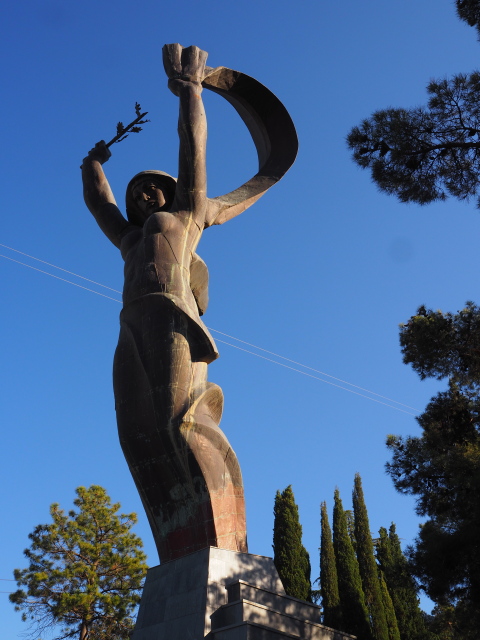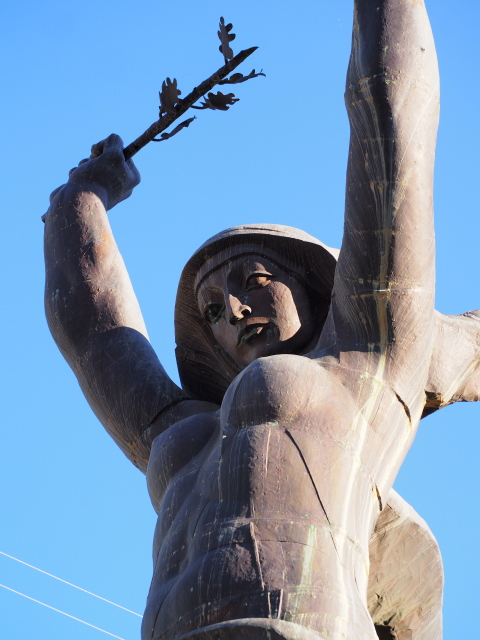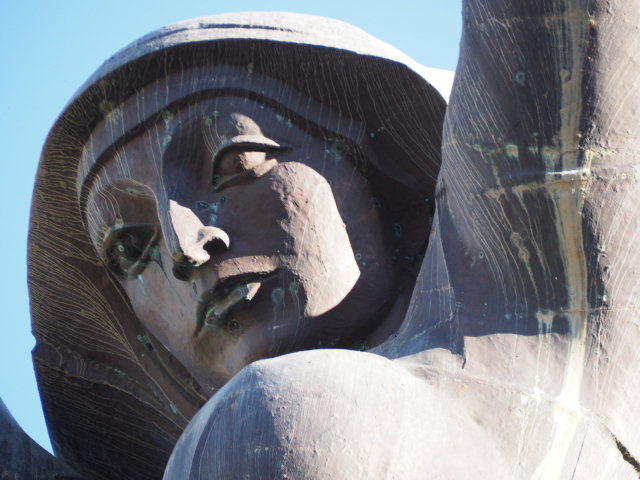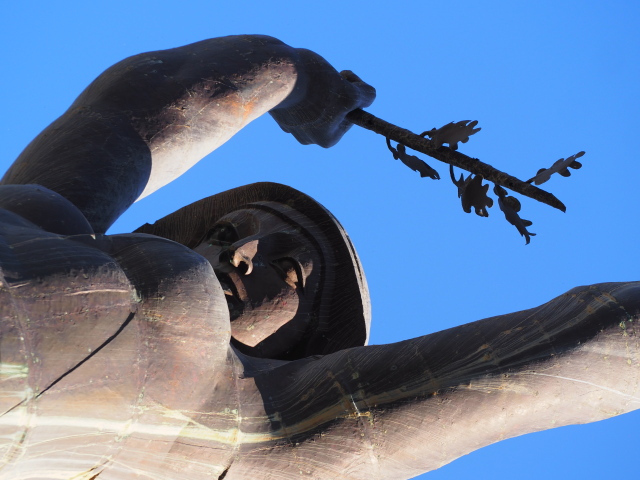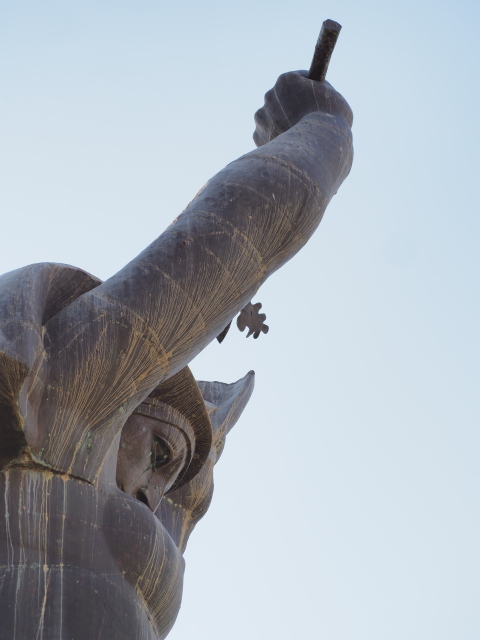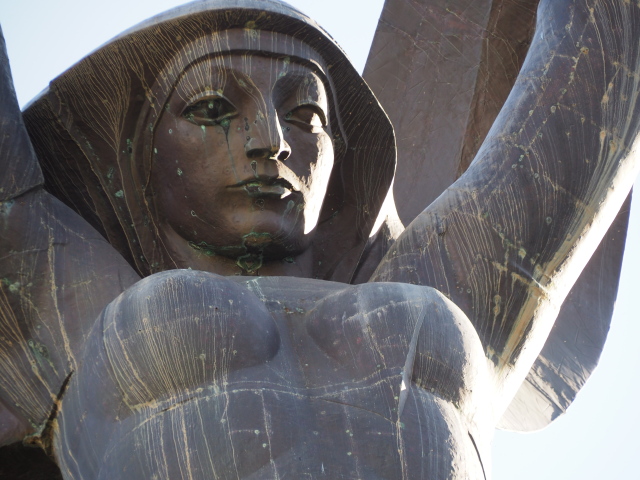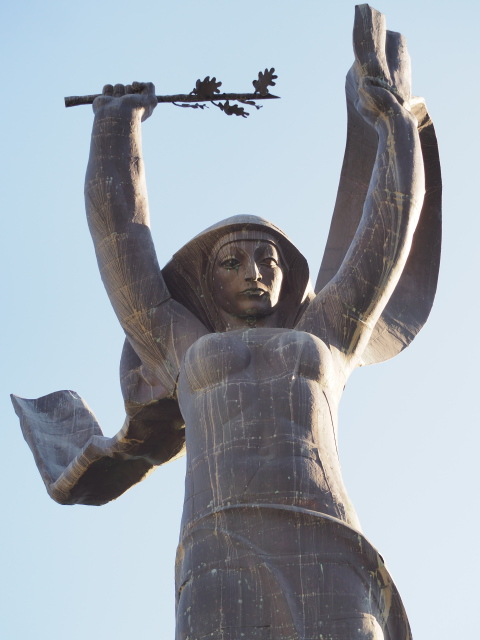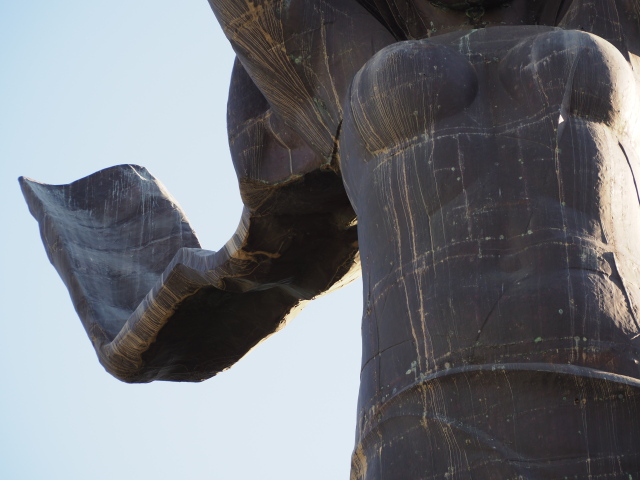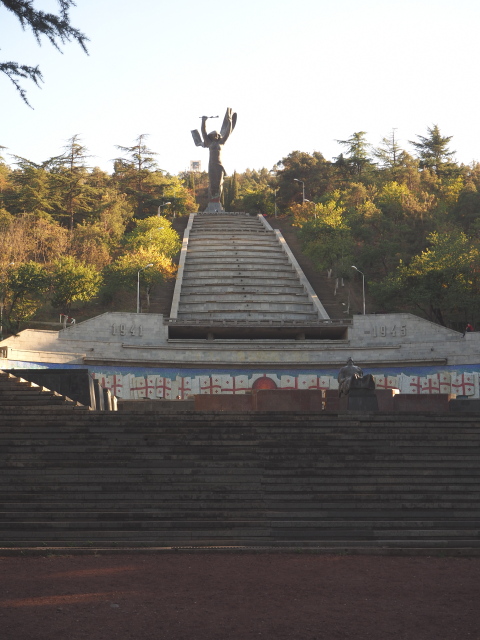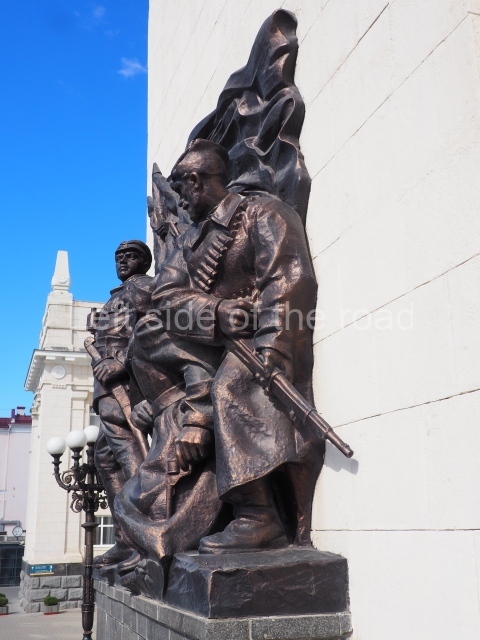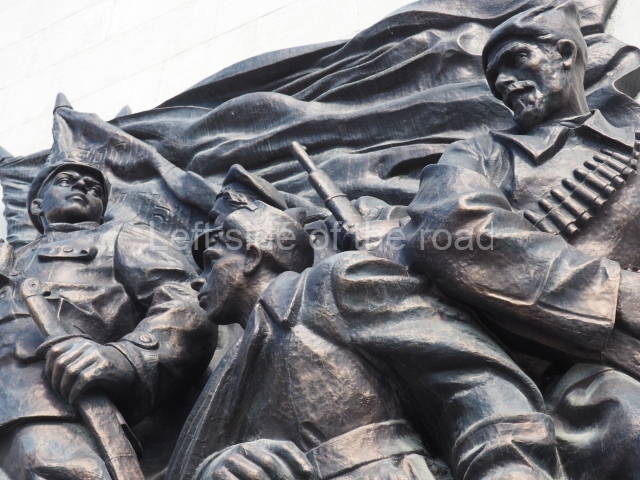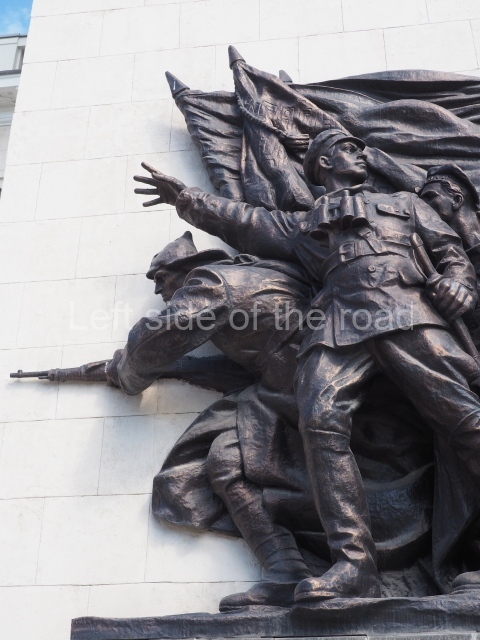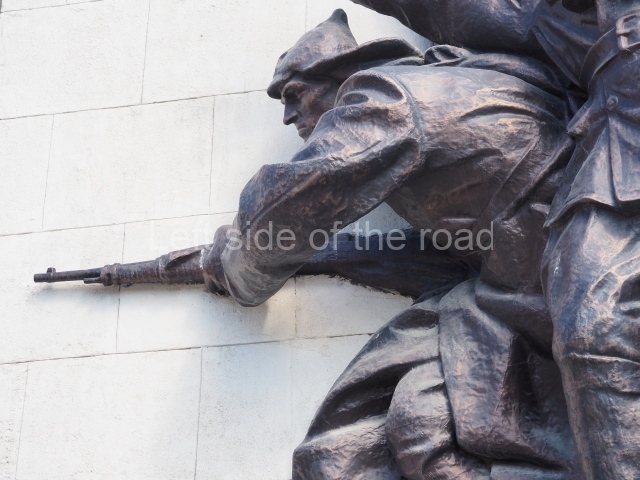

Victory Memorial – Chișinău – May 9th, 1980
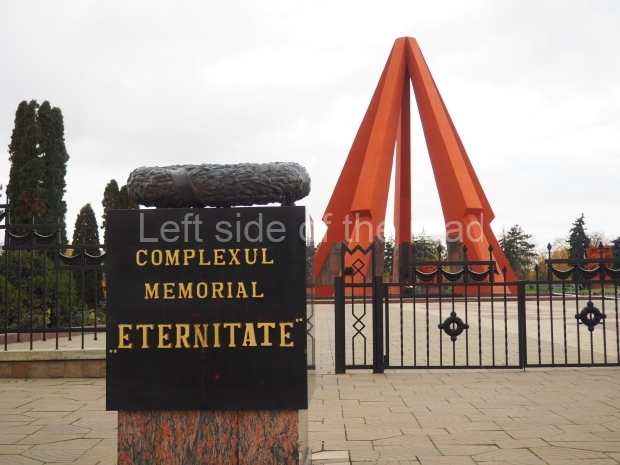
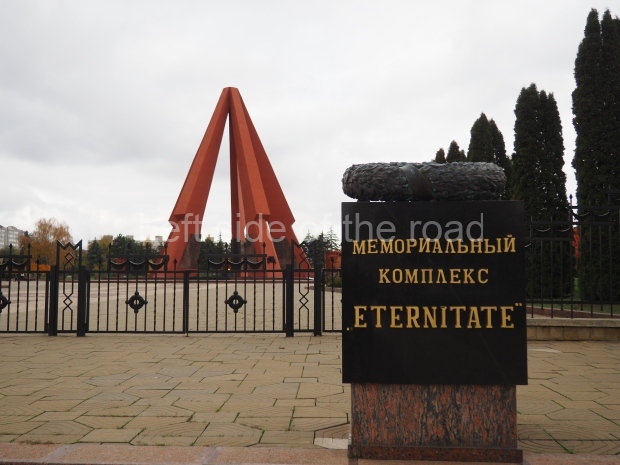
Eternity Memorial Complex – Chișinău – Moldova
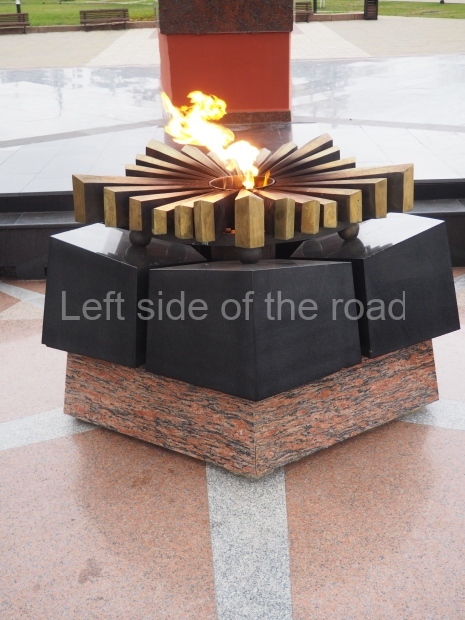
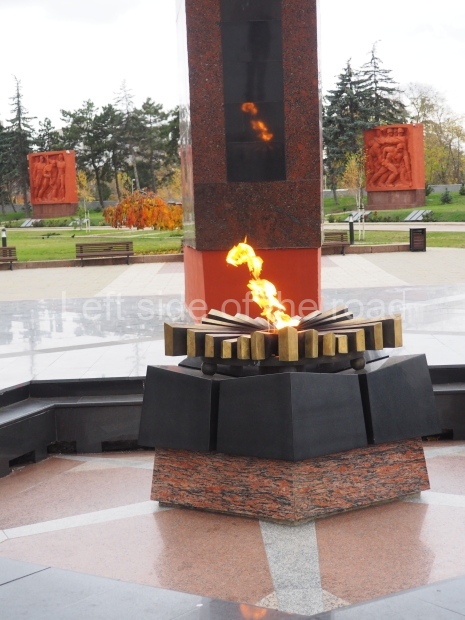
The memorial park to the fallen of the Great Patriotic War in Chișinău is quite a large complex compared to many of the ones I’ve visited in the other post-Soviet Republics. In Moldova such monuments are now called ‘Eternity Memorials’. One aspect of this memorial (which is repeated in other Moldovan towns) is that the Eternal Flame is still burning. Sadly the flame has been extinguished in many places, for example, in Bishtek (Kyrgyzstan) and Tbilisi (Georgia). So at least in this small country there’s still that element of respect to those who had fallen in the anti-Fascist war.
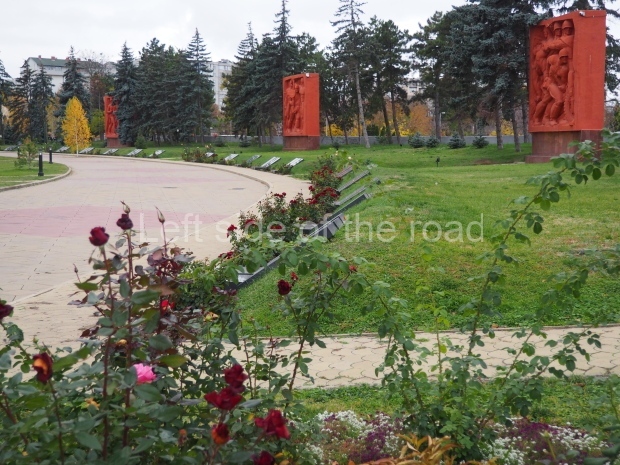
Though it’s quite a large complex I don’t consider it very attractive – and that’s principally down to the colour of the principal structure and the six large stelae on the edge of the site that separate the memorial complex from the city’s main public cemetery.

Eternity Memorial Complex – Chișinău
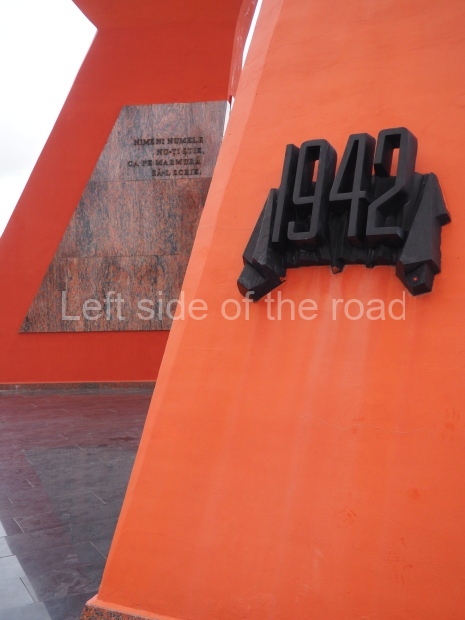
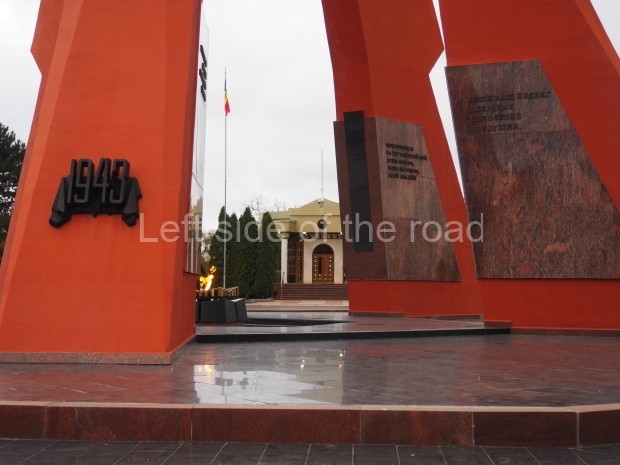
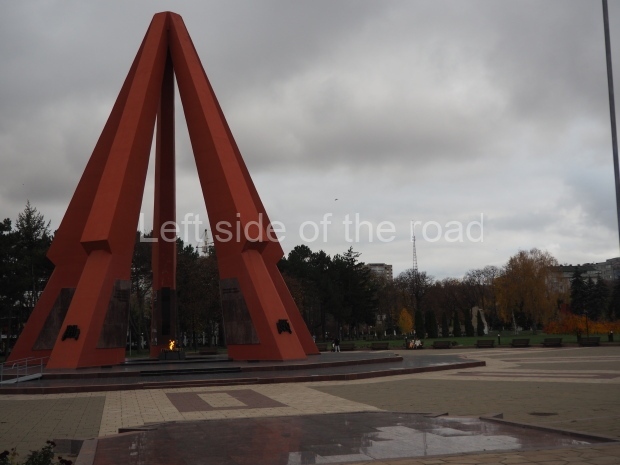
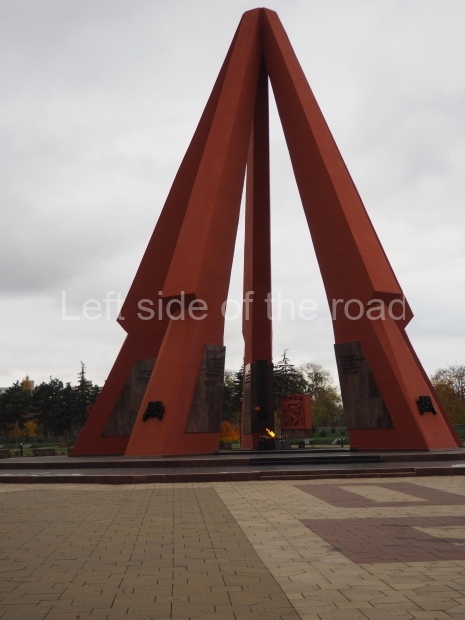
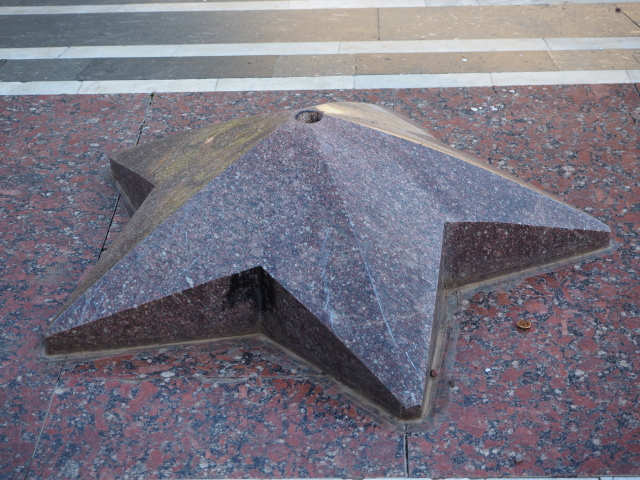
The principal structure is in the form of a large, open pyramid formed by five, 25 metre high stylised stone rifles. The numbers 1941, 1942, 1943, 1944 and 1945 are displayed on each of the struts indicating the years from the time that the Soviet Union was invaded until the year that the Red Army entered Berlin. In the centre is a five pointed star which houses the Eternal Flame.
The problem of this monument, for me, is its garish orange colour. That wasn’t always the case as, originally, both the pyramid and the stelae were the colour of the natural stone when the monument was constructed in time for the thirtieth anniversary of the end of the Great Patriotic War on 9th May 1975 (when it was known as the Victory Memorial). The structure went through a renovation in time for August 24, 2006, which marked the 62nd anniversary of the Second Jassy–Kishinev Offensive (an important victory of the Soviet Red Army over the Fascist forces – both German and Romanian – in eastern Romania). It’s almost certain it was during this renovation that the decision was taken to paint the the major structures this stand-out orange colour – an insult (assault) camouflaged as taking care of an important part of Moldova’s heritage.

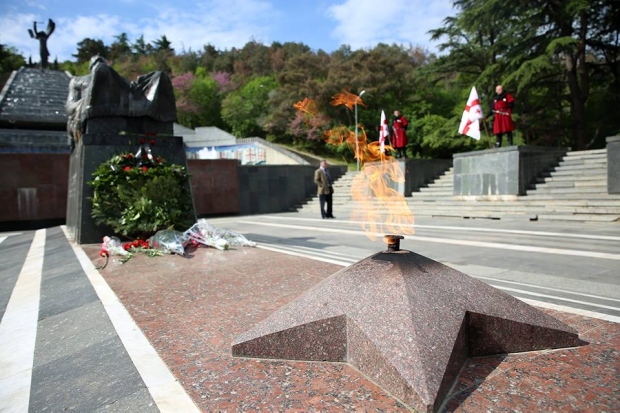
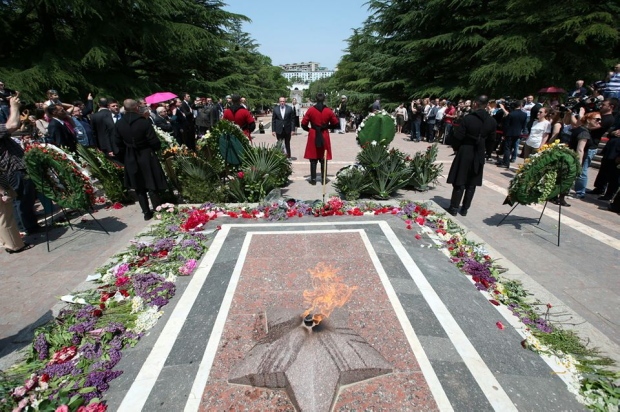
Eternal Flame
I have read that the pyramid and the Eternal Flame used to have a permanent honour guard (changing every hour on the hour) but that was not the case when I visited in 2025. It’s more than likely that now the honour guard is only in place during the days surrounding the May 9th Victory Day – which is still celebrated (and is a public holiday) in Moldova. This was the situation in May 2025 in Stalingrad in Russia.
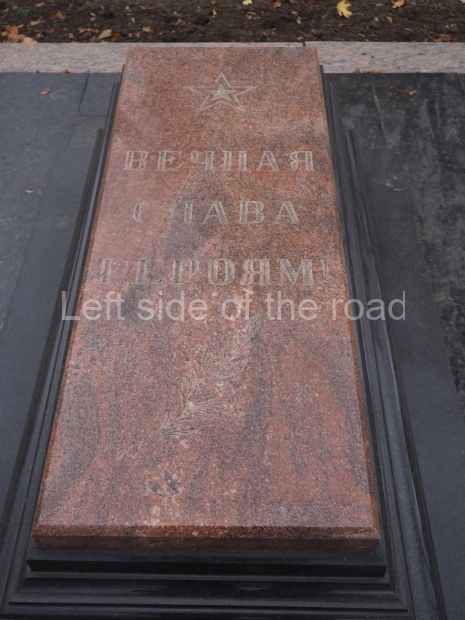
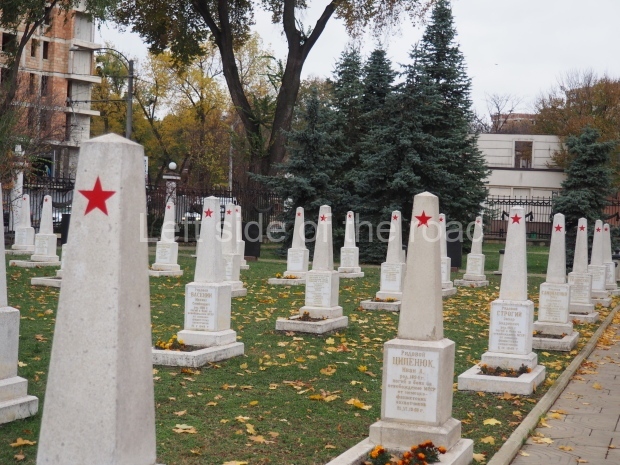
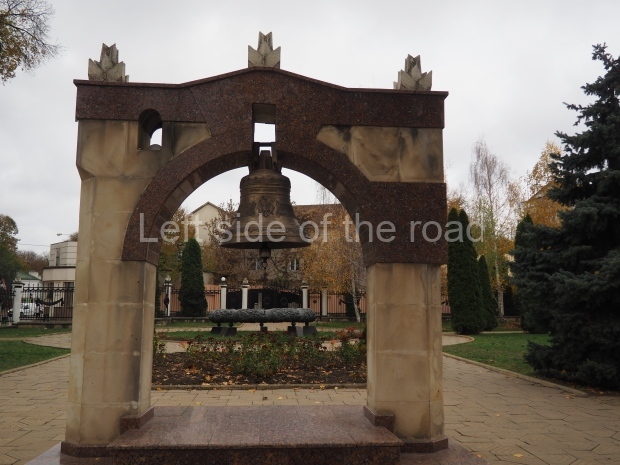
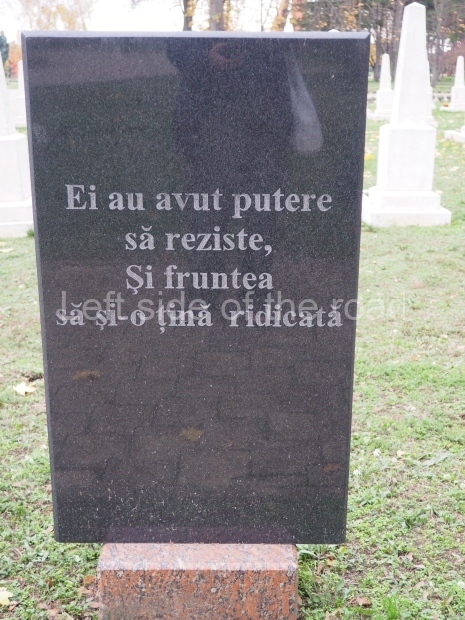
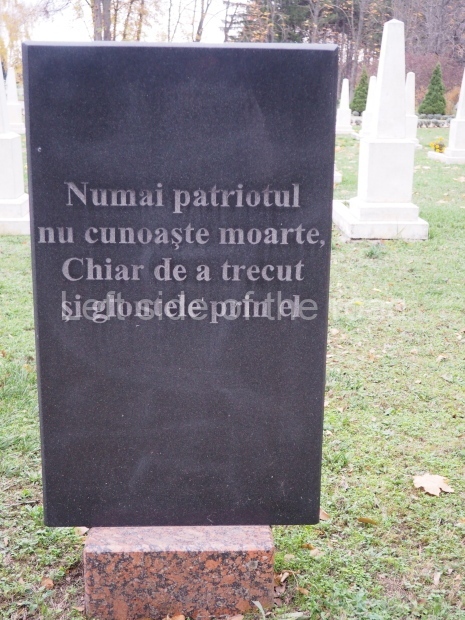
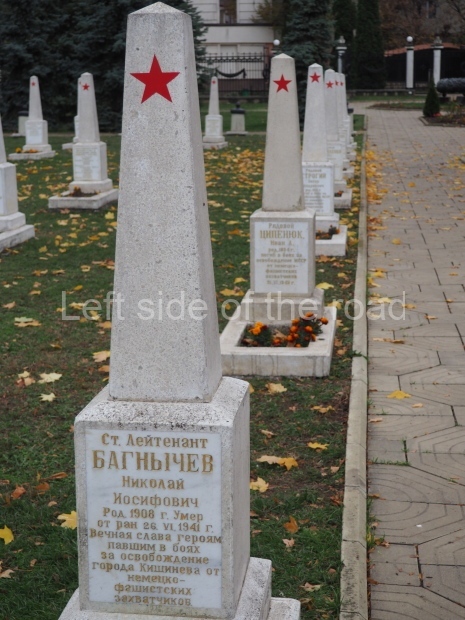
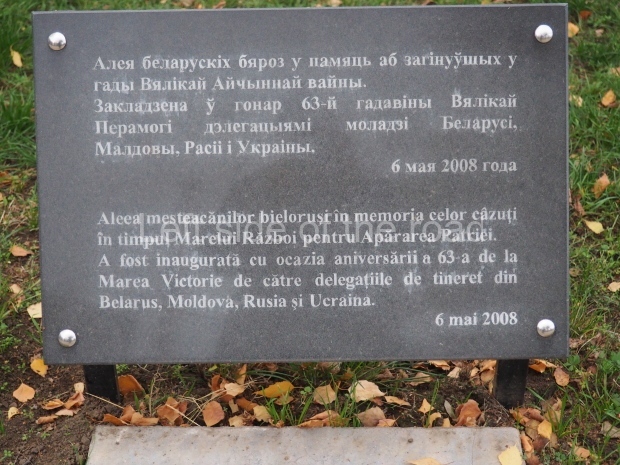
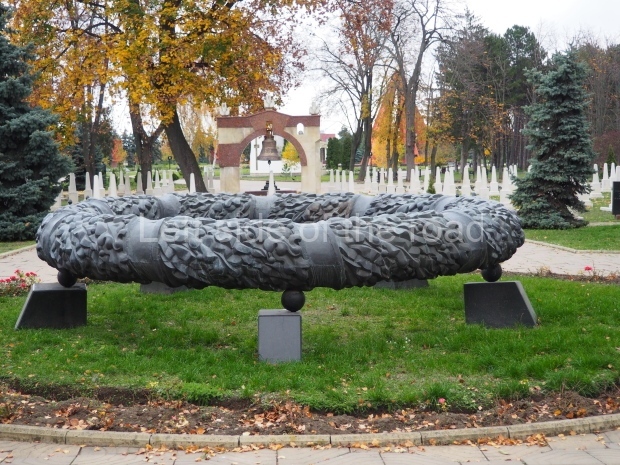
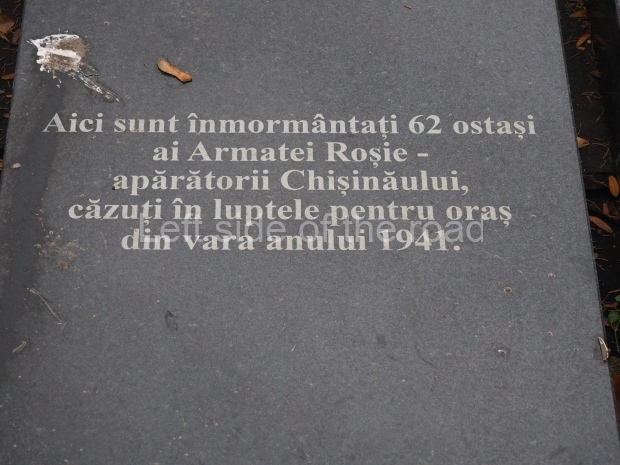
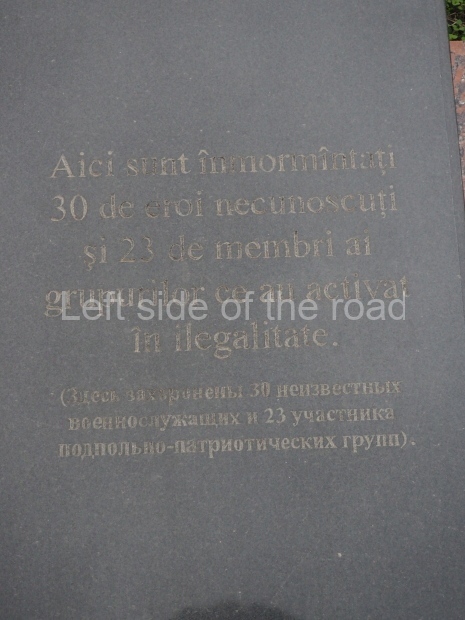
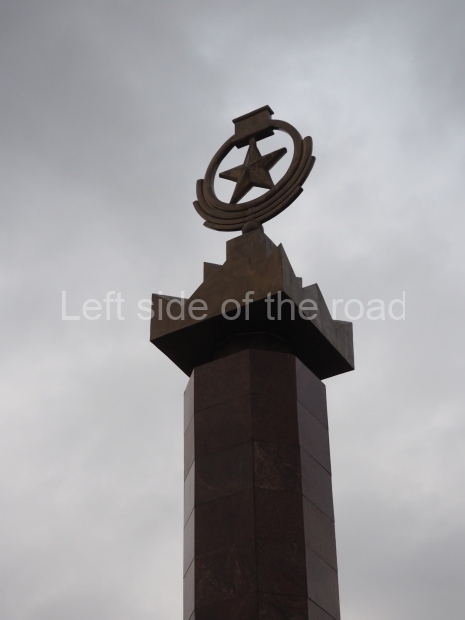
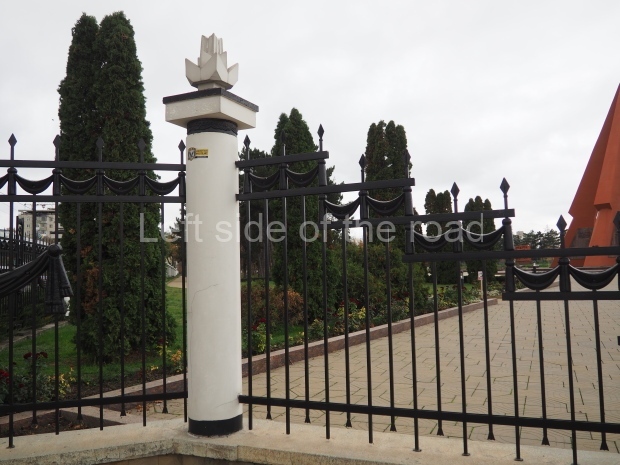
At the western edge of the complex is known as the ‘Heroes Cemetery’ where there are a number of memorials, as well as individual graves, to Red Army soldiers who died in Chișinău, either during battles within Chișinău itself in 1941 or in nearby battles towards the end of the conflict in Moldova, in August 1944, when the Nazi forces were being forced back towards their liar in Berlin. In this part of the complex as well as white pillars with the names of individual soldiers there’s a symbolic belfry and a massive bronze laurel crown which is inscribed with the words ‘We didn’t forget you’. This slogan is reflected on the more modern, major monument where can be read the words ‘No one is forgotten, nothing is forgotten’. Unfortunately, that is not the case for many in the post-Socialist Republics.
This would seem to indicate that there was a relatively small memorial to those who died in the Great Patriotic War constructed soon after 1945 but it wasn’t until 30 years later that the larger and more substantial monument we see today was constructed.

Red Army Cemetery
As I type this I’m trying to work out why the Revisionists (and traitors to the October Revolution and the Party, as well as the sacrifice of all those who died in the Great Patriotic War to defend Socialism) who were in control of the Communist Party of the Soviet Union in 1975 decided to sanction the building of such a major monument in Moldova and the other of the Soviet Republics at, more or less, the same time. All I can come up with is that as they were increasingly flailing having betrayed the cause of Revolutionary Socialism and so they celebrated the past in order to hide their ineptitude in the present.
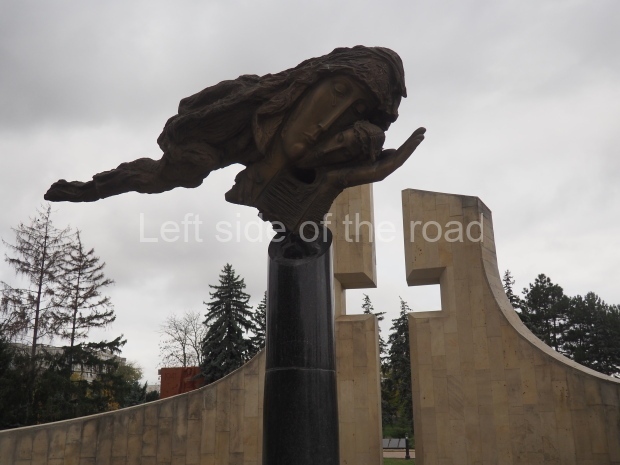
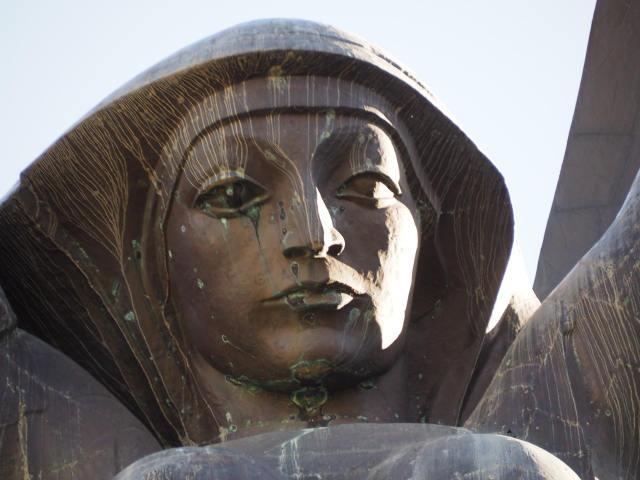
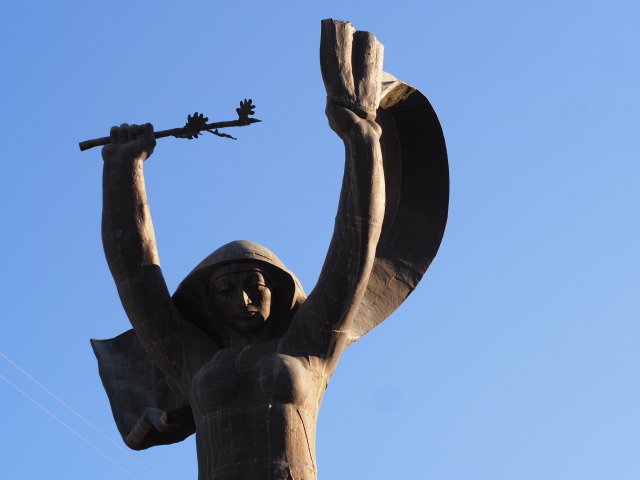
Another monument, one that is much more recent than those related to the Great Patriotic War, is ‘Grieving Mother’, which is dedicated to the ‘War of Independence of Moldova’ from 1991-1992 which resulted in the establishment of the province of Pridnestrovie (called Transnistria by those in the west that challenge its right to exist) refusing – to this day – to be considered part of the Moldova which wants to integrate/ingratiate itself with the European Union.
There is supposed to be a black cross which was erected on the site of the graves of fallen German soldiers buried here. However, I missed that (if, indeed, it does exist). It seems to be very strange to have such a fascist monument in exactly the same location as the country’s principal monument to the Soviet fallen in the Great Patriotic War. I’ve come across a monument to the German dead in Tirana, Albania – but at least that’s in a different park to the location of the National Martyrs Cemetery. There’s something off about having a memorial to Fascist dead in the country let alone in a complex commemorating the country’s martyrs to fascism.
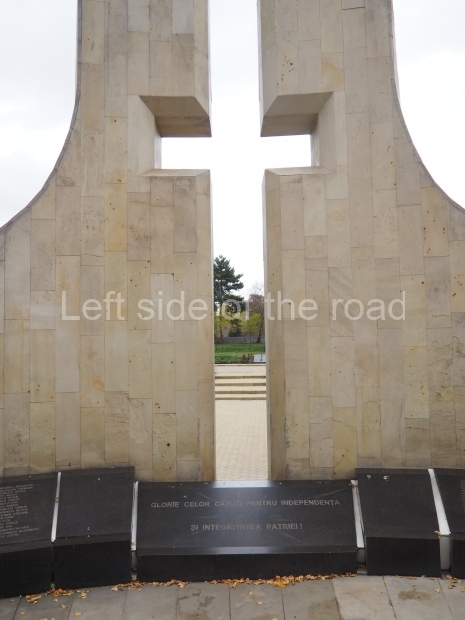
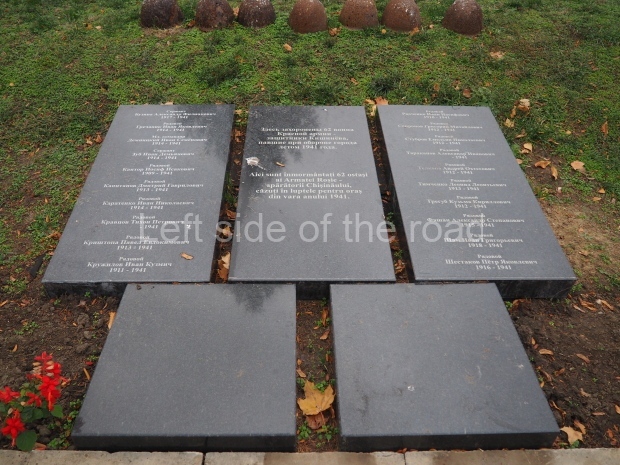
Along the walkways there are a total of 155 marble slabs with the names of those who died in the battle against Nazism.
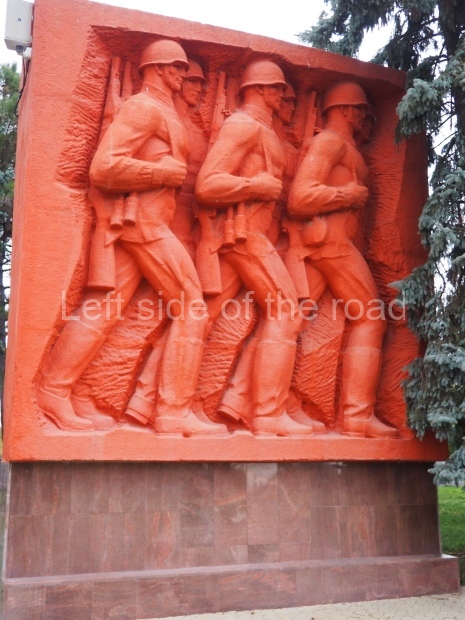
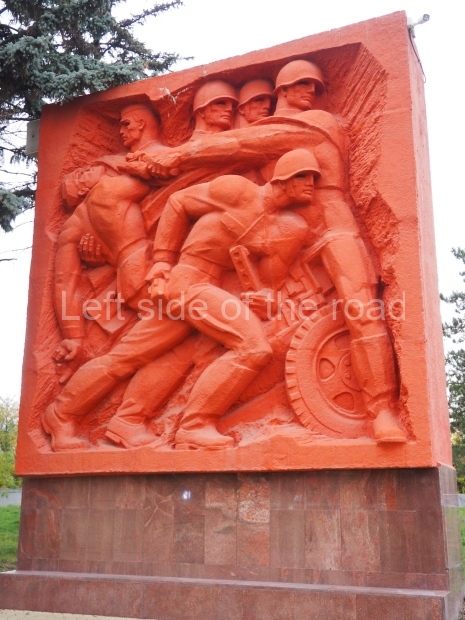
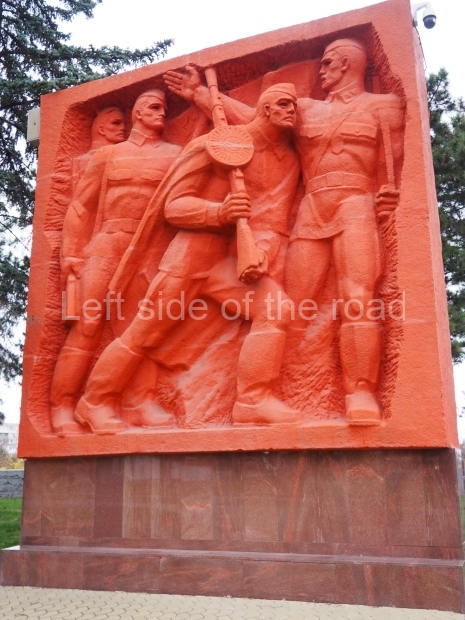
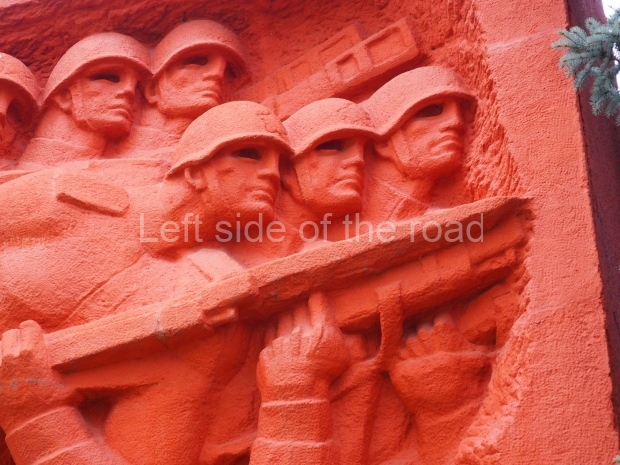
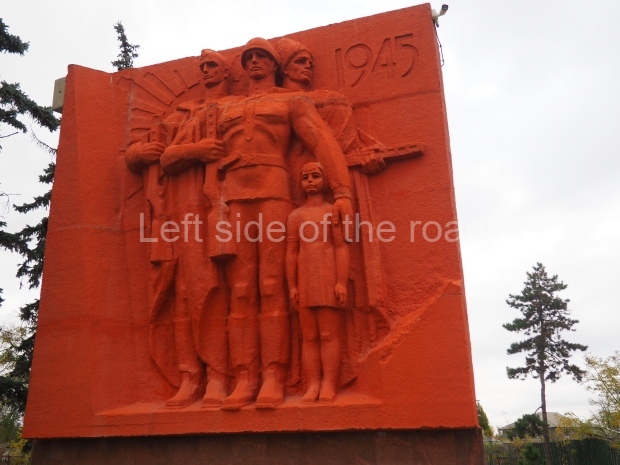
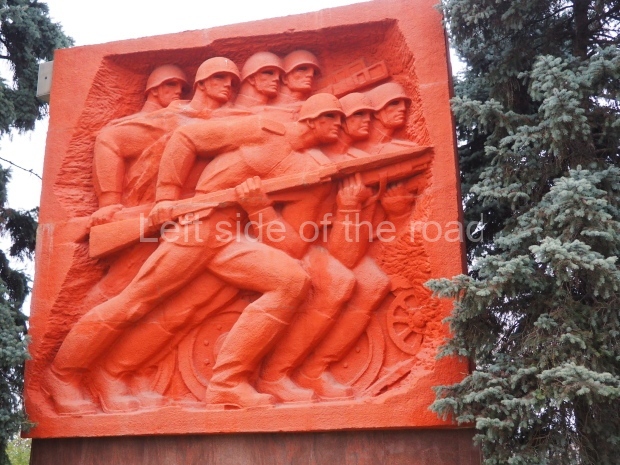
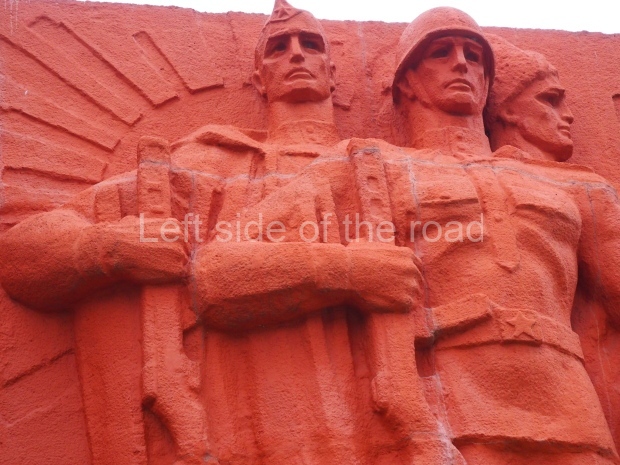
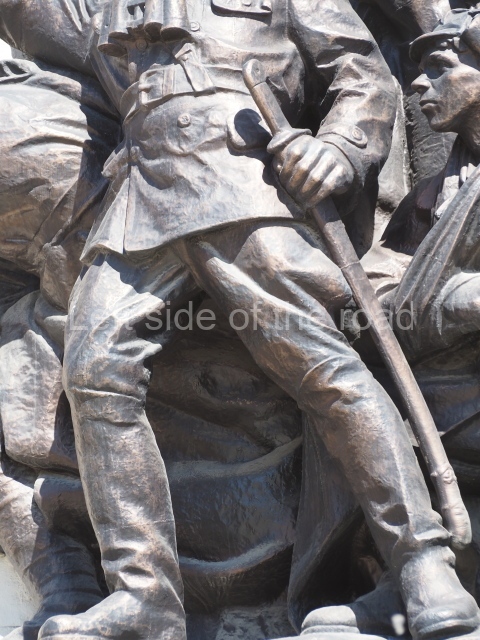
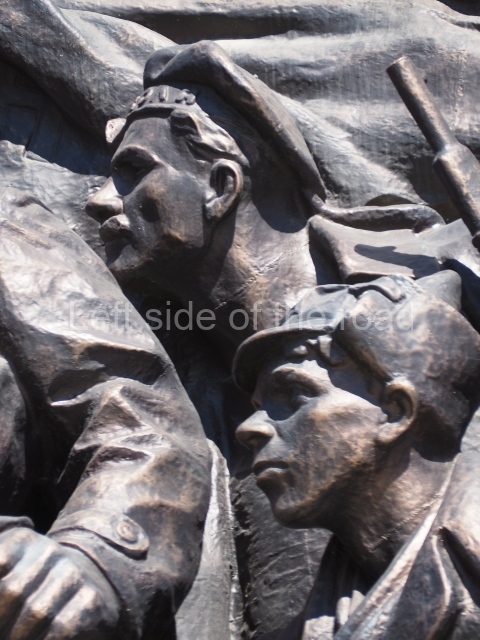
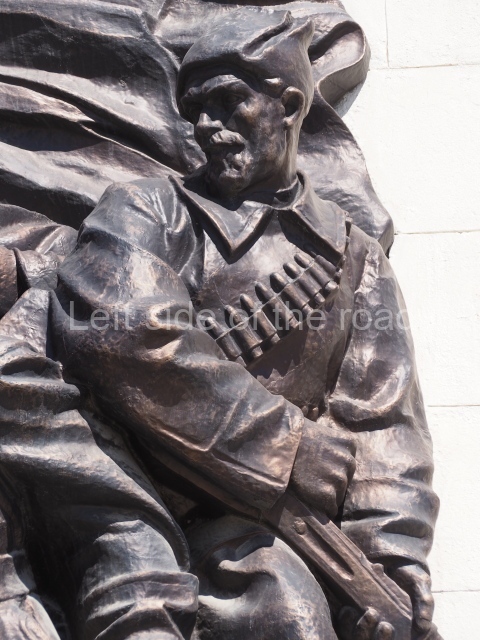
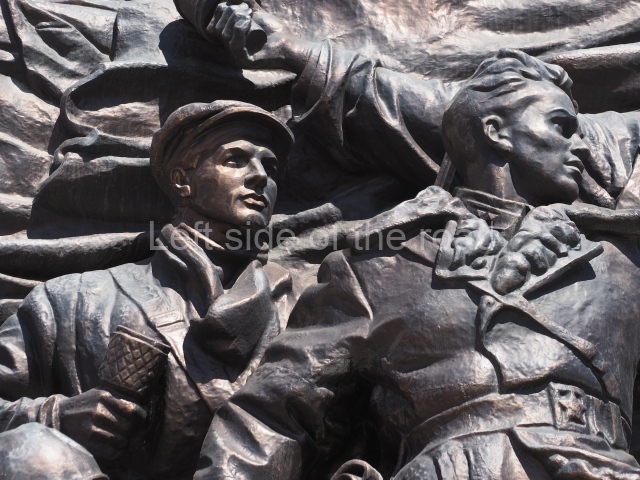
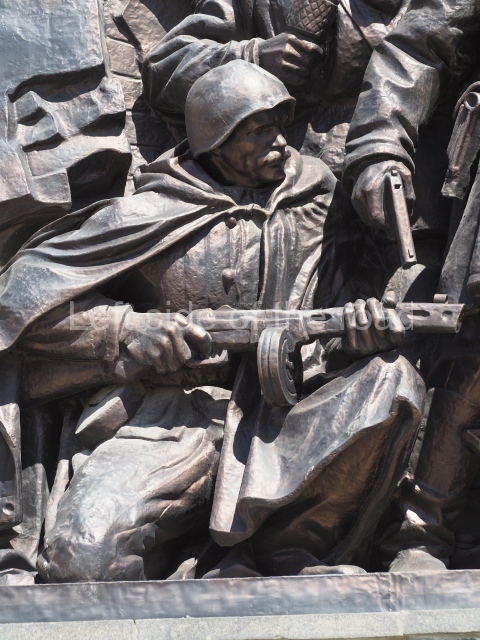
As stated above there are six, very large, square stelae (also now painted the same bright orange as the monument containing the Eternal Flame) which contain images of soldiers but at the same time none of them reference the enemy against which they were fighting – that is, German Nazism. Without knowing the context they could be fighting in any 20th century war.

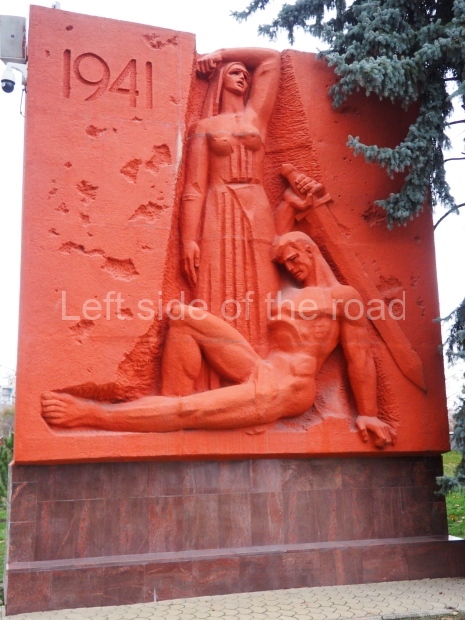
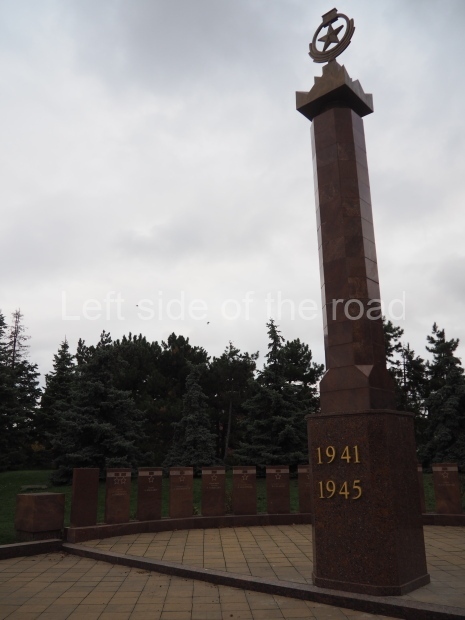
Stela 1941
The first, the one on the left as you look towards the main cemetery with the road at your back, makes an allegorical reference to the war. Here we have a young, almost naked muscular male sitting on the ground (not obviously injured in any way) with his right arm raised, above his head and slightly behind his back. In his hand he holds a huge sword with its point reaching to the edge of the stela. This might mean a willingness and preparedness to fight to defend the cause of Socialism and the lives of his family, friends and comrades. Not really sure I understand why he’s on the ground.
Behind him, is a female standing with her left arm raised with the forearm resting on her head. This would seem to indicate mourning and sadness but also a realisation that the possible sacrifice of the male (as there is no certainty that those going off to war will return) is necessary for the common good. The expression on her face also indicates grief.
In the left-hand top corner of this stela is the number 1941 – the year of the Nazi invasion of the Soviet Union.
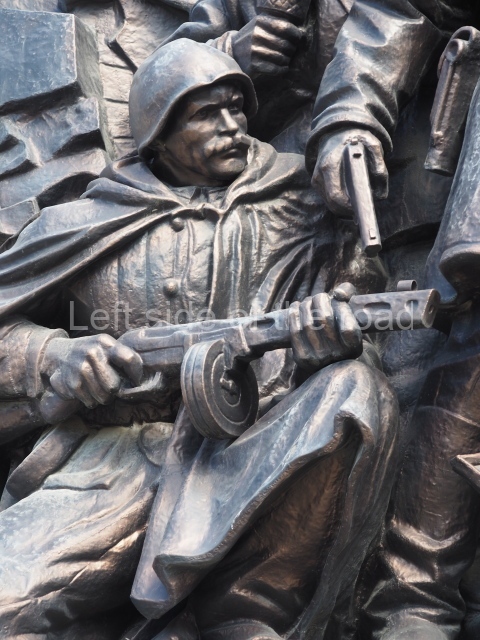
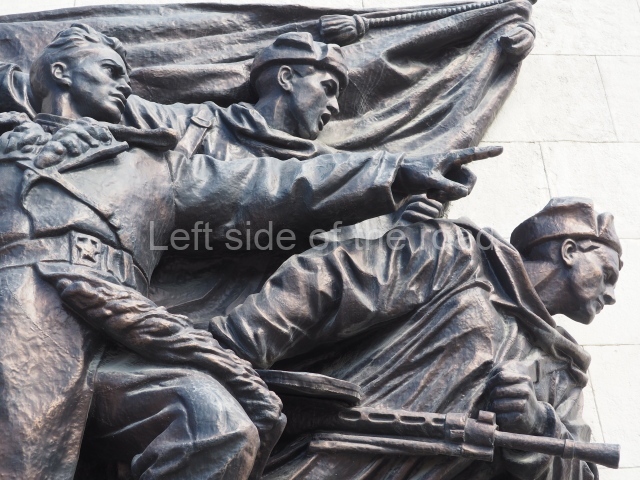
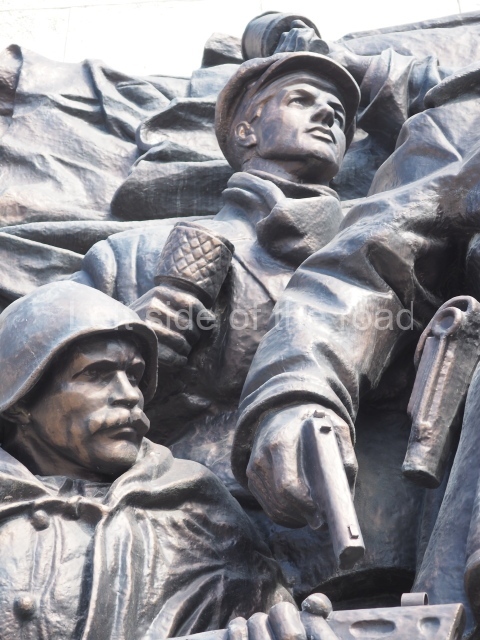
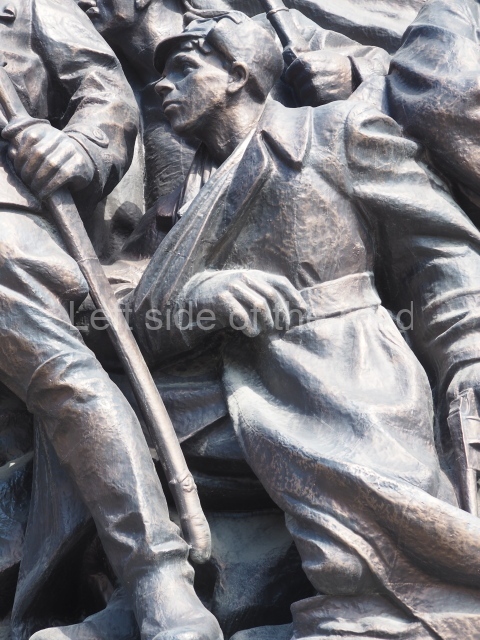
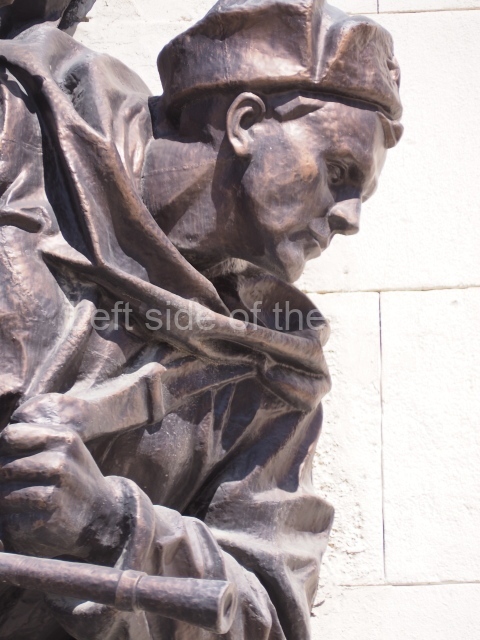
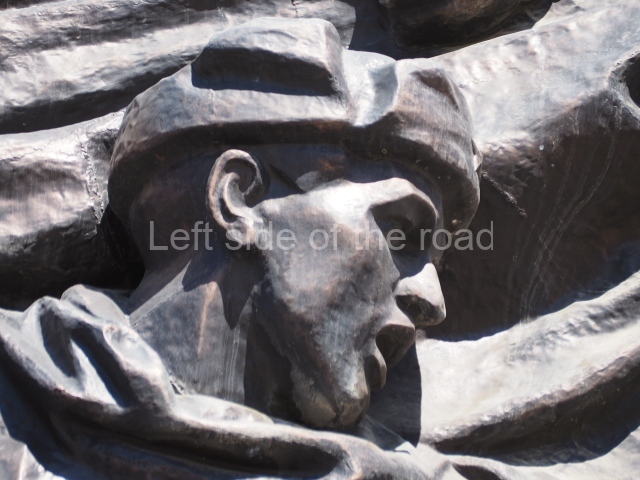
The next four stelae have images of ranks of armed Soviet soldiers, in all of them marching forward – even though some of their comrades are injured – and urging those behind to join the fight. They are showing determination to throw out the invader although, in the actual war, there were some serious setbacks. But after the victory of the Red Army in Stalingrad the outcome of the war was certain. It was no longer a question of if, it was a question of when.
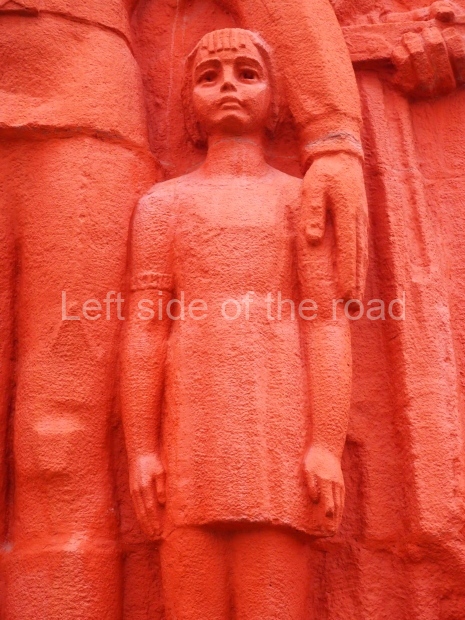
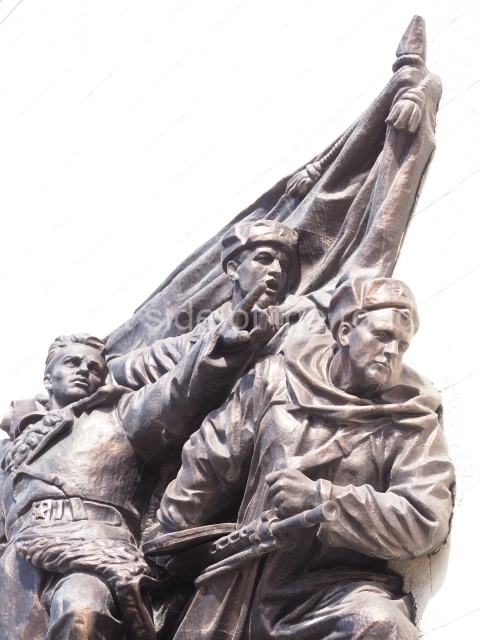
The final one, with the year 1945 in the top, right-hand corner, celebrates the victory. Here we have the image of three soldiers, almost standing to attention – their weapons no longer pointing towards the enemy. Their uniforms and headwear demonstrating the different units involved and the fur hat of the soldier on the right emphasising that this was a war of all the people’s of the Soviet Republics. The idea of peace is shown by the fact that there’s a young girl standing by the central soldier – who has his left hand resting on her shoulder. It is now safe for her carry on her life as normal, for her and all the children in the Soviet Union.
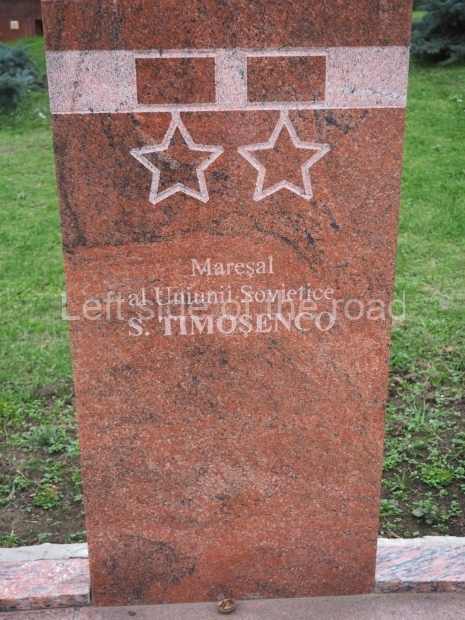
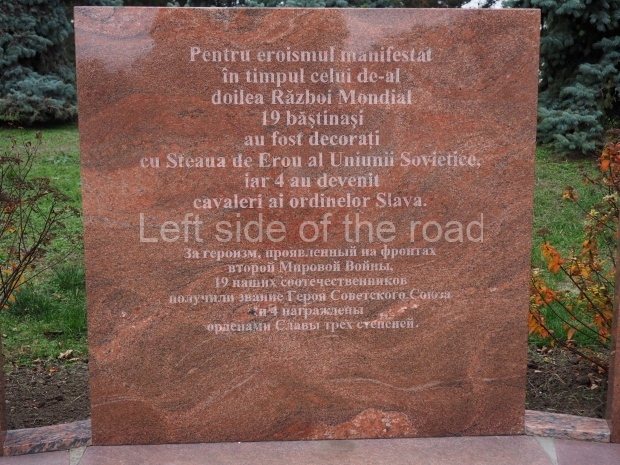
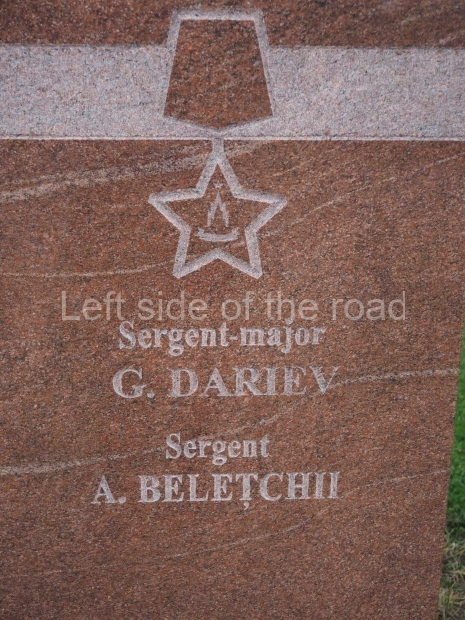
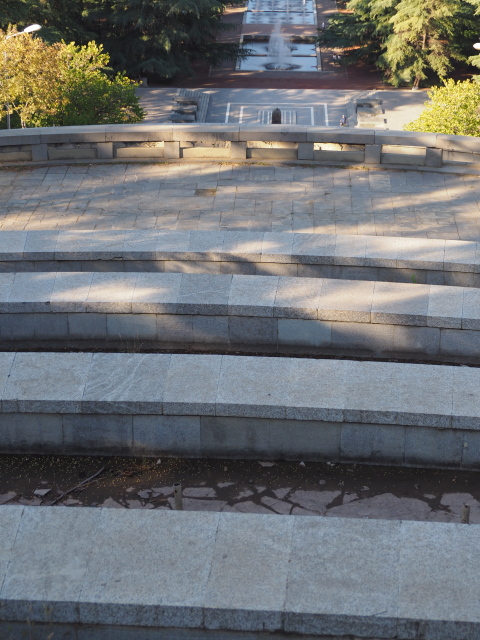
Near to the gated entrance to the complex there’s an alcove reached by a couple of steps which contains a semi-circle of marble stelae inscribed with the names of Heroes of the Soviet Union – one of them celebrating the achievements of Semyon Timoshenko. I’m not really sure why his name is included on the honour roll here. He was born in the Odesa Oblast in the Ukraine (which is close but still a separate Republic of the Soviet Union) and I’ve seen no reference to him being involved in any of the fronts that were established in Chișinău/Moldova.
Also to be found in this memorial complex to the dead of the Red Army is a Christian chapel. This is now common in such monuments throughout the post-Socialist world. This follows a ‘tradition’ established by the Roman Catholic church from the 15th/16th centuries were Christian churches were placed on top of religious sites of the indigenous American peoples in (now) Central and Southern America. Placing the European religious buildings in such locations was tantamount to thrusting a dagger into the heart of the defeated peoples’ beliefs. This was the so-called ‘extirpation of idolatry’. The same has happened in Europe. Capitalism and its obscurantist appendages are declaring their ‘victory’ over Communism. But such a ‘victory’ is only temporary.
All in all quite a cluttered site with many (often conflicting) messages. But interesting nonetheless.
Sculptors;
A. Maiko and I. Poniatowski
Architect;
A. Minaev.
Location;
9th May 1945 Memorial, Cemetery of the Heroes of the Great Patriotic War, Pantelimon Halippa Street 5,
GPS;
47.00906 N
28.83218 E