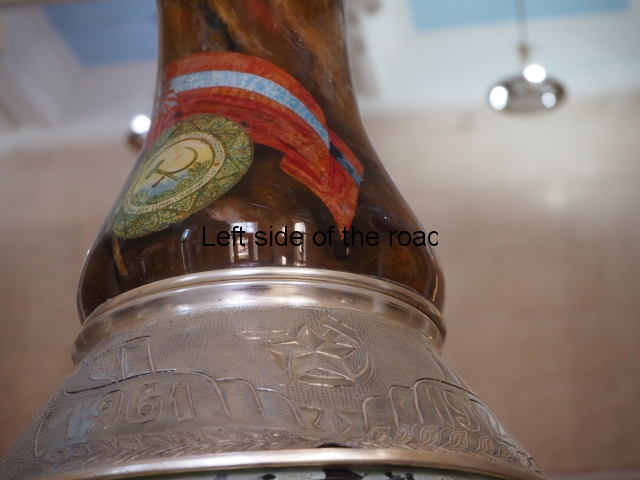
Joseph Stalin’s private bath house, Tskaltubo

Spring No. 6

Spring No. 6

More on the Republic of Georgia

Joseph Stalin’s private bath house, Tskaltubo

Joseph Stalin, the General Secretary of Central Committee of the Communist Party of the Soviet Union, used to return to his home state of Georgia (in the Caucasus) to enjoy the benefits of the spa waters of the town of Tskaltubo – which was also a popular health resort for hundreds of thousands of Soviet workers and peasants – but if he was making this very long journey then surely he was returning to a site where he could enjoy the benefits on offer in the height of luxury, no?

Stalin wasn’t keen on air travel (from what I’ve been able to learn he only ever flew on two occasions, to the Tehran Conference and back in November/December 1943) and usually travelled by train – probably in a carriage similar to the one that is currently sitting outside the Stalin Museum in Gori. To make that journey to the spa town of Tskaltubo in western Georgia, therefore, was quite an investment in time and effort. Even today the journey takes at least two days and nights so there must have been something special awaiting him in Spring No 6 – the finest of all the spa buildings in the resort.

Spring No 6 is one of the few that are functioning in the town now. (Springs No 1 and No 3 are also functioning as of 2019 but they are much more modest structures.) However, the renovation of Spring No 6 has destroyed much of the original decoration from the time of its construction – apart from the main entrance portico and the entrance hall. In fact although very smart and clean the facilities that present day visitors use are somewhat sterile and lack any of the decoration I’ve seen in some of the ruined structures that are in and around Tskaltubo’s Central Park.

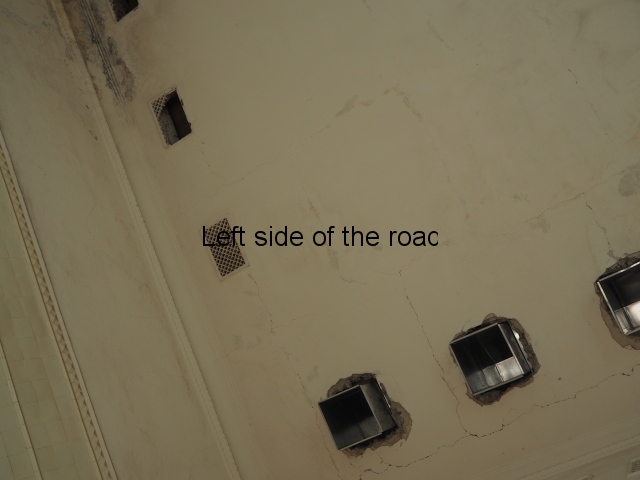
One area that has not undergone total renovation (there has been a replacement of the exterior windows as part of the general clean up of the building and also some work has begin on the ventilation system) is the room that I was directed to when I asked ‘Which was Stalin’s private bathhouse?’

I was directed to a woman who was sitting at a desk at the far end of the long, ground floor corridor that goes off to the right of the main entrance hall, running parallel to the frontage of the building. She had been asked to direct me to this special location.

It was with a feeling of suppressed excitement as I walked down the corridor. What was I going to see? What little hidden gem seen by relatively few people from western Europe (and many more from the east) was about to reveal itself to me? Surely the leader of the USSR, the country that had defeated the fascist Hitlerite beast only a few years before would be revelling in glory and have a private bathhouse rivalling those of the Roman Emperors?

Stalin was a megalomaniac and monster (according to the fascists he defeated, the capitalists and imperialist whose rule and control of the life of billions of people he constantly challenged, and those trotskyites, revisionist and social democrats whose lying and duplicity he spent much of his life uncovering and crushing with the necessary force) so what I was about to enter would be a grand arena, decorated in a manner paying homage to the Generalissimo.

According to the fascists, imperialists, revisionists and other anti-Communists Stalin would have surrounded himself with memories of his past actions – such as the destruction of the traitors, splitters, wreckers, renegades and fifth-columnists in the Soviet Union, the the late 1930s, before the imminent war against Hitlerite Germany.

Surely in the tiles on the floors and the walls there would be the severed heads of those internal enemies; Trotsky, Bukharin, Zinoviev and other Party members who sought to undermine the iron unity of the Marxist-Leninist Party and colluded with the enemies of the Soviet people; Tukhachevsky who saw the Red Army as just another, more modern, army of Tsarism; the kulaks who sabotaged production in the countryisde and did everything they could to prevent the transformation of the agricutural economy through collectivisation; and the external enemies, especially the Hitlerite fascists.

And I was really interested in what sort of desk would be located in the bath house. Every picture (photo or painting) I’ve ever seen of Joe sitting and writing at a desk has had the caption ‘Stalin signs yet another death warrant.’ This was even when closer analysis of the actual document said ‘Dear Mr Milkman, no milk today’. I have never seen a semi-naked Joe doing this but if he spent so much time in such activities then he wouldn’t have wanted to have wasted time when he was up to his chest in warm spa water. So a desk which could have held stacks of pre-printed death warrants, a bunch of pens and gallons of ink would have to have been part of the architects remit.

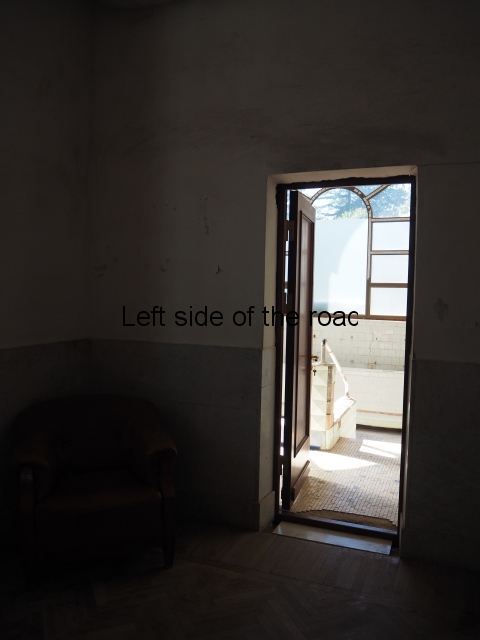
My heart started to beat faster as I approached the woman sitting at her table at the end of the corridor. She didn’t speak but indicated a door way just behind her, on her left. I walked the handful of metres to the door and realised it was an ante-room.

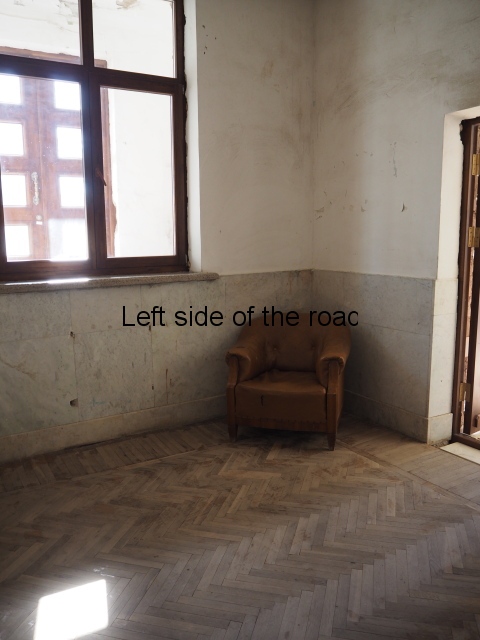
But what an ante-room. If was about twice the size of my bathroom – and I live in a modest flat. How could this room cope with the large entourage that would have accompanied Comrade Stalin on his journeys. There was a window to the outside, in one corner was a single leather covered armchair but apart from that the room was devoid of any decoration – but with a parquet floor in a fairly reasonably condition.

Entrance to Stalin's private bath house

Entrance to Stalin’s private bath house

To the right another door led to a room with tiling on the walls and the floors. I took two steps to the door and had my first view of Comrade Stalin’s private bathhouse.

My first reaction was shock and surprise. I uttered a few words, I think audibly.

‘They’re taking the piss.’

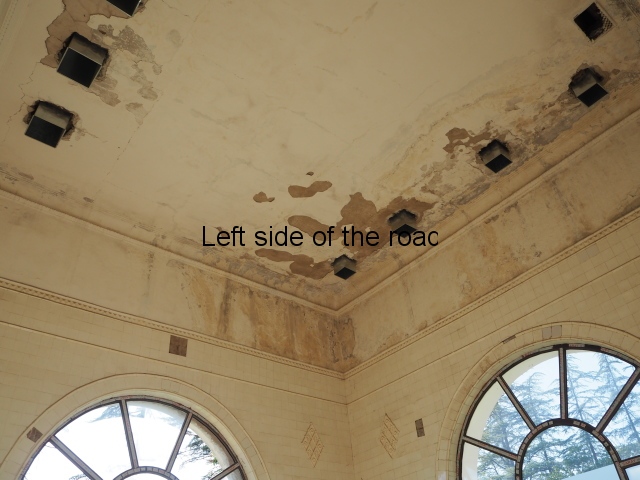
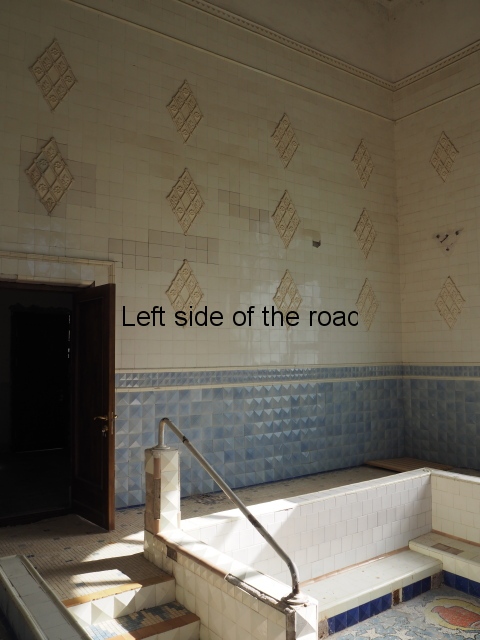
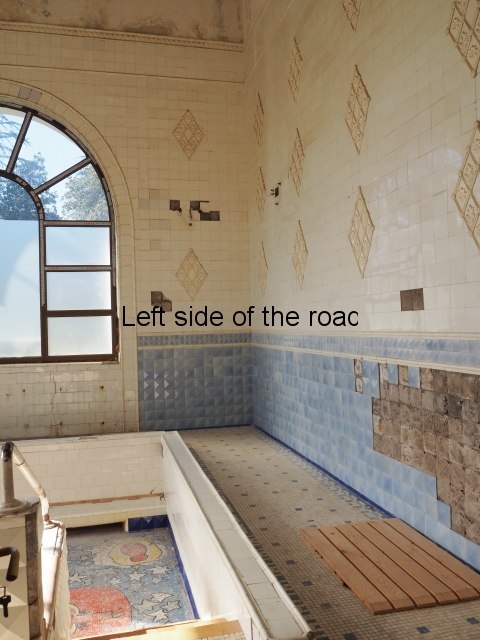
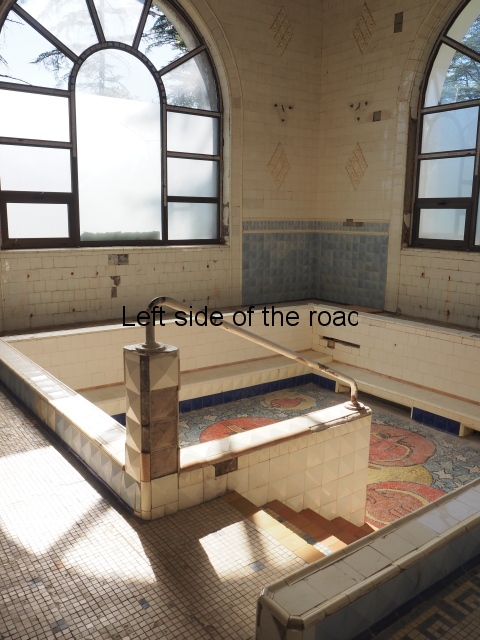
In front of me was a tiny space – considering the size of the building. My first view was towards the corner of the room with two large windows at 90º to each other. I looked to my right thinking the main body of the room was there. All I saw was a tiled wall.

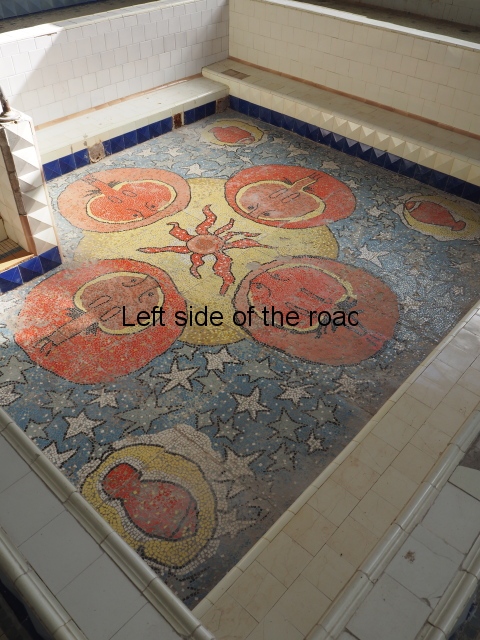
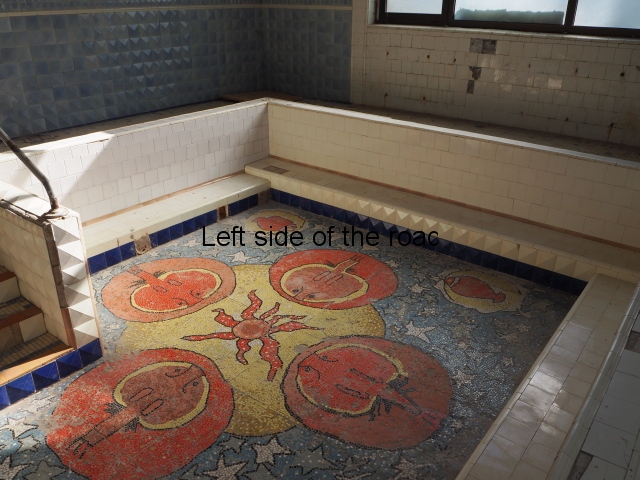
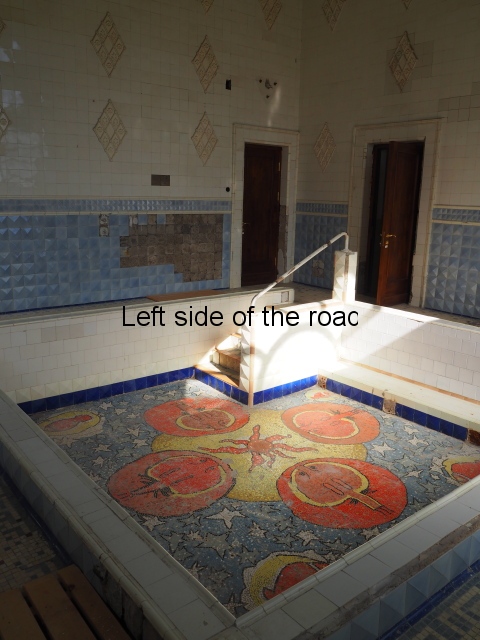
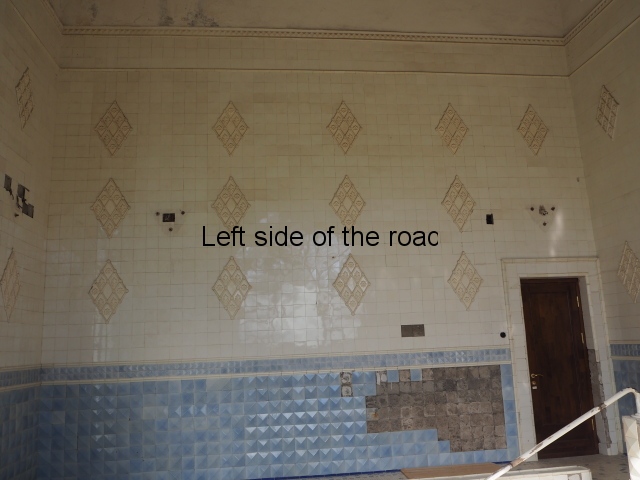
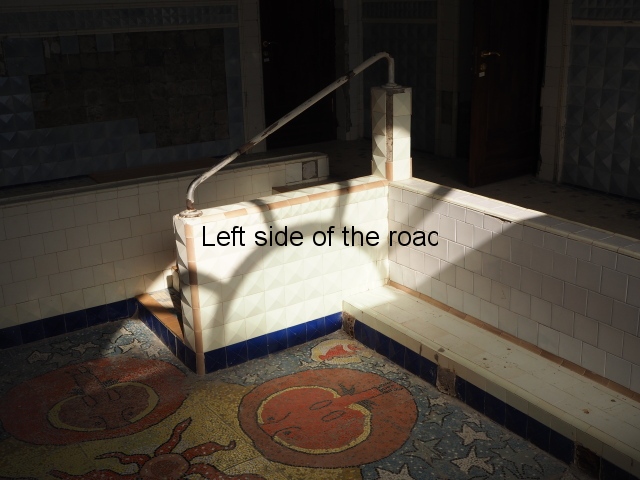
The room was about 6 metres square, with a high ceiling and with the walls covered in blue and cream ceramic tiles (some missing). There was some decoration on the walls but this was of a simple, geometric design. There was a walk way around the room which was covered in small square tiles that were set in simple geometric patterns, in places starting to come loose. In the centre of the room was a sunken bath, about 4 or so metres square. At one corner there were fours steps down to the pool with a tubular steel handrail on the left side. Around the edge of the pool were tiled covered concrete benches. There was no sign of a desk at all. But most shocking of all was the decoration at the bottom of the pool.

Stalin's jelly fish

Stalin’s jelly fish

In place of the images I had expected there was a mosaic of cartoon like jelly fish – with anthropomorphic characteristics. Four of these giant jelly fish were half out of the water and seemed to be about to attack a very strange creature (possibly representing a crab but if so it’s missing a couple of legs) which is sitting on a round patch of sand. In the water are cartoon fish and a huge number of starfish.

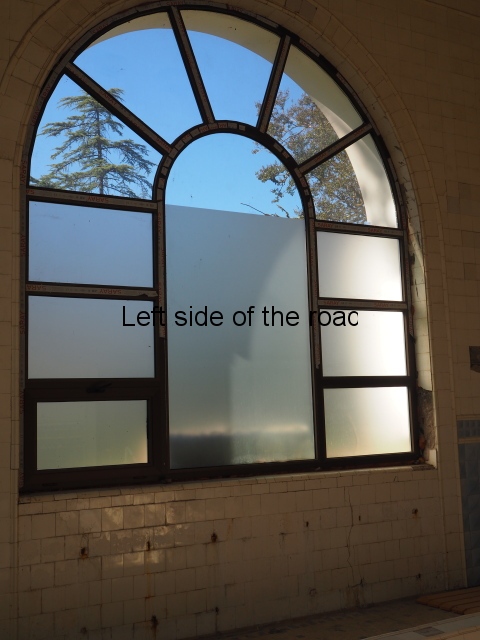
There were signs of renovation of the space, which seemed to have stalled. The only new work that had been completed was the replacement of the large windows – this would have taken place so as not to spoil the look of the facade of the building from the park. If the present owners follow their past practice then the jelly fish will go – that would be a shame.

The knowledge then crept up on me. This wasn’t a room built especially for one of the greatest leaders of the working class of all time – this was a children’s paddling pool.

But it was also Uncle Joe’s private pool. He is recorded as having been there some time in 1951. The search is on for photographic evidence.

Just goes to show that you have to be careful what you wish for. You will almost always end up being disappointed.

Location

Spring No. 6 is in the northern part of Tskaltubo’s Central Park, about a ten minute walk from the present day market in the centre of town.

GPS

42.3223

42.5989

How to get to Tskaltubo

Marshrutka number 30 leaves from its terminus on the western side of the Red Bridge, which crosses the Rioni River beside the main Kutaisi market. Closer to the market is the stop for a number of buses but you walk through that area (passing a cheap out door bar on the right) to cross the red painted iron bridge. The marshrutka will be on the left once on the other side. They leave roughly every 20 minutes. Cost GEL 1.20 (not the GEL 2 as in some guide books – although some of the drivers will take the GEL 2 and say nothing although others are honest). The price will be on a piece of paper somewhere, normally at the front of the vehicle.

Journey takes about 30 minutes to get to the centre of Tskaltubo. Once you cross the railway track (after 20 or so minutes) you are at the bottom end of Central Park. The marshrutka then follows Rustaveli Street on the eastern edge of the park passing the railway station and information office, the Municipality, Court and Police buildings, and then the entrance to the huge (now luxury 5 star) Tskaltubo Spa Resort all on the right. (The marshrutka takes the same route when going back to Kutaisi and can just be flagged down anywhere along this road.)

When you get to the northern edge of the park the road widens out and after passing the Sports Palace on the left and the now being renovated (although seemed stalled to me) huge Shakhtar Sanatorium on the right the marshrutka heads up to the main market. Get off when the bus turns right at the corner by the ugly, modern Sataplia Hotel. This is where you would look for another marshrutka if you wanted to go to the Prometheus Cave.

To get to Central Park go back along Tseretseli Street (not the road you came up), pass the mural of the telecommunication workers on your left and head down to a very wide road junction. Cross this wide expanse of tarmac towards an arch and at the open space at the top end of the park head south and pass by the right hand side of Spring No. 3. Continue south until you reach the white, side wall of Spring No. 6. The entrance is on the west side of the building.

Alternatively (if arriving by marshrutka) you could get off at the main entrance to the Tskaltubo Spa Resort and walk towards the back of Spring No. 6 through the park.

More on the Republic of Georgia
Spring No. 6 – Tskaltubo

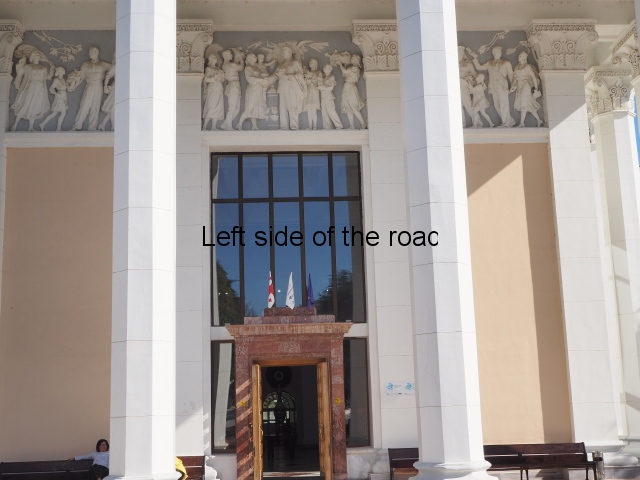
Spring No 6 - Entrance

Spring No 6 – Entrance

More on the Republic of Georgia

Spring No. 6 – Tskaltubo

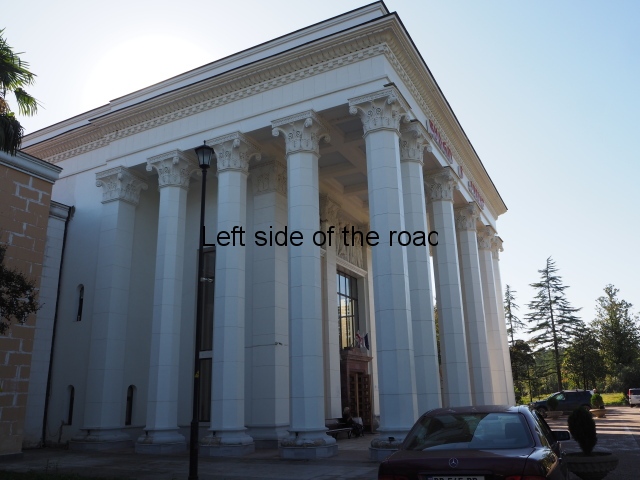
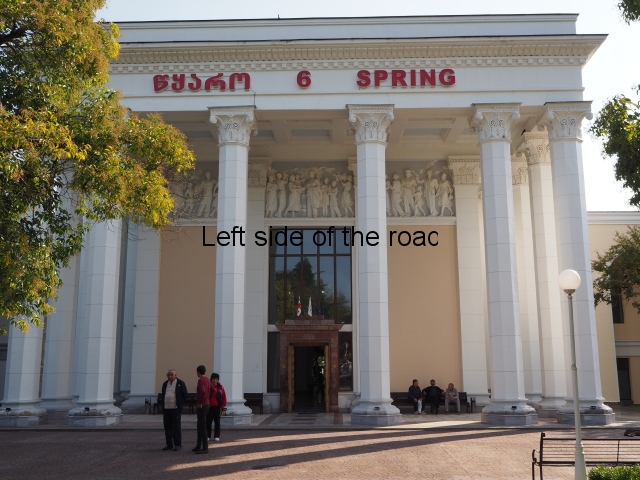
There’s no shadow of a doubt that Spring No. 6 is the most impressive of the Soviet era bath houses in the Central Park of Tskaltubo – the spa town less than 10km from the second largest (now) city of Kutaisi. This was the particular spa Joseph Stalin, leader of the Soviet Union, used to visit on regular occasions both before and after the Great Patriotic War. Up to the demise of the Soviet Union in the early 1990s there were more than 20 spa locations and/or hotels with spa facilities in and around the central park. Fortunately, to this day – after a recent restoration (by a private company called Balneoresort) – it still stands out as a special building.

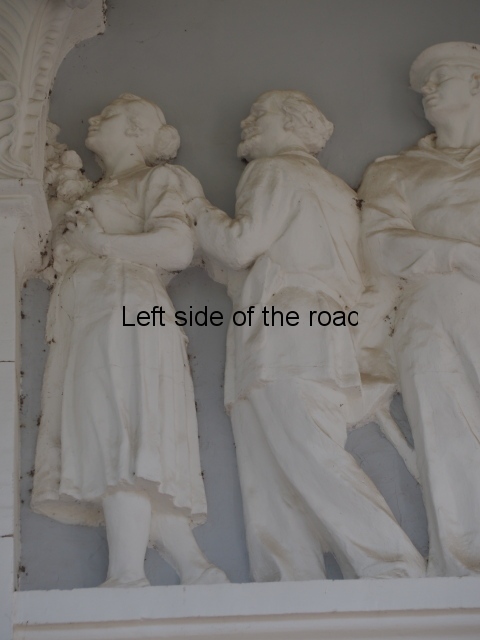
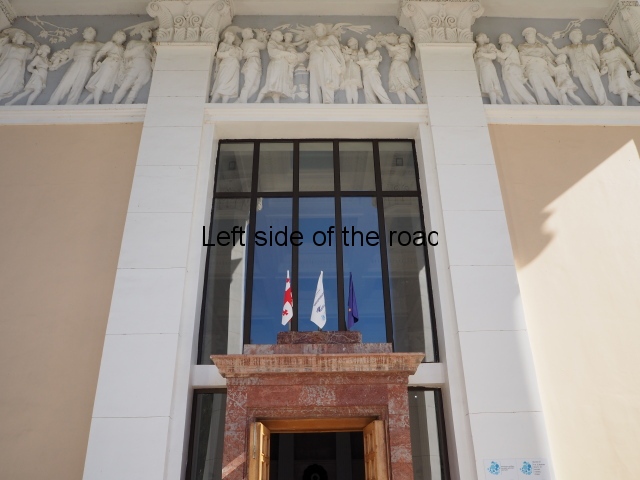
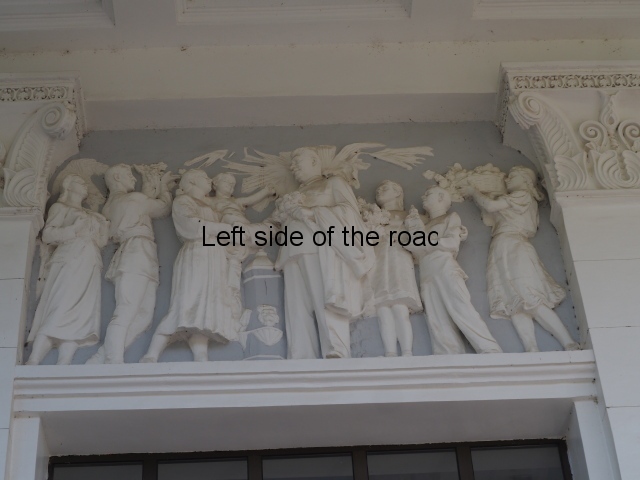
Its neoclassical frontage and the entrance hall is what makes it so special. Corinthian columns support a classic Greek inspired portico but what makes it really special is the frieze high above the entrance on the interior of the portico. By the age of Uncle Joe and the other images included in this bas relief it would indicate it was created after the Great Patriotic War when the buildings in Tskaltubo reverted from being hospitals to their original use as health spas for Soviet workers and peasants.

The ‘Welcoming Uncle Joe’ frieze

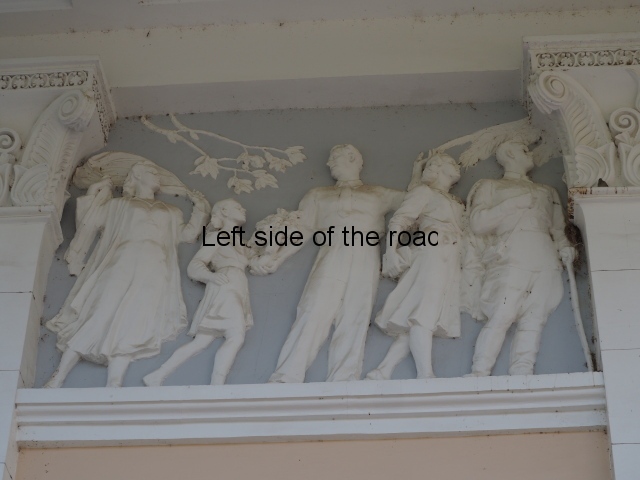
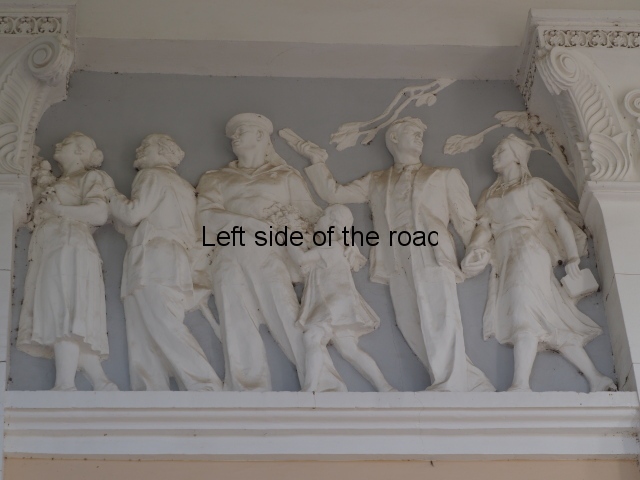
This frieze is in three parts and depicts the arrival of Joseph Stalin in the town and the welcome he is being given by either local people or other visitors, like himself, from the rest of the Soviet Union.

Spring No 6 - Welcoming Comrade Stalin

Spring No 6 – Welcoming Comrade Stalin

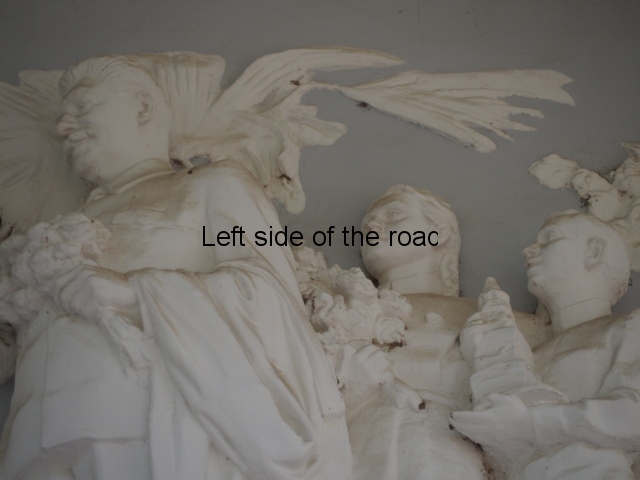
The central panel

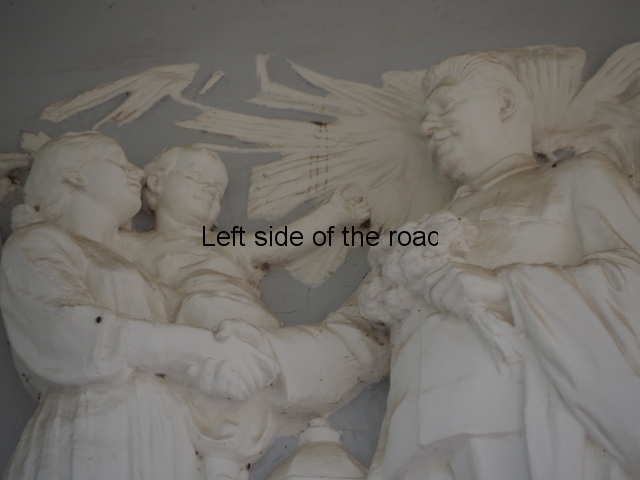
In the central panel an avuncular Joe (in the last ten years of his life) is shown in a left profile. He is dressed in what was becoming his normal garb of a dress suit of a Marshal of the Soviet Union following his role in the defeat of the Nazi invaders, murderers and aggressors. (I accept there’s a problem with the development of ranks and medals/honours within the Red Army and would like to address this issue at some time in the future – but time is limited here.)

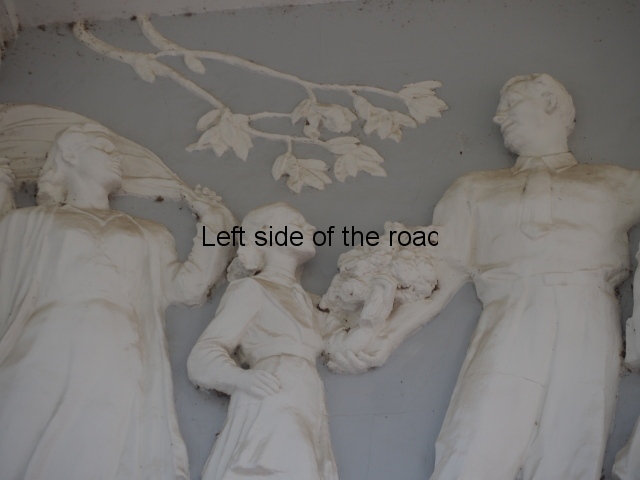
Over his left arm is his (again) traditional overcoat and in his left hand he holds a bouquet of flowers which have just been presented to him. He is smiling and looking towards a woman with whom he is shaking hands. She is probably part of an official welcoming committee. Whilst she shakes Joe’s right hand with hers’ she cradles a young child (can’t determine the gender) in the crook of her left arm. The child is facing us and s/he extends his/her right arm around the neck of the woman – presumably the mother. The child’s left arm is extended towards the General Secretary, thereby acting as a conduit, establishing a unity between the woman and Joe. The child is relaxed and smiling, as are the two central characters.

Between Joe and the woman, and underneath their clasped hands, is a drinking fountain – suggesting the healing quality of the local waters of Tskaltubo. On each of the two sides visible of the pillar are a face and a cup of a fountain.

Behind Comrade Stalin are two young people, a girl and a boy. She is closest to Joe and holds another, larger bouquet of flowers in her right hand. The boy, slightly further back, is carefully cradling in both his hands something that looks like a ceramic tower (perhaps to be presented to the visitor) This is, perhaps, a symbol of the town (but it’s difficult to say as it’s indistinct from ground level). The girl has her left arm behind the boy and seems to be encouraging him to come forward and meet the great leader of the working class.

Behind these two younger children is an older girl holding a large basket of fruit, at shoulder height, which she is bringing to present to the honoured visitor. The three children are in contemporary dress. i.e., late 1940s early 1950s and are in left profile.

Behind the woman and child greeting the General Secretary is a man and a woman. He seems to be dressed in more traditional clothing from Georgia and holds high another gift to the visitor from Moscow. This looks like a cornucopia of grapes, representing the grape and wine culture of the region/state. I can’ make out what the woman at the rear is bringing. She seems to be clutching a couple of items to her chest. They are in right profile and they seem to be wearing traditional peasant dress of the region.

On the wall behind Joe, and appearing in a couple of other places behind the other characters, are white/cream markings. These perhaps represent a fluttering flag but the overall impression is somewhat confusing. The more I look at it the more I get the impression it’s a disintegrating halo – which is a little disturbing if that was the intention.

Spring 6 - Welcoming Comrade Stalin - right hand panel

Spring 6 – Welcoming Comrade Stalin – right hand panel

The right hand panel

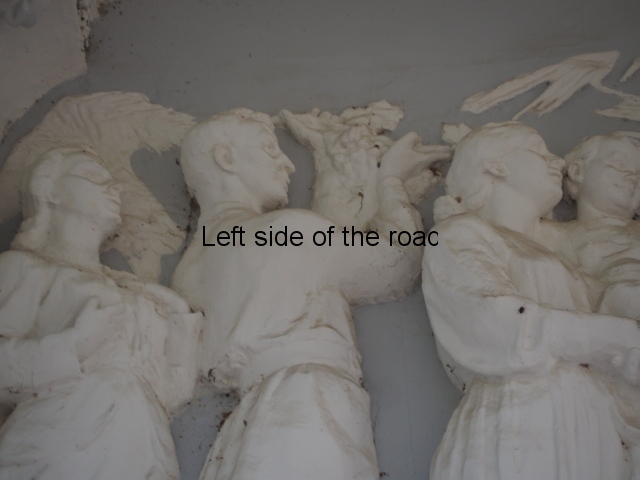
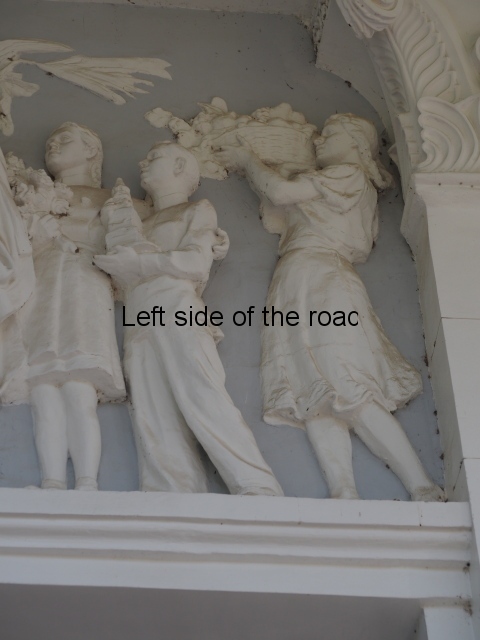
On the right hand panel we have a continuation of the procession wanting to meet the leader. At the front is an older couple. She seems to be holding another bunch of flowers and he, much more frail and needing support, has his left on her left shoulder and in his right hand (which we can’t see) he is holding a walking stick – part of which we can see. This would seem to reference the healing claims of the spa resort.

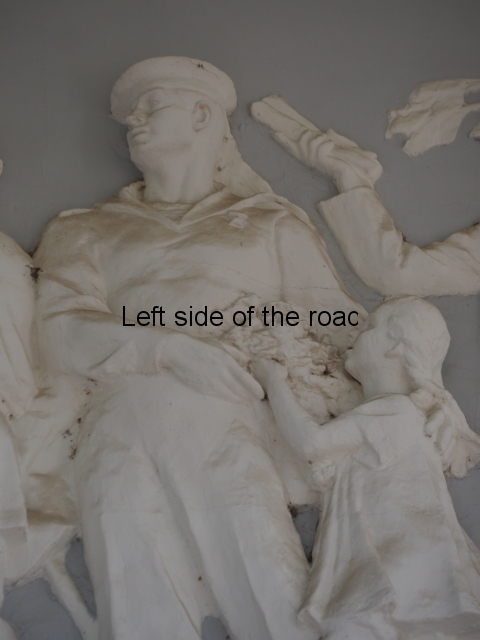
Next is a young sailor – and I don’t really understand this reference. We are talking about only a few years after the most devastating war the country had ever had to encounter. Yet he looks young and healthy. Therefore, why is he depicted? Beside him is a very young girl, five or six, who has another bouquet of flowers but seems to be pleading with the sailor, presumably her father, for something. She is really close to him, pressing against his leg, and he has his left arm protectively resting on the top of her back.

The final individuals in this panel are a couple of newly weds. They are hand in hand and rushing to meet Stalin. He is dressed in a formal suit and she seems to be dressed in the traditional attire of a Georgian bride of the time. (Now you can’t move in present day Georgia for ‘desirable’ western style wedding dress shops – almost certainly with a price tag which inversely matches the lack of sophistication of the design.) He holds high, in his right hand the certificate of their marriage and he seems to be asking for some sort of blessing from the leader of the Communist Party. It takes a long time to eliminate these practices of getting some sort of secondary justification from a ‘superior’ entity. I don’t like the depiction of this in a Socialist Realist piece of art work but it probably represented the feeling of the time and its depiction confirms a reality without providing a way forward. In her left hand the bride is carrying what looks like a book, what and why I have no idea

Above the couple are vine stems/leaves as a sign of fertility. Yet again, another throw back to feudal superstition. As I’ve suggested in other posts on Socialist Realist Art we are still a long way from throwing off the old traditions and thinking and that comes across in the art produced – even during those few years of Socialist construction.

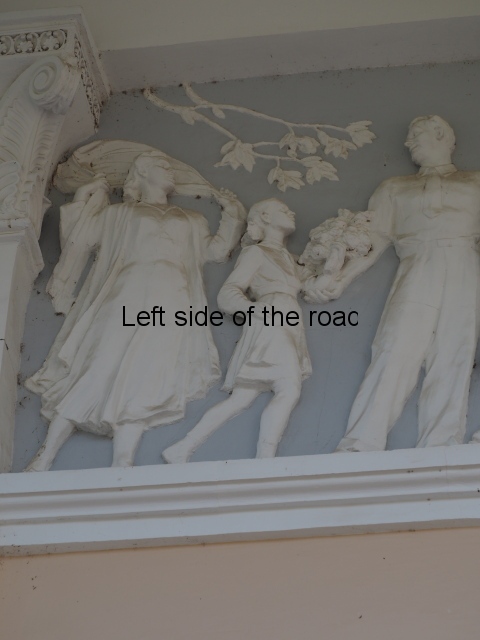
Spring No 6 - Welcoming Comrade Stalin - left hand panel

Spring No 6 – Welcoming Comrade Stalin – left hand panel

The left hand panel

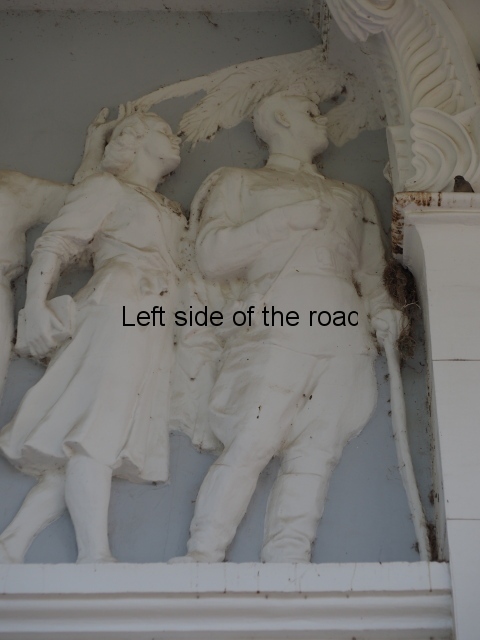
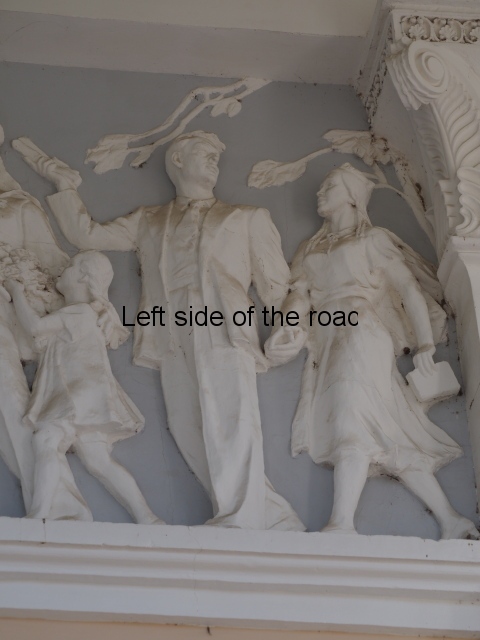
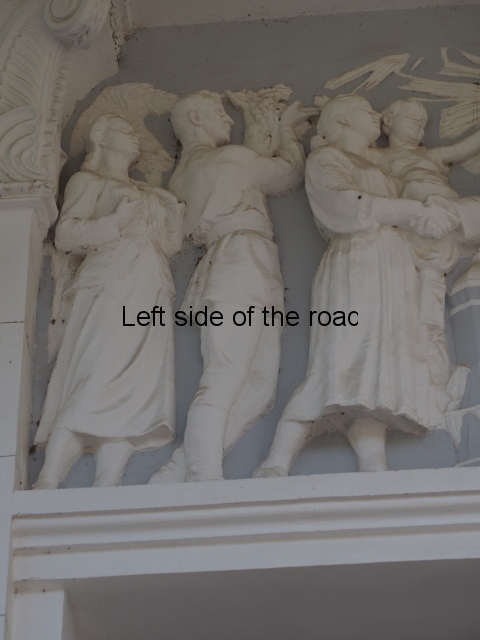
The left hand panel contains five characters. Closest to the centre is a young, wounded Red Army man, in uniform. He has no obvious disability but he does have a walking stick in his left had to provide him with some sort of support. An interesting little bit of detail is that he has a camera on a strap over his left shoulder, his right hand under the strap at his chest with the camera resting on his right hip. This is possibly a Zenit or a Zorki, 35mm SLR, a huge number of which were produced after the Great Patriotic War.

Behind him is a young woman with her left hand on his right shoulder. She seems to be looking beyond him as if she were in a crowd of people wanting to get a glimpse of the visiting hero. Perhaps she is using his shoulder to allow her to get a slightly higher view of the proceedings. She is dressed in late 1940s clothing and her hair style is also from that period. She is also carrying a book in her right hand so a pattern seems to be developing here. Both of them are in right profile.

Behind the heads of this couple are what look like palm branches coming from above. They are similar to what we find in the central panel but there the leaves are totally chaotic, here more recognisable.

Next is an older man, dressed in contemporary 1940s semi-casual dress – he wears a tie but not a jacket. Unlike all the other characters in this story he is not looking in the direction of Uncle Joe. He is in left profile as he is looking back to others of his family who have come to greet the visitor from Moscow. His left arm is high above his head as if pointing in the direction of all the activity. He seems to be encouraging those behind him to hurry up and is pointing to where everything is happening.

His right hand is supporting the left elbow of a young girl who holds yet another large bouquet of flowers. She has her long hair tied back over the nape of her neck, her right hand on her hip and around her neck is a scarf which indicates that she is a Young Pioneer and is dressed in the uniform of the organisation. Her stance is as if she were running. In fact there is a feeling of movement in the depiction of this small family group which is completed by the presence of an older woman who is holding a banner, which is billowing out behind her, in both her hands. This presumably is the banner of the Georgian People’s Republic but any such detail is impossible to make out.

Above the heads of this last group a couple of branches of a vine come down from above, indicating the production of wine in the area.

I’m sure that many of those who enter the building are not really aware of the decoration that sits above their heads. With perhaps a few exceptions (those part of the building that have not yet had a major make-over) the only other part of the building that is interesting for its Soviet past is the main entrance hall.

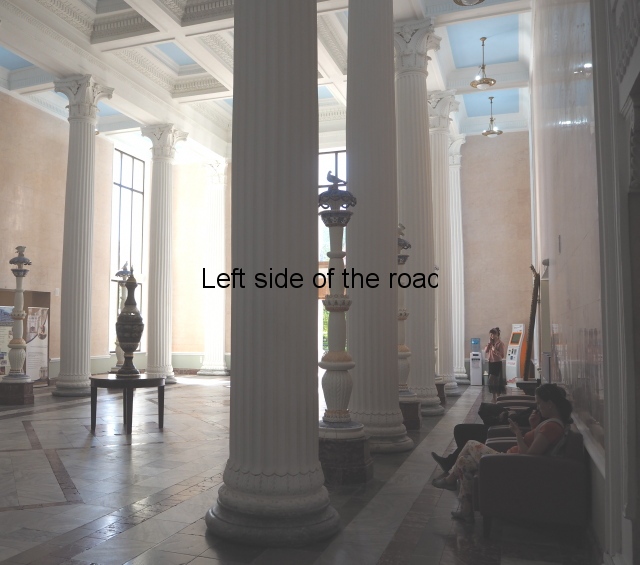
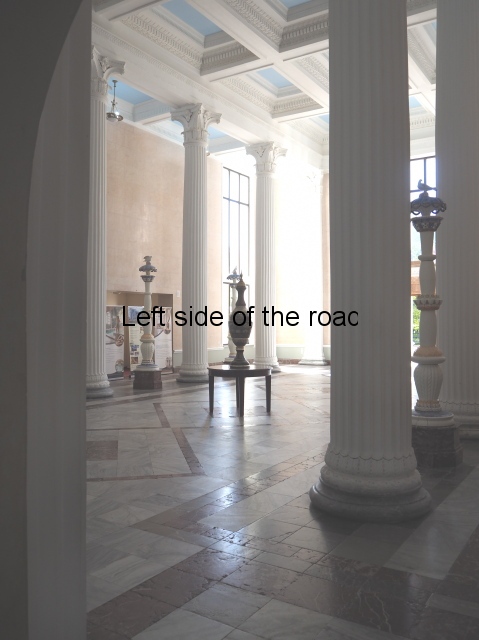
The entrance hall of Spring No 6

In the renovation of the building it was fortunately decided to try to maintain the impression those thousands that had entered the building over the years would have experienced.

The impression of space;

Spring No. 6 - Entrance Hall

Spring No. 6 – Entrance Hall

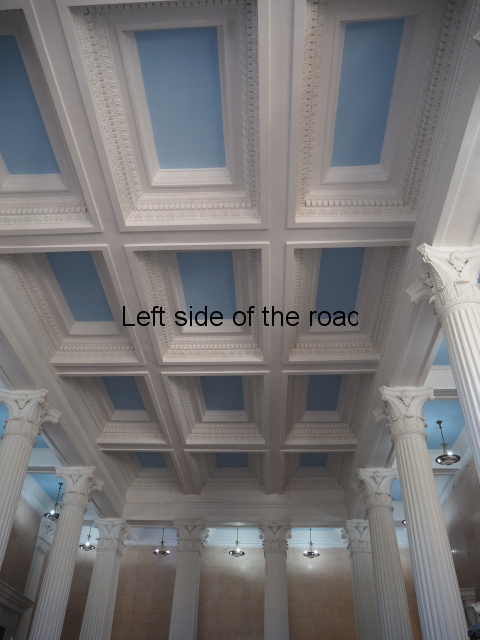
the high ceiling;

Spring No. 6 - Entrance Hall ceiling

Spring No. 6 – Entrance Hall ceiling

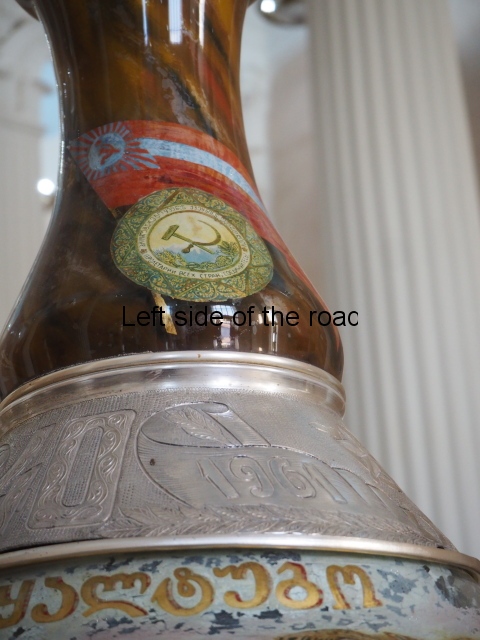
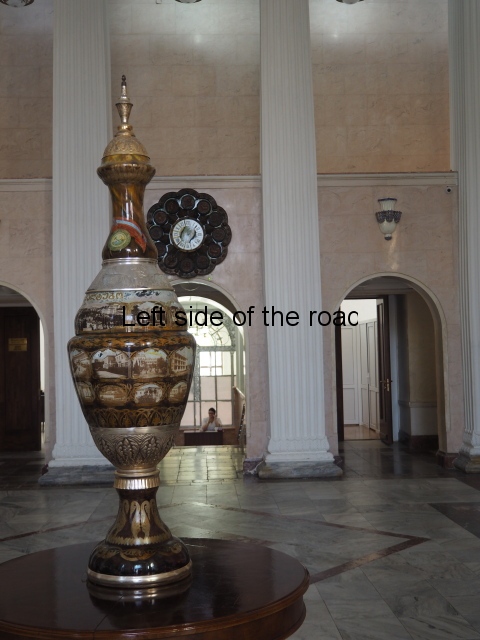
the magnificent commemorative urn (more details of which will be published shortly) in the middle of the floor – with an interesting clock on the wall behind;

Spring No 6 - Commemorative Urn and clock

Spring No 6 – Commemorative Urn and clock

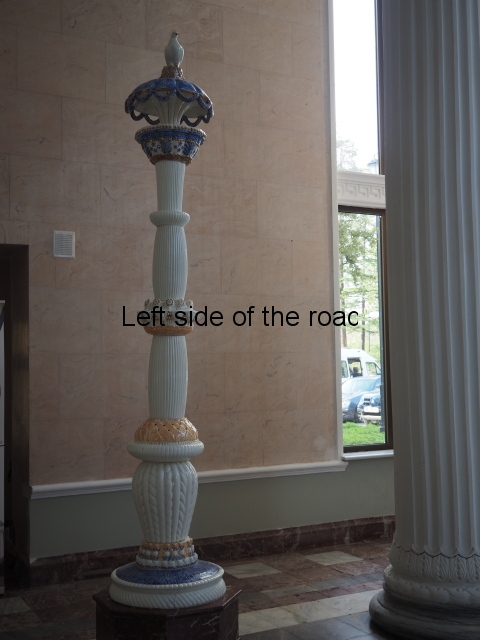
The tall ceramic lamp standards;

Spring No 6 - Ceramic light

Spring No 6 – Ceramic light

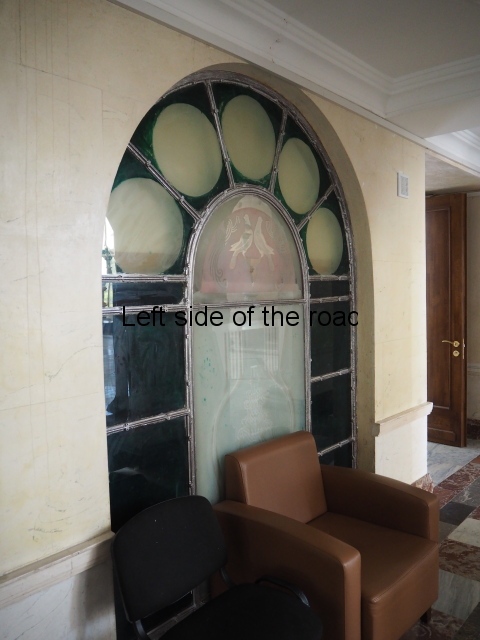
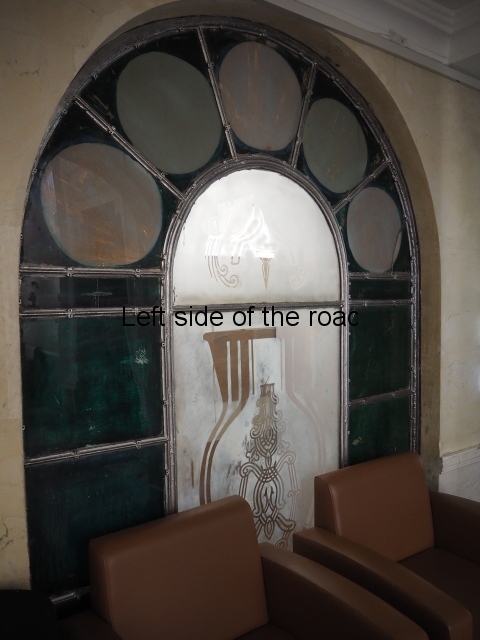
and the two, small stained glass windows;

Spring No. 6 - stained glass 01

Spring No. 6 – stained glass 01

Spring No. 6 - stained glass 02

Spring No. 6 – stained glass 02

The rest of the building

Spring No 6 is a huge building and won’t be getting anything like the number of visitors that it used to receive in the heydays of the 1980s and before. On my visits there were only a handful of people and that would indicate that the renovation that has taken place would not have covered the whole of the building – there would have been no chance to make any significant return on the investment – unless it was all part of a money laundering exercise.

The ‘renovation’ I saw was basically a total destruction of the original interior and the replacement by what would be found in a new build for the same purpose. That’s a shame as I’m sure the baths and rooms used for all the other services would have been tiled and decorated in an even more ornate manner that what can be seen in the abandoned and derelict spas that lie in ruins in the Central Park and surrounds.

So far I have been able to visit one very small part of the building that has undergone minimal ‘restoration/renovation’. That was the room I was told was ‘Stalin’s private bath house’.

But it is a working spa and there are a number of treatments that can be tried. One of the reasons there are few visitors now is that, for Georgians, any visit to the spas are very much a luxury and the foreign tourists who visit the country (and could afford it) might not be prepared to spend a couple of hours getting cleansed, pummelled and covered in mud.

An introduction to some of the treatments available will appear soon.

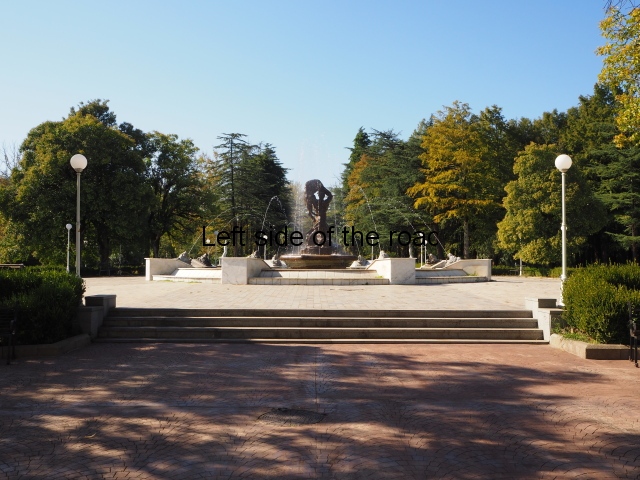
The driveway into Spring No 6

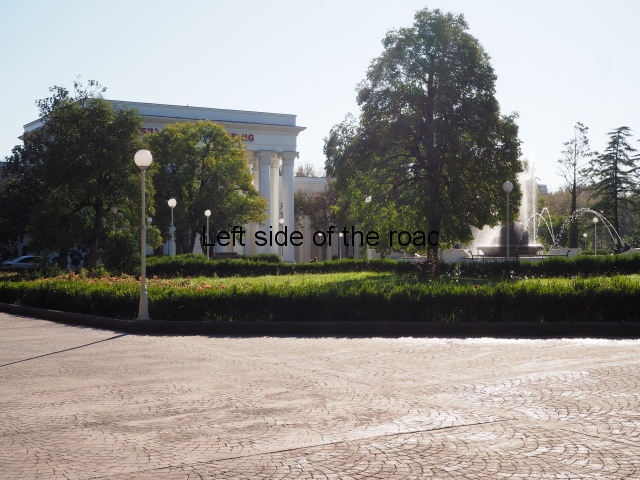
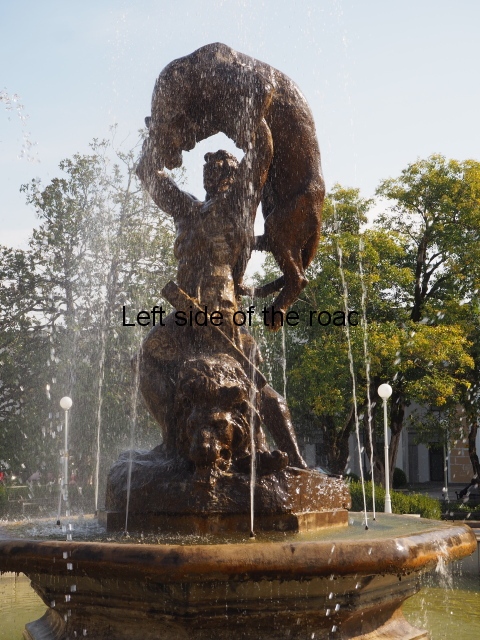
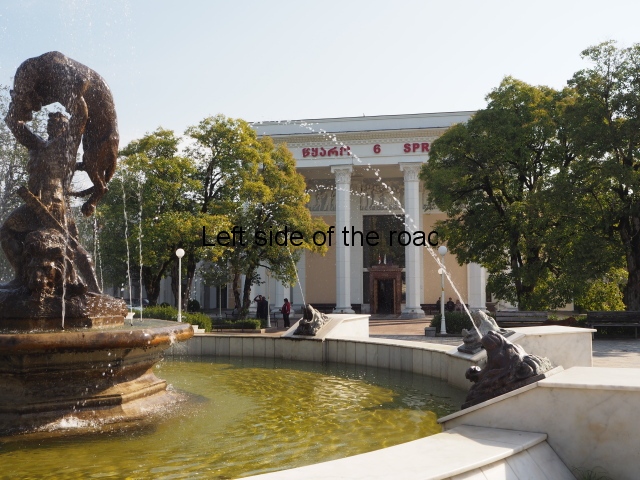
The main entrance to Spring No 6 is part of the public Central Park in Tskaltubo and there’s no strict dividing line between where the private and public meet. However, as part of the original project of Spring no 6 a large fountain – with a statue from Georgian mythology – was included. This is also worthy of a look.

Spring No. 6 - Fountain

Spring No. 6 – Fountain

Location

Spring No. 6 is in the northern part of Tskaltubo’s Central Park, about a ten minute walk from the present day market in the centre of town.

GPS

42.3223

42.5989

How to get to Tskaltubo

Marshrutka number 30 leaves from its terminus on the western side of the Red Bridge, which crosses the Rioni River beside the main Kutaisi market. Closer to the market is the stop for a number of buses but you walk through that area (passing a cheap out door bar on the right) to cross the red painted iron bridge. The marshrutka will be on the left once on the other side. They leave roughly every 20 minutes. Cost GEL 1.20 (not the GEL 2 as in some guide books – although some of the drivers will take the GEL 2 and say nothing although others are honest). The price will be on a piece of paper somewhere, normally at the front of the vehicle.

Journey takes about 30 minutes to get to the centre of Tskaltubo. Once you cross the railway track (after 20 or so minutes) you are at the bottom end of Central Park. The marshrutka then follows Rustaveli Street on the eastern edge of the park passing the railway station and information office, the Municipality, Court and Police buildings, and then the entrance to the huge (now luxury 5 star) Tskaltubo Spa Resort all on the right. (The marshrutka takes the same route when going back to Kutaisi and can just be flagged down anywhere along this road.)

When you get to the northern edge of the park the road widens out and after passing the Sports Palace on the left and the now being renovated (although seemed stalled to me) huge Shakhtar Sanatorium on the right the marshrutka heads up to the main market. Get off when the bus turns right at the corner by the ugly, modern Sataplia Hotel. This is where you would look for another marshrutka if you wanted to go to the Prometheus Cave.

To get to Central Park go back along Tseretseli Street (not the road you came up), pass the mural of the telecommunication workers on your left and head down to a very wide road junction. Cross this wide expanse of tarmac towards an arch and at the open space at the top end of the park head south and pass by the right hand side of Spring No. 3. Continue south until you reach the white, side wall of Spring No. 6. The entrance is on the west side of the building.

Alternatively (if arriving by marshrutka) you could get off at the main entrance to the Tskaltubo Spa Resort and walk towards the back of Spring No. 6 through the park.

More on the Republic of Georgia
VI Lenin – Collected Works

VI Lenin
VI Lenin

More on the USSR

The Great ‘Marxist-Leninist’ Theoreticians

View of the world

Ukraine – what you’re not told

VI Lenin – Collected Works – Volumes 1 – 47

On this page you will find the Collected Works of Vladimir Ilyich Lenin. The intention is, eventually, to provide full contents for each volume posted. As it stands at the moment they are only available for the first fifteen volumes – contents for later volumes will appear gradually over a period of time.
However all of the 45 volumes of Lenin’s Collected Works will be available in pdf format to download from the start. There are two further volumes, an Index of Works and Names and another a Subject Index – also downloadable.

These volumes were made available by the comrades at From Marx to Mao, to whom we give our thanks. They have other material on their website – some of which is available here but others (especially individual pamphlets of the great Marxist-Leninists) in html format are not.

Also here you can find the writings of Karl Marx and Frederick Engels, JV Stalin, Mao Tse-tung, Enver Hoxha, Kim Il Sung, Kim Jong Il and Kim Jong Un.

Volume 1 – 1893-1894, Progress Publishers, Moscow, 1977, 543 pages.

Index for Volume 1

Volume 2 – 1895-1897, Progress Publishers, Moscow, 1972, 572 pages.

Index for Volume 2

Volume 3 – The Development of Capitalism in Russia, Progress Publishers, Moscow, 1977, 658 pages.

Index for Volume 3

Volume 4 – 1898-April 1901, Progress Publishers, Moscow, 1977, 466 pages.

Index for Volume 4

Volume 5 – May 1901-February 1902, Progress Publishers, Moscow, 1977, 574 pages.

Index for Volume 5

Volume 6 – January 1902-August 1903, Progress Publishers, Moscow, 1977, 574 pages.

Index for Volume 6

Volume 7 – September 1903-December 1904, Progress Publishers, Moscow, 1977, 582 pages.

Index for Volume 7

Volume 8 – January-July 1905, Progress Publishers, Moscow, 1977, 609 pages.

Index for Volume 8

Volume 9 – June-November 1905, Progress Publishers, Moscow, 1977, 5004 pages.

Index for Volume 9

Volume 10 – November 1905-June 1906, Progress Publishers, Moscow, 1978, 569 pages.

Index for Volume 10

Volume 11 – June 1906 – January 1907, Progress Publishers, Moscow, 1972, 519 pages.

Index for Volume 11

Volume 12 – January – June 1907, Progress Publishers, Moscow, 1977, 565 pages.

Index for Volume 12

Volume 13 – June 1907 – April 1908, Progress Publishers, Moscow, 1978, 541 pages.

Index for Volume 13

Volume 14 – 1908 – Materialism and Empirio-criticism – Critical comments on a Reactionary Philosophy, Progress Publishers, Moscow, 1977, 405 pages.

Index for Volume 14

Volume 15 – March 1908 – August 1909, Progress Publishers, Moscow, 1977, 521 pages.

Index for Volume 15

Volume 16 – September 1909 – December 1910, Progress Publishers, Moscow, 1977, 485 pages

Index for Volume 16

Volume 17 – December 1910 – April 1912, Progress Publishers, Moscow, 1977, 631 pages

Index for Volume 17

Volume 18 – April 1912 – March 1913, Progress Publishers, Moscow, 1978, 653 pages

Index for Volume 18

Volume 19 – March – December 1913, Progress Publishers, Moscow, 1977, 602 pages

Index for Volume 19

Volume 20 – December 1913 – August 1914, Progress Publishers, Moscow, 1977, 625 pages

Index for Volume 20

Volume 21 – August 1914 – December 1915, Progress Publishers, Moscow, 1974, 493 pages

Index for Volume 21

Volume 22 – December 1915 – July 1916, Progress Publishers, Moscow, 1974, 388 pages

Index for Volume 22

Volume 23 – August 1916 – March 1917, Progress Publishers, Moscow, 1974, 427 pages

Index for Volume 23

Volume 24 – April – June 1917, Progress Publishers, Moscow, 1974, 620 pages

Index for Volume 24

Volume 25 – June – September 1917, Progress Publishers, Moscow, 1974, 550 pages

Index for Volume 25

Volume 26 – September 1917 – February 1918, Progress Publishers, Moscow, 1977, 597 pages

Index for Volume 26

Volume 27 – February – July 1918, Progress Publishers, Moscow, 1974, 637 pages

Index for Volume 27

Volume 28 – July 1918 – March 1919, Progress Publishers, Moscow, 1974, 549 pages

Index for Volume 28

Volume 29 – March – August 1919, Progress Publishers, Moscow, 1974, 599 pages

Index for Volume 29

Volume 30 – September 1919 – April 1920, Progress Publishers, Moscow, 1974, 590 pages

Index for Volume 30

Volume 31 – April – December 1920, Progress Publishers, Moscow, 1974, 603 pages

Index for Volume 31

Volume 32 – December 1920 – August 1921, Progress Publishers, Moscow, 1973, 581 pages

Index for Volume 32

Volume 33 – August 1921 – March 1923, Progress Publishers, Moscow, 1973, 558 pages

Index for Volume 33

Volume 34 – Letters – November 1895 – November 1911, Progress Publishers, Moscow, 1977, 520 pages

Index for Volume 34

Volume 35 – Letters – February 1912 – December 1922, Progress Publishers, Moscow, 1973, 624 pages

Index for Volume 35

Volume 36 – 1900 – 1923, Progress Publishers, Moscow, 1977, 725 pages

Index for Volume 36

Volume 37 – Letters to relatives – 1893 – 1922, Progress Publishers, Moscow, 1975, 742 pages

Index for Volume 37

Volume 38 – Philosophical Notebooks, Progress Publishers, Moscow, 1976, 637 pages

Index for Volume 38

Volume 39 – Notebooks on Imperialism, Progress Publishers, Moscow, 1974, 841 pages

Index for Volume 39

Volume 40 – Notebooks on the Agrarian Question – 1900 – 1916, Progress Publishers, Moscow, 1974, 542 pages

Index for Volume 40

Volume 41 – 1896 – October 1917, Progress Publishers, Moscow, 1977, 607 pages

Index for Volume 41

Volume 42 – October 1917 – March 1923, Progress Publishers, Moscow, 1977, 627 pages

Index for Volume 42

Volume 43 – December 1893 – October 1917, Progress Publishers, Moscow, 1977, 781 pages

Index for Volume 43

Volume 44 – October 1917 – November 1920, Progress Publishers, Moscow, 1977, 615 pages

Index for Volume 44

Volume 45 – November 1920 – March 1923, Progress Publishers, Moscow, 1976, 810 pages

Index for Volume 45

Also, as part of this project, there were two all volume indexes produced.

Volume 46 – Reference Index to VI Lenin Collected Works, Index of Works, Name Index, Lawrence and Wishart, London, 1978, 334 pages.

Volume 47 – Reference Index to VI Lenin Collected Works, Subject Index, Lawrence and Wishart, London, 1980, 664 pages.

More on the USSR

The Great ‘Marxist-Leninist’ Theoreticians

View of the world

Ukraine – what you’re not told