Zionism, anti-Semitism and Ken Livingstone

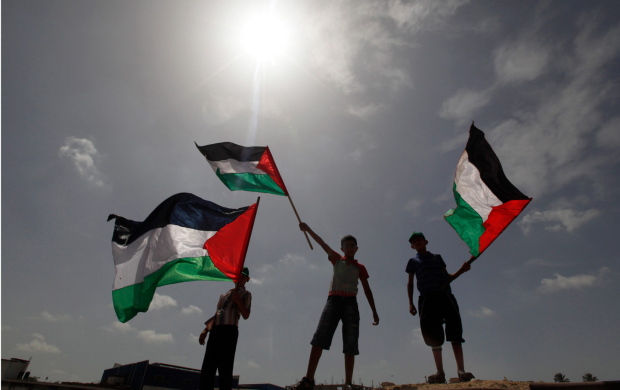
Flag of Palestine

Flag of Palestine

Below is the content of a leaflet distributed by the Liverpool Friends of Palestine at the May Day march and rally in Liverpool on May 1st, 2017.

Although in no way a supporter of the British Labour Party some of their membership might, at times, make declarations which should be supported. Although not very well expressed and defended even less well his attack on the crimes of Zionism should be supported.

Increasingly Zionism is attempting to conflate attacks on the Settler State of Israel as an attack upon all Jewish people. Unfortunately the spreading climate of racism increases peoples’ fears and decreases their ability to see things for what they are.  

When it comes to Zionism and Israel it is the people of Palestine who suffer yet again. The ‘acceptance’ of the situation of the Palestinian people; the way they have been treated like pawns in an international game of power politics; the constant harassment, murderous military attacks and the imprisonment of its population by soldiers of the Israeli Settler State; the betrayals they have had to endure; and the endless empty promises to resolve the theft of their land is a crime for which those in the so-called ‘developed’ countries should hang their heads in shame for allowing to exist for almost a century.  

Without the freedom of the Palestinian people there will be no true freedom for the oppressed and exploited of the world.     

Zionism, anti-Semitism and Ken Livingstone

Liverpool Friends of Palestine

Ken Livingstone

Ken Livingstone

Early in April Ken Livingstone was suspended for a further 12 months by the Labour Party National Compliance Committee. He was originally charged with anti-Semitism and ‘holocaust revision’, either of which would have been reason to expel him if true. Neither accusation would stand up in a court of law, so it was no surprise when the Compliance Committee settled on “conduct prejudicial and/or grossly detrimental to the Labour Party”, citing “deeply offensive” statements on Nazi Germany.

Zionist organisations keen to conceal the actual history of Nazi-Zionist collaboration, and anti-Corbyn Labour MPs, predictably condemned the decision not to expel Livingstone. Unfortunately, to their shame, Jeremy Corbyn and John McDonnell also attacked him, and with Len McCluskey’s support the case was referred back to Labour’s National Executive Committee. But upholding freedom of expression, and solidarity with Palestine, means defending the right to speak truthfully about history, even if it hurts.

Why all this uproar about one man, whose strong record of fighting racism for decades is unquestionable?

Historical accuracy

It is clear what Ken Livingstone did not say. He did not say that Hitler was a Zionist, nor that Zionism is equivalent to Nazism nor that the German Zionists, a small minority of German Jews in 1933 when Hitler took power, were complicit in the Holocaust.

He did say that Zionist organisations collaborated with the Nazi regime which promoted them in opposition to the vast majority of German Jews who regarded themselves first and foremost as German citizens, not Jews. They wished to integrate into German society. The aim of Zionist Jewish organisations, on the other hand, was to persuade Jews to emigrate to Palestine.

Collaboration

The Nazi regime aimed to make Germany a Jew-free country. New laws gradually excluded German Jews from cultural, social, political and economic life. Some were supported by the Zionist organisations, as contributing to their aim.

On September 17th 1935, the paper of the German Zionist Federation welcomed the Nuremburg Laws which removed German citizenship from Jews and effectively made them stateless. These laws were opposed by the vast majority of German Jews.

The regime promoted emigration from Germany and

I saw Zionist organisations as part of the process. This conclusion is detailed by such eminent Zionist historians as Lucy Dawidowicz (War Against the Jews), David Cesarani (Final Solution and The Fate of the Jews 1933 -1949) and Francis Nicosia.

“Throughout the 1930s … there was almost unanimous support in German government and Nazi party circles for promoting Zionism among German Jews and Jewish emigration from Germany to Palestine.”

From Zionism and Anti-Semitism in Nazi Germany by Francis Nicosia, Professor of History and Raul Hilberg Distinguished Professor of Holocaust Studies at the University of Vermont.

The Transfer (Ha’ avara) Agreement

The most notorious collaboration was the Ha’avara Agreement, originally proposed by a Jewish businessman in Palestine, and embraced by the Nazis as a means to puncture the world-wide campaign for a boycott of Hitler’s Germany. The Agreement was signed in August 1933 by the Zionist Federation of Germany, the Anglo-Palestine Bank, and the economic authorities of Nazi Germany.

Nazi coin minted to commemorate the Ha'avara Agreement

Nazi coin minted to commemorate the Ha’avara Agreement

The owner of a Tel Aviv citrus export firm, Sam Cohen, had proposed that Zionist émigrés avoid tax on capital leaving Germany, by purchasing goods in Germany to be sold in Palestine. The German Consul in Jerusalem wrote “In this way it might be possible to wage a successful campaign against the Jewish boycott of Germany … It is important to break the boycott first and foremost in Palestine, and the effect will inevitably be felt on the main front, in the United States.”

The Nazis first agreed for lm Reichmarks to be shipped to Palestine as farm machinery. The Jewish National Fund then got Cohen to arrange for frozen JNF monies to be released for transfer. “The bait for the Nazis was that the cash was needed to buy land for the Jews whom Hitler would be pushing out. Cohen also assured that he would operate behind the scenes at a forthcoming Jewish conference in London to weaken or defeat any boycott resolution.”

In early May 1933, Chaim Arlosoroff, the Political Secretary of the Jewish Agency, came to a preliminary understanding to extend Cohen’s arrangement. He returned to Tel Aviv and was assassinated because of his dealings with the Nazis. The Agreement was then signed, and caused an uproar when it emerged.

What’s behind the attack on Livingstone?

We reject the view that Ken Livingstone is anti-Semitic. His statements on collaboration of German Zionists with the Nazi regime are broadly accurate.

He has a long history of supporting the Palestinian struggle for freedom and justice, as does Jeremy Corbyn who has faced continuing opposition from Zionists within and without the Labour Party who want to silence the voices of Palestinians and their supporters. Corbyn’s victory on an anti-austerity, socialist platform also angered right-wing Labour members, MPs and the media.

Research by the Media Reform Coalition concludes that “most newspapers [had been] systematically vilifying the leader of the biggest opposition party, assassinating his character, ridiculing his personality and de-legitimising his ideas and politics.” After his election as leader this alliance of Zionists and neo-liberals intensified their opposition, but their coup attempts failed to remove Corbyn.

False accusations of anti-Semitism

False accusations of anti-Semitism were then deployed. The independent inquiry by Shami Chakrabarti, which found that “The Labour Party is not overrun by anti-Semitism or other forms of racism”, had no effect. The false accusations by supporters of Apartheid Israel continued, with some newspapers, in particular the ‘liberal’ Guardian acting as cheerleaders. In this context we defend Ken Livingstone and condemn Zionists and their supporters for personal abuse and blatant political misrepresentations. Ken Livingstone was vilified for this statement:

“When Hitler won his election in 1932, his policy then was that Jews should be moved to Israel. He was supporting Zionism before he went mad and ended up killing six million Jews.”

This statement is not anti-Semitic. Yes, it should have said 1933 and Palestine. But the Nazis, under Hitler’s absolute authority, did support the Zionist emigration policy and did explicitly favour German Zionist organisations.

Criticism of Israel and of its founding ideology, Zionism, has been misrepresented as anti-Semitic. Antisemitism is a form of racist bigotry directed at Jews because they are Jews. By contrast, anti-Zionism opposes the political ideology which underpins the Israeli state. More than 40% of British Jews do not identify as Zionist.

These escalating allegations of antisemitism are a response to the growing success of the Boycott, Divestment and Sanctions (BDS) movement in holding Israel to account for its crimes against the Palestinian people. Allegations of antisemitism have been used increasingly to discredit Israel’s critics. The intention is to suppress criticism of Israel and undermine freedom of speech for Palestinians and their supporters.

Outrageous

Accusing Ken Livingstone of “deeply offensive” statements which are historically correct is outrageous. Discussing the actual history will offend some who see it as undermining the legitimacy of the Zionist project of creating a Jewish state based on the ethnic cleansing of Palestinians. In another era the white leaders and supporters of Apartheid South Africa were ‘offended’ by criticism of apartheid.

The answer is simple. Stop supporting Apartheid Israel and the Zionist philosophy which underpins it.

Liverpool Friends of Palestine

c/o News from Nowhere,

96 Bold St, Ll 4HY

see also freespeechonisrael.org.uk

The Palestine Liberation Organisation – the 1960s and 1970s

Leila Khaled

Leila Khaled

More on Palestine

View of the world

Ukraine – what you’re not told

Material published by and about the Palestine Liberation Organisation in the late1960s and early 1970s.


Al Fateh, Palestine National Liberation Movement, Voice Newspapers, Swansea, 1970?, 8 pages. Includes the history of the issue of Palestine, the Aims and Objectives of Al-Fateh and its approach to the settler state of Israel.

Address by the Al-Fateh Delegation to the Second International Conference in Support of the Arab Peoples, in Cairo, January 1969, no publisher, 7 pages.

Palestine Lives, No 1, February 1975, PLO Information Department, Beirut, 1975, 16 pages. The issues of occupation, illegal settlements, ‘Nazification’ of the state of Israel, and Palestinian Resistance are nothing new as are shown in this almost 40-year-old magazine.

Palestine Lives, No 2, March 1975, PLO Information Department, Beirut, 1975, 20 pages. Palestinians in Jordan and the ‘nature of Israel’ and its incompatibility with the existence of a Free Palestine.

Palestine Lives, No 3, April 1975, PLO Information Department, Beirut, 1975, 28 pages. The Palestinian women at the heart of the struggle and so-called American ‘solutions’

Palestine Lives, No 4, May 1975, PLO Information Department, Beirut, 1975, 32 pages. The lessons from Vietnam, the Phalangists in Lebanon, the Palestinian working class and Naivy-Tirza Women’s Prison.

Political and armed struggle, The Palestine Liberation Movement Fateh, Beirut, n.d., early 1970s, 47 pages. A statement of the aims of Al-Fateh in both the political and armed struggles.

Revolution Until Victory, The Palestine Liberation Movement Fateh, n.d., early 1970s, 36 pages. The history of Al-Fateh from its formation to the end of the 1960s

They claim there is no resistance, The Palestine Liberation Movement Fateh, Beirut, n.d., early 1970s, 28 pages. The resistance struggle expressed through poetry.

The Palestinian Freedom Fighters and the World Press, The Palestine Liberation Movement Fateh, Beirut, n.d., 1970? 28 pages. What the world press wrote about Al-Fateh May 1968 to March 1969.

A Palestinian View, Fayez Sayegh, General Union of Palestinian Students, Beirut, n.d., early 1970s, 20 pages. ‘Arab-Israeli Conflict’ versus ‘Palestinian Problem’.

Dialogue with Fateh, The Palestine Liberation Movement Fateh, Beirut, 1970, 104 pages. Dialogue between the Palestinian National Liberation Movement, Fateh, and the Editor-in-Chief of the newspaper Al-Tali’a (Vanguard) in 1969.

Do you know? 20 Basic Facts about the Palestinian Question, The Palestine Liberation Movement Fateh, Beirut, April 1969, 

The Other Face of Palestinian Resistance, London Office of the Palestine Liberation Organisation, London, n.d., early 1970s, 11 pages. The attempts by the Palestinians to establish, and maintain, a system of welfare and social services despite the efforts of the Israeli state to make life untenable under their occupation. 

Who are the Palestinians? A profile of a nation. London Office of the Palestine Liberation Organisation, London, n.d., early 1970s, 7 pages.

Nabka – the untold story of a cultural catastrophe, PLO, n.d., 22 pages.

P.L.O. Research Center Publications [Beirut, Lebanon]

Palestine Books – No 13 – Greater Israel – a study in Zionist expansionist thought, Ass’ad Razzouk, December 1970, 324 pages. Missing cover.

Palestine Books, No. 27, Basic Political Documents of the Armed Palestinian Resistance Movement, ed. Leila S Kadi,, PLO Research Centre, Beirut, December, 1969, 254 pages.

Palestine Books – No 30 – Settler colonialism in Southern Africa and the Middle East, George Jabbour, August 1970, 220 pages.

Palestine Monographs – No 1 – Zionist colonialism in Palestine, by Fayez A. Sayegh, September 1965, 84 pages. (Mediocre double-page scan, but quite legible.)

Palestine Monographs – No 58 – The role of the Zionist terror in the creation of Israel, Bassam Bishuti, April 1969, 218 pages.

Palestine Monographs – No 62 – Israeli belligerent occupation and Palestinian armed resistance in International Law, Dr. Ezzeldin Foda, November 1970, 170 pages.

Palestine Essays No 47 – Zionist relations with Nazi Germany, Faris Yahya [Faris Glubb], January 1978, 85 pages.

More on Palestine

View of the world

Ukraine – what you’re not told

The Facts about the Palestine Problem

Young Palestinian Refugee

Young Palestinian Refugee

More on Palestine

View of the world

Ukraine – what you’re not told

The Facts about the Palestine Problem was a series of pamphlets produced from 1968 until, at least, 1970. They were published by The Arab Women’s Information Committee based in Beirut, Lebanon.

Financial constraints effected regularity of the, planned, monthly bulletin – a problem that the Palestinian cause has always had to face, even when ‘supported’ by some of the most wealthy nations on the planet.

The stated aim of the editors was to produce a factual background to the situation in Palestine following the disastrous war of June 1967 (known as the Harb – The Setback – in Arabic) which saw the annexation of huge tracks of Palestine by the Israeli Zionists.

At the time of the 1967 ‘Six Day War’ pro-Zionist propaganda was riding high in the capitalist ‘west’ with the idea being promoted that Israel was the innocent victim of an anti-Semitic plot of genocide. These bulletins were part of the propaganda fight back to put the case of the Palestinian people.

Events in the now almost 50 years since that war the world has witnessed countless examples of the attempted genocide (now re-branded as ‘ethnic cleansing’) of the Palestinian population by the increasingly Fascistic Zionist State of Israel.

Notwithstanding the time that has passed since The Facts about the Palestine Problem were first published they still contain many facts and details that many people don’t know about, realise or understand. It is hoped they may be useful in reminding people of what is happening in that part of the world by providing an historical background.

51st state of the united states

51st state of the united states


The attitude of the United States of American to the migration of American Jews to Palestine, especially in the time just before the formal declaration of the State of Israel on 15th May 1948.


Plan Dalet

Plan Dalet


The Zionist Plan for the occupation of Palestine before 15 May 1948.


The Promised Land

The Promised Land


The Zionists claims that the existence of the State of Israel on the land of the Palestinians lay in what was written in the Christian Bible.


From the Nile to the Euphrates

From the Nile to the Euphrates


The Zionist plan for the expansion of the State of Israel to cover all the territory between the rivers Nile and Euphrates, demonstrated by a series of maps and accompanying statements.


The Arabs under Israleli Rule - The Gaza Strip

The Arabs under Israleli Rule – The Gaza Strip


The treatment of civilians in the Gaza Strip under Israeli Occupation after 7th June 1967.


Did you know that...

Did you know that…


Zionist attitudes and Palestinian reality after the declaration of the State of Israel in 1948 and the war of June 1967.


The Background - Statements by Zionists

The Background – Statements by Zionists


Statements by Zionists, from the late 19th century until the 1960s, where they declare their true intentions in Palestine.


Jerusalem June 1967 - The Occupation

Jerusalem June 1967 – The Occupation


What was happening in Jerusalem during the first days of ‘The Setback’, from 5th to the 8th June 1967.


The Background - Statement by Zionists 2

The Background – Statement by Zionists 2


Further statements by Zionist about their plans and intentions over the Palestinian homeland.


For an Arab-Jewish State in Palestine

For an Arab-Jewish State in Palestine


The argument for a state of Palestine that would be home for both Arabs and Jews. This first appeared in the French newspaper Le Monde on 9th January 1969.


Israel and the Demilitarised Zones

Israel and the Demilitarised Zones


How Israel has been using the so-called ‘Demilitarized Zones’ as an extension of the Zionist State of Israel.


Israeli Designs on Lebanon

Israeli Designs on Lebanon


Statements from the 20th century where the Zionists have made it clear that their idea of the State of Israel extends from the Nile to the Euphrates.


The Machiavellian Approach

The Machiavellian Approach


Tactics used by some Zionists in trying to convince Jews to leave their original homes and to migrate to Israel.


When the Soldiers Cried

When the Soldiers Cried


How the Israeli Defense Forces treated prisoners after the war of June 1967 – and a trend that has continued to the present day.


Women's Resistance

Women’s Resistance


The women of Palestine fight against the occupation in the Occupied Territories and abroad.


The Facts, March 1968

The Facts, March 1968


Includes statements by Zionists, over the decades, of their intentions for the ever greater expansion of the State of Israel.


The big lie of the boots

The big lie of the boots


One of the more successful lies that the Israeli Settler State was able to peddle in the aftermath of the so-called ‘Six Day War’ of June 1967.


More on Palestine

View of the world

Ukraine – what you’re not told