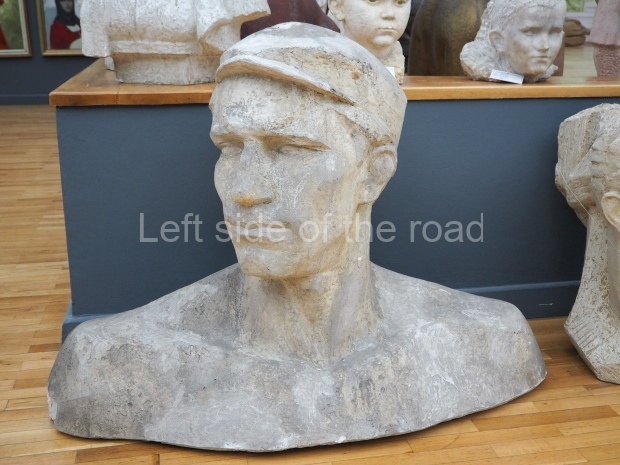
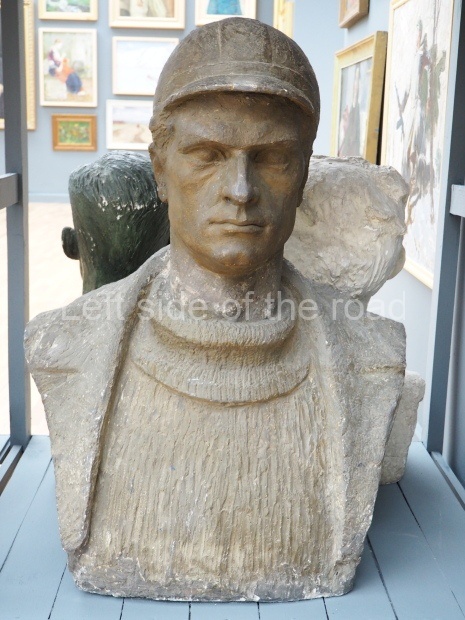
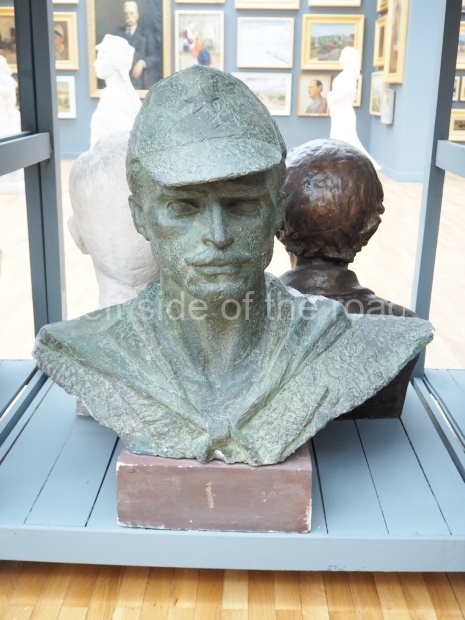
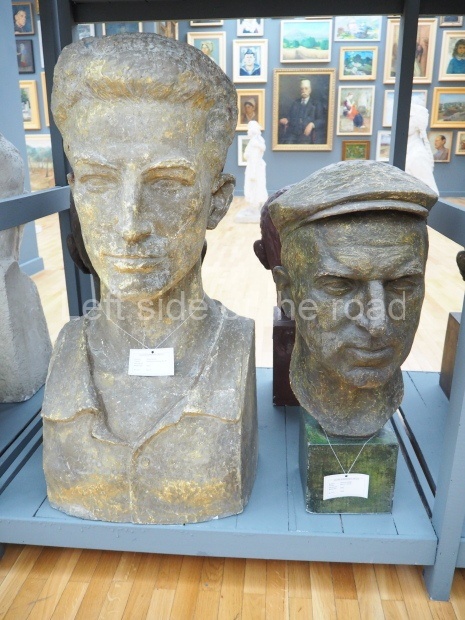
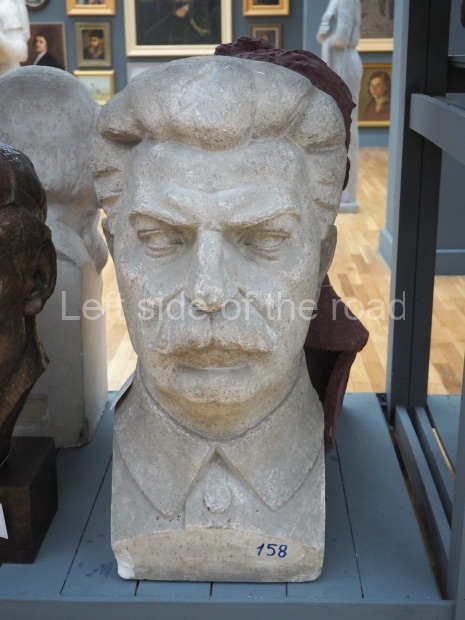
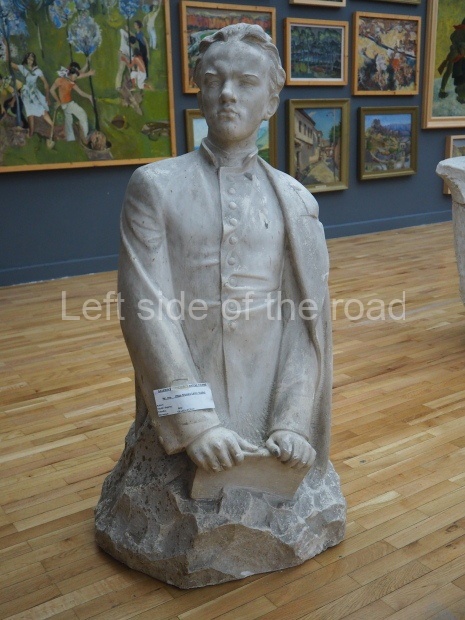
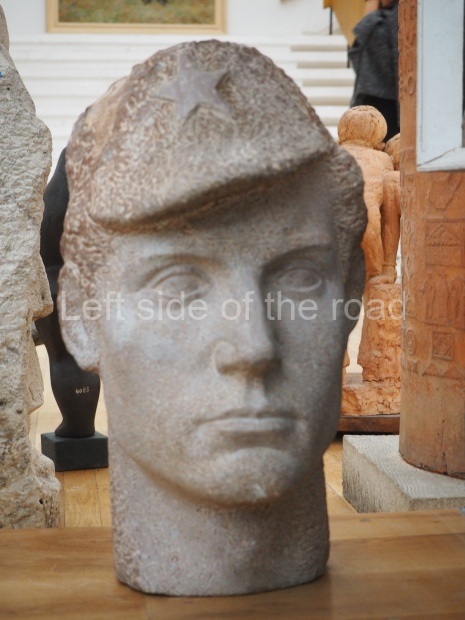
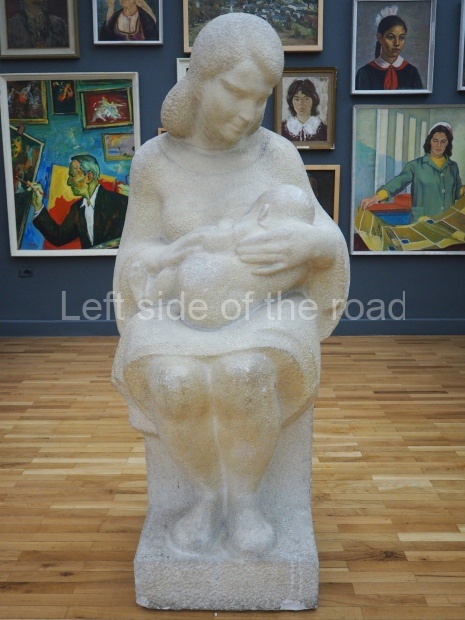
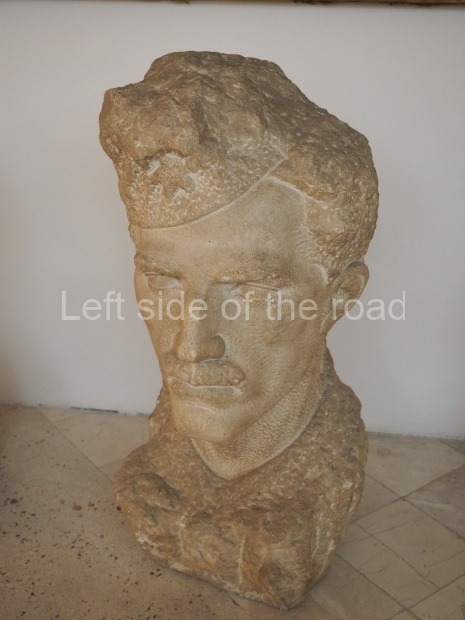
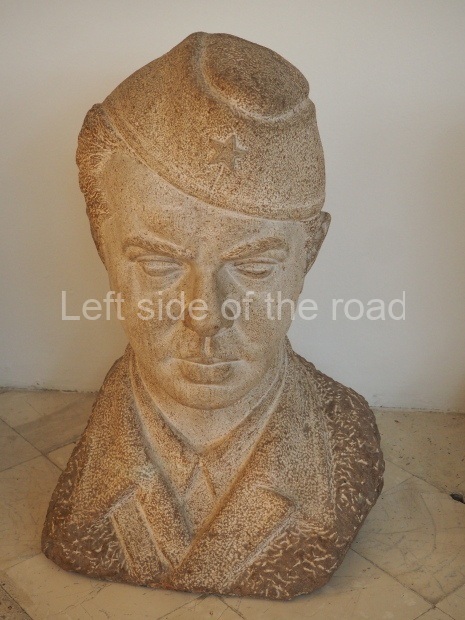
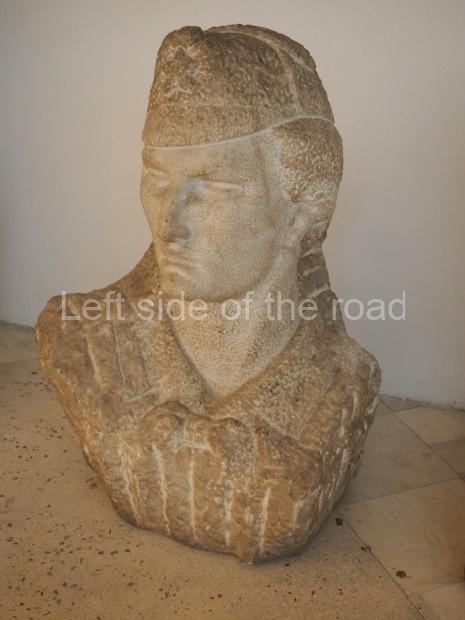
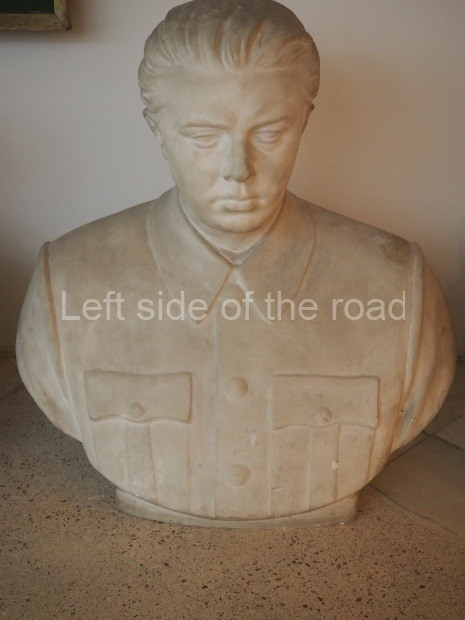
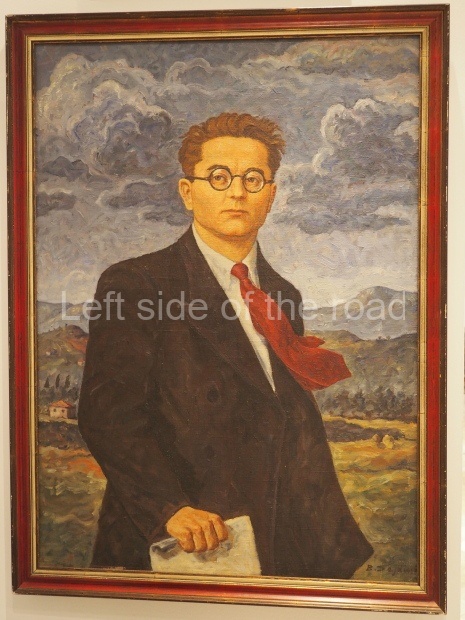
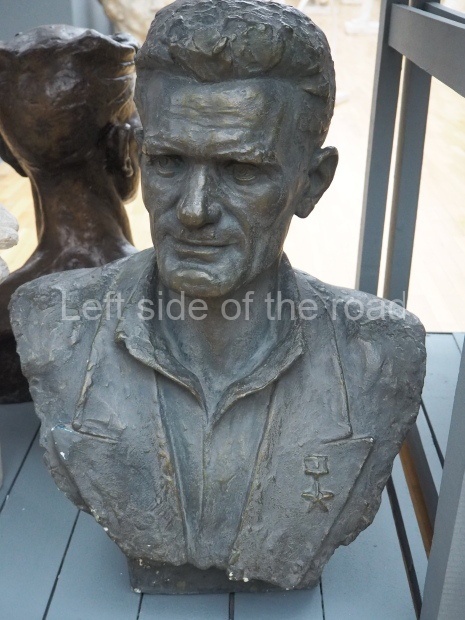
Sergei M Kirov
More on the USSR
More on the ‘Revolutionary Year’
Sergei Mironovich Kirov 27th March 1886 – 1st December 1934
From The Great Soviet Encyclopedia (1979)
(Party pseudonym of S. M. Kostrikov). Born March 27th 1886, in Urzhum, in present-day Kirov Oblast; died December 1st 1934, in Leningrad. A prominent figure of the Communist Party and the Soviet state. Became a member of the Communist Party in 1904.
Kirov’s father belonged to the lower middle class (meshchanstvo). After his parents died, Kirov at the age of seven was placed in an orphanage. He studied at the Urzhum City School from 1897 to 1901 and the Kazan Mechanical and Technical School, from which he graduated in 1904; that same autumn he moved to Tomsk and worked as a draftsman with the city executive board. There Kirov became an active member of the Bolshevik group of the Tomsk Social Democratic organization. He was elected to the Tomsk Russian Social-Democratic Labour Party (RSDLP) committee in July 1905 and organized an underground printing press and conducted party work among railroad workers in the summer of 1906. In October 1905, Kirov prepared and successfully led a strike at the important Taiga railroad station. He was repeatedly arrested in 1905 and 1906; in February 1907, having spent seven months in prison, he was sentenced to one year and four months of detention in a fortress.
After his release in June 1908, Kirov moved to Irkutsk, where he re-established the Party organization that had been smashed by the police. Evading police persecution, Kirov moved in May 1909 to Vladikavkaz (now Ordzhonikidze), assumed the leadership of the Bolshevik organization, and worked on the newspaper Terek. In November 1912 the newspaper published the article “Simplicity of Mores” over the signature S. Kirov, a surname that became his party pseudonym. In the period of the new revolutionary upswing in 1910–14 and during World War I, Kirov directed all Bolshevik political work in the Northern Caucasus; he was elected to the Vladikavkaz Soviet after the February Revolution of 1917. In October 1917, Kirov was a delegate to the Second All-Russian Congress of Soviets and participated in the October armed uprising in Petrograd. Upon returning to Vladikavkaz, Kirov led the struggle of the working people of the Terek for Soviet rule. He attended the second oblast congress of the peoples of the Terek, held in Piatigorsk in February-March 1918, which proclaimed Soviet rule in the Northern Caucasus, and attended the Sixth All-Russian Congress of Soviets in November 1918 as a delegate of Terek Oblast.
In late December 1918, Kirov led an expedition transporting arms and ammunition through Astrakhan to the Northern Caucasus; he stopped in Astrakhan because the Whites had captured the Northern Caucasus by that time. He was then appointed chairman of the Provisional Military Revolutionary Committee of Astrakhan Krai in February 1919, becoming a member of the Revolutionary Military Council of the Eleventh Army on May 7th 1919, and a member of the Revolutionary Military Council of the Southern Troop Group of the Red Army on July 7th Kirov was one of the organizers and leaders of the defense of Astrakhan. From January 1919, Kirov and G. K. Ordzhonikidze directed the offensive of the Eleventh Army in the Northern Caucasus; after capturing Vladikavkaz on March 30th and Baku on May 1st the army helped the workers in Baku overthrow the Musavatists and restore Soviet power.
On May 29th 1920, Kirov was appointed plenipotentiary of the Russian Soviet Federative Socialist Republic (RSFSR) in Georgia, where the Mensheviks had seized power, and on October 1st – 12th 1920, he headed the Soviet delegation in Riga concluding the peace treaty with Poland. Kirov became a member of the Caucasian Bureau of the Central Committee of the Russian Communist Party (Bolshevik) RCP (B) after his return to the Northern Caucasus (October 1920). He was elected a candidate member of the Central Committee of the RCP(B) at the Tenth Congress of the RCP(B) in March 1921 and directed the work of the constituent congress of the Gorskaia Autonomous Soviet Socialist Republic (ASSR) (Vladikavkaz) on April 16th – 22nd 1921. Elected secretary of the Central Committee of the Communist Party of Azerbaijan in early July 1921, Kirov was instrumental in the rehabilitation of the petroleum industry and was one of the founders of the Transcaucasion Soviet Federated Socialist Republic (December 1922). The Twelfth Congress of the RCP(B), held in April 1923, elected him to the Central Committee of the RCP(B).
At a crucial point in the struggle against the Trotskyite-Zinovievite opposition, the party sent Kirov to Leningrad, and in February 1926 he was elected first secretary of the Leningrad Province Committee of the All-Union Communist Party (Bolshevik), ACP(B) and of the North-western Bureau of the Central Committee of the ACP(B) and a candidate member of the Politburo of the Central Committee of the ACP(B). Under his leadership the Leningrad organization made great strides in all fields of socialist construction. Kirov waged an uncompromising and principled struggle for party unity against all anti-party groupings, such as the Trotskyites, Zinovievites, and Bukharinites. He was elected to the Politburo of the Central Committee of the ACP(B) in 1930, to the Organization Bureau in 1934, also becoming its secretary, and to the Presidium of the Central Executive Committee of the USSR. A passionate tribune totally committed to the cause of the Party, Kirov enjoyed tremendous prestige among and had the love of the Soviet people. On December 1st 1934, Kirov was killed by an enemy of the Communist Party in Smol’nyi Institute (Leningrad).
Kirov had been awarded the Order of Lenin and the Order of the Red Banner. He is buried in Moscow on Red Square at the Kremlin wall.

Sergei with JV Stalin
On December 1, 1934, S. M. Kirov was foully murdered in the Smolny, in Leningrad, by a shot from a revolver.
The assassin was caught red-handed and turned out to be a member of a secret counter-revolutionary group made up of members of an anti-Soviet group of Zinovievites in Leningrad.
S. M. Kirov was loved by the Party and the working class, and his murder stirred the people profoundly, sending a wave of wrath and deep sorrow through the country.
The investigation established that in 1933 and 1934 an underground counter-revolutionary terrorist group had been formed in Leningrad consisting of former members of the Zinoviev opposition and headed by a so-called “Leningrad Centre.” The purpose of this group was to murder leaders of the Communist Party. S. M. Kirov was chosen as the first victim. The testimony of the members of this counter-revolutionary group showed that they were connected with representatives of foreign capitalist states and were receiving funds from them.
The exposed members of this organization were sentenced by the Military Collegium of the Supreme Court of the U.S.S.R. to the supreme penalty—to be shot.
…..
In a circular letter to Party organizations on the subject of the foul murder of S. M. Kirov, the Central Committee of the Party stated:
a) We must put an end to the opportunist complacency engendered by the enormous assumption that as we grow stronger the enemy will become tamer and more inoffensive. This assumption is an utter fallacy. It is a recrudescence of the Right deviation, which assured all and sundry that our enemies would little by little creep into Socialism and in the end become real Socialists. The Bolsheviks have no business to rest on their laurels; they have no business to sleep at their posts. What we need is not complacency, but vigilance, real Bolshevik revolutionary vigilance. It should be remembered that the more hopeless the position of the enemies, the more eagerly will they clutch at ‘extreme measures’ as the only recourse of the doomed in their struggle against the Soviet power. We must remember this, and be vigilant.
b) We must properly organize the teaching of the history of the Party to Party members, the study of all and sundry anti-Party groups in the history of our Party, their methods of combating the Party line, their tactics and—still more the tactics and methods of our Party in combating anti-Party groups, the tactics and methods which have enabled our Party to vanquish and demolish these groups. Party members should not only know how the Party combated and vanquished the Constitutional-Democrats, Socialist-Revolutionaries, Mensheviks and Anarchists, but also how it combated and vanquished the Trotskyites, the ‘Democratic-Centralists,’ the ‘Workers’ Opposition,’ the Zinovievites, the Right deviators, the Right-Leftist freaks and the like. It should never be forgotten that a knowledge and understanding of the history of our Party is a most important and essential means of fully ensuring the revolutionary vigilance of the Party members.
From The History of the Communist Party of the Soviet Union (Bolshevik), Foreign Languages Publishing House, Moscow, 19039, pp325-328.

SM Kirov addressing a meeting in the Ingush village of Bazorkino
IN THE NORTH CAUCASUS
In the North Caucasus the Bolsheviks were obliged to fight under extremely difficult conditions. The very intricate national situation, the antagonisms among the Cossacks, the strife between the higher caste of the Cossacks and the Mountain People, and between the Cossacks as a whole and the peasant settlers from other parts of the country, the national strife among the Mountain People, and the numerical weakness of the proletariat in the region – all this necessitated the employment of exceptionally cautious tactics. An example of thoughtful, Bolshevik handling of problems was set in the Terek Region in 1917 by Sergei Mironovich Kirov.
Kirov had been away in Petrograd on a mission on behalf of the Vladikavkaz Bolshevik organisation and the Vladikavkaz Soviet. He returned on September 2 and immediately plunged into revolutionary work. Every day, and sometimes several times a day, he addressed meetings of workers and soldiers. A brilliant speaker, and well read, he had a gift for illustrating his arguments with vivid metaphors and examples. His inspired speeches, breathing profound faith in the victory of the revolution, literally fired his audiences. In preparing the proletariat and the working people in the North Caucasus in general for armed insurrection Kirov attached enormous importance to propaganda activities among the poorer sections of the Mountain People, among whom he was already extremely popular.
The counter-revolutionaries among the Cossacks and Mountain People did their utmost to foment national strife. Rumours were deliberately spread in the Cossack stanitsas to the effect that the Bolsheviks were· inciting the Mountain People to set fire to and destroy the stanitsas. On the other hand, the mullahs and kulaks among the Mountain People spread the rumour that the shaitans (devils), the Bolsheviks, were urging the Cossacks to wreck their mosques and seize their wives and children. The poorer sections of the Mountain People and the Cossacks, however, knew Kirov as a courageous Bolshevik who had already on one occasion averted what had seemed an inevitable sanguinary collision. On July 6, the soldiers in Vladikavkaz, incited by the counter-revolutionaries, brutally assaulted the unarmed Mountain People who had come to market. The flames of national war threatened to engulf the city, the Cossack stanitsas and the auls, or mountain villages. Foreseeing the frightful bloodshed that would result in the extermination of the best revolutionary forces and the strengthening of the counter-revolutionary forces among the Cossacks’ and the Mountain People, Kirov went off alone to the Ingush village of Bazorkino, where preparations were in progress for an armed attack on Vladikavkaz and succeeded in revealing to the Ingush people the provocative designs of the counter-revolutionaries among the Cossacks and Mountain People. His courage and daring made such a profound impression upon them that they abandoned their intention of attacking the city. Through Kirov, the best representatives of the Ingush people, such as Sultan Kostayev and Yusup Albagachiev, made contact with the Vladikavkaz Soviet of Workers’ Deputies.
Kirov also established connections with the poorer sections of the Ossetian people through the Ossetian revolutionary party known as ‘Kermen’, which was formed in the summer of 1917. This party took its name from the legendary Ossetian hero, Kermcn, a slave, who had fought for his rights and had been treacherously killed by his oppressors. True, this organisation lacked a definite program and clung to a number of nationalist prejudices and fallacies, but it exercised considerable influence among the poorer sections of the Ossetian peasants. In May 1918 the best elements of the ‘Kermenists’ joined the Bolshevik Party and formed an Ossetian Area Bolshevik organisation.
By the autumn of 1917 the Vladikavkaz Party organisation had undergone considerable change. Under Kirov’s leadership, the Bolsheviks had won over the proletarian nucleus in the united Social-Democratic organisation, and from the very first days of the revolution had acted as an independent group. They were backed by the workers in the railway workshops and the Alagir Works.
The split in the Social-Democratic organisation occurred at the end of October 1917. At a general Party meeting held in Vladikavkaz, of the 500 members present, only eight supported the Menshevik platform. In face of this overwhelming defeat the Mensheviks withdrew from the meeting.
Thus, on the eve of the Great Proletarian Revolution the Vladikavkaz Bolsheviks were united in a strong and solid Party organisation. This was an extremely important factor in securing the victory of the Soviet regime in the North Caucasus. Already at the end of September the Bolsheviks had gained control of the Vladikavkaz Soviet.
On October 5 the Vladikavkaz Soviet elected Kirov as one of its delegates to the Second All-Russian Congress of Soviets. He was also elected as a delegate to this Congress by the Nalchik Soviet. On October 21, after Kirov had left for Petrograd, the Vladikavkaz Soviet re-elected him in his absence a member of the new Executive Committee that was chosen that night.
From The History of the Civil War in the USSR, Volume 2, Lawrence and Wishart, London, 1947, pp136-138
THE DEATH OF KIROV
1st December 1934
A great sorrow has befallen our Party. On December 1st, Comrade Kirov fell victim to the hand of an assassin, a scallawag sent by the class enemies.
The death of Kirov is an irreparable loss, not only for us, his close friends and comrades, but also for all those who have known him in his revolutionary work, and have known him as a fighter, comrade and friend. A man who has given all his brilliant life to the cause of the working class, to the cause of Communism, to the cause of the liberation of humanity, is dead, victim of the enemy.
Comrade Kirov was an example of Bolshevism, recognizing neither fear nor difficulties in the realizing of the great aim, fixed by the Party. His integrity, his will of iron, his astonishing qualities as an orator, inspired by the Revolution, were combined in him with such cordiality and such tenderness in his relations with his comrades and personal friends, with such warmth and modesty, all of which are traits of the true Leninist.
Comrade Kirov has worked in different parts of the U.S.S.R. in the period of illegality and after the October Revolution – at Tomsk and Astrakhan, at Vladicaucase and Baku – and everywhere he upheld the high standard of the Party; he has won for the Party millions of workers, due to his revolutionary work, indefatigable, energetic and fruitful.
During the last nine years, Comrade Kirov directed the organization of our Party in Lenin’s town, and the region of Leningrad. There is no possibility, by means of a short and sad letter, to give an appreciation of his activities among the workers of Leningrad. It would have been difficult to find in our Party, a director who could be more successfully in harmony with the working class of Leningrad, who could so ably unite all the members of the Party and all the working class around the Party. He has created in the whole organization of Leningrad, this same atmosphere of organization, of discipline, of love and of Bolshevik devotion to the Revolution, which characterised Comrade Kirov himself.
You were near us all Comrade Kirov, as a trusted friend, as a loved comrade, as a faithful companion in arms. We will remember you, dear friend, till the end of our life and of our struggle and we feel bitterness at our loss. You were always with us in the difficult years of the struggle for the victory of Socialism in our country, you were always with us in the years of uncertainty and internal difficulties in our Party, you have lived with us all the difficulties of these last years, and we have lost you at the moment when our country has achieved great victories. In all these struggles, in all our achievements, there is very much evidence of you, of your energy, your strength and your ardent love for the Communist cause.
Farewell, Sergei, our dear friend and comrade.
J. Stalin, S. Ordjonikidze, V. Molotov, M. Kalinin, K. Voroshilov, L. Kaganovich, A. Mikoyan, A. Andreyev, V. Tchoubar, A. Idanov, V. Kuibyshev. Ia. Roudzoutak, S. Kossior, P. Postychev, G. Petrovsky, A. Ienoukidze, M. Chkiriatov, Em. Iaroslavski, N. Ejov,
Pravda
2 December 1934
In JV Stalin, Works, Volume 14, pp63-65
More on the USSR
More on the ‘Revolutionary Year’