National Art Gallery ‘Sculpture Park’ – Tirana

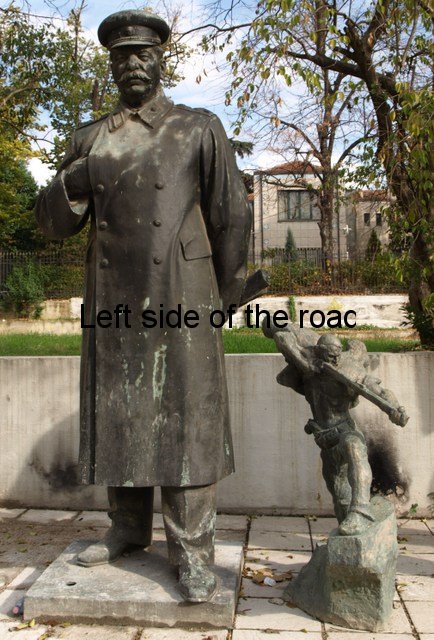
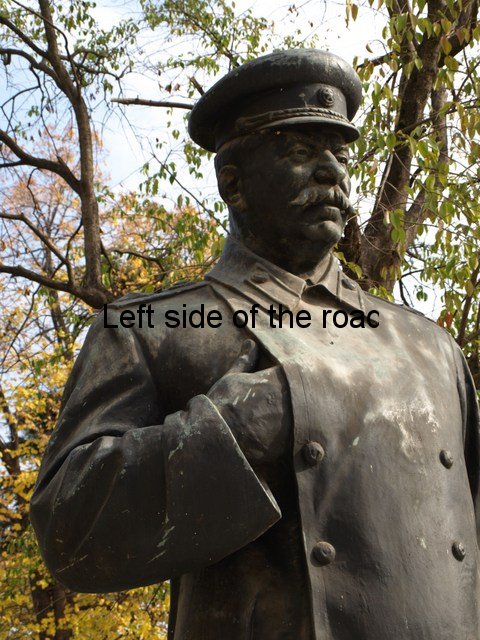
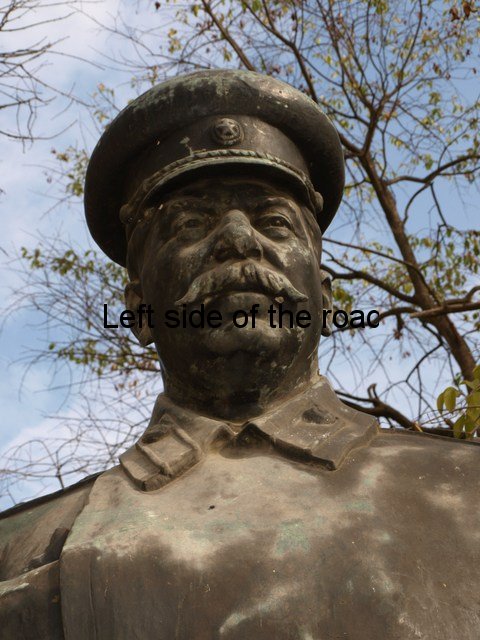
Uncle Joe - Art Gallery 'Sculpture Park'

Uncle Joe – Art Gallery ‘Sculpture Park’

More on Albania ……

National Art Gallery ‘Sculpture Park’ – Tirana

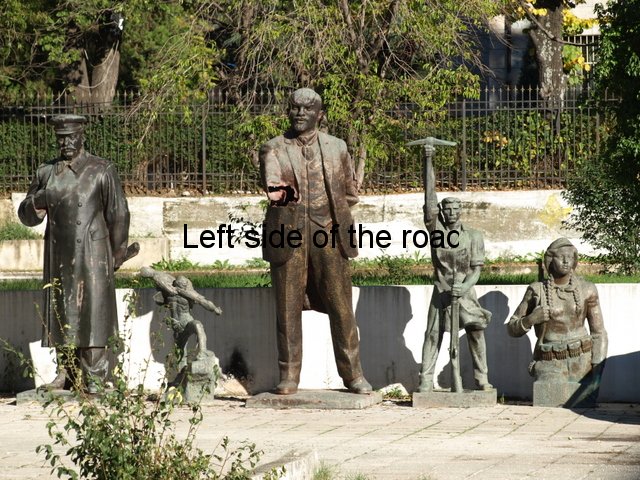
Each time I’ve been to Tirana I’ve made it a point to visit the impromptu ‘sculpture park’ that has been created behind the National Art Gallery, just down from the main Skanderbreu Square in the centre of Tirana.

The Art Gallery itself has only a very few actual sculptures on display inside the building, the emphasis being on paintings, especially those from the period from 1945 to 1990, where the dominant style was that of Socialist Realism.

But the area behind the gallery was constructed not for the display of works of art but as a service access to the building. And as the gallery is a public building this area shows the lack of care and investment in maintenance that is the general fate of public spaces in the whole of Albania, not just the capital of Tirana.

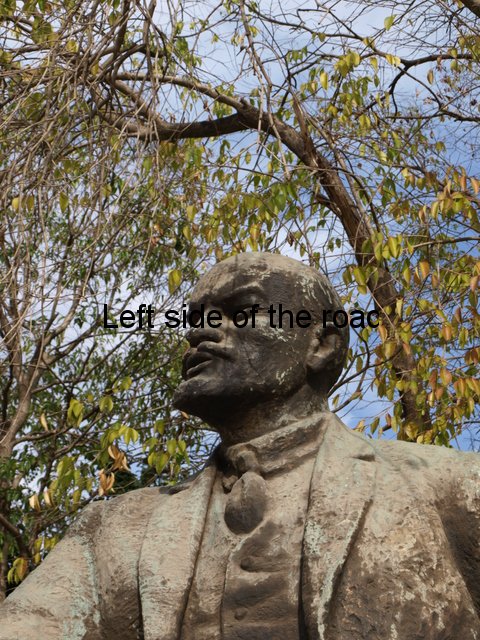
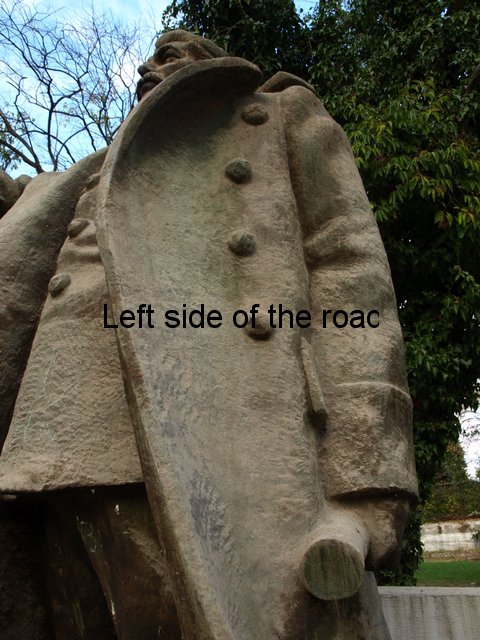
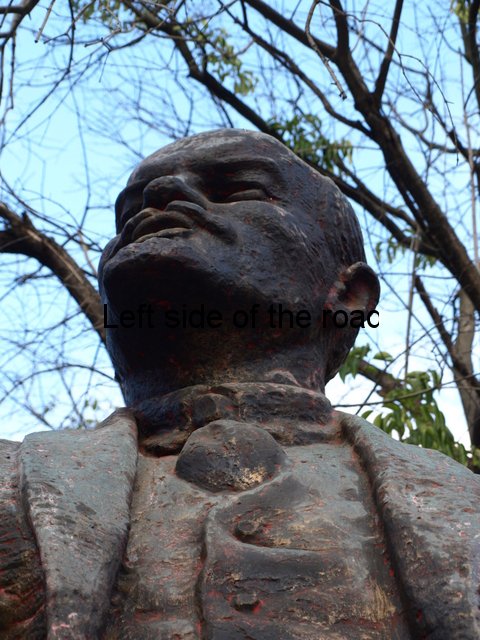
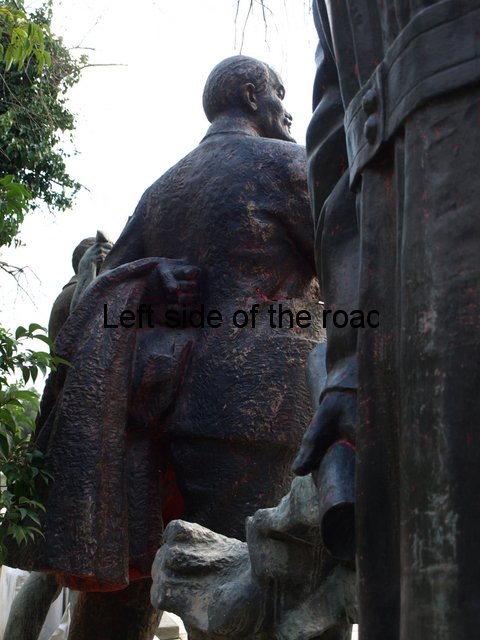
The statues that are now there would have previously held pride of place in some public square in different parts of Tirana but there is no indication of their provenance. Some have been damaged, either by accident or design, the statue of the great Marxist and first Soviet leader, Vladimir Ilyich Lenin (the work of Kristina Hoshi, the original of which was created in 1954 in cement) in bronze, missing his right arm from the elbow. This once stood proud close to its present position, in the park across the road.

Many of the statues of individuals from the socialist era take on the pose of some famous meeting and the stance that Lenin takes in this statue can be seen on a number of photos from his relatively short time as leader of the first socialist state (his life no doubt being cut short as a consequence of an assassin’s attempt in 1918 which failed in its aim but which meant that a fragment of the bullet could not be removed from Lenin’s brain).

VI Lenin in Tirana - 1970

VI Lenin in Tirana – 1970

When it comes to the great Marxist leaders they are always (at least here in Albania) depicted with their right arm making some sort of gesture or greeting whilst slightly behind their bodies, in their left hand, they hold a roll of paper as if they are about to make an important proclamation.

Although this damage is unfortunate at least it allows an insight to the form of construction of these statues. They are not made of solid bronze, as many would think, but of a hollow bronze that’s only about a couple of centimetres thick. This relatively cheap construction technique explains why so many statues were erected in virtually every town in the country (it also explains why it was so easy to topple these statues in the counter-revolution).

Although few in number this small group provides quite a deep insight into the thinking of the Party of Labour of Albania during the 45 years it was the dominant political force within the country and attempting to construct a socialist society.

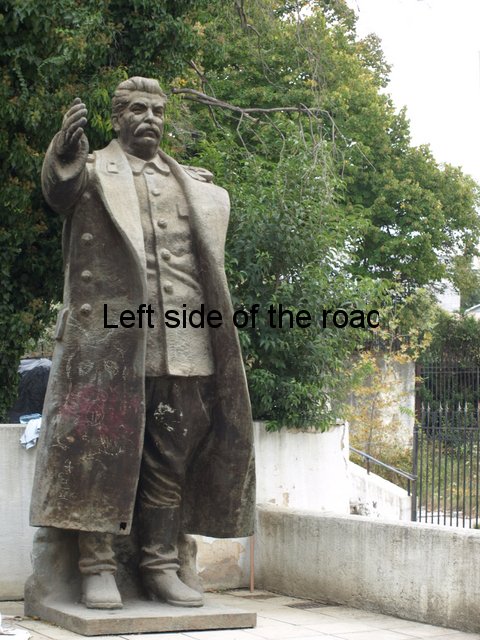
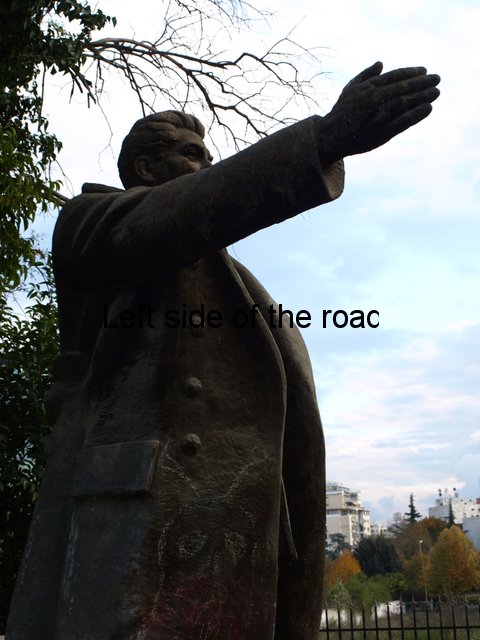
Uncle Joe - in happier times in Tirana

Uncle Joe – in happier times in Tirana

Socialist Albania gave women a role in society and assigned them an importance that has never been surpassed, either in the Soviet Union which proceeded the victory of Socialism in Albania or any other country that has attempted to construct socialism since. This is not the role of women in the higher echelons of society, the breaking of the so-called ‘glass ceiling’, the breaking of which only benefits a minuscule percentage of women in any society yet which gets most coverage in the capitalist media.

In Albania it was the women from the working class and peasantry whose lives were changed beyond recognition. In a patriarchal society where women were oppressed by virtual feudal social and economic conditions, as well as by the stultifying traditions of the church (of various trends) by the taking up of the gun during the war for national liberation against the Italian and German Fascist invaders they stated unequivocally that they would no longer ‘live in the old way’.

In many of the extent monuments to the struggles of the past a woman takes a central position and virtually always with a weapon in hand. Albanian women weren’t prepared to have ‘freedom’ given to them, they would fight for it themselves, freedom that would have real meaning. The clearest example of this idea can be seen in the huge mosaic on the façade of the National Historical Museum in Skanderbreu Square in the centre of Tirana.

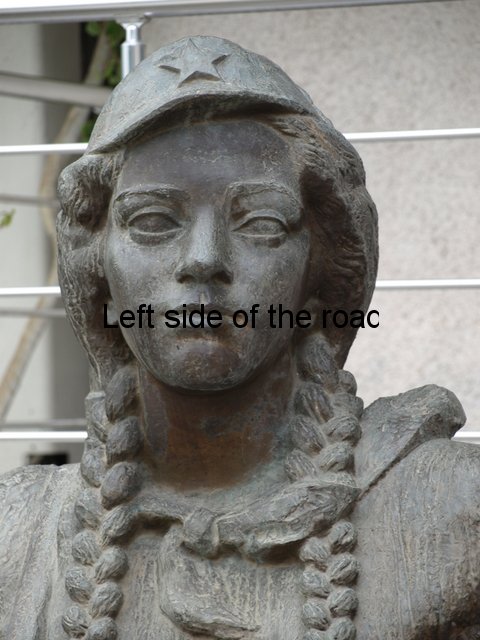
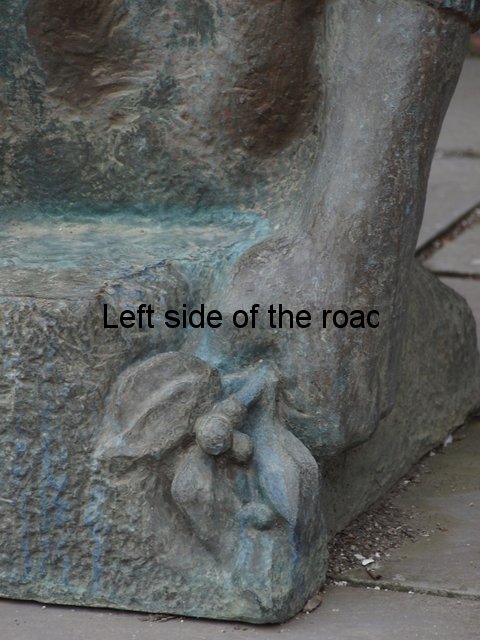
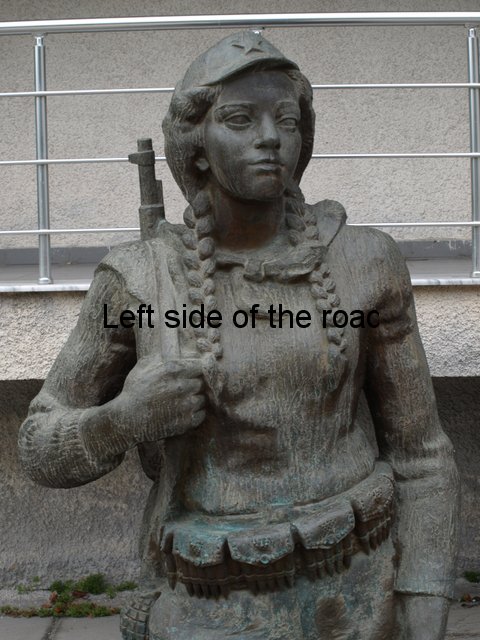
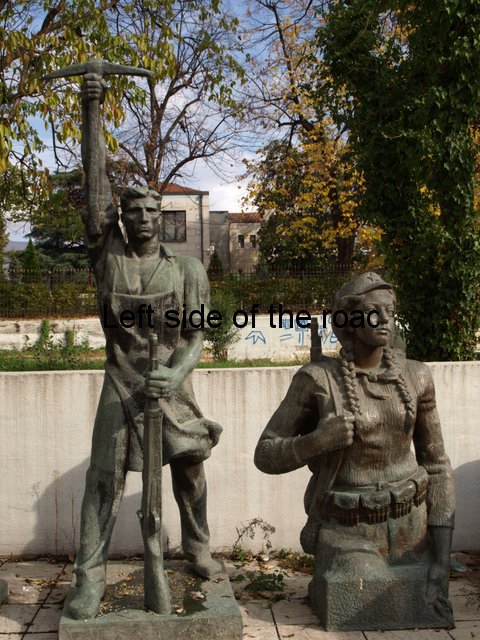
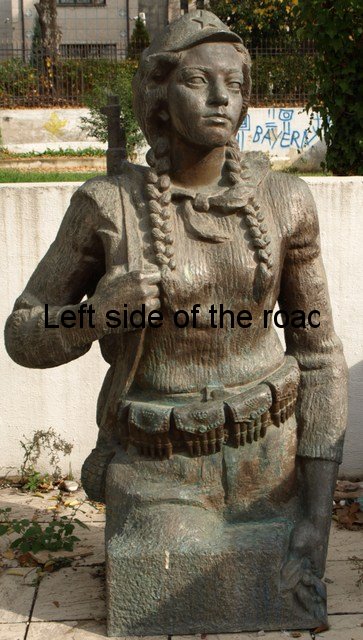
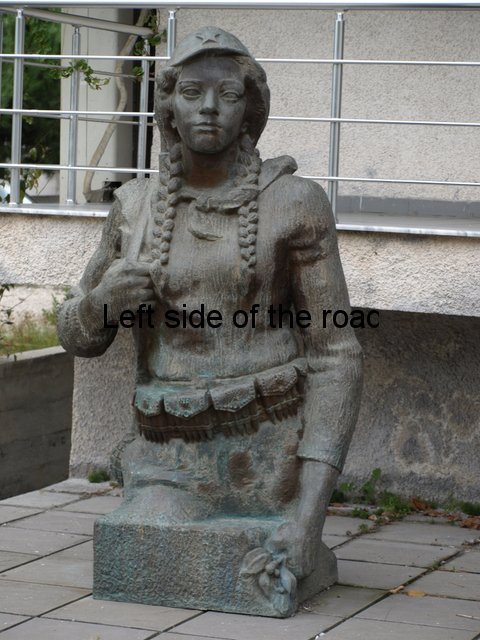
The young woman depicted in the dirty shambles of the rear of the Art Gallery (in bronze) is of Liri Gero and exudes confidence in her own ability, looks the viewer straight in the eye (not looking down as ‘traditional’ society would have her do), has a gun strapped to her back and clutches a small bunch of flowers in her left hand. Communists fight for bread but for roses too!

Female Liberation Fighter clutching flowers

Female Liberation Fighter clutching flowers

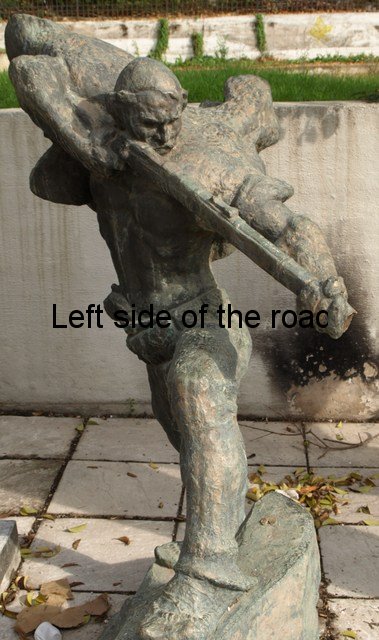
The smallest of the collection depicts a male fighter (also in bronze) from one of the ethnic groups from the mountains of Albania demonstrating that the fight for freedom is not restricted to the ‘sophisticated’ city dwellers or a self-selected intellectual elite but should involve everyone from all sectors and strata of society.

Liberation Fighter

Liberation Fighter

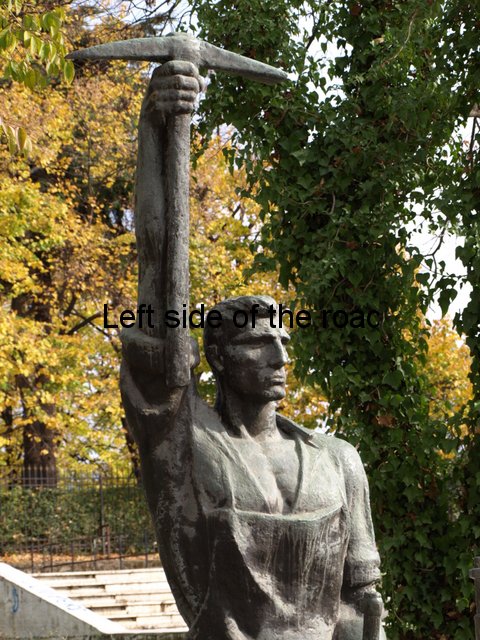
Another of the statues is a physical representation of one of the fundamentals of Albanian Socialist society, the Pickaxe and Rifle (Hector Dule, 1966, Bronze). Here we have a male holding a rifle, the butt resting on the ground, in his left hand whilst in his right he holds high a pickaxe. These two items are the equivalent of the Soviet Hammer and Sickle. Whereas in the Soviet Union the symbol represented the unity of the industrial worker and the peasant the Albanian Pickaxe and Rifle declares that the successful construction of a Socialist society depends upon physical labour protected by the determination of the population to defend any gains by force of arms.

Pick Axe and Rifle

Pick Axe and Rifle

The fact that far too many Albanians forgot this necessity during the counter-revolution of the early 1990s (and then seemed to lose all common sense in the chaotic years that followed, basically throwing out the baby with the bath water) doesn’t detract from the validity of this revolutionary concept.

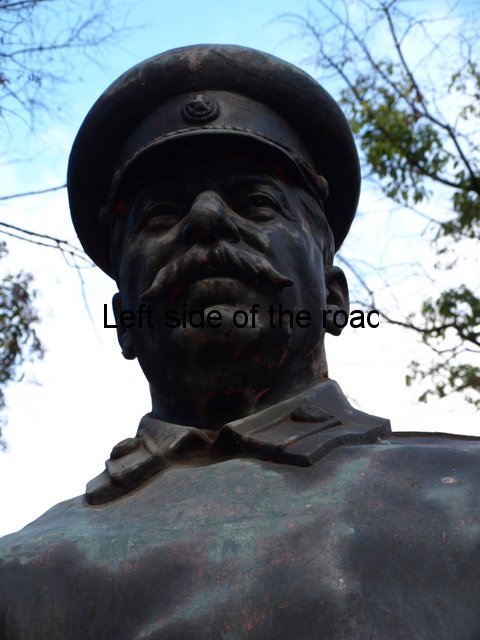
JV Stalin - Skenderberg Square, Tirana

JV Stalin – Skenderberg Square, Tirana

Finally we have the statues of JV Stalin and VI Lenin, the great Marxist Russian leaders so admired by the Albanian leader Enver Hoxha. I’ve already mentioned the damaged statue of Lenin. This statue, along with one of Uncle Joe, was covered by a tarpaulin just prior to the 100th anniversary of Albanian ‘independence’ in November 2012 – true independence for Albania (if only for 46 years) was achieved on November 29th, 1944. They have now been released from their dark penance but they have been joined by another new comrade who is, presently, covered with a white tarpaulin. I have been told this is a damaged bust of Enver Hoxha.

The hidden stranger

The hidden stranger

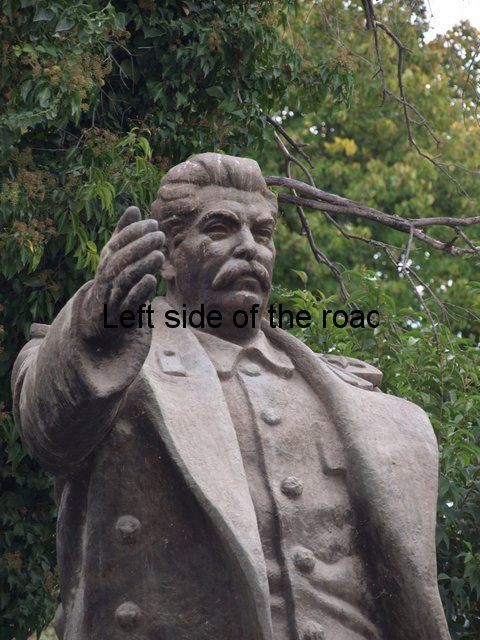
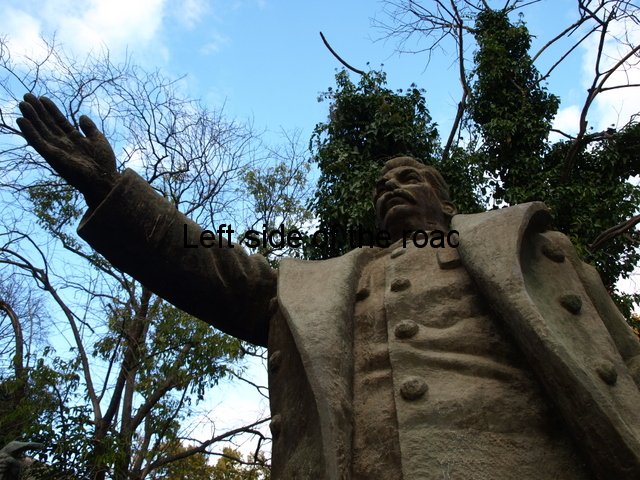
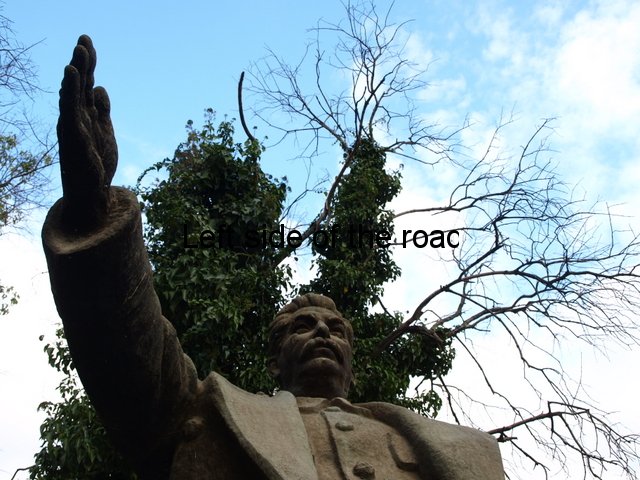
I was pleasantly surprised on my visit in October 2014 to find that there had been a new arrival to the small, select group. This was another, but somewhat larger, statue of Stalin. The ‘new’ arrival is in a less formal stance, without cap and is depicted as if greeting the viewer with his right arm stretched out. This is made out of bronze and as far as I can tell it used to stand in the square in front of the Bashkia (Town Hall) in the town of Kombinat – to the south-west of Tirana, on the old road to Durres.It’s at this point you would get off the bus if you wished to visit the grave of Enver Hoxha in its present location in the main city cemetery after being ousted from the National Martyrs’ Cemetery.

On one side of this square was the main entrance to the huge textile factory that gave the town its name (Kombinat means factory in Albanian). This has been derelict for many years and the ruins have slowly disappeared as the land has been cleared for other uses. The only noticeable remains of the factory is the main gate itself – with interesting decoration over the arches. You can get an ideas of how things used to look from a small painting called Voluntary work at the ‘Stalin’ textile factory by Abdurrahmin Buza and painted in 1948 which is on permanent exhibition in the Art Gallery itself.

It’s exactly the same as a statue that was placed in the oil and industrial town of Qender Stalin (now renamed Korcova, not that far from Berat) but there the statue was made from concrete and unlikely to have survived the chaos of the 1990s.

The original design was by Odhise Paskali whose other works number the statue of Skanderbreu on the horse in the square to which he gives his name in the centre of Tirana, as well as another of the national hero in the National Museum, this time not being a burden to a poor animal but standing on his own two feet. Paskali was also the artist for, among others; the group Shokët (Comrades) in Përmet Martyrs’ Cemetery; the standing Partisan on the monument to the Congress of Përmet in the town itself; a double bust of the Two Heroines of Gjirokaster; and a bust of Vojo Kushi, now in a small square on Rruga Dibres to the north of the city centre.

Perhaps one down side of a new Joe arriving is that the statue of the female Partisan, Liri Gero, has been moved to make way for the Man of Steel and is now facing the other statues, with her back to the Art Gallery. Is this yet another example of the return of a patriarchal society or is it, the reverse, that the female fighter is going to give a lesson to the men?

If I will ever be able to find out more details of these statues, i.e., who was the sculptor, where they originally stood, how they survived the counter-revolution and why they ended up in the shadows of the National Art Gallery remains to be seen.

One slight difficulty that has arisen since my last visit a couple of years ago is the presence of a ‘security’ guard who has to be circumvented in order to get a close view of the statues. Why he is so conscientious in this I don’t understand. If the authorities don’t want anyone to see them why place them out in the open? However, he can only be in one place at a time and when he is watching the world go by at the southern end of the gallery grounds, just creep towards the north.

NB From the end of 2021 the gallery has been closed. I have no information about exactly why but there had long been signs of the need for structural repairs. When it will reopen I have no idea. There didn’t seem to be much activity when I was in Tirana in the summer of 2022. Neither do I have any idea of what will be exhibited. There is, I’m sure, a possibility that the items that were part of the permanent exhibition, works of Socialist Realist Art, might well be confined to the depths and the gallery will become a centre of decadent capitalist ‘art’.
More on Albania ….

The Bus from Bajram Curri to Tirana

Kosovo entry stamp

Kosovo entry stamp

More on Albania ……

The Bus from Bajram Curri to Tirana

or

How to officially enter a country without setting foot in it.

One of the joys of travelling is the unexpected. Well, I suppose, many people have come across a form of the unexpected they would rather not have experienced but those unpleasant situations can happen in your own country. The unexpected that I’m talking about is the experience when something happens, something changes, something develops in a manner that was totally unforeseen at the beginning, but all ends up well.

This was the case when I wanted to get from Bajram Curri, in the very north of Albania, back to the capital Tirana – more or less in the centre of the country.

I had arrived in the area via the Komani ferry and had spent some time (unsuccessfully) attempting to get to Thethi via Valbona. It was my fault (for a number of reasons) that I didn’t achieve my original goal but that wasn’t the first – and I’m sure it won’t be the last – time that such has happened.

But at some time I had to get back south and so decided on the bus route from Bajram Curri. I didn’t start out with no information, it’s just that the information wasn’t exactly accurate. This is where the adventure starts in a place/country where there is little accurate and up to date information. The only British guide-book I had at the time had so many flaws it was bordering on worse than useless. It might be argued that things are changing in Albania rapidly, and that’s true, but I came across errors that didn’t reflect changes that were made long before the particular edition was published. I don’t want to labour that point, just to say ‘beware of guide books’. Take into account the most important word in the phrase and use the information provided as an indication and not to consider it as gospel.
My guide-book gave the indication that the bus to Tirana would take a tortuous, uncomfortable and very slow route through the mountains. That wasn’t a problem. I wasn’t in any real hurry and it wouldn’t be the first time (or, again, the last) I had travelled on such bad roads. Getting older the pains last a little longer but a day or two of rest and a not insignificant amount of alcohol has always dissolved the aches and pains in the past. And, anyway, it was the chance to see another part of the country.

I was starting fairly early in the morning. The guide books seem to indicate that much of the transport in Albania tails off considerably after midday. That’s true in some places but my experience over my three trips to the country is that people in generally are wanting to travel later in the day and the buses or furgons (minibuses) are starting to fill the gap, one of the ‘glories’ of the free market. However, if you don’t have exact information it pays to start early, just in case.

I should have realised that something was not what I was expecting when I was asked by the driver, once I had discovered the next Tirana bound bus, to hand over my passport. Now, I don’t have a problem of not having my passport, especially when I’m out of the country. The worst that can happen is that I won’t be able to get home. When the request is unexpected it’s a little disconcerting but when I saw that he was asking for everyone’s passport (I was the only obvious tourist on the bus) I relaxed a little.

We left on time and I was trying to work out how long it would be before we made a turn off to the right. From the map the route would be, more or less, north-east for a few kilometres and then south-east along the rough road towards the town of Kukës. But we kept on going NE and climbing and coming down from the hills. A very attractive route as we were passing by the mountains and hills in the very north-east corner of the country. Everyone else was relaxed so I assume there was no attempt at a mass kidnapping.

Then we arrived at a border crossing, so now I understood why I had been asked for my passport. A big pile of passports was passed to the immigration but no one made any attempt to see if the passports bore any relationship to the passengers. I was now in Kosova.

At this point I still wasn’t sure of my eventual destination. I was sure that there wasn’t another major destination in the area that sounded like Tirana but not planning/expecting to enter Kosova I hadn’t done any research before leaving home. I few people got off at some of the towns we then passed through but the majority stayed on. I thought my best plan was to stay on to the bitter end and just play it by ear.

The bus picked up a better, faster and wider road and then I started to see signs for Prizren. That didn’t sound like Tirana and anyway we didn’t enter the town, skirting around it towards the south. The bus then took a major road, now moving quite quickly, in a south-westerly direction. Slow witted I might have been but I started to work out what was happening.

In place of going along a very rough, very slow mountain track that would have taken hours, we had kept to the best roads to make the most speed. The only way to do that was to leave the Albania and use the roads that had been paid for by the World bank, IMF and the EEC after they had successfully dismembered the old federation of Yugoslavia following a long, bitter and hugely expensive war, both in terms of resources and human lives.

On arriving at another border post my realisation was confirmed. Immediately after moving off at the border the passports were passed from the front of the bus to the back, mine arriving quickly as it was the only one where they didn’t have to check the photo to know who it belonged to. About 15 to 20 minutes later, overlooking the town of Kukës, we stopped for a break at a road side café, back in Albania with the known brand names for the beer and the like.

On moving off from there we travelled on an amazing motorway. Amazing for the effort needed in its construction and for the fact that there was so little traffic passing along it, in either direction. Again a road funded by foreign money but I couldn’t really see how it benefited the Albanians. Thousands travel every day along the coastal highways, from Shkodër in the north to Saranda in the south. Parts of that road are atrocious and work, in places, had been stalled for as long as I’ve been going there, presumably due to lack of resources.

Why this motorway in the isolated mountain area of eastern Albania was a priority has nothing to do with the Albanian people or their economy, but more for any future foreign interests. Mainly military, I would have thought, to get to the heart of the country and its capital Tirana, in the quickest possible time, in the event of anything developing that might have an adverse effect on foreign control of the country that has been an aim since the end of the 19th century. That’s my theory but would welcome any other ideas.

So I eventually got to Tirana, my original goal, and probably much quicker than my expected route. I wasn’t kidnapped and held to ransom. It was just the quickest way. The next time I’m in that area I will attempt the rough route and keep hold of my passport.

But now I have a stamp (only one – I didn’t get one for leaving Kosova) in my passport for entering a country in which I, literally, have never set foot.

More on Albania …..

Resurrection of Christ Greek Orthodox Cathedral – Tirana

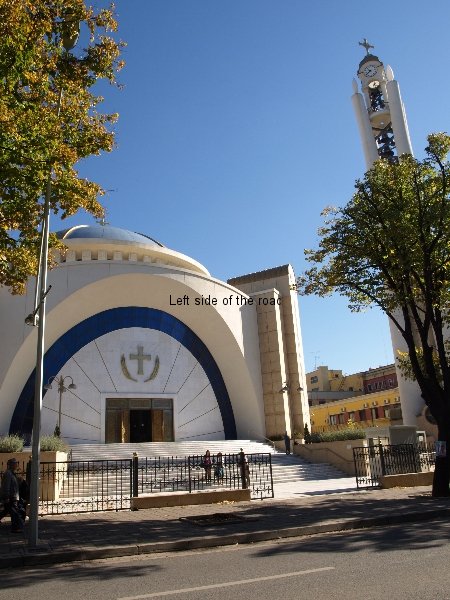
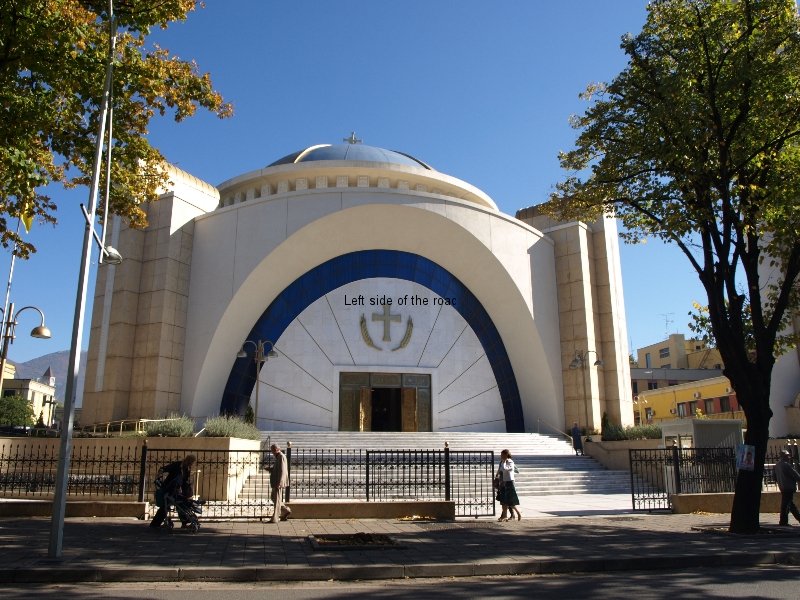
Cathedral of the Resurrection of Christ, Tirana - Main entrance

Cathedral of the Resurrection of Christ, Tirana – Main entrance

More on Albania ……

Resurrection of Christ Greek Orthodox Cathedral – Tirana

There doesn’t seem to be any money to improve the infrastructure in Albania but plenty for building churches and the new Resurrection of Christ Greek Orthodox Cathedral in Tirana has taken a big chunk of that budget.

This very modern structure, nothing like the traditional Orthodox churches, is to be found on Dëshmorët e 4 Shkurit, just before the junction with Myslym Shyri, a couple of minutes from Skënderbeu Square in the centre of Tirana. It was officially opened on 24th June 2012 and cost ‘millions of Euros’.

In place of looking for local, Albanian architects the Orthodox Church decided to go to architects based in New York, Papadatos Partnership LLP. They have established themselves as specialists in building Greek Orthodox churches in the United States. The founder of this partnership is an Archon of the Ecumenical Patriarchate and it is through the influence of this lay organisation that the money was probably found to pay for the cathedral.

The head of the Albanian Greek Orthodox, Archbishop Anastasios, is quoted as saying, in July 2003, ‘I was asked to revive the Church without any financial support, in a destitute country undergoing a wrenching political transformation.’ And in the last 10 years or so 83 new churches have been rebuilt and 40, that were in ruin, repaired.

One of the strange things that you notice when travelling around Albania is that although there are a lot of new churches they never seem to have anyone in them. For example I went to see what the congregation was like at the time of the six o’clock evening mass in a couple of Catholic churches in Shkodër – the Franciscan Church was deserted and the Cathedral was locked up. And this has been repeated virtually everywhere I’ve been.

Almost like a mantra anti-communists get indignant when talking about the concrete bunkers that were built throughout the country during the socialist period. Yes, these would have diverted resources away from other projects but there is no denying the fact that the country was being threatened from all sides and the construction of these bunkers was a matter of national defence. It was said that the resources could have been spent on roads and housing but if that was true then what are we to say about the untold billions that get spent in capitalist Britain, the USA and other European countries on extremely expensive armaments. Aren’t there better ways of spending this money than on the new Trident submarine system, for example, being proposed in the UK? I don’t mind criticism but can’t we have a little bit of consistency? (Of course not!)

So if bunkers are no longer being built in Albania why aren’t resources being used to improve the infrastructure rather than the building of churches and mosques by all the three main religions, Islam, Catholic and Orthodox Christian? And I’m sure that fundamentalist protestants are there somewhere – they seem to try to get in everywhere they can.

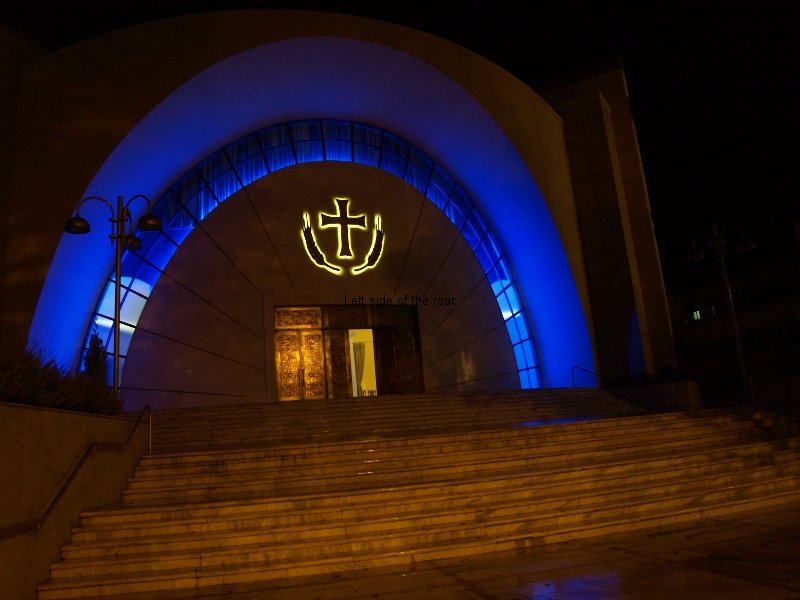
Cathedral of the Resurrection of Christ, Tirana - Main entrance at night

Cathedral of the Resurrection of Christ, Tirana – Main entrance at night

But back to the new Resurrection of Christ Greek Orthodox Cathedral. Some facts. It’s the third largest Orthodox church in Europe and took 8 years to construct.

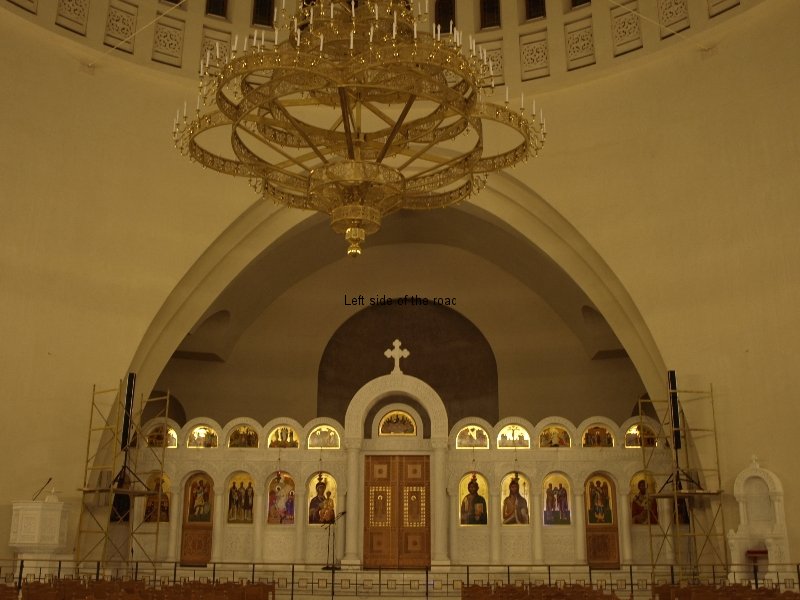
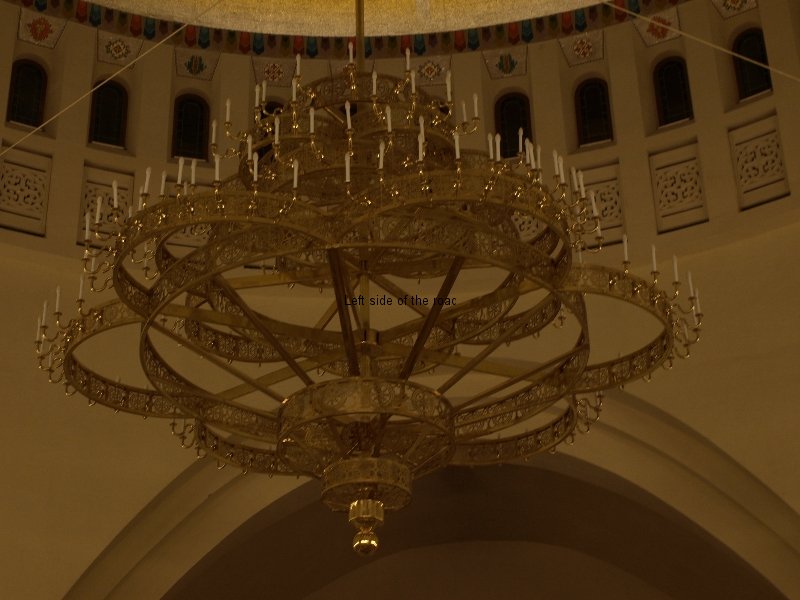
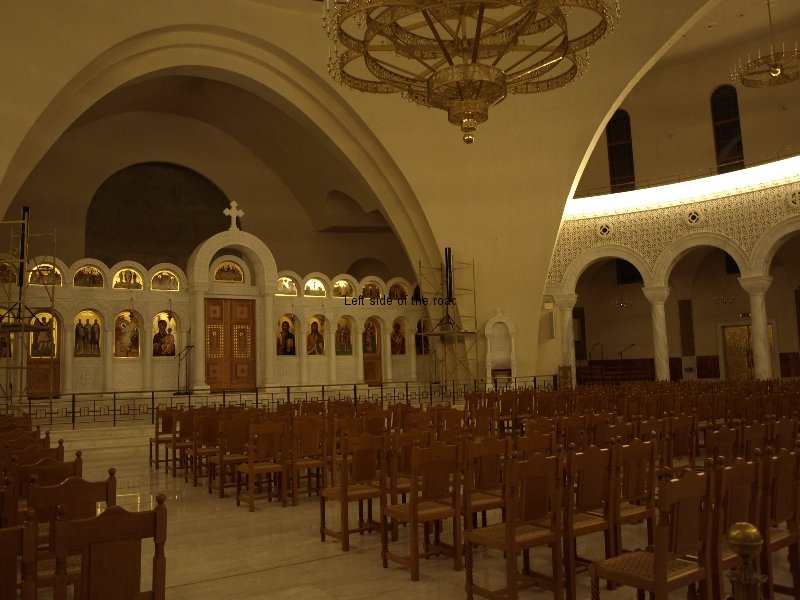
It’s an interesting building and I can see uses for it after the next atheist campaign in Albania. But for a cathedral it’s relatively small on the inside. There are supposed to be a couple of levels below ground, where there’s a concert room, but it wouldn’t take a lot to fill the main church – quite useful if not many people come.

Cathedral of the Resurrection of Christ, Tirana - Christ painting on dome

Cathedral of the Resurrection of Christ, Tirana – Christ painting on dome

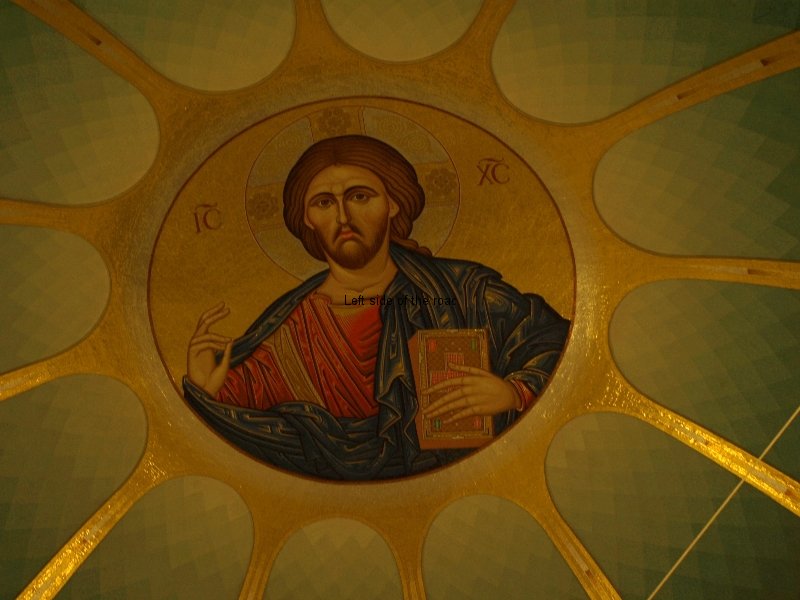
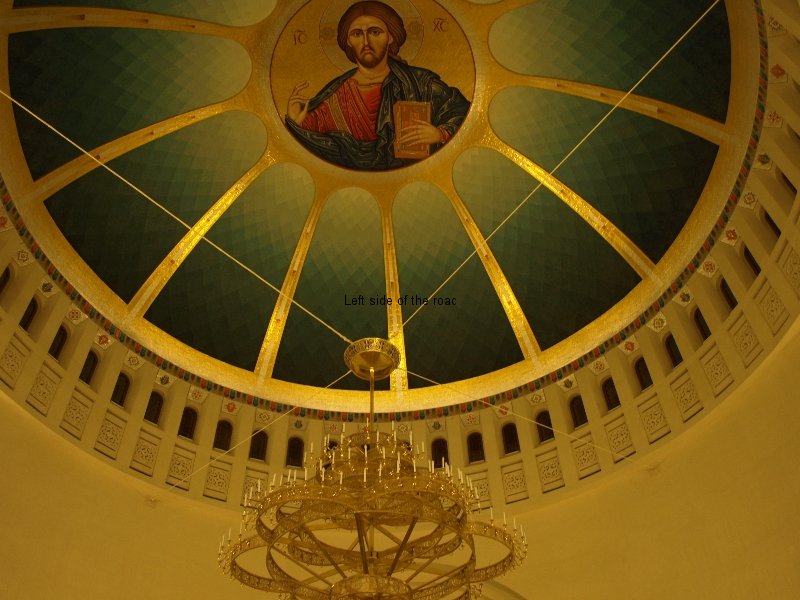
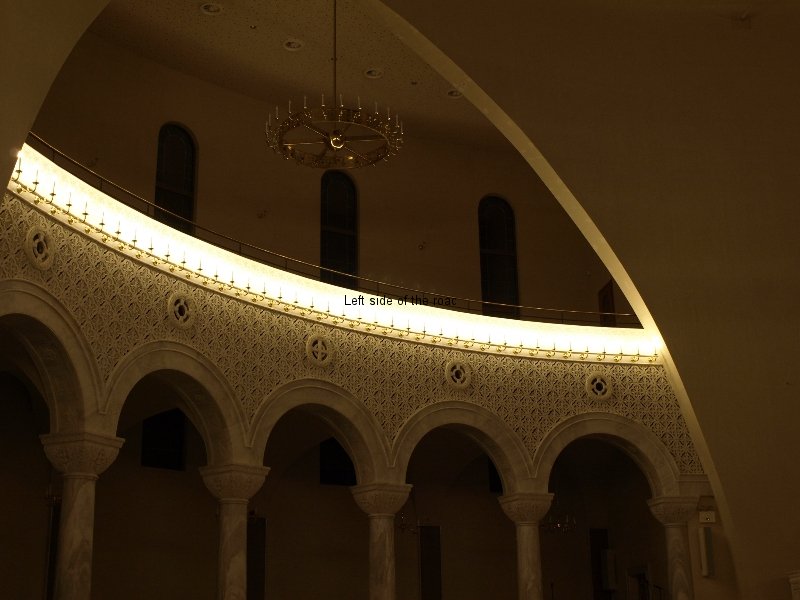
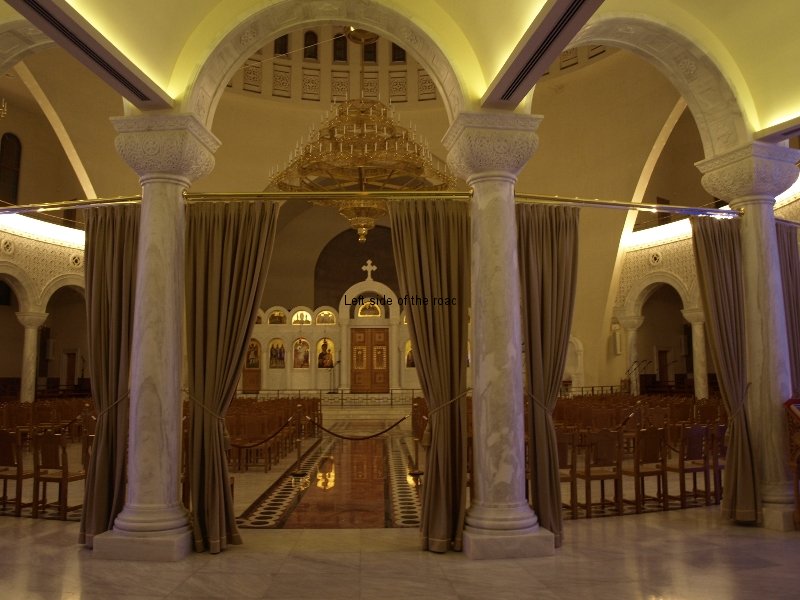
The interior is ornate in its own way at the moment but according to the computer generated pictures I’ve seen of the architect’s intentions there should be a great deal more decoration on the walls. On the four corners of the square dome supporting arches images of the four evangelists were planned as well as covering much of the interior walls with paintings or mosaics but, at least for the moment, there are only bare walls. But they’ve managed to complete the image of Christ on the dome. All in all a little bit more luxurious than the Mother of Christ church on top of the hill in Dhermi.

Cathedral of the Resurrection of Christ, Tirana - View from main entrance

Cathedral of the Resurrection of Christ, Tirana – View from main entrance

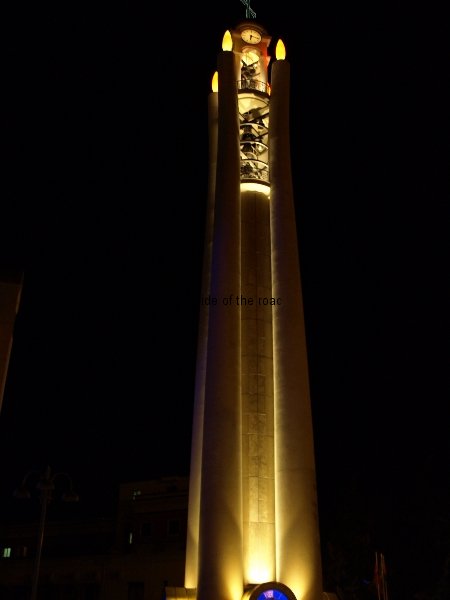
One of the more interesting aspects of the structure is the clock tower which is completely separate from the main building. This is in the design of four pillars which converge slightly towards the top where they cradle the clock, which is lit up at night.

Cathedral of the Resurrection of Christ, Tirana - Clock Tower at night

Cathedral of the Resurrection of Christ, Tirana – Clock Tower at night

When I went there it had rained a little bit earlier in the day and the marble on the steps and the platform before the main entrance were like a skating rink so those in a hurry in the wrong weather conditions could end up meeting their maker sooner than expected.

Location

At the corner of Deshmoret e 4 Shkutit and Myslym Shyri, west of the main concentration of government buildings.

GPS

N 41.19589

E 19.49041

More on Albania …..