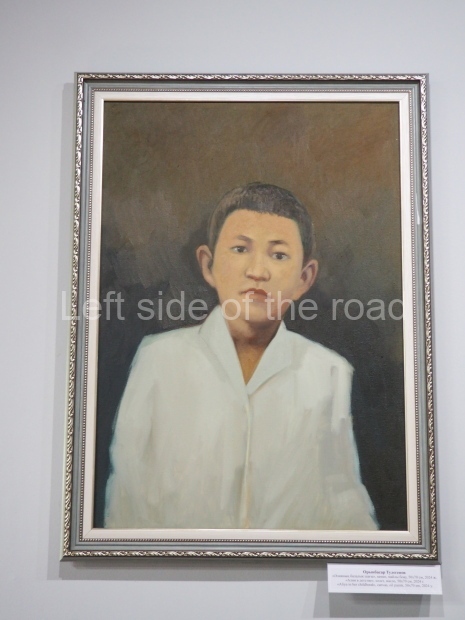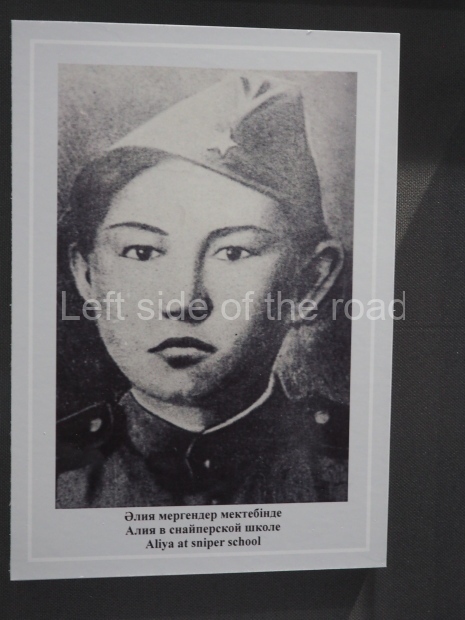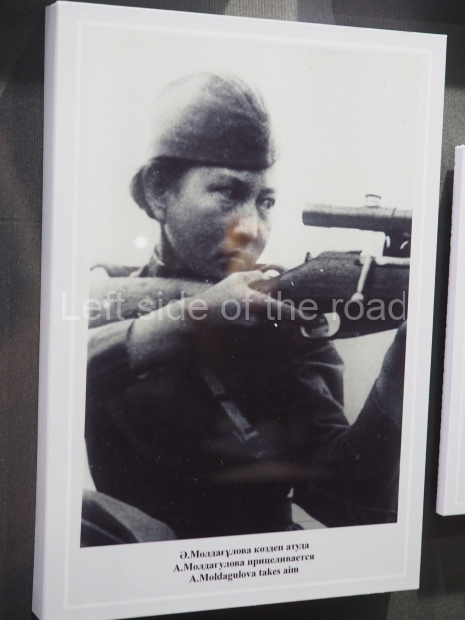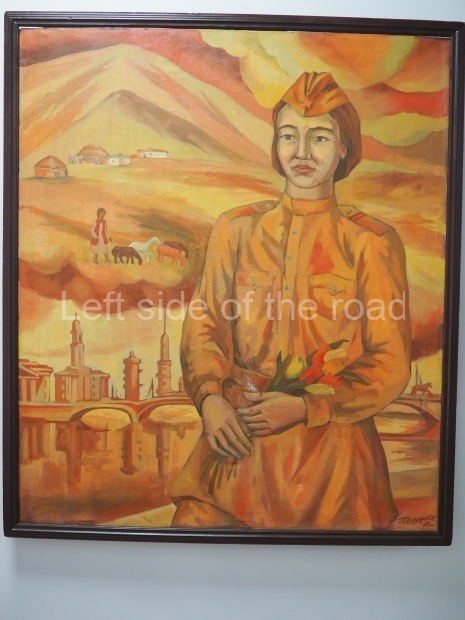
Aliya Moldagulova – in Aktobe – Kazakhstan

Sniper - Aliya Moldagulova

Sniper – Aliya Moldagulova

Aliya Moldagulova – in Aktobe, Kazakhstan

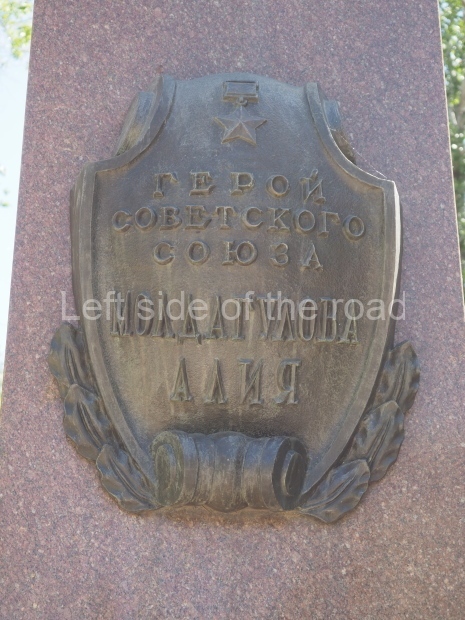
Hero of the Soviet Union

I’d be very surprised if many of the people who fly into Aliya Moldagulova International Airport, in Aktobe, Kazakhstan are aware that the airport is named in honour of a young, female Soviet sniper, who was credited with killing dozens (I’ve seen various figures) Nazis in her short ‘career’ as a sniper before being killed herself. The airport was renamed in her honour on 28th April 2021 (which probably bears relationship to the time of the celebrations of May 9th, the final and ultimate victory over Nazi Germany).

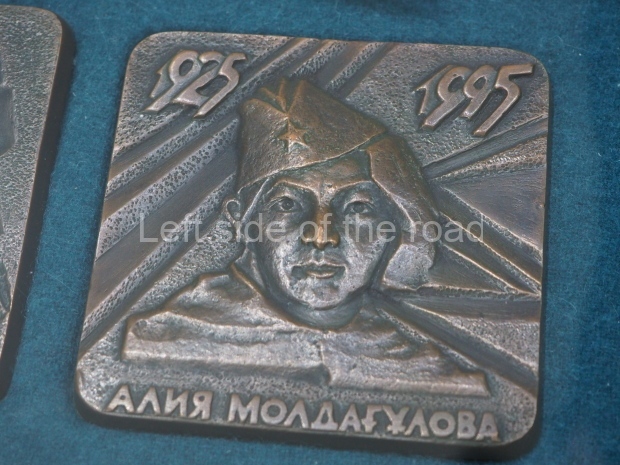
Born in 1925 it appears her childhood was neither comfortable or stable. The suggestion that her father was some sort of ‘nobleman’ wouldn’t have helped as such a short time after the revolution many people would have still held resentments about the past society – whether those resentments and the targets were deserving or not. However, she was a true patriot and defender of the new social system and – like many hundreds of thousands of other young men and women – readily joined (aged less than 16) the Red Army following the German Nazi invasion in June 1941.

She eventually ended up in a sniper training school outside of Leningrad but her training, as far as I can see, only lasted about 8 months (from starting in the military until being assigned to the front) which seems a very short time for such a young person – even taking into account the seriousness of the situation.

She was sent to the front in August 1943 and she was dead In January 1944 – she never reached her 19th birthday. There are countess ways to condemn the futility of war – even one as existential as the Great Patriotic War – but the fact that a young woman’s life ‘achievement’ was the killing, and presumably wounding, of dozens of invading Nazis, many not much older than herself, and then to be killed after barely 5 months in battle, must be one of them.

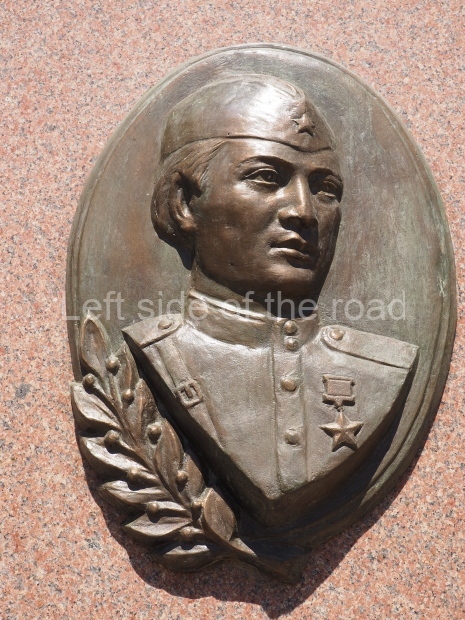
However, all armies – not just the Soviet Red Army – paid homage to those who had gone that bit further in the fight against the enemy (whether they survived the conflict or not). These men and woman in the Red Army were designated ‘Heroes of the Soviet Union’ and even though the Soviet Union no longer exists you will see busts of those so awarded throughout the territory of the former Socialist country.

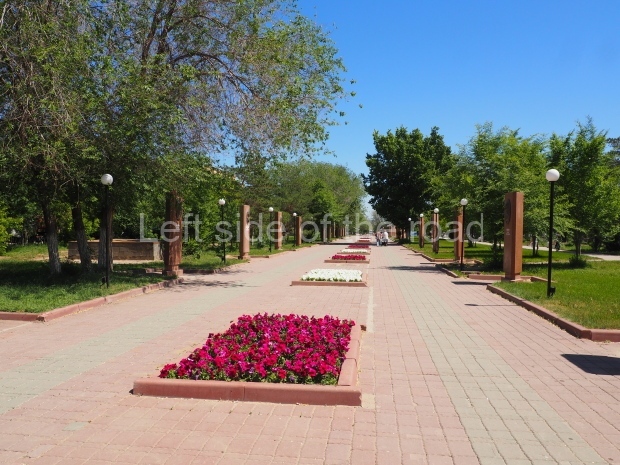
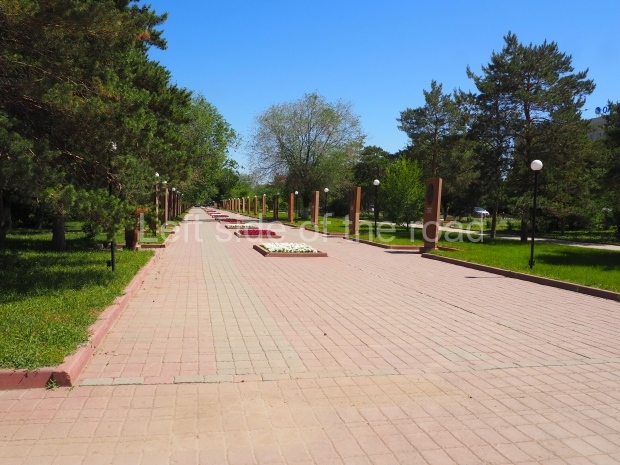
Aliya is among that group of celebrated individuals in an avenue of such busts alongside the avenue, in the newer part of Aktobe, which used to bear the name of VI Lenin.

Aliya Moldagulova - In Heroes Aisle

Aliya Moldagulova – In Heroes Aisle

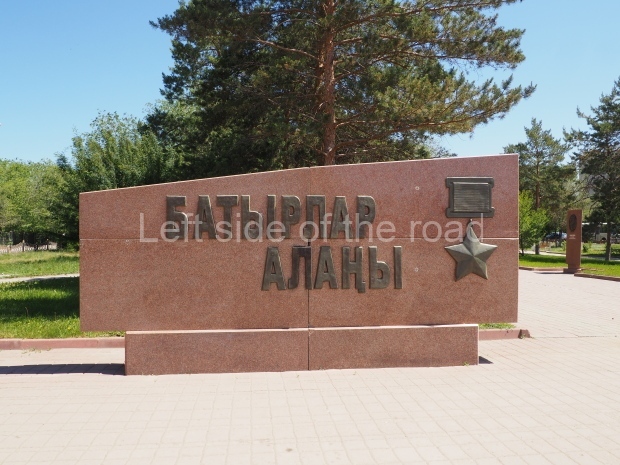
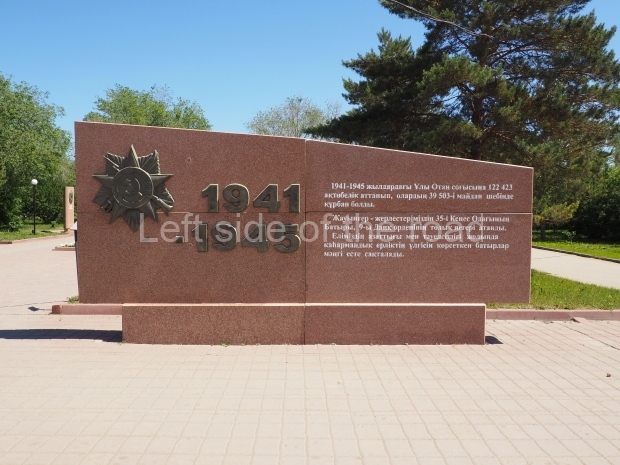
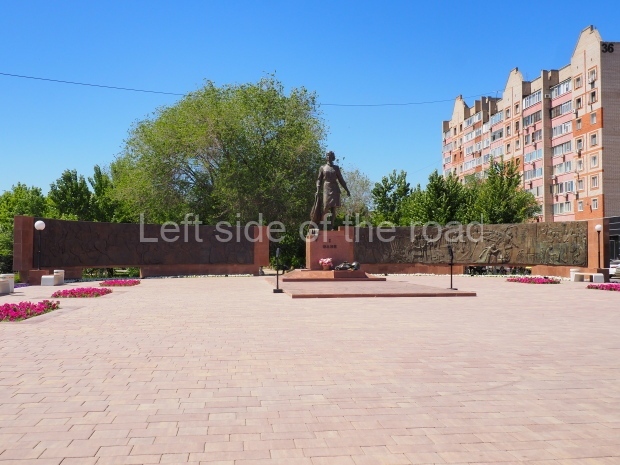
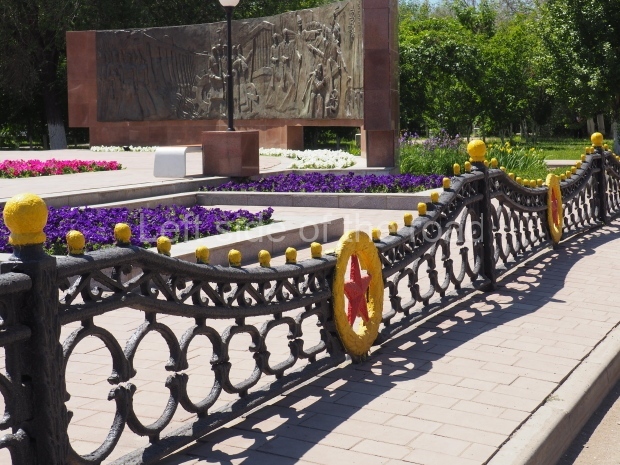
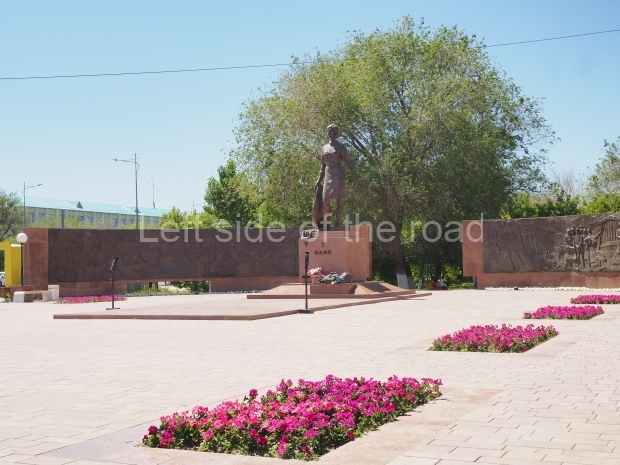
Aliya Moldagulova Memorial Park

The avenue of busts leads to what is now called Aliya Moldagulova Memorial Park. (I’m not sure if in this location previously stood a statue of VI Lenin. There are no statues of Lenin on public display in 2025.)

This complex was unveiled in 2005 on the occasion of the 80th anniversary of her birth, ‘intended to appeal to be proud for our country and it’s heroes (sic)’ – according to the official visitors site.

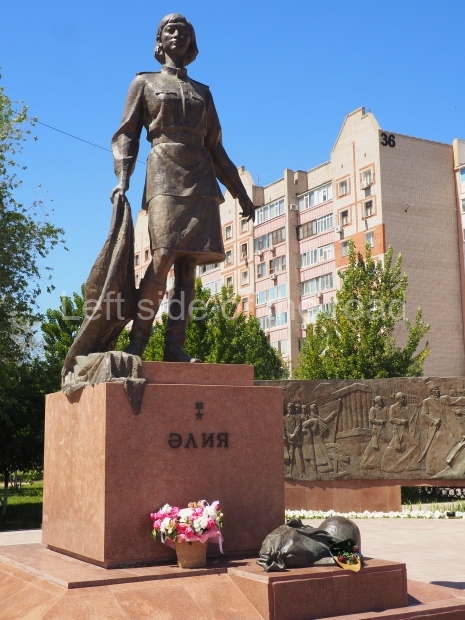
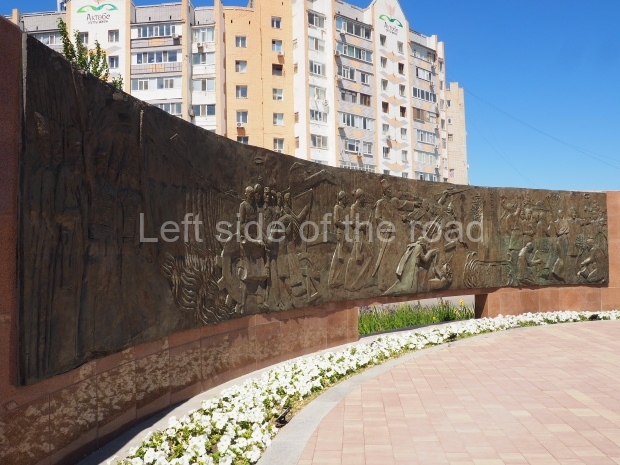
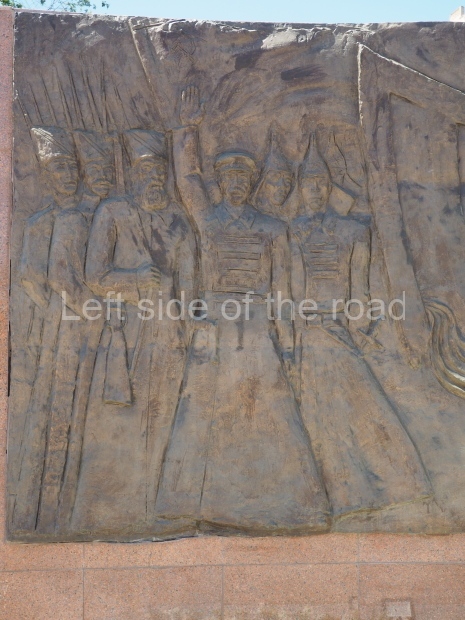
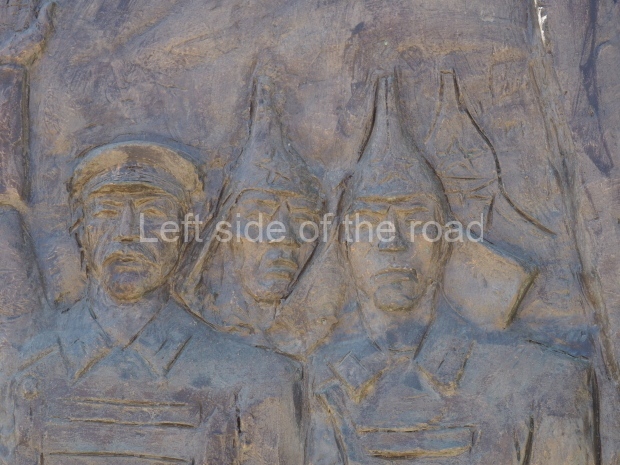
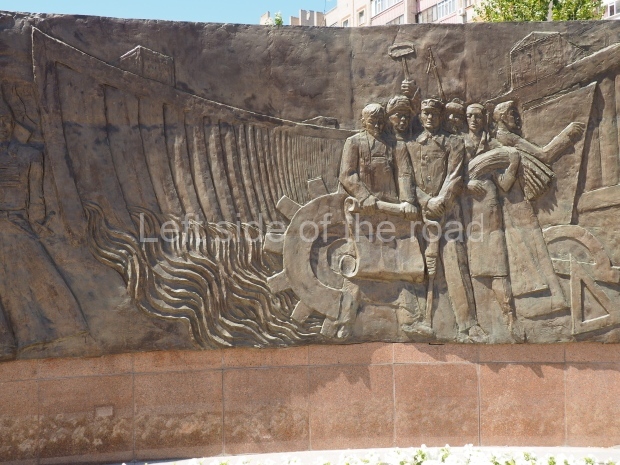
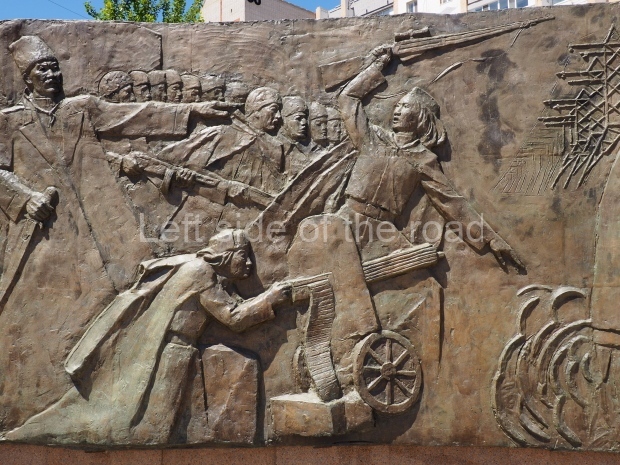
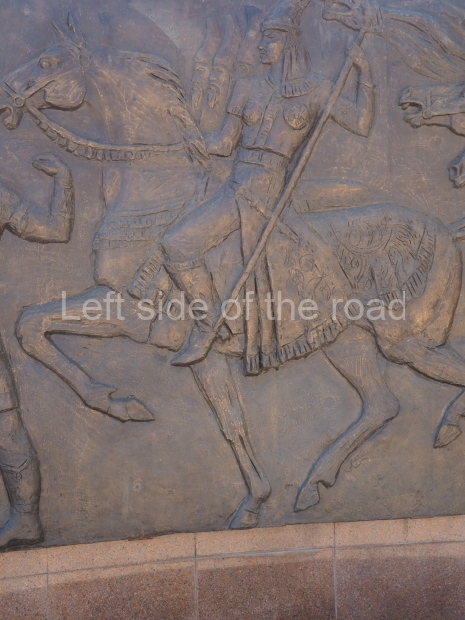
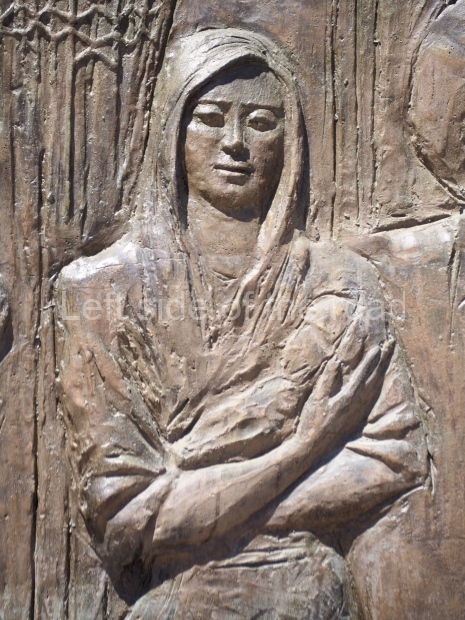
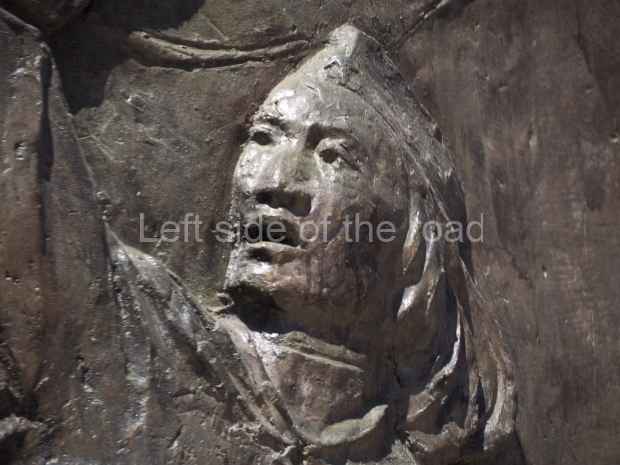
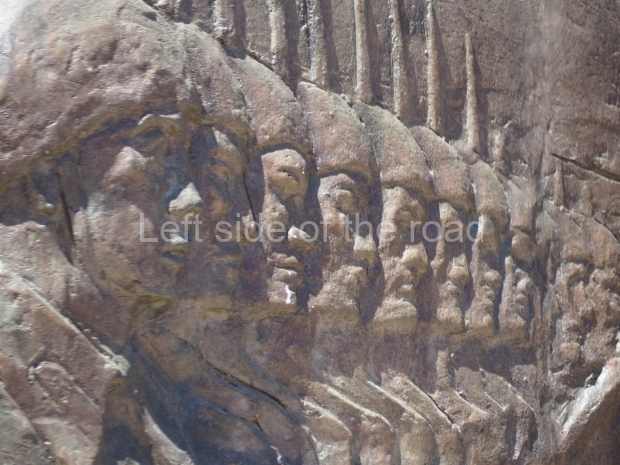
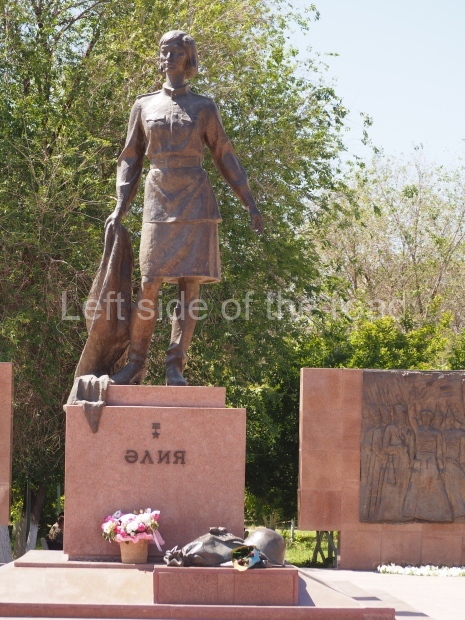
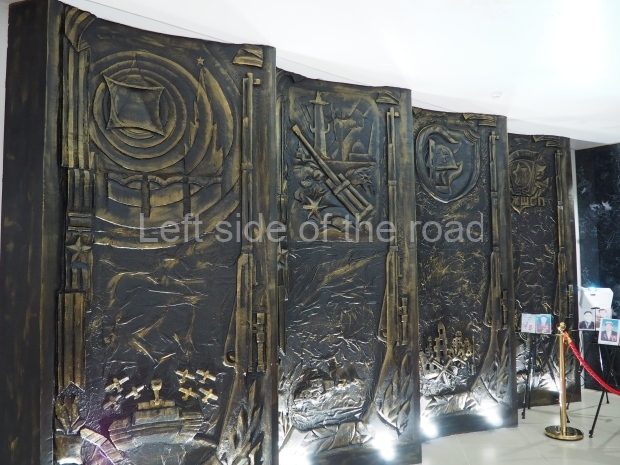
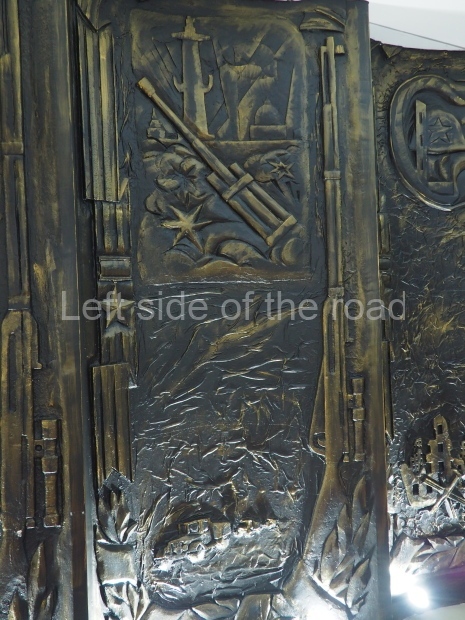
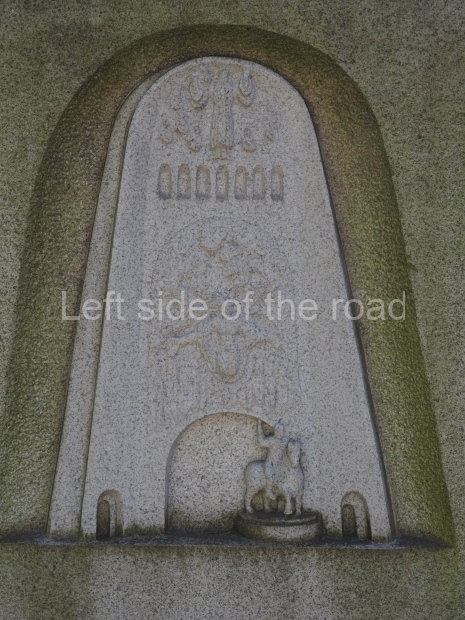
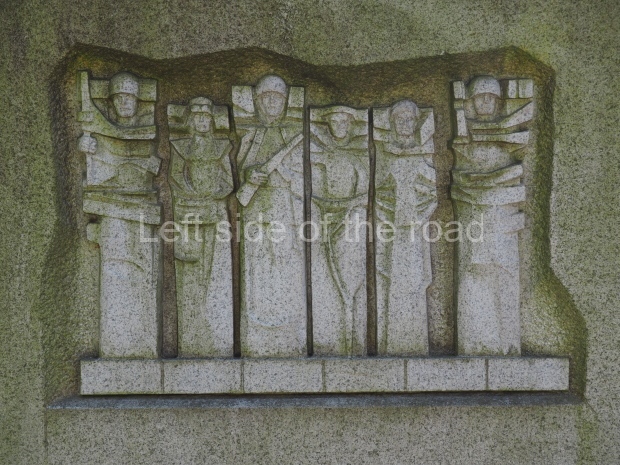
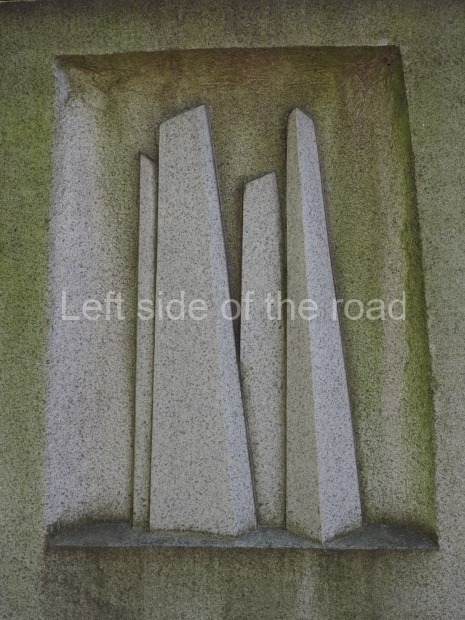
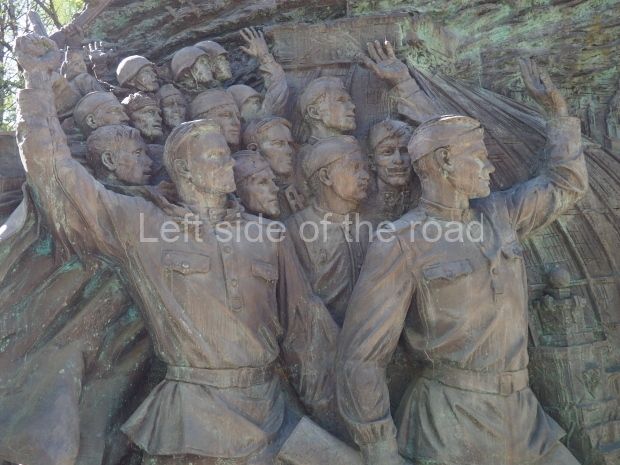
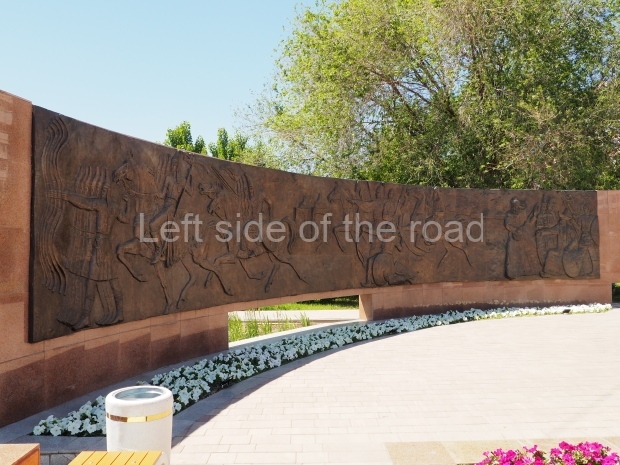
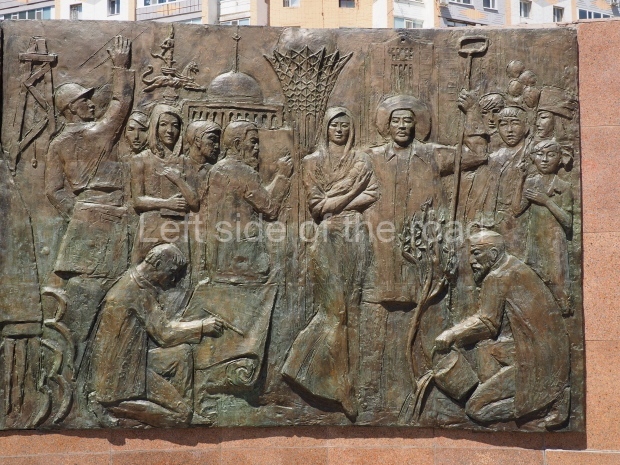
The backdrop to this complex follows very much a Soviet, Socialist Realist pattern. On the left hand side as you look at the statue, the panel represents Aktobe (and also Kazakhstan’s) past. It shows the fights for independence (against whom is not specified) including a female warrior – which sets up the scene for Aliya to be represented in the right hand panel. On this left hand side we also have the introduction of Kazakh culture in the form of a group of musicians playing traditional instruments.

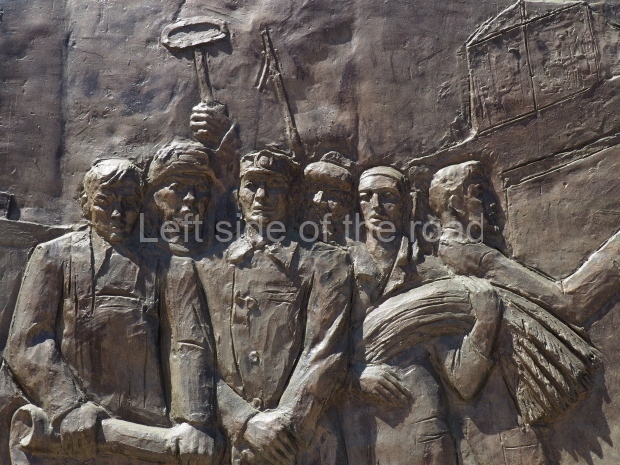
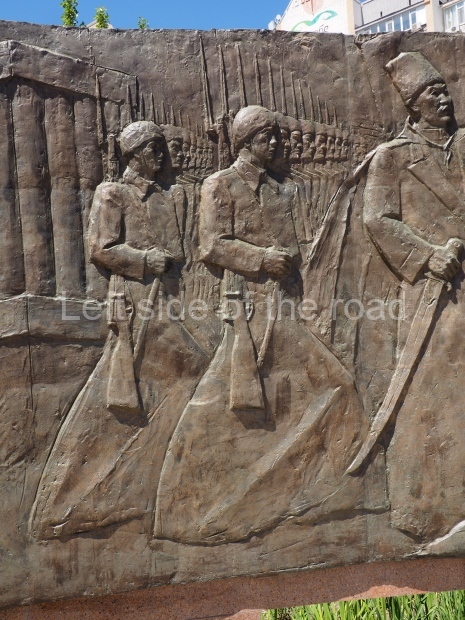
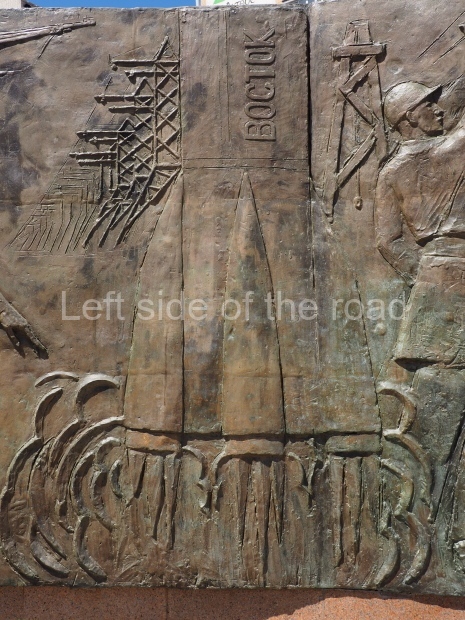
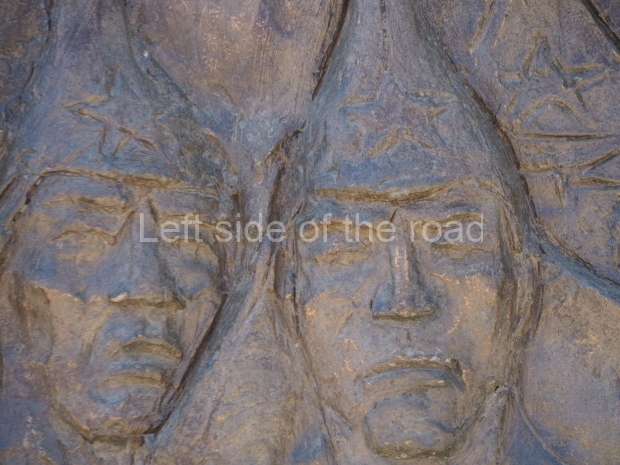
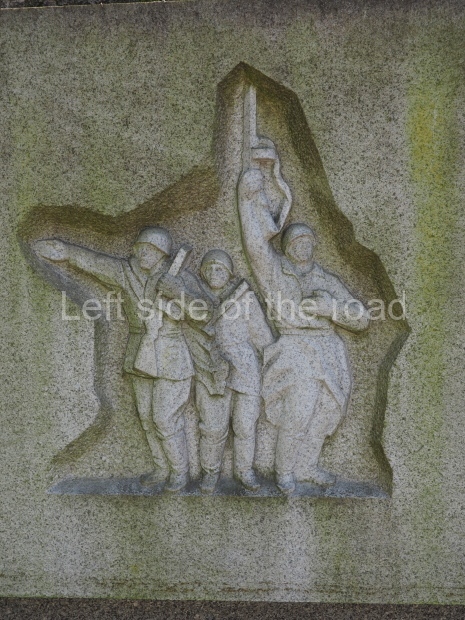
The right hand panel, however, deals with a number of specifics. On the left edge is a group of soldiers from the Civil War period when the Bolsheviks defeated the White reactionary forces, assisted by the capitalist/imperialist powers. Only when the Bolsheviks had rid their country of these elements were they able to start on the construction of Socialism. Then we have industrialisation (with the construction of dams and providing electricity to the whole country) and the collectivisation of agriculture – both of which, somewhat surprisingly, are represented in a positive manner here.

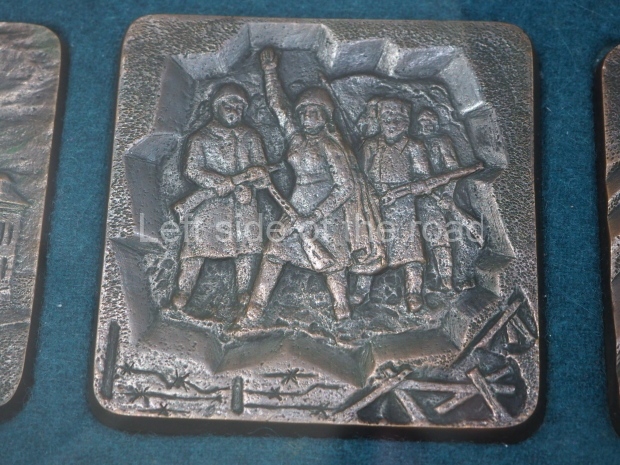
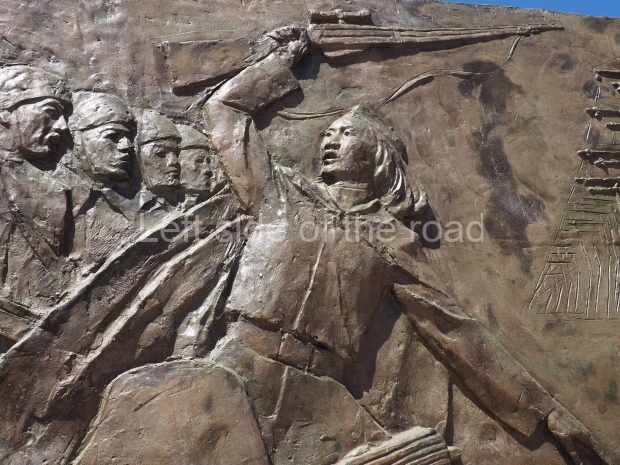
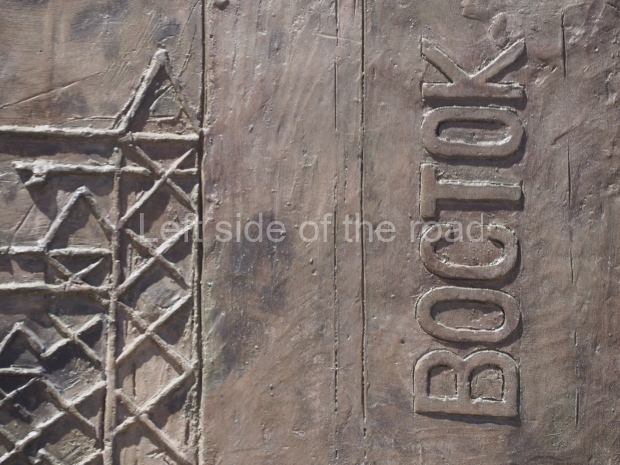
This is followed by images from the Great Patriotic War and the incident that led to the death of Aliya in 1944. It then takes a step 20 years in to the future with the launch of the Vostok rocket which sent the first human’s into space – all the Soviet space programme was based in Baikonur, in western Kazakhstan. Finally, we are faced with images that are supposed to represent modern capitalist Kazakhstan – a veritable heaven on earth.

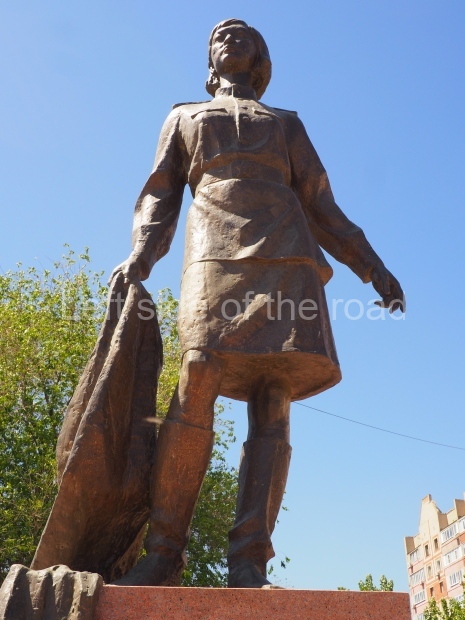
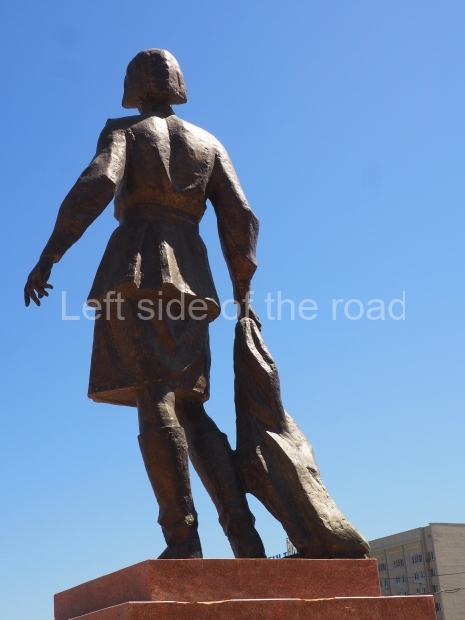
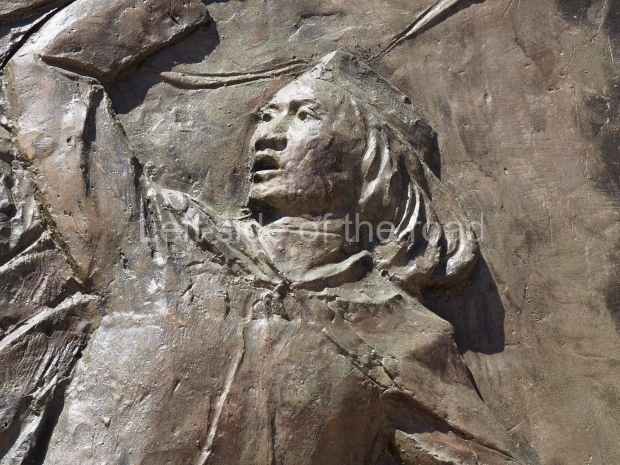
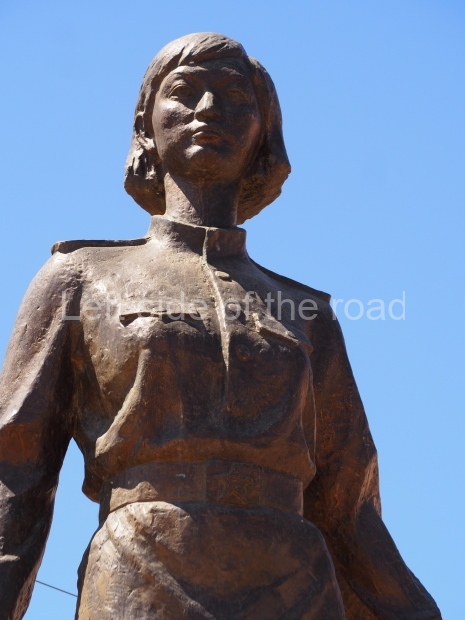
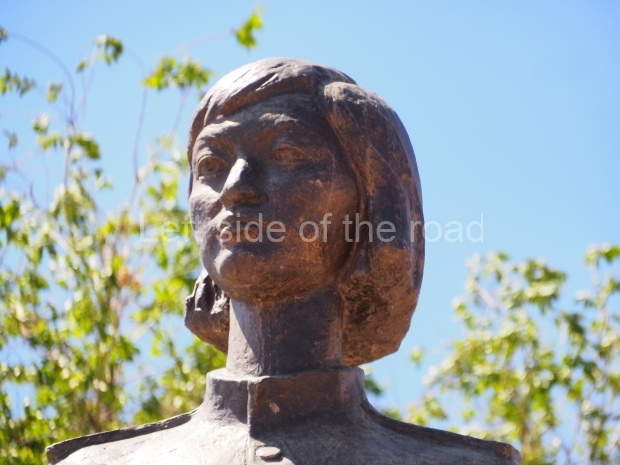
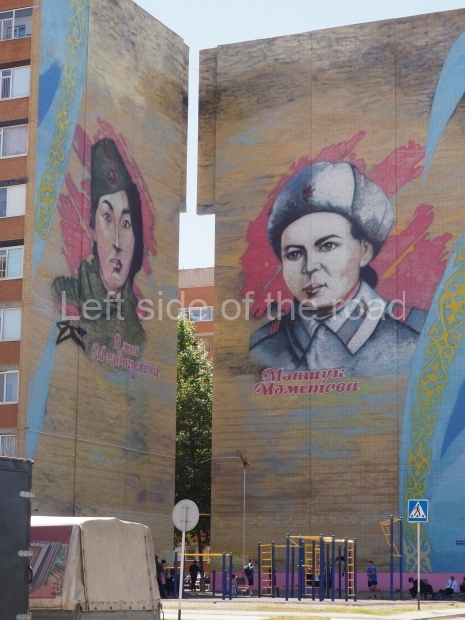
Although I have issues with the panels behind the statue it is the representation of Aliya I found the most offensive and insulting (to her and her memory). This follows the same pattern that happened in Albania with another young, female victim in the fight against German Nazism, Leri Gero. In both cases the capitalist elements in power have sought to appropriate the heroism of these young women from the past to substitute for their paucity of heroism in their present. In the process they distort the reality of these two (although from different countries) very similar young people according to the little we know of them. They were simple, honest and dedicated fighters for their people and their country – and for that they paid the ultimate price.

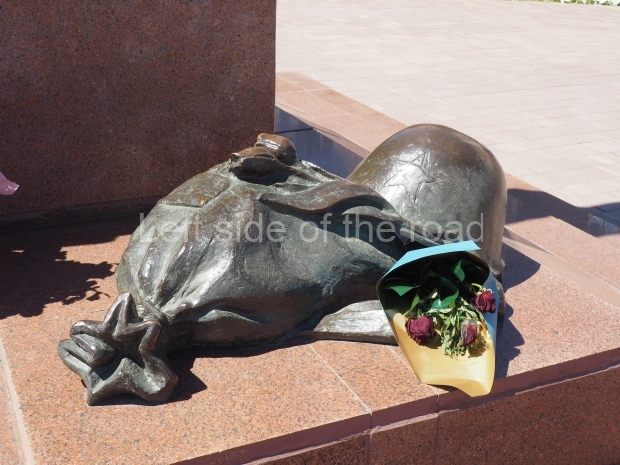
This representations of them during Socialism followed a well worn and ‘traditional’ path. A simple three dimensional image in their memory. However, the modern ‘representations’ turn both of them into silly airheads who only think of their own pleasure and vanity. Leri looks more like a young woman going clubbing at the weekend and Aliya like a fashion model who has just flung off the jacket of a haute couture ‘army’ suit at the end of a catwalk.

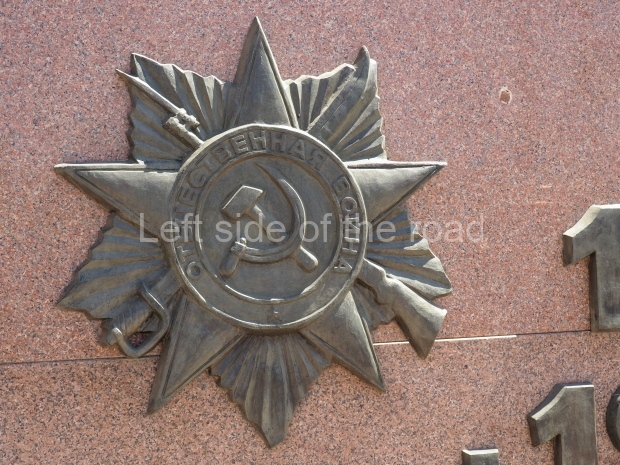
By stripping Aliya of any real reference to her medal they take away the reason she is in that location in the first place.

But then this is the tactic. If you cannot obliterate their achievements just try and trivialise them.

Aliya Moldagulova - memorial park in Nedw Town

Aliya Moldagulova – memorial park in Nedw Town

In Aktobe new town;

Memorial Complex;

Aliya Moldagulova Avenue, close to the Museum

GPS;

50.287698 N

57.152472 E

Monument in the Old Town

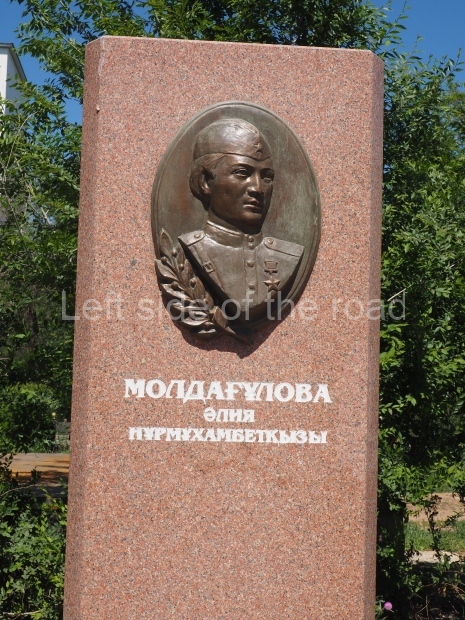
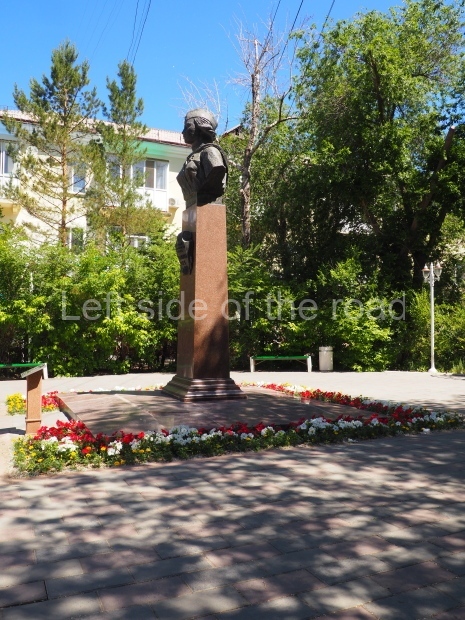
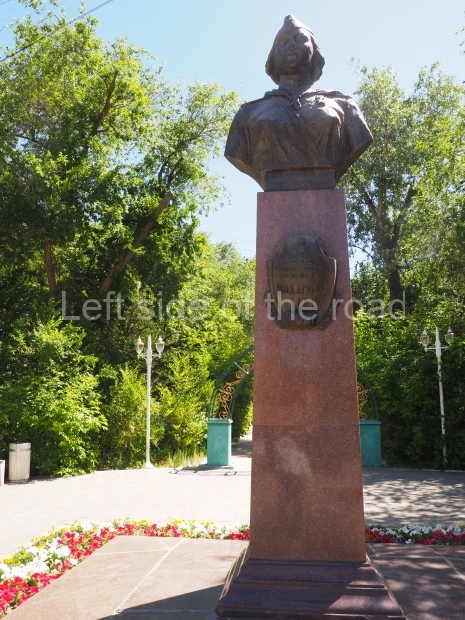
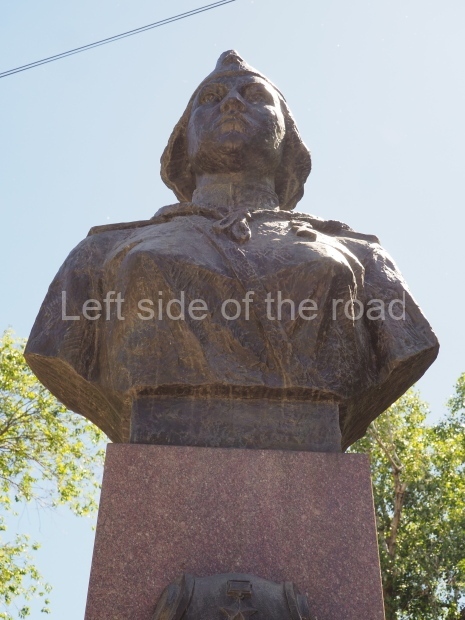
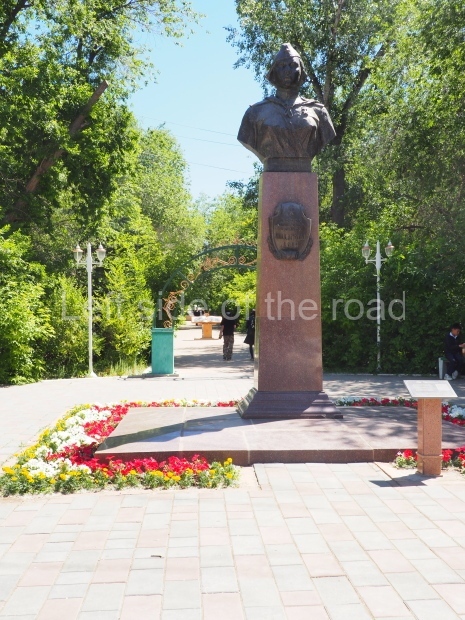
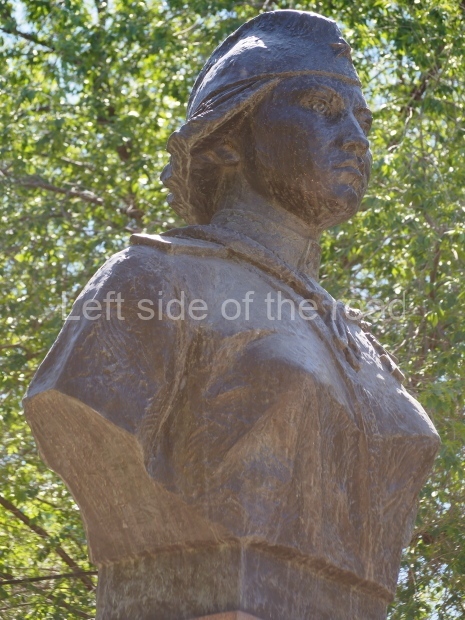
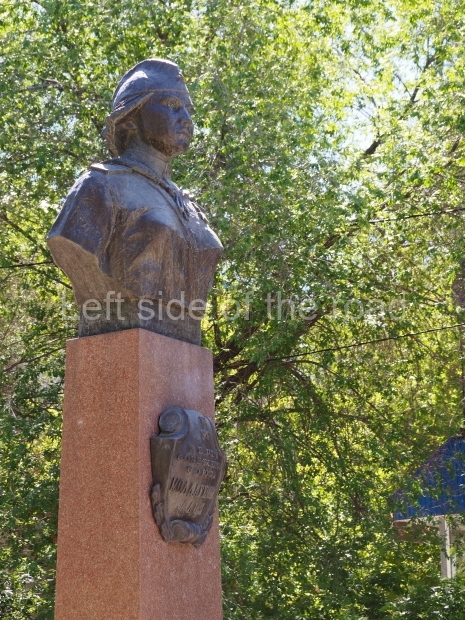
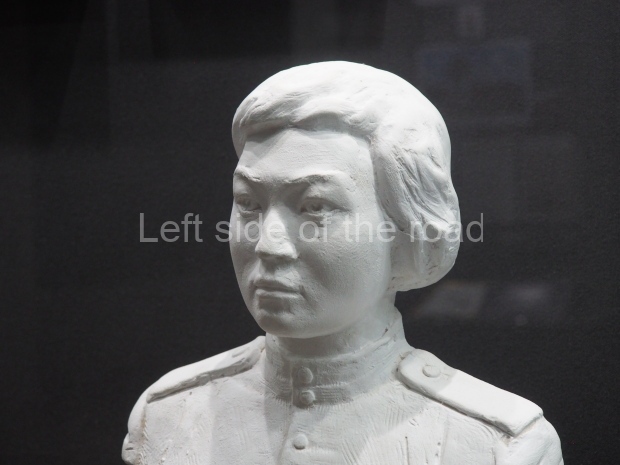
This is a much more staid and formal representation of the young woman. It is a bust, about 1.3 metres mounted on a high stone stele – giving a combined height of 3 metres. It stands at the entrance to a small green and garden space that leads off Shimize Street – opposite No 39 – in the older part of Aktobe.

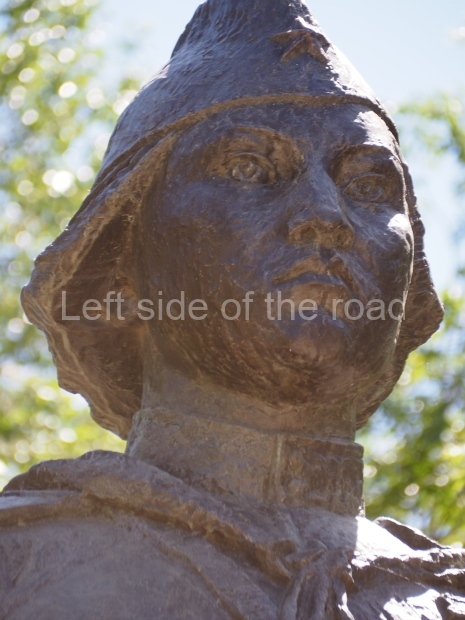
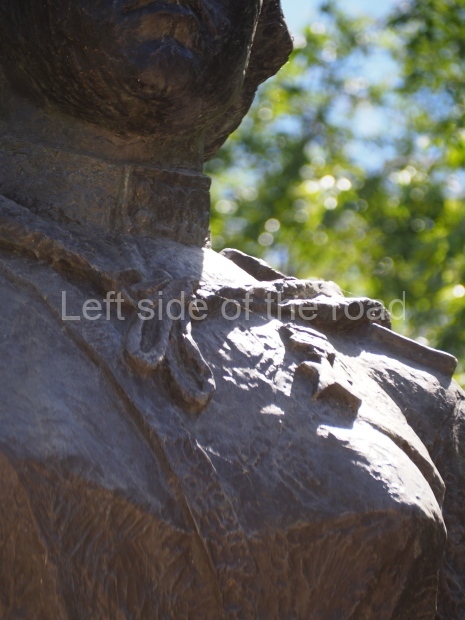
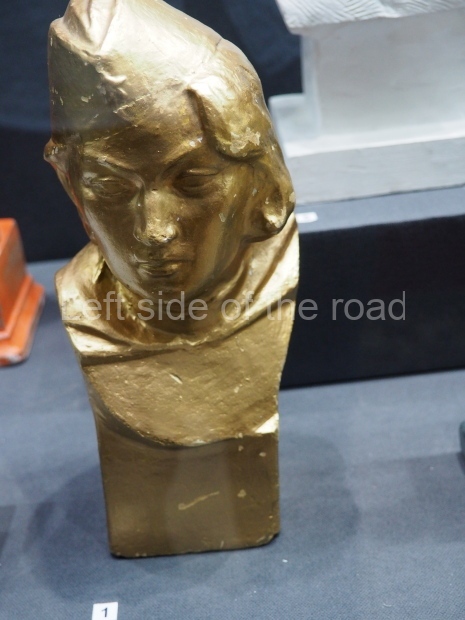
We have here a uncomplicated head and shoulders bust of a young woman in a basic and unadorned military shirt and with a military cap on her head. The only decoration is the Red Star on her cap and the medal of the Hero of the Soviet Union on her right chest.

The area around the monument is always kept neat and tidy and ceremonies in her remembrance, and of the Great Patriotic War in general, often take place in this small corner of the city.

This small monument has survived the somewhat turbulent times over the last 35 years or so which demonstrates the respect the people of the town (and the country) have for her – so many years after the end of the war. I would venture to guess that most people passing would know who she is, not something that could be said in many western countries to street sculptures commemorating individuals from the Second World War.

Aliya Moldagulova - in Aktobe Old Town

Aliya Moldagulova – in Aktobe Old Town

In Aktobe old town;

Location;

Shimize Street – opposite No 39

GPS;

50.1657 N

57.1336 E

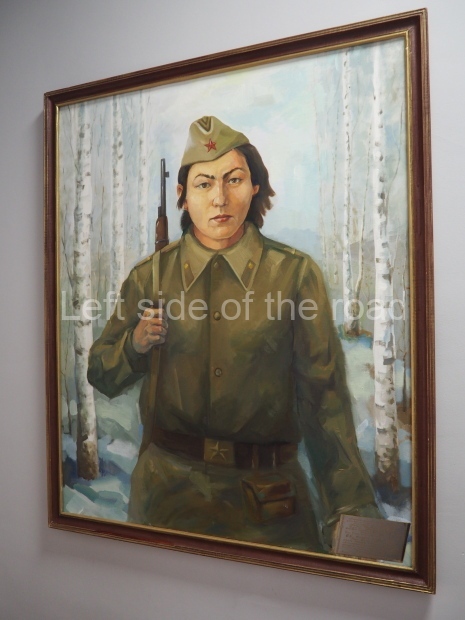
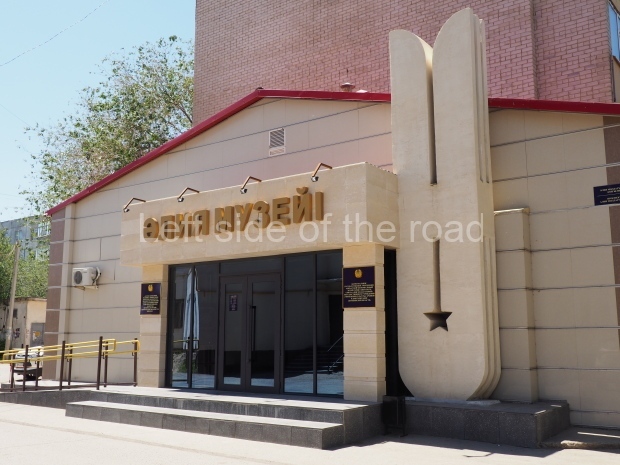
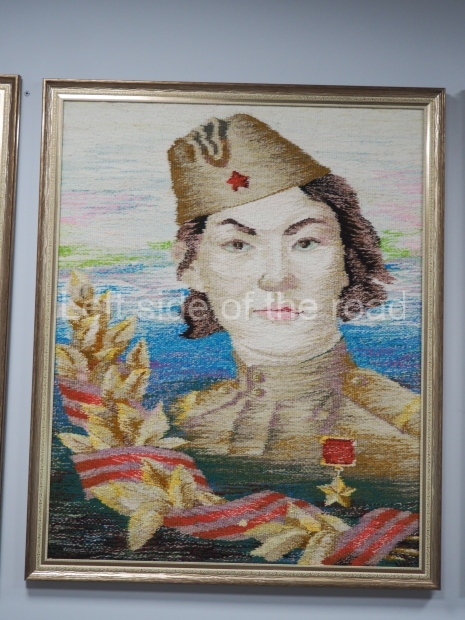
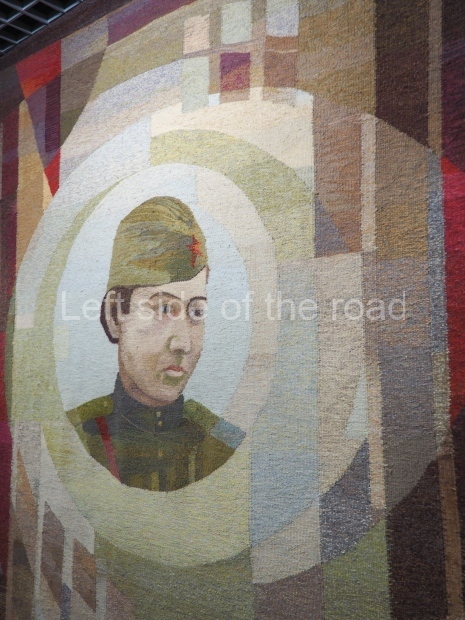
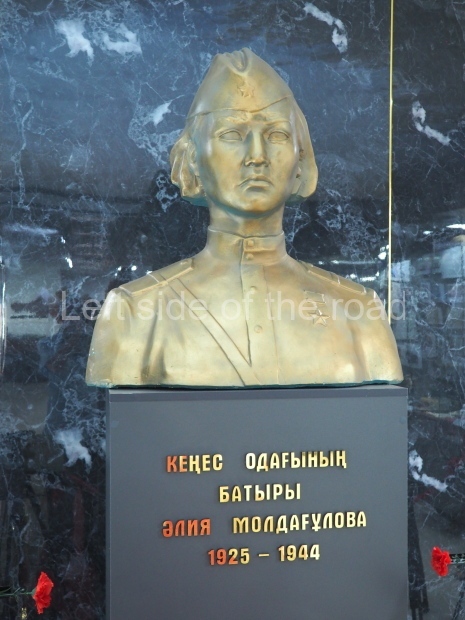
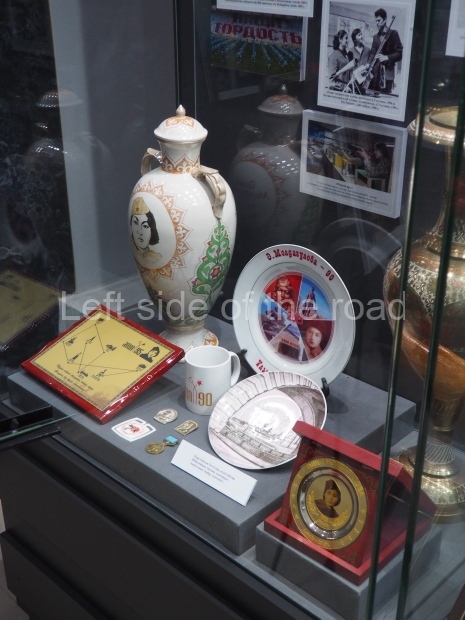
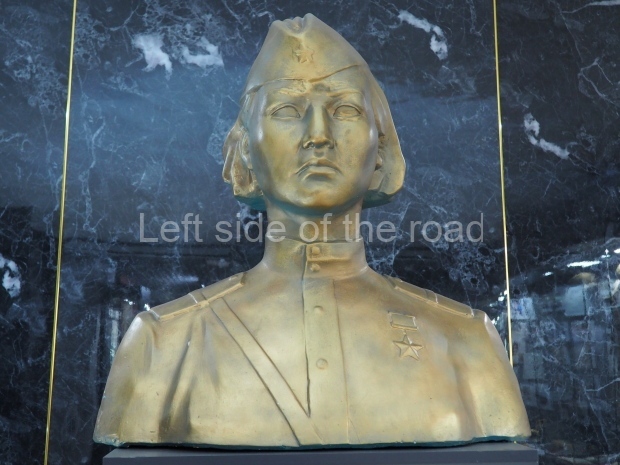
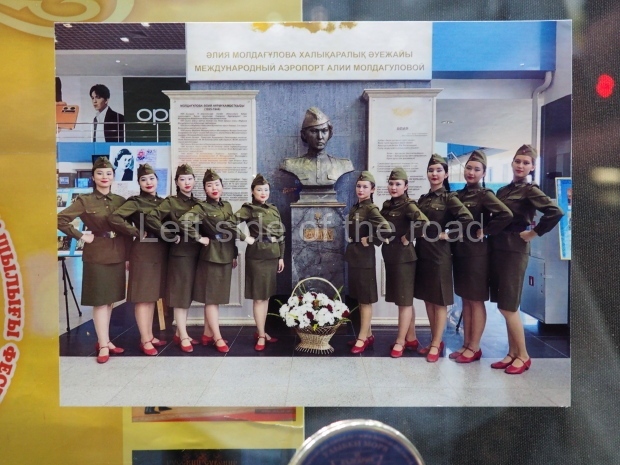
Museum established in her honour;

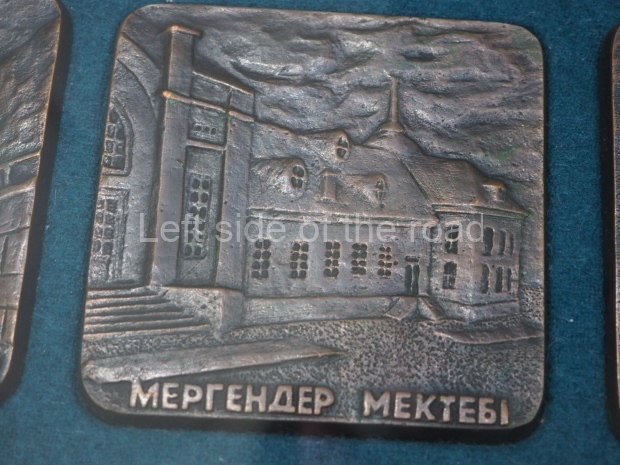
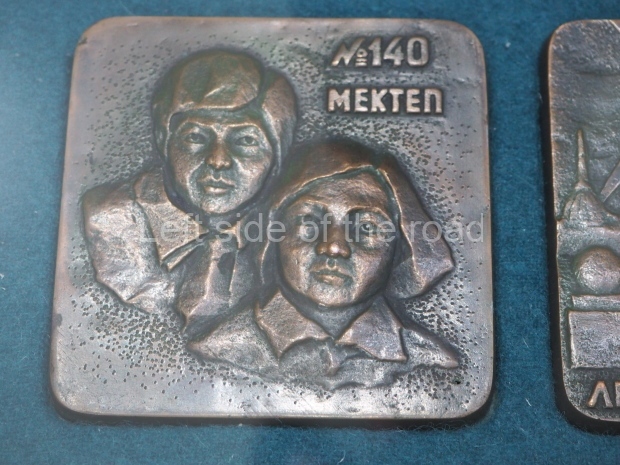
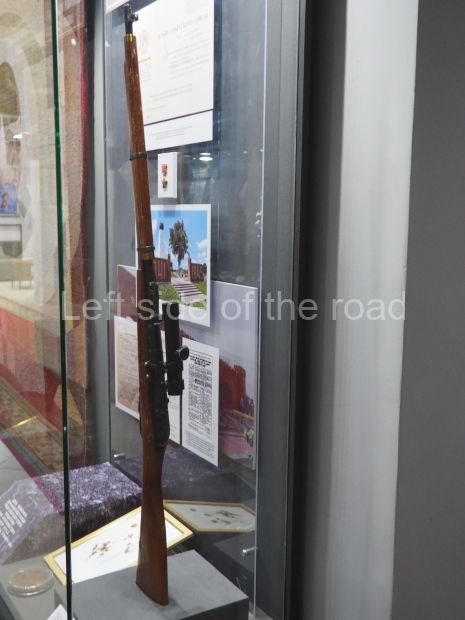
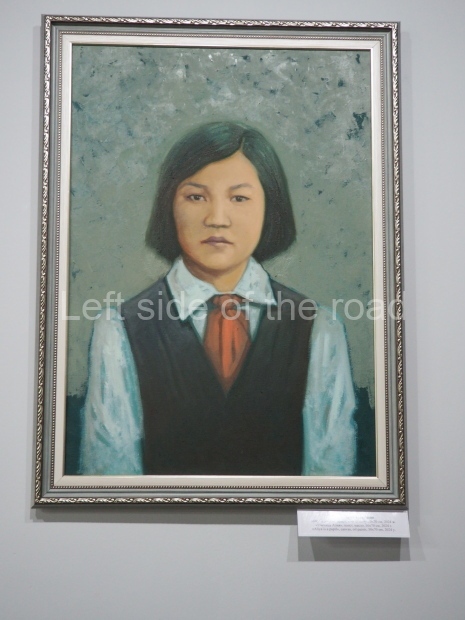
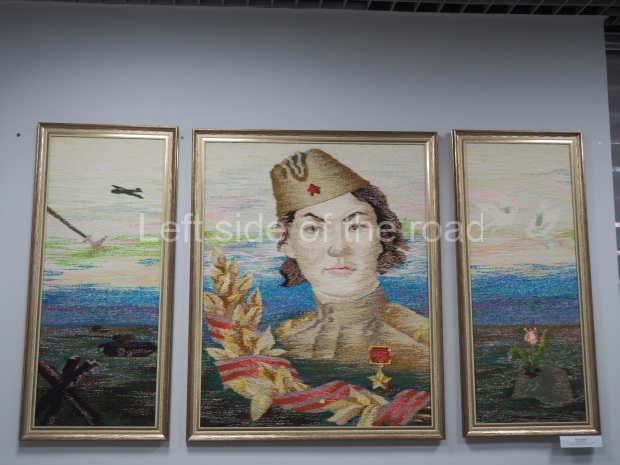
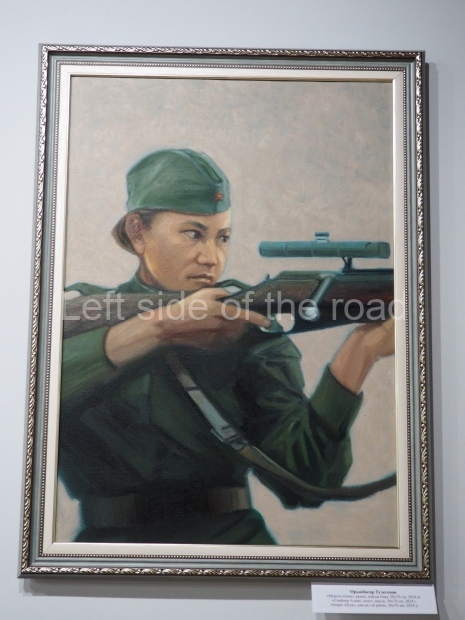
Finally, in Aktobe, a small museum was established in the newer part of town and opened on 22nd April 1985. This also operates as a research centre.

Aliya Moldagulova - image in museum

Aliya Moldagulova – image in museum

Free entry.

Opening;

09.00-18.00, closed for lunch 13.00-14.00

Location:

Aliya Moldagulova Avenue 47

GPS;

50.28877 N

57.15818 E
Bishkek Revolutionaries – Lenin – Marx – Engels – Dzerzhinsky – Frunze – Red Guards – Revolutionary Martyrs

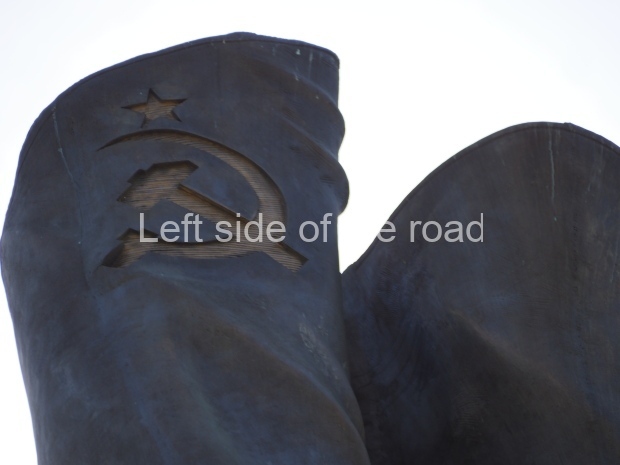
The Red Star and the Hammer and Sickle

The Red Star and the Hammer and Sickle

Bishkek Revolutionaries – Lenin – Marx – Engels – Dzerzhinsky – Frunze – Red Guards – Revolutionary Martyrs

For those interested in the Soviet (and Socialist) past of Bishkek and Kyrgyzstan there are still a few remaining statues and monuments to that period of a time when the people were attempting to make a better future for workers and peasants.

Unfortunately, as is becoming almost universal now, (as yet) I have few, if any, details about any of these statues or monuments.

VI Lenin - Bishkek

VI Lenin – Bishkek

VI Lenin – standing, making a speech

This statue was originally in Lenin Square (now Ala-Too Square) on the other side of the Historical Museum. The statue was originally installed in Bishkek in 1984 and the statue stands 10 metres high.

Location;

In the park behind the State Historical Museum and across the road from the House of Government.

GPS;

42.877582 N

74.606187 E
VI Lenin - in school precinct, Bishkek

VI Lenin – in school precinct, Bishkek

VI Lenin bust – with small garden

Location;

Razzakov Street 62/103. Behind the lyceum and seemingly part of a housing estate.

GPS;

42.873294 N

74.603402 E
Karl Marx and Frederick Engels - Bishkek

Karl Marx and Frederick Engels – Bishkek

Karl Marx and Frederick Engels – seated, relaxed and in discussion

Location;

At the north-west edge of Central Square Park, across the road from the Supreme Courft of the Kyrgyz Republic.

GPS;

42.878999 N

74.605547 E

'Iron Felix' Dzerzhinsky - Bishkek

‘Iron Felix’ Dzerzhinsky – Bishkek

Felix Dzerzhinsky (‘Iron Felix’)

It might be surprising for some people to realise that Felix Dzerzhinsky, the first head of the Cheka, the organisation tasked with defeating counter-revolutionary elements within the young Socialist state, is still considered with great deal affection and respect by populations throughout the former Soviet Union.

Location;

In the small park on the west side of the National Library.

GPS;

42.881221 N

74.610105 E

Mikhail Frunze - Bishkek

Mikhail Frunze – Bishkek

Equestrian statue of Mikhail Frunze

This, I think, is unusual. The Soviets weren’t really into equestrian statues – or at least as far as I knew. The only other one I’m aware of is of Marshal Zhukov, in Revolution Square by Red Square, in Moscow – but that was installed in 1991, when Socialism had been ditched and the nascent capitalists were looking for some sort of justification for their miserable existence, piggy-backing on past Soviet/Socialist glory.

The city that is now known as Bishkek was called Frunze from 1926, on the founding of the Kirghiz Autonomous Soviet Socialist Republic (ASSR).

Location;

At the bottom end of Erkindik Boulevard, opposite the station building of Bishkek 2.

GPS;

42.865110 N

74.605887 E

Martyrs of the Revolutionary Movement - Bishkek

Martyrs of the Revolutionary Movement – Bishkek

Martyrs of the Revolutionary Movement

This was inaugurated in 1978 and is the work of a local sculptor, Tinibek Sadykov. For this work he won the All Union Lenin Prize. The female figure at the top of the colon is of a young local woman, Urkuya Saliyeva, a Socialist organiser from the south of the country, who was murdered in 1924 by reactionary locals. The figures in the rest of the monument represent the ‘awakening’ workers and peasants.

Location;

In its own park opposite Chui Avenue 100

GPS;

42.876498 N

74.610505 E

Memorial to the Red Guards - Bishkek

Memorial to the Red Guards – Bishkek

Memorial for the Red Guards

This was erected in 1960 and marks the common grave of of the Bolshevik dead in the Belovodsk counter-revolutionary uprising of December 6, 1918. Unfortunately, the Eternal Flame has been extinguished by the local reactionary capitalists – the same breed they died fighting against in the early days of the Socialist Republic.

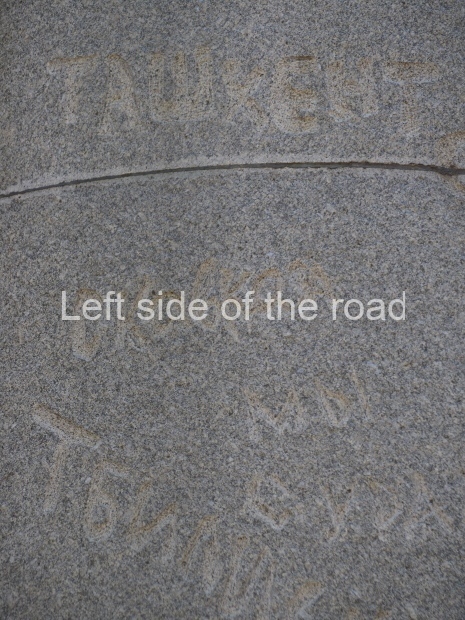
Translation of text on monument;

Eternal Glory to those who fell in the struggle for Soviet power – original in Russian. [Facing the eternal flame.]

For Soviet power Glory forever for the fighters – original in Turkman.

Two commanders are buried here. [On the left hand side]

Location;

In Dubovny Park, just behind the Russian Drama Theatre.

GPS;

42.87840 N

74.60840 E

We are together in the fight against fascism – Park Pobeda – Moscow

We are together in the fight against fascism

More on the USSR

We are together in the fight against fascism

This particular sculpture, impressive as it is, poses and challenge to me when being asked ‘What is a piece of Socialist Realist art?’ Art can be realist without having any reference to socialism even though it might represent a worker or workers sympathetically. But what takes one piece of work from a mere representation of a person or an event to a different level, to imbue it with a meaning that is over and above what is merely in front of the viewer.

My simple interpretation of that has been the intention of the artist at the time of the work’s creation, the intended audience and what was hoped would be achieved by it’s presentation to the public. But these intentions and hopes are not concrete. They can exist in one period of time but can just disappear if (and unfortunately) or when the social system reverts to what it was pre-Revolution – as happened in the Soviet Union (and all the other post-Socialist societies).

But if, as it did, Revisionism took control soon after the death of Joseph Stalin in 1953 can those works of art produced after that date until 1991 still be considered works of Socialist Realism? They were still produced for the same audience as were the target in the 1930s and 1940s but for a different purpose, after the mid-50s the aim was to project an image of being in favour of revolutionary change whilst at the same time doing everything practically to avoid such a transformation occurring.

The history (or more accurately to say, its genesis) of this particular monument is quite unique and exceptional, fitting in more with the political agenda of the Russian Government at the time rather than a desire to remind future generations of the sacrifice made by those during the Great Patriotic War or the desire to foment a willingness of self sacrifice amongst a population who are attempting to build Socialism.

On 19th December 2009 a Soviet era monument, the Kutaisi Glory Memorial, which had been unveiled in 1981, was blown up by Georgian fascists under the cloak of ‘nationalism’ and ‘reconstruction’ of the city. The location of the monument was to be the site of the new Parliament building.

The original plan was for the monument to be destroyed on 21st December (coincidentally the anniversary of Stalin’s birth) and a mass demonstration had been planned to oppose this desecration of the memory of all those Soviet citizens (including those from Georgia) who had died in the fight against fascism. The decision the destruction should take place two days earlier than originally planned is considered to have made to circumvent any opposition. Because the task was rushed it was botched with pieces of concrete flying all over the place, some of it killing a woman and her eight year old daughter who lived close by.

But the destruction of this monument also has to be taken in the context of what was happening in the region at the time. This was just after the short war between Russia and Georgia, in 2008, over the separatist regions of South Ossetia and Abkhazia – one started by Georgia under the encouragement of the US. This was all part of a strategy to surround (with hostile NATO states) and eventually dismember the Russian Federation – which had been the intention of the neo-liberals in the west since the fall of the Soviet Union in 1991.

For that reason the demolition of the memorial was more than an attack on the memory of all those who died fighting fascism it was part of the present war against Russia. This created a sense of urgency, an advert for the commission was circulated and by July 2009 there were already six maquettes of the proposed statue to be erected on a site in Park Pobeda (Victory Park) in Moscow. These designs were on display in the Great Patriotic War Museum, awaiting a popular vote.

At the same time the maquettes were on display in Moscow Hilary Clinton was visiting Tbilisi, adding fuel to the conflict and mouthing her meaningless phrases about the US in support of national liberation of those countries ‘occupied’ and vowing never ending US support for ‘the fight for freedom’. Similar declarations, before and subsequently, ultimately led to the situation we have in the Ukraine at the moment and have led to continued efforts by the US to destabilise other countries in eastern Europe – cut short recently by Trump’s rethink on how to allocate resources to maintain the US’s ‘full spectrum dominance’ in the region.

So a somewhat unique genesis of a World War II monument.

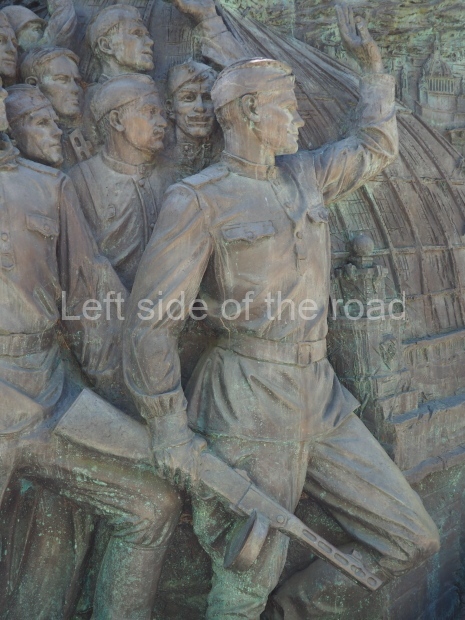
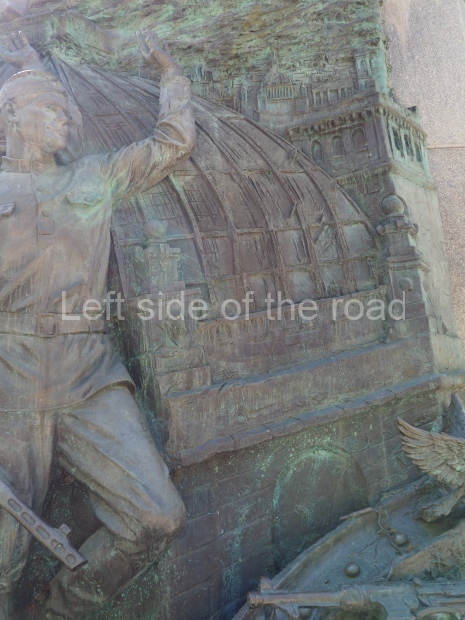
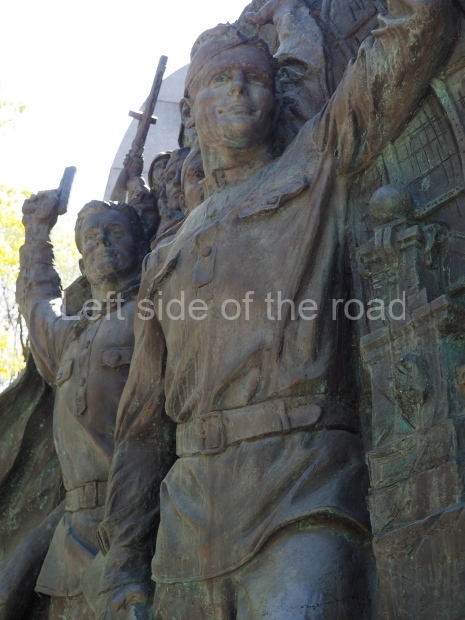
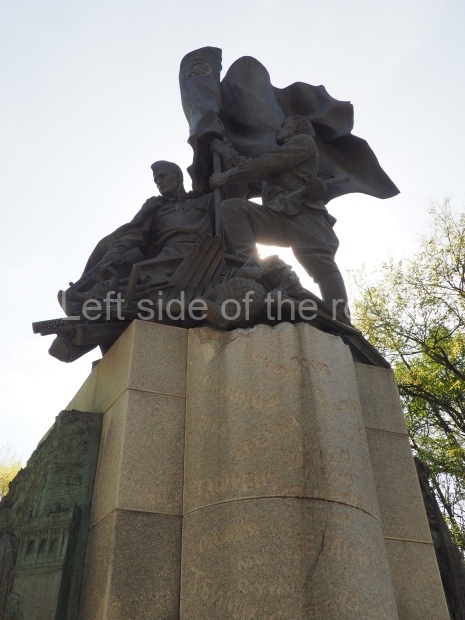
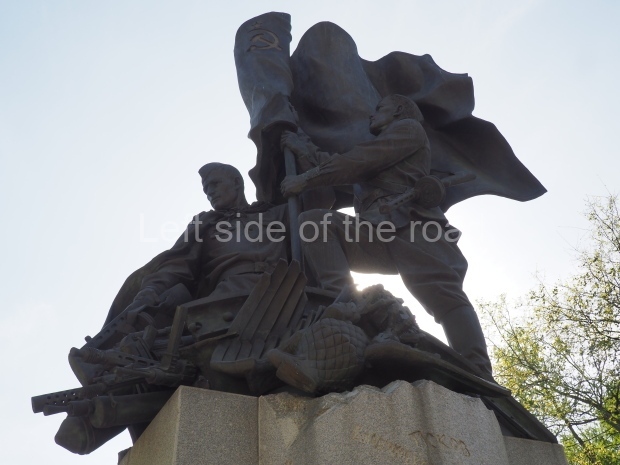
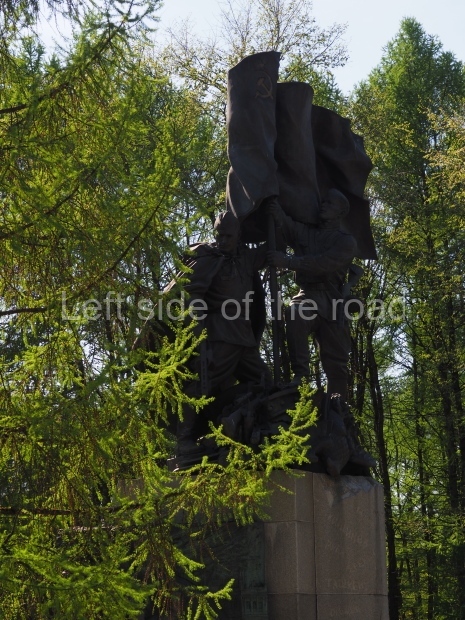
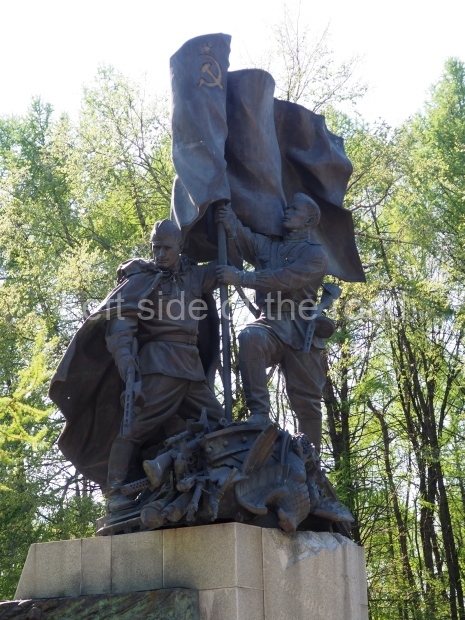
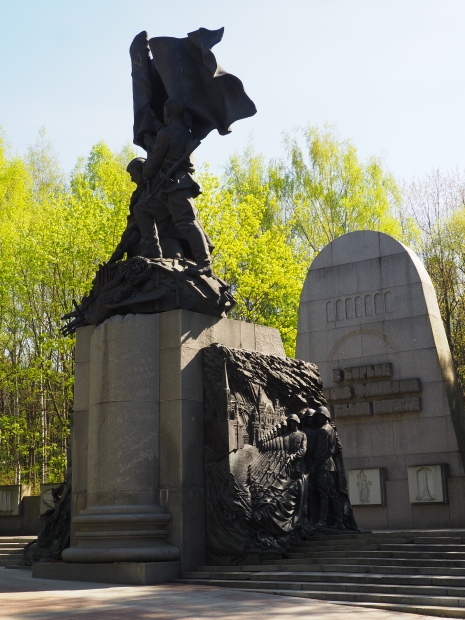
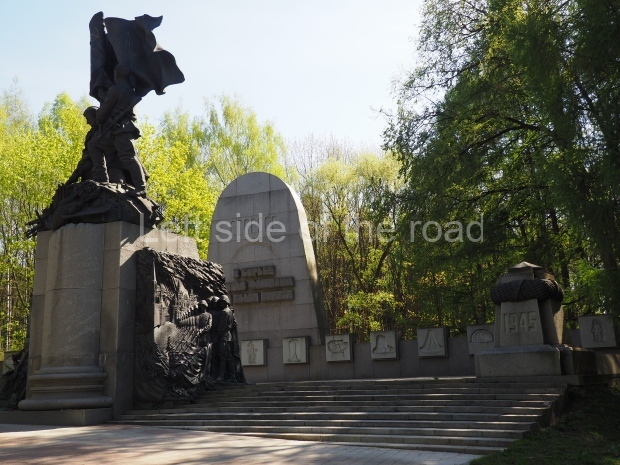
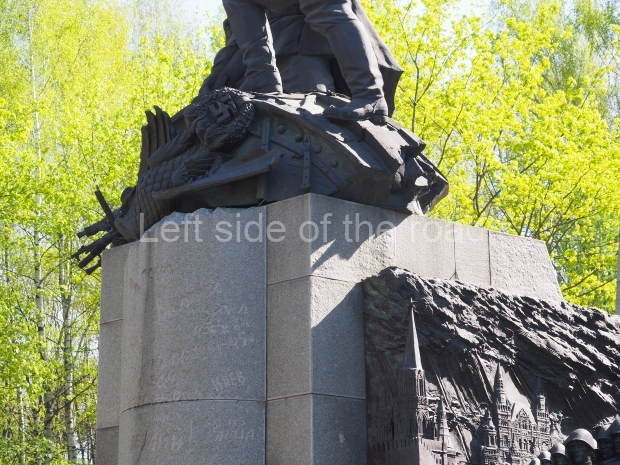
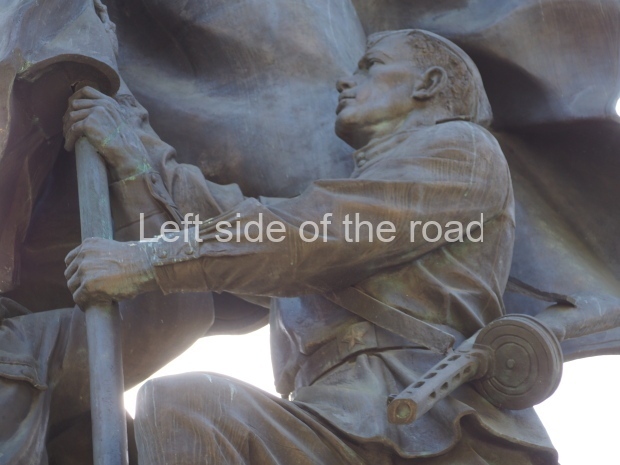
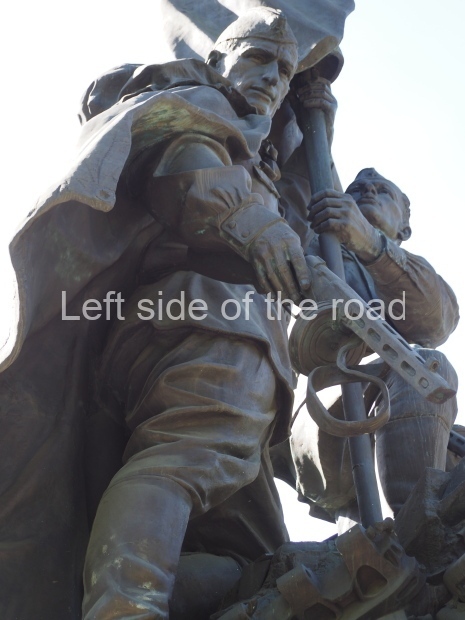
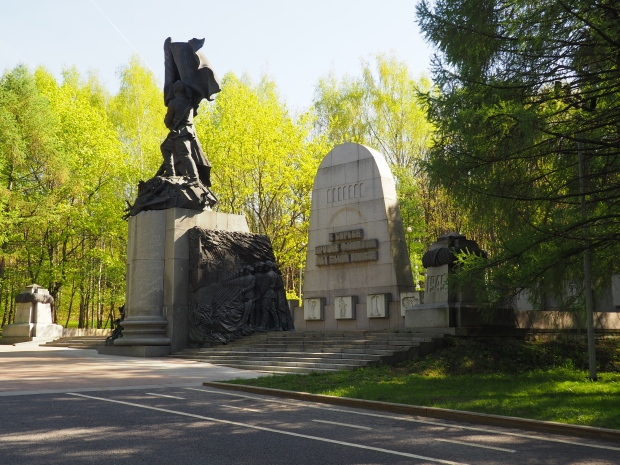
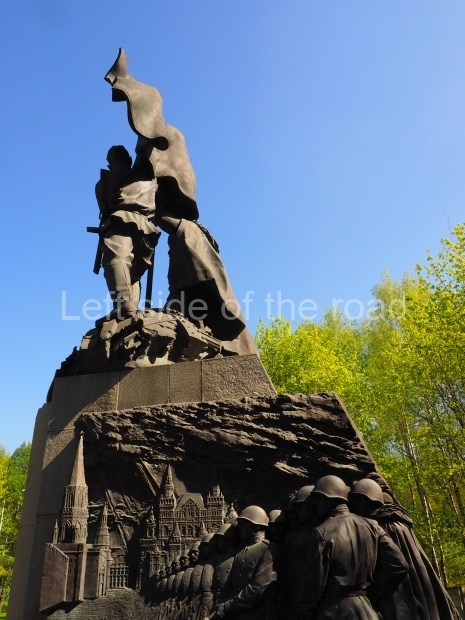
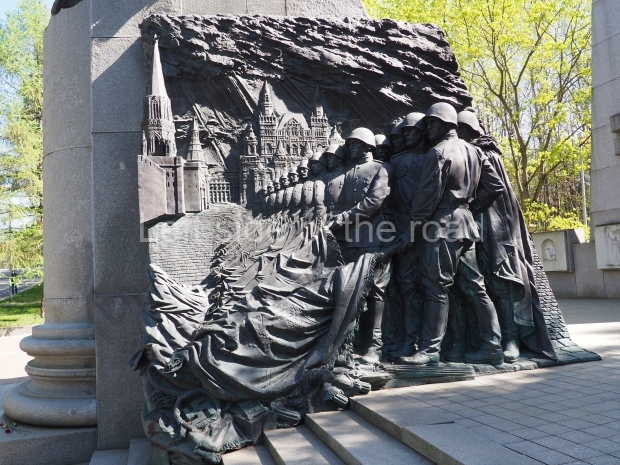
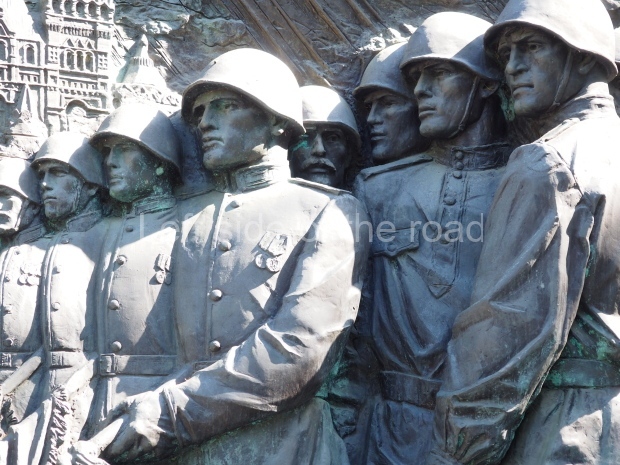
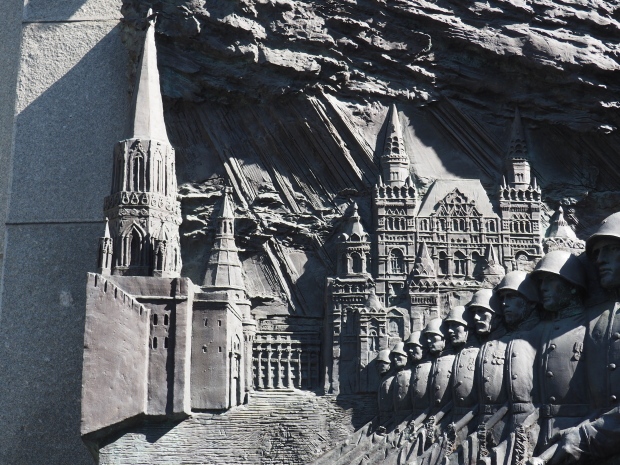
The design of the monument follows many, well established tropes for such statues. In general it depicts the events surrounding the Fall of Berlin, the occupation of the fascist liar by Soviet troops, the raising of the Red Flag over the Reichstag and the first ever Victory Day Parade in Red Square in Moscow.

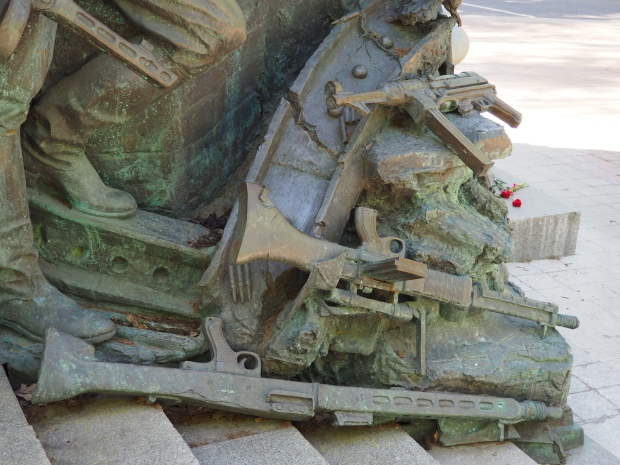
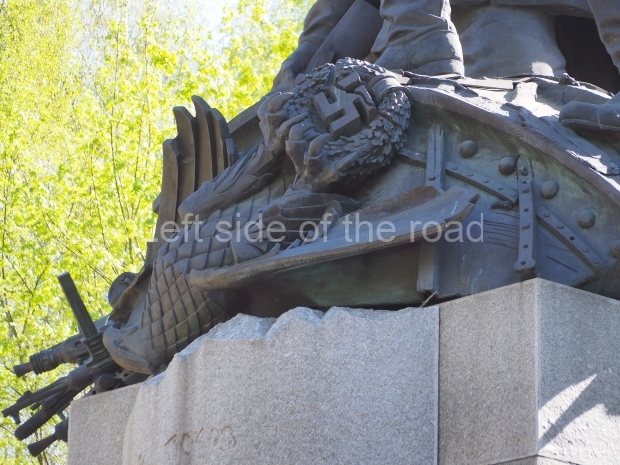
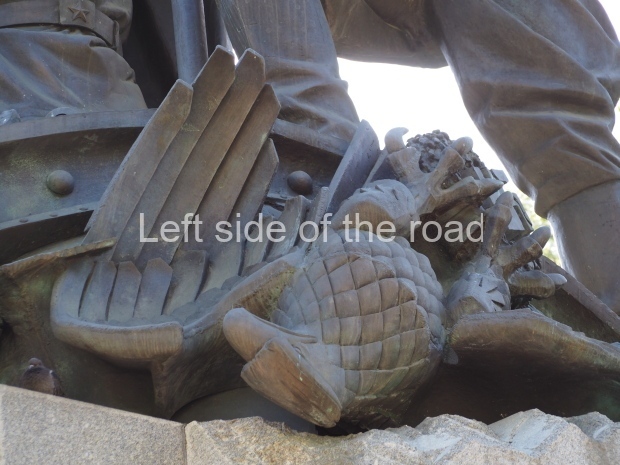
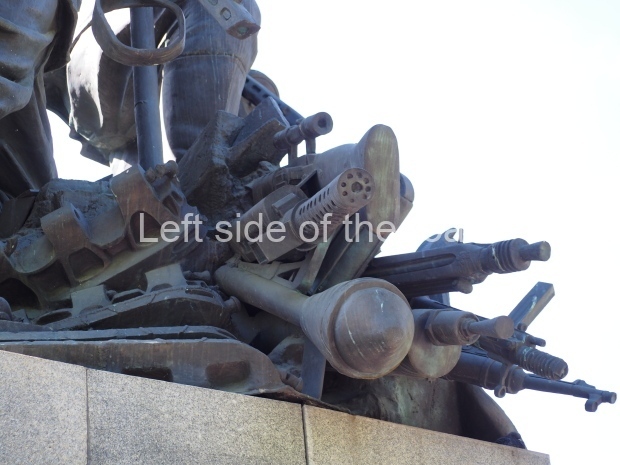
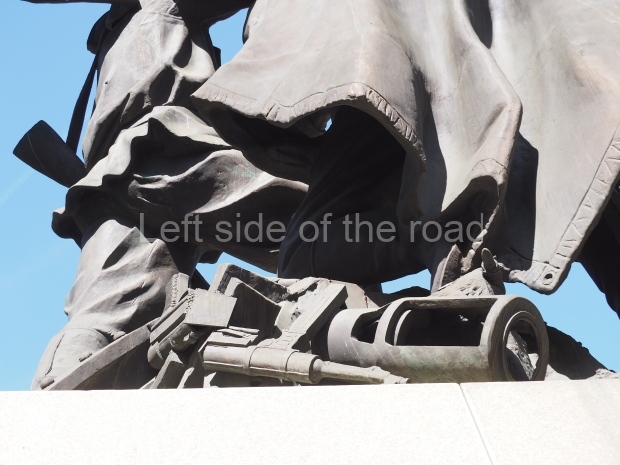
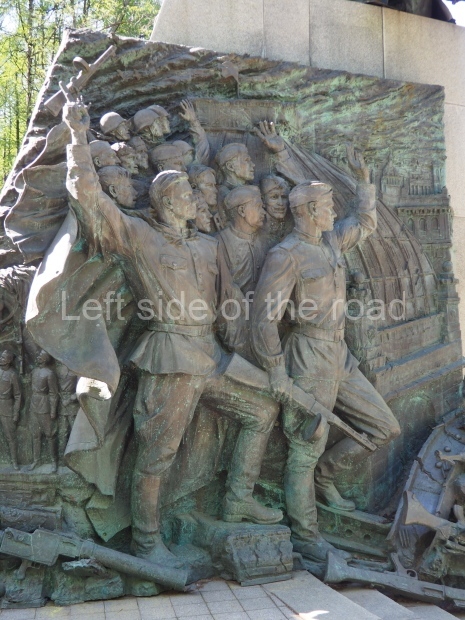
A common theme of the three, separate components of the statue is the dominance of Soviet over Nazi weaponry, imagery and culture. At the very top two Soviet soldiers are in the process of raising the Red Flag, one of the soldiers pointing his weapon at the pile of German weapons that lay discarded on the ground. Amongst this pile of weapons and debris is a toppled German eagle. We’ve won, you’ve lost!

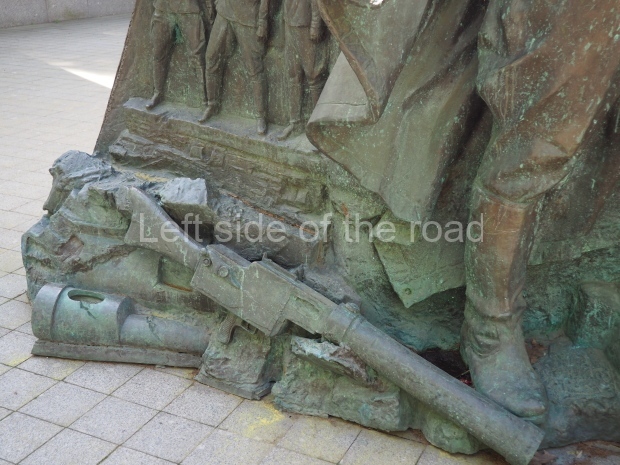
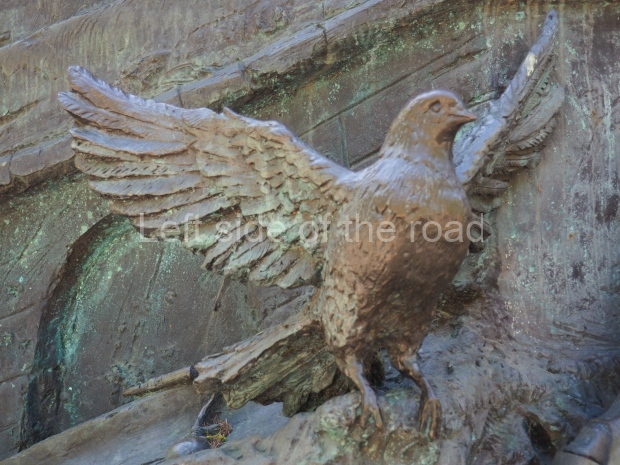
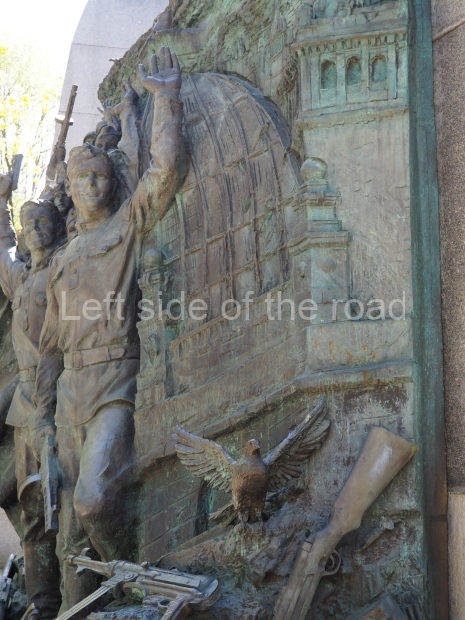
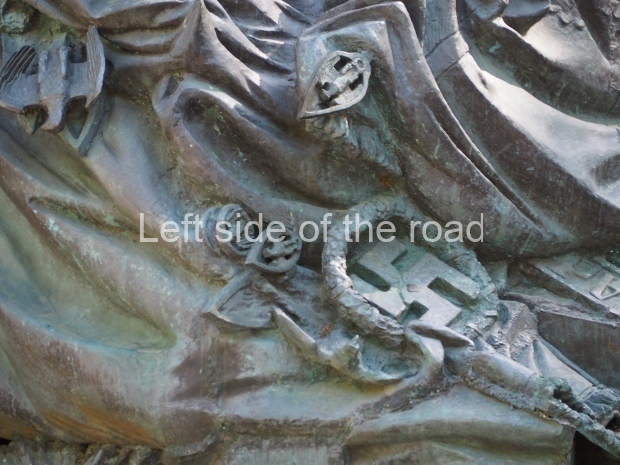
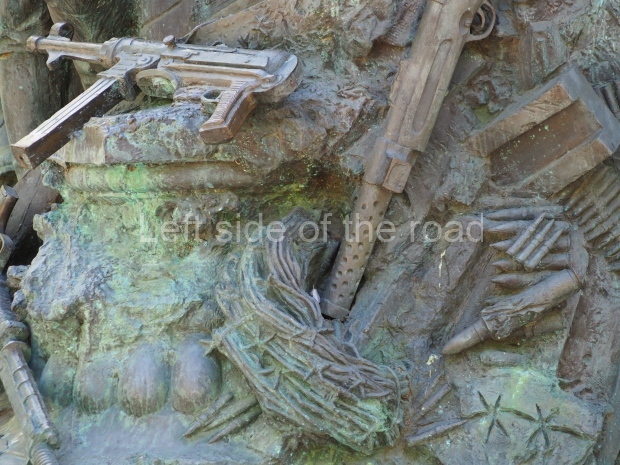
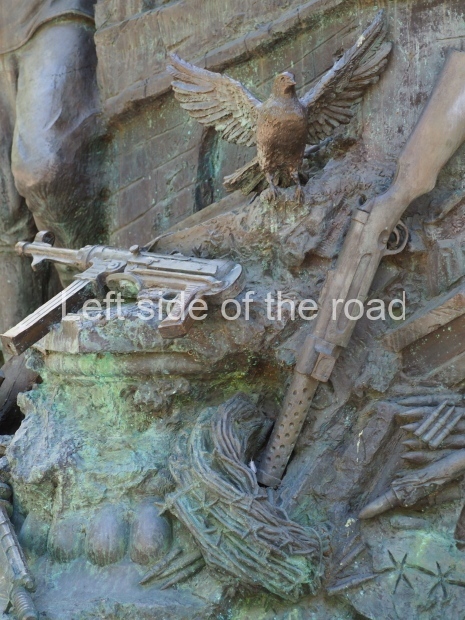
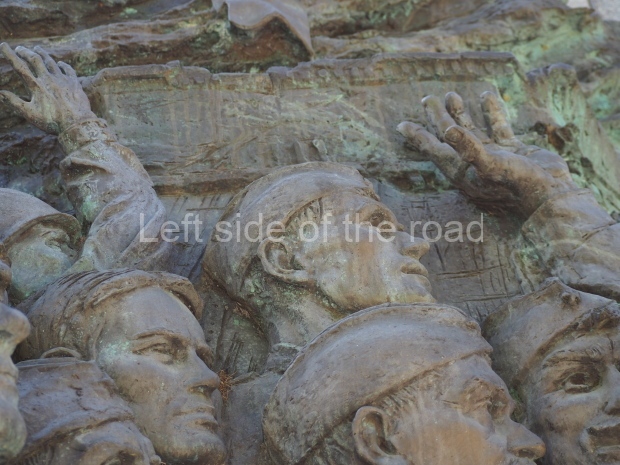
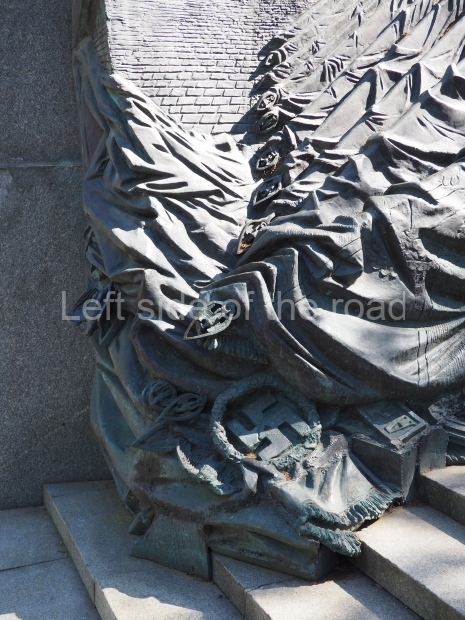
On the left hand side we have a group of Soviet soldiers who are greeting others, unseen, as they stand beside the burnt out dome of the Reichstag building. Under their feet and before them, discarded on the ground, are Nazi weapons, ruined machinery, barbed wire, destroyed Nazi standards (with the swastika broken) and on top of all this detritus a dove of peace is in the process of alighting.

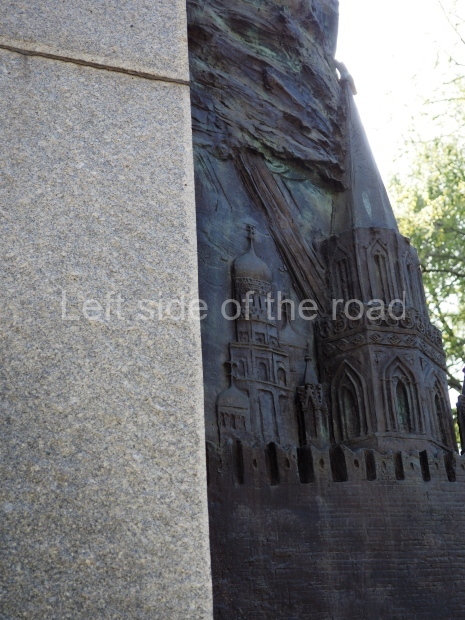
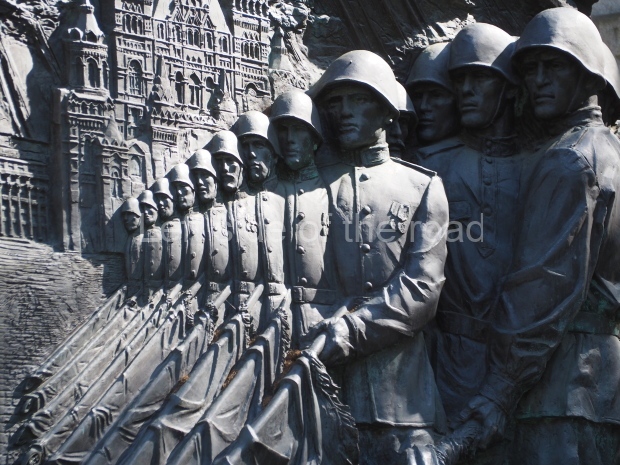
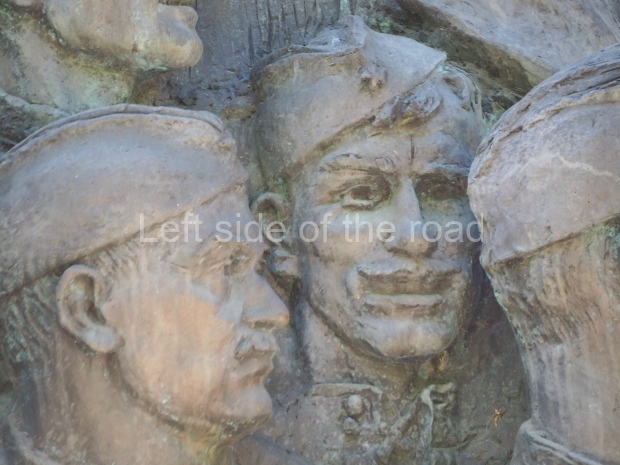
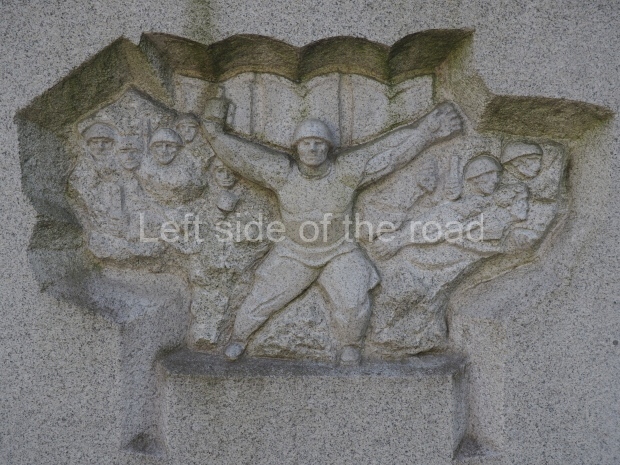
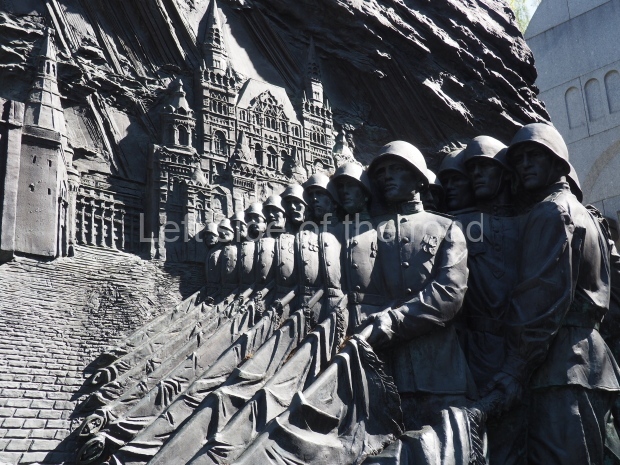
On the right hand side we have the depiction (the only example I’ve seen in a monumental form) of an episode that took place during the first Victory Parade where Soviet solders entered Red Square with dozens of captured Nazi banners, marched to the Lenin Mausoleum, upon which Comrade Stalin and other members of the Soviet leadership were standing to review the parade, and there the troops threw the Nazi standards down into the mud at the door of Lenin’s resting place. In the background of the monument can be seen the Spasskaya Tower and the building that used to be the Lenin Museum but which is now the Museum of the Patriotic War of 1812.

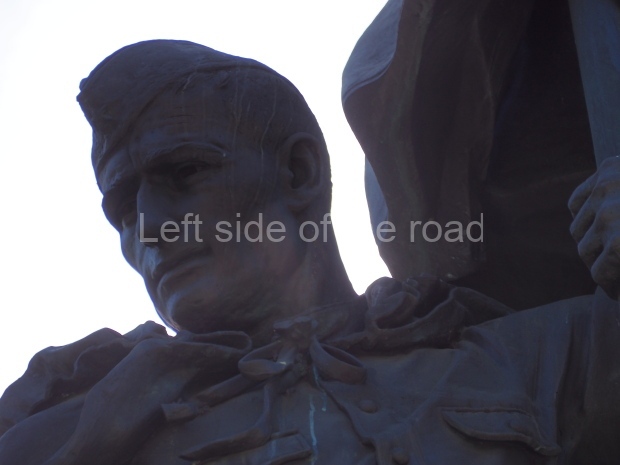
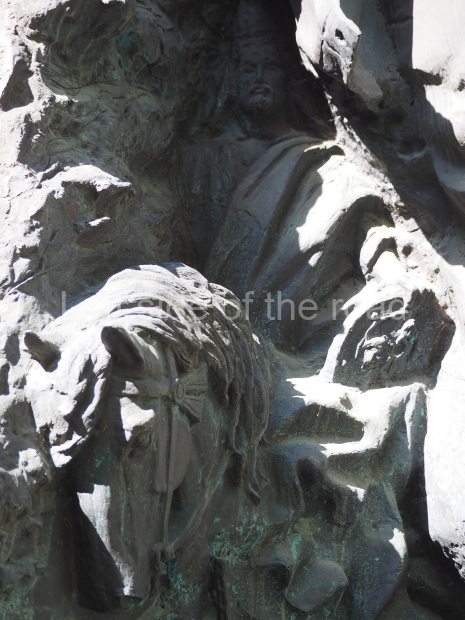
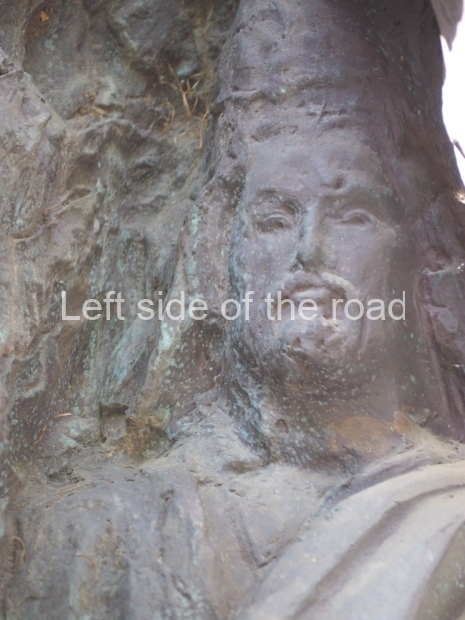
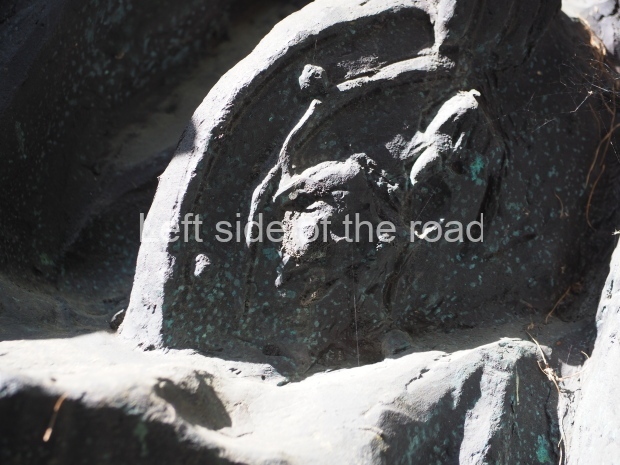
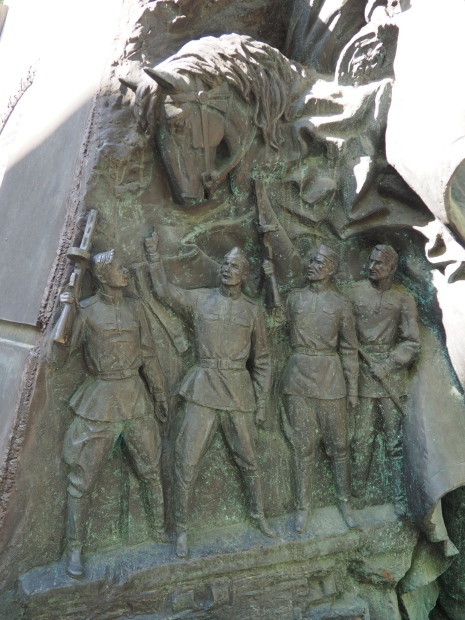
However, there are two aspects which differentiate this monument from those that would have been created even in the Revisionist period of the Soviet Union. And both these are on the right hand side. Amongst the group of soldiers cheering there is one face that is looking out directly at the viewer whilst all the rest are looking to the front. Also, tucked behind the folds of the flag on that side is an incongruous figure on a horse. This figure is long haired and bearded and is totally out of place. A Christ figure? And I couldn’t work out what he has in his hand.

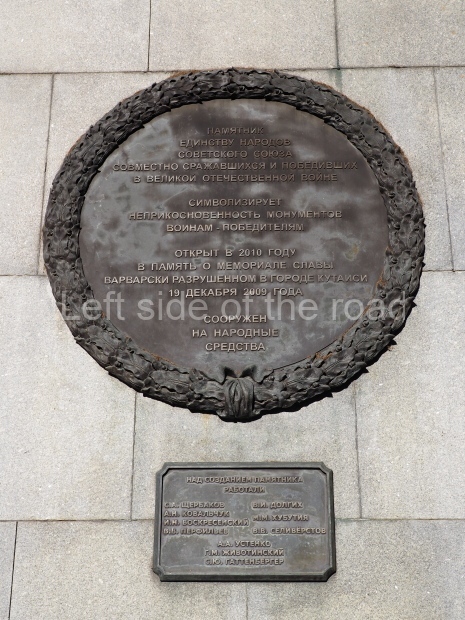
At the rear of the monument are two plaques. One explaining the reason for its existence and the other with the names of those involved in its creation.

Translation of the plaques on the rear of the monument. (Machine translated so apologies for any eccentricities.)

Monument to the Unity of the Peoples of the Soviet Union who fought and won together in the Great Patriotic War.

Symbolising the inviolability of monuments to victorious soldiers

It was opened in 2010 in memory of the Glory Memorial which was barbarously destroyed in the city of Kutaisi on December 19, 2009

Built with folk remedies

Sculptors/Architects; – the names listed. However, I don’t know the exact level of their involvement but assume that Shcherbakov was the principal sculptor.

S A Shcherbakov

A N Kovalchuk

I N Voskresenskiy

B V Perfiliev

V V Seliverstov

A A Ustenko

E H Zhivotinsky

G J Gattenberger

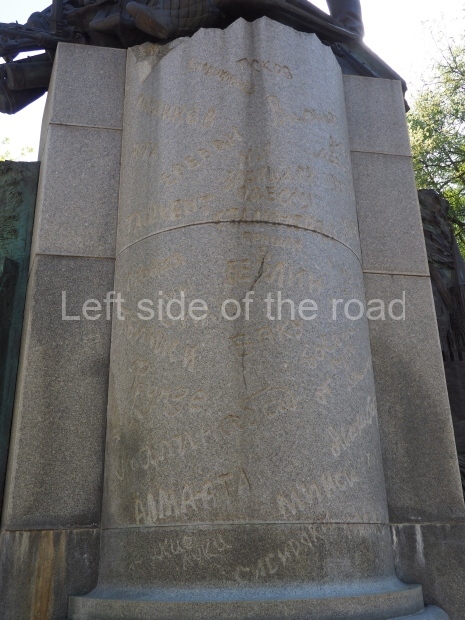
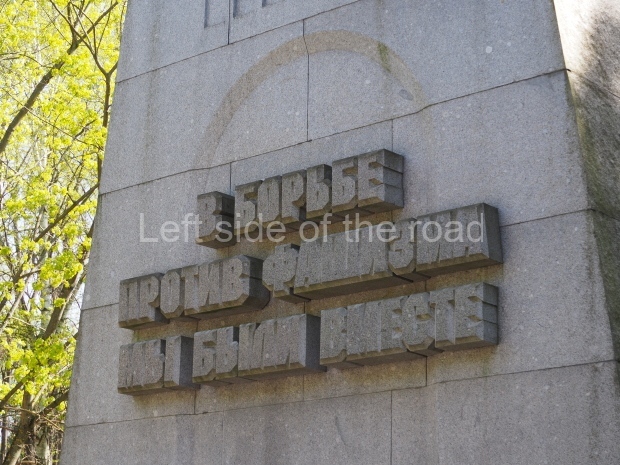
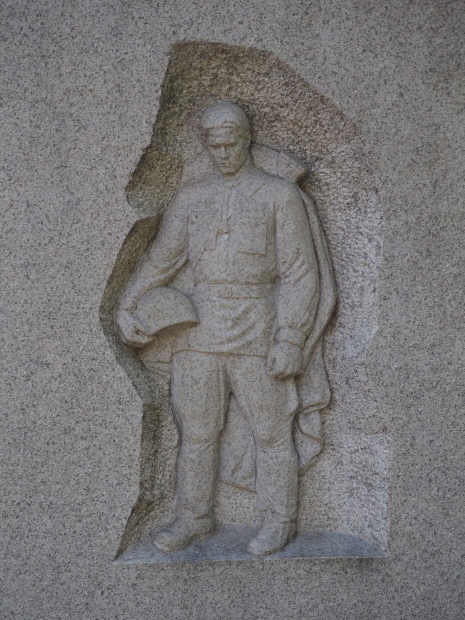
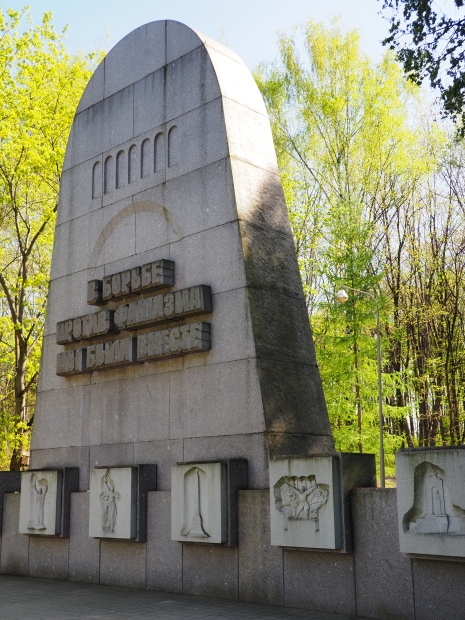
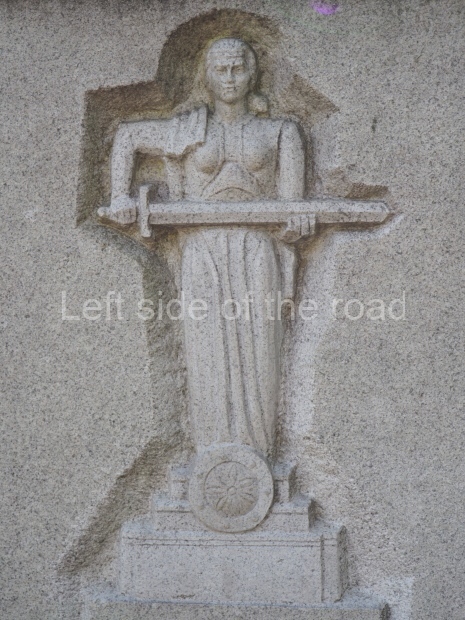
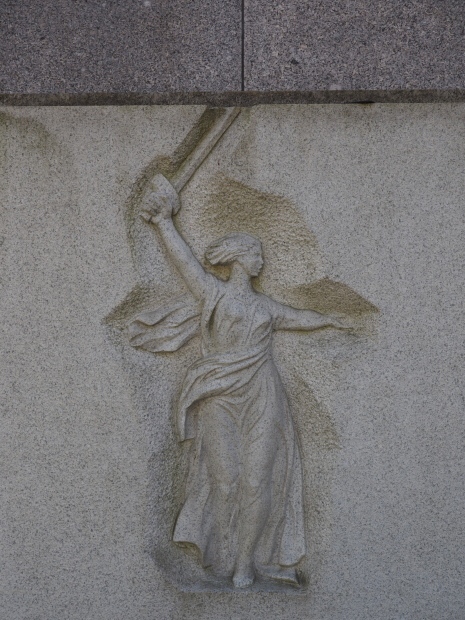
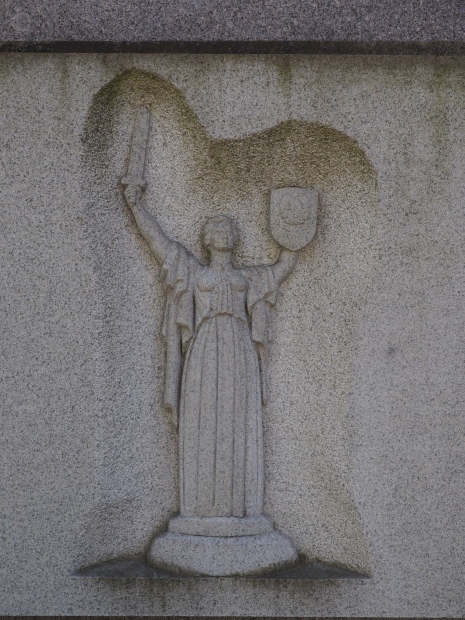
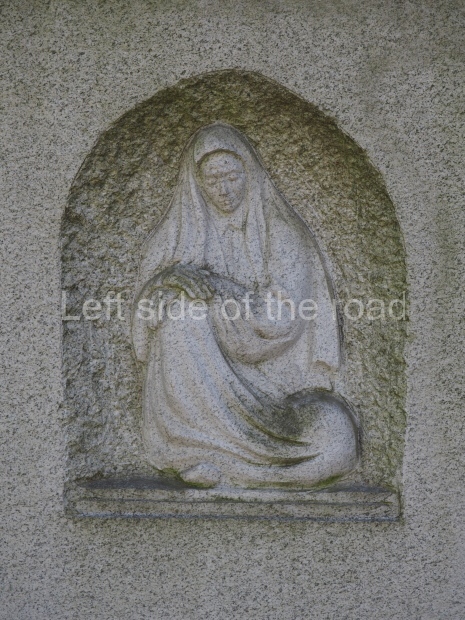
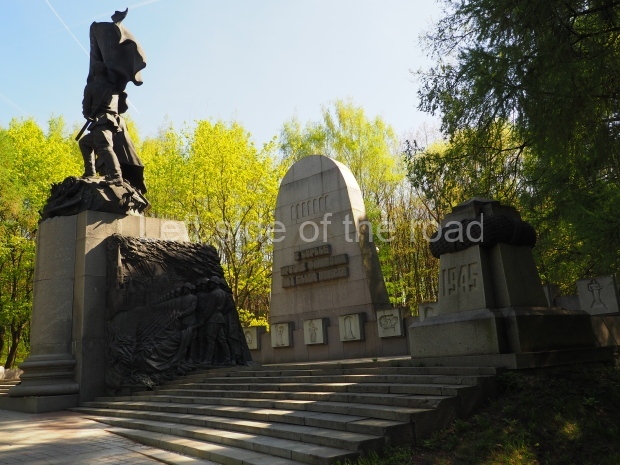
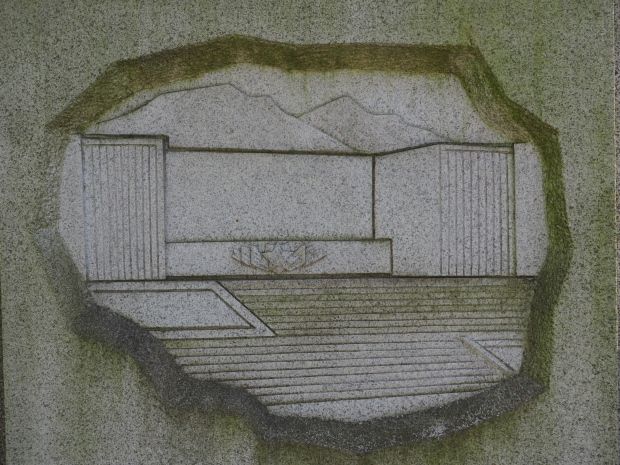
In the centre of the concave, stone wall set back a few metres from the statue the high structure pays homage to the monument that was blown up in Tbilisi. The large letters (in Russian) declare the name of the ensemble – ‘We are together in the fight against fascism’. Lower down and on either side are smaller images of other memorials from other Soviet Republics. I can identify Mother Armenia in Yerevan, the original monument in Kutaisi and the Motherland Calls! in Stalingrad but have problems with the others.

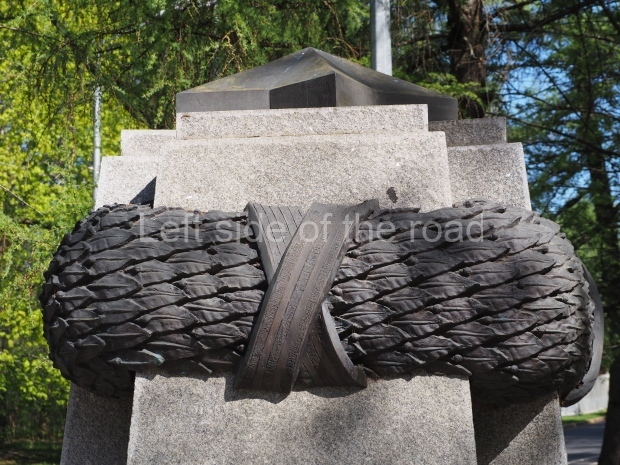
On either side of the installation stand two pillars upon which is place a horizontal, large, golden star.

Closest public transport;

Park Pobeda Metro station

Location;

In Victory Park (Park Pobeda), Moscow

GPS;

55.72845 N

37.50152 E

How to get there:

From the metro station head towards the obelisk and main museum but take a path off to the left which goes beside the church. Keep on this track as it goes past the entrance to the Military Weapons Museum (on your left) and then rises as it skirts around the left of the principal, circular structure. The monument is on the left hand side of the track.

More on the USSR