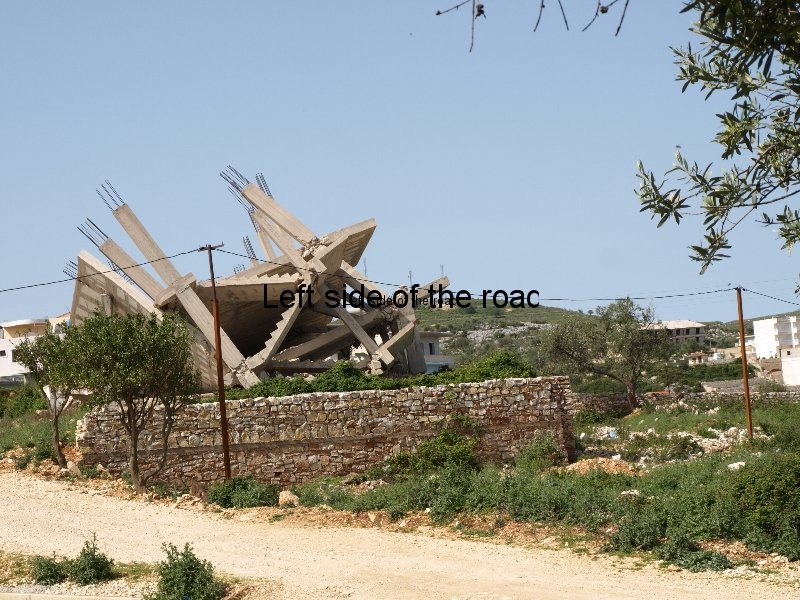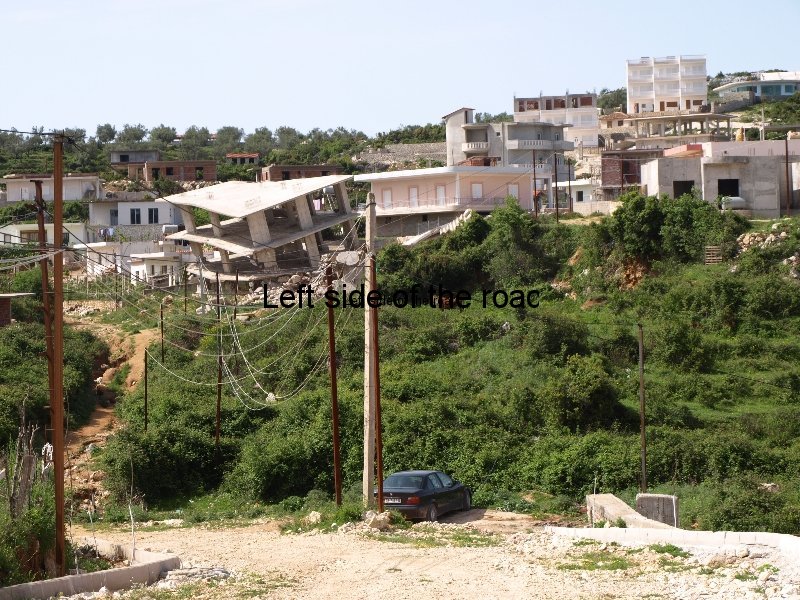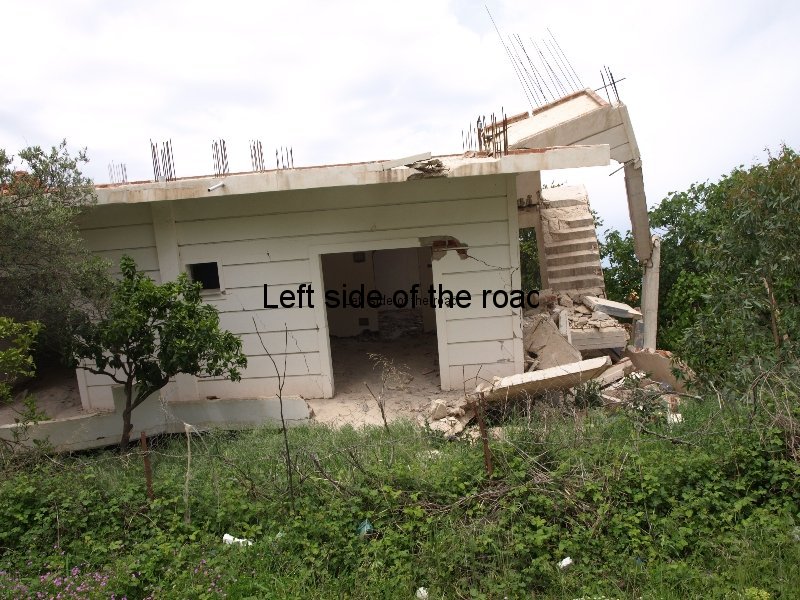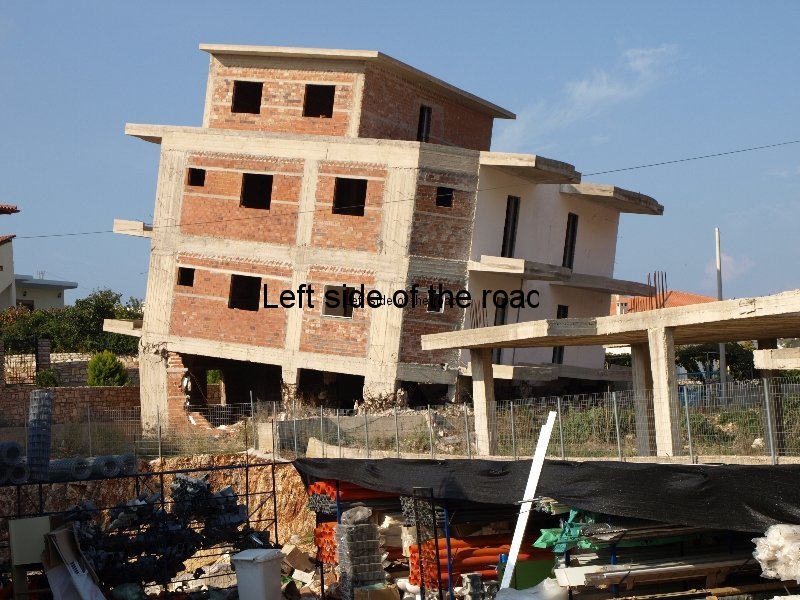
Albanian town planning – drastic measures taken

Town planning decision in Ksamili, Saranda, Albania

Don’t annoy Albanian town planners!

More on Albania ……

Albanian town planning – drastic measures taken

Some building developers rub someone in authority up the wrong way and they find their building plans didn’t go quite as they expected.

It’s the late summer, early autumn, in Ksamil, southern Albania. Things are getting quiet now as the bulk of the tourists have left and the bars on the beach are deciding that it’s not worth opening, at least not until next April. It still gets light early and some people, the ones after the worm, are already up. They notice a strange, an unusual sound. Heavy machinery, but not the sort that is normally used in construction.

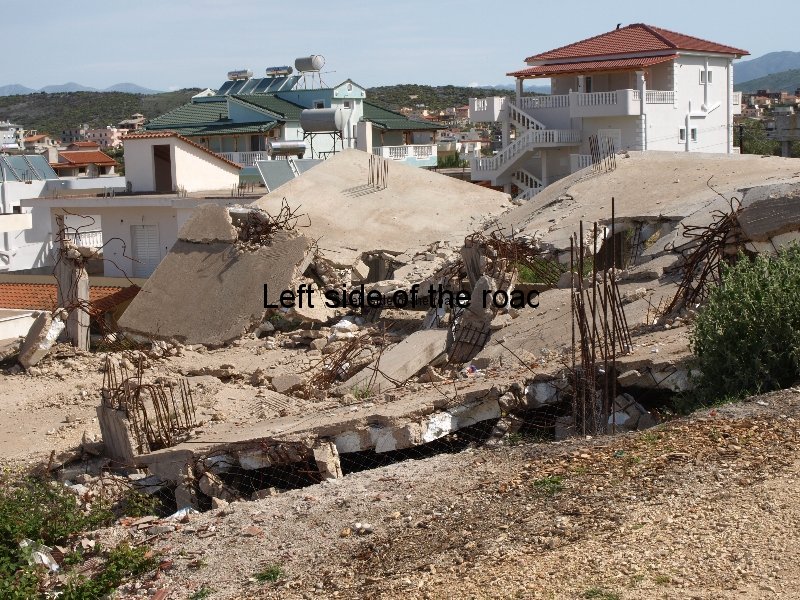
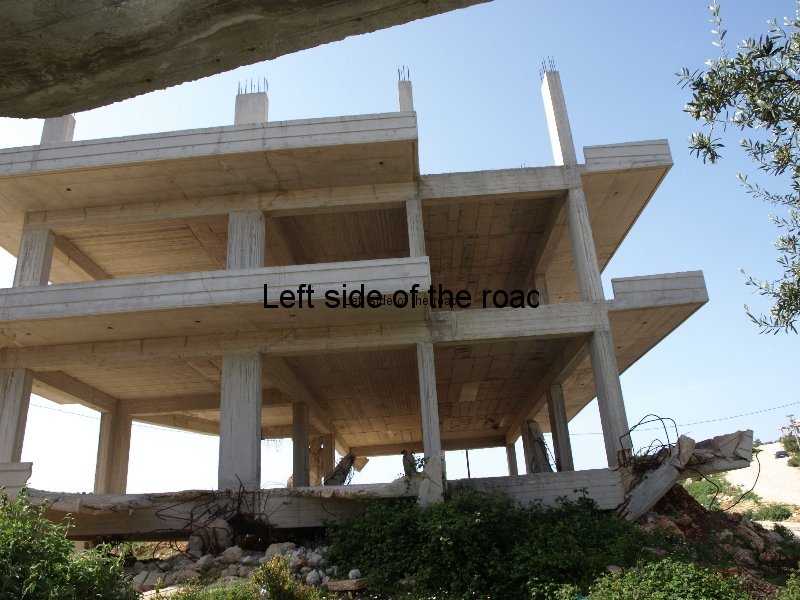
Amazed they look on as it comes around the corner and heads towards a half completed building. The machine looks angry, aggressive, menacing. At the building it stops, stabilizers are deployed, a long hydraulic arm reaches out towards the defenceless building, approaching one of the reinforced concrete pillars. Huge, powerful jaws open, clutch the pillar and a button is pushed inside the machine and the jaws close with immense force. The concrete and metal are no more than a dry twig to this monster. The concrete crumbles, the bars snap, the building totters.

The machine is unimpressed at the resistance of this shell of a building and moves slowly on to another pillar to repeat the process. Still the building stands proud but looking decidedly shaky. When the third is destroyed the building gives up and the tons of concrete and metal that had taken weeks to construct has become worse than useless. Before any other construction can begin someone has to pay to get rid of all this debris. What started out as a project to make money has become a liability.

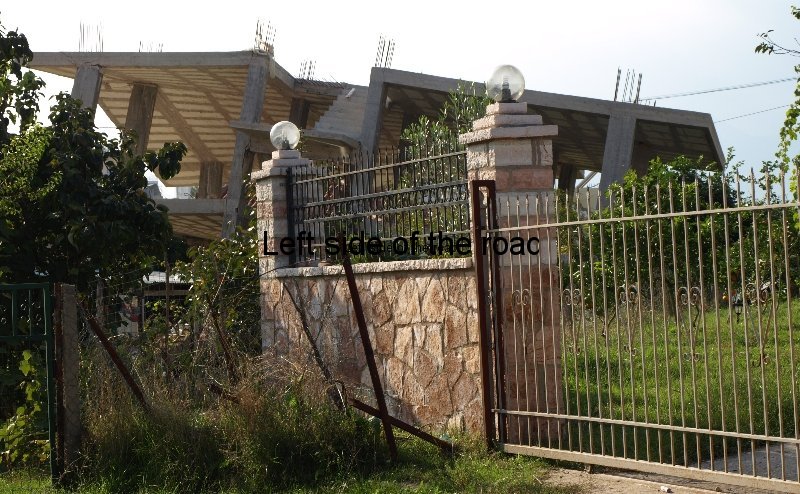
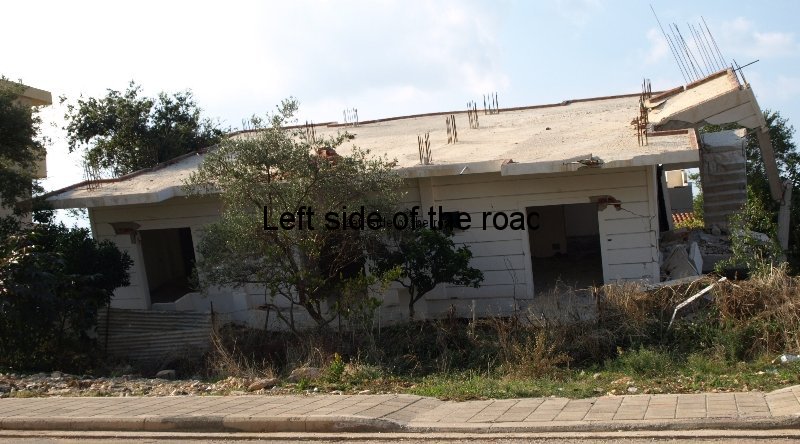
This was what happened in the autumn of last year in the erstwhile collective farm of the Socialist era (specialising in olives and citrus fruit) now a nondescript, blot on the landscape, urban sprawl that caters for tourists, both national and foreign, who flock here in the short summer season. These buildings had been started (some almost complete and partially lived in) without the requisite permission and the executioner had arrived to carry out the sentence.

Passing through this town, from Saranda, on the way to Butrint (the Greek/Roman archaeological site a few minutes down the road) and a few minutes after passing the Dema Monument on your right, it was as if you were going through a town that had been hit by an earthquake, buildings leaning at strange and unnatural angles.

A year ago there were many more but in the intervening months some have been completely demolished and, perhaps, construction has been resumed, but this time with the necessary permission. At least in this town those few hours of work in 2011 had taught any prospective developer a lesson.

Why Ksamil? I don’t know. There seemed to be the same treatment meted out to one or two structures on the outskirts of Saranda, the nearest town of any real size, but nothing in the town itself. I can’t imagine that if there was a culture of building where and when you wanted existed in Ksamil it didn’t also exist in Saranda. There it seems that half the buildings are in the process of construction. Perhaps fines were paid or there was a transfer of heavy brown envelopes to the appropriate authorities.

I haven’t come across anything similar in any other part of Albania (where construction seems to as random and uncontrolled as in Ksamil) but someone must have been upset as these machines had supposedly come all the way from Tirana, not an insignificant journey for such heavy plant.

I don’t get the impression that town planners, as such, exist in Albania but if such officials are around and have these power I’m sure they would be the envy of their counterparts throughout the world.

2019 Update

This information is now of historic interest alone as on a recent visit to the town I was unable to see any of the toppled buildings. Being a popular tourist resort there would have been pressures to dispose of these ‘modern sculptures’ as quickly as possible. However, the issue itself – i.e. of illegal constructions – is one that is ongoing in different parts of the country. There seems to be an effort by the present government to redress the total anarchy that existed towards the late 1990s and even quite long established buildings are being demolished. Apart from clearing waway a number of scars on the landscape some public land is being reclaimed as pavements and roads disappeared under bricks and mortar.
More on Albania …..

Butrint – a Greek and Roman story in southern Albania

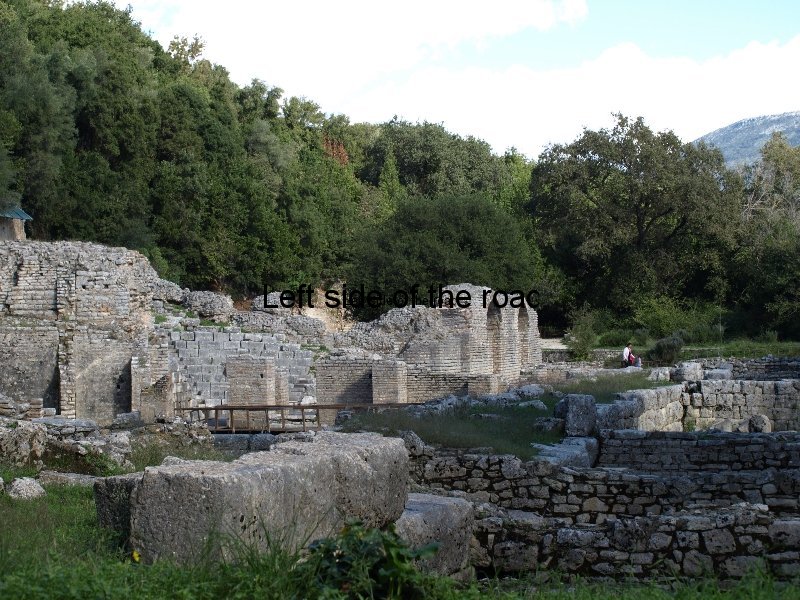
Roman ruins at Butrint, Saranda, Albania

Butrint, Saranda

More on Albania ……

Butrint – a Greek and Roman story in southern Albania

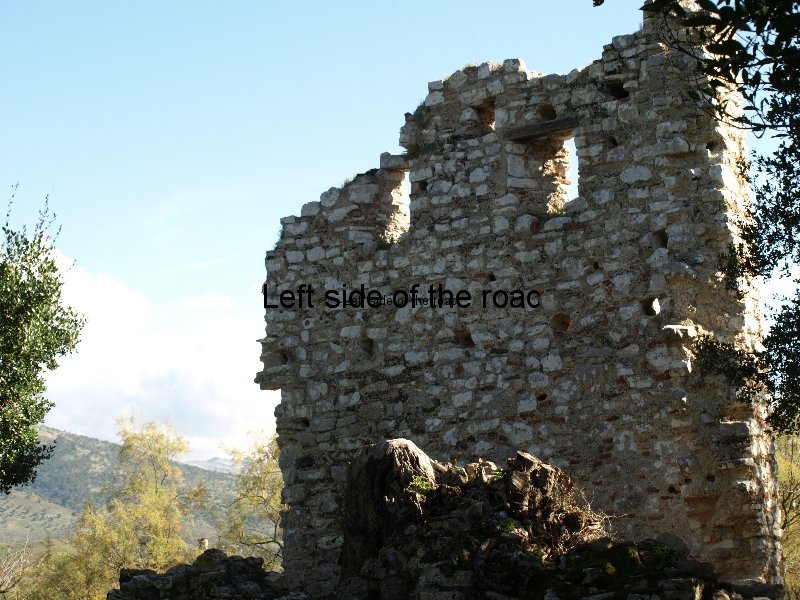
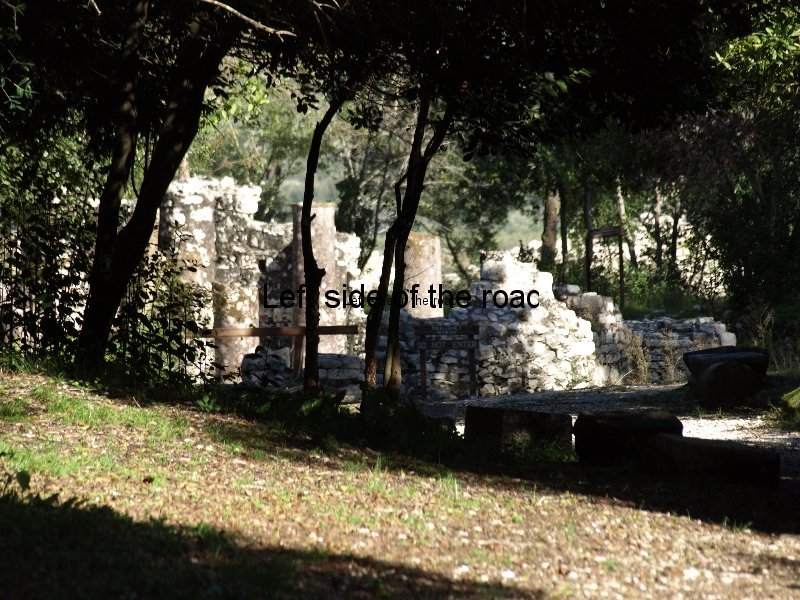
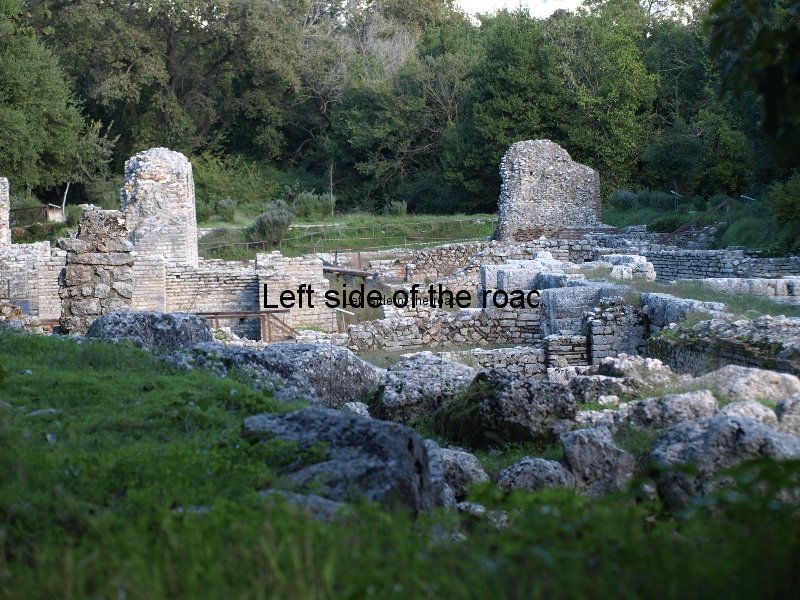
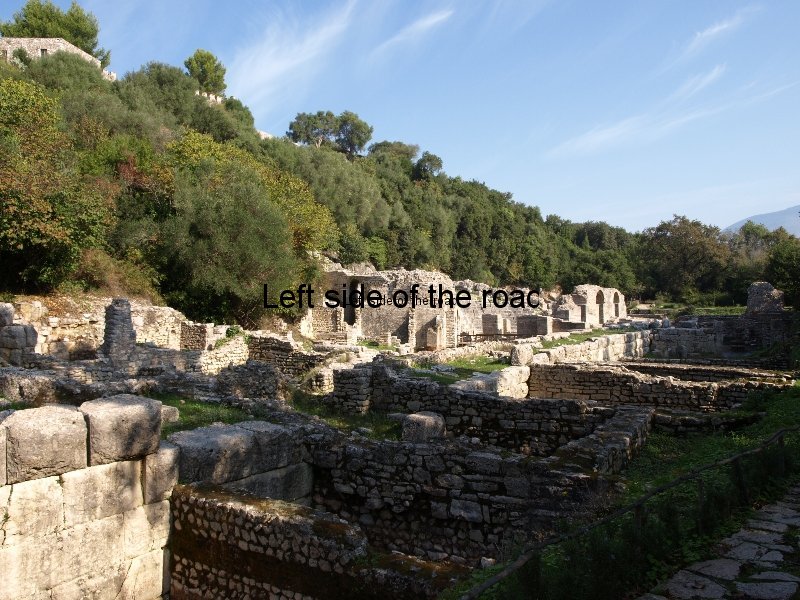
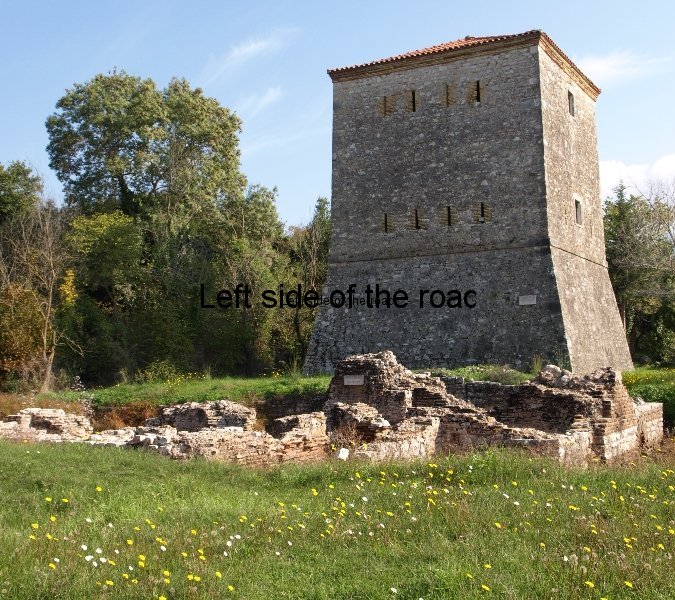
An archaeological site that goes back almost 2500 years, Butrint has the imprint of both the Greek and Roman civilisations. Important for its location to both those cultures it was also pivotal under Venetian rule, its decline only really beginning after it fell to Napoleon’s armies at the end of the 18th century.

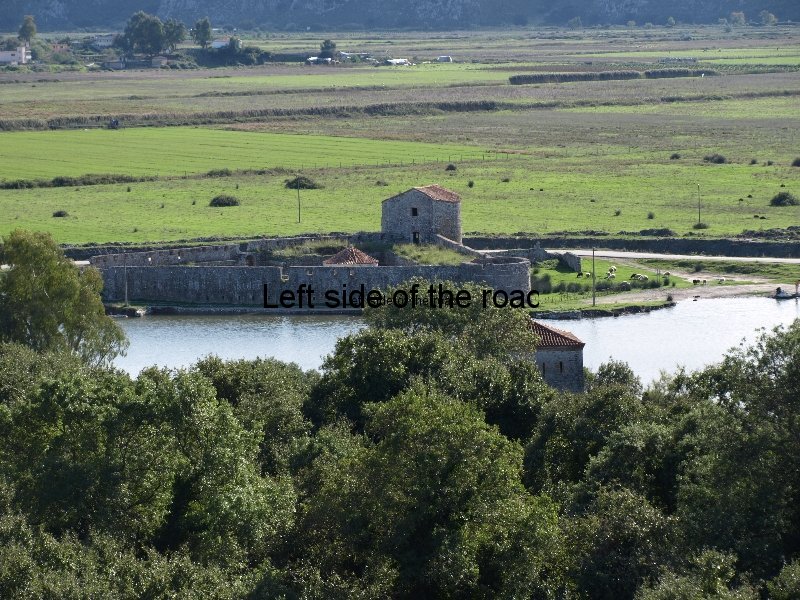
One of the main visitor attractions in the vicinity of Saranda is the archaeological site of Butrint, about 14km to the south (after passing by the Dema Monument and through the town of Ksamil), easily reached by a regular public bus from the town centre.

One reason that makes it special is the fact that it was occupied by some of Europe’s principal civilizations starting with the Greeks, who first developed the site in the 4th century BC, followed by the Romans from the 2nd to the 6th centuries AD, and then reaching a final period of importance and influence under the Venetians from 16th century until succumbing to the French armies of Napoleon at the end of the 18th century. It was subsequently occupied by a local despot but by that time it had lost its historic importance.

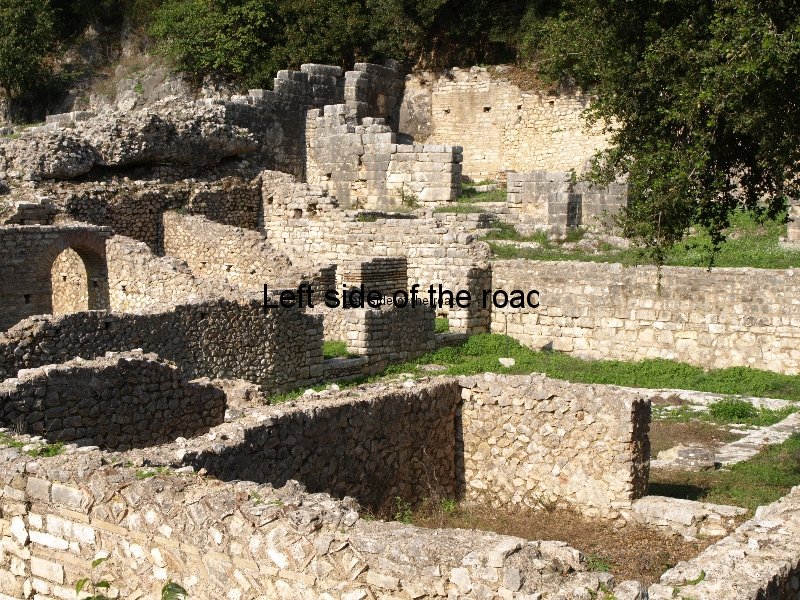
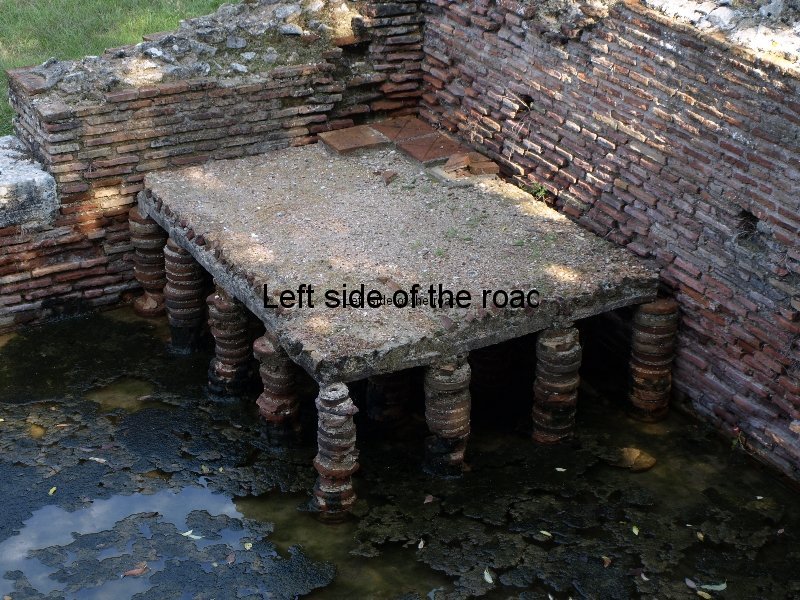
Especially interesting to me was the way the Roman’s just took over the Greek city and adapted, and extended, it to their own particular philosophy and way of doing things. For example, they expanded the theatre, built bath houses and other public buildings and altered the whole atmosphere of the place by constructing a huge Forum, Roman life revolving around that part of any city. culture.

This foundation was then later, literally, built upon by succeeding civilizations, with a development of the fortifications and a strengthening of the perimeter walls as the technology of warfare became more lethal and adept at breaking down a population’s resistance. Yes, the Romans built walls but their primary defence was the threat of total, complete and absolute destruction if anyone dared to attack a Roman settlement, something that was valid until the collapse of the Empire in the 5th century AD.

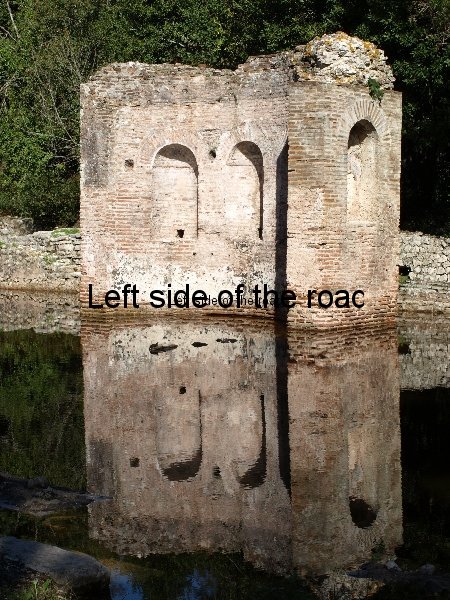
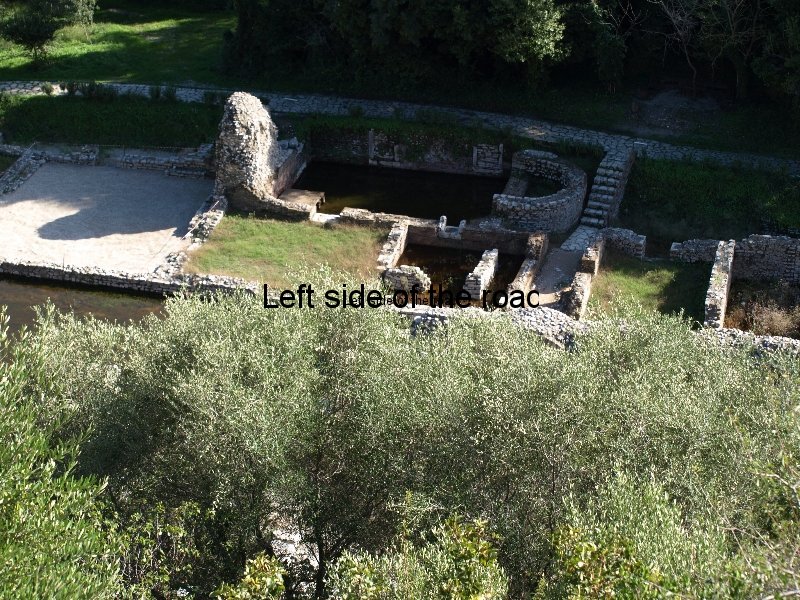
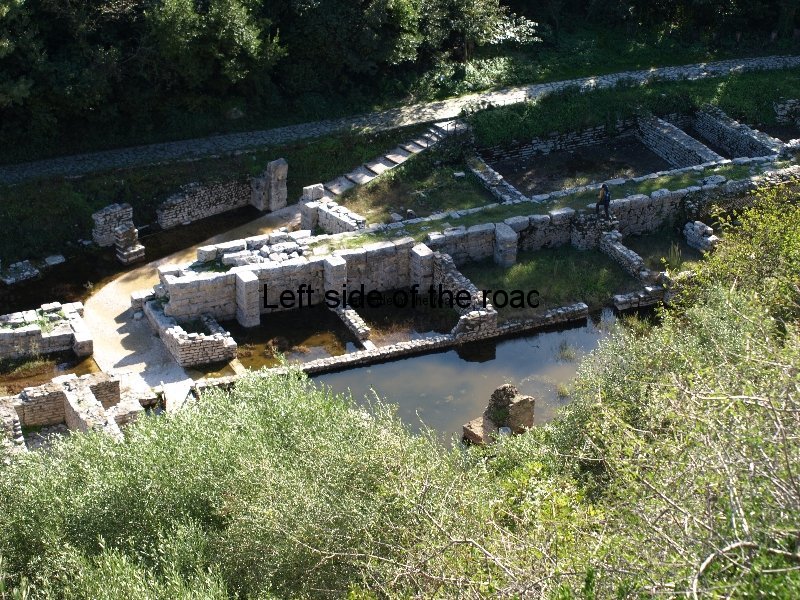
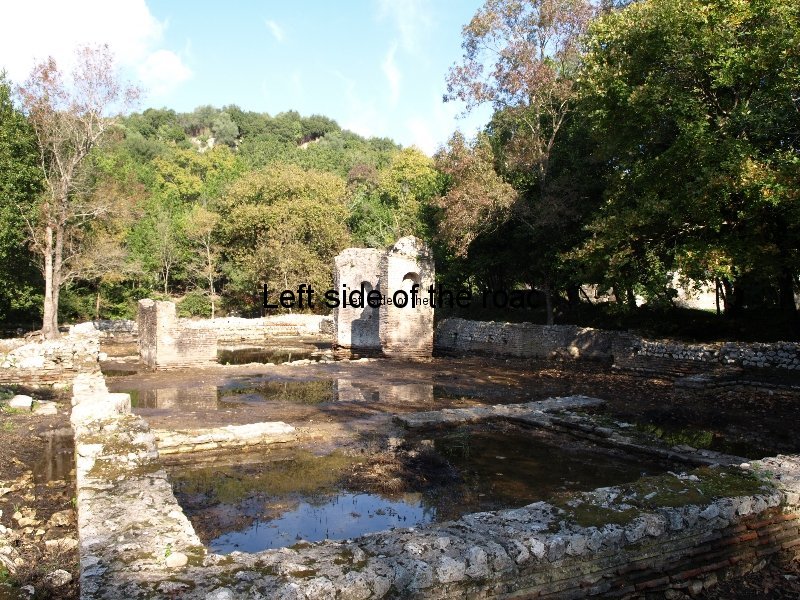
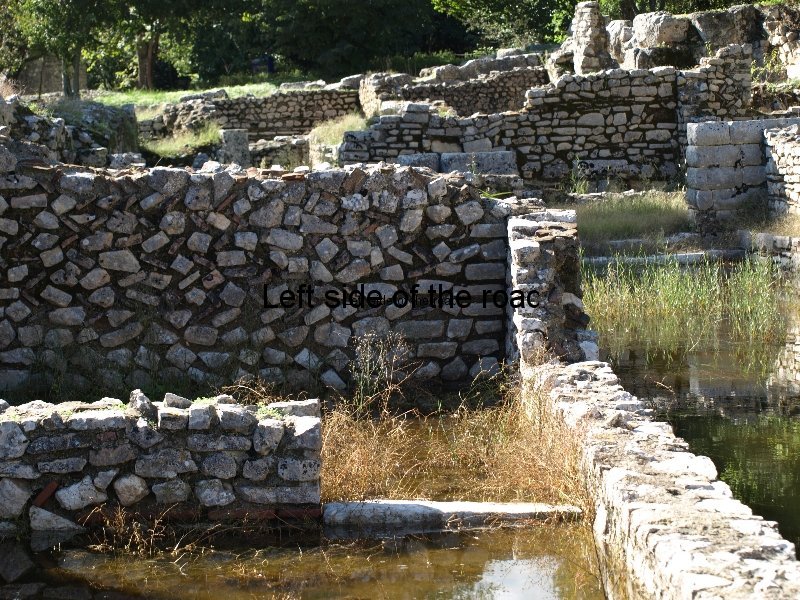
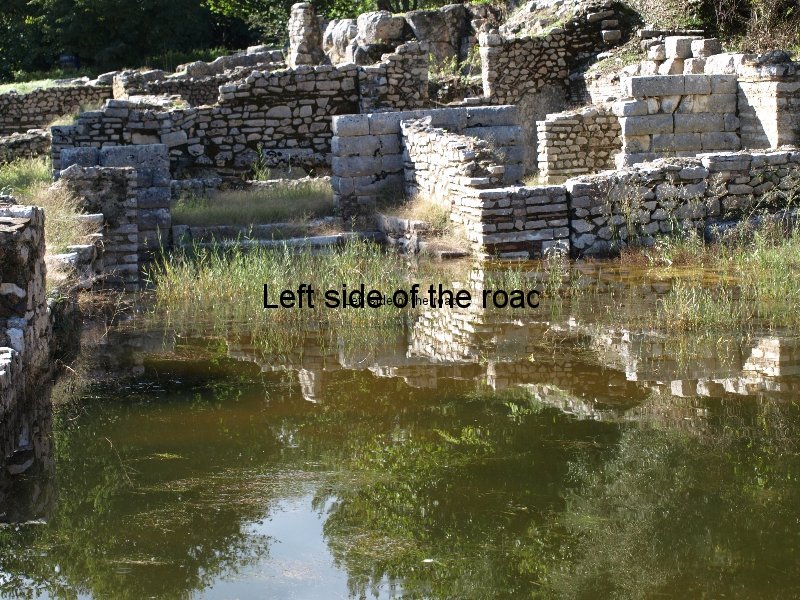
It’s not a huge site and a couple of hours is adequate to get a good idea of the place, at a reasonable pace. Each time I go there the level of the water seems to get higher and from what I’ve read this was a problem from many centuries ago, forcing the abandonment of some of the lower structures.

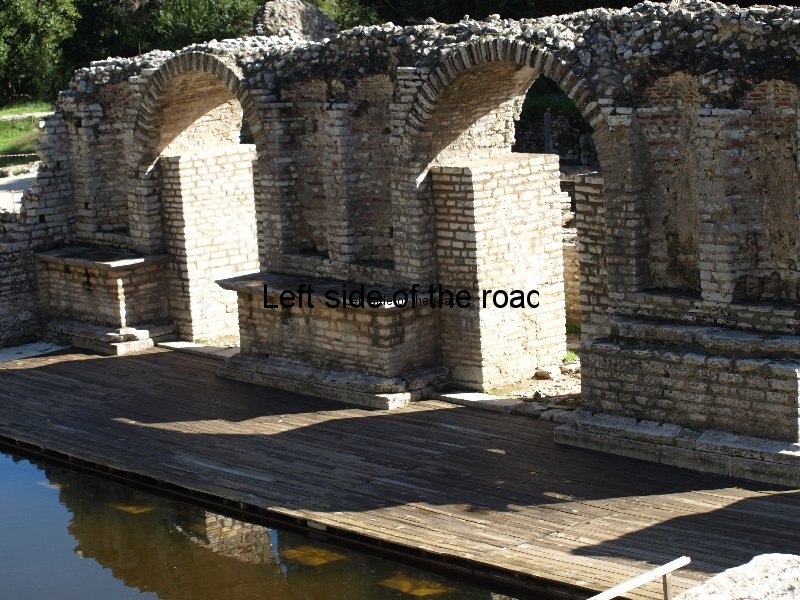
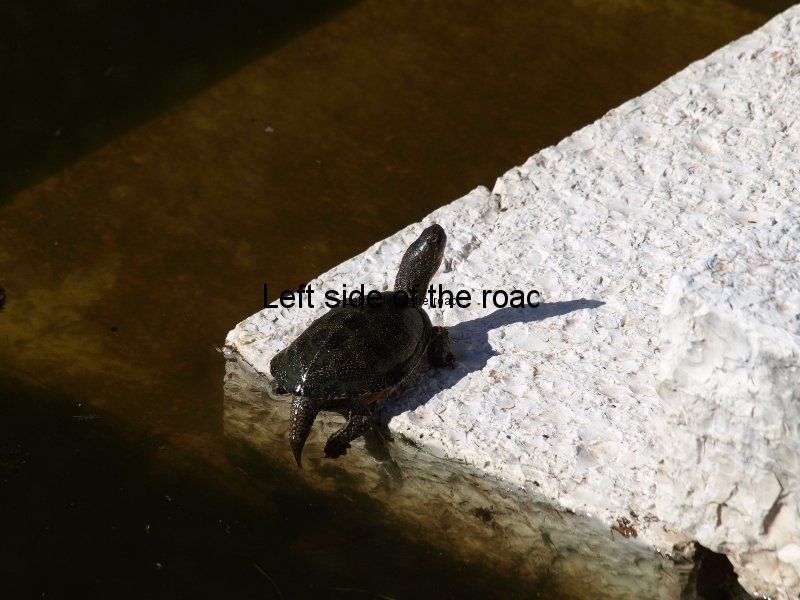
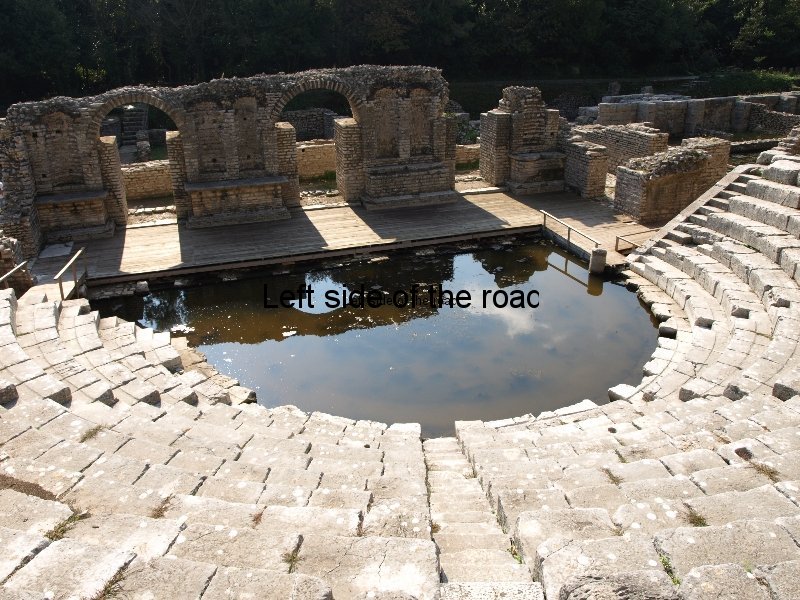
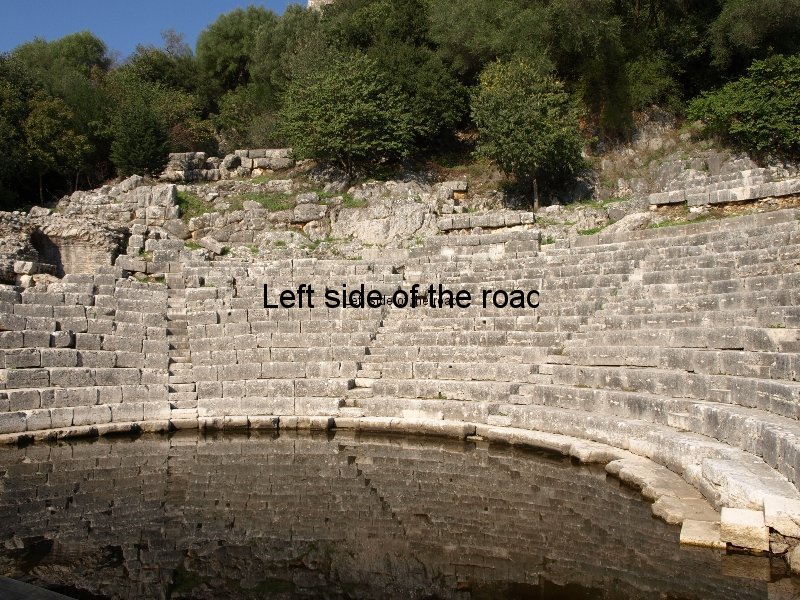
At the moment the orchestra of the Greek/Roman theatre seems to be constantly under water, to such an extent that terrapins are regular visitors. What this flooding is doing to the structure of the buildings I don’t know, but it can’t be good news.

So what do I recommend?

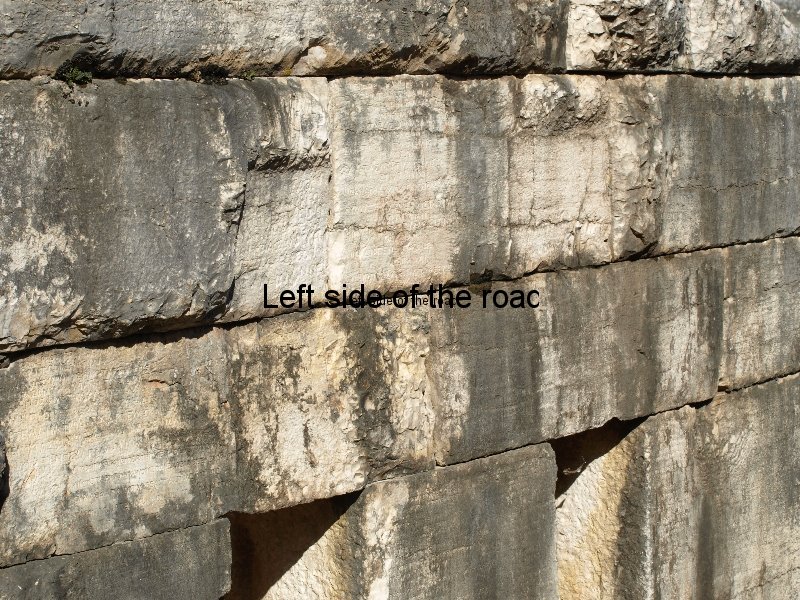
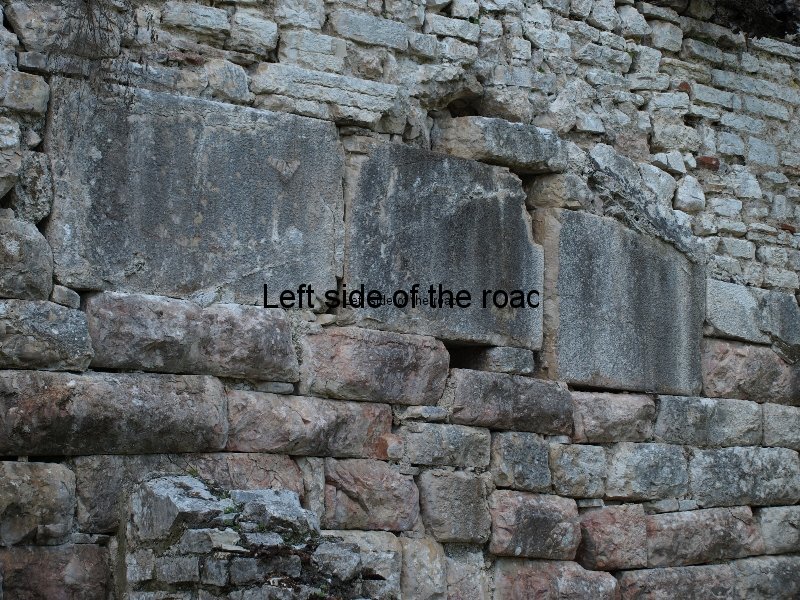
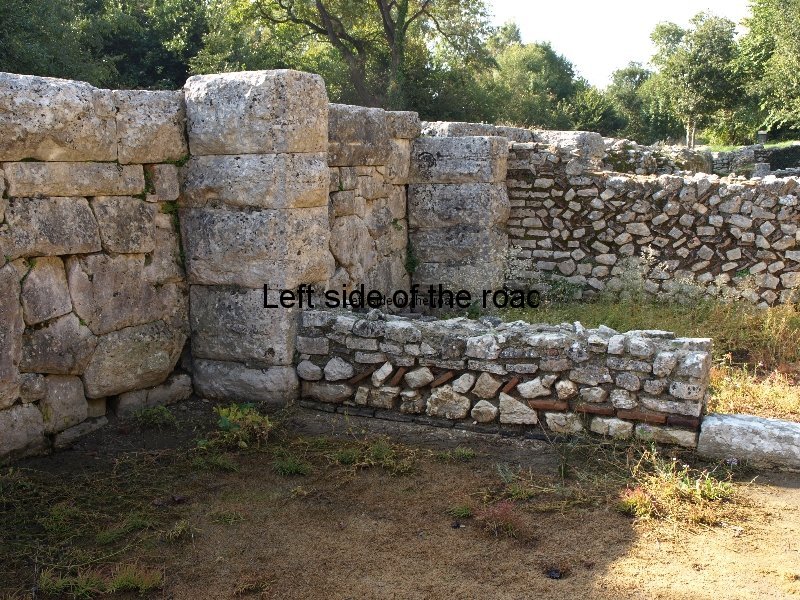
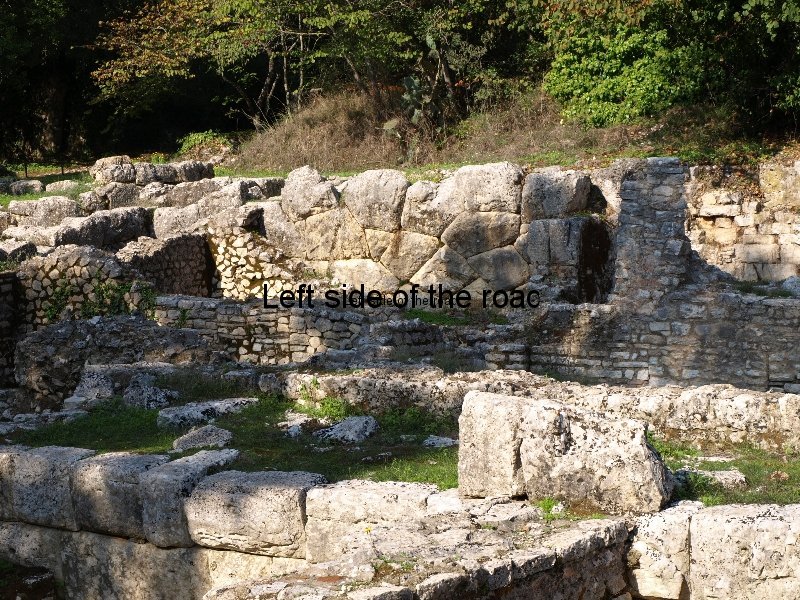
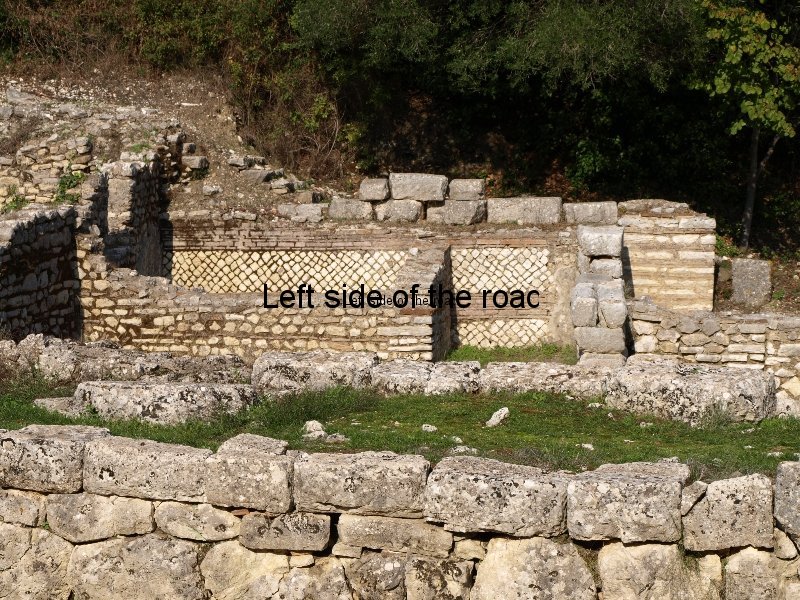
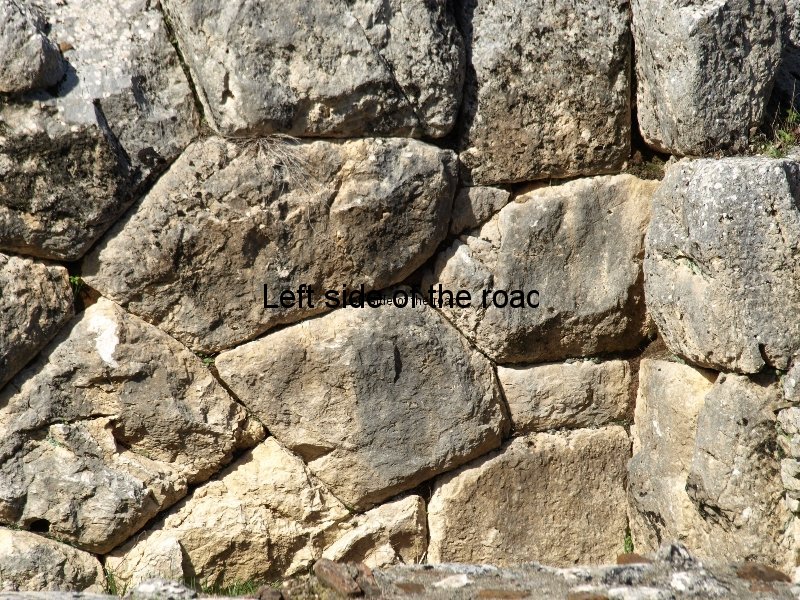
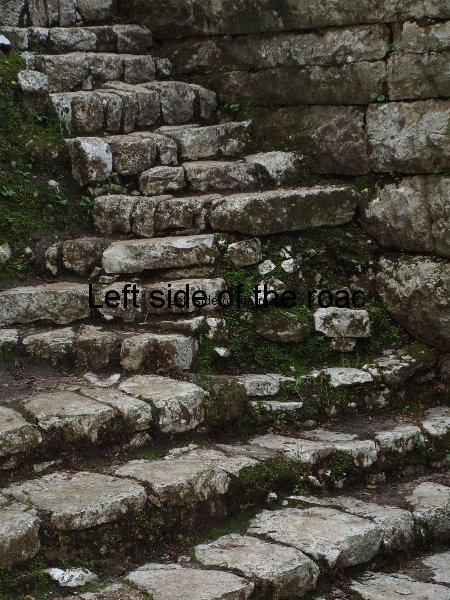
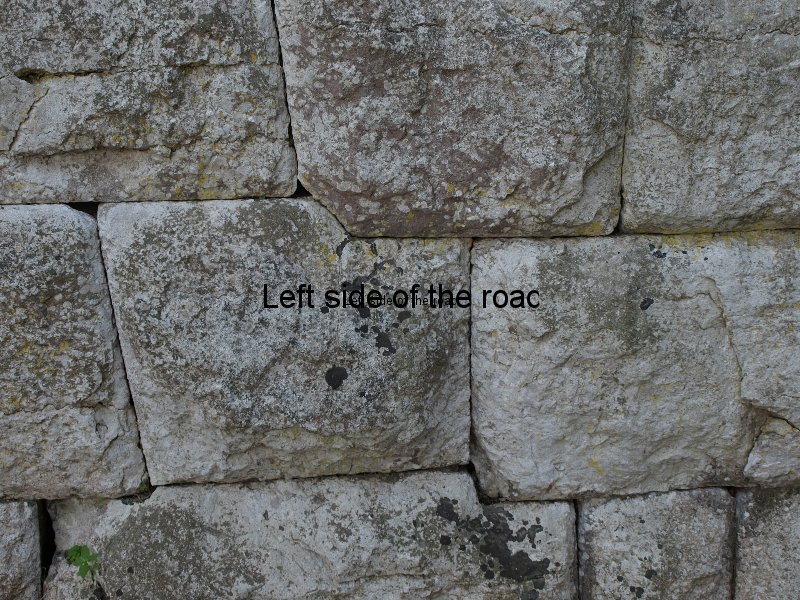
The changing manner in which the Greeks and the Romans put one stone on the top of another. There is a very distinct change in the way they constructed their buildings, although they had basically the same use. What I found interesting was the similarity in building style of the Greeks to that of the Incas in Peru. At Butrint, as in Cuzco and Machu Picchu, large, worked pieces of stone are fitted together as in a jigsaw puzzle, so that there are no straight lines, I assume for a similar reason, i.e. there are no lines which provide a weak point in the event of an earthquake.
Archaeologists working in Butrint during Socialism

Archaeologists working in Butrint during Socialism

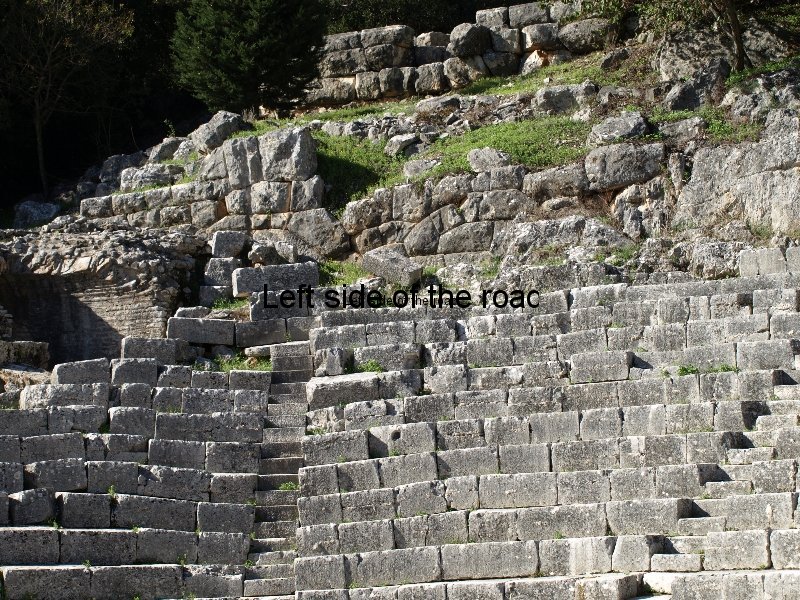
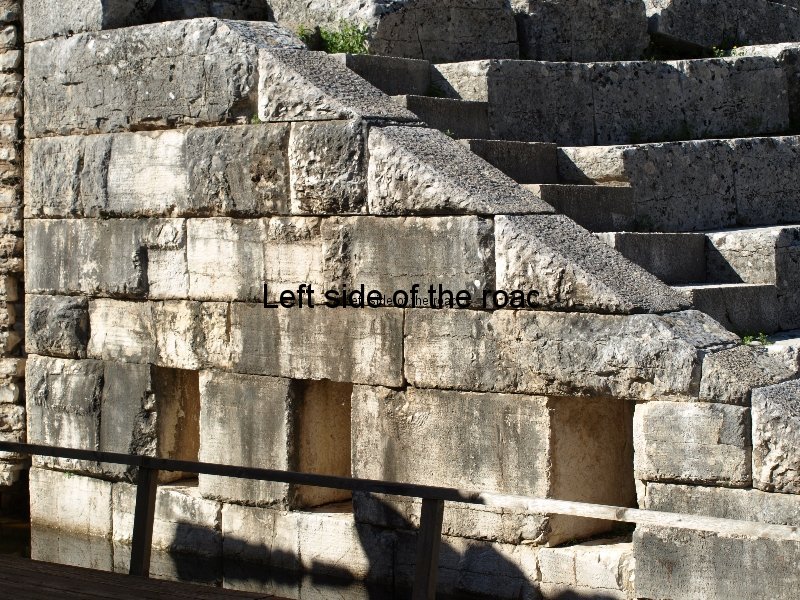
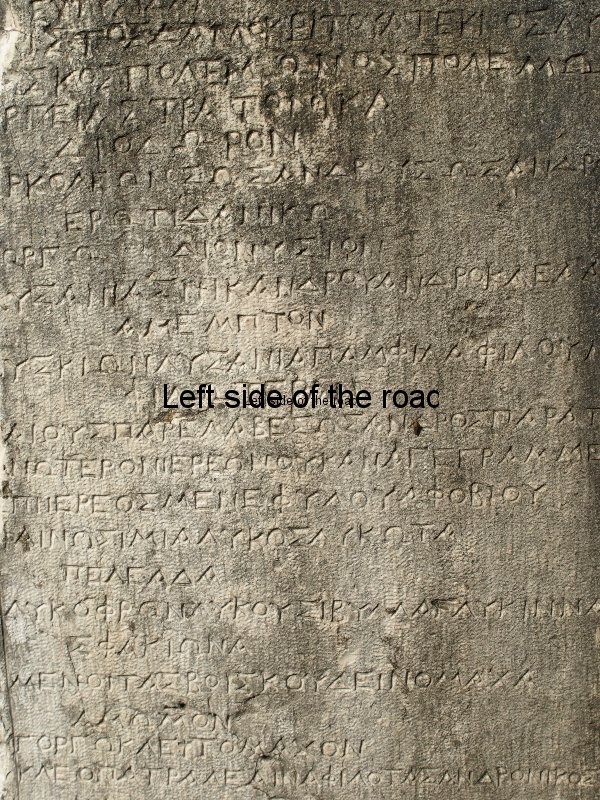
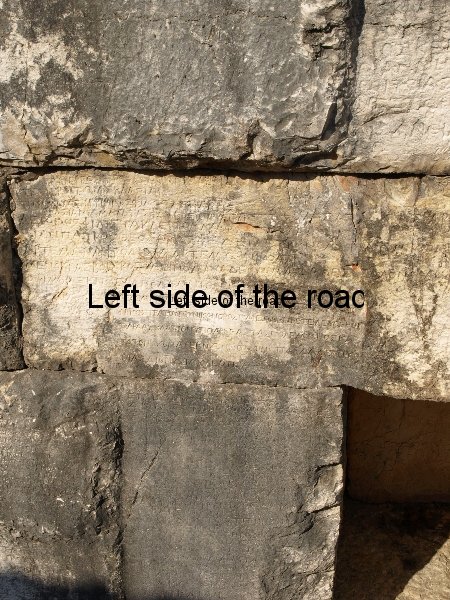
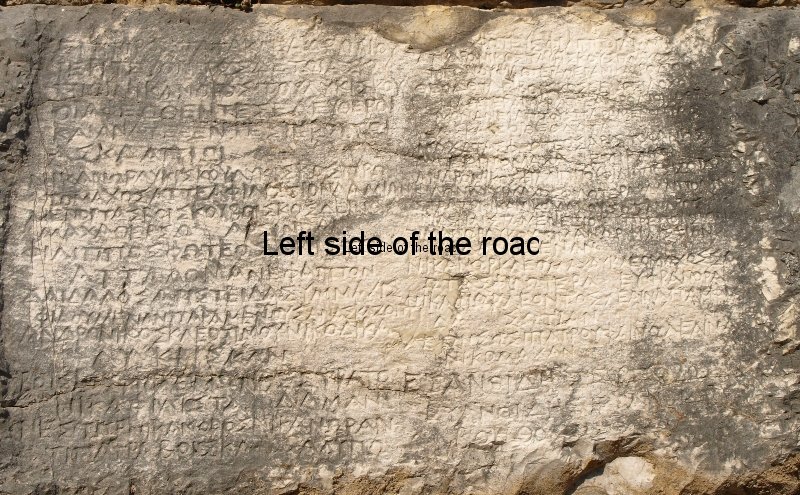
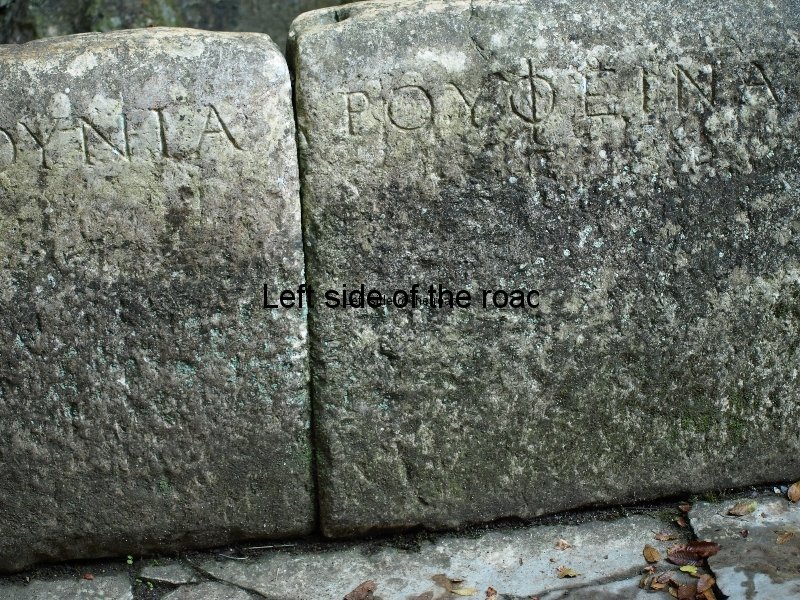
When you follow the path and wooden walkway taking you to the theatre look to your left just as you are about to reach the stage and the bottom of the seating. This is partly under water but there is enough at body level to see the writing in Greek, carved into the stone. Some of these are declarations of manumission made by rich Greeks who gave ‘freedom’ to their slaves in honour of one of the many gods worshipped at the time. Very easy to miss if you don’t look for them but easy to spot if you know where to look. They are referred to in the small museum in the castle complex at the very top of the site.

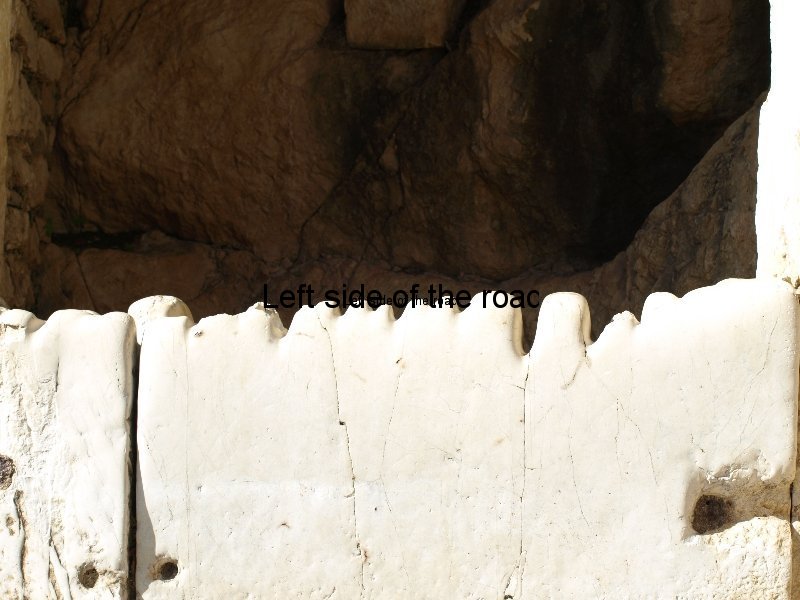
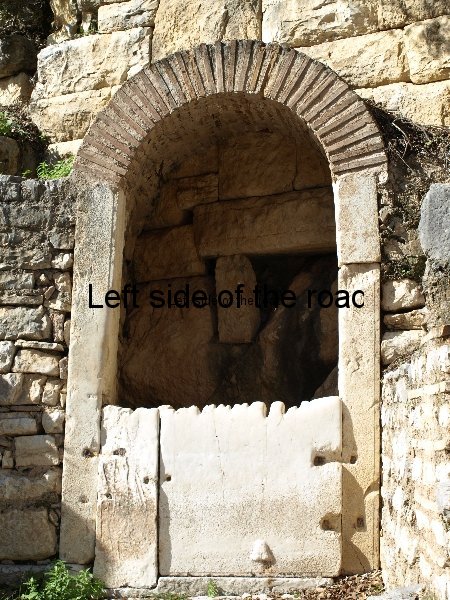
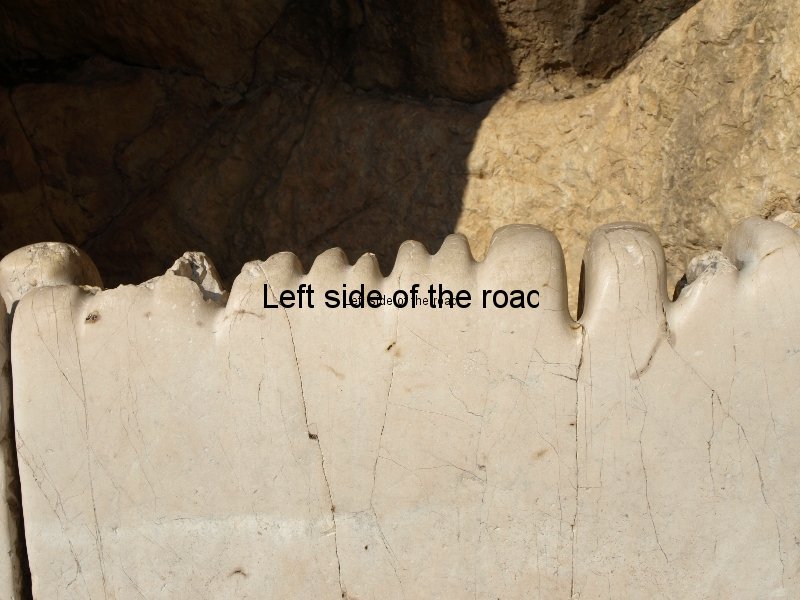
One place that doesn’t get a great number of visitors, due to the fact that the forum area is in front of it and people don’t make the slight diversion off the main path, and that’s the well. It’s only a small well, but what makes it special is the way that the stone has been grooved by the hundreds of thousands of time, over the centuries, a rope has rubbed against the edge with a heavy bucket of water on the end of it. It looks like a row of badly worn teeth.

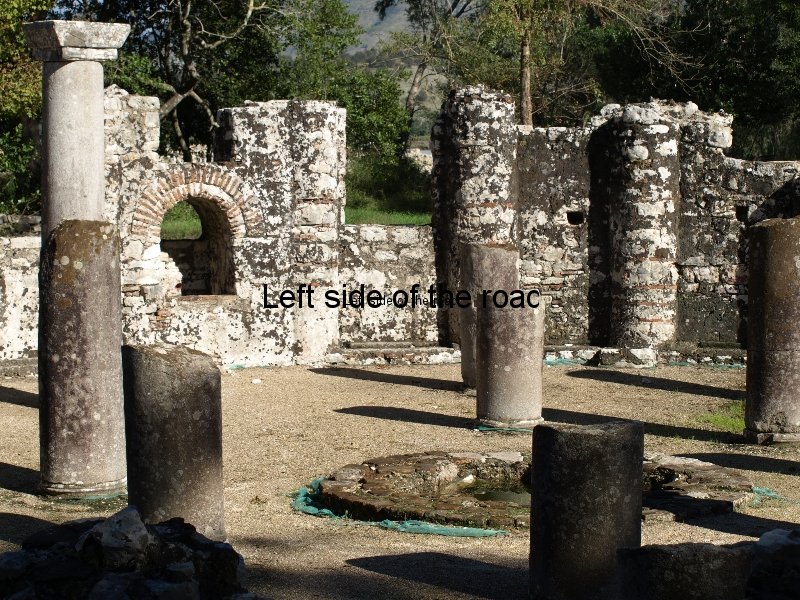
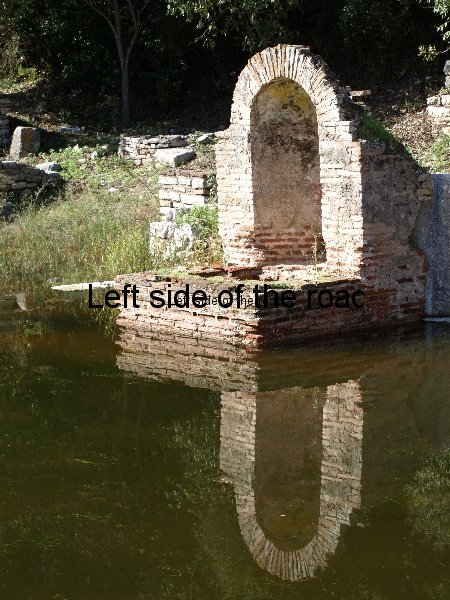
The Baptistery would be the place to see if preservation of the mosaic wasn’t the most important consideration. When excavations were made an intricate and very well-preserved mosaic was discovered. But like all mosaics the biggest threat comes from the elements (nobody really steals floor mosaics – they become a somewhat difficult jigsaw to reconstruct) and is permanently covered to protect it. This is a small circular structure to the left of the signed route, not too far from the lakeside.

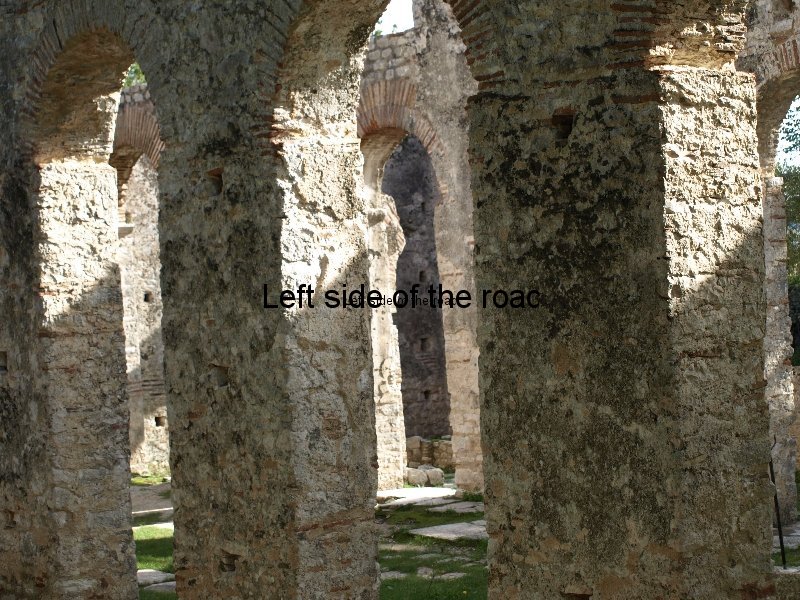
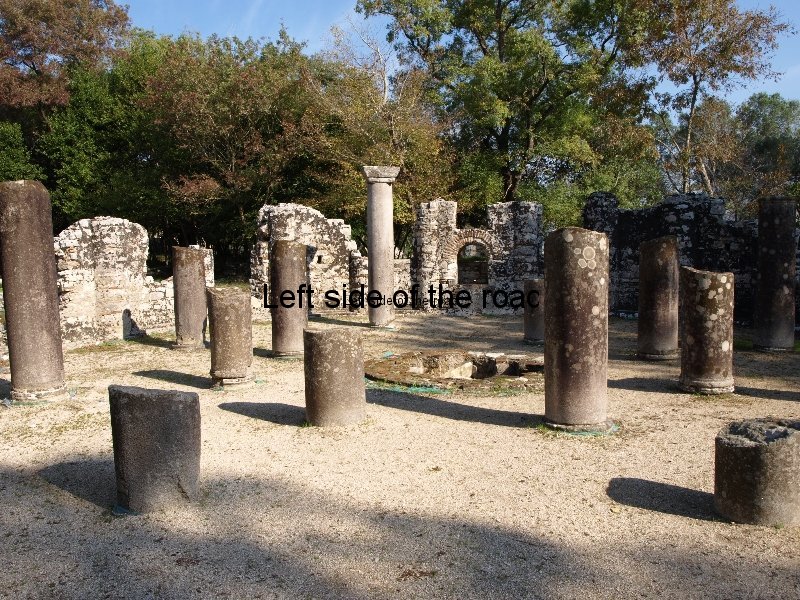
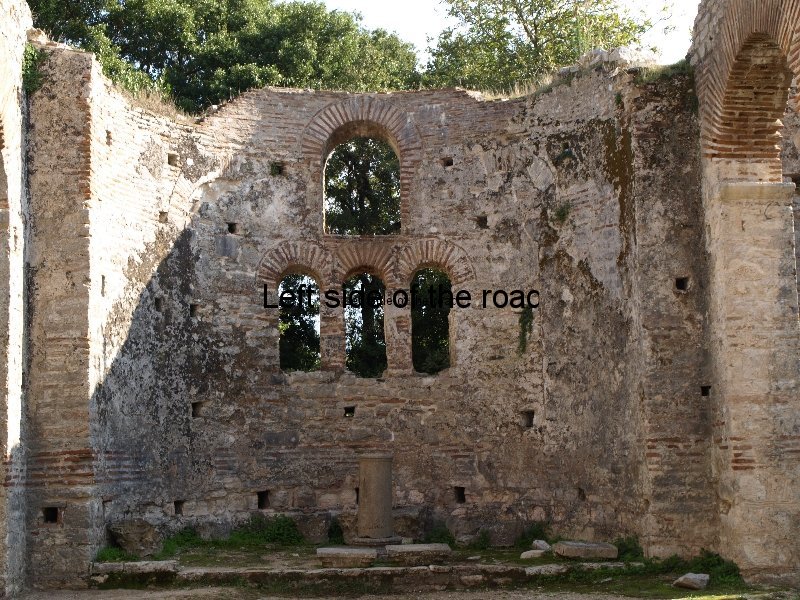
The Basilica is interesting in the fact that it wasn’t a Roman building taken over by the Christians but one constructed at the end of the 6th century, close to the end of the Roman Empire. This is in the classic cross design which is the basis for most Christian churches and is in a surprisingly good condition. OK there are no walls and the roof has also gone the way of all things, but the main columns still exist and it doesn’t take too much imagination to think what it would have looked like in its heyday.

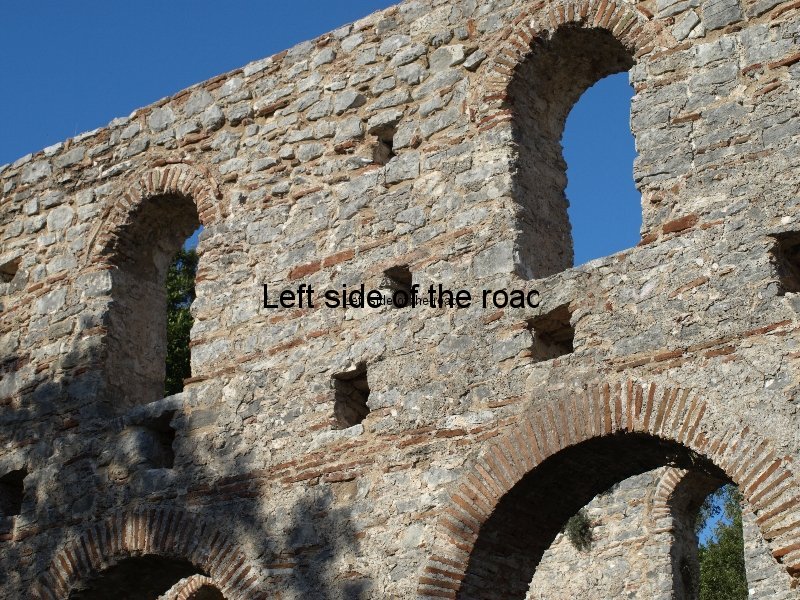
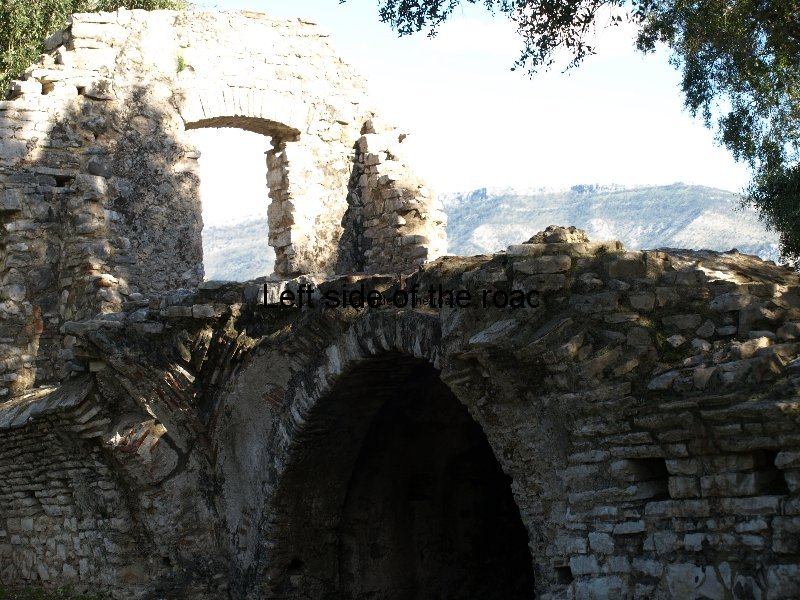
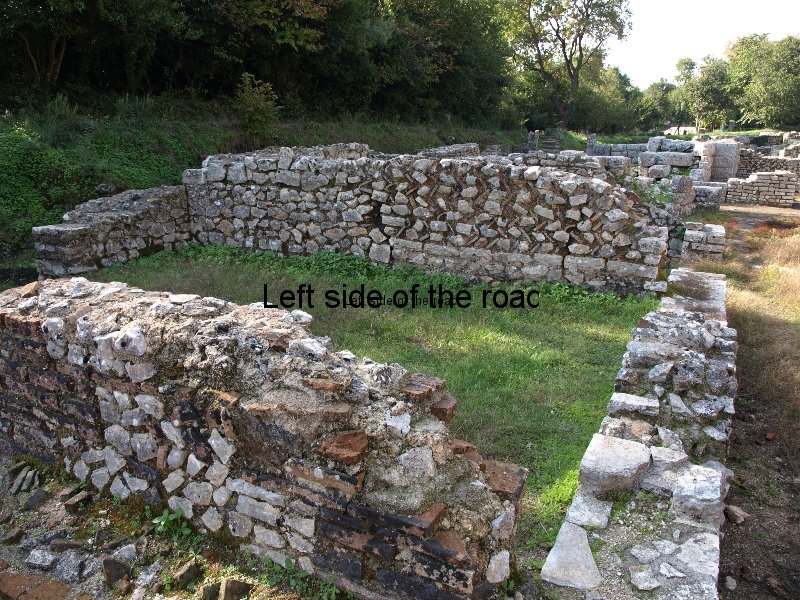
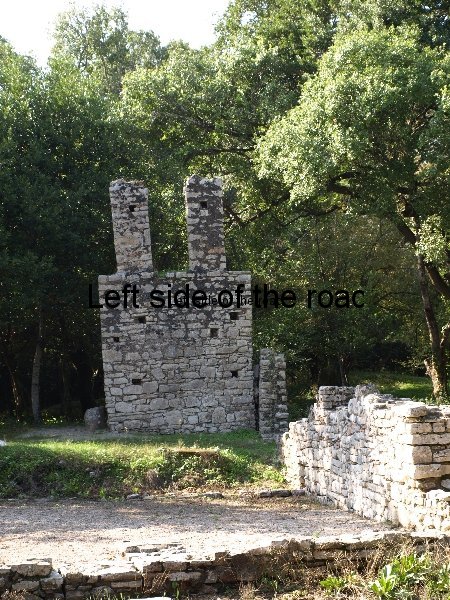
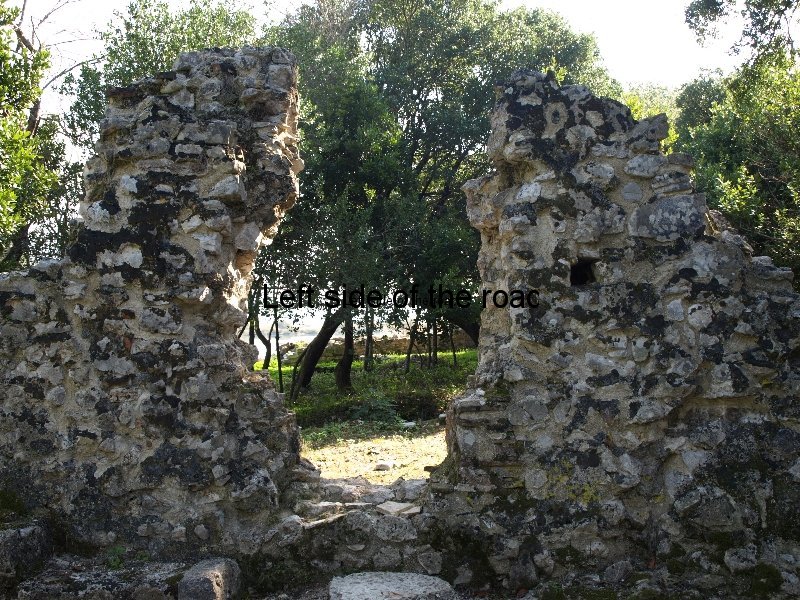
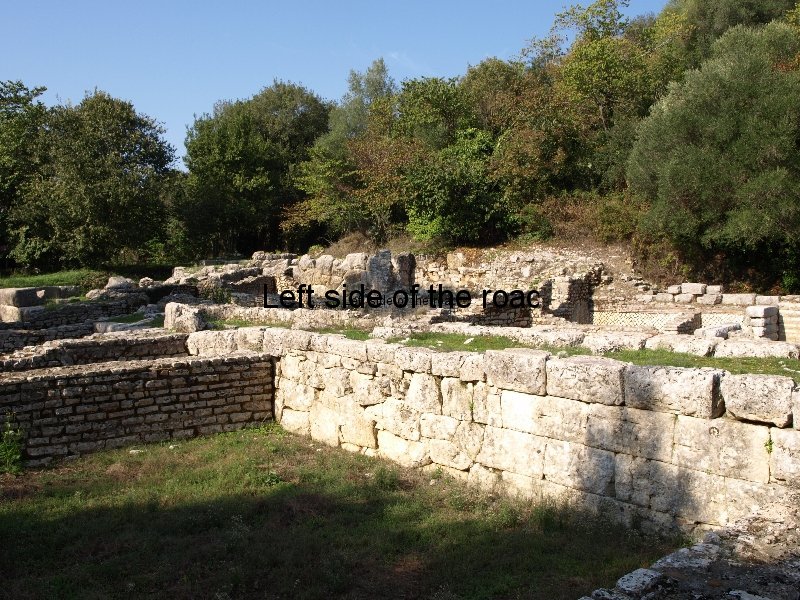
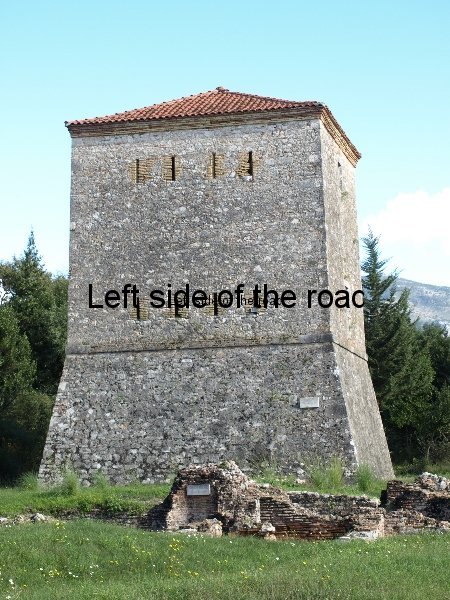
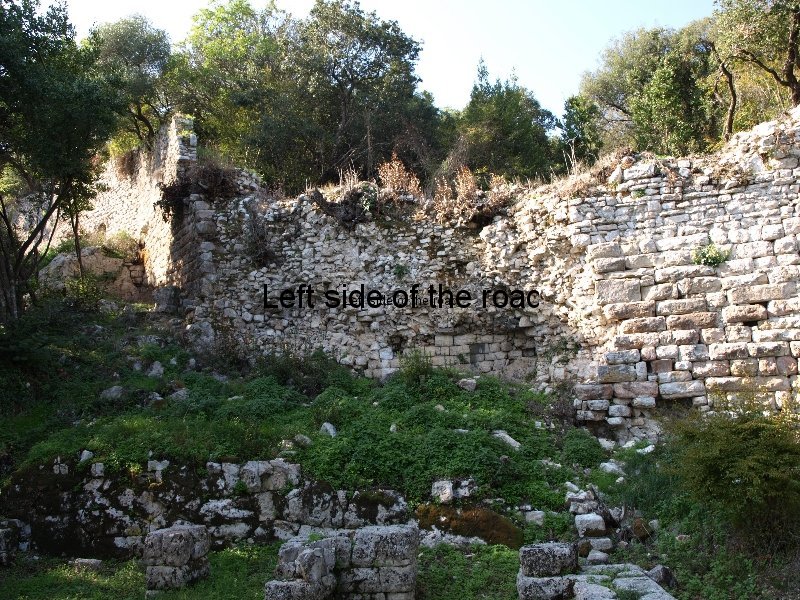
Continuing along the path it’s worthwhile taking a look at the different stages in the development of the city’s defensive walls. This illustrates the different ways of putting stones on top of one another and demonstrates the importance of the place in times past.

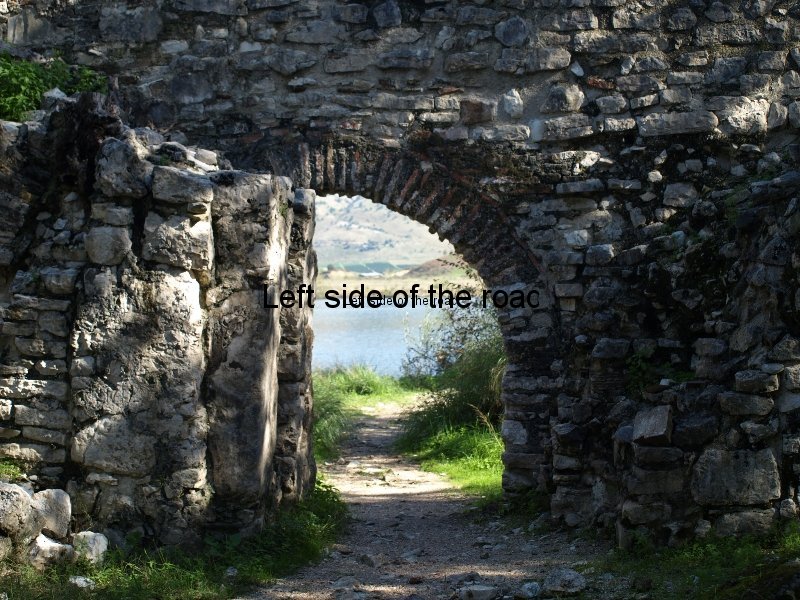
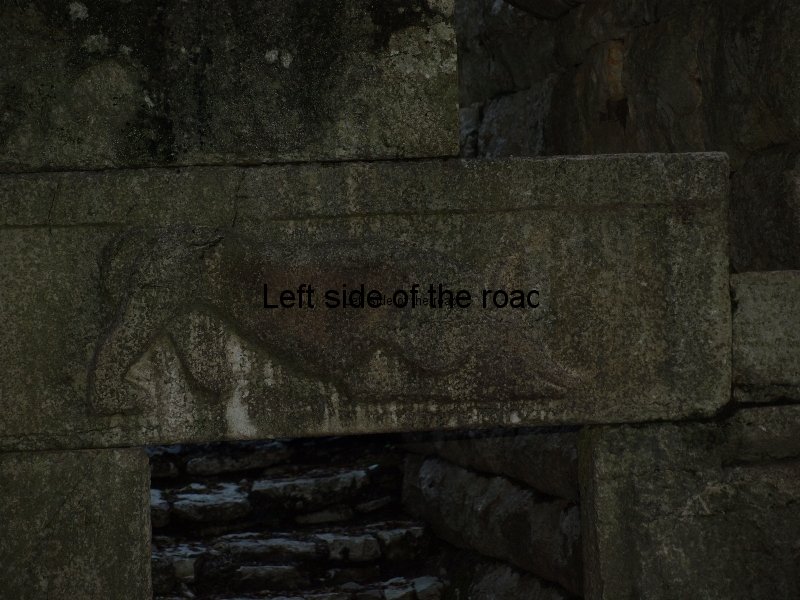
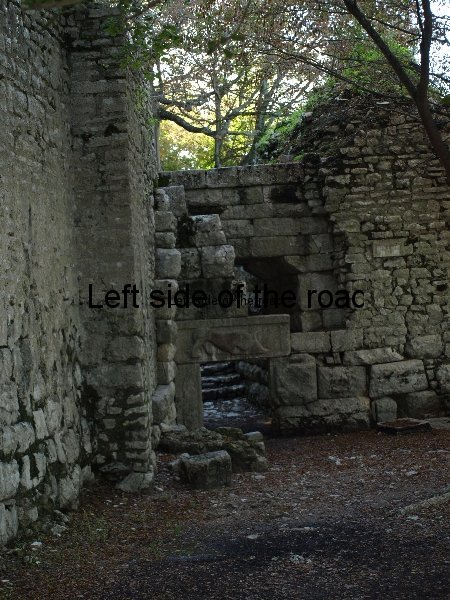
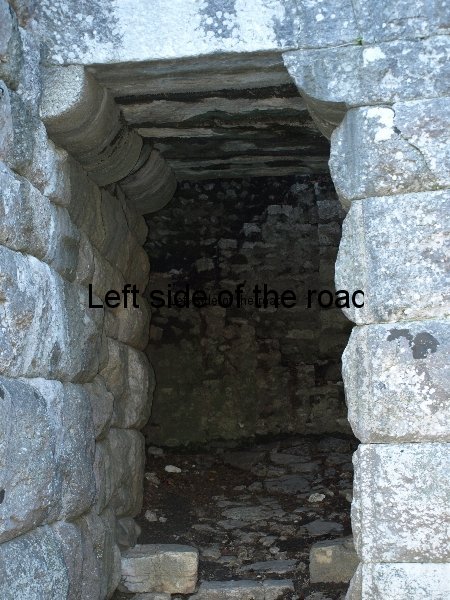
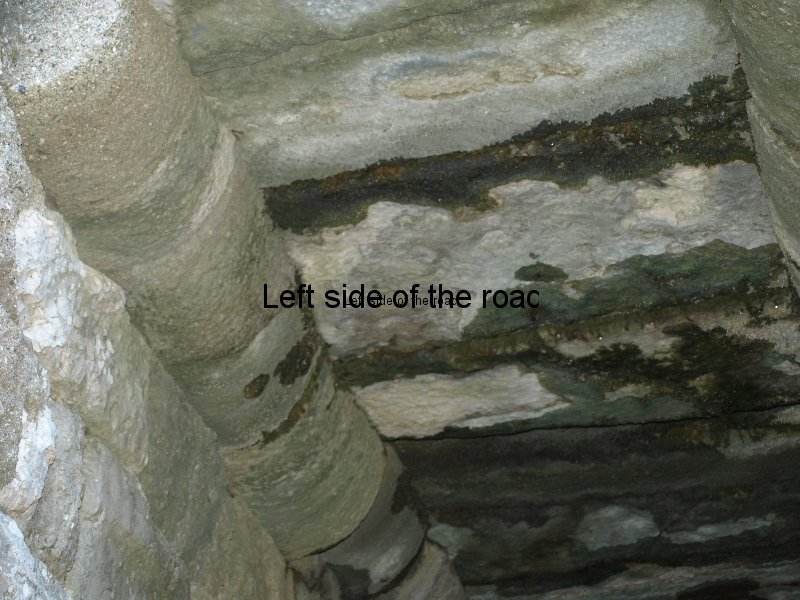
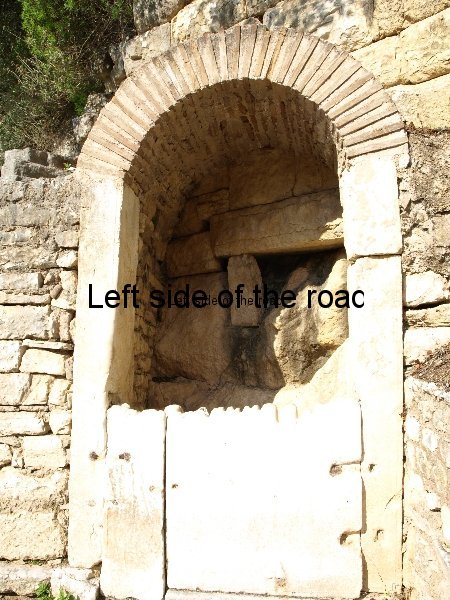
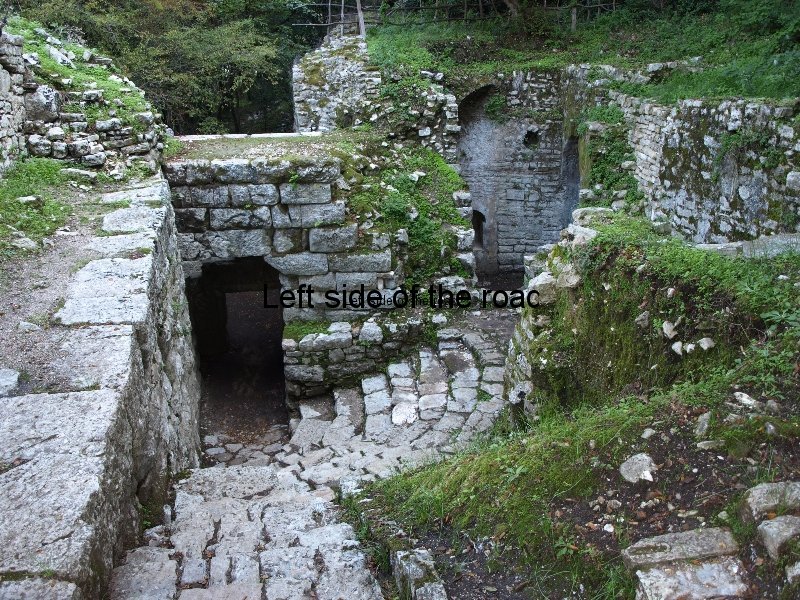
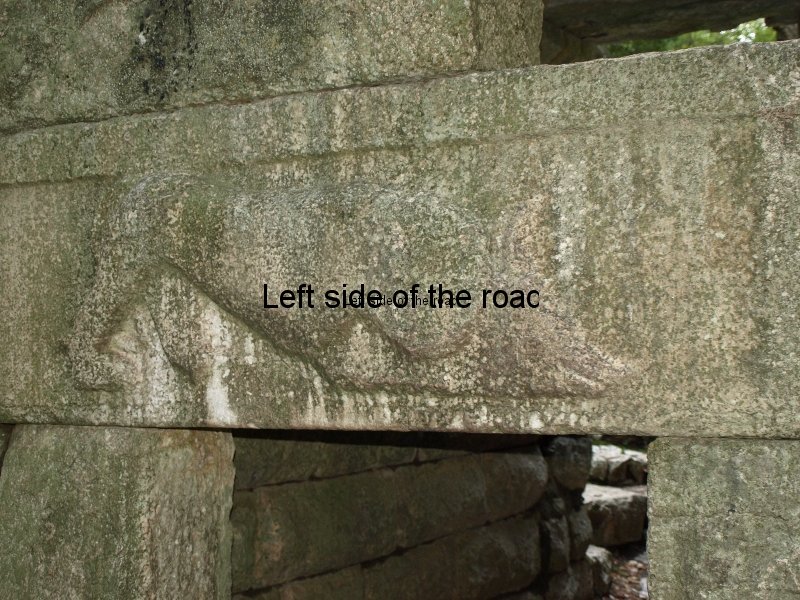
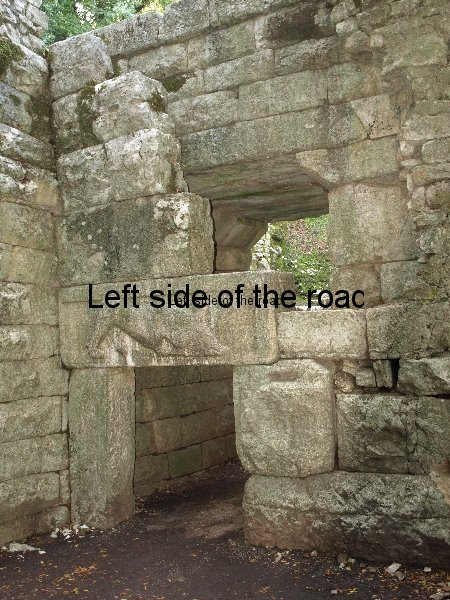
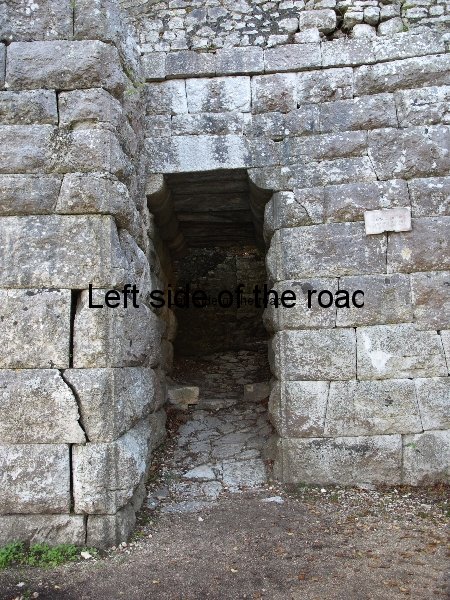
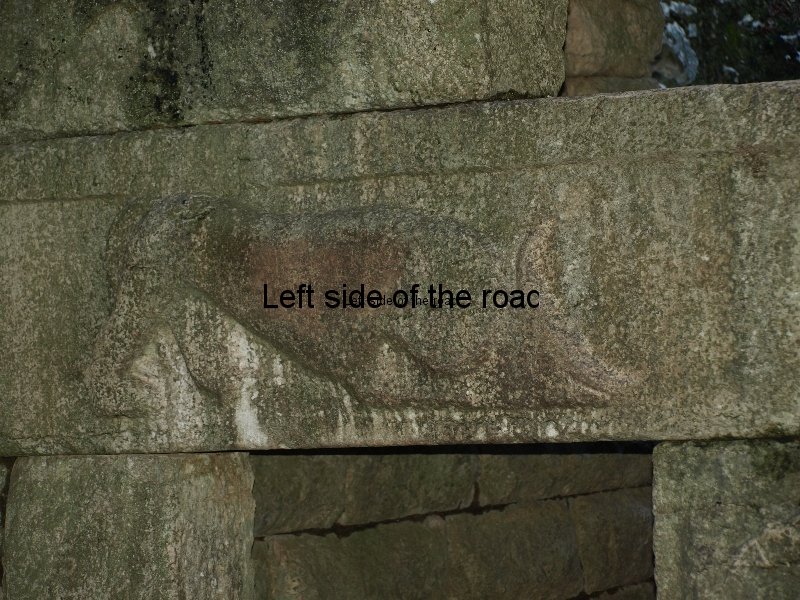
There are a couple of entrances worthy of investigation. The first is what is known as the Lake Gate, dating from the beginning of the settlement. Here take a look at the way the stones in the roof have been worked so they are curved. A little further along the Lion Gate (so-called because there is a carving of a lion devouring a bull’s head on the lintel) shows how the entrance was lowered so that anyone coming through would have to bow their heads. Inside this entrance there is a well and although it’s impossible to make it out now there were some colourful Christian wall paintings towards the top. The dampness of the area (now permanently in the shade) has destroyed whatever might have been there many years ago.

Many discoveries were made during the period of Socialism as research into the country’s past was considered important to get a greater understanding of its present. Butrint started to reveal itself but under capitalism such academic research only continues if a monetary value can be placed upon it. 

The small museum in the castle at the top of the hill is worth a visit. If it’s closed there will always be someone around who will open it up if asked. Here are displayed some of the artefacts found at the site.

One statement particularly attracted my attention when walking around the museum and this was in relation to the inscriptions about the freeing of the slaves down at the theatre. Many of the inscription refer to women who were freeing the slaves and were therefore wealthy and in control of that wealth themselves. It seems in the early Greek days, before what is now called the Classical period, women would inherit any wealth from their husbands, as well as being able to become wealthy in their own right. This position of women in society is considered an ‘advance’. The problem is I don’t believe the slaves would have been too concerned about the gender of their ‘owners’. And in that ‘advanced’ society this equality was still denied to poor women. It wasn’t until the liberation of the country from fascism in 1944 and subsequent years that women truly found a semblance of equality in Albania.

Practical Information:

The public bus leaves from the bus stop opposite the ruins of the basilica and synagogue, just along from the Town Hall (the Bashkia). It leaves, more or less, on the hour and half hour until midday and then on the hour for the afternoon and takes about 45 minutes. Cost is L100 each way.

Butrint is open from 08.00 till dusk, all year round. Entrance is L700 for an individual (although I was charged the reduced group rate, although by myself, of L500 the second time I went there).

More on Albania …..

A walk around the Jewish Quarter of Segovia

Corpus Christi Church/Synagogue Segovia

Corpus Christi Church as part of the Segovia City Walls

A walk around the Jewish Quarter of Segovia

A short walk, peaceful and crowd free, which explores Segovia’s Jewish past providing a perspective on the ancient town missed by most visitors.

In Segovia it is impossible to miss the Roman aqueduct but most of the thousands of visitors to the city are totally unaware of an area of narrow, medieval streets which bore the brunt of one of the most traumatic episodes in Spain’s history.

In Granada, on March 31st 1492, just a few months after the final defeat of the Moors, the ‘Catholic Monarchs’, Isabel and Ferdinand, promulgated The Edict of Expulsion, decreeing that the Jews in all of Spain had four months to either convert to Christianity or leave the country. This ended almost 300 years of Jewish presence in Segovia.

However, now there’s a growing movement to recognise the role of the Jewish community in the development of the city and visitors have the opportunity to re-discover something of the past.

A Jewish community can be traced back to 1215 and for almost 200 years there were few restrictions on their place of residence. That changed in 1412 when they were restricted to the area, more or less, around the present Cathedral but things worsened in 1481 when they were forced into much more of a ‘ghetto’, the area of this walking tour.
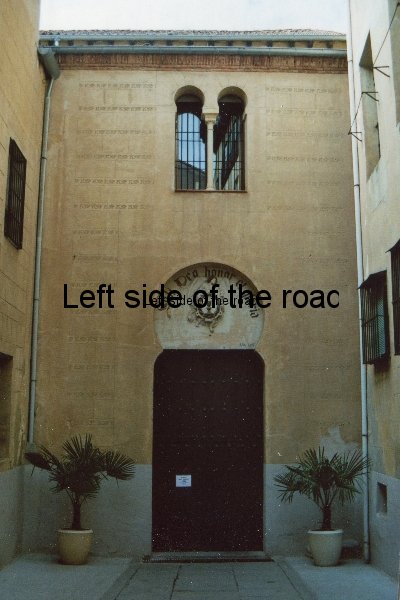
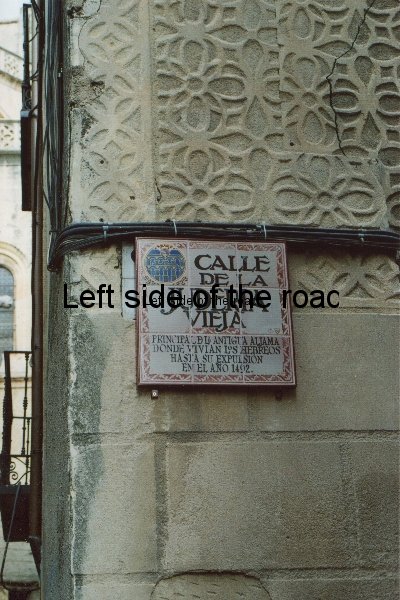
The start is in the small square of Corpus at the top end of Calle de Juan Bravo. Here there is a fork in the road and the entrance to the Judería Vieja is the one to the left – the quieter of the two, this is not a walk that will be hampered by crowds of people!

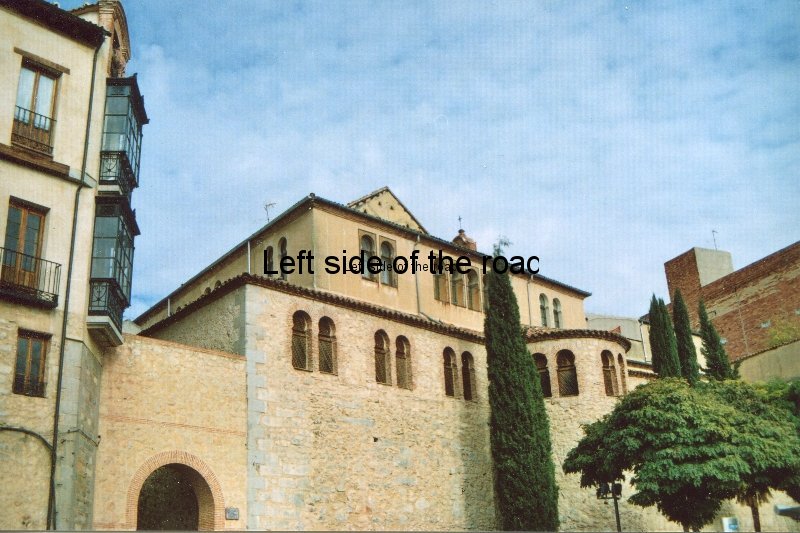
Before entering the narrow street go through a Gothic arch, on the left, taking you to the entrance of the Corpus Christi church, which used to be the Principal Synagogue, but only for a few decades. This building has had a troubled past. It was a synagogue by 1373 but was expropriated by the Catholic Church after a supposed and unproven act of profanation around 1419 – a painting in the church depicts the alleged sacrilege. A disastrous fire in 1899 destroyed virtually all remnants of the old synagogue and it was rebuilt at the beginning of the 20th century. Further work has attempted to recapture much of the old Synagogue with its horseshoe arches, the capitals decorated with vegetable and geometric designs and the beautiful, wooden ceiling.

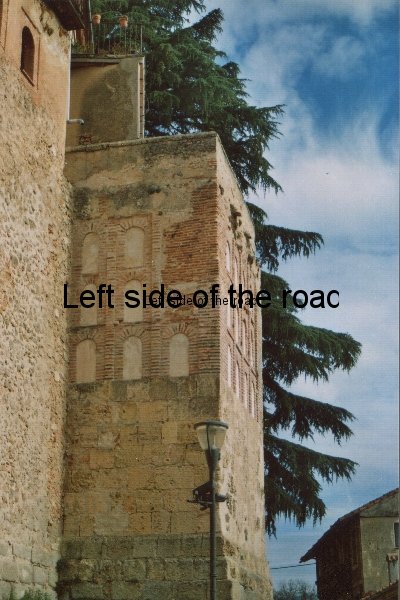
On returning to the street turn left into the Judería Vieja and in a few steps go down left through the archway (the Puerta del Sol). From here you have a view of the other side of the church, forming part of the city walls.

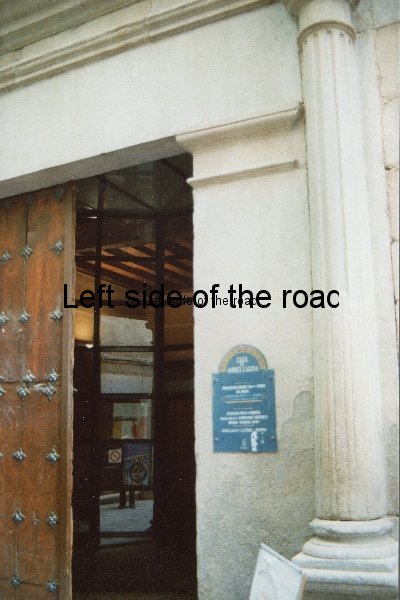
Return to the Judería Vieja and continue along to number 12, the Didactic Centre of the Jewish Quarter (Centro Didáctico de la Judería). This Education Centre is based in a building that was part of the property of Abraham Seneor. Very rich and powerful he had enemies in both the Jewish and Christian communities and by the time of his death in 1493 had probably attained more influence in the Spanish court than any Jew ever before – quite amazing when you remember that this was at the time of Isabel and Ferdinand, under whose reign the Inquisition was initiated and who decreed the expulsion of the Jews.

Established in 2004 by the Segovia City Council, the Centre houses a small exhibition space which tells of the history of the Jews in Segovia and Spain. The information boards and the two video presentations (one in 3D) are in both Spanish and English and are very much directed to those who know little about Jewish history or culture. The centre also stages discussions and conferences which address Spain’s Jewish past.

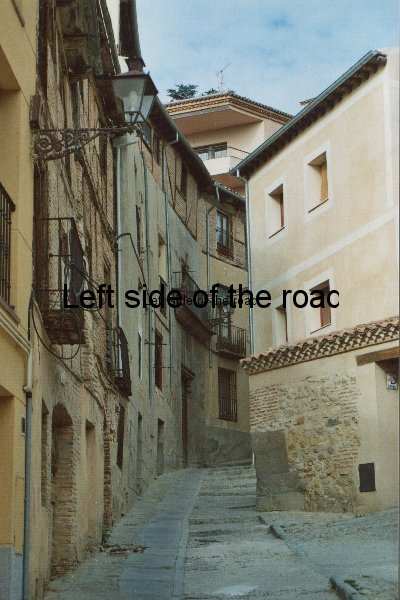
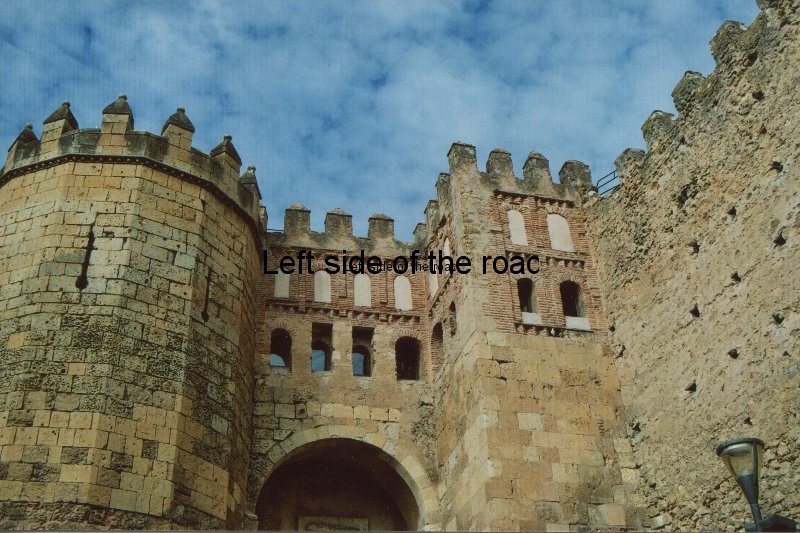
Turn left on leaving the centre, reach the corner of the Cathedral and then follow the road as it goes quite steeply downhill (Calle de Martinez Campos) towards the Puerta de San Andrés. Here there is a museum that gives the history of the city wall. The narrow, stepped street that goes up hill to the right is the Judería Nueva, a street that is virtually unchanged from the time of the Jewish presence more than 500 years ago.

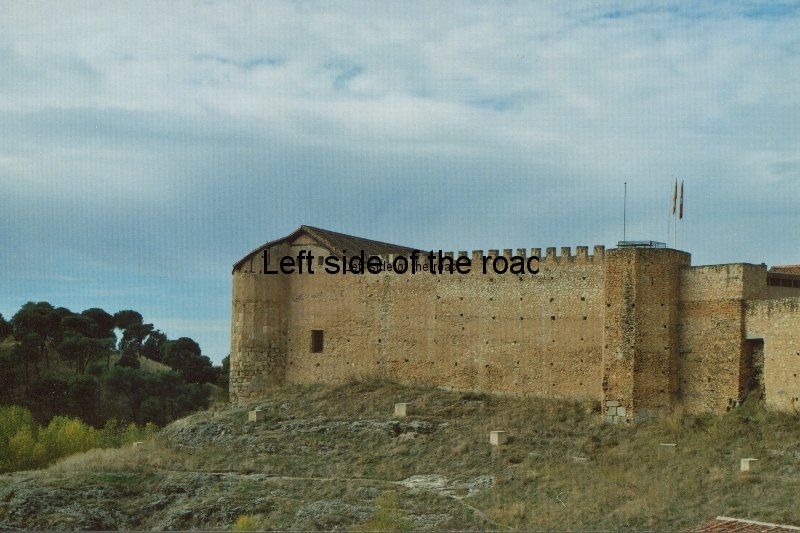
From the gate continue along the lower road to what is now the Museum of Segovia, housed in a building that was originally the Jewish slaughterhouse.

Return to the Puerta de San Andrés but this time go through the gate and outside the wall. Take the path immediately on the right hand side and within seconds you get a fine view of the abattoir, standing on a rocky outcrop over on the right. From here it is easy to understand the reason for its location, the blood and offal would be just thrown down into the gully.

Follow the wide path downhill and then, in less than a minute, the narrow path, indicated by a stone pillar with a carved menorah (the seven-branched candle holder), that goes down to the left. Cross the small bridge and then straight ahead as the path climbs, go through a tunnel beneath the road to come out to the old Jewish cemetery. This has been excavated a number of times but not a lot of information has been gained from these investigations – the gravestones having been looted soon after the remaining Jews had converted to Christianity.

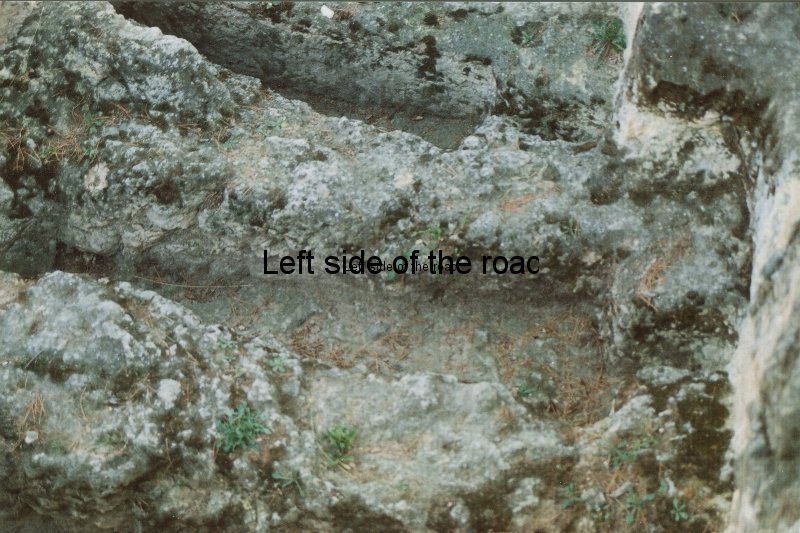
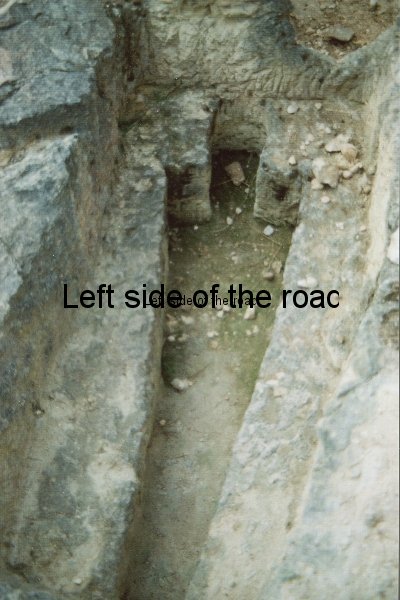
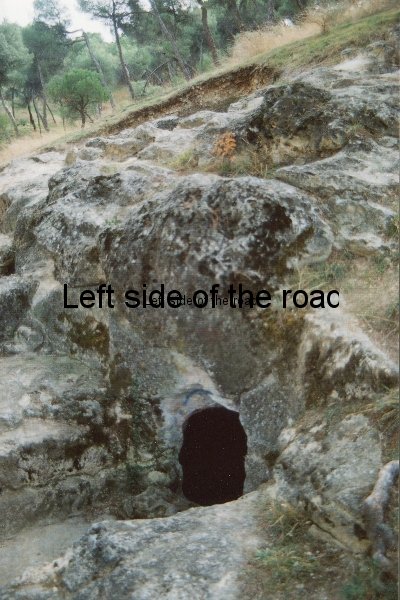
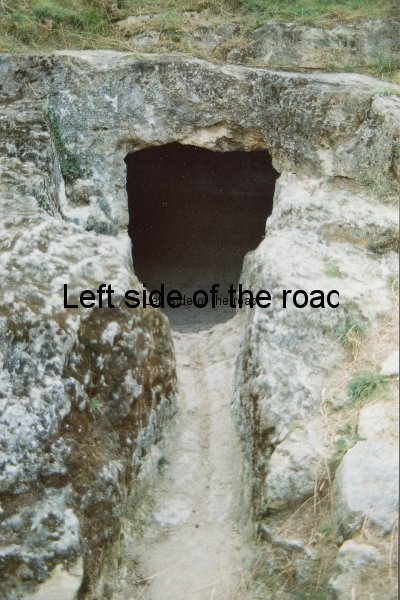
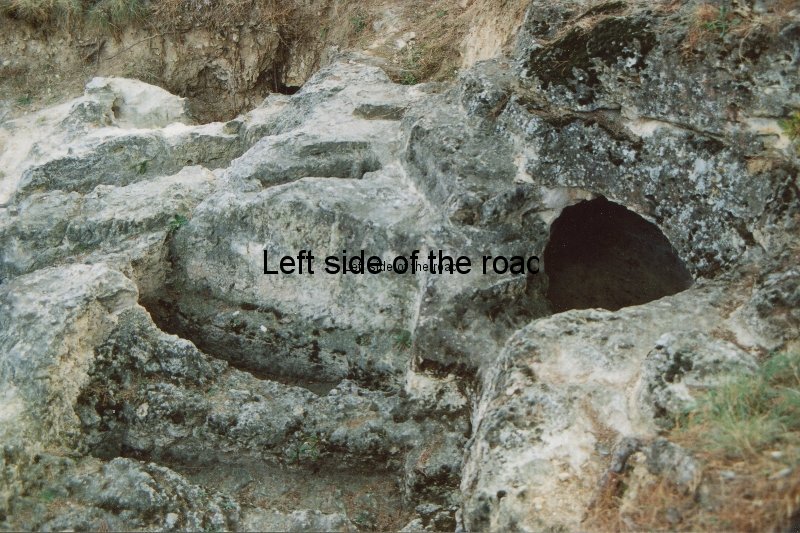
However, it’s possible to see the different methods of burial used, the limestone being carved in the shape of a human body or a cave-like room being created for multiple burials. What can be seen is that all the identifiable graves point in the direction of Jerusalem, with the heads orientated to the west and the feet towards the east.

Another poignant feature of the cemetery is that it was here that those who refused to convert spent their last days in the area, before leaving both Segovia, and then Spain, forever. Their last view of the place they had called home being one of the sun shining on the magnificent, golden, medieval walls.

After a relatively short walk in distance, but one that is full of interest, together with the walk down to the dry river bed and up to the cemetery (that has to be done twice!) when you return to within the city walls you will be looking for a good place to eat and drink.

This can be a bit tricky in a town whose culinary speciality is roast, suckling pig but there are a number of restaurants that are now offering Sephardic menus and this gets extended every September, for a weekend, when many restaurants provide a Jewish orientated menu – some even offering kosher wine.

Useful Information:

The Corpus Christi Church/Synagogue, Puerta de San Andrés and the Segovia Museum are all closed on Mondays.

A recent book, in English, about the history of the Jews in Segovia providing more information than I have been able to give here is the ‘Jewry Guide to Segovia’ by Bonifacio Bartolomé Herrero, available in the Centro Didáctico, priced €16.

Segovia City Map


Segovia City Map


Segovia City Wall


Segovia’s City Wall and San Andrés Gate


Centro Didáctico de la Judería


Centro Didáctico de la Judería – in Spanish


Segovia, World Heritage Site


Segovia, World Heritage Site