Kudrinskaya Apartment Building – Moscow

Kudrinskaya Apartment Building

Kudrinskaya Apartment Building

More on the USSR

Kudrinskaya Apartment Building

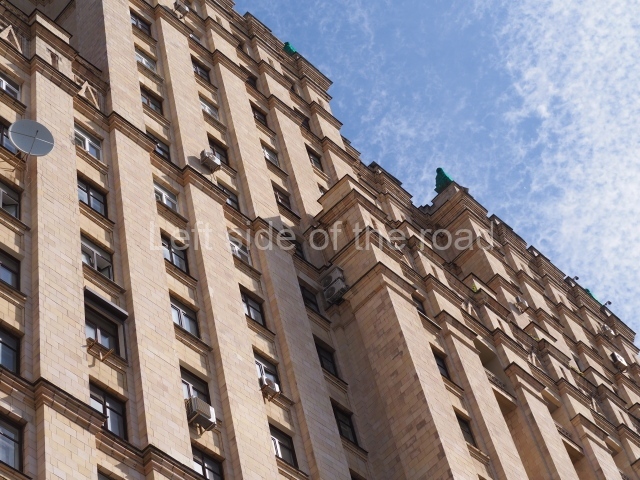
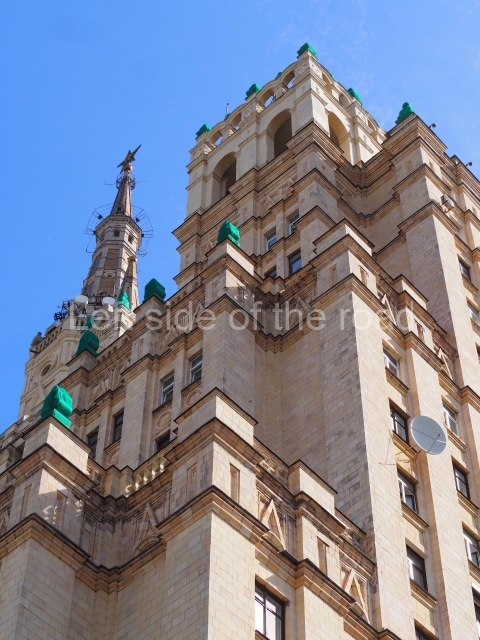
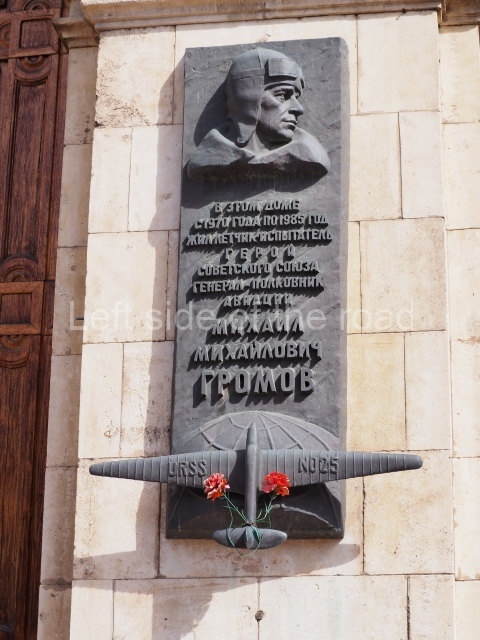
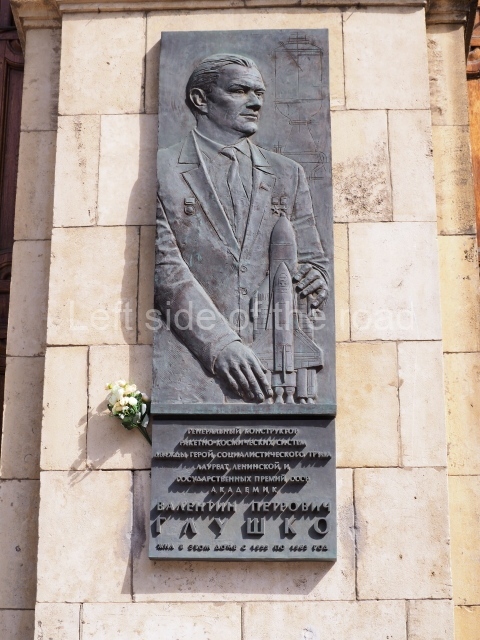
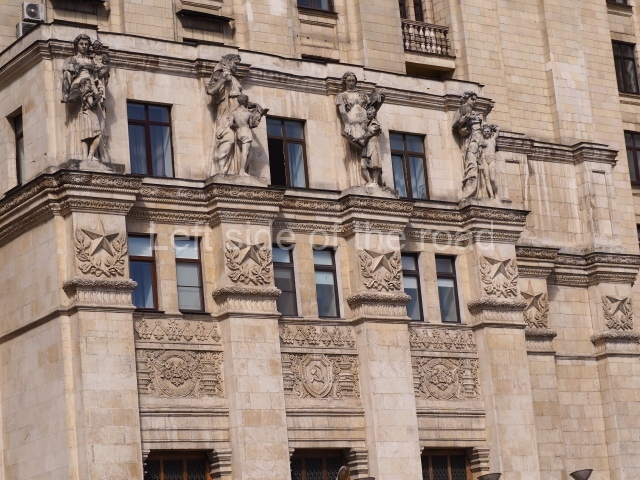
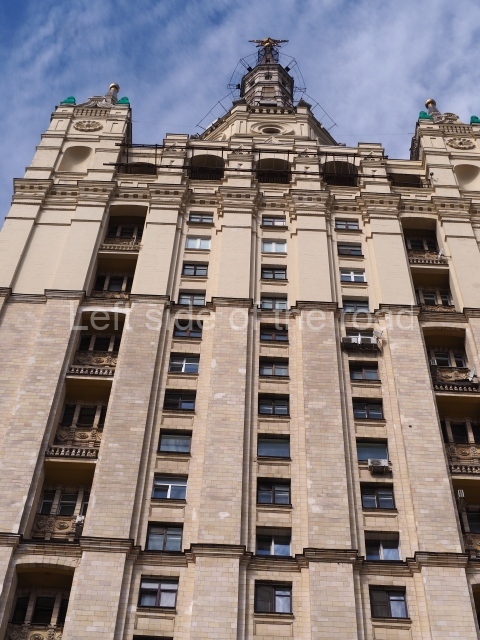
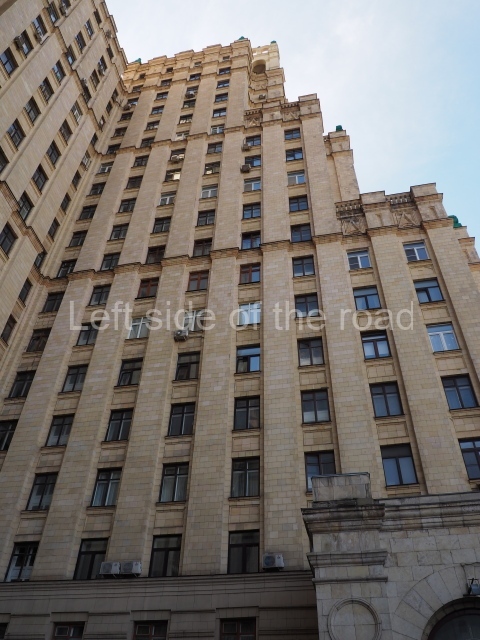
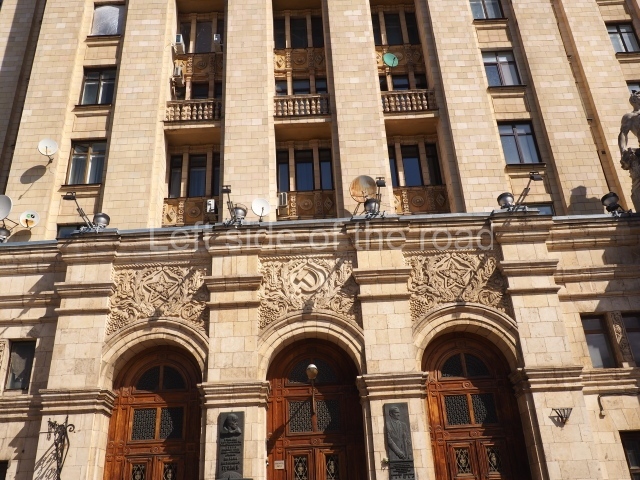
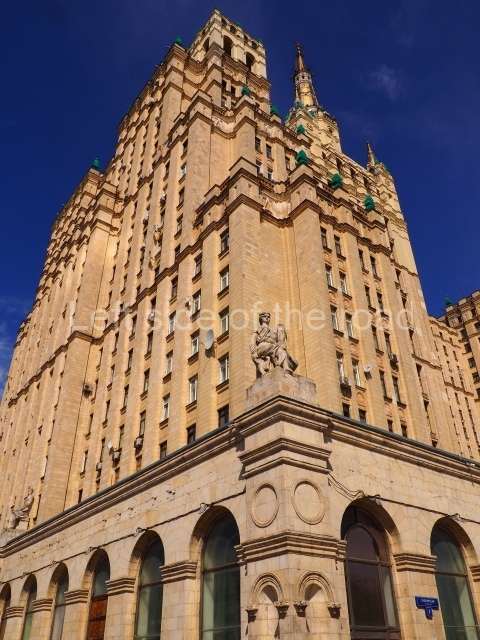
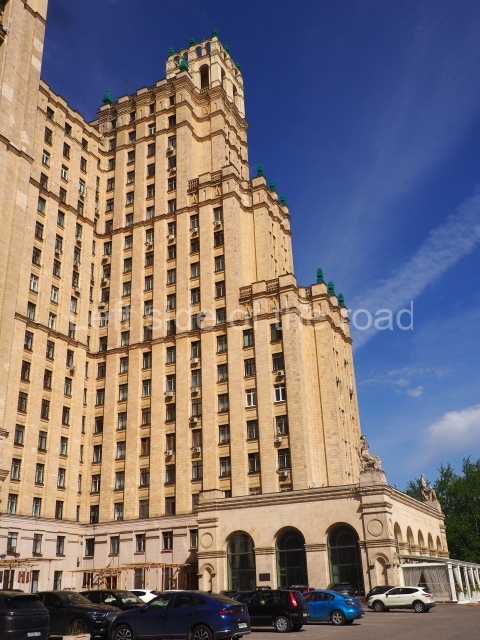
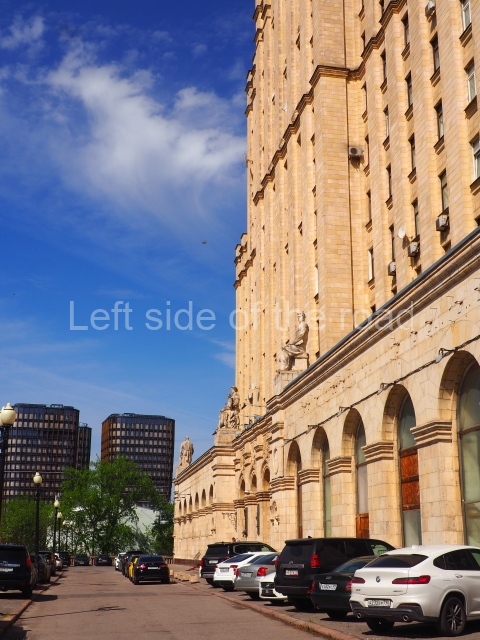
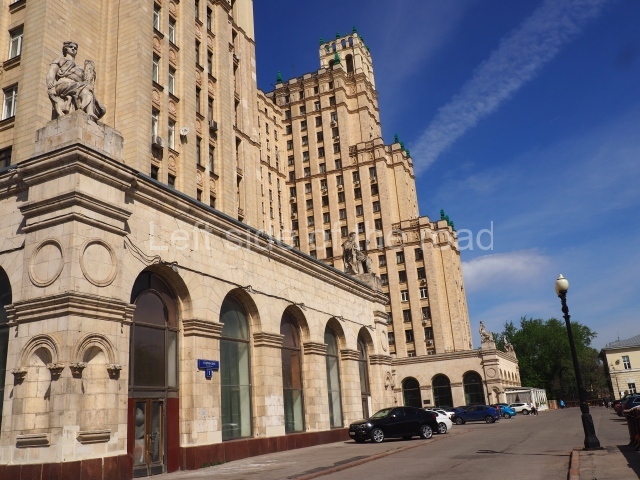
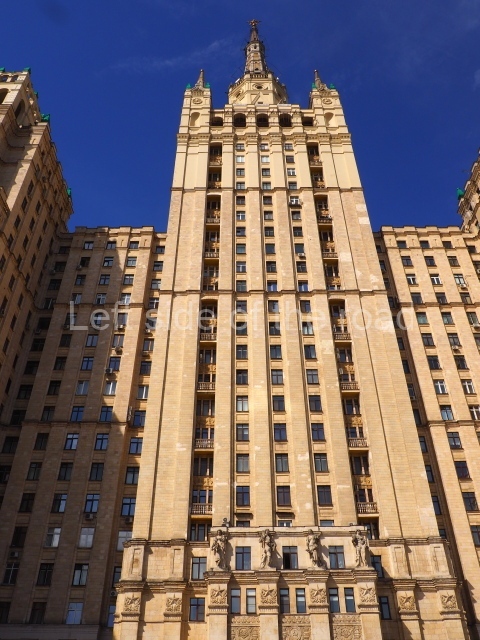
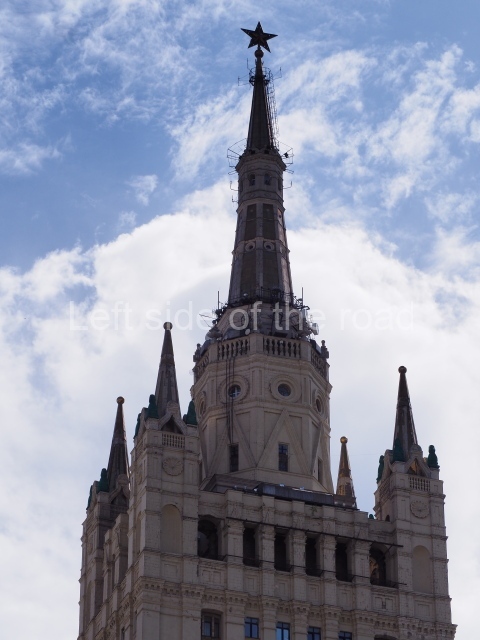
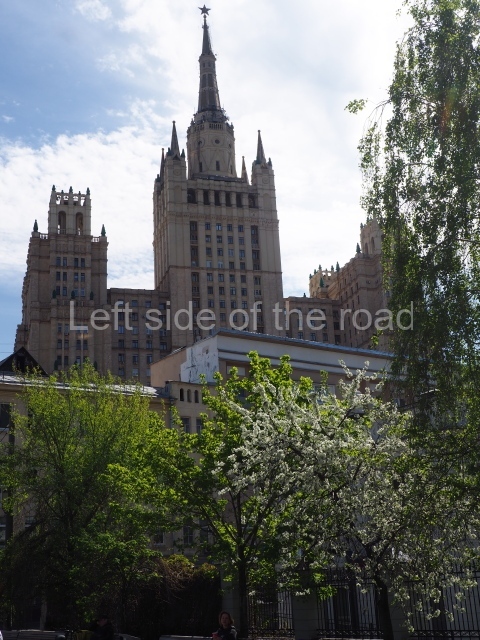
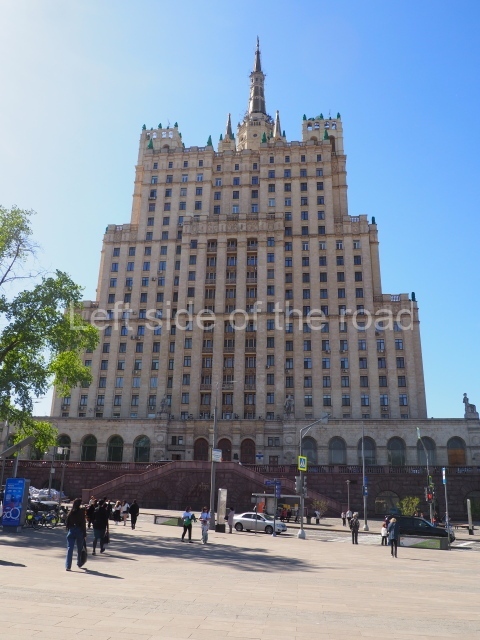
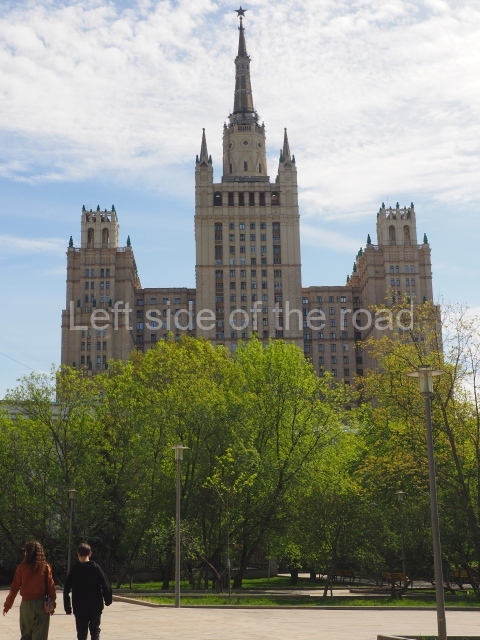
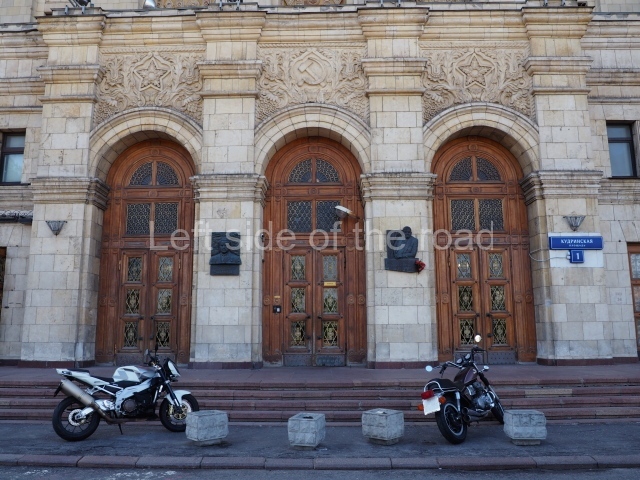
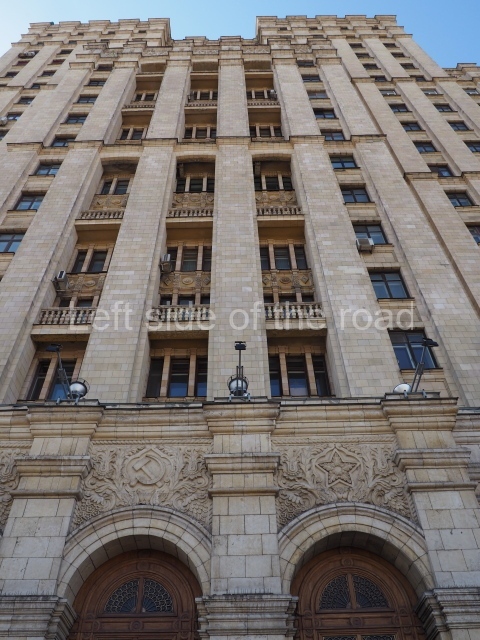
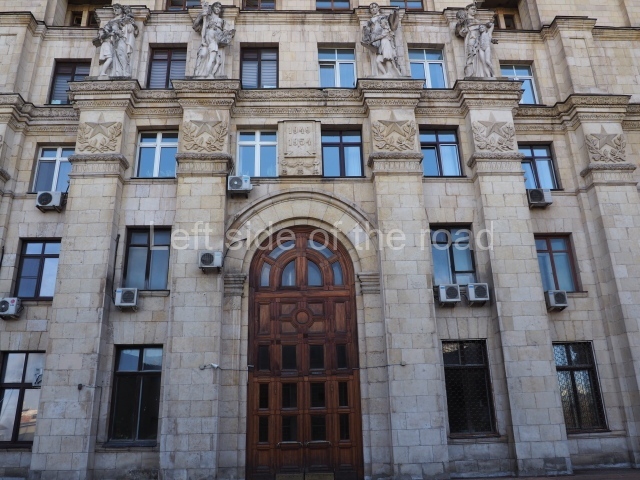
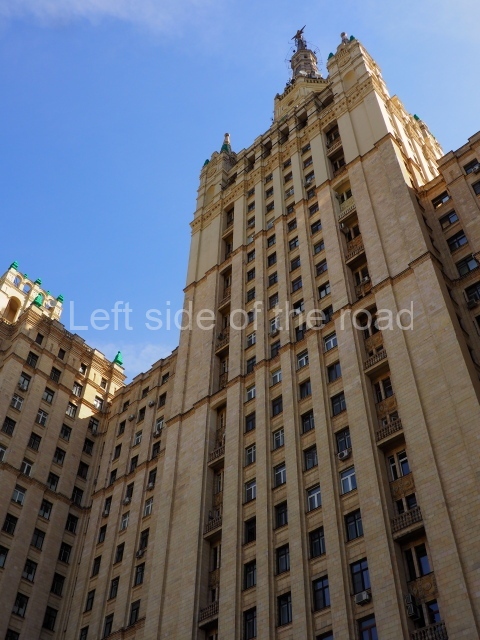
The Kudrinskaya Square Building is a building in Moscow, one of Seven Sisters of Moscow skyscrapers. Designed by Mikhail Posokhin and Ashot Mndoyants’

Kudrinskaya - 02

Kudrinskaya – 02

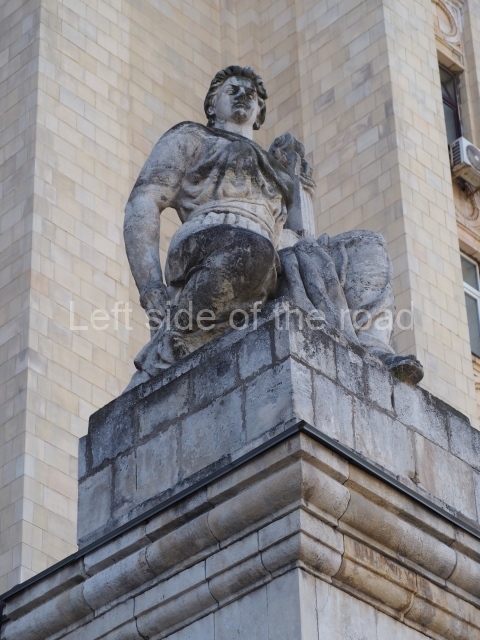
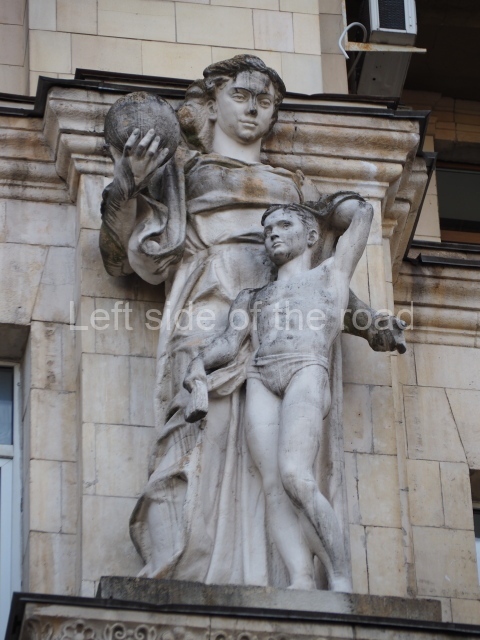
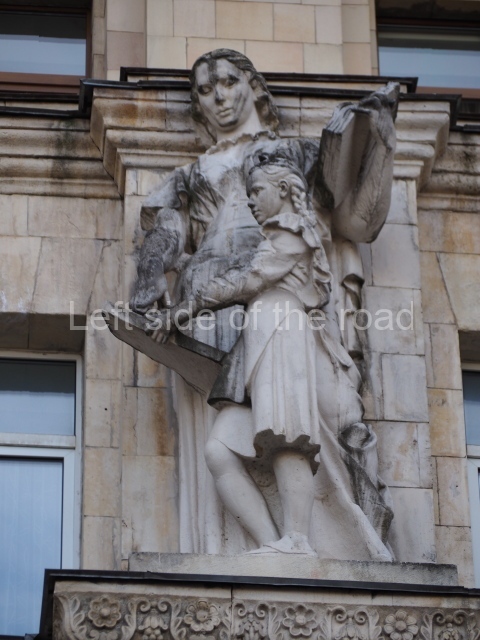
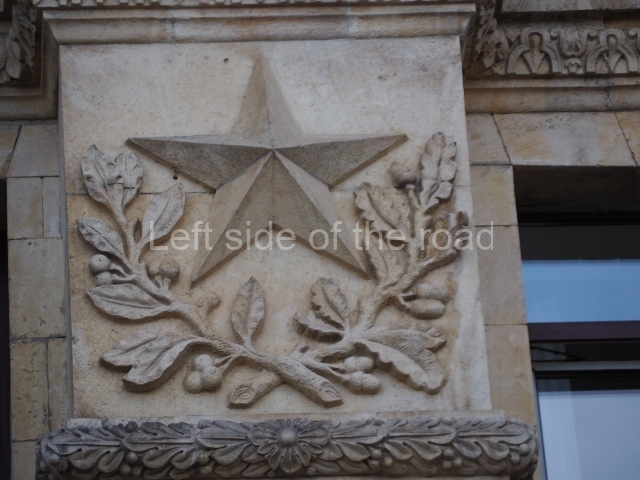
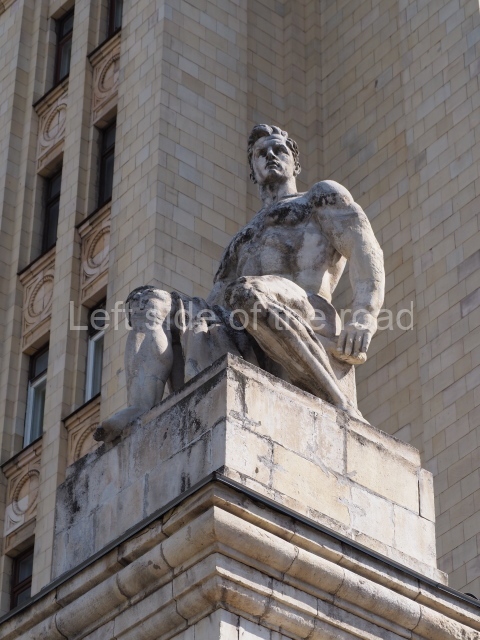
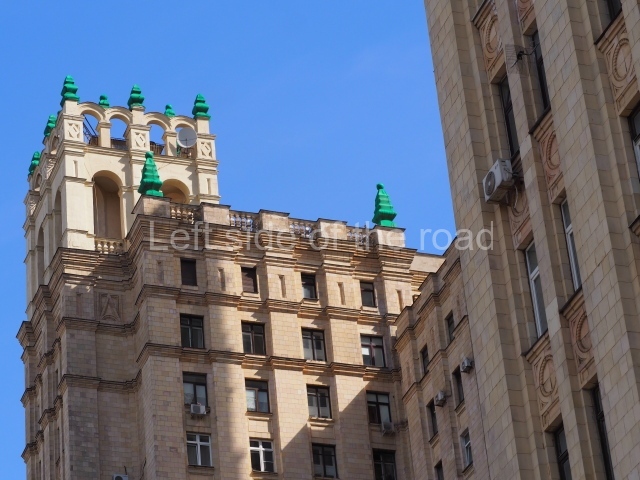
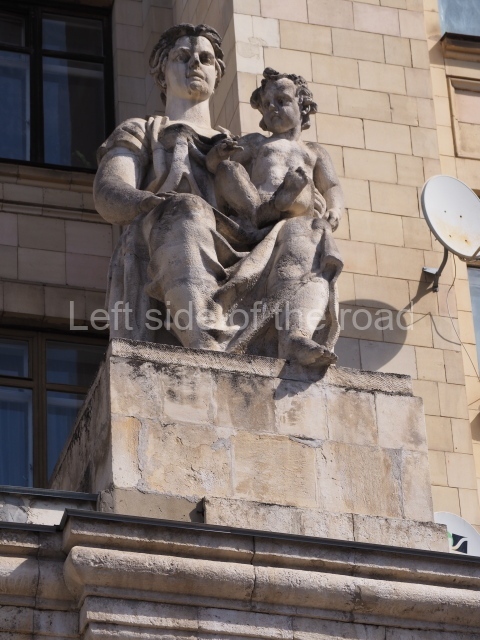
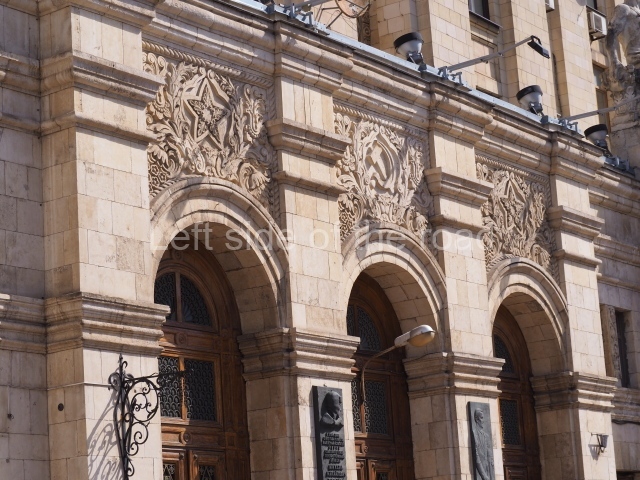
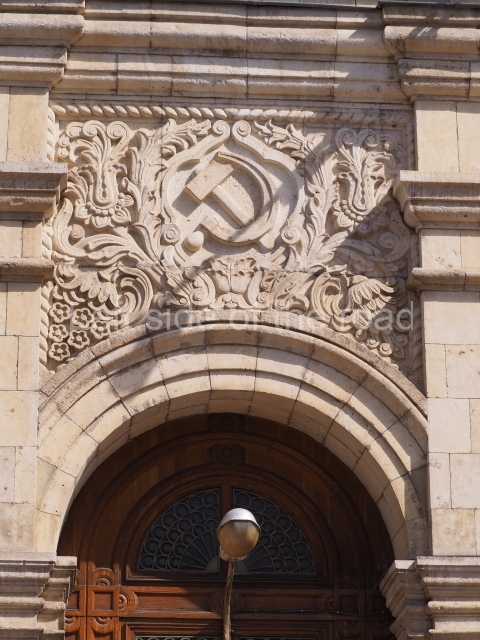
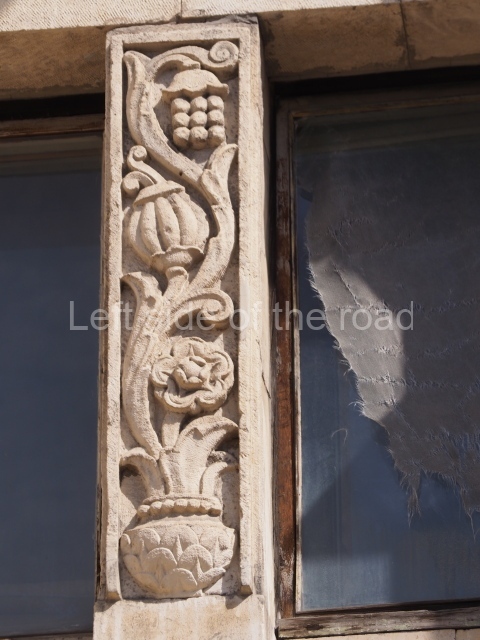
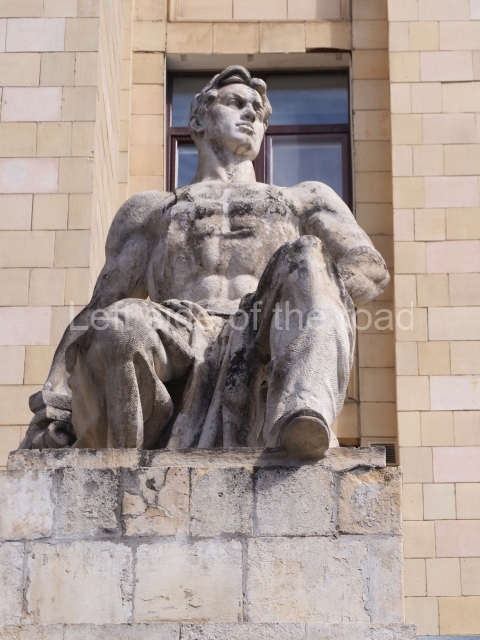
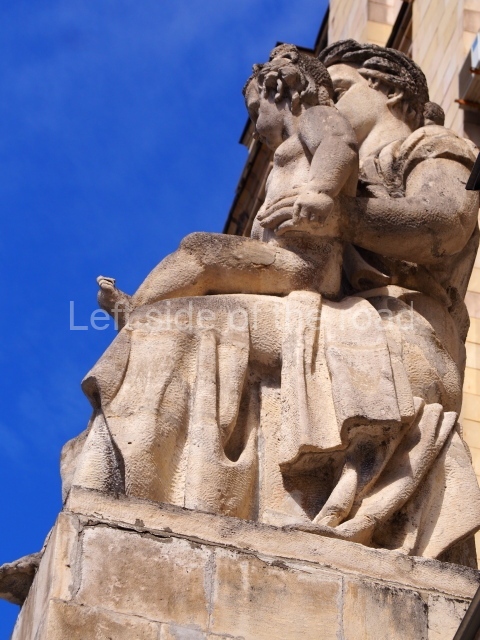
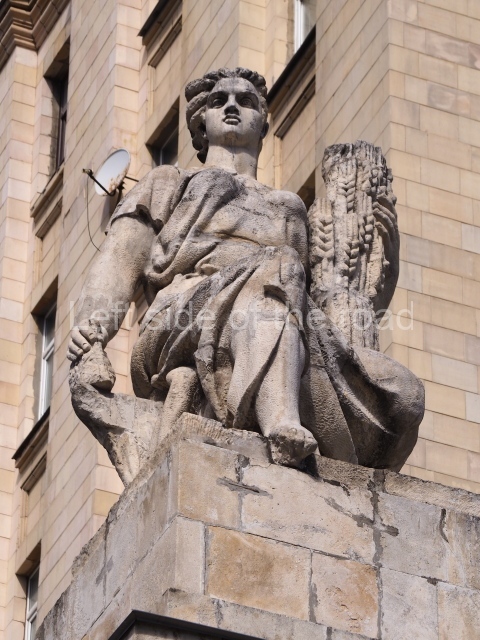
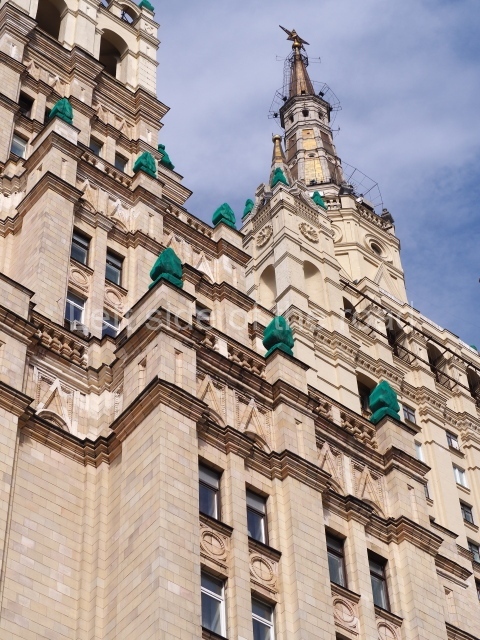
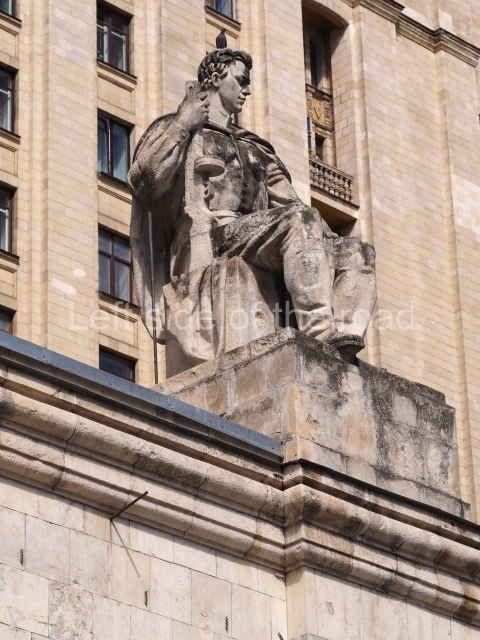
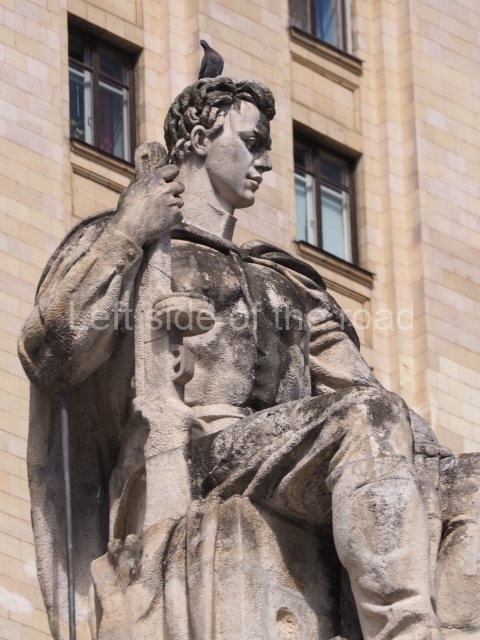
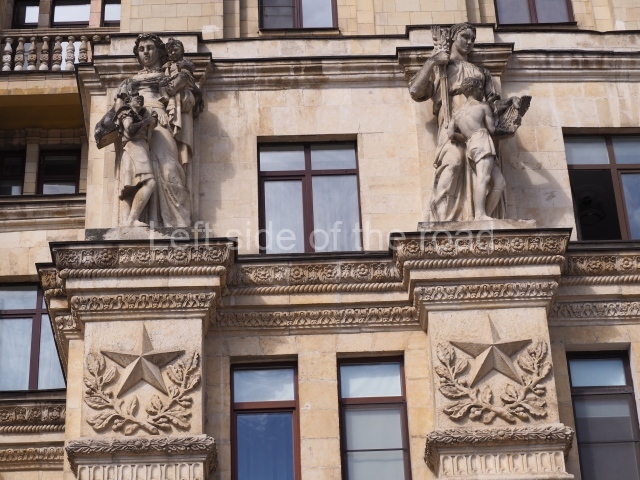
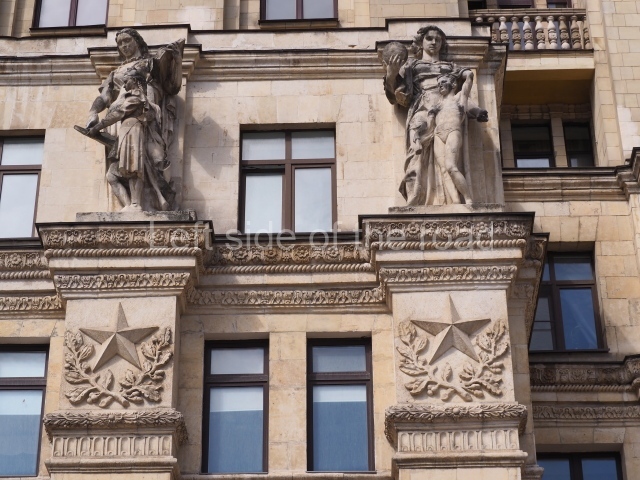
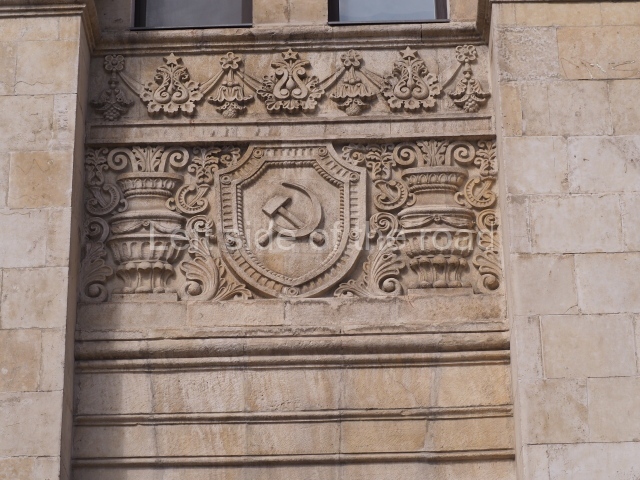
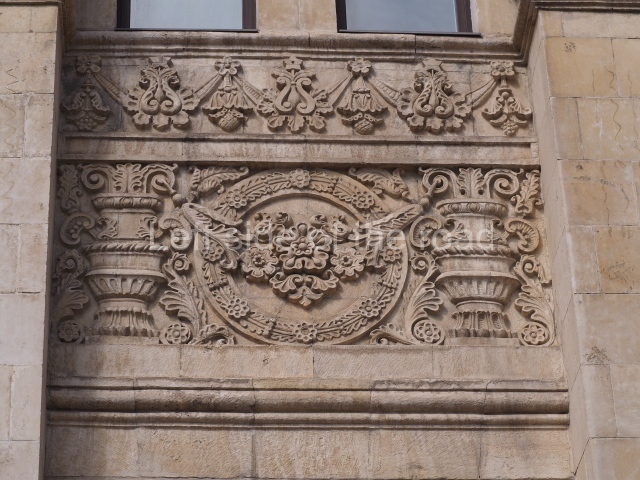
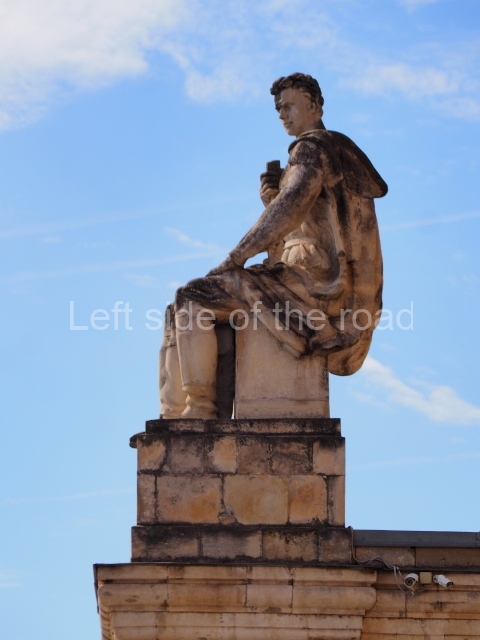
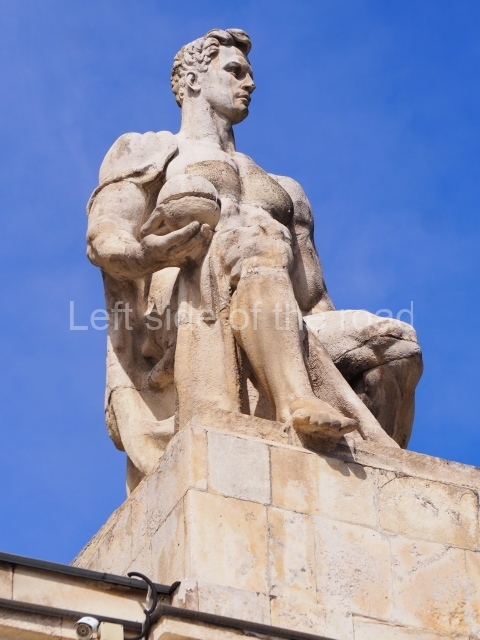
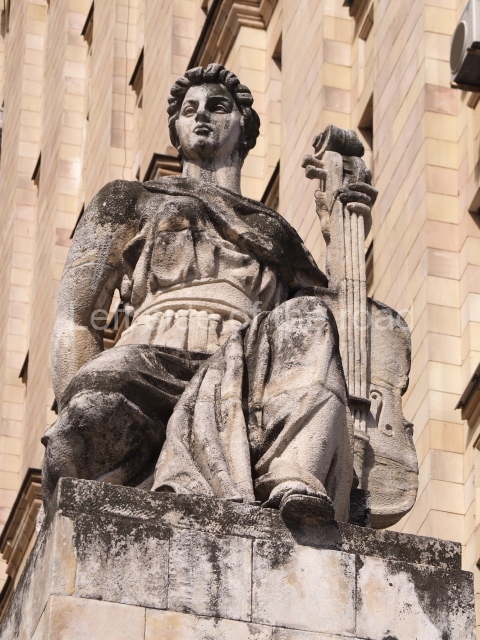
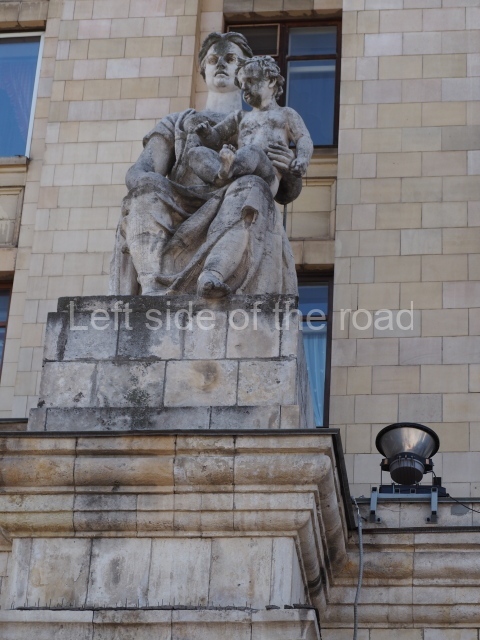
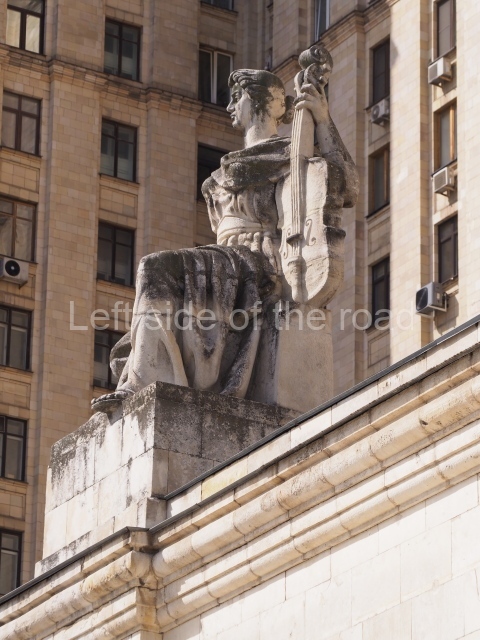
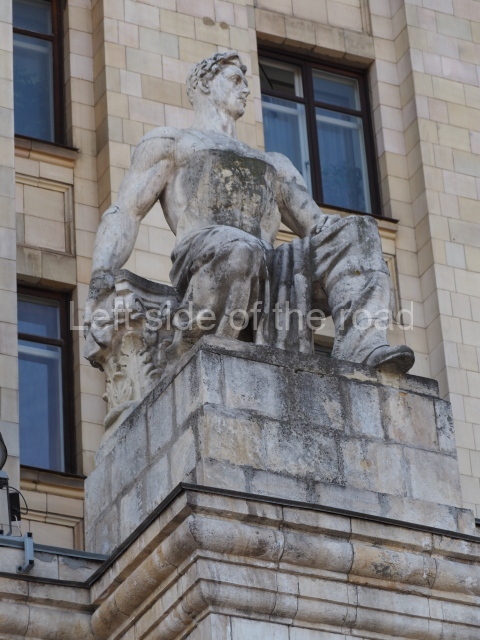
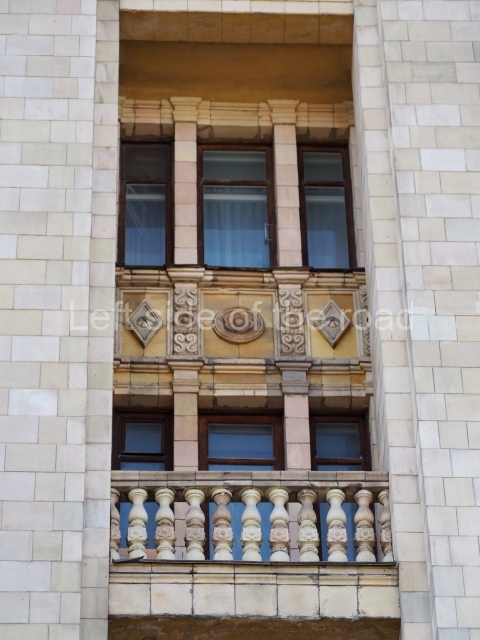
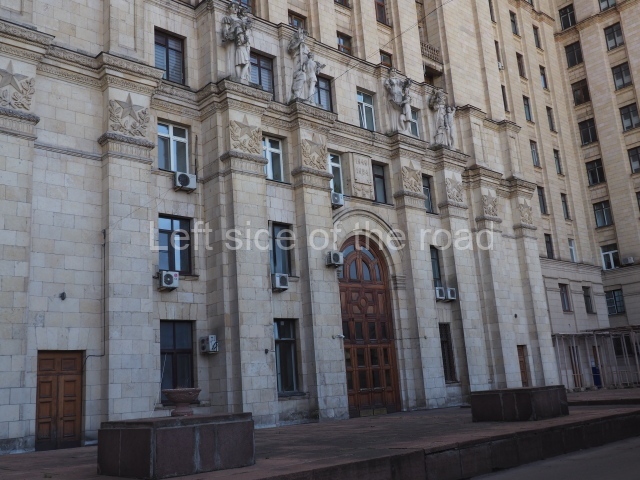
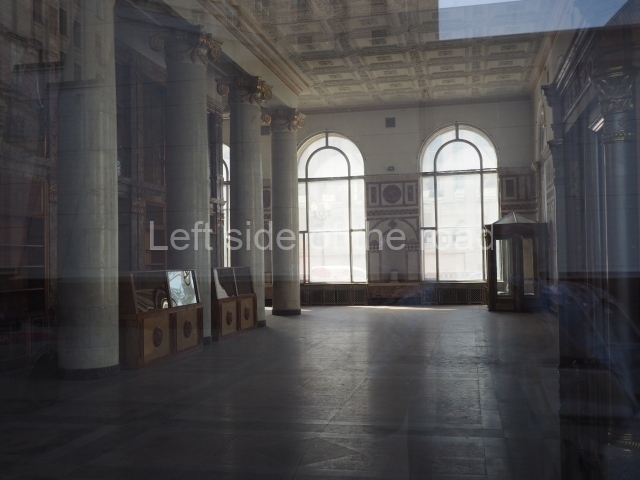
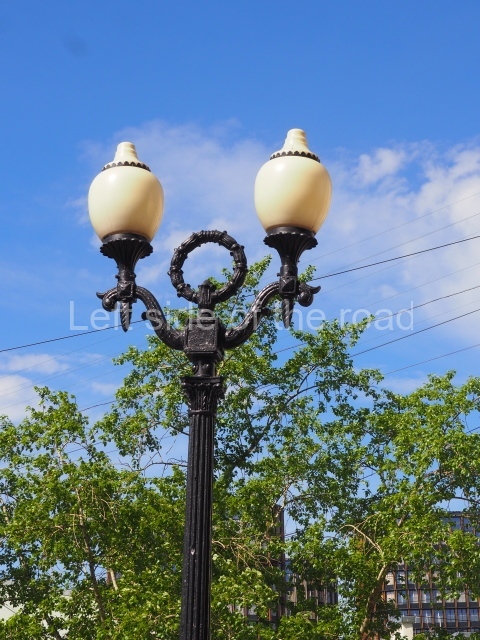
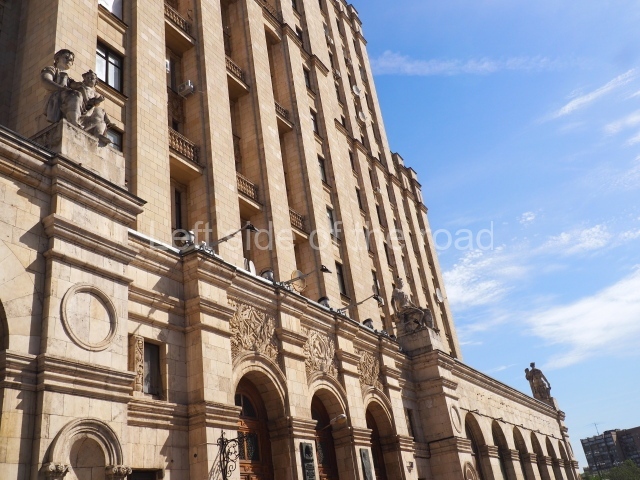
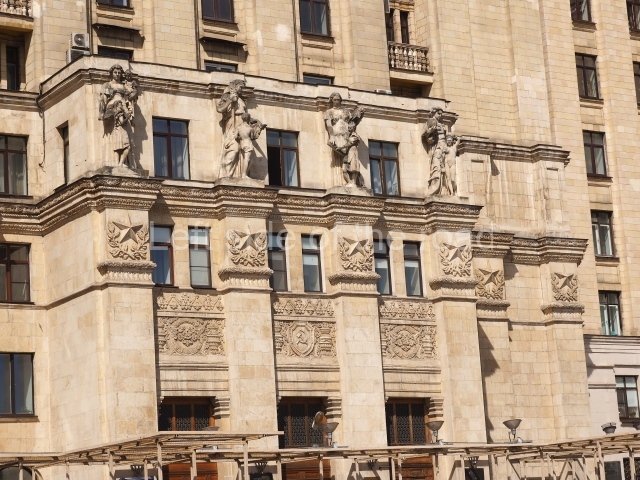
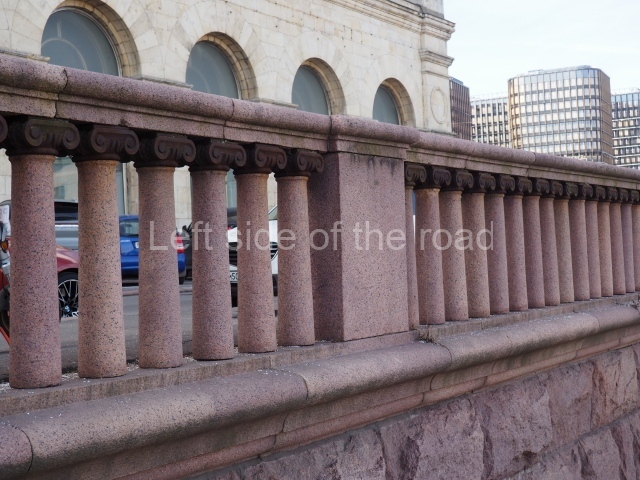
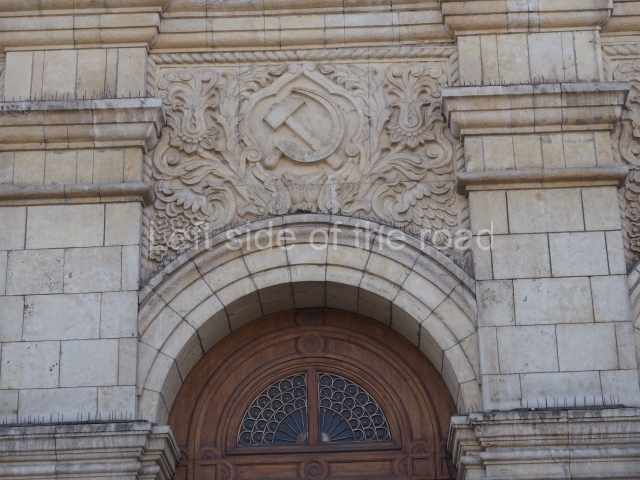
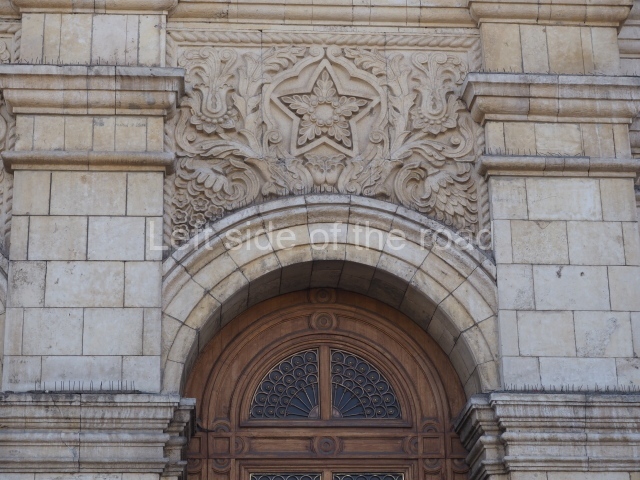
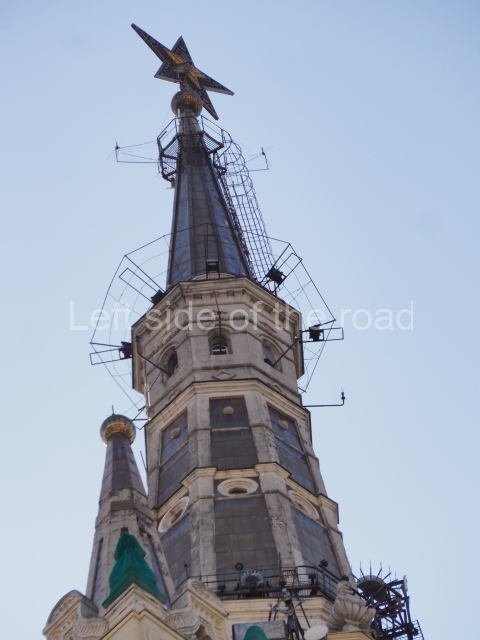
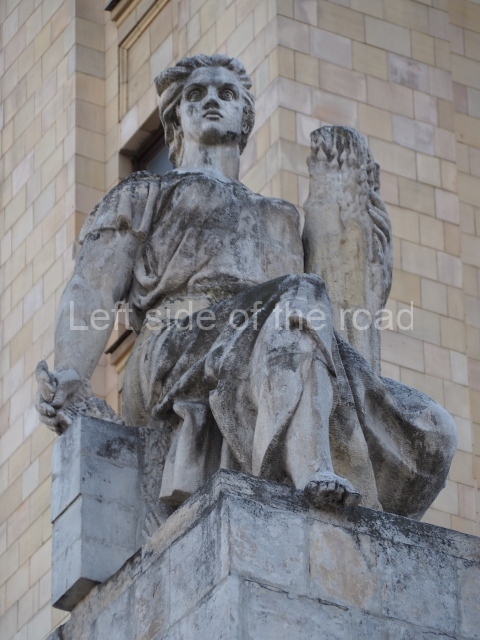
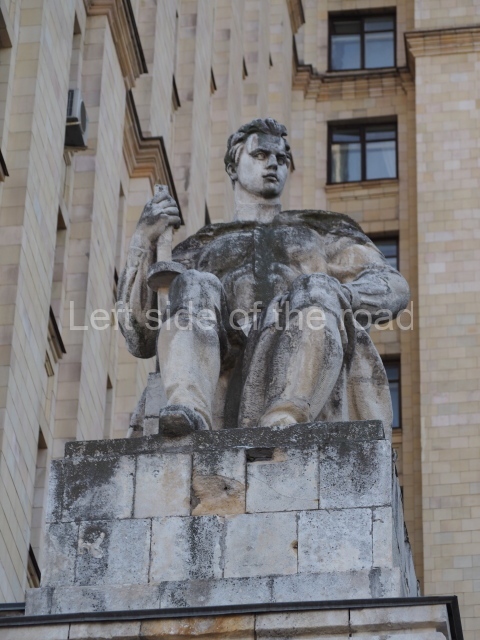
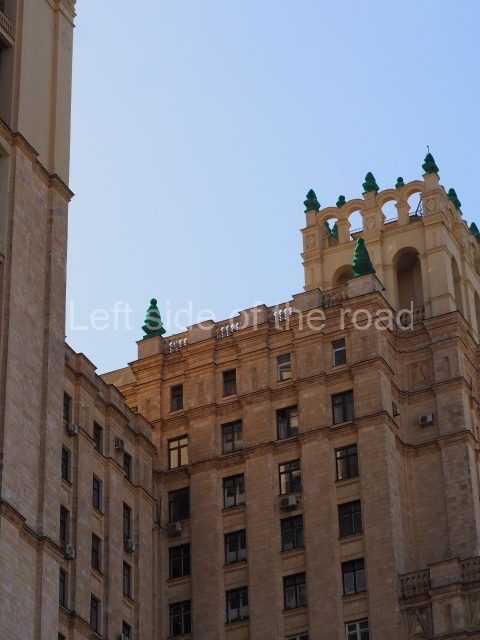
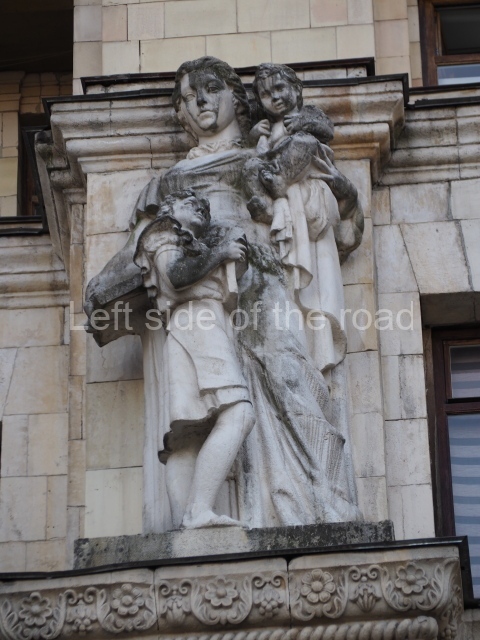
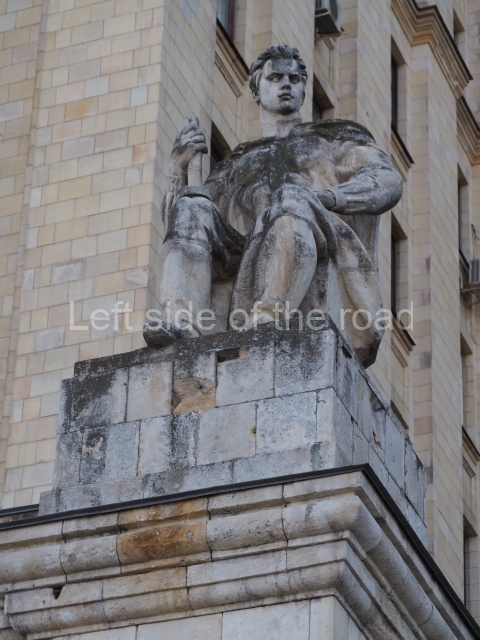
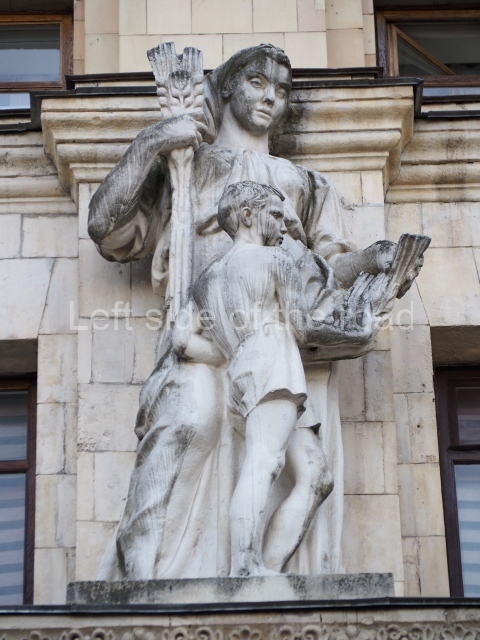
The building was richly decorated but lacked a unified stylistic direction. The parapets are in the ancient Roman style. The lobbies decorated with marble columns, stained-glass windows, and lamps in the form of candelabra are a reminiscence of Gothic interiors. The pointed turrets around the spire resemble the domes of an Eastern Orthodox church. On the roof of the stylobate, there are sculptural portraits of Soviet workers and soldiers.

Barrikadnaya Apartments - 1955

Barrikadnaya Apartments – 1955

One of the stylistic features of the building were the stained glass windows, which are located in the halls above the lifts and the windows of the deli. Motifs from Russian folk culture were used in the design. The floors in the living rooms and corridors of the flats were laid with oak parquet, the bathrooms were tiled with metal tiles, and the kitchens with linoleum.

Kudrinskaya - 01

Kudrinskaya – 01

All the flats had refrigerators and built-in furniture in the kitchens. In addition to the ventilation system, the building had centralised air conditioning. The building was equipped with a centralized dust extraction system, which consisted of brushes and hoses located in each flat, piping running along with the building, and vacuuming stations installed in the basement. The collected dust was filtered and discharged into the sewage system, and the purified air was discharged into the street. Boilers were installed in the basement to provide heating for the whole building.

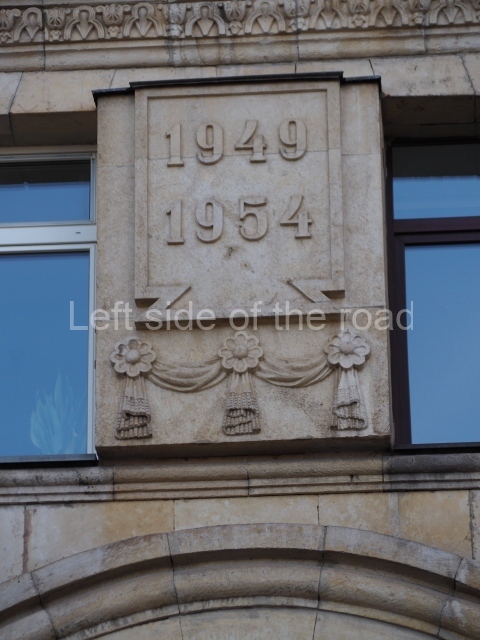
The skyscraper was laid down in 1950 and completed in 1954. It was the last of the Seven Sisters to be completed.

Kudrinskaya - 03

Kudrinskaya – 03

Its apartments were originally intended for cultural leaders of the former USSR; they are currently inhabited by wealthy Russians.

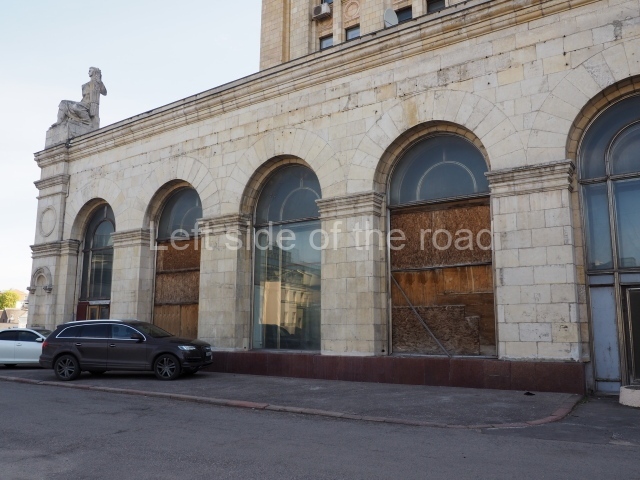
The building is starting to look a little frayed around the edges. A large room at the right hand side at the front appears to be abandoned and the windows have been broken and removed and replaced with cheap and badly installed wooden boards. At the back of the building what would have been a large shop is also now no longer used but appears to be, at least, in a reasonable physical condition.

Kudrinskaya Building from River Moskva

Kudrinskaya Building from River Moskva

Architects;

Mikhail Posokhina and Ashot Mndoyants

Completed;

1954

Height;

160 m (520 ft)

Floors;

22

Location;

1 Kudrinsky Square, opposite Barrikadnaya Metro station

GPS;

55°45′32″N

37°34′50″E
More on the USSR

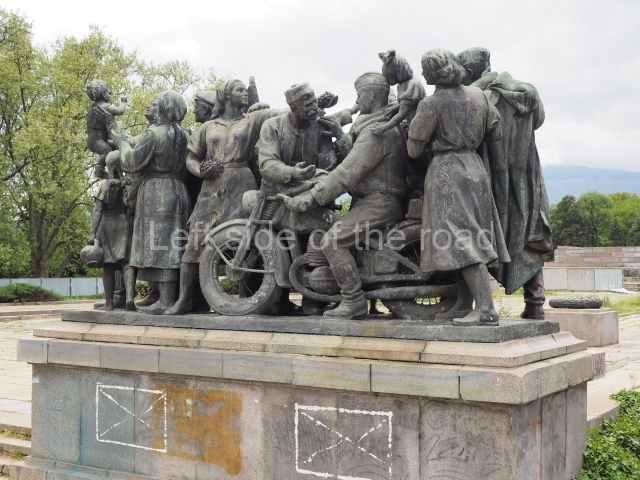
Soviet Army Monument – Sofia

Soviet Army Monument - Иван Иванов

Soviet Army Monument – Иван Иванов

Soviet Army Monument – Sofia

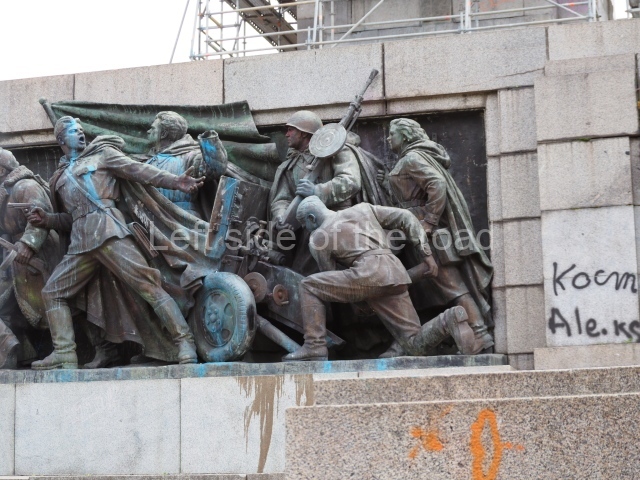
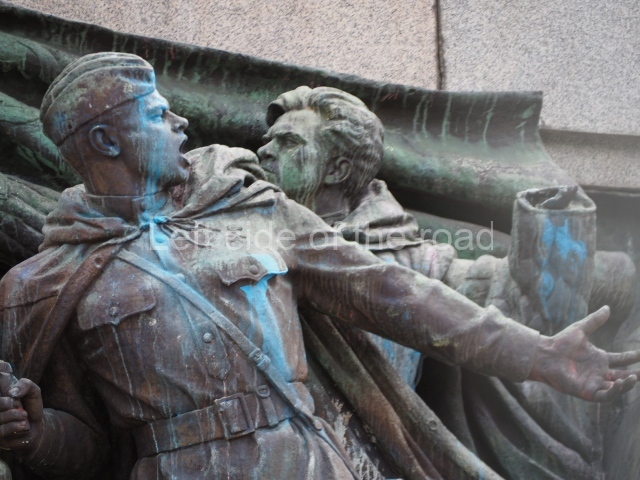
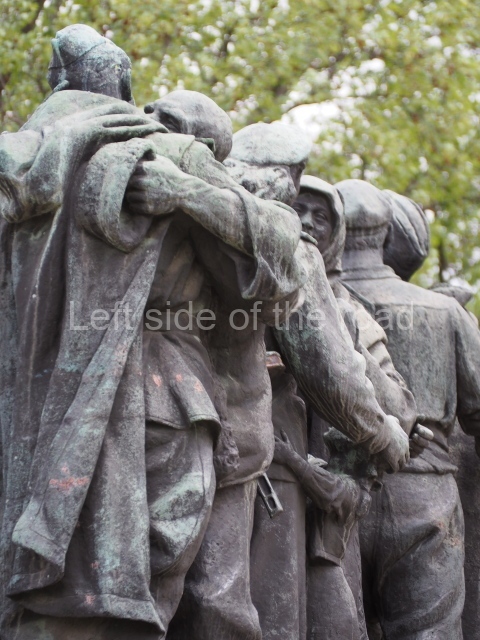
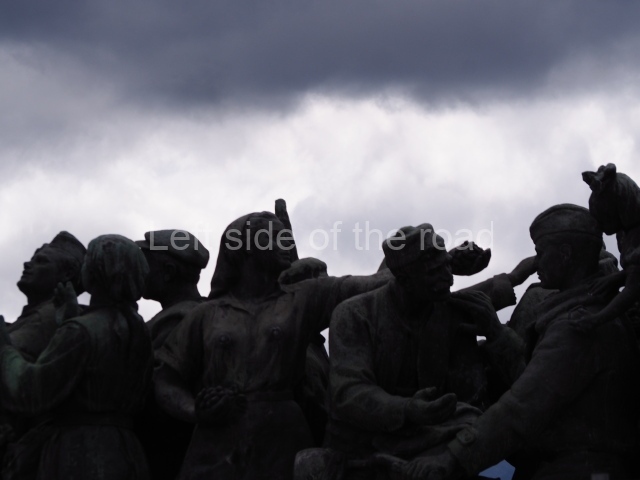
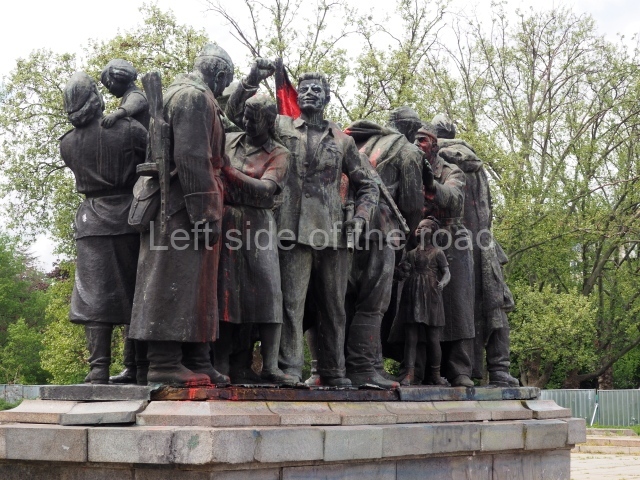
Possibly the largest extant sculptural work of Socialist Realism in Sofia, and quite possibly the whole country, is the Monument to the Soviet Army which was commissioned and erected in 1954 on the occasion of the 10 anniversary of the Liberation of Sofia by the Red Army.

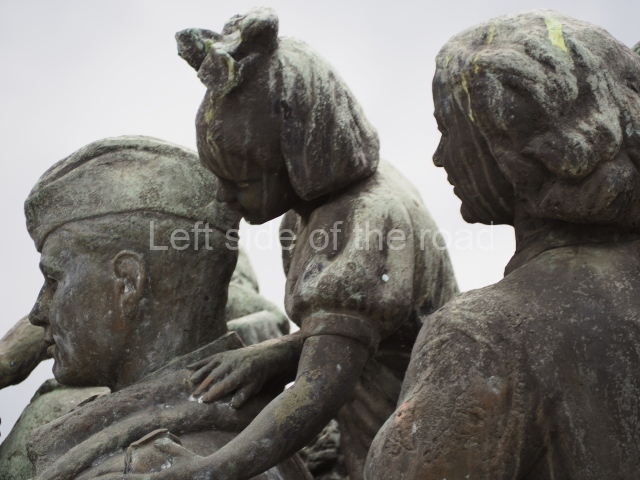
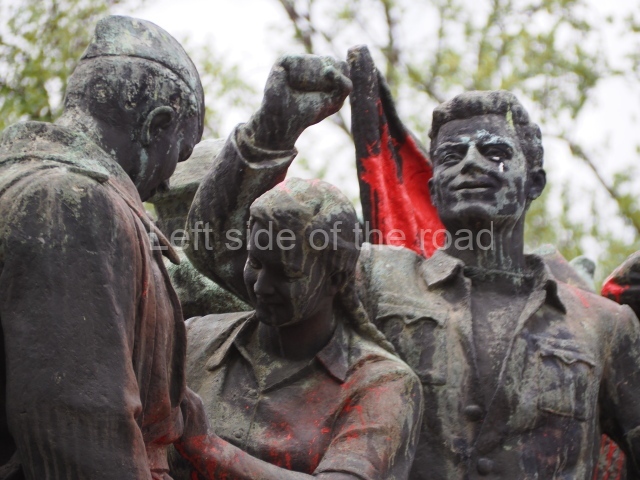
The principal monument was a group sculpture of; a Red Army soldier in the centre, with his rifle held high above his head in his right hand; to his right there’s a young Bulgarian woman holding her baby; and on his left there’s a Bulgarian man. This trio was standing on a 37 metre high pedestal which is reached by a series of stepped platforms from the edge of the complex which starts near the main road.

It is ‘was’ rather than ‘is’ because this particular element of the monument was removed in December 2023. In theory this will eventually be given a place in the garden of the Museum of Socialist Art. It had not appeared there in April 2024 and the reason for the delay is unknown, possibly because it would be in need of some cleaning and restoration. It is hoped that is the only reason for the delay and that reactionaries in the Bulgarian political community are not using it as an excuse in the hope the delay will erase the sculpture from the public consciousness.

Although this trio might have been the focal point of the monument it is by no means the only element of complex.

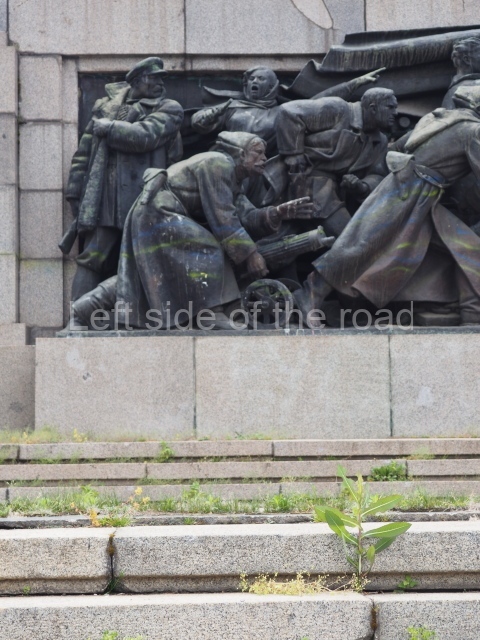
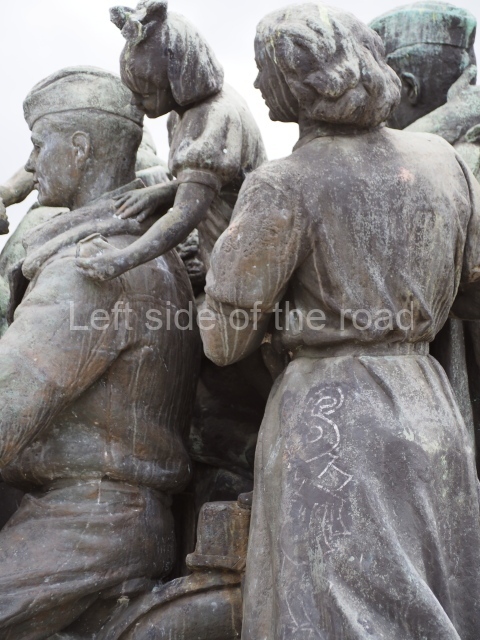
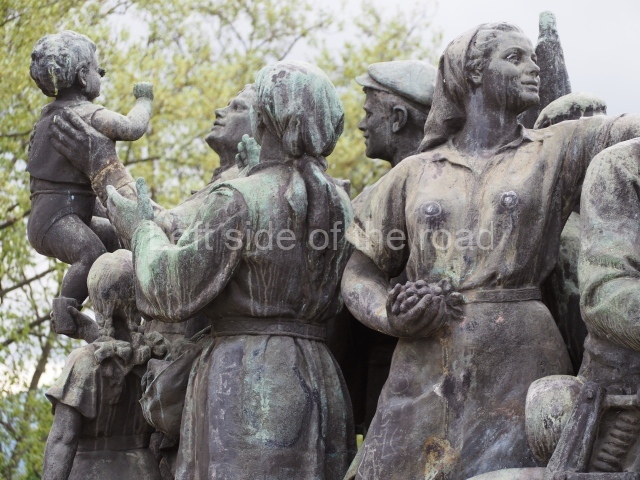
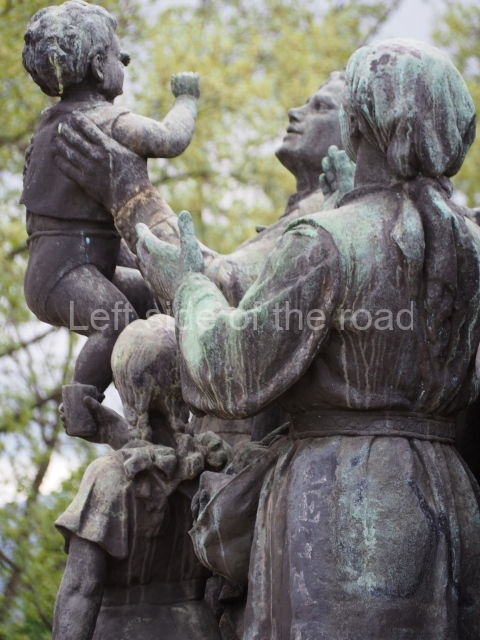
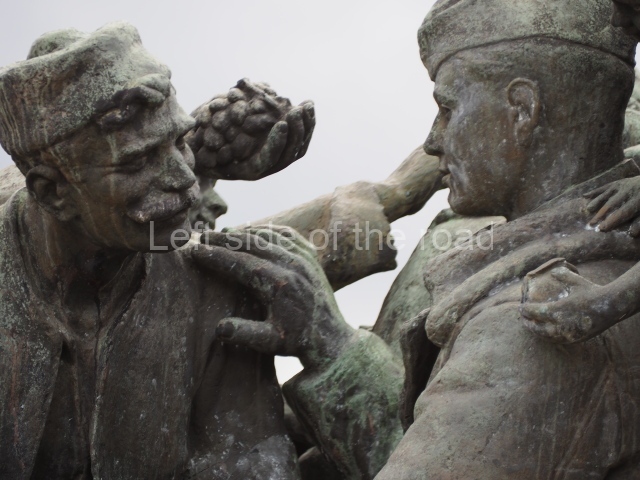
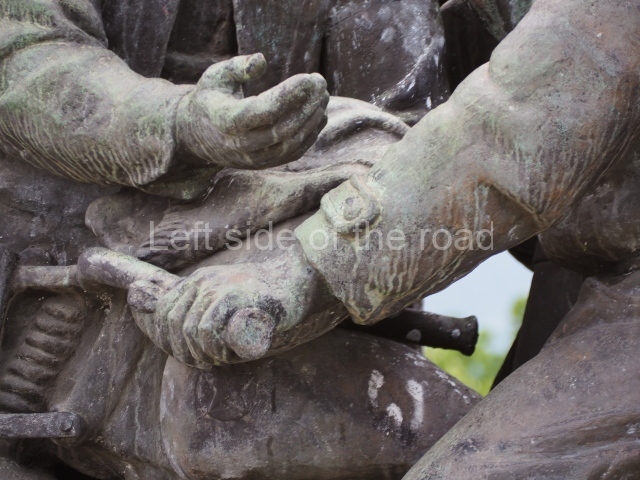
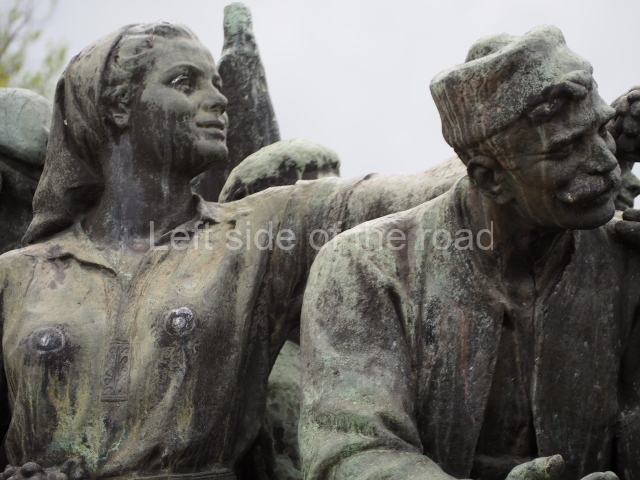
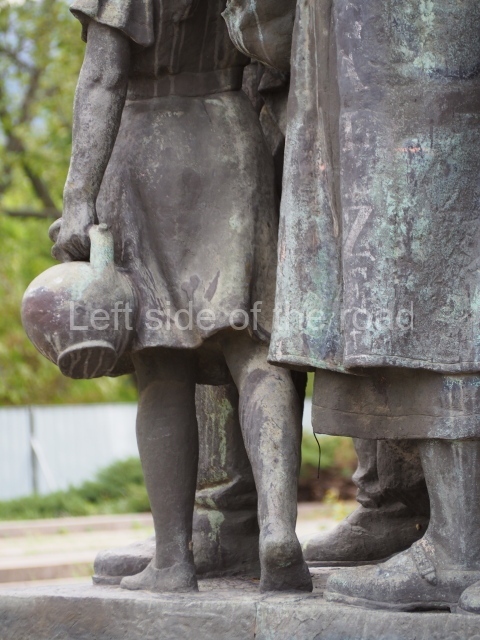
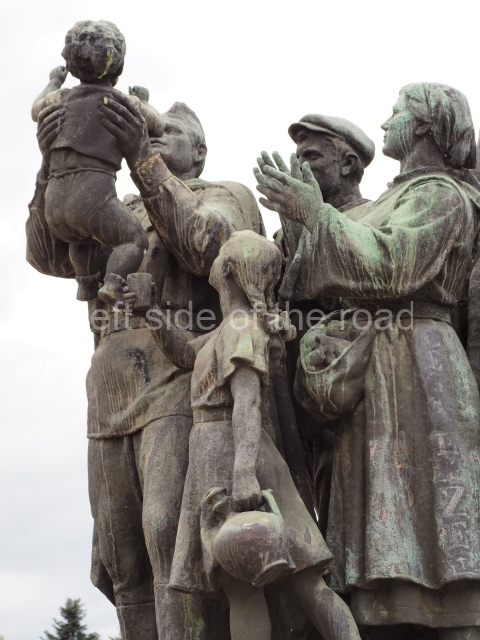
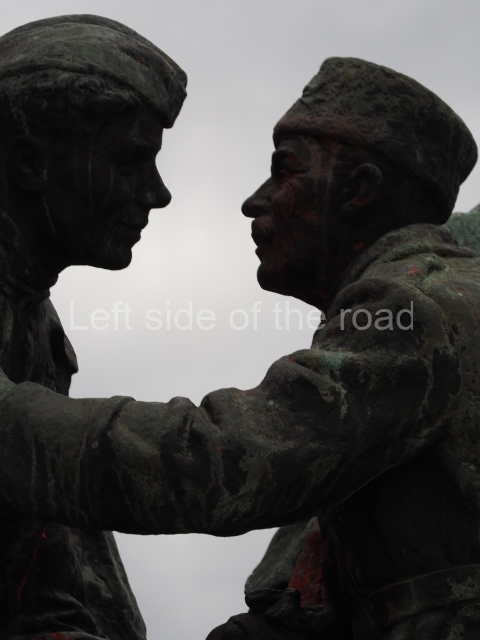
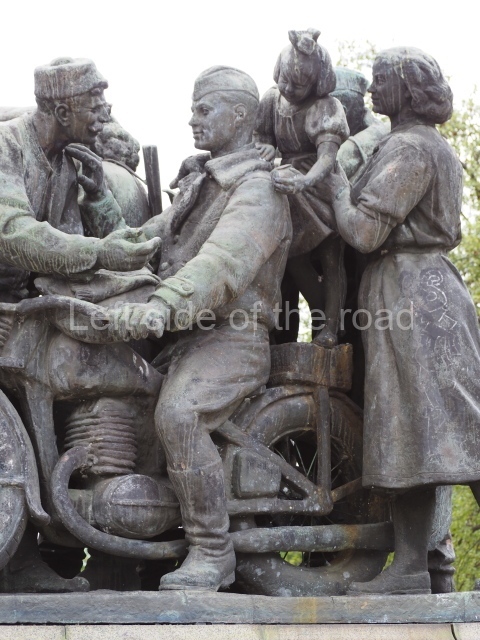
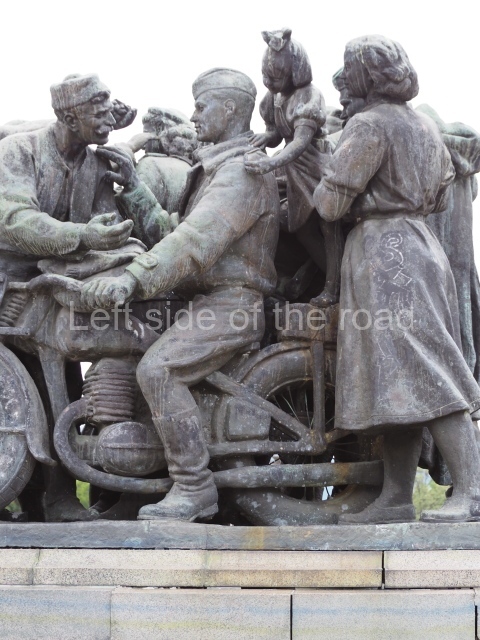
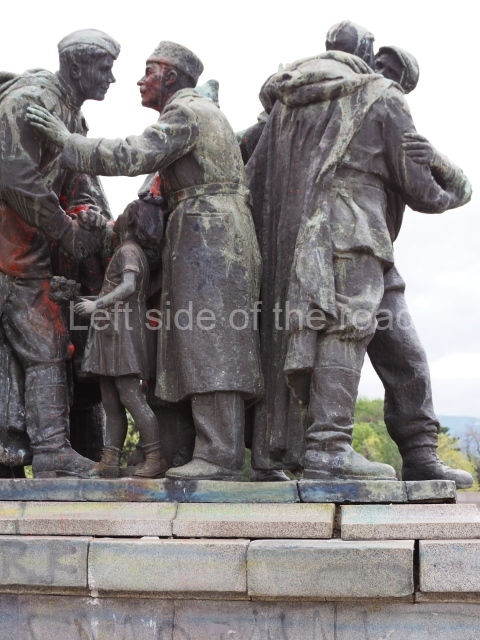
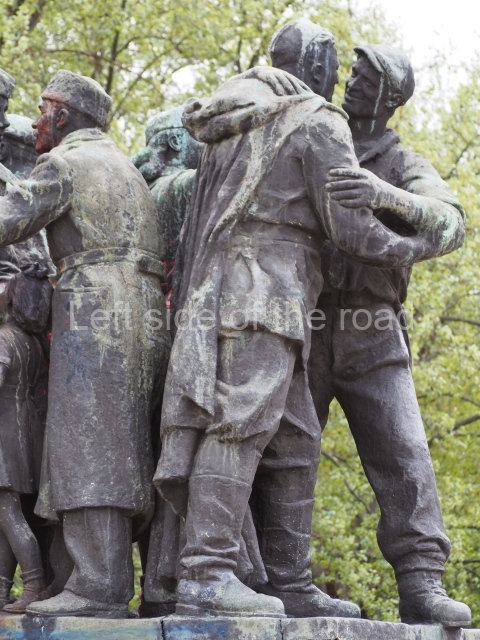
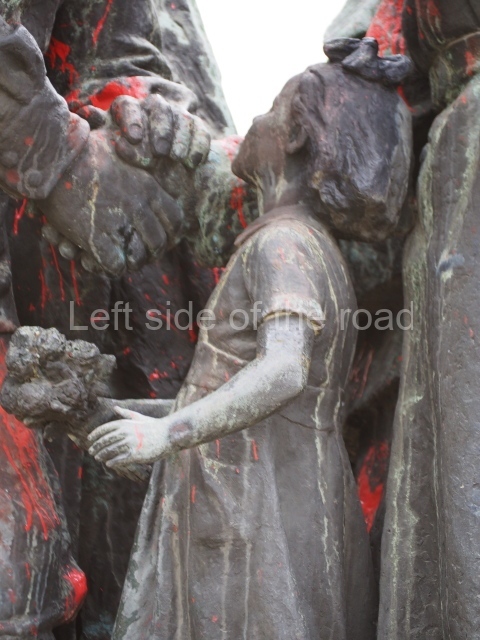
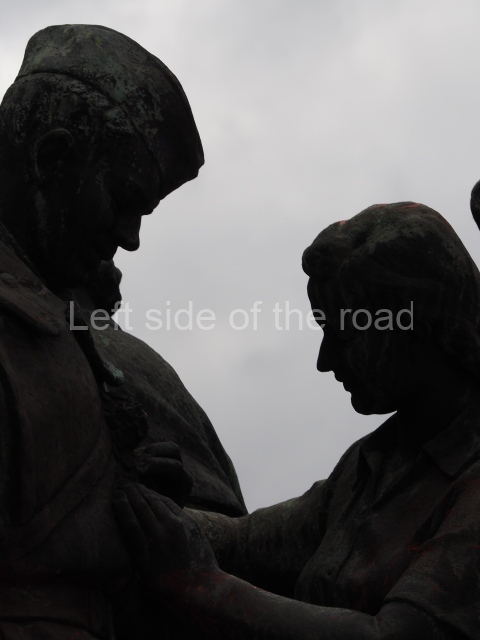
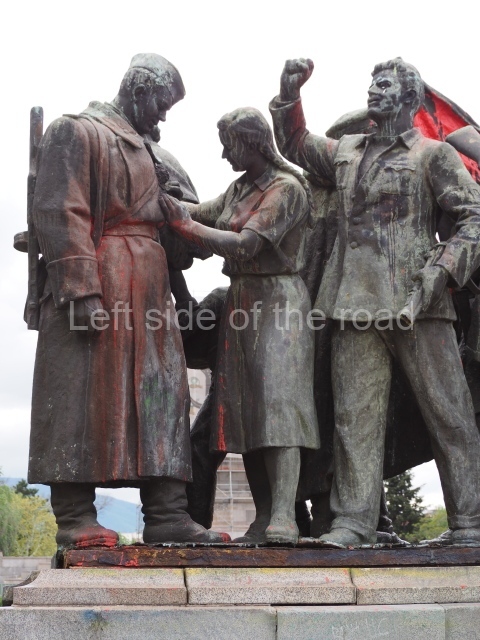
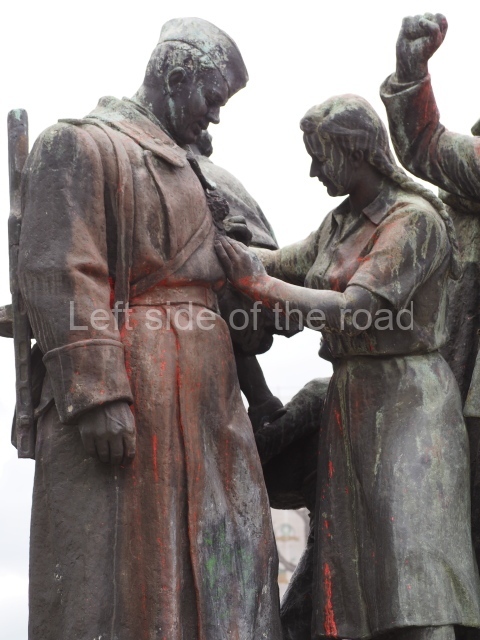
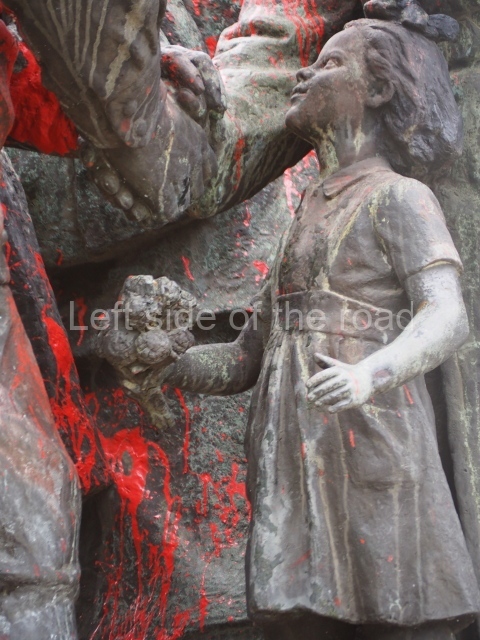
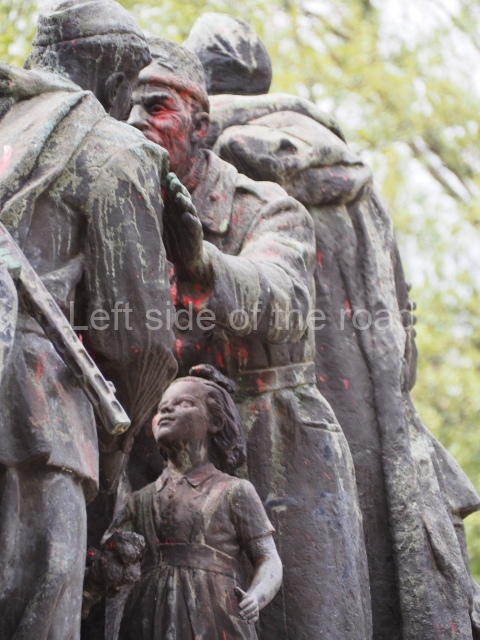
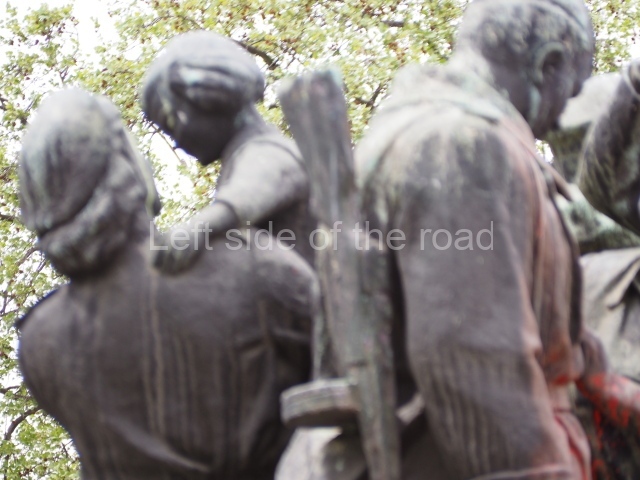
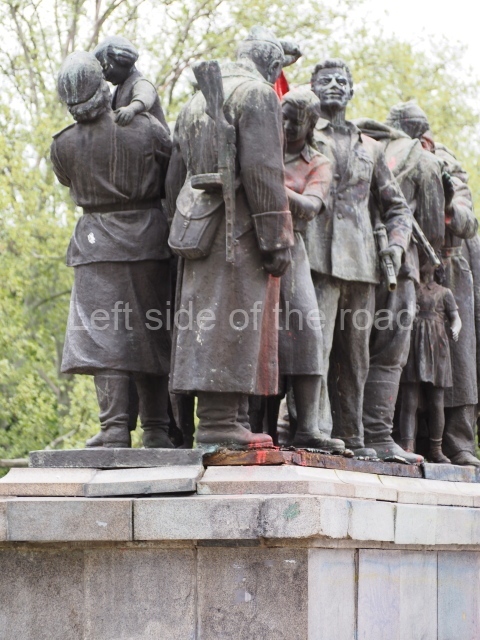
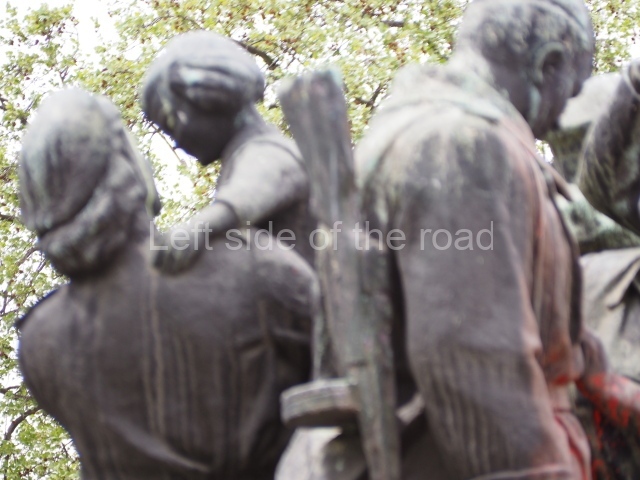
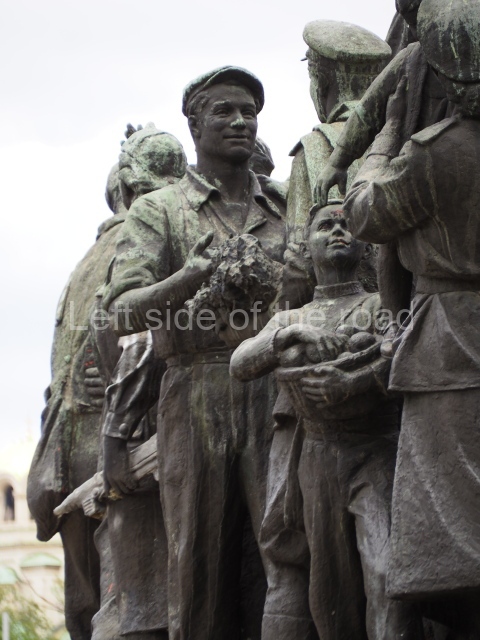
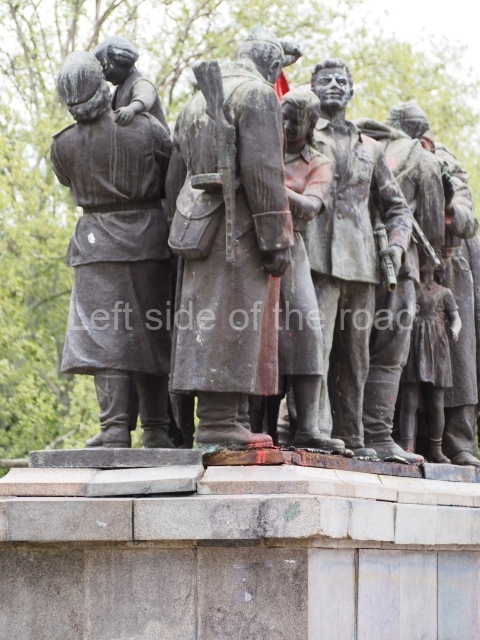
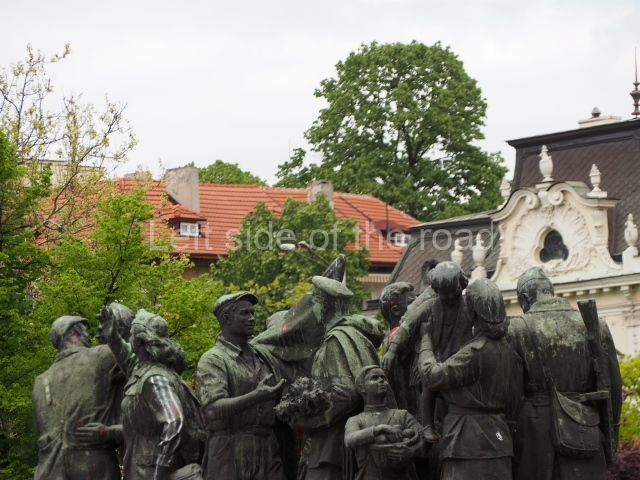
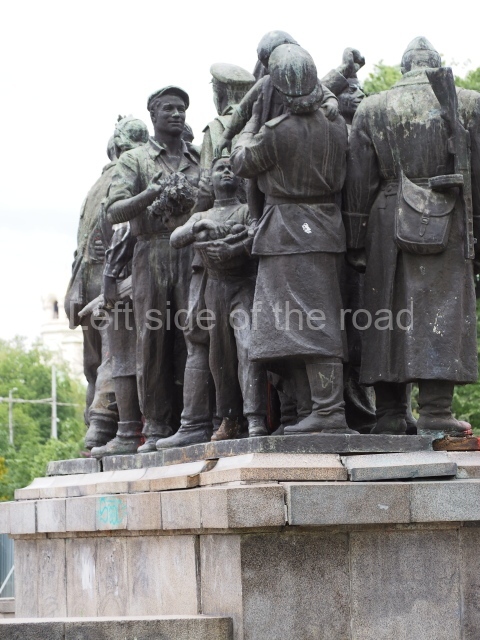
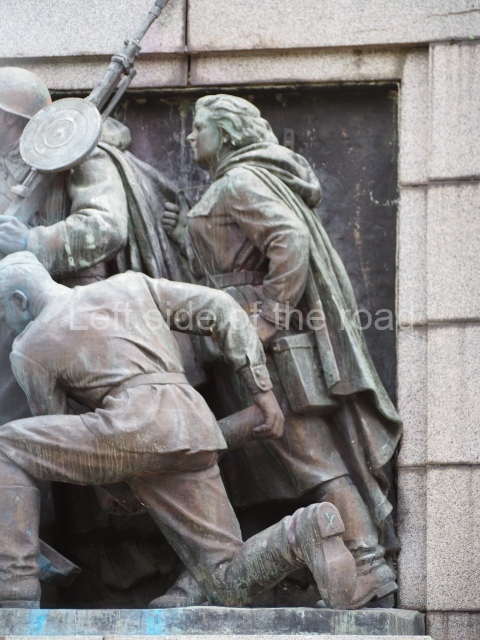
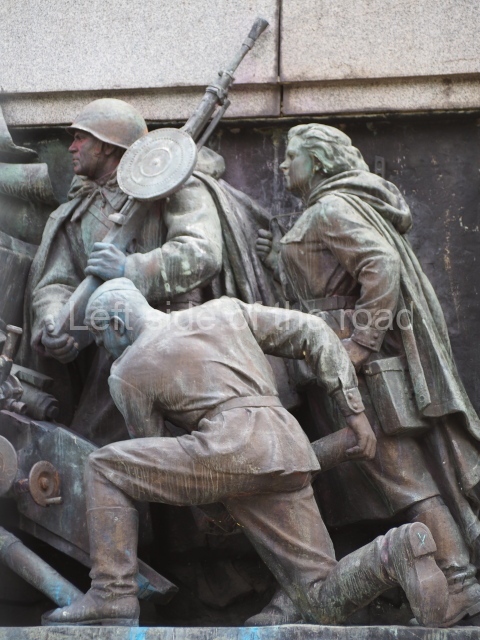
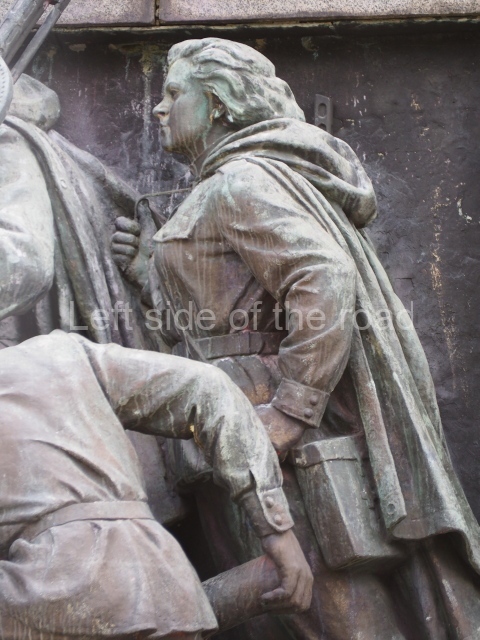
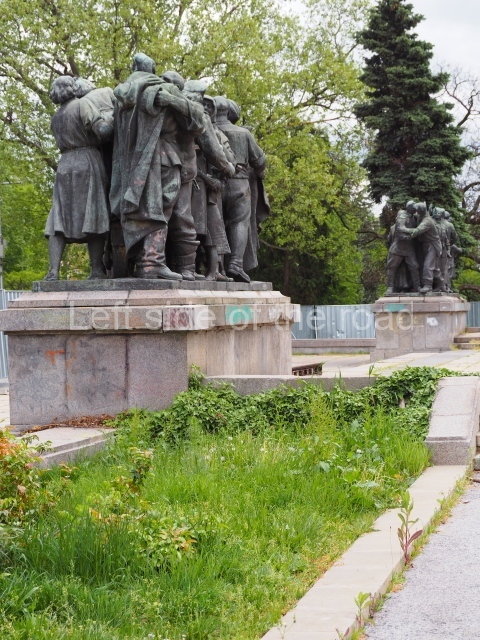
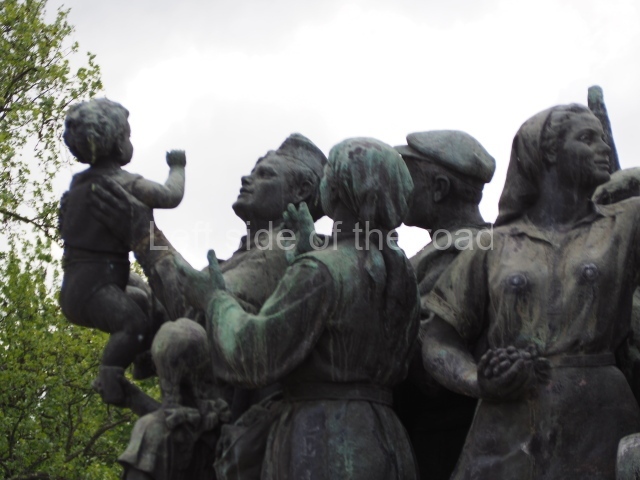
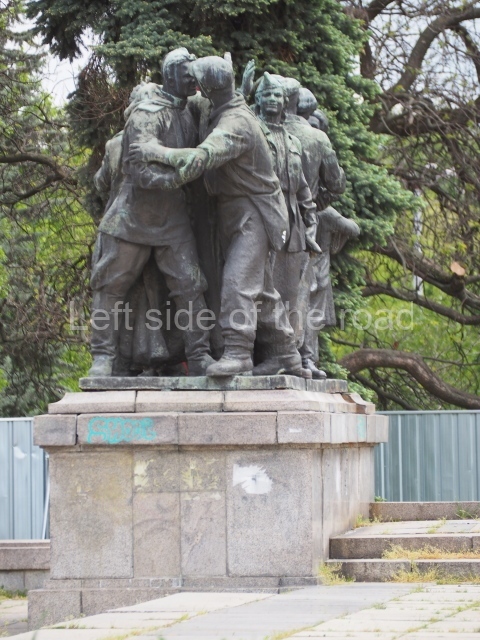
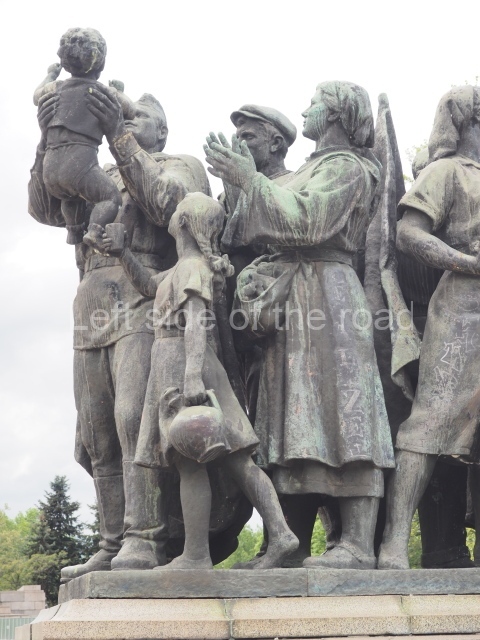
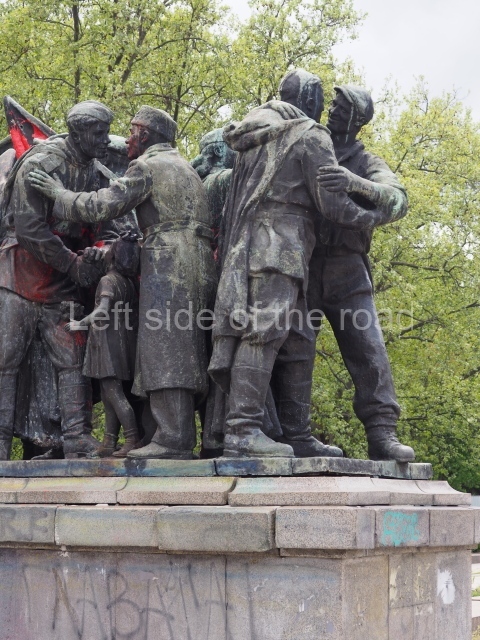
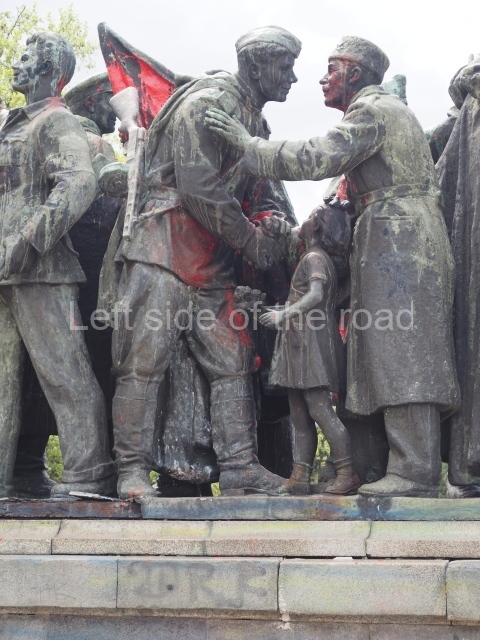
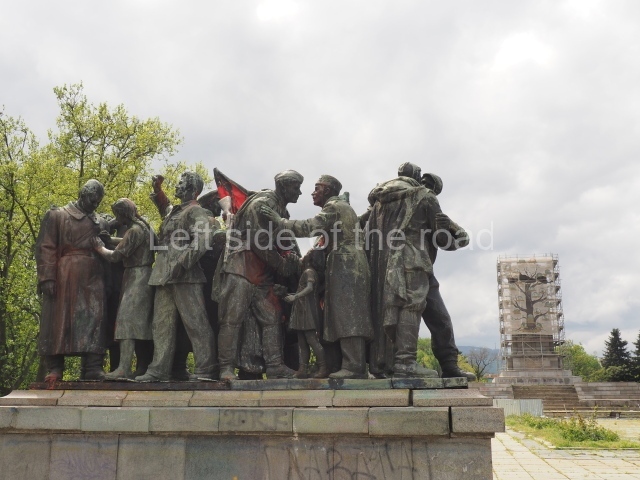
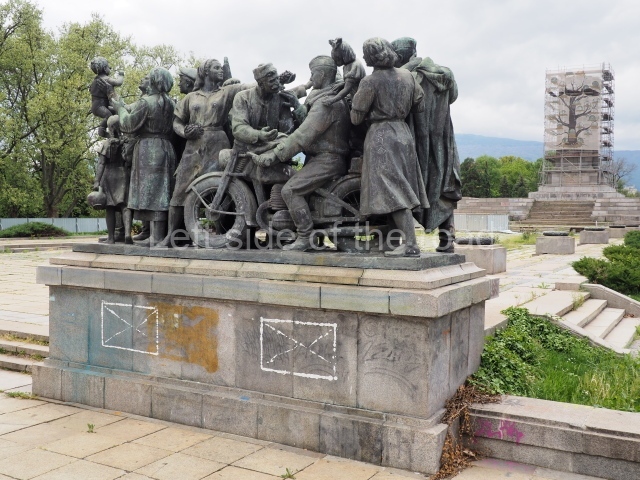
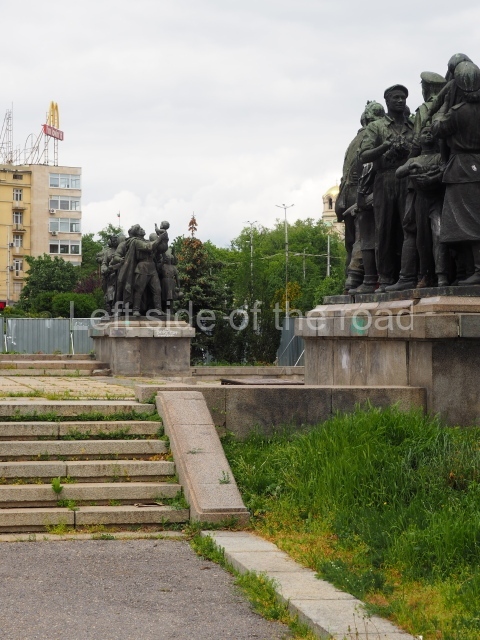
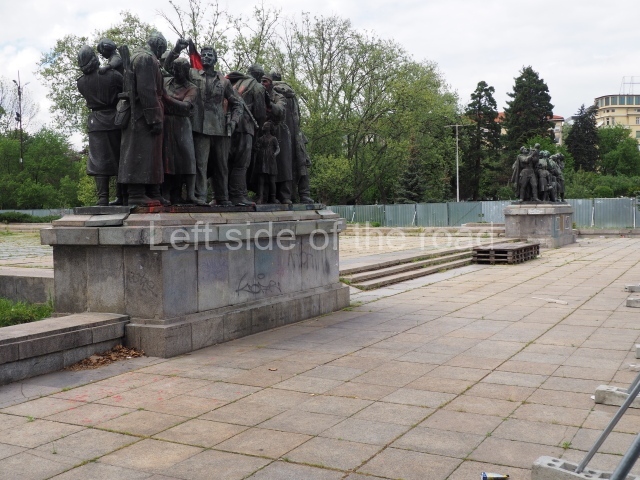
The principal entrance is the stepped route to the pedestal which is flanked by two, low level group sculptures. Both these groups represent Red Army men and women being welcomed by the local populace. They bring food and drink for the tired soldiers and the appreciation of their efforts are being demonstrated by Bulgarians of all ages. There’s a feeling of joy and celebration as the people are freed from the dominance of the invading Nazis and the possibility of being able to build a new future.

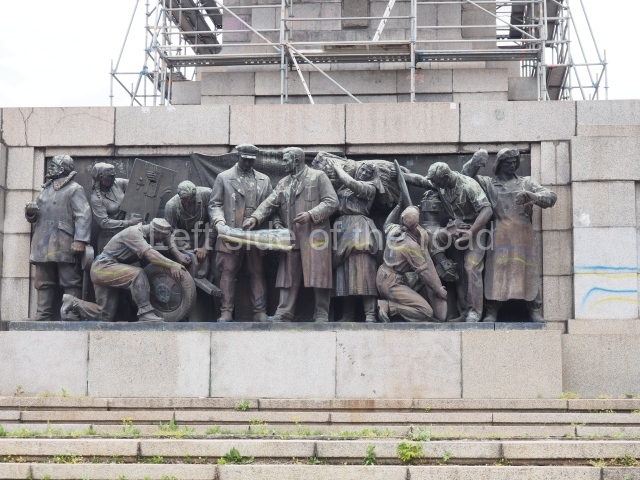
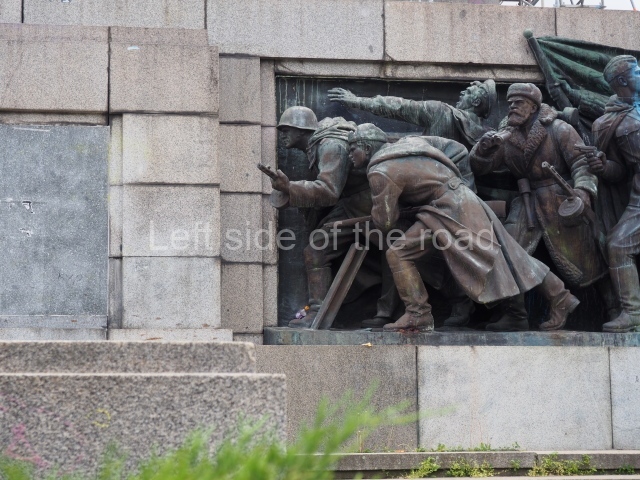
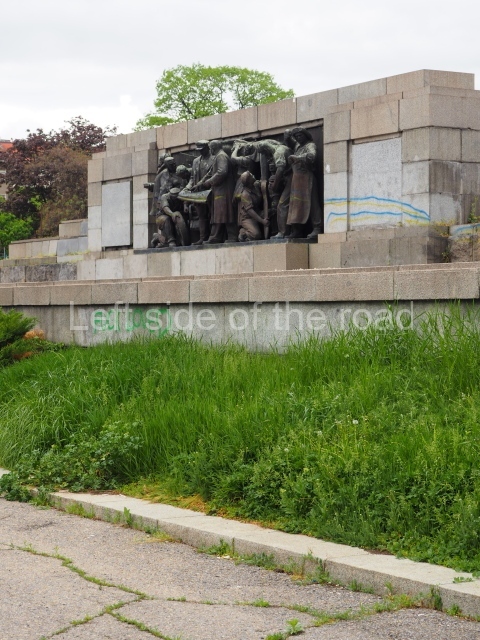
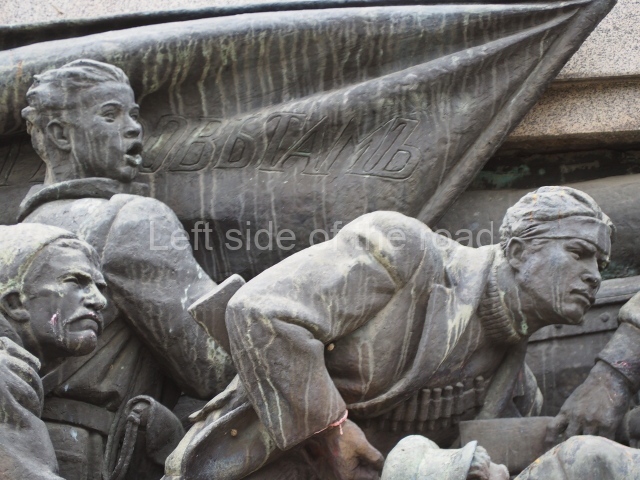
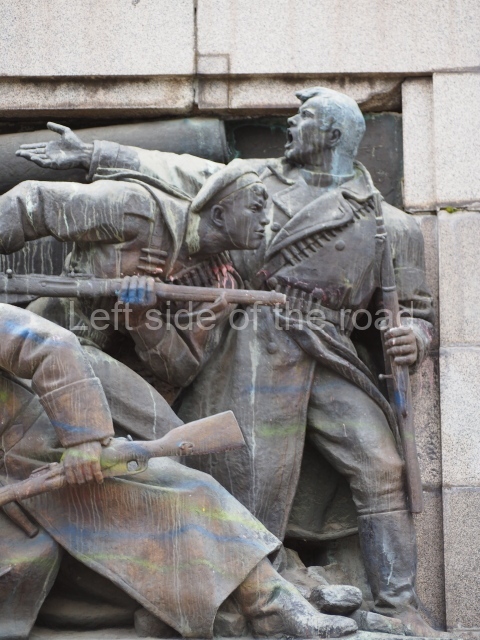
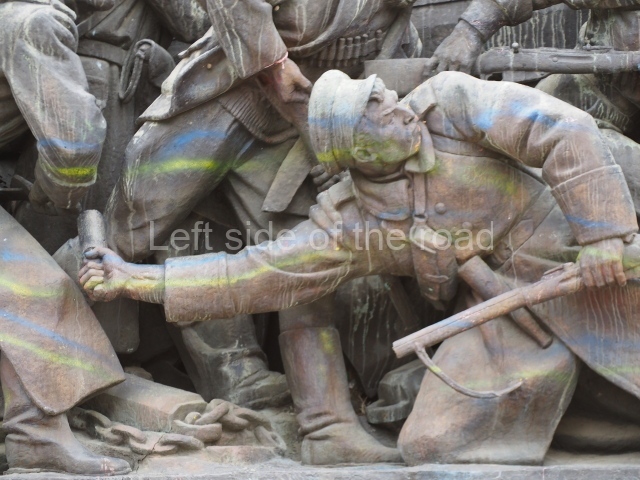
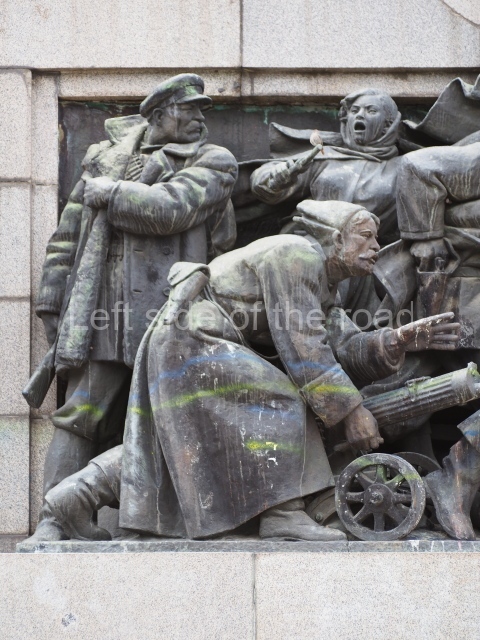
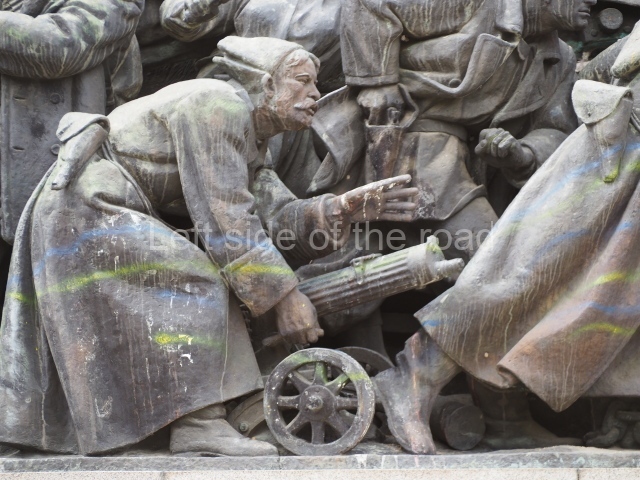
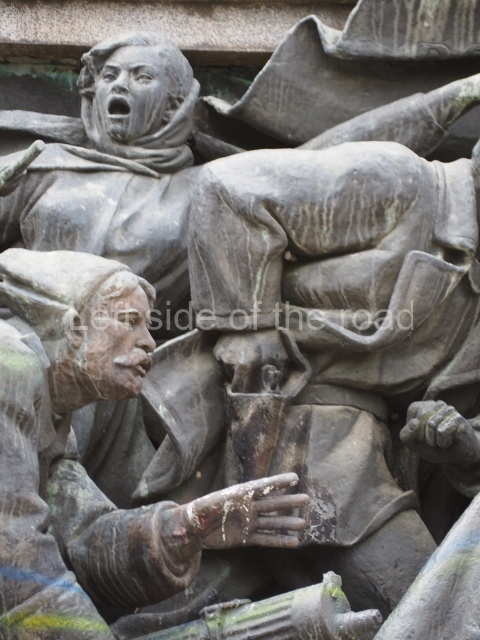
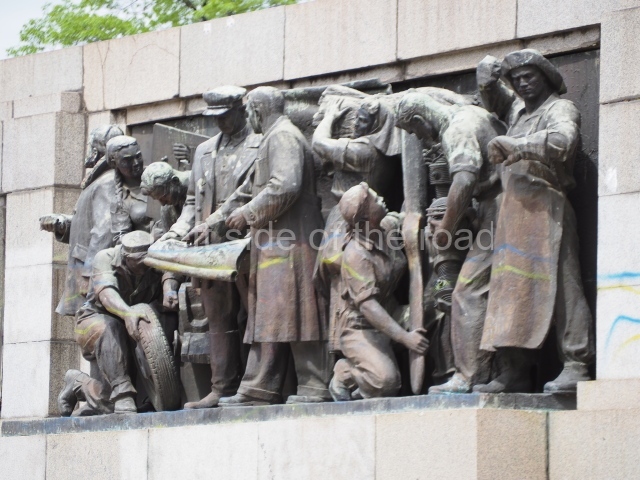
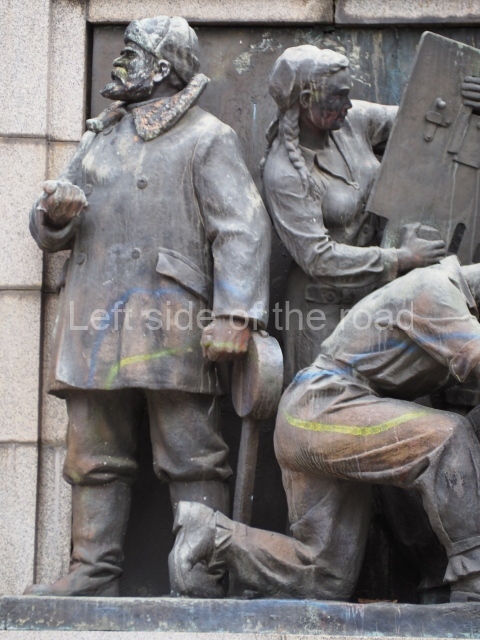
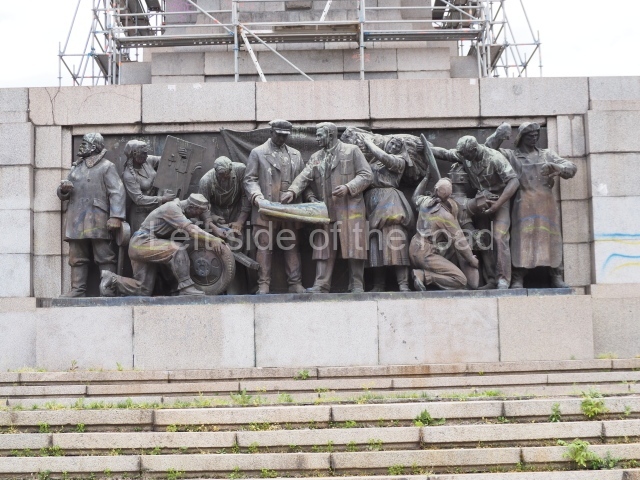
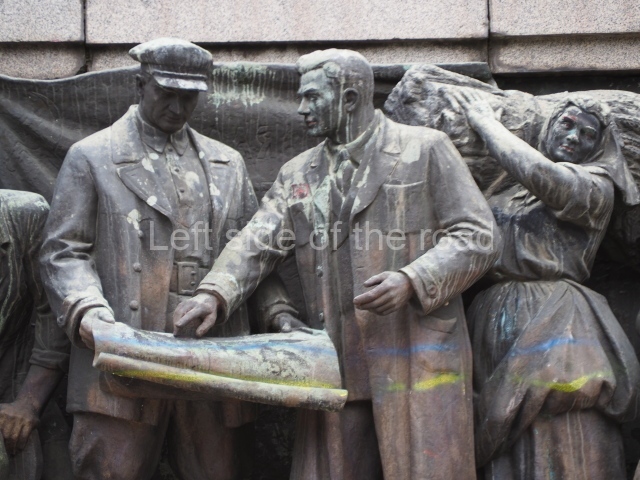
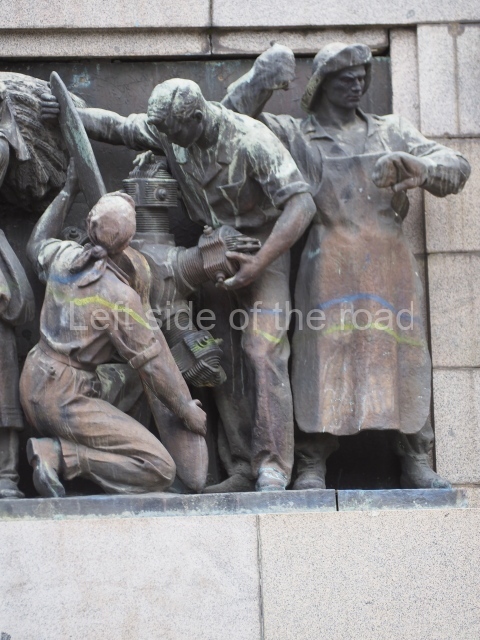
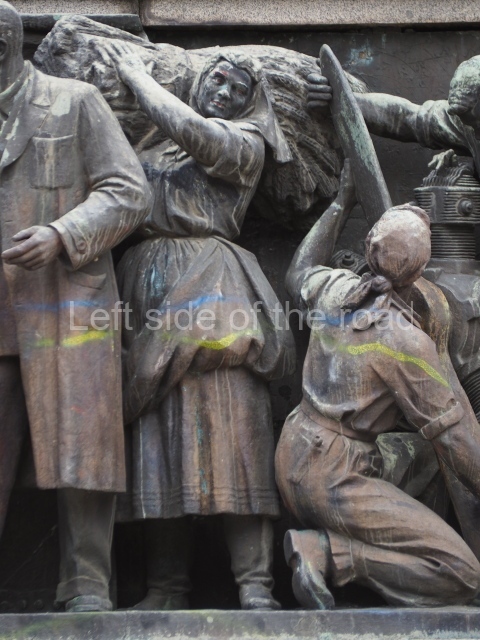
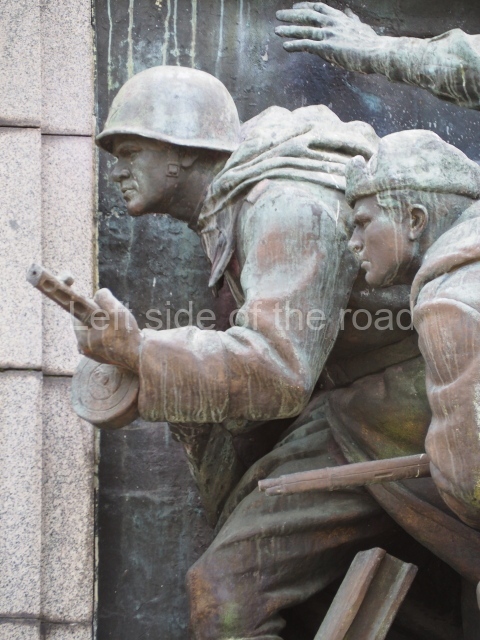
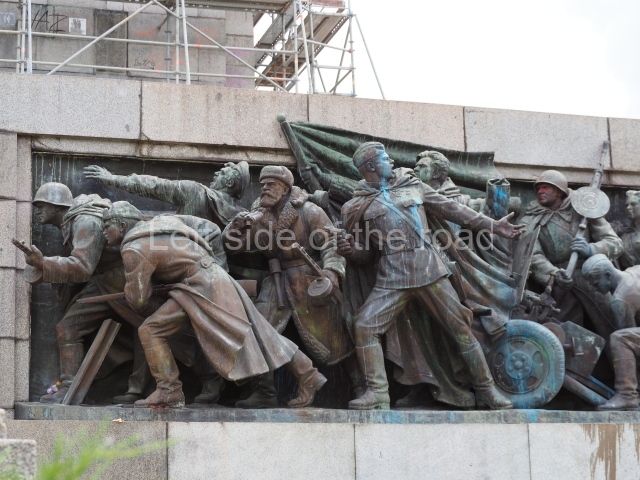
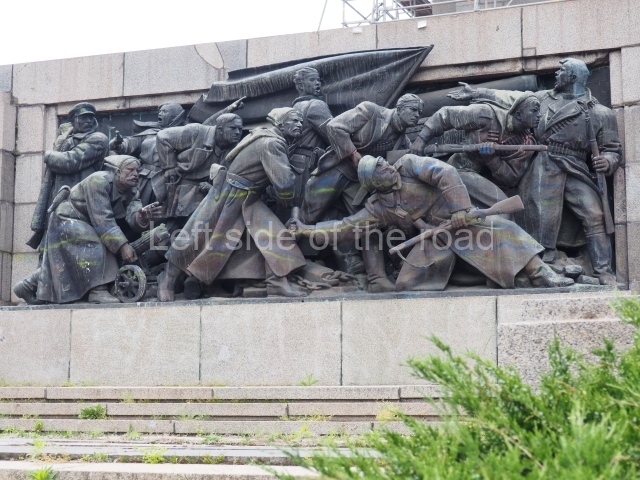
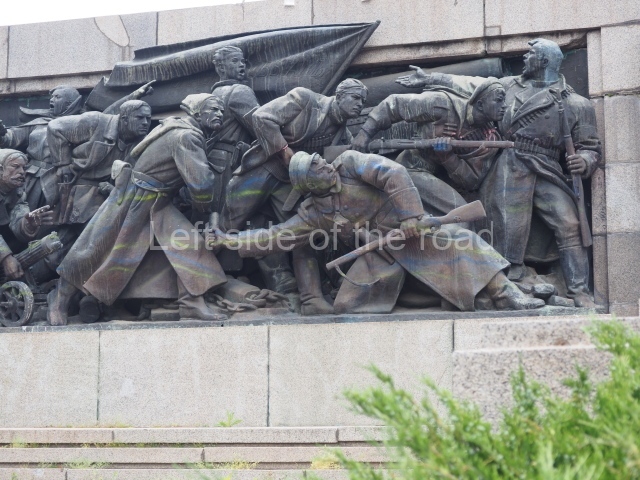
On the sides of the platform on which the pedestal stands are three, large bas relief panels. The ones on the right and left depict war scenes from battles that would have proceeded the liberation of Bulgaria as the Red Army swept west to eventually crush the Nazi beast in its lair in Berlin the following year. The third panel, on the south side, depicts the Soviet ‘home front’ where those not in the actual fighting were making the success of the Red Army possible by their work in the factories and the fields.

All these five sculptural elements have suffered quite severe vandalism, mainly by paint, but there doesn’t seem to be any serious physical damage. At least nothing that couldn’t be rectified with careful cleaning and restoration. Whether that will be their fate or not is unknown.

Although the sculpture on the pedestal might have been recently removed access to the complex is still restricted. A 2 metre high metal fence surrounds every single element of the monument, the sculptures as well as the approach steps and platforms.

Obviously there have been efforts, some at least successful, to breach this barrier in the past but equally serious efforts have been made to repair those breaches. I walked around the whole perimeter and was unable to find any way to get inside the fence. For that reason the photographic record is not dependent upon what I would have liked to have presented rather it what was possible through gaps in the fence or standing on benches at one the edge of the barrier.

The fact that the final fate of this monument has been under discussion for 30 years indicates the uncertainty that the reactionaries in power in Bulgaria feel about the public memory of the liberation from Fascism and the role the Red Army played in that. Removing the principal trio with the ‘promise’ they would be relocated to the Museum of Socialist Art is only part of the ‘solution’. Those sculptural elements that remain are larger and more difficult to place outside of their present, and original, context.

Unfortunately, I don’t have any information about those artists and architects who were involved in the creation and installation of the monument.

How to get there:

Leave the underpass of the Sofia University Metro station by the south east exit and walk along the south side of Tsar Osvoboditel Boulevard. After about 200 metres the area of the complex is unmistakeable on the right. In April 2024 the pedestal was still surrounded by scaffolding but the shiny metal fence stands out like a sore thumb.

Location:

In the park, on the south side of Tsar Osvoboditel Boulevard, close to the Sofia University Metro station.

GPS:

2°41′26″N

23°20′4″E
Leningrad (Saint Petersburg) Metro – Kirovsky Zavod – Line 1

Leningrad Metro - Kirovsky Zavod - Alex 'Florstein' Fedorov

Leningrad Metro – Kirovsky Zavod – Alex ‘Florstein’ Fedorov

More on the USSR

Moscow Metro – the world’s biggest Socialist Realist Art Gallery

Leningrad (Saint Petersburg) Metro – Kirovsky Zavod – Line 1

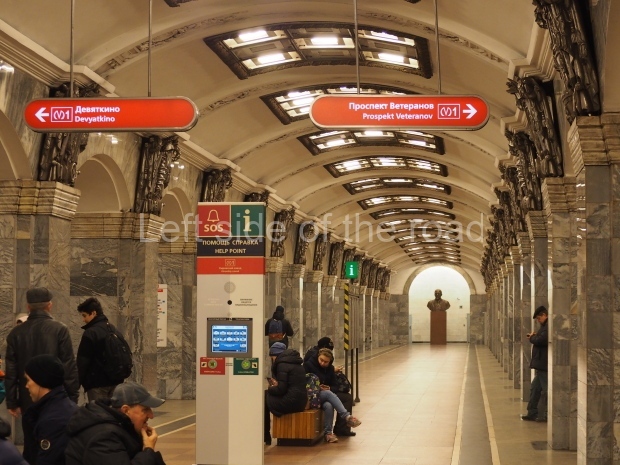
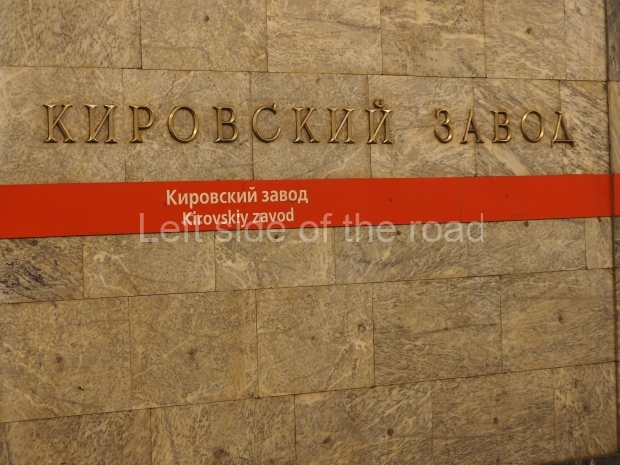
Kirovsky Zavod (Russian: Ки́ровский заво́д) is a station of the Saint Petersburg Metro on the Kirovsko-Vyborgskaya Line 1. It is named after the Kirov Plant which traditionally manufactured armaments – which itself was named after the Leningrad Party leader Sergei Kirov. The station opened on 15 November 1955.

[Limited] text from Wikipedia.

Kirovsky Zavod - 01

Kirovsky Zavod – 01

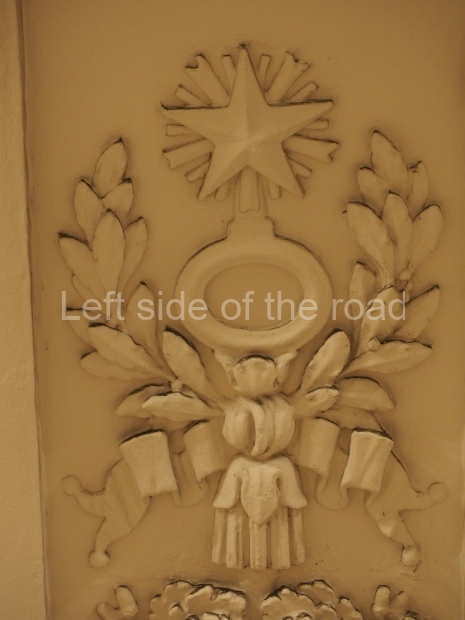
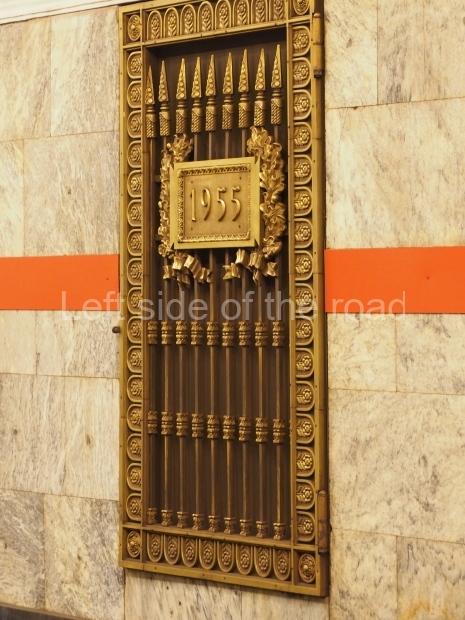
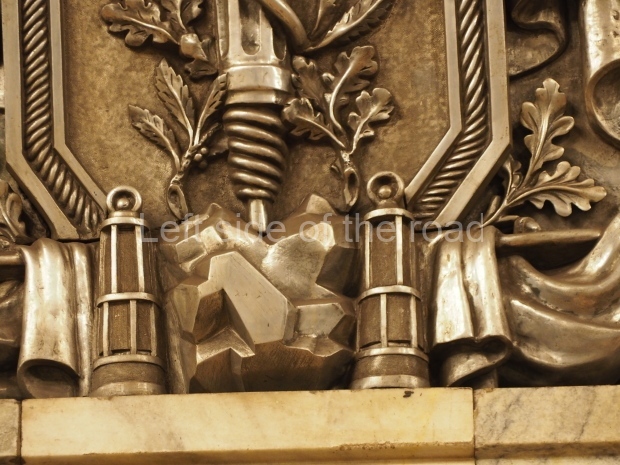
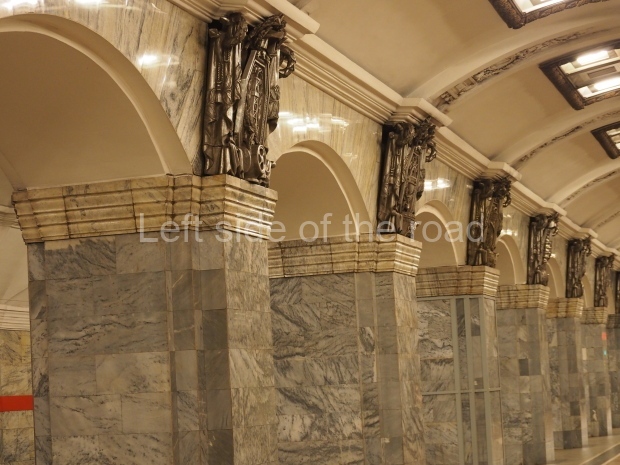
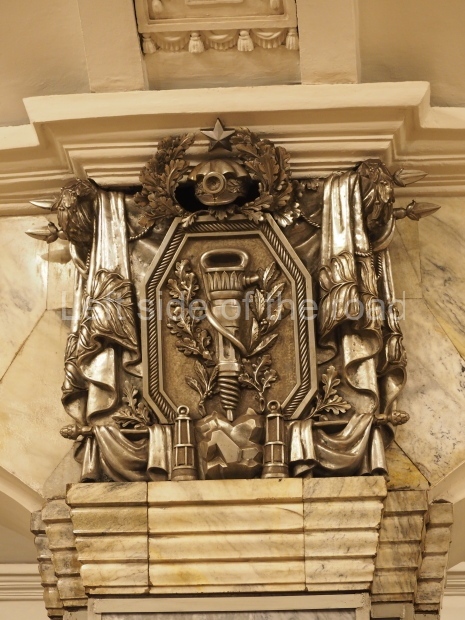
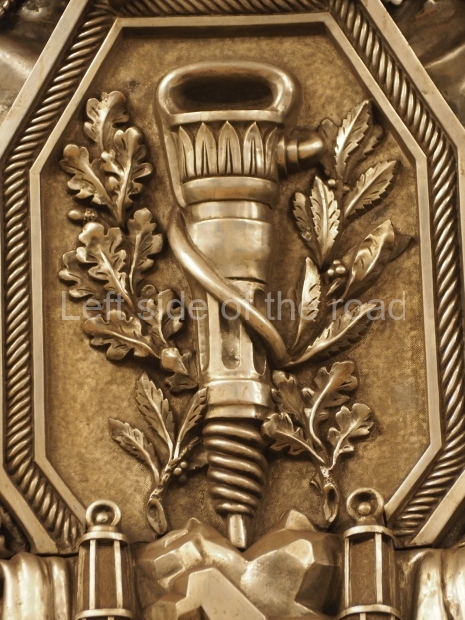
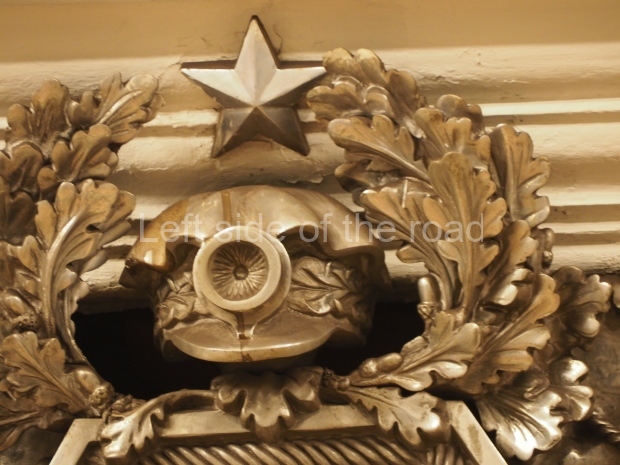
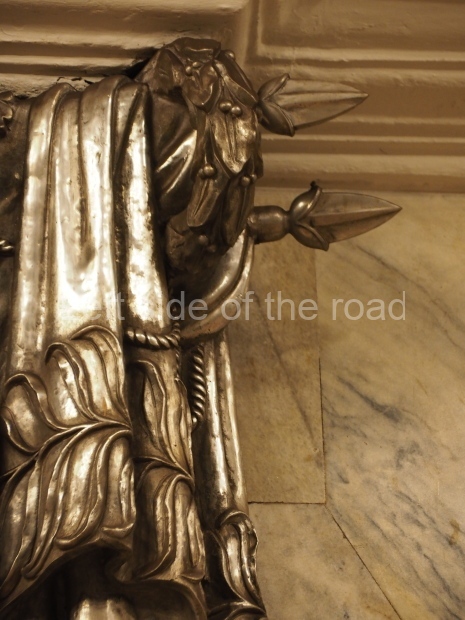
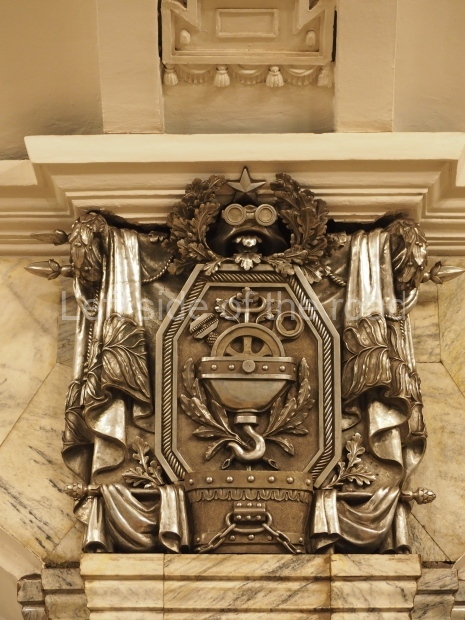
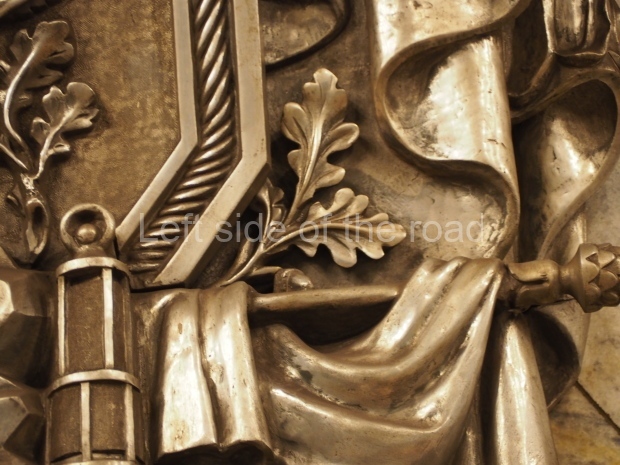
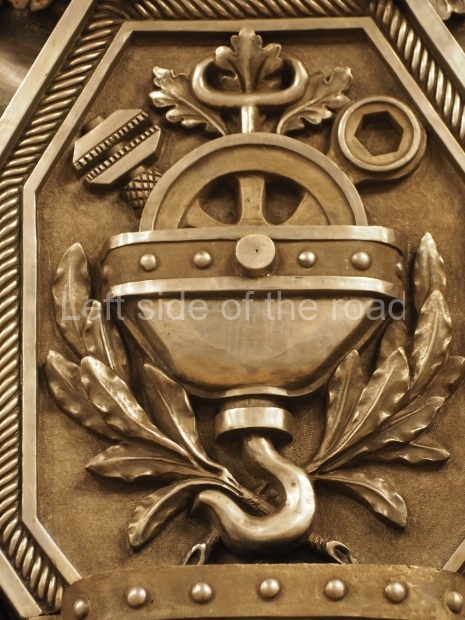
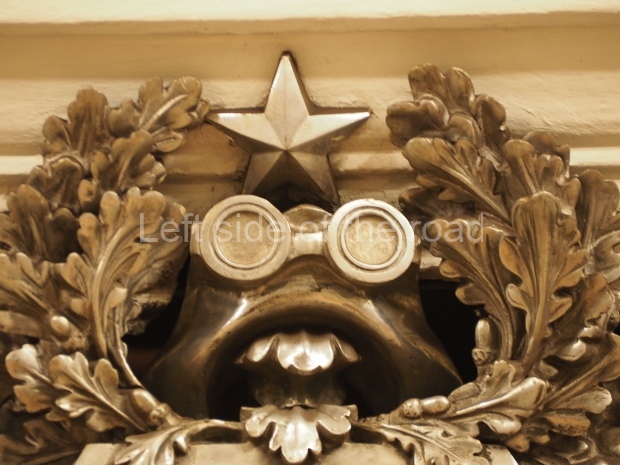
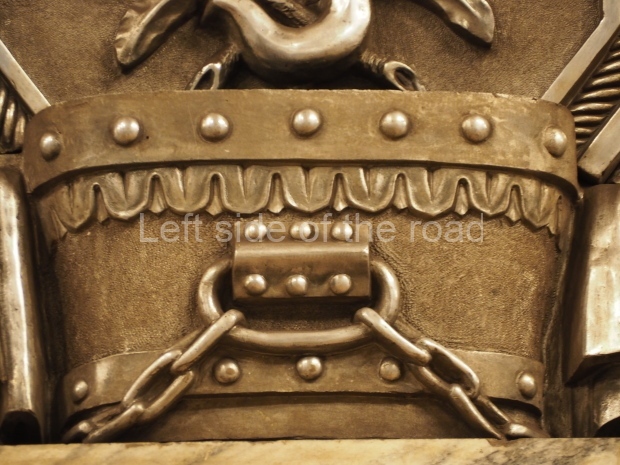
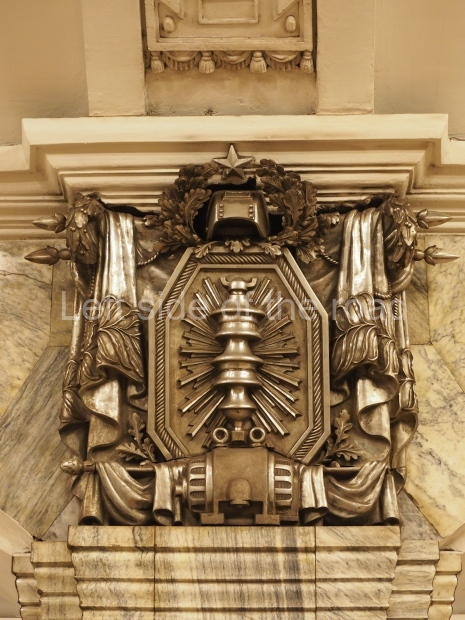
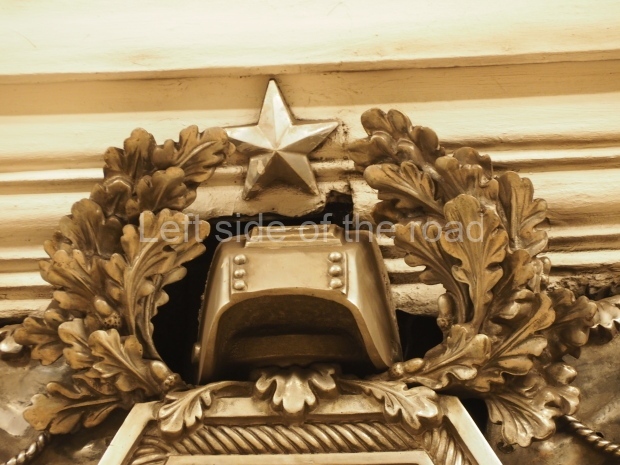
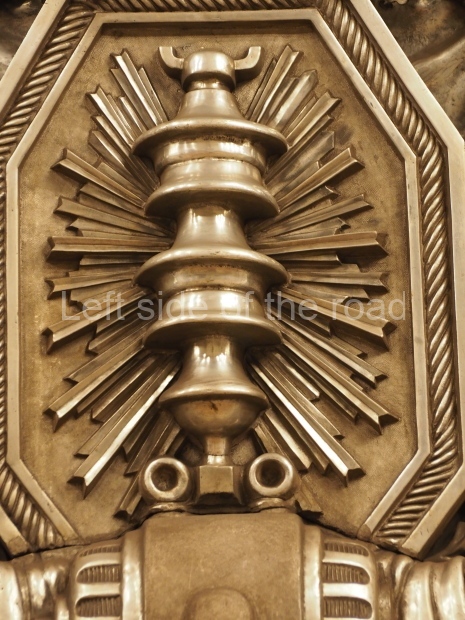
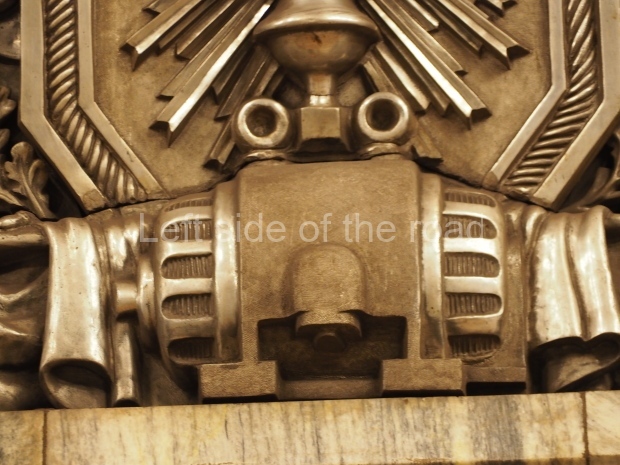
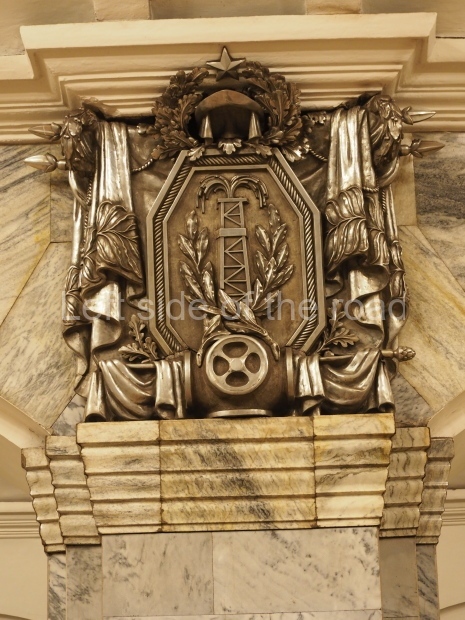
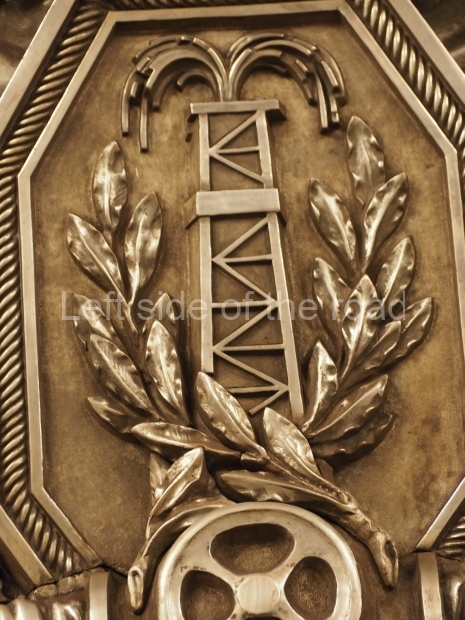
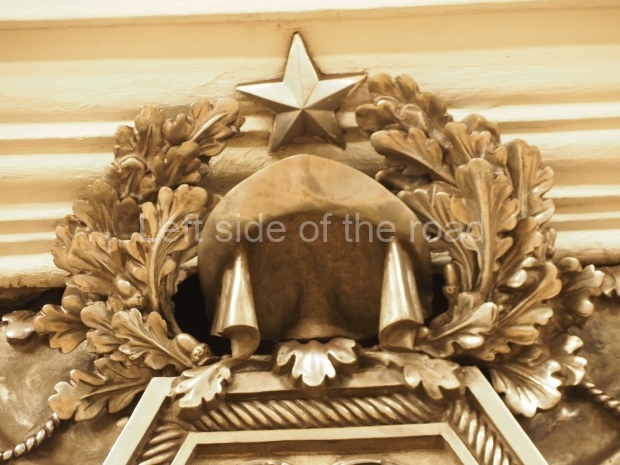
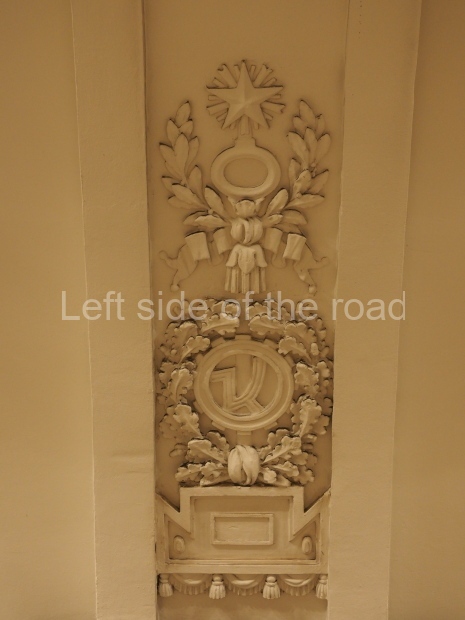
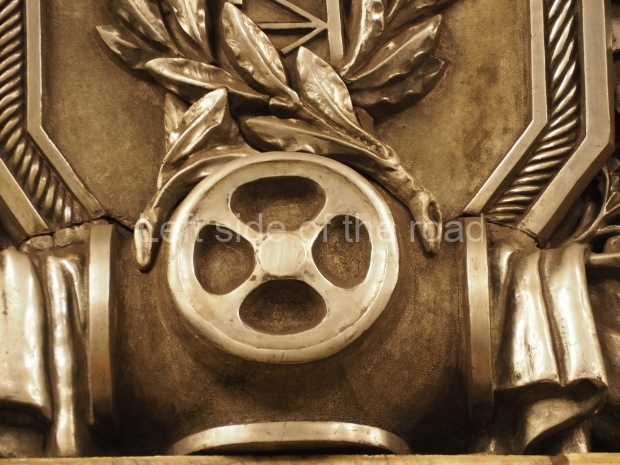
The decoration at the top of the pillars on either side of the entrances from the passageway to the platforms are images that represent some of the ‘pillars’ of the Soviet economy, here in 1955. Those aspects of the economy are; oil, electricity, heavy engineering and mining. As in the more elaborate stations of the Moscow Metro not everyone of the images is unique. Here there are four which get repeated along both sides of the central passageway.

Kirovsky Zavod - 03

Kirovsky Zavod – 03

I don’t know if these are actually made of metal, as they appear, or are, on the other hand, plaster casts which have been painted with a metallic paint. What tends to go against the latter explanation is the almost pristine condition of the cast. There’s no sign whatsoever of any chipping – which does appear in some of the items in the Moscow Metro that are not all what they seem. If I get definitive information about this I’ll update. Unfortunately, to date, I have no information about the artists.

Kirovsky Zavod - 02

Kirovsky Zavod – 02

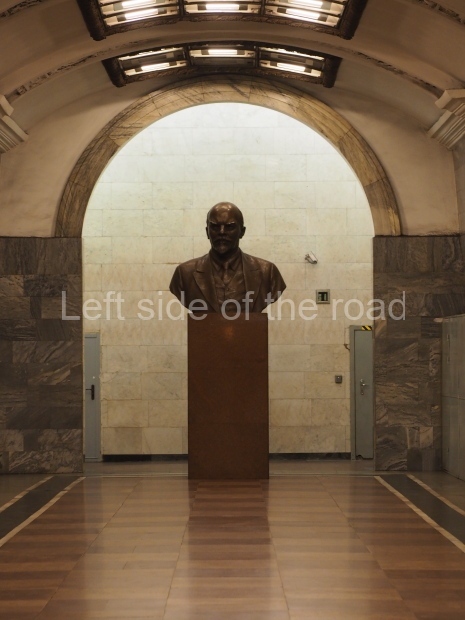
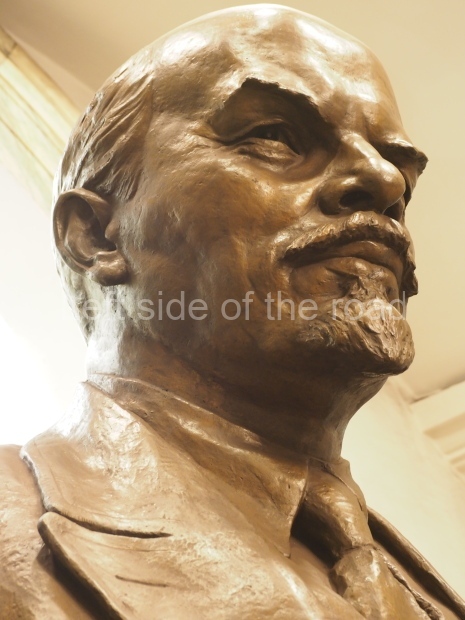
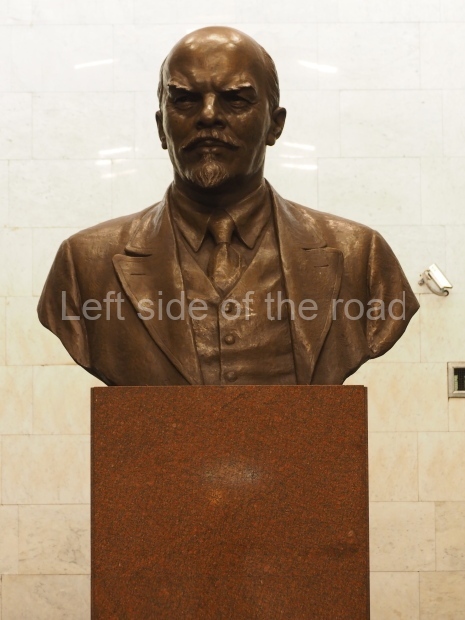
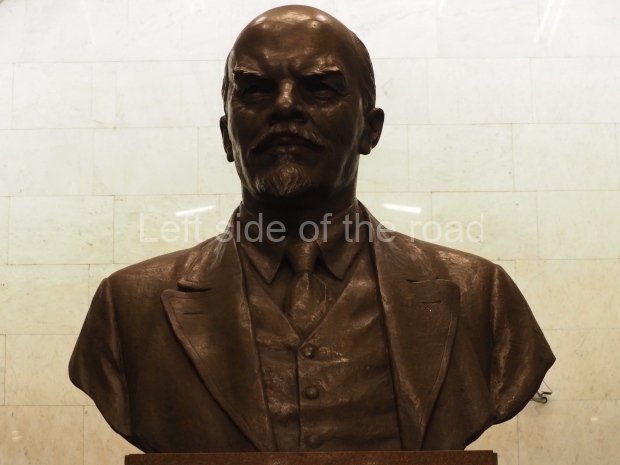
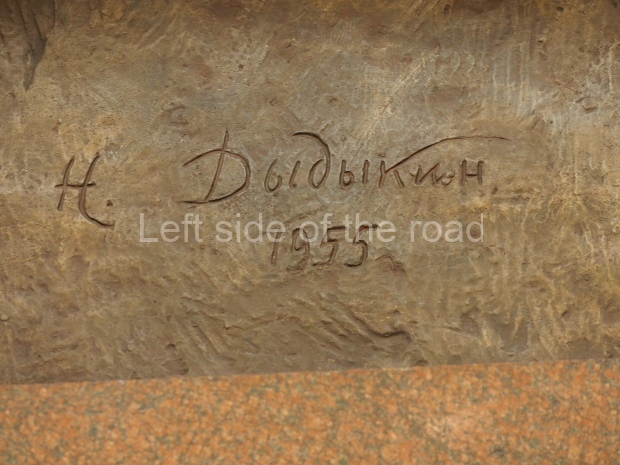
At one end of the platform is a bust of VI Lenin, dated 1955 – so presumably commissioned for the station.

Kirovsky Zavod - 04

Kirovsky Zavod – 04

Location:

Kirovsky District

GPS:

59°52′46.92″N

30°15′42.88″E
Depth:

50m (164ft)

Opened:

15 November 1955

More on the USSR

Moscow Metro – the world’s biggest Socialist Realist Art Gallery