VI Lenin and Palace of Culture Mosaic – Ribniţa – Pridnestrovie

VI Lenin in Ribniţa – Pridnestrovie

VI Lenin in Ribniţa – Pridnestrovie

More on Moldova – on the Post-Socialist Countries – Eastern Europe and Asia page

Soviet Mosaics – Bălți – Moldova

VI Lenin and Palace of Culture Mosaic – Ribniţa – Pridnestrovie

VI Lenin and Palace of Culture Mosaic – Ribniţa – Pridnestrovie

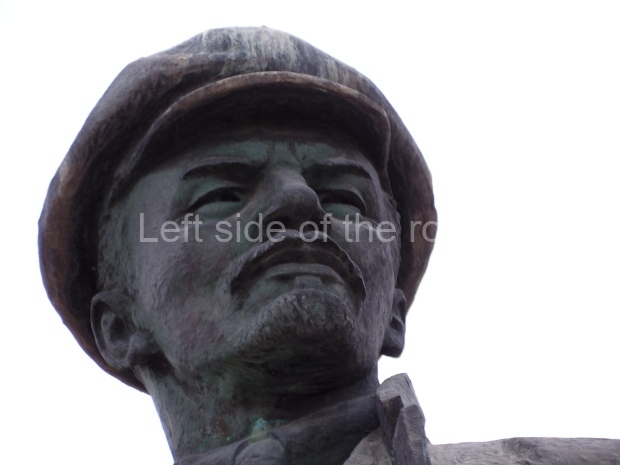
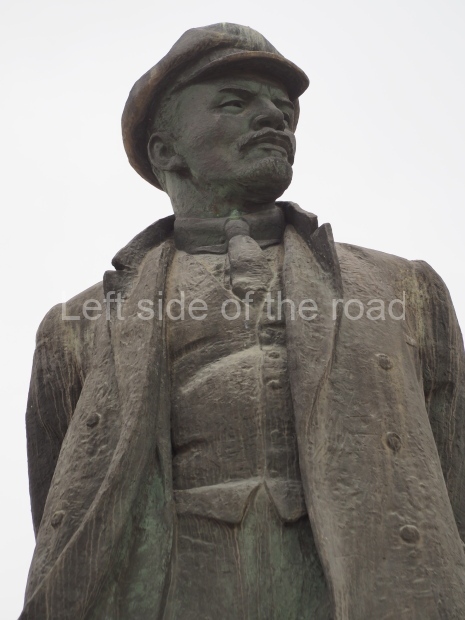
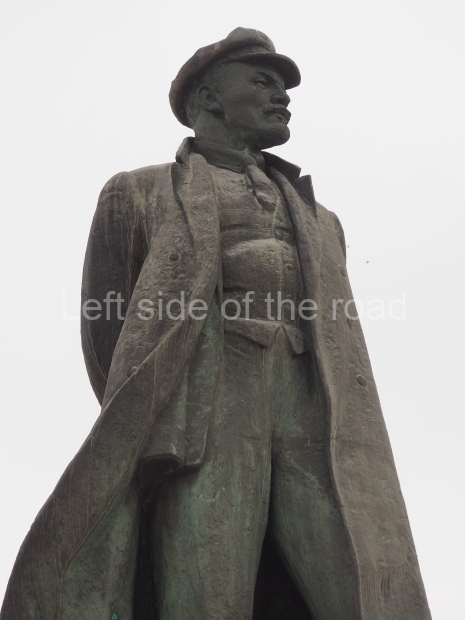
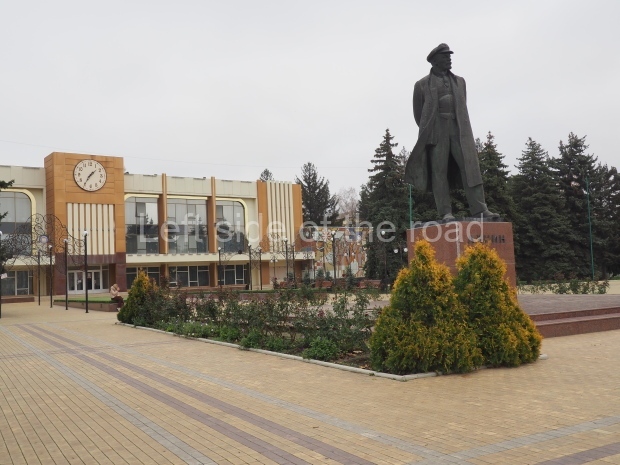
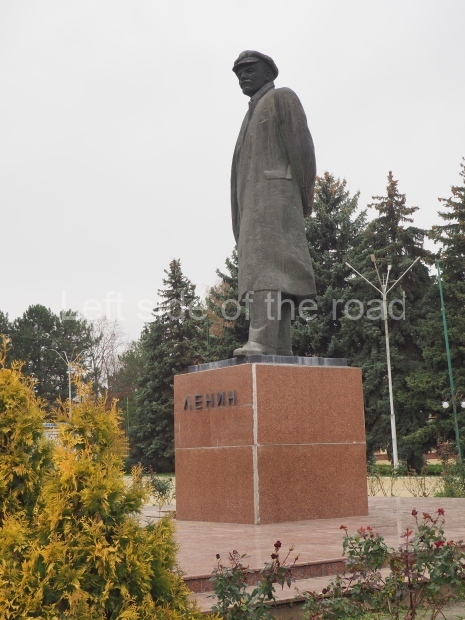
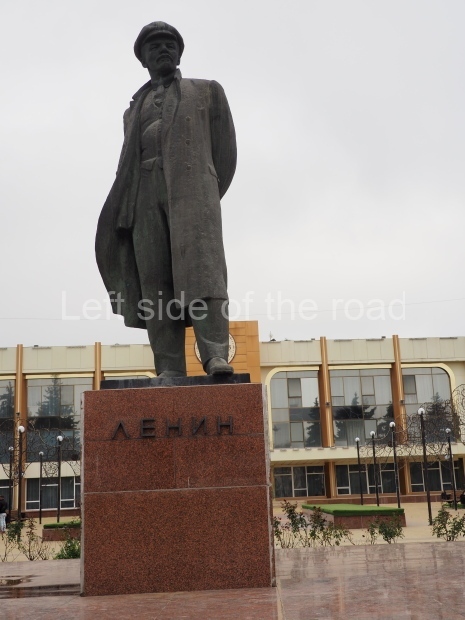
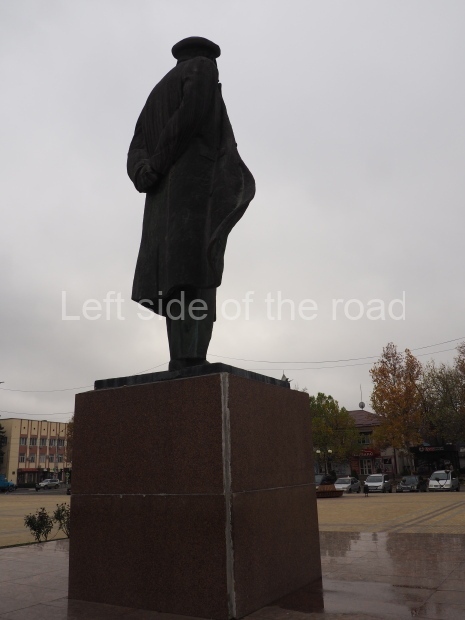
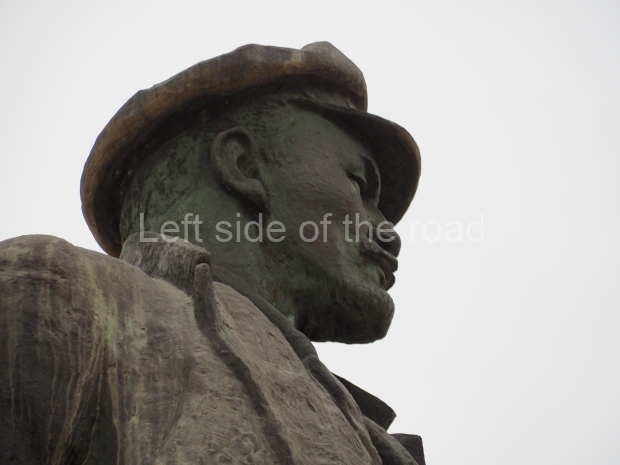
The statue of VI Lenin in Ribniţa is located in a square that still bears his name (after all Ribniţa is in Pridnestrovie, a part of the territory that doesn’t want to be dominated by European diktats) in front of the Palace of Culture.

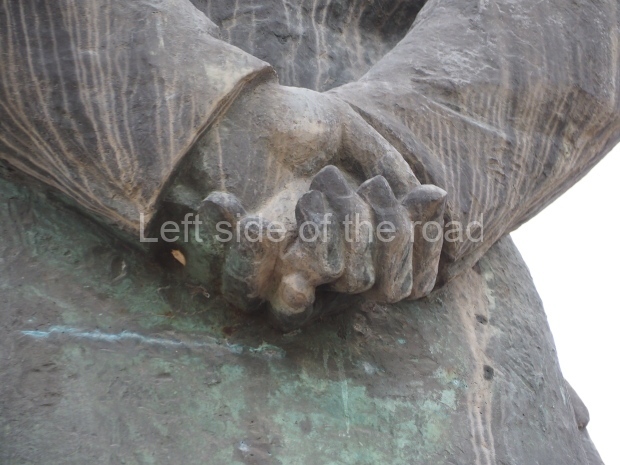
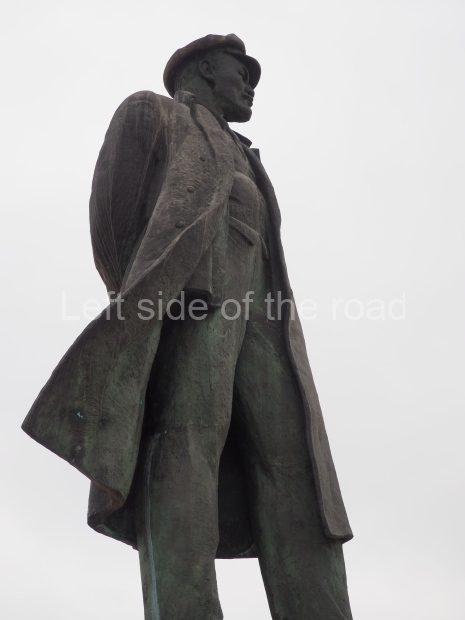
Vladimir Ilych is standing, wearing an open overcoat, the right hand side of which has been caught by the wind. (Quite a few statues of VI Lenin have him depicted with his coat being blown by the wind and I sometimes wonder if his early demise might not have been due to standing outside in adverse weather conditions.) He wears his normal flat cap and his hands are clasped behind his back. A quite informal stance as he looks out over the town and in the general direction of the steel works across the valley. As is, unfortunately, normally the case I have no information about the artist or when the statue was inaugurated.

During the Soviet period this square would have been the most important public space in the town. Outside celebrations of, for example, the anniversary of the October Revolution, would have taken place in the area surrounding his statue and any community events of a city wide importance would have taken place in the building behind him.

Palace of Culture mosaic - Ribniţa – Pridnestrovie

Palace of Culture mosaic – Ribniţa – Pridnestrovie

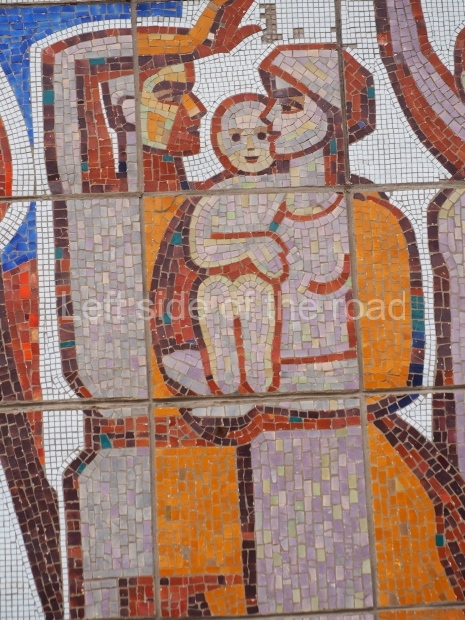
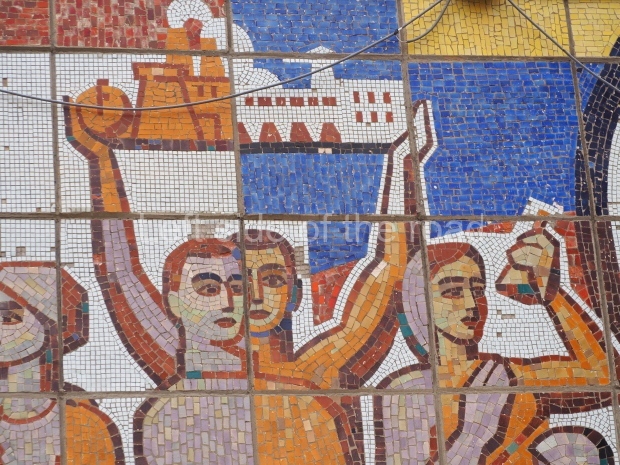
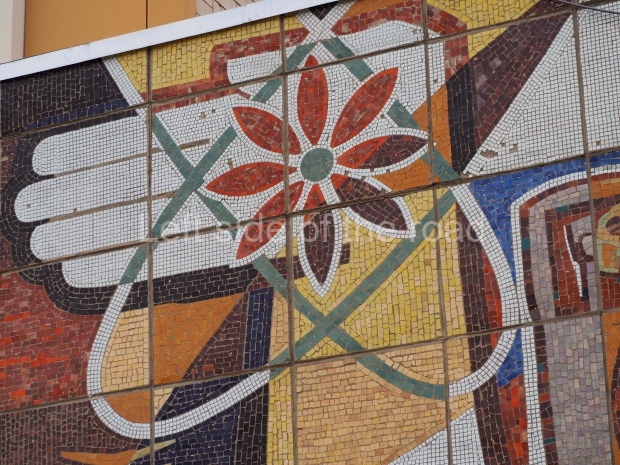
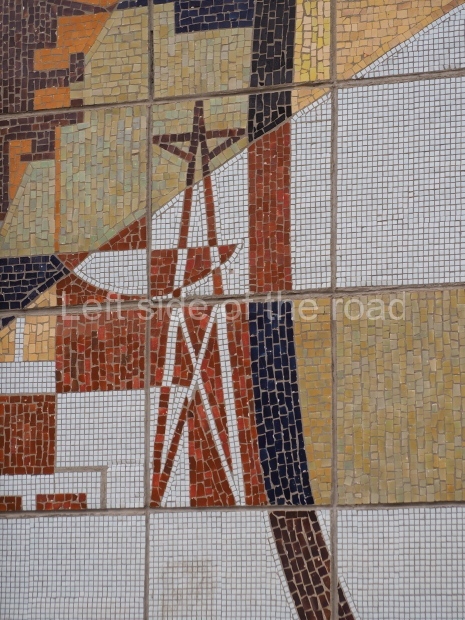
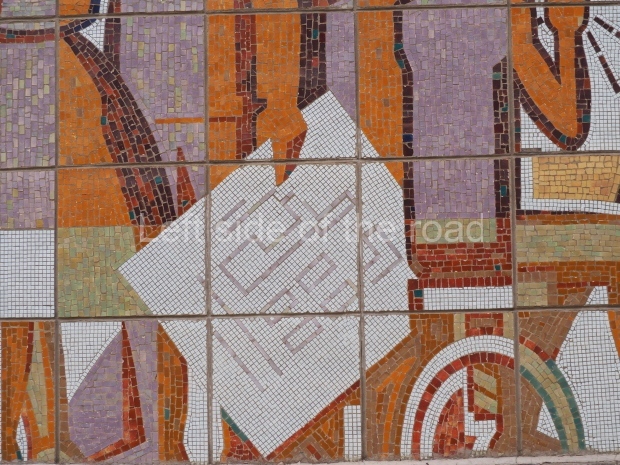
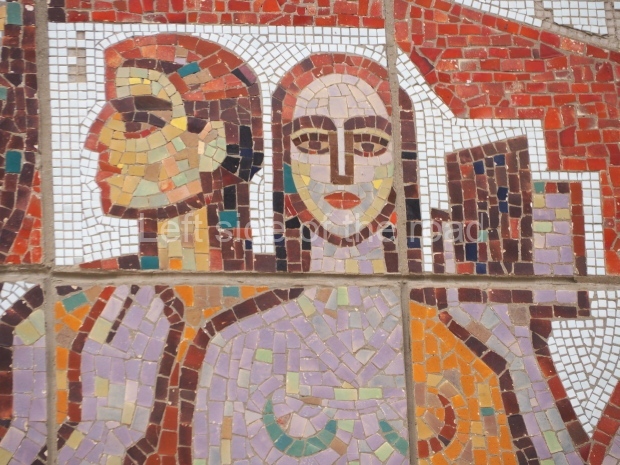
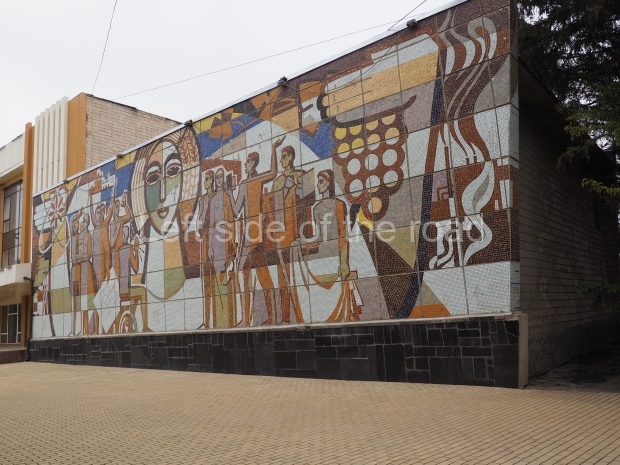
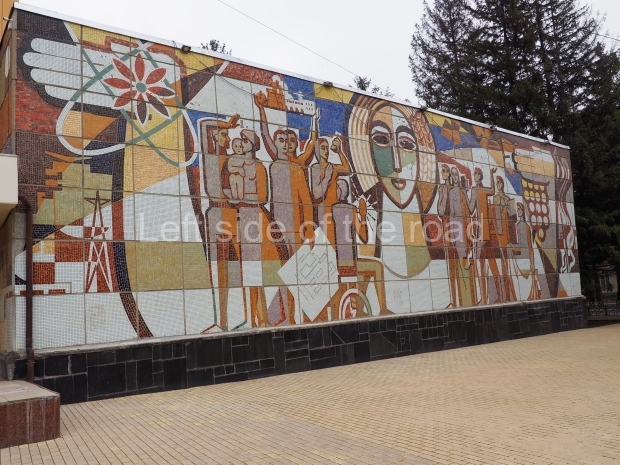
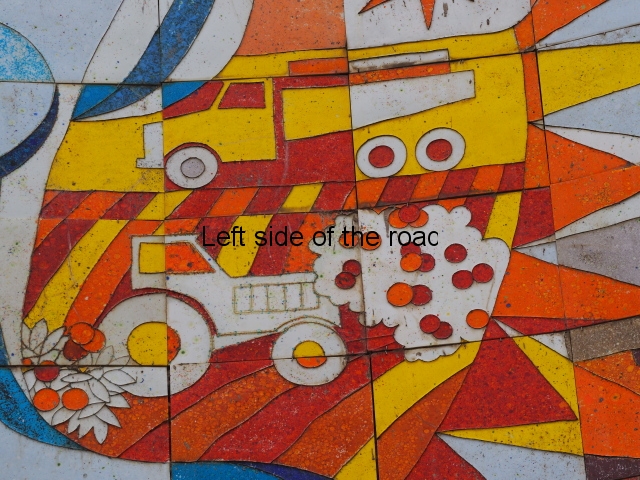
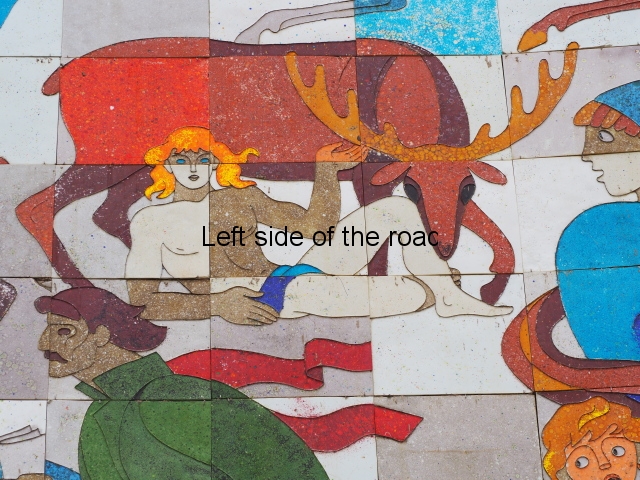
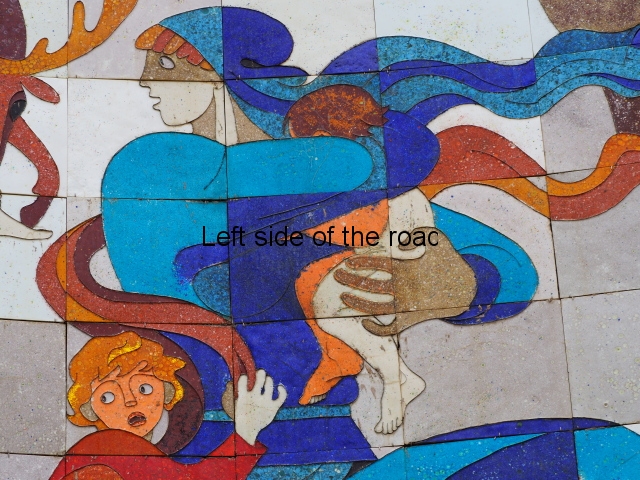
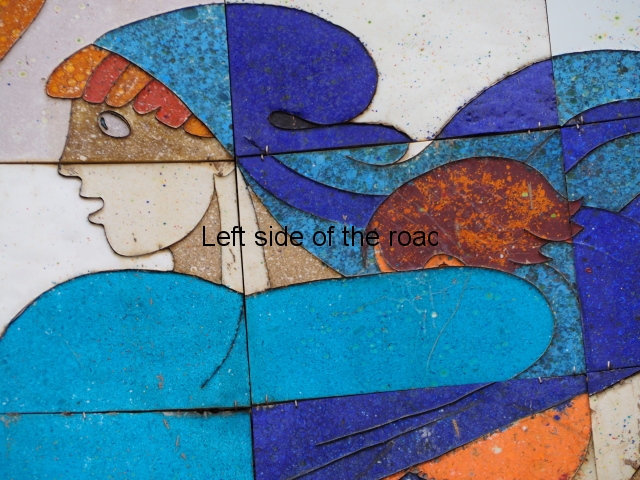
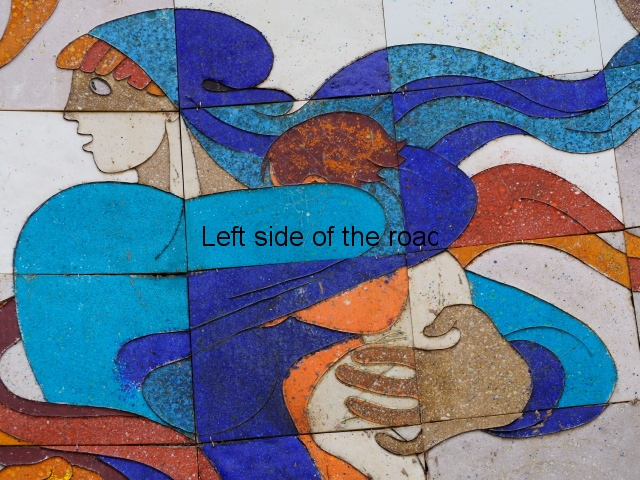
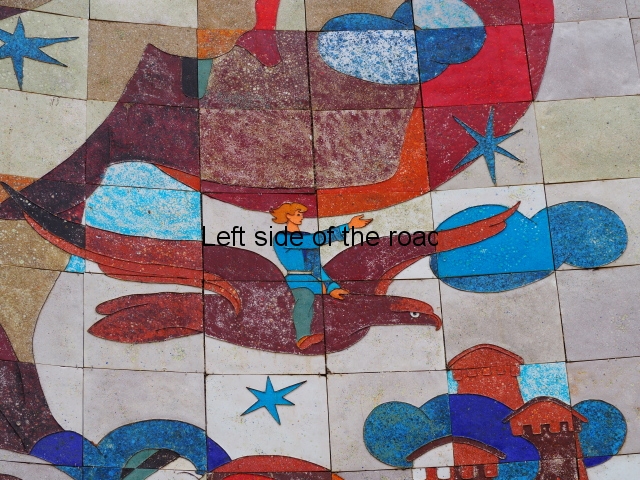
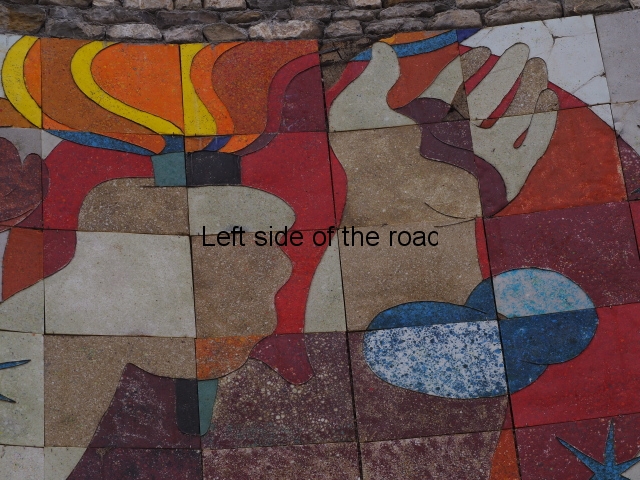
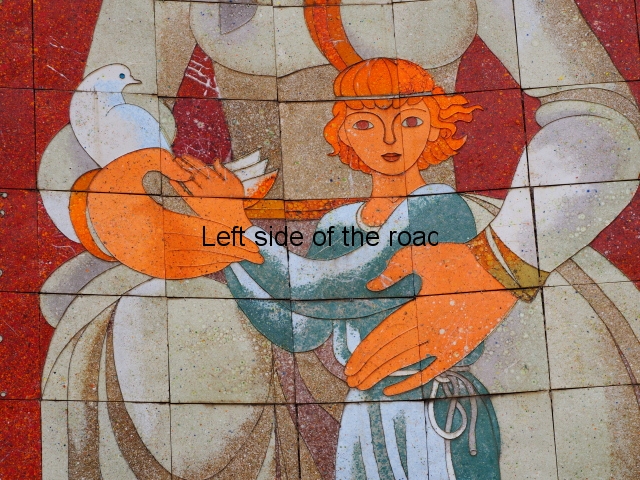
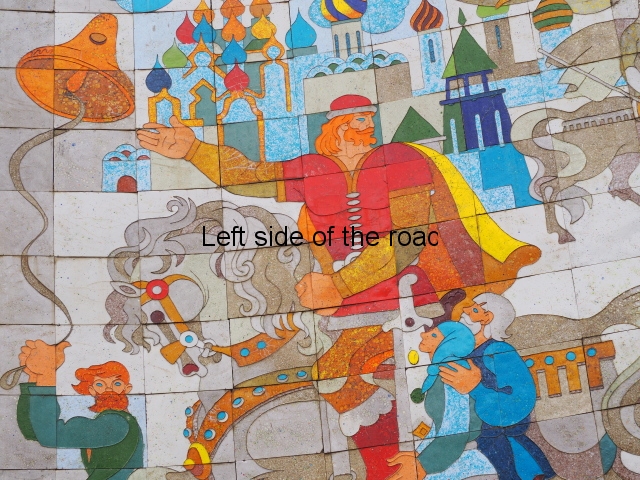
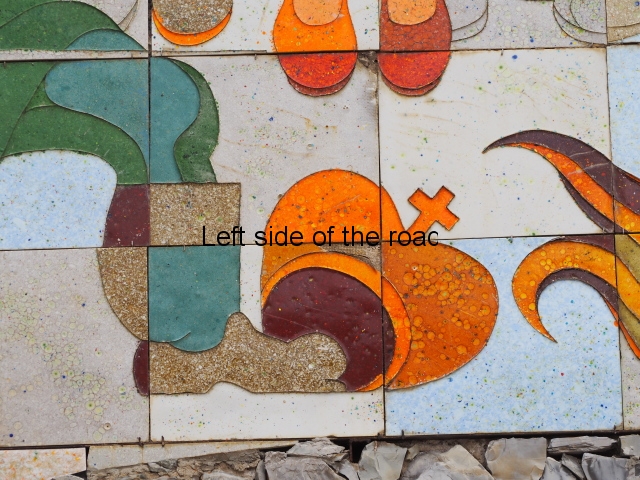
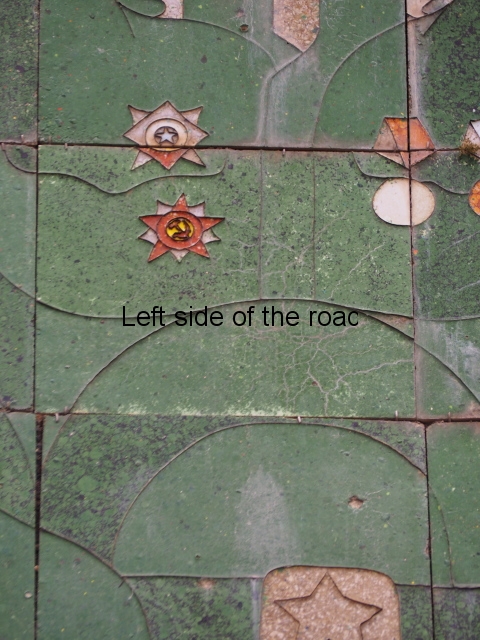
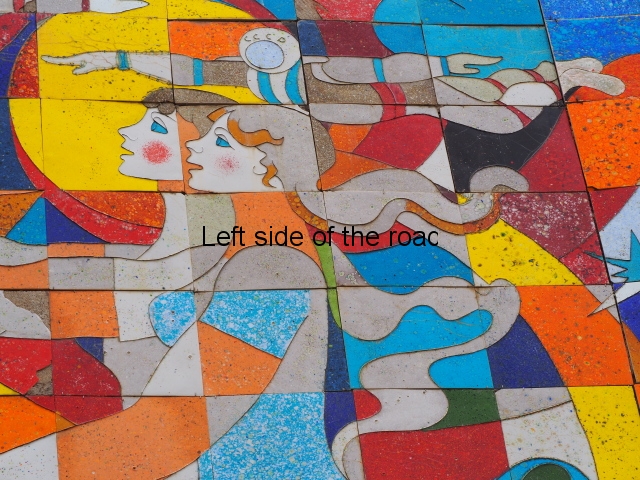
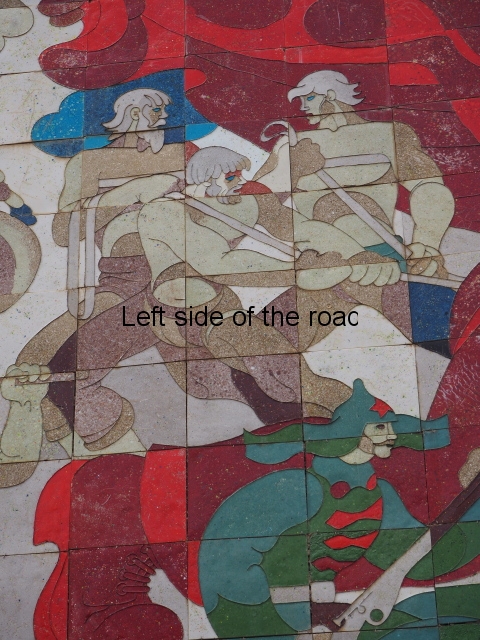
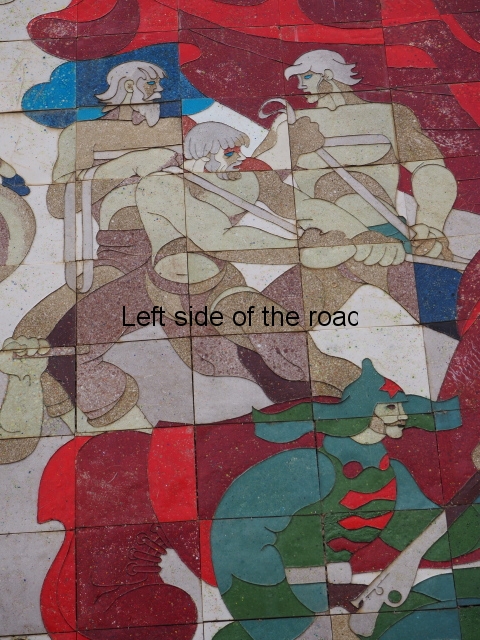
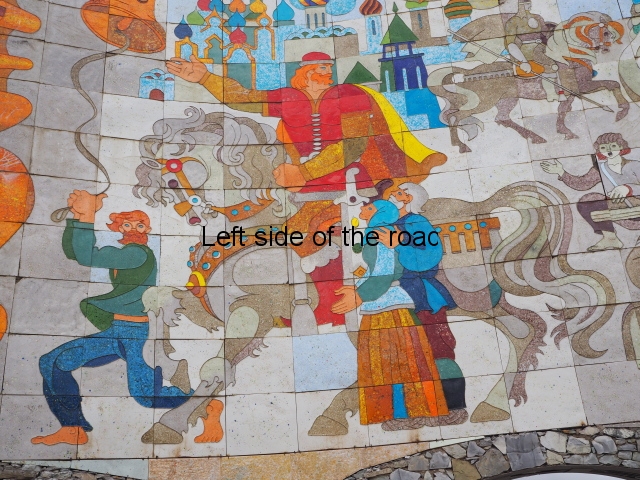
The mosaic, although not ‘overtly’ political (that is, with any representation of past or current Soviet leaders) still makes a political statement. On the left hand side of the huge mosaic you will see representations of science in general (with the atomic symbol) and the electrification of the country (one of the initial aims for Socialism established by Vladimir Ilych in the early days of the revolution) represented by the pylon.

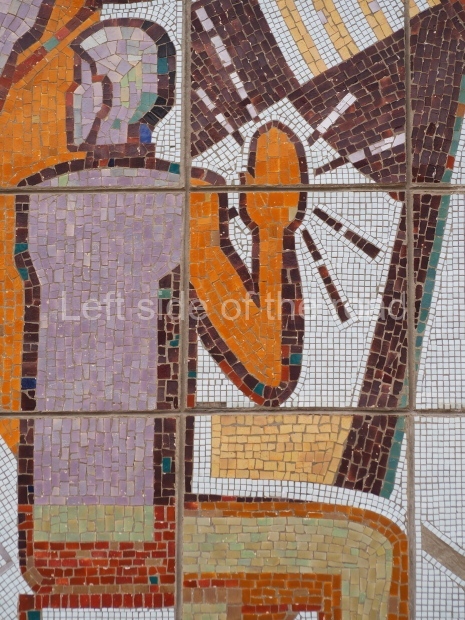
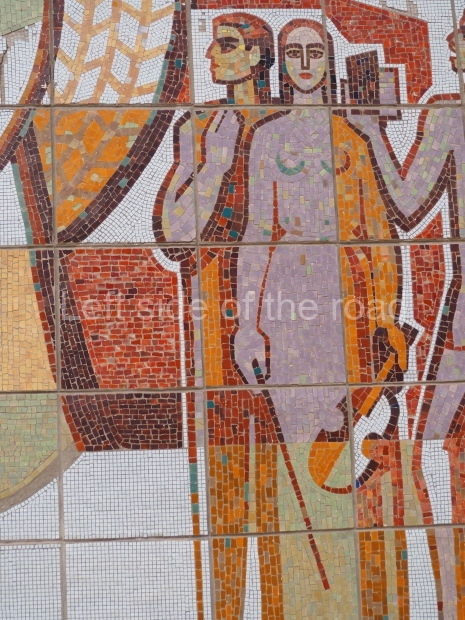
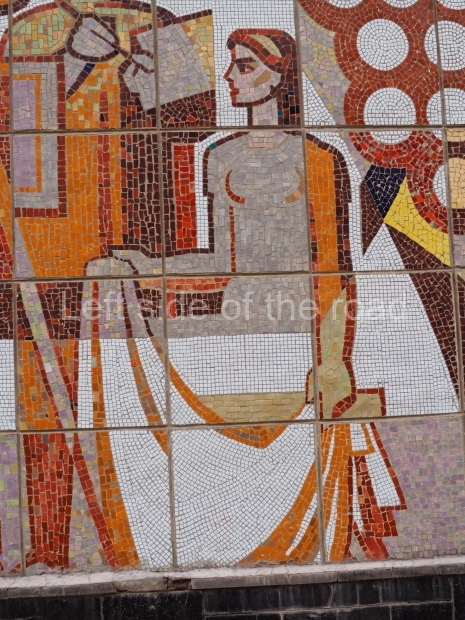
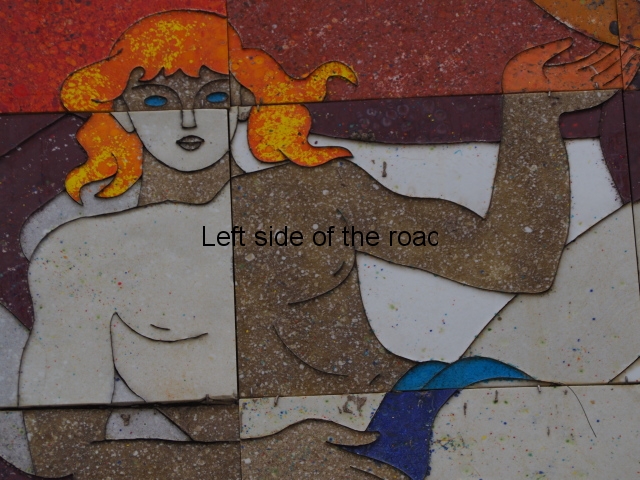
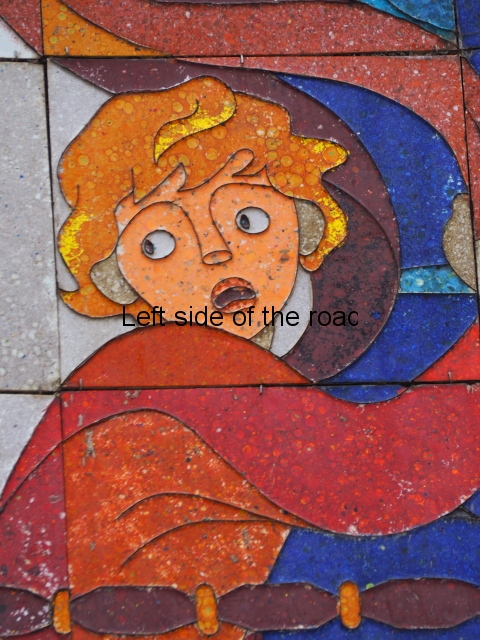
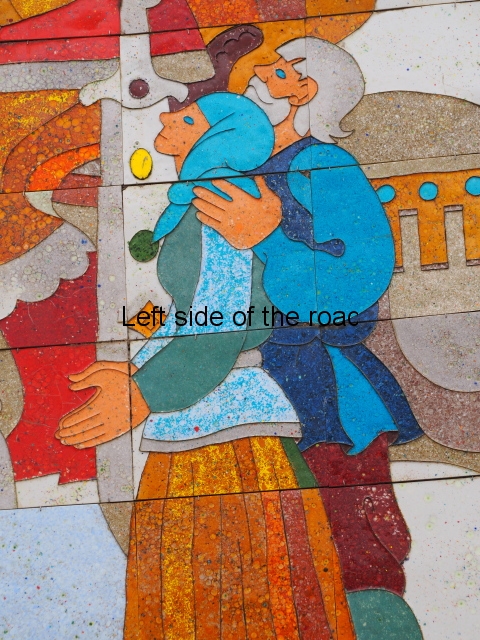
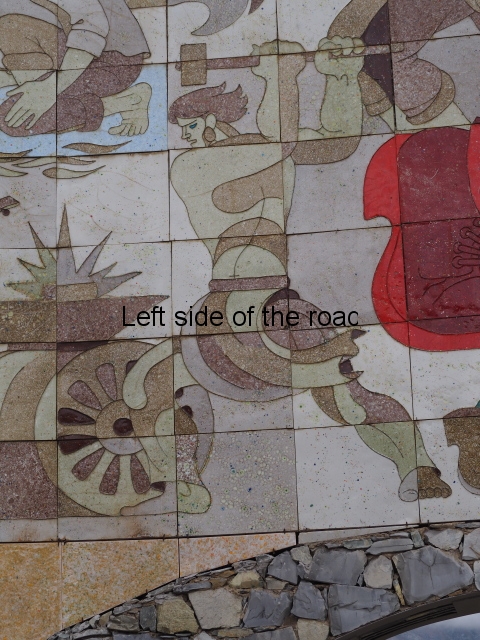
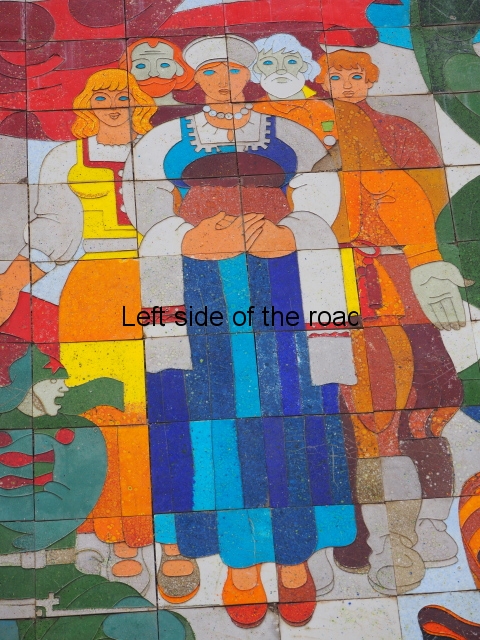
Then we have a representation of the family (indicating stability but not really challenging the bourgeois relationships that were posited by the founders of Marxism, Karl Marx and Frederick Engels); then we have industry – the maquette held aloft – and it’s important to remember that to date Ribniţa is the centre of Pridnestrovie’s steel industry; then there’s chemistry with the woman holding a glass Erlenmeyer flask; next is architecture/building/planning with the image of a street plan; then we have something I’m not sure what it represents, this is a male figure with what looks like sparks coming from his hand (any ideas?).

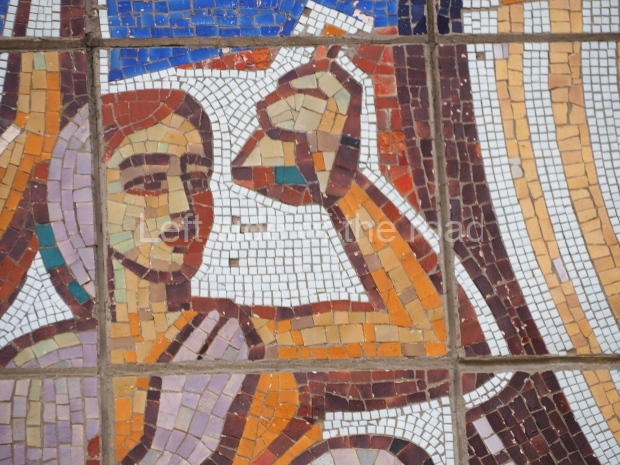
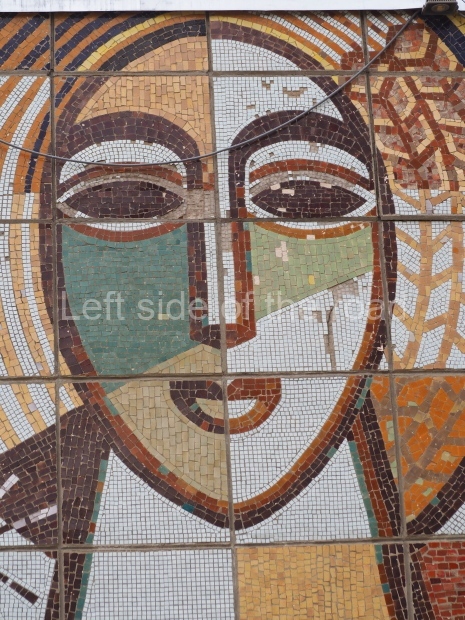
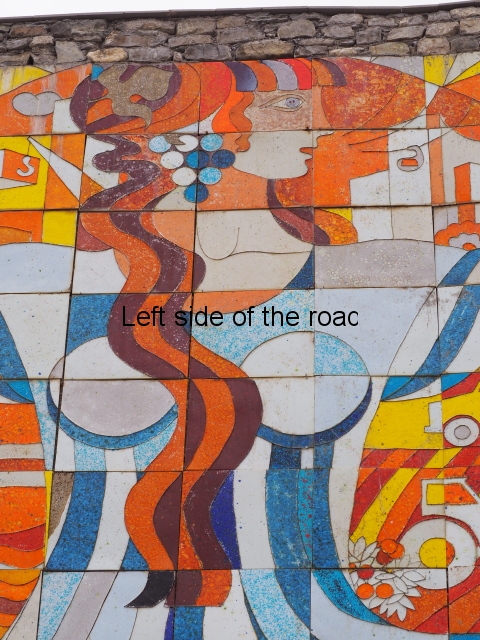
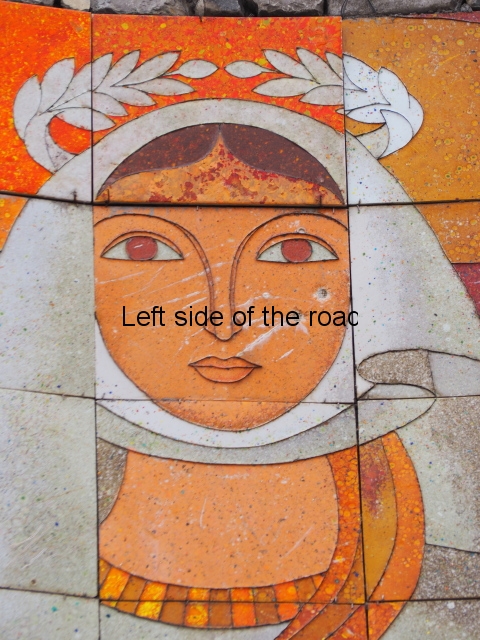
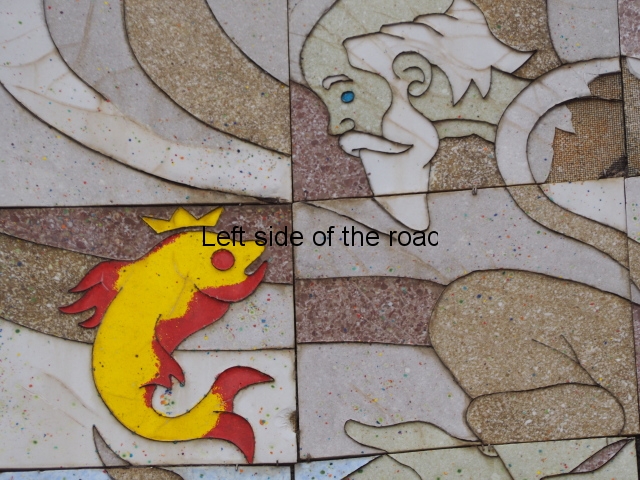
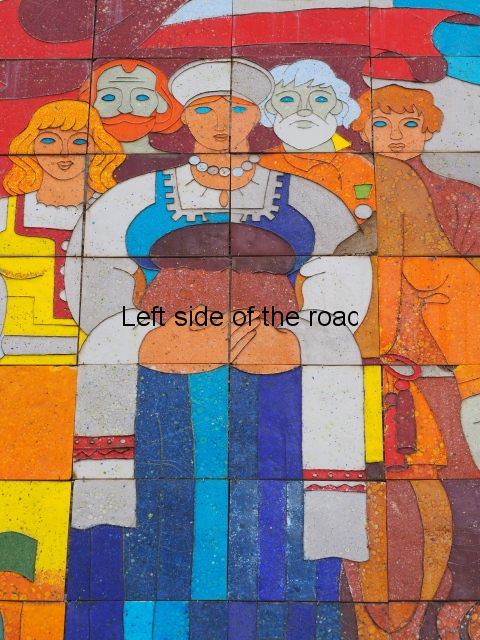
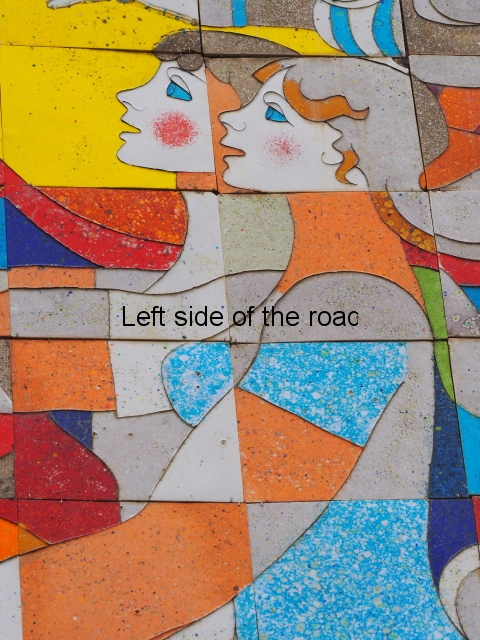
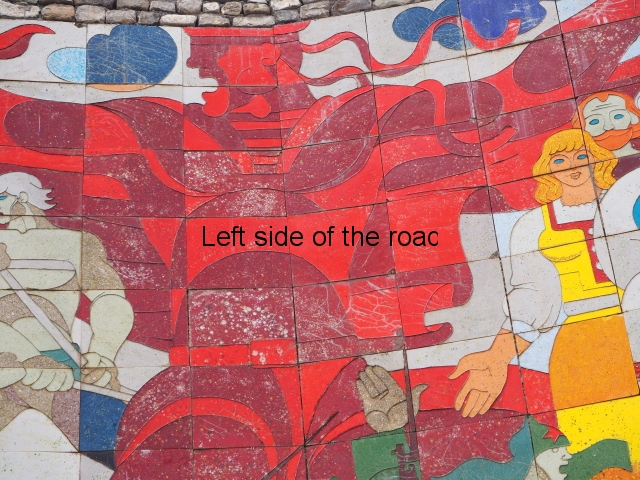
The two different narratives of the mosaic are separated by a large, oval head and shoulders of a female figure with a smiling face – I’m not sure if this is not to represent Moldovan folk heritage.

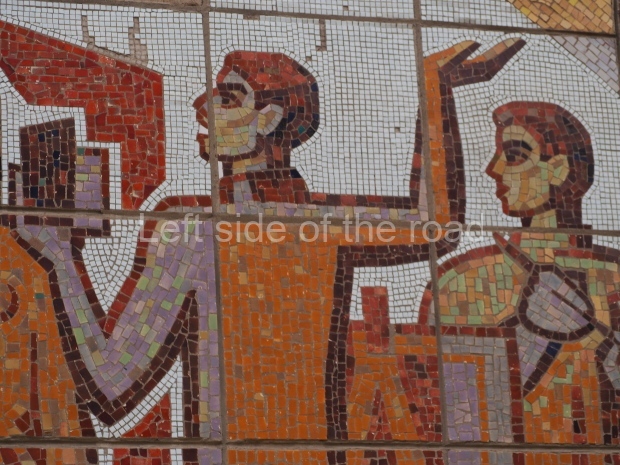
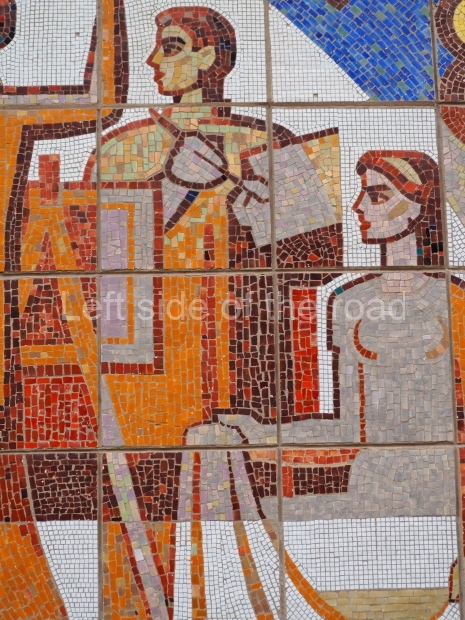
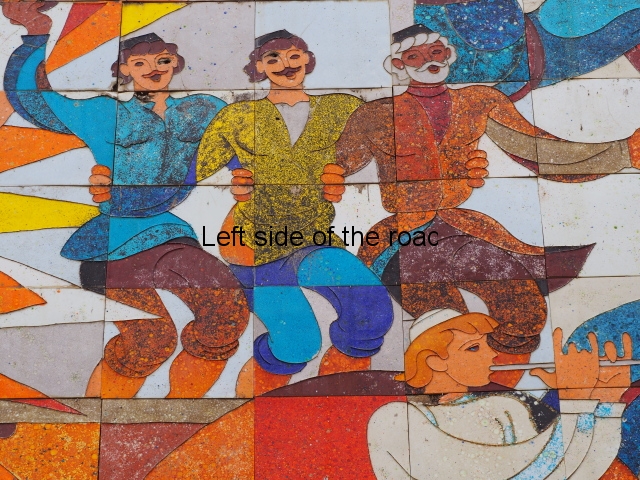
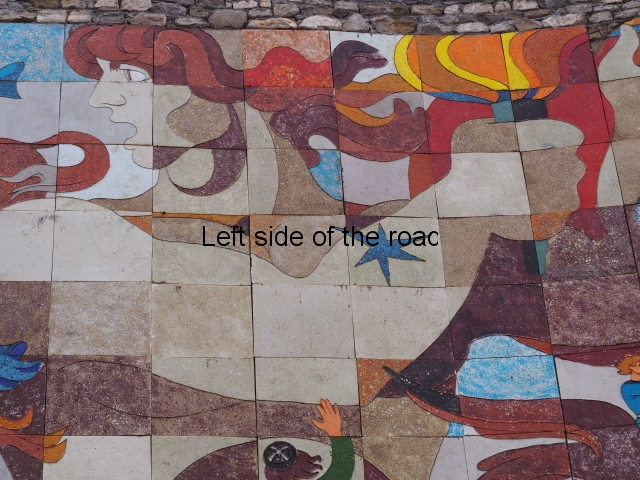
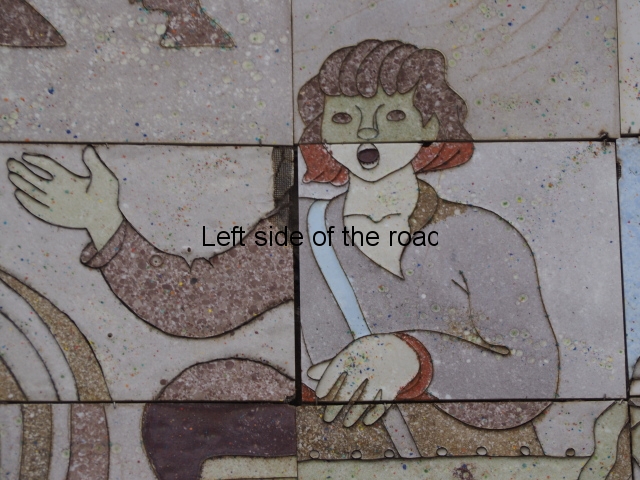
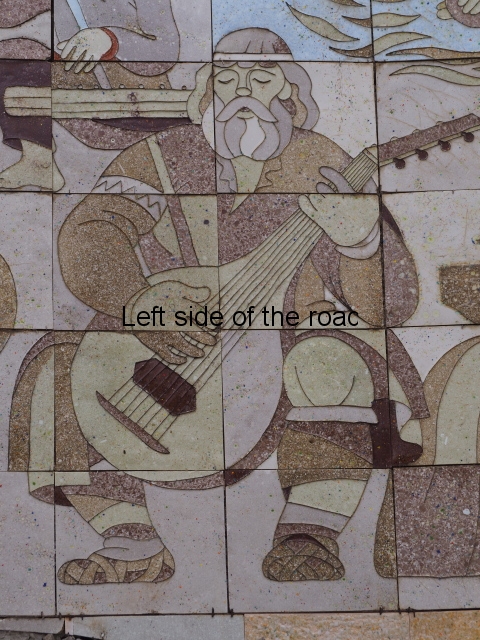
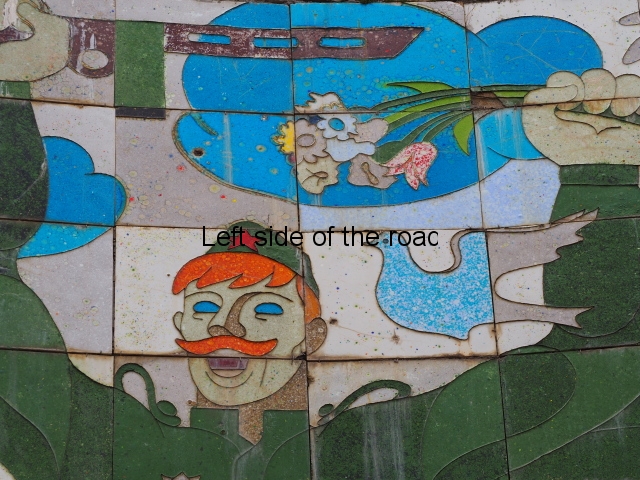
The right hand side of the mosaic represents various forms of culture, and also indicating the sort of events that would have taken place in the Palace of Culture. There’s a female violinist and standing behind her a male – this is music and he could possibly be a singer; next is a male with an open book in his left hand and his mouth is open as if he is reciting, he’s also gesticulating as his right arm is outstretched above him – so this is theatre; behind the actor a male stands behind an easel, with a paint brush in his rights hand which is gathering paint from the palette held in his left hand – so here we have the plastic arts; the last figure shown is a seated female figure (in classical dress) – I think she might just represent the artistic Muse in general rather than anything specific.

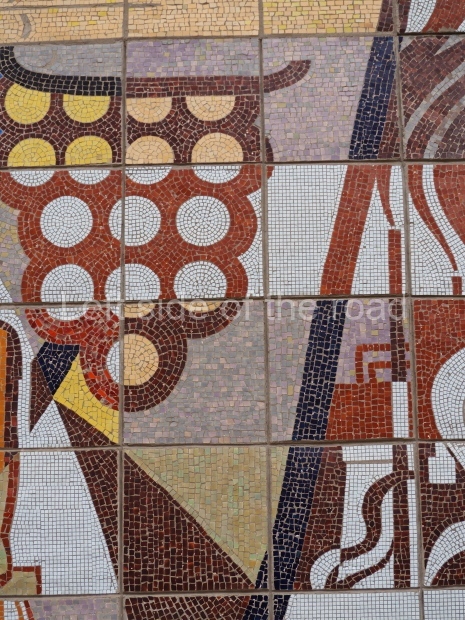
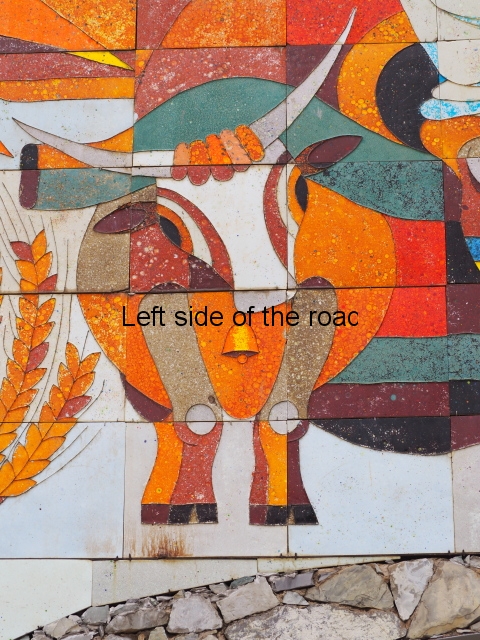
The extreme right of the image includes a huge bunch of grapes to illustrate the importance of the production of wine in the country – something which is obvious if you travel out of the main cities and pass vast areas of vines – and finally a factory belching out smoke. At the time of the production of this mosaic chimneys belching out smoke were considered a sign of progress and industrialisation. Images of factories from Britain, for example, during the hey days of the industrial revolution often showed such images (although often with a reference to Hell) and the Soviet Union was seeking to reach the same level of industrial production. In hindsight, whether such a policy was the best is, perhaps, questionable. However, these smoking chimneys reference steel production in Ribniţa.

Location;

In Lenin Square, at the junction of Biruintei Boulavard and Strada Kirov.

GPS;

47.76599 N

29.00760 E

More on Moldova – on the Post-Socialist Countries – Eastern Europe and Asia page

Soviet Mosaics – Bălți – Moldova

VI Lenin and Palace of Culture Mosaic – Ribniţa – Pridnestrovie
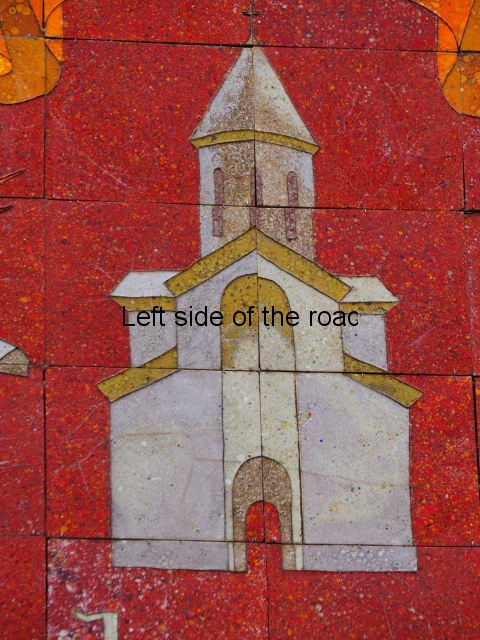
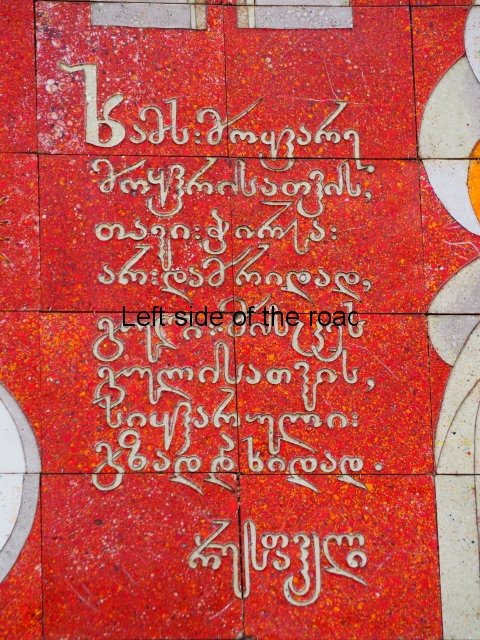
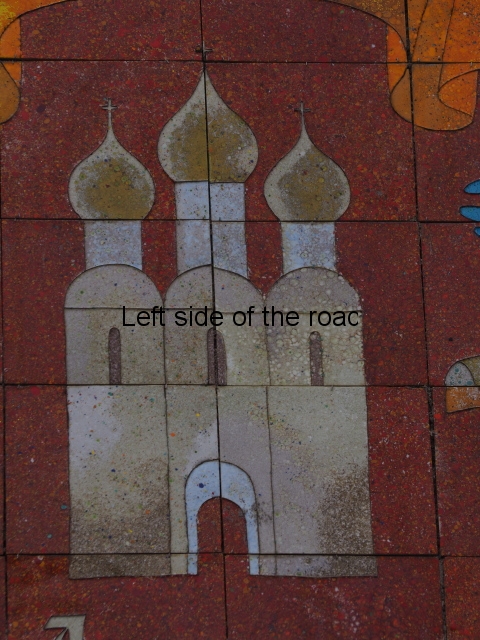
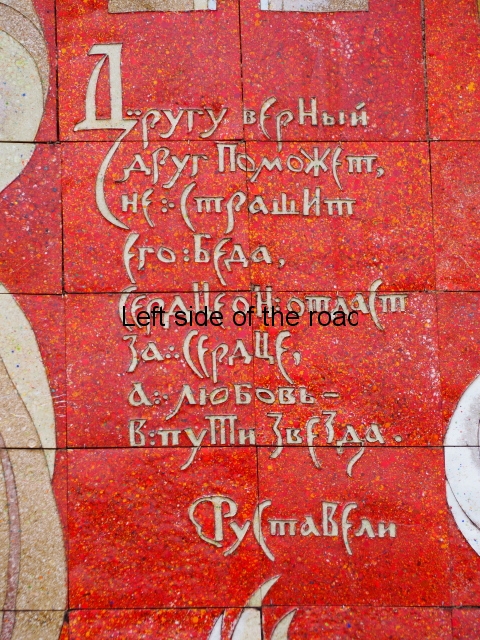
Soviet-Georgian Friendship Monument – Kazbegi

Soviet-Georgian Friendship Monument

Soviet-Georgian Friendship Monument

Soviet-Georgian Friendship Monument – Kazbegi

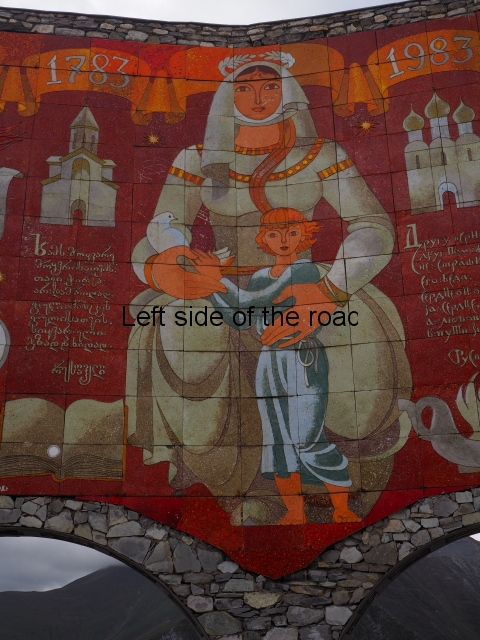
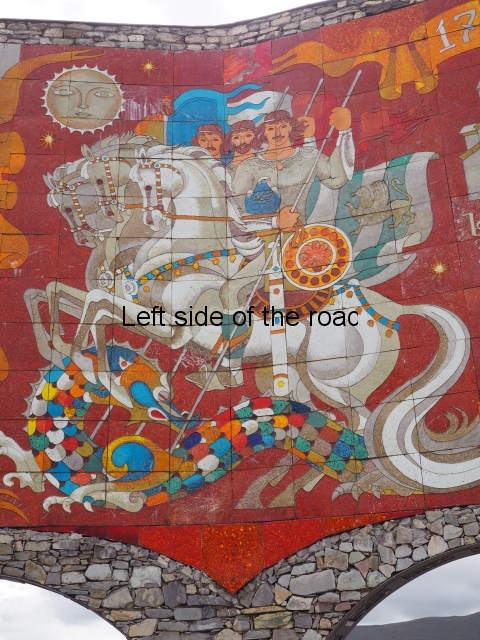
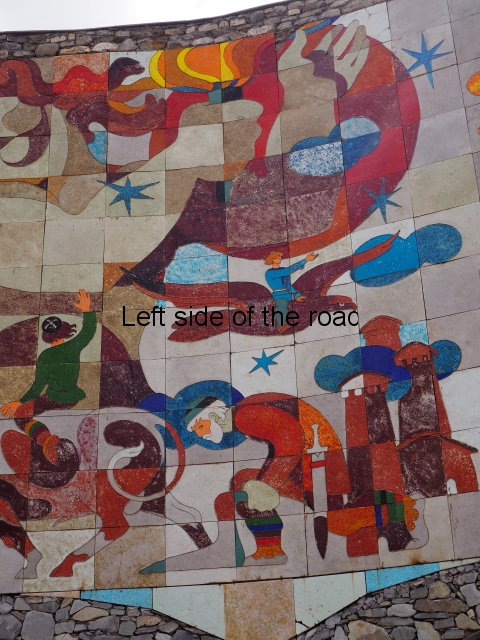
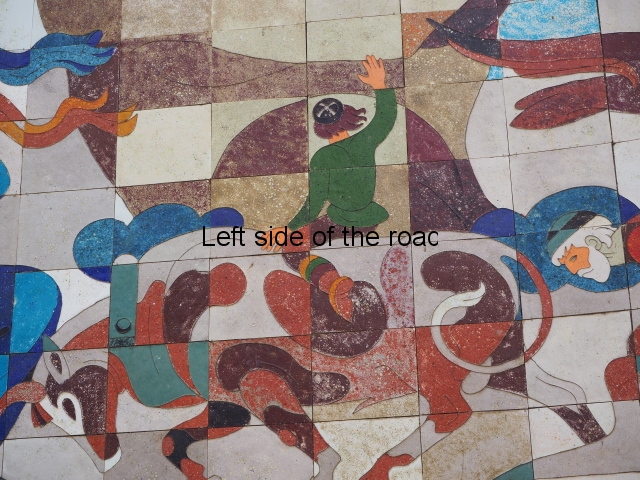
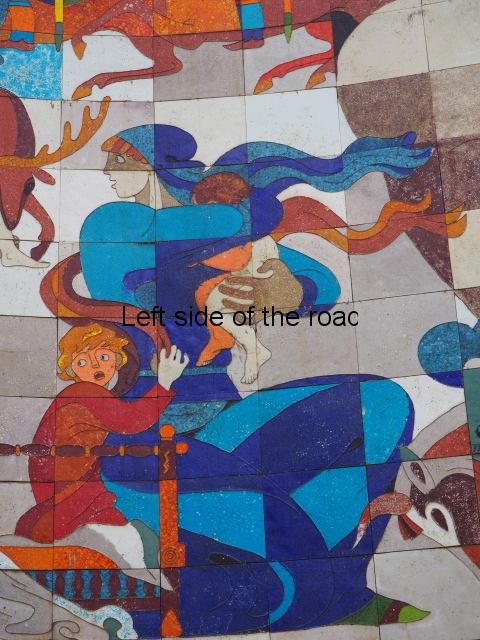
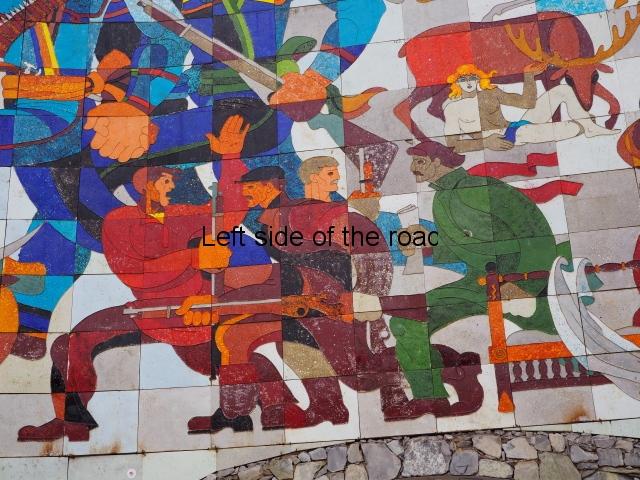
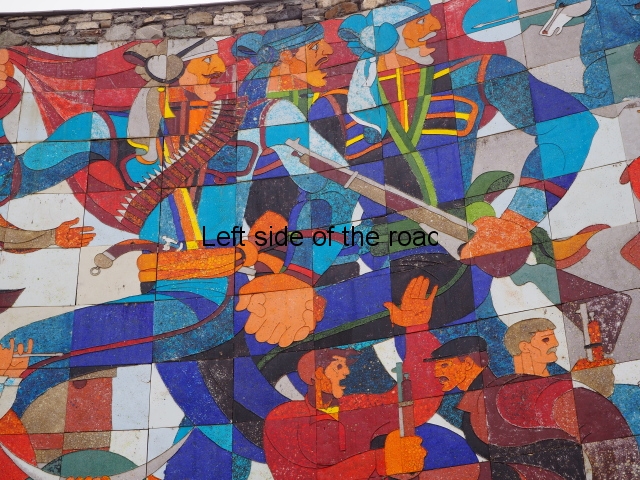
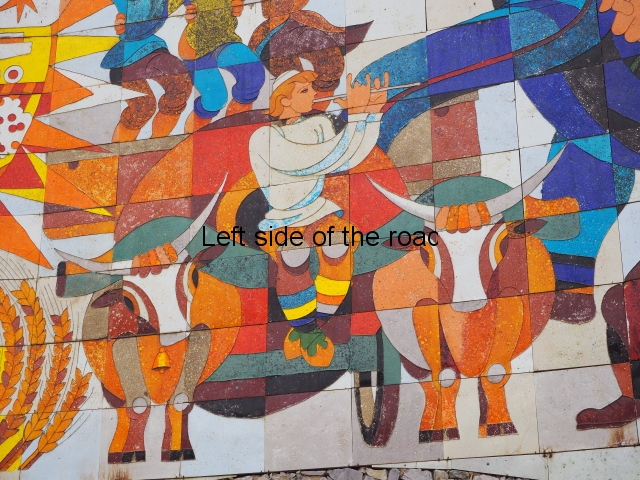
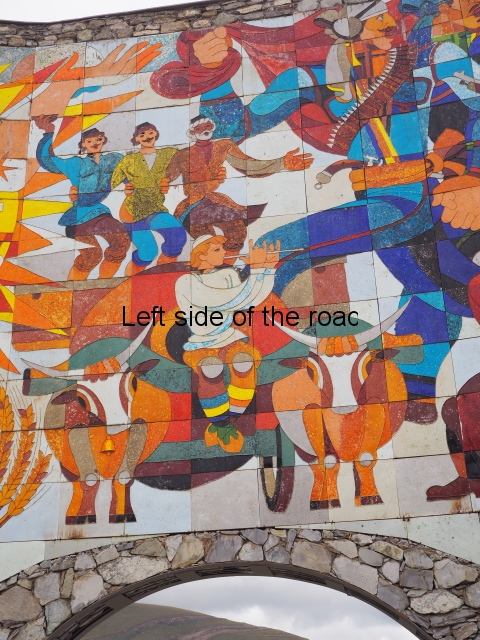
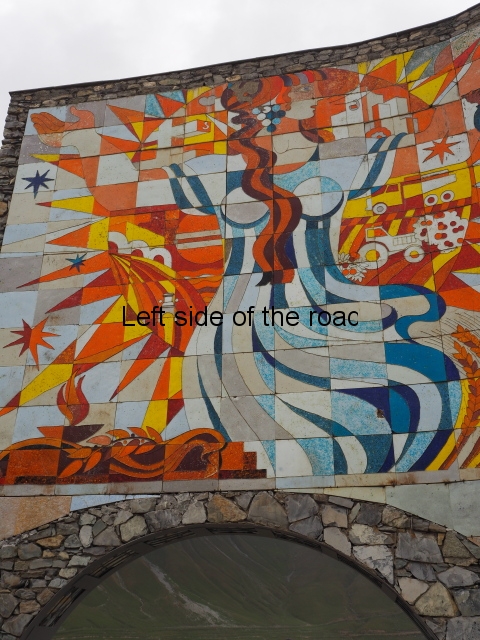
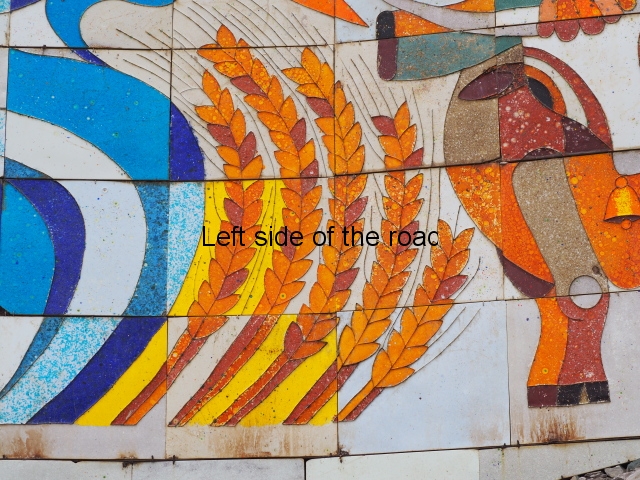
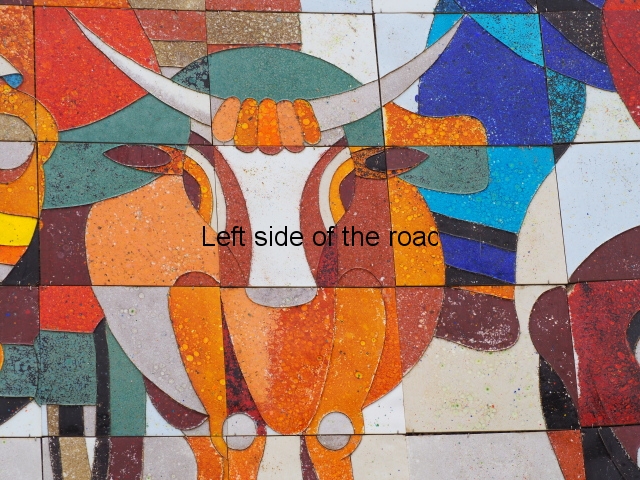
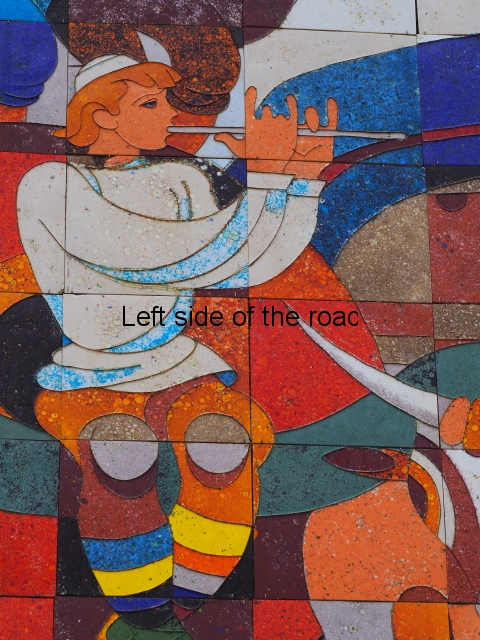
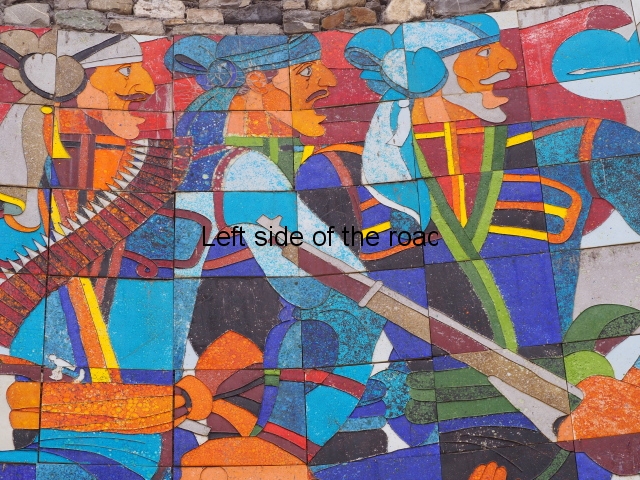
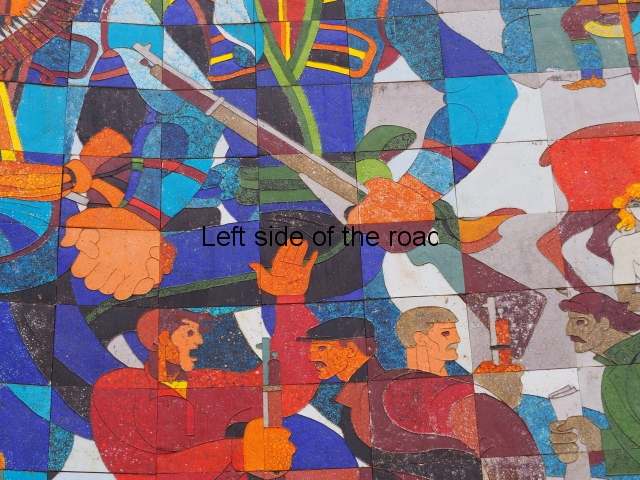
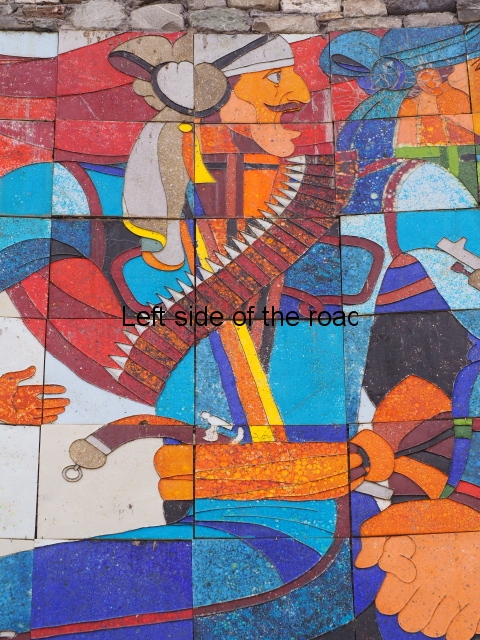
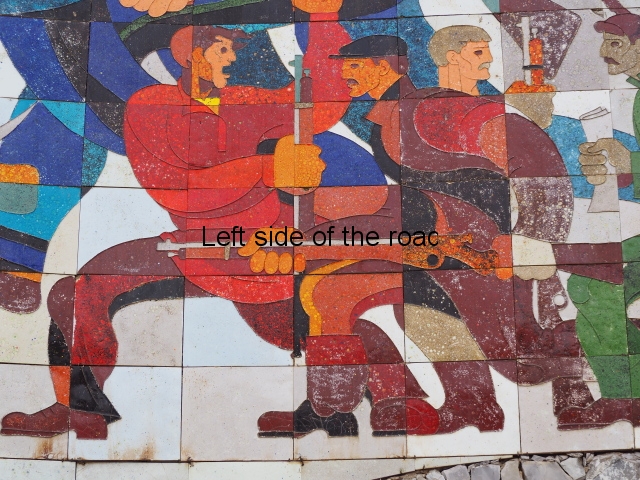
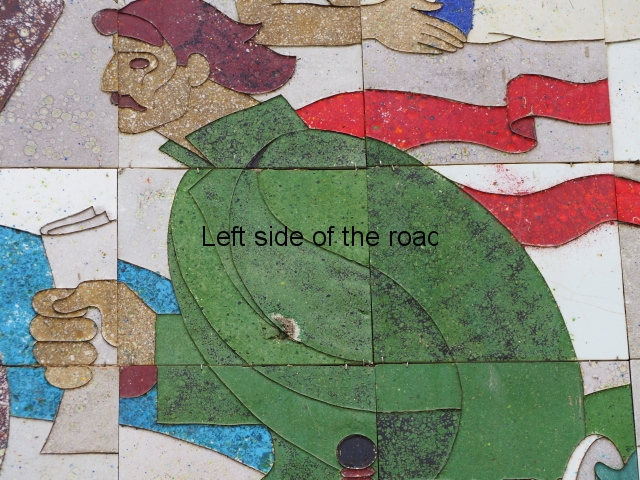
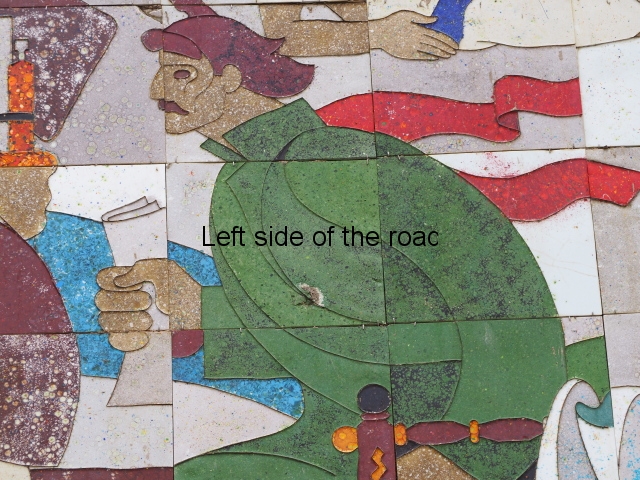
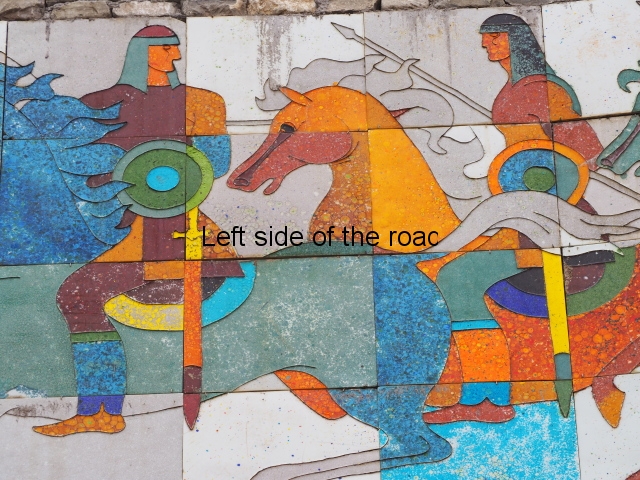
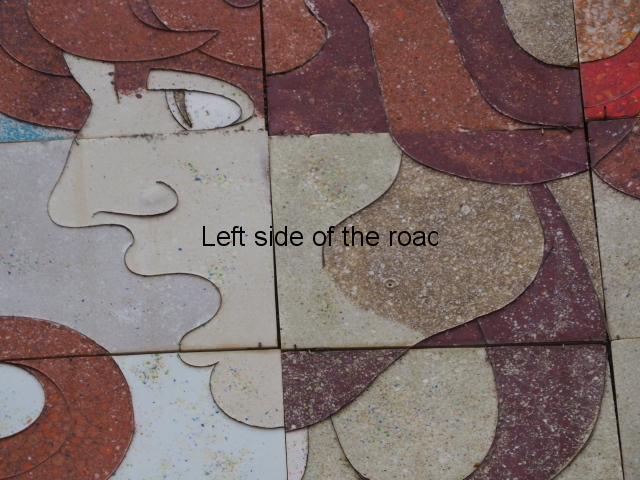
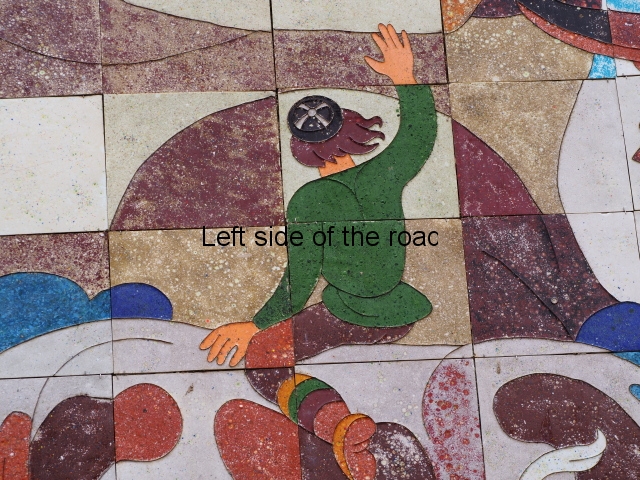
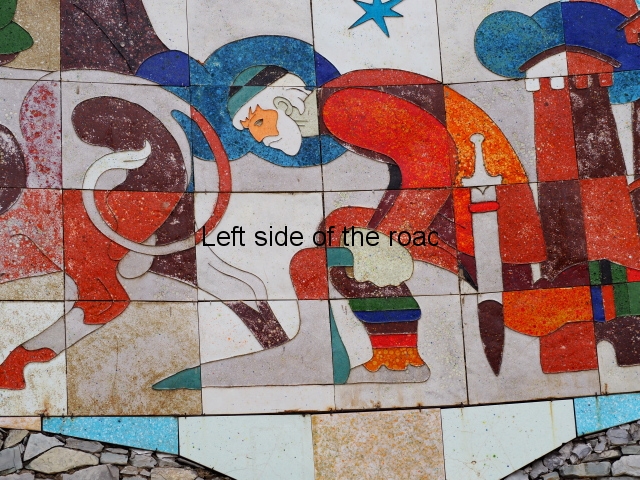
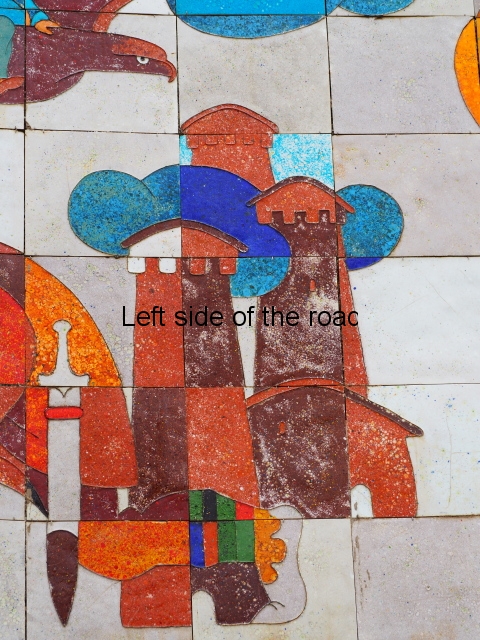
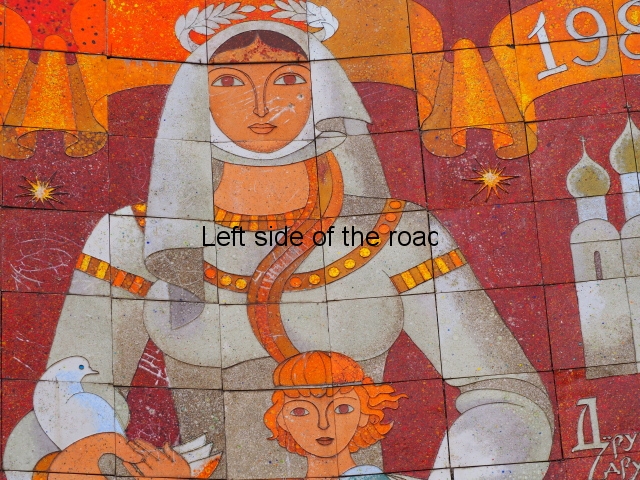
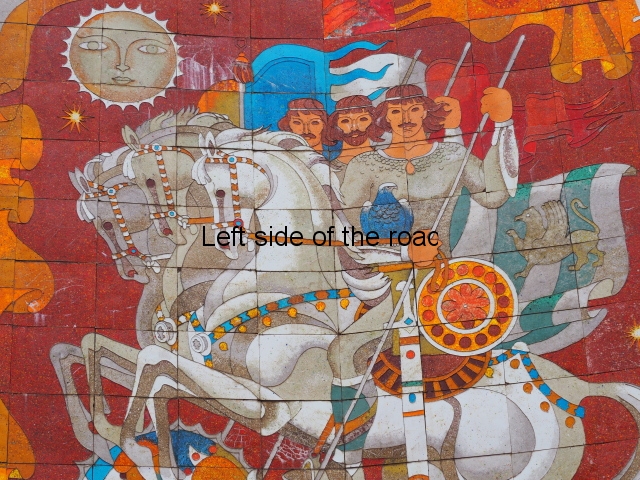
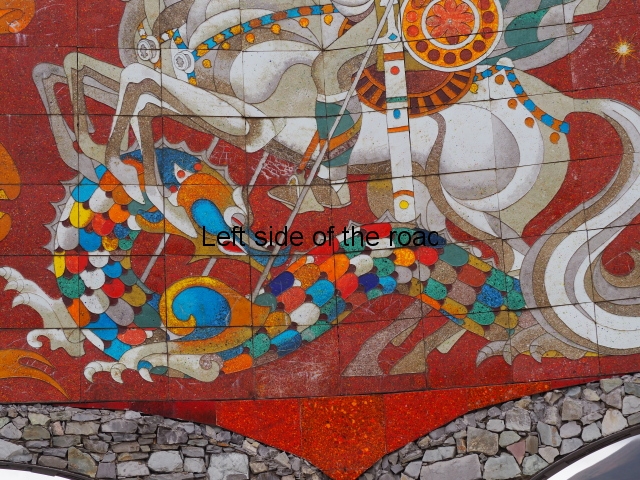
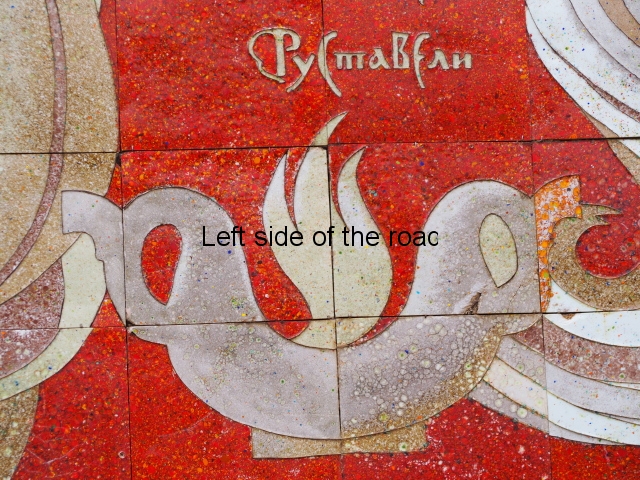
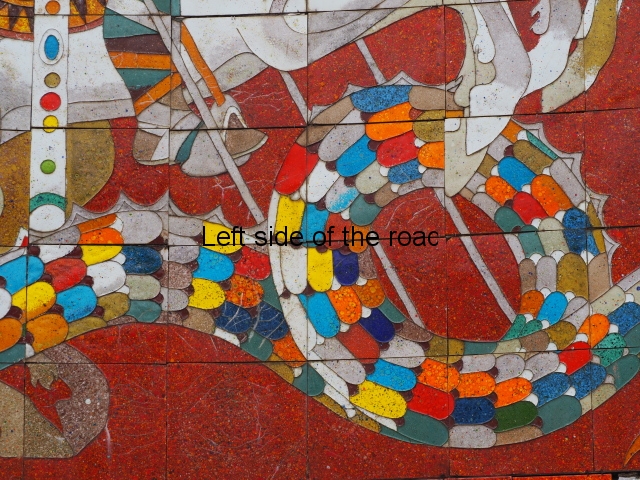
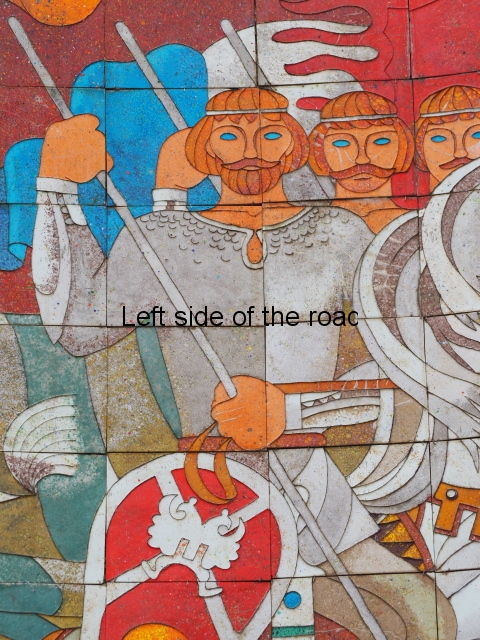
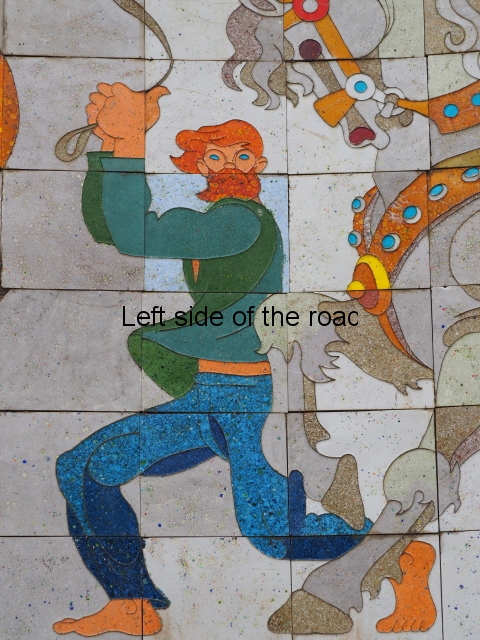
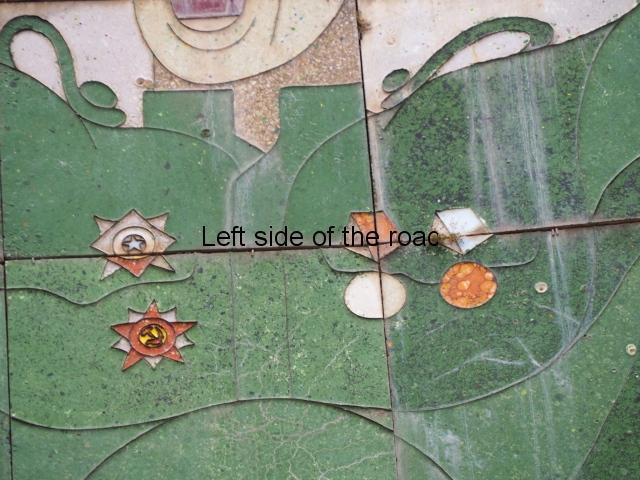
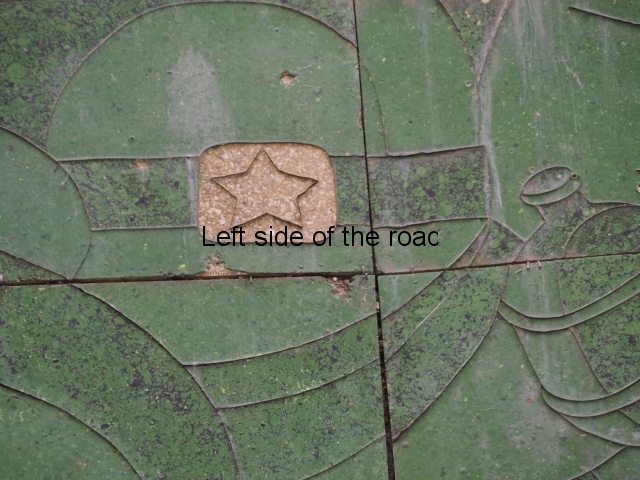
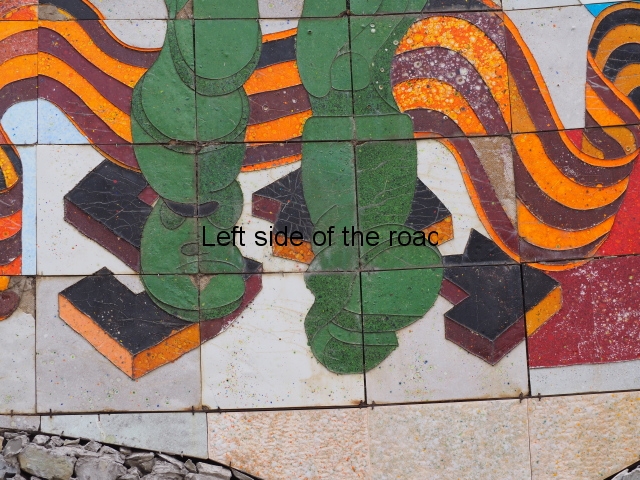
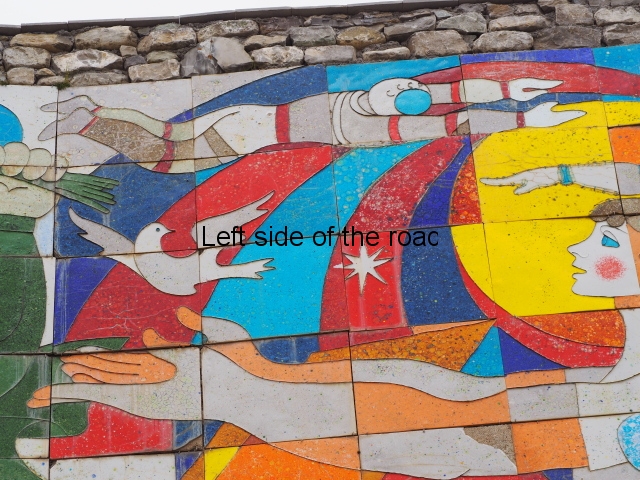
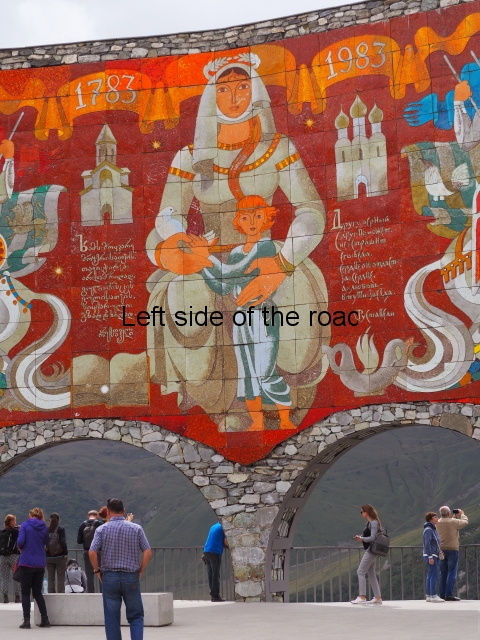
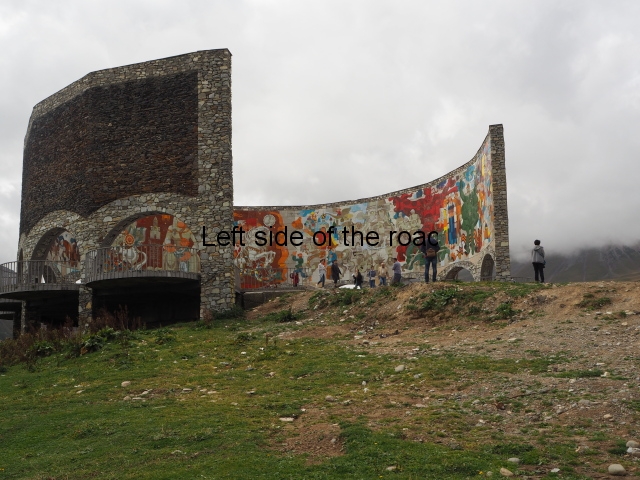
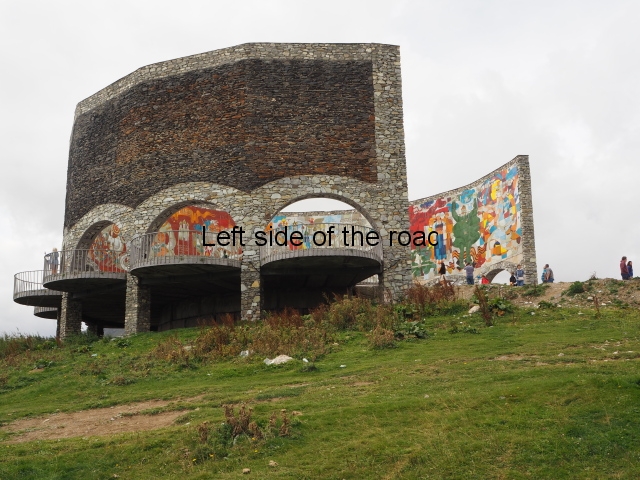
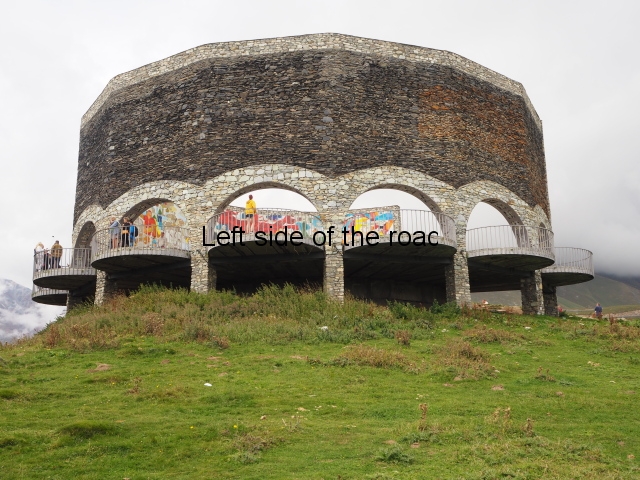
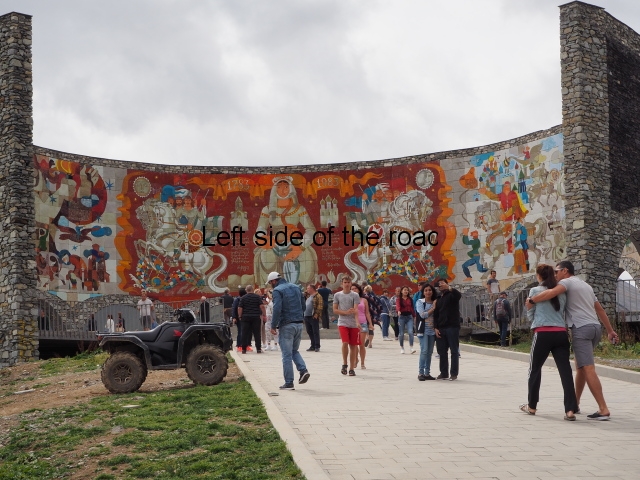
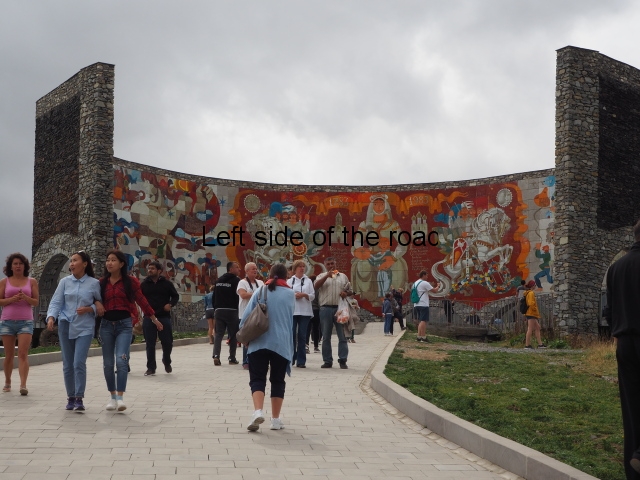
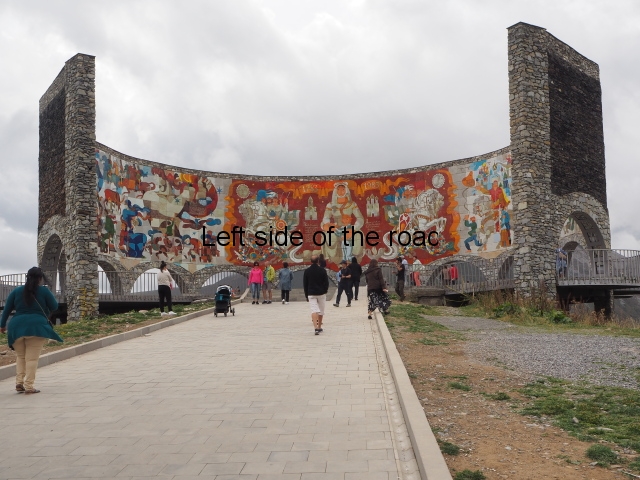
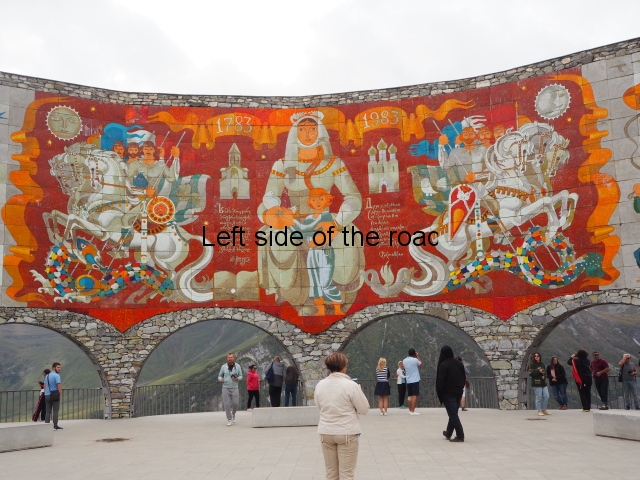
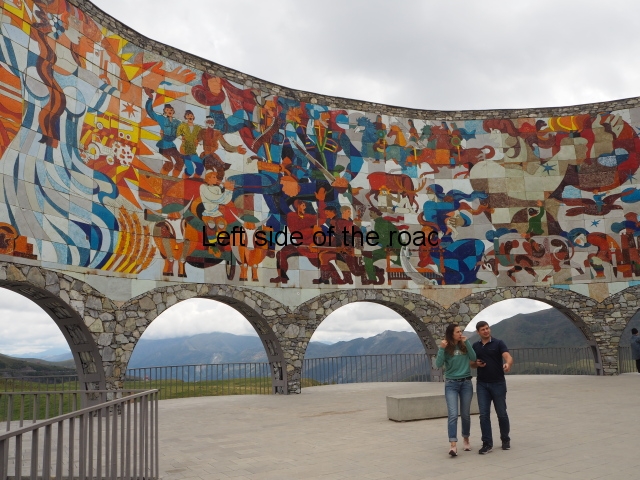
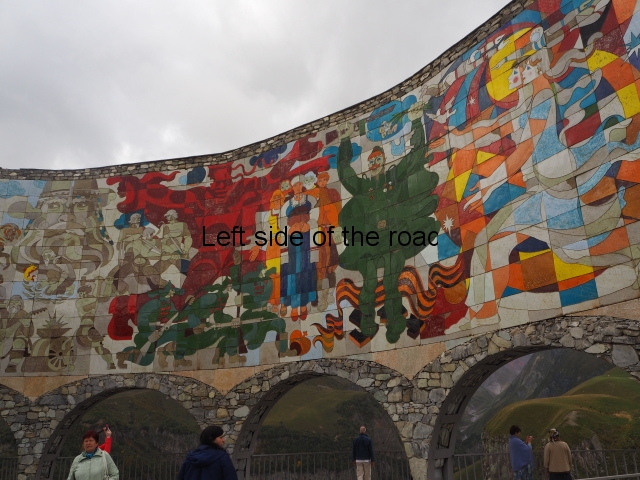
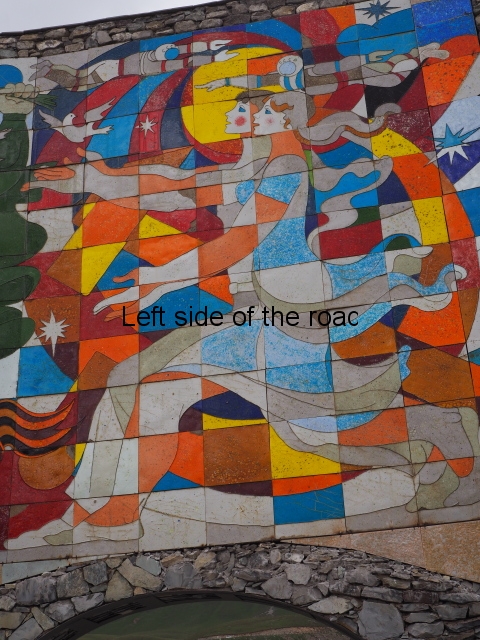
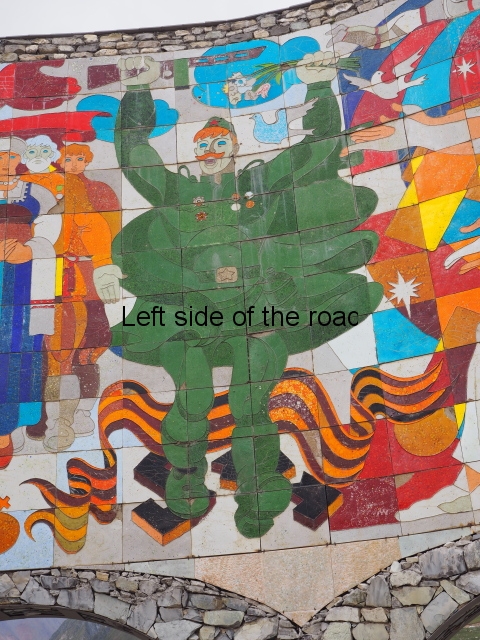
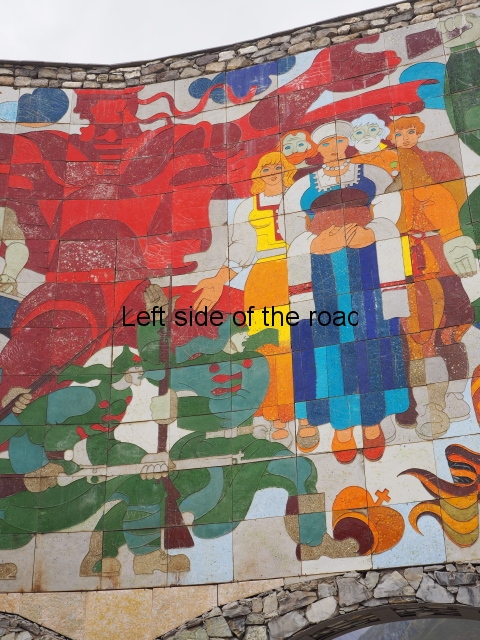
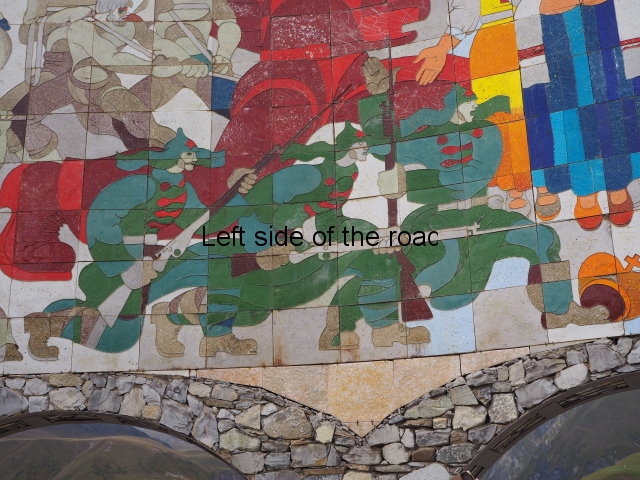
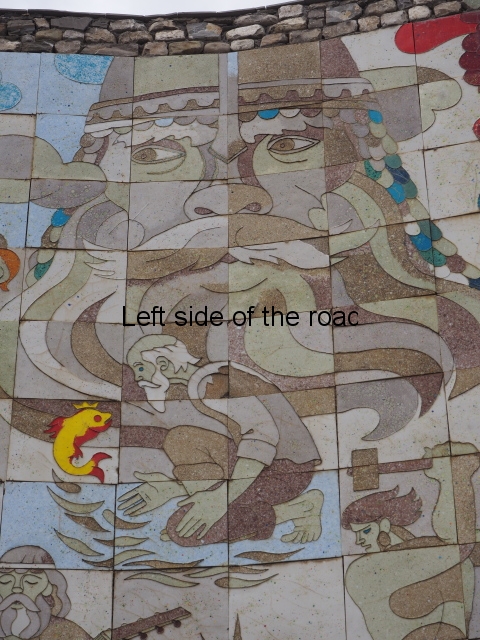
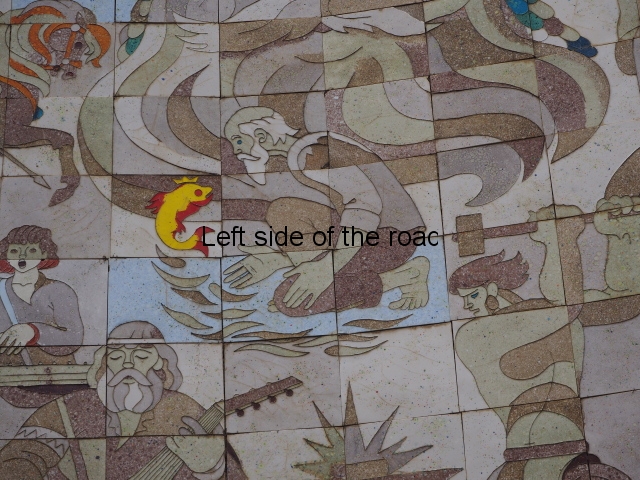
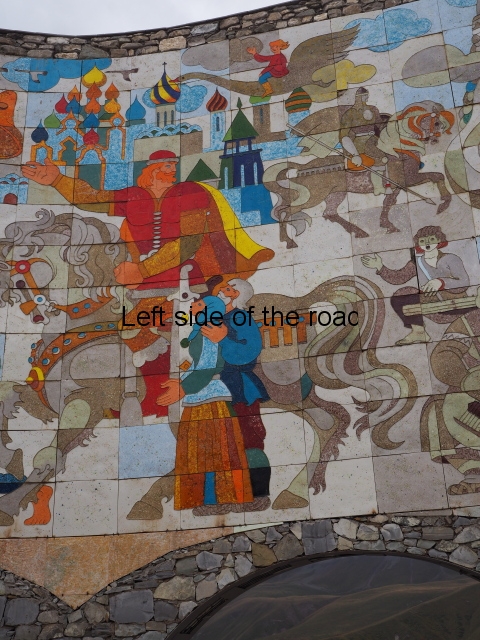
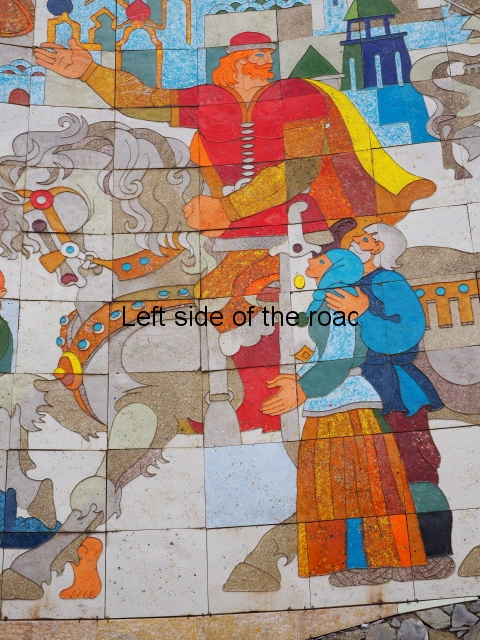
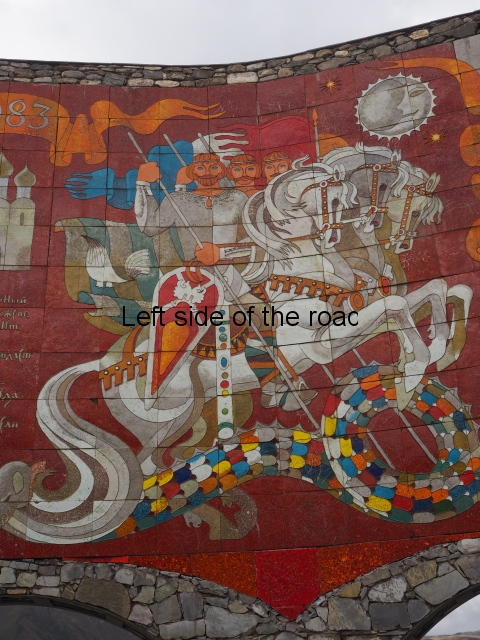
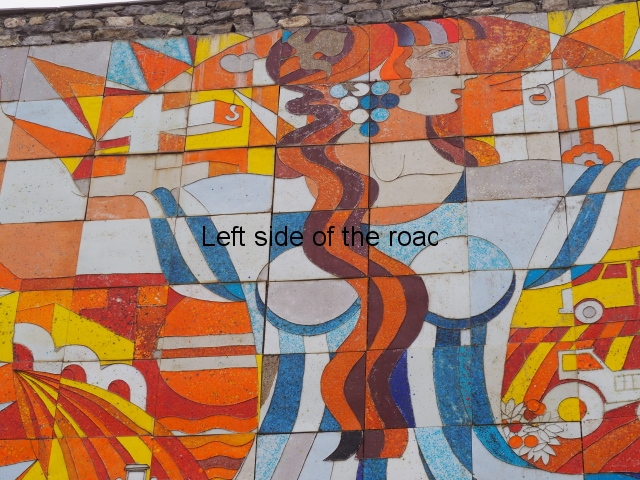
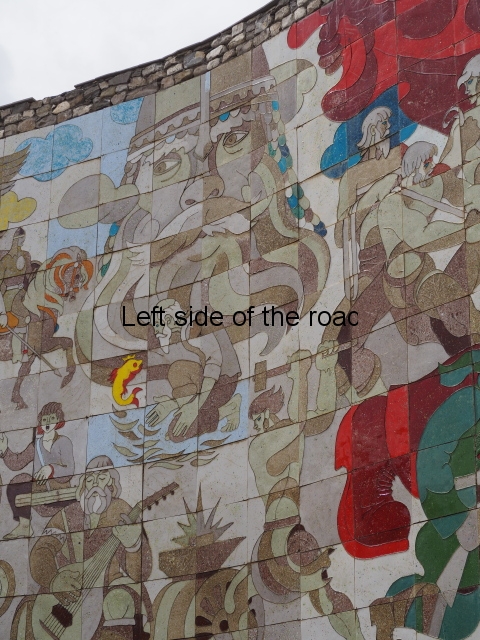
The Soviet–Georgia Friendship Monument or Treaty of Georgievsk Monument is a monument built in 1983 to celebrate the bicentennial of the Treaty of Georgievsk and the ongoing friendship between Soviet Georgia and Soviet Russia. Located on the Georgian Military Highway between the ski resort town of Gudauri and the Jvari pass, the monument is a large round stone and concrete structure overlooking the Devil’s Valley in the Caucasus mountains. Inside the monument is a large tile mural that spans the whole circumference of the structure and depicts scenes of Georgian and Russian history.
Text above from Wikipedia.

The monument consists of a large round stone and concrete structure with 7 huge concrete columns that symbolize the seven centuries of friendship between the Georgian and Russian people.

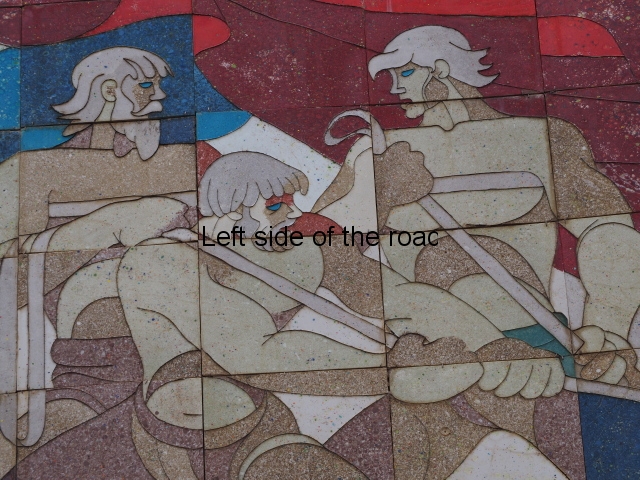
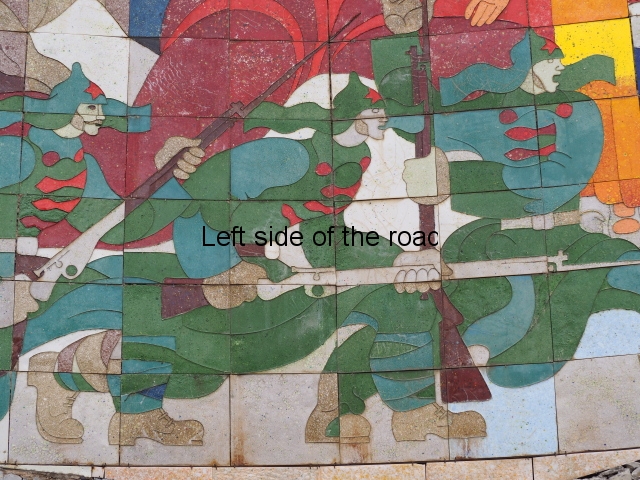
The Soviet section, on the right as you look at the monument, is much easier to understand in its historical context (e.g., The October Revolution and the Great Patriotic War) than the images on the left about Georgia – unless you have an idea of more ancient Georgian history.

Completed;

1983

Architects;

Giorgi Chakhava

Artists;

Zurab Kapanadze, Nodar Malazonia and Zurab Lezhava

Location;

Just off the ‘military road’ (the road between Tbilisi and the border with Russia) about 2 kilometres north of the village of Gudauri on the way to Kazbegi.

Getting there;

Not an easy place to get to on public transport but marshutkas (minibuses) will get you there. They leave from the Didube bus station in Tbilisi. An early start would be recommended if you want to make the visit there and back in one day. Cost 15GEL each way.

GPS;

42.4920°N

44.4527°E

Monument to the Soviet Red Army, Liberty Square – Budapest

Monument to the Soviet Red Army

Monument to the Soviet Red Army

Monument to the Soviet Red Army, Liberty Square, Budapest

The monument to the liberating Red Army consists of a column, stepped at its lower levels, surmounted by a large, golden, three-dimensional star. On the face of the column, around half way up, is a golden representation of the State emblem of the Soviet Union.

Below the emblem, in black lettering are the words, in Cyrillic,

СЛАВА СОВЕТСКИМ ГЕРОЯМ ОСВОЂОДИТЕЛЯМ

and then in Hungarian;

DÍCSÖSÉG A FELSZABADÍTÓ SZOVJET HÖSÖKNEK

These translate as;

GLORY TO THE SOVIET HEROES, LIBERATORS

The column sits on a platform which is reached by a short series of five steps on both sides. To the left, rear and right of the column there’s a low wall. On this wall, immediately to the left and right of the column, the names of some of the Soviet fallen officers are engraved in gold lettering. This seems strange to me. Ninety-five thousand Red Armymen must have died in the battle for Budapest but why just single out the officers to be named on the memorial?

There are two, semi-circular bas reliefs – one that most people see on the ‘front’ of the monument and the other at the back.

Monument to the Soviet Red Army - 01

Monument to the Soviet Red Army – 01

The one at the front depicts a common theme on such monuments, a group of eight Red Armymen advance, weapons at the ready, attacking a position held by the Nazi occupiers. The first group of four, on the left, includes a soldier – who is not shown to be armed – who holds aloft the Soviet Flag (although there’s no indication of the hammer and sickle or a star) whilst looking back, urging those behind to join in the attack. This is a common aspect of such Socialist Realist sculpture and can be seen in, for example, on some structures in Albania and Russia. Another soldier in this group is dragging along a Pulyemyot Maksima PM1910, a heavy Maxim machine gun (versions of which seem to have been used for more than a hundred years).

The second group of four are on the right and they are accompanied by a tank, the gun barrel of which looms ominously above them. Three of them are soldiers with a submachine gun (almost certainly a PPSh-41) and the fourth, at the top, is an officer with a pistol. They are all aiming and firing at the Nazis.

In the background can be seen the outline of some of the most distinctive buildings in the centre of Budapest, many of them ruins, demonstration of the fierceness of the fighting. (Something like 80% of the buildings of Budapest were either destroyed or severely damaged by the end of the final battle.)

Monument to the Soviet Red Army - 02

Monument to the Soviet Red Army – 02

In many ways the back of the column is a mirror of the front. There’s the emblem of the Soviet Union and the same inscription in both Russian and Hungarian. There’s also a semi circular bas relief but although it is also an image of attacking Soviet Red Armymen it tells a sightly different story.

Here we have a group of four soldiers on the attack with an even more ruined image of Budapest in the background. They are moving from left the right and the soldier on the extreme left is standing and is about to throw a stick hand grenade with his right hand. At the same time he holds a submachine gun (probably again a PPSh-41) in his left hand. The other three of the group are advancing and firing against the Nazi enemy in the seriously damaged remains of Budapest before the final liberation on 13th February 1945.

A combination of lack of maintenance and climate probably is the cause of the damage to the images at the back. Although providing a green and natural backdrop the large trees behind the monument create a humid environment and in the winter that area probably doesn’t get any sun at all. And there is obvious damage caused by humidity on the bas relief panel. To the left of the panel water damage has changed the colour of the bronze from green to a dirty brown. Above the panel there are signs of mould around the lettering and the Soviet emblem doesn’t shine so bright as it does at the front.

On the other hand the façade that people normally see gets the full force of the sun so there’s an element of self-maintenance here as the damp and mould don’t have an opportunity to establish themselves and grow. Also any damage here would be noticed immediately. On my visit a dozen or more big tour groups stood in front of the monument and were treated to an anti-Soviet, anti-Russian diatribe, with no reference to the fact that the Hungarians were firm supporters of the Nazis and it was a combined force of German and Hungarian fascists that were surrounded in late December 1944 before the final liberation 50 days later.

In the centre of the base of the platform, in gold lettering, is the date ‘1945’, the year of liberation. There’s a small, reasonably well tended flower bed in front of the bas relief panel, with red flowers. On my visit there was also a large bunch of red roses, left at some time in the recent past to commemorate some specific event, unknown to me.

Considering the presence of various fascist groups in Hungary and the constant harping on about the 1956 counter-revolution I’m slightly surprised the monument is in such a good condition. There is a government to government agreement that the monument will not be removed but that wouldn’t normally stop Hungarian Nazi sympathisers.

Location;

Szabadság tér (Liberty Square)

South-east of the Parliament Building.

GPS;

47.50417º N

19.05057º E