Liri Gero and the 68 Girls of Fier

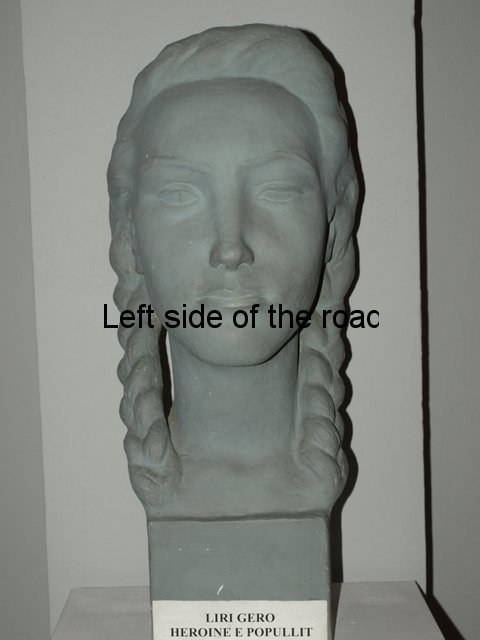
Liri Gero - Tirana Art Gallery

Liri Gero – Tirana Art Gallery

More on Albania …..

Liri Gero and the 68 Girls of Fier

Many monuments, statues and lapidars from Albania’s Socialist period have suffered over the years, through outright political vandalism or just neglect. However, there has been a bit of a sea change in recent years but this has not come without its own problems. Here I want to develop the ideas of Albanian Socialist Realist art by looking at two works produced to commemorate the life of a young partisan woman, Liri Gero, and also a work in commemoration of 68 young women who also left their home town of Fier to join the partisans fighting the Fascist invaders.

Liri Gero

Liri Gero

The first thing to know about Liri is the meaning of her name. Liri means Freedom, indicating her parents were at least nationalist, if not much further to the left, and possibly supporting the growing communist movement at the time of her birth. In a country that had a long history of fighting foreign invaders naming your children in such a way was making a political statement.

Soon after the country was invaded by the Italian Fascists in April of 1939 Liri, along with many other young people, started to take part in activities that opposed the occupation and assisted those actively fighting against the invaders, especially after the declaration of the National Liberation Front at the Conference of Peza of 1942.

However, as the struggle became more intense, and the betrayal by the collaborators and sycophants of the ‘nationalist’ Balli Kombetar (who were formed in November 1942 to cause confusion – the name literary means ‘national front’ – amongst the Albanian anti-Fascist masses) became a much more real threat, it was suggested that Liri leave her home town of Fier and join the partisans in the mountains, in the fighting war.

In any guerrilla war the struggle in the owns and cities occupied by the invaders is as important as that on the front line but when such activity ceases to be practical, or too dangerous for particular individuals, then the only way forward is to leave home and join the partisan army. Liri was one of many young women of her generation who did just that. Disguised as the bride in a wedding party she was able to leave Fier, which was then under the under the control of the Italians, in 1943.

Partisan çeta

Partisan çeta

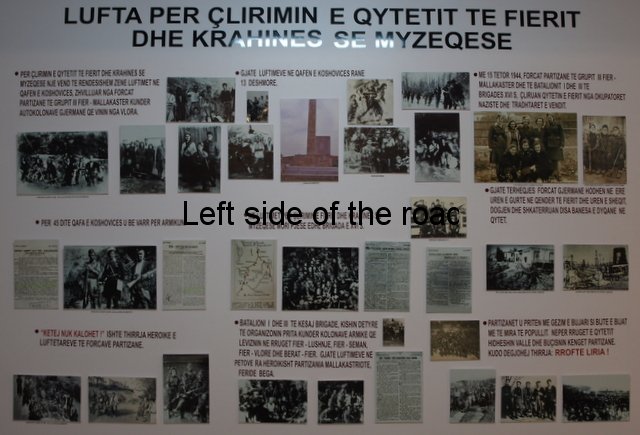
In October 1944 Liri was part of a unit that attacked a German Nazi column in the vicinity of Fier. Although the partisans inflicted severe damage on the Nazis in this attack Liri was wounded and later captured. With just a matter of weeks before their final defeat (and when the war throughout Europe was going badly for the Germans, especially on the Eastern Front where the Red Army was moving ever closer to the German capital) the Nazis first tortured the 20-year-old and then poured petrol over her and burned her alive – and the reactionaries have established a Nazi war memorial in Tirana.

In volume 2 of ‘Flasin Heronj të Luftës Nacional-Çlirimtare (‘The Heroes of the National Liberation War Speak’) the collection that recounts the stories of many of those who gave their lives in the struggle against Fascism, her dedication, torture and death is described poetically:

‘When you go to the Cemetery (in Fier), under the name of Liri Gero you may think lie the remains of her beautiful young body, but this is not the case. It’s just a handful of ashes from her heart burned for the freedom of Albania.’

Being so young when she got involved in the anti-fascist struggle, and her equally premature death, she became a prime candidate to be singled out and immortalised in bronze during Albania’s Cultural Revolution. She would stand as an example to the young and it would also play a part in commemorating, celebrating and emphasising the role of women in Albania’s Socialist construction, in the past, present and future.

The sculptor chosen for the task was Mumtaz Dhrami, the sculptor who produced so many fine works during this period of artistic development in Albania’s Socialist period, including the monuments at Peze and the magnificent Arch of Drashovice.

(When I first published this post on the 29th October I mistakenly attributed this piece of work to another sculptor, Hektor Dule. These mistakes, unfortunately, will happen from time to time due to the difficulty of obtaining some of the basic factual information.

However, when I started to revise the text to show the facts I realised that this is all part of the different approaches to art in a socialist and capitalist society. Under capitalism the first question is who. Who produced it, as if that person is someone famous then the piece of art might be worth money, and with recent ‘investment’ in art a great deal of money. It’s for this reason a signed sketch on a paper serviette is worth a fortune just because the signature of Pablo Picasso is in the corner. It becomes valuable not because of its intrinsic artistic value but because of its association.

In Socialist Realism the most pressing question is what. What does it represent, what is it trying to convey, what does it mean to the people who see and relate to it, what role can the artistic object play in educating the people. And as those were the most important questions asked in a society attempting to build Socialism the artist as an individual became secondary. For that reason many of the lapidars and monuments in Albania don’t have any indication of who actually provided the artistic skill.

As we live in a world where individuals are praised way above the collective this creates a situation where some ‘artists’ consider that they are being hard done by, in comparison with ‘artists’ in capitalist countries. For this reason they start to grumble and for the same reason some have run away to the capitalist countries, not to have more freedom to express their art, not for the fame, but for the financial reward that they can receive in a different society from the one that nurtured, educated and trained them.

By being somewhat obsessed with getting the details of who might have created any particular piece of art I am also falling into the trap of bourgeois individualism. I find myself reluctant to post an article if it omits such information as it might appear incomplete. But that’s not the meaning of Socialist Realist art – it’s the message not the messenger.

In discussions about art many years ago, when Britain actually produced things rather than being a nation serving countless variations of coffee, it came up that those skilled engineers, for example, who could take a piece of raw metal and with their skills and experience turn it into a part necessary functioning of a complex machine, weren’t used to signing their work. Those who worked in agriculture didn’t sign their potatoes before they sent them to market, but if we didn’t have their skills then the vast majority of the population in so-called ‘developed’ societies would starve.

So why should an artist sign his/her work? Who is the most important in society? No society can produce or develop any sophisticated art unless they first are able to create a surplus of those things that society needs. All artists, in all societies, in all stages of development of civilisation rest on the shoulders of the workers. Why should one be named if the other isn’t?

To finish on this matter, before the whole post goes along too acute a tangent, what of those workers who took Dhrami’s ideas and turned it into the bronze object under discussion. Shouldn’t their names be noted – if the ‘artist’ were to have his signature somewhere in view?)

Liri Gero - National Art Gallery

Liri Gero – National Art Gallery

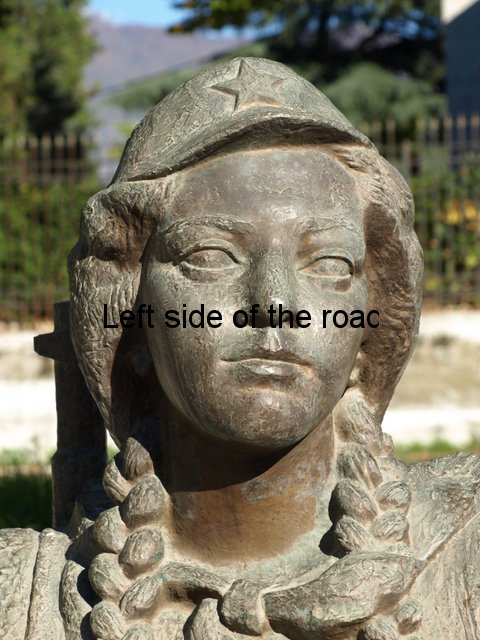
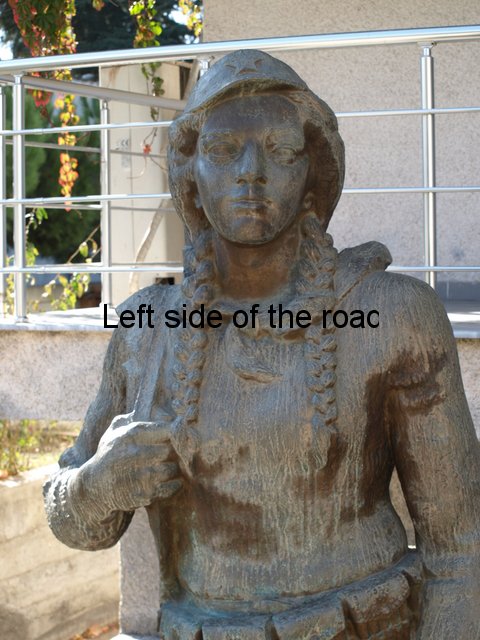
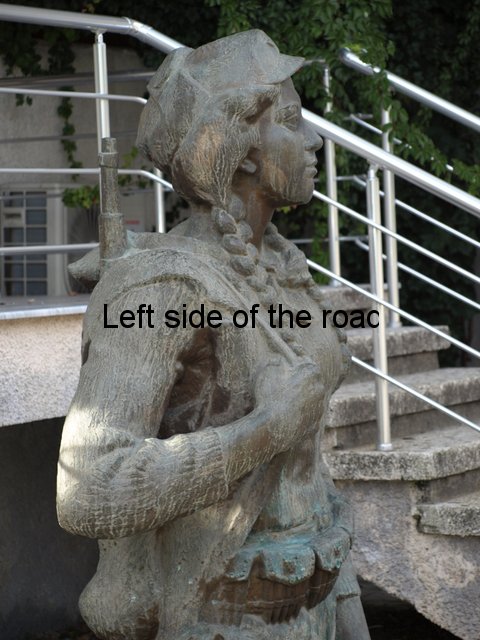
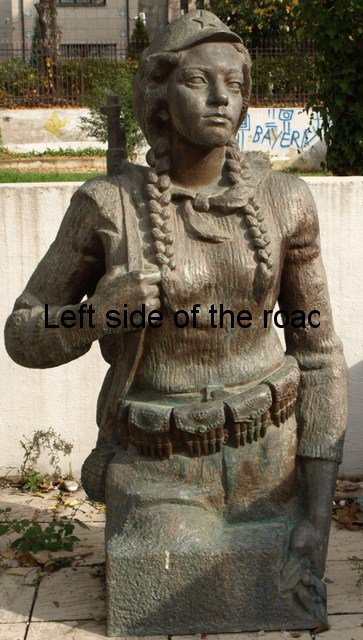
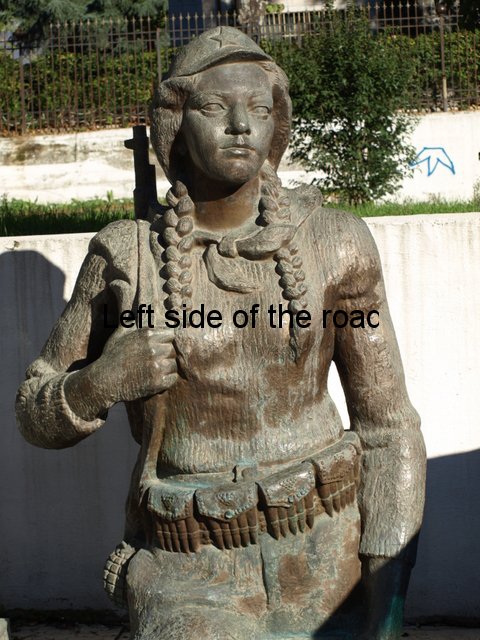
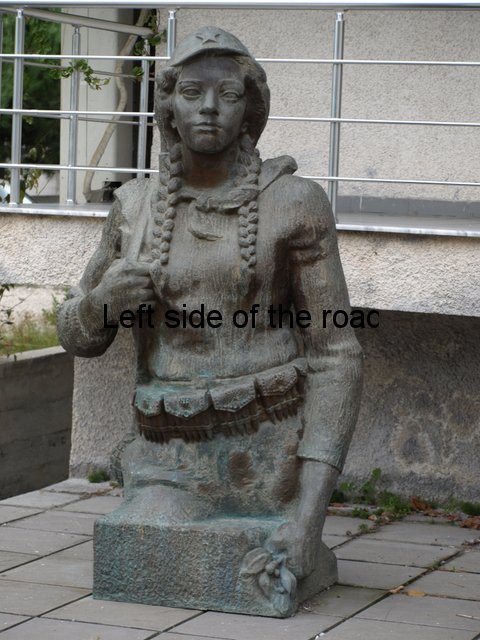
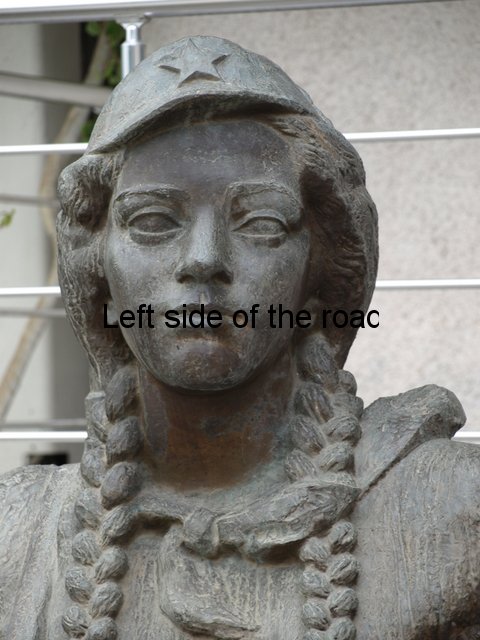
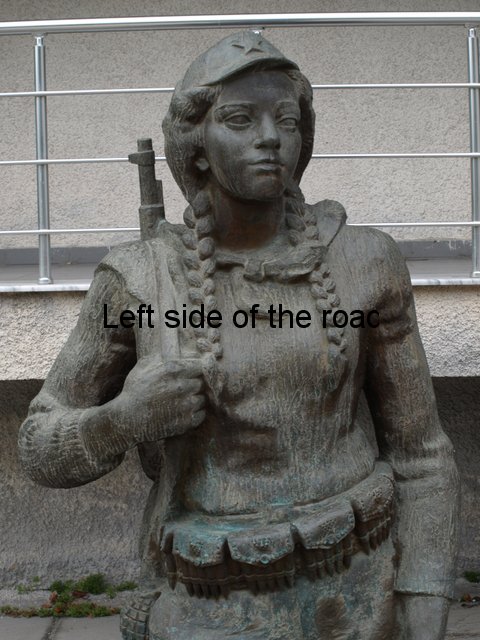
The statue is slightly larger than life-size but we only have her depicted from the thighs up. She is shown dressed as a Partisan fighter, not in full uniform as such but in a manner that allows no doubt that she is a full-time member of the fighting force. The pose is as if she were standing to attention and she presents a calm demeanour, serene and confident and clear about what she is doing. She wears a cap with the star of a Communist clear at the front.

The only images I have seen of her show her with long tresses, braided on both sides of her head and hanging down in front of her. I’m sure that, as a young woman she was proud of her hair but to go into conflict with such long hair is not a wise move and I would have thought that one of the first acts after joining her partisan çeta would be to visit the barber. None of the pictures of the guerrilla groups show the women with long hair. However, by depicting her with her long tresses Dhrami has made an easy reference to the photos that people would have seen in different museums throughout the country as well as in magazines and other publications produced at the time.

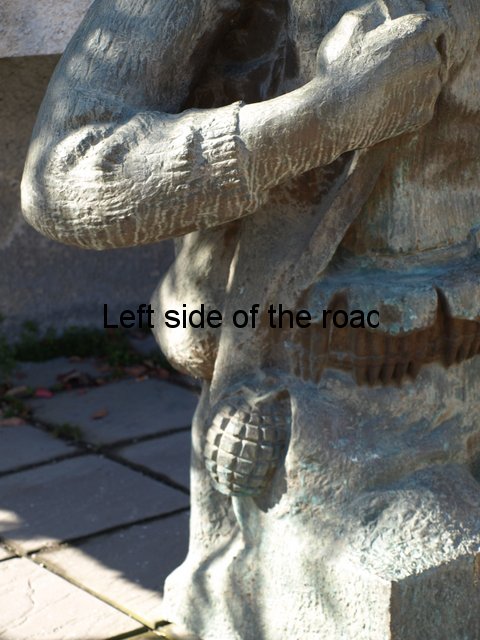
So she has a full head of hair, spilling out from under her cap, and the braids hang down and finish just over her breasts. Around her neck she has a bandana (yet another symbol of her communist affiliations) and she is wearing a thick woollen sweater. There’s a rifle slung over her back and her right hand is holding the strap of that rifle just over her chest. Around her waist she has ammunition pouches attached to her belt and on her right hip hangs a Mills bomb (British made grenade).

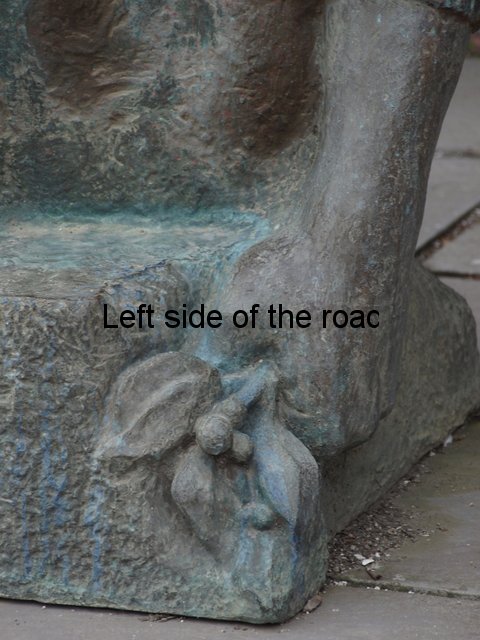
It is what she holds in her left hand which makes this statue stand out as one created with a socialist realist perspective. Her left arm hangs loosely down by her side and in her fist she has a bunch of flowers.

Liri Gelo - flowers

Liri Gelo – flowers

This is complimentary to the rifle. Socialism cannot be built, or maintained, without the rifle (symbolising force, or at the very least the threat of force) but the ultimate aim is a society without conflict. How long that will take is still to be decided and the twists and turns along that road are abundant. This idea of flowers in the hand of a young women prepared to use violence (and, for her, ultimately, giving her life) is part of a long-held view of communists, that we fight for bread (meaning freedom from exploitation and oppression, from want and the anarchy that comes with capitalism) but we want the roses too (a fulfilling and productive cultural life in companionship with others, and not just being spoon-fed the ‘culture’ that capitalism supplies, as long as it can make profit.)

I’m not exactly sure where the statue of Liri would have originally stood. Being made of bronze it was designed to be outside (and is still in a very good physical condition). There used to be a properly organised statue park in the area around the National Art Gallery and it would make sense that it was here the work was exhibited. If on a plinth it would have been minimal, just separating the statue from the ground, allowing the viewer the opportunity of being able, physically, to relate to the young heroine and her place in history.

Its location now is with other still extant statues that have come from different parts of the Tirana area. To the right hand side of the Art Gallery there’s a ramp and a service entrance to the building. This doesn’t seem to be used on a regular basis and is not an area that is cared for. When I first visited at the end of 2011 there was a shanty type hut but that has now been removed, but the area is in no way organised or what could be called an exhibition space. The area is dirty and the statues, although out-of-the-way, are not displayed in any manner that you would expect of works of art.

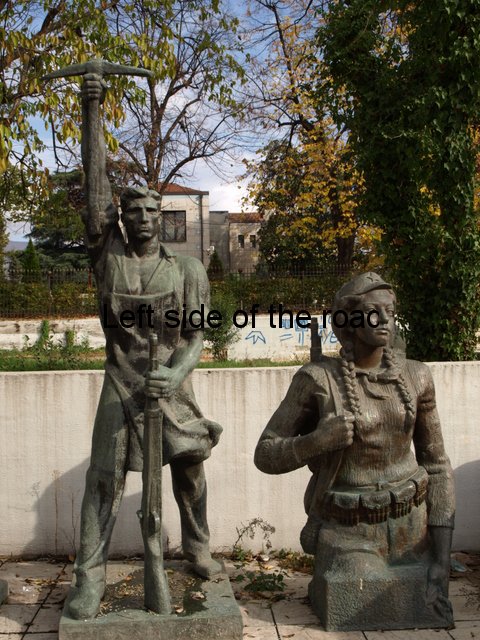
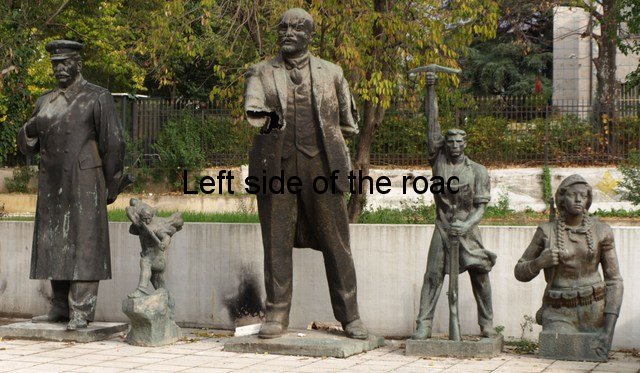
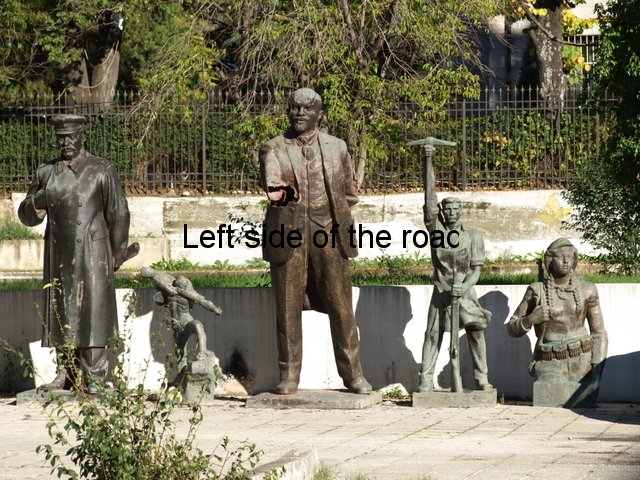
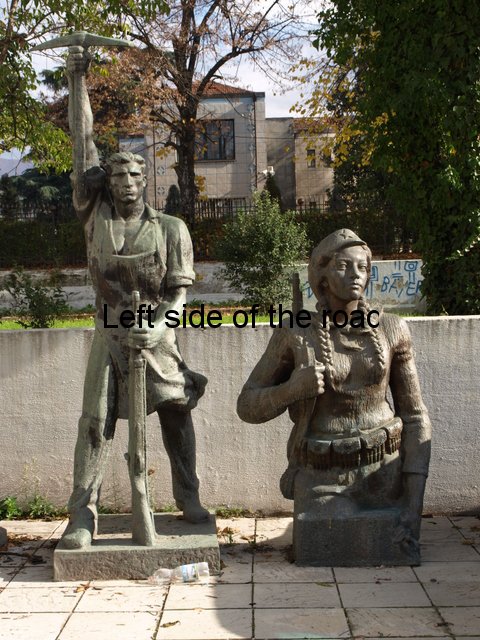
What I have described as the ‘Sculpture Park’ is really just a storage area for the statues. At one time they were all in a line, Liri amongst them but by the time of my visit in 2014 a new statue of Stalin had been added to the collection and Liri was moved so that she had her back to the building and was facing the other statues.

The Original Sculpture Park

The Original Sculpture Park

Also on my early visits it was possible to get close to the statues without any hassle but a vandal attack on the Soviet produced statue of Stalin and the Albanian (damaged) Lenin, with them having red paint thrown over them in 2011, has meant that visits are discouraged. That’s a pity as, although in a far from ideal circumstance, here it is possible to get an idea of different examples of Albanian Socialist Realist sculpture as well as being able to appreciate the noticeable differences from Russian Soviet interpretations with the black statue of Stalin – presented to the Albanian people upon his death in 1953.

So that’s the Socialist representation of a young woman who gave her life for her country and people.

As stated above Liri was from the town of Fier, which in socialist times was a major industrial centre – that’s all but gone now and is a place of industrial archaeology rather than industrial production.

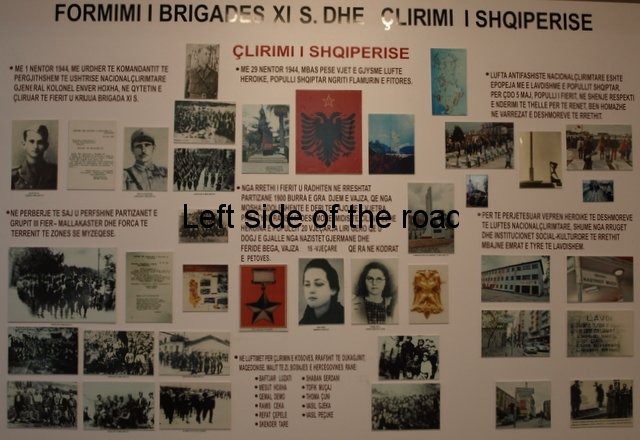
Although the industry might have gone there has been an effort in recent years to remember and commemorate the past. As part of that Fier is one of the few towns in Albania that has a functioning museum, very recently renovated, where you can find information about the anti-Fascist war as well as some examples of Socialist Realist paintings and sculpture.

(I’ll be writing about the Fier Historical Museum in a future post but here I will just provide information about its location. It can be found in Rruga Leon Rei, which is about 200m west of Sheshi Pavarësia (Independence Square).

Location of the Museum:

GPS:

N 40.72448

E 19.55532

DMS:

40° 43′ 28.1280” N

19° 33′ 19.1520” E

Well worth a visit. Across the road from the museum is a monstrosity of a (at least in May 2015) half-finished and stalled private educational institute.)

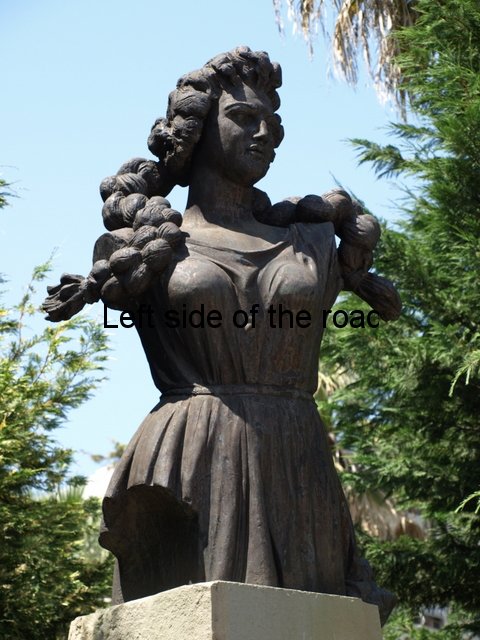
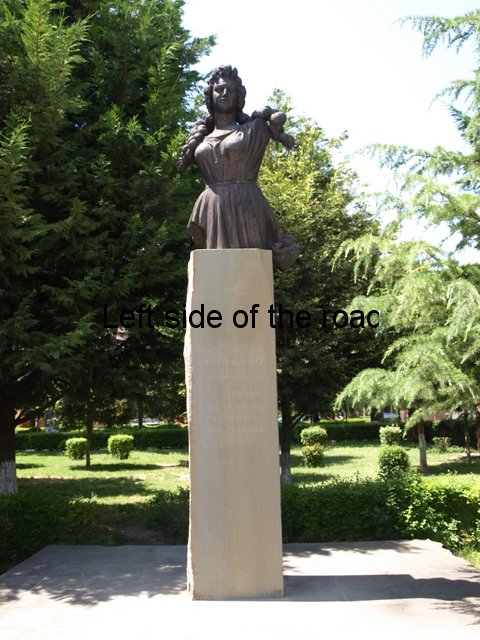
As part of this recovery of the past the city decided to erect a completely new statue to Liri Gero – to the best of my knowledge there had been no local monument to her, other than her grave in the Martyrs’ Cemetery. This statue was inaugurated in 2010 and is located at the edge of a small park in the centre of the town.

Whatever the intentions behind its commissioning this modern statue of Liri is a ludicrous and hideous depiction of the woman who Liri definitely wasn’t. It’s the absolute antithesis of the example to be found behind the National Art Gallery in Tirana.

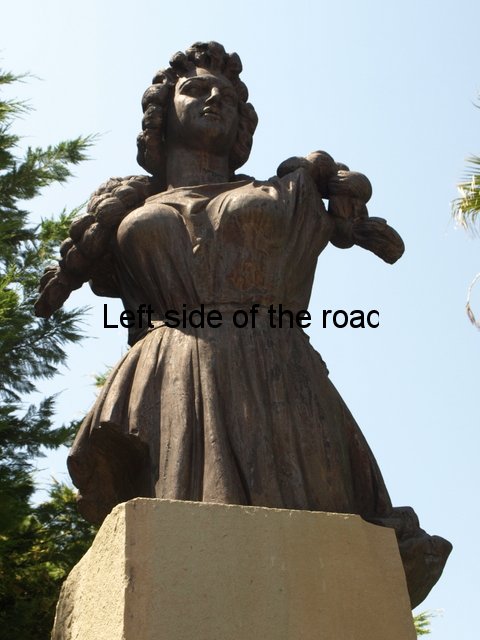
It’s wrong in virtually every way. The figure is similar to the Dhrami piece in that we don’t get the whole body, this one is from the knees up and it is also a little more than life-size. That’s the only things the two statues have in common. The first thing that strikes the viewer is that you get a crick in the neck to look at it close up. The bronze statue is on a plinth more than two metres high and its impossible for the viewer to have any connection with the young woman, she’s placed on a pedestal in the literal and figurative sense.

New Liri Gero Statue

New Liri Gero Statue

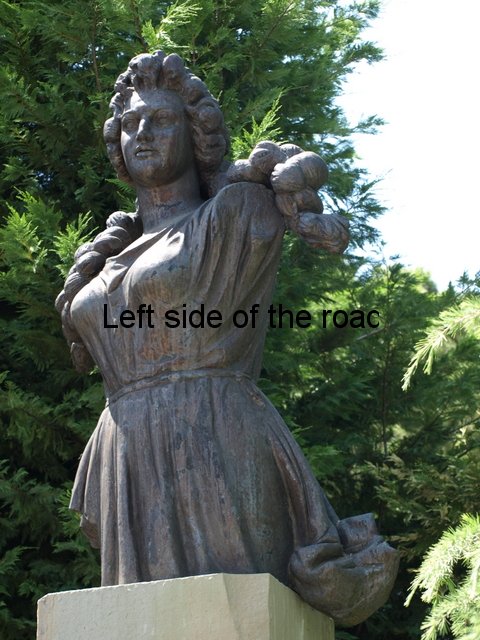
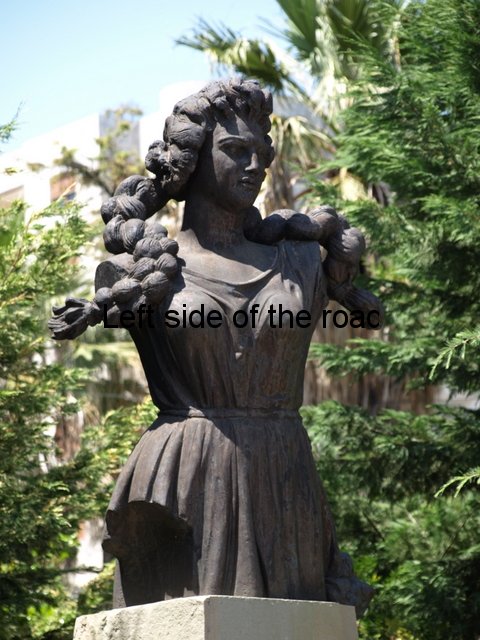
When we get to the statue itself we see no connection with the actual life of young Liri. It’s in a neo-classical style and a silky dress clings to her body, emphasising the female form, her breasts straining to break free of the material. A thin cord around the waist is pulled tight so that it accentuates the hour-glass figure of the torso. The dress itself is of a style that no woman, or even young girl, would have worn in pre-liberation Albania – and would draw a not too sympathetic attention today.

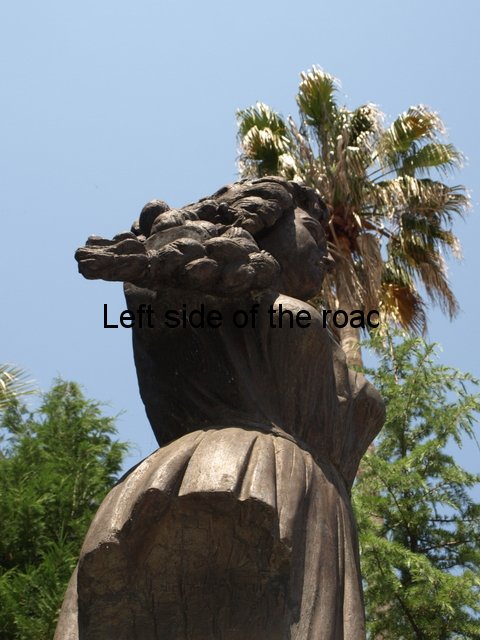
If her clothing is bad things get even worse when we look at her hair. The pictures of Liri show her with long hair, a style that would have been common with girls of her age at that time but here she is represented with hair of which Rapunzel herself would have been jealous. (With the wonders of the internet I’ve just had a look and you can buy Rapunzel wigs that must have been what the sculptor forced his model to wear.)

There’s so much hair!

Liri Gero - hair

Liri Gero – hair

Its crazy. This isn’t a young woman who was tortured to death after going to join forces with those wanting to free their country of foreign invaders. No, this is a young woman who’s going out on the town, has been to the supermarket for a bottle of cheap vodka and now intends to dance until dawn, as happens in many British towns and cities.

Whereas the Dhrami Liri is serene, confident, sure of herself the 2010 Liri is flighty, frivolous, would fit into the stereotype of a ‘dippy blond’ (Liri was dark-haired) and wouldn’t know how to spell Fascism let alone have the understanding to fight against it.

I don’t know why such a statue was commissioned by the Fier Bashkia (Town Hall) or what they were thinking about in paying for such a representation of one of the towns most famous daughters. It was good that the town wanted to have their own statue to her but did it have to be so alien to the actual woman herself?

To the best of my knowledge those who are responsible for this monstrosity are the ‘artists’ Haxhiu Kalluci, I Kasem and A Shuraj. How they divided up the work I don’t know but I would have thought that one, at least, would have to have concentrated on the hair – it’s a sculpture in its own right.

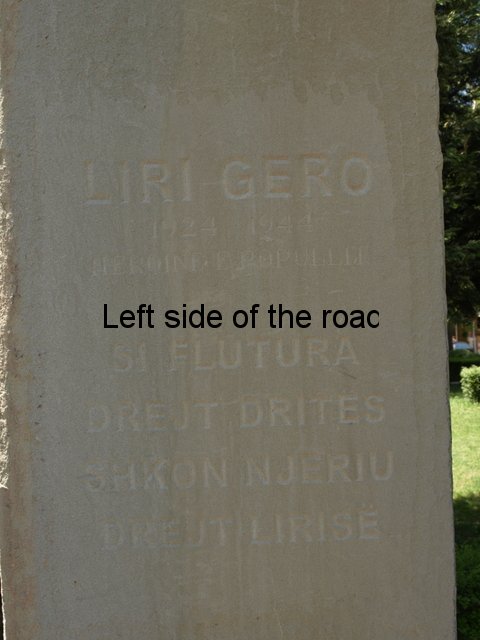
The best thing about the monument is the inscription on the front of the plinth.

We have the words:

Liri Gero

1924 – 1944

Heroine e Popullit = People’s Heroine

And a short inscription which reads:

Si flutura drejt drites shkon njeriu drejt lirise

This translate as:

‘As moths are drawn to the light so man is to freedom.’

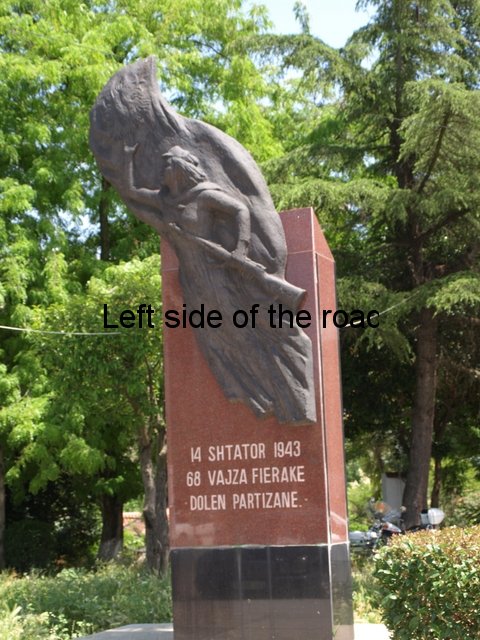
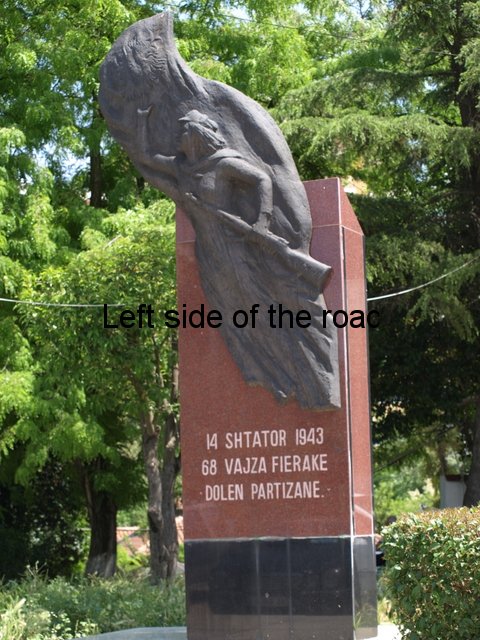
Across the road is a monument to other brave Fier women. Obviously very well organised, in a town that was occupied by the Fascist invaders, on the 14th September 1943, under the cover of darkness, 68 young women and girls left to join the Partisans. Not only was the actual leaving of the town a dangerous activity they then spent the next few days walking all the way to Berat to join up with the increasingly more powerful and organised Communist led National Liberation fighters.

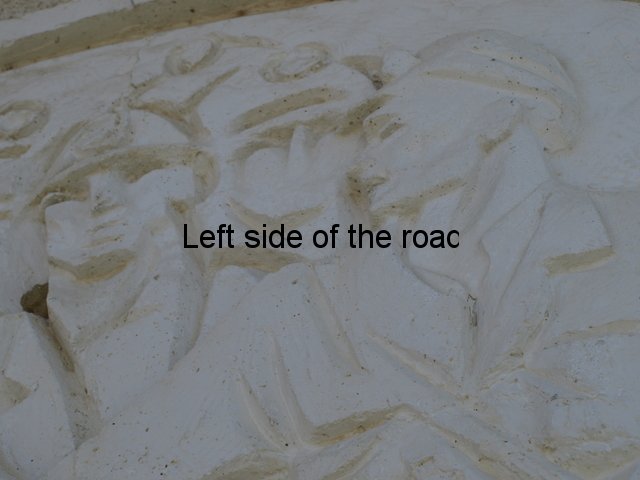
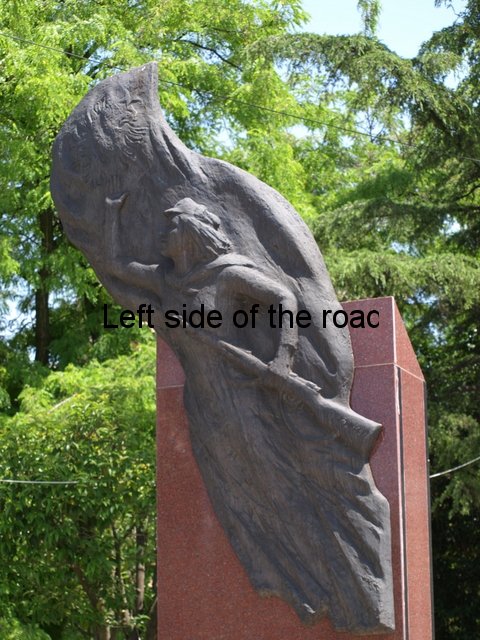
This quite exceptional (not just in Albania but other parts of Europe fighting against the Fascists) decision of such young women to take the path of the greatest resistance was celebrated in Fier with the commissioning of this simple but nonetheless effective sculpture. The plinth upon which it stands at present is new although the bronze bas-relief fixed to it has all the classic hallmarks of those sculptures produced during Albania’s Cultural Revolution.
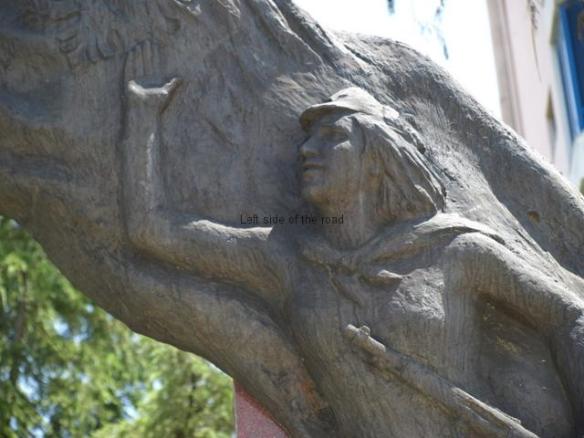
Monument to 68 girls joining Partisans

Monument to 68 girls joining Partisans

As is normally the case there is no name or date on the sculpture itself so I have no idea who was the artist or exactly when it was inaugurated. As many of the sculptures of this period were commissioned to mark specific anniversaries I would hazard a guess that it was first shown to the public on the occasion of the 30th anniversary of the women leaving the town, i.e., 1973.

Neither do I know if it is in the original location or whether it has been moved from somewhere else. (So many lacunae in the history of Albanian lapidars!) Although it does seem to fit where it is now the bas-relief design suggests that it might have been high up on a wall of a building such as the Bashkia – although that’s just speculation on my part.

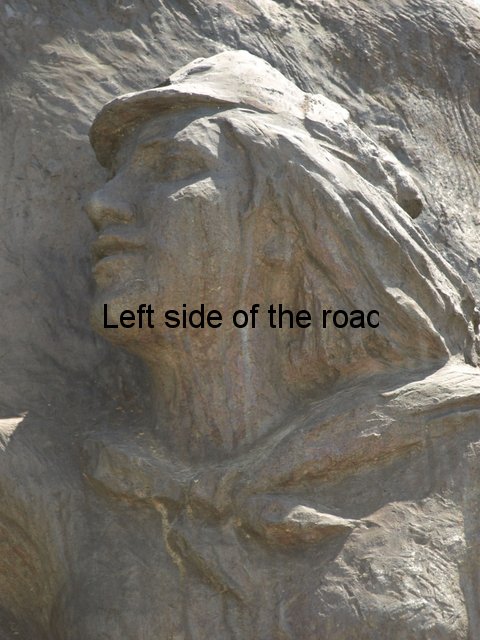
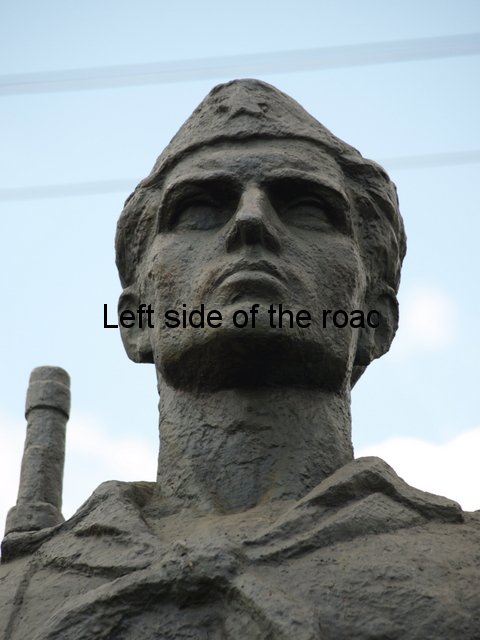
What can be stated categorically is that it is in a very good condition. It hasn’t undergone any vandalism and the target of the reactionaries, the stars on the flag and the Partisan’s cap, are both intact and undamaged.

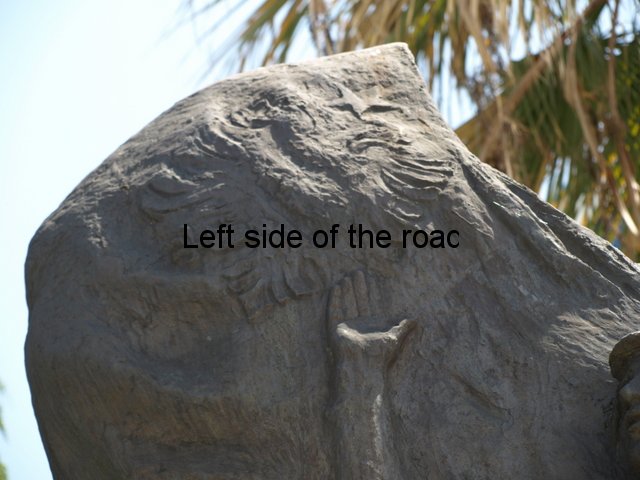
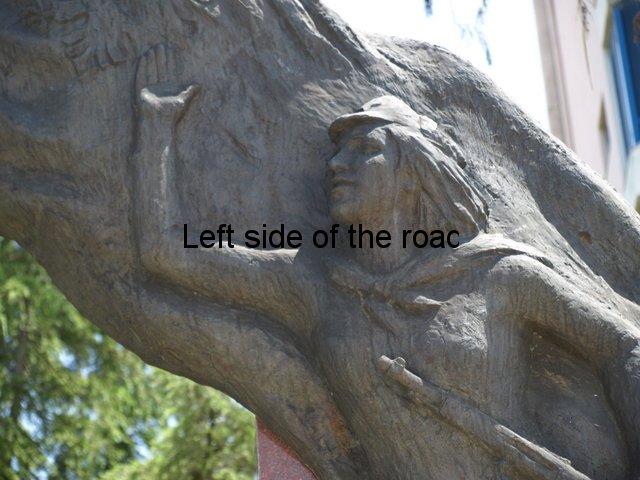
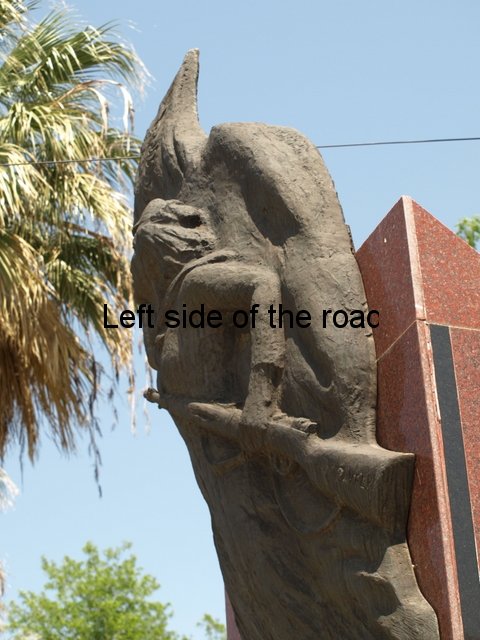
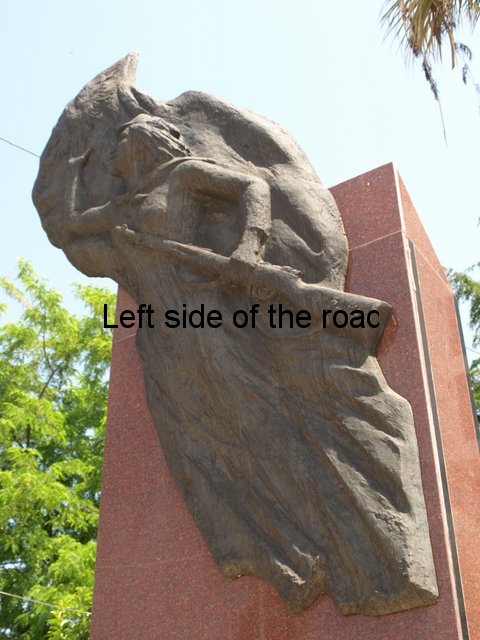
The monument consists of one female partisan depicted as if she is emerging from the national flag. The flag is fluttering in the wind and at the extreme left hand side, at the top, can be made out the double-headed eagle with the Communist star above the two heads.

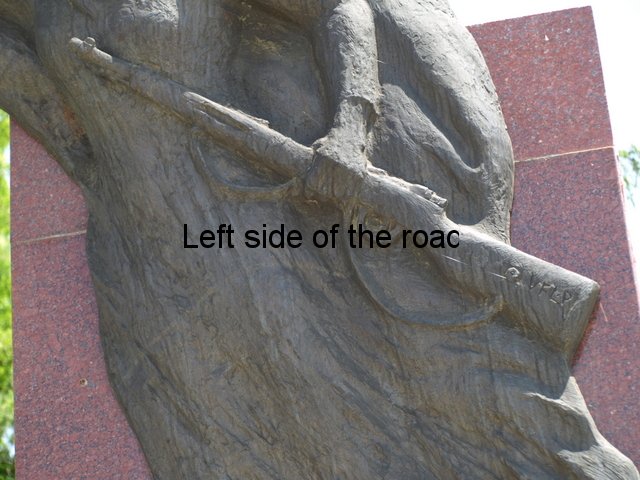
The tips of her fingers of the right hand just brush against the eagle’s feathers as if this is what she is seeking to attain. She’s fighting for Socialism, for a future. Her whole stance is one of going forward, striving for something higher, reaching up to the stars. But to attain that goal she needs to use force, as such aims have never been attained without the use of arms. For that reason she holds a rifle in her left hand, gripping it just in front of the bolt.

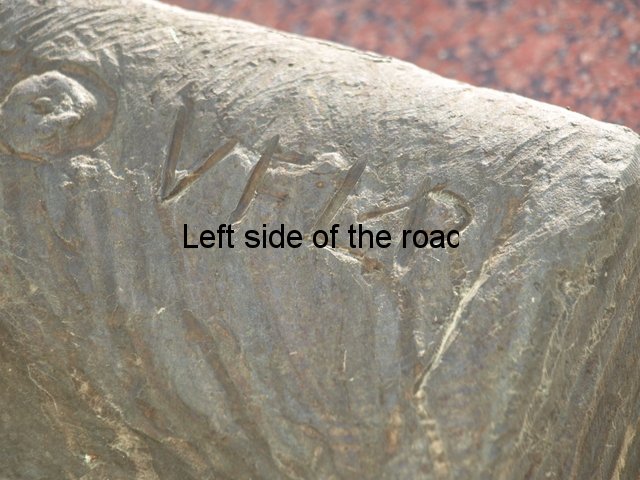
Carved into the wooden stock of the rifle are the letters VFLP, signifying “Vdekje Fashizmit – Liri Popullit!” (“Death to Fascism – Freedom to the People!”). This has been seen on a few lapidars previously described, such as Heroic Peza, the Peza War Memorial and the Arch of Drashovice. This tradition of writing slogans on weapons was begun in the 19th century during nationalist struggles and was adopted by the National Liberation fighters in WWII. As well as other imagery, these letters on her weapon declare that she is a Communist Party member.

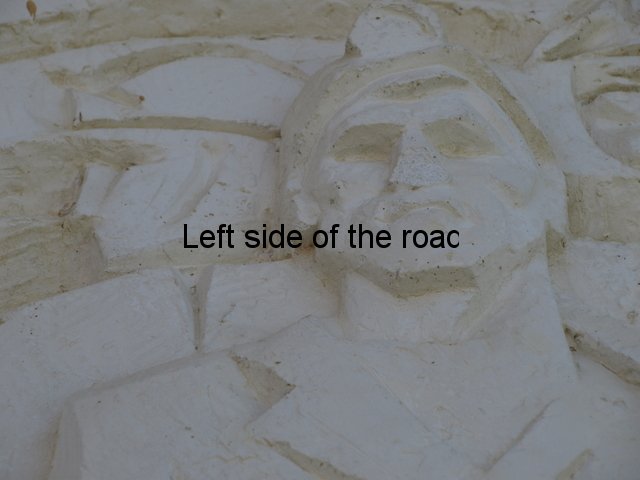
The young woman is shown in a semi profile and, as I have already said, she emerges from the folds of the flag so we really only see the top half of her body. She’s wearing a thick woollen sweater and around her neck she has what would have been a red bandana, together with the star on her cap a signifier of her political allegiance to the Communist cause. A full head of shoulder length hair pushes out from under her cap.

The bottom half of the bronze statue is fixed to a concrete block faced with slabs of red marble. The top half of the statue extends above the block creating the idea of the free-flowing of the flag and gives the impression that the young woman is almost flying, taking off from the block.

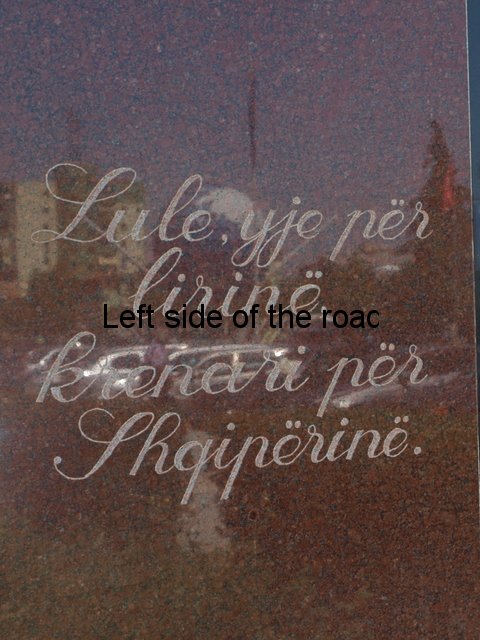
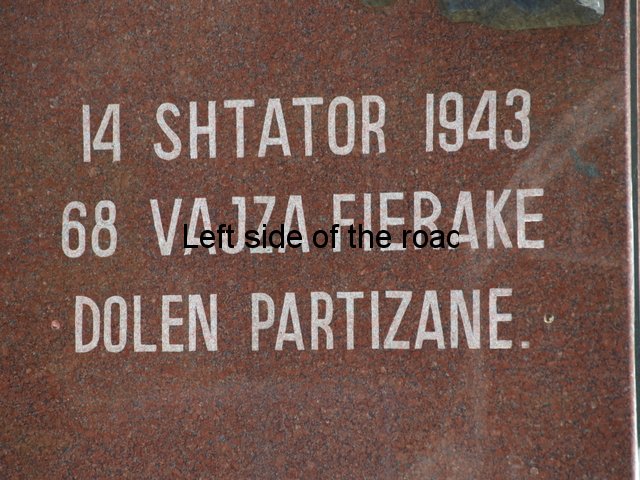
There are two inscriptions on the modern pedestal, on the front:

14 shtator 1943 68 vajza Fierake dolen partizane

‘On 14th September 1943 68 girls from Fier blossomed into Partisans’.

On the back:

Lule, yje për lirinë krenari për Shqipërinë

Flowers, stars for freedom, the pride of Albania

There are certain similarities to the work of Hektor Dule of the female figure which is in what used to be the National Assembly Hall in Tirana – the fluttering material, the figure seeming to emerge from, as well as being a part of, the national flag, together with the determination on the face of the woman.

Although separated by a road and barely 10 metres there’s a world of difference between this depiction of a female partisan and the travesty that is the new statue of young Liri Gero.

This close proximity of two different ideologies, two different world views, as depicted in art helps to understand both. The new Liri statue is populist in place of being popular, in the sense of presenting an image to which ordinary people can relate. It represents the young women as young women see themselves in today’s Albania, not concerned with their own national identity but aiming to ape the banalities of capitalist culture. In a sense it’s the result of the ‘celebrity culture’, the facile, the emptiness of present existence where individuals become famous for being famous, not for anything significant they might have achieved.

The new is brash, vulgar, noisy – it screams at you. But it has nothing to say.

The old is serene, dignified, full of symbolism and meaning.

I read an article where a near-contemporary of Liri and the other young women bemoans the fact that the young people of Fier today don’t know the story of what happened during the occupation. Not only do that not know they don’t want to know. They are so caught up in the accumulation of consumer goods, the search for the ‘good life’, that they don’t know where they got to where they are now. But neo-liberalism doesn’t want people to remember the past, if they did they might want to change the future. Already the crash of 2008 is being forgotten – to be remembered when the next one comes along. And if you can’t completely forget the past – as has been the attempts in the destruction of lapidars and statues throughout the country over the years – then you can distort history so that any meaning is taken out of the images.

If there’s a tragedy surrounding the life of young Liri Gero it’s the way that life, and its violent end, is being ‘celebrated’ in the 21st century.

Location:

About 50 metres south from Sheshi Pavarësia on Rruga Ramiz Aranitasi

GPS:

N 40.724719

E 19.557984

DMS:

40° 43′ 28.9884” N

19° 33′ 28.7424” E

Altitude:

24 m

More on Albania …..
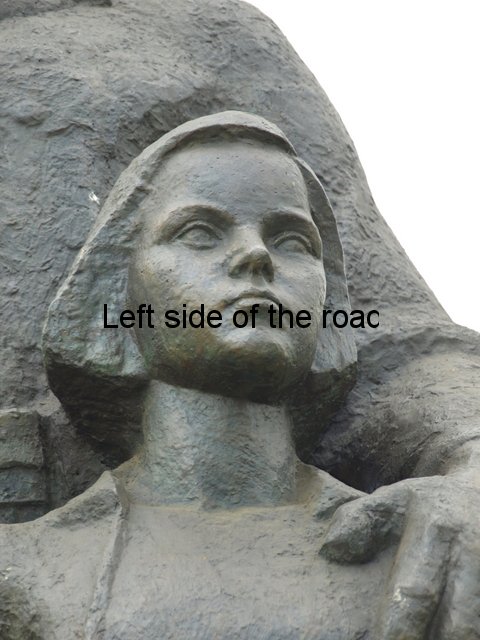
Partisan and Child, Borove

Partisan and Child, Borove

Partisan and Child, Borove

More on Albania …..

Partisan and Child, Borove

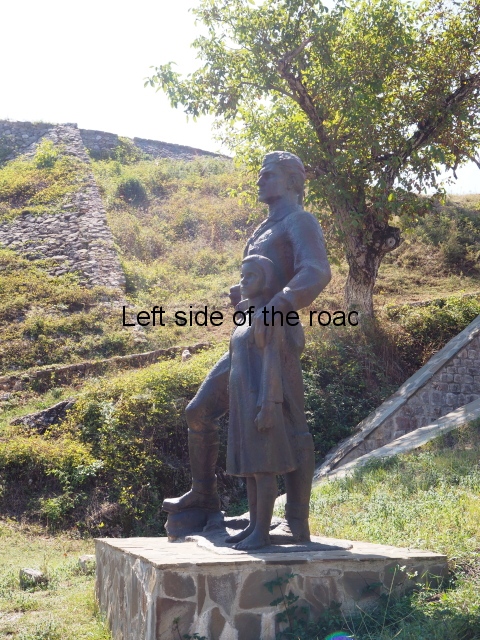
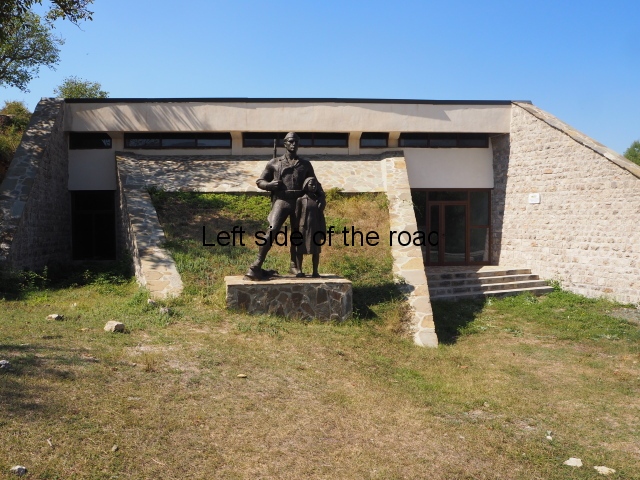
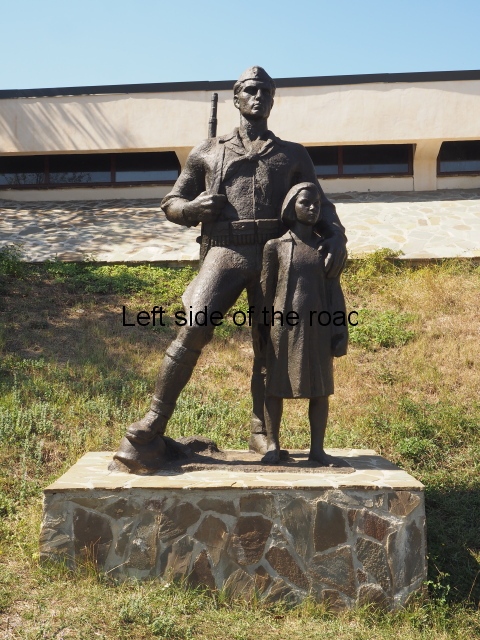
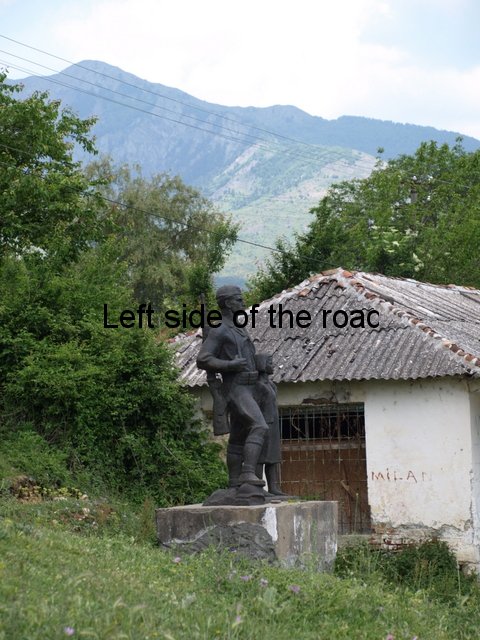
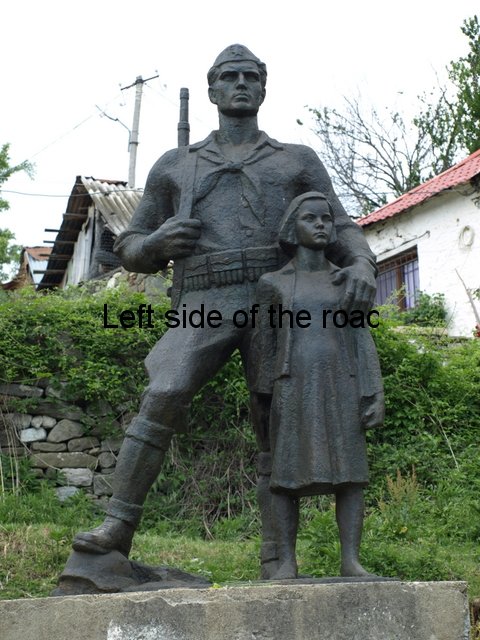
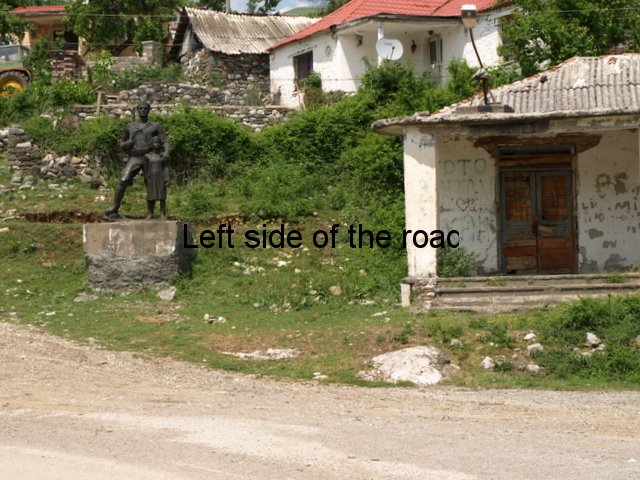
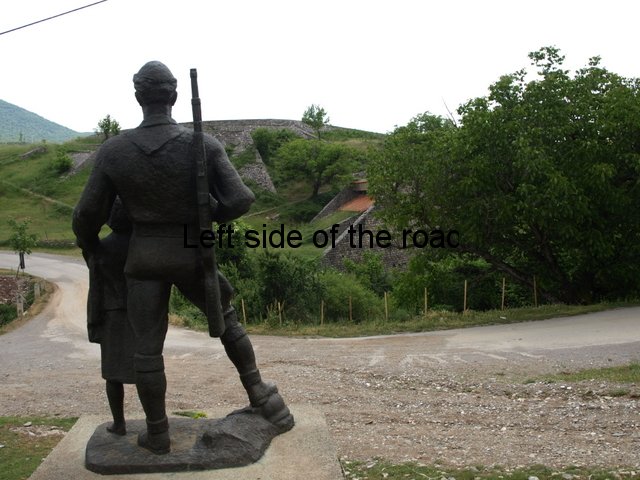
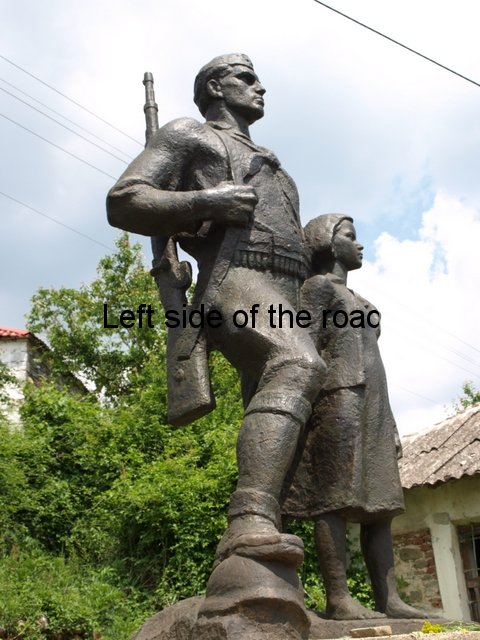
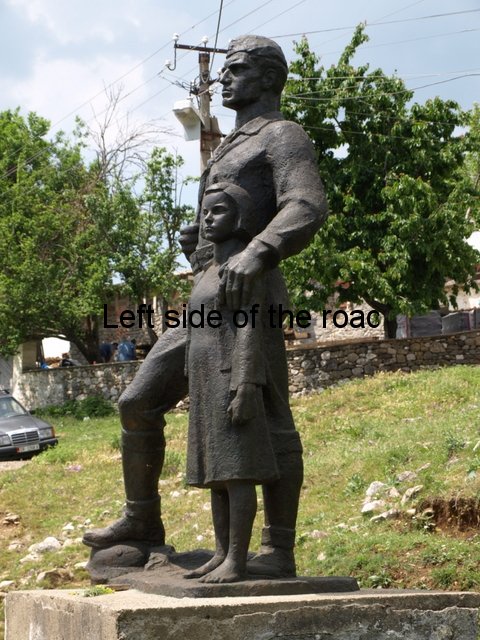
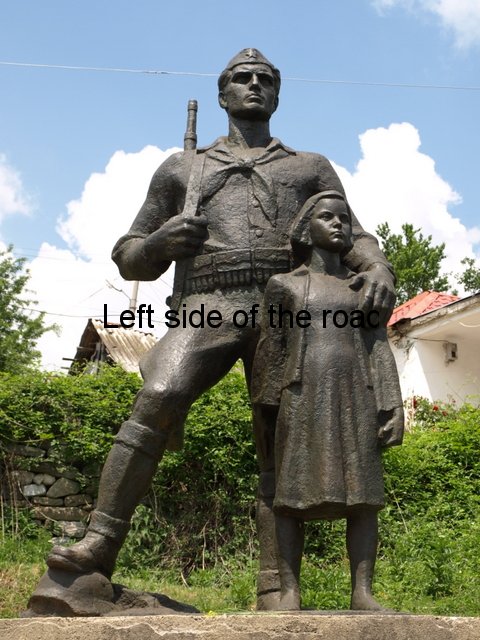
The statue of a Partisan and Child, just beside the main road passing through the small village of Borove in the south-east of the country, is one of the most charming of Albanian monuments but its charm obscures a much darker story. That story is less obvious now than it was in 1968 when it was created, in a different location and part of a bigger tableau.

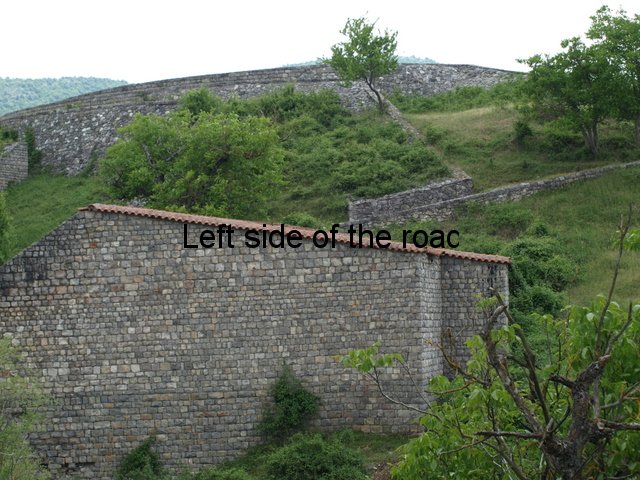
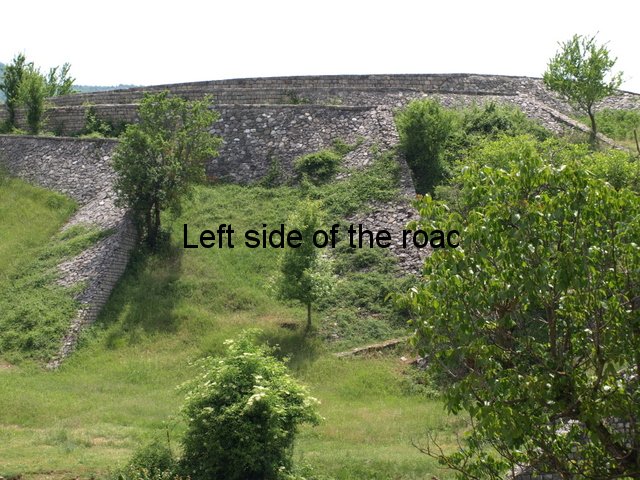
It is the work of two sculptors, Ilia Xhano and Piro Dollaku, and the original design incorporated a panel depicting people from the village as well as a tall lapidar with a star at its summit. This was erected on the rocky outcrop upon which the Martyrs’ Cemetery was built, across the main road from the bulk of the present village.

Monument to Borova, Erseke - 01

Monument to Borova, Erseke – 01

I won’t go into a great detail here (I’ll leave that for when I write about the description of the present arrangement at the cemetery) but it will make sense of what follows if you know that the original monument was constructed to commemorate those who died at the hands of the Nazis on July 9th 1943. (Such events making the construction of the German War Memorial in Tirana and insult to their memory.)

At that time Albania was under the nominal control of the Italian Fascists but the German variety were in Greece. A few days before the massacre a German army convoy used Albania as a shortcut to join other forces in Greece. As it passed close to the village of Borove it was attacked by a unit of the Albanian National Liberation Army. A battle ensued for a few hours but eventually the convoy was able to continue along its way.

The German High Command decided to pay the Albanian people for their impertinence in defending their national integrity and three days after the attack on the convoy returned to the village and killed all they could find, as was usually the case in such massacres in wartime, mainly women, children and old men. Those who weren’t shot were herded into the village church and then burnt alive. A total of 107 people were killed that day. Before they left the Fascists burnt down or otherwise destroyed every building in the village.

This herding of the people is what is depicted on the panel of the original monument. (It still exists having been placed on the wall at the entrance to the cemetery.)

Monument to Borova, Erseke - 03

Monument to Borova, Erseke – 03

If we now return to the statue we find that we have a different story and I’m not sure why the decision was made to change the narrative. I have no exact date when the changes were made but from other indicators probably sometime in the mid-1980s. It was also probably at that time that the plaster sculpture was replaced by the more substantial bronze version that we see now.

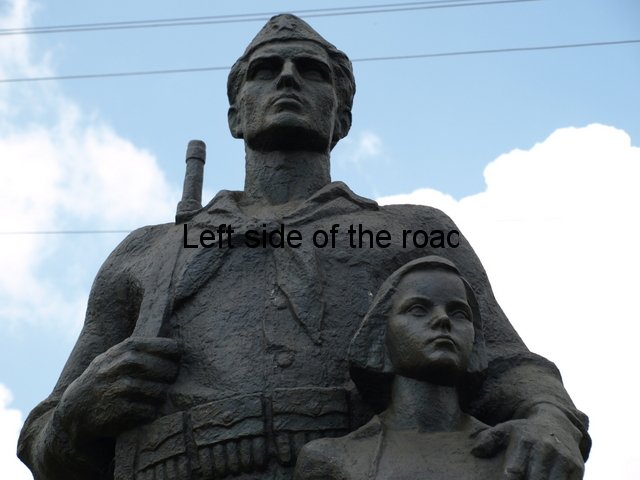
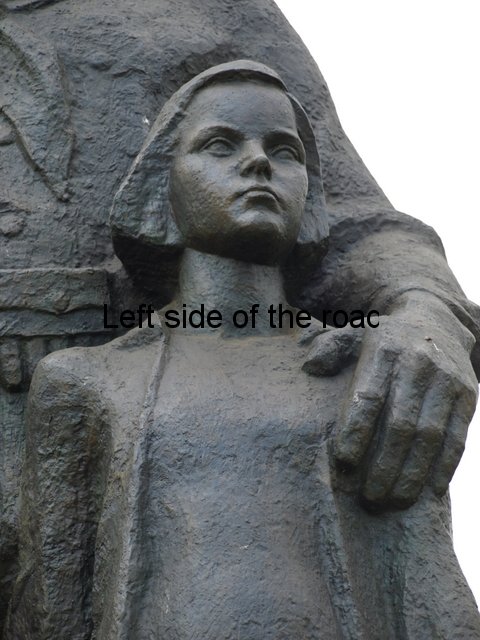
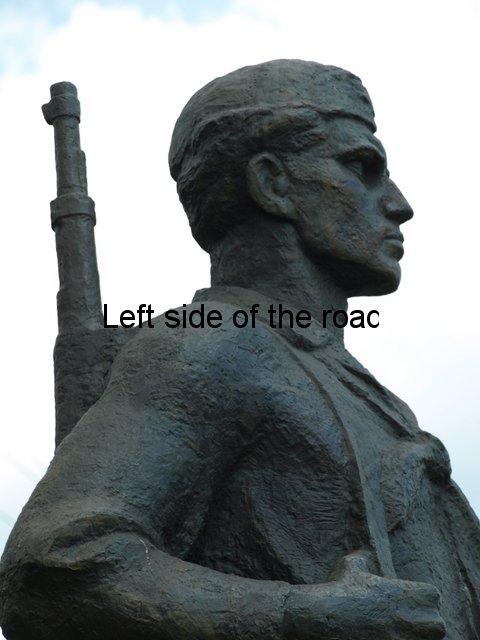
Before the story was clear. On the left the panel depicting the last moments of some of the villagers. In the middle the column with the star at the top symbolising the victory of the Communists in liberating their country. On the right the Partisan and Child symbolised the fact that it was the Partisan Army that threw the Fascists out of the country, the rifle on his shoulder emphasising that what had been gained by the gun could only be defended by the gun (as I suggested in my description of some of the images on the Gjirokaster Education monument) and his protective hand on the young girl’s shoulder making references to the future.

But in its present location that narrative is not there. Socialist Realist Art is not just about the image but the message that the image is attempting to communicate. It’s still a fine statue. It still has meaning – but that meaning has been lessened.

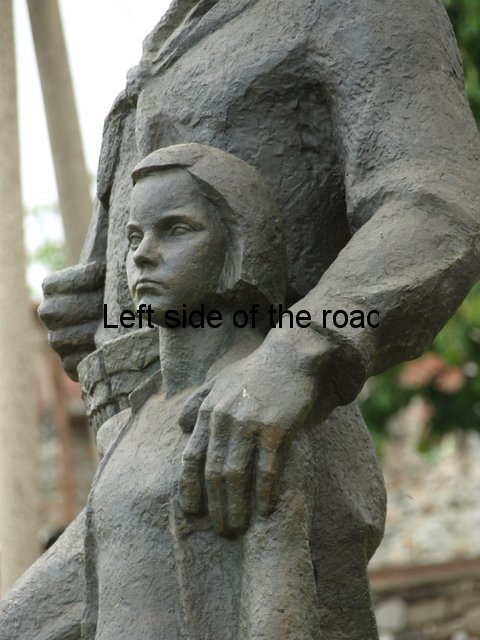
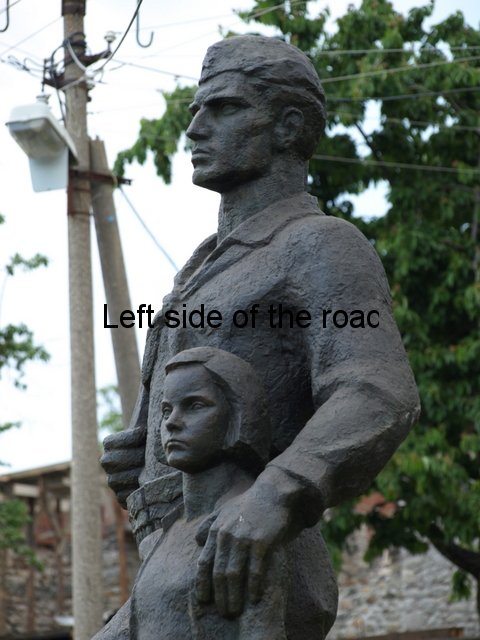
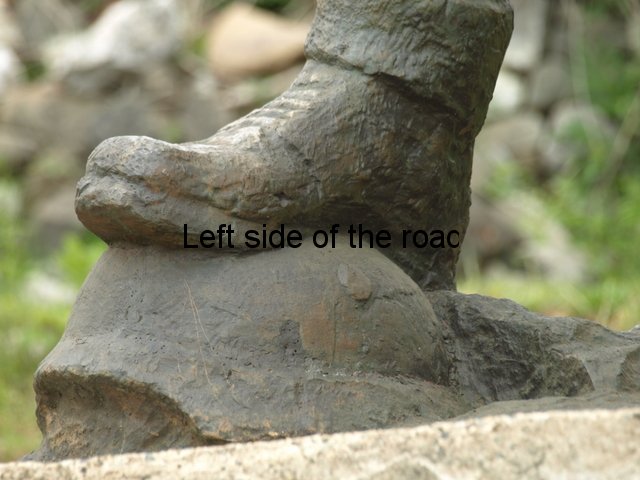
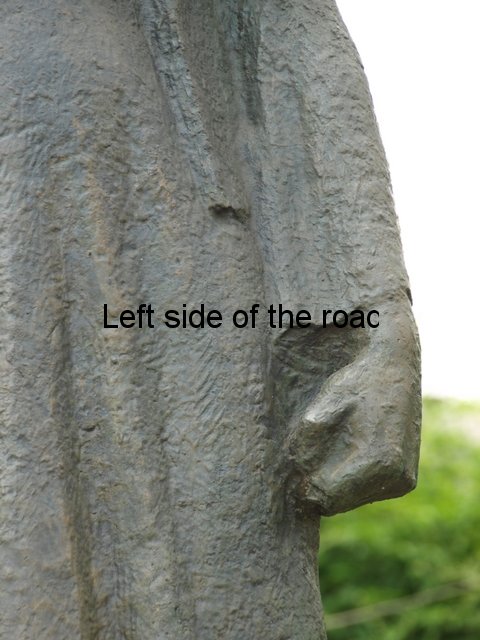
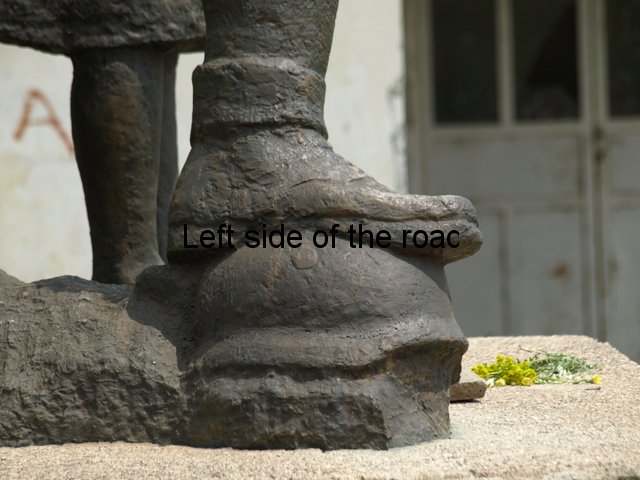
As in most partisan statues he has the star on his cap and what would have been the red bandana around his neck declaring that he is a Communist. He’s armed and prepared and willing to fight, he did so in the past he will do so in the future. His right foot is pressed down on a German Nazi soldier’s helmet symbolising the crushing and destruction of Fascism (although we should always remember Bertolt Brecht’s words ‘Do not rejoice in his defeat, you men. For though the world has stood up and stopped the bastard, the bitch that bore him is in heat again.’). His right hand holds the strap of his rifle, which is slung over his shoulder, and his left hand rests on the girl’s shoulder. This is indicating a willingness to protect her (and by inference all other children and the construction of Socialism) as well as a passing on of the task of fighting for, and defending once gained, that which was offered to the Albania people in 1943 with the winning of independence. Now, I accept, that some of that younger generation didn’t come up to the task but that’s by the by.

In its original context this protective and caring gesture had another meaning. Of the images on the panel there are two women, one cradling and using her own body to protect a babe in arms and another clutching a young boy close to her body. They were unarmed, they died. Mirroring this gesture the Partisan is saying I, and the future, will not die so easily.

Monument to Borova, Erseke - 02

Monument to Borova, Erseke – 02

I first saw this statue on my first visit to Albania in 2011, fleetingly, only for a matter of a second or so out of the corner of my eye as the bus passed through the village. Having had the chance to study it on a quite, sunny and warm, late May afternoon it lived up to its promise.

Borove probably doesn’t have many more people living there now than it did at the time of the massacre in 1943 but it boasts incredibly fine examples of art from the Socialist period. There’s a dignity emanating from this couple. They are confident, they know what they need to do, they know that it won’t be easy but they are determined. Both stand straight and firm, heads held high, looking to the future.

It’s also unique (at least so far from my experience) in that this is the first sculpture which places such a young child (and a female one at that, as I wrote in my post about the project in general, one of the aims of Albania’s Cultural revolution was to emphasis the role of women in society, past, present and future) in such a prominent role. There are children in other monuments but not as the main player. Here she is smaller but still an equal with the soldier.

Borove Museum and Martyrs' Cemetery

Borove Museum and Martyrs’ Cemetery

I may not be sure why the original sculpture was broken up but I can see logic in placing the Partisan and Child where it is. Most Martyrs’ Cemeteries had a small museum eventually connected to them. I’ve not encountered one that is still intact and many of them were looted in the 1990s – whether by enemies or friends of Socialism is unsure. Directly across the road from the sculpture is a space, right next to the hill, that shows signs of a recent renovation of the windows and doors – certainly later than 1990. Whatever work was started it was put on hold some time ago. If it was a ‘working’ museum the statue opposite the entrance would make sense.

New position of the statue

Partisan and Child - Borove - New position

Partisan and Child – Borove – New position

On a visit to Borove in the early autumn of 2019 I was shocked to see, when I came into the village from the direction of Erseke, an empty plinth where I expected to see one of my favourite Albanian lapidars.

However, it was relief that on looking to the other side of the road I saw that the Partisan and Child had be re-positioned and now stands on a lower plinth in front of the small structure under the martyrs’ Cemetery mound. As it now stands on a lower plinth it’s now possible to have a good walk around the statue and fell the texture of the bronze.

I assume the building, that has never been anything but a dirty and empty room, was originally designed as a museum but if it ever operated as such I don’t know. The road from Erseke to Permet is a particularly quiet road, even by Albanian standards. Few vehicles pass during the day and even fewer would even know, or notice, the statue and realise there’s a large memorial cemetery atop the mound around which the road winds as it leaves the village and heads south. And on the handful of occasions I’ve been to Borove I’ve never actually seen anyone walking in the village. Nonetheless it would be paying respect of the murdered villagers if there was some sort of memorial in the form of a museum inside the building.

The lack of a museum, which tells the story of the event during the national Liberation War, means the slaughter of the villages by the Nazis in retaliation for a Partisan ambush in the hills above the village is being forgotten. The only time the people are remembered is when the German Embassy makes a meaningless gesture of atonement on the anniversary of the murders on July 9th – although I’m not sure if that still takes place every year.

Location:

If you are heading south, coming from the direction of Erseke, the sculpture is (now) on the right hand side as you come into the village of Borove, in front of the abandoned museum below the cemetery mound. Blink and you’ll miss it as the road twists and turns as it goes around the rocky outcrop of the cemetery and then leaves Borove behind.

GPS:

40.310928

20.65264103

DMS:

40° 18′ 39.3408” N

20° 39′ 9.5077” E

Altitude:

967.3m

More on Albania …..

Education Monument – Gjirokastra

Education Monument - Gjirokaster

Education Monument – Gjirokaster

More on Albania …..

Education Monument – Gjirokastra

There’s a unique lapidar in Gjirokaster, in southern Albania, which was erected to commemorate the struggle for education in the Albanian language when the country was occupied by the Ottoman Empire. This monument to education is an obelisk in the shape of a stylised scroll, or a certificate rolled up, upon which are carved images depicting the struggles of the past as well as the intentions for the future. Its official name is ‘Obelisku kushtuar pionierëve të arsimit shqip’ (‘Obelisk dedicated to the pioneers of education in [the] Albanian [language]’.)
As with many of the Albanian lapidars this one is the result of the collaboration of three sculptors, Mumtaz Dhrami (Heroic Peze, Drashovice, Independence in Vlora, amongst others), Ksenofon Kostaqi (Dancers and Musicians, Gjirokaster) and Stefan Papamihali (Partisan, Gjirokaster). To the best of my knowledge this was inaugurated in 1983 (on the 40th anniversary of the liberation from the Italian Fascists – the Nazis came back for a while) when a number of other monuments were constructed throughout the town.

It’s worthwhile remembering that tiny Albania, because of its strategic position, was the object of desire for many imperialist powers, for a period of more than two thousand years. The last major imperialist power to hold sway in the country for any length of time was the Ottoman Empire based in Turkey. That empire wanted to impose total control and this included the language spoken and taught in schools. Therefore the struggle to maintain and develop the Albanian language was an anti-imperialist and progressive struggle which developed throughout the 19th and into the 29th century.

Education Monument - Zamir Mati

Education Monument – Zamir Mati

The obelisk is made from the local limestone and the story unravels as you look at it from the face in front of you at the top of the steps and then continues up and around in a clockwise direction.

The first carving is of disembodied hands, one holding a flaming torch, the other a book and an olive branch. These can mean slightly different things depending upon their context and location. The torch can symbolise liberty (as in the Statue in New York Harbour) or light. As this is an education monument it’s more likely representing the light that comes to an individual once they have access to education. The other hand holds both the book and the olive branch symbolising that through reading and education can come peace.

Education Symbol

Education Symbol

Allegories are always complex. You have to take into account the situation in which Albania found itself in 1983. The break with the Chinese revisionists in the 70s had meant that the country was alone in a hostile, capitalist world. They might have wanted peace but that was going to be difficult to achieve in such circumstances.

(Allegories can also be ironic. On the back of the present US ‘dime’ (10 cent piece), you can also find a torch and olive branch depicted, supposedly representing peace and liberty. There’s been little of that for many of the US population and even less for the peoples in countries where the US considers its interests are at stake. The oak tree, which is supposed to symbolise strength, has become a club with which to beat people, both nationally and internationally.)

Above the image of the hands are the words:

‘Pionierëve të gjuhës shqipe që në vitet e errëta të robërisë mbajtën gjallë dashurinë për liri, arsim, kulturë.’

Which translates as:

‘To the Pioneers of the Albanian language who, in the dark years of captivity, kept alive the love for freedom, education and culture.’

Before continuing around the obelisk look to the building at your back and to the plaque on the wall. The top part reads:

‘Ne kete godine ne shtator te vitit 1908, pas perpjekjeve te shumta te mesonjesve e patrioteve gjirokastrite u cel e para shkolle shqipe per qytetin me emerin ‘Liria’.’

Which translates as:

‘In this building, in September 1908, after numerous attempts by the patriotic educators of Gjirokaster, the first Albanian school in the town was opened, it was called ‘Freedom’

At the bottom of the plaque it states that the building was restored in 2002 with money from the California-based Packard Humanities Institute.

On each occasion I have been to see the lapidar the building has been closed so I don’t know if it contains any more information about the event in 1908.

Back to the obelisk.

Moving clockwise we come across an image of a man and a young boy. The man is dressed in the traditional, countryside, clothing of the beginning of the 20th century, a soft cap (qylafë) on his head down to the tsarouchi shoes (with its woollen pompom to keep out the water). He is armed – no real progress for the people will come unless it is fought for – and he holds a rifle, pointing downwards, in his left hand. Around his waist he wears an ammunition belt. Across his chest are the straps of small satchels that he wears on either side.

The young boy is dressed in more modern, western style dress, more like a suit and his shoes are also from a later period. Across his shoulder is the strap for a school satchel. He represents the future. He is carrying on the legacy that the man has fought for. It’s not always the case that those who do the fighting get the benefit (the many graves in the Martyrs’ Cemeteries are witness to that) but without such sacrifices no society can move on.

The young boy is walking up steps, again an allusion to the future, going upwards and onwards. But he’s not doing this alone. The right hand of the man is resting on the boy’s shoulder, an indication of both support and encouragement, and that hand is connected, through the man’s body, to the rifle. What has been gained by arms will also have to be defended by arms. This is a motif that appears elsewhere in Albania, for example, the statue of the Partisan and Child in Borove and in the Martyrs’ Cemetery at Lushnje.

The Past and the Future

The Past and the Future

The stance of both of them is confident and they are looking up, into the distance. This is one aspect which appears a great deal in Albanian lapidars – there are few bowed heads in either despair or defeat.

But the boy isn’t just going nowhere – he’s walking into a cloud of positive words that come as a consequence of education. Words that are in a different font, of different sizes but all suggesting the results of a properly organised educational system. Here we are moving away from a strictly historical celebration of the events in 1908. A school might have been established in Gjirokaster (and other locations in the years afterwards) but it wasn’t until the liberation of the country from Fascism in 1944 that the journey along the road of free and universal education was begun. As in most countries in Eastern Europe at that time (apart from the Soviet Union) illiteracy rates were astronomical.

I’m not sure if I’ve got all the words carved into the limestone. As we move around the monument the face that takes all the bad weather, from the north, starts to show signs of wear. However. I’m fairly sure about the majority.

Shoqrite – friendship; undra – wonder; vëllezëria – brotherhood; studenti – students; lidhja – unity; puntoreve – workers; bastiljes – captivity; mesuesue – teachers; drita – light (which was also the name of the magazine of the Albanian Writers and Artists Union, with the same font); shpresa – hope; kandile – oil lamp, candle, light; bashkimi – union.

OK, some of them are not directly connected to education but these words establish the general principles and themes of a socialist state in construction, which is impossible with an uneducated population (and even difficult with) and is why the promise of universal education is a pledge by virtually all national liberation movements, wherever and whenever they might be.

These words are inscribed upon a banner which is being held by the three individuals higher up this part of the obelisk. On the right hand side of the group is what looks like an academic. He’s fairly smartly dressed, perhaps early 20th century sophisticated, but not in a western style, more a wealthy local style that is beginning to adapt to western influences. He is wearing a fez and a topcoat, is grabbing hold of the banner with his left hand and has a book clasped to his chest in his right hand (in the same way as the worker did on the mosaic of the national history museum in Tirana – before its vandalisation). I assume he represents one of those pioneers mentioned before or one of the teachers in the ‘Freedom’ school.

On the left of the group is another man. Again he’s dressed in the style of the early part of the 20th century, but he’s not an academic, he’s a fighter and has hold of the top of the barrel of a rifle in his left hand. His right hand is gripping hold of the banner with the inscribed words of the future. So what we have here are the two forces which achieved the establishment of the school in 1908.

In between is another man, but this time he’s a worker, wearing the type of protective head covering which was typical of an engineer, or someone working in a steel plant, during the socialist period. (We have to remember that, although not producing anything now, Gjirokaster was the Albanian ‘Sheffield’ during socialism, producing the cutlery needs of the country. The deserted buildings alongside the main road from the border towards Tepelene, below the old town, is all that remains of that industry.)

His right hand is stretched out and the tips of his fingers seem to be touching the barrel of the rifle and his thumb is only inches away from the banner. He’s a worker, but everyone in socialism needs to be prepared to take up arms to defend the revolution and be ready to take up the banner of the revolution’s achievements once those that have gone before leave the scene.

High above this group of three, and almost at the top of the column, the double-headed eagle is carved into the stone. There’s no star above the heads as this is a monument to an event before the establishment of the People’s Republic. Above the eagles, in large letters, is the word ‘Baskimi’, meaning union, unity. Below the birds is the word ‘Drita’, meaning light, which is in inverted commas. I’m not sure why. The magazine of that name didn’t exist until more than 50 years later, when using the inverted commas would have been valid. Below that, now fading, is the date 1908.

Continuing the clockwise trajectory there is a fighting group from the end of the 19th century. This is the part of the monument that is most exposed to the elements and some of the images are difficult to make out.

At the bottom of the group a man is kneeling, looking forward, with a rifle in his right hand, the butt resting on the ground.

Above him, at his left shoulder is a group of three, a woman and two young children. She is looking in the same direction as the man below – as I said before, there’s always this symbolism of looking forward, confidently, to the future. She wears a kapica, a long scarf wrapped loosely around her head. In her right hand she is holding the top of the barrel of a rifle. Again, as in many Albanian lapidars and friezes, the women are more often than not armed, for example the Peze War Memorial. Her left hand rests on the left shoulder of a young child. This is the older of the two children, or at least the biggest, looking at his sibling, who is looking at him/her. This is the only one in the group who isn’t looking forward. I can’t make out the gender of the children as weathering and staining are greatest at this point.

Woman and children

Woman and children

So here we have a woman armed yet still protective of children, whether they be hers or not. Women played an active role in Albania’s liberation struggle, to a much greater extent in the war against Fascism but also in the independence battles of the 19th and early 20th centuries. So this woman can either represent all those heroines and/or could represent the idea of Mother Albania, as seen at the Tirana Martyrs’ Cemetery or in expelling the priest and the military from the country in the Armaments Museum in Gjirokaster Castle.

In front of the woman, and slightly above her, is another independence fighter. He is depicted striding forward, always that forward motion, determined and prepared. He holds a flag pole in his right hand, the banner fluttering above his head. It’s impossible to make out if anything is inscribed on the banner, i.e., the double-headed eagle. His left arm is fully stretched out behind him and is holding a rifle at the mechanism end of the barrel, the butt of which is just behind the head of the woman. Often there will be a person in a lapidar who is looking backwards, urging others behind to come forward, as in the monument to the students and teachers just around the corner in Gjirokaster, but here he is using a gesture with his rifle to achieve the same effect.

On both the men so far mentioned you can see the Albanian version of the tsarouchi shoes, with the sheep’s wool pompom at the toe.

Above the banner, and now almost at the top of the obelisk, is a group of three men, one in the act of firing, one about to do so and the third in the process of getting his rifle to his shoulder. We only see their head and shoulders but what can be made out is the type of hat they are wearing. This is a round and flat cap, similar to that worn by Çerçiz Topulli on the statue in the square that bears his name in Old Gjirokaster.

We have now gone around the clock face and are now at the point were we started but now look up higher and see a large group of children with their teacher. Above the group, in large letters, is the word ‘Mëmëdhue’, meaning Motherland – the idea of nationalism being a strong motif, especially in monuments that commemorate those events prior to 1944, after which socialist elements tend to become more dominant.

Then we have the letters ABC, obviously representing literacy, both reading and writing. The only other monument where I have seen this, so far, is on a smaller lapidar to education in the small village of Proger, not far from Korça. (Albanian uses the Latin alphabet but there are 36 letters as opposed to 26 in English.)

Below that is a compressed scene from a school classroom. There are eight children, three girls and 5 boys. These are young children so this is a class where they are learning the basics of the Albanian language. From what I can make out they are wearing some sort of school uniform which indicates to me that the scene is from a country school after liberation as I can’t imagine matters being so organised way back in 1908 (and girls might not have had ready access to education at that time).

Three of them have writing tablets and pens whilst three have books, with the other two it’s not clear. There’s a mix of attention to the teacher being depicted. Four of them are looking at the teacher, one seems to be looking out the window to the mountains, one of the girls has her back to us, another girl is reading and one of the boys is looking straight at us as we view the scene. All but one of the children are bear-headed, and he wears a fez.

Immediately above the group of children we can make out the legs of a blackboard easel, the blackboard itself merging into the rest of the monument. The teacher, to the right of the children, is bare-headed, wears a tie and his dress would seem to fit into the idea that the scene is late rather than early 20th century. In his left hand he holds an open book and in his right hand he holds a ball of chalk as if just about to write something on the board. His index finger is pointing to the B of the letters in an obvious reference to literacy.

The final piece of decoration is a star carved into the stone at its highest point. This is immediately above the hands with the torch, book and olive branch.

Generally the monument is in a good condition and doesn’t look like it has suffered from any vandalism. Where there is some degradation it seems to have been caused by the weather, on the north facing parts of the lapidar.

An article, The problem of the origin of the Albanian People and their language, originally published in New Albania, No 4 1977, provides the background to the question of Albanian identity and the origins of the language.

Holiday in Gjirokaster - Zamir Mati

Holiday in Gjirokaster – Zamir Mati

It’s also in a pleasant location. Whereas the streets of the old town can get busy, especially when large tour groups arrive in coaches for a day trip, I’ve never been to the monument when there have been more than a couple of people there. The fact that the approach is not obvious until you actually find it might be the reason for that. From the small balcony on which it stands you get a great view of both the old and the new town, as well as the mountains on either side of the River Drino valley, looking northwards in the direction of Tepelene. For a few years this would have been a good place to get a high view of the statue of Enver Hoxha that was located just a little lower down the hill (and where there are now a couple of expensive bars). Unfortunately Enver suffered a terminal attack in 1992.

Enver Hoxha, Gjirokaster

Enver Hoxha, Gjirokaster

How to find it:

Go up hill from Çerçiz Topulli Square and at the junction at the top (about 100m) take the higher of the two roads on the right and then immediately the narrow road on the left. Within a few metres on the right there’s an always open door, as if going into a house. Go up these stairs and through the building – if you smell decay mixed with stale urine then you’re in the right place. Coming out into the open the steps become wider and they take you to the small plateau upon which the obelisk stands.

GPS

40.074572

20.13804104

DMS

40° 4′ 28.4592” N

20° 8′ 16.9477” E

Altitude:

318.4m

More on Albania ……