‘Privatisation’ of Parc Guell?

Information Board Parc Guell

More on Catalunya/Catalonia

‘Privatisation’ of Parc Guell?

The Barcelona municipal council are considering charging admission for entry into Parc Guell, one of Antonio Gaudi´s gems, in order to get more money from visiting tourists, without improving access or services.  This is opposed both by tourists and the local residents.

Parc Guell, to the north of Barcelona, is the green area which offers one of the iconic panoramic views of the city below as well as being the place to see some of Antonio Guadi’s unique designs. If you haven’t yet been able to visit the park then you´d better do so soon if you don’t want to pay.

‘There’s money in them there hills’, according to the municipal government, now in the hands of the CiU party, the right-wing Catalan nationalist party. Every day thousands of tourists visit the park, most seemingly wanting to have their picture taken beside the dragon – which has become the symbol for the park itself. It pains the local grandees that so much money is virtually flowing out of the open gates.

So many people want to visit the area so why not charge them?

Many of the residents around the park are against this virtual privatisation as it would affect them directly and they are also angry that an increasing amount of the park has been paved over, presumably because that makes it cheaper to maintain.

As far as I can remember the park was accessible at all times but when I visited yesterday (the first time for more than 10 years) I was surprised at the substantial gates that prevent access after sunset. This restriction on access would have been instituted by the previous ‘socialist’ local government – who had had control of Barcelona City Council continuously since the death of Franco in 1975 – so a change of government would not necessarily mean a change of policy, if payment is introduced in the near future.

Especially in the peak summer months of July and August Barcelona is teeming with tourists and, as in so many other cities throughout the world, tourism is vital to the local economy. But as is becoming increasingly the case elsewhere, instead of being open and welcoming to visitors the main emphasis seems to be on how to milk them even more.

So far this policy has not had an adverse effect on tourism where surcharges have been introduced already for the mere temerity to want to visit the place, as has happened in Venice. Perhaps people will be prepared to pay ever more to see these places, perhaps not. But it is sad to read, yet again, that politicians consider that almost everything has a price. Don’t be too concerned about the pickpockets operating on the Rambla, it’s the bandits in the town hall who are after every cent you have.

It’s good that the local residents are against charging for entry to Parc Guell. However, one of the lines in their little poster to be seen in the vicinity of the park I find disconcerting. They talk about the ‘poor management of the affluence of visitors’. Does this mean that they don’t care where the tourists are fleeced as long as it doesn’t directly involve them?

March 2014 Update.

It was with a great deal of annoyance that I received the news that you now have to pay for entrance into the park. It was on the day before leaving Barcelona that I was told by Catalan friends that payment was now required to visit the Gaudï structures part of the park, the green space that is the majority of the area is still free to enter.

So the struggle against the privatisation of yet another public area has been lost. I know that the local people were against it but the state, whether local or national, and the greedy and avaricious will never give up until they lose their influence and power. They will always grind us down by their sheer determination to win – we, all too often, give in.

Not having visited Barcelona for more than I year I had missed out on the arguments. I’m sure I’d read that Güell himself had left the park to the people of Barcelona but by maintaining that the green spaces are still freely accessible and by employing a high-flying and expensive lawyer, together with a right-wing administration and judges with fingers in many lucrative pies the privateers have been able to get around whatever he might have desired a hundred years ago .

Not only do you now have to pay there is also a limit of 800 people visiting a day and if you arrive too late you might have a long wait.

Opening times:

25th October – 23rd March 08.30 – 18.00

24th March – 24th October 08.00 – 21.30

Entrance Fees:

Adults €8.00

Child (7 – 12)/Over 65/Disabled €5.60 – Under 7 free

Tickets can be bought at the ticket vending machines at Lesseps and Vallcarca Metro stations and at various ATMs close to the park, or at the park entrance itself.

7th March 2014

More on Catalunya/Catalonia

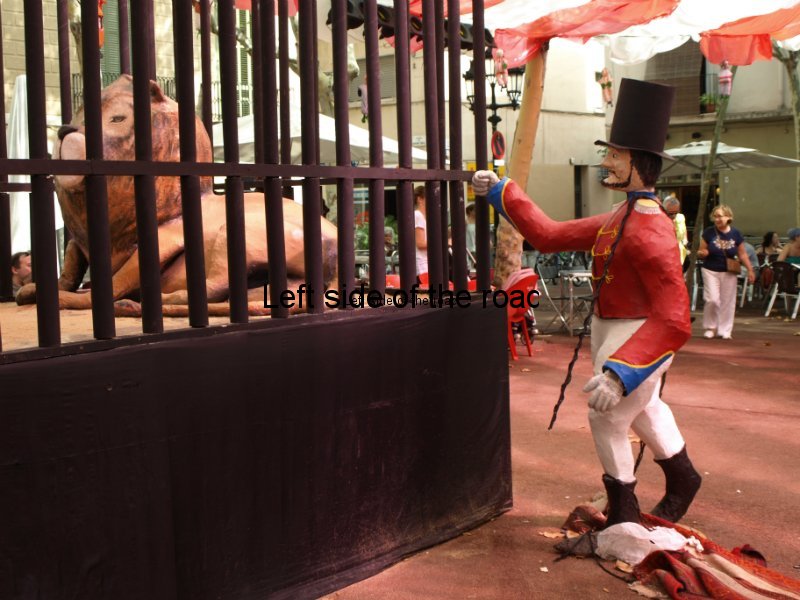
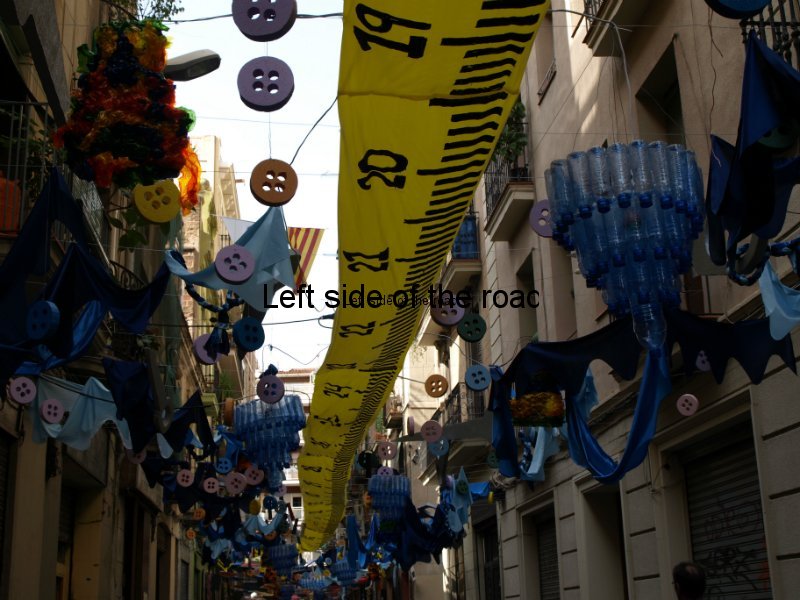
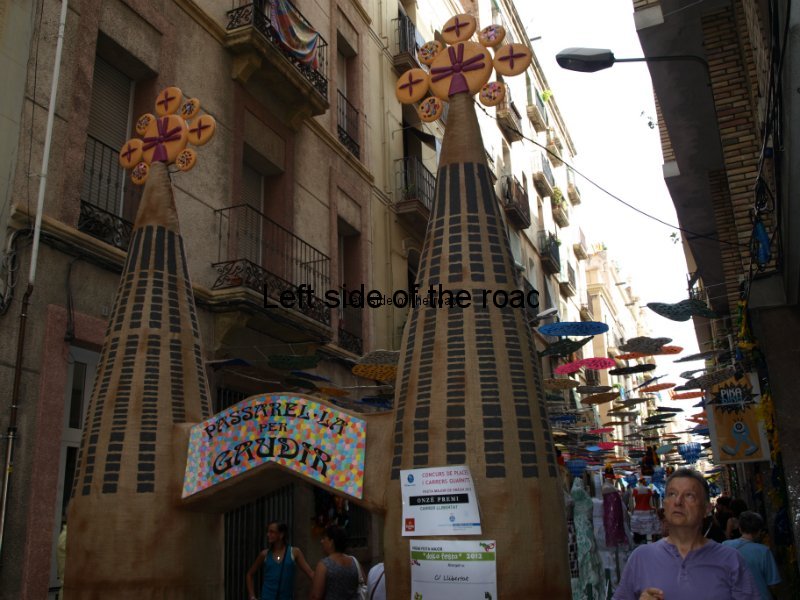
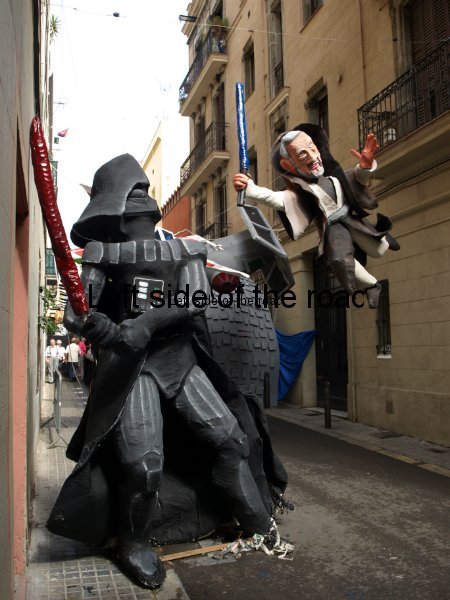
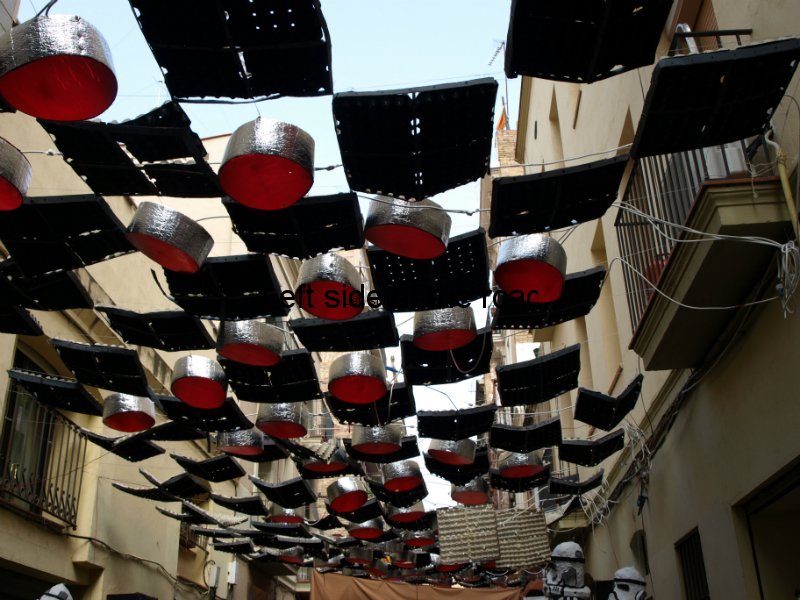
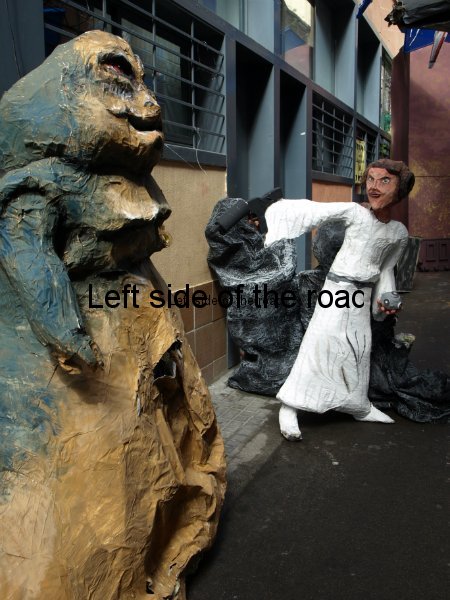
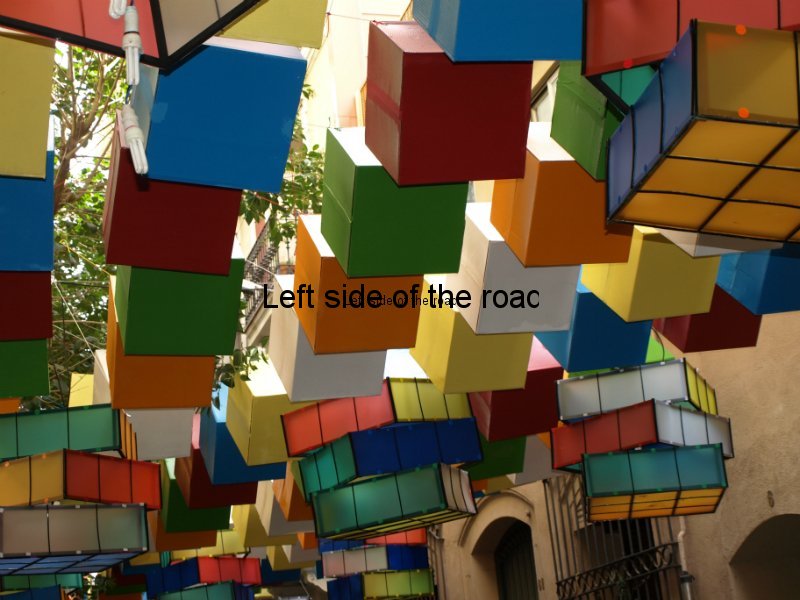
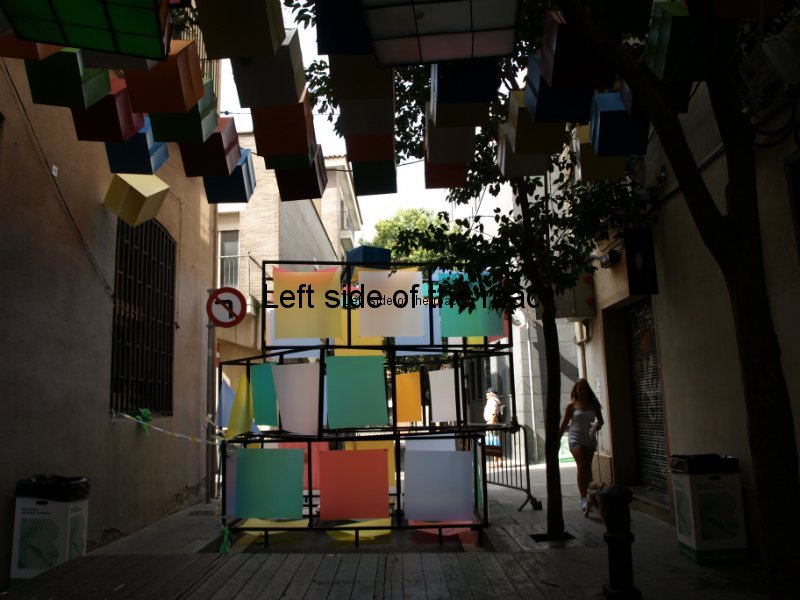
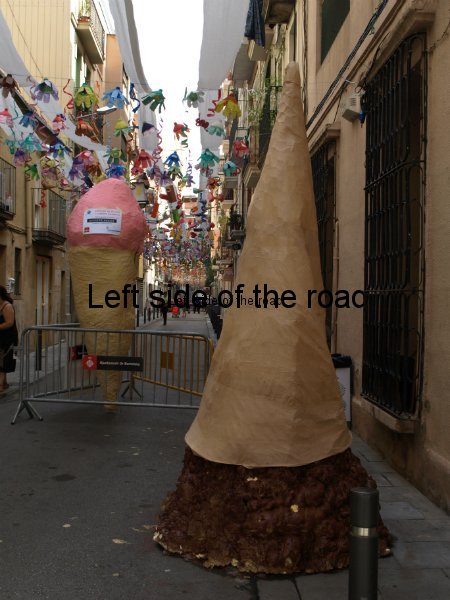
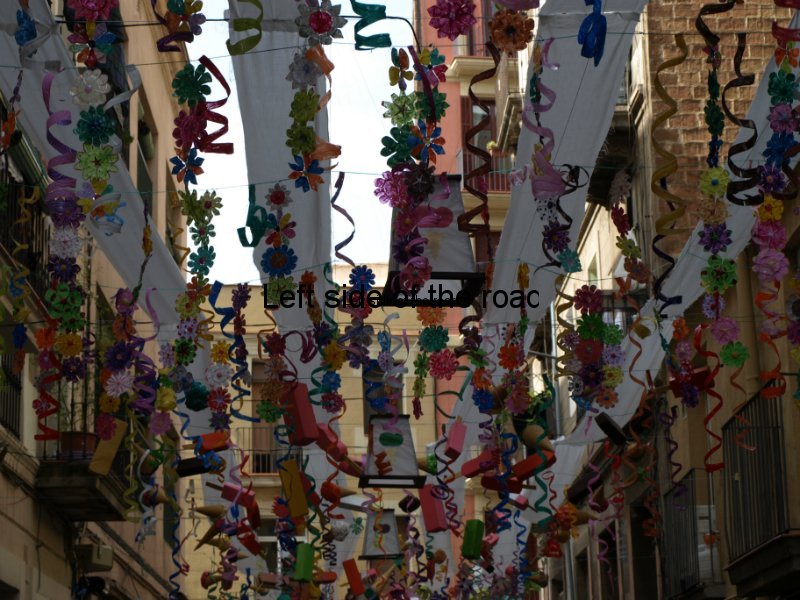
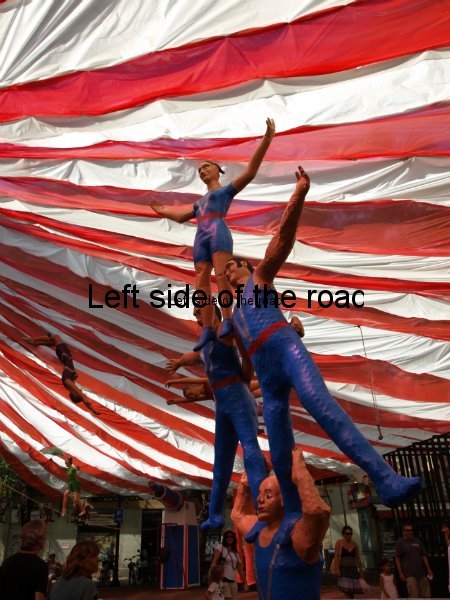
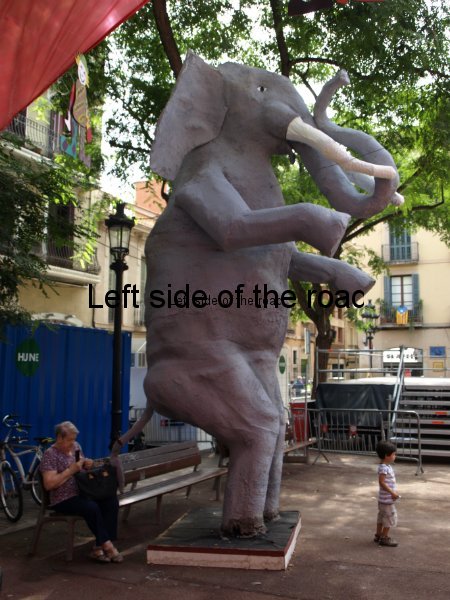
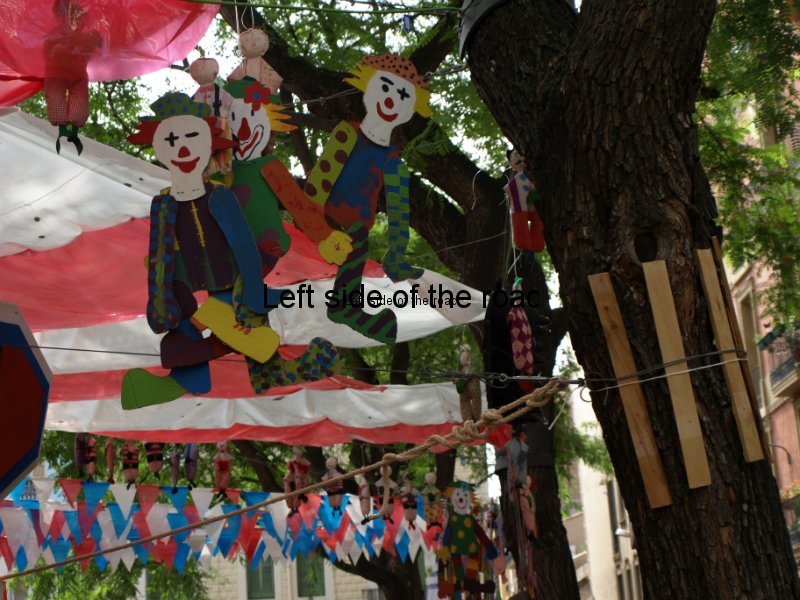
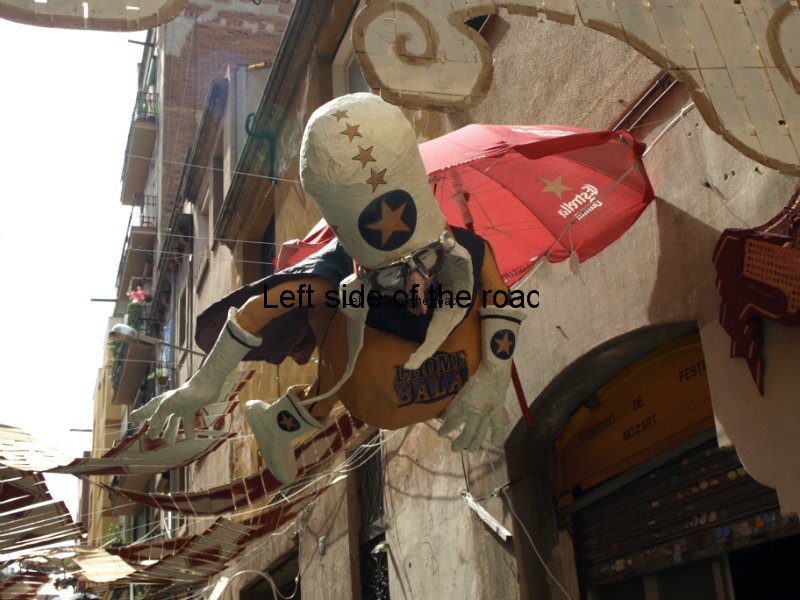
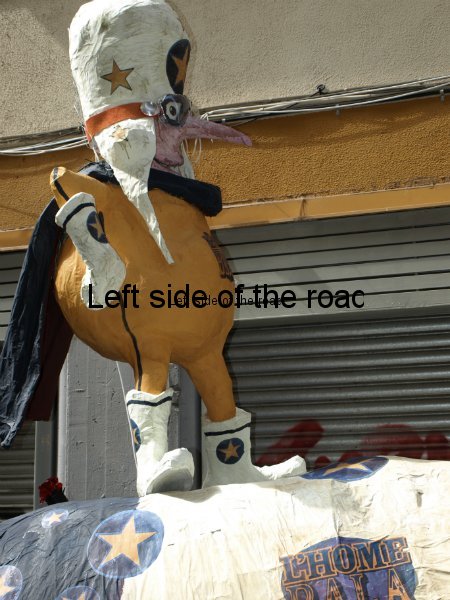
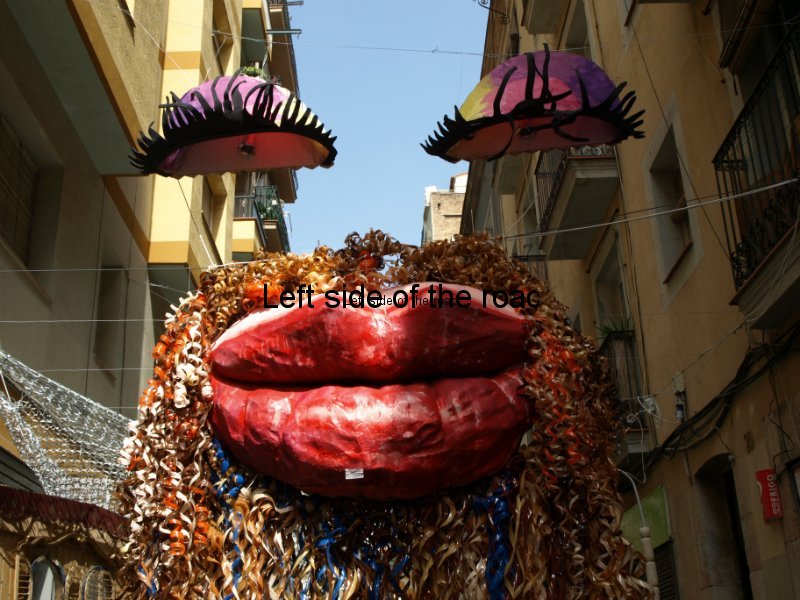
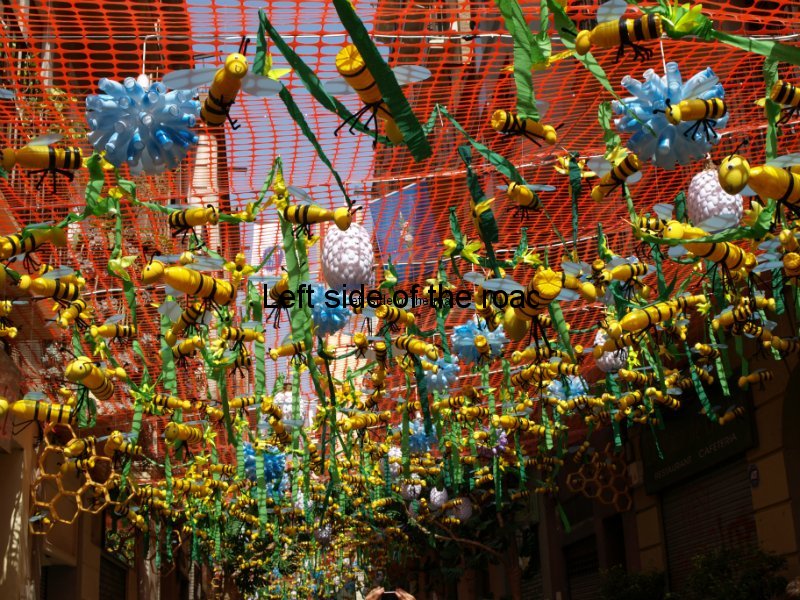
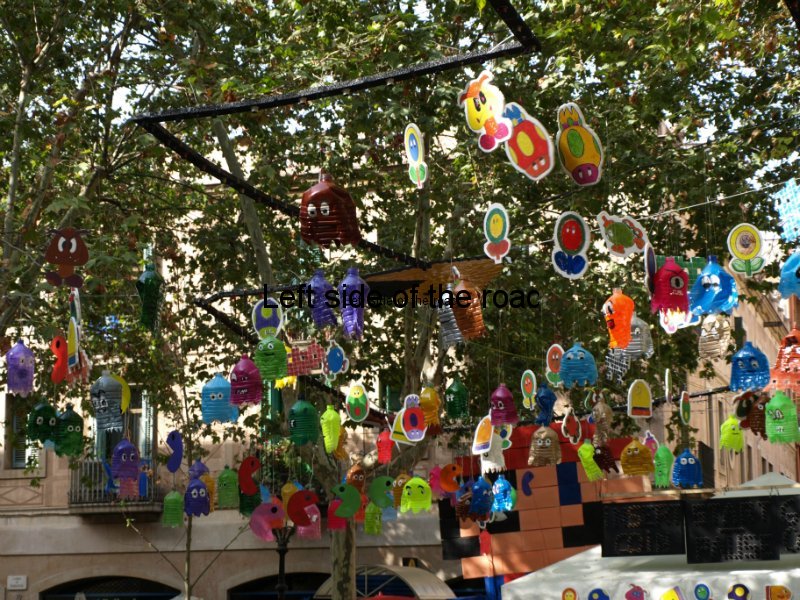
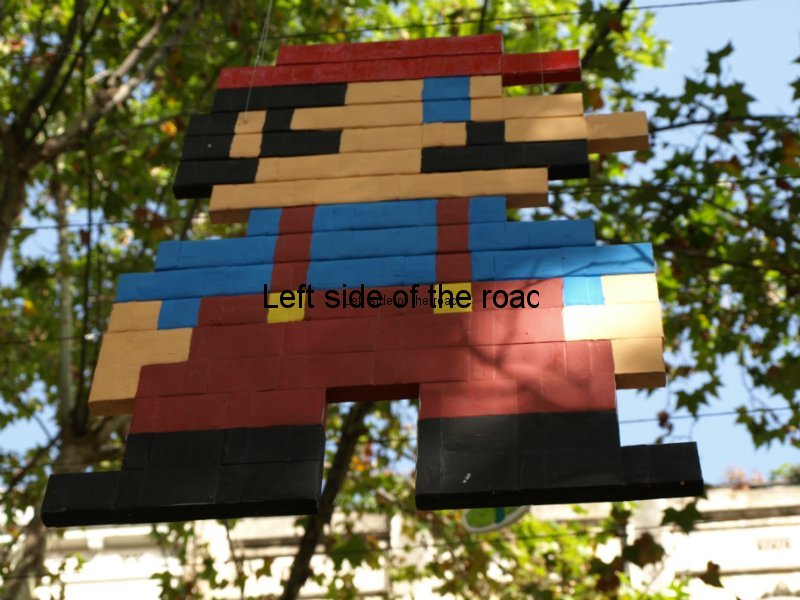
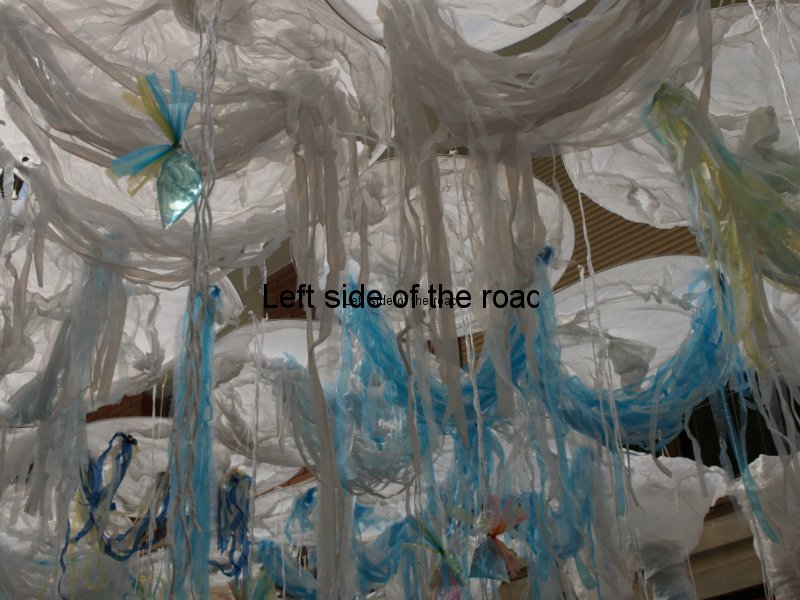
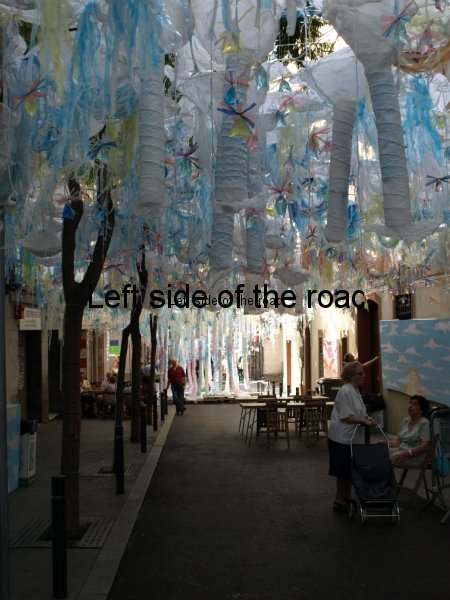
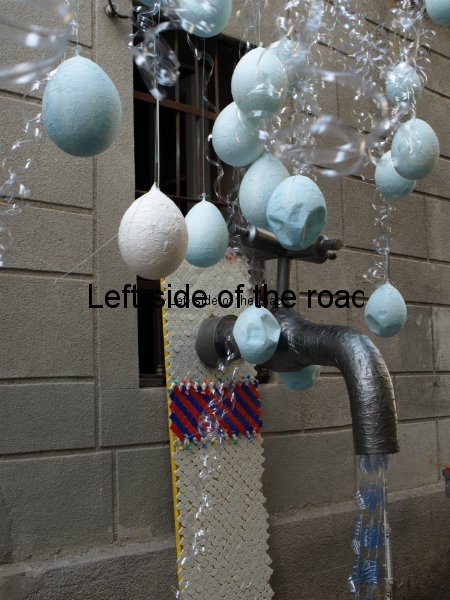
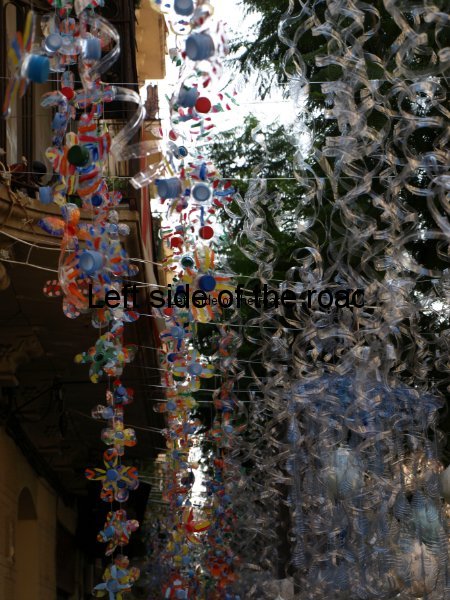
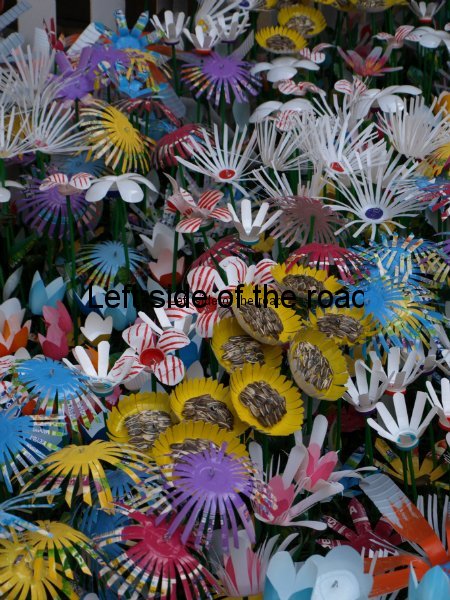
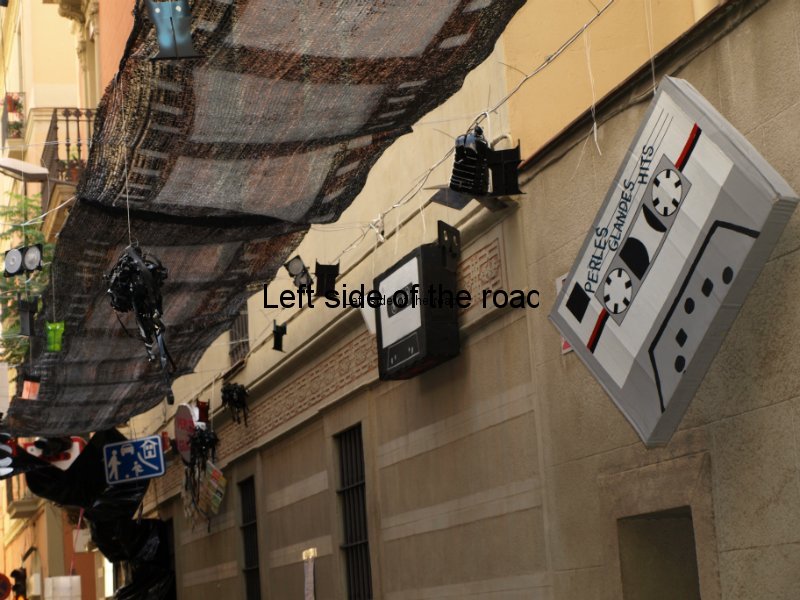
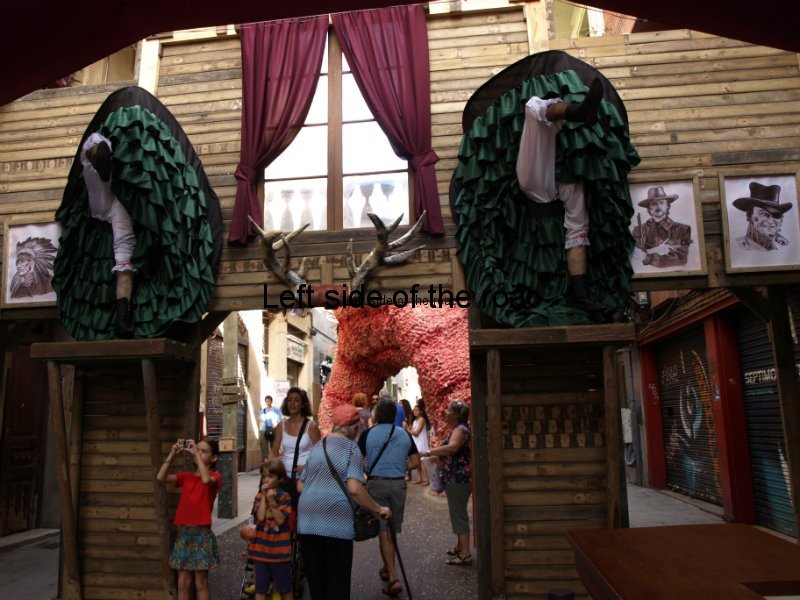
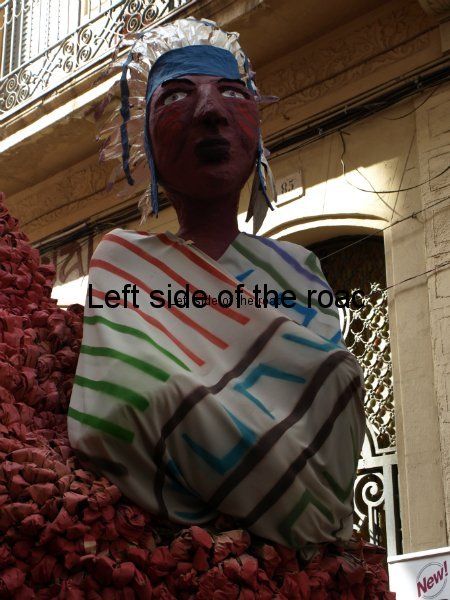
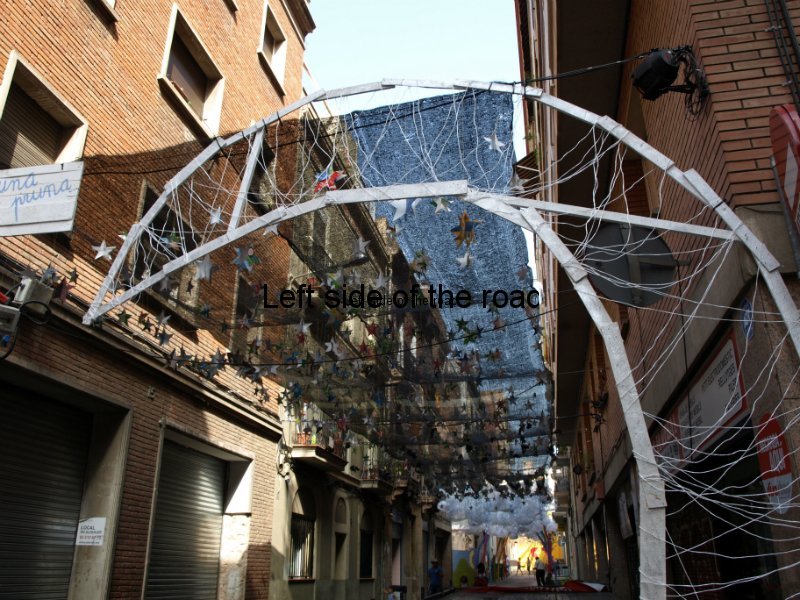
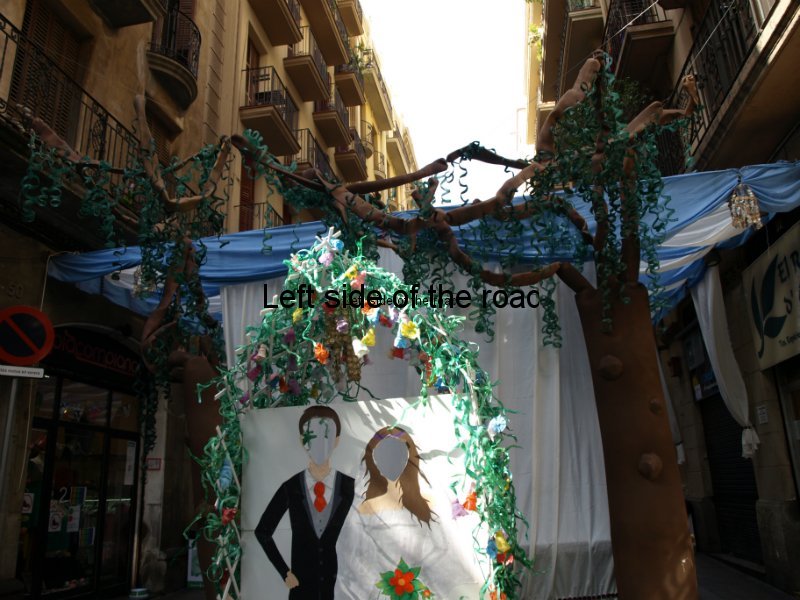
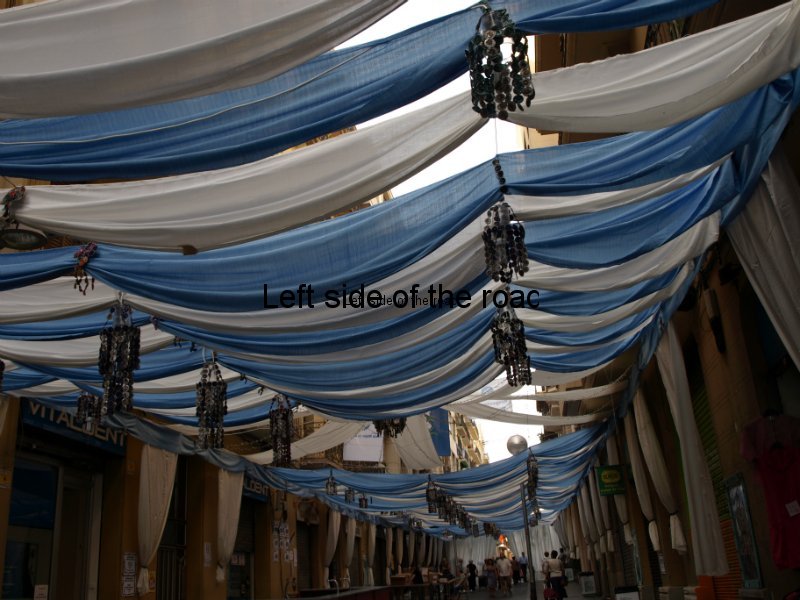
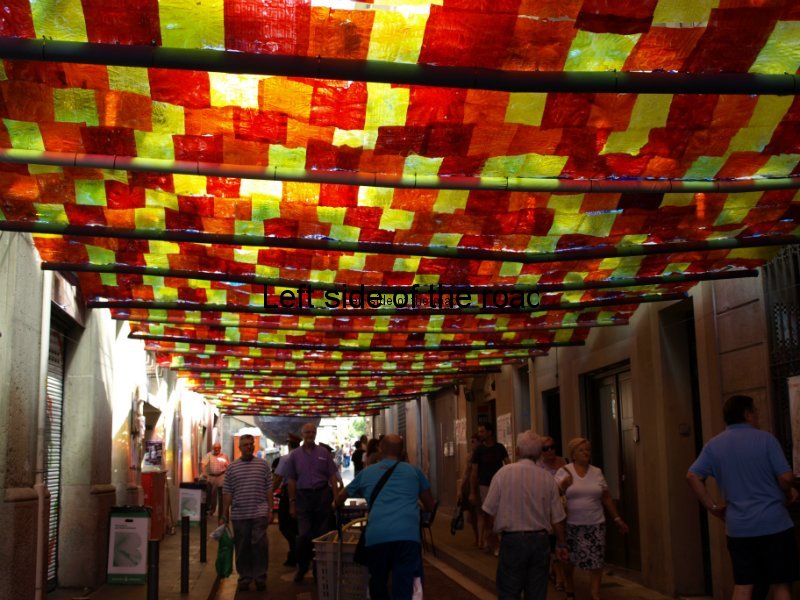
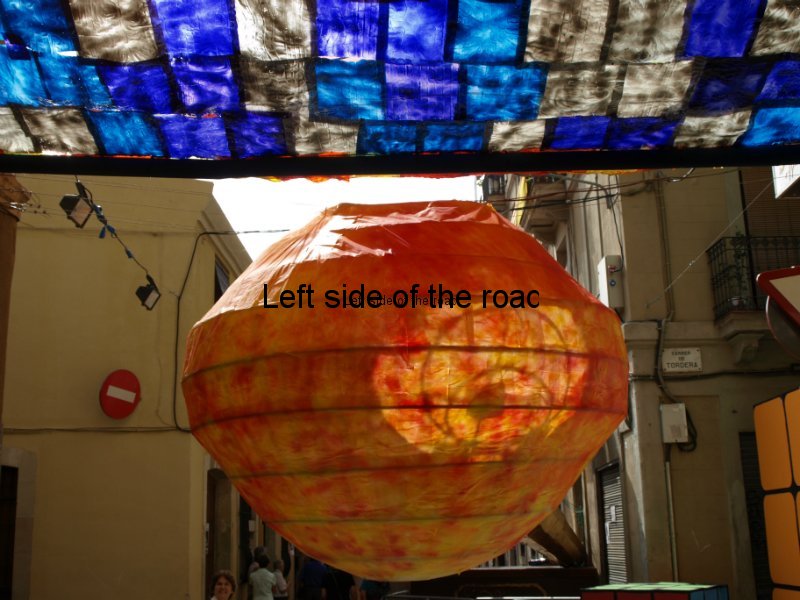
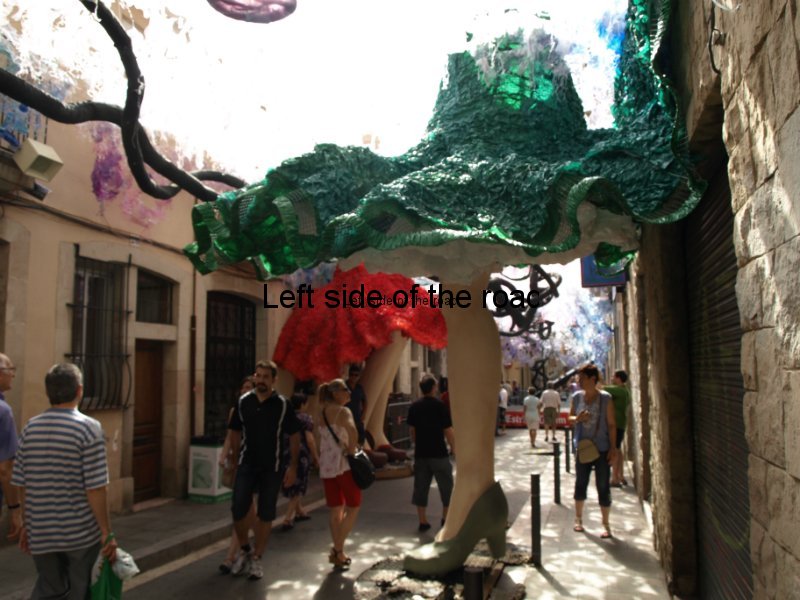
Carrers Guarnits in the Festa Major de Gracia, Barcelona, 2012

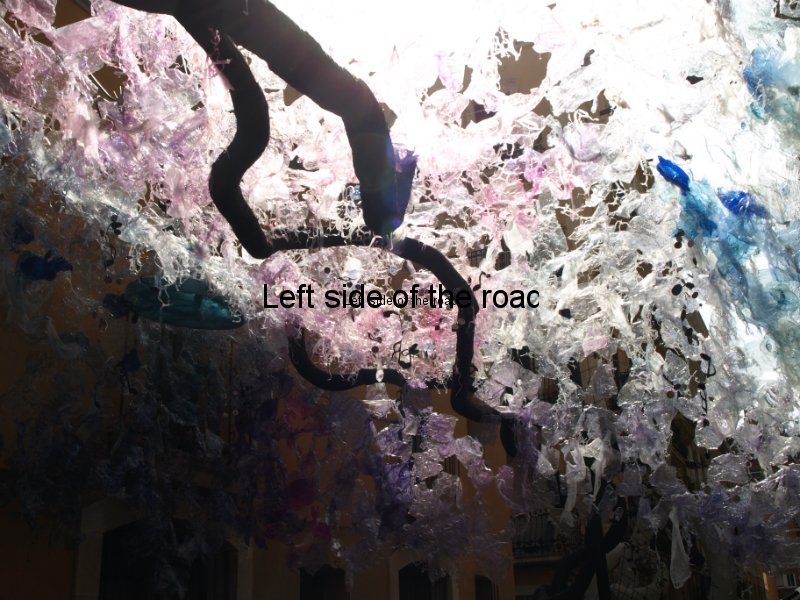
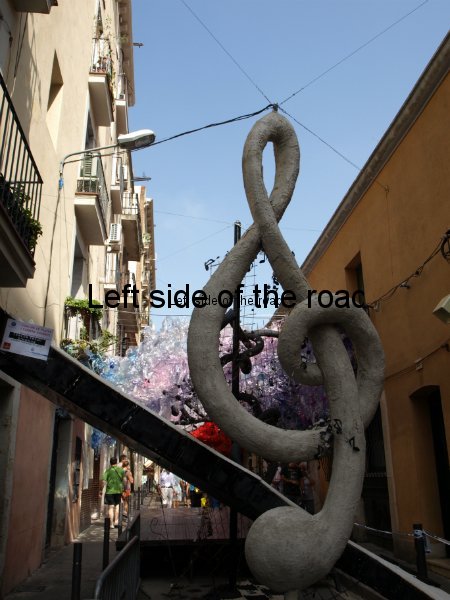
Carrers Guarnits, Gracia, Festa Major, Barcelona, 2012

More on Catalunya/Catalonia

Carrers Guarnits in the Festa Major de Gracia, Barcelona, 2012

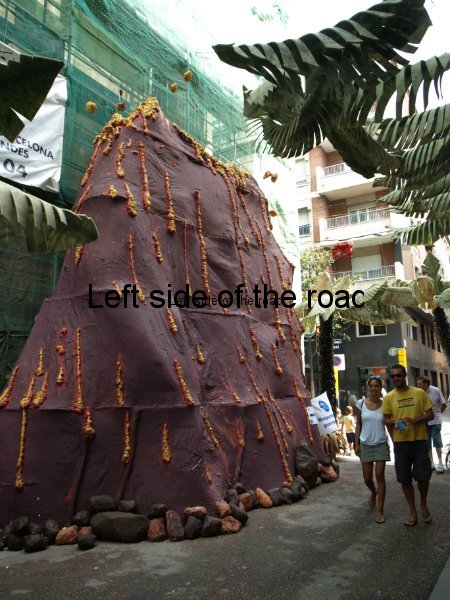
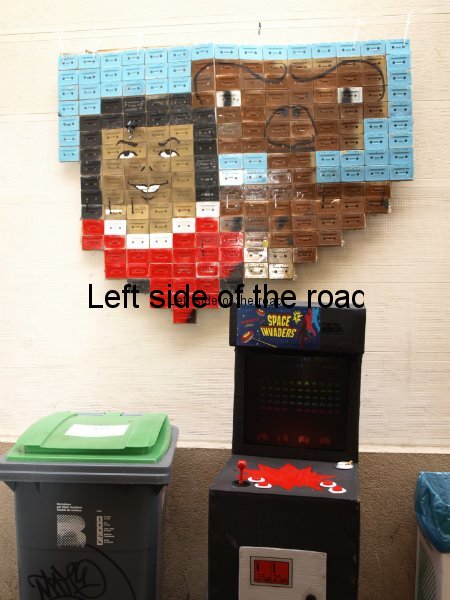
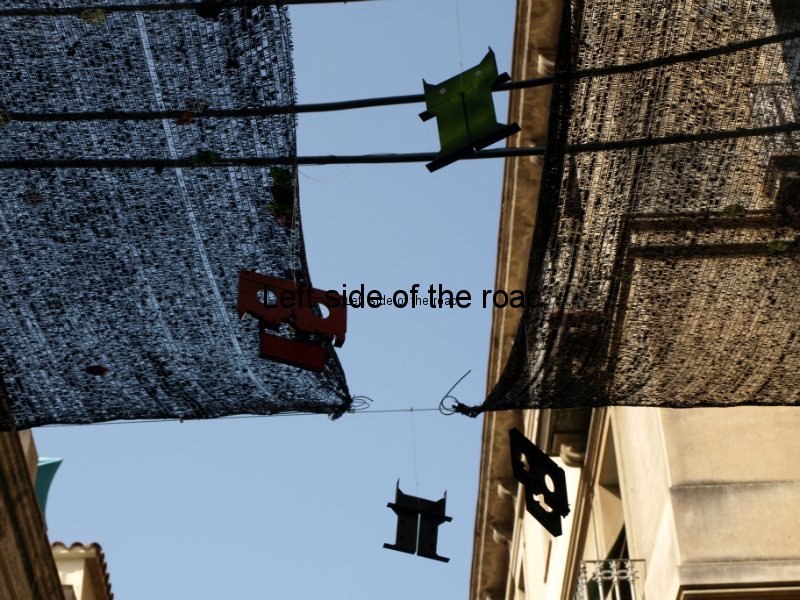
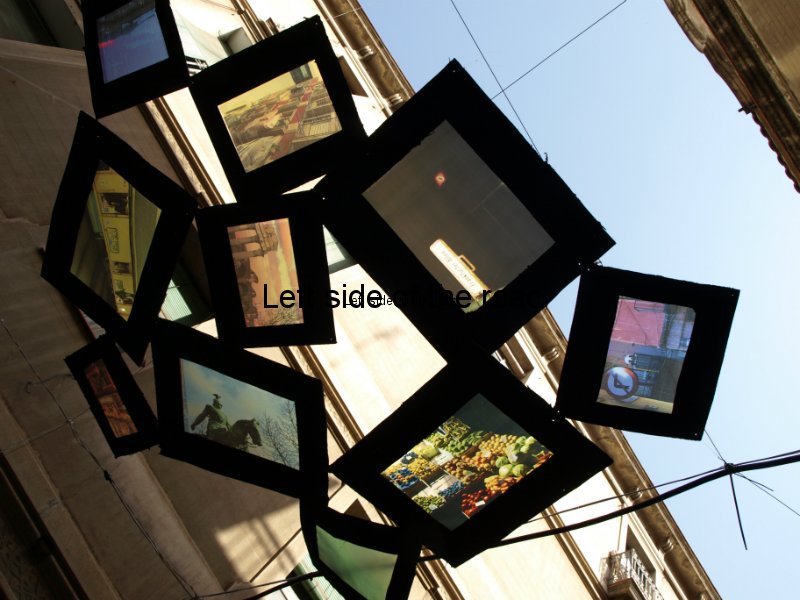
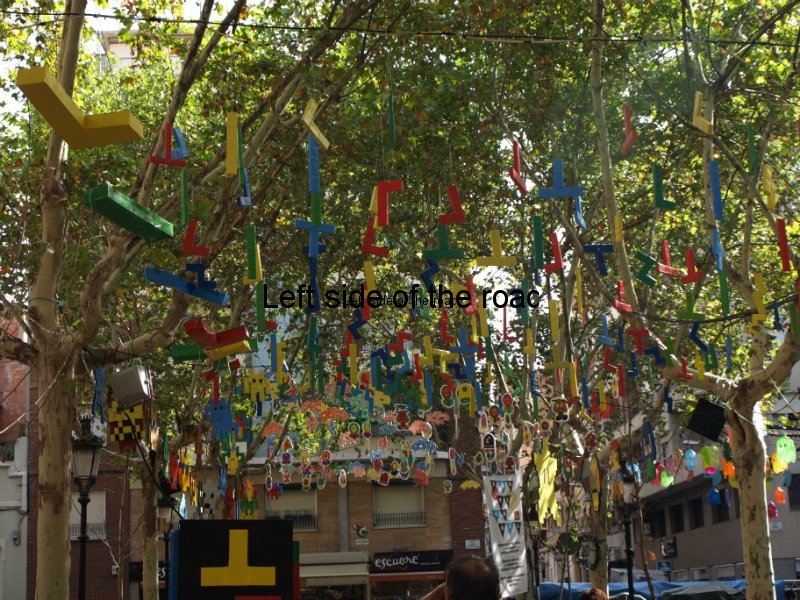
Every year the Barcelona district of Gracia organises a street based competition during its Festa Major in August.  The carrers guarnits (decorated streets) are a tradition going back just under a hundred years and attracts visitors from all parts of the world.

Yesterday I spent a couple of hours walking around the streets of the Gràcia district of Barcelona, taking more than a hundred pictures of rubbish, literally, (hopefully not rubbish pictures!).

I used to know this area quite well (about 15 or so years ago) but this time I needed a map to get me there and once I found a reference point it all started to fall into place. Although one of the older parts of Barcelona there is a grid design of the old streets, if maybe not as formalised as the 19th century area of the Eixample, so it’s not a difficult place to navigate your way around.

At a time when festivals are being invented all the time in order to attract tourist money it was a pleasure to visit an area where they are continuing a tradition that goes back almost a hundred years. In the 1920s neighbours and community organisations based on a street level began to organise a competition to find out who was able to best decorate their street, in Catalan this is ‘carrers guarnits, at the time of the Festa Major in August.

This socialised structure that had been developed in times of peace was to have a profound effect upon the community in the time of the Civil War where these neighbourhood organisations directed their efforts towards the construction of air raid shelters to protect the people from the fascist bombs of the German Nazi and Italian Fascist air forces.

After the Civil War the Festa Major and the decoration of the streets took on a political dimension with references to the colours of the Falangists (Franco’s fascists) in a satirical manner. At first this increased the number of streets that would be decorated but as the years went by the numbers dropped and by the end of the 1970s the tradition was all but dying out.

As the society got used to the fact that Franco had finally kicked the bucket matters slowly started to change and although still a long way from the heyday of 1942 (which saw 70 streets and 5 squares involved in the competition) there were 17 locations putting themselves forward in 2012.

Before the festival opened, the official date is always the 15th August, different newspapers I read were speculating upon how the economic situation would have an impact upon the display. The argument was that as most of the materials used in the decoration were recycled plastic, paper and cardboard, etc., this should not really have an impact.

To this I would say yes, and no.

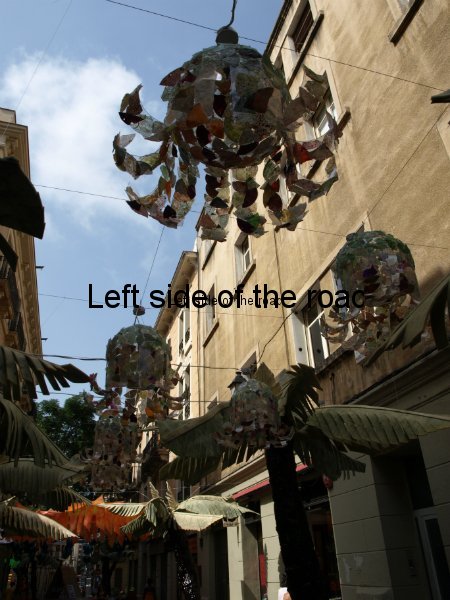
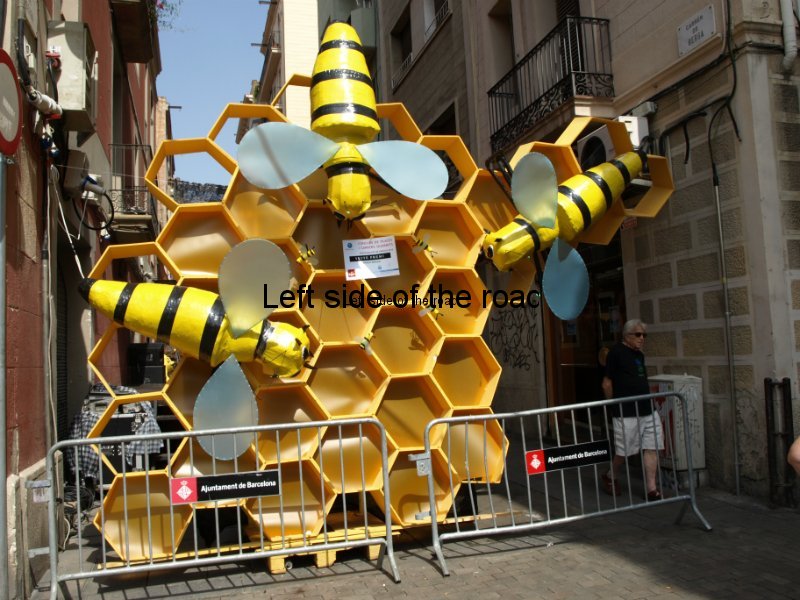
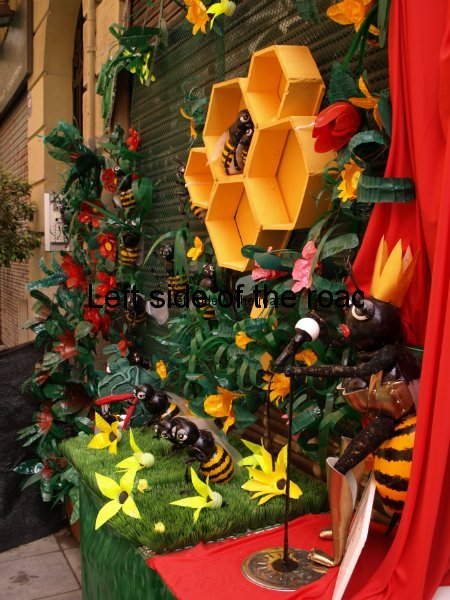
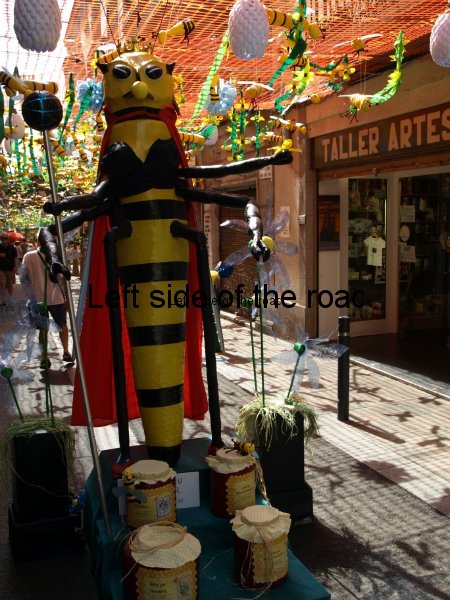
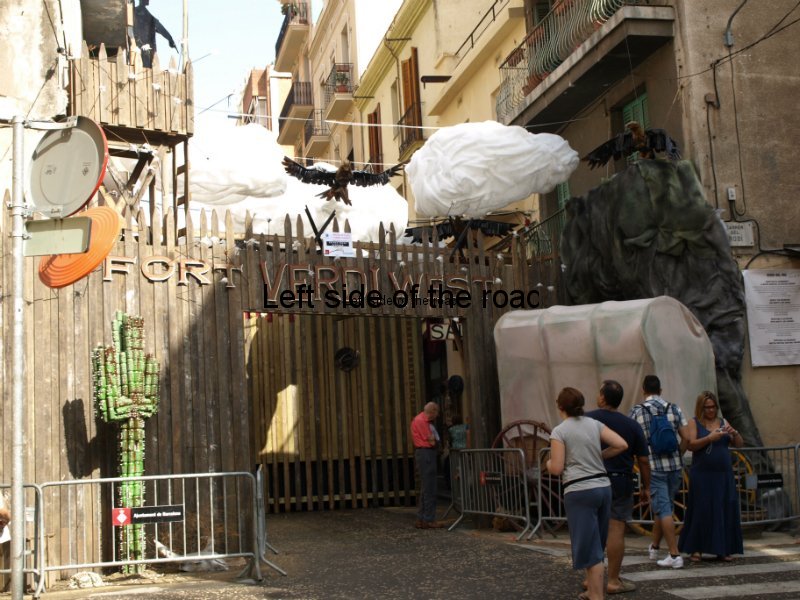
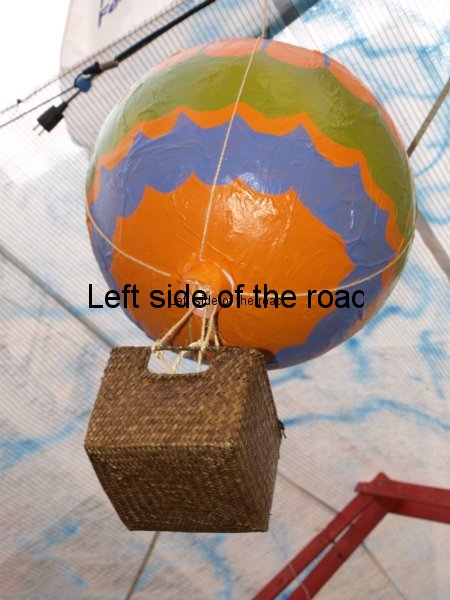
The amount of thought, planning and work that goes into these decorations, different every year, is phenomenal. Just like the Rio Carnival the process starts the day after the present festival ends. At times it must be like Blue Peter on speed with children demanding of their mothers the inside cardboard of the toilet roll before it had been used. And a huge amount of material must have been collected and then stored ready to be turned into some quite remarkable objects. However, that ecological idea was not really represented, I think, in the final awarding of honours.

In some of the less complicated ideas there must have been something similar to a production line in reproducing the same objects that hang above the streets for a hundred metres or so. But some of the more complex would have needed trained artists, or at least enthusiastic amateurs, to produce the designs on display.

I visited the festa on the day after the judges had made their decision on the main winners (everyone gets some sort of recognition). However, the gold, silver and bronze winners (after all we are in an Olympic year) were all which had invested more than time and enthusiasm and community involvement in the exercise, they had invested money (and not an insignificant amount).

And this increased investment in the street decorations will inevitably have an effect on the Festa Major in general. Each street has a temporary bar, presumably a money-maker for whatever is planned for the following year. If you win one of the top prizes you will get more visitors and, potentially, more income at those bars. Then you arrive at a situation that exists in football where the most financially better off can maintain their dominance by pure force of money.

As more and more visitors come to see the ‘carrers guarnits’ big companies will be searching for sponsorship opportunities and then any local feeling will gradually disappear. That might be happening already as the Catalan brewer Estrella was represented on every street bar I noticed and would seem to have attained an almost monopoly position.

It would be a shame if commercialisation was able to get its tentacles too deeply into this street festival as it would spell the end of the community spirit that has kept the tradition going for so long.

I enjoyed my time finding my way around the narrow streets and was pleasantly surprised by some of the depth of ideas that were being presented at times, or just the sheer idea of fun. These traditions fail when people take the whole idea TOO seriously.

I was glad to be doing my exploration before noon than after midnight. The smell of piss in the hot Barcelona August sun, the remains of discarded food by the bins (although that would have all been cleaned up by the time the next evening’s festivities began) together with the partly digested pizzas and hamburgers occasionally decorating the pavements indicated the nights could be horrendous.

And it’s not really worth all the hassle for the overpriced delights on offer. After all, its only lager!

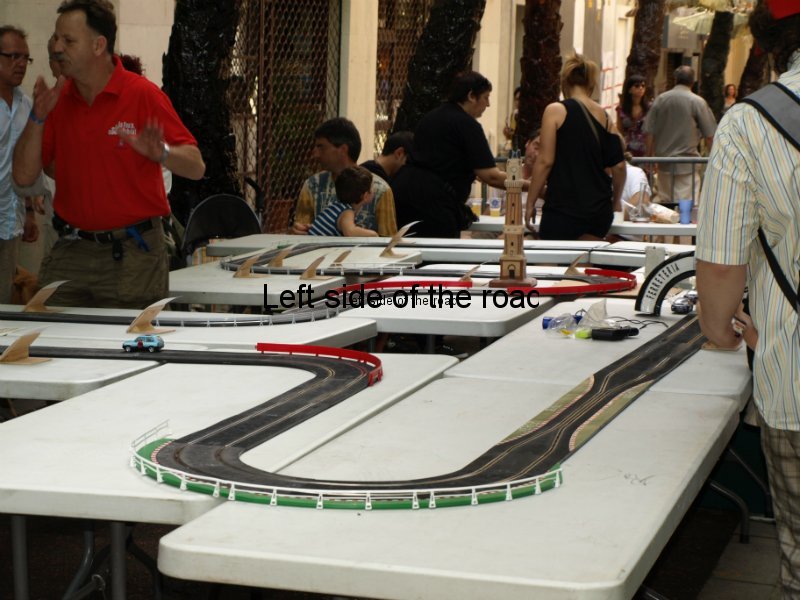
I have selected 3 or 4 pictures from each street, to give an idea of what was there this year. See if you can pick the winners and in a few days I will let you know the results and also which ones, and why, I thought should have been on the podium.
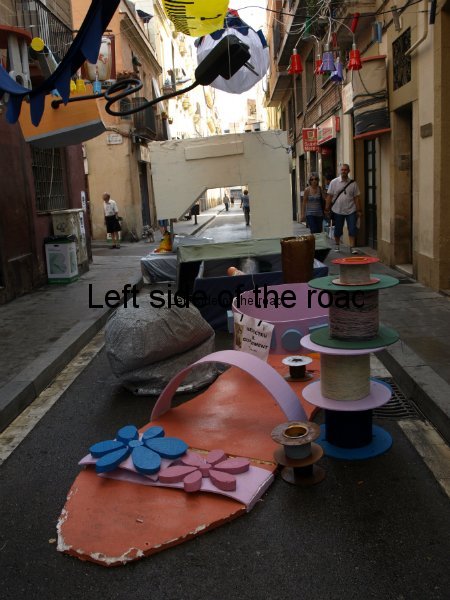
Here are a couple of websites which might be of use for anyone thinking of visiting Barcelona at this time of year – but remember it’s hot, hot, hot – or just after more information about the Festa Major.

In the lead up to the Festa Major go to the bario’s official website (in Catalan) here

and the map produced for the event this year (2012)

Gracia Festa Major Map 2012

More on Catalunya/Catalonia

‘Liberating’ basic foodstuffs from supermarkets in Andalusia

The more rich the bigger the thief

El que es muy rico

‘Liberating’ basic foodstuffs from supermarkets in Andalusia

An Andalusian trade union removes trollies of food from 2 supermarkets without paying in order to then provide the basic necessities of life to those unable to afford them. Bankers and others who steal from the public – those who have caused the present crisis – immune from prosecution call for the full force of the law to be used against these ´thieves´. 

Supermarkets are stuffed full of food (they even throw some of it away at the end of the day) but in Spain there is an increasing number of people who go hungry. What to do?

The decision of one trade union in Andalusia, the Sindicato Andaluz de Trajabadores/as (SAT), was to go into two supermarkets, fill a number of trolleys to the brim with basic and everyday necessities and then walk out without paying. This food was then distributed to people who had no money whatsoever to buy such necessities.

SAT members raiding supermarket

Can’t pay, won’t pay

This follows, in a number of ways, the scenario of the play ‘Can’t Pay, Won’t Pay’, written by the Italian satirist Dario Fo in the 1970s. Checking some information about this on the internet I see that there are a number of theatre companies around the UK who are, or have been, performing this play as it rings so many bells in the contemporary situation in many European countries.

The attack on the supermarkets happened on Monday 6th August and I don’t know what sort of coverage (if any) this has had in the British press, the Olympics being useful (yet again) to hide any bad news or anything that might be important.

Aznar and Gonzalez

Ex- Prime Ministers feed from the trough

SAT argued that in a society, and at a time, when money was given to bankers and their ilk by the wagon load there was ample justification for their actions.

Not surprisingly the owners of the two supermarkets, Mercadona and Carrefour, did not agree and have been calling for the full force of the law to be used against the individuals directly concerned as well as the trade union. In response the union has begun a campaign for a boycott of Mercadona, being the most vociferous in its call for the use of the courts to defend the sanctity of private property, until they withdraw their claims against the union. It seems the company has a history of illegal and unjustified sackings with accusations of discrimination being upheld in the courts. That would seem to be one of the reasons that that particular supermarket was chosen for the raid.

Mercadona has a history of being a bad employer

Mercadona – the perfect employer?

The last news I’ve seen is that those who’d been arrested have been released but the matter will not rest there. Not to prosecute could lead to copy cat activities throughout the region (if not further afield) but taking them to court could turn them into martyrs. The propaganda war is already on with local people being interviewed who say that such action goes too far but don’t offer any suggestions about what should be done instead. It’s early days yet but will try to keep an eye on developments.

One bit of information I received whilst discussing this matter is the fact that there is (or at least was) a law under Spanish jurisprudence that allows for the hungry to take food, as long as no violence is involved. The fact that the food taken in these supermarket raids could not be classified in any way as luxuries might well mean that this case could fall within the meaning of this law. Being, as we are in the UK, used to ancient laws being resurrected so that the state can exact its revenge against workers (such as the Shrewsbury Three) or brought out to pull the state out of the mess it has got itself into (such as the Pentonville Five in the Dockers’ Strike in 1972 with the mysterious one and only appearance of the Official Solicitor) it’s interesting that a law exists which can be used by workers. Not that we should put any faith in laws introduced by a capitalist state.

In Britain the tendency is to suffer in silence. When people do take the law into their own hands, as some did in different cities throughout the UK this time last year, they were condemned because they stole trainers and TVs and NOT foodstuffs. Would people’s attitudes have been different if all that was looted was the milk, eggs, potatoes, flour and the like used to produce a healthy and substantial meal? Now that would be a real danger to society.

Poster calling for a Boycot of Mercadona.

Boycott Mercadona!

The images in this post depict the general argument of the Union. Who are the real thieves? The ones who steal cooking oil to give to the hungry, or those who seek to increase their already vast fortunes, including ex-Prime Ministers, of both the conservative and so-called socialist breed.

Although in Spanish you can click here for the link for SAT for more information on how things are developing.

See also:

La lucha continua becomes La lluita continua

Workers take over a palace in Andulasia


Charity is the answer!