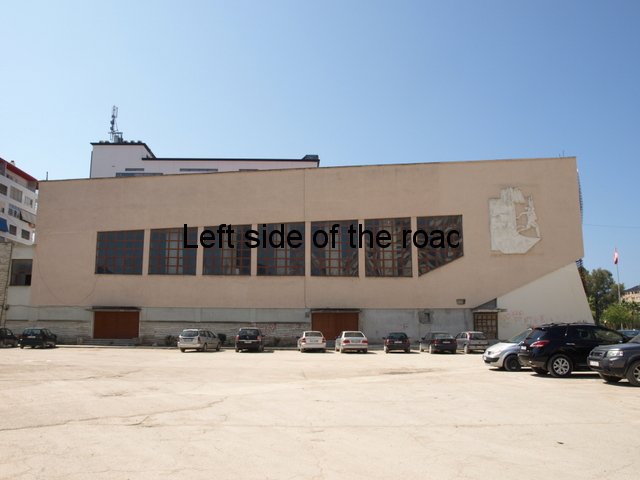
Façade of Vlora Palace of Sport
More on Albania …..
See also; The mosaics of the Vlora Palace of Sport
The bas reliefs of the Vlora Palace of Sport
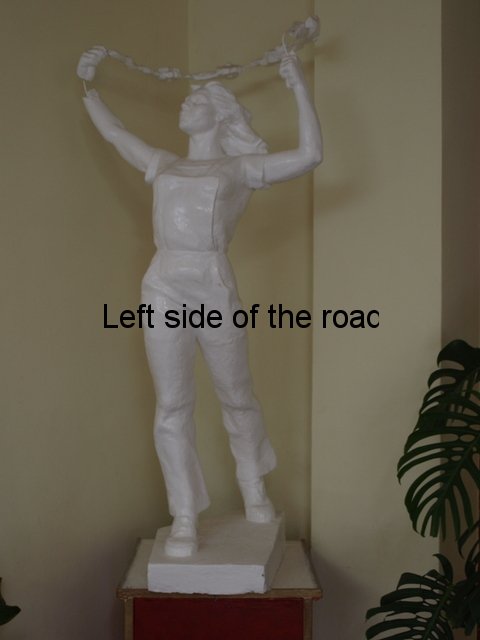
Although they are being neglected, and sometimes need dedication and determination to view them, there are still a number of artistic works from the Socialist period on many of what would have been public buildings. The most impressive (and becoming one of the most neglected) is the grand mosaic on the façade of the National Historical Museum in Tirana. Another example, which can easily be missed, is the bas-relief on both the north and south sides of the Palace of Sport in the town of Vlora. Even more easily missed are the two interior mosaics on either side of what would have been, in the past, the main entrance to this sports centre.
The Palace of Sport (now the home of the town’s basket ball team, Flamurtari – the same name as the football team whose home ground is in the long-established stadium less than a hundred meters from the hall) is located at the bottom end of Rruga Sadiki Zotaj, the main street running from north to south through the town, at Sheshi Pavarësia (Independence Square). Although the façade, and the square in front of it, has had some cosmetic work done in recent years the money seems to have run out for any further modernisation of the interior of the main entrance. For this reason, to the casual visitor, the building looks abandoned – like so many public buildings dating from the 1970s and 80s – with graffiti scaring the white paint work and entrance to the court is now at the back of the building.
Flamurtari signifies ‘flag bearer’, not in the personal sense but in the figurative sense. Vlora ‘prides’ itself as being the town where formal independence was declared in 1912, hence the very large monument to the event at the northern end of the main street. So it’s the town that is the standard-bearer. This was emphasised during the time of Socialism but now gets formal acceptance by most of the so-called ‘democratic’ political parties whilst they preside over the very real giving away of that very independence so hard-fought for. For the workers and peasants the day of true independence was achieved on 29th November, 1944, when the Fascists were defeated throughout the country. That celebration is now side-lined and ignored by the bourgeois parties as it would mean a recognition of the role of the Communist Partisans in the National Liberation War.

Southern Bas Relief
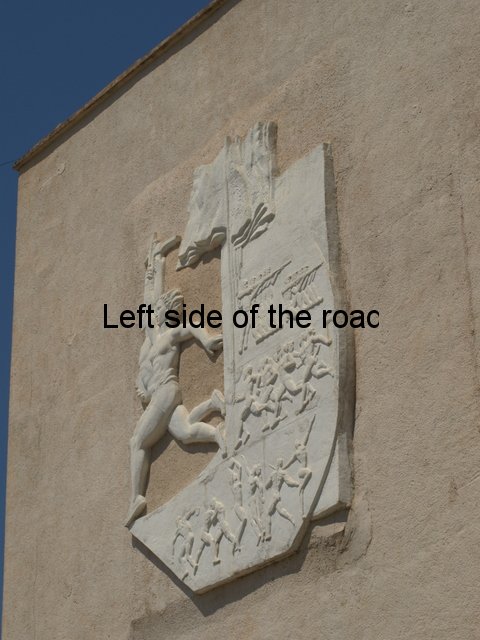
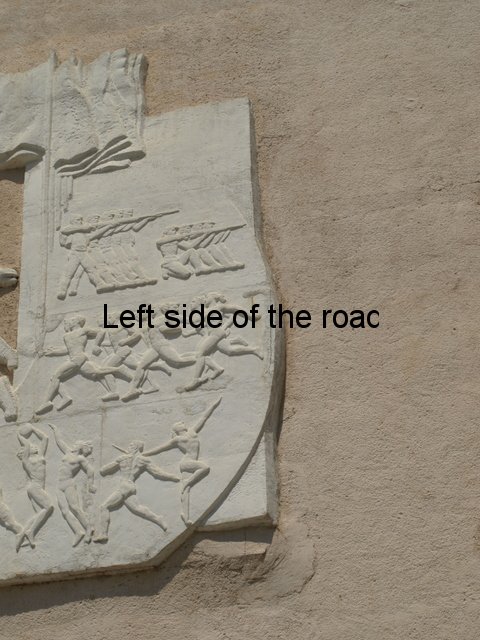
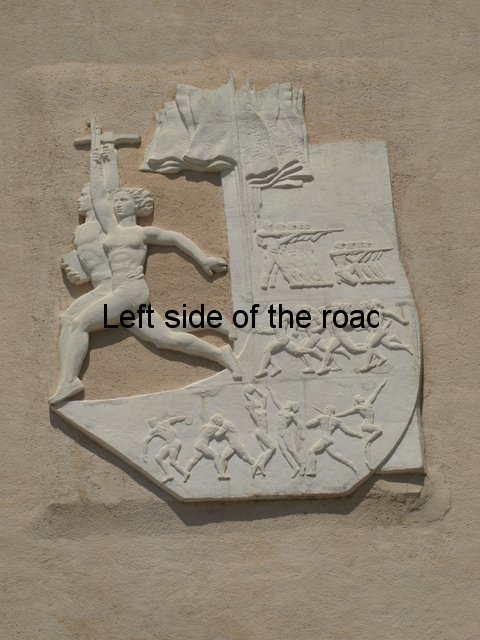
Of the two the bas-relief in the best condition is the on the southern face of the building, on the right as you look at the main entrance. This is probably solely down to the fact that it looks down upon one of the expensive bars attached to one of the hotels that are mushrooming throughout the country. The bas-relief is high up and as with all such of the Socialist period it tells a story.
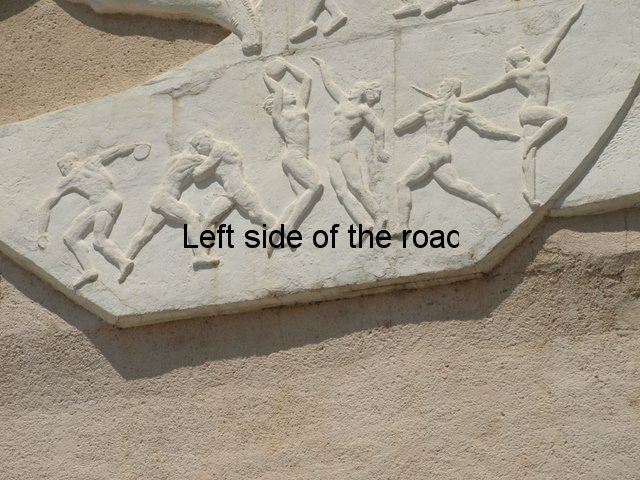
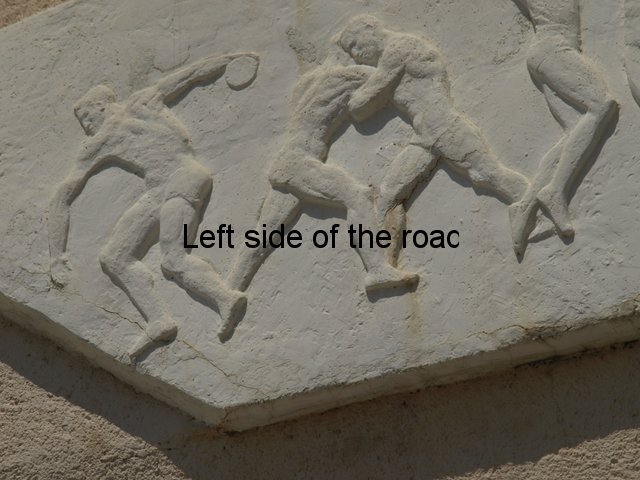
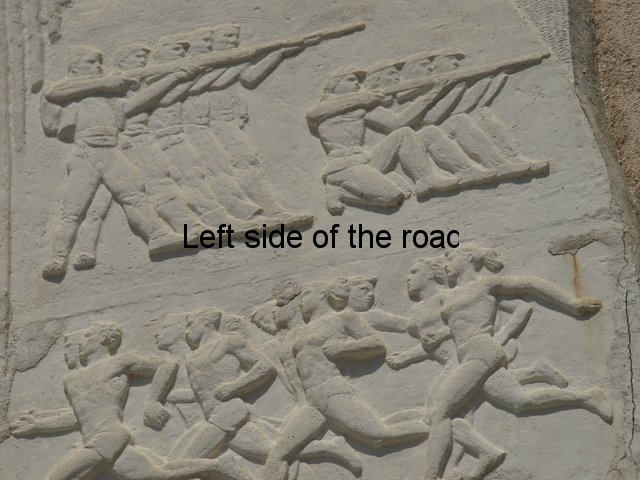
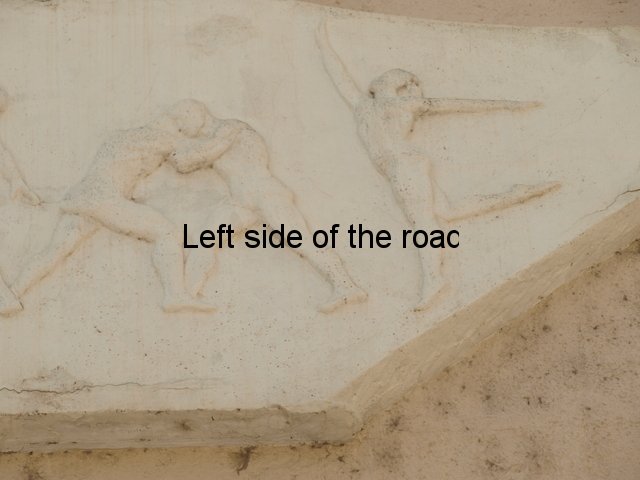
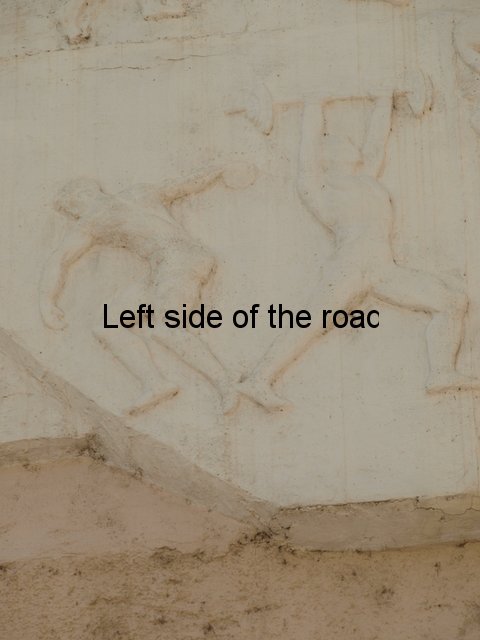
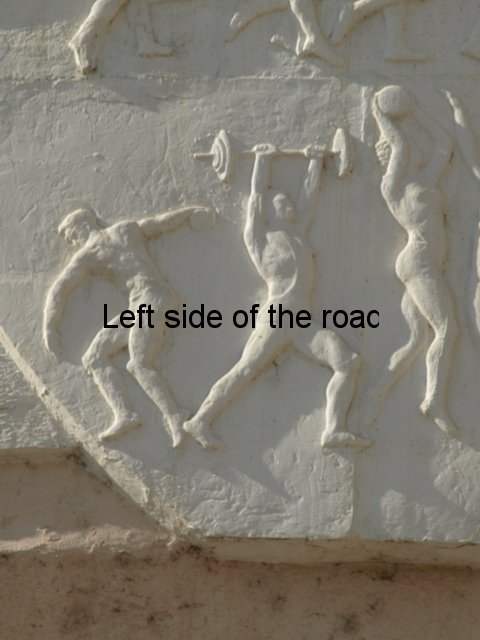
Starting from the bottom we have a number of athletes taking part in various sports, both representing sport in general as well as some of the activities that would have taken place in the building. On the extreme left is a male in the act of about to throw a discus. Next are two males wrestling. These images represent those sports that were practised in classical antiquity to date.
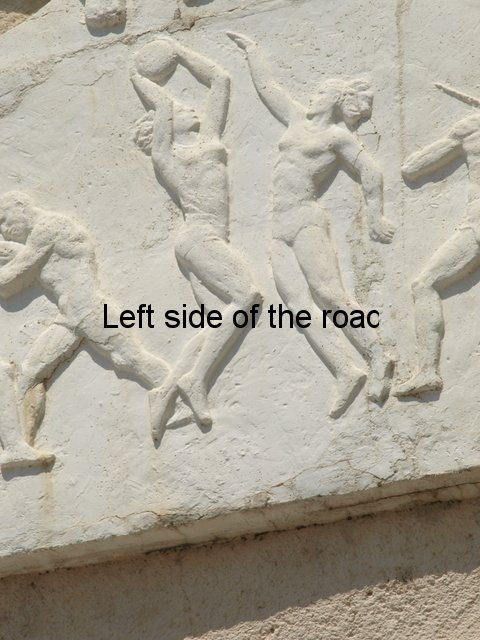
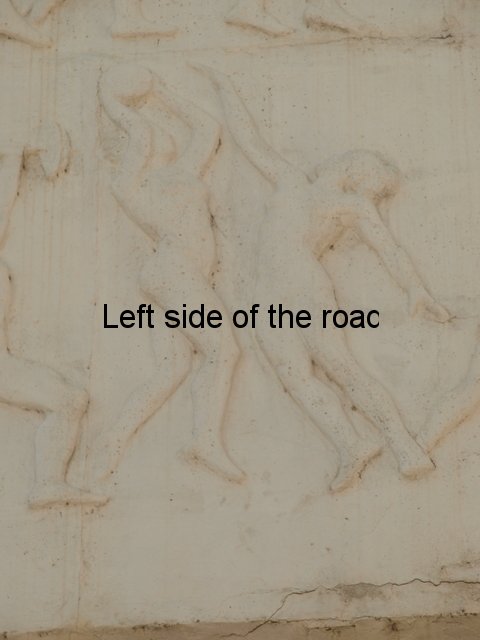
Matters are brought up to date with the next images of two females. One is in the act of leaping to throw the ball, clasped in both her hands, into an unseen netball ring. Her opponent is also leaping, her right arm high above her head, in an attempt to prevent the goal.
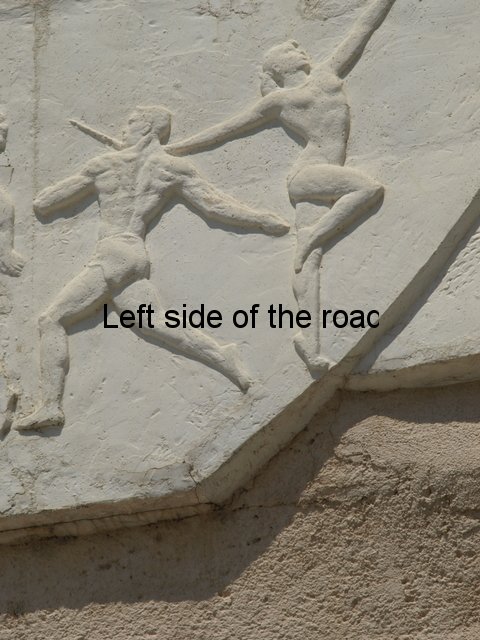
Next in line is a return to antiquity with a male with his back to us. His right arm is stretched behind him and in his right hand the he holds the shaft of a javelin. He is running forward and the tension can be seen in his body as he is just about to put everything into his throw. Finally, amongst this group, we have another female facing towards the back of the building. She has her arms outstretched, her right leg raised and bent at the knee whilst she stands on her toes on her left. The element of grace in this image indicates that she is a gymnast, following a floor exercise.
There is a suggestion of gender difference here as the males are involved in trials of strength whilst the women are following those sports which in the past were considered more appropriate for females.
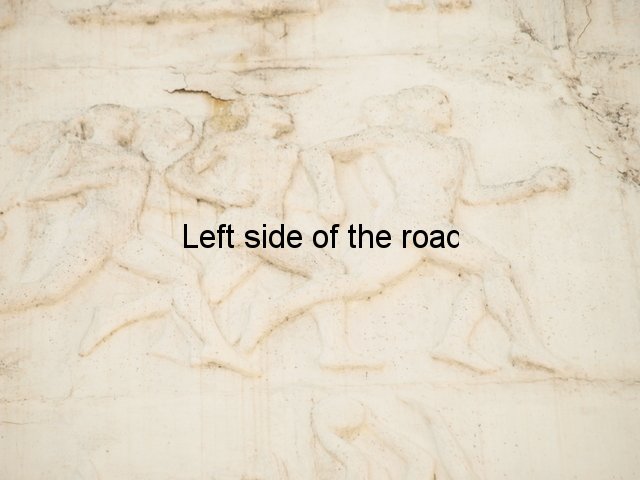
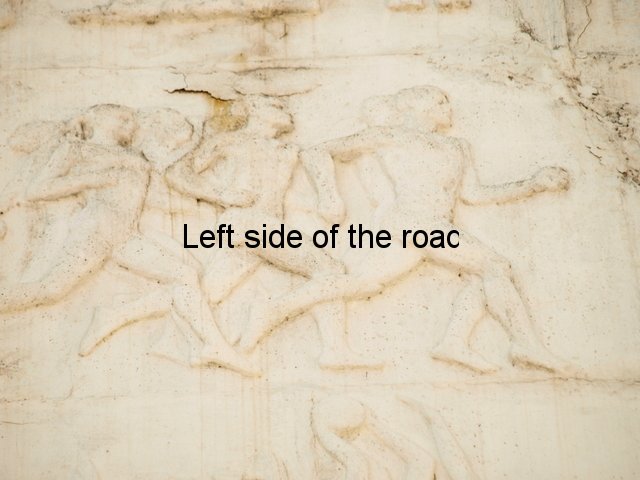
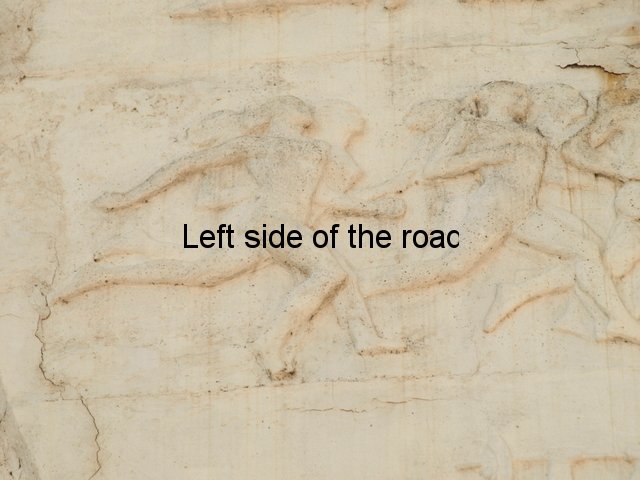
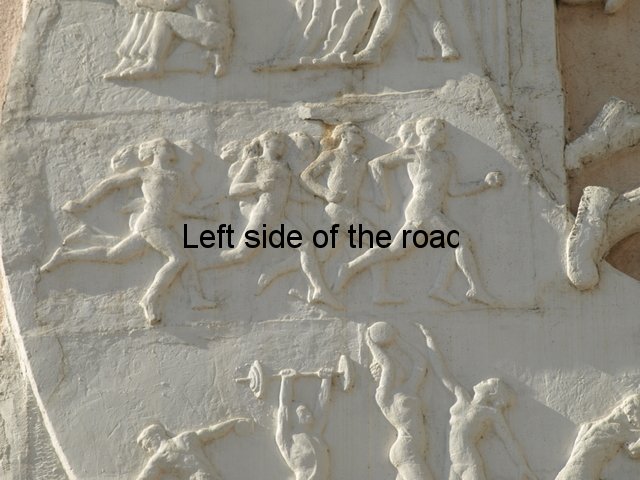
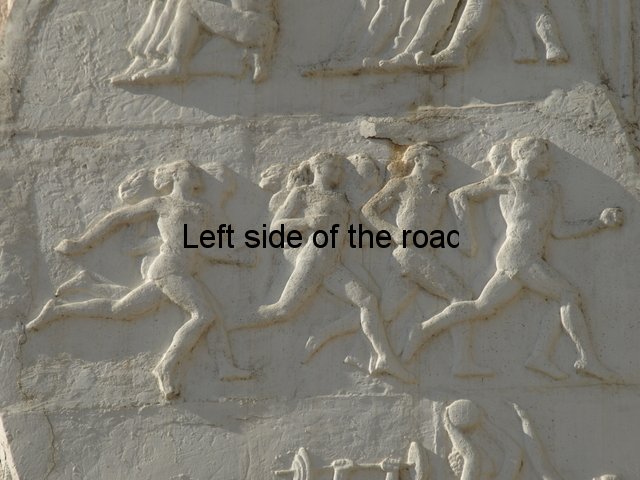
This traditional idea is challenged somewhat in the image above the first group. Here we have a group of ten runners, seven male and three female. The fact that the two genders are introduced in the same race seems to indicate that here is represented something akin to the modern-day marathons where gender plays no role in the entry qualifications. It also represents athletics in its purest and most basic, running needing no special equipment – despite what the sports manufacturing companies spend a fortune in promoting.
The three women are at the back of the group and for some reason one of them is actually looking backwards. As they are all running at full pace this is difficult to explain. The only time an athlete would be looking backwards would be at the time of changeover in a relay race but this doesn’t make sense here.
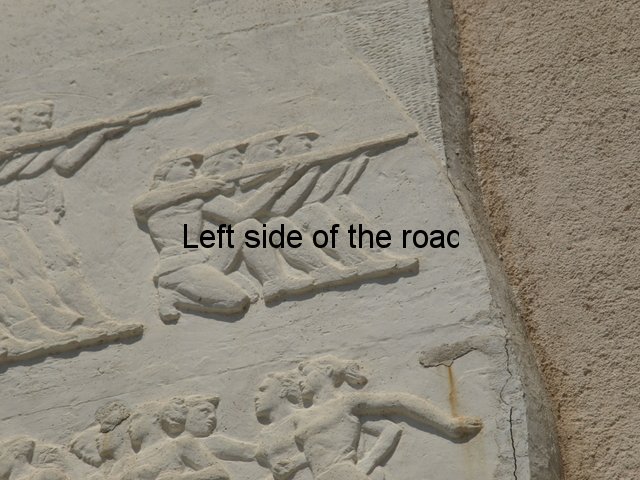
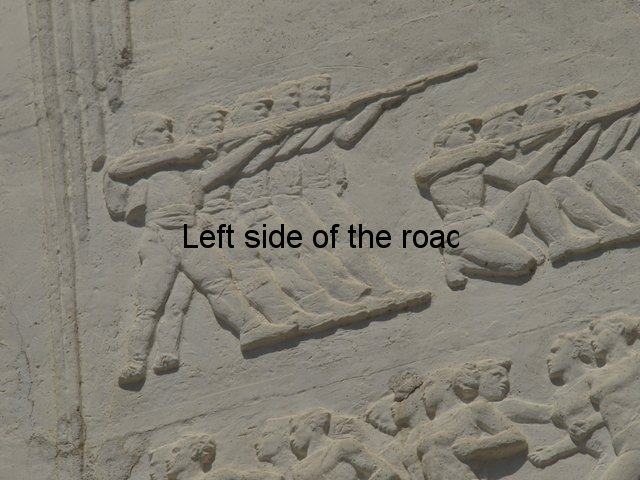
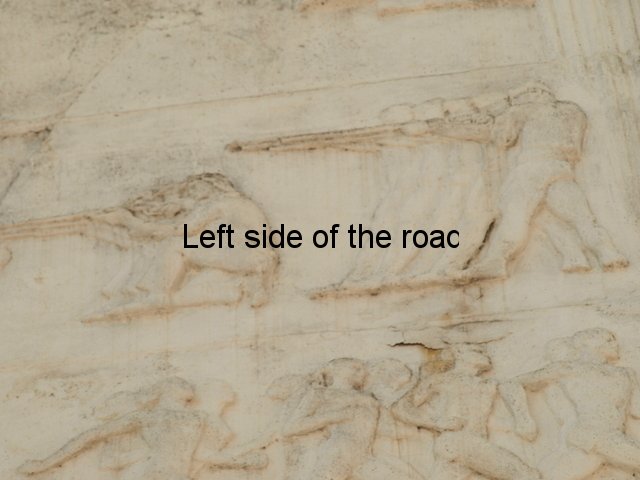
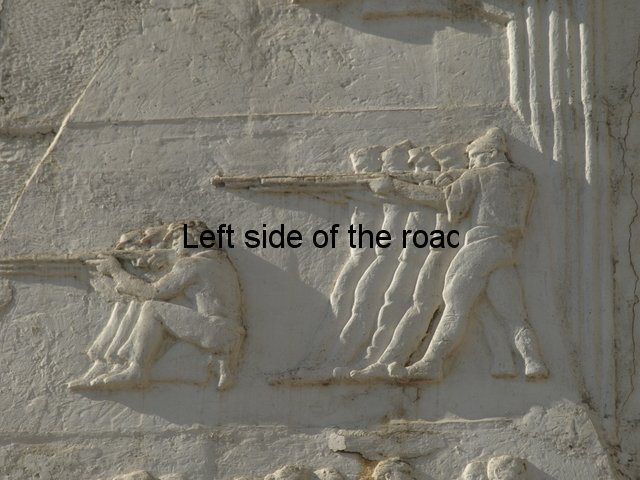
The idea of any gender difference gets blown out of the water in the final panel on the left hand side of this bas-relief. Here we have a group of five standing males (with their left legs forward) and four kneeling females (their right knees on the ground, the foot being bent, whilst the left leg is bent at the knee and the foot firmly place on the ground for stability) all in the act of firing, or about to fire, their weapons. The rifles are pressed against their shoulders, their left hands on the barrel and their right fingers on the trigger.

Rifle Practice
The figures are presented in a row, the one behind slightly in front of the one before, the symmetry of their stance being demonstrated by the left legs of the males stepping forward and the left, bent, leg of the females. This all gives an impression of depth on a flat plane.
As is almost always the case in Albanian Socialist Realist Art there is an indication that Socialism is something that represents all the people, from whatever part of the country they might come call their homeland, whether they be peasants or workers. The male closest to the viewer is dressed in the jacket and hat that is most associated with the mountains. He also seems to have a brez (a wide cloth belt) around his waist, as seen on the statue of Bajram Curri in the northern town which bears his name. We only really see the heads of the figures behind the first but all the faces are different and they all display different characteristics but it’s not easy to define ethnicity. What can be seen is that two of the others are wearing caps, the last two being bare-headed.
From the images of the women we can get no idea of their background, all of them being dressed in what, at the time, would have been, more or less, the uniform of the militia. This, for women, meant a step away from tradition as although it might be very attractive in its own right such clothing was not entirely practical for modern warfare – although there are images of fighting women in traditional clothing in lapidars such as the Arch of Drashovicë. All four of the women are wearing caps and we can see the long hair of the female closet to the viewer.
Here I don’t think that the rifle shooting is being introduced as a sport as it might be considered nowadays. However there is a link between sport and the armed militia. Physical activity would have been encouraged during Socialism and such Palaces of Sport built in all towns and villages to promote the well-being of the people. After centuries when the vast majority of the population would have been living a subsistence existence the last thing on the minds of the ruling class would have been the promotion of a strong and healthy working class or peasantry – especially one that knows how to use modern weapons. On the other hand a Workers’ State depends upon an armed and trained militia to defend itself against the many attacks made by the defeated capitalists.
(Witness the hysteria in capitalist countries about any weapon in the hands of ordinary people whilst at the same time the state spends billions on weapons which are accessible only to their puppet armed forces in times of conflict – which can just as easily be used against their own population if the workers ever decide to get up off their knees and oppose oppression and exploitation.)
When it comes to nutrition things haven’t changed a jot in the present day. The cheapest foods available in the vast majority of countries tends to be the most unhealthy in the short and long-term. Just consider the proliferation of fast food outlets throughout the world and in present day Albania the cheapest food is the fatty meat and ‘E’ numbers laden sauces that make up sufflaqe, or its local variants.
It has to be remembered that military service was obligatory for all young people in Albania during Socialism and there is no point in having weak and sickly soldiers (of whatever gender) to defend the homeland. The poor health of so many young men after a century and a half of the Industrial Revolution in capitalist Britain showed how badly the working class had fared in that time and was dramatically demonstrated when they were expected to go to the front in the murderous, imperialist war of 1914-19 (euphemistically called the ‘Great War’ by some).
Another aspect that should never be forgotten, and a matter I have constantly stressed when writing about Albanian Socialist Realist Art, is that in these images the women are armed. Armed with modern weapons but also with an ideology that uses that armed force for the benefit of women within the general society. So far, on this blog, when describing the lapidars, when weapons are an integral part of the image, the only one where the women have NOT been armed is on the bas-relief in Bajram Curri, a later piece of art which, in some ways, presaged the future.
Even though armed and provided with more equal rights than in any other country worldwide the Albanian women, just like the men, threw away those conditions in favour of short-term material gains and so-called bourgeois ‘freedoms’. This has led to the present situation where the country has lost any semblance of independence and with an economy that is totally at the whims and mercy of international financial interests and investment.
Although the primary focus of this bas-relief is towards the front of the building, looking from right to left, the firing men and women are directing their anger towards the back of the structure, otherwise they would be shooting their comrades in the back.
All of the images so far have been placed on a background in the shape of a lower case J. I have tried to work out the meaning of this but without success. Working on the basis that all aspects of such a work of art mean something this one has got me beat.
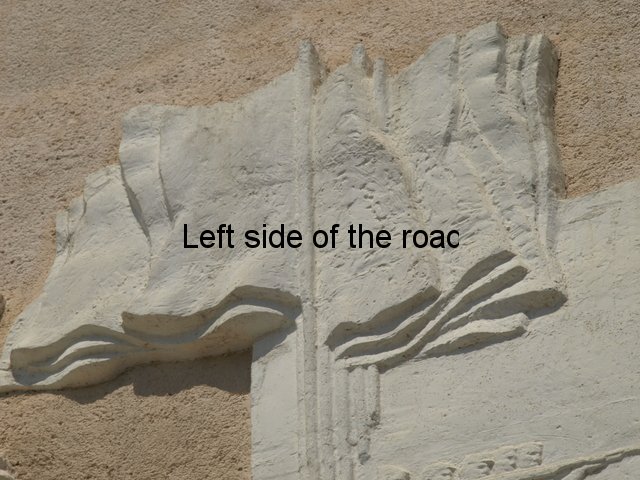
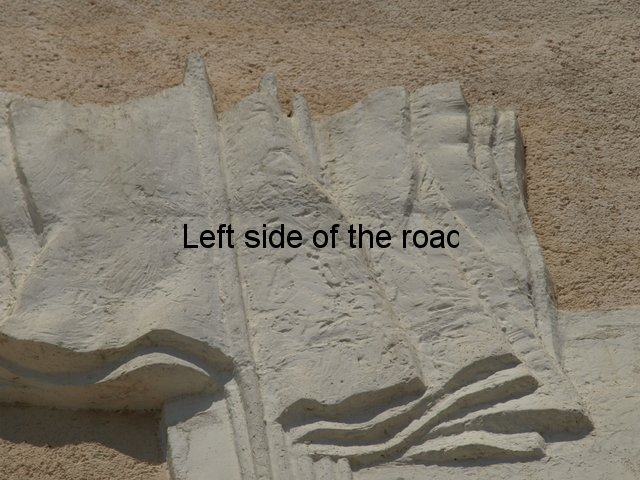
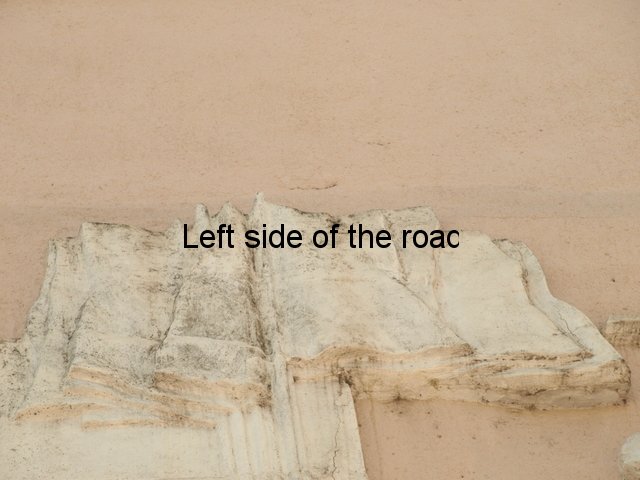
What is relatively clear, however, is the grouping of the flags at the top of the image, above the sporting and military figures. There are an uncountable number of them, at the top of flag poles whose serried ranks again give an impression of depth. However they are fluttering in both directions. This is obviously impossible. As I’ve stated elsewhere Socialist Realism doesn’t mean realistic imagery, it’s allegorical and attempts to tell a story in a new and innovative manner.

Banners above the military
One interpretation of this image is that it’s a transitional stage to what we see as part of the main image to the left, that they are leaves of a book and, by extension education in general. Sporting expertise without education just provides society with such as the rich, mindless and illiterate footballers in the modern game, unable to string two words together in any known grammatical structure. Being able to kill people without an understanding of the political situation in which this killing takes place only produces mercenary killers and not liberation fighters.
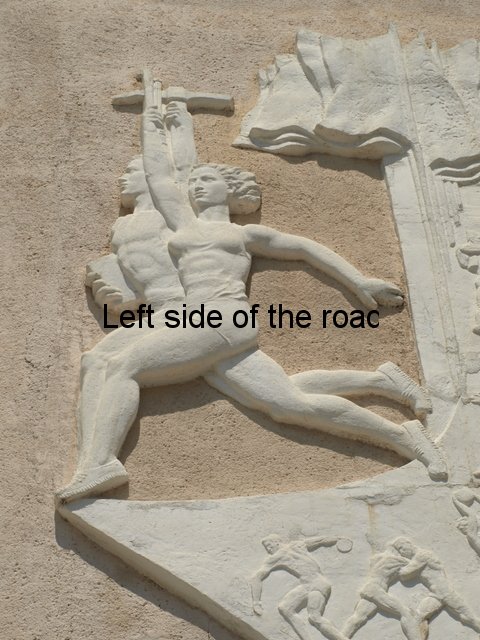
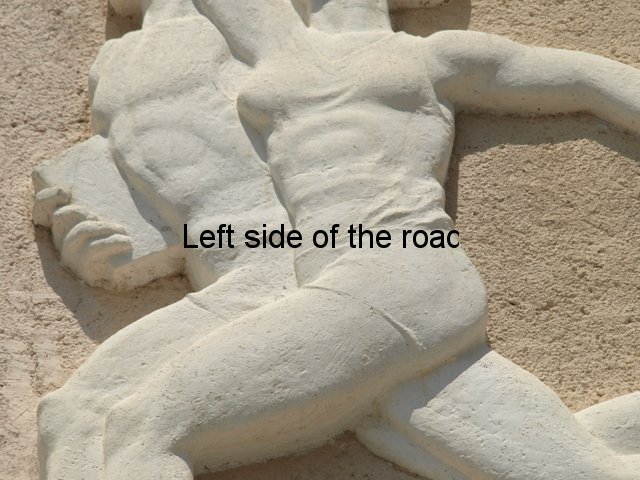
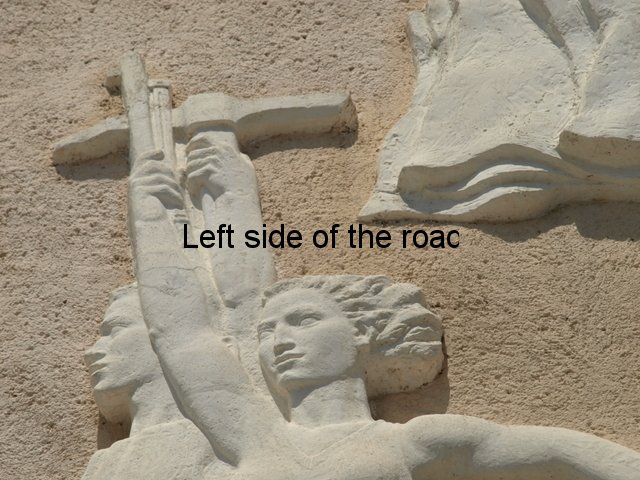
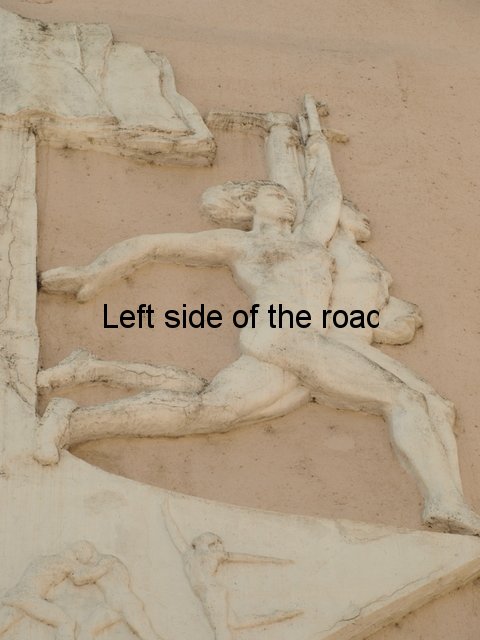
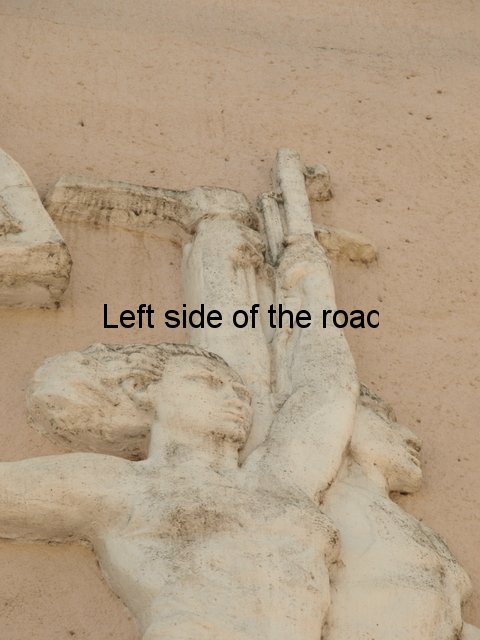
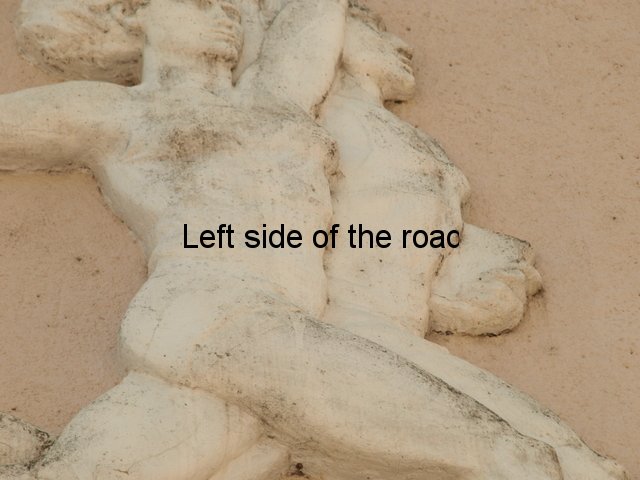
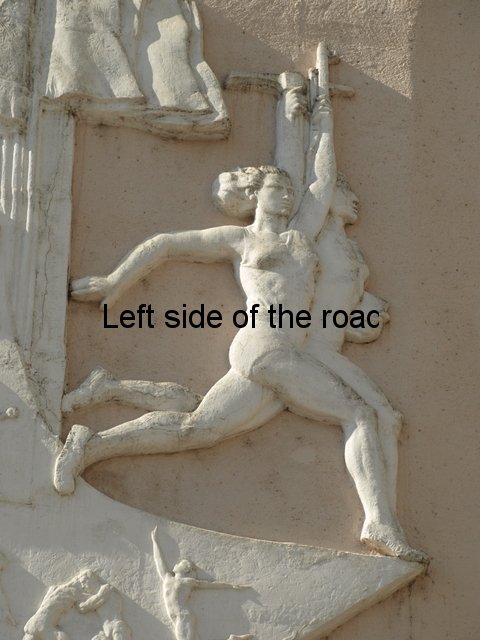
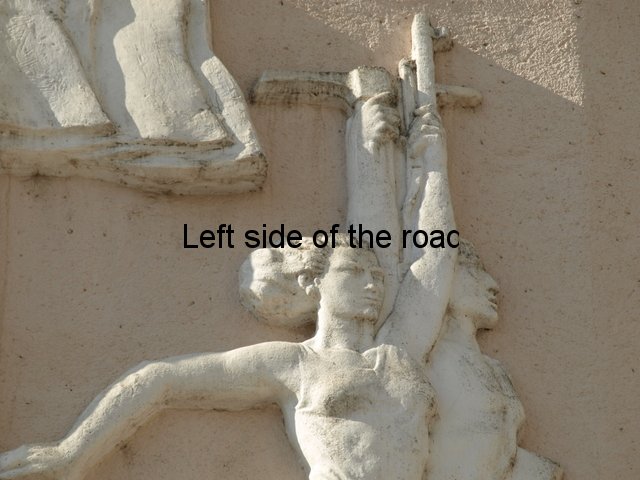
The main subjects of this bas-relief are two athletes, a man and a woman, running flat out, their legs as wide apart as is possible when in a race. They are running on the bottom curve of the ‘J’ and their hands reach as high as the flags. There’s obviously a classical reference here, the only difference being that the two figures are clothed, the man with shorts but bare-chested whilst the female wears shorts and a T-shirt (female public nudity not being an element of Socialist Realism). On their feet it is easy to make out that they are wearing running shoes.
They are runners but not only runners. Within this image there are a number of ideas. We have the fact that they are healthy and fit, capable of strenuous activity that is not connected with work but for pleasure.
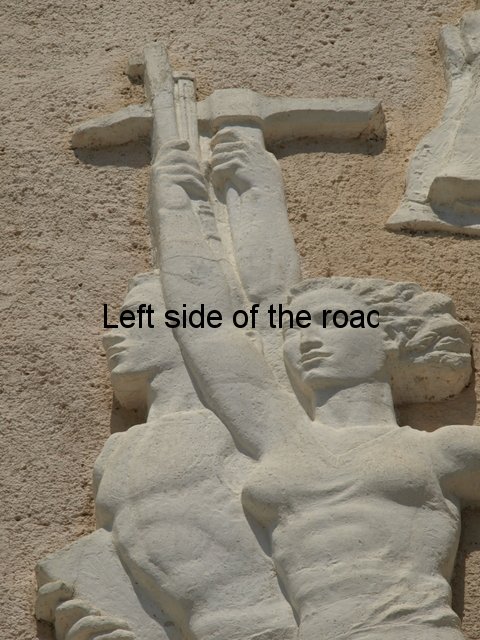
The woman is closest to us. She has her left arm fully outstretched behind her and her right arm is fully extended above her head. In that right hand she holds a rifle close to the end of the barrel, the rest of the weapon hidden by her arm and body. Her face is in semi-profile and her long hair flows out behind her by the force and speed of her forward movement.

Allegory of Socialism
The male is partially hidden by the female. His left arm is fully extended above his head, parallel and just behind the right arm of the woman. His hand grips the handle of a pickaxe just where the shaft meets the metal cross-piece. To all intents and purposes the rifle and the pickaxe are touching. This is in reference to the revolutionary slogan of the Party of Labour of Albania ‘advancing towards Socialism with the pickaxe in one hand and the rifle in the other’. This is interpreted as meaning that work alone will not achieve Socialism unless it is protected by the same level of force of those capitalist and imperialist forces who seek to deny working people the control over their own lives and the wealth of their country.
As if it is not enough to run with a heavy pickaxe held high he is also carrying a large book in his right hand, pressing it against his waist.
The whole combination of elements surrounding these two young people is an attempt to show how the society – at the time of its creation – was going forward towards Socialism. This relief was almost certainly inspired by the statue of the ‘Worker and Kolkhoz Woman’ (1937) by Vera Mukhina, presently situated at the Exhibition of Achievements of National Economy in Moscow.
This bas-relief is in a good condition and it looks like it has very recently been cleaned and repainted. As I’ve already stated it faces down on a fancy cafe attached to a new 4 star hotel. It’s good that this ‘public face’ has been respected – but as so few people actually look up higher than their own eye level I don’t know how many have actually noticed this unique and interesting piece of history.
Unfortunately fate has not been as kind to the mirror image that is in a similar location on the north side of the building. I say a ‘mirror image’ but that’s not quite the case.

Northern bas-relief
Most of the elements on the south facade are repeated but with a few minor differences. On the bottom panel where five different sports are represented, new ones have been inserted. From left to right we have; discus throwing, weight lifting, netball, wrestling and a female gymnast. Those which are repeats are the same as on the south side apart from the stance of the gymnast. She is still engaged in a floor exercise but here her left leg is on the ground, her right leg raised high behind her. Her right arm is raised high above her head and her left stretched out behind her with her head bent back.
The weight lifter, a male, looks like he has just achieved success in the jerk technique, his left leg bent and his right out behind his body, providing the balance.
The running group above is also slightly different. It’s still a mixed gender group, bunched up as in the early stages of a distance race but this time there are only seven runners.
At the front are two males running almost together, there being little seen of the runner behind apart from his legs. The runner fourth – as is the one in fifth, sixth and seventh – place is a female, we know this by their long hair, flowing behind them. It’s impossible to make out any of the facial features of the runner in fourth due to deterioration of the image.
Long hair for males wasn’t common in Socialist Albania and the press and governments of the capitalist west made a big issue of this in the 1970s when visiting young people were ‘obliged’ to have a haircut at the border if they wanted to get a visa. Whether this was more of an urban myth, promoted to denigrate Socialism, is more than likely it being almost impossible at that time to arrive at the border and obtain an entry visa – very much like it is at present on seeking entry into the belly of the capitalist beast, the United States of America. Stones and glass houses comes to mind.
Anyway, the length of the hair is still the clue to the gender of any person on any public Albanian art from before 1990 – their being no comparative artistic endeavour produced under capitalist controlled Albania. That’s not a surprise, how can you represent the idea of hope and a future when the measure is the amount of material goods one has and in a system that is prone to economic crisis. The image of a rich man or woman surrounded by all they can possess would be seen more as a parody rather than an aspiration for those without anything.
In the panel that shows both men and women firing rifles the stances are very much the same, the men standing and the women kneeling, but here the number of women has been reduced to three whilst the men stay at five.
However, the ethnic element is still present with the male who is most visible being dressed in a traditional country jacket and hat whilst the other four sport modern caps or go bare-headed.
The arrangement of the flags is the same and the only significant difference between the two main characters of the story is that what they held in their right hand on the south facade they now hold in their left, and vice versa.

Deterioration to north facing bas relief
As I’ve stated before his bas-relief is not in as good a condition as the one on the other side of the building and hence is sometimes difficult to read clearly. It’s north facing and doesn’t get the same amount of sunshine and that has led to a proliferation of black mould. Lack of cleaning and maintenance also means that the plaster is starting to come away in places. This deterioration is quite noticeable in the five and a half years between my visits to the Vlora Palace of Sport. It also suffers from looking out over a dusty, dirt car park and probably not noticed by the vast majority of people who might pass by. A little bit of tender loving care wouldn’t go amiss – although I think that’s highly unlikely to happen in the near future.
Of the artist I have no information whatsoever. Normally such works would have been created by local sculptors, especially in the late 1970s early 80s when I estimate this building was constructed. But who I have yet to discover.
Location
The erstwhile Palace of Sport is found set back from the road at the bottom end of Rruga Sadiki Zotaj at Sheshi Pavarësia (Independence Square). This is close to the roundabout that takes you right to the docks and ferry port and straight on to the hotels and beaches (coming from Fier).
GPS
N 40.454991
E 19.487818
DMS
40°27’18.0″N
19°29’16.1″E
See also; The mosaics of the Vlora Palace of Sport
More on Albania …..