1st May – May Day – International Workers’ Day

Workers of the World - Unite! - May Day 1920

Workers of the World – Unite! – May Day 1920

More on the ‘Revolutionary Year’

More on Britain …

1st May – May Day – International Workers’ Day

May Day, the first of May, has been the ‘official’ International Workers’ Day since 1891 when the Second International, the successor to the International Working Men’s Association (women, for some reason unknown to me, were not considered in those early days of conscious and organised socialism and in the establishment of one of its most important organisations) – which came to be known as the First International – following the outbreak and rage at the events that followed the meeting of striking workers in Chicago, USA, on May 4th 1886.

Organised labour in the United States had set the date of May 1st 1886 for the gaining of an ‘Eight hour day without any cut in pay’. This followed similar movements that had developed in Europe. The movement began as early as 1817, after the coining of the slogan ‘Eight hours labour, eight hours recreation, eight hours rest’ in Britain, the birthplace of the Industrial Revolution. This was emulated in other European, industrialised countries and became an official demand of the First International soon after its formation.

When the employers refused to cede such an improvement of working conditions thousands of workers throughout the United States went on strike. In Chicago the workers were particularly well organised. By the latter part of the 19th century the city had become one of the most important in the USA (especially after the Union victory in the Civil War) as it was not only an important transport hub linking all parts of the country but also a growing industrial centre due to the advantages these links to the rest of the country offered burgeoning American capitalism. On top of this it was the stockyards, receiving, slaughtering and processing millions of cattle from the western plains, that virtually fed the country.

These conditions created the environment for a strong trade union movement which grew in reaction to the dire conditions which always reign in rapid capitalist expansion – the stockyards, especially, being as unpleasant for the workers as they were for the animals.

A series of meetings, rallies and demonstrations were organised in the days following May 1st as the workers stepped up their pressure on the employers. On the Tuesday 4th, a peaceful meeting had been taking place for some time when massed police ranks arrived and demanded that the speakers ‘desist’ and the crowd ‘disperse’. Immediately after that demand a bomb was thrown at the advancing police and seven died either there or of their wounds. Gunfire broke out, 4 demonstrators were killed, dozens wounded and about 60 police suffered from gunshot wounds of varying degrees – mainly, it was commonly accepted, from the erratic firing of fellow officers.

Who actually threw the bomb and why was never proved beyond doubt. However, what was certain was that it was the organised workers who were tried, 4 of them eventually being strangled on the gallows – they didn’t ‘hang’, by accident or design, as they didn’t fall so as to break their necks. What was also certain was the anti-red, anti-trade union purge that followed as well as a concerted press campaign to vilify the workers and promote the police as innocent victims of dangerous, out of control, anarchists. This is a circumstance that has been repeated innumerable times in the years since, in all parts of the globe.

Conspiracy trials go against even the bourgeois legal tenet of ‘innocent until proven guilty’ as the burden of proof is laid at the feet of the accused, not the accusers. In the heightened environment that often surrounds such trials the chances of the accused being found not guilty is remote and for thinking individuals the whole affair is seen as a stitch-up and a gross miscarriage of justice – in Britain it’s sufficient to mention the case of the Tolpuddle Martyrs (farm workers transported to Australia for forming a union in 1834) and the Shrewsbury 24 (tried and convicted of conspiracy, although the way the media presented it they were guilty of using and threatening violence, after the 1972 building workers strike).

Demonstrations and strikes on May Day became the focal point for struggles throughout the world as the working class started to stand up for its rights and the red banner of communism flew over more and more streets – for the truth of any society is that whoever rules the streets rules the country.

With the victory of the first workers’ and peasants’ revolution in Russia, which became the Soviet Union, May Day took on an even greater importance. Each year as the workers and peasants marched through Red Square when they took a break away from the collectivisation and industrialisation of one sixth of the worlds’ land mass, they were throwing down a challenge to the workers in the rest of the world – do you want to live in freedom or remain under the yoke of capitalism?

After the victory of the revolution in what became the Peoples’ Republic of China in 1949 the May Day holiday became one of the major public holidays in the country. This remained until just a few years ago (even after the restoration of capitalism under the ‘running dog and capitalist roader’ Deng Tsiao Ping who had led a successful counter-revolution and managed to fool the population that for individuals ‘to get rich’ was the best way forward for the country and the people). The result might be that, on paper, the country is becoming richer but that is only because more and more of the wealth of the country is in the hands and under the control of a small number of billionaires with the consequence that hundreds of millions find their conditions of life getting worse day by day. Until May Day yet again becomes a rallying point for the Chinese people they will only see the situation of the vast majority of the population becoming worse.

In capitalist countries strikes and demonstrations on, or around, May 1st were an indication of the success and effectiveness of trade unions and other working class organisations. It’s a truism that the level of international solidarity depends upon the determination and ability to fight for local advances in conditions or against attacks on workers’ rights by home-grown capitalists.

Solidarity with struggles of other workers throughout the world was at its height, in Liverpool, in the 1970s when organised labour was fighting throughout the area on issues as diverse as: shorter working hours; against factory closures – which included many occupations, takeovers and sit-ins; welfare benefit rights; rent strikes; supporting struggles to maintain the gains under the welfare state in health and education, to mention just a few. Unfortunately, for reasons of lack of leadership and lack of clarity of thinking on behalf of the workers, most of these issues were defensive and we live with the failure to go on the attack and fight for a socialist future that has led us into the situation we now find ourselves.

It was in this highly charged political environment that international solidarity found fertile ground. The flag of the Vietnamese National Liberation Front flew over the streets of Liverpool as opposition to American aggression in Indochina grew stronger and louder. The May Day of 1975 was a special affair. Coming the day after the liberation forces’ tanks had crashed through the presidential palace and the lackeys, hangers-on, whores and spivs had fought to get out on the last helicopters to leave from the roof of the American Embassy – the machines to be later pushed off the aircraft carriers of the ‘mightiest nation on the planet’ into the South China Sea – that May Day demonstration was both a celebration of a shared victory and a declaration of intent on other fronts.

Support for the struggle of the African people against the racist and apartheid regimes in Rhodesia, South Africa, Mozambique, Angola and Guinea-Bisseau were also at their height during this period. As was support for the people of Chile whose social democracy, with the electoral victory of Salvador Allende, had shown itself wanting when faced with the armed might of a fascist insurgency. The strength of support for the Chilean people in Liverpool was why so many of them found a welcome there when they fled into exile. This support for Latin American peoples was also expressed in the support for the Sandinistas in Nicaragua whose victory against the Samoza regime in June 1979 seemed to open the way of hope for the people’s of Central America.

But there are always twists and turns in the road. Lack of vigilance means that the leadership of the movement can be side-tracked and taken down dead ends. This happened after the election of Tony Blair in 1997. Any organisation in Liverpool just seemed to dissipate and the May Day demonstrations that had seen tens of thousands marching to the Pier Head became an embarrassment as a handful of people would attempt to keep the tradition going.

Even though there are even more reasons for people to be on the streets to show their anger after the ‘great bank robbery’ – where the bankers do the robbing – of the last six years and the direct involvement of Britain in disastrous, murderous and hugely expensive wars and interventions in Afghanistan, Iraq, Libya, Syria, for example, as well as the present day threat that the country might get involved in such ‘adventures’ in Iran and even the Ukraine, the streets today will remain quiet – or at best we’ll hear a whimper.

It seems that today we are happy to send our sons (and, increasingly, daughters) to fight and die in other lands killing other workers but are not prepared to fight to maintain the gains of the past, let alone move forward to a better future.

In 1886 the workers in Chicago were fighting for an eight-hour day. Now we hear of people taking work home as there’s not enough time in the workplace to complete their task; many people are putting in unpaid overtime in order to try to maintain their employment; and only yesterday it was announced in a report that there are 1.4 million (and probably many more) ‘zero hour contracts’ which provide maximum benefit for the employer and insecurity and uncertainty for the employed.

Capitalism might be laughing all the way to the bank today but tomorrow we will reclaim May Day as Vladimir Ilyich Lenin, the great Russian Marxist, described it in 1904:

‘… the day when the workers of all lands celebrate their awakening to a class conscious life, their solidarity in the struggle against all coercion and oppression of man by man, the struggle to free the toiling millions from hunger, poverty and humiliation. Two worlds stand facing each other in this great struggle: the world of capital and the world of labour, the world of exploitation and slavery and the world of brotherhood and freedom.’

A Happy May Day to all!

More on the ‘Revolutionary Year’

More on Britain …

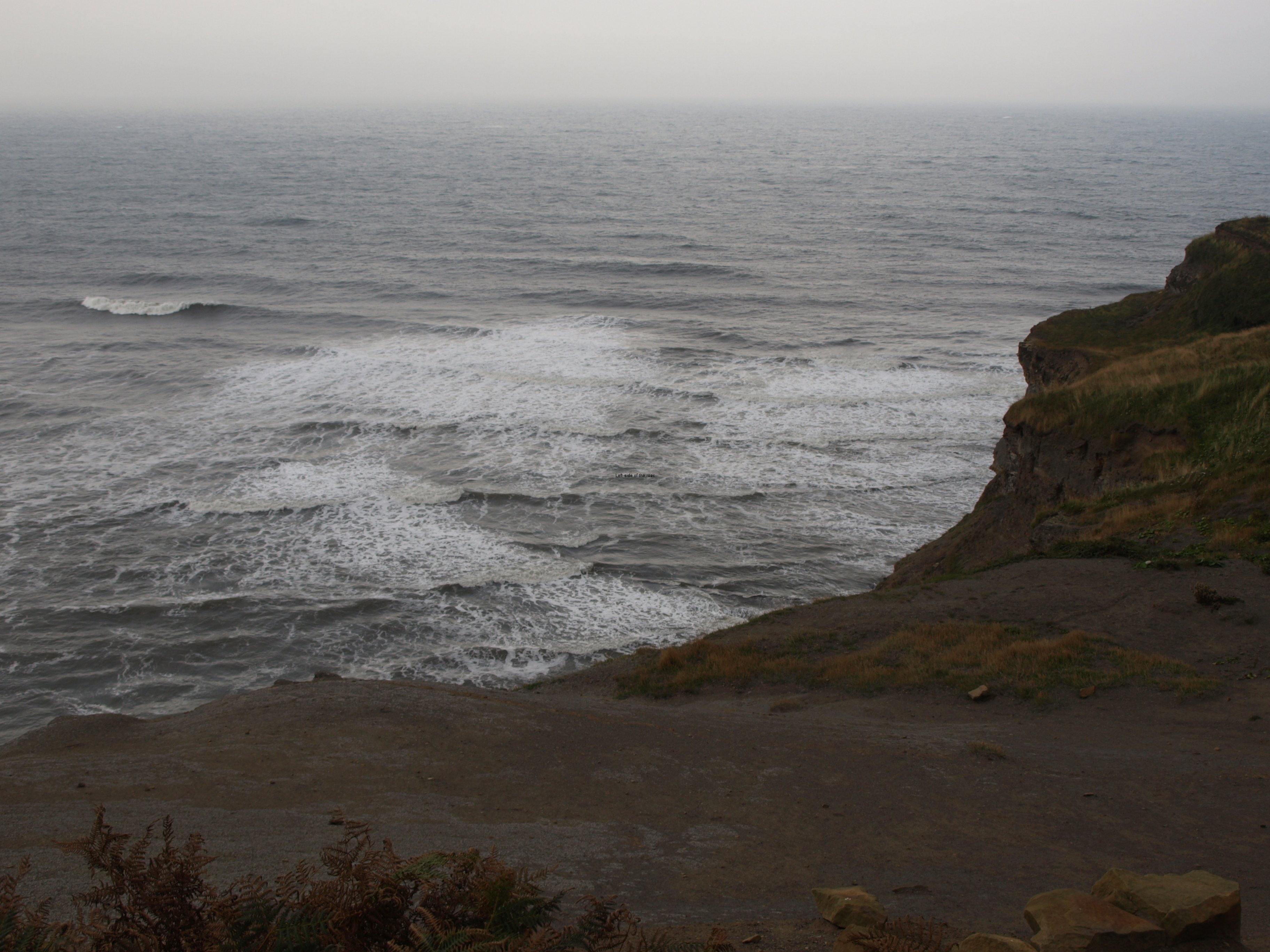
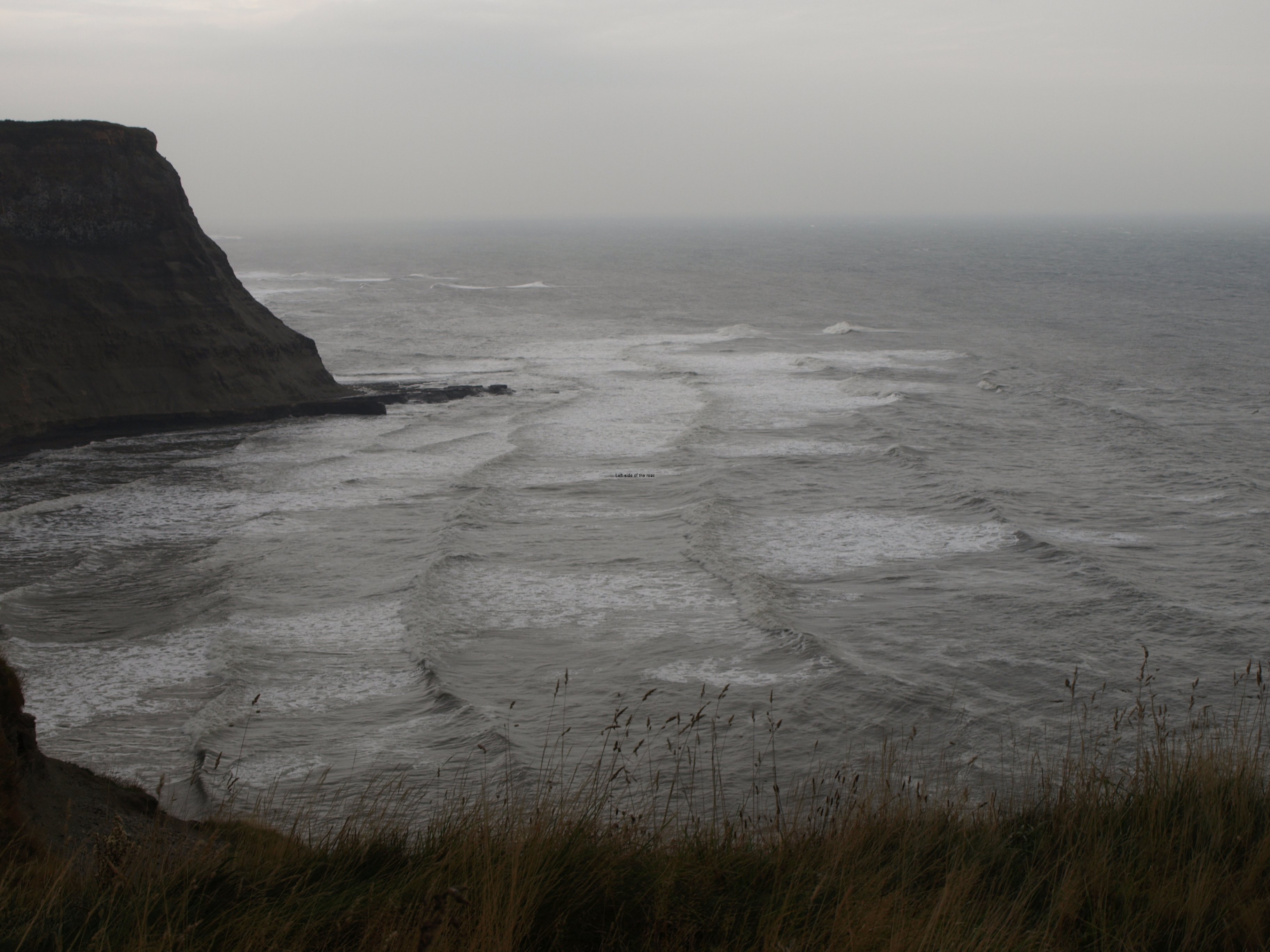
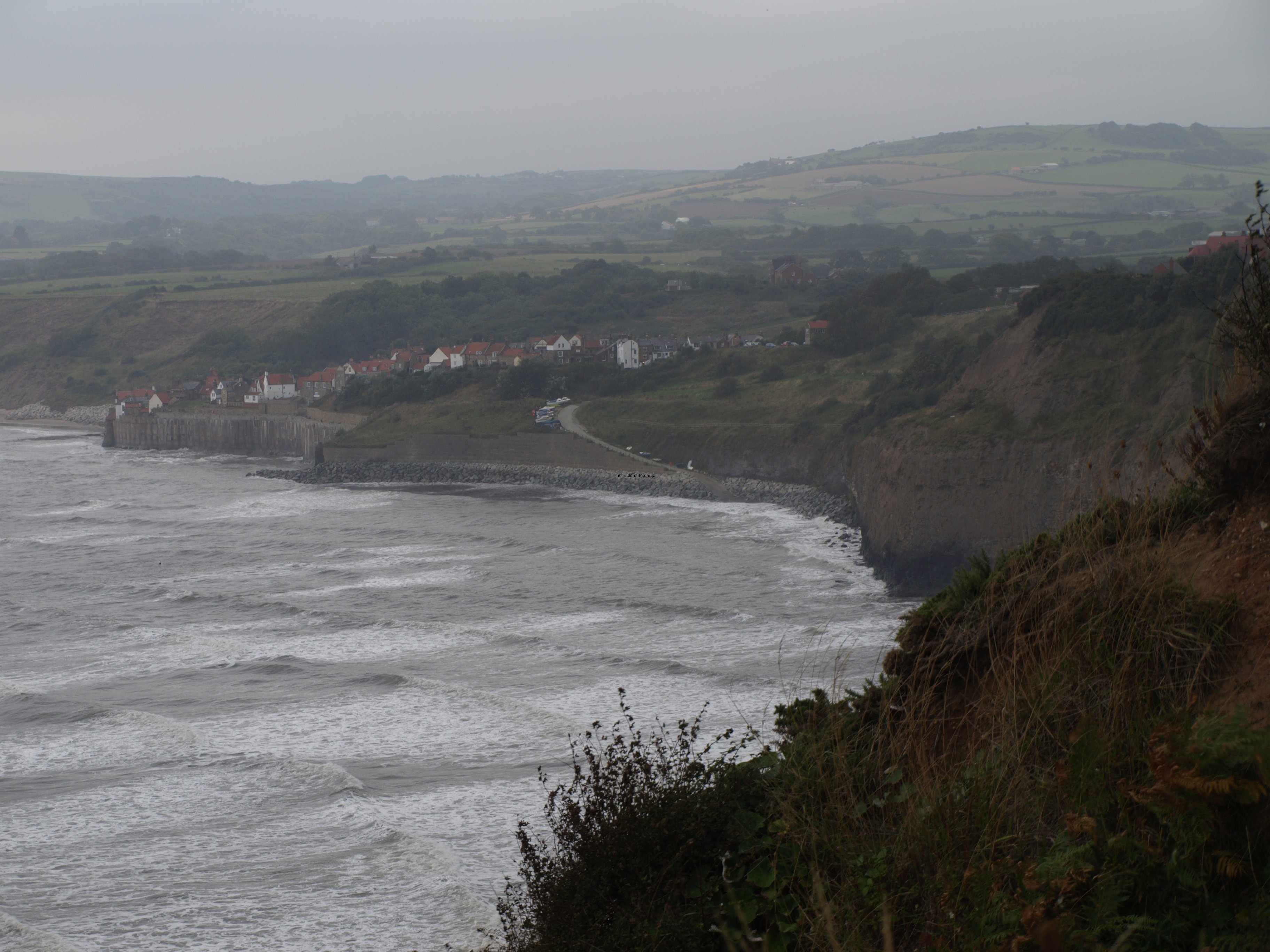
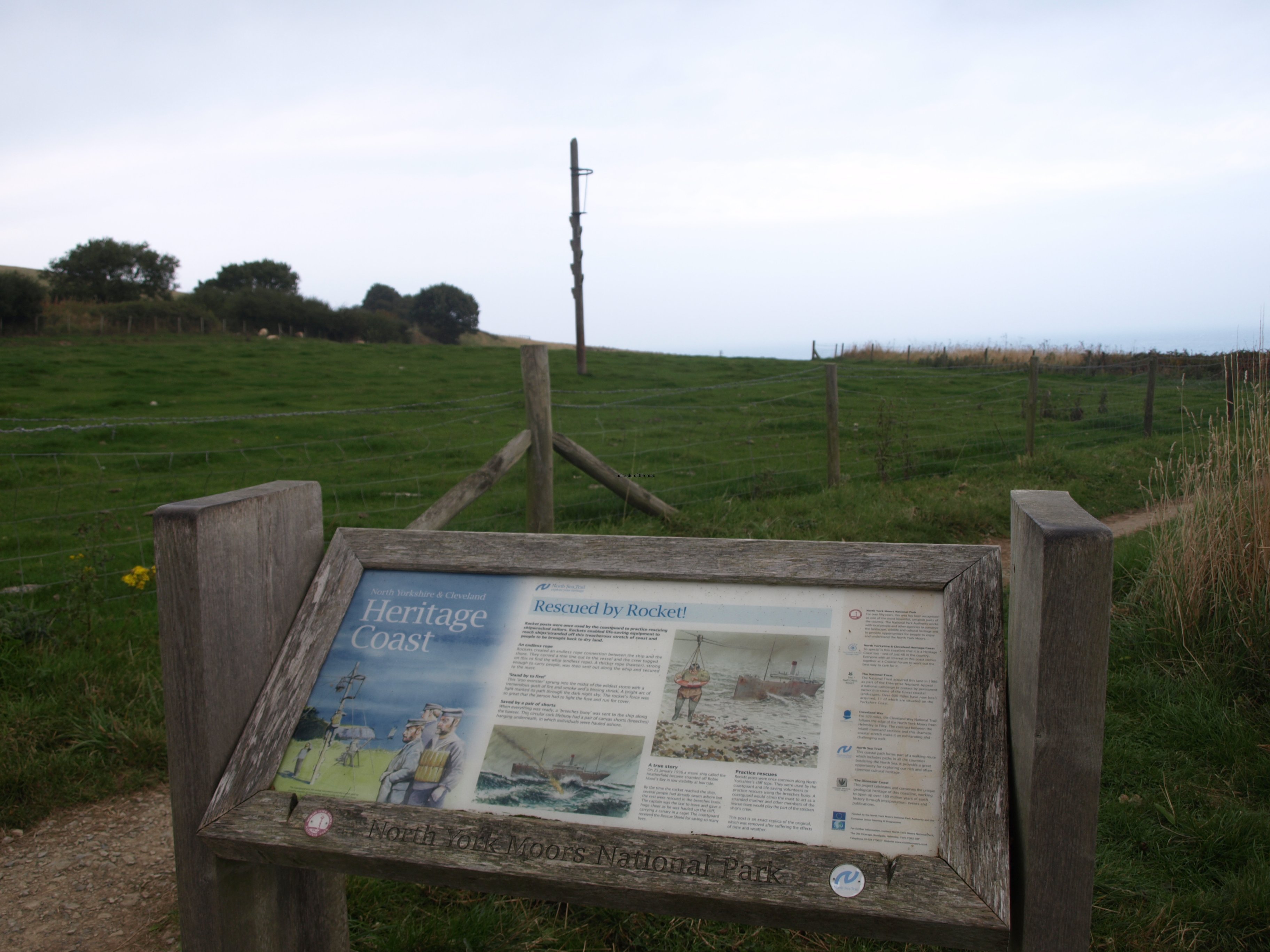
Robin Hood’s Bay to Liverpool – A Twearly returns home

The Final Hill - Robin Hood's Bay

The Final Hill – Robin Hood’s Bay

More on Britain …

Robin Hood’s Bay to Liverpool – A Twearly returns home

Having taken 16 days to get across country, from the Irish to the North Sea, the aim was to try to get back in one and, as part of the game, to try to see if it was possible to get from Robin Hood’s Bat to Liverpool, without too much pain, by using the Twearlys’ All England Bus Pass.

First I had to get out of Robin Hood’s Bay. As things worked out I had decided to leave at the first opportunity. The weather wasn’t looking too promising (and during the course of the day became considerably worse) and I suppose I was also getting fed up of the instability that comes with being away from home. There were no real problems it was just that I didn’t feel like chasing around to fill my time with something useful. It’s one of the consequences when you set yourself a task, a target, that on completion there’s a sense of anti-climax, the adrenalin that has kept you going returns to normal levels and consequently you feel tired. So I thought a day sitting on a bus, gradually heading west, was the best option.

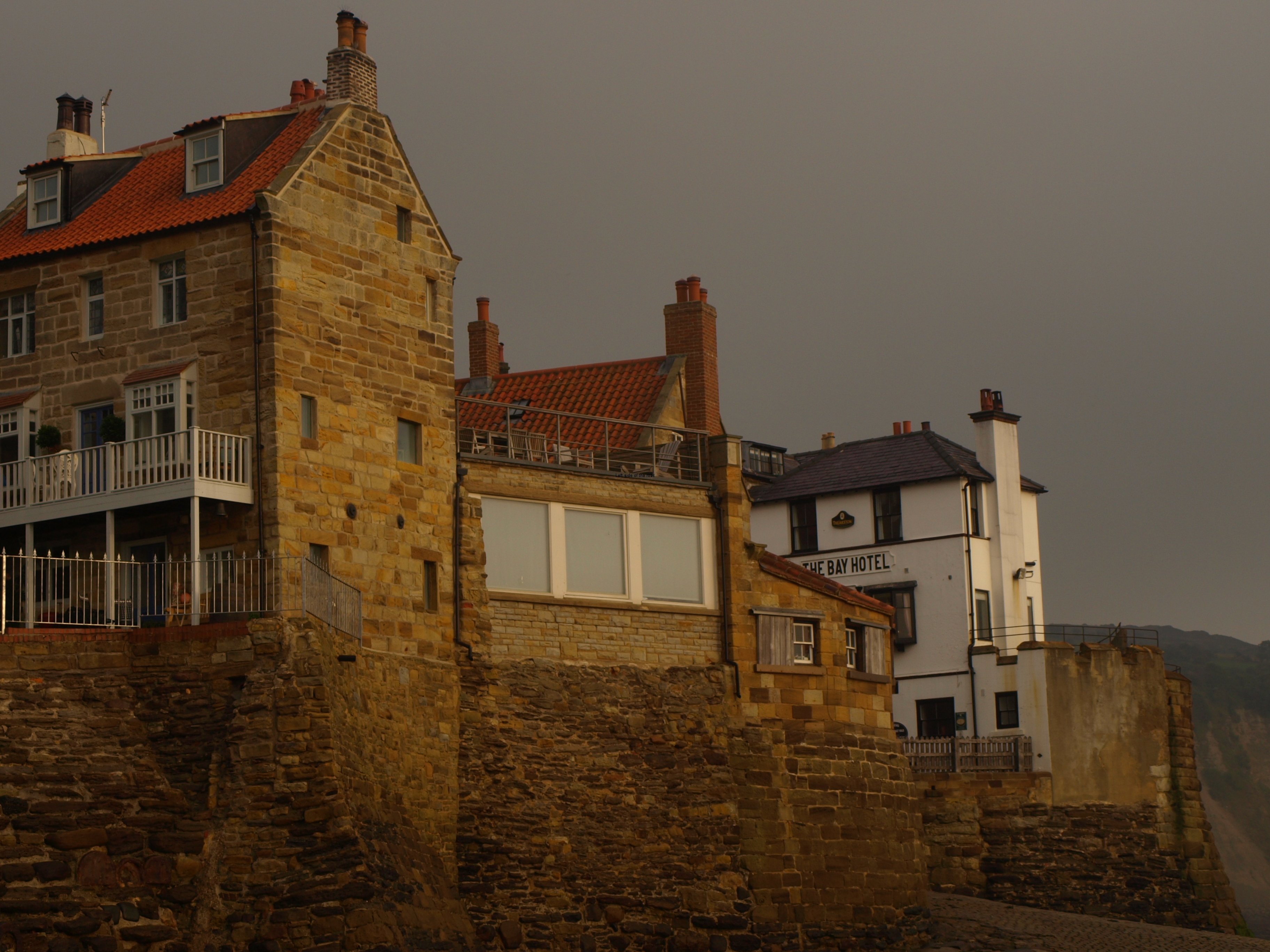
Robin Hood’s Bay would be a pleasant place to spend some time in the right conditions (as is the YHA at Boggle Hole) and I’ll make an effort to return in the not too distant future – as well as getting to Whitby to experience the famous fish and chips. It’s different from what I expected. I didn’t realise that the old part of the village is at the bottom of a very steep hill and that caused me to wander around aimlessly looking for the bus stop the day before.

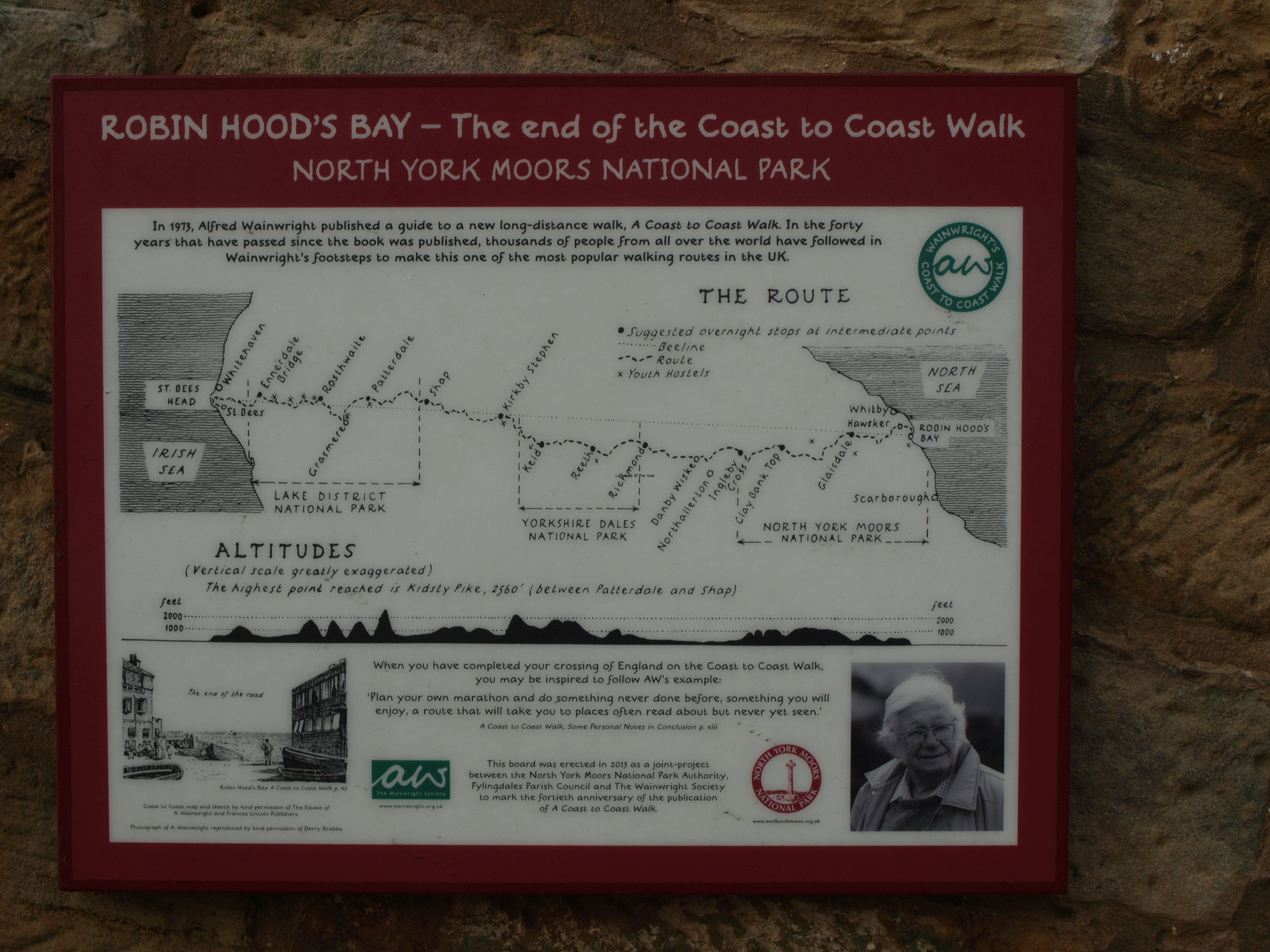
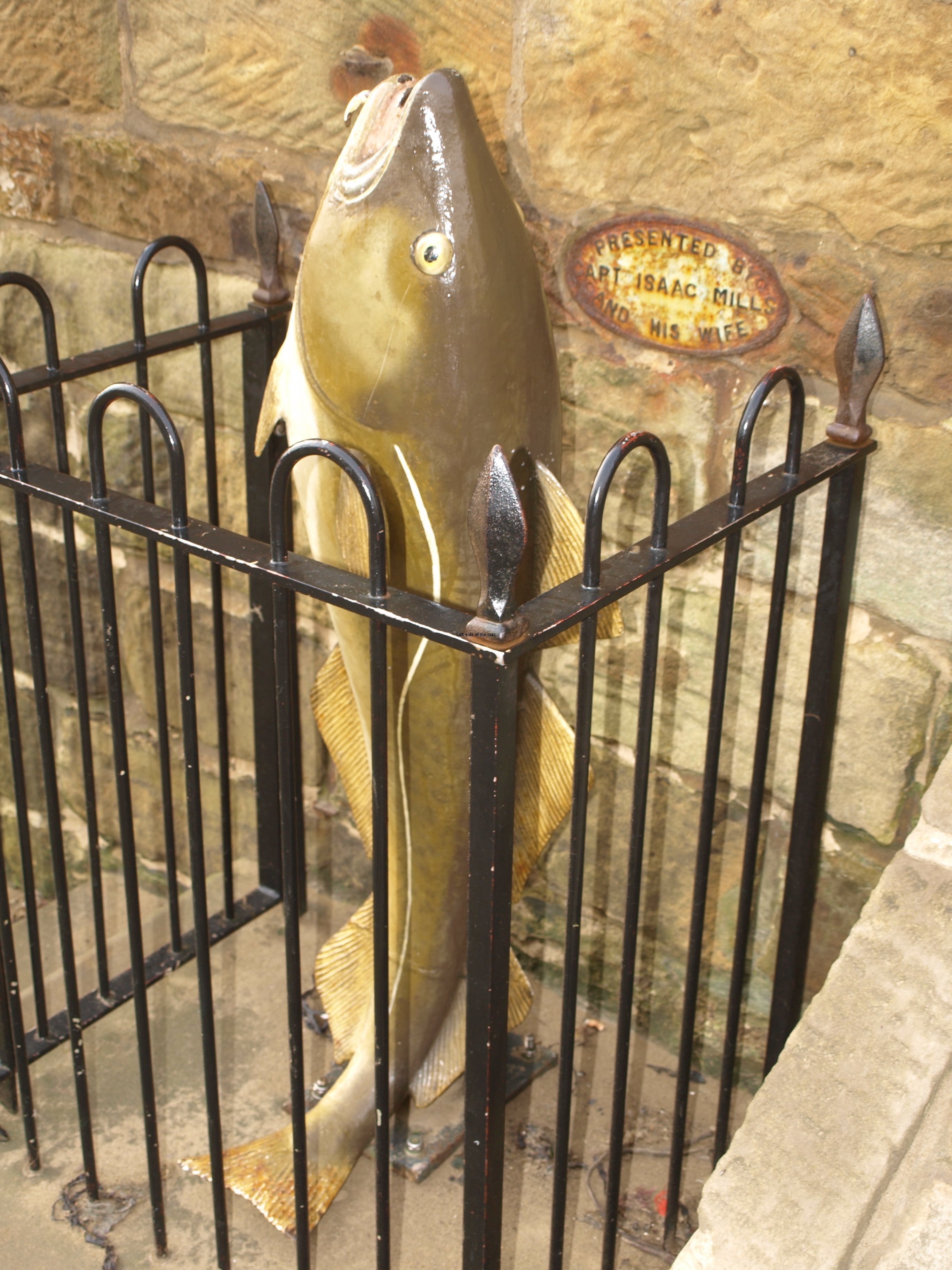
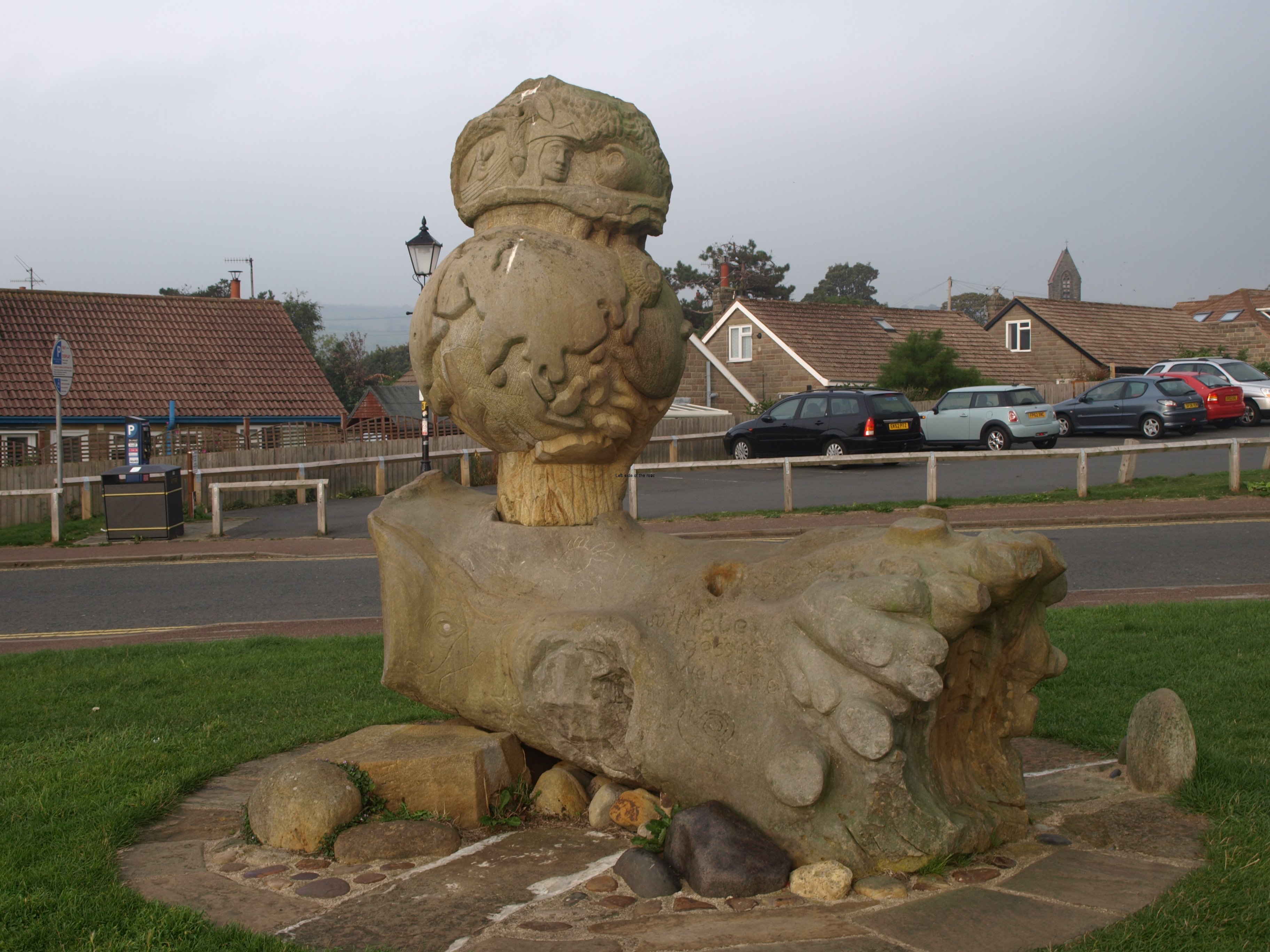
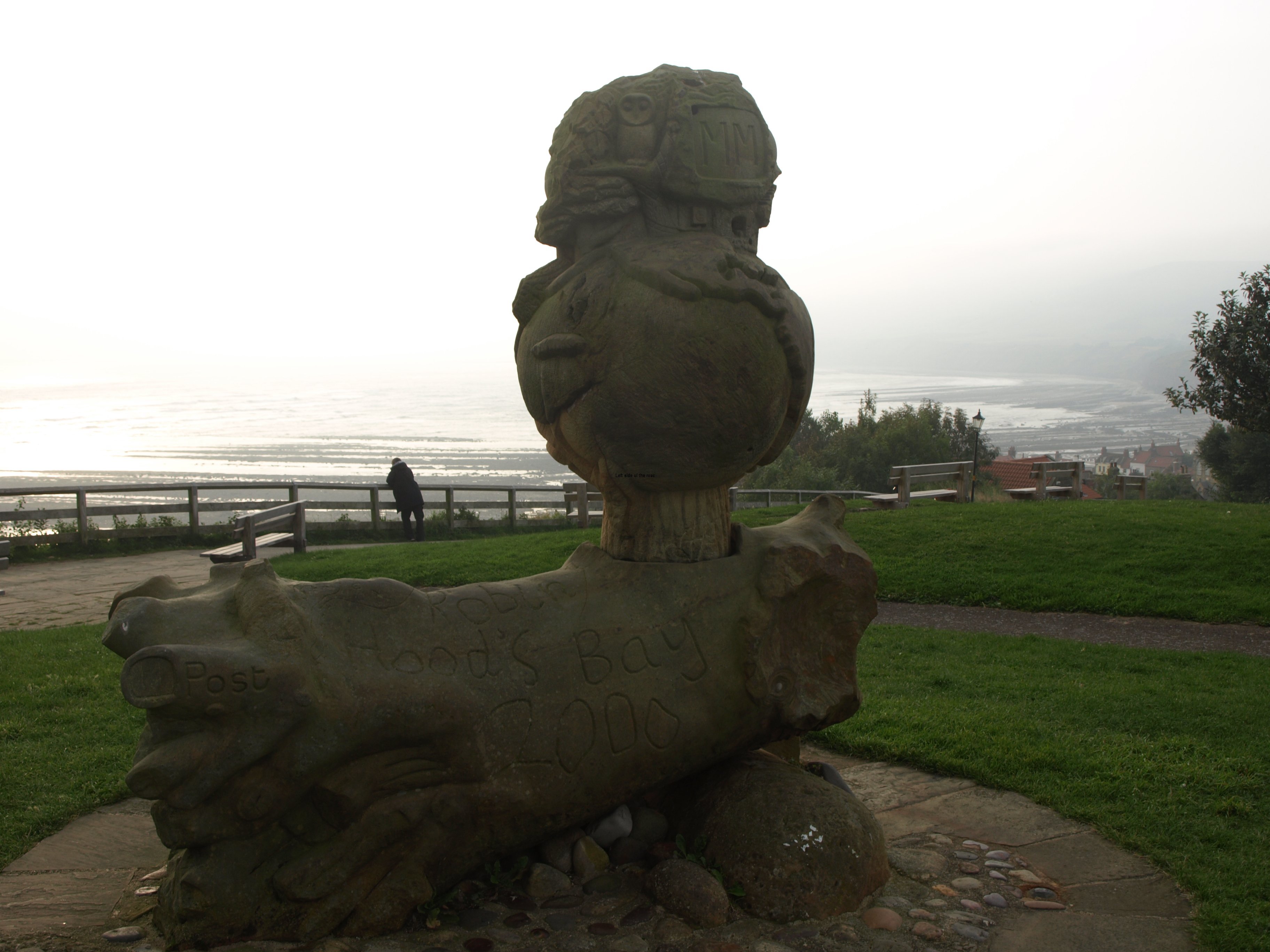
There’s a strange ‘monument’ at the bottom of the hill, next to the Coast to Coast finish/start sign. This is a statue, if that is the right word, of a fish, donated by a couple of locals (I assume), a Captain Isaac Mills and his wife. Didn’t notice a date and have no idea what it’s supposed to represent. So that the fish won’t escape it’s fenced in.

What makes Robin Hood's Bay Famous!

What makes Robin Hood’s Bay Famous!

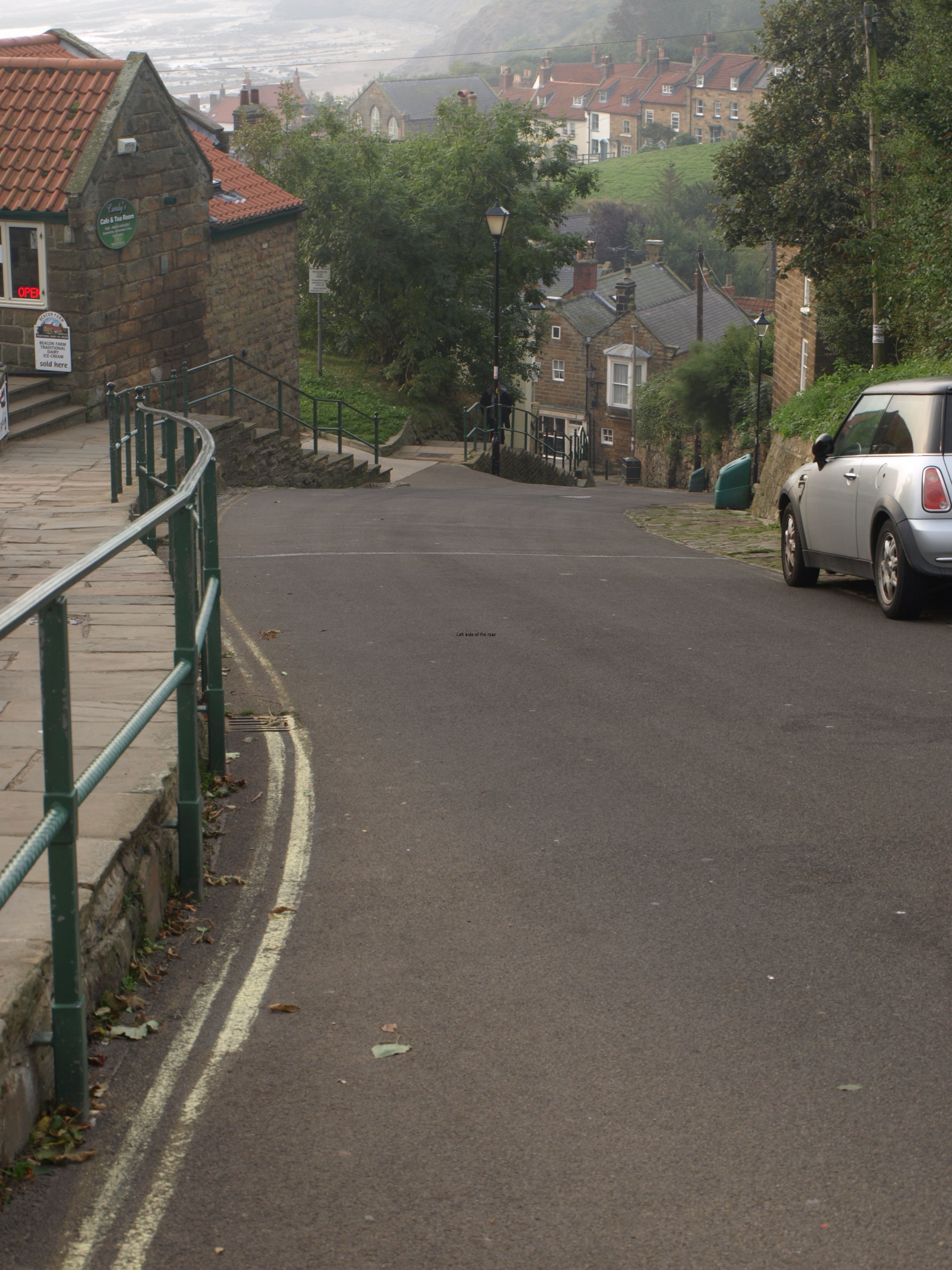
Before relaxing on the English local bus network there was one last challenge – and that was getting up the hill. There had been some steep ascents during the last couple of weeks and this was one of the steepest, but thankfully short, if not so sweet.

With the timetables of the buses I reckoned I could get back across country in about 10 hours. This would be on 5 different buses and some of the changeovers were tight so a delay of only 10 minutes or so at a couple of places would have meant a delay of another hour or two, so there was a lot resting on the buses keeping to their timetable.

In planning the exact buses to catch I had forgotten one crucial fact – and that’s the time limitations on the bus pass, i.e., it’s not valid before 09.30. Trying to use the pass before that time brands someone a ‘twearly/twirly’ (don’t know if there’s an official way of spelling it). For those who may not have come across it this is the term applied to any old fart who tries to get on a public bus before 09.30. It almost certainly has it derivation in Liverpool, that city and Sheffield being the only two metropolitan areas that offered free travel to over 60s long before it became a national affair.

A ‘twearly/twirly’ would stand at the bus stop anything from 10 or 15 minutes before the pass was valid and would ask the driver ‘Is it too early to use my pass?’. Perhaps the first ones to try it succeeded but after a while drivers began to realise that the same people would be trying it on and so started to stick to the time limit. As drivers would change the persistent old arses would keep on trying and hence the term came into everyday use in Liverpool.

I think it’s probably spreading around the country now, especially in the major cities but, fortunately for me, has not yet become an issue in North Yorkshire. I was at the bus stop for the 09.24 bus and it wasn’t till it came to me en route to Scarborough that I realised I had, inadvertently (honest) joined the ranks of the ‘twearlies/twirlies’.

Travelling long distance on local buses is an interesting experience/pastime. For one thing, being used, as we have become, to racing along at 70 plus mph on motorways when travelling by road we have lost the pleasure of passing through small towns and villages. The pace is obviously slower so when you are passing places of interest there’s actually time to see what’s there. The routes will change from fastish dual carriageways to then follow a quiet country road on the off-chance that someone in an out-of-the-way village is waiting for the bus. For those with no transport of their own these bus services become a bit of a lifeline to the outside world. I cursed these diversions (unfairly) when my bus was running late, especially when no one would subsequently either get off or on the bus, but that’s just being selfish.

The outside world is seen in a different light but so is the internal, the one inside the bus itself.

Travelling throughout the day you get to understand the different groups of bus travellers who occupy the different time slots and you get an insight of people’s lives as they interact with public transport. And it’s not always that edifying.

On the first bus, from Robin Hood’s Bay to Scarborough, leaving as it did at 09.24 it was too late for the early start workers, or even schoolchildren, but even on that bus there appeared to me to be a handful of people who might be starting work a little later, or even travelling to work via Scarborough railway station, the terminus for this particular route. Together with them you find those who might be making relatively local visits, going early morning shopping or having a day out in the larger seaside town.

The bus from Scarborough was completely different. Going all the way to Leeds (a scheduled journey of 2 hours 45 minutes which takes in York) this was packed by the time it left the centre of the city and was almost full of people using a bus pass. Some going only a short distance but quite a few getting out at York. They would have been on a day trip, returning after an afternoon wandering the narrow streets of the old town. But that bus also picked up people doing their shopping and those travelling relatively short distances to carry out the everyday affairs that make up people’s existence – visiting family and friends, doctors, dentists, signing on at the dole, getting away from annoying family members, trying to escape for a short time, basically just doing something different to break up the monotony of their mundane lives.

From Leeds the make-up of the passengers changed again. Some seemed to be going home after sorting out their affairs in the big city, perhaps after dealing with officialdom or shopping. Then there were the first people who may have started work really early, on a morning shift perhaps, and going home in the middle of the afternoon as they had started in the middle of the night. As we got closer to Skipton (this bus’ terminus) it got darker and soon we were travelling through driving rain. These were the weather conditions I thought I might have had to face, but fortunately for me didn’t, as the winds from the east kept me dry. Once I didn’t need them the winds reverted to normal and hence the torrential rain, which kept falling until I was almost within sight of Liverpool. Towards the end of this journey schoolchildren started to appear as by 15.30 we were coming towards the end of the school day.

The changeover in Skipton was tight, only 5 minutes between one bus scheduled arrival time and the next one, to Preston, leaving. By now the rain was persistent and heavy and Skipton bus station is not somewhere you want to spend a lot of time in such weather conditions. One of the problems with the deregulation of buses, and the slashing of staffing levels, is that there’s no one present to hold buses back for a few minutes if a connecting bus is delayed. There must have been 7 or 8 people doing the same as myself and transferring to the Preston bus but if the Leeds bus had arrived only 5 minutes later it would have meant another hour’s wait for the next one. There’s just no planning for these situations when technology provides an easy way to create an integrated transport network, possible even with many bus companies if there was the will. But timetable punctuality means more than passenger ‘satisfaction’, something which also happens on the railways. If notice boards contained passenger comments rather than meaningless statistics we would all have a better understanding of transport infrastructure efficiency in Britain.

But ‘a close to Skipton bus station pub’s’ loss was my gain as the next bus pulled into its bay less than a minute after I got there. Now the passenger mix changed yet again. There were a few of us long haul passengers, making it all the way from Leeds to Preston – and beyond. Again people returning home along the almost 2 hours of this route. But dominated by schoolchildren. Passing through a number of small Yorkshire and then Lancashire towns the route passes many schools so not a surprise that they would be providing the passengers. What did surprise me was the distance some of these young people had to travel. They weren’t in any way going to a local high school. This was the case at the beginning of the route but became even more pronounced on the second half of the journey where some of these kids were on the bus for 45 minutes or more, to then arrive in the centre of Preston – how much further they had to go I wouldn’t know. And we’re not talking about a local bus that gets caught up in traffic lights and roundabouts. This was a bus that raced along dual carriageways and the miles soon mount up. These children must have been spending at least a couple of hours a day just getting to and from school and that can’t be right. I walked to all my schools and if it took longer than 10 minutes you were dawdling, surely that’s a more civilised approach to education?

The final stage from Preston to Liverpool was the 17.30 commuter bus. They are always quiet as people tend to travel alone and with mobile devices there’s even less incentive to communicate with fellow travellers. But even on this bus there was an indication of the pressures that are placed on working people in ‘austerity forever Britain’. A young teacher, or trainee, was looking through her class’s workbooks for the first part of the journey (which for her was over an hour). This is as bad as the circumstances of the schoolchildren earlier. She wouldn’t have got home much before 19.00 and I can’t imagine what time she left in the morning. I would like to think she had spent an hour or so in the pub after finishing teaching but I think that is, unfortunately, unlikely. People are working too long! When I was involved in the trade union we were fighting for a shorter working week/life but that is all a thing of the past now. The advantage of her working such a long day is that she won’t have to wait until her early 70s before retiring, she’ll be dead before then.

One of the last of my travelling ‘companions’ was a young women who had obviously been spending some time mucking out stables. This information was gleaned not from her dress or what she might have said but by the smell of horse piss and shit emanating from her foot wear. Judging (is this being prejudiced and imposing stereotypical points of view?) by where she got off the bus she was unlikely to have been the owner of a horse, more a stable girl. But why bring her work home with her, and in the process leaving her mark on a public bus? So many questions, so few answers.

By now the rain had stopped. The streets were wet but I had, yet again since leaving home just over a couple of weeks ago, missed getting seriously wet. Liverpool awaited. It had taken me 13 days walking to get from west to east and just 10 hours (more or less) to get from east to west.

More on Britain …

Previous

Coast to Coast – Glaisdale to Robin Hood’s Bay – THE END!

Robin Hood's Bay

Robin Hood’s Bay

More on Britain …

Chapter 15 – Glaisdale to Robin Hood’s Bay

The last day – and the first without a pack!

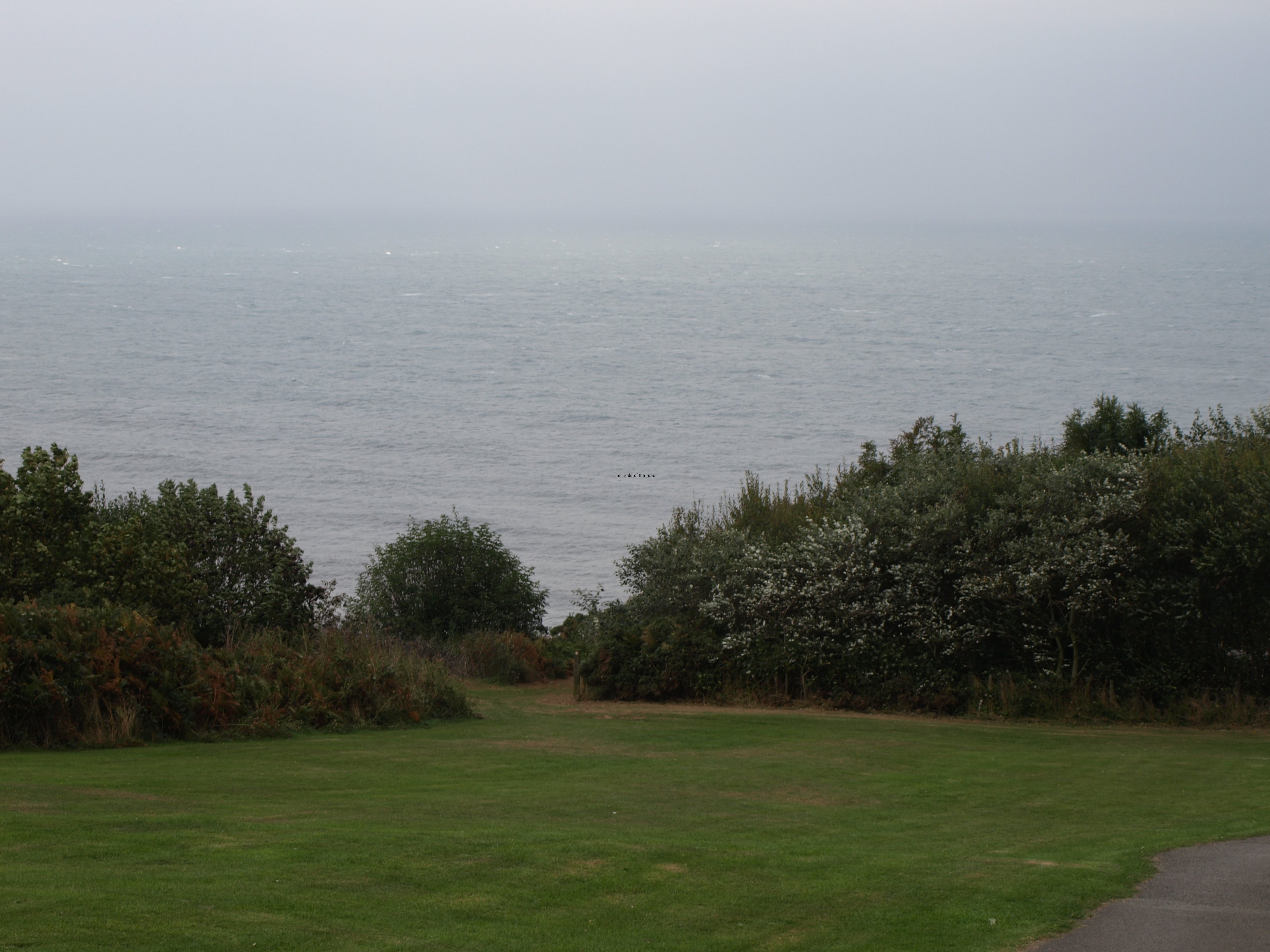
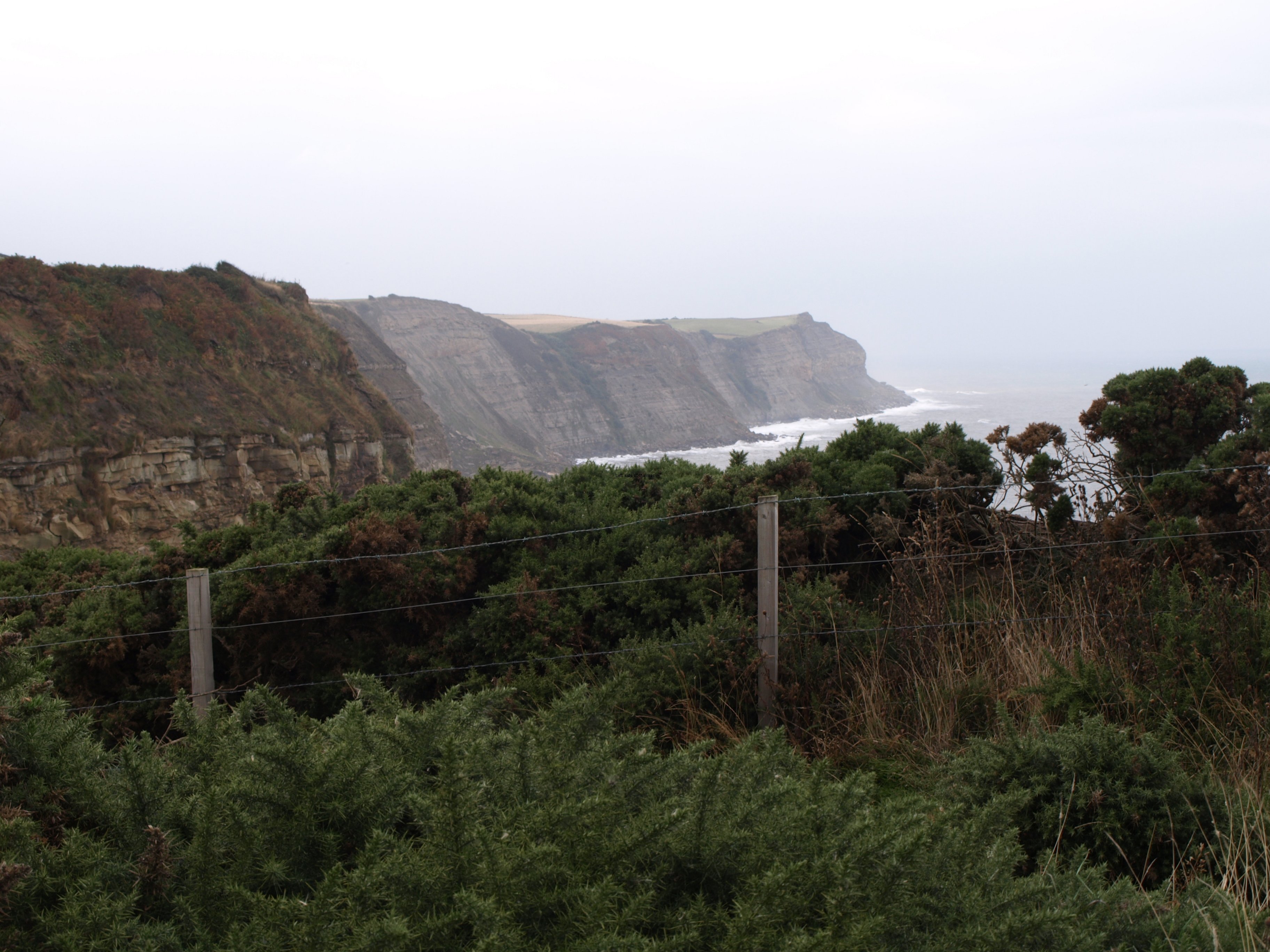
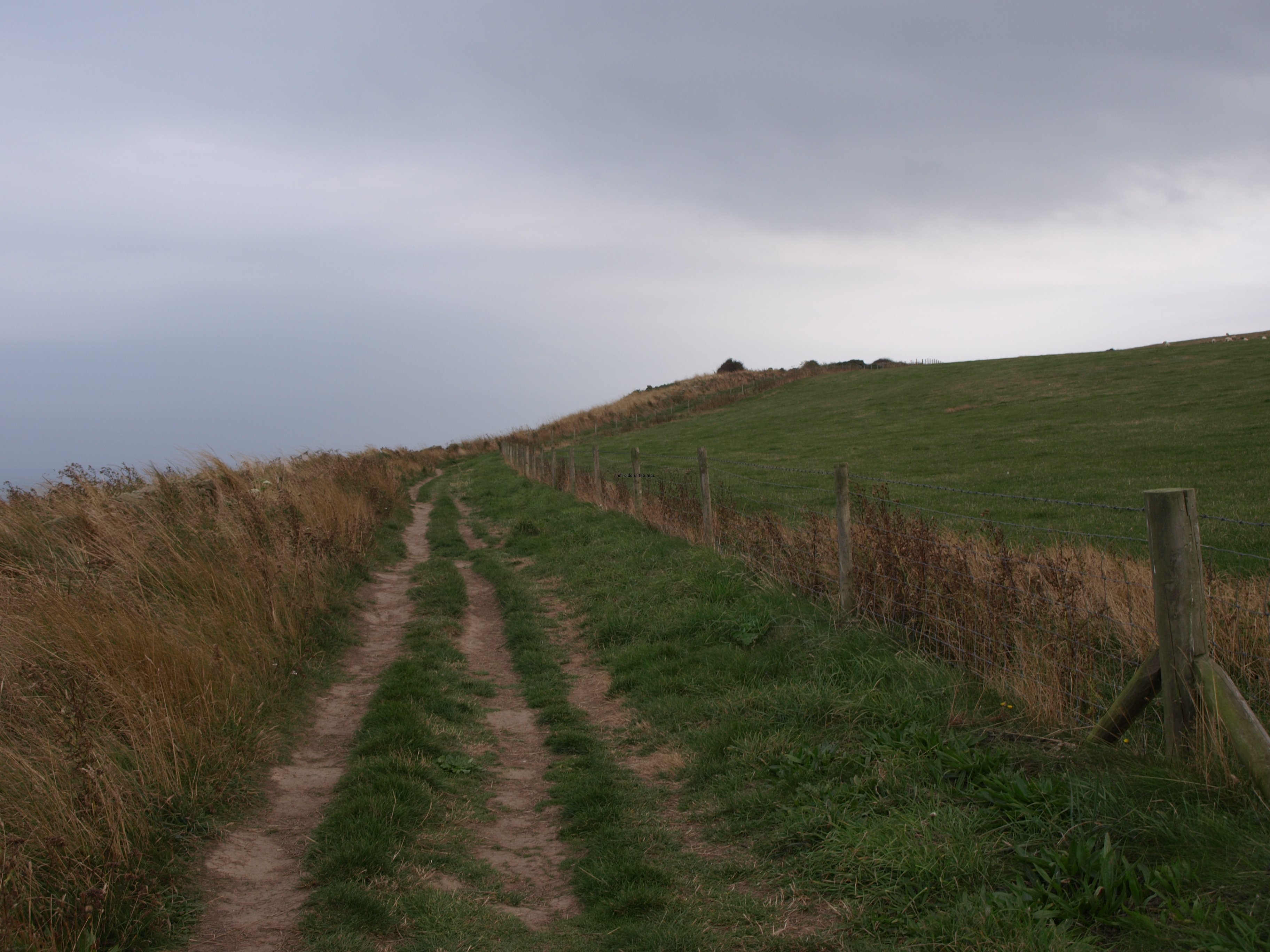
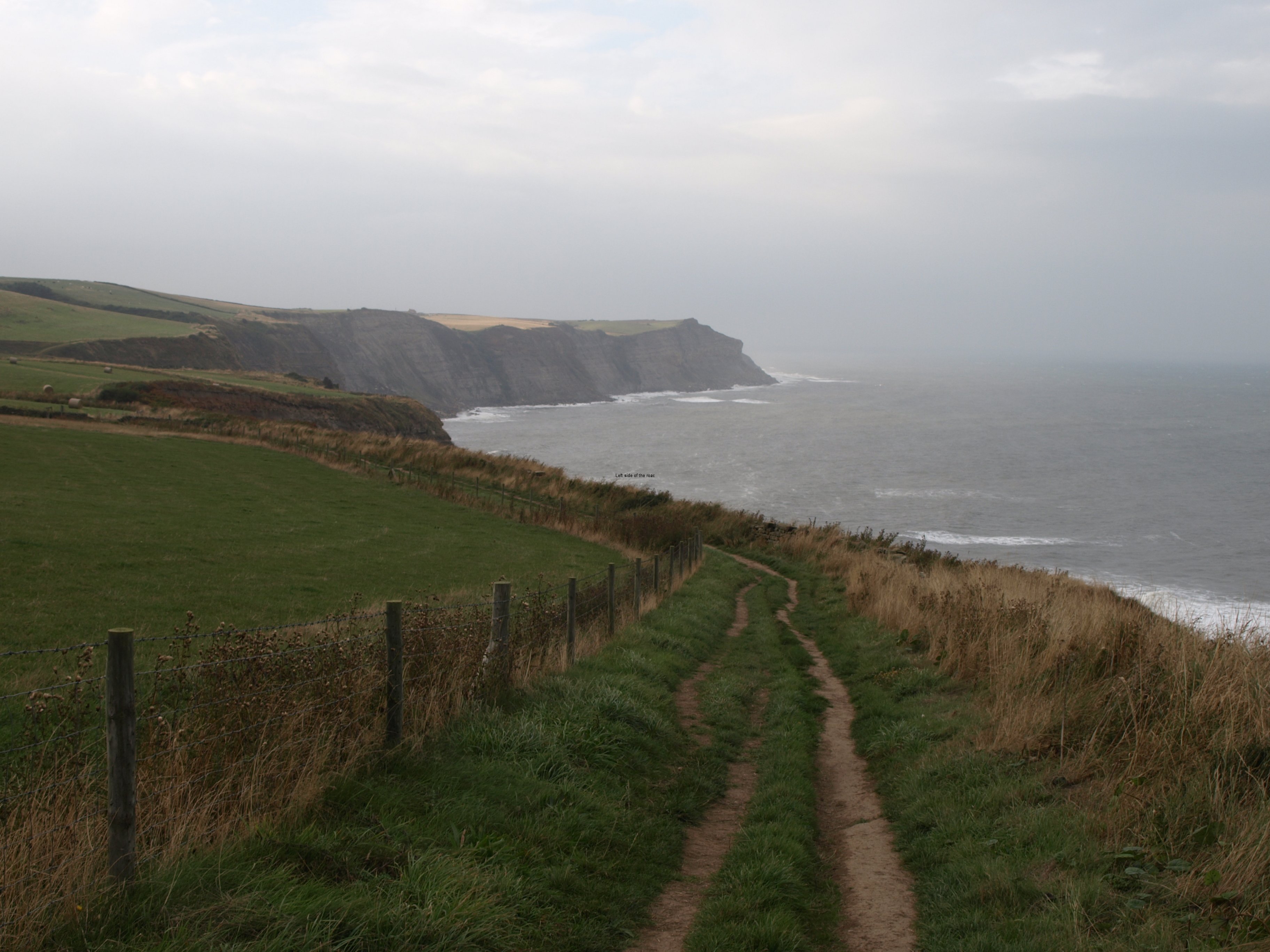
It had taken a long time in coming but the final day had arrived. Today, baring any disaster, walking from Glaisdale to Robin Hood’s Bay I would finally reach the North Sea and the end of the walk. (Whitby is on the coast of the North Sea but the wrong bit as far as the Coast to Coast walk is concerned.) But it wasn’t just a stroll. This was still a serious walk and I estimated I had close on 29 kilometres before I could say that I had finished the whole of the long distance walk.

First I had to get back to where I’d finished the day before. There was a bus but that would have meant a late start so the option was the train back along the same route I’d taken the previous evening. In the Arncliffe Arms in Glaisdale I had been told that the train is, in effect, the local school ‘bus’ first thing in the morning and at mid morning and this was evident at the station when close on a hundred school children must have walked through Whitby station. But that’s a good thing as it means, at least in term time, that the train would be almost guaranteed to run and not being subject to arbitrary cancellations.

Although the weather was, yet again, dull and overcast this is still a pleasant train journey. The eventual destination along this line is Middlesbrough but going inland and through the hills rather than along the coast, the quickest way from Whitby. In the summer months, or just on a bright and sunny day in whatever season, this would be a worthwhile journey. The only thing I can’t work out about it is why it’s cheaper to go up hill in what is considered peak times than it is downhill in off-peak times.

The scheduled journey time is only 27 minutes so I would be starting to walk, more or less, at a similar time I had adopted from the start.

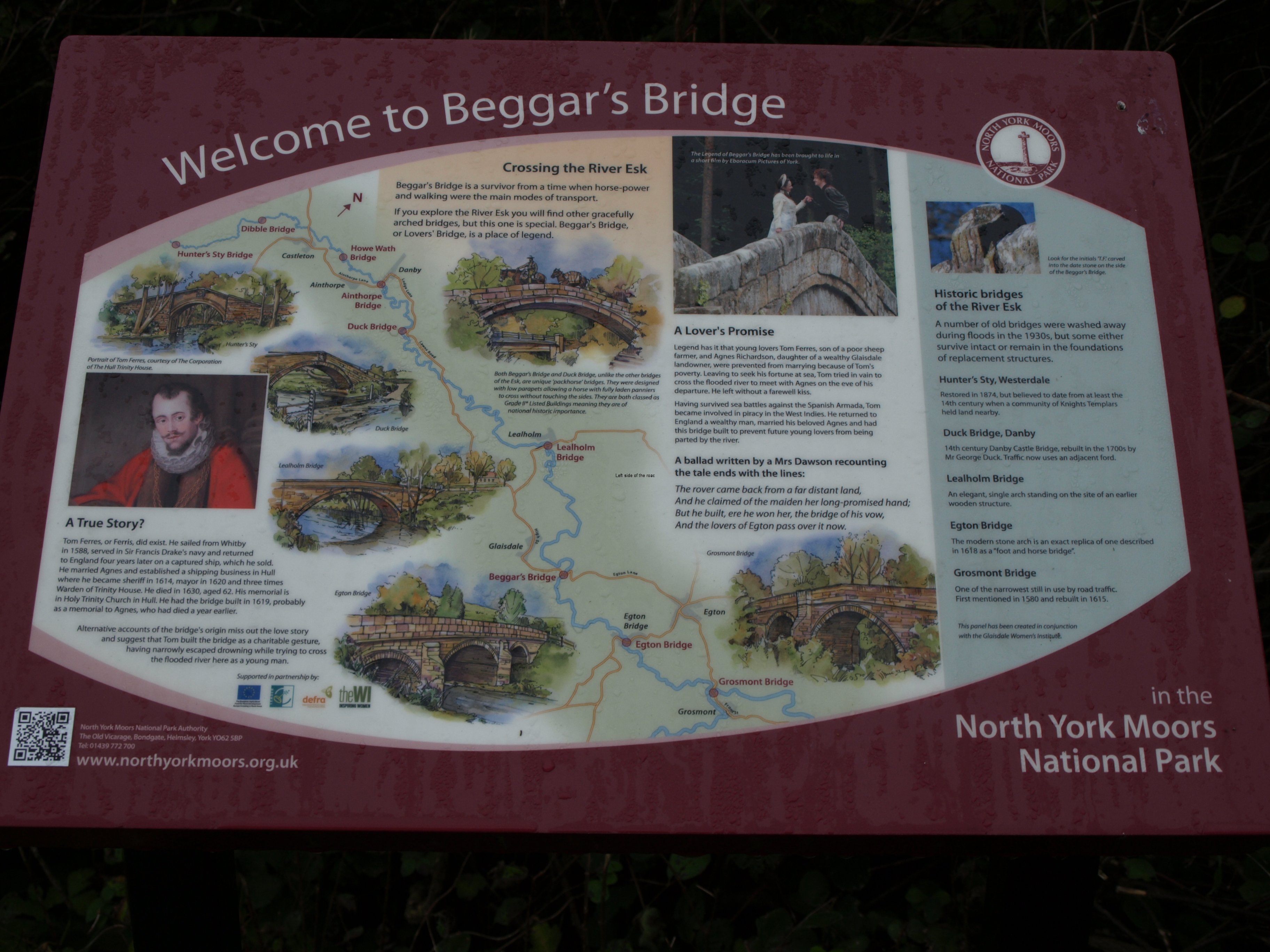
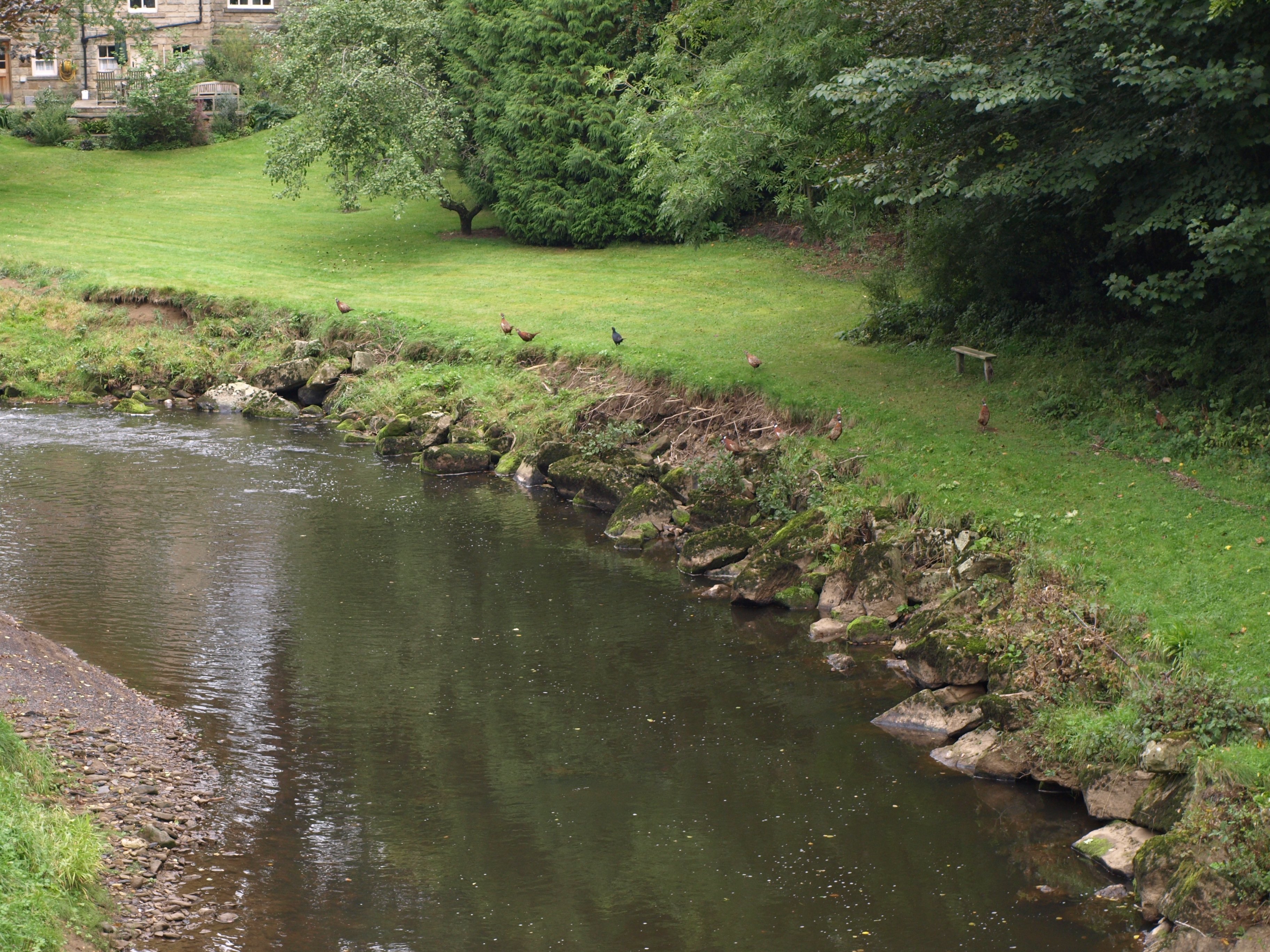
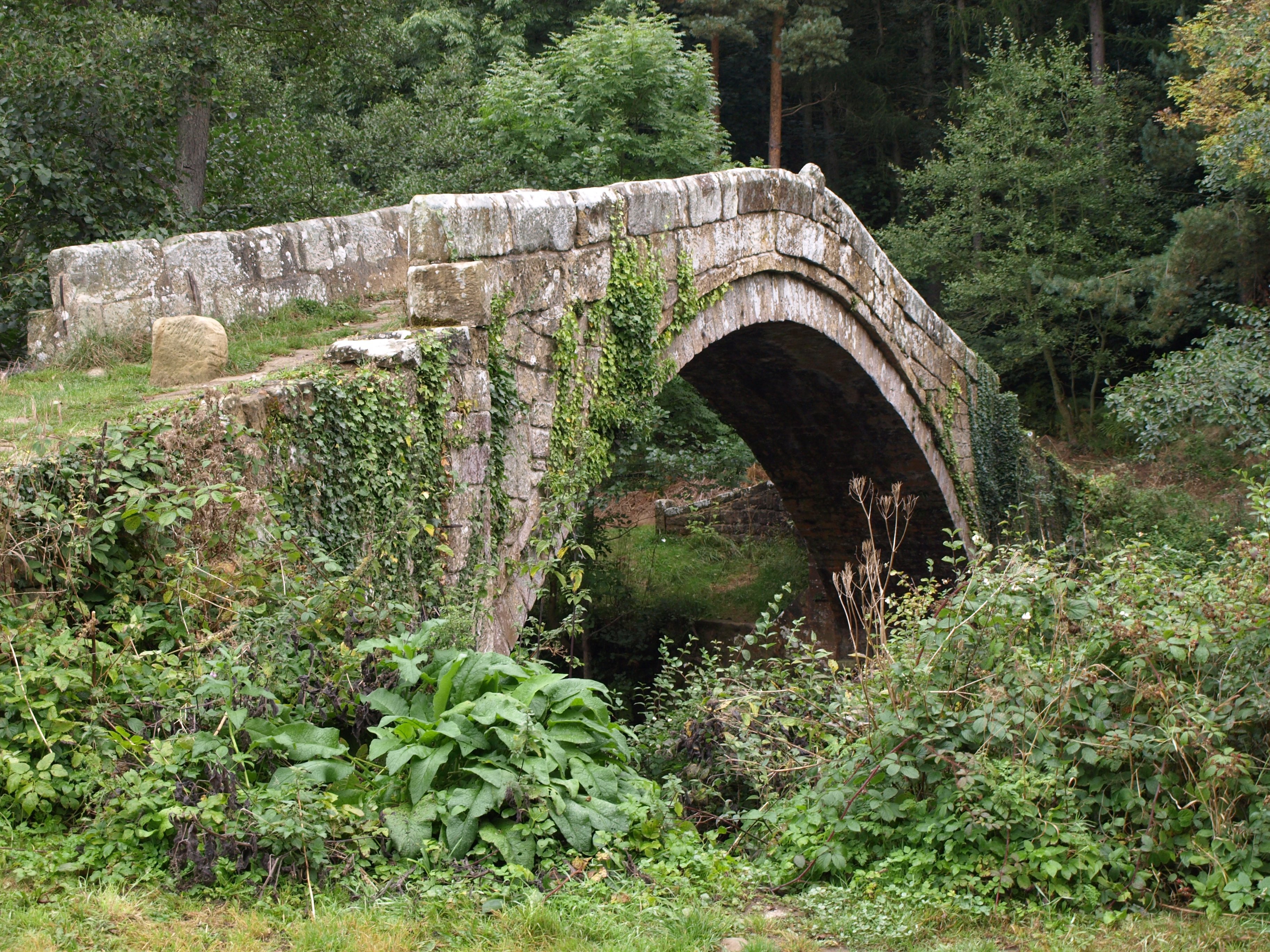
A very slight diversion at the very beginning of the walk is a visit to the so-called ‘Beggar’s Bridge’ (quite a beautiful bridge with the vegetation growing on it), built-in 1619 specifically for pack horses, and which is one of a number that cross the Esk River, the route of which the railway line follows as it heads further in land before turning north towards Middlesbrough. I don’t realise this at the time, taking a picture of the information board but not taking the time to read it and so didn’t look out for two of the other bridges in the villages of Egton Bridge and Grosmont I would have to pass through on my trek east.

Beggar's Bridge, Glaisdale

Beggar’s Bridge, Glaisdale

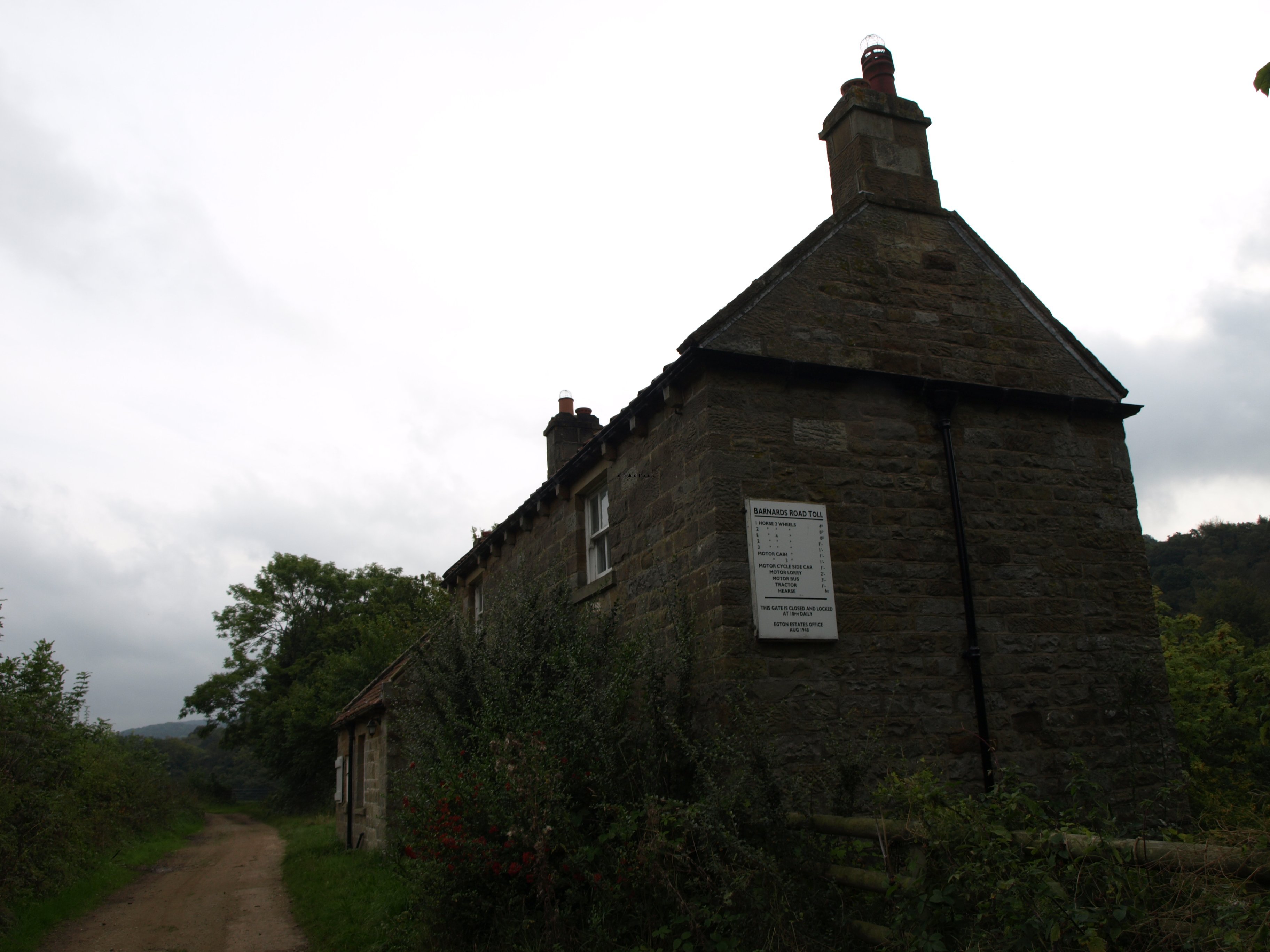
As I wasn’t carrying a rucksack all I considered I might need had to be either worn, in the pockets or around my neck as I didn’t have a day pack. For some reason, even though I’d been ‘dreaming’ of this freedom I didn’t actually feel free as I followed the path through the woods on the banks of the river. Also I wasn’t moving as fast as I thought I would. My timings for the stretch from Glaisdale to Egton Bridge were based on a load and I barely kept to those times. I don’t think that was anything other than the inability to adopt my normal walking pace. For so long, 12 days, I had forced myself to just plod along and it seemed as if I couldn’t get out of second gear.

(The previous day I had considered walking to the next station down the line after a quick pint in the Arncliffe Arms. Fortunately that plan was quickly forgotten as I relaxed in the bar otherwise I might had made a bit of a faux pas as the station in Egton Bridge is at the far end of the village and I might have cut it too fine to catch the last train to Whitby.)

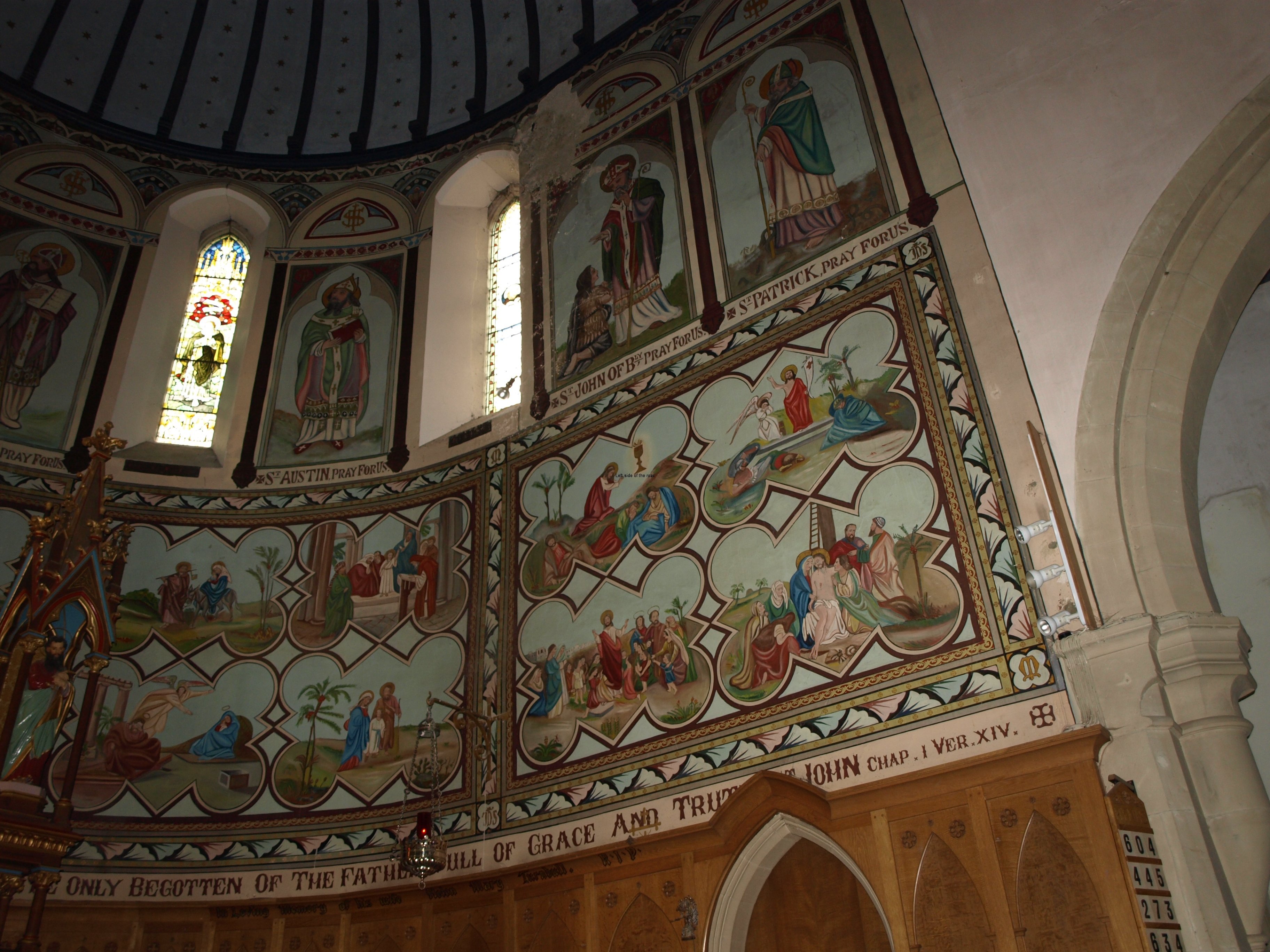
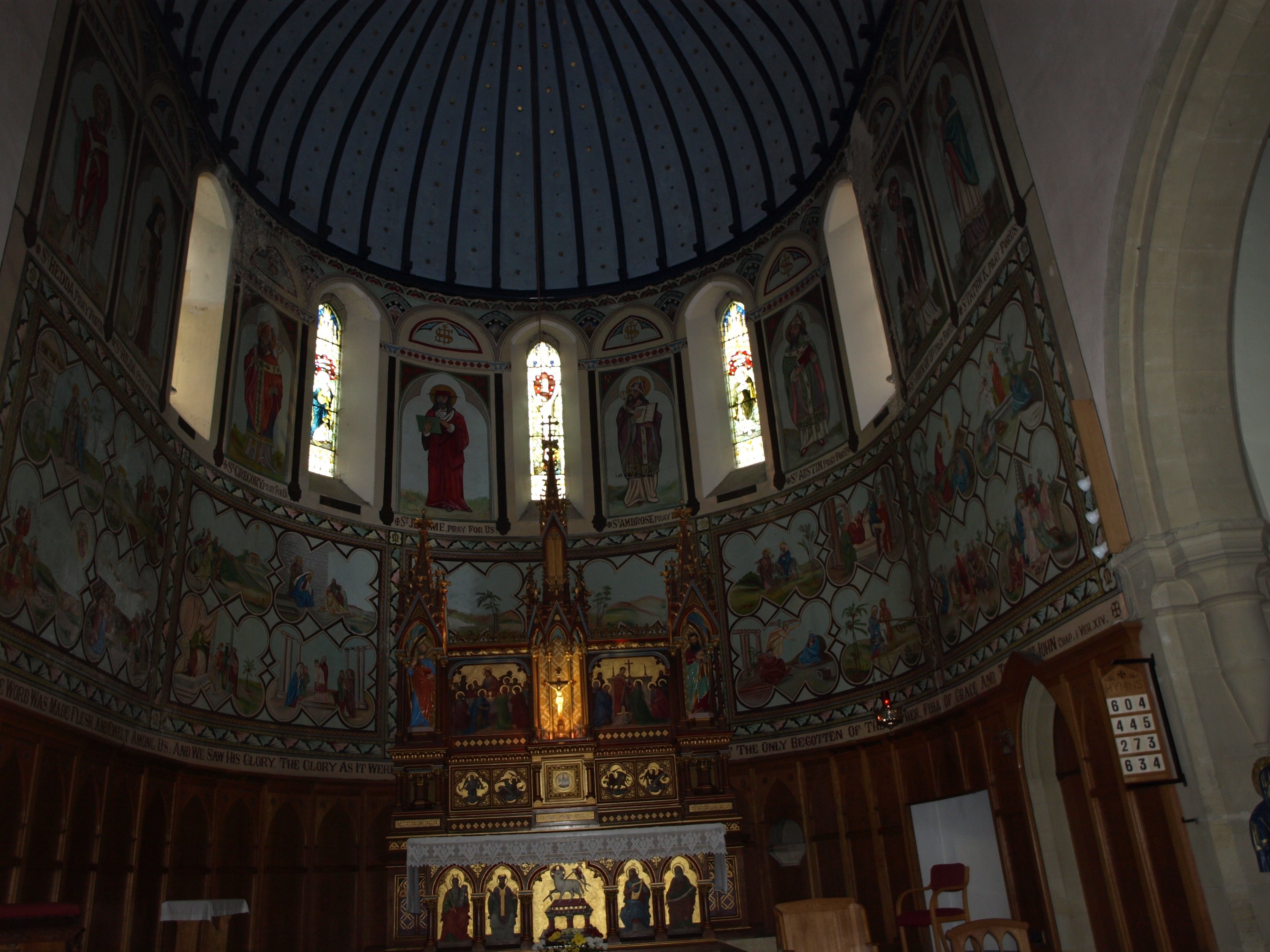
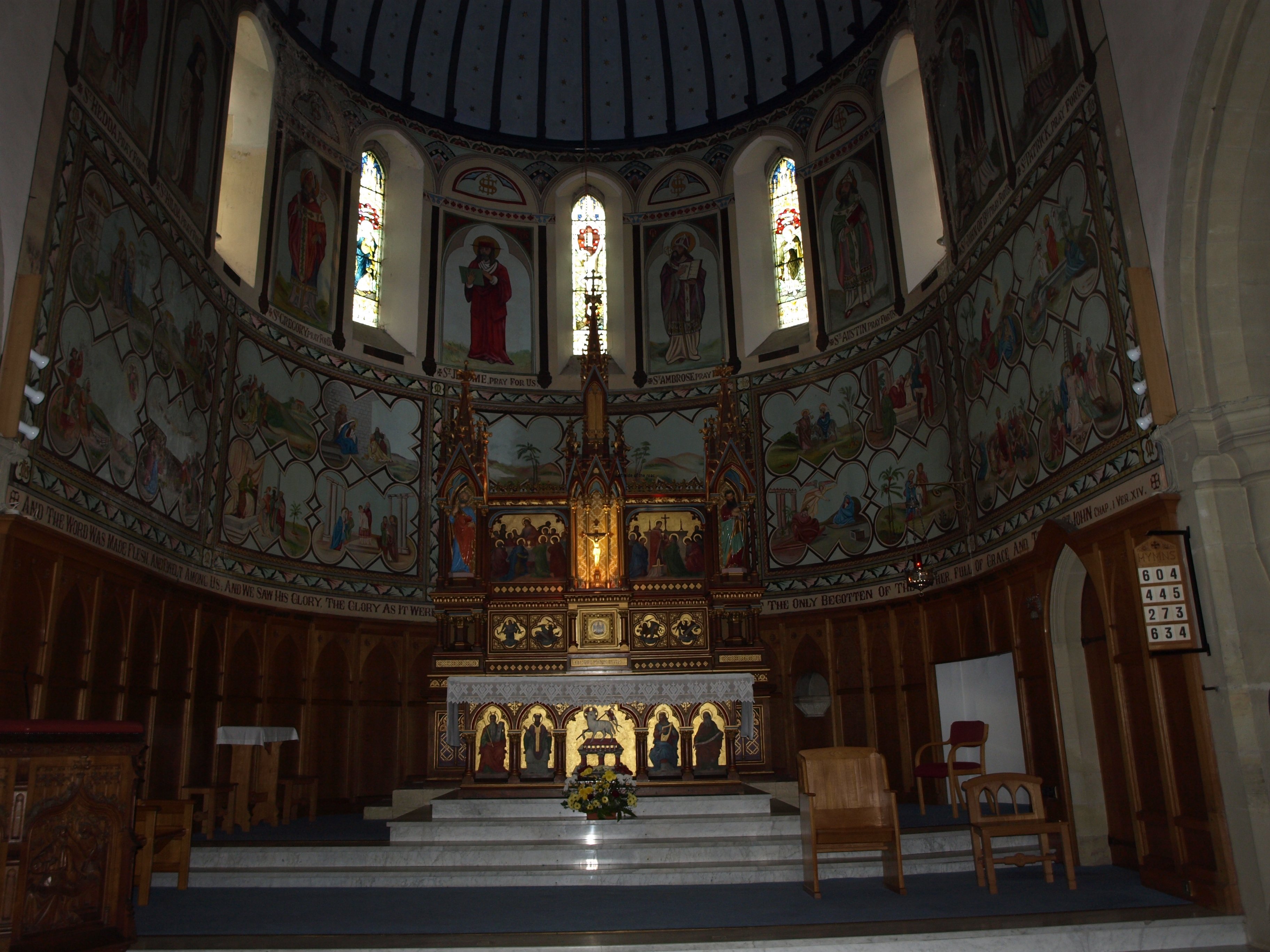
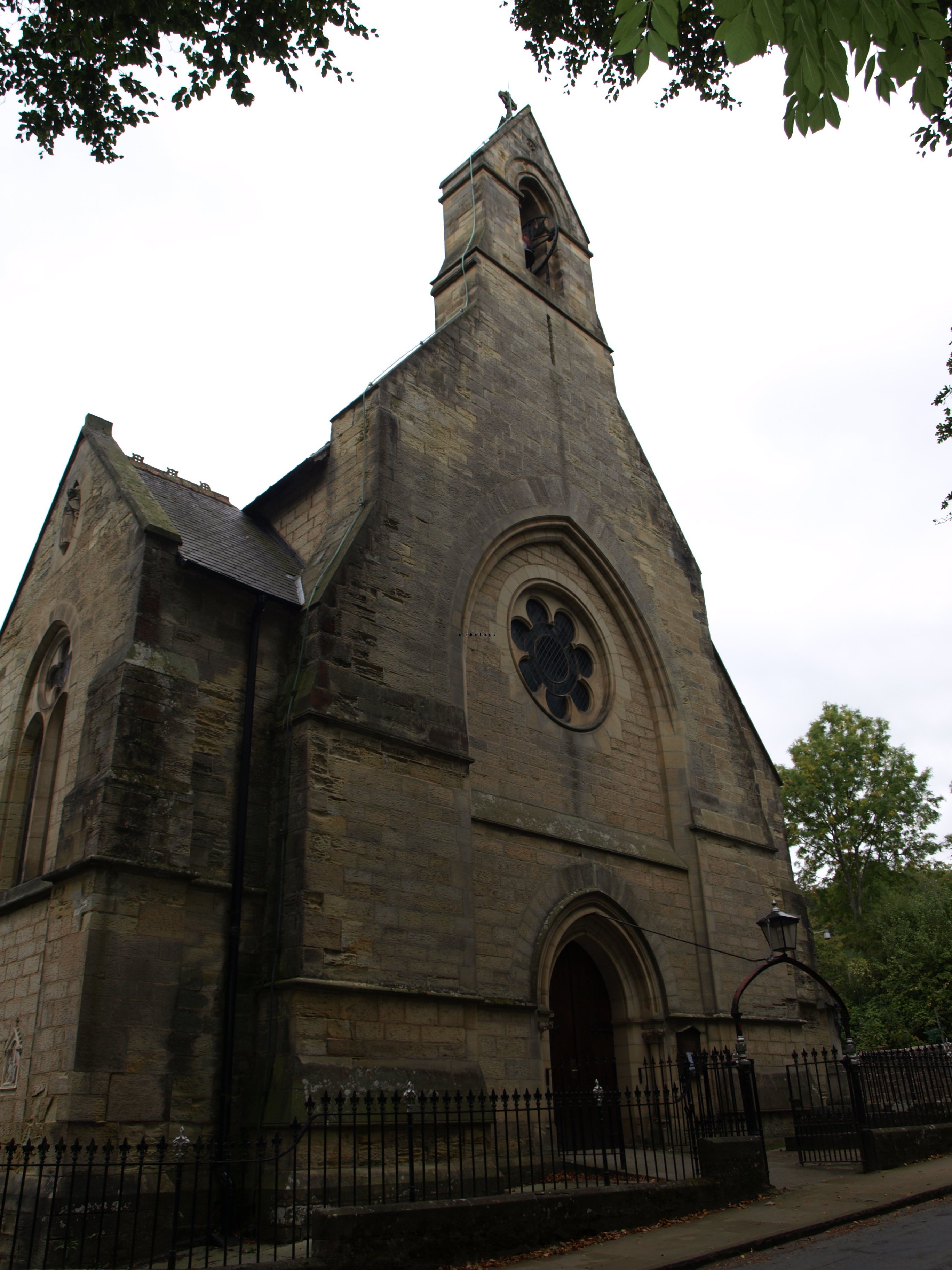
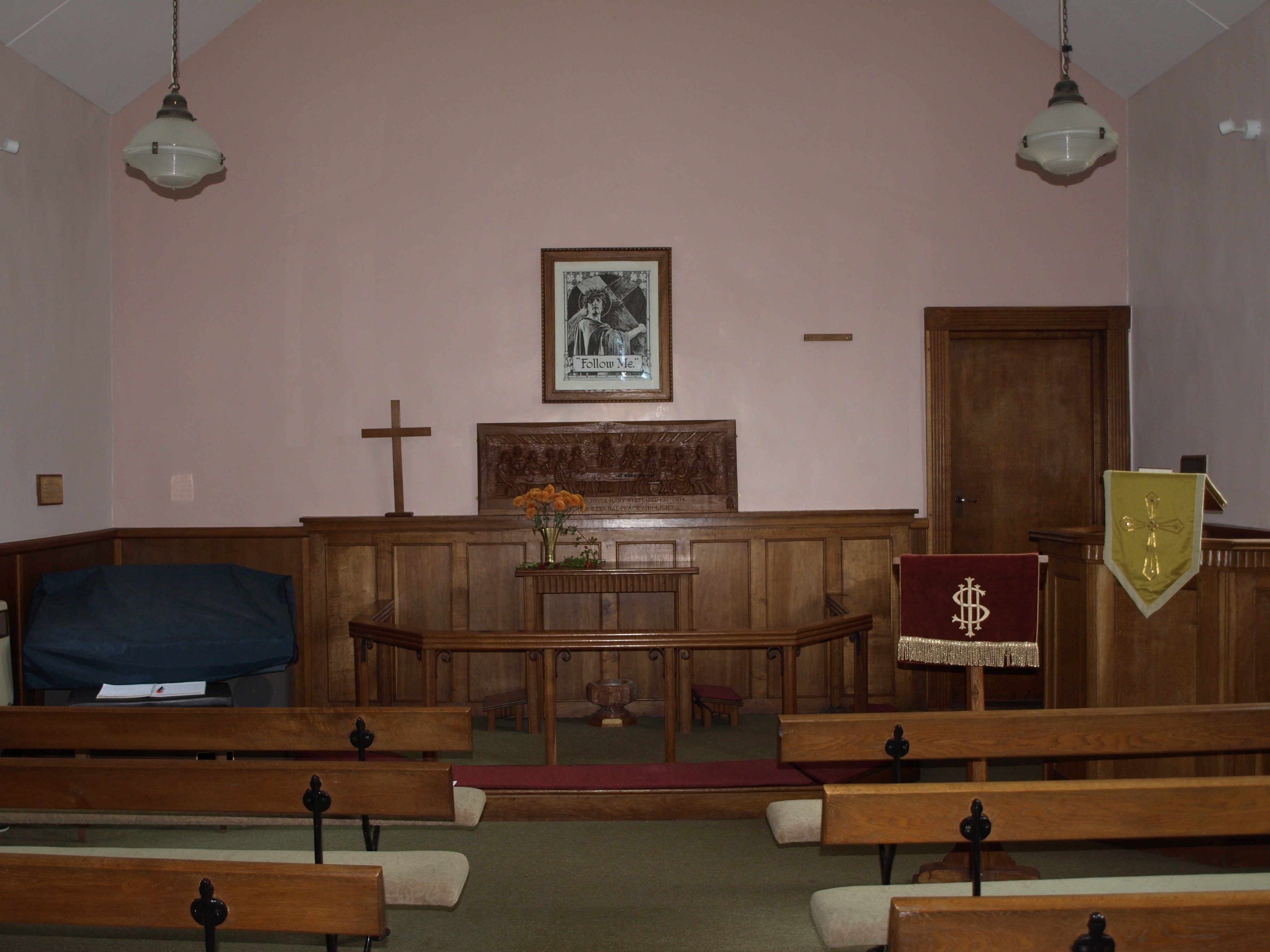
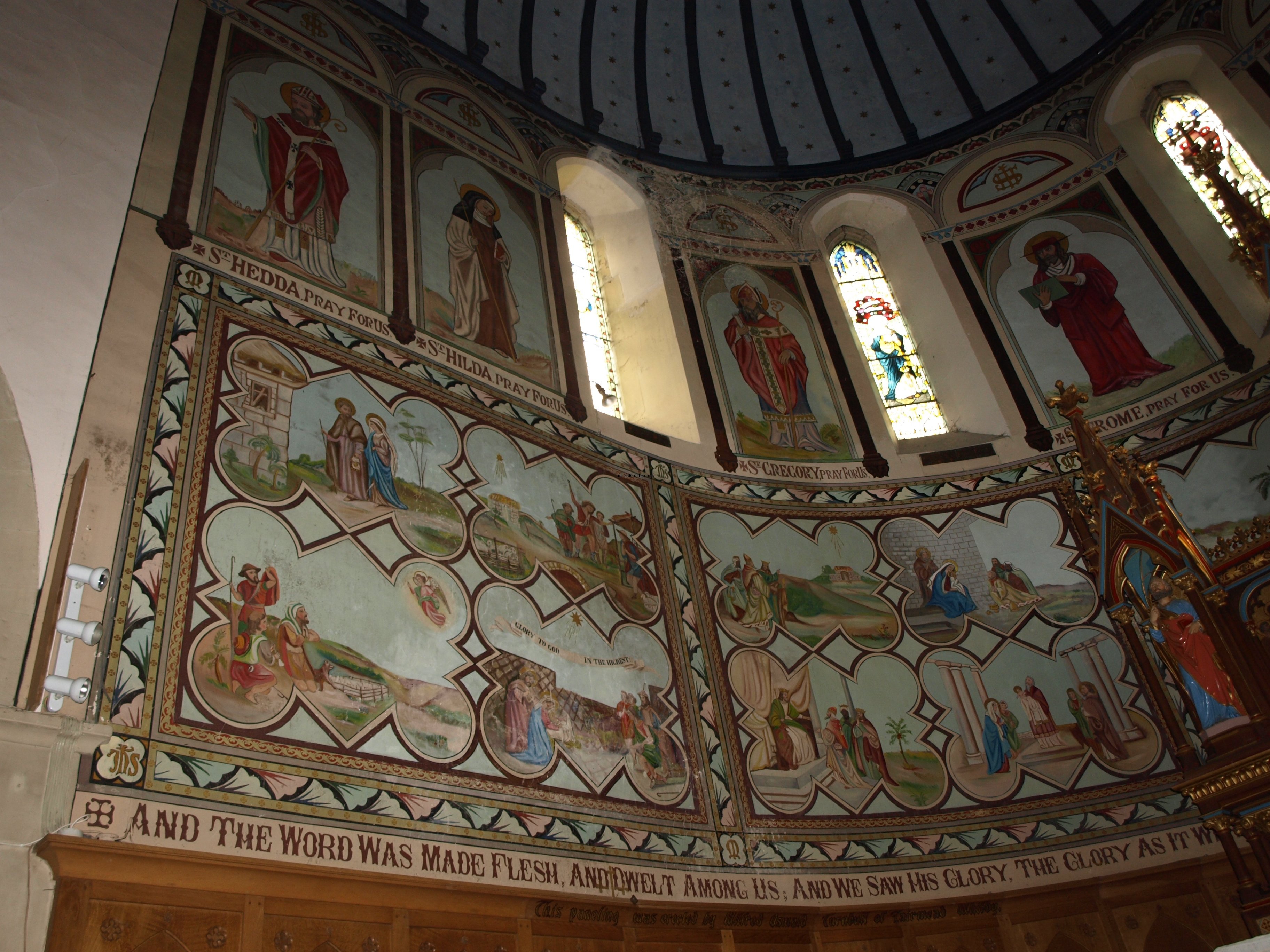
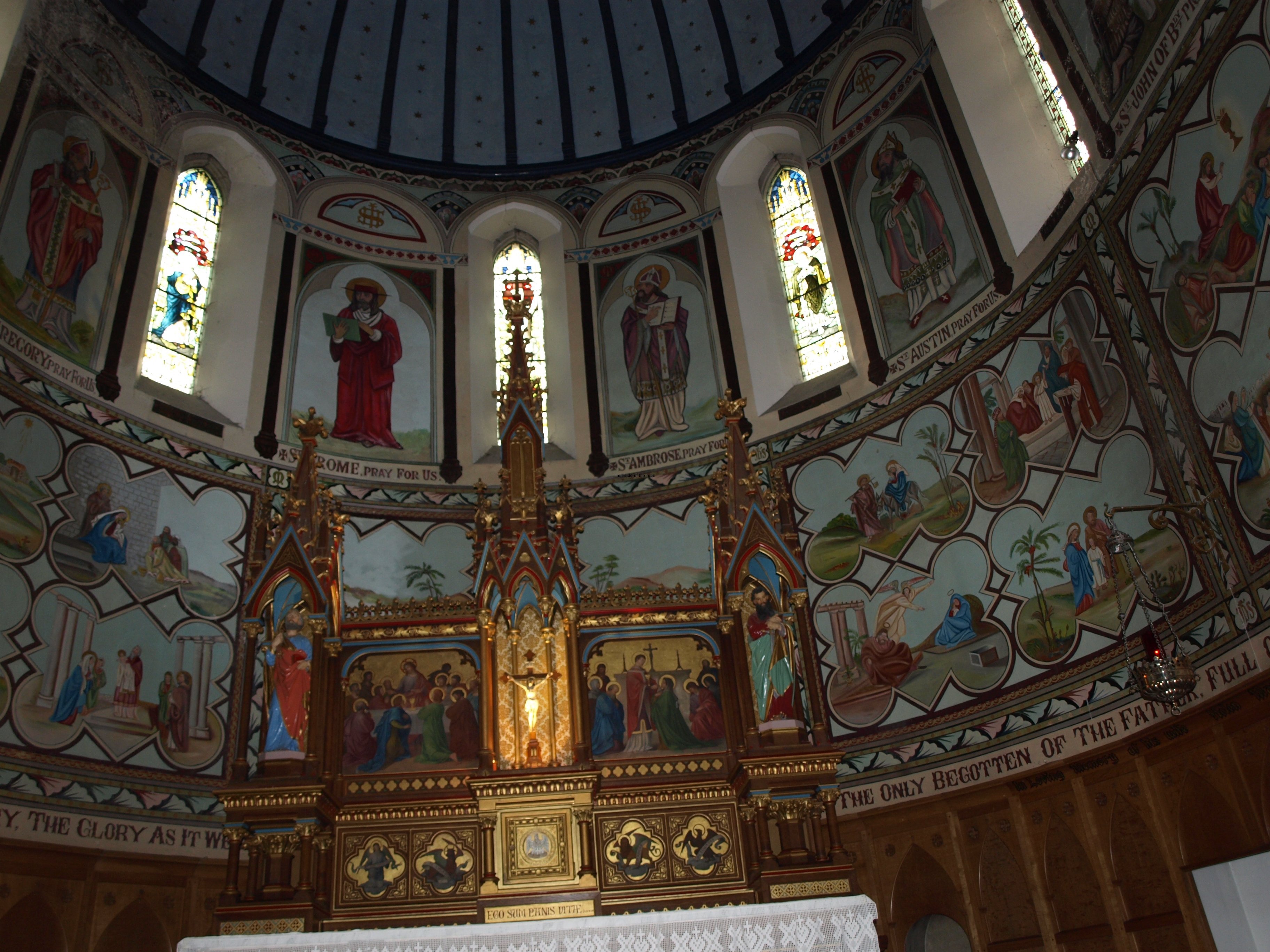
Before leaving Egton Bridge there’s a large church, not that far from the railway station and just a very short diversion from the path. I decided to try the door and was slightly surprised it was unlocked, there seeming to be no one around. Obviously in some parts of the country churches are opened on a regular basis for the occasional passers-by, but I’m not used to that in the north-west. What I found interesting was the frescos in the apse, behind the altar, it not being usual to find such paintings in churches built-in the 19th century. In trying to find out more about the church later I discovered that the ‘stations of the cross’ were in the form of painted reliefs on the outside walls of the church, something I’ve not come across before. I took a few minutes to go inside but obviously missed a lot. Also read that this huge church for a very small village (and it’s not the only church) has been nicknamed ‘The Cathedral of the Moors’.

Altar St Hedda's Church, Egton Bridge

Altar St Hedda’s Church, Egton Bridge

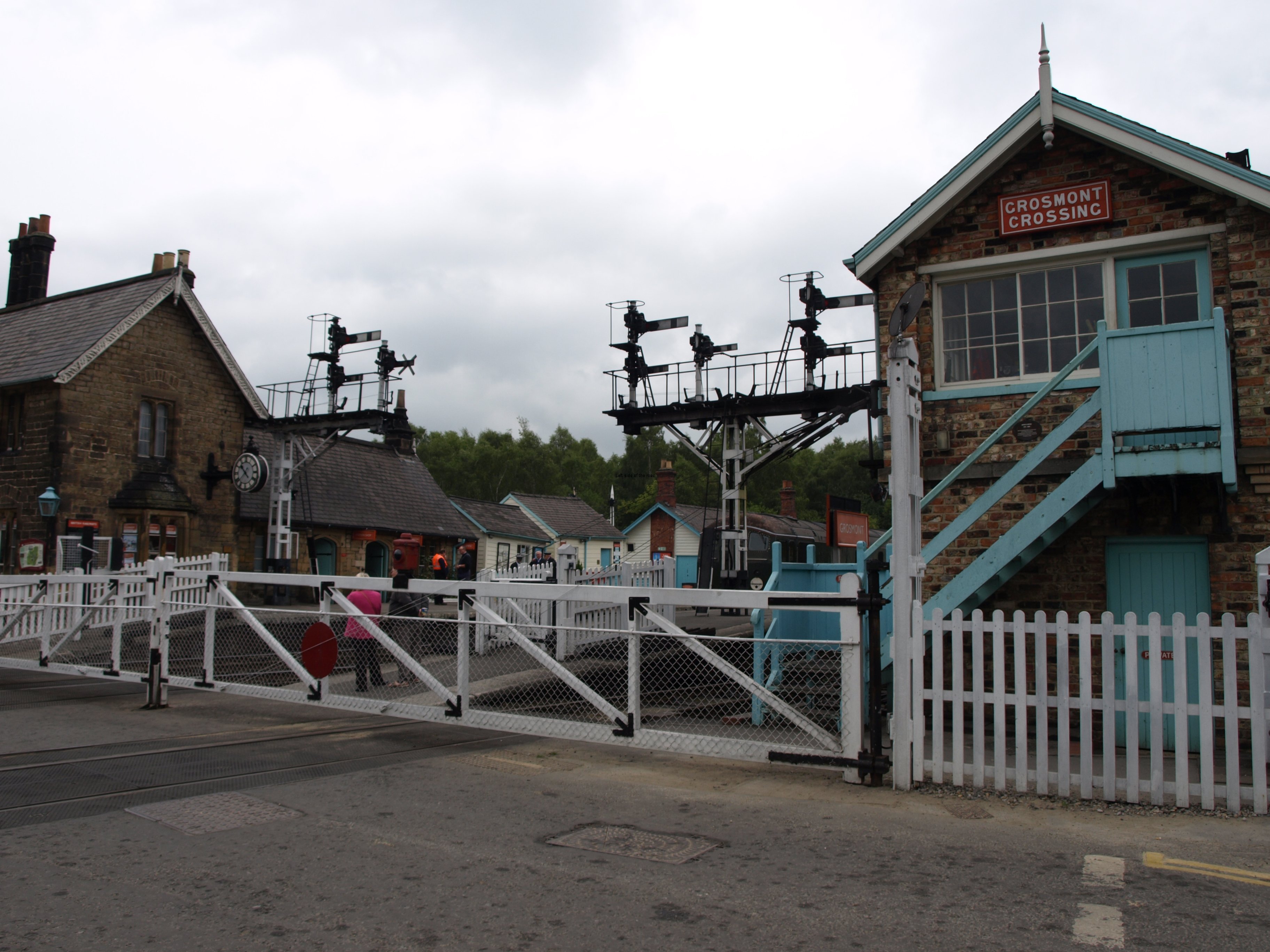
The next village (the walk today would pass through a few of them) was Grosmont. Again a small village but perhaps with three things that make it different: Grosmont is pronounced with a silent ‘s’ and ‘t’ – presumably some French connection – for all I know other letters might be silent in the local dialect; it’s the terminus of the North York Moors railway, which operates steam locomotives. It seems it was this train that was used in the ‘Harry Potter’ films – not a franchise I found particularly interesting or memorable; and there’s one hell of a steep hill you have to climb to get out of the village if doing the C2C.

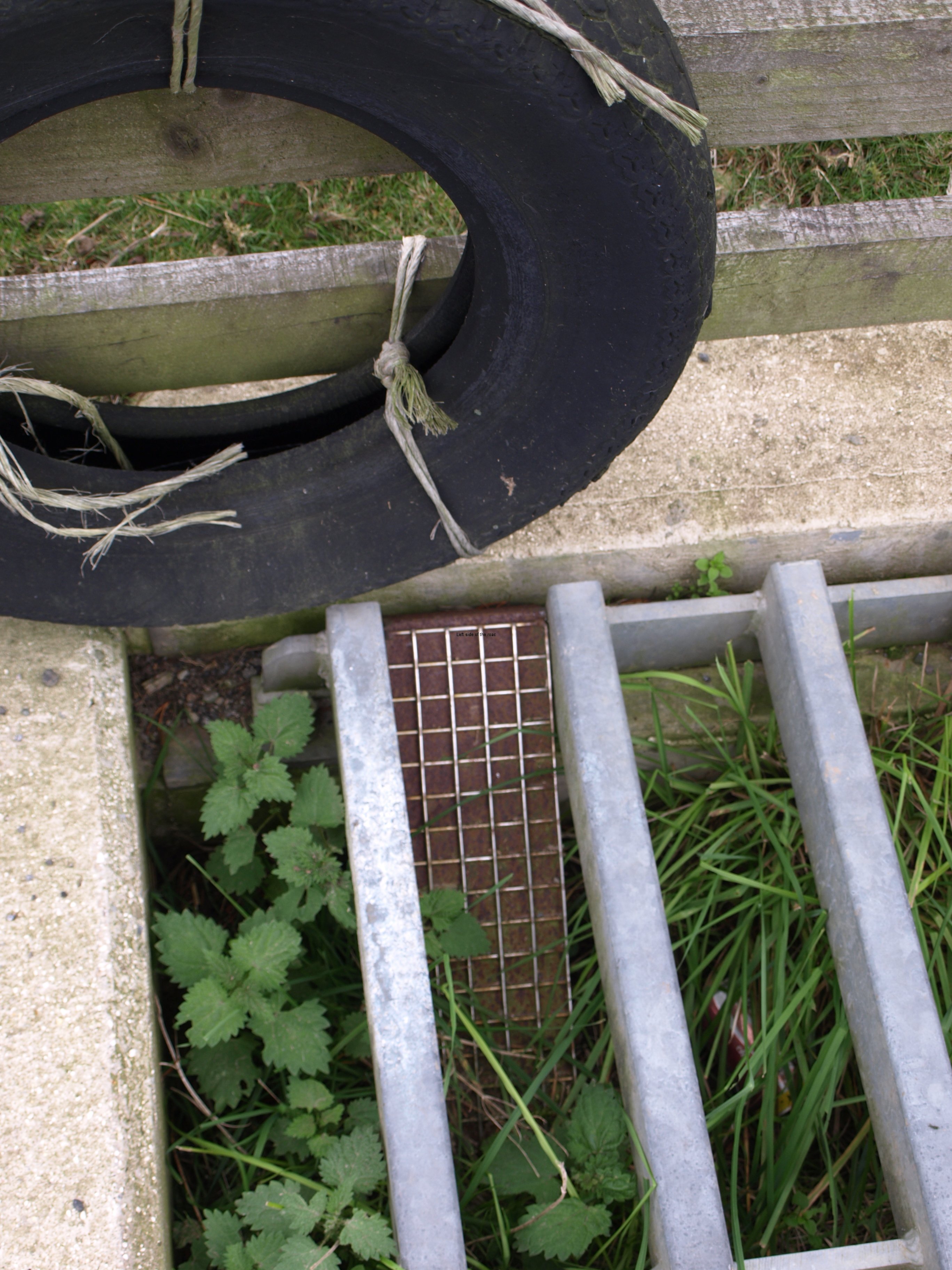
It’s a quiet country road, with limited traffic but it’s still a bit of a shock to the system as the climb goes on for close on 2 kilometres. Towards the summit of this climb (which allowed a view of Whitby and the distinctive abbey ruins in the distance to the north-east and a ‘welcoming’ strong and cool wind as you arrive at the moors) there was something else I’d never seen in real life – a hedgehog escape ramp from a cattle grid. Top marks for thinking about the poor hedgehogs but I’m not sure that the positioning of the tyre (presumably to protect the fencing) made life that much easier for the erinaceina.

Hedgehog Cattle Grid Escape Ramp - with obstruction

Hedgehog Cattle Grid Escape Ramp – with obstruction

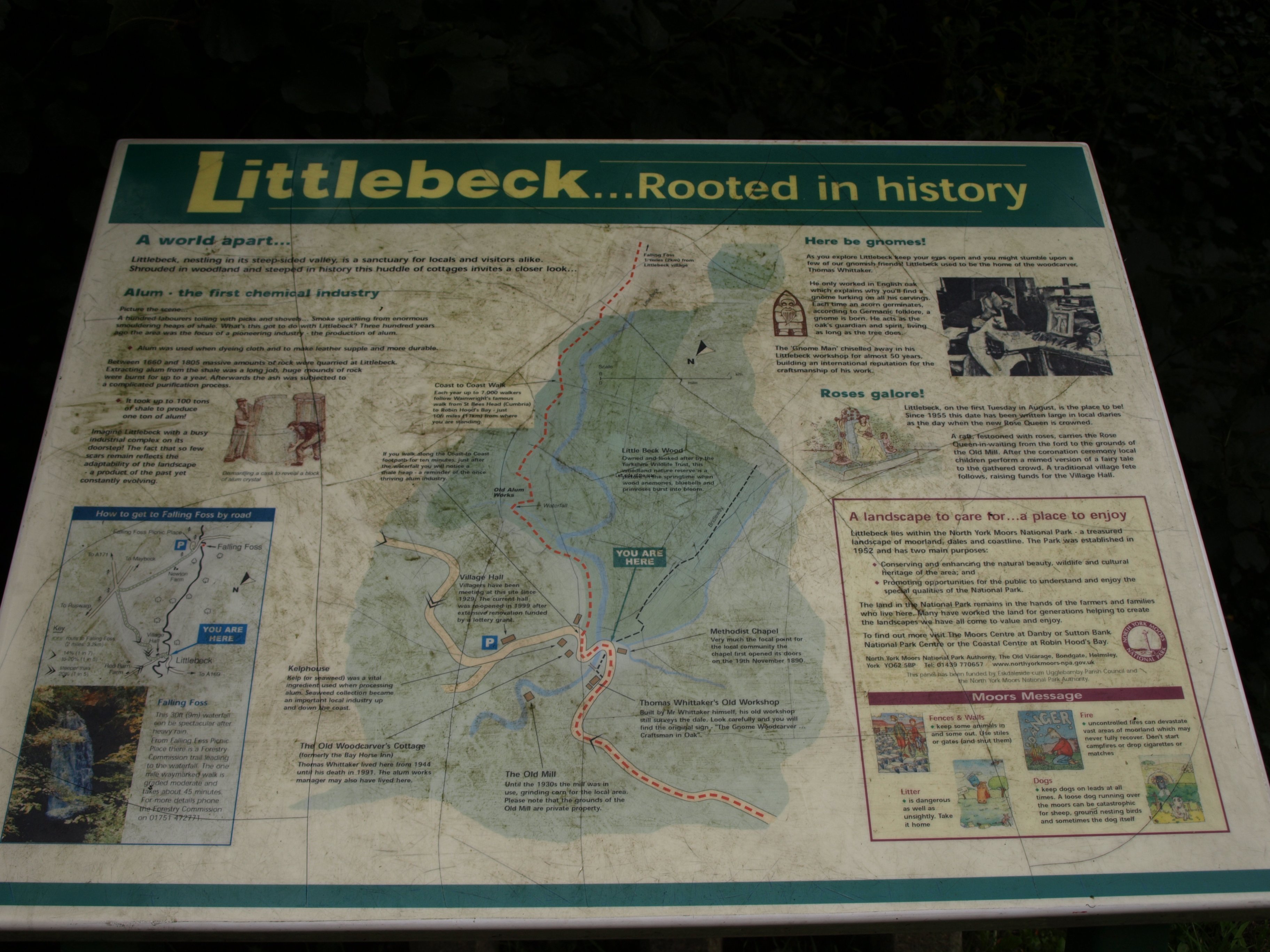
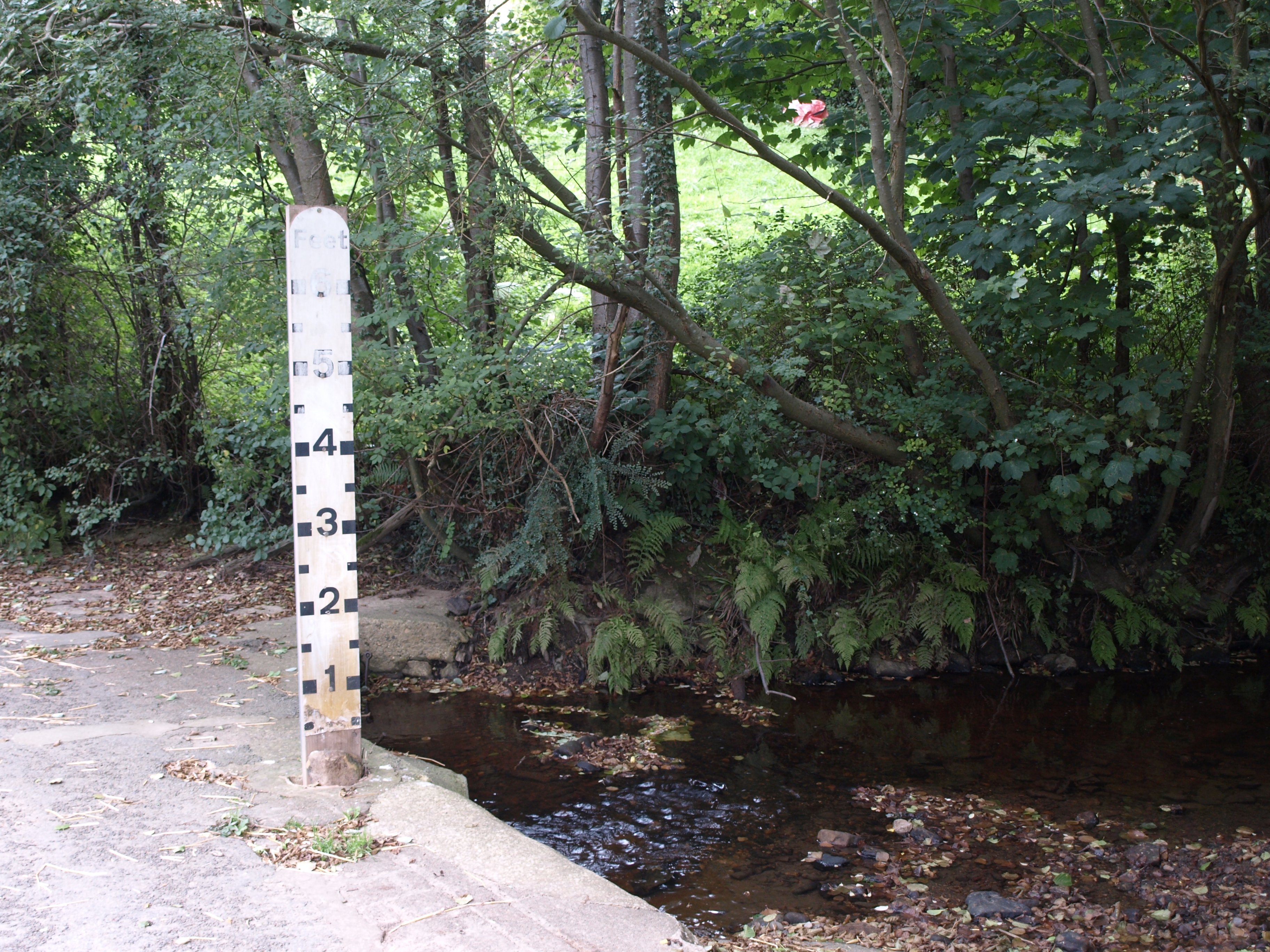
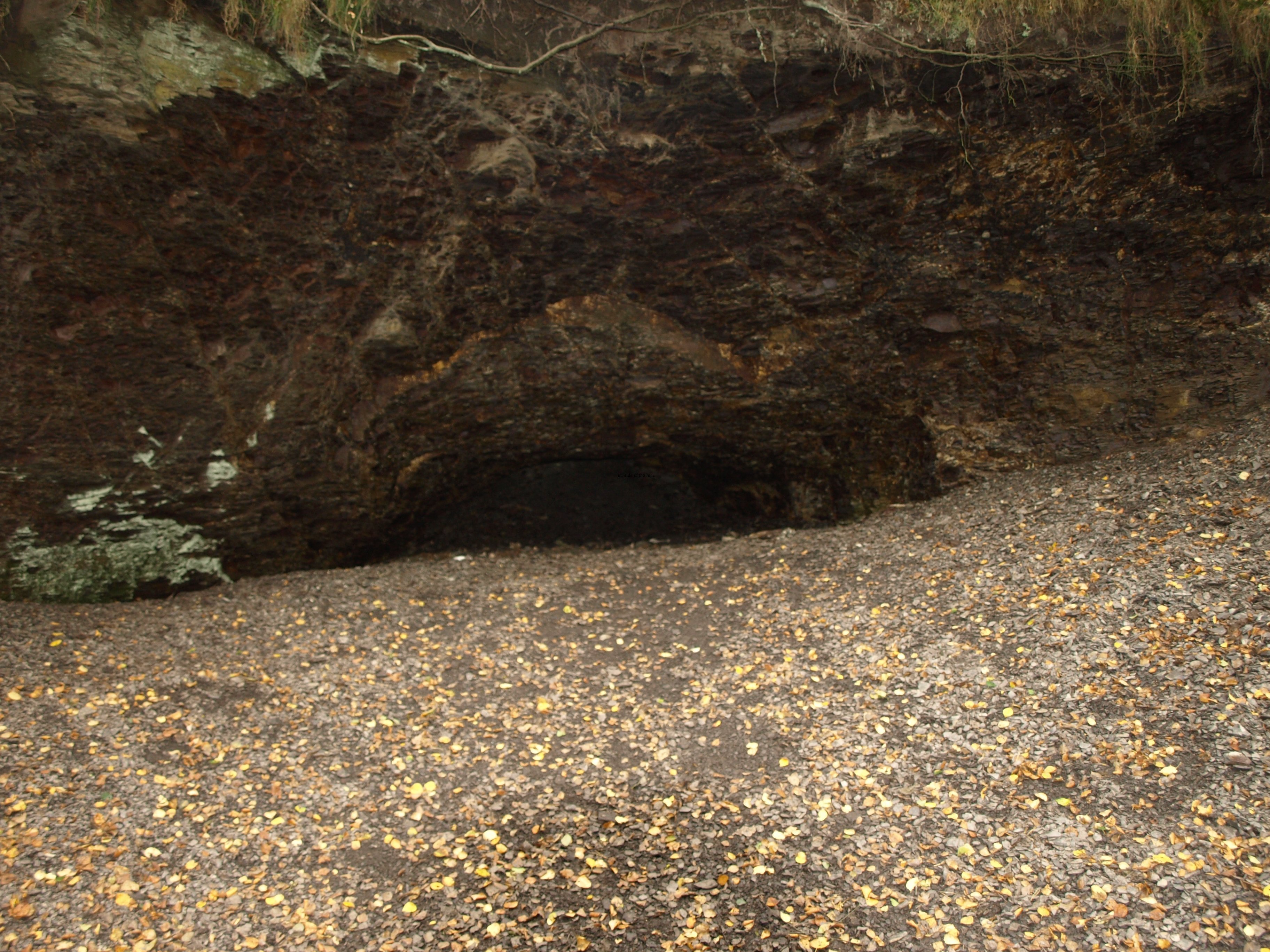
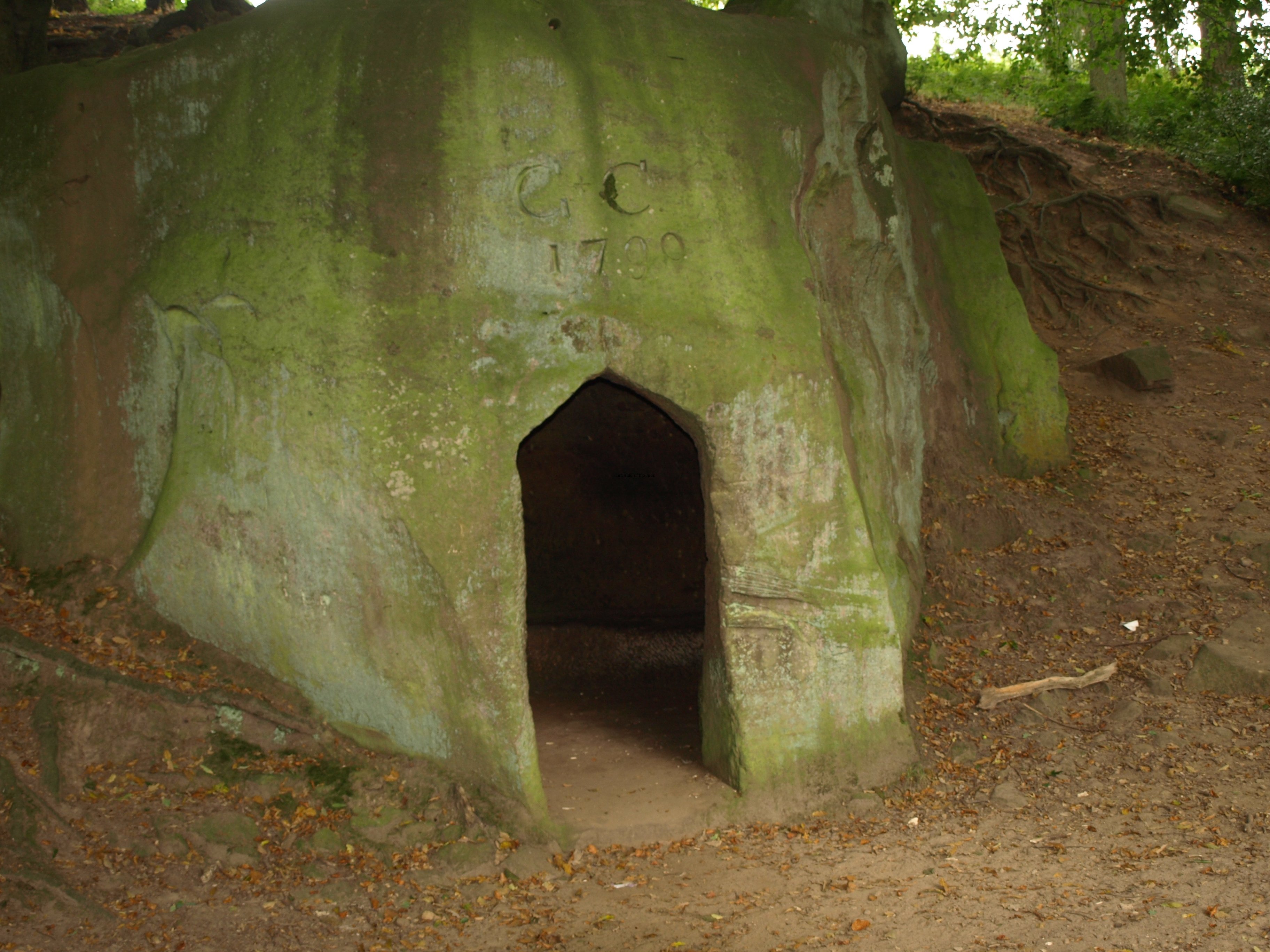
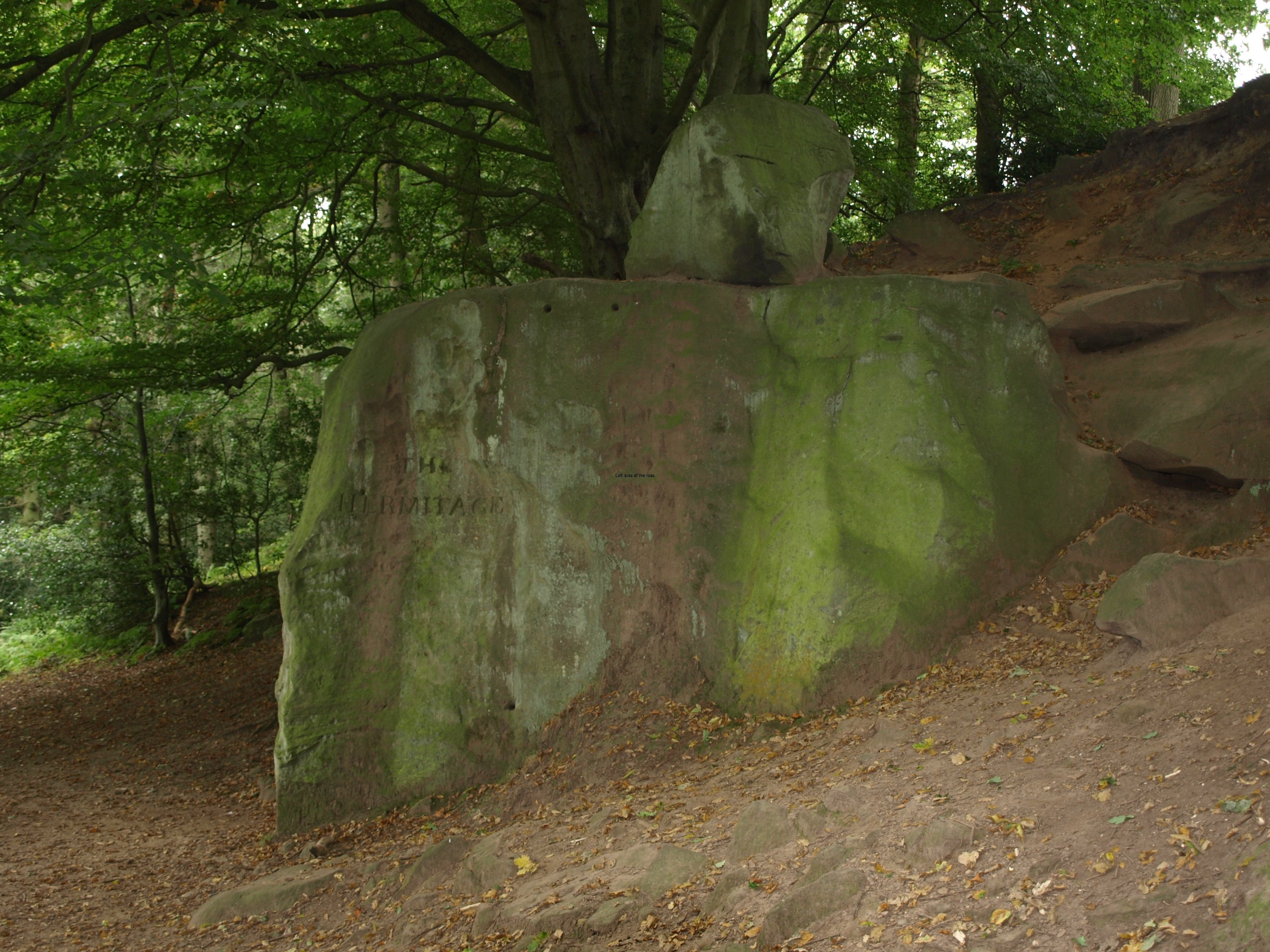
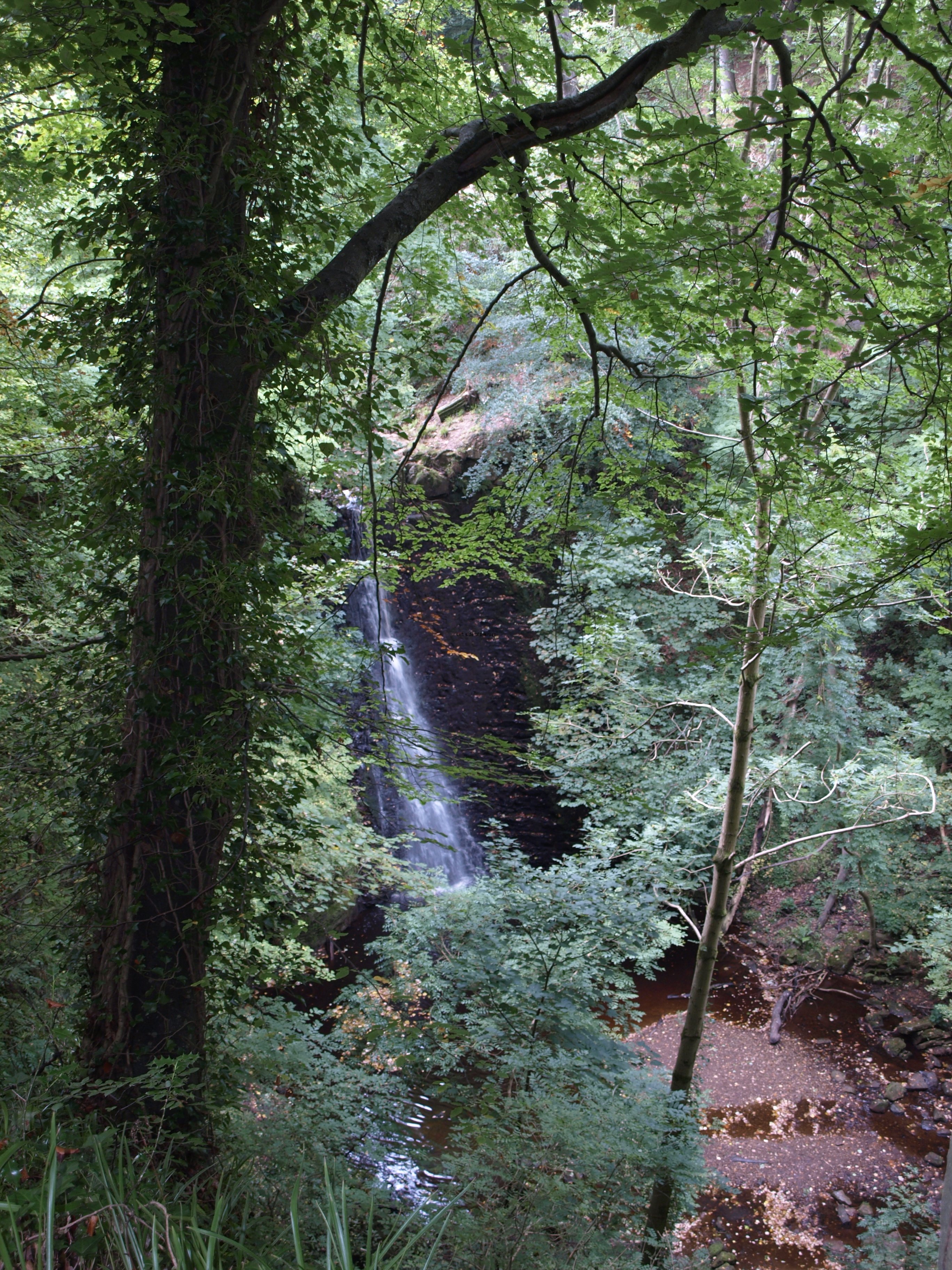
After a relatively short stretch across the moor the path heads down to the very quiet village of Littlebeck and from there into the Littlebeck Wood, a local nature reserve. This is so different from the moors that have dominated the route for the last 3 or 4 days. And a welcome respite from the constant wind that I have been walking into on heading east. This path through this nature reserve is about 3 kilometres long and heads only slightly SE so you’re not making much progress towards the sea but would be a welcome break if doing this walk on a hot and sunny day. Although closed by the time I passed through (but only by a matter of days) there is a café next to a small waterfall (probably much more impressive after a lot of rain) as well as a Victorian folly, a huge rock carved out to produce what is known as ‘The Hermitage’. A few drops of rain started to fall as I walked through this wood and feared that once out in the open I would have to face unpleasant weather (something I’d miraculously avoided so far), but nothing came of it and amongst the trees I was unable to get any idea how the weather that day was developing.

But this green and sheltered section gave way to the open road and then a couple of stretches of open moorland. But this is not an area where you can just follow the most direct route and the path often takes the opposite direction to the way you want to go as this is the only way to get through without wading up to your knees in bog water. Again, even though I was beginning to find walking into the wind tiring these unusual weather conditions were drying out the land and the relatively dry summer meant I was probably passing through in the easiest of conditions underfoot.

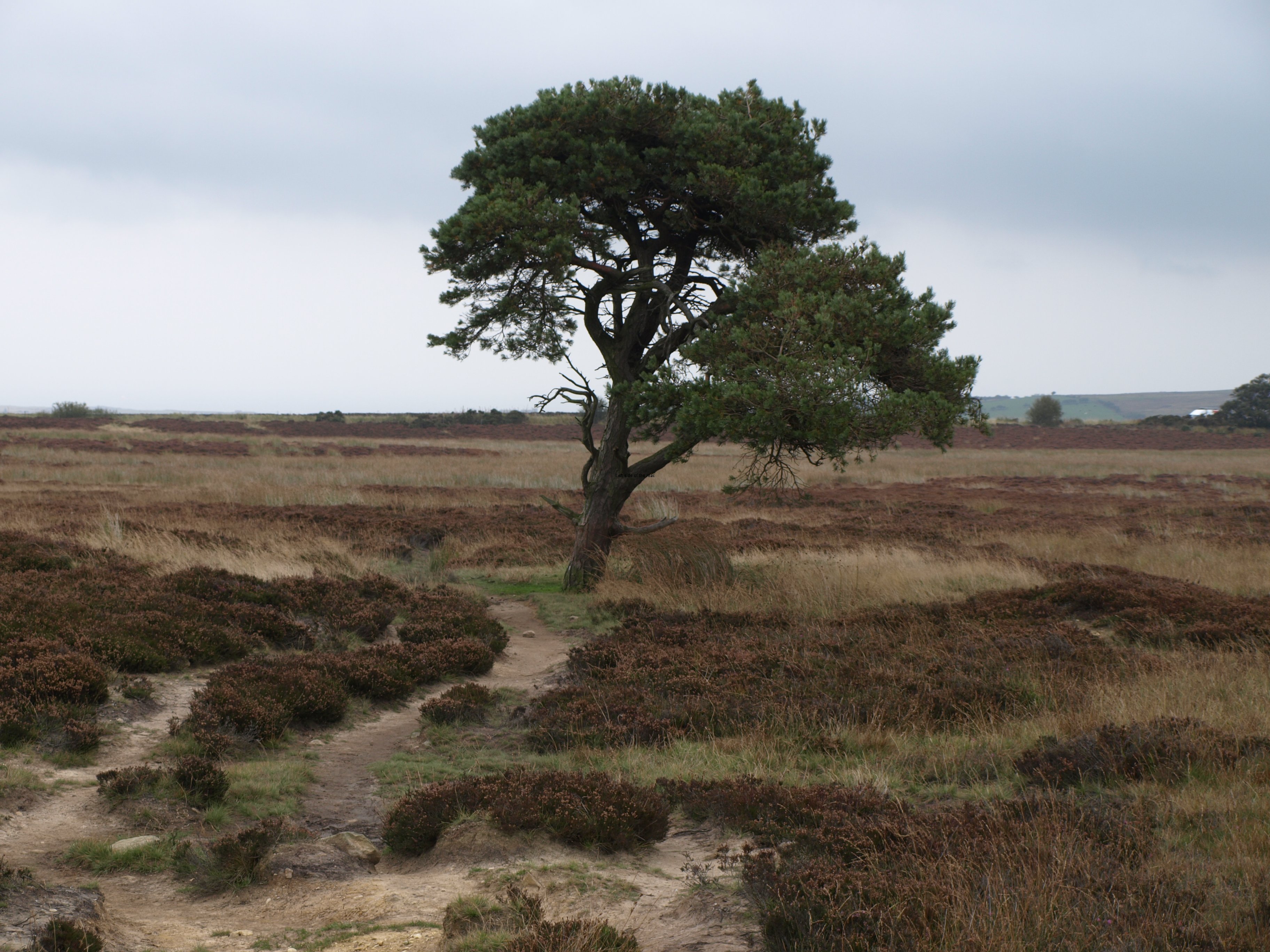
Sneaton Low Moor

Sneaton Low Moor

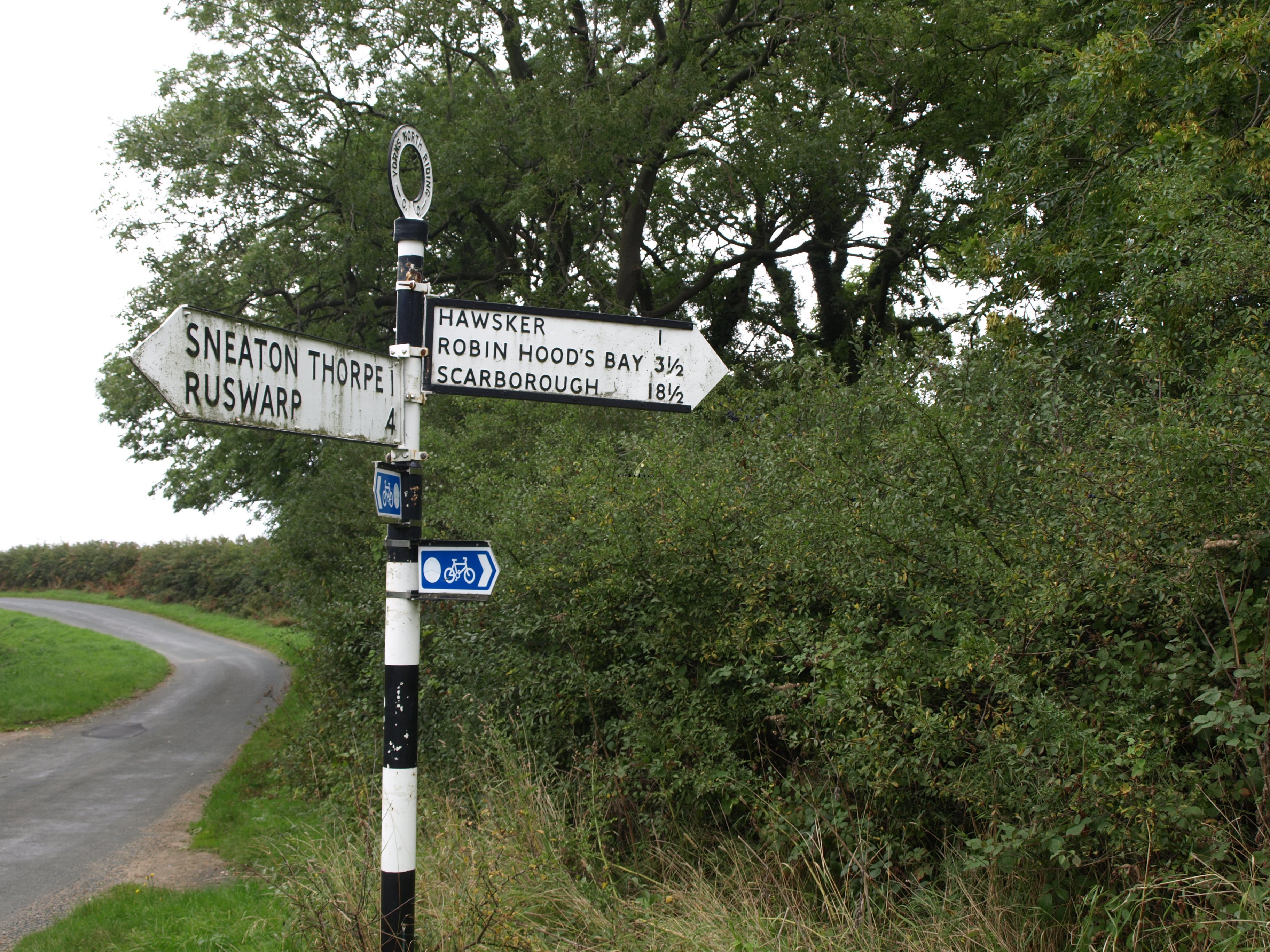
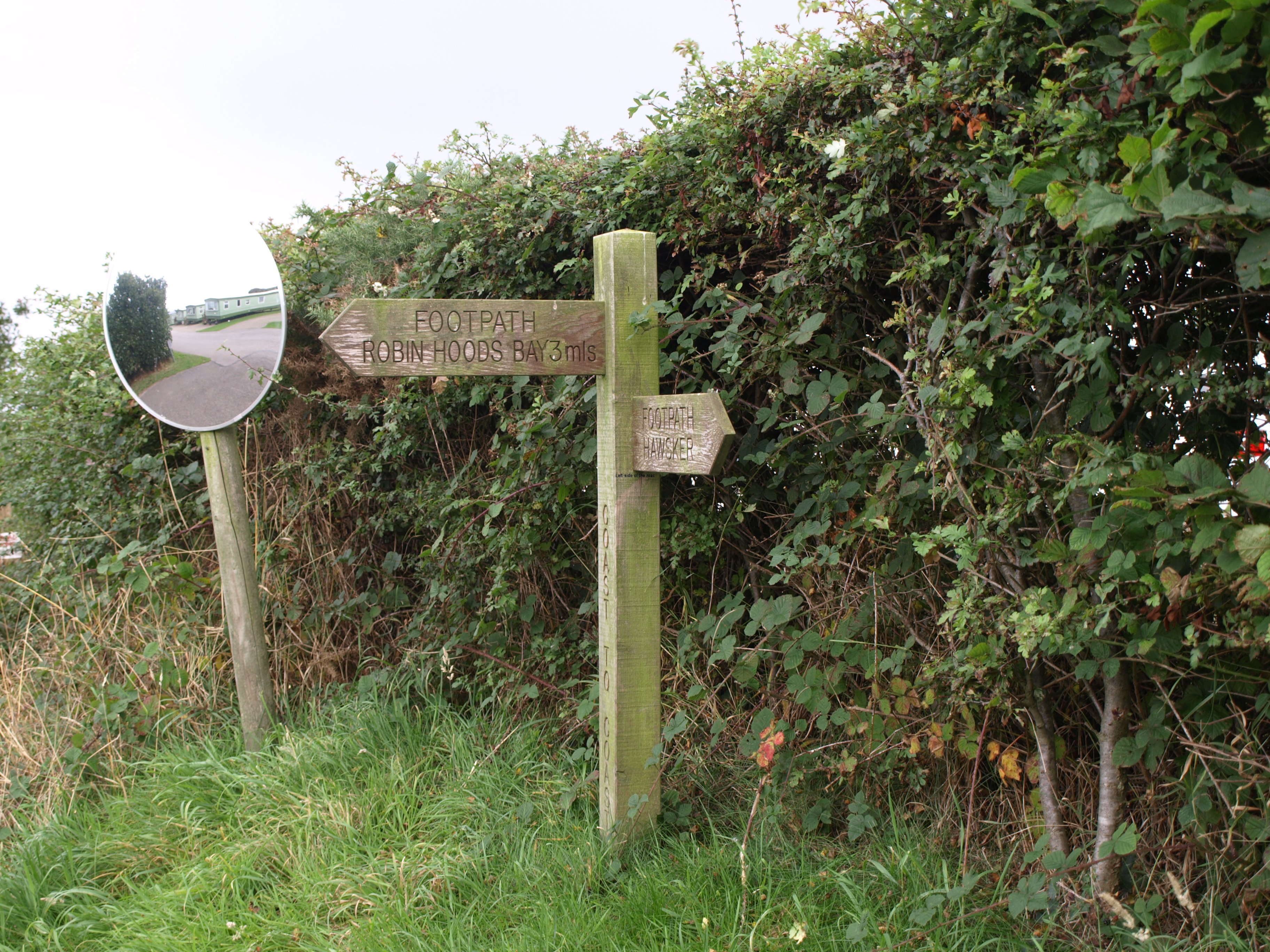
I left the moorland behind me for good, on the Coast to Coast, once I had picked up the quiet road that leads to Hawsker, the last village before the true end at Robin Hood’s Bay. The pub there was closed, fortunately for me as a delay there would have blown all my plans apart – although it was only as matters developed over the next two or three hours that I came to realise that. The main road north to Whitby passes through Hawsker and I would be lying if I said I wasn’t tempted, when I came across the bus stop, to leave the last section till the following day and instead head to Whitby for my baggage – but I rejected such a cop-out and trudged on. As I left the main road and headed for the coast a there was a sign post indicating that Robin Hood’s Bay was 2.5 miles away. It was a little bit of despair that after about another 30 minutes quite brisk walking I came across a signpost that indicated 3 miles. This is due to the fact that the official path follows the cliff path to then drop down to the sea but to get there you have to head north through the caravan and camping sites, completely deserted of people when I passed through but, I’m sure, heaving in the summer.

Welcome to Robin Hood's Bay!

Welcome to Robin Hood’s Bay!

It had already been a long day and as I came to each headland on the cliff path I hoped that I would get my first view of the village. My problem, self-created in that I had left my rucksack in Whitby, was I was working around bus timetables and as time went by my options were reducing. But I didn’t do myself any favours in this respect.

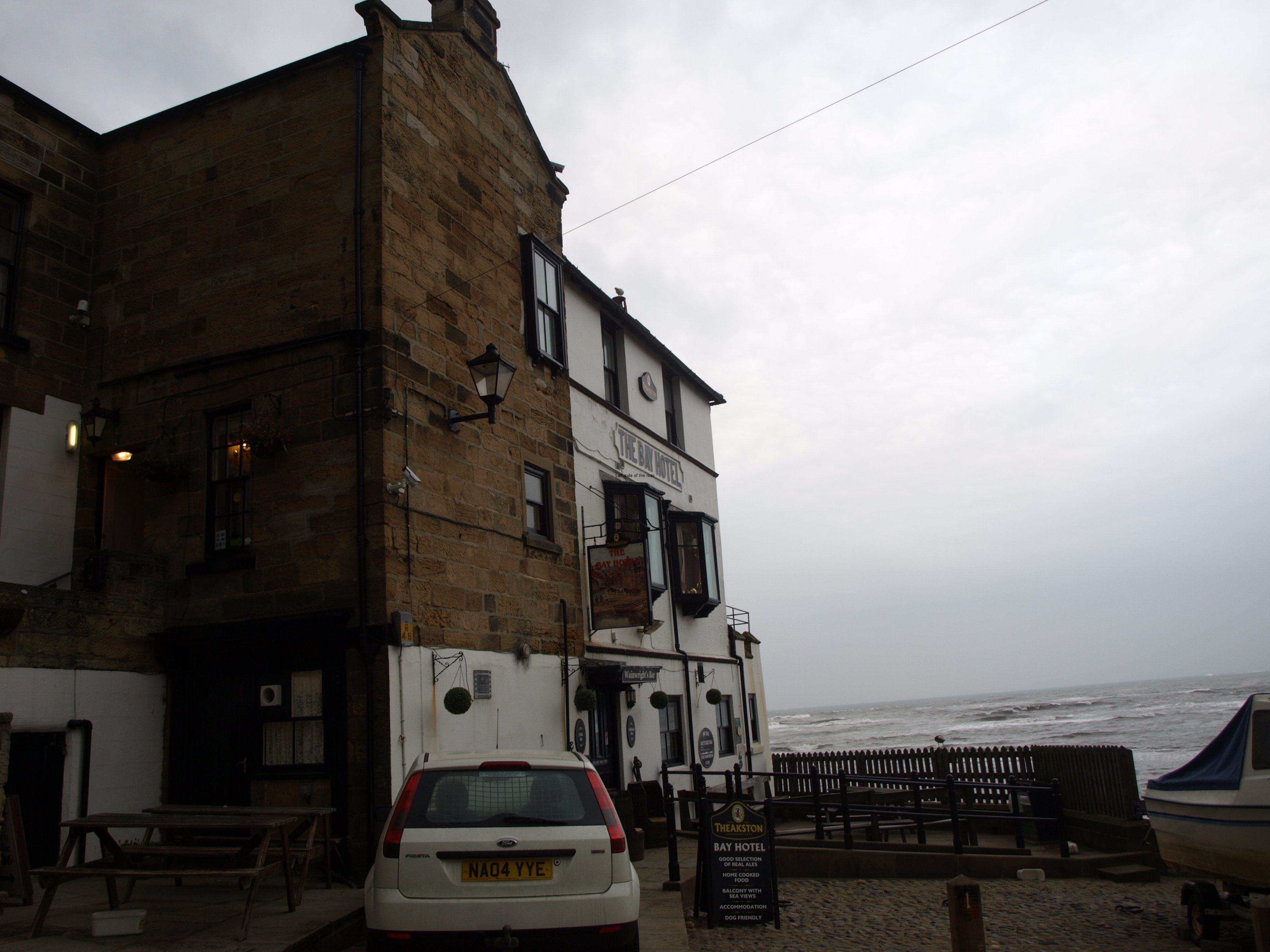
On finally reaching the edge of the town I walked past the bus stop that would take me to Whitby and anyone I asked was a visitor and couldn’t answer my query – why is it that when you need some important information about a location that the only people you come across can’t give it to you? Anyway, by the time I got the necessary details I was then in a pub at the water’s edge and had missed the bus I wanted to catch. Even though I had the time for a very quick pint, and I had actually completed the whole of the walk, having walked past the signpost that is at the bottom of the steep hill in Robin Hood’s Bay, there was no real sense of achievement or celebration.

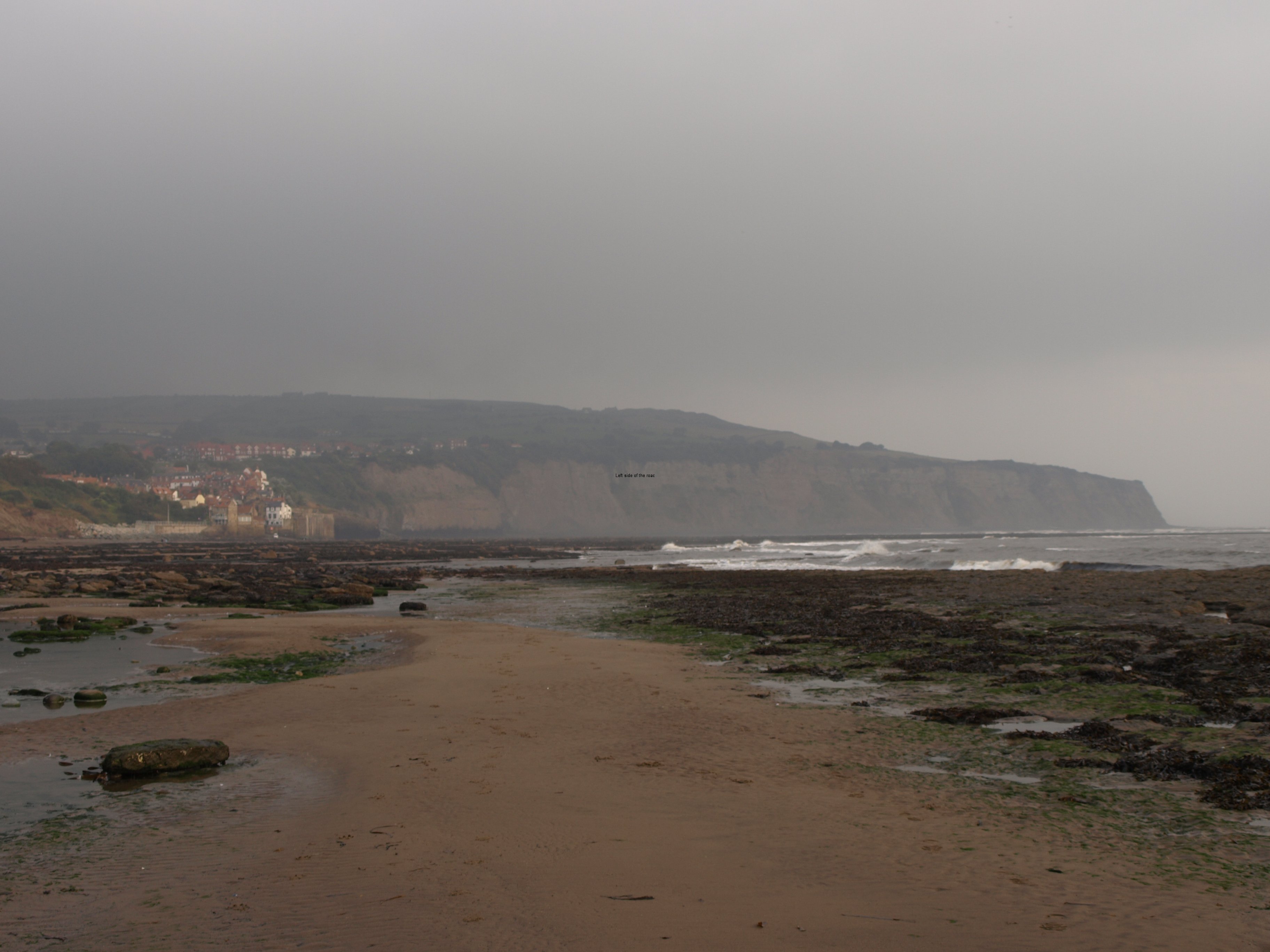
I couldn’t relax as I had to head seven or so miles north to recover my belongings. If I had taken a step back and really considered the options I could have left my gear in Whitby, had headed to the YHA with what I stood up in and then made the bus trips the following day. But I didn’t so that’s the way things go. But the diversion to the pub did provide me with important information and that was the quickest and most direct route to Boggle Hole. There’s a path along the cliff top but at low tide it’s also possible to reach the bay along the beach – and as luck would have it that afternoon the tide was on the way out. Still didn’t know exactly where it was but at least I knew that I would eventually get there on the sandy route.

But before that I had to get to Whitby. The bus was easy, it was the rest that was difficult. I realised as I looked at the timetables that I had 23 minutes after arriving in the town to get up to the abbey ruins, collect my bag and then get down to the bus station. That meant an extremely brisk walk and an almost run up the 199 steps, a short prayer that someone would be at the reception so that I could get in and out again with my bag and then follow the same route back to the bus stop. I did it with about a minute to spare.

And this mad rush was after 7 hours walking and just under 30 kilometres. Not the relaxed and triumphant ending I had been expecting. There was another bus a couple of hours later which would have allowed me to experience Whitby’s famous fish and chips but would have led to an interesting walk along the beach to my bed. This rushing about was the only really downside of having a rucksack free day but, all in all, worth it. But I’ll have to make a return visit to Whitby in the not too distant future. It was a place I immediately warmed to although my time there was so short.

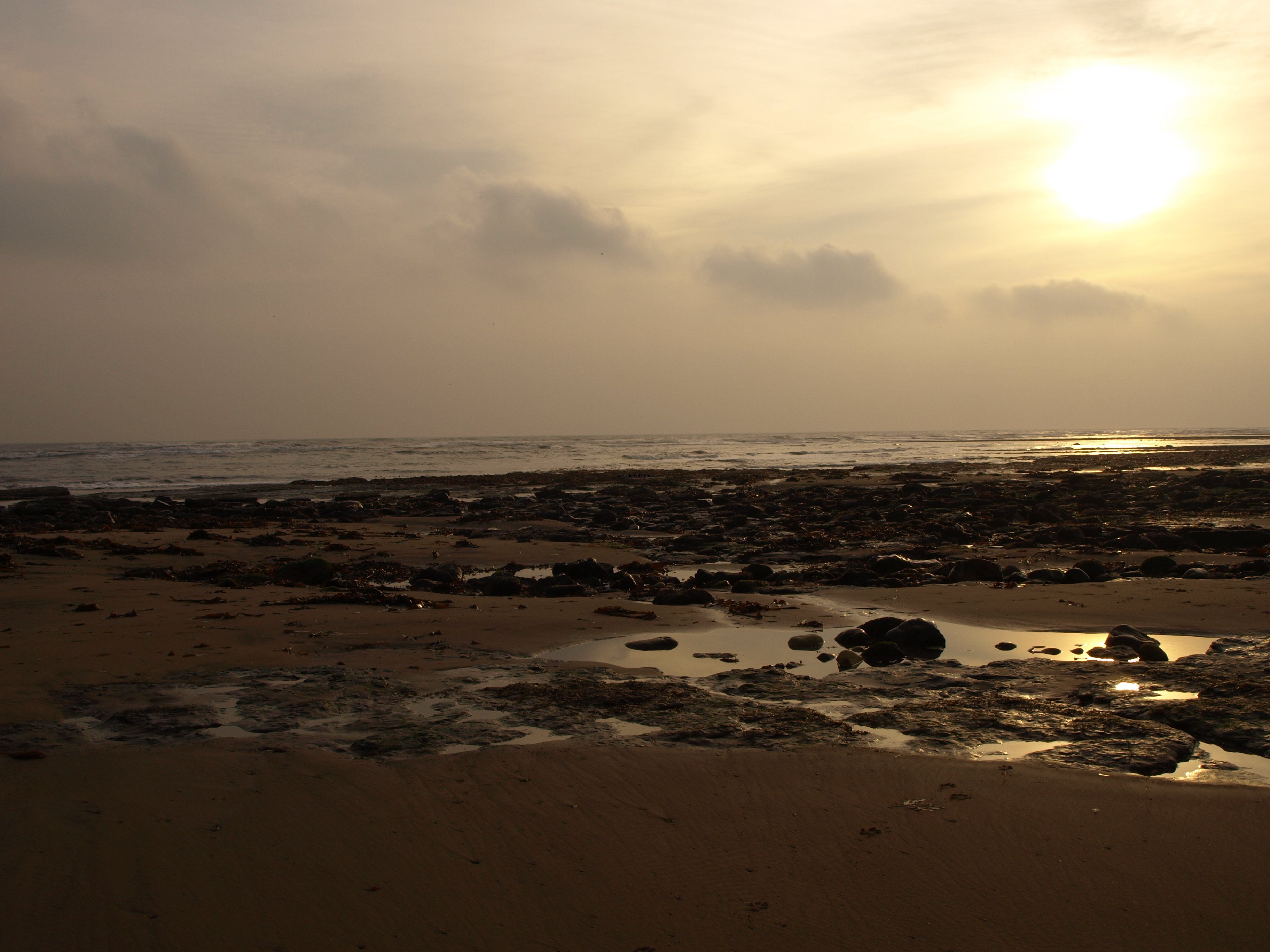
It was getting dark as I headed along the beach, once more back in Robin Hood’s Bay, to the hostel. Fortunately the woman I asked for more accurate information in the gloom beside the North Sea didn’t a) panic and run or b) was a local so knew what I was after. So after all that messing around I finally got to the location of my bed for the night at about 19.30.

The Coast to Coast route had been successfully completed, not without a certain amount of pain (but not too much), without truly adverse weather and with everything going, more of less, to plan.

So at 19.15 ish on the evening of Wednesday 2nd October it was 192 (approximately but most certainly more) miles down and no more miles to go.

THE END - official!
THE END – official!
Practical Information:

Accommodation

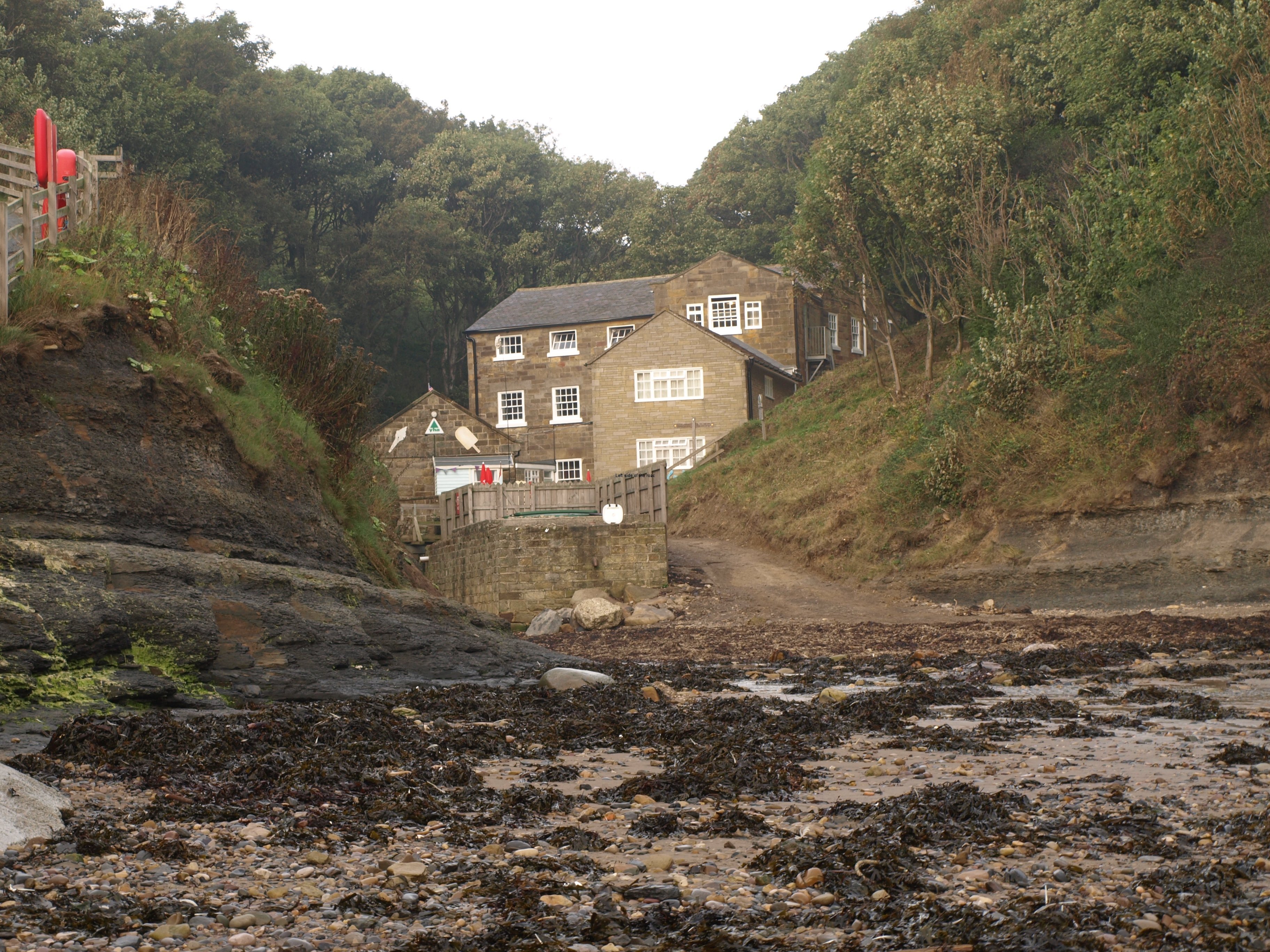
Boggle Hole YHA. The best thing about this hostel is its location. It’s in a small cove very close to the high water line and that must be interesting on a stormy day in winter. Boggle is a local name for a goblin that is also supposed to haunt the place – but not on the night I was there. The building was originally used as a water powered mill and before that the cove was supposed to have been a smugglers favourite but it seems to be too close to the village of Robin Hood’s Bay for that. At the same time giving a place a name that will frighten the ignorant and superstitious was a well-known tactic of smugglers.

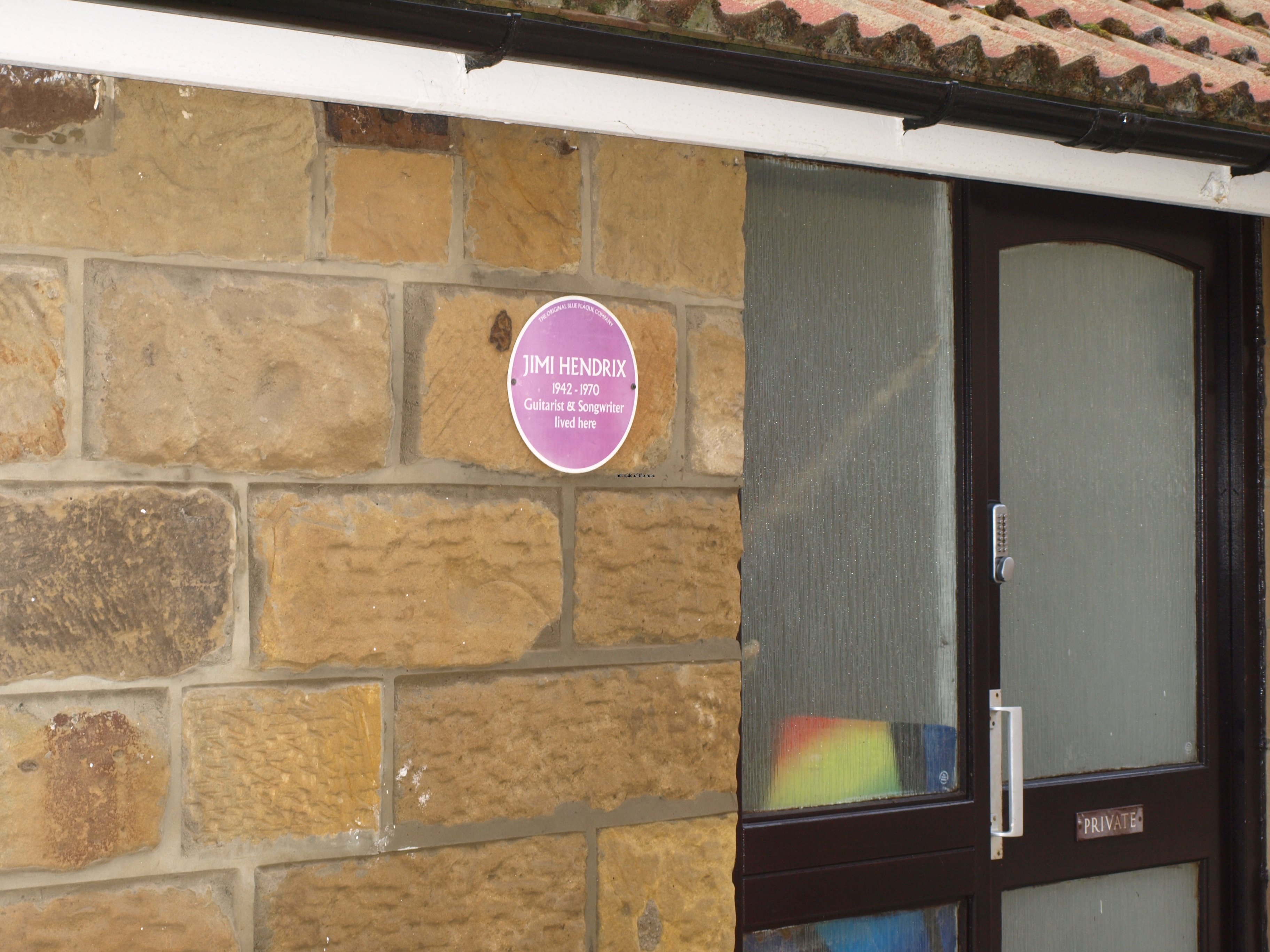
I originally planned to stay for a couple of nights, the one on arrival and a final ‘rest day’ but decided to cut my losses and run when I had to find somewhere else to stay when a drunken slug arrived just after I had turned out the lights. He fell asleep immediately and then proceeded to snore like a drain. I hadn’t enough alcohol to sleep through it and didn’t want to risk another nigh, and anyway didn’t really need to relax after the walk. If the weather had looked more promising I might have stayed but the greyness seemed set for some more days. The YHA did a special deal if you stayed for two or more nights and that came to £34 for 2 nights B+B. And for fans of ’60’s music, Jimi Hendrix stayed in one of the outhouses – presumably before it was a youth hostel.

Jimi Hendrix wus 'ere

Jimi Hendrix wus ‘ere

An issue with the YHA and its relationship between school groups and the rest of the population arose at Boggle Hole in a strange way. The main building had been virtually taken over by a large group of 16-17 year old school girls. The few of us not in the group were ‘banished’ to a modern annex, all well and good. When I went to the main building to use the wi-fi I was directed to the common lounge area. There was a room directly off this lounge that I, at first, led to a work room and that some of the girls were working late on a project – there was a classroom close by. It was only after a while that I realised it was a dormitory and they were getting ready for bed. The YHA could think a bit more about such arrangements to make it more convenient (and socially comfortable) for all concerned. But that would take forethought which is so sadly lacking in many aspects of British society.

More on Britain …

Previous     Next