Partisan Memorial – Gjirokastra

Partisan Memorial - Gjirokastra

Partisan Memorial – Gjirokastra

More on Albania ……

Partisan Memorial – Gjirokastra

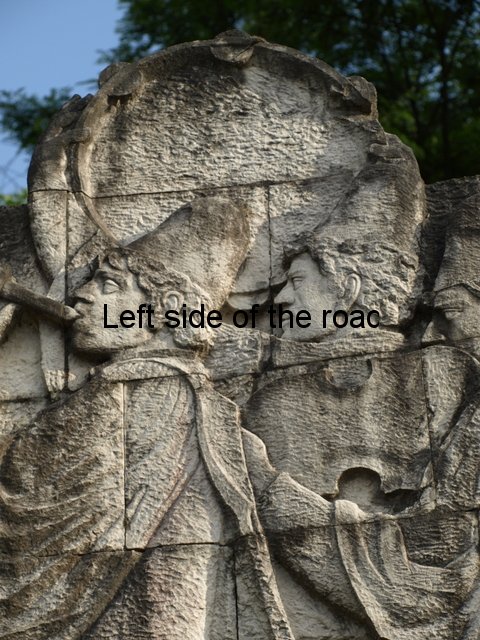
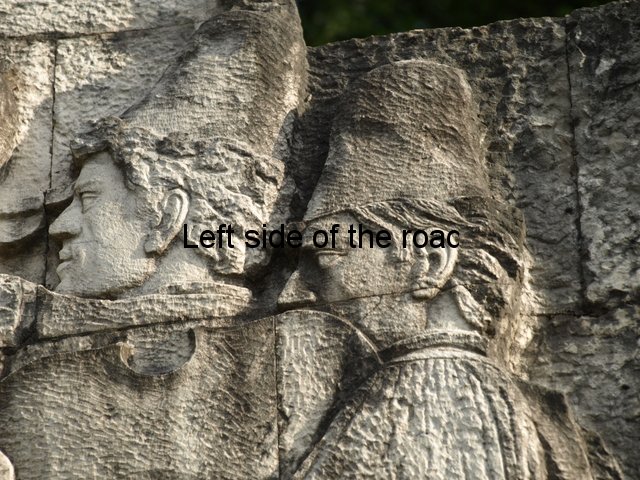
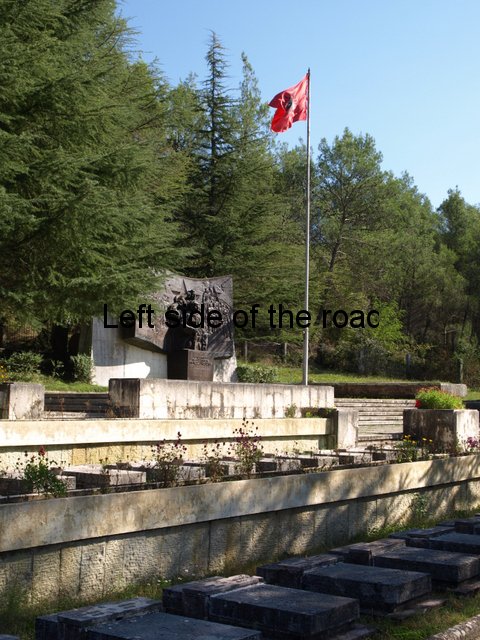
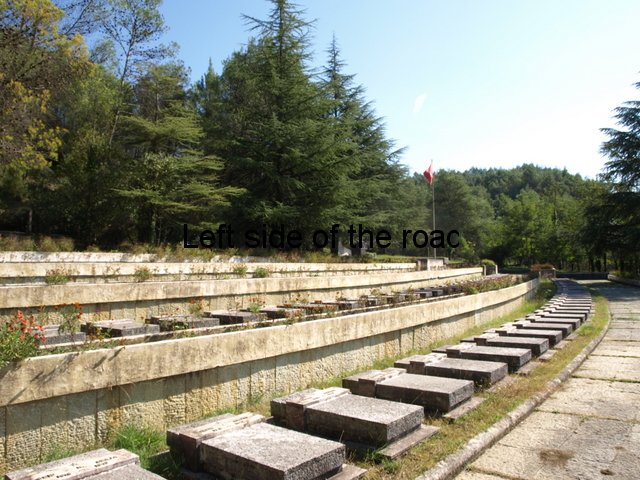
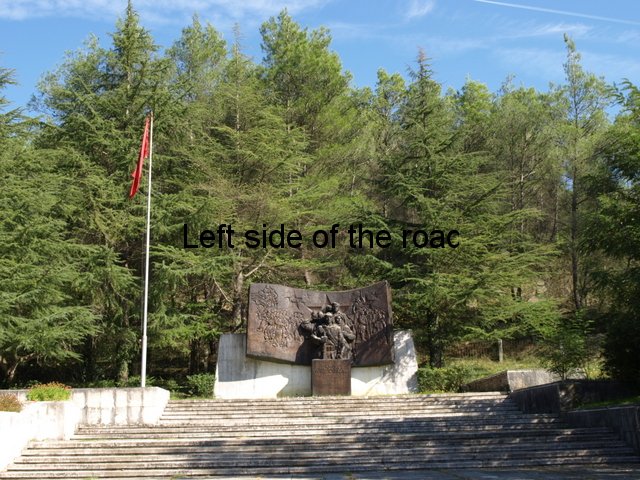
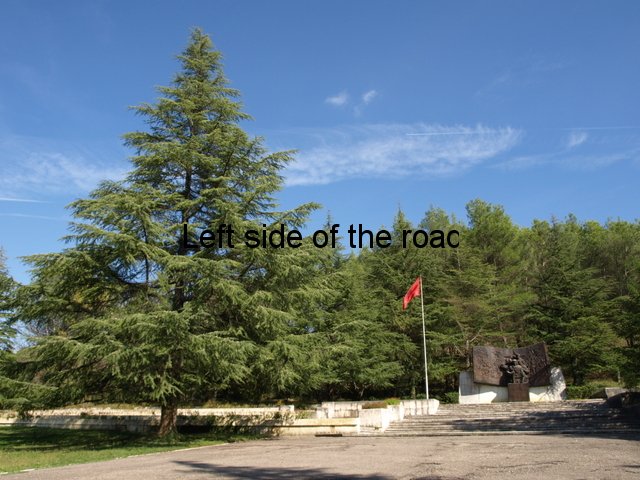
Most of the monuments in Albania are not complex works of sculpture. Many are simple columns, with inscriptions, some of those being quite small. These are known as ‘Lapidars’ in Albania. (‘Lapidar’ doesn’t have a direct translation into English although ‘monolith’ is a possibility – and might even have a German root.) In between the monumental and the columns are stand alone statues and structures and the Partisan Memorial – Gjirokastra, is one of those.

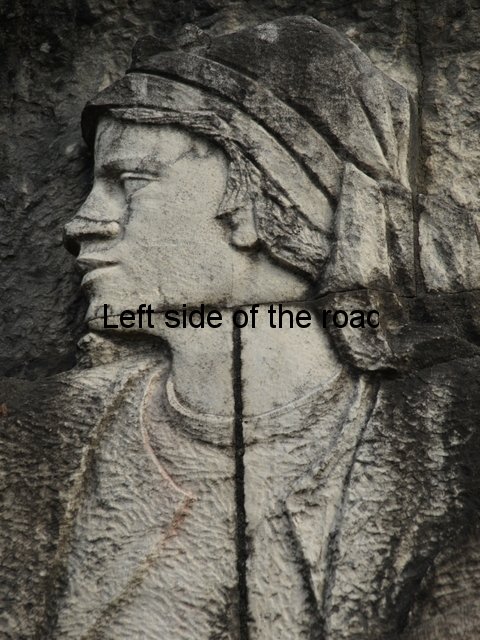
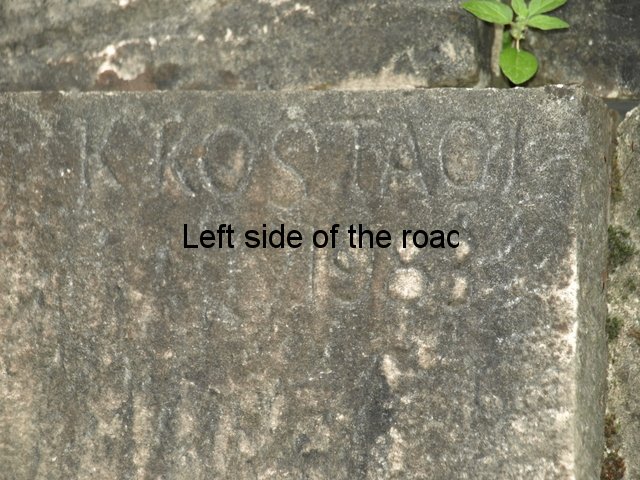
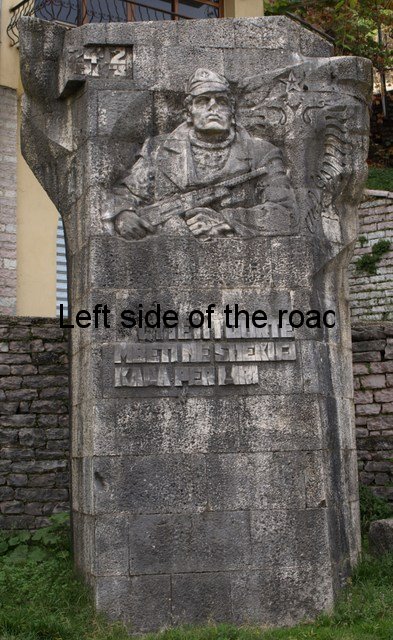
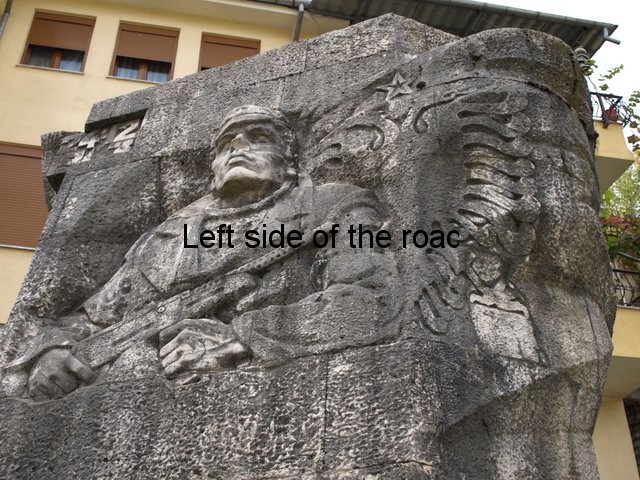
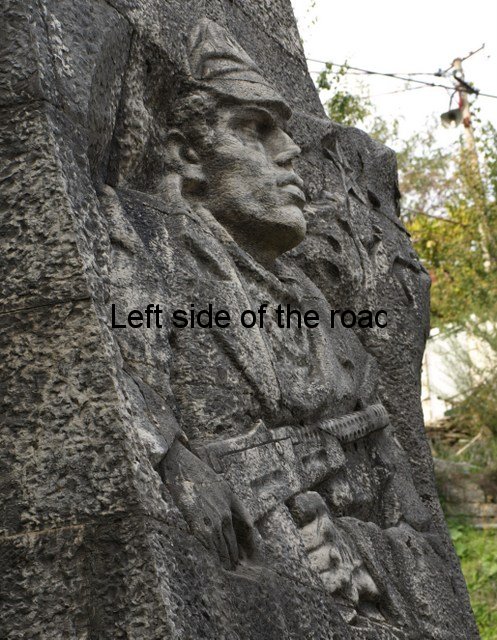
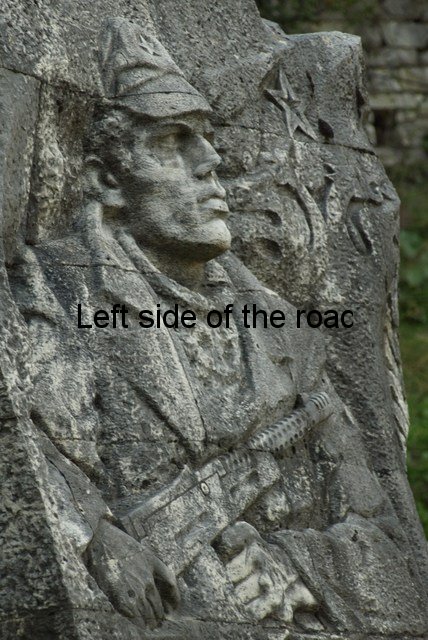
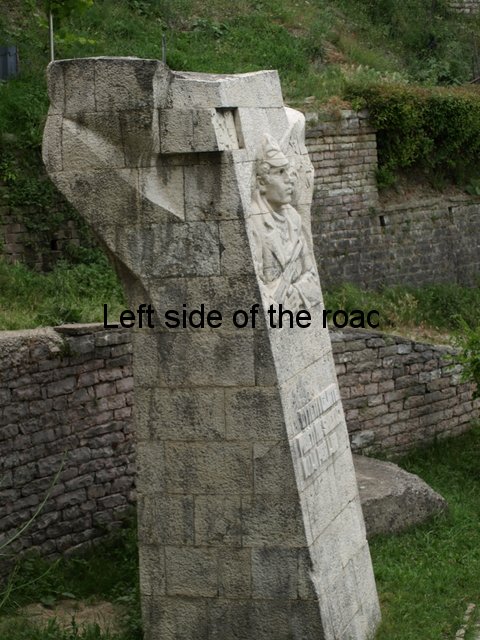
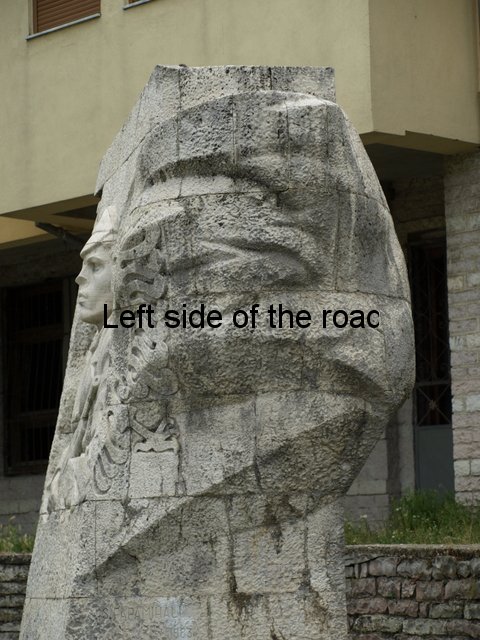
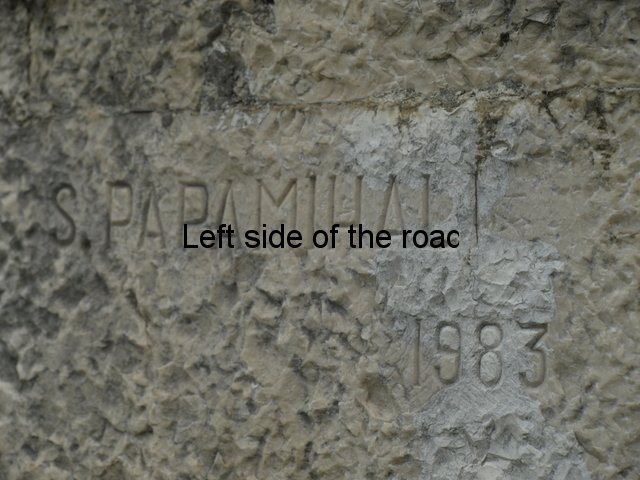
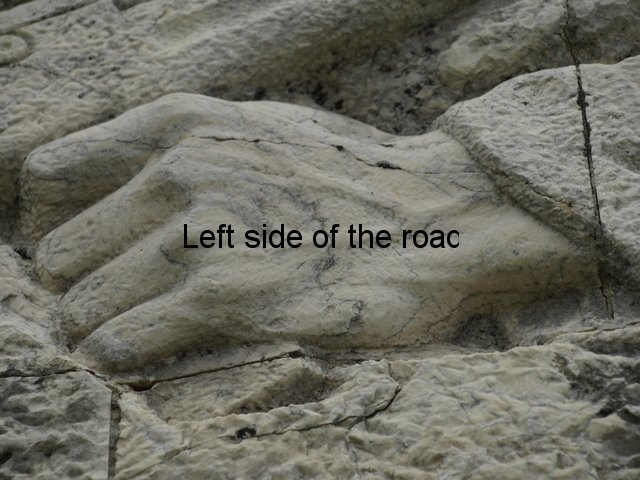
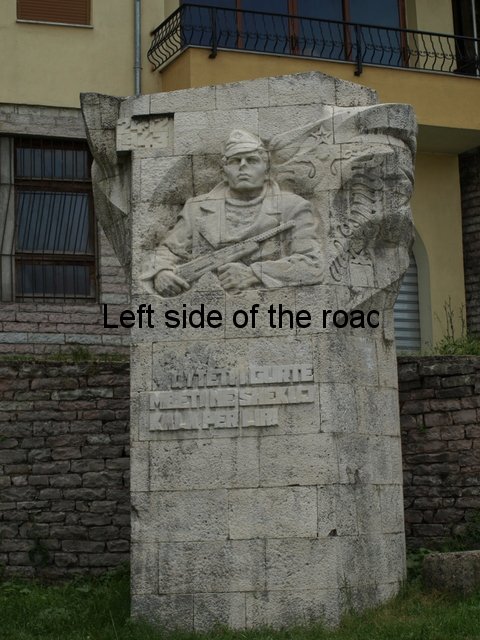
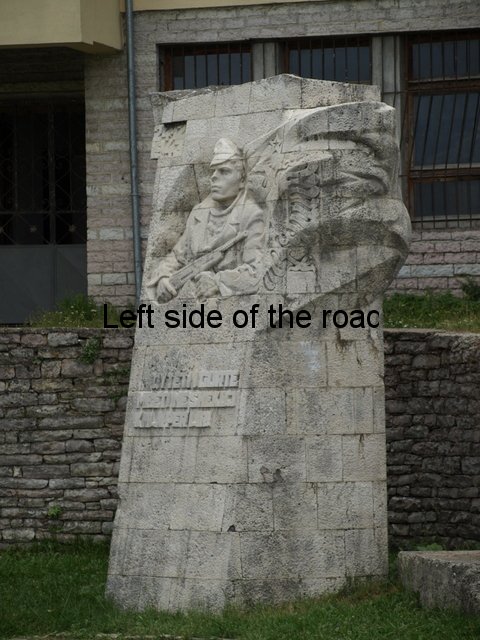
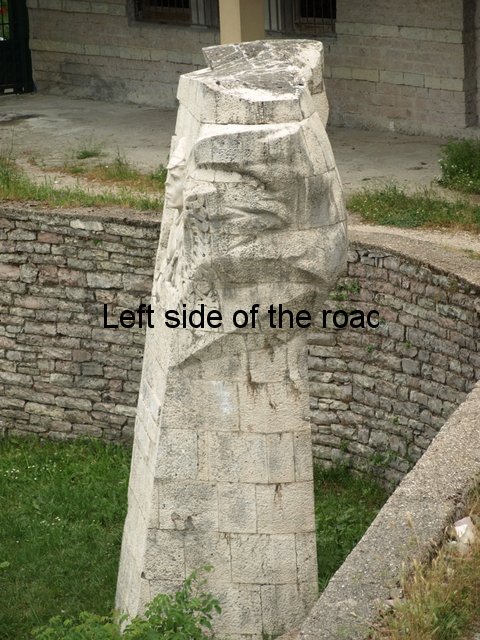
Many of the monuments are either of concrete or bronze but this one is of stone. On close examination, and especially after being cleaned up, the stone is almost certainly limestone. The statue is composed of large blocks to create a shape that looks like the forearm of a human with a clenched fist. Carved into the facade facing the road there is the torso and head of a partisan soldier (male). Because of how it’s constructed I would have assumed it was carved in situ. The sculptor was Stefan Papamihali and it was inaugurated in 1983. Papamihali was also a collaborator, together with Ksenofon Krostaqi and Mumtaz Dhrami, on the education obelisk higher up in the Old Town.

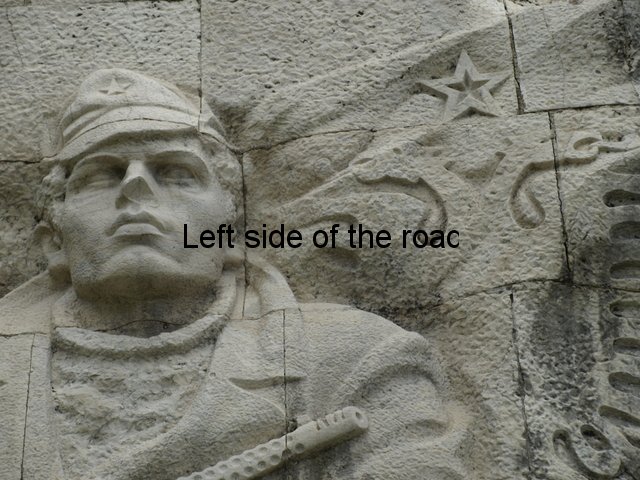
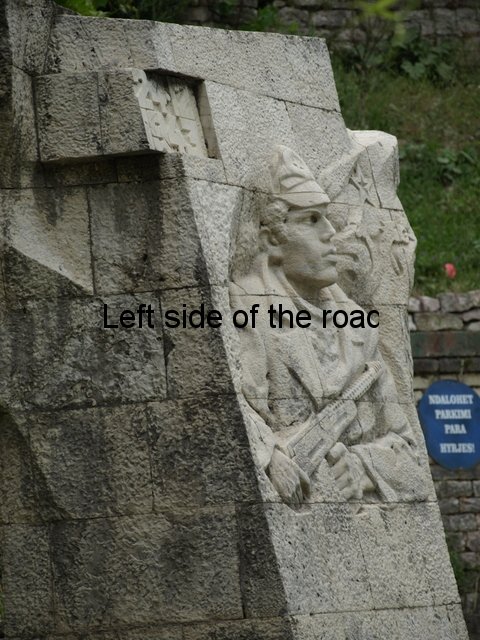
There’s just one individual depicted on this monument. He’s a Communist Partisan, in winter gear, dressed in a heavy overcoat with a thick sweater underneath. On his head is a cap with a star at the front. He’s looking straight out at the viewer. He has both his hands on a light machine gun which is held against his chest.

Partisan Memorial - Gjirokastra

Partisan Memorial – Gjirokastra

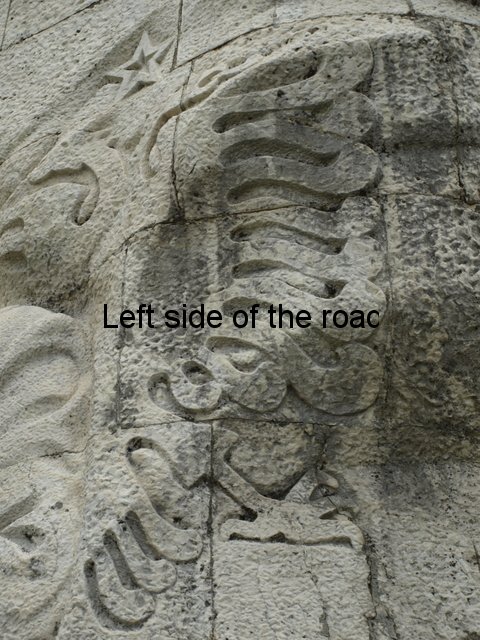
To his left, and virtually on his shoulder, is the symbol of the double-headed eagle with a star between the two heads. On most monuments that image is usually part of the national flag but here they seem to stand alone.

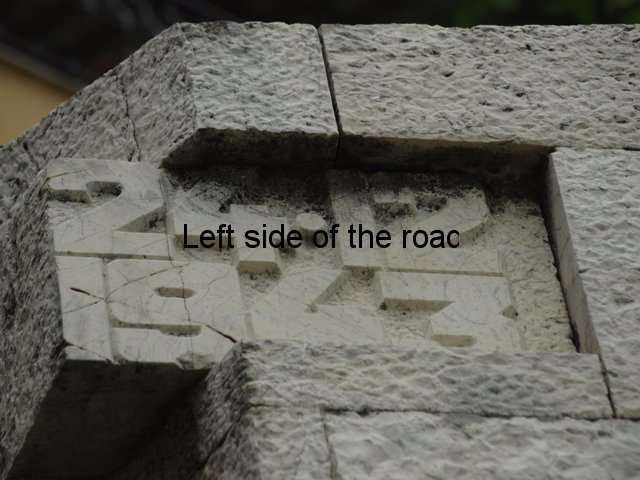
Above him, at his right shoulder, is the date, in numbers of ’24 12 1943′

This was the date when the town was finally liberated from the German Fascists. The majority of the surrounding countryside in the south of Albania was liberated in the early months of 1944. Commemorating, as it does, such an important event I’m not sure why it’s not in a more prominent location, in the main square for example.

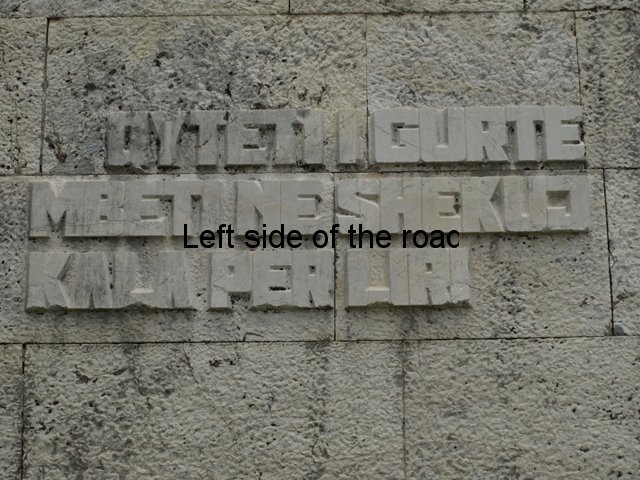
Below the image, carved into the stone, are the words:

‘Qyteti i gurtë mbeti në shekuj kala për liri’.

My translation for this is:

‘The Stone City Castle has been a symbol of freedom for centuries’

‘Stone City’ is one of the nicknames for Gjirokastra from the traditional buildings of the old town which used stones for the roofs as well as the structure of the houses. The ancient Castle dominates the city and this end of the valley and recognisable from miles away.

Gjirokastra

Gjirokastra

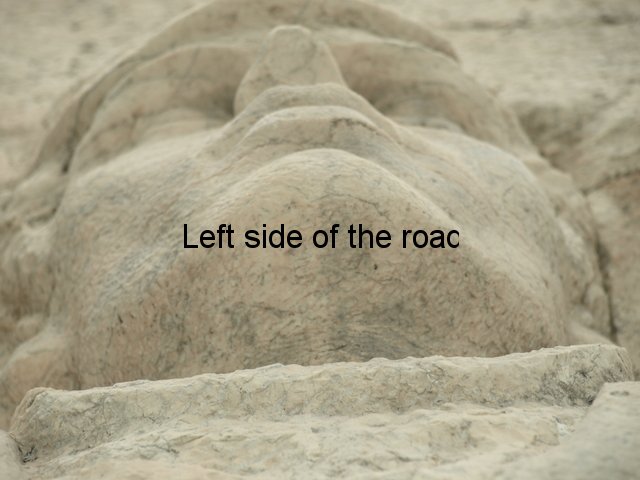
In general the monument is in a good condition apart from the fact that someone has had a go at his nose and the left nostril has been broken off. (Noses are vulnerable on stone statues, there’s one of Uncle Joe in Moscow that has a chunk missing from the nose.) A number of other monuments in Gjirokastra haven’t fared so well.

Partisan Memorial - Gjirokastra

Partisan Memorial – Gjirokastra

I’m not too sure is this is as a result of vandalism or more of an accident. On other monuments the first things to be attacked are the stars, but the two on this statue are undamaged. There’s an element of weathering but that would have been taken into consideration by the sculptor, taking into account the location. It’s facing in a northerly direction and there’s quite a lot of rain in this part of the country in the winter.

This is a fairly unique style and design for an Albanian commemoration of the Partisans and the victory over the Fascist invaders. In the work of Dhrami and Krisiko, on the different monuments at Peze, for example, you can notice the development of certain motifs.

The simplicity of this statue gives the impression of solidity and determination but, as is always the case in Albanian iconography, the freedom that was fought for can only be maintained by being prepared to use arms. As Mao Tse-tung said: ‘Political power comes from the barrel of a gun’.

One aspect of ALL the statues and monuments to the Partisans in Albania is that the individuals are always confident, heads raised, prepared to take on the enemy and face the difficulties of the struggle. That goes for both the male and female partisans. Compare that with the representation of the partisan in the capitalist countries, for example the Manzu monument to the partisan in Bergamo, Italy.

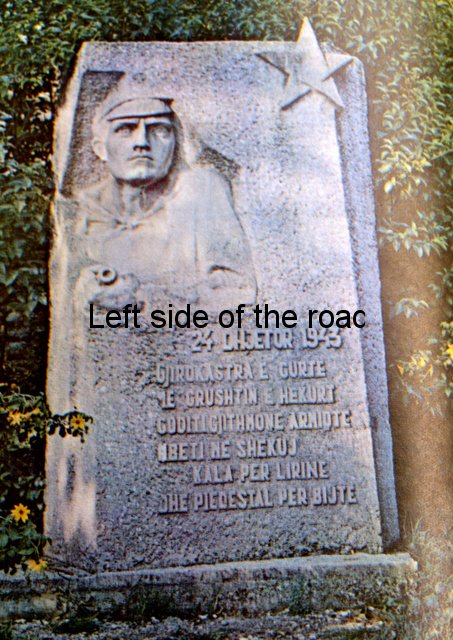
Since my first visit to Gjirokaster this memorial has been cleaned and looks a lot better as the black weathering has been cleaned off. All the monuments and lapidars in Gjirokaster are in a better shape than they were a few years ago, as can be seen with the bas-relief outside the high school. But this is not the first representation of a Partisan to have existed in Gjirokaster.

Gjirokaster Partisan Lapidar - earlier version

Gjirokaster Partisan Lapidar – earlier version

I have no details (as of now) about this memorial but assume it was located in the same position as the existing one.

The text reads, in Albanian:

24 Dhejtor 1943

Gjirokastra e gurte me grushtin e hekurt goditi gjithmone armiqte mbeti ne shekuj kala per lirine dhe piedestal per bijte.

This translate as:

24 December 1943

Gjirokaster, with the stony ‘iron fist’ to smash its enemies, has remained, over the centuries, a stronghold of freedom and an example to our children.

(Slightly more poetic than the statement on the present memorial.)

It’s not unusual, in the history of Albanian Socialist Realist sculptures, for there to be changes and modifications to the monuments as the society moved forward. This can be seen in the evolution of the statue in Skhoder of the ‘Five heroes of Vig’ and also in the Martyrs’ Cemetery in Borove. What is strange here is that the ‘new’ statue develops the original idea and seems to be larger in scale. However, the original was itself a fine piece of art and it seems a tragedy that it should have been destroyed (if, indeed, that was the case) just to make way for a newer and larger piece. If it had to make way for the new why not place it in the Castle Museum?

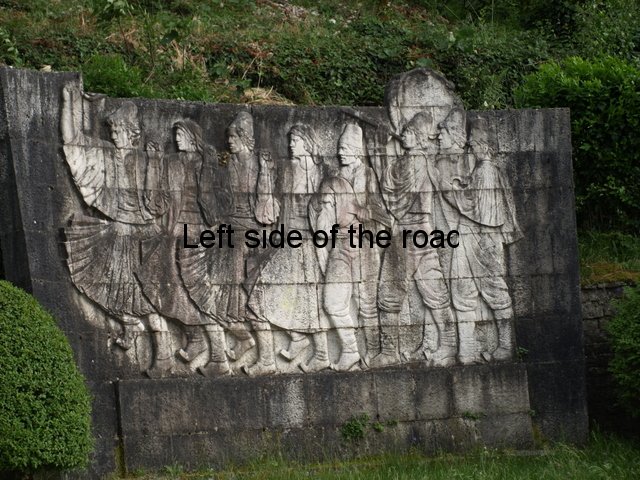
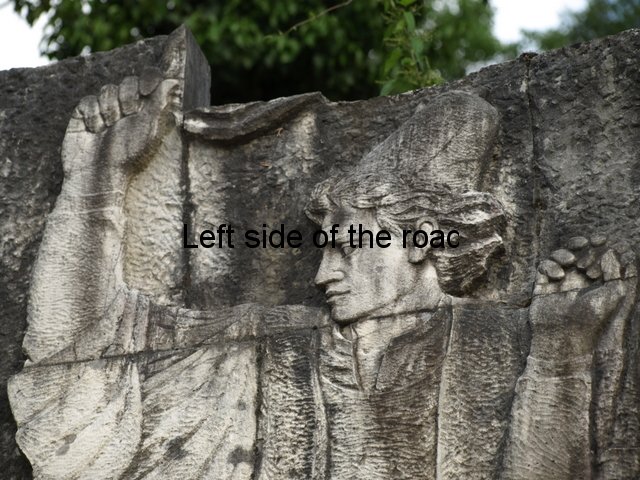
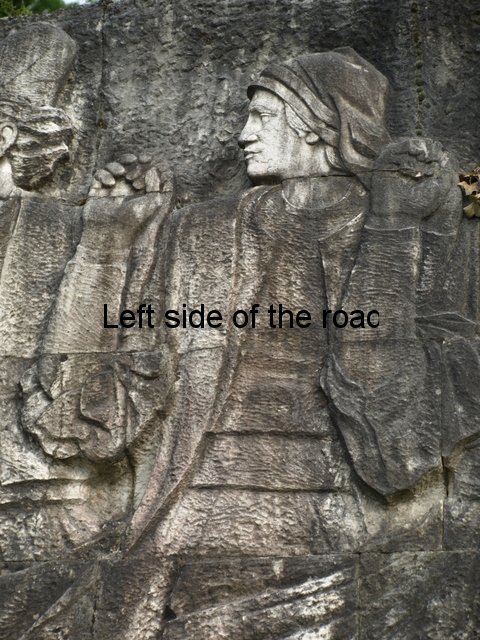
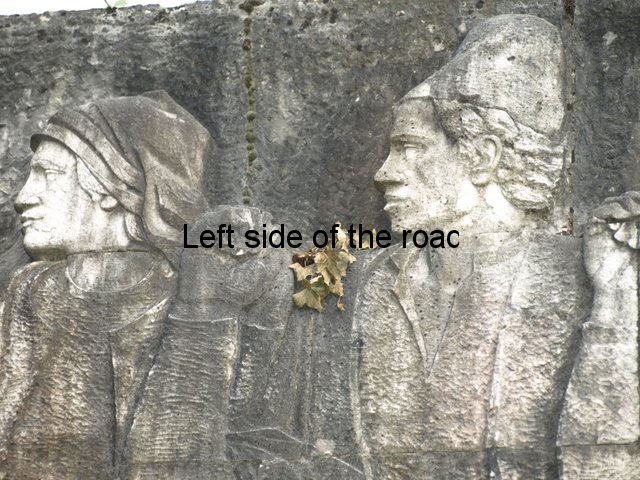
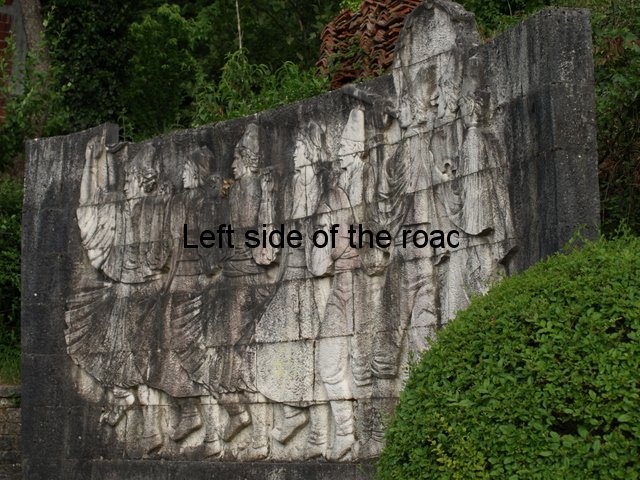
If the reason for its replacement is unsure the timing is understandable. 1983, the date on the present statue, was the 40th anniversary of the Liberation of the city. It seems that in the lead up to that date a number of new monuments appeared in the town, the stone bas-relief of the musicians and dancers and the obelisk to education being two examples of this.

Enver Hoxha - Entrance to Gjirokastra

Enver Hoxha – Entrance to Gjirokastra

Location:

The statue is at a bend of the road (Rruga Gjin Zenebisi) that heads up to the old town. If coming from the south, from Permet or Saranda, it’s the first road up on the left as you come into the Gjirokastra city limits and the monument is about 300m from the junction. There used to be a bust of Enver Hoxha (picture above) close to that junction but that would have been destroyed in the counter-revolution of 1990. This would have been opposite the most severely vandalised bus stop I think I’ve ever seen which is almost a work of art in its own right.

GPS:

N 40.076256

E 20.14575097

DMS:

40° 4′ 34.5216” N

20° 8′ 44.7035” E

Altitude: 261.4m

More on Albania ……

Peze War Memorial

Peze War Memorial

Peze War Memorial

More on Albania ……

Peze War Memorial

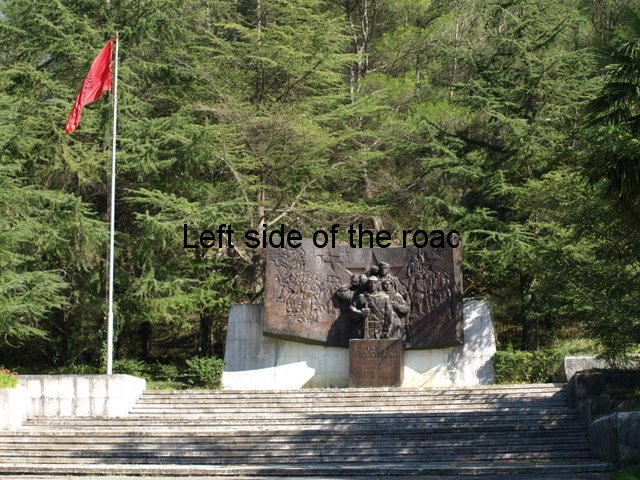
The third major monument in the Peze Conference Memorial Park is the cemetery to those from Peze who fell during the anti-Fascist war of Independence. The Peze War Memorial is a short distance from the main area of the park and you could be excused for not knowing it’s there.

At one time this area must have been a pleasant place to spend some time away from Tirana. In the past the capital itself was not a busy, noisy and polluted city (as it has become now) and the contrast wouldn’t have been so great. Now that Tirana has all the negative aspects of capitalism such oases of quiet should be at a premium but that doesn’t mean that they are looked after.

On my recent visit the waste bins hadn’t been empties and if the litter hadn’t just been left on the grass the wind would blow the plastic bags from the overflowing bins and were everywhere. This includes the small river that runs through the park – you really wouldn’t want to be a river in capitalist Albania, see, for example, the fate of the River Kir in Skhoder.

The Peze War Memorial and cemetery is across a bridge over the river and it’s more than likely there will be some kind of makeshift fence that gives the impression that you are going into someone ‘s field. The cemetery is slightly around the corner, up on the right and with the trees in full leaf it’s not possible to see exactly what’s there.

However, just go through the fence (only bits of scrappy string hold the ‘gate’ closed and once on the other side of the bridge you’ll see the monument sitting against a backdrop of pine trees, which you reach after going up a flight of low steps.

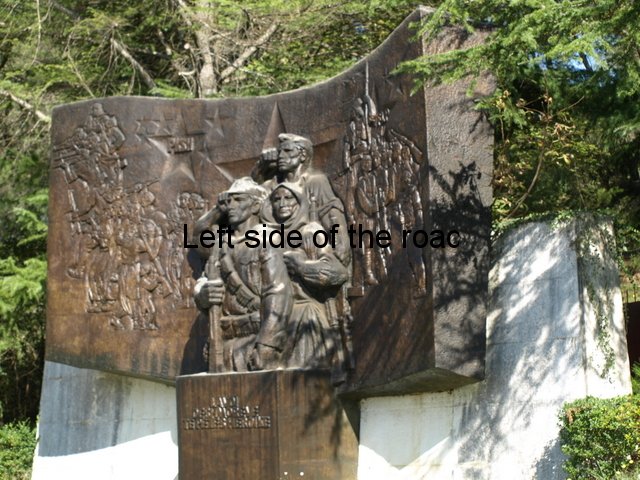
This is the work of the sculptors Mumtaz Dhrami and Kristo Krisiko with Nina Mitrojorgji as the architect. The official name is ‘Monumenti i vendosur në varrezat e dëshmorëve në Pezë’. It was unveiled in 1977, the same time as the Monument to Heroic Peze at the junction of the Peze-Tirana-Durres road. They must have been part of a joint project (together with the Monument to the 22nd Brigade) and it’s possible to see similarities in the style and imagery.

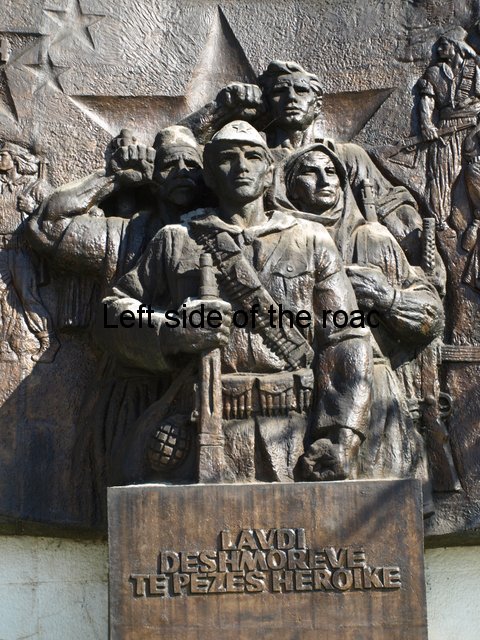
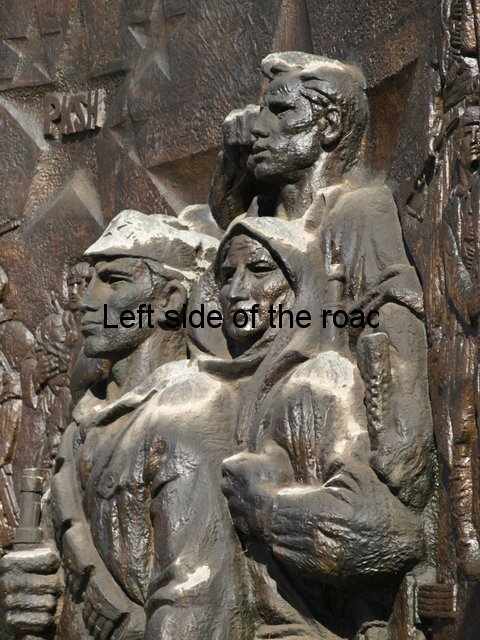
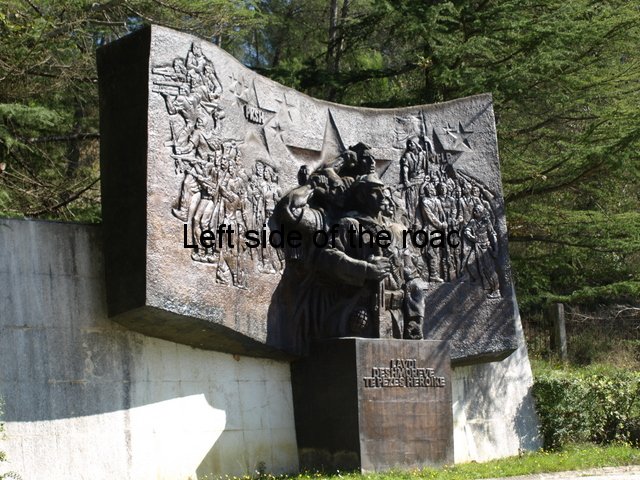
The bronze part of the monument is embedded into a concave mass of white concrete. (There’s been a lot of painting of the Socialist period monuments recently and I’m not always sure if they were originally designed to be whitewashed or if the bare concrete was considered to be more aesthetically appropriate.) The bronze section is in two parts. The large concave section is decorated in bas-relief and in front of that (but also attached) is the statue of a group of four partisans on top of a plinth.

These statues are not complete figures, the male partisan at the front is only shown from a point midway between his knees and thighs and of those behind him there is more as they are raked so that we can see all of their faces.

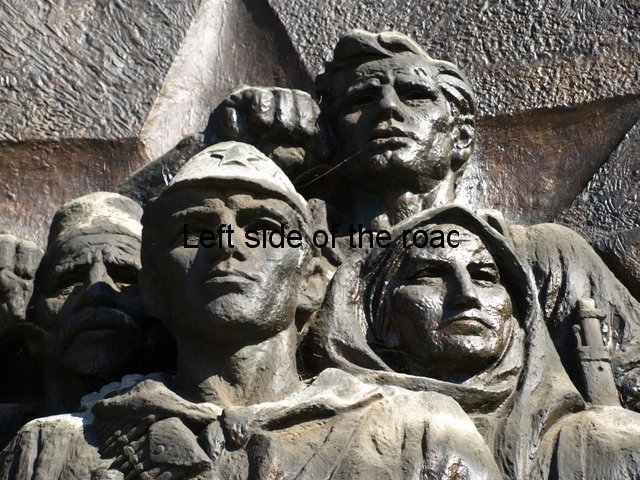
The prominent, young male is dressed in what would have been the partisan’s uniform, wears a cap with a star and has what would have been a red bandanna around his neck. In his right hand he holds the top of the barrel of a rifle, the butt of which would be resting on the ground (unseen). Across his right shoulder there’s a bandolier (broad ammunition belt) and he wears another around his waist. On his right hip there hangs a British made Mills bomb (a fragmentation grenade). Over his left shoulder is a narrow strap that is attached to a small satchel that hangs just behind the grenade. His left hand is clenched into a tight, angry fist. He is looking straight in front of him, his head held high and proud.

Standing at his left shoulder is an older woman. She is very reminiscent of the depiction of the female on the Peze junction memorial, on that part that looks in the general direction of Tirana. She is not in uniform but wears traditional peasant dress with a hood pulled over her head. As I’ve said a number of times now the women are always armed (including in the description of the Albanian Mosaic on the National Museum) and she has a rifle slung over her left shoulder. She is looking slightly to her left, the only one of the group not looking straight ahead.

Behind her, and head and shoulders higher, is another young man. He is also not in any formal uniform. He has his sleeves rolled up, holds the top of the barrel of a quite significant machine gun in his left hand and his right hand is clenched in a bent arm salute, his hand directly over the head of the partisan soldier at the front of the group. He doesn’t wear a hat. He is looking in the same direction as the partisan.

The last of the statues is of an older man. His face looks over the right shoulder of the forward male. He has a bushy moustache and wears a fez. His right arm, sleeves rolled up, is also bent and his fist clenched in a revolutionary salute. He is also looking forward but there’s no evidence that he’s armed.

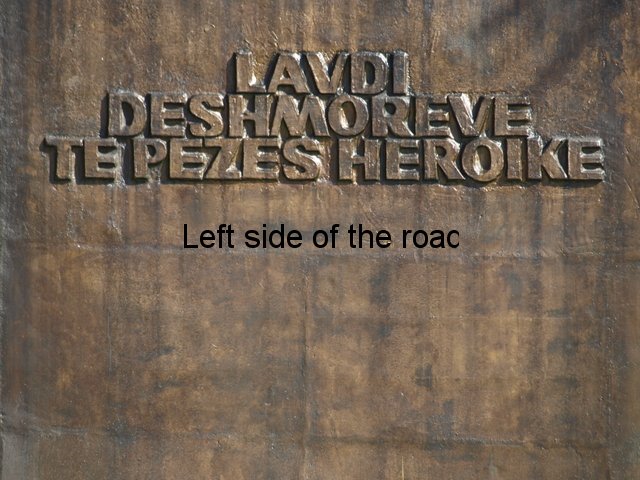
The plinth upon which they are standing carries the slogan: ‘Honour to the Martyrs of Heroic Peze’

As a backdrop to this group there’s a large five-pointed star (only three points are visible) on the concave bronze background.

Here we have the representation that the war against the Fascist invaders was a war that was fought, and won by ALL the people. A National Liberation War is not like those wars fought by the mercenary armies of capitalist/imperialist nations. As Mao Tse-Tung said: “The guerrilla must move amongst the people as a fish swims in the sea” and that was how the Albanians were able to defeat the invader. And it meant the involvement of all the population, regardless of age or gender.

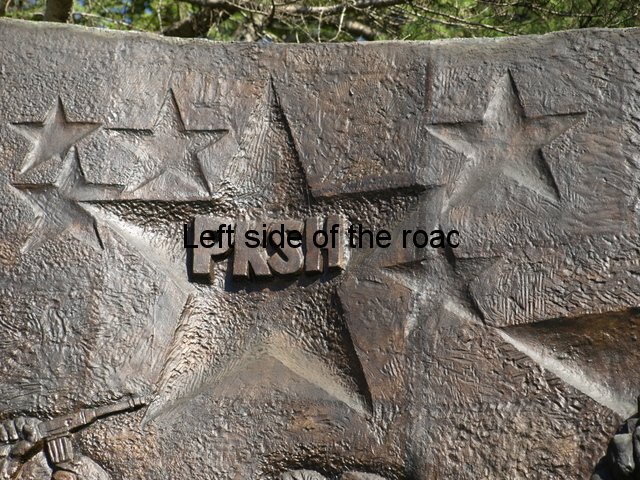
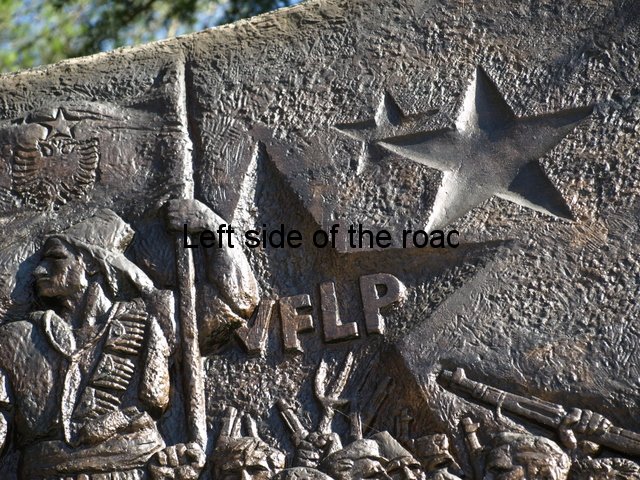
There are a lot of stars on this monument. Two of them have letters on them. One on the left hand side of the group has the letters VFLP – which we have already seen on the Peze junction monument, “Vdekje Fashizmit – Liri Popullit!” (“Death to Fascism – Freedom to the People!”). Another, on the right hand side of the group has the letters PKSH – Partia Komuniste Shqiptare (Albanian Communist Party) which was later to become the Party of Labour of Albania (PLA).

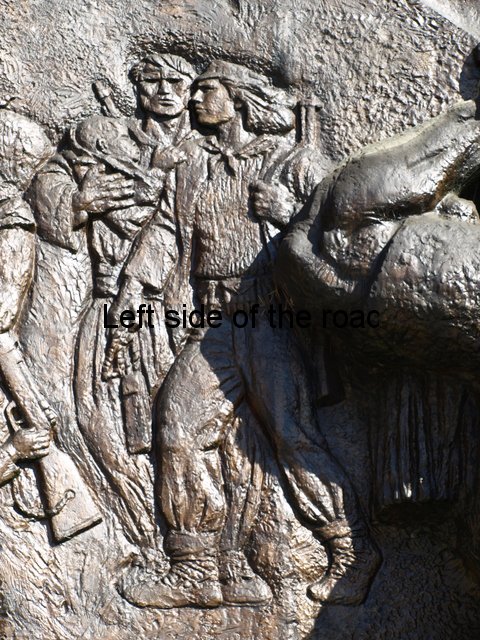
Immediately to the right of the group on the bas-relief is the depiction of a young family, a mother, father and child. Both the man and the women are armed (with rifles slung over their shoulders) but it’s only the woman who is in the uniform of the Partisans, wearing a cap with a star and the red neckerchief. Her fingers of her left hand are tucked behind the strap of her rifle and she holds something hanging down from her right hand but I’m not able to work out what it is, it looks like a bottle/container of some kind. (See comments below for another interpretation of the groupings in this part of the monument.)

Holding the baby

Holding the baby

What’s a little bit different (and unique, so far, in my travels) is that it’s the man who’s left holding the baby. He is static, looking out at us, but she is marching towards the left hand edge of the tableau, as if marching to war. However, this doesn’t mean that she is doing the fighting and he is the stay at home dad as he is also armed and is obviously a fighter as well as she.

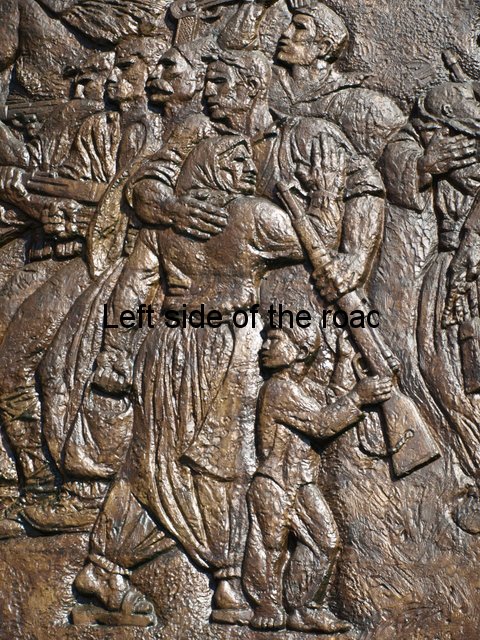
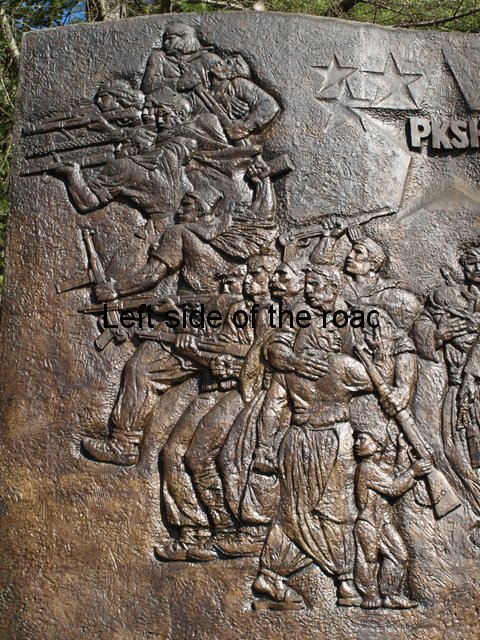
Next to them, and taking up the space for the rest of this side of the monument, there is a lot going on. In the front, at the bottom, is another family group. Although looking in the direction of the battle, of the front, of the attack, the man has his right arm around his wife and she is pressed tightly against his chest, her right hand on his shoulder and a bag hanging from her left. She is dressed as a peasant woman of the time, her hair covered with a scarf.

The man is not in uniform and his sleeves are rolled up and he is clutching a rifle by the bottom end of the barrel. Grabbing hold of the wooden butt of the gun is a young boy. Whilst he is standing with his back to the action that is drawing the attention of his father he has his hands on the gun as he looks back over his shoulder as if to say ‘give me the gun and I’ll go and fight the invader’. The woman is wearing what would now be called flip-flop sandals and the boy appears to be barefooted. Is this the farewell before he goes off to the mountains?

The gun's mine

The gun’s mine

Behind this family group is a single male. He’s looking in the same direction as the others on this side of the monument but he is not pointing his gun (which looks like what I think is an Italian FNAB-43 submachine gun – the same as one partisan is carrying in the 22nd Brigade Monument) but brandishing it high above his head, as a challenge to the enemy – ‘we are going to get you’ he seems to be saying.

The next group, slightly higher and at a diagonal to the family, is a group of three males, of different ages and, by their dress, from different parts of the country. Two of them have their guns at the ready as if they are about to, or have just fired at the enemy. The third, the moustachioed and wearing a fez, for some reason isn’t armed and merely has his right hand clenched.

This is not the first time that groups of three have appeared in Dharmi and Krisiko’s work. I don’t know if that this is just a fad that they have or whether it holds a greater significance. (See the Heroic Peze Monument.)

Next up is a single male. He is a Communist as we can see the star on his fez. He’s full on. His right arm is high up above his head, in which he holds some sort of grenade he’s about to throw – I don’t recognise the type. (This looks similar to what the young mother mentioned before has in her hand.) This Communist has an FNAB-43 submachine gun in his left hand, ready to put it to work once the grenade has caused its havoc.

Next, and higher up, is a group of four (three men and a woman) partisans, all in the act of firing at the enemy, the three with rifles have them up to their faces in the act of aiming and one with a heavy machine gun on a tripod. Three of this group wear a star on their caps.

The remaining two partisans on this side show that victory does not come without casualties, without sacrifice. At the highest point of the bronze we have a female Communist (star on cap) with her left hand under the arm of a wounded male comrade. He is unable to stand on his own and she keeps him up. His left hand is on his rifle and she grips the same rifle by the barrel, whilst looking in the direction of battle. He might have fallen but there will always be someone ready, and willing, to pick up the rifles of the fallen to continue the struggle.

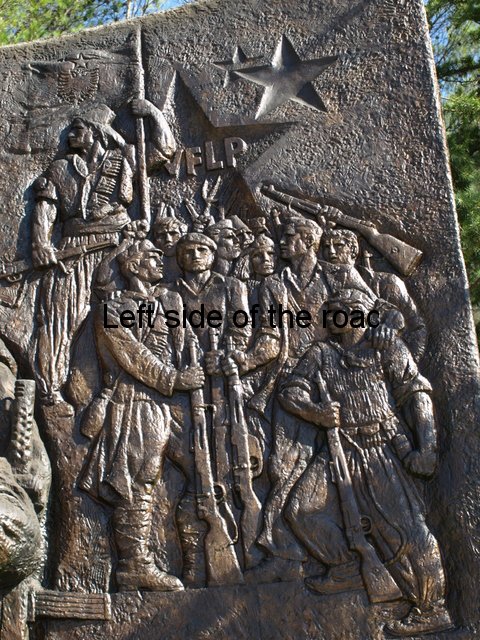
There’s a different dynamic on the other side of the group of four. The only one who is looking in the direction of the battle in which his comrades are involved is the standard-bearer. He holds the flag pole, the banner itself fluttering in the direction of battle, with the star over the heads of the two-headed eagle. Whilst his left hand is holding the flag pole in his right he holds a rifle and has a bandolier from his left shoulder.

The rest of the bronze on this side is taken up with a group of ten partisans.

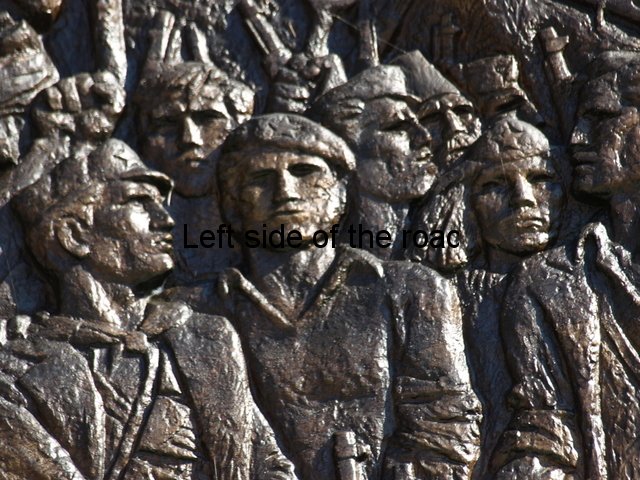
The front group is made up of four males, all armed. Three of them are holding their rifles by the barrel whilst the butts are on the ground, but all these rifles are held so that they are very close together. One of the group looks like a teenager, he is smaller than the others and one of the men has his left hand on the young lad’s shoulder in a comforting, supportive manner. However young he might be the lad is armed as well as the others. Three of this group are wearing caps with the red star (including the youngster).

I’m trying to work out what they are doing, looking at. On the other side virtually all the attention is paid in one direction, where the conflict is taking place. On this side the group has no common point of interest. Although the four individuals are obviously together, the uniting of their weapons tells us that, where they are looking does not indicate unity, at least to me. Possibly it’s a meeting with a commander, who would be the one who is looking out at us, and that’s the reason the others are looking inwards.

Behind the four principals we only see the heads of the other six fighters. As with the front group there’s no common direction of attention.

On the far right we have a hatless fighter, the top of the barrel of his rifle peeking out behind his shoulder. Next along is a Communist partisan woman, with a star on her cap and her rifle raised above the heads of the males in the forefront. Both these are looking out at the viewer.

Behind the woman there’s a group of three males, of different ages (again stressing the fact that war is not just a matter for 19-20 year olds) looking generally over to their left. Things get squeezed a bit here and above their heads can be seen the tops of the barrels of various weapons and what appears to me to look like a pitchfork. This suggests two things. The first is that any weapon can be used against an invader. Secondly, even though the PKSH was a workers party Albania at that time was also a country with a predominantly peasant, agricultural population. Collectivisation and the establishment of State Farms after liberation would alter that class structure but the monument represents the situation in the country pre-1944.

The remaining male on this side looks out at the viewer, hatless but with his right fist clenched in the revolutionary salute. It might be useful to stress here that this group is collected together under the star with the letters of the anti-fascist slogan, VFLP.

This monument is in a very good condition, the only signs of wear being on the white concrete base which shows the stains from the pine trees behind. The condition of monuments throughout the country varies. This varying situation depending, I would have thought, on either the ruling political force in the locality as well as devoted individuals who take it up themselves to respect the memory of the past and the contribution made by the men and women who gave their lives for the liberation of their country. A case where, institutionally, this looks like the case is the Martyrs’ Cemetery in Berat.

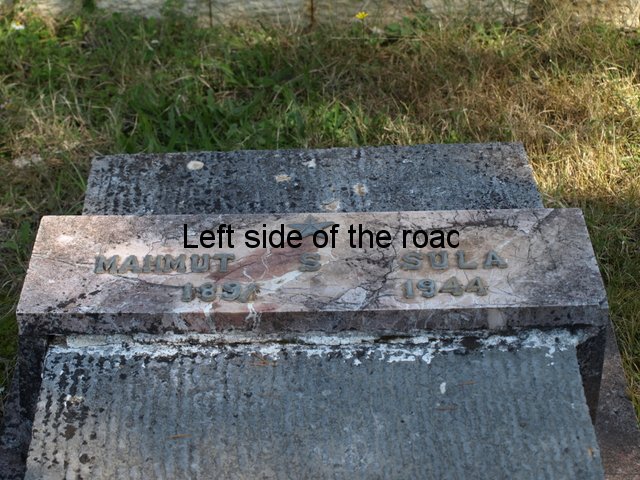
This monument exists as a celebration of those from Peze who lost their lives in the war against first the Italian and then the German invaders. I don’t know if all the tombs are actually the final resting place of those who died but I’m sure there would have been a great deal of effort after the war to collect the remains of as many of the fallen as possible and place then close to their home town.

Before 1990 all of the cemeteries throughout the country would have been in a pristine condition. On significant dates relating to the war there would have been memorial services where, traditionally, children would place flowers on ALL of the graves. This served a double purpose. It ensured that those who might not have had any living relatives were not left out in the commemoration and also served as a lesson to the young to remember, recognise and respect what others had done to ensure their freedom.

Peze Cemetery

Peze Cemetery

On my visit in November 2014 it was not pristine but there had obviously had been some attempt to tidy the garden and at least the marble slabs on the steps hadn’t been looted as they had been at Korce, for example.

The cemetery is also in a very pleasant location. The village of Peze itself is at the head of a valley which is wide close to the Tirana-Durres road but which narrows significantly at the village. The cemetery is on one side of this narrow valley looking out to the fields that, during the Socialist period would have been full of activity but which are now is only worked sporadically.

GPS:

N 41.21647504

E 19.70247201

DMS:

41° 12′ 59.3101” N

19° 42′ 8.8992” E

Altitude: 109.7m

Getting to Peze by public transport:

Getting to Peze is not difficult but it does require a little bit of pre-planning and a bit of organisation as the starting point in Tirana is slightly out of the centre and it’s not a particularly frequent service. The bus stop is on Rruga Karvajes, opposite the German Hospital and just a few metres east of Rruga Naim Fresheri. The journey takes between 45 minutes and an hour, depending upon traffic and the driver, and costs 50 lek each way.

Departures from Tirana: 09.00, 12.00, 13.30,

Departures from Peze: 10.00, 12.45, 15.15

These times can be flexible in the sense of leaving later than stated. I suggest you allow at least an hour to explore the park. There are a number of bars and restaurants close to where the bus turns around so you can move quickly if necessary.

More on Albania ……
Monument to Heroic Peze

Monument to Heroic Peze

Monument to Heroic Peze

More on Albania ……
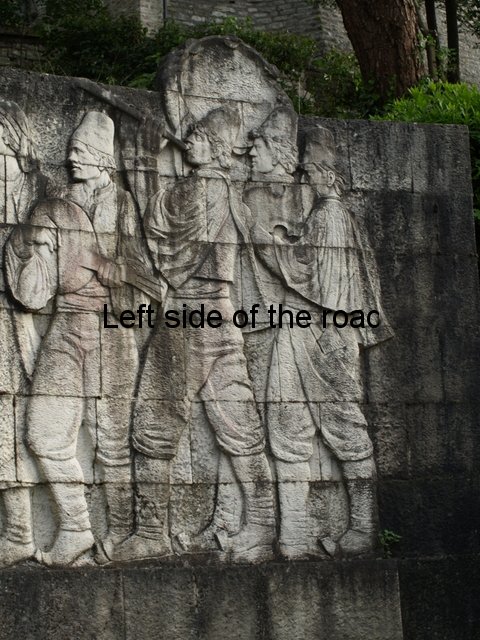
Monument to Heroic Peze

Looking like a cross between a pistol and a huge road sign, the Monument to Heroic Peze sits at the junction to the village of Peze, along the old road between Tirana and Durres. This huge block of concrete, in its imagery and words, tells the story of the important role that this small village played in the war against fascist occupation (both Italian and German), the formation of the National Liberation Front and the concept of People’s Power.

The monument (Monumenti kushtuar Pezës heroikë – Monument dedicated to Heroic Peze) was inaugurated in September 1977, on the occasion of the 35th anniversary of the Albanian National Liberation Conference in Peze (the village being only 6 km from the junction where there are other monuments to the fallen, the local guerrilla unit and the conference) and is the work of sculptors Mumtaz Dhrami (who was also involved in the creation, among others of Mother Albania in the National Martyrs Cemetery in Tirana and the Monument to Independence in Vlora) and Kristo Krisilo. It symbolises the struggle and glorious history of the people of this region led by the Communist Party of Albania (which became the Party of Labour of Albania during the period of socialism) in the war for liberation of the country against Italian and German Fascism.

Inauguration of The Monument to Heroic Peze

Inauguration of The Monument to Heroic Peze

The engraving above, by Fatmir Biba, records the inauguration in 1977

When I first saw this monument in 2012 it was just plain, undecorated concrete but between then and November 2014 it had been whitewashed and then certain images, principally the stars, the double-headed eagle and some of the text, have been picked out in red and black paint. When I first saw this change in the fate of the Monument of Dema, near to Saranda in the south of Albania, I thought this was just a local change in attitude, care and maintenance rather than disregard and vandalism, but this is obviously a much more extensive approach towards the patrimony of the country.

On the edge facing Tirana

On this part of the monument there is less of a story rather more a symbolic representation of what the struggle meant to the Albanian people. From the right hand side, that closest to the main road, there’s an image of a woman facing in the direction of Tirana, seeming to look into the distance towards the capital. She’s an older woman from those normally found on such monuments, as you can make out the creases in her forehead and also her dress is not of a combatant, more of a woman of the countryside, with a scarf covering her head and on both sides of her face. Is she, possibly, a representation of Mother Albania?

It’s not quite clear but she seems to holding the top end of the barrel of a rifle in her hand. That fits in with the many other images of armed women in Albanian Socialist Realist Art and it would be somewhat strange if this is the rifle of the man to her right.

Next we have the heads of three men, all of whom are looking in the direction of the village of Peze. Are we getting here a link between the capital and Peze? Without the conference and the anti-Fascist organisation that resulted in it the chances of victory and the liberation of the capital would have been reduced.

These heads represent the unity within the country, from the Communist (who is closest to the woman and whose star on his cap is now painted red and who has a bandolier across his shoulders) to the facial characteristics of Albanians from different parts of the country, symbolising that victory was a nation wide achievement. For such a small country and tiny population there are a huge number of distinctive facial differences between those in the north and those in the south. The third male from the woman also seems to be wearing a sheepskin collar to his jacket (similar to the separate, standing individual on the other side).

In front of them a disembodied hand holds high what looks like a bayonet, again pointing in the direction of the village. In front of this are the words, in Albanian, “Populli në këmbë, partia në ballë” that mean: “The People standing up, the Party in the vanguard.” And next to these words a large star, now picked out in red.

Underneath the faces are the words: “Lavdi Pezës heroike ku u vunë themelet e Frontit Nacional Çlirimtare dhe të pushtetit popullor”, which translate to: “Glory to Heroic Peze – where were laid the foundations for the National Liberation Front and People’s Power.” The larger, first words now also painted red.

The facade towards Durres.

From the left the letters VFLP, now picked out in alternate red and black, an initialism for “Vdekje Fashizmit – Liri Popullit!” (“Death to Fascism – Freedom to the People!”) a slogan and an oath which Partisans used to express their unity of purpose.

Then there’s the slogan in Albanian: “Historia e Pezës dhe e popullit të të gjithë kesaj krahine është një histori e lavdishme që do të na frymëzojë në shekuj” which means: “The story of Peze, and of all the people of this province, is a glorious history that will inspire us through the centuries.”

Then there’s a male Partisan fighter, standing with one leg higher than the other as if he were climbing a mountain. His right hand is raised above his head in the revolutionary salute, with the clenched fist. He is wearing a cap with a red star (but this hasn’t been picked out in red with the recent painting). The butt of his rifle, the barrel of which he holds in his left hand, is resting on the ground. His shirt is open at the neck and hanging from his shoulder, on a strap across his chest, is a water bottle. Around his waist he wears a bandolier holding spare cartridges and on his right hip rests a British made Mills bomb (fragmentation grenade). His jacket seems to lined with sheepskin as it looks like a fleece showing where it is open.

To his left is a çeta (guerrilla unit) of 12 marching towards Peze, both in the sense that they head to the village which is 6 kilometres from this junction and also to the buildings depicted on the monument itself. The face of the topmost of the group, towards the back, has suffered damage and only half the face exists. There’s only one woman Partisan and she is in the middle with a light sub-machine gun in her right hand, relaxed downwards as they are not in a combat situation. Not all the weapons of the group are shown but one of the male Partisans, in the middle, has his rifle raised above his head, extending over the heads of those in front and behind him.

There are faint red stars (again not picked out in red since the recent painting) on most of the caps worn by the group, including the cap of the female. The fourth male from the front carries a pole and the flag flutters over his head. On this flag there’s the double-headed eagle and star – but again these are faint and haven’t been highlighted in the recent cleaning/renovation.

In the arms of one of the leading males is a woman, in the traditional dress of the time, with her face very close to his. This is, presumably, his wife as just behind and below her is a young boy in the process of running to his father.

They have just come from Peze which is represented by the a few buildings up a hill side, towards the front of the monument. Superimposed over the houses is a large (now) red star, providing the accolade that was given to Peze during the time of socialism – Red Peze for having played a pivotal role in the formation of the National Liberation Front. Underneath are the words “Pezë,16 shtator 1942” which translate as: “Peze, September 16, 1942”, the date of the Conference. The name of the village is now painted red and the date in black.

The narrow facade facing the main road.

This is a battle scene. On the immediate left is a depiction of the double-headed eagle, with a large red star above the heads. The eagle has been painted black and the star a bright, crimson, revolutionary red.

To the right of that is the battle scene itself. This is not really that easy to make out, this edge facing more or less north and never really getting the sun on it to bring out the shadows of the relief. Also, because of its northerly aspect it has been subject to more weathering, not serious damage as far as I could see, but there’s staining that would come from the dampness staying on that part more than the two larger faces.

First there’s a male Partisan, down on one knee and in his right hand he holds a stick grenade (almost certainly ‘liberated’ from the Nazi invader and now being returned to the rightful owner) which he’s just about to throw. In his left hand he holds a rifle which is pointed in the direction of the enemy. He’s bare-chested, his shirt flying out behind him as he puts all his effort in throwing the bomb.

On his left, close together and all pointing and firing their rifles in the same direction, are 4 Partisans, three male and one female. The second male wears a fez cap, typical of the people from the area at the time, and the woman of this group wears a cap, which would normally have a red star on the front but it’s difficult to make that out due to the weathering. They are on a slight diagonal going up from left to right.

Behind this group stands a male partisan with a rifle, but not one that is firing at the enemy. He is looking back and I can’t make out at what, if anything. It also looks to me that there may be a flag attached to his rifle which is flying back over his head. This might represent the call for others to come and join the battle.

To his left there is a woman fighter firing a machine gun supported on a tripod. Behind her and barely visible is another fighter wearing a conical, felt hat typical of the north. His rifle is over her left shoulder pointing in the direction of the enemy.

I’m not sure if it’s just the weathering but above her head it appears to be the image of a building, if so this would be a representation of a building that would have been normal in Peze at the time of the beginning of the war – virtually all of Peze was razed to the ground during the National Liberation War.

GPS:

N 41.25917103

E 19.69045102

DMS:

41° 15′ 33.0157” N

19° 41′ 25.6237” E

Altitude: 63.4m

Getting there by public transport.

There are regular buses (every ten minutes or so during the day) leaving from the centre of Tirana which have the destination of Ngoc. The Tirana terminus is a short distance from Skanderbeg Square on Rruga Karvajes, opposite the German Hospital and just a few metres east of Rruga Naim Fresheri. Cost is 40 lek. Just wait by the side of the road, just a short distance up the hill, to go back to Tirana. This route also passes the road that leads to the cemetery where the grave of Enver Hoxha is located, in Kombinant. The bus that goes off the main road to Peze is less frequent and details can be found on the post for the Peze Conference Memorial Park.

More on Albania ….