A walk around the Jewish Quarter of Segovia

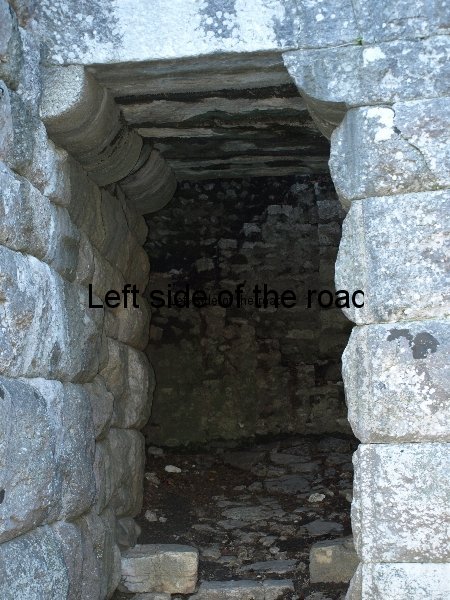
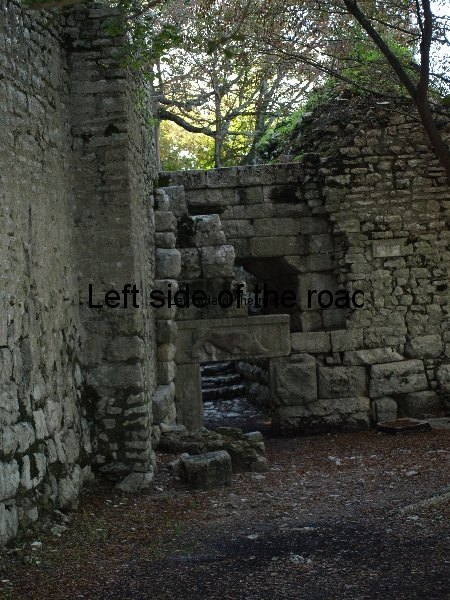
Corpus Christi Church/Synagogue Segovia

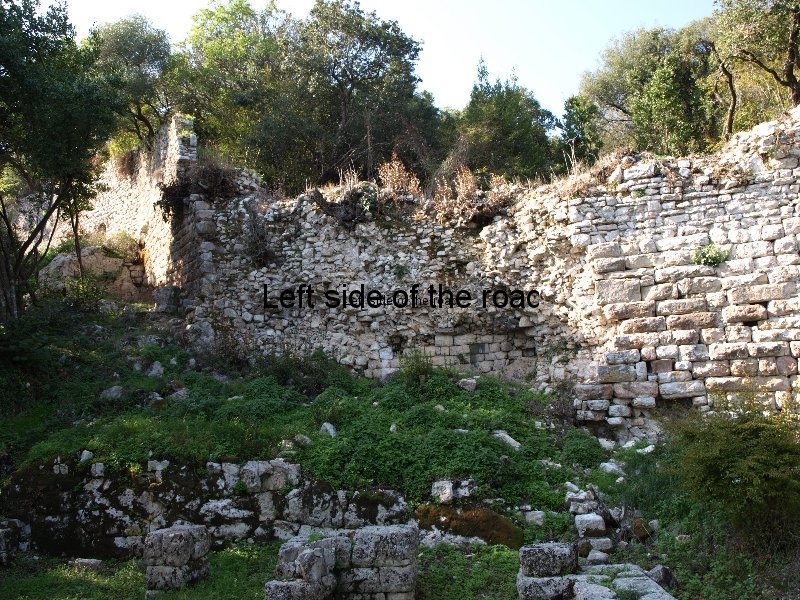
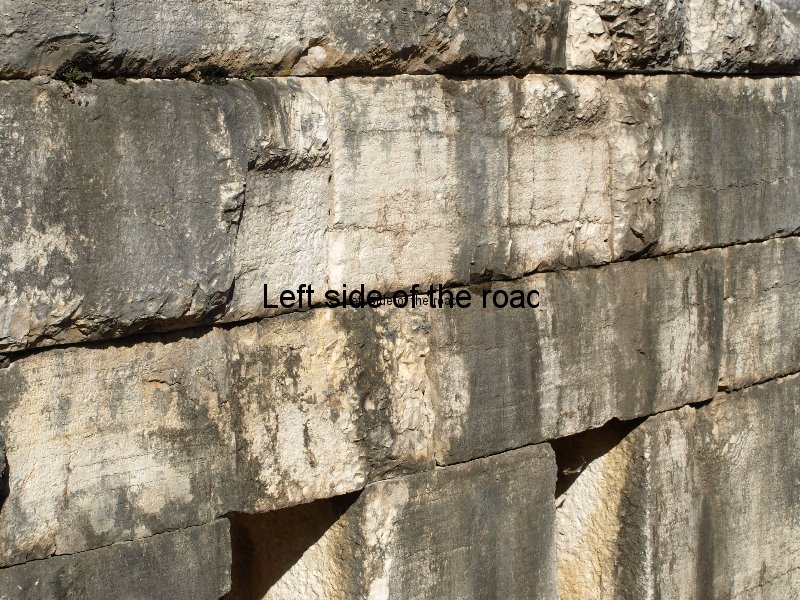
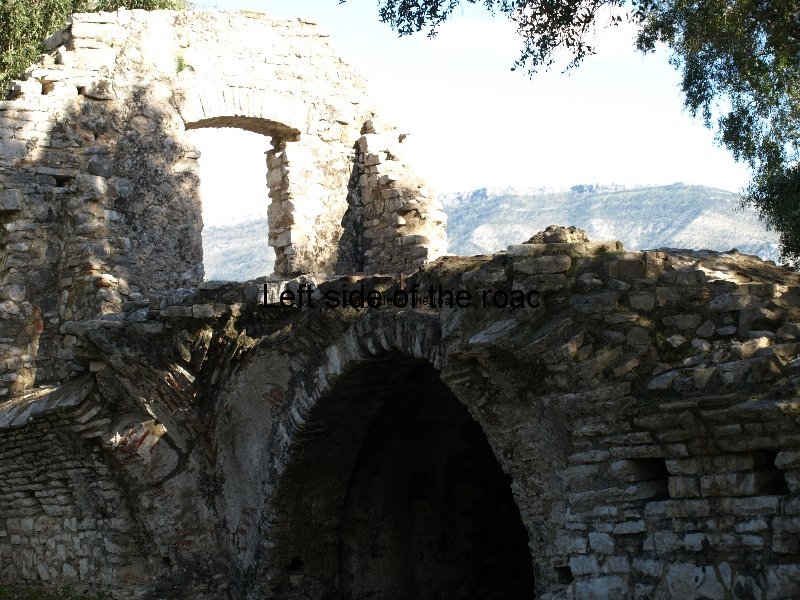
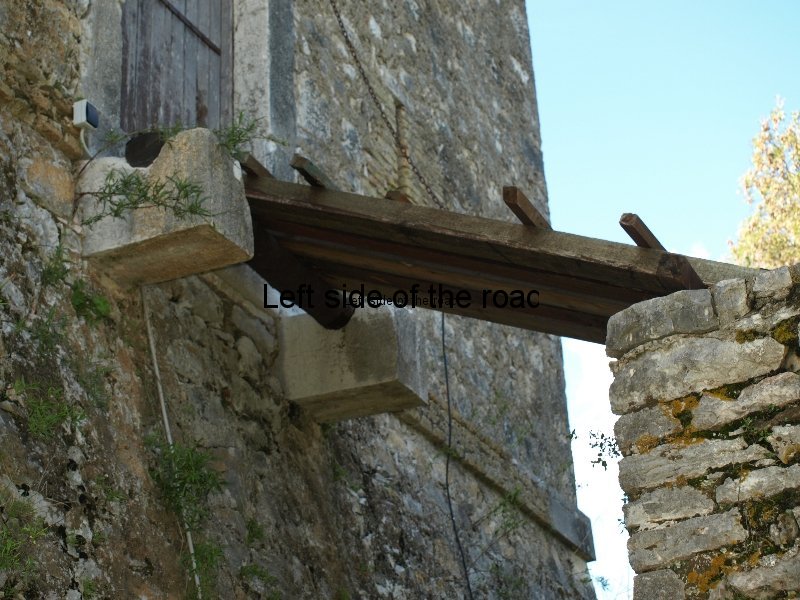
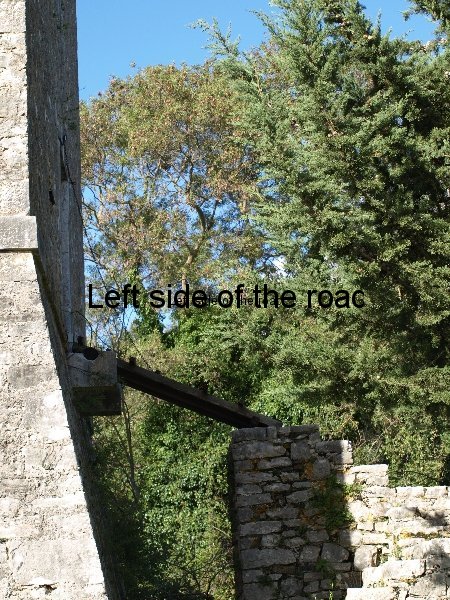
Corpus Christi Church as part of the Segovia City Walls

A walk around the Jewish Quarter of Segovia

A short walk, peaceful and crowd free, which explores Segovia’s Jewish past providing a perspective on the ancient town missed by most visitors.

In Segovia it is impossible to miss the Roman aqueduct but most of the thousands of visitors to the city are totally unaware of an area of narrow, medieval streets which bore the brunt of one of the most traumatic episodes in Spain’s history.

In Granada, on March 31st 1492, just a few months after the final defeat of the Moors, the ‘Catholic Monarchs’, Isabel and Ferdinand, promulgated The Edict of Expulsion, decreeing that the Jews in all of Spain had four months to either convert to Christianity or leave the country. This ended almost 300 years of Jewish presence in Segovia.

However, now there’s a growing movement to recognise the role of the Jewish community in the development of the city and visitors have the opportunity to re-discover something of the past.

A Jewish community can be traced back to 1215 and for almost 200 years there were few restrictions on their place of residence. That changed in 1412 when they were restricted to the area, more or less, around the present Cathedral but things worsened in 1481 when they were forced into much more of a ‘ghetto’, the area of this walking tour.

The start is in the small square of Corpus at the top end of Calle de Juan Bravo. Here there is a fork in the road and the entrance to the Judería Vieja is the one to the left – the quieter of the two, this is not a walk that will be hampered by crowds of people!

Before entering the narrow street go through a Gothic arch, on the left, taking you to the entrance of the Corpus Christi church, which used to be the Principal Synagogue, but only for a few decades. This building has had a troubled past. It was a synagogue by 1373 but was expropriated by the Catholic Church after a supposed and unproven act of profanation around 1419 – a painting in the church depicts the alleged sacrilege. A disastrous fire in 1899 destroyed virtually all remnants of the old synagogue and it was rebuilt at the beginning of the 20th century. Further work has attempted to recapture much of the old Synagogue with its horseshoe arches, the capitals decorated with vegetable and geometric designs and the beautiful, wooden ceiling.

On returning to the street turn left into the Judería Vieja and in a few steps go down left through the archway (the Puerta del Sol). From here you have a view of the other side of the church, forming part of the city walls.
Return to the Judería Vieja and continue along to number 12, the Didactic Centre of the Jewish Quarter (Centro Didáctico de la Judería). This Education Centre is based in a building that was part of the property of Abraham Seneor. Very rich and powerful he had enemies in both the Jewish and Christian communities and by the time of his death in 1493 had probably attained more influence in the Spanish court than any Jew ever before – quite amazing when you remember that this was at the time of Isabel and Ferdinand, under whose reign the Inquisition was initiated and who decreed the expulsion of the Jews.

Established in 2004 by the Segovia City Council, the Centre houses a small exhibition space which tells of the history of the Jews in Segovia and Spain. The information boards and the two video presentations (one in 3D) are in both Spanish and English and are very much directed to those who know little about Jewish history or culture. The centre also stages discussions and conferences which address Spain’s Jewish past.

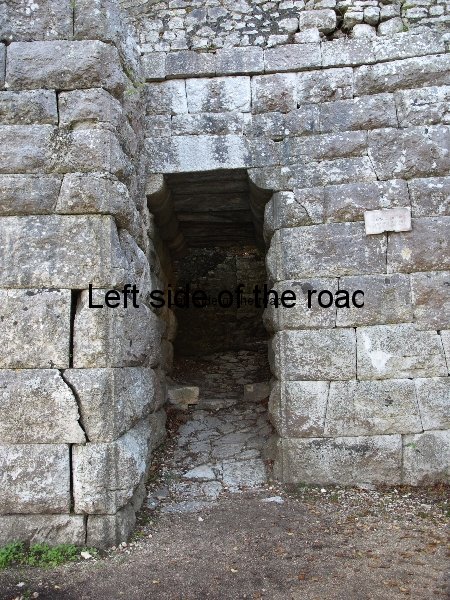
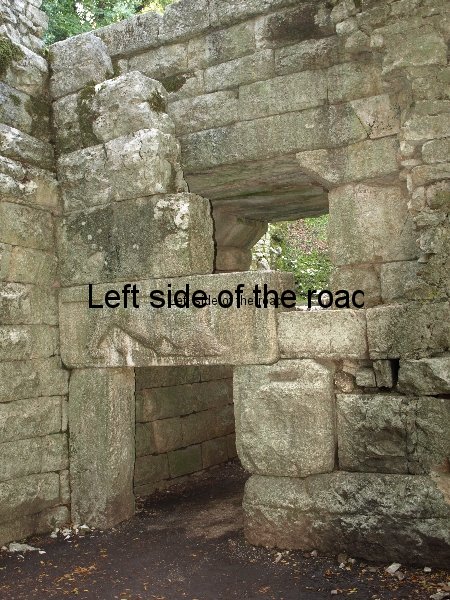
Turn left on leaving the centre, reach the corner of the Cathedral and then follow the road as it goes quite steeply downhill (Calle de Martinez Campos) towards the Puerta de San Andrés. Here there is a museum that gives the history of the city wall. The narrow, stepped street that goes up hill to the right is the Judería Nueva, a street that is virtually unchanged from the time of the Jewish presence more than 500 years ago.

From the gate continue along the lower road to what is now the Museum of Segovia, housed in a building that was originally the Jewish slaughterhouse.

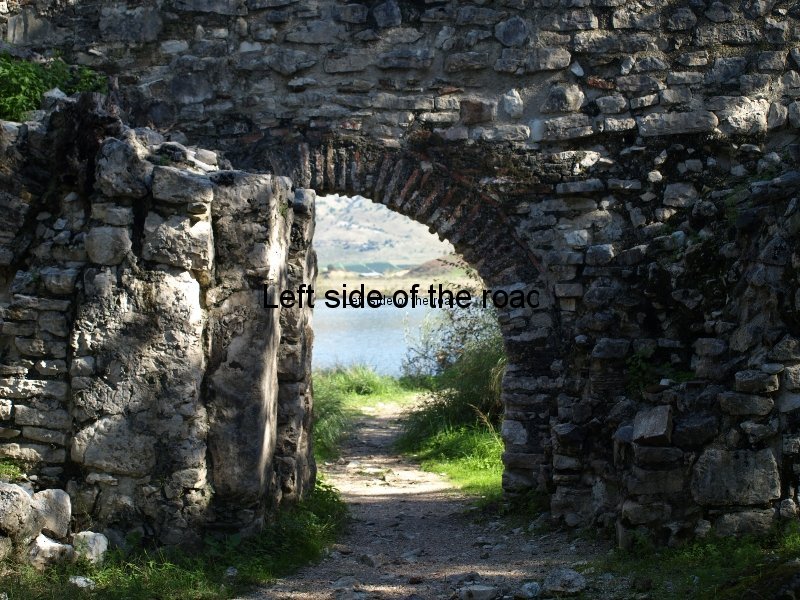
Return to the Puerta de San Andrés but this time go through the gate and outside the wall. Take the path immediately on the right hand side and within seconds you get a fine view of the abattoir, standing on a rocky outcrop over on the right. From here it is easy to understand the reason for its location, the blood and offal would be just thrown down into the gully.

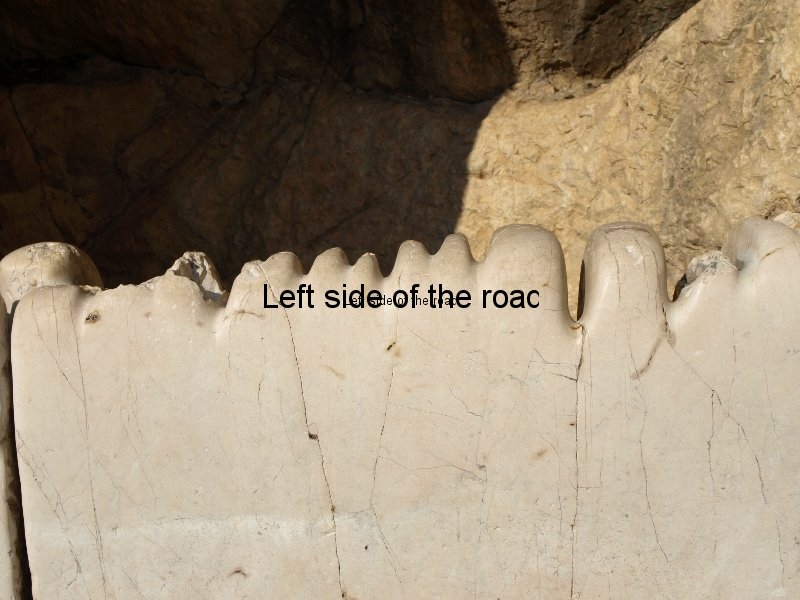
Follow the wide path downhill and then, in less than a minute, the narrow path, indicated by a stone pillar with a carved menorah (the seven-branched candle holder), that goes down to the left. Cross the small bridge and then straight ahead as the path climbs, go through a tunnel beneath the road to come out to the old Jewish cemetery. This has been excavated a number of times but not a lot of information has been gained from these investigations – the gravestones having been looted soon after the remaining Jews had converted to Christianity.

However, it’s possible to see the different methods of burial used, the limestone being carved in the shape of a human body or a cave-like room being created for multiple burials. What can be seen is that all the identifiable graves point in the direction of Jerusalem, with the heads orientated to the west and the feet towards the east.

Another poignant feature of the cemetery is that it was here that those who refused to convert spent their last days in the area, before leaving both Segovia, and then Spain, forever. Their last view of the place they had called home being one of the sun shining on the magnificent, golden, medieval walls.

After a relatively short walk in distance, but one that is full of interest, together with the walk down to the dry river bed and up to the cemetery (that has to be done twice!) when you return to within the city walls you will be looking for a good place to eat and drink.

This can be a bit tricky in a town whose culinary speciality is roast, suckling pig but there are a number of restaurants that are now offering Sephardic menus and this gets extended every September, for a weekend, when many restaurants provide a Jewish orientated menu – some even offering kosher wine.

Useful Information:

The Corpus Christi Church/Synagogue, Puerta de San Andrés and the Segovia Museum are all closed on Mondays.

A recent book, in English, about the history of the Jews in Segovia providing more information than I have been able to give here is the ‘Jewry Guide to Segovia’ by Bonifacio Bartolomé Herrero, available in the Centro Didáctico, priced €16.

Segovia City Map


Segovia City Map


Segovia City Wall


Segovia’s City Wall and San Andrés Gate


Centro Didáctico de la Judería


Centro Didáctico de la Judería – in Spanish


Segovia, World Heritage Site


Segovia, World Heritage Site


The air raid shelter of Placeta Macià, Sant Adrià de Besòs

Paw print of a dog, also an anti-Fascist, who first heard the bombers

Signature of the Republican air raid wardens

More on Catalunya/Catalonia

The air raid shelter of Placeta Macià, Sant Adrià de Besòs

The air raid shelter (refugi antiaeri) in Placeta Macià, Sant Adrià de Besòs, Barcelona, provides an insight to what life was like for ordinary, working class, people during the Spanish Civil War, 1936-39.

Many thousands of visitors go to Barcelona each year but an increasing number of them are starting to go off the beaten track of the Rambla and the Gaudi buildings to explore some of the lest ‘touristy’ aspects of the city.

Of the hoards who walk down the bustling Rambla some might have read George Orwell’s depiction of the Spanish Civil War in his book Homage to Catalonia. Standing outside Café Moka they might imagine what it was like in the stand-off between two armies, on the same side, on the brink of their own ‘civil war’, occasionally taking pot shots at one another.

Orwell had the luxury, the wealth and the opportunity to get out of the country before Hitler and Mussolini’s aircraft, happily brought in on the side of the rebel Franco, started to regularly bombard this Republican city, using a strategy taken to an even higher level a few years later. That was the strategy of terrorising and punishing the civilian population with mass bombing and the destruction of their cities, as was seen in Warsaw, Liverpool and Leningrad, amongst many others.

As in those other cities the people of Barcelona didn’t just sit and wait for what was to rain down on them. If they could not fight at the front then they would construct shelters to protect themselves from the bombs and deny the enemy the satisfaction of their acquiescence and defeat. This form of passive resistance was evident in Barcelona and many other Catalan towns and cities.

In the intervening years, since the end of the war in 1939, many of these air raid shelters have been bulldozed both to eliminate any popular memory of resistance and then later as the country started to develop and modernise after Franco’s death in 1975. However, since 2007, following a decision of the Generalitat (the Catalan government), much of what does remain is coming to light and is being made accessible to both local people and any visitors with an interest in an important and significant struggle in the middle years of the 20th century.

Those facets of war that might have been hidden are now being visited by an increasing number of people. In their visits they are offered the opportunity to consider the war in a different way from that presented on the big screen. This representation has evolved over the years from the morale boosting antics of Errol Flynn through the gung-ho approach of John Wayne to the more poignant aspect of war as depicted in Saving Private Ryan.

In Catalonia this unveiling of the past is part of a much bigger project, the first in Spain but part of a much wider, in fact worldwide, scheme called Democratic Memory. Of the more than 70 sites already on the list in Catalonia here I just want to talk about one of them, located in the working class district of Sant Adrià de Besòs, (easily reached via Metro L2 from the central cultural highlights of Barcelona), the air raid shelter in Placeta Macià.

This is an impressive construction in its own right, especially taking into consideration the conditions under which it was built, and is the only one of the seven that originally existed in the district to have survived into the 21st century. Constructed in the shape of a rhomboid it has a central corridor with alcoves on either side and was built, in 1938, to provide shelter for up to 500 local people.

Although it is underground the aim of the cleaning and restoration has been to make it as accessible as possible. First, it is free to enter. ‘Why should those who built it, and their children and grandchildren, now be charged to visit it – 70 years after its construction,’ says Jordi Vilalta, the enthusiastic coordinator for the shelter. He is based in the Museu d’Història de la Immagració de Catalunya (itself one of the 71 sites) which is situated a short distance away on the opposite side of the River Besòs.

One of the aims of the project is to involve children in a conversation with the past of their families and so school visits are organised where those who were themselves school children in 1938 tell of their memories, experiences, fears and daily life in general during the relatively short, but incredibly intense, life of the shelter.

‘We have found it very difficult to find actual photos of people in the shelter’, continues Jordi, ‘but what we do have are some drawings made by children at the time. What we find fascinating is the fact that, apart from the ‘advances’ in aircraft and technology, these images are almost the same as those produced by children in the Palestinian city of Jenin in 2002.’

To encourage the involvement of the young in this small and intimate museum the visitors are encouraged to touch the exhibits and to try to understand the idea of destruction but without any images of death.

A particularly interesting story is that of the dogs that acted as virtual air raid wardens for the population. They would be able to hear the drone of the bombers coming over the sea, from the Balearic island of Mallorca, long before humans. As Pavlov suggested the dogs associated this noise with the inexplicable (to them) consequence of explosions, fire, noise, strange smells and potential death that comes with aerial bombardment.

The people of Sant Adrià suffered on two accounts. Theirs was an industrial area, and so a ‘legitimate’ target in times of war, but they were also implacable adversaries of the fascists and so had to be terrorised.

Visiting the shelter: Open the last Sunday of each month, though Jordi can be contacted, via email jvilalta.pmi@gmail.com or on +34 609 033 867, to arrange visits at other times.

For more on Memoria Democratic see:

Rosanes – a military airfield during the Spanish Civil War

More on Catalunya/Catalonia

Lawless

Lawless – Pretty boy actors never get hurt

Recommendation: Only go and see it to get out of the rain

Why is it that pretty boy actors never seem to suffer from beatings, however protracted or vicious?

In this quite dire film the LeBoeuf character is almost beaten to a pulp. However in the next scene you would have thought he had gone through nothing more traumatic than a bad shaving experience.

With such a beating he would be spitting out teeth, have a broken jaw, would be puffed up for days and then his face would be black and blue for weeks. He wouldn’t be able to speak let alone pledge revenge; wouldn’t be able to stand up, let alone take a casual drink at the bar; and would have been a stretcher case after receiving such punishment to the head.

Yet he is out courting the preacher’s daughter within a day or two

Why is this?

This is not an isolated situation. It was almost the same in Gangs of New York (2002) when Leo DeCaprio gets slashed with a meat cleaver by the Butcher but again, after a few days convalescence under the ministrations of a pretty girl, all we see is a scratch. Perhaps having a pretty nurse can perform a miracle cure?

There seems to be a rule in Hollywood (or is it written into their contract) that pretty boys can’t even be seen to be marred on the screen, at least for no longer than is necessary. Is this because heroes can’t be permanently physically scarred as that indicates evil in Hollywood filmography. And pretty boys are not really evil, even when they take on the role of a baddie (as, for example, is the case in Brad Pitt’s latest outing in Killing them softly, (2012)).

To do this might turn away shallow little girls from the cinema or the studio might get complaints from fans disturbed that their pin-up boys are damaged goods.

But this is not a new phenomena.

Paul Newman, in Cool Hand Luke (1967), gets beaten until he can’t stand up by George Kennedy. He looks slightly bruised as he finally collapses to the floor, with no strength left to fight (though his will remains intact) but he recovers incredibly quickly considering they are in the barbaric environment of a southern US prison farm.

At least Newman was, generally, a good actor – although DeCaprio is getting better but LaBoeuf still has a long way to go.

It’s possible to go even further back when the likes of Alan Ladd or John Wayne would get beaten up by the ‘baddies’ and as they pick themselves up out of the dirt they only need a flick of the head to get their hair back into place. The only injury they display is no more than a drop of false blood from the side of the mouth, to be gently wiped away with the hankie of whichever ‘doxy with a heart of gold’ who has been contracted for the film.

However, this is not the case with pretty women. For example, Jessica Alba in The Killer Inside Me (2010). There was a lot of criticism surrounding this film that the violence was gratuitous and that turned a lot of people against the film with accusations of misogyny.

Violence plays a part in the cinema in the same way that it does in society. OK, cinema probably depicts a disproportionate amount. But technology now provides film makers with the ability to present images and sounds that are even more real than reality and has the effect of making it more horrific. This seems to be a positive rather than a negative result as meaningless violence can be made out to be so sickening that it has the effect of making it more unacceptable.

If cinema can have such an effect it seems a shame to spoil it just to fulfil the contracts of the boy star.

After all it’s only a film, nobody is really being purposefully hurt. Watch The Stuntman (1980). They get up, remove the prosthetic rubber and go out partying that night.