Albanian town planning – drastic measures taken

Town planning decision in Ksamili, Saranda, Albania

Don’t annoy Albanian town planners!

More on Albania ……

Albanian town planning – drastic measures taken

Some building developers rub someone in authority up the wrong way and they find their building plans didn’t go quite as they expected.

It’s the late summer, early autumn, in Ksamil, southern Albania. Things are getting quiet now as the bulk of the tourists have left and the bars on the beach are deciding that it’s not worth opening, at least not until next April. It still gets light early and some people, the ones after the worm, are already up. They notice a strange, an unusual sound. Heavy machinery, but not the sort that is normally used in construction.

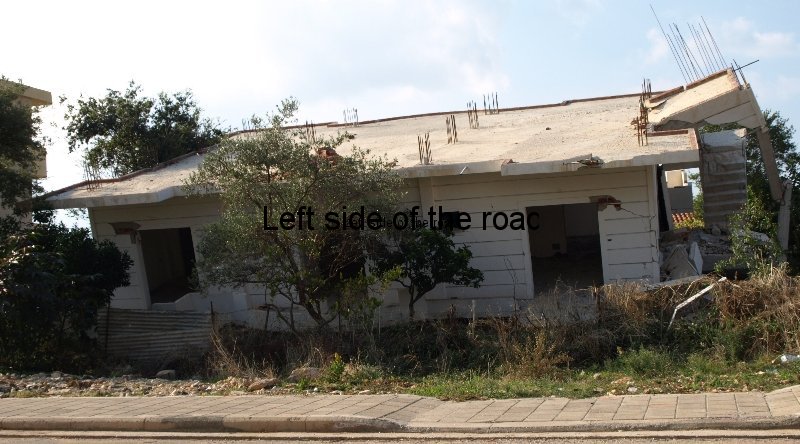
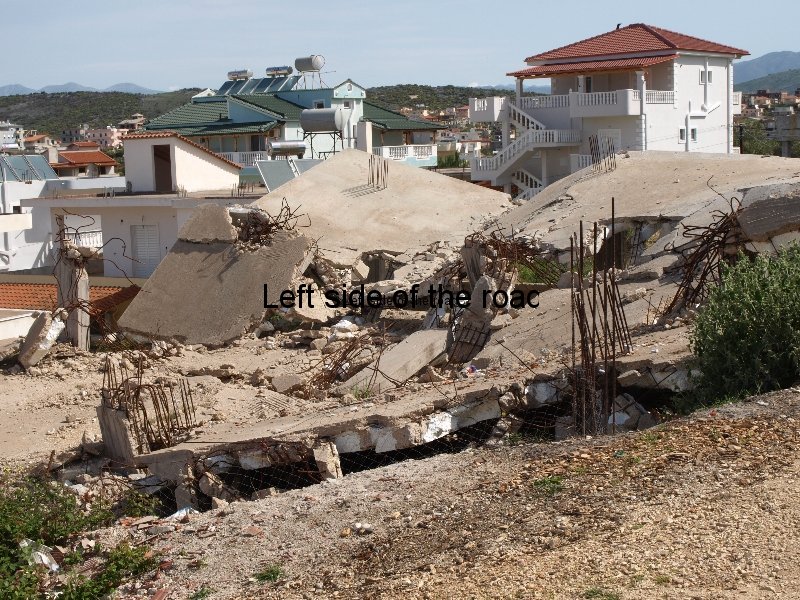
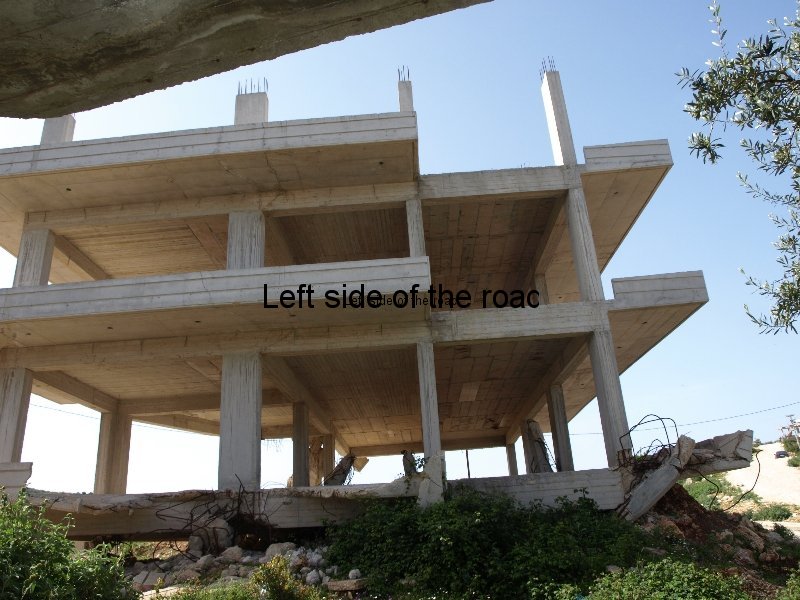
Amazed they look on as it comes around the corner and heads towards a half completed building. The machine looks angry, aggressive, menacing. At the building it stops, stabilizers are deployed, a long hydraulic arm reaches out towards the defenceless building, approaching one of the reinforced concrete pillars. Huge, powerful jaws open, clutch the pillar and a button is pushed inside the machine and the jaws close with immense force. The concrete and metal are no more than a dry twig to this monster. The concrete crumbles, the bars snap, the building totters.

The machine is unimpressed at the resistance of this shell of a building and moves slowly on to another pillar to repeat the process. Still the building stands proud but looking decidedly shaky. When the third is destroyed the building gives up and the tons of concrete and metal that had taken weeks to construct has become worse than useless. Before any other construction can begin someone has to pay to get rid of all this debris. What started out as a project to make money has become a liability.

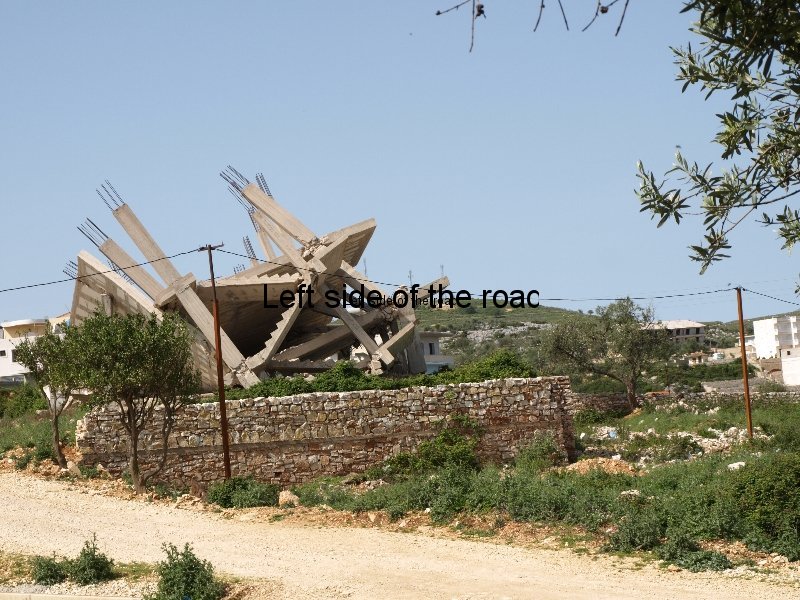
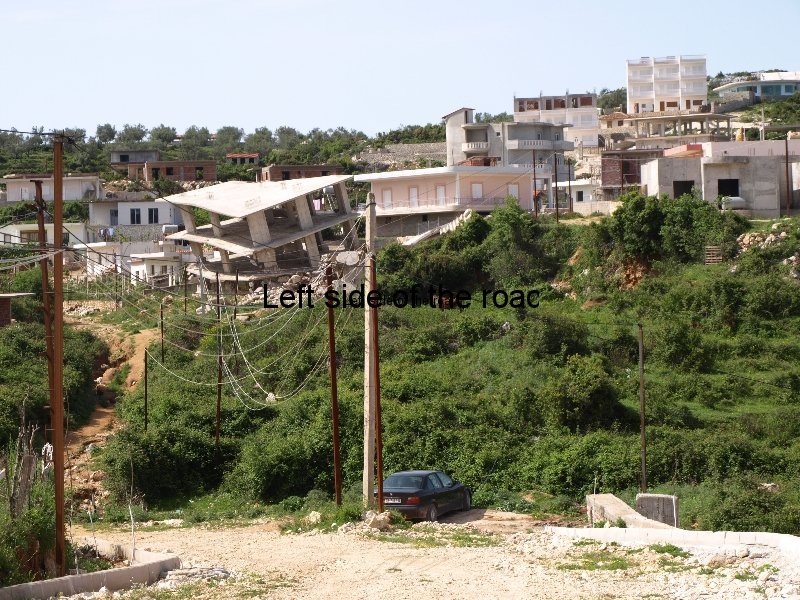
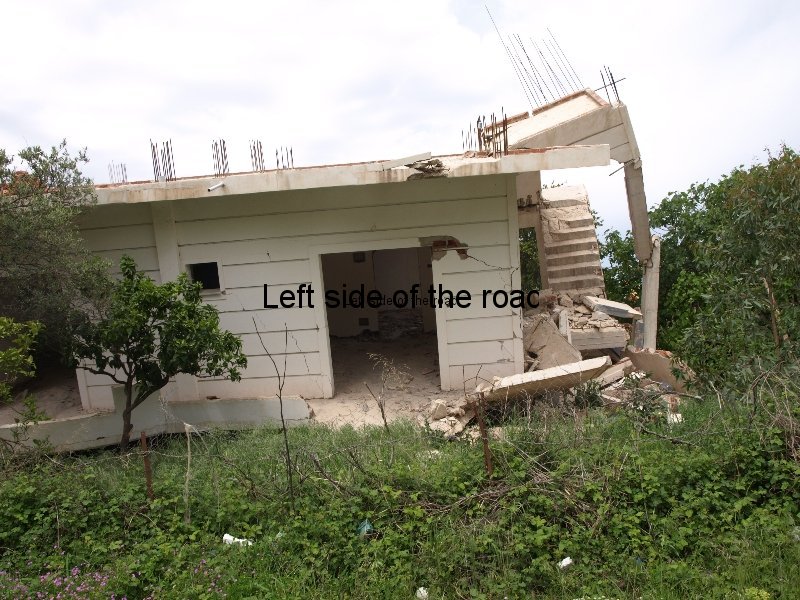
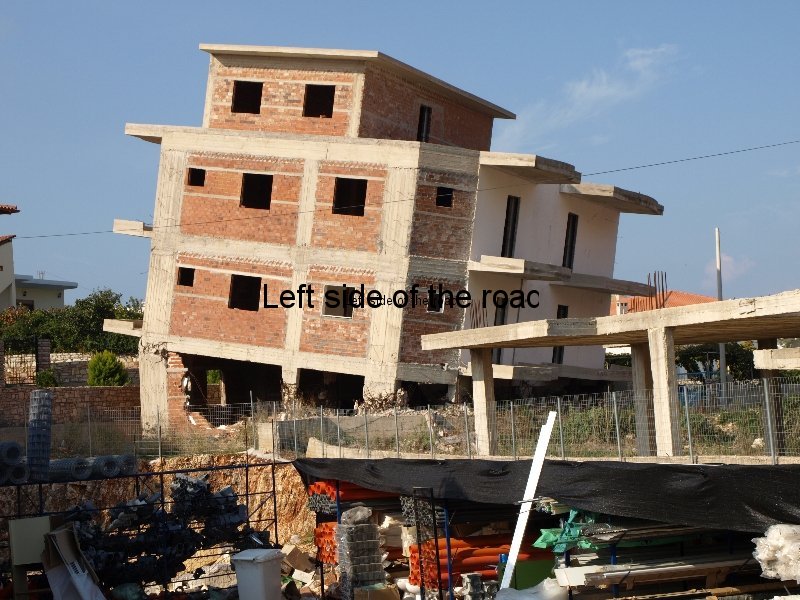
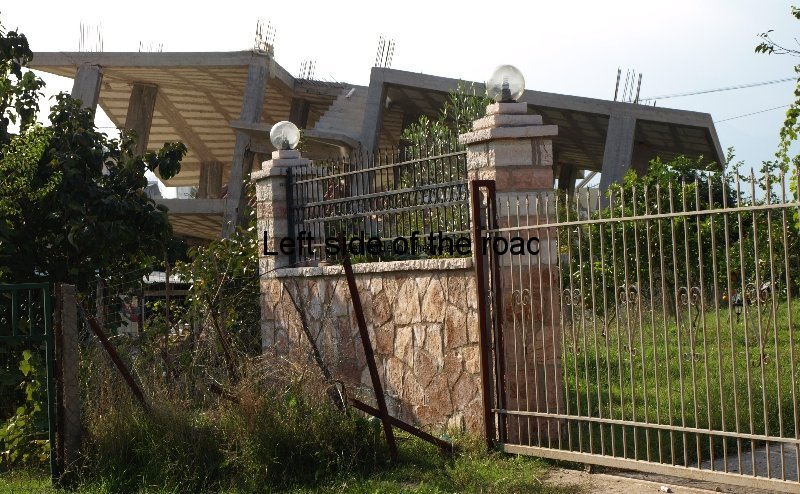
This was what happened in the autumn of last year in the erstwhile collective farm of the Socialist era (specialising in olives and citrus fruit) now a nondescript, blot on the landscape, urban sprawl that caters for tourists, both national and foreign, who flock here in the short summer season. These buildings had been started (some almost complete and partially lived in) without the requisite permission and the executioner had arrived to carry out the sentence.

Passing through this town, from Saranda, on the way to Butrint (the Greek/Roman archaeological site a few minutes down the road) and a few minutes after passing the Dema Monument on your right, it was as if you were going through a town that had been hit by an earthquake, buildings leaning at strange and unnatural angles.

A year ago there were many more but in the intervening months some have been completely demolished and, perhaps, construction has been resumed, but this time with the necessary permission. At least in this town those few hours of work in 2011 had taught any prospective developer a lesson.

Why Ksamil? I don’t know. There seemed to be the same treatment meted out to one or two structures on the outskirts of Saranda, the nearest town of any real size, but nothing in the town itself. I can’t imagine that if there was a culture of building where and when you wanted existed in Ksamil it didn’t also exist in Saranda. There it seems that half the buildings are in the process of construction. Perhaps fines were paid or there was a transfer of heavy brown envelopes to the appropriate authorities.

I haven’t come across anything similar in any other part of Albania (where construction seems to as random and uncontrolled as in Ksamil) but someone must have been upset as these machines had supposedly come all the way from Tirana, not an insignificant journey for such heavy plant.

I don’t get the impression that town planners, as such, exist in Albania but if such officials are around and have these power I’m sure they would be the envy of their counterparts throughout the world.

2019 Update

This information is now of historic interest alone as on a recent visit to the town I was unable to see any of the toppled buildings. Being a popular tourist resort there would have been pressures to dispose of these ‘modern sculptures’ as quickly as possible. However, the issue itself – i.e. of illegal constructions – is one that is ongoing in different parts of the country. There seems to be an effort by the present government to redress the total anarchy that existed towards the late 1990s and even quite long established buildings are being demolished. Apart from clearing waway a number of scars on the landscape some public land is being reclaimed as pavements and roads disappeared under bricks and mortar.
More on Albania …..

Butrint – a Greek and Roman story in southern Albania

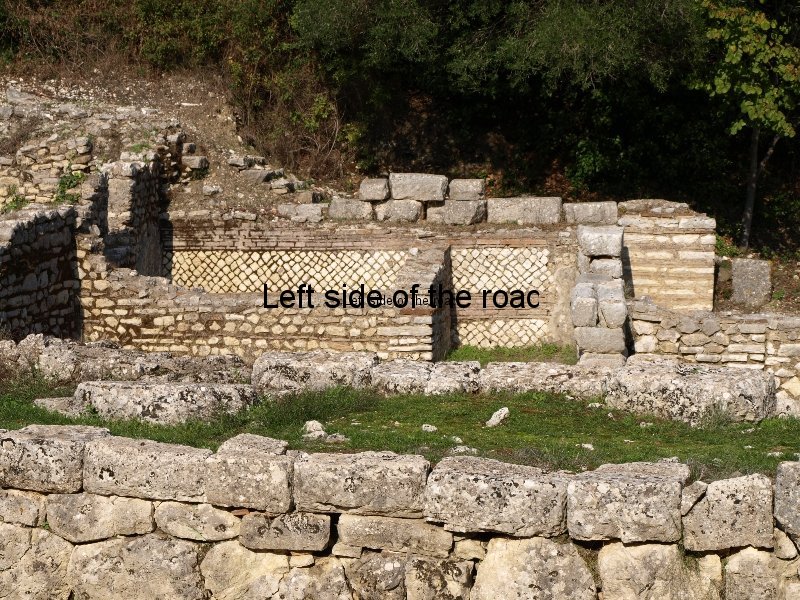
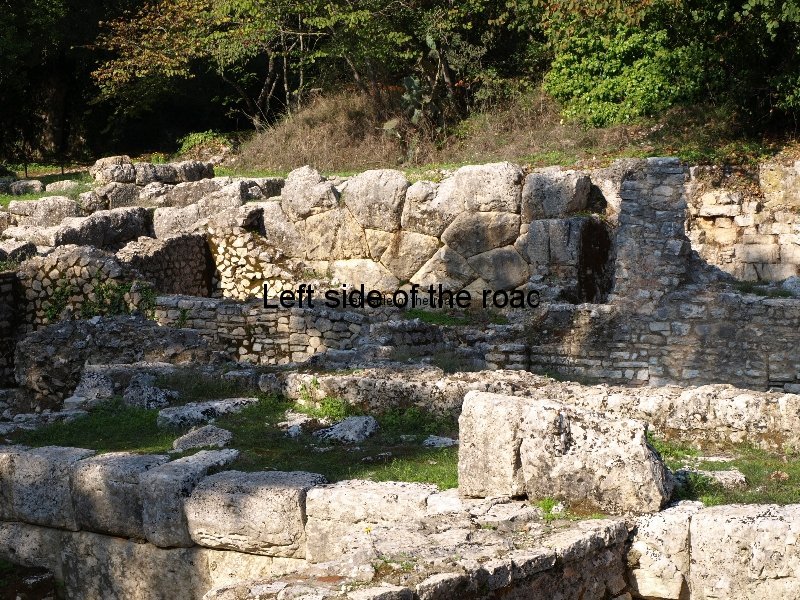
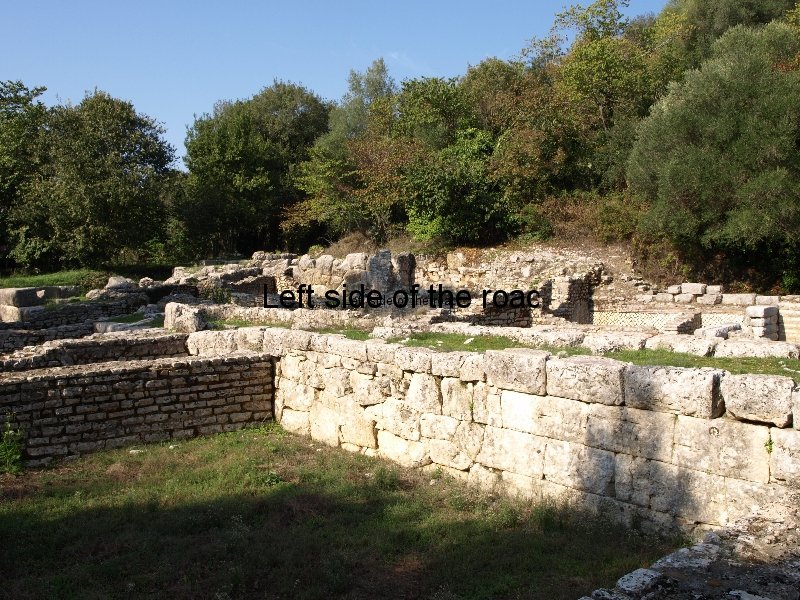
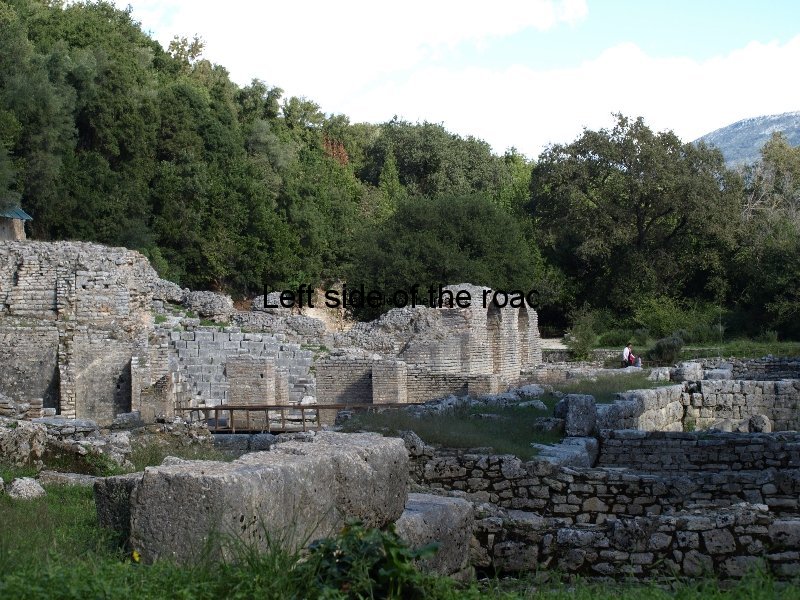
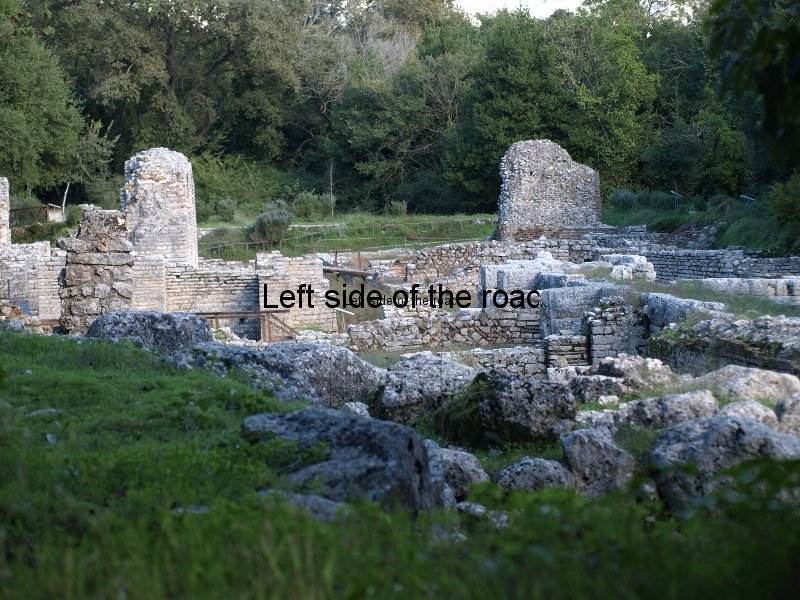
Roman ruins at Butrint, Saranda, Albania

Butrint, Saranda

More on Albania ……

Butrint – a Greek and Roman story in southern Albania

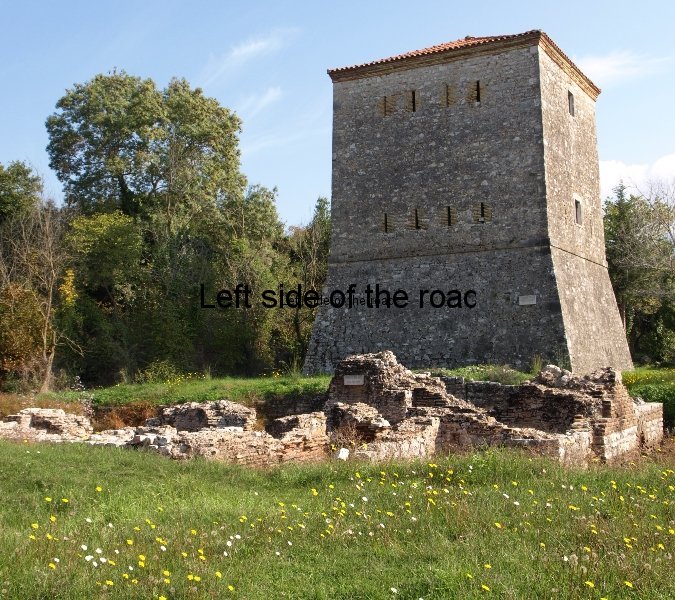
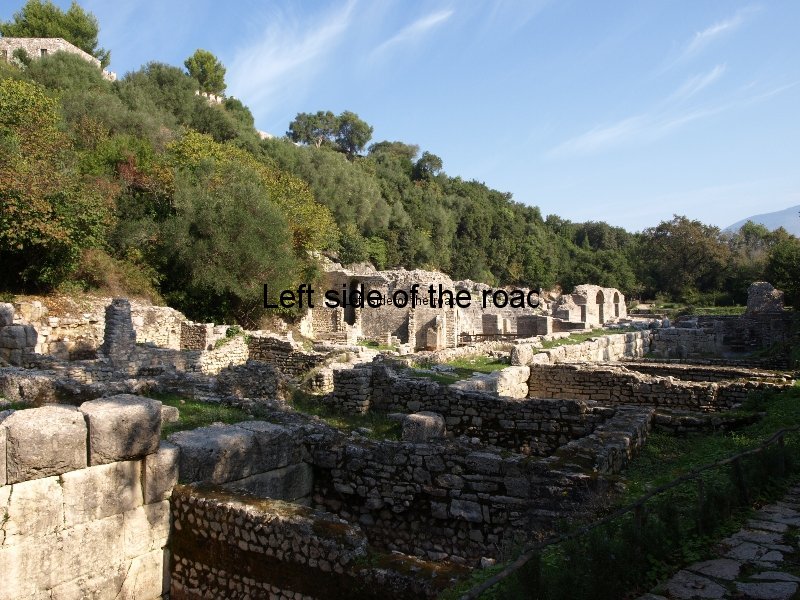
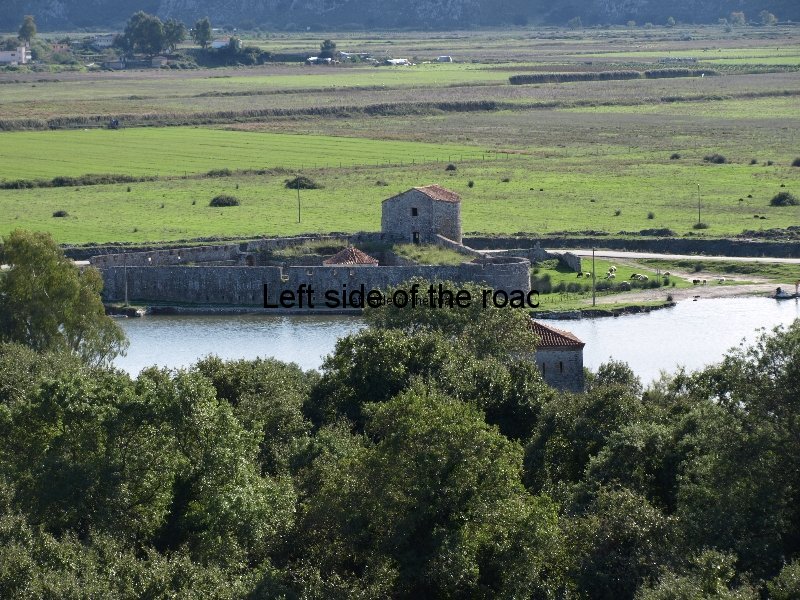
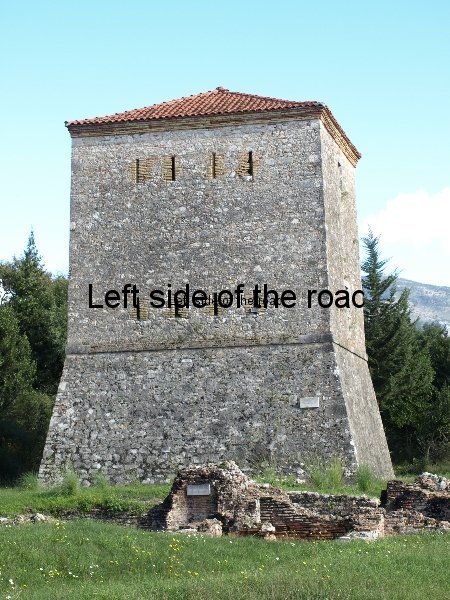
An archaeological site that goes back almost 2500 years, Butrint has the imprint of both the Greek and Roman civilisations. Important for its location to both those cultures it was also pivotal under Venetian rule, its decline only really beginning after it fell to Napoleon’s armies at the end of the 18th century.

One of the main visitor attractions in the vicinity of Saranda is the archaeological site of Butrint, about 14km to the south (after passing by the Dema Monument and through the town of Ksamil), easily reached by a regular public bus from the town centre.

One reason that makes it special is the fact that it was occupied by some of Europe’s principal civilizations starting with the Greeks, who first developed the site in the 4th century BC, followed by the Romans from the 2nd to the 6th centuries AD, and then reaching a final period of importance and influence under the Venetians from 16th century until succumbing to the French armies of Napoleon at the end of the 18th century. It was subsequently occupied by a local despot but by that time it had lost its historic importance.

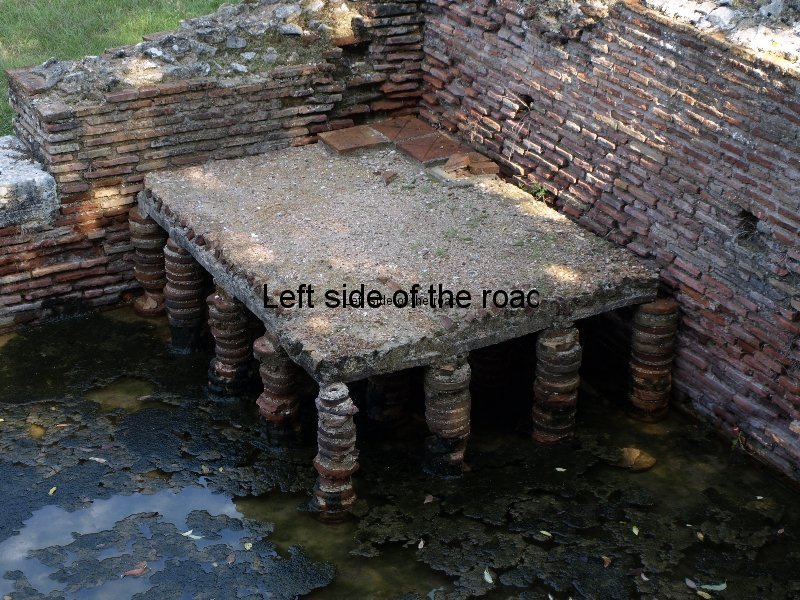
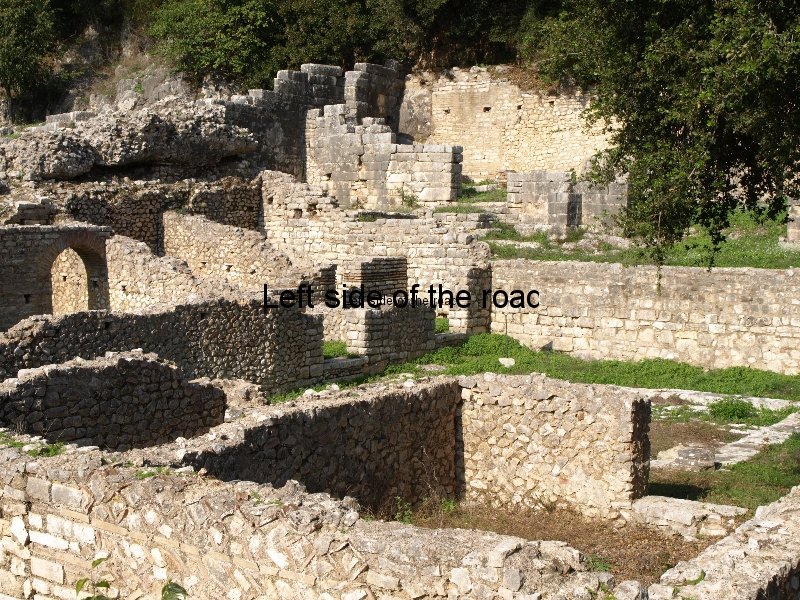
Especially interesting to me was the way the Roman’s just took over the Greek city and adapted, and extended, it to their own particular philosophy and way of doing things. For example, they expanded the theatre, built bath houses and other public buildings and altered the whole atmosphere of the place by constructing a huge Forum, Roman life revolving around that part of any city. culture.

This foundation was then later, literally, built upon by succeeding civilizations, with a development of the fortifications and a strengthening of the perimeter walls as the technology of warfare became more lethal and adept at breaking down a population’s resistance. Yes, the Romans built walls but their primary defence was the threat of total, complete and absolute destruction if anyone dared to attack a Roman settlement, something that was valid until the collapse of the Empire in the 5th century AD.

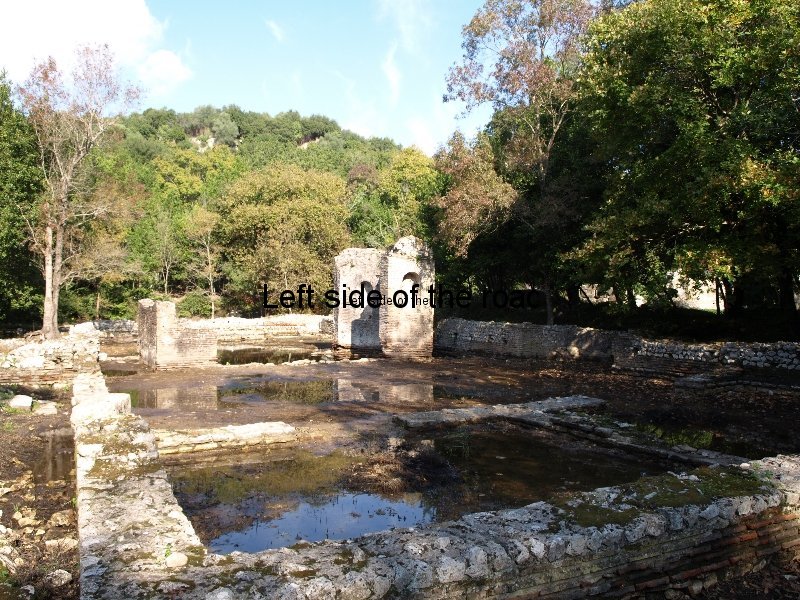
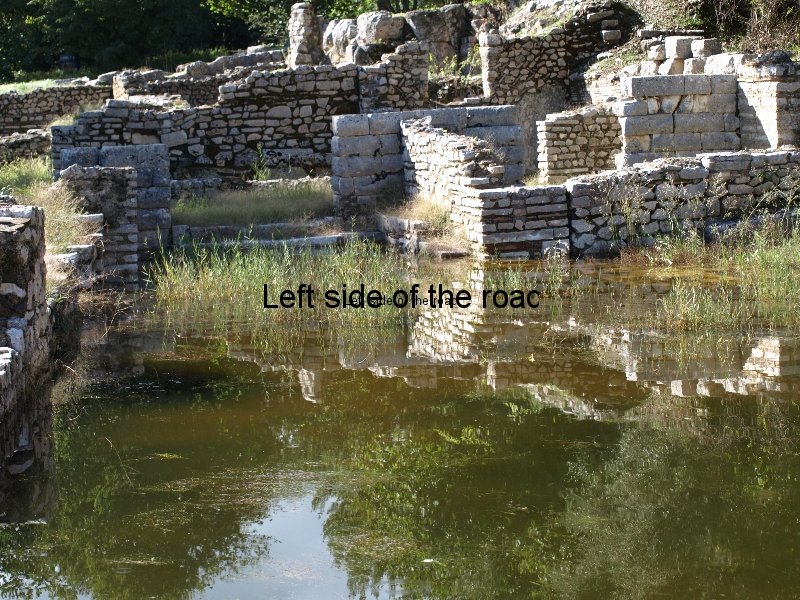
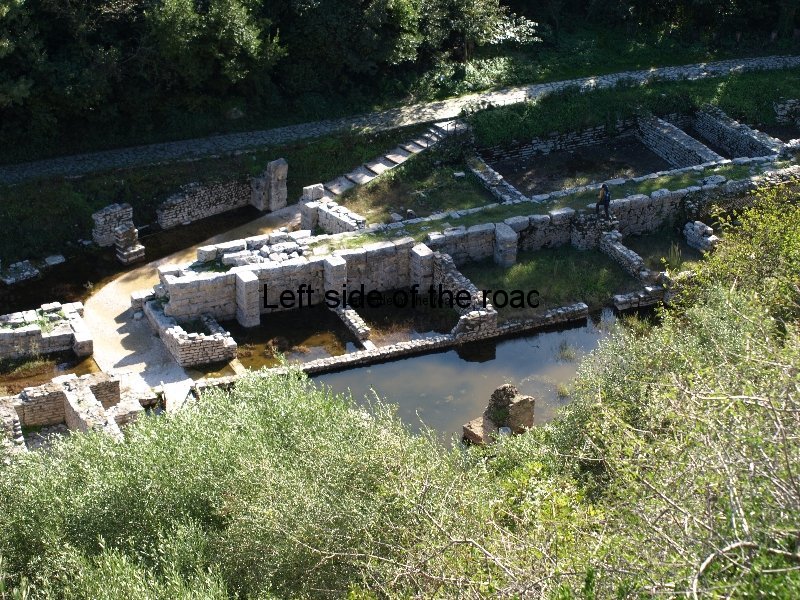
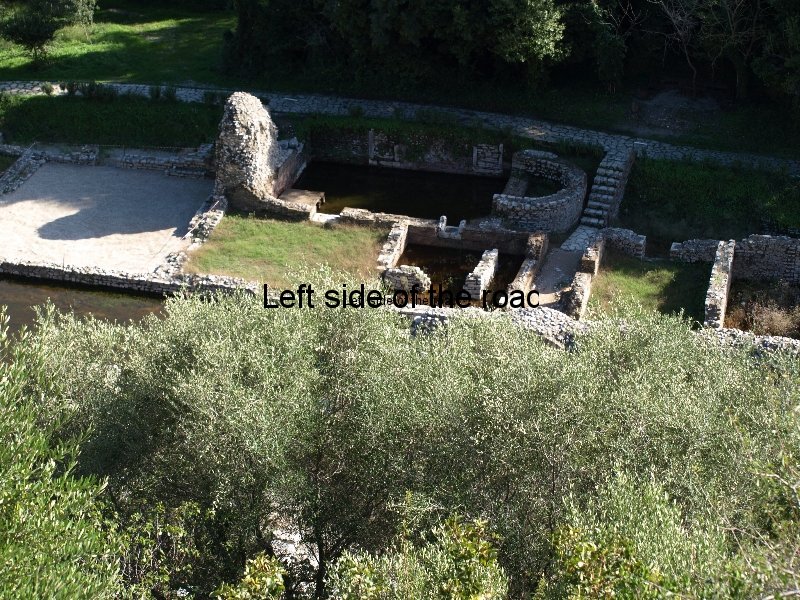
It’s not a huge site and a couple of hours is adequate to get a good idea of the place, at a reasonable pace. Each time I go there the level of the water seems to get higher and from what I’ve read this was a problem from many centuries ago, forcing the abandonment of some of the lower structures.

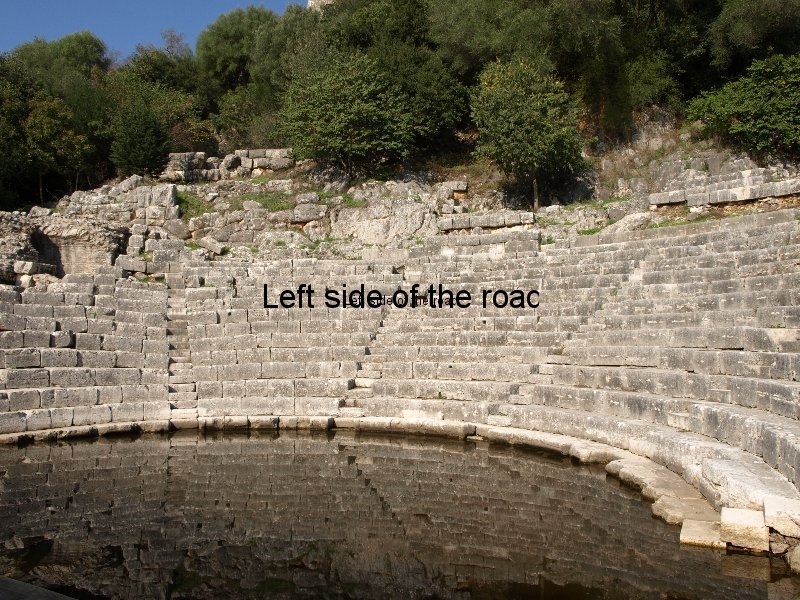
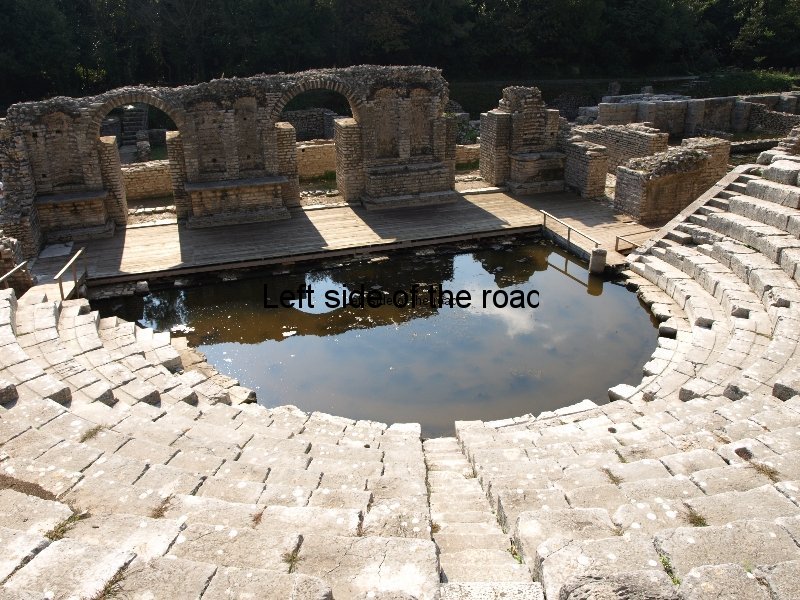
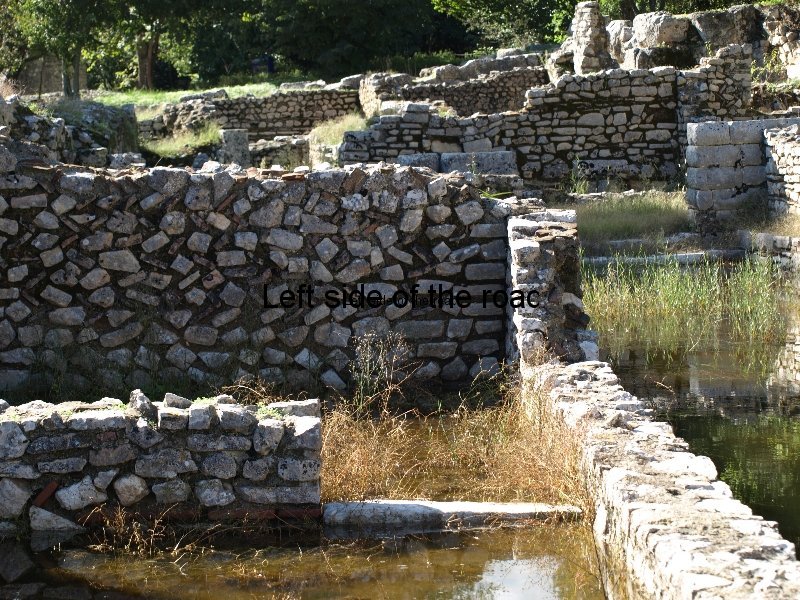
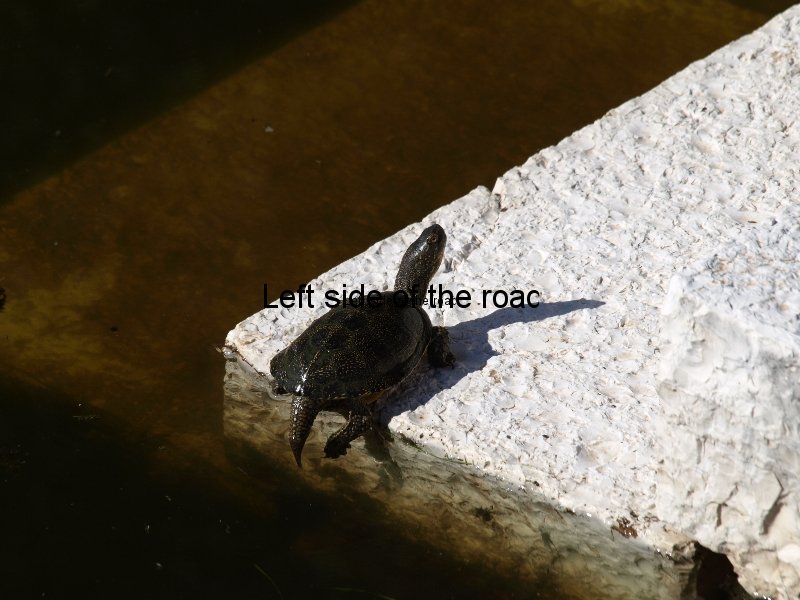
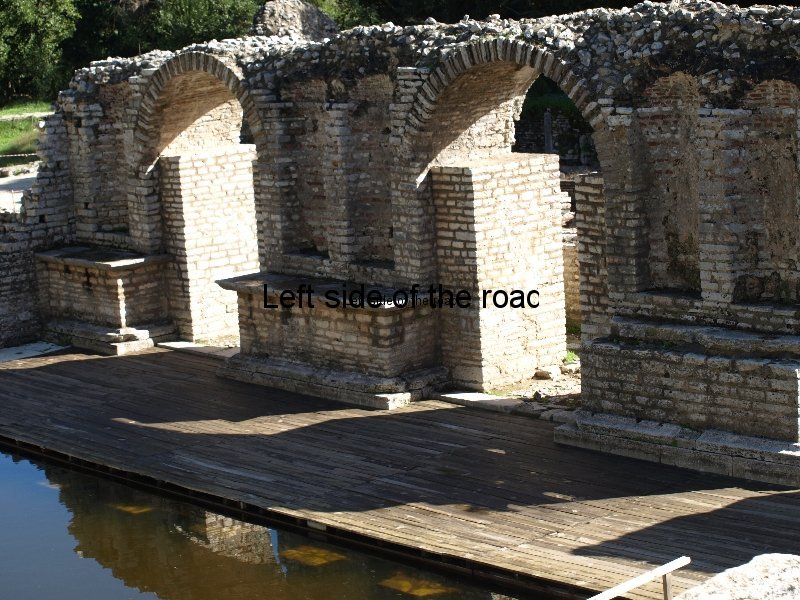
At the moment the orchestra of the Greek/Roman theatre seems to be constantly under water, to such an extent that terrapins are regular visitors. What this flooding is doing to the structure of the buildings I don’t know, but it can’t be good news.

So what do I recommend?

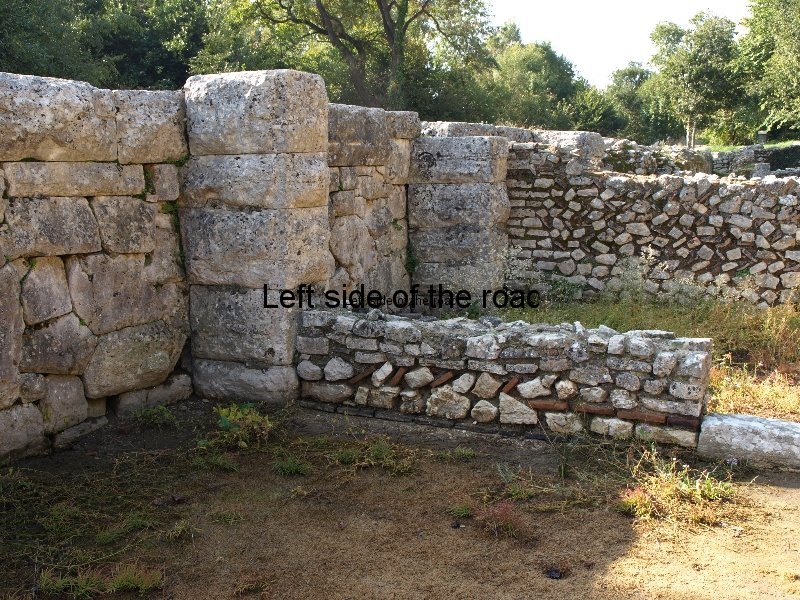
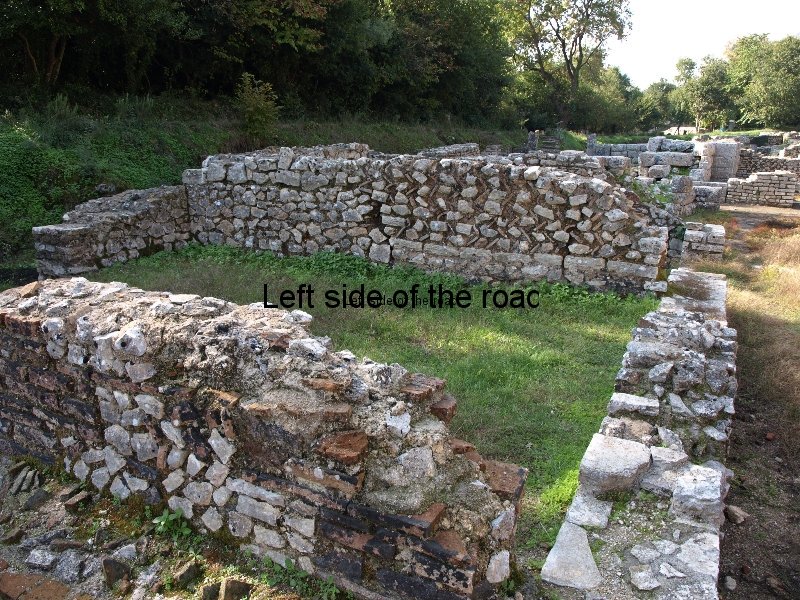
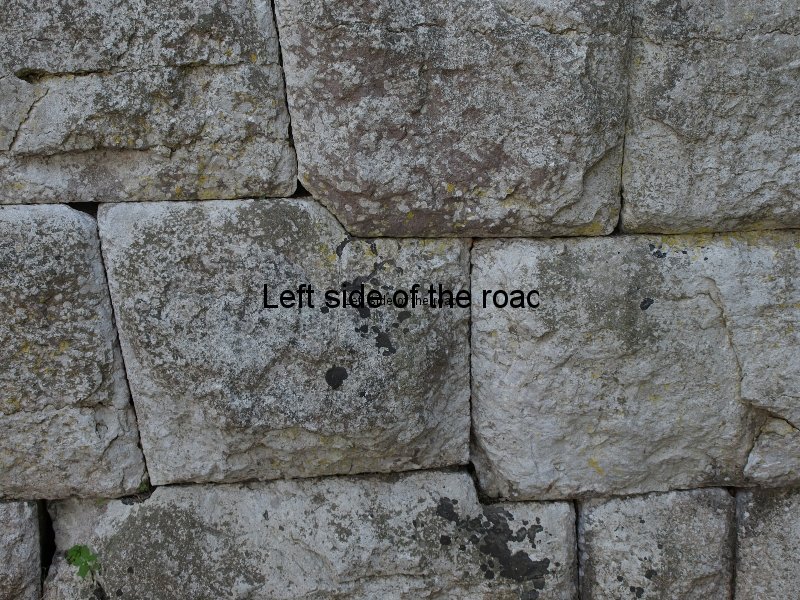
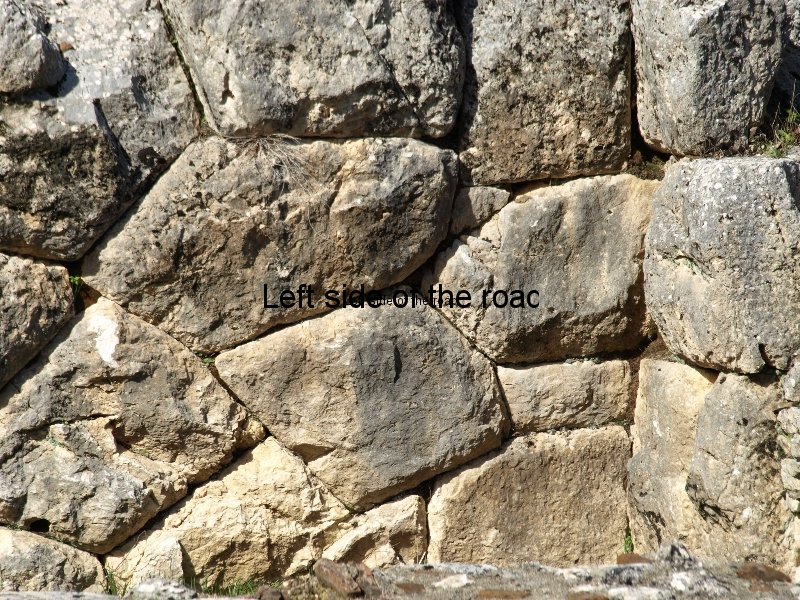
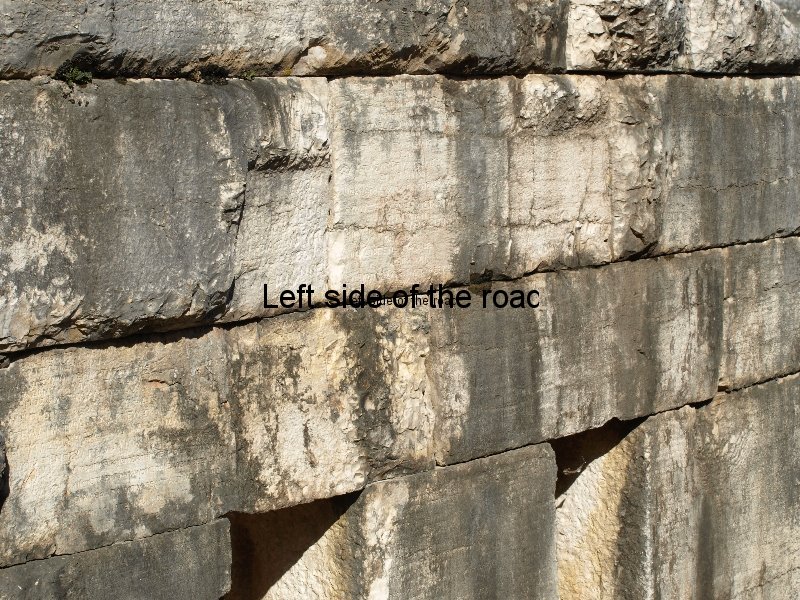
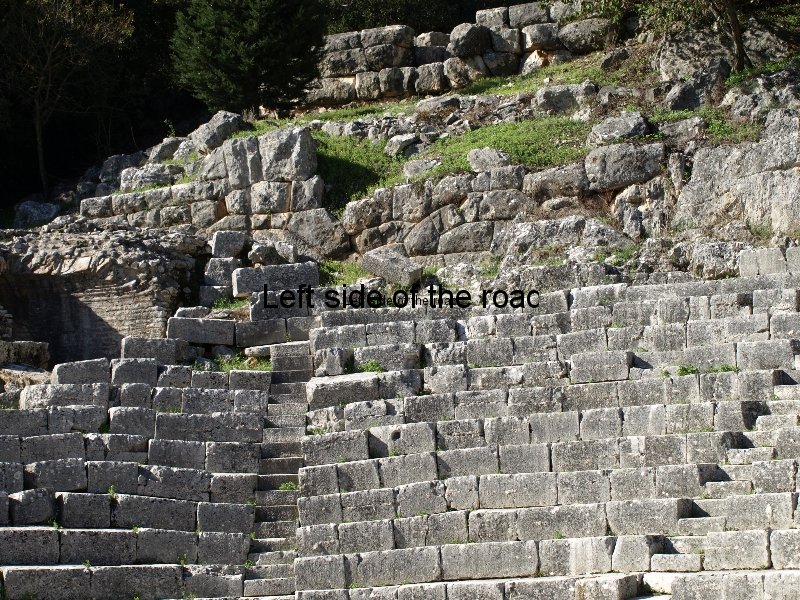
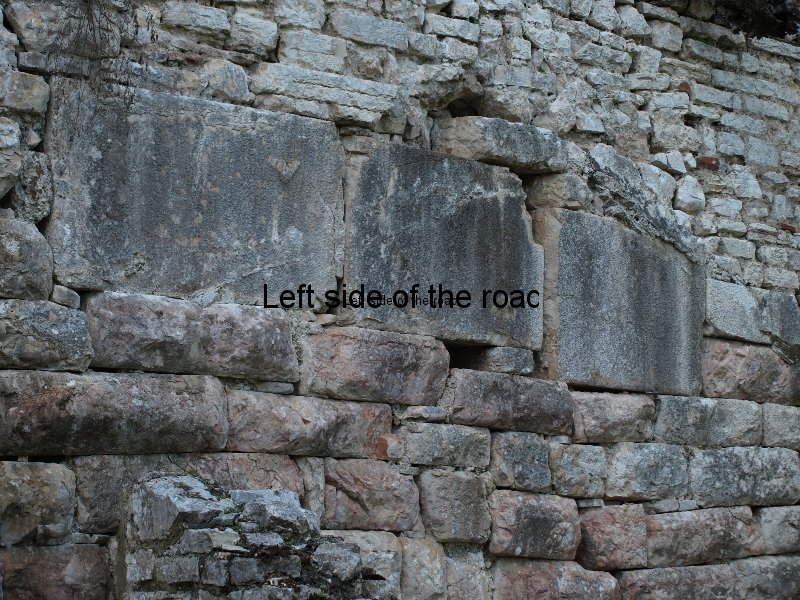
The changing manner in which the Greeks and the Romans put one stone on the top of another. There is a very distinct change in the way they constructed their buildings, although they had basically the same use. What I found interesting was the similarity in building style of the Greeks to that of the Incas in Peru. At Butrint, as in Cuzco and Machu Picchu, large, worked pieces of stone are fitted together as in a jigsaw puzzle, so that there are no straight lines, I assume for a similar reason, i.e. there are no lines which provide a weak point in the event of an earthquake.

Archaeologists working in Butrint during Socialism

Archaeologists working in Butrint during Socialism

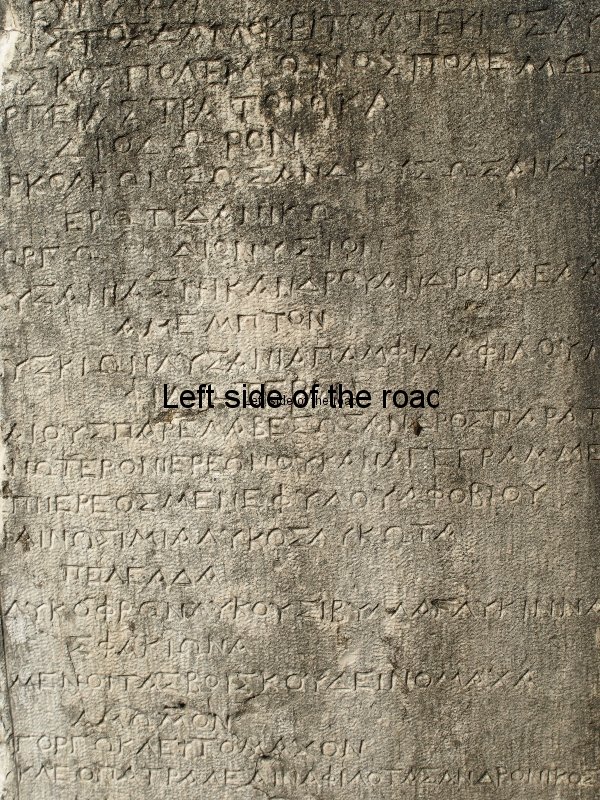
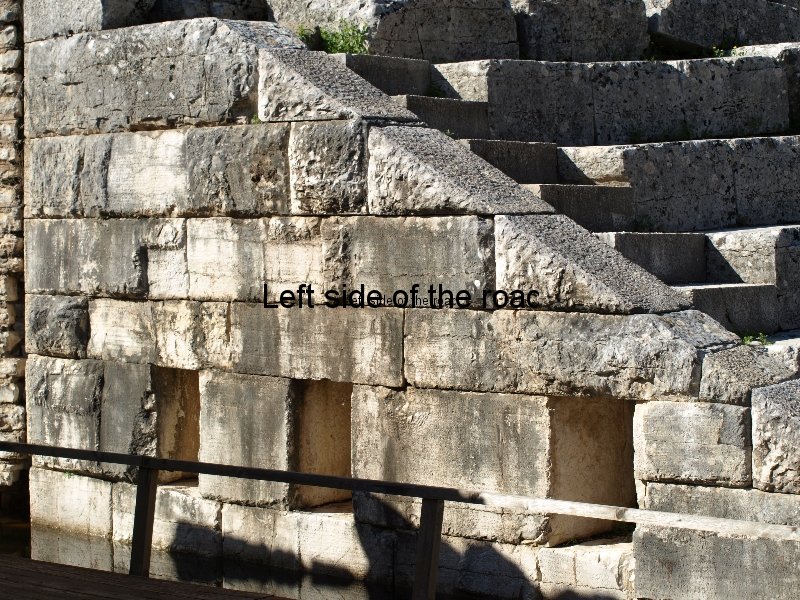
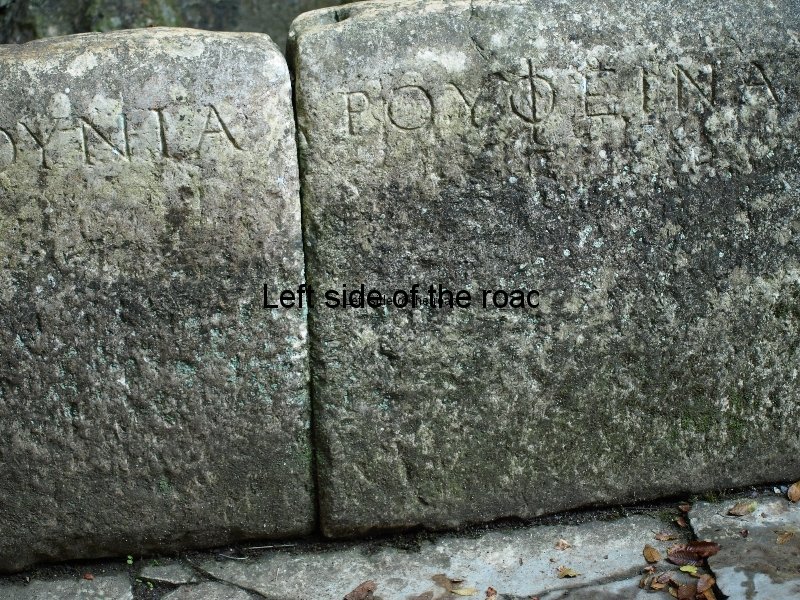
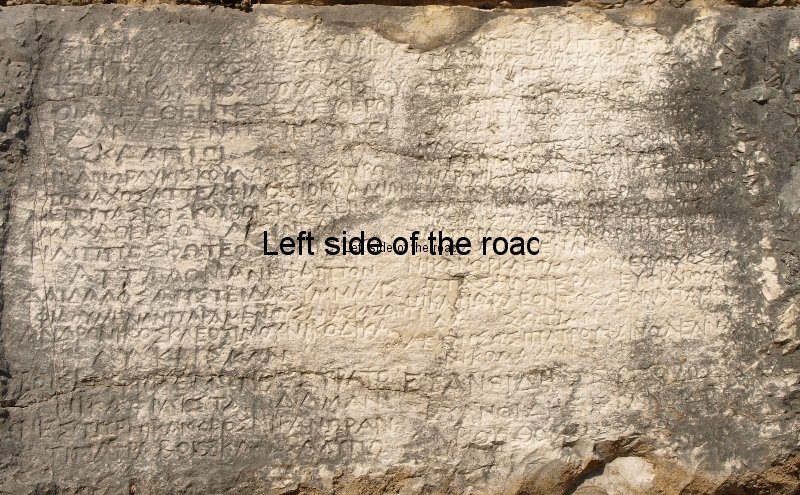
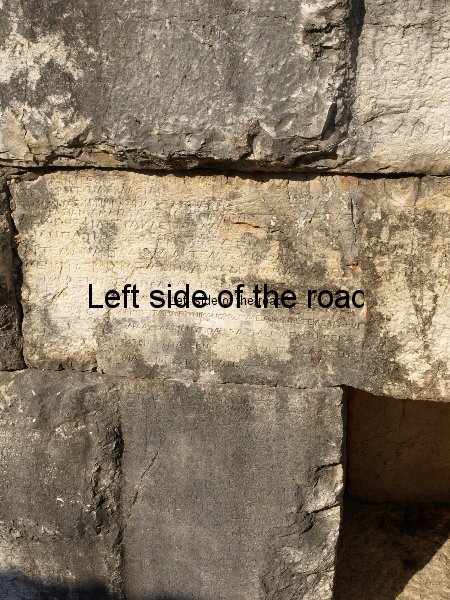
When you follow the path and wooden walkway taking you to the theatre look to your left just as you are about to reach the stage and the bottom of the seating. This is partly under water but there is enough at body level to see the writing in Greek, carved into the stone. Some of these are declarations of manumission made by rich Greeks who gave ‘freedom’ to their slaves in honour of one of the many gods worshipped at the time. Very easy to miss if you don’t look for them but easy to spot if you know where to look. They are referred to in the small museum in the castle complex at the very top of the site.

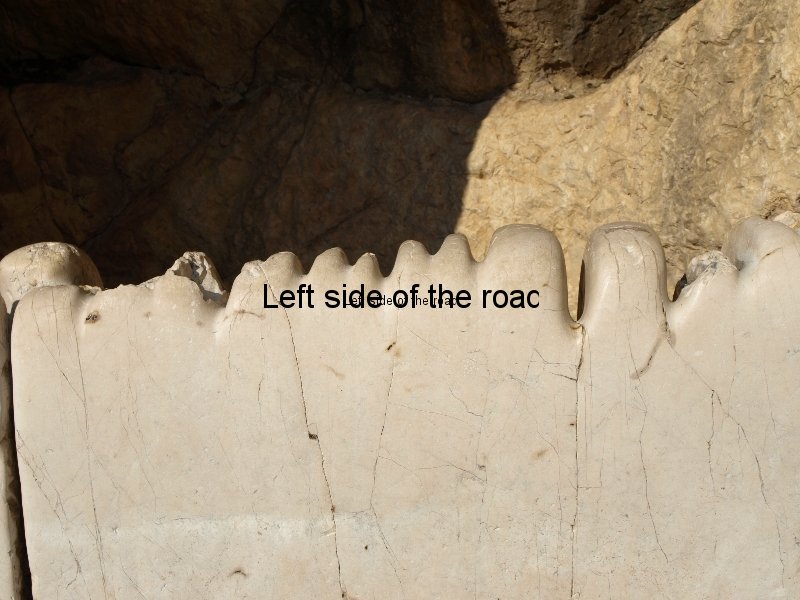
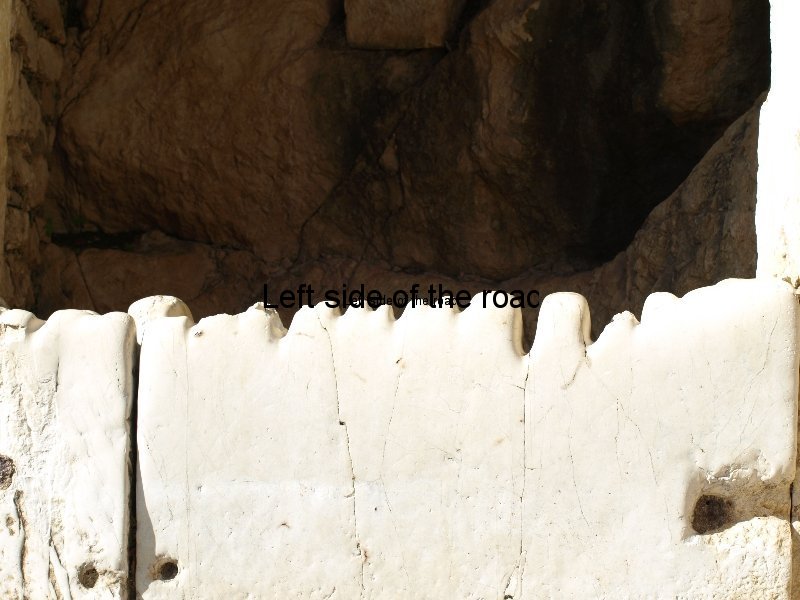
One place that doesn’t get a great number of visitors, due to the fact that the forum area is in front of it and people don’t make the slight diversion off the main path, and that’s the well. It’s only a small well, but what makes it special is the way that the stone has been grooved by the hundreds of thousands of time, over the centuries, a rope has rubbed against the edge with a heavy bucket of water on the end of it. It looks like a row of badly worn teeth.

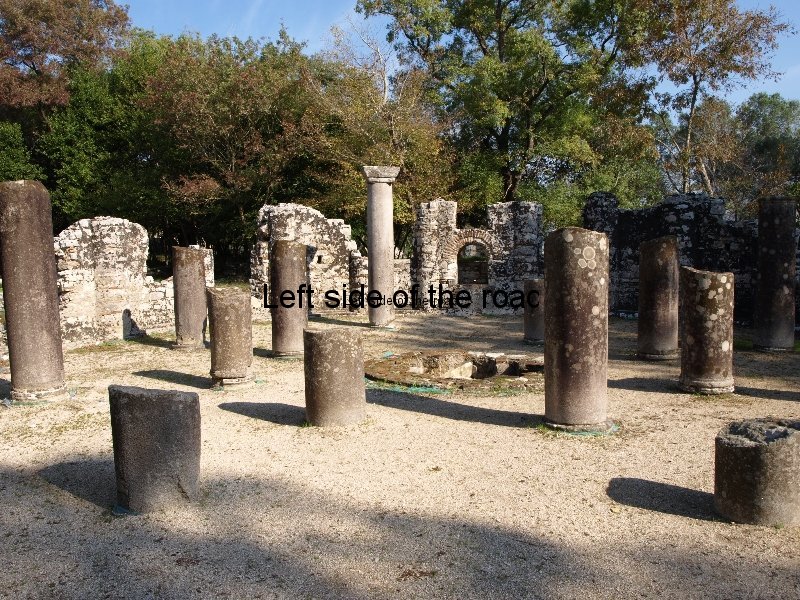
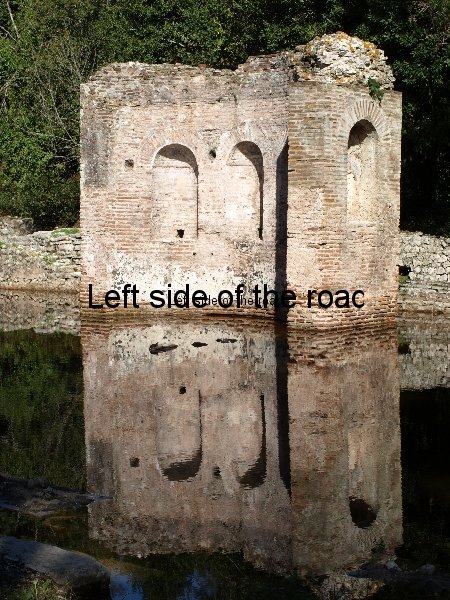
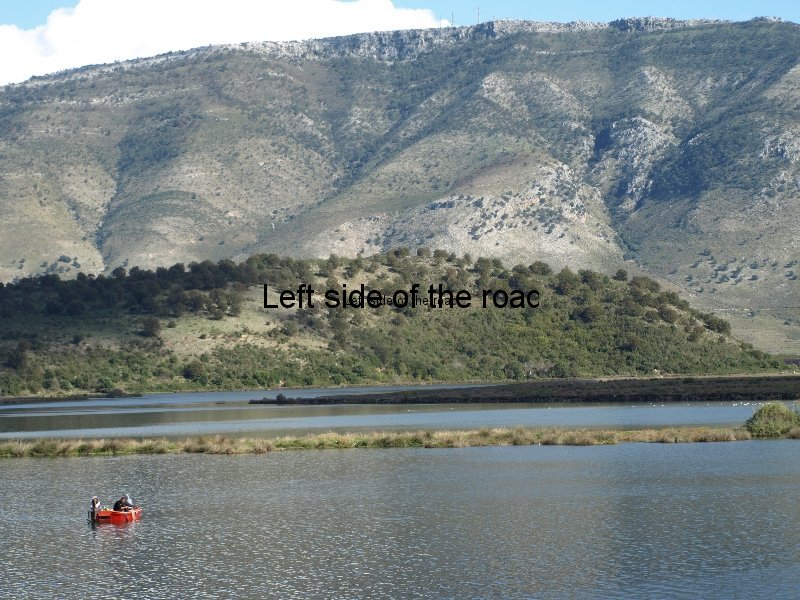
The Baptistery would be the place to see if preservation of the mosaic wasn’t the most important consideration. When excavations were made an intricate and very well-preserved mosaic was discovered. But like all mosaics the biggest threat comes from the elements (nobody really steals floor mosaics – they become a somewhat difficult jigsaw to reconstruct) and is permanently covered to protect it. This is a small circular structure to the left of the signed route, not too far from the lakeside.

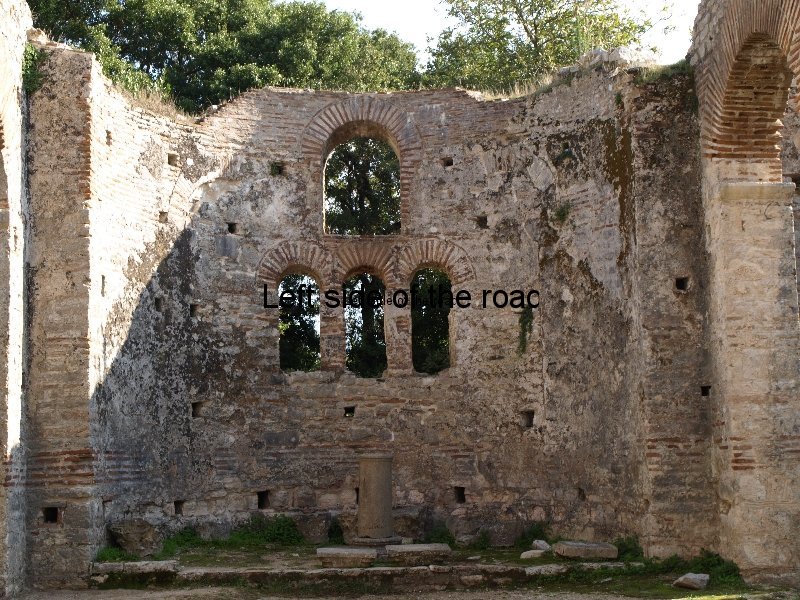
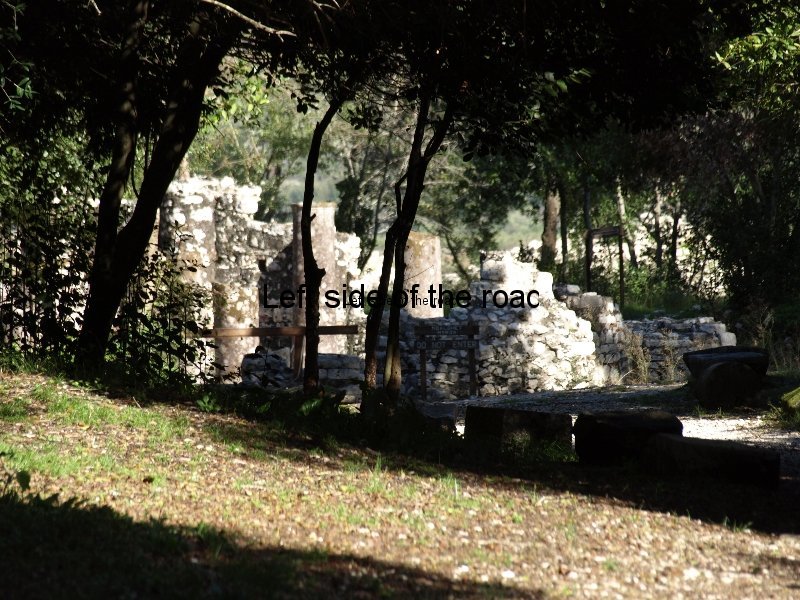
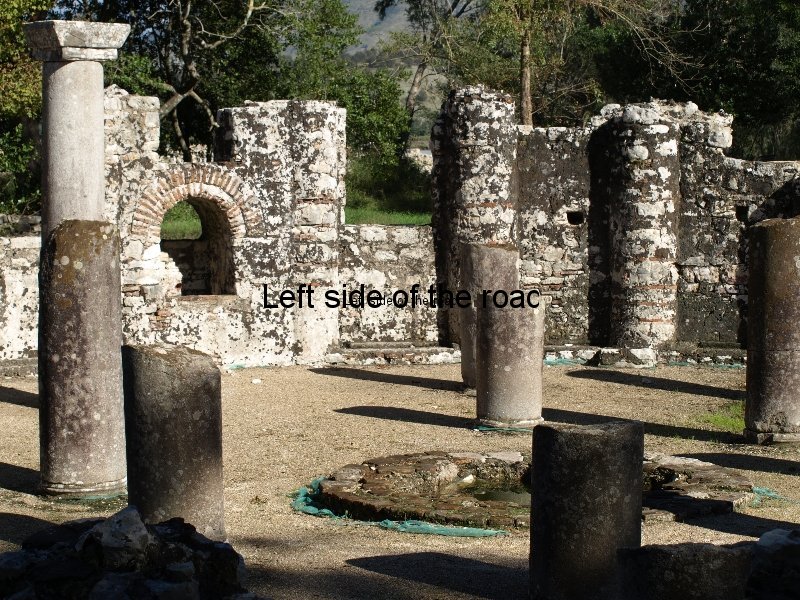
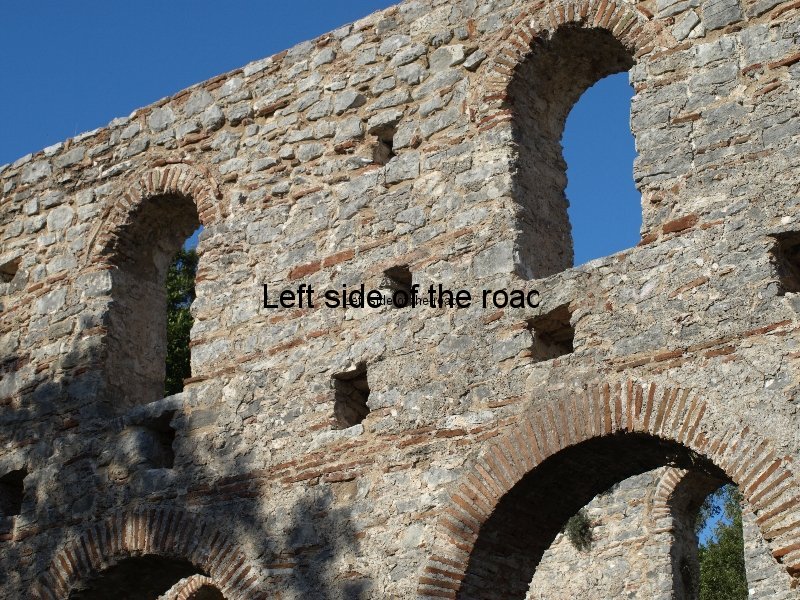
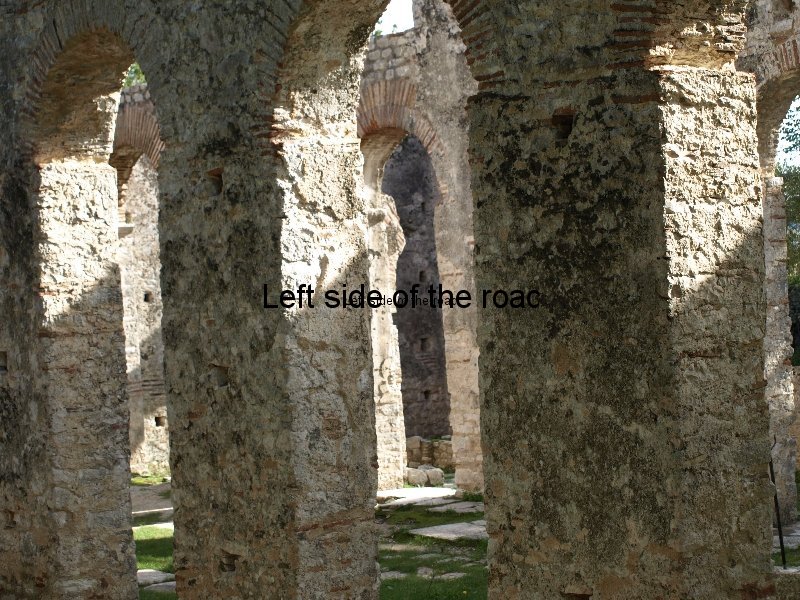
The Basilica is interesting in the fact that it wasn’t a Roman building taken over by the Christians but one constructed at the end of the 6th century, close to the end of the Roman Empire. This is in the classic cross design which is the basis for most Christian churches and is in a surprisingly good condition. OK there are no walls and the roof has also gone the way of all things, but the main columns still exist and it doesn’t take too much imagination to think what it would have looked like in its heyday.

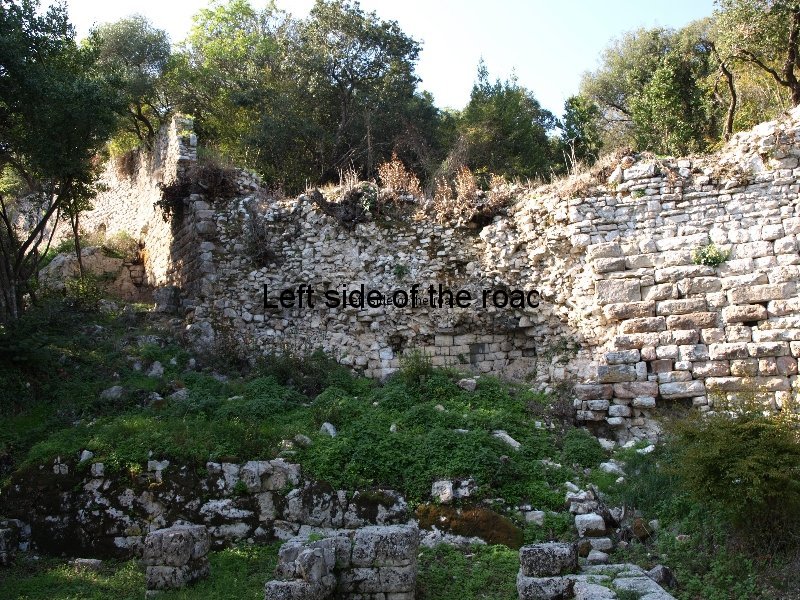
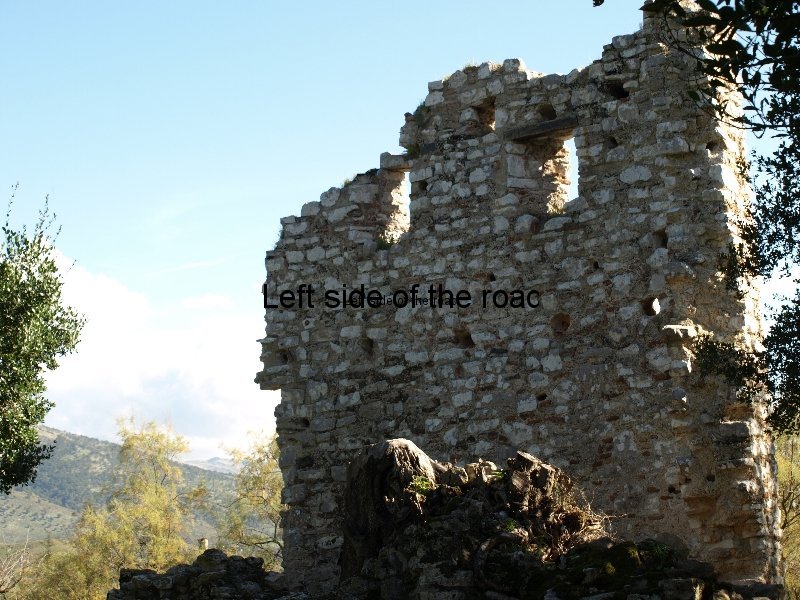
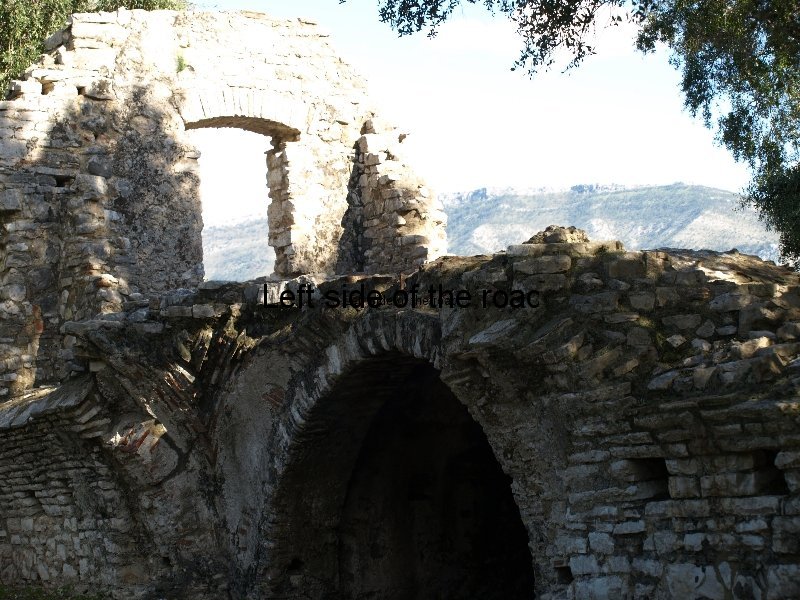
Continuing along the path it’s worthwhile taking a look at the different stages in the development of the city’s defensive walls. This illustrates the different ways of putting stones on top of one another and demonstrates the importance of the place in times past.

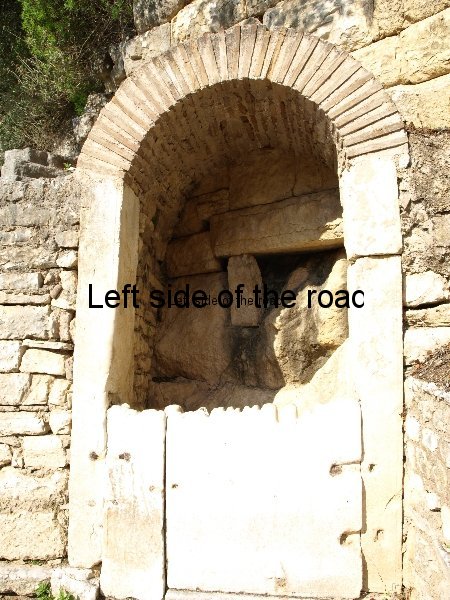
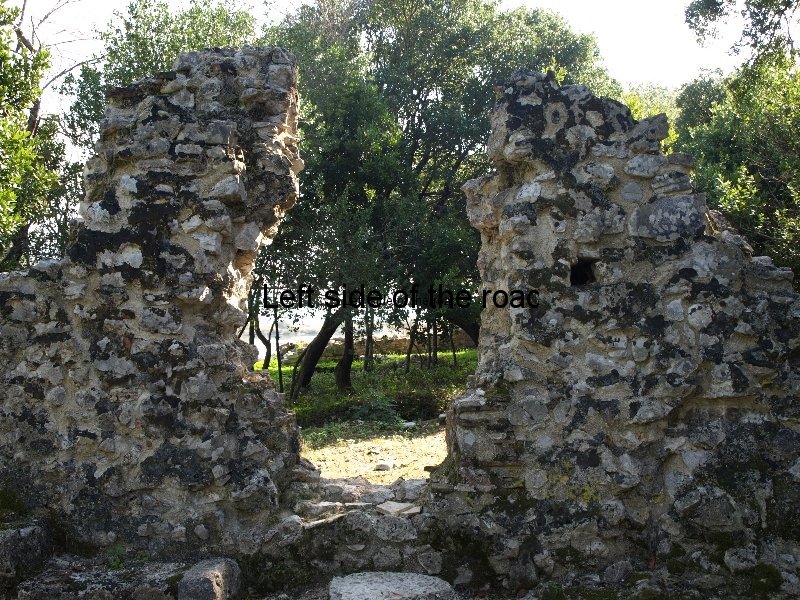
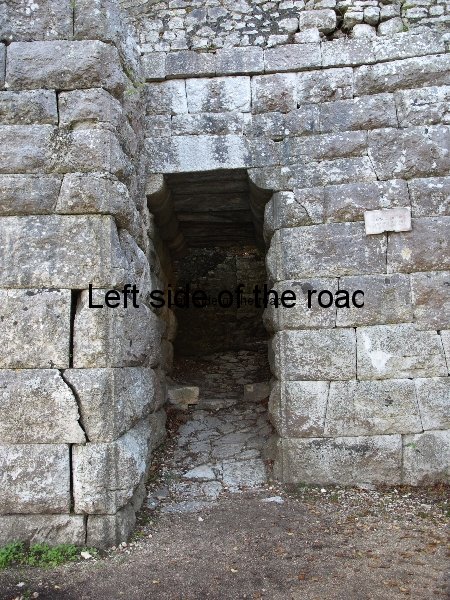
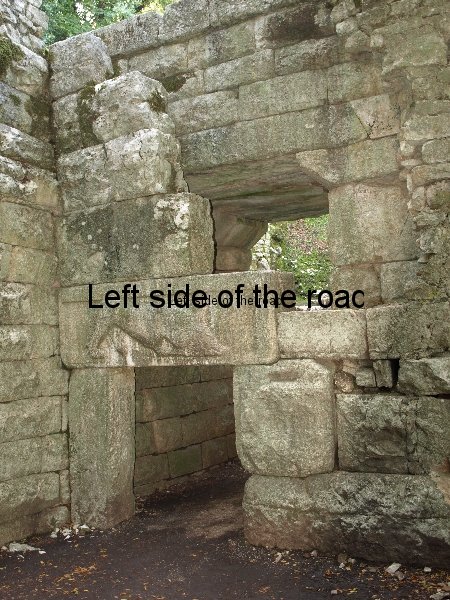
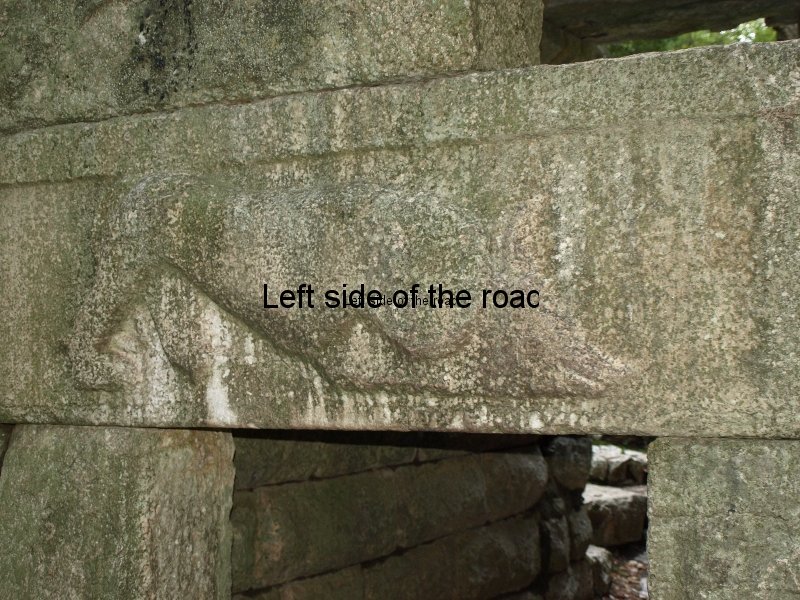
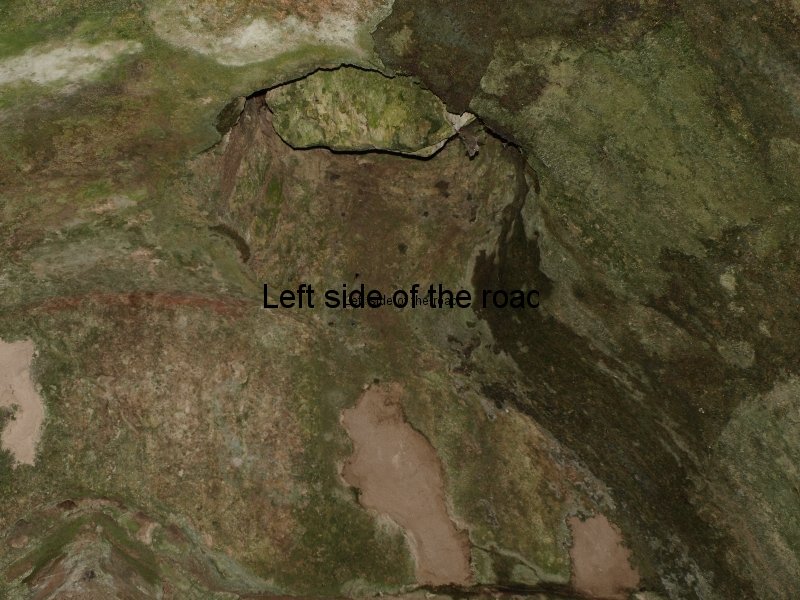
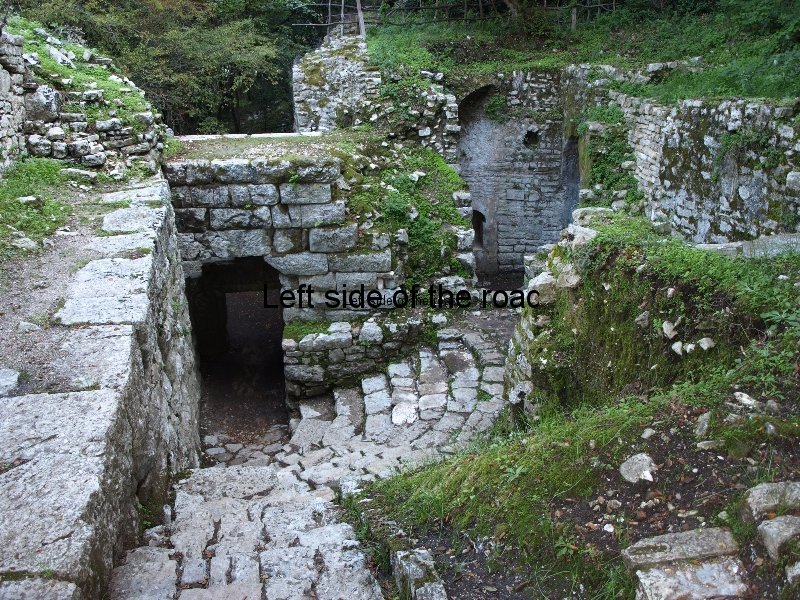
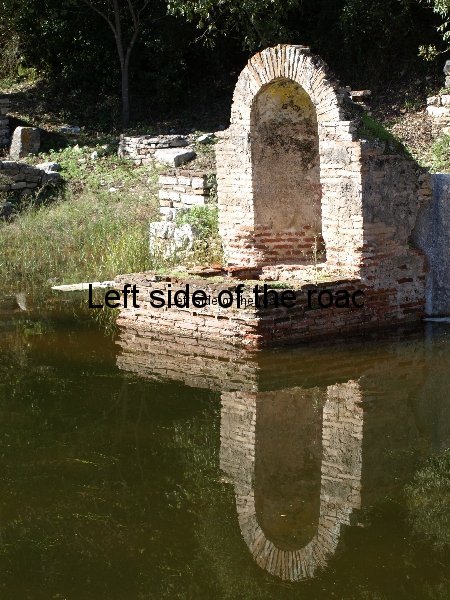
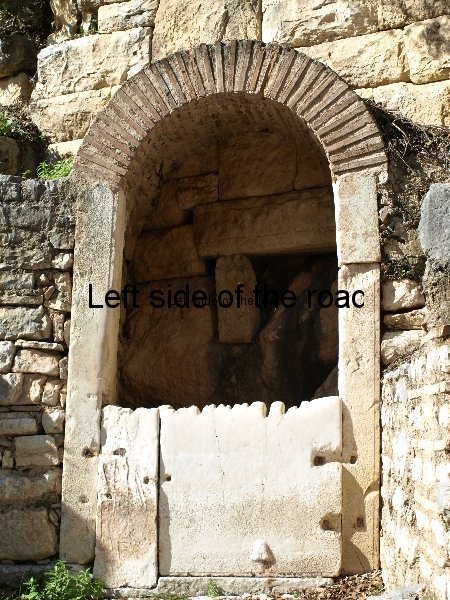
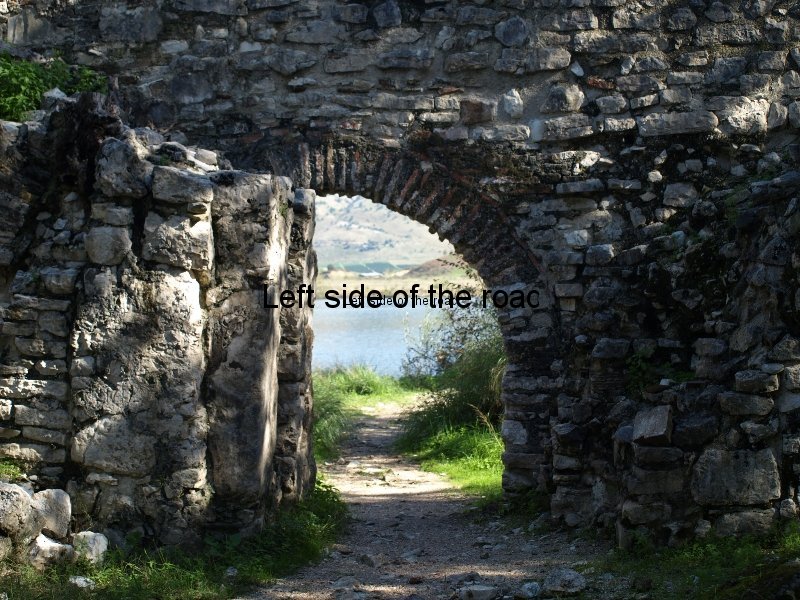
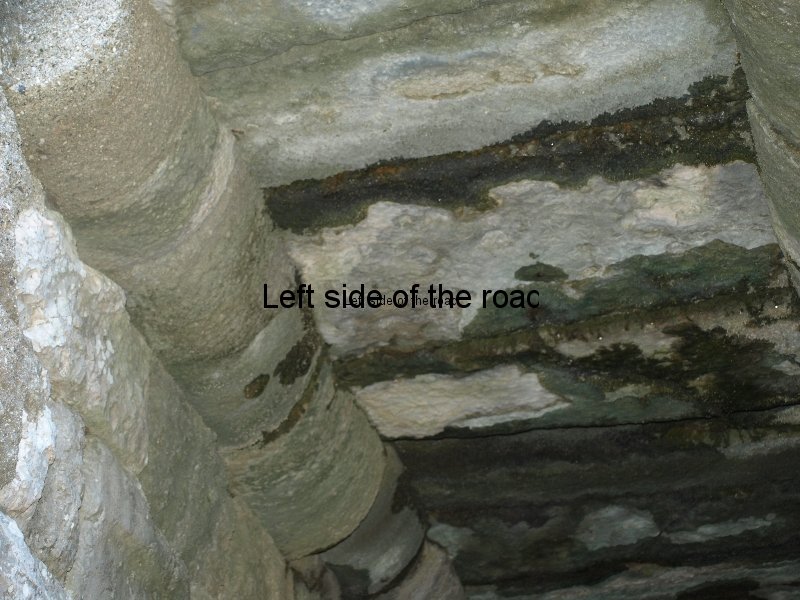
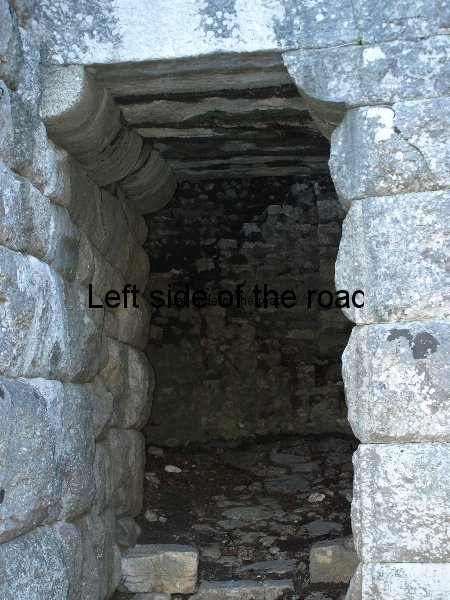
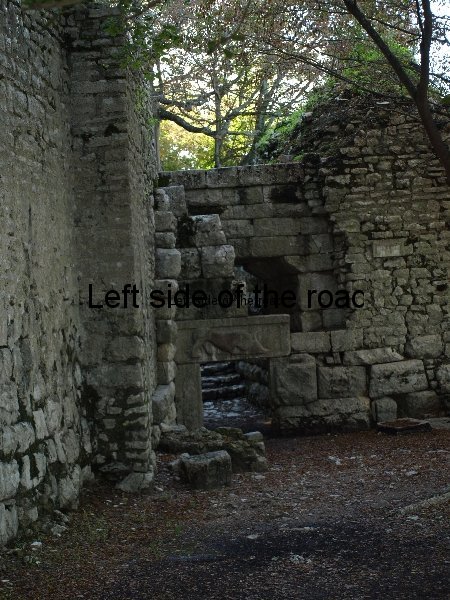
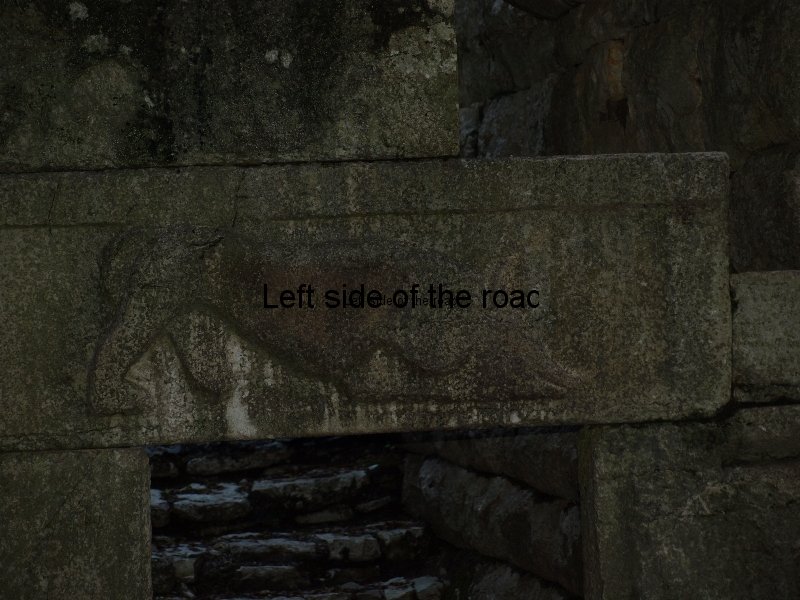
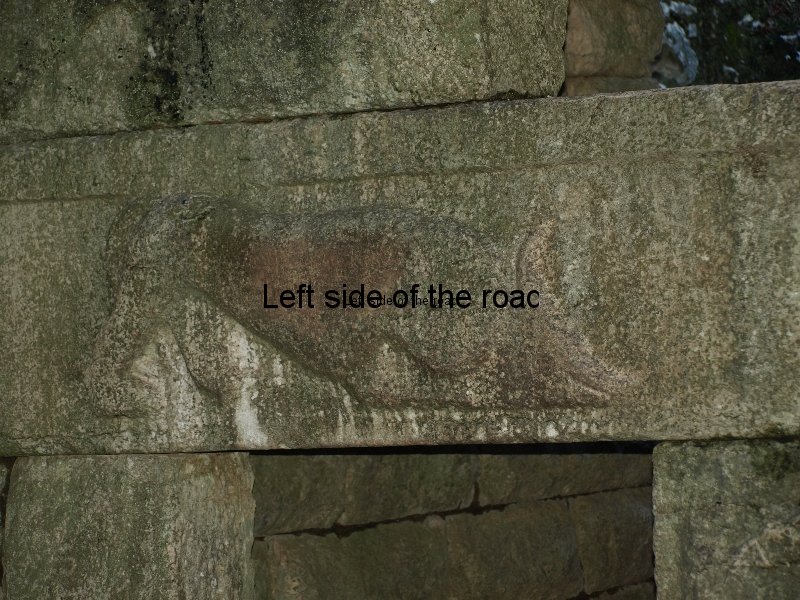
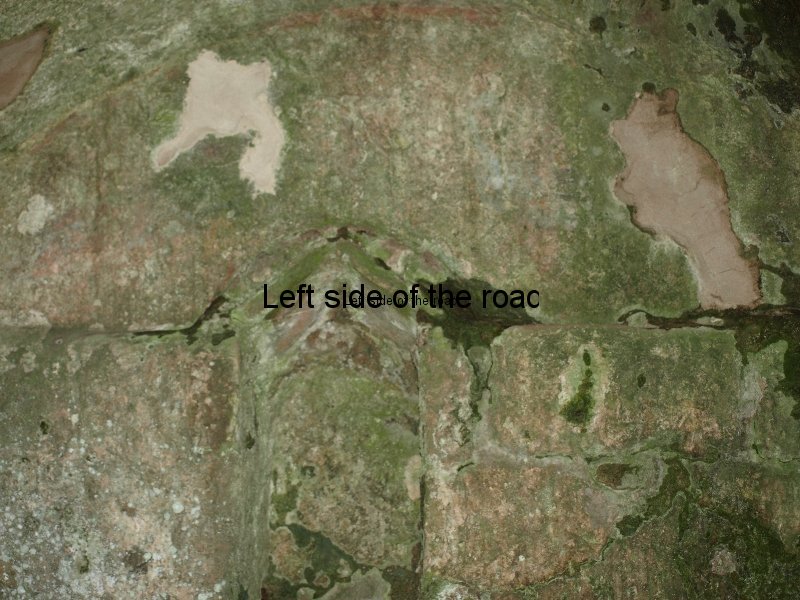
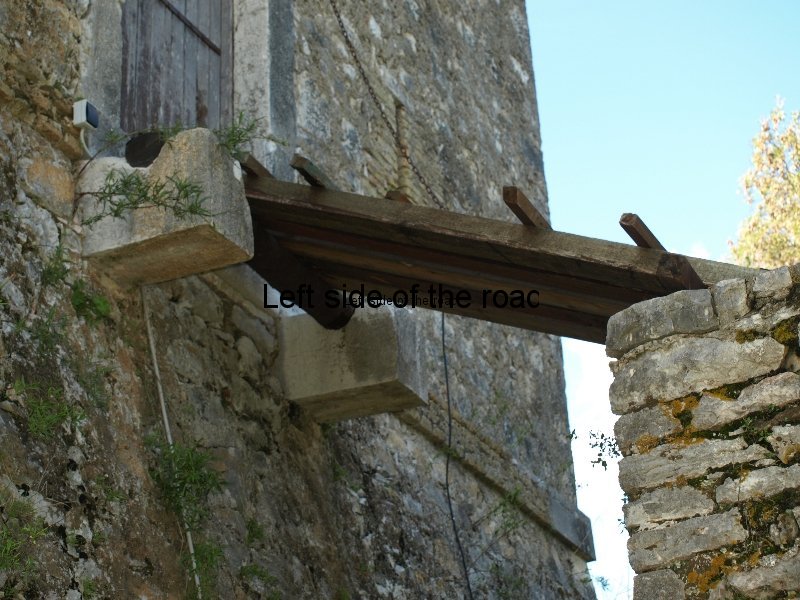
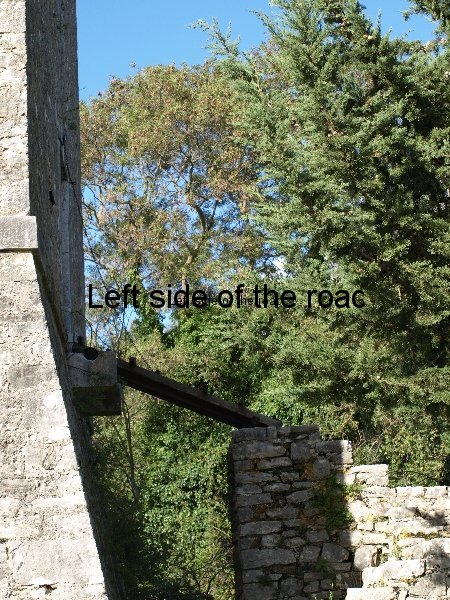
There are a couple of entrances worthy of investigation. The first is what is known as the Lake Gate, dating from the beginning of the settlement. Here take a look at the way the stones in the roof have been worked so they are curved. A little further along the Lion Gate (so-called because there is a carving of a lion devouring a bull’s head on the lintel) shows how the entrance was lowered so that anyone coming through would have to bow their heads. Inside this entrance there is a well and although it’s impossible to make it out now there were some colourful Christian wall paintings towards the top. The dampness of the area (now permanently in the shade) has destroyed whatever might have been there many years ago.

Many discoveries were made during the period of Socialism as research into the country’s past was considered important to get a greater understanding of its present. Butrint started to reveal itself but under capitalism such academic research only continues if a monetary value can be placed upon it. 

The small museum in the castle at the top of the hill is worth a visit. If it’s closed there will always be someone around who will open it up if asked. Here are displayed some of the artefacts found at the site.

One statement particularly attracted my attention when walking around the museum and this was in relation to the inscriptions about the freeing of the slaves down at the theatre. Many of the inscription refer to women who were freeing the slaves and were therefore wealthy and in control of that wealth themselves. It seems in the early Greek days, before what is now called the Classical period, women would inherit any wealth from their husbands, as well as being able to become wealthy in their own right. This position of women in society is considered an ‘advance’. The problem is I don’t believe the slaves would have been too concerned about the gender of their ‘owners’. And in that ‘advanced’ society this equality was still denied to poor women. It wasn’t until the liberation of the country from fascism in 1944 and subsequent years that women truly found a semblance of equality in Albania.

Practical Information:

The public bus leaves from the bus stop opposite the ruins of the basilica and synagogue, just along from the Town Hall (the Bashkia). It leaves, more or less, on the hour and half hour until midday and then on the hour for the afternoon and takes about 45 minutes. Cost is L100 each way.

Butrint is open from 08.00 till dusk, all year round. Entrance is L700 for an individual (although I was charged the reduced group rate, although by myself, of L500 the second time I went there).

More on Albania …..

Corfu to Saranda ferry – a travellers’ view

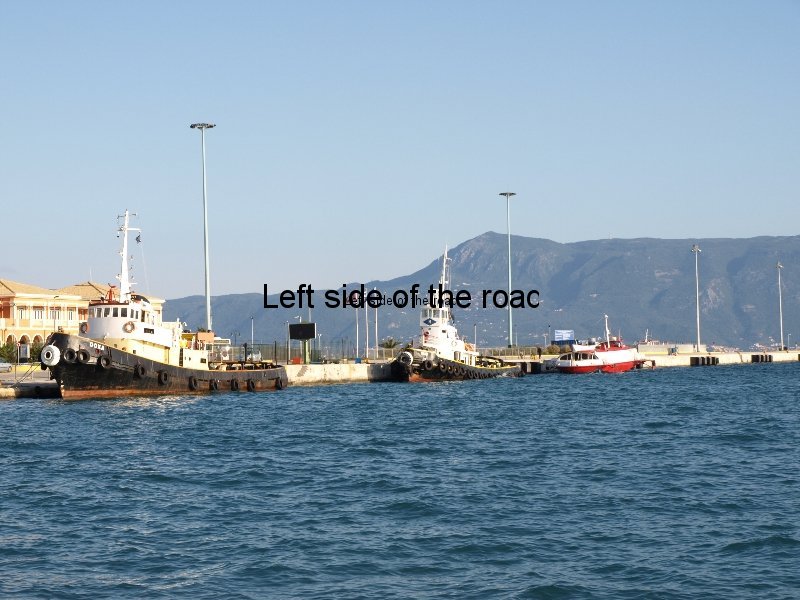
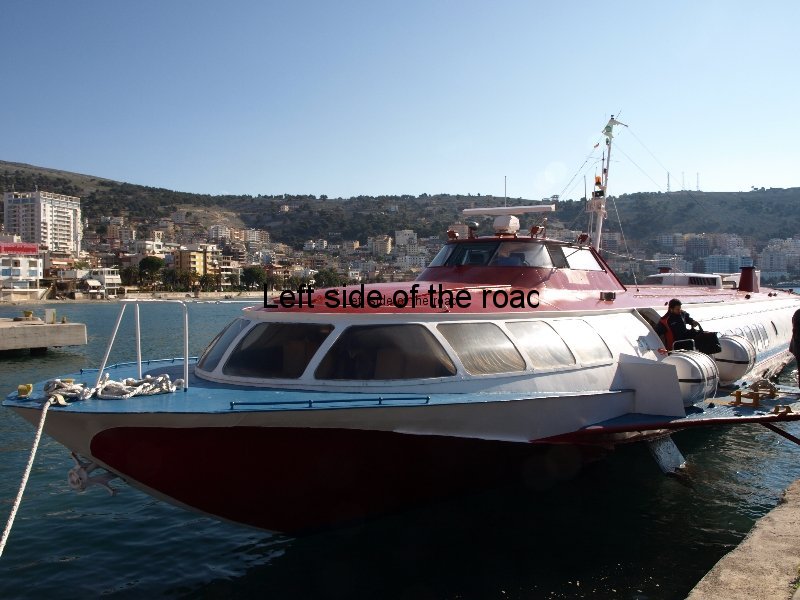
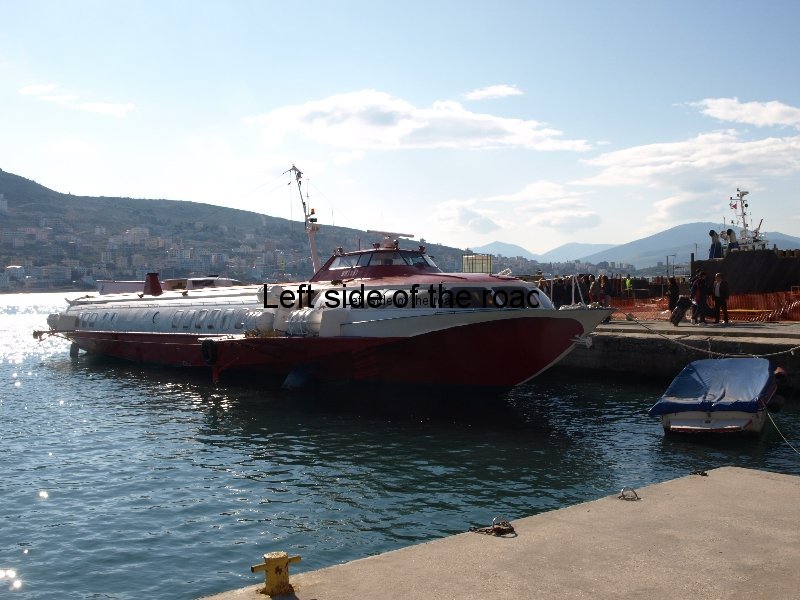
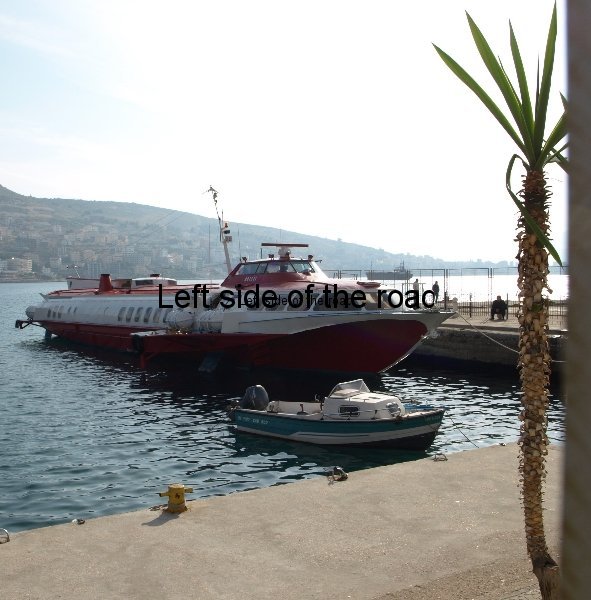
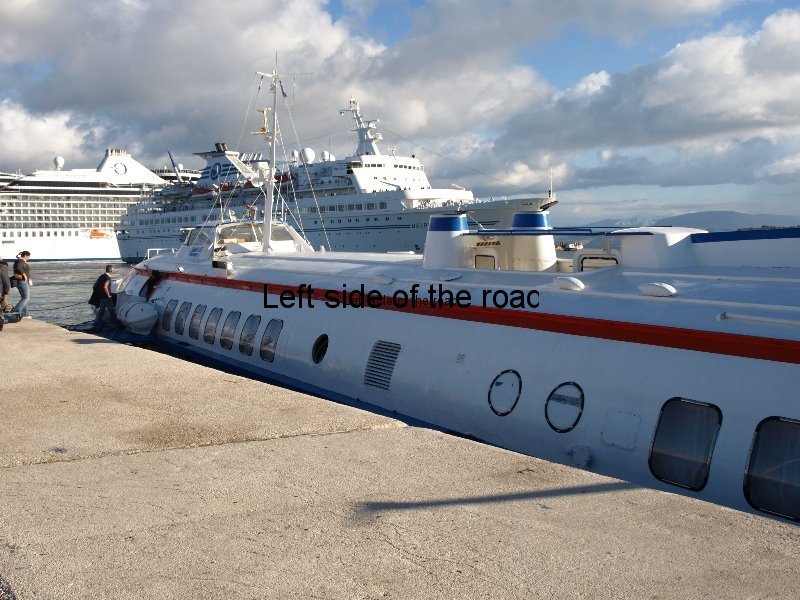
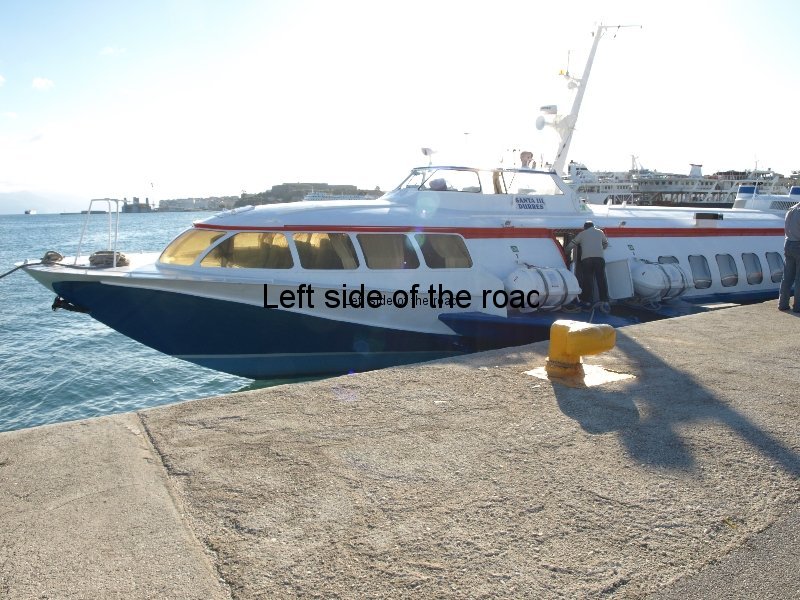
Hydrofoil Kristi - Saranda port

Hydrofoil Kristi – Saranda port

More on Albania ……

Corfu to Saranda ferry – a travellers’ view

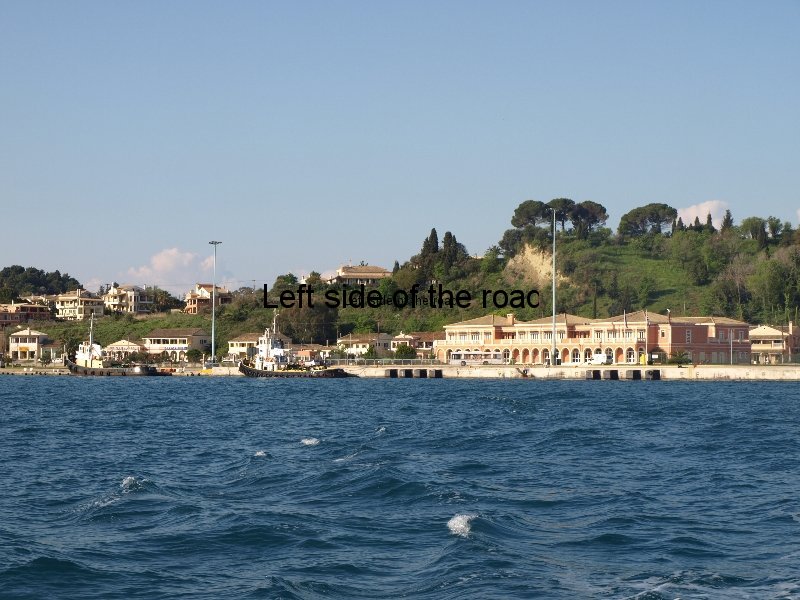
One of the best ways into Albania is via the ferry from Corfu to Saranda in southern Albania. What follows is the practical information of what you need to know to make that process easy and – hopefully – trouble free.

I’ve been to Albania three times now, so far, and each time via Corfu. The first time I arrived late at night and was expecting to leave on the ferry the next morning. That was thwarted due to an annual safety check on the hydrofoil (so I was told though I heard a different story in Saranda) which meant there was no departure for three days. The second time everything went as it should and the journey was made much easier due to my previous experience. What surprised me the most was there was no way I could find detailed information about the logistics of getting across a relatively narrow stretch of water. This posting is an attempt to give an as up to date and accurate step by step approach to getting from one country to another as is possible.

Where you buy your tickets depends upon the time of year. During the high season, when there is more than one sailing a day, there is a kiosk just inside the main New Port entrance, to the left backing on to the main road. However, outside of the months of June to September tickets are only sold in the company’s office.
This is the head office of Ionian Cruises. That’s a grand title but it’s based in small shop facing the Domestic Terminal building, which also houses the biggest café in the area (as well as a left luggage office) on the road that runs parallel to the sea. There is a small sign indicating that they sell tickets to Albania (in English).

All the details I’ve been able to collect are as follows:

Ionian Seaways, 4, Ethnikis Antistaseos, 49100 Corfu, Hellas.

(The website has improved significantly since I first published this post. Any additional information will more than likely be found there, e.g., vehicle tariffs.) 

Tel. : +0030 26610 38690, 31649, 25155

Fax : +0030 26610 38787, 26555

The office is open from 08.00 and the people who work in there speak English, which makes life easier for some of us non-Greek speakers.

Fast Ferry – Hydrofoil

You need your passport and you MUST buy a ticket before going to the boat. As of April 2018 the adult cost is  €19 each way in the low season. The cost increases to €23.80 from mid-June to mid-September. Children go for half price. Departure Times (all year) are at 09.00, but with 2 or 3 extra sailings from the middle of June to the middle of September. Check the website for times when you want to travel. The latest sailing from Corfu is 18.30. Apart from possible disruption due to the weather or mechanical issues the ferry should run every day of the year. There is now a facility to book and pay online. 
The hydrofoil leaves from the top end of the new port. This means that after buying your ticket in the office you have to get to the main entrance to the Port of Corfu which is about 400m along the road, heading northwards out of Corfu town. Once through the main gates turn left and head to the New Passenger Terminal, the sandy coloured building about a 100m away. Here you will get your passport and ticket checked. There is also a small Duty Free shop but few other facilities.

Duration of journey: 30 minutes.

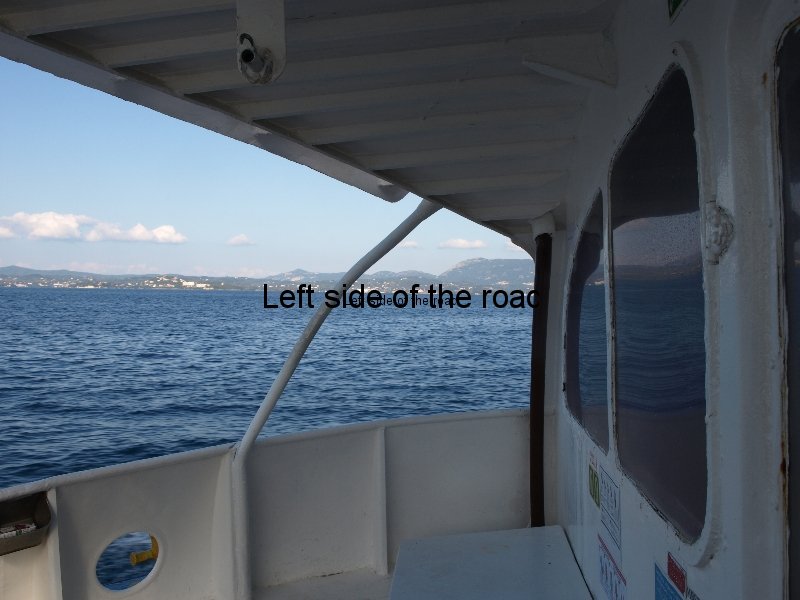
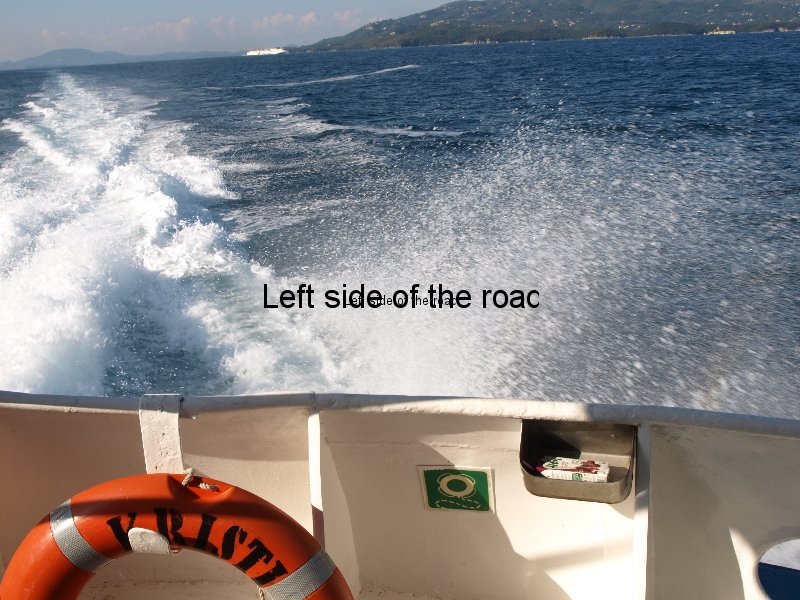
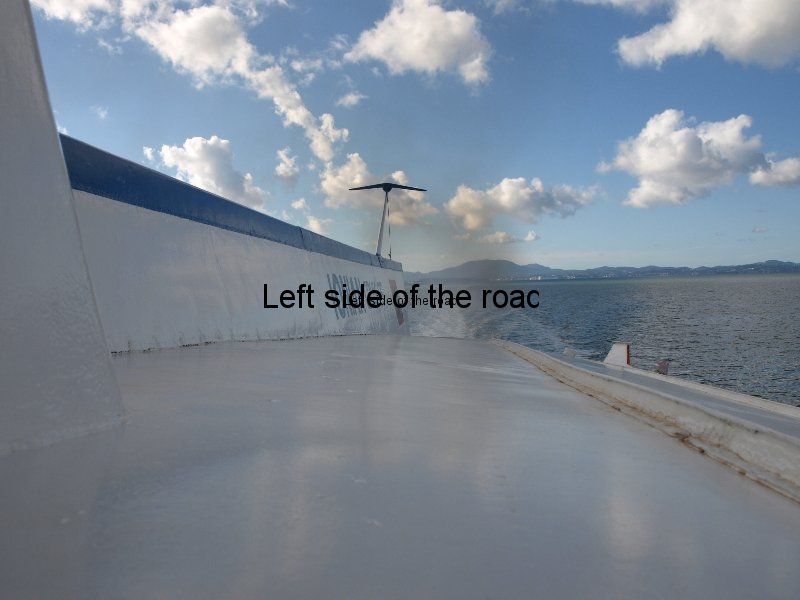
Once on board leave your bag at your seat (or at the luggage store by the entrance) and go right to the back of the boat and get a sensation of speed without being blinded by the spray that obscures any sightseeing from the cabin. The boats are Kristi, Santa and Santa III, Komet class hydrofoils, not that young any more but still up to the task in hand.

Remember to put your watches/time pieces forward one hour when landing on Albanian soil (you effectively arrive before you have left!).

Car Ferry

A ferry taking vehicles is also now an option. From 16th May till 25th October there’s a departure from Corfu at 19.00. There’s an extra ferry between 1st July until 25th October at 13.00. From Saranda the departures during the same dates are 10.30 and 16.00 (local time). Costs are too complex to list here but all are on the website.

Duration of journey: 70 minutes.

These times and prices are valid for 2019.

There are no visa requirements for citizens of the European Union, citizens of other countries should check first. Passport formalities are remarkably innocuous on entering (or leaving) Albania. The passport will be scanned and recorded on the immigration service computer. You normally get a stamp in your passport if arriving or leaving by boat but this is not always the case at land borders. The lack of a stamp took me by surprise the first time I entered by land, from Greece, but later learnt that this is common and you shouldn’t be concerned if there is no entry stamp.

Once you leave passport/customs control you might well be approached by Tomi. He’s an English-speaking Albanian who runs a basic hostel less than 100m from the port entrance. If you are new to the country, want to meet other foreign visitors to pick their brains about what/when/where the hostel is a good place for all of this. Tomi also is a mine of information and if he doesn’t know the answers will almost certainly know someone who does. If you miss him you can call his mobile, +355694345426.

Another good place to check out is the Dolphin Hostel, located at 168, Rruga Lefter Talo. This is just above the street Rruga Flamurit, which is effectively Saranda’s interurban bus station.

The ticket office to get tickets to Corfu is in the building on the main road, directly above the dock. The name over the office is Finikas Lines. Sailings from Saranda vary depending upon time of year. There’s always at least one a day but there are extra sailings in the peak season. Check the link above for exact sailing details.

More on Albania …..