The Adriano Bernareggi Diocesan Museum of Sacred Art

Saint Lucy

Saint Lucy

More on Bergamo

The Adriano Bernareggi Diocesan Museum of Sacred Art

The Museo Diocesano d’Arte Sacra Adriano Bernareggi (Adriano Bernareggi Diocesan Museum of Sacred Art) is only a short distance from the Cittá Alta. Based on the collection of a Bergamo Bishop (who gives his name to the museum) from the 1930s onwards it contains exhibits not really seen elsewhere in the city.

Located in one of the old palazzos it has a somewhat eccentric arrangement of rooms but if you try to visit the rooms in their numbered sequence you should see all there is. There was obviously no specialisation in the collecting process – basically if it was religious it was in. There are the normal objects and paintings that you might have seen in other Italian museums but there were a few objects that were either new to me or which I consider worthy of mention due to their unusual characteristics or a piece of information that made me think in a slightly different way.

Before mentioning them there’s one point I’d like to make. The collection is curated in a way so that it’s a theme that dominates a room, not the period or even the type of object. To the entrance of the room there’s an introduction to the theme then you’re left on your own. There’s no information about the exact period, if a known artist or any guidance of what the object might be depicting. To get a better understanding of the collection you need to call on your own knowledge or experience.

In the room of the Saints there are paintings from different epochs but what they all have in common, that is if the Saint had died a martyred death, is that they either appear holding the instrument of their demise, almost always with a serene look on their face, or else an almost surreal depiction of the ordeal they went through. Whenever I see them, or indeed Christ on the cross, I think of the comments on this idea of remembrance by the deceased American comedian Bill Hicks. He used to wonder what Christ think if, on the second coming, he was surrounded by people with images of his torture around their necks.

As neighbours on the wall were a small group of female saints. Saint Barbara (or it could be Saint Agatha – misogyny in the early – and not so early – Catholic Church meant that female saints suffered a litany of tortures before their end), during her ordeal, had her breasts cut off and she is depicted with a pair of breasts, looking more like the polenta e osei sold in the cake shops in Cittá Alta, defying gravity and sticking to a bloodied sword.

Saint Barbara

Saint Barbara

In the same group is Saint Lucy who had her eyes gouged out and they are depicted threaded onto a stiletto like knife which she herself holds. A third in the group, at least the ones I thought I recognised, was Saint Agatha (or Saint Apollonia) who was recorded as having her teeth pulled out. It really gets quite confusing and some indication of the intention of the painter, at least, would have helped.

One thing I learnt in my visit to this museum was the fact that the cross, and more especially the crucifixion, as a representation of Christ was something that developed in the 4th/5th centuries as the religion became more organised, more structured, more hierarchical. Before that the early Christians had used symbols such as a fish (which I knew about before as a Catalan friend had brought that to my attention), doves or loaves of bread to represent God/Son/Holy Ghost. As the religion was supposed to one of peace and the love of mankind these images make much more sense and even give an impression of caring. However, they lost out to the failing Roman Empire which hitched its horse to a rising movement and, effectively, took it over and slotted in an imperial structure and bureaucracy. It worked. It’s still there in Vatican City.

Something I’ve only seen in Bergamo (although I’m open to the fact that they appear elsewhere) is the so-called ‘macabre’ paintings. These are basically paintings of skeletons in various forms of dress as it they are, perhaps not living in the sense that’s generally accepted (before the banal vampire films and TV programmes became ubiquitous) but at least taking part in daily life. In Room 15 there are 8 large paintings covering all social classes, but with an emphasis on the rich and powerful, including kings and popes, presumably with the argument that death is the only true leveller but society would be a more civilised if we did the levelling prior to the appearance of the Grim Reaper. The only other place I’ve seen these ‘macabre’ paintings is in the church of Santa Grata Inter Vites, also in Bergamo, in Borgo Canale.

'Macabre' Pope

‘Macabre’ Pope

I must have now seen hundreds of Romanesque, painted, wooden statues of the Madonna and Child. They are charming and always interesting as their evolution from the early Romanesque period up to the Renaissance shows a re-learning of the skills lost with the too rapid destruction of the Roman Empire. The small group of wooden statues in Room 17 are unique as far as I’m concerned.

The information supplied by the museum stresses the fact that these statues were massed produced but most of them must have ended up as fire wood as I’ve never come across them before. They are incredibly modern. Although the Madonna is dressed in the fashion of the 18th/19th centuries they have aspects that wouldn’t look out of place today.

They are, roughly, two-thirds life-size, standing (which was very rare in the Romanesque period when these statues had their heyday) and very life-like. As well as the dress the hairstyles were of the period so it seems an attempt to place the Madonna in the ‘now’ and not making her something apart from ordinary women. In a way going back to the ideas of the early Christians before the religion was formalised.

And sexy – in the Jessica Rabbit sort of way. One, in particular, has a very slim waist and curves that were emphasised in fashion models – before ‘size zero’ and androgynous became the norm.

For people new to such a museum I’m sure they would find more of interest. By now I’ve seen a lot of this art and, perhaps, am becoming too blasé.

A smallish but nonetheless interesting and worthwhile place to visit if in Bergamo.

Practical Information

Address: Via Pignolo, 76

Opening hours:

Tuesday – Sunday 09.30 – 12.30 and 15.00 – 18.30

Closed Monday

Entrance:

General €5

65 plus (with ID) €3

Free entry with the Bergamo Card.

More on Bergamo

Three days in Bergamo, Lombardy, Italy

The Bergamo Skyline

The Bergamo Skyline

More on Bergamo

Three days in Bergamo, Lombardy, Italy

Three days in Bergamo, Lombardy, Italy. What to do? Where to go? What do you need to know? How much will it cost? From the links below you will be able to find the information, practical hints, tips, suggestions of visits and food, etc., to make a full three day visit to the northern Italian city, in the foothills of the Orobie Alps and about 45 kilometres to east of Milan, an enjoyable experience.

Most of the principal tourist historical, cultural and artistic attractions are to be found in the Città Alta (the High City, also known as the Old Town – although there is evidence of ancient settlements where contemporary development is taking place)) the walled mediaeval city built on the top of one hills that commanded the trade routes in times past. The old city got its Venetian Walls during the 16th century and they dominate any aspect from afar. As the politics of the country changed (especially after Italian Unification – Risorgimento – of the 1860s) more expansion took place below the hill and this is where you’ll find locations dominated by 19th century architecture, including some of the most important art galleries such as the Accademia Carrara, the Museo Diosesano Adriano Bernareggi and the Galleria d’Arte Moderna e Contemporanea di Bergamo (GAMeC). Also in this area you’ll be able to see the Monument to the Partisan, by Giacomo Manzù, and the Teatro Donizetti, the local opera house.

In Città Alta you’ll find: the Duomo (Cathedral); the Colleoni Chapel – the mausoleum of the mercenary Bartolomeo Colleoni; the Campanone (The Big Bell) and The Gombito, two towers dating back to mediaeval times; the Contarini Fountain; the Baptistery, dating back to the 14th century – but not in the same place; the library; locations connected to the life of Gaetano Donizetti (the bel canto opera composer); the Palazzo della Regione; a number of interesting churches, including the Romanesque San Michele al Pozzo Bianco, with its frescoes, the church of Santa Grata Inter Vites, with its macabre paintings behind the main altar, the tiny church of Santa Croce and the huge Basilica de Santa Maria Maggiore – which challenges the Cathedral in its decoration and splendour; as well as a number of comic, interesting, sometimes bizarre and unusual examples of ‘street art’ – long before Banksie people were painting the outsides of buildings just for the sake of it and as a relief to the mundanity of their lives.

The old city is tiny and the only way to see it, and that’s because there’s no alternative transport to take you through the narrow streets and alleyways, is on foot. However, it’s not a logistical problem to get around the more dispersed attractions of the new town and guidance will be provided about how to do that in the most convenient and cheapest way possible. This will include the quaint funicular railway which takes some of the pain out of climbing the steep hills and allows you to get to the highest point in the old city at the Castello di San Vigillio.

Eateries exist in the Città Alta but they are almost exclusively directed towards the tourist trade and may not, for that reason, most may not be particularly good value for money. However, I went to one restaurant in the new town and one in the old town. One day I choose snack food and a picnic at San Vigilio.

Accommodation reports will be limited to one. I am staying at the Nuovo Ostello della Gioventu di Bergamo, part of Hostelling International to which the Youth Hostel Association (YHA) of the UK is affiliated. Although on the outskirts of the new town there’s a couple of very convenient bus routes (the 6 and the 3) that can get you to both the old and the new town without a lot of pain, the No 3 to the Citta Alta having its terminus at the bus stop immediately outside the hostel. If you don’t mind sharing dormitory accommodation for a few nights it provides all you really need, a clean, comfortable and convenient place to lay your head.

Bergamo easily has enough to keep someone with wide and catholic tastes busy for a full three days. More than that you might find yourself retracing your steps a bit too often. However, generally it’s a pleasant location and it’s not too bad a choice as a base to explore some of the surrounding historic towns such as Brescia or Carravaggio or even for a swift day trip to Milan.

More on Bergamo

Mies van der Rohe Pavilion, Barcelona

Mies van der Rohe Pavilion

Mies van der Rohe Pavilion

More on Catalunya/Catalonia

Mies van der Rohe Pavilion, Barcelona

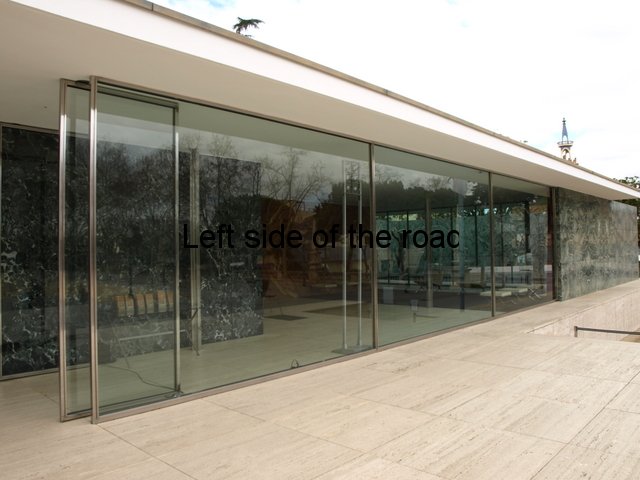
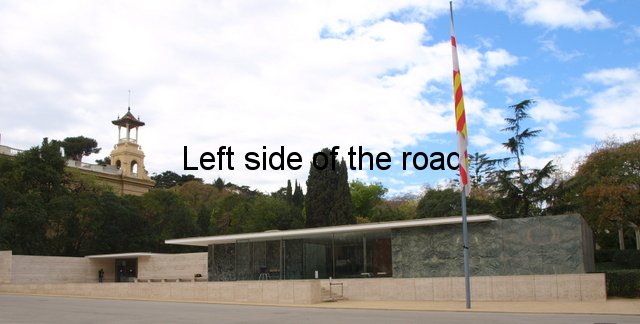
If, after a few days in Barcelona, you’re suffering from a surfeit of Modernism (too much Gaudi or Domenech i Montener) then you could do much worse than visit the Mies van der Rohe Pavilion in the exhibition and conference area, between the Plaça de Espanya and the Museu Nacional d’Art de Catalunya.

Many, many thousands of people walk close-by but the overwhelming majority of them – unless they are specifically looking for it – won’t even know of the existence of this building or know of its importance in the development of 20th century architecture.

The German Pavilion and the International Exhibition of 1929

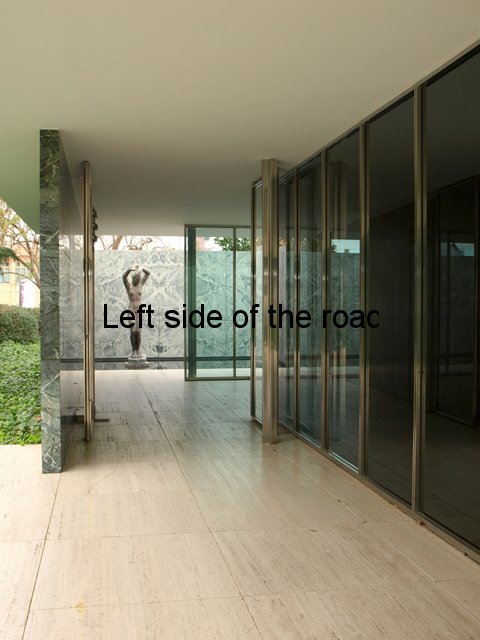
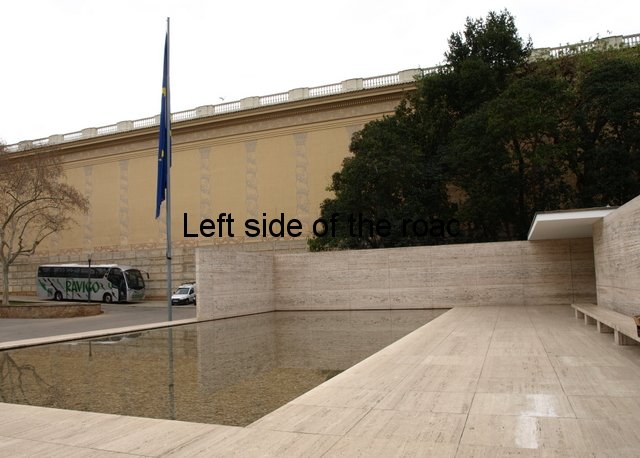
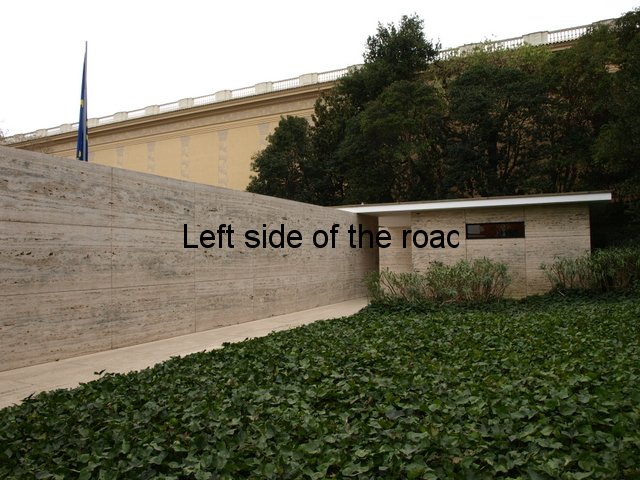
The present building is on the same spot as the original (designed as the German Pavilion for the 1929 Barcelona International Exhibition) but for more than 50 years nothing was there, just an empty space, an even more extreme example of minimalism.

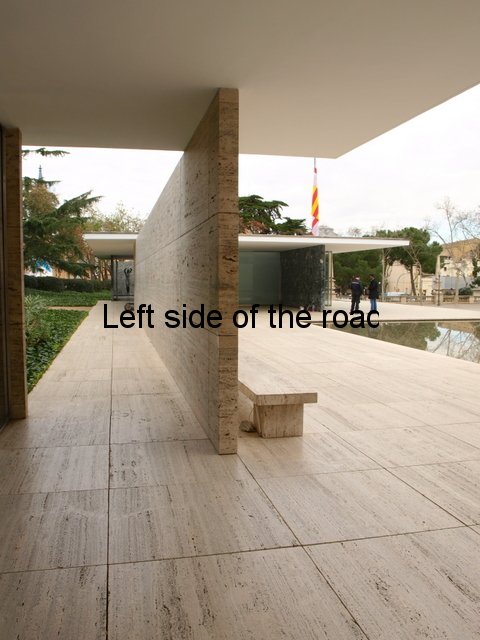
Although it appears to be a house there’s no accommodation, kitchen or bathroom. I don’t understand why, it just wasn’t part of the requirements of the commission. I would have thought that creating a realistic living environment would have been more useful in promoting the Minimalist argument but Mies didn’t think so and just created ‘a space’ through which the people visiting the pavilion couldn’t just use it as a shortcut to the Pobla Espanyol, they had to see all of it.

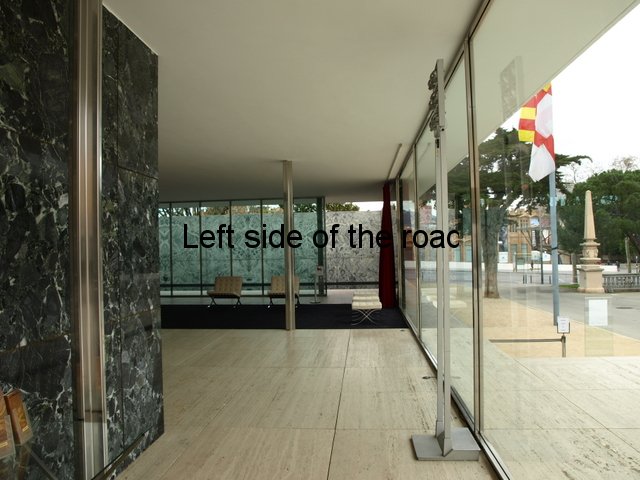
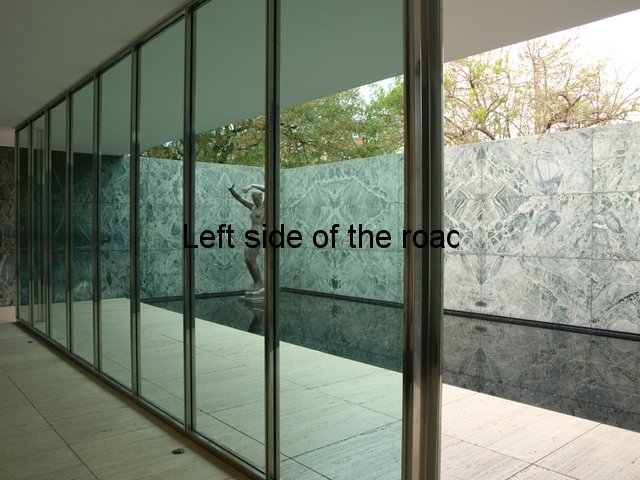
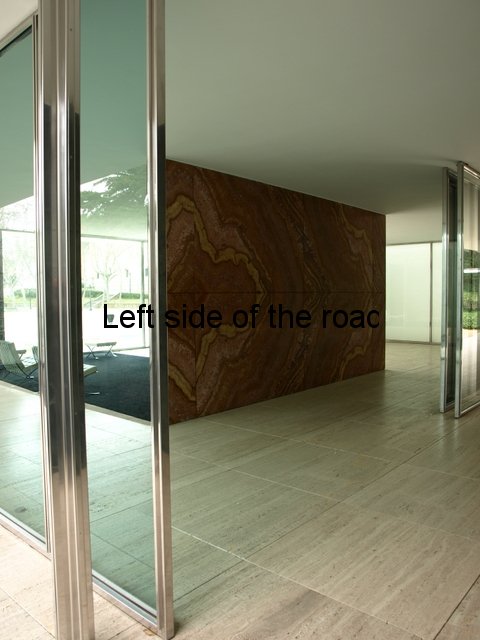
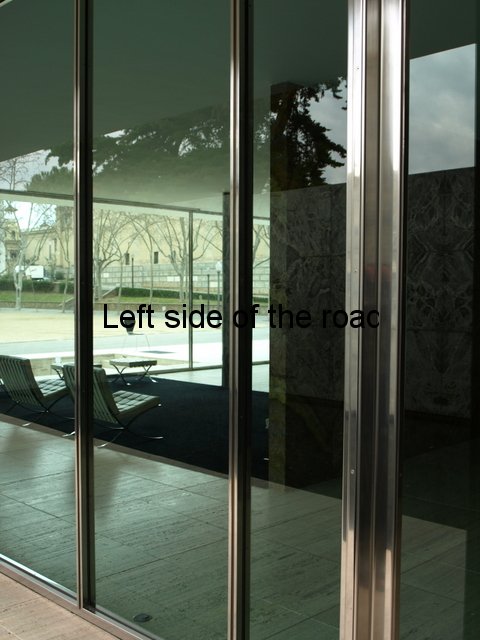
The structure followed those tenets of Minimalism established a few years earlier: angular in appearance (no ‘softening’ of the structure which was taken for granted by the Modernists); a flat roof supported by simple iron columns; large, plate-glass windows – virtually forming the exterior walls; and limited, and purely functional furnishings.

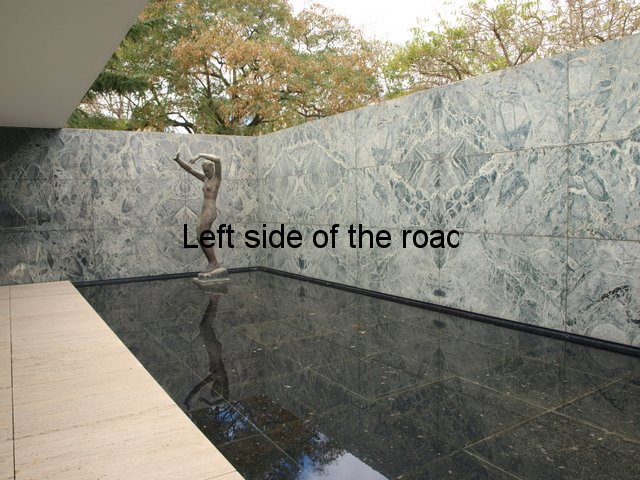
When the exhibition finished attempts were made to find a buyer for the structure, and there was even a proposal to establish a restaurant in the location, but that all fell through and the German government decided to sell the iron for scrap and sent the travertine, marble, onyx (the types of stone used in the original) and the sculpture of a female nude (Der Morgen, ‘Morning’), by George Kolbe, back to Germany.

‘Less is more’ – the Mies van der Rohe motto

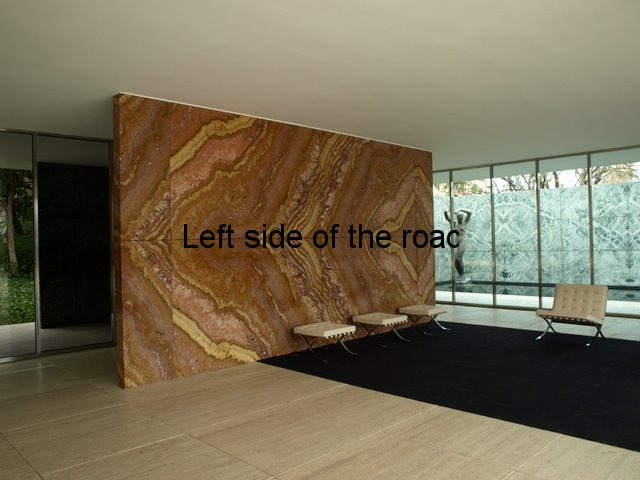
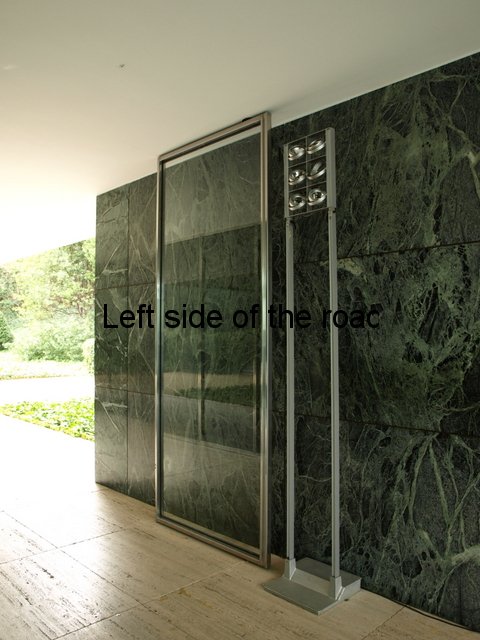
The Minimalists arose as a reaction to the over decoration that had been a dominant force in European architecture and was heavily influenced by traditional Japanese design. The Minimalists sought to reduce buildings (as well as objects and art) to their necessary elements, eschewing decoration that was over and above what was used, in a practical manner, to achieve the desired result. In the Mies Pavilion this is shown by the use of colourful and imaginatively pieced together slabs of marble and onyx for the walls or the travertine used on the floor.

Entrance - Mies van der Rohe Pavilion

Entrance – Mies van der Rohe Pavilion

The Bauhaus – the inspiration for Mies

Mies van der Rohe was one of the triumvirate of Minimalist architects which were to have a considerable impact upon the architecture of the 20th century, although this is not always that obvious. The other two were the Swiss Charles-Édouard Jeanneret-Gris, but always known as Le Corbusier, and a fellow German,Walter Gropius.

It was Gropius who had designed the Bauhaus in Dessau, in the Weimar region of Germany, which was completed in 1926. This established some of the ‘ground rules’ for Minimalist architecture with its angularity, use of iron columns, concrete and a lot of glass, as well as dividing the building up (it originally functioned as an art and design college, together with accommodation for students and staff) so that the design reflected the use of each section.

However, the Bauhaus complex exposed problems (I’m not going as far as to say failings) of the Minimalist approach, something which the Pavilion in Barcelona never would as it was never ‘used’ in a real life context, only ever being an exhibition space, a concrete realisation of the ‘idea’.

To some extent these problems arose due to the use of glass and the openness that this implied. In the Bauhaus, aligned as it was to make maximum use of natural light, the students would be cooked as the sun shone through the windows in the summer – if the Bauhaus had been constructed in Britain this would not have been a problem. In order to survive the ‘solution’ was to put up curtains, a total anathema to Minimalist thinking. In the winter the problem was the reverse. Any heat created inside the buildings just dissipated through the not very insulation efficient windows with their iron framework.

Privacy perhaps wasn’t a major issue for the classrooms but it was for the teachers in their homes, situated a short distance from the college building – or at least for one of them, the Russian born painter, Wassily Kandinsky.

It seems he didn’t like living in a ‘goldfish bowel’ and painted over the glass windows to his house. He also didn’t like the minimalist decoration of the house where the walls were painted in plain colours to reflect the function of that particular space. He was reputed to have used a palate of hundreds of colours in counteracting the original, simple selection.

This situation, didn’t, couldn’t and will never arise from the Mies Pavilion as it has no real function, perhaps yet another ultra-minimalist statement.

The Pavelló Mies

After the death of the Fascist Franco the Barcelona Municipality decided to attempt a reconstruction and as all the plans, together with photographs of the original, were to hand the project was completed and the ‘new’ building opened on 2nd June 1986.

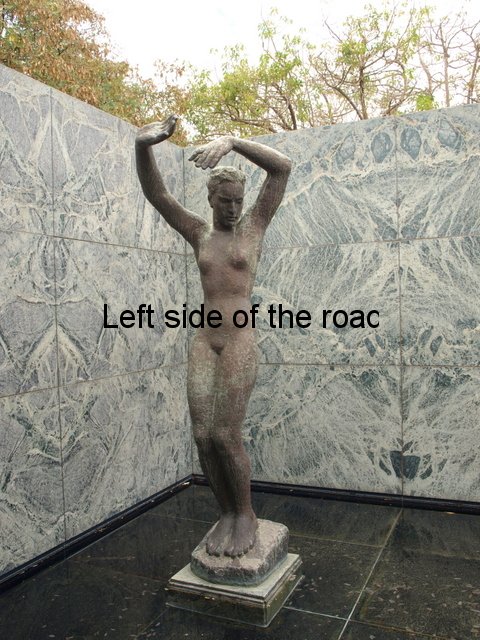
The statue of Morning, by Kolbe, had found a permanent home in a public square in the Schöneberg district of Berlin so a copy was made and that now stands where its original had in 1929, on a plinth in the small pool.

'Der Morgen' - Morning - George Kolbe

‘Der Morgen’ – Morning – George Kolbe

The Barcelona Chair

Minimalists tried, when at all possible, to not only design the building but all the interior fittings within the structure. At the Bauhaus, for example, Gropius designed the light fittings, power sockets, door and cupboard handles to mention just a few. In this way they were very similar to the Modernists the result of which can be seen in the Museu Nacional d’Art de Catalunya, at the top of the steps above the fountain a few minutes walk from the Pavilion.

For Mies this resulted in the design of what is still known as the ‘Barcelona Chair’, a simple padded chair for one person based upon a tubular steel structure. This is still made and bought in their thousands today and is one indication of the longevity and reach of Minimalist ideas which might not be recognised by those who sit in those chairs – which are said to be quite comfortable. Don’t try that at the Pavilion or you’ll be thrown out on your ear.

'Barcelona' Chair - Mies van der Rohe Pavilion

‘Barcelona’ Chair – Mies van der Rohe Pavilion

Just as an aside, another well-known everyday design from that period of the 1920s is the anglepoise lamp.

A breath of fresh air?

Although in no way as extensive as the Modernist buildings in other parts of Barcelona and Catalonia the Mies Pavilion is still worth a visit but it might be worthwhile doing a little bit of research before a visit so you know what you are looking at and the intentions of the architect. At the same time only a real aficionado of Minimalism would be there for more than a half an hour – if that.

Location and contact details:

Pavelló Mies van der Rohe

Aviguda Francesc i Guàrdia 7

Parc de Montjuic

08038 Barcelona

Tel: +34 93 4234016

Internet: The Mies van der Rohe Foundation

How to get there:

The nearest Metro station is at Plaça de Espanya – this is also a major bus intersection. From there take the exit directing you to the Palau de Congressos and the Museu Nacional d’Art de Catalunya. Walk along the right hand side of the avenue, go up the first set of escalators and then turn right alongside the sandy park space. The building is just in front of you but remember it’s minimalist so you have to look hard.

Opening times:

Everyday between 10.00 – 20.00

Entrance: €5

(At 10.00 on a Saturday a free guided tour in English is advertised. You still have to pay the entrance but there was no information of having to book in advance.)

More on Catalunya/Catalonia