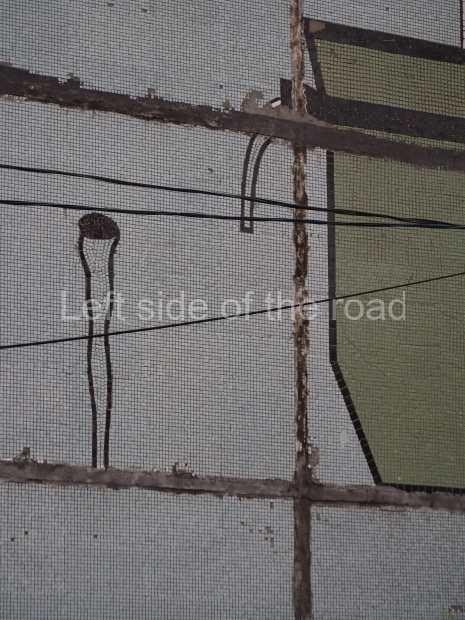
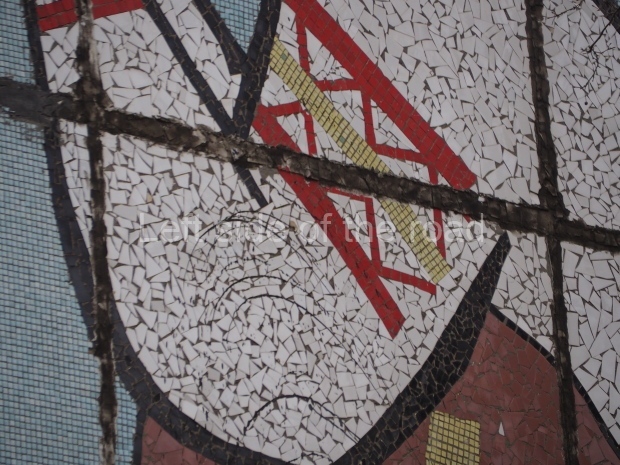
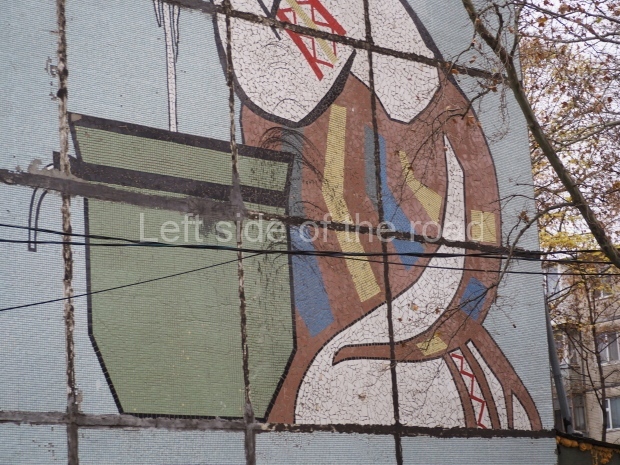
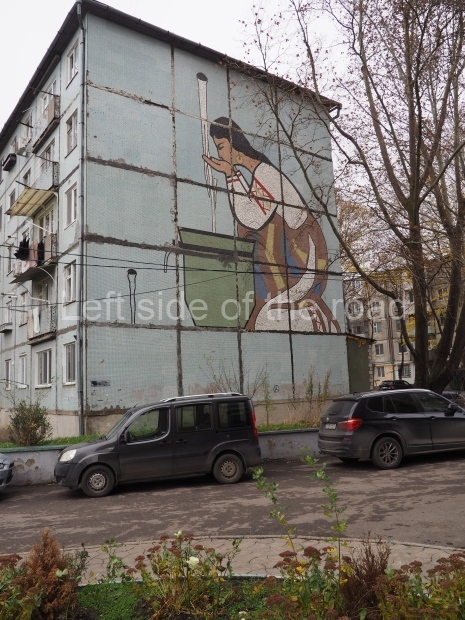
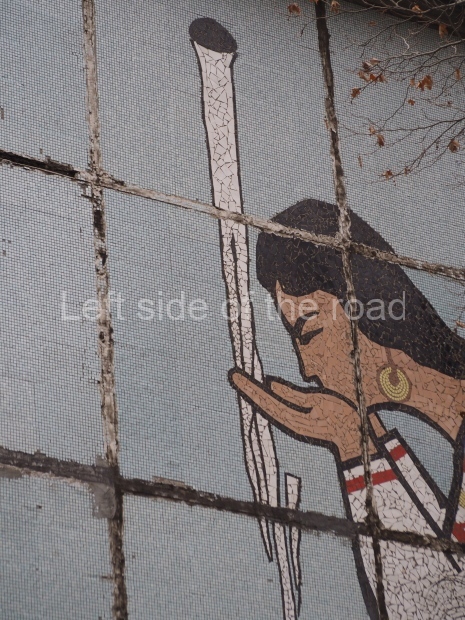
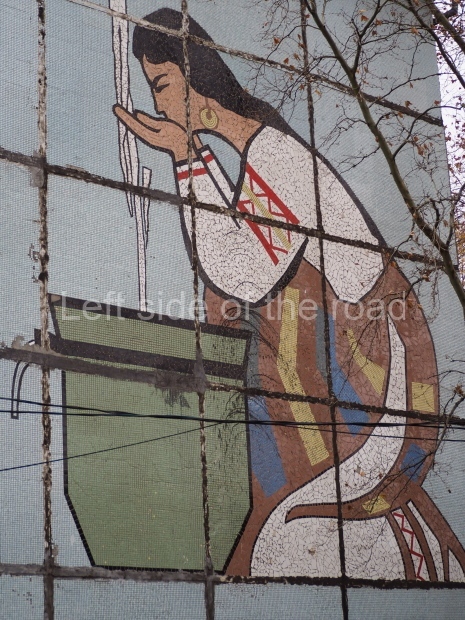
Girl drinking from a stream
More on Moldova – on the Post-Socialist Countries – Eastern Europe and Asia page
Soviet-era mosaics in Cahul – Gagauzia
VI Lenin and Palace of Culture Mosaic – Ribniţa – Pridnestrovie
Soviet Mosaics – Bălți – Moldova
Below you can find information and images, together with locations, of some of the mosaics (so far identified) in the northern Moldovan city of Bălți.

Lenin Factory
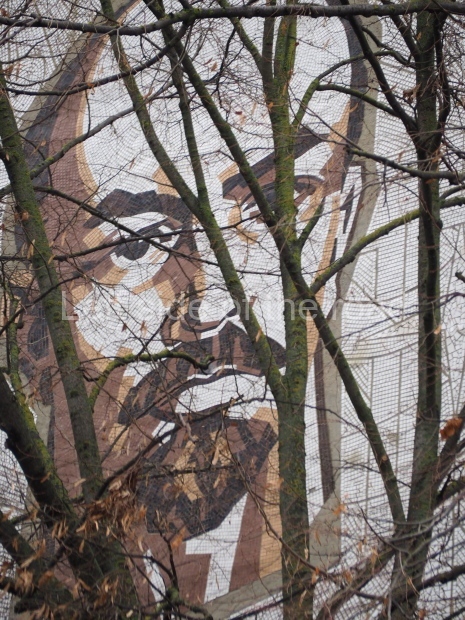
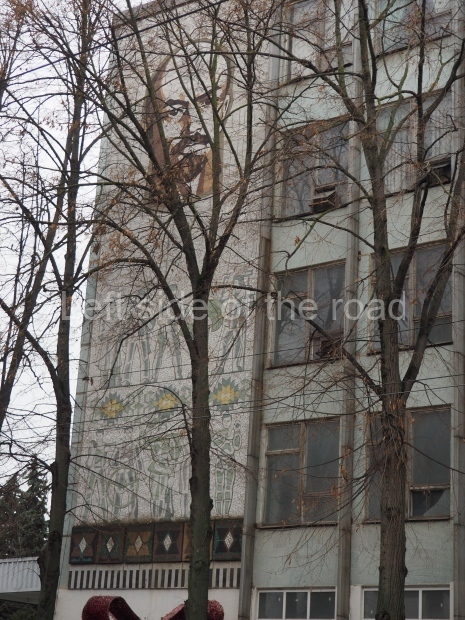
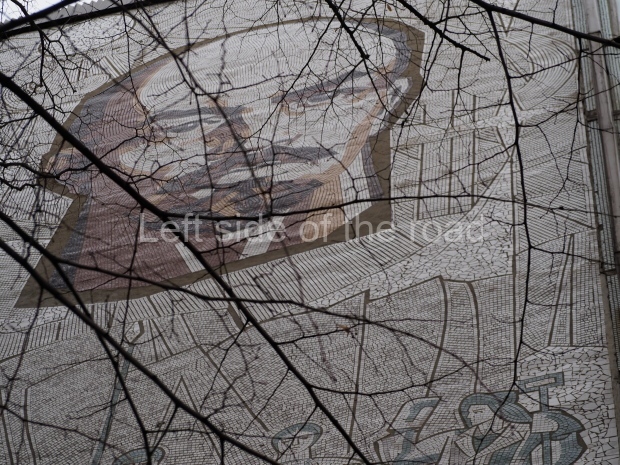
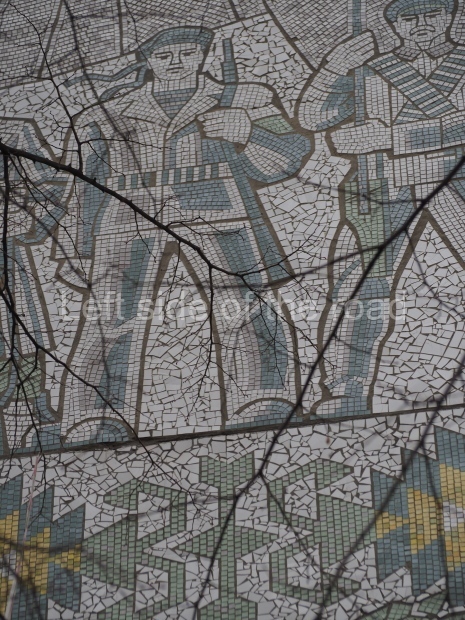
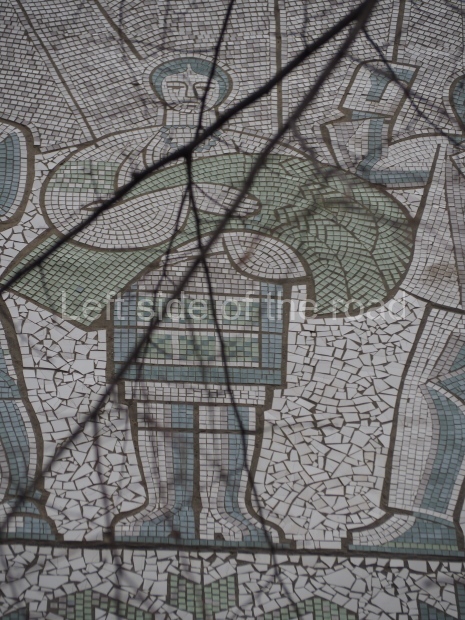
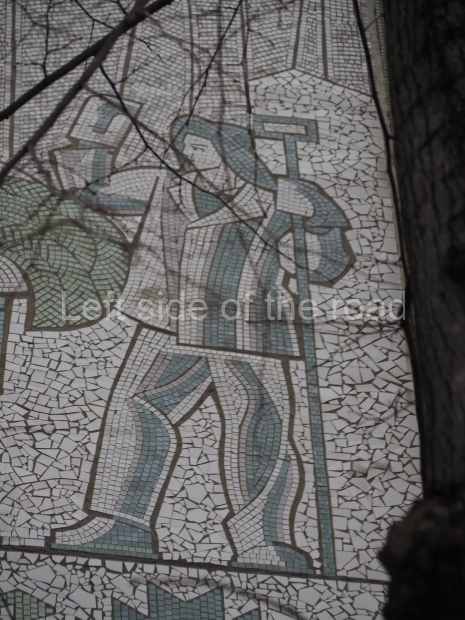
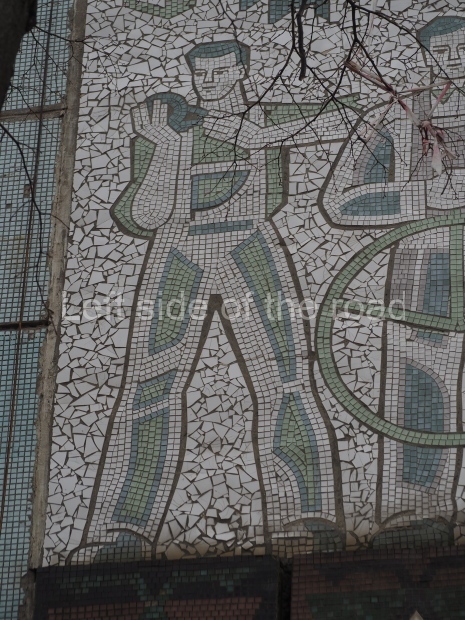
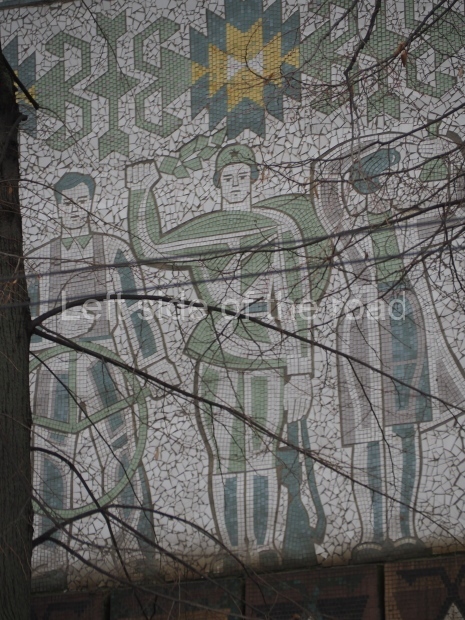
Mosaic on the ‘Lenin Factory’
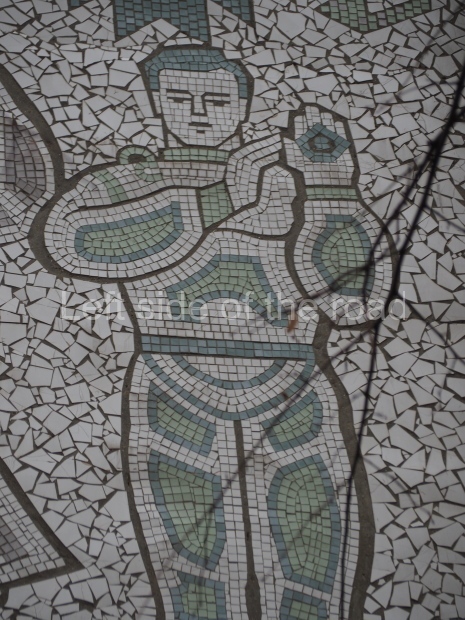
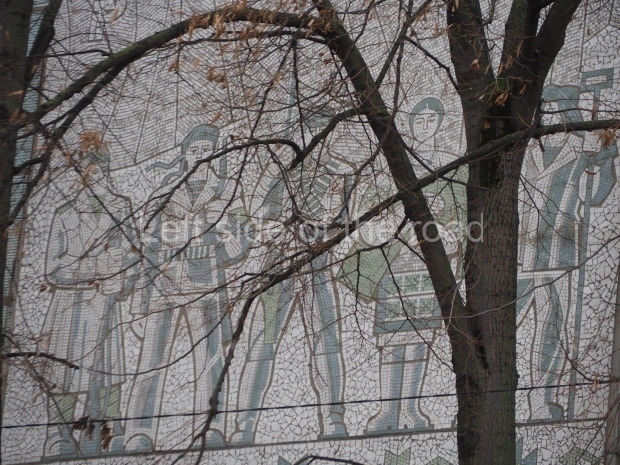
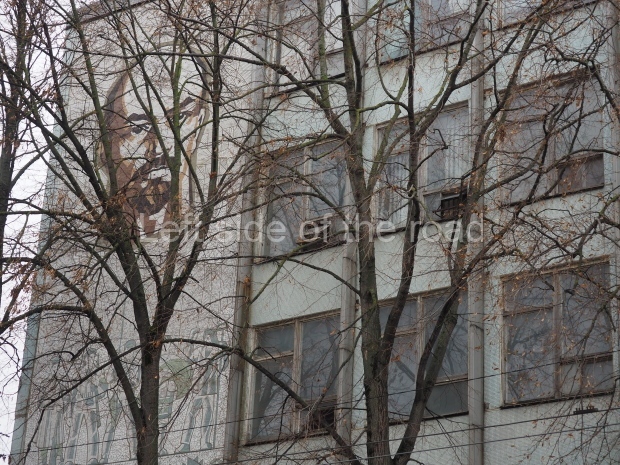
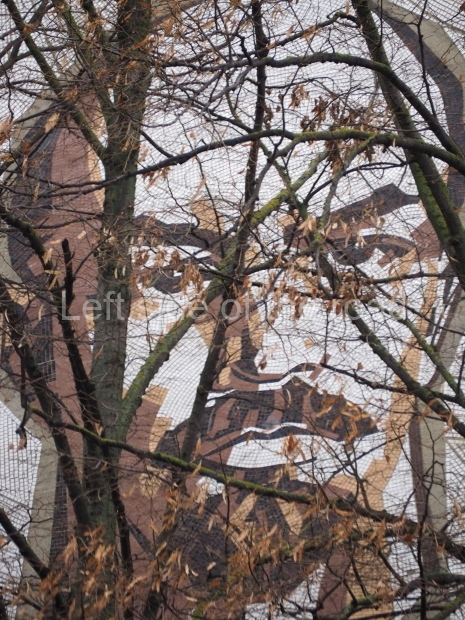
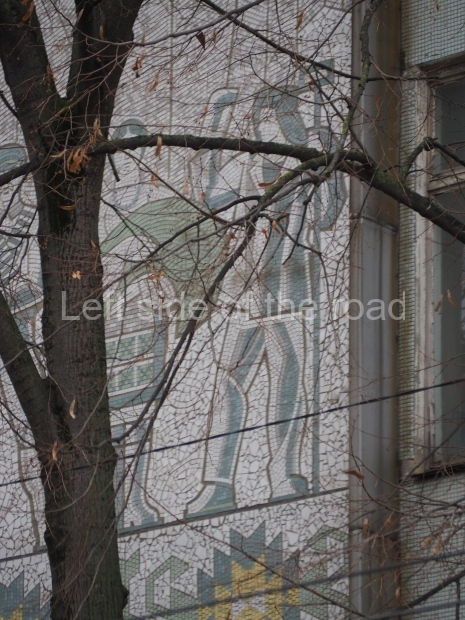
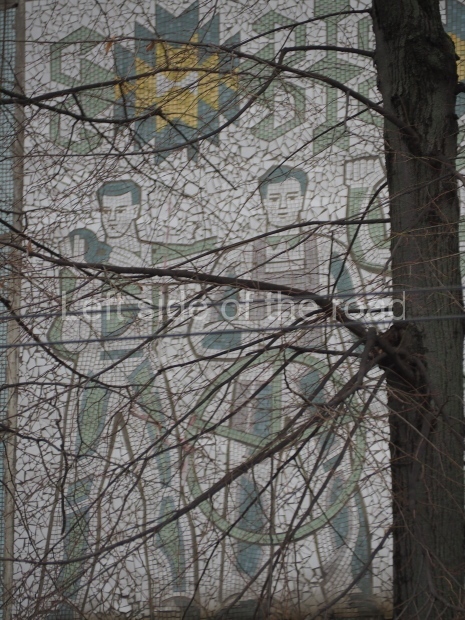
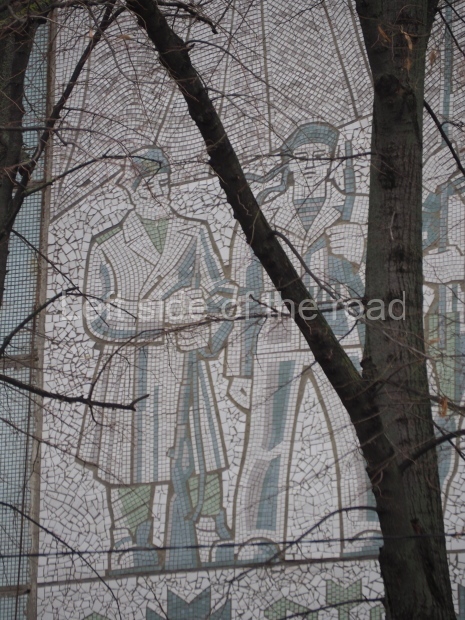
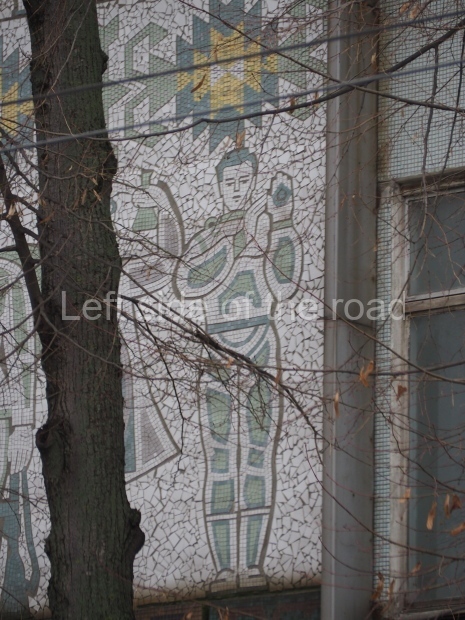
By far the best mosaic in Bălți, is, unfortunately, season specific – meaning that when the trees are in full leaf it is almost impossible to see it from any distance or to get an idea of its story as the trees are basically a green, blocking curtain. In the winter the conditions aren’t perfect but at least you can get an idea of the images and what they represent.
The mosaic is at the edge of the building fronting on to the main road of what I understand was a factory. Producing what and whether it is still functioning I don’t know. At the top of the mosaic is a large image of Vladimir Ilyich’s face, which is the height of the two top floors of the five storey building. It is a serious and unsmiling image. (I don’t know why but this is the image that is normally presented of the great Communist leader – as if he didn’t know how to have fun. The exception to this (in the images I have had the privilege to have witnessed) is the sculpture outside the factory in Karacharovskaya Street in Moscow – where Vladimir Ilyich is being carried aloft by jubilant workers.)
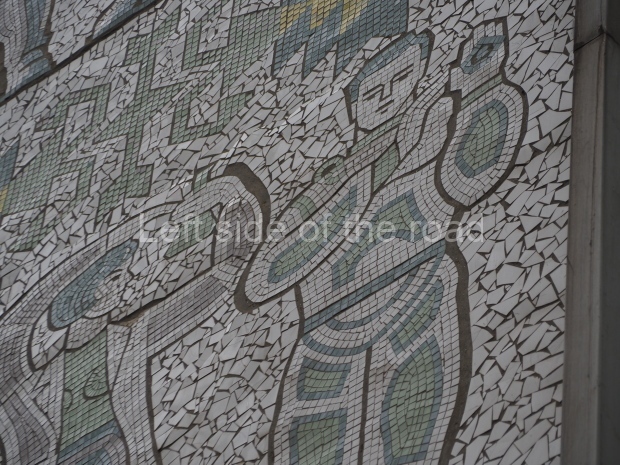
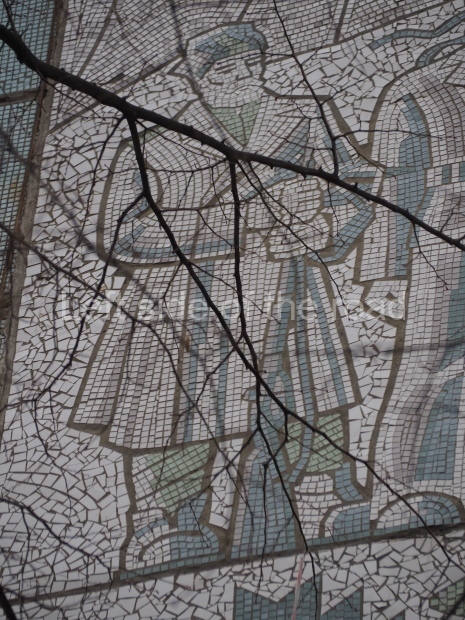
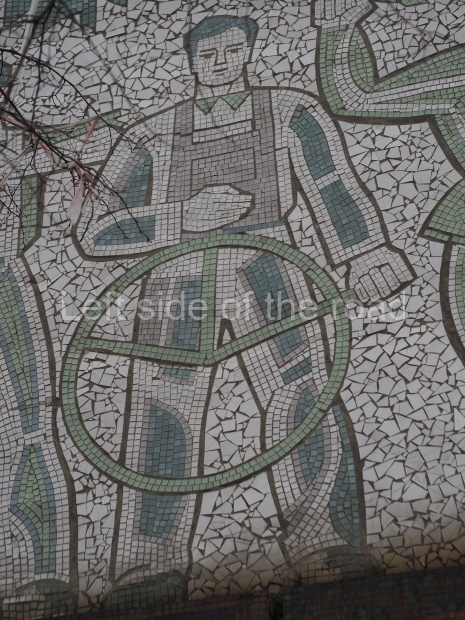
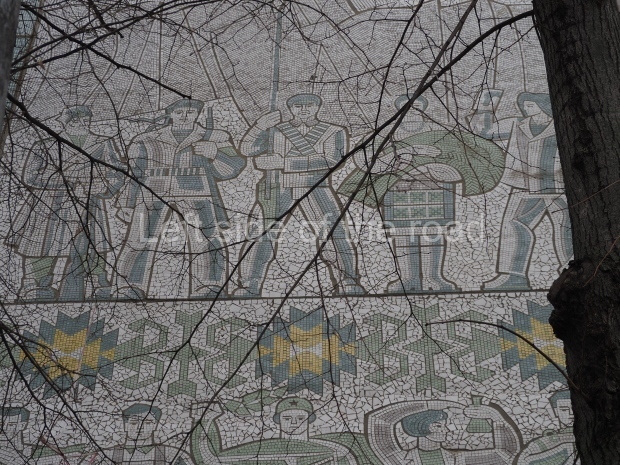
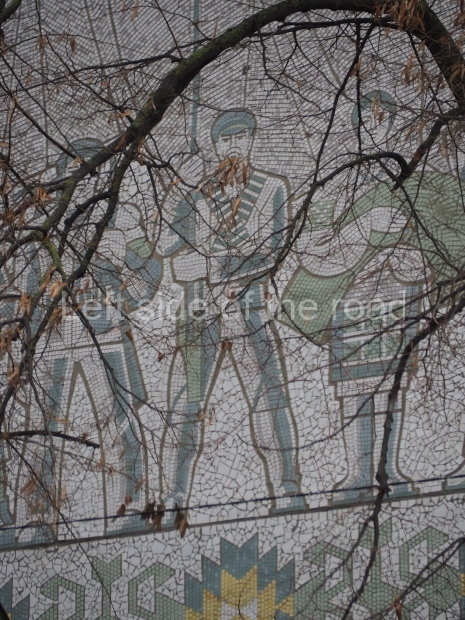
Below Lenin is a line of five stalwarts, mainstays, of the Socialist Revolution. From left to right we have an older male, armed peasant – perhaps representing those who stormed the Winter Palace in 1917 and initiated the October Revolution; next a Red Navy sailor – possibly from the Cruiser Aurora that fired the shot to begin the attack on Tsarism; in the middle a male Bolshevik, the Communist leadership of the Revolution; followed by a female collective farm worker who is holding a huge sheaf of wheat – this is a very common image to represent collective/State farms in the Soviet Union and also demonstrates the active involvement of women and their role in the construction of Socialism; and, finally, on this row, the image of a male steel worker – representing industrialisation.
This group are, more or less, the height of one floor of the building – as are the next row of five representatives of Socialist construction.
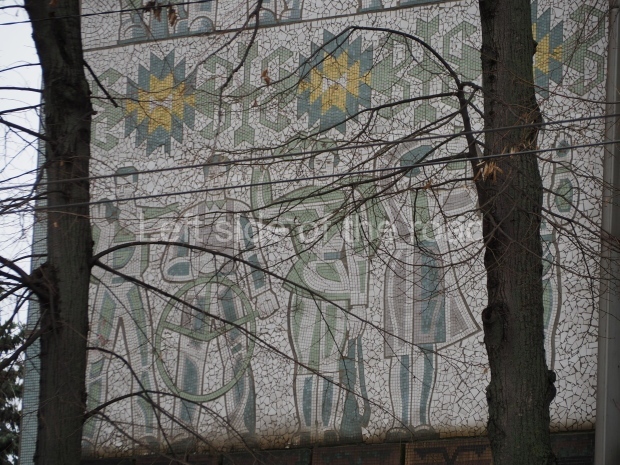
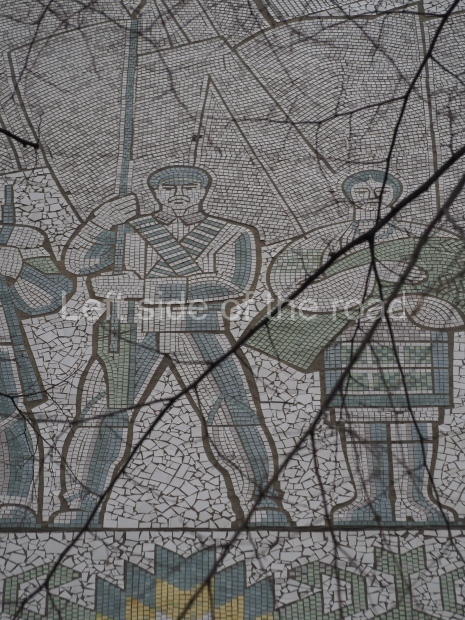
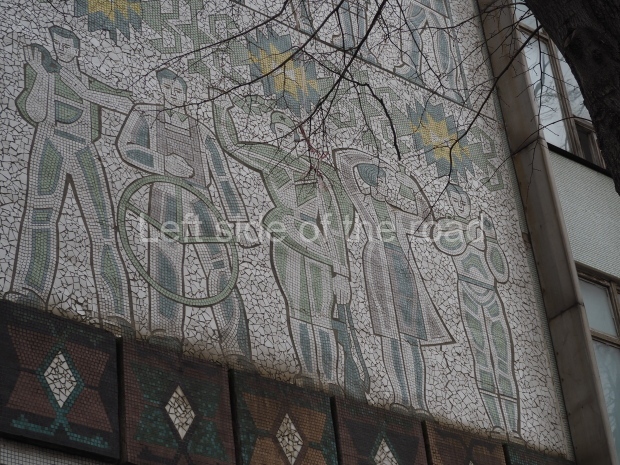
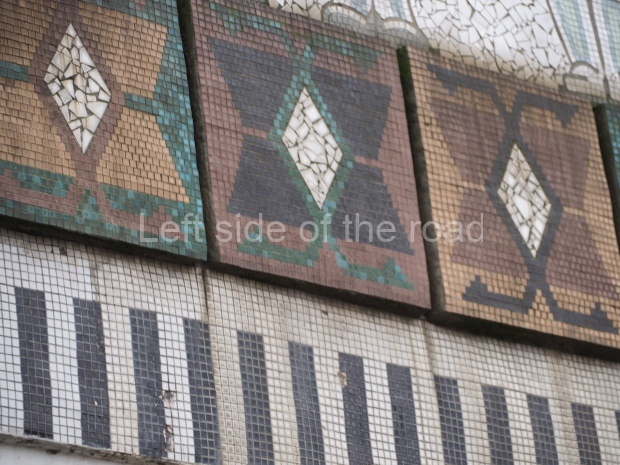
Separated from their comrades above by a row of geometric designs and colourful sunbursts is another group of five. They carry the story of the construction of Socialism forward from the line above.
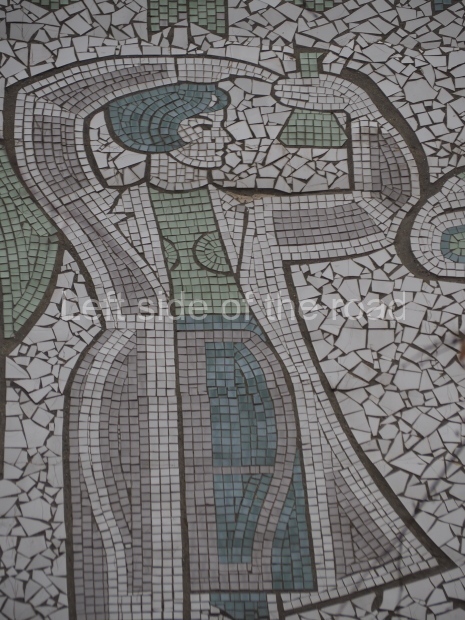
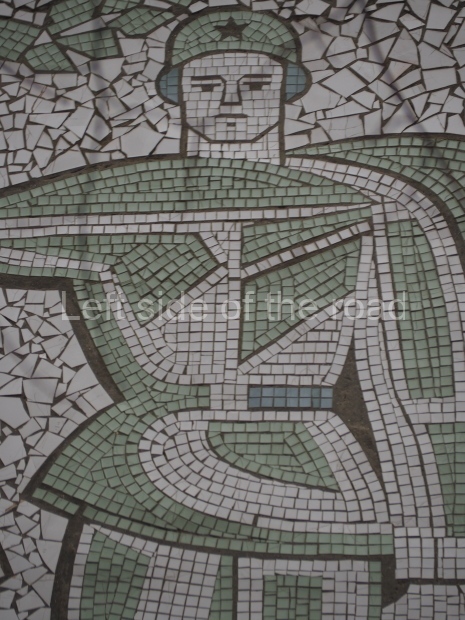
I’m not exactly sure what the two males on the left represent. I assume engineering and technology, moving on from the heavy industry of the steel worker at the end of the line above. Then we have a contemporary Red Army man, with the Red Star proudly displayed on his helmet. He is followed by a woman holding a glass Erlenmeyer flask (as we have seen before in the mosaic on the Palace of Culture in Ribniţa) – representing the sciences and finally a male who I think represents atomic/space exploration, taking the country into the 21st century.
As far as I could see the mosaic is in an amazingly good condition. I’m assuming this is only by chance and not by any conscious effort on behalf of the Bălți authorities. The trees which effectively hide the mosaic from view in the summer also protect it in the winter. They are not so close as to create a hostile environment in difficult climatic conditions but close enough to provide protection when the conditions become harsh.
Location;
Strada Decebal 13
GPS;
47.76051 N
27.91581 E

Primary school
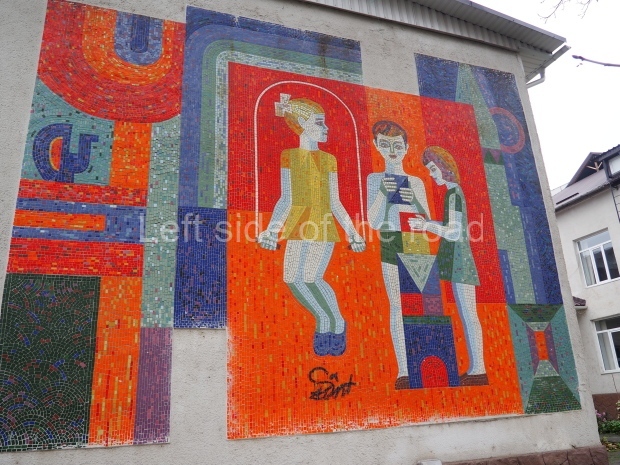
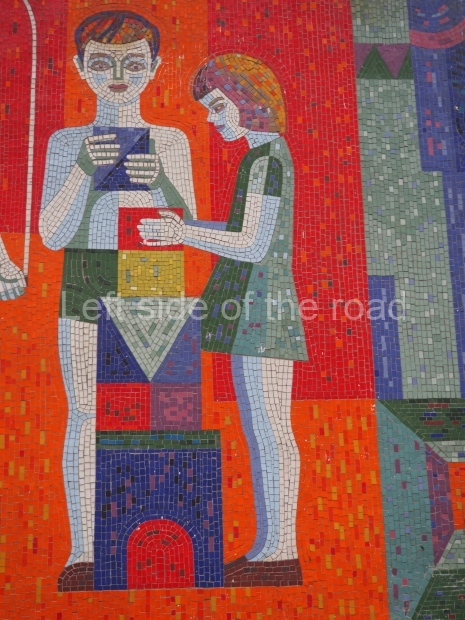
Primary School Mosaic
This is a one panel mosaic (as opposed to the multi-panels of the kindergarten in Cahul) which provides a colourful backdrop to the play area of the children of this small school close to the centre of Bălți.
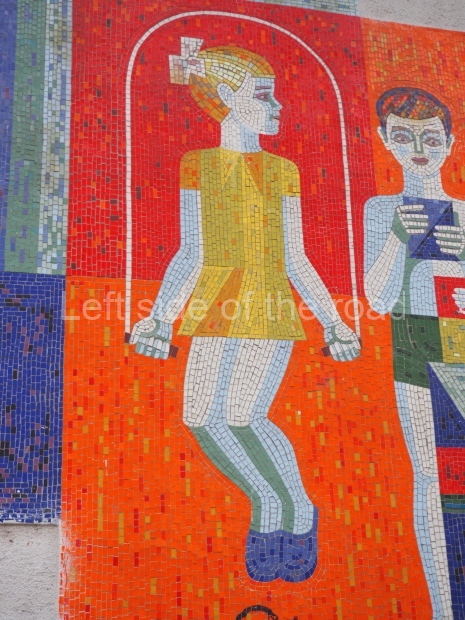
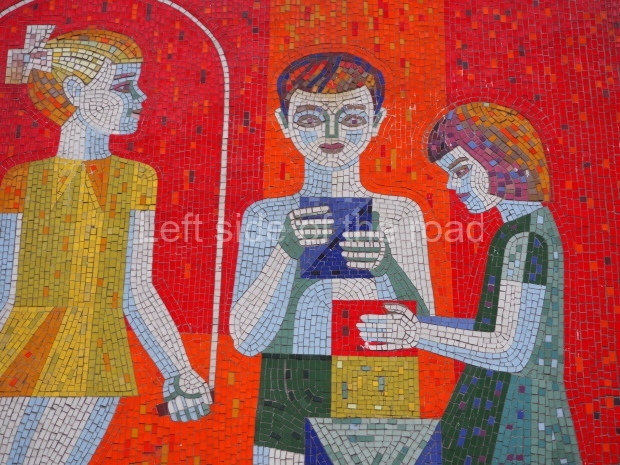
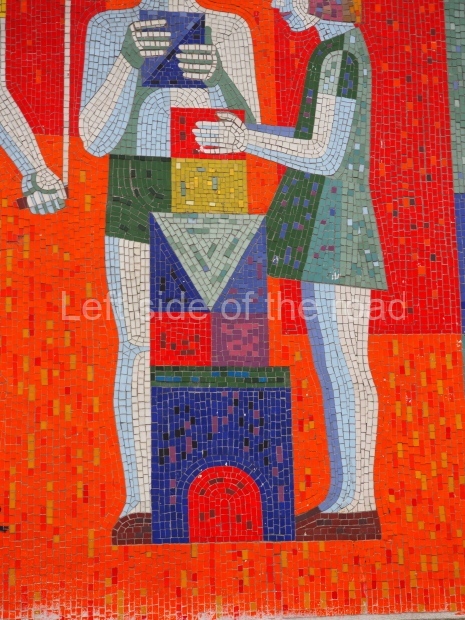
What we have is a young girl skipping on the left hand side and a boy and a girl building a structure with wooden building blocks on the right. This small group is surrounded by geometric designs to add more colour to the art work.
Apart from a missing panel (on the bottom left) and a black graffiti scrawl below the skipping girl the mosaic seems to be in a good condition.
Location;
Mikai Eminescu Primary School, Strada Pushkin 27-29
GPS;
47.75667 N
27.91924 E

Bus station
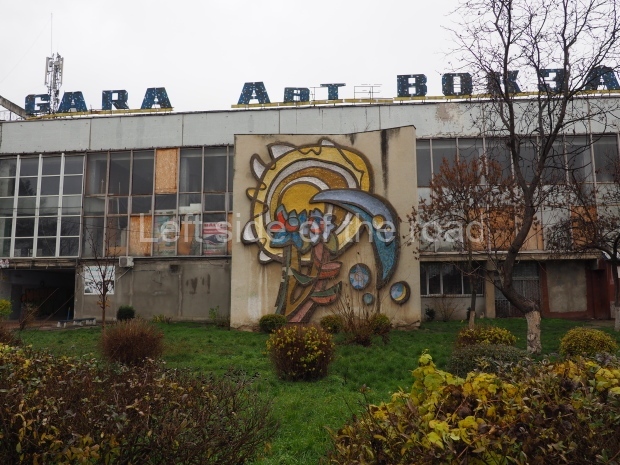
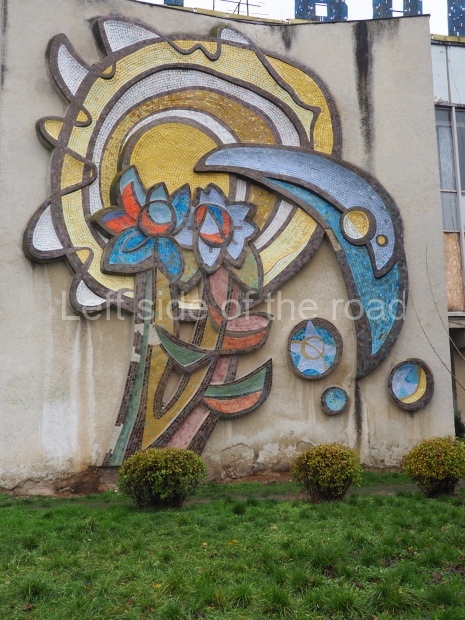
Bus station Mosaic
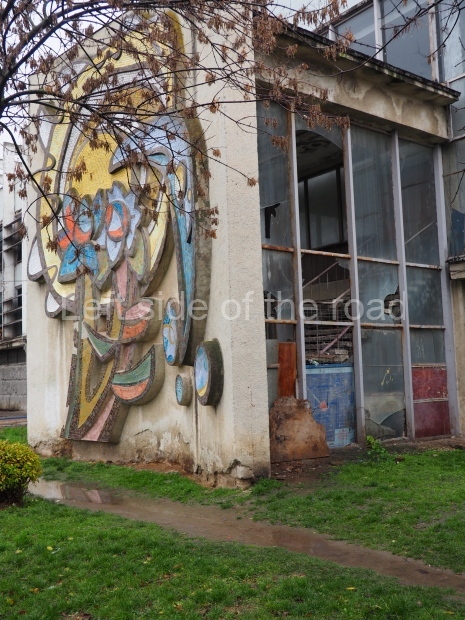
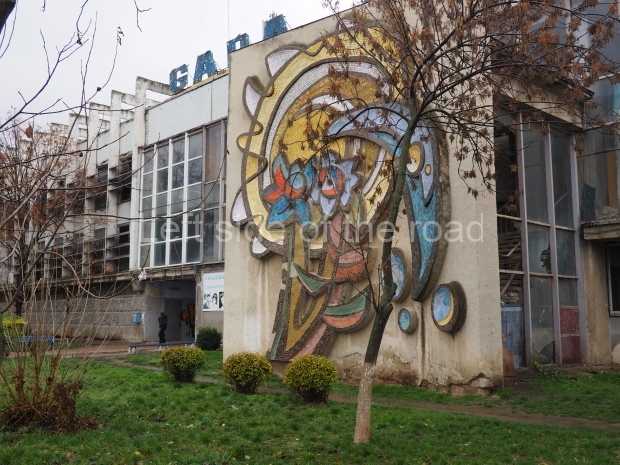
I’ll never understand why so much infrastructure in the previous Soviet Republics was just left to go to rack and ruin after the collapse of the Soviet Union in 1991. This is the case in Bălți where the bus station is still the arrival/departure point for many parts of the country but the large building, which would have originally provided services for passengers, has been abandoned and concern for the welfare of the passengers has gone with it.
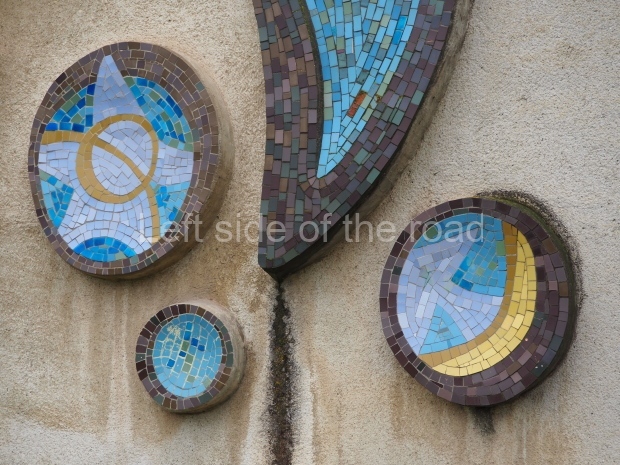
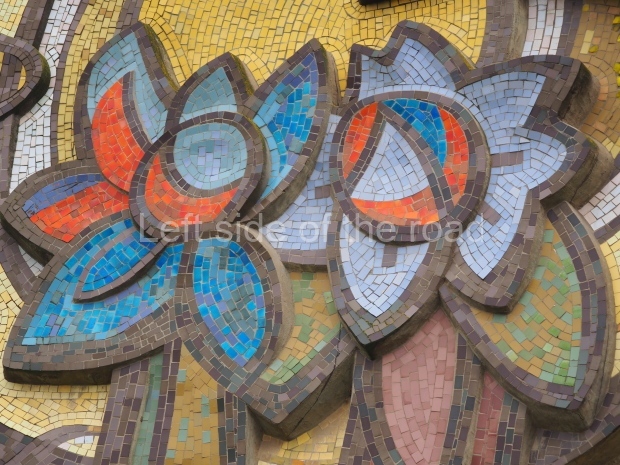
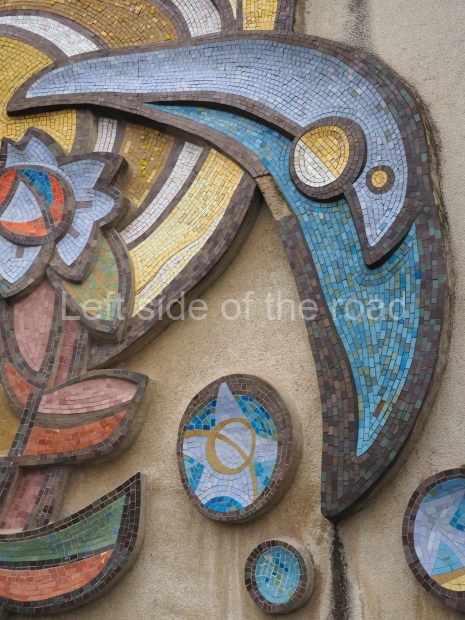
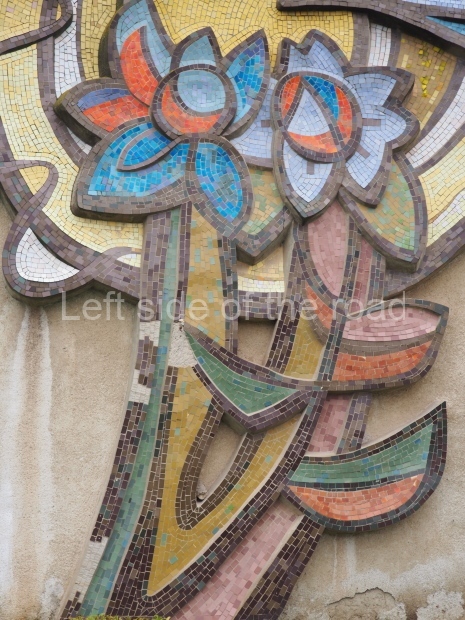
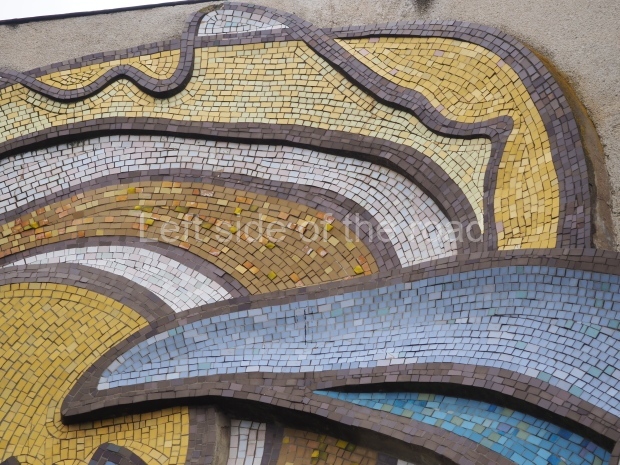
However, even though the building upon which it was placed might be a rotting ruin the mosaic on the façade has fared better. To me we have an abstract representation of some flowers under a large sun with the head of a bird on the right hand side – the beak and an eye all that is depicted. When the building was functioning as designed all passengers going into the building would have passed this mosaic and would have been aware of it. However, now entrance to departing buses is by the road at the left hand side of the building I wouldn’t be surprised if, when asked about the art work the reply would be ‘what mosaic?’
Location;
Strada Stefan cel Mare 2
GPS;
47.76972 N
27.94195 E

Girl in traditional dress
Apartment buildings mosaics
There are a number of mosaics (or fragments of) spread over a large area of housing estates in what is known as District 9 in Bălți so it makes sense to lump them all together.
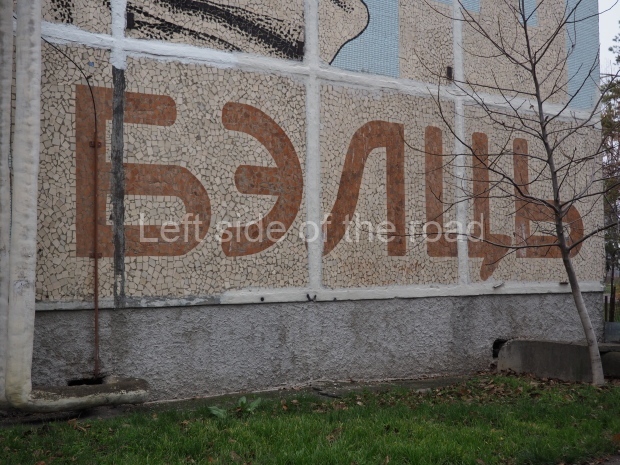
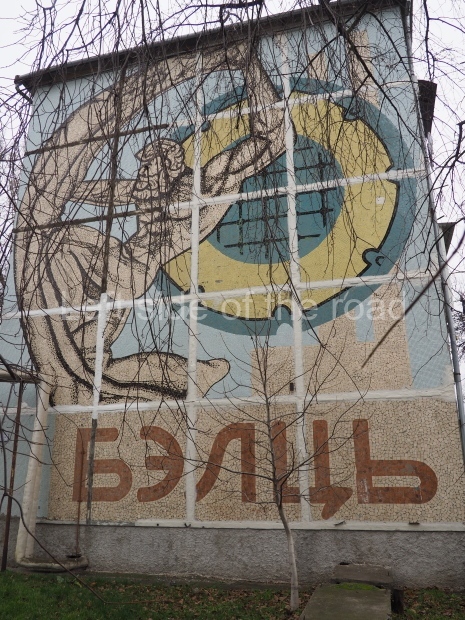
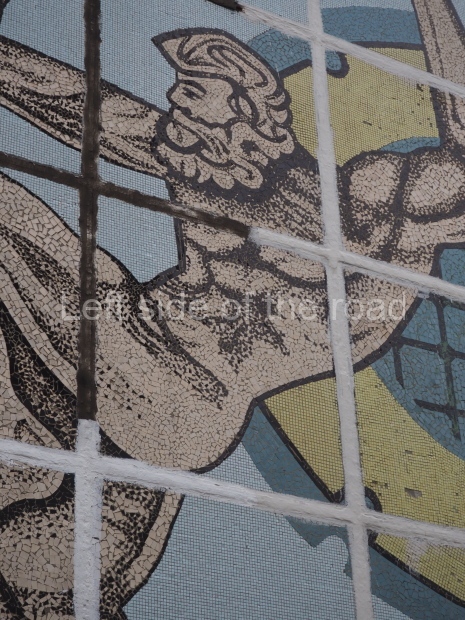
The first is on the side of a wall which is on the edge of the city on the road that comes south from Chișinău. I’m not sure who the character is supposed to represent but as he is riding the wave over the letters БЭЛЦЪ = Bălți, I assume he is basically saying ‘Welcome to Bălți’.

Welcome to Balti
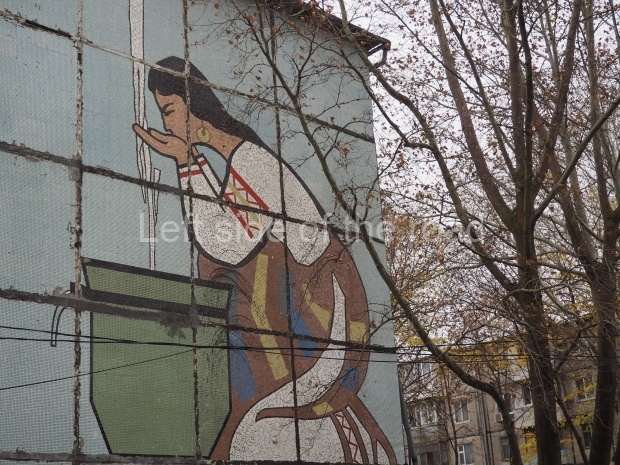
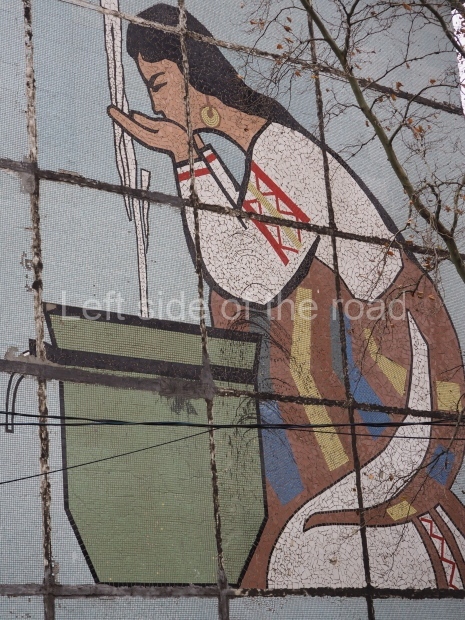
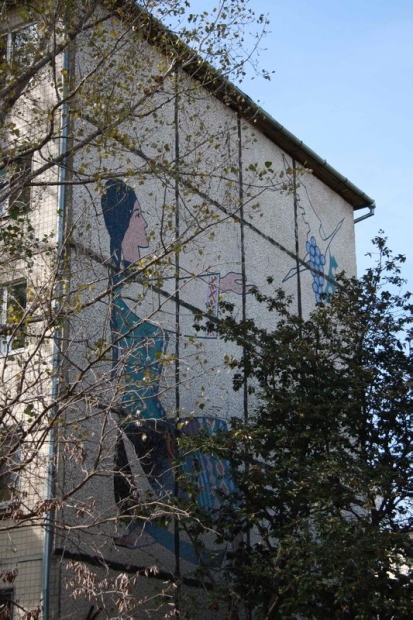
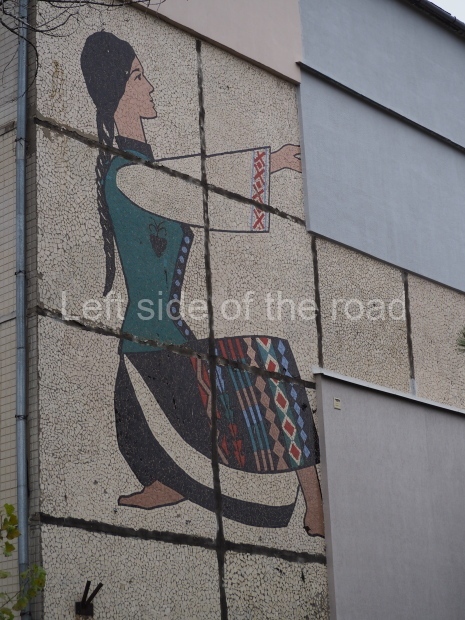
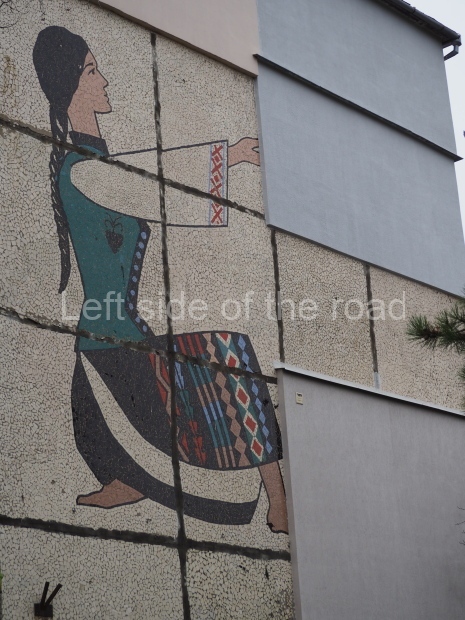
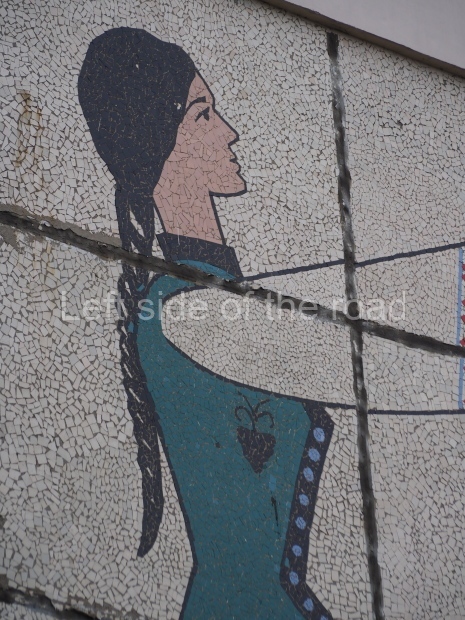
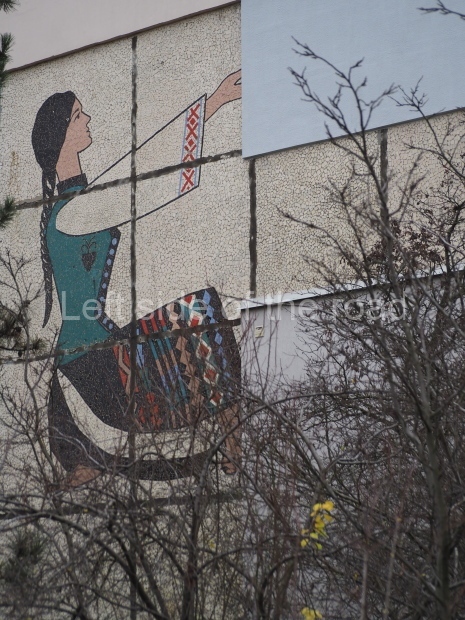
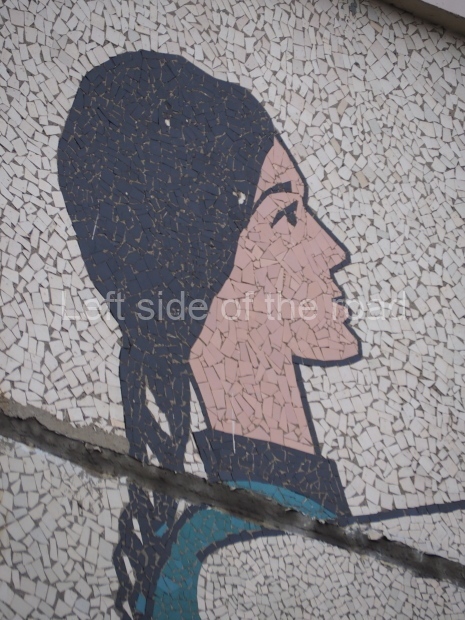
The next to be found in this area is a few hundred meters up the road in the direction of the bus station. This is of a young woman, in profile, dressed in the traditional folk costume of the region. However, we don’t know the full story of the image. Ceramic tiles were the rendering of choice on these buildings and it was obviously decided that to enhance the location artists would be commissioned to create mosaics from these tiles.

Woman without stork
But all rendering will take a battering from the elements and after the end of central control (and I have no idea of who is responsible for what when it comes to previously state owned properties and now, presumably, privately owned) any repairs to the ends of these buildings do not take into account the work of artists 40 or more years ago. That has meant that repairs are carried out in the cheapest and most effective manner possible which, it seems, doesn’t include ceramic tiles.

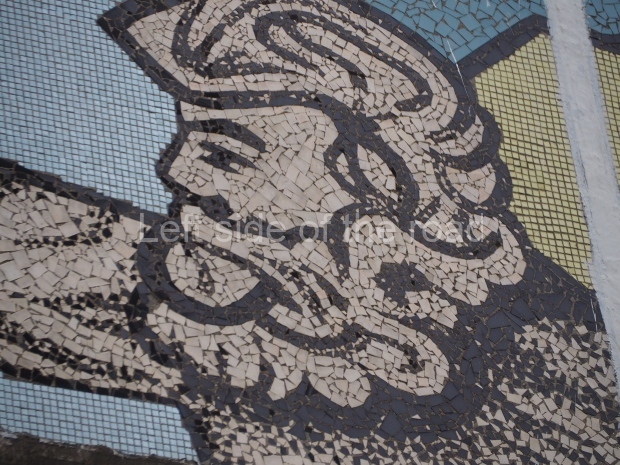
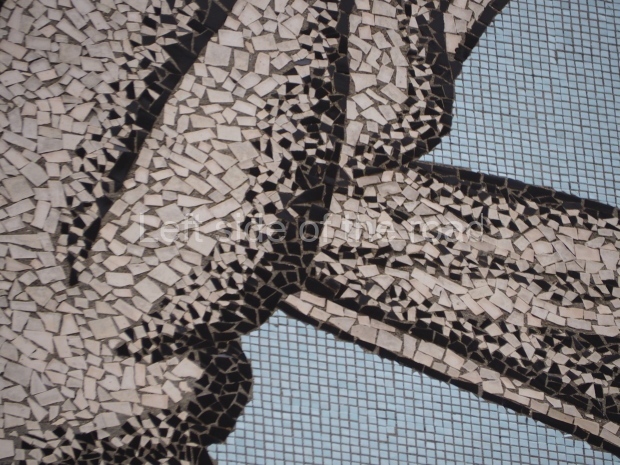
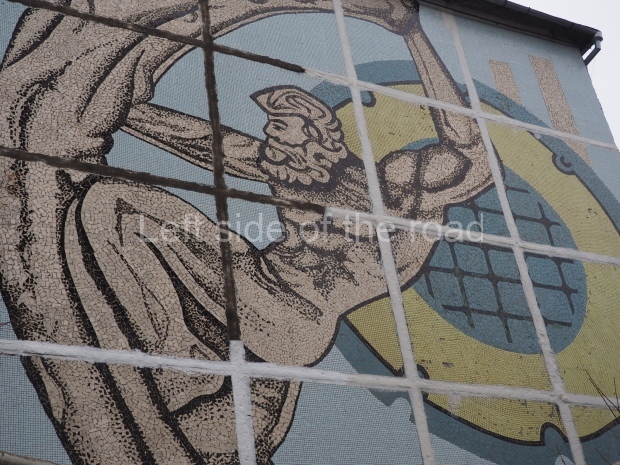
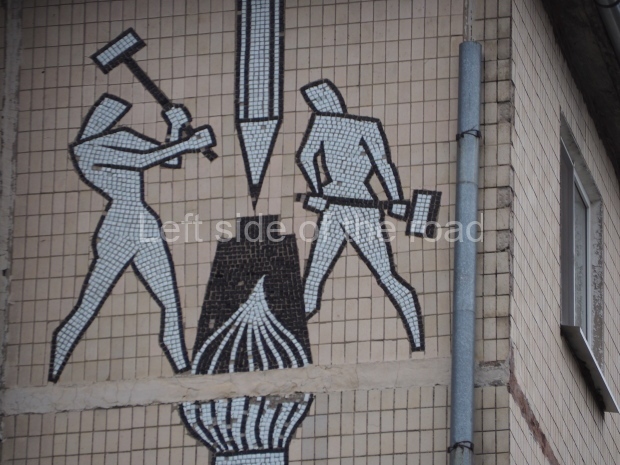
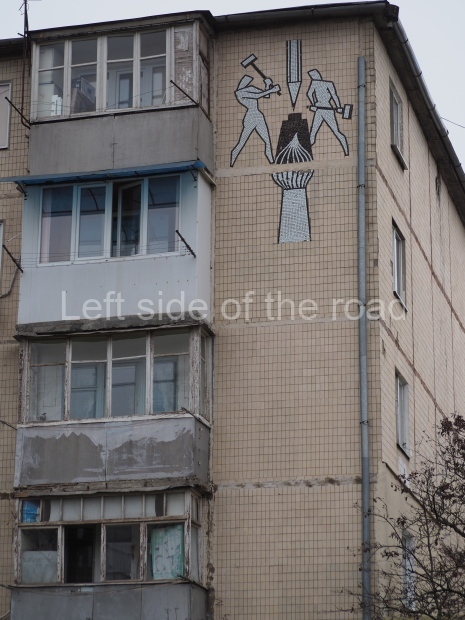
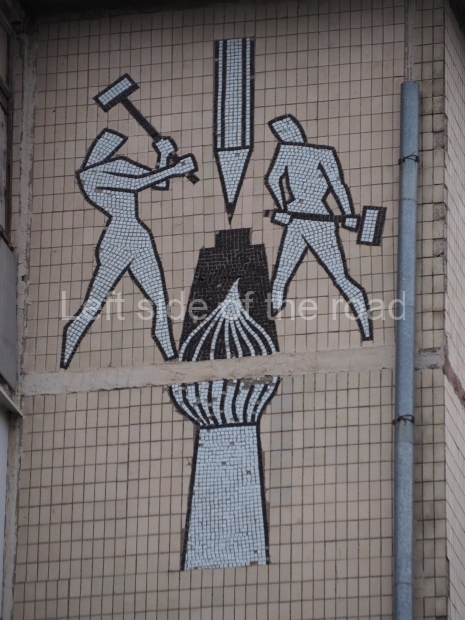
Metal workers
As can be seen in the photos the end walls of the buildings were in sections and if one section is causing a leak into the property then its replacement obliterates whatever might have been originally in place. So, in the case of the image of the young women, we don’t know what she is holding or at what she is looking.

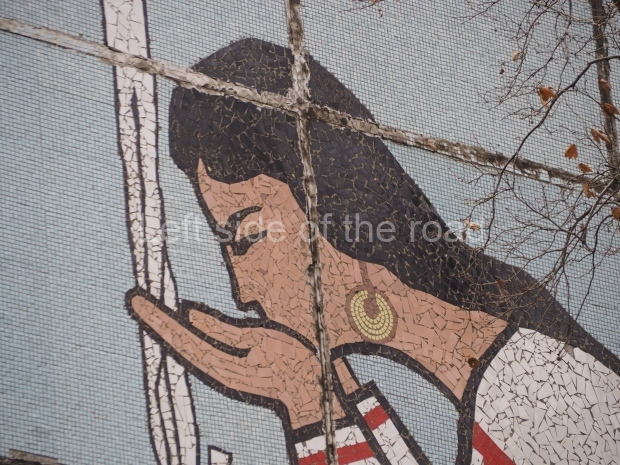
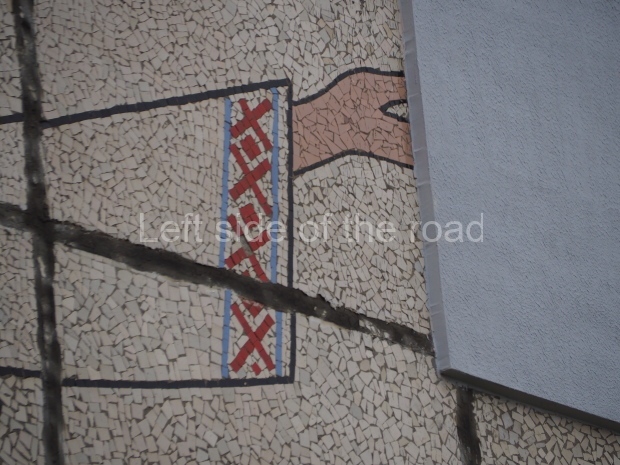
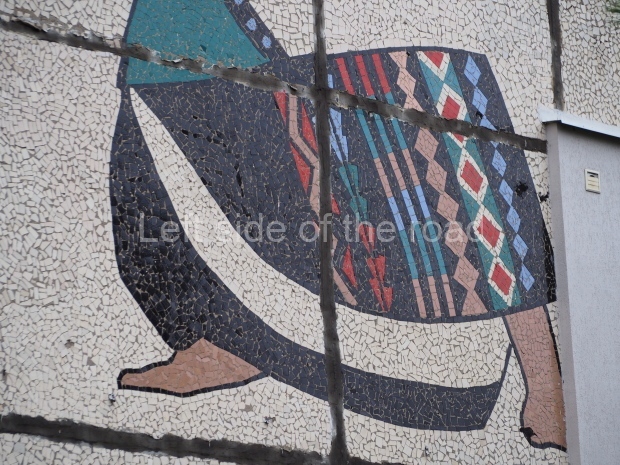
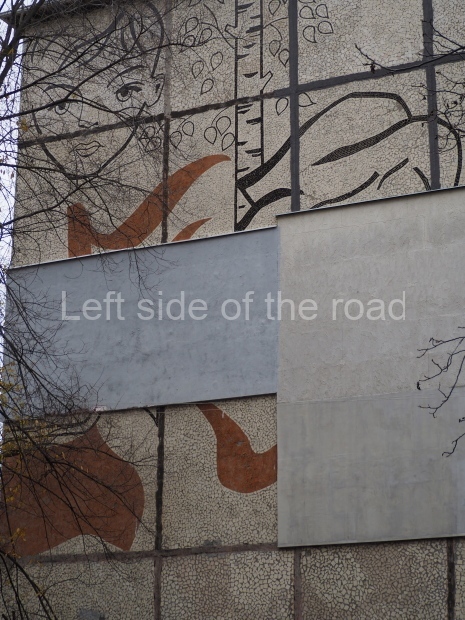
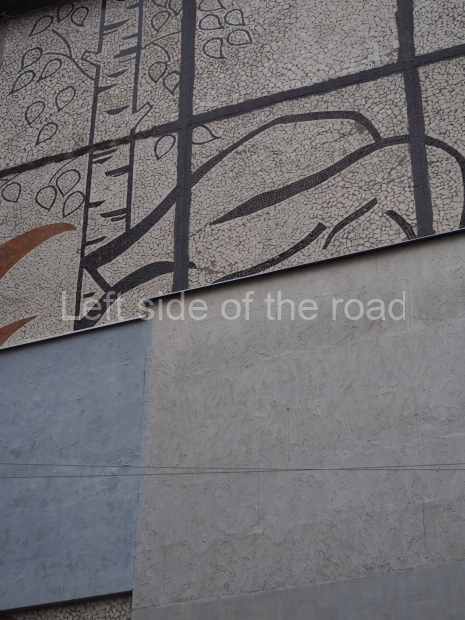
Drinking from a stream
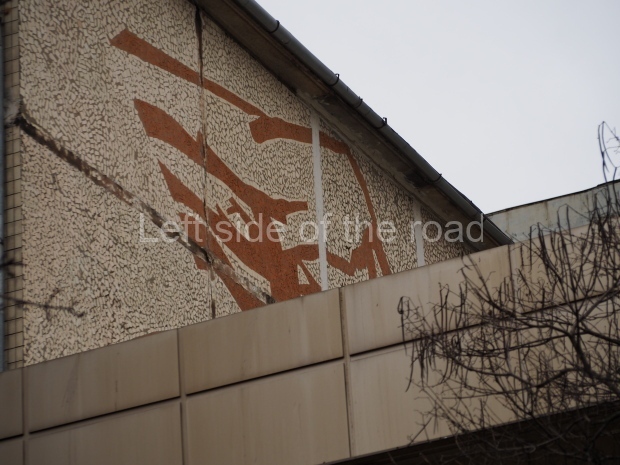
Other mosaics in this area have suffered a similar fate by being partially destroyed by renovation and a couple have been hidden by the construction of more modern buildings.

Partly obscured
Update January 2026 – for the mosaics off Nicolae Iorga
Researching for the post on the Cahul mosaics I happened on some pictures and a little more information about the mosaics on the apartment blocks. The photos show two of the mosaics before they were desecrated when maintenance was carried out on the side of the buildings.

Peasant girl with stork
The full picture of the peasant woman allows the viewer to understand the full story. She is sending off a stork carrying grapes. This comes from a 15th century myth when the Moldovans were at war with the Ottoman Turks. After a long battle the Moldovan army had run out of food so the women back home sent storks with grapes in their beaks to the front and saved their menfolk and allowed them to expel the Turks from Moldovan territory. This stresses the importance of grapes and wine in the Moldovan economy and also referencing the annual migration of storks who nest on high platforms, such as electricity poles and chimneys throughout the country.

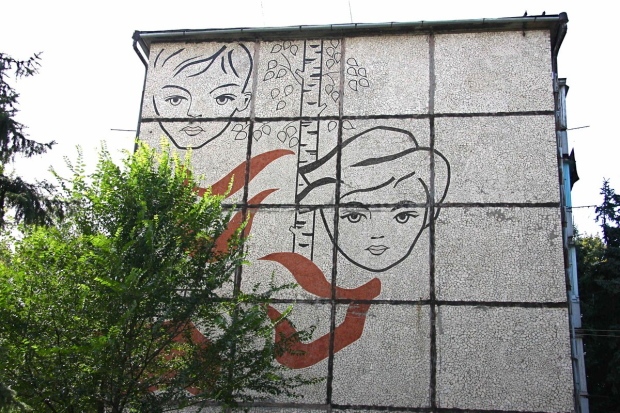
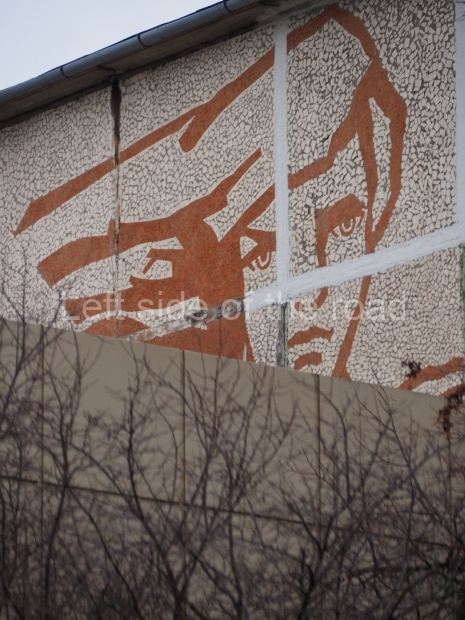
Young Pioneers – 01

Young Pioneers – 02
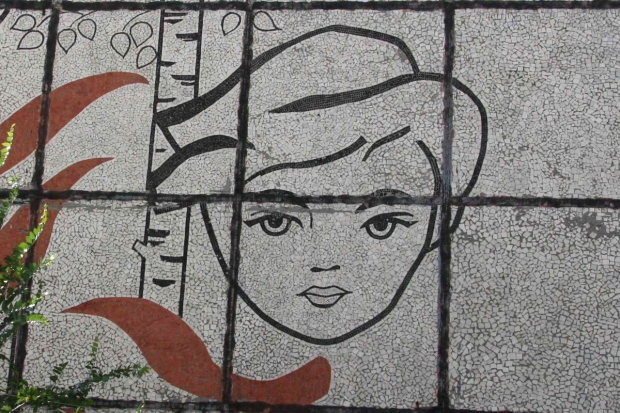
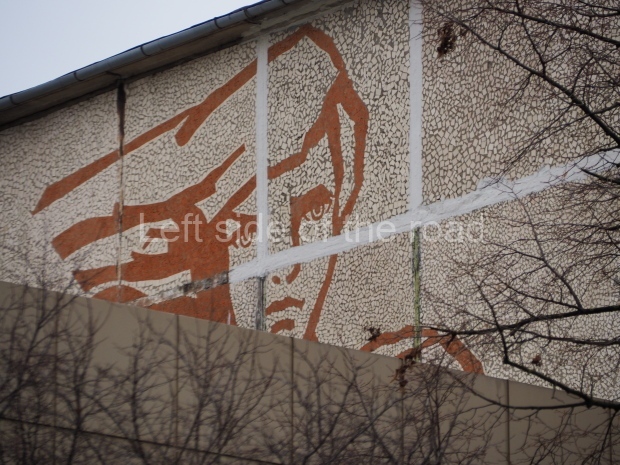
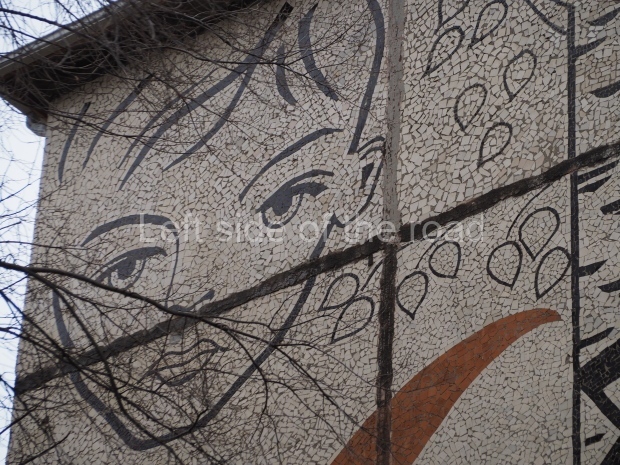
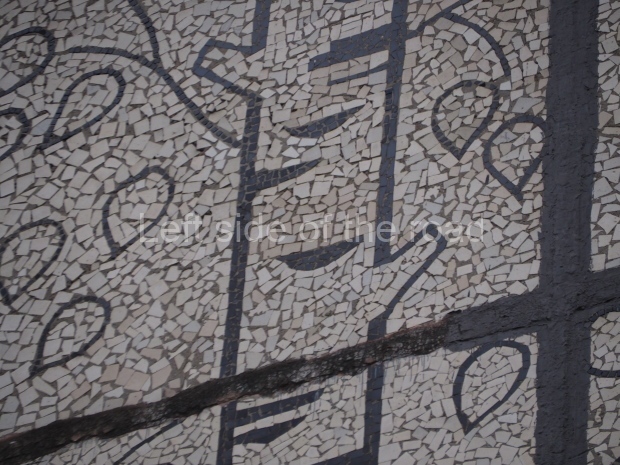
The next is the one is the face of a child. In context (with the whole original design) it is possible to see that the faces are those of the Soviet youth movement, the Young Pioneers – with the splashes of red representing the red scarf and Pioneers wore – together with an image of a silver birch tree. The silver birch was prominent in Slavic mythology and to that base was added resilience and patriotic sacrifice during the Soviet era, especially during the Great Patriotic War.
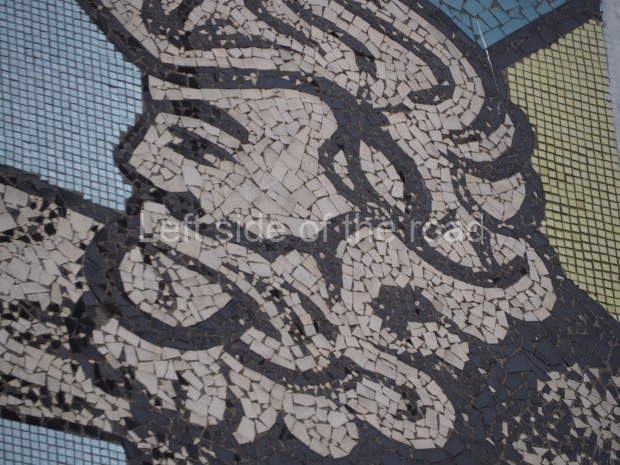
The other mosaic so far identified in Bălți is at the end of an apartment block just off the main street of Stefan cel Mare, this is one of a girl drinking water from a stream.
The location information below is just approximate but it should get anyone interested more or less to the right place. Just take a look around when you get to the GPS point.
Location;
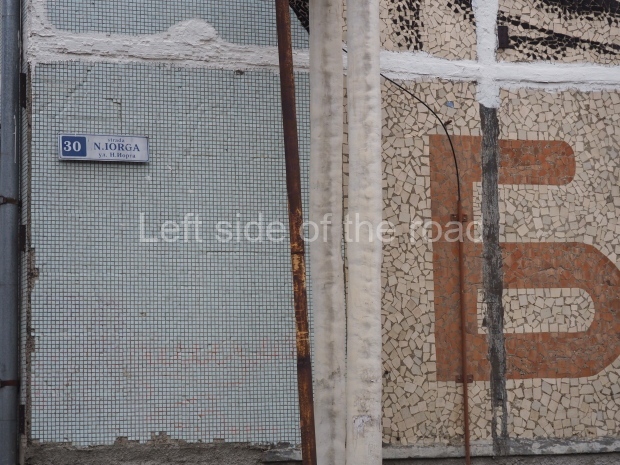
In apartment complexes fronting on to Strada Nicolae Iorga. There’s one at No 30 (1) and the others are in the complex that is across the road from Plaza shopping centre (2) and another on Strada Stefan cel Mare opposite, more or less, Andy’s Pizza (3)
GPS;
1)
47.75729 N
27.94077 E
2)
47.76321 N
27.94079 E
3)
47.76603 N
27.93663 E
More on Moldova – on the Post-Socialist Countries – Eastern Europe and Asia page
Soviet-era mosaics in Cahul – Gagauzia
VI Lenin and Palace of Culture Mosaic – Ribniţa – Pridnestrovie