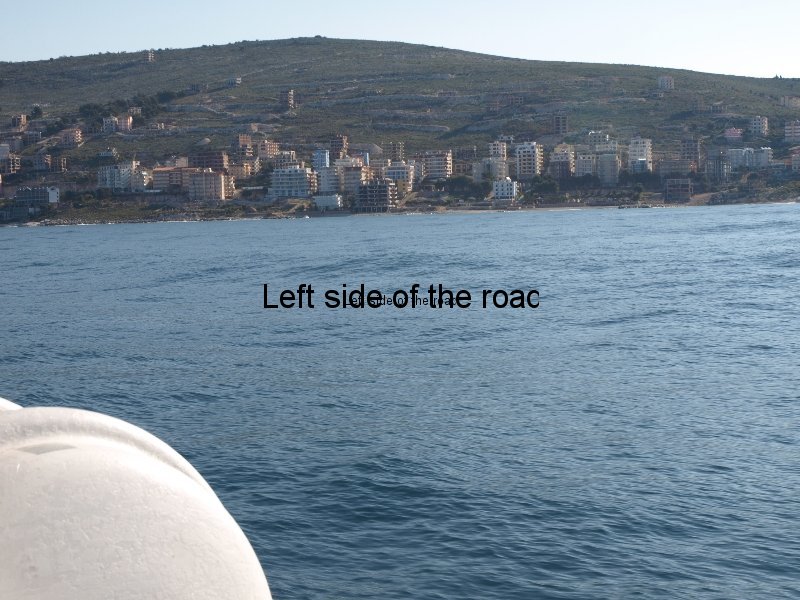
Corfu to Saranda ferry – a travellers’ view

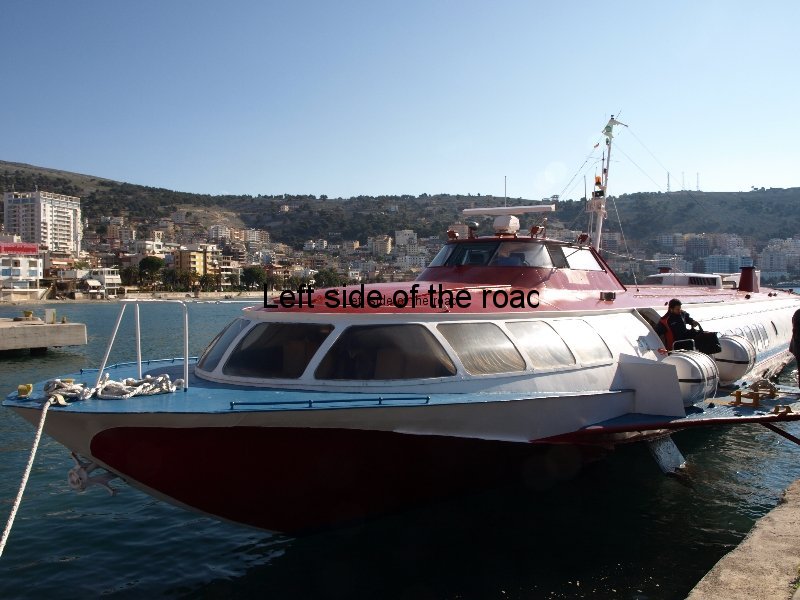
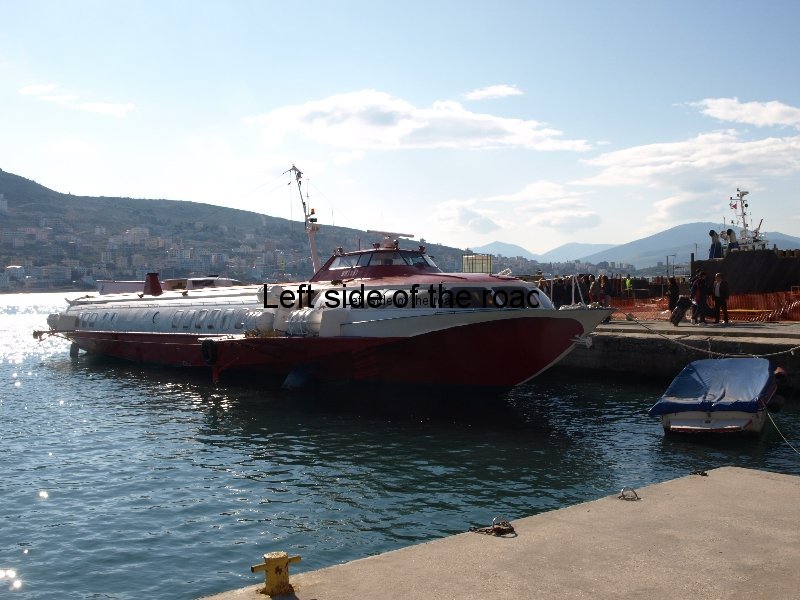
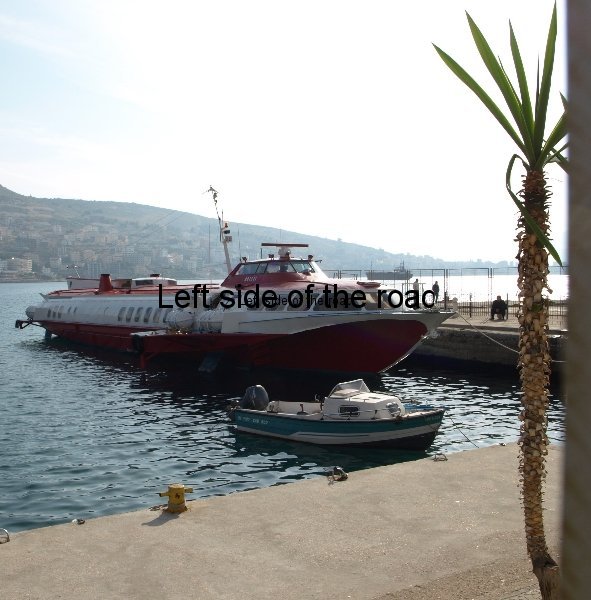
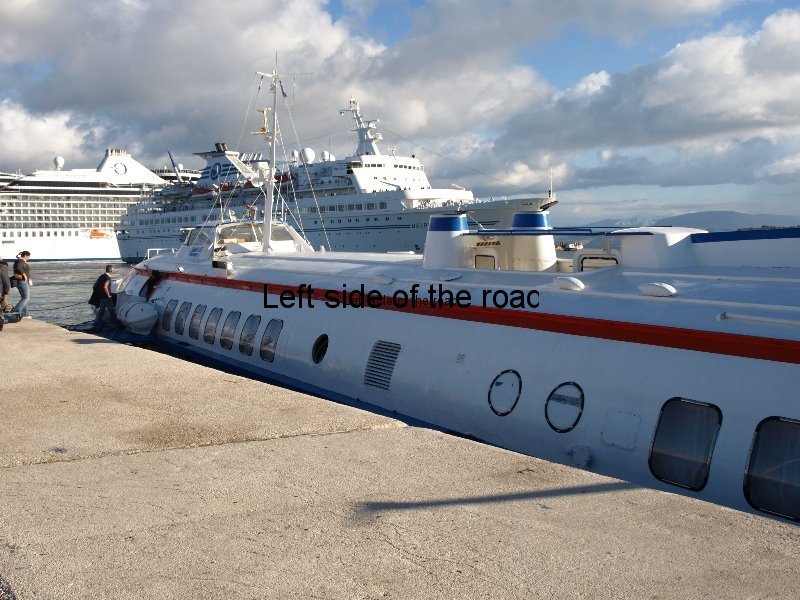
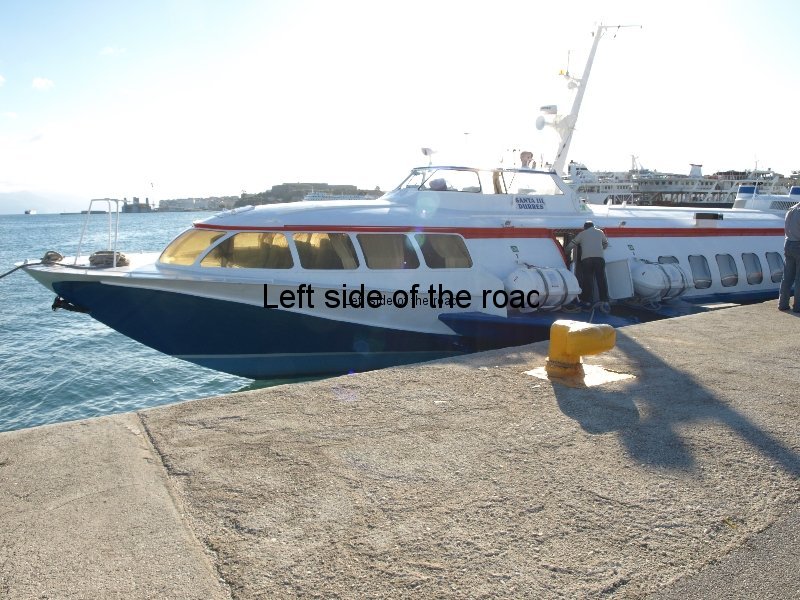
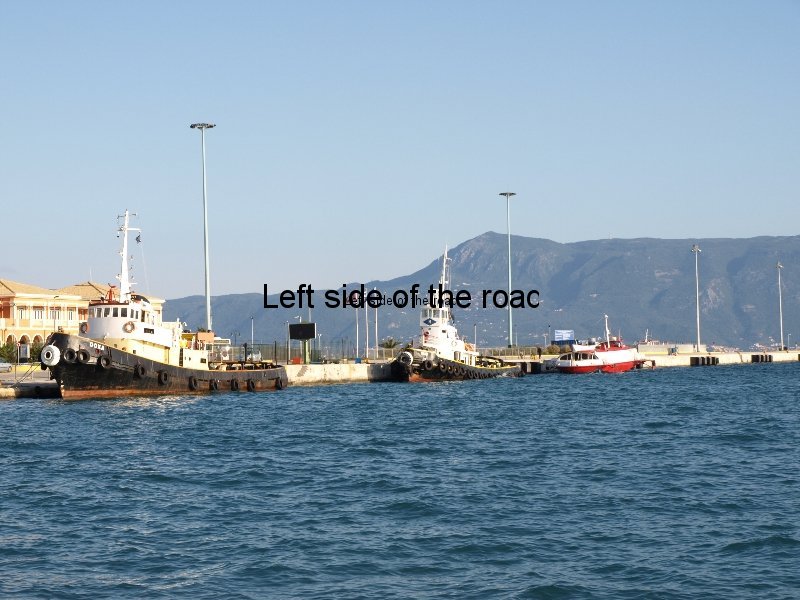
Hydrofoil Kristi - Saranda port

Hydrofoil Kristi – Saranda port

More on Albania ……

Corfu to Saranda ferry – a travellers’ view

One of the best ways into Albania is via the ferry from Corfu to Saranda in southern Albania. What follows is the practical information of what you need to know to make that process easy and – hopefully – trouble free.

I’ve been to Albania three times now, so far, and each time via Corfu. The first time I arrived late at night and was expecting to leave on the ferry the next morning. That was thwarted due to an annual safety check on the hydrofoil (so I was told though I heard a different story in Saranda) which meant there was no departure for three days. The second time everything went as it should and the journey was made much easier due to my previous experience. What surprised me the most was there was no way I could find detailed information about the logistics of getting across a relatively narrow stretch of water. This posting is an attempt to give an as up to date and accurate step by step approach to getting from one country to another as is possible.

Where you buy your tickets depends upon the time of year. During the high season, when there is more than one sailing a day, there is a kiosk just inside the main New Port entrance, to the left backing on to the main road. However, outside of the months of June to September tickets are only sold in the company’s office.

This is the head office of Ionian Cruises. That’s a grand title but it’s based in small shop facing the Domestic Terminal building, which also houses the biggest café in the area (as well as a left luggage office) on the road that runs parallel to the sea. There is a small sign indicating that they sell tickets to Albania (in English).

All the details I’ve been able to collect are as follows:

Ionian Seaways, 4, Ethnikis Antistaseos, 49100 Corfu, Hellas.

(The website has improved significantly since I first published this post. Any additional information will more than likely be found there, e.g., vehicle tariffs.) 

Tel. : +0030 26610 38690, 31649, 25155

Fax : +0030 26610 38787, 26555

The office is open from 08.00 and the people who work in there speak English, which makes life easier for some of us non-Greek speakers.

Fast Ferry – Hydrofoil

You need your passport and you MUST buy a ticket before going to the boat. As of April 2018 the adult cost is  €19 each way in the low season. The cost increases to €23.80 from mid-June to mid-September. Children go for half price. Departure Times (all year) are at 09.00, but with 2 or 3 extra sailings from the middle of June to the middle of September. Check the website for times when you want to travel. The latest sailing from Corfu is 18.30. Apart from possible disruption due to the weather or mechanical issues the ferry should run every day of the year. There is now a facility to book and pay online. 

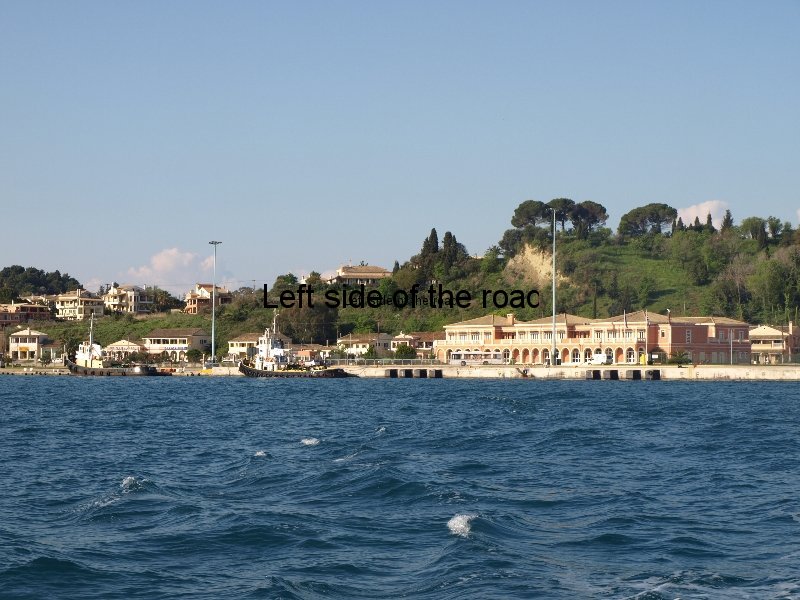
The hydrofoil leaves from the top end of the new port. This means that after buying your ticket in the office you have to get to the main entrance to the Port of Corfu which is about 400m along the road, heading northwards out of Corfu town. Once through the main gates turn left and head to the New Passenger Terminal, the sandy coloured building about a 100m away. Here you will get your passport and ticket checked. There is also a small Duty Free shop but few other facilities.

Duration of journey: 30 minutes.

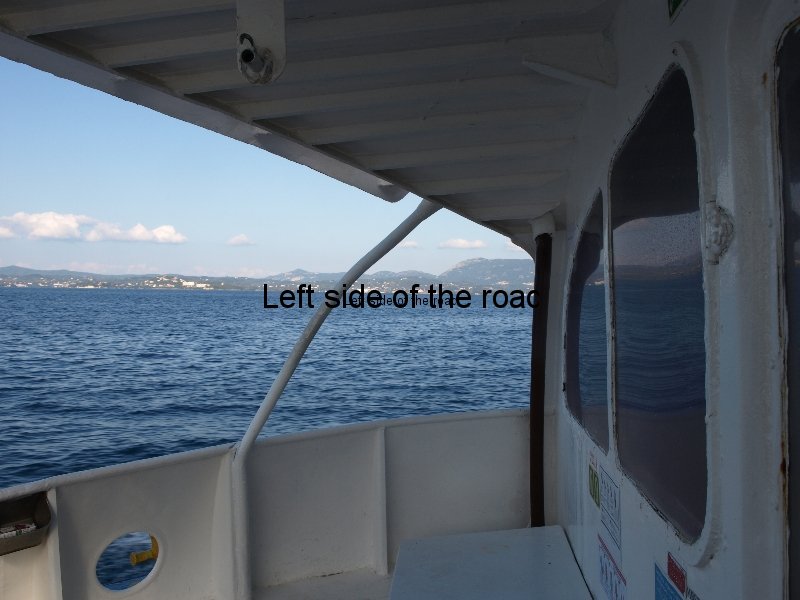
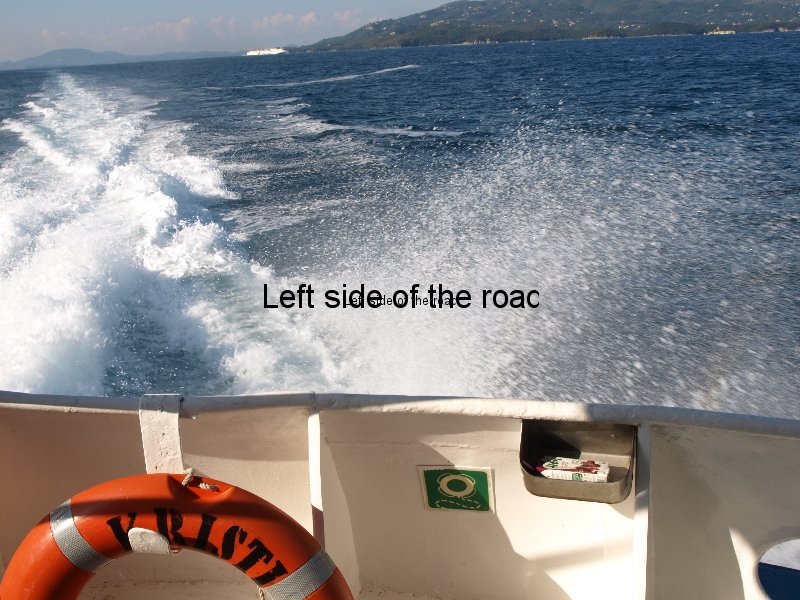
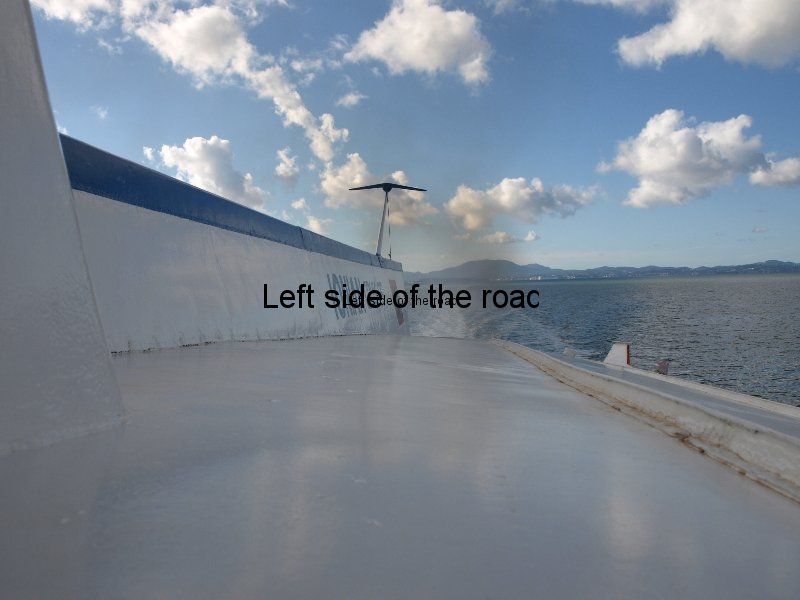
Once on board leave your bag at your seat (or at the luggage store by the entrance) and go right to the back of the boat and get a sensation of speed without being blinded by the spray that obscures any sightseeing from the cabin. The boats are Kristi, Santa and Santa III, Komet class hydrofoils, not that young any more but still up to the task in hand.

Remember to put your watches/time pieces forward one hour when landing on Albanian soil (you effectively arrive before you have left!).

Car Ferry

A ferry taking vehicles is also now an option. From 16th May till 25th October there’s a departure from Corfu at 19.00. There’s an extra ferry between 1st July until 25th October at 13.00. From Saranda the departures during the same dates are 10.30 and 16.00 (local time). Costs are too complex to list here but all are on the website.

Duration of journey: 70 minutes.

These times and prices are valid for 2019.

There are no visa requirements for citizens of the European Union, citizens of other countries should check first. Passport formalities are remarkably innocuous on entering (or leaving) Albania. The passport will be scanned and recorded on the immigration service computer. You normally get a stamp in your passport if arriving or leaving by boat but this is not always the case at land borders. The lack of a stamp took me by surprise the first time I entered by land, from Greece, but later learnt that this is common and you shouldn’t be concerned if there is no entry stamp.

Once you leave passport/customs control you might well be approached by Tomi. He’s an English-speaking Albanian who runs a basic hostel less than 100m from the port entrance. If you are new to the country, want to meet other foreign visitors to pick their brains about what/when/where the hostel is a good place for all of this. Tomi also is a mine of information and if he doesn’t know the answers will almost certainly know someone who does. If you miss him you can call his mobile, +355694345426.

Another good place to check out is the Dolphin Hostel, located at 168, Rruga Lefter Talo. This is just above the street Rruga Flamurit, which is effectively Saranda’s interurban bus station.

The ticket office to get tickets to Corfu is in the building on the main road, directly above the dock. The name over the office is Finikas Lines. Sailings from Saranda vary depending upon time of year. There’s always at least one a day but there are extra sailings in the peak season. Check the link above for exact sailing details.
More on Albania …..

A walk around the Jewish Quarter of Segovia

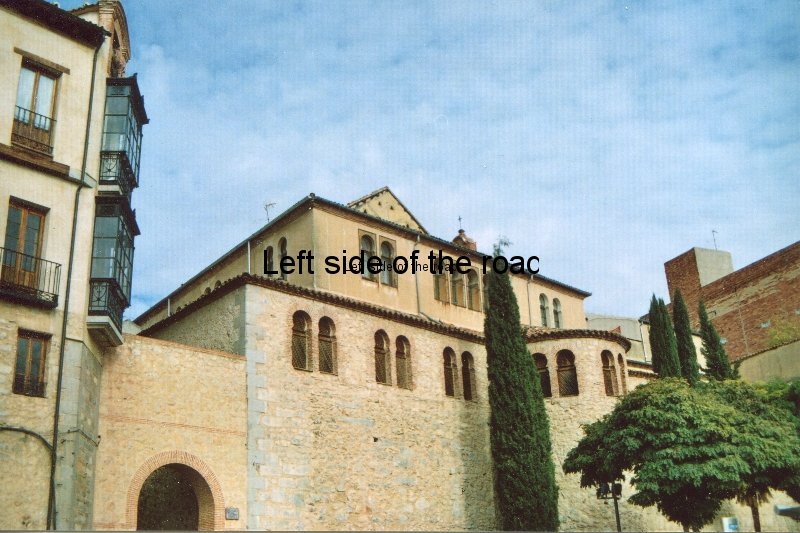
Corpus Christi Church/Synagogue Segovia

Corpus Christi Church as part of the Segovia City Walls

A walk around the Jewish Quarter of Segovia

A short walk, peaceful and crowd free, which explores Segovia’s Jewish past providing a perspective on the ancient town missed by most visitors.

In Segovia it is impossible to miss the Roman aqueduct but most of the thousands of visitors to the city are totally unaware of an area of narrow, medieval streets which bore the brunt of one of the most traumatic episodes in Spain’s history.

In Granada, on March 31st 1492, just a few months after the final defeat of the Moors, the ‘Catholic Monarchs’, Isabel and Ferdinand, promulgated The Edict of Expulsion, decreeing that the Jews in all of Spain had four months to either convert to Christianity or leave the country. This ended almost 300 years of Jewish presence in Segovia.

However, now there’s a growing movement to recognise the role of the Jewish community in the development of the city and visitors have the opportunity to re-discover something of the past.

A Jewish community can be traced back to 1215 and for almost 200 years there were few restrictions on their place of residence. That changed in 1412 when they were restricted to the area, more or less, around the present Cathedral but things worsened in 1481 when they were forced into much more of a ‘ghetto’, the area of this walking tour.

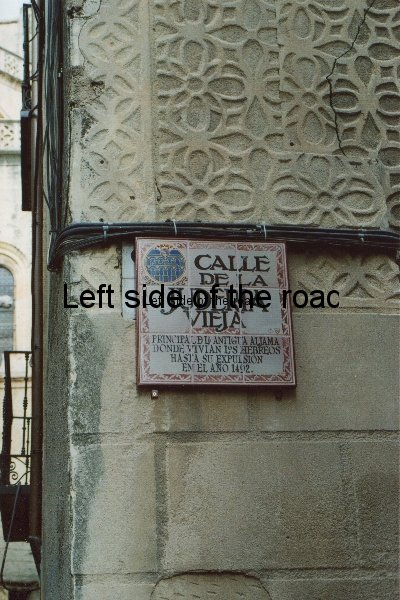
The start is in the small square of Corpus at the top end of Calle de Juan Bravo. Here there is a fork in the road and the entrance to the Judería Vieja is the one to the left – the quieter of the two, this is not a walk that will be hampered by crowds of people!

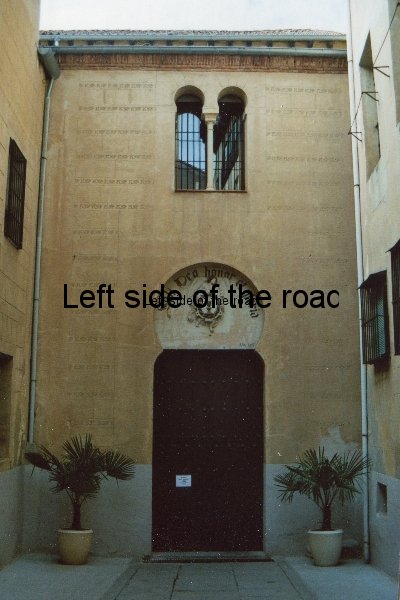
Before entering the narrow street go through a Gothic arch, on the left, taking you to the entrance of the Corpus Christi church, which used to be the Principal Synagogue, but only for a few decades. This building has had a troubled past. It was a synagogue by 1373 but was expropriated by the Catholic Church after a supposed and unproven act of profanation around 1419 – a painting in the church depicts the alleged sacrilege. A disastrous fire in 1899 destroyed virtually all remnants of the old synagogue and it was rebuilt at the beginning of the 20th century. Further work has attempted to recapture much of the old Synagogue with its horseshoe arches, the capitals decorated with vegetable and geometric designs and the beautiful, wooden ceiling.

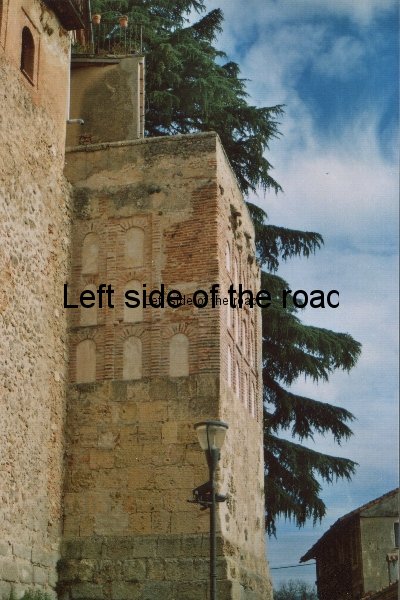
On returning to the street turn left into the Judería Vieja and in a few steps go down left through the archway (the Puerta del Sol). From here you have a view of the other side of the church, forming part of the city walls.
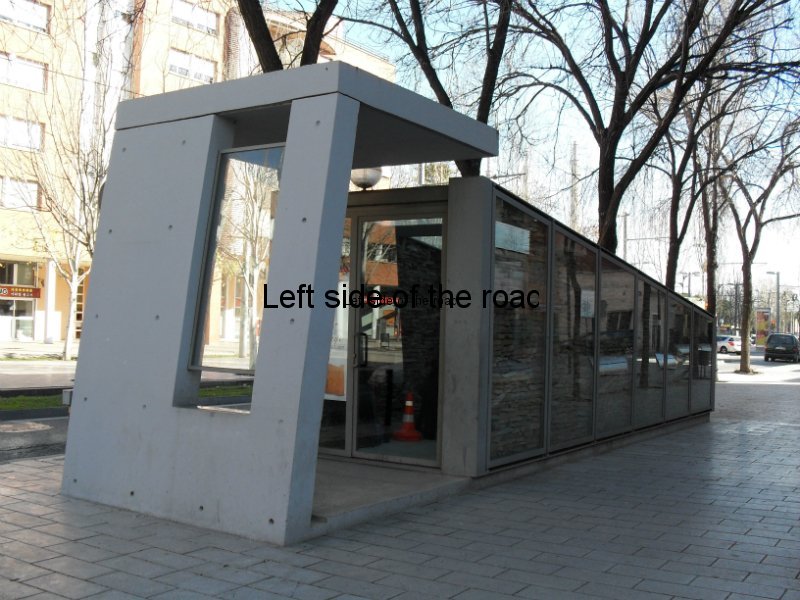
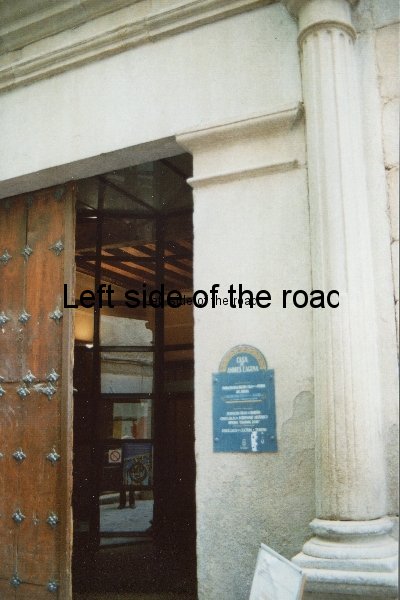
Return to the Judería Vieja and continue along to number 12, the Didactic Centre of the Jewish Quarter (Centro Didáctico de la Judería). This Education Centre is based in a building that was part of the property of Abraham Seneor. Very rich and powerful he had enemies in both the Jewish and Christian communities and by the time of his death in 1493 had probably attained more influence in the Spanish court than any Jew ever before – quite amazing when you remember that this was at the time of Isabel and Ferdinand, under whose reign the Inquisition was initiated and who decreed the expulsion of the Jews.
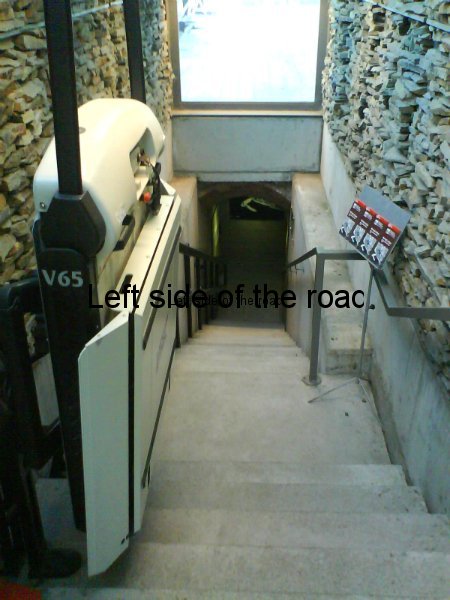
Established in 2004 by the Segovia City Council, the Centre houses a small exhibition space which tells of the history of the Jews in Segovia and Spain. The information boards and the two video presentations (one in 3D) are in both Spanish and English and are very much directed to those who know little about Jewish history or culture. The centre also stages discussions and conferences which address Spain’s Jewish past.
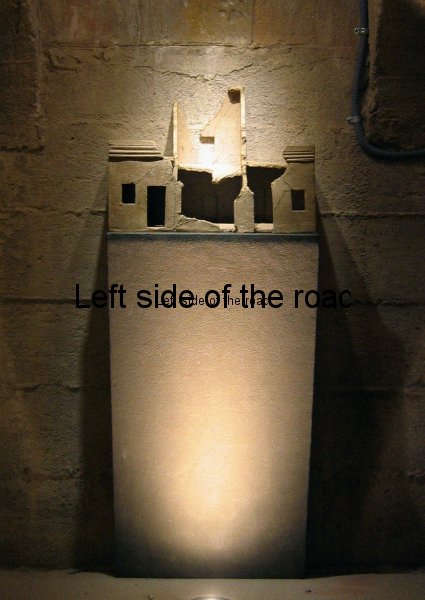
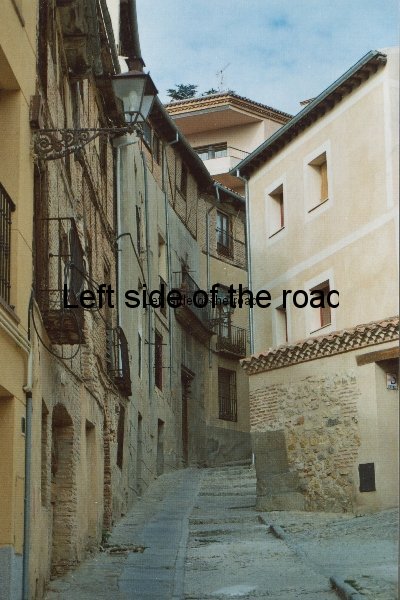
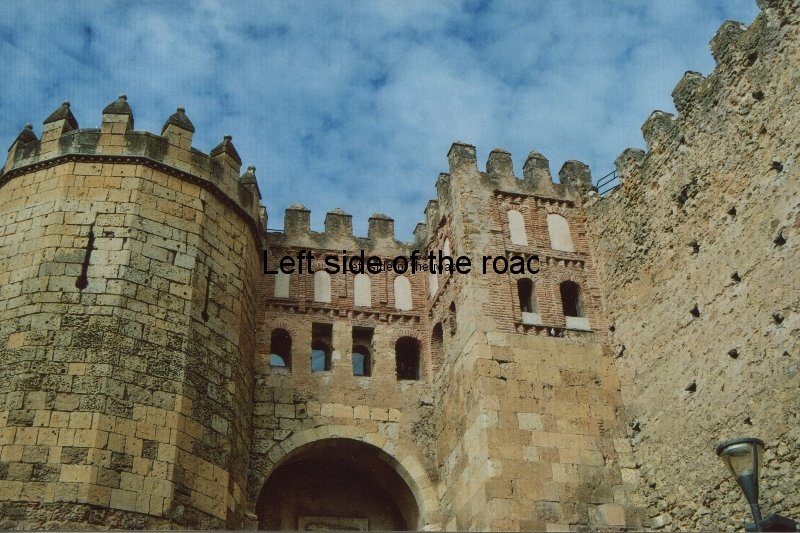
Turn left on leaving the centre, reach the corner of the Cathedral and then follow the road as it goes quite steeply downhill (Calle de Martinez Campos) towards the Puerta de San Andrés. Here there is a museum that gives the history of the city wall. The narrow, stepped street that goes up hill to the right is the Judería Nueva, a street that is virtually unchanged from the time of the Jewish presence more than 500 years ago.

From the gate continue along the lower road to what is now the Museum of Segovia, housed in a building that was originally the Jewish slaughterhouse.

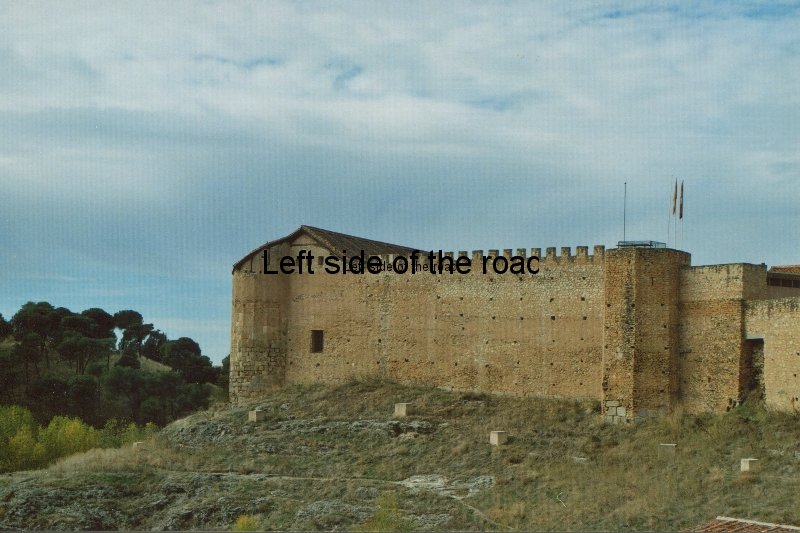
Return to the Puerta de San Andrés but this time go through the gate and outside the wall. Take the path immediately on the right hand side and within seconds you get a fine view of the abattoir, standing on a rocky outcrop over on the right. From here it is easy to understand the reason for its location, the blood and offal would be just thrown down into the gully.

Follow the wide path downhill and then, in less than a minute, the narrow path, indicated by a stone pillar with a carved menorah (the seven-branched candle holder), that goes down to the left. Cross the small bridge and then straight ahead as the path climbs, go through a tunnel beneath the road to come out to the old Jewish cemetery. This has been excavated a number of times but not a lot of information has been gained from these investigations – the gravestones having been looted soon after the remaining Jews had converted to Christianity.

However, it’s possible to see the different methods of burial used, the limestone being carved in the shape of a human body or a cave-like room being created for multiple burials. What can be seen is that all the identifiable graves point in the direction of Jerusalem, with the heads orientated to the west and the feet towards the east.

Another poignant feature of the cemetery is that it was here that those who refused to convert spent their last days in the area, before leaving both Segovia, and then Spain, forever. Their last view of the place they had called home being one of the sun shining on the magnificent, golden, medieval walls.

After a relatively short walk in distance, but one that is full of interest, together with the walk down to the dry river bed and up to the cemetery (that has to be done twice!) when you return to within the city walls you will be looking for a good place to eat and drink.

This can be a bit tricky in a town whose culinary speciality is roast, suckling pig but there are a number of restaurants that are now offering Sephardic menus and this gets extended every September, for a weekend, when many restaurants provide a Jewish orientated menu – some even offering kosher wine.

Useful Information:

The Corpus Christi Church/Synagogue, Puerta de San Andrés and the Segovia Museum are all closed on Mondays.

A recent book, in English, about the history of the Jews in Segovia providing more information than I have been able to give here is the ‘Jewry Guide to Segovia’ by Bonifacio Bartolomé Herrero, available in the Centro Didáctico, priced €16.

Segovia City Map


Segovia City Map


Segovia City Wall


Segovia’s City Wall and San Andrés Gate


Centro Didáctico de la Judería


Centro Didáctico de la Judería – in Spanish


Segovia, World Heritage Site


Segovia, World Heritage Site


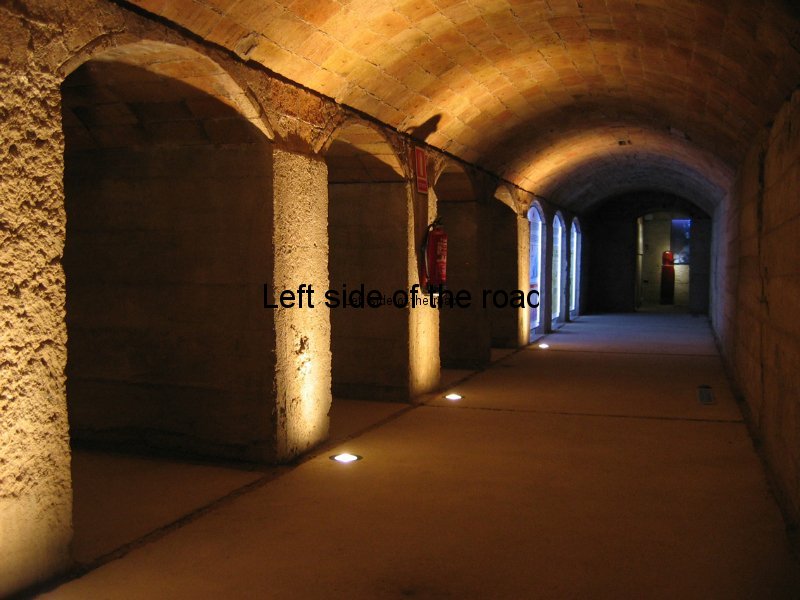
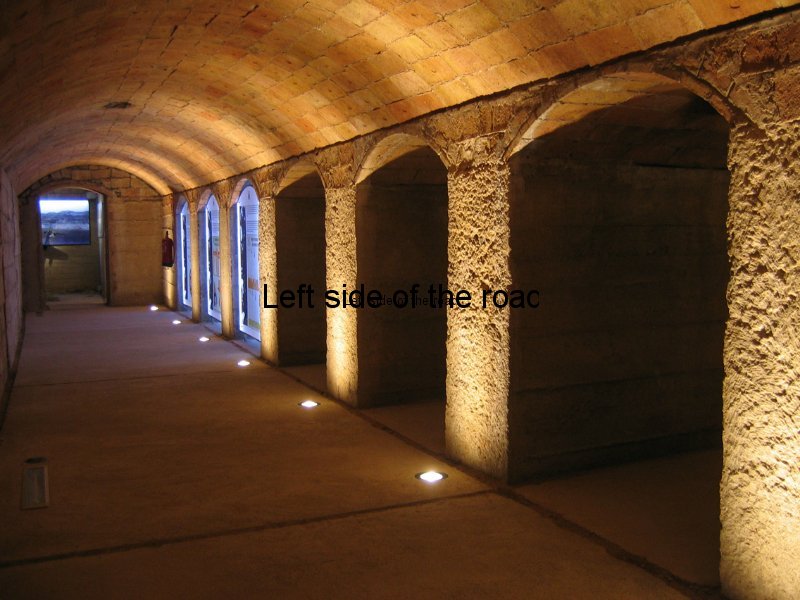
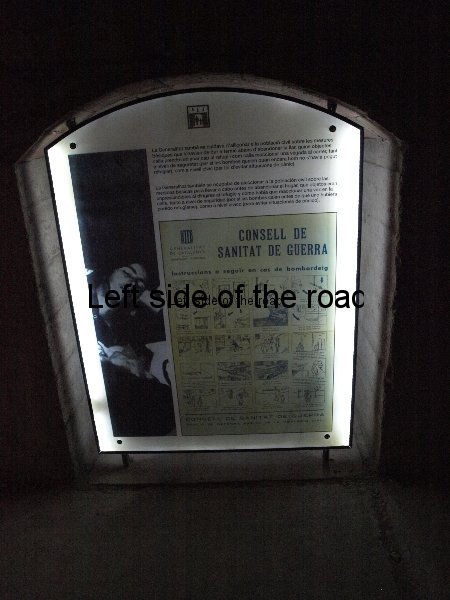
The air raid shelter of Placeta Macià, Sant Adrià de Besòs

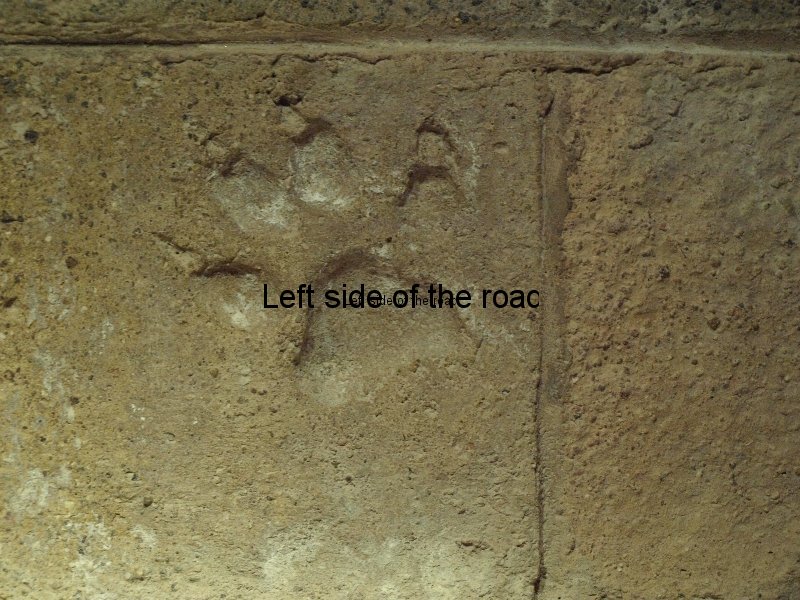
Paw print of a dog, also an anti-Fascist, who first heard the bombers

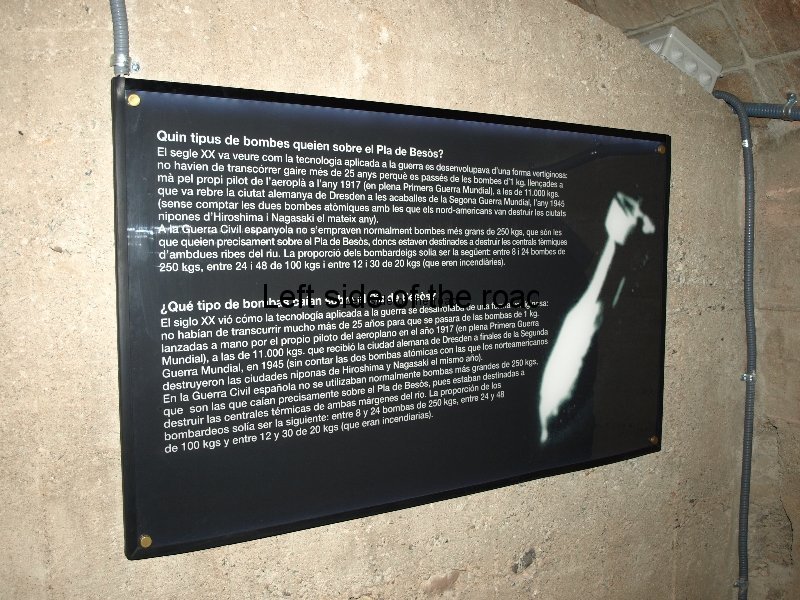
Signature of the Republican air raid wardens

More on Catalunya/Catalonia

The air raid shelter of Placeta Macià, Sant Adrià de Besòs

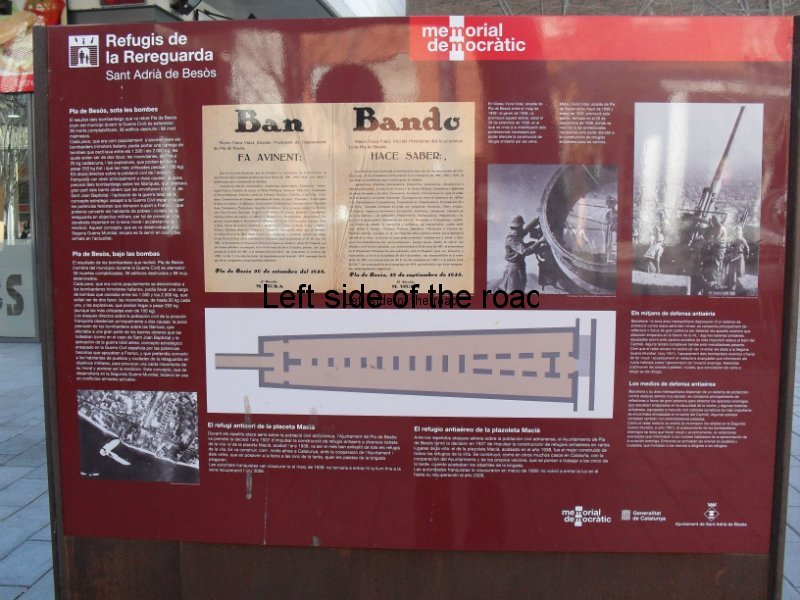
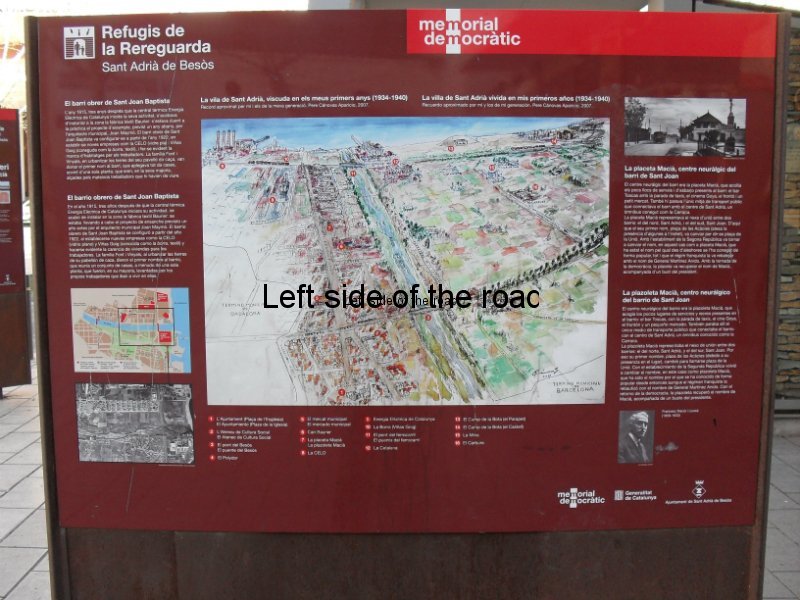
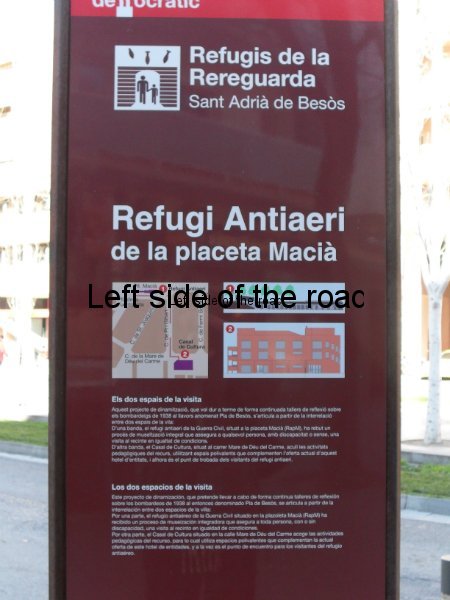
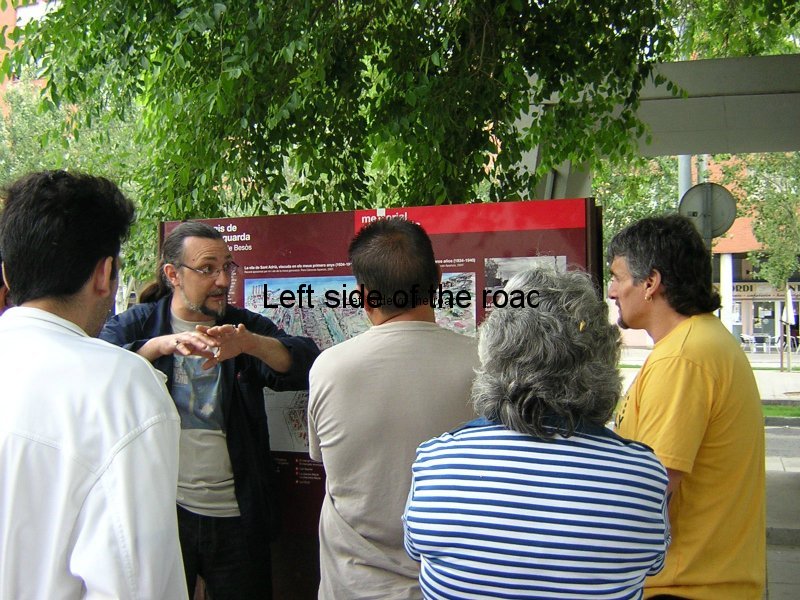
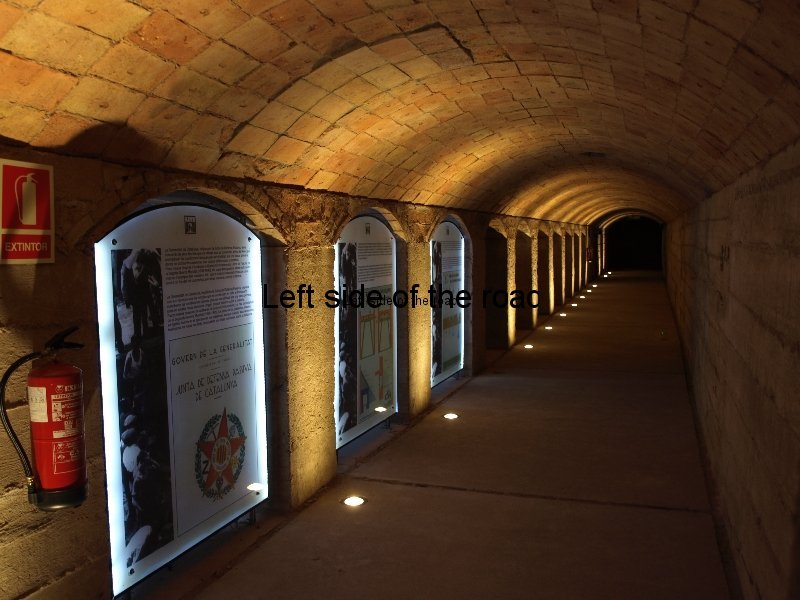
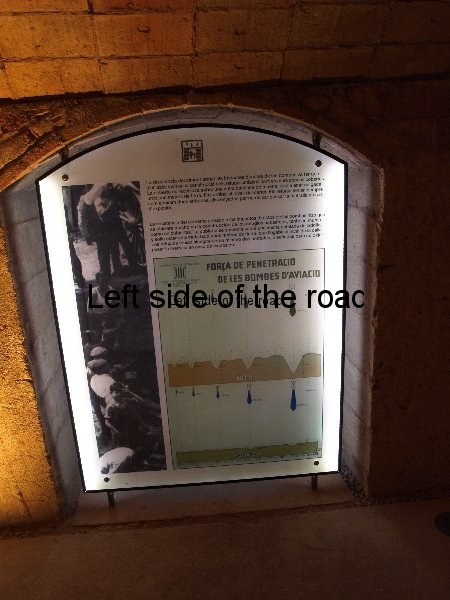
The air raid shelter (refugi antiaeri) in Placeta Macià, Sant Adrià de Besòs, Barcelona, provides an insight to what life was like for ordinary, working class, people during the Spanish Civil War, 1936-39.

Many thousands of visitors go to Barcelona each year but an increasing number of them are starting to go off the beaten track of the Rambla and the Gaudi buildings to explore some of the lest ‘touristy’ aspects of the city.

Of the hoards who walk down the bustling Rambla some might have read George Orwell’s depiction of the Spanish Civil War in his book Homage to Catalonia. Standing outside Café Moka they might imagine what it was like in the stand-off between two armies, on the same side, on the brink of their own ‘civil war’, occasionally taking pot shots at one another.

Orwell had the luxury, the wealth and the opportunity to get out of the country before Hitler and Mussolini’s aircraft, happily brought in on the side of the rebel Franco, started to regularly bombard this Republican city, using a strategy taken to an even higher level a few years later. That was the strategy of terrorising and punishing the civilian population with mass bombing and the destruction of their cities, as was seen in Warsaw, Liverpool and Leningrad, amongst many others.

As in those other cities the people of Barcelona didn’t just sit and wait for what was to rain down on them. If they could not fight at the front then they would construct shelters to protect themselves from the bombs and deny the enemy the satisfaction of their acquiescence and defeat. This form of passive resistance was evident in Barcelona and many other Catalan towns and cities.

In the intervening years, since the end of the war in 1939, many of these air raid shelters have been bulldozed both to eliminate any popular memory of resistance and then later as the country started to develop and modernise after Franco’s death in 1975. However, since 2007, following a decision of the Generalitat (the Catalan government), much of what does remain is coming to light and is being made accessible to both local people and any visitors with an interest in an important and significant struggle in the middle years of the 20th century.

Those facets of war that might have been hidden are now being visited by an increasing number of people. In their visits they are offered the opportunity to consider the war in a different way from that presented on the big screen. This representation has evolved over the years from the morale boosting antics of Errol Flynn through the gung-ho approach of John Wayne to the more poignant aspect of war as depicted in Saving Private Ryan.

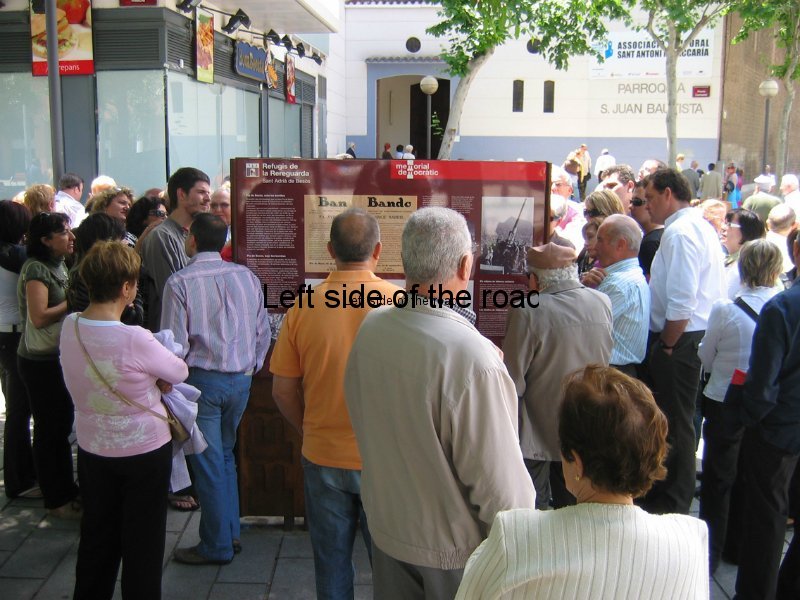
In Catalonia this unveiling of the past is part of a much bigger project, the first in Spain but part of a much wider, in fact worldwide, scheme called Democratic Memory. Of the more than 70 sites already on the list in Catalonia here I just want to talk about one of them, located in the working class district of Sant Adrià de Besòs, (easily reached via Metro L2 from the central cultural highlights of Barcelona), the air raid shelter in Placeta Macià.

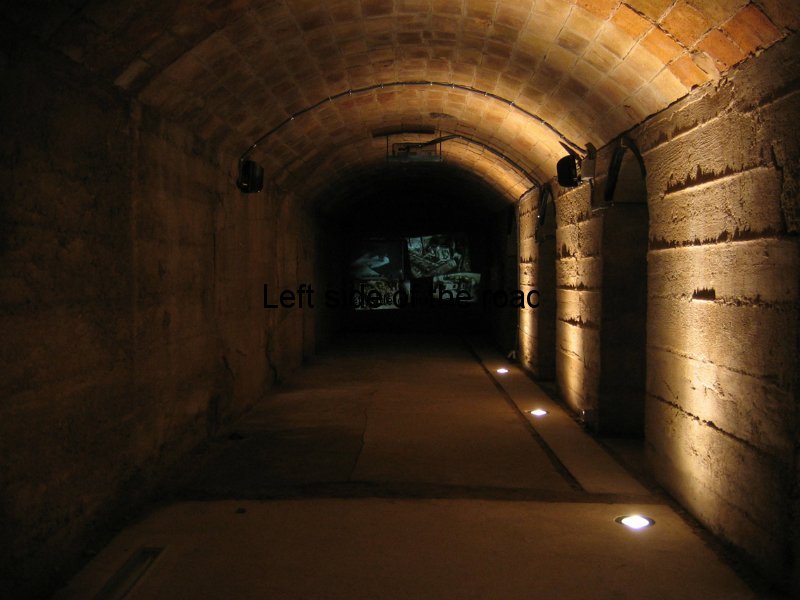
This is an impressive construction in its own right, especially taking into consideration the conditions under which it was built, and is the only one of the seven that originally existed in the district to have survived into the 21st century. Constructed in the shape of a rhomboid it has a central corridor with alcoves on either side and was built, in 1938, to provide shelter for up to 500 local people.

Although it is underground the aim of the cleaning and restoration has been to make it as accessible as possible. First, it is free to enter. ‘Why should those who built it, and their children and grandchildren, now be charged to visit it – 70 years after its construction,’ says Jordi Vilalta, the enthusiastic coordinator for the shelter. He is based in the Museu d’Història de la Immagració de Catalunya (itself one of the 71 sites) which is situated a short distance away on the opposite side of the River Besòs.

One of the aims of the project is to involve children in a conversation with the past of their families and so school visits are organised where those who were themselves school children in 1938 tell of their memories, experiences, fears and daily life in general during the relatively short, but incredibly intense, life of the shelter.

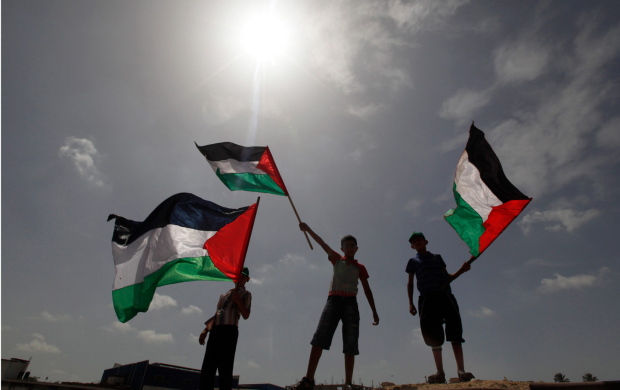
‘We have found it very difficult to find actual photos of people in the shelter’, continues Jordi, ‘but what we do have are some drawings made by children at the time. What we find fascinating is the fact that, apart from the ‘advances’ in aircraft and technology, these images are almost the same as those produced by children in the Palestinian city of Jenin in 2002.’

To encourage the involvement of the young in this small and intimate museum the visitors are encouraged to touch the exhibits and to try to understand the idea of destruction but without any images of death.

A particularly interesting story is that of the dogs that acted as virtual air raid wardens for the population. They would be able to hear the drone of the bombers coming over the sea, from the Balearic island of Mallorca, long before humans. As Pavlov suggested the dogs associated this noise with the inexplicable (to them) consequence of explosions, fire, noise, strange smells and potential death that comes with aerial bombardment.

The people of Sant Adrià suffered on two accounts. Theirs was an industrial area, and so a ‘legitimate’ target in times of war, but they were also implacable adversaries of the fascists and so had to be terrorised.

Visiting the shelter: Open the last Sunday of each month, though Jordi can be contacted, via email jvilalta.pmi@gmail.com or on +34 609 033 867, to arrange visits at other times.

For more on Memoria Democratic see:

Rosanes – a military airfield during the Spanish Civil War

More on Catalunya/Catalonia