How secure is a return to a ‘new normal’?

More on covid pandemic 2020-2?

View of the world

Ukraine – what you’re not told

How secure is a return to a ‘new normal’?

Light at the end of the tunnel, bluebirds over the White Cliffs of Dover, the Sun will come out tomorrow. Perhaps. Perhaps not.

In Britain, in the absence of any strategy to deal with the covid-19 pandemic, we were told the justification for all the restrictions, the ‘lock downs’, having to listen to incompetents spout on as if they knew what they were saying and forcing upon us, being told that we are all suffering mental health problems due to all these activities, that it would all be worth it as the vaccine (that admittedly came sooner than most non-scientists expected, but which, in many ways, had been half developed before the first death from covid in 2019) would mean a rapid return to the ‘new normal’ – not the same normality but one that would be slightly tweaked due the events of the last year or so.

And that ‘justification’ seems to have worked – politically, at least. After all the uncertainty, after all the U-turns of the last year, after the total lack of any strategy whatsoever, after the plethora of contradictions (e.g., following the science, not following the science) the ‘popularity’ of the Buffoon has been on the rise since the beginning of the vaccine programme at the end of 2020.

The success of the programme had nothing whatsoever to do with the Buffoon or his government of buffoonettes. It was down to publicly funded research, the NHS and a compliant population which thought that things would gradually get better if they followed the recommendations. To date more than half the total population of the UK has now been vaccinated at least once.

But now comes the new reality, the new ‘truth’.

The efficacy of the cheapest vaccine is being questioned (see below) and those more risk averse scientists are starting to make even more noise that any vaccine might be fighting a losing battle against the new variants (also see below).

But this doesn’t make sense – or shouldn’t in the 21st century with all our advances in science and technology.

From the very beginning of this blog it has been argued that something is fundamentally wrong with society if the response to a pandemic is exactly the same as it was in the 14th century when the bubonic plague (The Black Death) handed a third (or more) of the population of the world to the Grim Reaper. In a world with a population of 8 billion plus people just dealing with one virus is going to have (and already has had) huge consequences – the uncertain ‘collateral damage’.

For many people of the world – and not just those in the so-called less developed countries – there are more problems (and with more immediacy) to deal with than the covid virus. They have been having to deal with these problems for generations and although rarely acting to change the very basis of society (the root cause of many of the defining issues being the existence and stranglehold of capitalism on the life of the world’s people) which really might see a way out they have been able to survive, more or less. That will become even more difficult if the richer countries of the world continue in the same way as they have been acting now for almost 18 months – that is in a purely selfish response to the pandemic.

There are, however, positives in this parochial and selfish approach to a problem that transcends borders.

People throughout the world might start to see that they are being conned by the political and economic system that is making such a pig’s ear out of dealing with the pandemic – whilst at the same time shovelling billions of the people’s money into the hands of the richest section of society.

There’s been little news of reaction to the failings of their ‘leaders’ in the poorer countries of the world but there have been periodic angry responses in the more ‘developed’ countries to government failings.

I have for long thought that such ‘natural’ disasters would be the spur to make people realise that the old system – which has been exploiting and oppressing them for millennia – was past its sell by date and would get off their knees and take their own fate in their own hands.

Matters have been surprisingly quiet so far, little and sporadic public manifestations of anger, but if the mysterious ‘they’ keep on keeping the carrot at the end of the stick they might find they become a victim of their own over-confidence.

We shall see.

Vaccination programme in Britain ….

AstraZeneca supplies and efficacy under the microscope again.

There’s no need to pause vaccine roll outs when there’s a safety scare. Give the public the facts and let them decide.

Moderna and Novavax – here’s what new vaccines mean for the UK roll out and the end of lock down.

Experts stress vaccine benefits outweigh risks after seven UK deaths.

Trial of AstraZeneca coronavirus vaccine in children paused amid rare blood clots probe. Now, perhaps, it’s the cynic in me but is it just coincidence that the only vaccine that is being torn apart for possible ‘risks’ – when all vaccines hold potential ‘risks’ – is the only one of the growing number that is being distributed at cost? All the other producers of vaccines (at least those that have so far been produced in the so-called ‘west’) are set to make the killing of their lives in the next few years and, surprise, surprise, there’s been no questioning of their safety. When vaccine programmes get ‘paused’ when the number of cases of blood clots is statistically unmeasurable seems, to me, to be a slight over-reaction – unless there’s a hidden agenda.

Israel and Chile both led on covid jabs, so why is one back in lock down?

…. and worldwide

World Health Organisation chief blasts ‘grotesque’ vaccine inequality as rich nations block speedy end of global pandemic.

A lesson on the efficacy of vaccines.

Merkel and Macron in talks to use Russia’s Sputnik covid vaccine.

Rich countries signed away a chance to vaccinate the world.

How did this all start?

Still no definitive answer. But …. WHO covid-19 origins report says lab leak ‘extremely unlikely’.

Then …. WHO chief calls for deeper probe into laboratory leak covid origin theory. There seems to be a desperate search to find someone (as long it’s not themselves) guilty for the pandemic. If it was a ‘man made’ virus which, I thought, had been discounted months ago, and if it could be blamed on the Chinese all well and good. The probable fact that it was caused by the way capitalism has raped and degraded the planet is the last reason ‘they’ want to accept.

Death Rate

A total of 150,116 deaths have now occurred in the UK where covid-19 was mentioned on the death certificate – as of 30th March 2021.

How is it possible that the number of deaths is now so low?

The Buffoon speaks

Buffoon says ‘greed’ and ‘capitalism’ helped UK’s vaccines success.

Covid-19 vaccines are a victory for public research, not ‘greed’ and ‘capitalism’.

AstraZeneca vaccine – was it really worth it?

Where do variants come from?

Virus variants likely evolved inside people with weak immune systems. And many of those will be the world’s poor.

Test, track and trace

Just when the system is looking that it might be able to do what it should have done 12 months ago one of the private companies running the lucrative contract decides to show its incompetence as an employer as well as a service provider. Call centre staff to be monitored via webcam for home-working ‘infractions’.

Secret filming exposes contamination risk at test results lab. Might just be journalists looking for a scare story or …. ?

How do the police act in a pandemic?

From the police side;

Police ‘acted appropriately’ at Sarah Everard vigil – the view of Her Majesty’s Inspectorate of Constabulary (HMIC).

From those on the receiving end;

A criminal record: 10 times Bristol police abused local people. (And that’s not taking into account the fact that it took the Bristol police more than four days to learn that the ‘broken bones’ sustained by some of the uniformed thugs weren’t broken at all. But the ‘rectification’ of the original story didn’t get the same media coverage as the original story following the demonstration.)

Bristol Kill the Bill: The protesters’ perspective – even the BBC seems to be placing most of the blame of the police.

Police watchdog accused of skewing report to back protests clampdown.

Kill the Bill protests: More than 100 arrested in London. What’s interesting about this article is that the police are already attempting to introduce into the public consciousness the idea that demonstrations should be curbed because they might upset and indeterminate section of the public. Commander Ade Adelekan, who led the policing operation for the protest quoted: ‘… as the afternoon wore on it became clear that a small number of people were intent on remaining to cause disruption to law-abiding Londoners.’ (My emphasis.)

All in this together

Perhaps – but not if you spawned the Buffoon. The new travel restrictions for the majority of us don’t include the rich with second homes in other countries. Covid travel rules will include ‘Stanley Johnson loophole’ for second homes.

Penguin Random House keeps furlough cash despite strong sales – on total sales of €3.8 billion last year.

Personal Protective Equipment (PPE) acquisition

Government facing threat of legal action over PPE links to modern slavery.

Activities that get hidden during the pandemic

UK government threatened with legal action over WhatsApp use.

UK Government ‘forced into major U-turn’ on NHS deal with Palantir – which involved personal health information about all NHS patients being at the mercy of a private company that would kill to be able to sell such information.

Poverty in Britain

Pre-covid-19 death rates should be a warning for the UK government.

Poverty statistics ‘show tenants need more help to clear covid-19 debts’ – in Scotland, but as has been stated earlier, there’s no reason to think the situation is not dissimilar in the rest of the UK.

Call for minimum income guarantee to eradicate poverty in Scotland.

What the first covid-19 lock down meant for people in insecure, poor-quality work – a report by the Rowntree Foundation.

It’s shameful in modern Britain that the ‘National Living Wage’ doesn’t actually pay enough to live on.

Poorest hit hardest by pandemic, according to new figures.

A Government report included data which showed that, even before the pandemic struck, 43% of households receiving Universal Credit experienced food insecurity.

Poverty in the rest of the world

Ted Cruz, Texan Republican – the one who took an illegal (even in the standards of the US covid restrictions) journey into Mexico – stated (without a hint or irony) that poverty ‘has been a part of American life since this country was founded’. Ted Cruz accuses Democrats of trying to cancel poverty – and there’s a problem with that? Definitely for the super-rich.

Collateral damage

NHS feels strain as tens of thousands of staff suffer long covid.

Work pressure in covid lock down was shattering, say teachers.

Almost 190,000 UK retail jobs lost since first covid lock down.

Yes, there is structural racism in the UK – covid-19 outcomes prove it.

Who benefits from the pandemic?

Two views on the same topic of how criminals have been able to have a field day due to poor monitoring of the cash handouts. The Buffoon doesn’t worry – it’s not his money they’re stealing.

£34.5 million stolen in pandemic scams.

Hackers have raked in £34.5 million from covid-related scams.

‘Immunity’ passports

After months of saying no way – the idea gets close to becoming a reality. This is an issue that’s not going away. The Buffoon will use the ‘carrot’ of a return to the ‘new normal’ to convince a sizeable proportion of the population to accept this insidious monitoring. Here are just a few articles that demonstrate how this started out.

Pubs could require vaccine passports.

Fake covid vaccination certificates available on the dark web. Surprise, surprise!

Every customer must sign in when pubs reopen.

Buffoon to give go-ahead for trials of covid passports.

Lessons of the pandemic – year one

What we learned from tracking every covid policy in the world.

Inequalities and anxieties about returning to workplaces are becoming clearer.

How New Zealand’s covid success made it a laboratory for the world.

Preparations for the next pandemic

World leaders call for international pandemic treaty. Just to give the impression they are doing something. But they told us before the end of 2019 they were prepared for such an eventuality and we have seen what that ‘preparation’ has led to.

Where does the World Health Organization (WHO) go from here?

Perhaps the above premature – some are proposing we will never get out of the present one

New covid variants have changed the game, and vaccines will not be enough. We need global ‘maximum suppression’.

More on covid pandemic 2020-2?

View of the world

Ukraine – what you’re not told

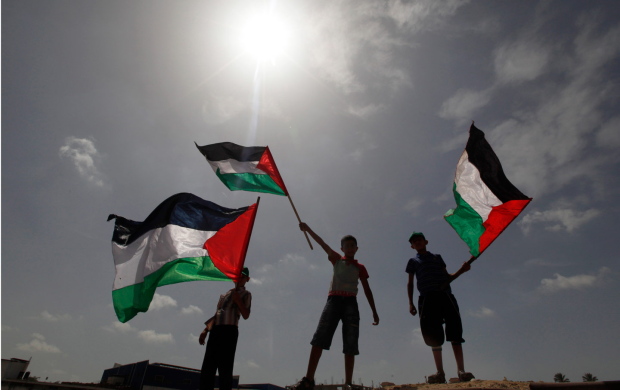
Israeli settlers target Palestinian children with violent attacks

Israeli Army response to settler violence - torture the victims

Israeli Army response to settler violence – torture the victims

More on Palestine

View of the world

Ukraine – what you’re not told

‘We are still living in fear.’

Israeli settlers target Palestinian children with violent attacks

This article first appeared on the Defense for Children International – Palestine website on 23rd March 2021. It is reproduced here exactly as it was at that time.

Ramallah, March 23, 2021 — ‘I thought she was dead,’ We’am told Defense for Children International – Palestine following a January incident when Israeli settlers attacked her and her children outside their West Bank home. An Israeli settler struck We’am’s 10-year-old daughter, Hala, in the face with a stone, injuring her. ‘I tried to carry her but I could not carry her alone.’

Palestinian children living in the occupied West Bank, including East Jerusalem, find themselves in a hyper-militarized environment where they are vulnerable to violence at the hands of Israeli settlers and soldiers.

Violence by Israeli settlers against Palestinians and their property is widespread and occurs daily throughout the West Bank. Israeli settlers perpetrate violence, damage, and destroy Palestinian property, take over land, and commit other offenses against Palestinian civilians living in the occupied West Bank.

Defense for Children International – Palestine documented four Israeli settler attacks in the occupied West Bank between January 17 and February 15, 2021, that injured six Palestinian children between the ages of three and 13. The attacks occurred in close proximity to a number of illegal Israeli settlements spanning the occupied West Bank. Two of the children required hospitalization following the attacks, according to evidence collected by DCIP.

Israeli settlers attack 10-year-old Palestinian girl outside her home

On January 17, settlers from the illegal Jewish-only settlement of Yitzhar attacked the Palestinian village of Madama, in the northern West Bank governorate of Nablus, injuring 10-year-old Hala Q. The girl’s mother, We’am, told DCIP that approximately 20 masked Israeli settlers used rocks to smash windows in homes along their street and that the settlers had attempted to attack the village three weeks prior, but were held off by local residents. Hala was on her way to her uncle’s home nearby to study when she was attacked by an Israeli settler.

‘He was a tall man, wearing jeans, and his face was masked with a cloth, holding a huge rock,’ Hala told DCIP. ‘He threw the rock at my face, and I fell down in front of the house and partially passed out. I felt that someone was pulling me, but I had no power to move at all, then I completely lost consciousness.’

Both Hala’s five-year-old sister, Masa, and We’am sustained injuries to their legs during the attack.

‘When I went out, the masked settler who was standing next to Hala fled the scene.’ We’am, the girls’ mother, told DCIP. ‘I thought she was dead. I tried to carry her but I could not carry her alone.’

Aided by her nine-year-old son, Karam, We’am took Hala into the home, where the family hid while they waited for someone to help them transport Hala to the hospital. The Israeli settlers, who were approximately 15 meters (49 feet) away, threw stones at the house for almost ten minutes, according to We’am.

‘Hala’s face was covered with blood,’ We’am said. ‘My other children were panicking as we were hiding in the house and still hearing the stones smashing our windows.’

Once the attack subsided, neighbors took Hala in a private car to Rafidia Surgical Hospital in Nablus City. Hala was evaluated and had bleeding in her nose and mouth, bruises under her left eye, and a broken tooth. Once she regained consciousness, she was discharged and returned home.

‘None of us could sleep that night,’ Hala told DCIP. ‘We were still scared that the settlers would attack us again. Until this moment we are still living in fear.’

Despite living in the same territory, Palestinians in the occupied West Bank are subject to Israeli military law, while Israeli settlers living illegally in permanent, Jewish-only communities built on Palestinian land are subject to the Israeli civilian legal system. Since Israeli forces occupied the West Bank in 1967, Israeli authorities have established more than 200 Jewish-only settlements that house around 700,000 Israeli citizens, according to the Times of Israel.

Yitzhar is widely known as a hotbed of Israeli settler violence against Palestinians. The illegal settlement was founded in 1983 as a military outpost that soon turned into a civilian settlement. Nearby villages previously used the land for agricultural purposes, and Palestinian villagers are frequently targeted with violence by Yitzhar settlers. The Od Yosef Chai yeshiva is based in Yitzhar and is known for encouraging its students to perpetrate violence against Palestinians. The yeshiva was previously located in Nablus until it moved to Yitzhar in 2000 during the Second Intifada.

30 Israeli settlers attack Palestinian family planting olive trees

On February 15, settlers from Brakha, an illegal Jewish-only settlement south of the occupied West Bank city of Nablus, attacked and injured two girls, aged eight and 10, who were on their land in Burin, some 50 meters (164 feet) west of Brakha. Rafeef I., 10, told DCIP that she, her parents, 11-year-old brother, eight-year-old sister, and an adult cousin were planting olive trees on their land around 4 p.m. when a group of 30 Israeli settlers, some armed, descended towards them from the illegal Brakha settlement.

‘We felt so scared when we saw them approaching us,’ said Rafeef, who told DCIP that the settlers threw stones at the family from a distance of around 30 meters (98 feet). ‘We tried to escape and a stone hit my back so hard that I started screaming and crying, but I kept running back to the village. My eight-year-old sister Alanoud started crying and screaming and saying that she had been hit by a stone. She fell to the ground.’

The Israeli settlers fired live ammunition and tear gas canisters in their direction, and the family fled to their village by car. The settlers also injured Rafeef’s mother in the attack and destroyed the family’s olive trees. ‘We can’t sleep normally because of what happened,’ Rafeef told DCIP.

Despite being civilians, Israeli settlers are issued firearmsby the Israeli government and many subscribe to ultra-nationalistic beliefs that manifest in extreme violence towards Palestinians, including children. Israeli settlers who attack Palestinians are motivated by the drive to dispossess Palestinians of their land, according to Israeli human rights group Yesh Din.

Palestinian toddler hospitalized after Israeli settler attack

Alaa S. told DCIP that his three-year-old son was hospitalized after Israeli settlers attacked his family while they drove from Ramallah to visit family in Tubas, a city in the northeastern West Bank, on January 21, 2021. As the car approached a junction near an Israeli checkpoint located close to the illegal Israeli settlement of Beit El, the family noticed a person in the road ahead signaling with a flashlight for the car to stop.

‘We thought he was an Israeli police officer asking us to stop to make sure that we were wearing masks because of the coronavirus pandemic,’ said Alaa. ‘My wife slowed down the car gradually until it came to a full stop and then within a few seconds, people started throwing stones at the car from all directions while talking to each other in Hebrew. We realized we had been ambushed by a group of settlers.’

The Israeli settlers broke the left rear window of the car, where three-year-old Jad S. sat beside his six-year-old brother, Majd. The terrified family drove to the junction where two Israeli police cars and a military vehicle were stationed, and Alaa reported the attack to the Israeli police officers and soldiers. Alaa noticed that Jad had sustained injuries to his face, and a police officer called an ambulance, which arrived approximately 20 minutes later.

A Palestinian ambulance also arrived at the scene and provided the family with first aid, before taking Alaa and the two children to the Palestine Medical Complex in Ramallah. Jad was discharged the following day at 12:30 p.m. On January 28, Alaa filed a complaint with Israeli police at the Beit El police station. He has yet to hear from the station regarding an outcome.

‘The rest of us were not injured, but we were all traumatized,’ said Alaa. ‘My sons had nightmares during the nights after the incident. They would wake up crying and screaming and saying stones were being thrown at them. They are scared to leave the house or get into the car. They are saying they do not want to go to Tubas, and they are refusing to sleep alone in their room.’

Impunity is rampant for Israeli settlers who attack Palestinians. According to Israeli human rights group Yesh Din, 91 percent of investigations into ideological crimes against Palestinians are closed with no indictments filed.

Palestinian children share what it’s like to live in Jalazoun refugee camp near Beit El settlement.

Israeli settler assaults 13-year-old Palestinian boy walking home

Haitham A., 13, told DCIP that an Israeli settler attacked him on February 6, 2021, as he walked home with his parents around 8 p.m. in the Tel Rumeida neighborhood of Hebron. The family had entered the area through an Israeli checkpoint at Jabal al-Rahma, near their home, when five Israeli settlers repairing a motorbike in the street noticed the family.

One of them, a 14-year-old boy, followed the family. Haitham’s mother noticed the settler following them and alerted her son.

‘I turned around and saw the settler was so close. He hit me with his hand on my head, on the right ear, and he ran away into the settlement, but he was stopped by soldiers at the gate,’ Haitham told DCIP. ‘My father followed him and asked him why he hit me. The soldiers called the police. My ear was all red.’

Israeli police forces took the family to Ja’bara police station near the illegal Israeli settlement of Givat HaAvot, where Haitham was taken to an interrogation room, shown videos of the incident, and asked to provide a statement.

In 1984, the illegal Israeli settlement of Tel Rumeida was established inside the Palestinian Tel Rumeida neighborhood in Hebron. Functionally closed by Israeli authorities to non-residents since 2015, Tel Rumeida is heavily militarized, and Palestinians face frequent Israeli settler and soldier violence.

About 200 meters (655 feet) from Tel Rumeida, Hebron’s city center, including the historic Old City, the old market, and the Ibrahimi Mosque, is under full Israeli military and civil control as part of a 1997 agreement between Israel and the Palestinian Liberation Organization, which was approved by the Palestinian Authority. The city was split into two areas, H1, which is under nominal Palestinian Authority control, and H2, controlled by the Israeli military. About 34,000 Palestinians and 700 Israeli settlers live in the H2 area, and thousands of Israeli forces patrol the area, according to B’Tselem.

Palestinian children in Hebron describe how they move around the city, which is filled with military checkpoints and illegal Israeli settlements.

Israeli authorities consistently fail to investigate complaints filed against settlers. According to Israeli human rights group Yesh Din, between 2005-2019, 82 percent of investigative files on ideological crimes against Palestinians were closed due to police failures.

It is rare for charges to be filed and even rarer for Israeli settlers to be convicted for violence or offenses against Palestinians. One recent exception was when an Israeli court found Israeli settler Amiram Ben-Uleil, 25, guilty of the racially motivated murder of a Palestinian toddler and his parents. In the early hours of July 31, 2015, Ben-Uleil and another masked man threw firebombs into the home of 18-month old Ali Dawabsheh, four-year-old Ahmad, and their parents, Saad and Riham, in the northern occupied West Bank village of Duma. Only Ahmad, who sustained burns to over 60 percent of his body, survived.

DCIP has documented 73 settler attacks on Palestinian children since January 2015.

Israel is obligated to protect Palestinian civilians under Article 4 of the Fourth Geneva Convention, which applies to situations of armed conflict, including occupation. Despite this, Israeli soldiers deployed throughout the occupied West Bank rarely protect Palestinians from settler attacks and have even participated in some cases.

Article 49 of the Fourth Geneva Convention prohibits Israel, the occupying power, from transferring its civilians to the Occupied Palestinian Territory. It also prohibits Israel from transferring Palestinians, the protected population, unless necessary for the protected population’s security or out of military necessity. Violations of Article 49 are grave violations of international humanitarian law and amount to war crimes.

The United Nations Security Council reaffirmed the prohibition on establishing settlements in Resolutions 446, 452, 465, and most recently, 2334. Despite this prohibition, Israel began establishing settlements for Israeli civilians shortly after it occupied the West Bank, including East Jerusalem, and the Gaza Strip in 1967. Israeli authorities frequently displace Palestinian communities and appropriate Palestinian farmland to establish these Jewish-only settlements.

More on Palestine

View of the world

Ukraine – what you’re not told

27th March 1886 – Birth of Sergei Mironovich Kirov

Sergei M Kirov

Sergei M Kirov

More on the USSR

More on the ‘Revolutionary Year’

Sergei Mironovich Kirov 27th March 1886 – 1st December 1934

From The Great Soviet Encyclopedia (1979)

(Party pseudonym of S. M. Kostrikov). Born March 27th 1886, in Urzhum, in present-day Kirov Oblast; died December 1st 1934, in Leningrad. A prominent figure of the Communist Party and the Soviet state. Became a member of the Communist Party in 1904.

Kirov’s father belonged to the lower middle class (meshchanstvo). After his parents died, Kirov at the age of seven was placed in an orphanage. He studied at the Urzhum City School from 1897 to 1901 and the Kazan Mechanical and Technical School, from which he graduated in 1904; that same autumn he moved to Tomsk and worked as a draftsman with the city executive board. There Kirov became an active member of the Bolshevik group of the Tomsk Social Democratic organization. He was elected to the Tomsk Russian Social-Democratic Labour Party (RSDLP) committee in July 1905 and organized an underground printing press and conducted party work among railroad workers in the summer of 1906. In October 1905, Kirov prepared and successfully led a strike at the important Taiga railroad station. He was repeatedly arrested in 1905 and 1906; in February 1907, having spent seven months in prison, he was sentenced to one year and four months of detention in a fortress.

After his release in June 1908, Kirov moved to Irkutsk, where he re-established the Party organization that had been smashed by the police. Evading police persecution, Kirov moved in May 1909 to Vladikavkaz (now Ordzhonikidze), assumed the leadership of the Bolshevik organization, and worked on the newspaper Terek. In November 1912 the newspaper published the article “Simplicity of Mores” over the signature S. Kirov, a surname that became his party pseudonym. In the period of the new revolutionary upswing in 1910–14 and during World War I, Kirov directed all Bolshevik political work in the Northern Caucasus; he was elected to the Vladikavkaz Soviet after the February Revolution of 1917. In October 1917, Kirov was a delegate to the Second All-Russian Congress of Soviets and participated in the October armed uprising in Petrograd. Upon returning to Vladikavkaz, Kirov led the struggle of the working people of the Terek for Soviet rule. He attended the second oblast congress of the peoples of the Terek, held in Piatigorsk in February-March 1918, which proclaimed Soviet rule in the Northern Caucasus, and attended the Sixth All-Russian Congress of Soviets in November 1918 as a delegate of Terek Oblast.

In late December 1918, Kirov led an expedition transporting arms and ammunition through Astrakhan to the Northern Caucasus; he stopped in Astrakhan because the Whites had captured the Northern Caucasus by that time. He was then appointed chairman of the Provisional Military Revolutionary Committee of Astrakhan Krai in February 1919, becoming a member of the Revolutionary Military Council of the Eleventh Army on May 7th 1919, and a member of the Revolutionary Military Council of the Southern Troop Group of the Red Army on July 7th Kirov was one of the organizers and leaders of the defense of Astrakhan. From January 1919, Kirov and G. K. Ordzhonikidze directed the offensive of the Eleventh Army in the Northern Caucasus; after capturing Vladikavkaz on March 30th and Baku on May 1st the army helped the workers in Baku overthrow the Musavatists and restore Soviet power.

On May 29th 1920, Kirov was appointed plenipotentiary of the Russian Soviet Federative Socialist Republic (RSFSR) in Georgia, where the Mensheviks had seized power, and on October 1st – 12th 1920, he headed the Soviet delegation in Riga concluding the peace treaty with Poland. Kirov became a member of the Caucasian Bureau of the Central Committee of the Russian Communist Party (Bolshevik) RCP (B) after his return to the Northern Caucasus (October 1920). He was elected a candidate member of the Central Committee of the RCP(B) at the Tenth Congress of the RCP(B) in March 1921 and directed the work of the constituent congress of the Gorskaia Autonomous Soviet Socialist Republic (ASSR) (Vladikavkaz) on April 16th – 22nd 1921. Elected secretary of the Central Committee of the Communist Party of Azerbaijan in early July 1921, Kirov was instrumental in the rehabilitation of the petroleum industry and was one of the founders of the Transcaucasion Soviet Federated Socialist Republic (December 1922). The Twelfth Congress of the RCP(B), held in April 1923, elected him to the Central Committee of the RCP(B).

At a crucial point in the struggle against the Trotskyite-Zinovievite opposition, the party sent Kirov to Leningrad, and in February 1926 he was elected first secretary of the Leningrad Province Committee of the All-Union Communist Party (Bolshevik), ACP(B) and of the North-western Bureau of the Central Committee of the ACP(B) and a candidate member of the Politburo of the Central Committee of the ACP(B). Under his leadership the Leningrad organization made great strides in all fields of socialist construction. Kirov waged an uncompromising and principled struggle for party unity against all anti-party groupings, such as the Trotskyites, Zinovievites, and Bukharinites. He was elected to the Politburo of the Central Committee of the ACP(B) in 1930, to the Organization Bureau in 1934, also becoming its secretary, and to the Presidium of the Central Executive Committee of the USSR. A passionate tribune totally committed to the cause of the Party, Kirov enjoyed tremendous prestige among and had the love of the Soviet people. On December 1st 1934, Kirov was killed by an enemy of the Communist Party in Smol’nyi Institute (Leningrad).

Kirov had been awarded the Order of Lenin and the Order of the Red Banner. He is buried in Moscow on Red Square at the Kremlin wall.

Sergei with JV Stalin

Sergei with JV Stalin

On December 1, 1934, S. M. Kirov was foully murdered in the Smolny, in Leningrad, by a shot from a revolver.

The assassin was caught red-handed and turned out to be a member of a secret counter-revolutionary group made up of members of an anti-Soviet group of Zinovievites in Leningrad.

S. M. Kirov was loved by the Party and the working class, and his murder stirred the people profoundly, sending a wave of wrath and deep sorrow through the country.

The investigation established that in 1933 and 1934 an underground counter-revolutionary terrorist group had been formed in Leningrad consisting of former members of the Zinoviev opposition and headed by a so-called “Leningrad Centre.” The purpose of this group was to murder leaders of the Communist Party. S. M. Kirov was chosen as the first victim. The testimony of the members of this counter-revolutionary group showed that they were connected with representatives of foreign capitalist states and were receiving funds from them.

The exposed members of this organization were sentenced by the Military Collegium of the Supreme Court of the U.S.S.R. to the supreme penalty—to be shot.

…..

In a circular letter to Party organizations on the subject of the foul murder of S. M. Kirov, the Central Committee of the Party stated:

a) We must put an end to the opportunist complacency engendered by the enormous assumption that as we grow stronger the enemy will become tamer and more inoffensive. This assumption is an utter fallacy. It is a recrudescence of the Right deviation, which assured all and sundry that our enemies would little by little creep into Socialism and in the end become real Socialists. The Bolsheviks have no business to rest on their laurels; they have no business to sleep at their posts. What we need is not complacency, but vigilance, real Bolshevik revolutionary vigilance. It should be remembered that the more hopeless the position of the enemies, the more eagerly will they clutch at ‘extreme measures’ as the only recourse of the doomed in their struggle against the Soviet power. We must remember this, and be vigilant.

b) We must properly organize the teaching of the history of the Party to Party members, the study of all and sundry anti-Party groups in the history of our Party, their methods of combating the Party line, their tactics and—still more the tactics and methods of our Party in combating anti-Party groups, the tactics and methods which have enabled our Party to vanquish and demolish these groups. Party members should not only know how the Party combated and vanquished the Constitutional-Democrats, Socialist-Revolutionaries, Mensheviks and Anarchists, but also how it combated and vanquished the Trotskyites, the ‘Democratic-Centralists,’ the ‘Workers’ Opposition,’ the Zinovievites, the Right deviators, the Right-Leftist freaks and the like. It should never be forgotten that a knowledge and understanding of the history of our Party is a most important and essential means of fully ensuring the revolutionary vigilance of the Party members.

From The History of the Communist Party of the Soviet Union (Bolshevik), Foreign Languages Publishing House, Moscow, 19039, pp325-328.

SM Kirov addressing a meeting in the Ingush village of Bazorkino

SM Kirov addressing a meeting in the Ingush village of Bazorkino

IN THE NORTH CAUCASUS

In the North Caucasus the Bolsheviks were obliged to fight under extremely difficult conditions. The very intricate national situation, the antagonisms among the Cossacks, the strife between the higher caste of the Cossacks and the Mountain People, and between the Cossacks as a whole and the peasant settlers from other parts of the country, the national strife among the Mountain People, and the numerical weakness of the proletariat in the region – all this necessitated the employment of exceptionally cautious tactics. An example of thoughtful, Bolshevik handling of problems was set in the Terek Region in 1917 by Sergei Mironovich Kirov.

Kirov had been away in Petrograd on a mission on behalf of the Vladikavkaz Bolshevik organisation and the Vladikavkaz Soviet. He returned on September 2 and immediately plunged into revolutionary work. Every day, and sometimes several times a day, he addressed meetings of workers and soldiers. A brilliant speaker, and well read, he had a gift for illustrating his arguments with vivid metaphors and examples. His inspired speeches, breathing profound faith in the victory of the revolution, literally fired his audiences. In preparing the proletariat and the working people in the North Caucasus in general for armed insurrection Kirov attached enormous importance to propaganda activities among the poorer sections of the Mountain People, among whom he was already extremely popular.

The counter-revolutionaries among the Cossacks and Mountain People did their utmost to foment national strife. Rumours were deliberately spread in the Cossack stanitsas to the effect that the Bolsheviks were· inciting the Mountain People to set fire to and destroy the stanitsas. On the other hand, the mullahs and kulaks among the Mountain People spread the rumour that the shaitans (devils), the Bolsheviks, were urging the Cossacks to wreck their mosques and seize their wives and children. The poorer sections of the Mountain People and the Cossacks, however, knew Kirov as a courageous Bolshevik who had already on one occasion averted what had seemed an inevitable sanguinary collision. On July 6, the soldiers in Vladikavkaz, incited by the counter-revolutionaries, brutally assaulted the unarmed Mountain People who had come to market. The flames of national war threatened to engulf the city, the Cossack stanitsas and the auls, or mountain villages. Foreseeing the frightful bloodshed that would result in the extermination of the best revolutionary forces and the strengthening of the counter-revolutionary forces among the Cossacks’ and the Mountain People, Kirov went off alone to the Ingush village of Bazorkino, where preparations were in progress for an armed attack on Vladikavkaz and succeeded in revealing to the Ingush people the provocative designs of the counter-revolutionaries among the Cossacks and Mountain People. His courage and daring made such a profound impression upon them that they abandoned their intention of attacking the city. Through Kirov, the best representatives of the Ingush people, such as Sultan Kostayev and Yusup Albagachiev, made contact with the Vladikavkaz Soviet of Workers’ Deputies.

Kirov also established connections with the poorer sections of the Ossetian people through the Ossetian revolutionary party known as ‘Kermen’, which was formed in the summer of 1917. This party took its name from the legendary Ossetian hero, Kermcn, a slave, who had fought for his rights and had been treacherously killed by his oppressors. True, this organisation lacked a definite program and clung to a number of nationalist prejudices and fallacies, but it exercised considerable influence among the poorer sections of the Ossetian peasants. In May 1918 the best elements of the ‘Kermenists’ joined the Bolshevik Party and formed an Ossetian Area Bolshevik organisation.

By the autumn of 1917 the Vladikavkaz Party organisation had undergone considerable change. Under Kirov’s leadership, the Bolsheviks had won over the proletarian nucleus in the united Social-Democratic organisation, and from the very first days of the revolution had acted as an independent group. They were backed by the workers in the railway workshops and the Alagir Works.

The split in the Social-Democratic organisation occurred at the end of October 1917. At a general Party meeting held in Vladikavkaz, of the 500 members present, only eight supported the Menshevik platform. In face of this overwhelming defeat the Mensheviks withdrew from the meeting.

Thus, on the eve of the Great Proletarian Revolution the Vladikavkaz Bolsheviks were united in a strong and solid Party organisation. This was an extremely important factor in securing the victory of the Soviet regime in the North Caucasus. Already at the end of September the Bolsheviks had gained control of the Vladikavkaz Soviet.

On October 5 the Vladikavkaz Soviet elected Kirov as one of its delegates to the Second All-Russian Congress of Soviets. He was also elected as a delegate to this Congress by the Nalchik Soviet. On October 21, after Kirov had left for Petrograd, the Vladikavkaz Soviet re-elected him in his absence a member of the new Executive Committee that was chosen that night.

From The History of the Civil War in the USSR, Volume 2, Lawrence and Wishart, London, 1947, pp136-138

THE DEATH OF KIROV

1st December 1934

A great sorrow has befallen our Party. On December 1st, Comrade Kirov fell victim to the hand of an assassin, a scallawag sent by the class enemies.

The death of Kirov is an irreparable loss, not only for us, his close friends and comrades, but also for all those who have known him in his revolutionary work, and have known him as a fighter, comrade and friend. A man who has given all his brilliant life to the cause of the working class, to the cause of Communism, to the cause of the liberation of humanity, is dead, victim of the enemy.

Comrade Kirov was an example of Bolshevism, recognizing neither fear nor difficulties in the realizing of the great aim, fixed by the Party. His integrity, his will of iron, his astonishing qualities as an orator, inspired by the Revolution, were combined in him with such cordiality and such tenderness in his relations with his comrades and personal friends, with such warmth and modesty, all of which are traits of the true Leninist.

Comrade Kirov has worked in different parts of the U.S.S.R. in the period of illegality and after the October Revolution – at Tomsk and Astrakhan, at Vladicaucase and Baku – and everywhere he upheld the high standard of the Party; he has won for the Party millions of workers, due to his revolutionary work, indefatigable, energetic and fruitful.

During the last nine years, Comrade Kirov directed the organization of our Party in Lenin’s town, and the region of Leningrad. There is no possibility, by means of a short and sad letter, to give an appreciation of his activities among the workers of Leningrad. It would have been difficult to find in our Party, a director who could be more successfully in harmony with the working class of Leningrad, who could so ably unite all the members of the Party and all the working class around the Party. He has created in the whole organization of Leningrad, this same atmosphere of organization, of discipline, of love and of Bolshevik devotion to the Revolution, which characterised Comrade Kirov himself.

You were near us all Comrade Kirov, as a trusted friend, as a loved comrade, as a faithful companion in arms. We will remember you, dear friend, till the end of our life and of our struggle and we feel bitterness at our loss. You were always with us in the difficult years of the struggle for the victory of Socialism in our country, you were always with us in the years of uncertainty and internal difficulties in our Party, you have lived with us all the difficulties of these last years, and we have lost you at the moment when our country has achieved great victories. In all these struggles, in all our achievements, there is very much evidence of you, of your energy, your strength and your ardent love for the Communist cause.

Farewell, Sergei, our dear friend and comrade.

J. Stalin, S. Ordjonikidze, V. Molotov, M. Kalinin, K. Voroshilov, L. Kaganovich, A. Mikoyan, A. Andreyev, V. Tchoubar, A. Idanov, V. Kuibyshev. Ia. Roudzoutak, S. Kossior, P. Postychev, G. Petrovsky, A. Ienoukidze, M. Chkiriatov, Em. Iaroslavski, N. Ejov,

Pravda

2 December 1934

In JV Stalin, Works, Volume 14, pp63-65

More on the USSR

More on the ‘Revolutionary Year’