
Bill Bland
The Great ‘Marxist-Leninist’ Theoreticians
Bill Bland (1916-2001) – anti-Revisionist writings
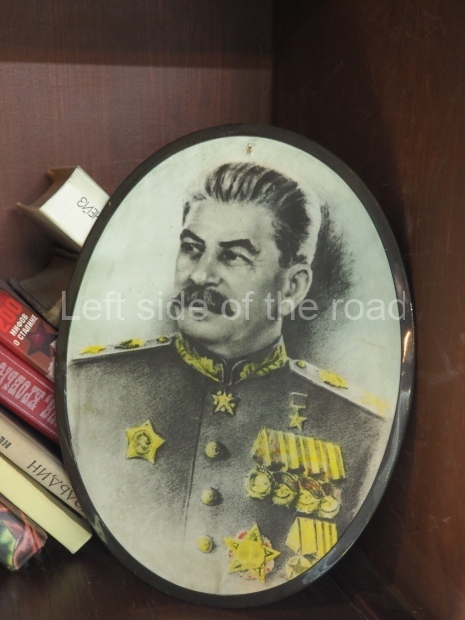
Bill Bland was one of those British Communists who refused to accept the Revisionism which came to power in the Union of Soviet Socialist States (USSR) with the ascendency of Nikita Khrushchev following the death of Comrade Joseph Stalin in 1953.
In 1956, at the 20th Congress of the Communist Party of the Soviet Union – CPSU (during the so-called Secret Speech) Khrushchev laid out the line of Soviet Revisionism but due to (perhaps mistaken) efforts by those revolutionary Communists to maintain unity it was until after the Meeting of the 81 Communist and Workers Parties in Moscow, on the 16th November, 1960, (where Enver Hoxha gave one of the most principled presentations of any Marxist-Leninist in the 20th century) that Revolutionary Marxist-Leninists worldwide were finally convinced the degeneration of the CPSU was irrevocable.
Bland was involved in the Anti-Revisionist Movement in Britain and was one of the founding members of the Marxist-Leninist Organisation of Britain (MLOB). Following disagreements and splits within the MLOB Bland founded the Communist League in 1975. He also was instrumental in the formation of the Stalin Society in the UK in 1991. He was subsequently expelled from that organisation when the supporters of Mao Tse-tung became dominant.
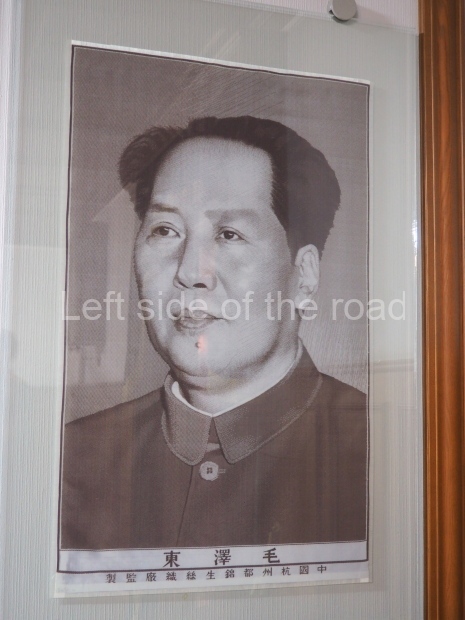
Bland was very much pro-Enver Hoxha and anti-Mao Tse-tung. This would have caused difficulties in the period between 1961 and 1976 when the People’s Socialist Republic of Albania and the People’s Republic of China stood shoulder to shoulder in the struggle against Revisionism during what was known as the Polemic in the International Communist Movement during the 1960s.
This pro-Hoxha, pro-People’s Socialist Republic of Albania stance might have gained some credibility following the death of Chairman Mao in 1976 with the coup and the assumption of power by the ‘capitalist roaders’ in China but following the collapse of the Socialist society in Albania in 1991 the differences became academic.
Now the challenge is to get the parasites in control out of their positions. We can have the struggle between different lines of thought after that milestone has been passed. The documents below can be considered part of that forthcoming Cultural Revolution.
—————————————
Engels’ ‘Condition of the working class in England’, paper presented at the International Seminar held in Italy, December 1995 to commemorate the Centenary of the death of Frederick Engels, 39 pages.
German-Soviet Non-aggression Pact – 1939, presented to the Stalin Society in London, February 1990, 21 pages.
Lenin’s Testament – 1922-1923, n.d., 45 pages.
Manifesto of the Communist League, Where we stand, adopted December 1975, 5 pages.
Meeting of German and British Marxist-Leninists, between the Communist League of the UK and the Communist Party of Germany (Marxist-Leninist), April 1999, 2 pages.
Socialists and fascism, n.d., 2 pages.
Stalin and the arts, an extended and annotated version of a lecture given at the Stalin Society in London in May 1993, 65 pages.
Stalinism, address to the Sarat Academy in London on 30th April 1999, 5 pages.
The ‘doctors case’ and the death of Stalin, an extended and annotated version of a lecture given to the Stalin Society in October 1991, 82 pages.
The assassination of Trotsky, Compass, magazine of the Communist League, No. 110, February 1994, 16 pages.
The Cominform fights Revisionism, presented to the Stalin Society in London, ca 1998, 16 pages.
The Cominform fights Revisionism, presented to the Stalin Society in London, ca 1998, version produced by the Encyclopedia of Anti-Revisionism On-Line, 16 pages.
The enforced resettlements, a paper presented to the Stalin Society in London in July 1993, 17 pages.
The historical significance of Stalin’s ‘Economic problems of Socialism in the USSR’, n.d., 31 pages.
The market under Socialism, paper presented following a presentation by Ella Rule at the Stalin Society on Stalin’s ‘Economic problems of Socialism in the USSR’, n.d., 6 pages.
The Pakistani revolution, Report of the Central Committee of the Marxist-Leninist Organisation of Britain, ca 1969, reprinted 2001 by Alliance, 86 pages.
The question of [trade] protection, January 1992, 2 pages.
The Revolutionary process in colonial countries, a paper presented on behalf of the Communist League, at the Marxist-Leninist Seminar in London in July 1993, 17 pages.
The struggle against Revisionism in the field of linguistics, Compass, magazine of the Communist League, No. 126, February 1997, 30 pages.
The Workers Party of Korea and Revisionism, n.d., 18 pages.
United Front tactics, paper presented to the Stalin Society in London, n.d., 15 pages.